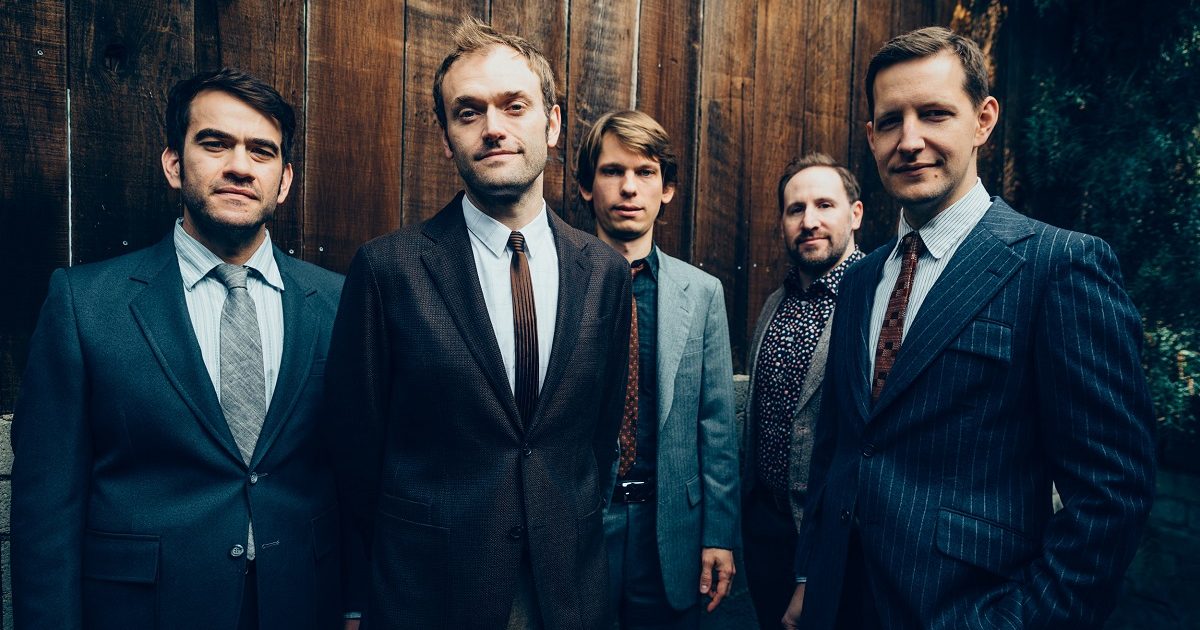
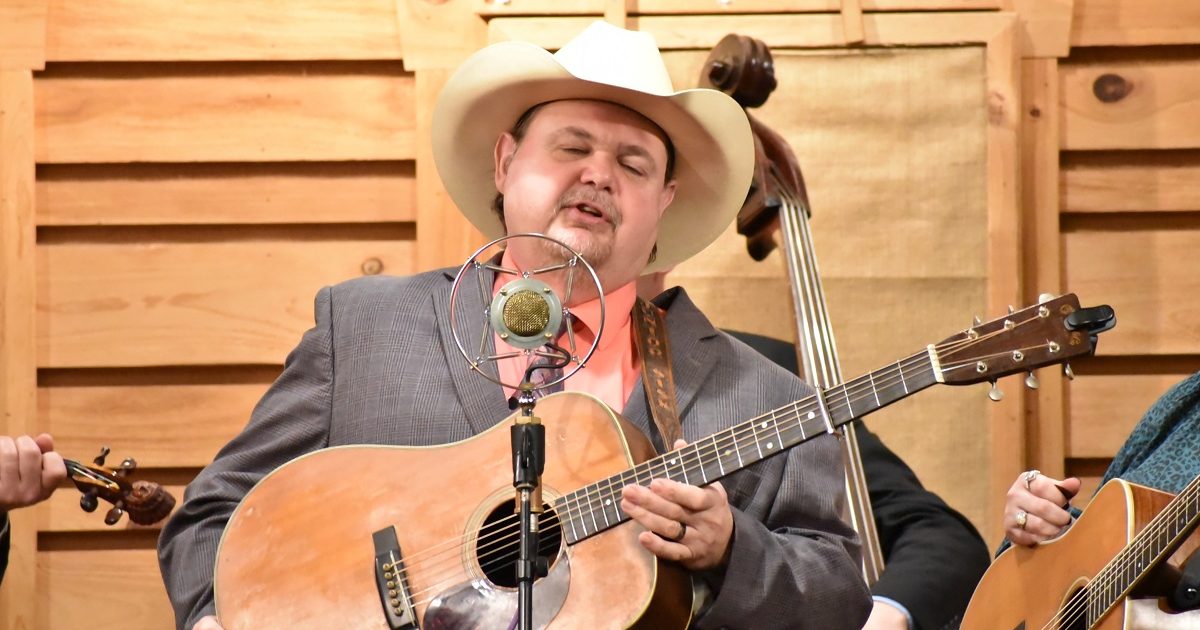
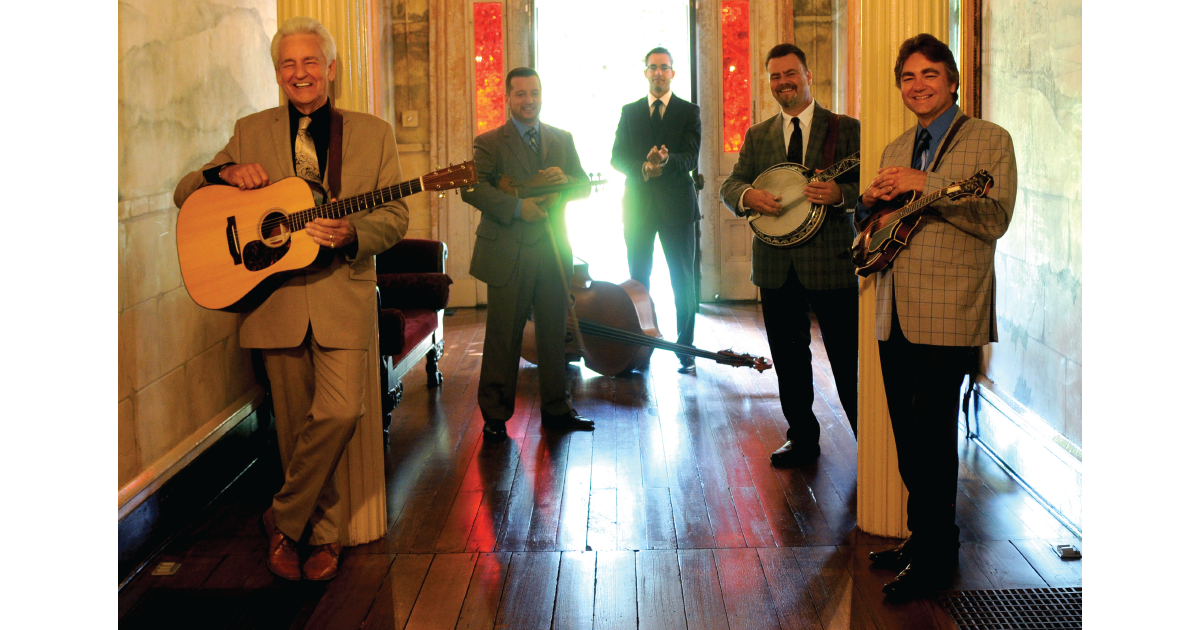
LISTEN: The Del McCoury Band, “Honky Tonk Nights” (Featuring Vince Gill)

Artist: The Del McCoury Band
Hometown: Nashville, Tennessee
Song: “Honky Tonk Nights” (Featuring Vince Gill)
Album: Almost Proud
Release Date: February 18, 2022
Label: McCoury Music

In Their Words: “I love singing with Vince. We’ve done a lot through the years but this is the first time I’ve found the perfect song to have him on my album. I am thrilled with how this song turned out and grateful to Vince for his friendship and his love and support of bluegrass.” — Del McCoury


Photo Credit: Señor McGuire

WATCH: J.D. Crowe Receives an All-Star “Blackjack” Tribute at 2020 IBMA Awards

When the IBMA Awards celebrated the 75th birthday of bluegrass in 2020, they brought out the best banjo pickers in the business for an all-star tribute to J.D. Crowe. A pioneering figure of the 1970s whose hard-driving approach has never gone out of style, Crowe remains a musical hero to many. When the community learned of his death on December 24, 2021, the IBMA honored his legacy by posting this special performance of “Blackjack” from the 2020 broadcast. Due to COVID protocols, all of the musicians were socially distanced but nonetheless forged a strong connection standing side by side on the Ryman Auditorium stage.

With an introduction from good friend and former bandmate Jerry Douglas, the clip features cornerstones of the industry like Sam Bush on mandolin, David Grier on guitar, and Missy Raines on bass. In a fitting gesture, the spotlight also shines on all five nominees for Banjo Player of the Year: Kristin Scott Benson, Gena Britt, Gina Furtado, Ned Luberecki, and Scott Vestal. Watch all the way through, as Crowe himself gives it his stamp of approval at the end.


Photo Credit: Shelly Swanger

BGS Class of 2021: Our Favorite Albums, Made With Intention

This collection of albums is not simply a “best of” 2021. That would be selling every single collection included herein far too short. These roots and roots-adjacent releases each stood as a testament to the music makers and communities that spawned them. Not simply in the face of a globe-halting, existentially challenging pandemic, but in the face of an industry, government, and culture that would just as soon have all of us pretend the last two years — and beyond — simply didn’t happen. 

These artists and creators refused to let the pandemic define their artistic output through it, while simultaneously acknowledging, processing, and healing from the pandemic through this music. Not a single album below is a “pandemic record,” yet every single one is a resounding, joyful balm because the intention in each is not simply a reaction to a global disaster or an attempt to commodify it or its by-products. Not a single one is an attempt to “return to normalcy.” They’re each challenging us as listeners, in both overt and subtle ways, to walk into our collective new reality together, wide-eyed and open-armed, and with intention.

Daddy’s Country Gold, Melissa Carper

It was a sly move on Melissa Carper’s part to give her album, Daddy’s Country Gold, a title that works on so many levels, nodding to the passing down of sounds, to her road nickname and to her ability to casually loosen postwar country perceptions of masculinity and femininity. In her songs and performances, her gestures are even more beguilingly subtle. Enlisting a fellow upright bassist to produce with her, the Time Jumpers’ Dennis Crouch, Carper claimed western swing and early honky-tonk eras as her playground, and the shrewd, crooning intimacy of Billie Holiday as her guide. Carper sings in a slight, reedy rasp, deftly phrasing her lines and curling her words to suggest the lasting nature of longing and fleeting nature of pleasure. She’s written a movingly clever ballad of broken commitment (“My Old Chevy Van”), elegantly pining tunes of both torchy and down-home varieties (“I Almost Forgot About You,” “It’s Better If You Never Know”) and whimsical fantasies of rural homesteading, sometimes making clear that she’s cast a female partner in those stories (“Old Fashioned Gal,” “Would You Like to Get Some Goats?”) Her artful knowledgeable nudging of tradition is a revelation. — Jewly Hight


Music City USA, Charley Crockett

Few artists in the last few years have us as fired up as Charley Crockett. His unapologetically individual sound and aesthetic shine through once again on his 2021 release, Music City USA. The irony, of course, is that the album sounds nothing like most of what comes out of modern-day Nashville. It’s an amalgamation of influences both old and new — blues and classic country and soul with a peppering of Texas-tinged Americana on top. Charley Crockett absolutely represents what the future of Music City sounds (and looks) like in our book. — Amy Reitnouer Jacobs


Home Video, Lucy Dacus

We must forgo the existential “Is it roots?” question at this juncture, simply because this stunning and resplendent work by Lucy Dacus refused to be excluded from this list. Perhaps the superlative album of 2021, in a year filled to bursting with objectively and subjectively superlative albums, Home Video is impossibly resonant, relatable, down-to-earth, and touching — despite its intricate specificity and deeply vulnerable personality. Dacus’ queerness, and the beautiful, humane ways it refuses categorization and labels, is the crack beneath the door through which the light of this gorgeous, fully-realized universe is let into our hearts. Her post-evangelical pondering; the challenging while awe-inspiring abstract, amorphous gray zones she doesn’t just examine, but celebrates; the anger of rock and roll paired with the tenderness of folk and the spilled ink of singer-songwriters — whether taken as a masterpiece of genre-fluid postmodernity or an experiment on the fringes of roots music, Dacus’ Home Video establishes this ineffable artist as a subtle, intellect-defying (and -encouraging), empathetic genius of our time. — Justin Hiltner


My Bluegrass Heart, Béla Fleck

It’s been over twenty years since the eminent master of the banjo, Béla Fleck, recorded a bluegrass record. My Bluegrass Heart completes a trilogy of albums (following 1988’s Drive and 1999’s The Bluegrass Sessions) and is as much a who’s who of modern bluegrass – featuring the likes of Billy Strings, Chris Thile, Sierra Hull, Bryan Sutton, Molly Tuttle, Michael Cleveland, Sam Bush and many others – as it is a showcase of Fleck’s still-virtuoso level talent.

But as much as My Bluegrass Heart is an album for a bluegrass band, we would be hard pressed to call it a bluegrass album (in the best possible way). As he has done countless times before, Fleck effectively breaks every rule and pushes every boundary by surrounding himself with fellow legendary rule breakers, creating something wholly beautiful and unique in the process.Amy Reitnouer Jacobs


A Tribute to Bill Monroe, The Infamous Stringdusters

Bluegrass loves a “back to bluegrass” album, no matter how far an artist or band may or may not have traveled from bluegrass before coming back to it. On A Tribute to Bill Monroe, the Infamous Stringdusters cement ‘80s and ‘90s ‘grass – “mash” and its subsidiaries – as an ancestor to the current generation of jamgrass. Or, at the very least, it cements that these two modern forms of bluegrass cooperatively evolved. It’s crisp, driving, bouncing bluegrass that’s as much traditional as it isn’t. Sounds like quintessential Stringdusters, doesn’t it? Their collective and individual personalities ooze through the Big Mon’s material, which is what we all want cover projects to do, in the end: Cast classics in a new light, into impossibly complicated refractions. And, in this case, infusing postgrass sensibilities back into the bluegrass forms that birthed them. — Justin Hiltner


Race Records, Miko Marks & the Resurrectors

One of the best bluegrass albums of the year most likely would not be “binned” as bluegrass, and that this album is titled Race Records demonstrates exactly why. Miko Marks returns to the primordial ooze aesthetic of country, old-time, blues and bluegrass — without a whiff of essentialism — and accomplishes a Bristol Sessions or ‘40s-era Grand Ole Opry sound that’s as firmly anchored in the present as it is elemental. Marks’ musical perspective has always highlighted her awareness that the death of genre, as it were, is nothing new, but a return to the traditions that birthed all of these roots genres, many of which can be attributed to the exact communities race records originally sought to erase. Marks & the Resurrectors joyfully and radically occupy songs and space on Race Records. The result is as light and carefree as it is profound; it’s devastatingly singular yet feels like a sing along. All quintessential elements of bluegrass and country. — Justin Hiltner


Dark in Here, Mountain Goats

John Darnielle sings at the velocity of a firehose torrent, and he writes songs with titles like “Let Me Bathe in Demonic Light” and “The Destruction of the Superdeep Kola Borehole Tower.” But rather than death metal, Mountain Goats play elegantly arranged folk-rock dressed up with saxophones and the occasional keyboard freak-out. Dark in Here, the best of five Mountain Goats albums released the past two years, coheres into tunefulness despite the clashing contrasts — especially “Mobile,” a gently gliding Biblical meditation on hurricane season, and also Darnielle’s prettiest song ever. Perfect for the whiplash jitters of this modern life. — David Menconi


In Defense Of My Own Happiness, Joy Oladokun

I don’t know if I’ve ever been so immediately captivated by an artist as I was when I first heard Joy Oladokun’s single, “Jordan,” earlier this year. On that song — and every other one on In Defense of My Own Happiness that I played over and over this year — her clear voice and searingly personal lyrics emerge as a calm, universal call to pursue something better, melting down her own painful past and re-molding it in the image of self-love, inner peace and … well, joy. Oladokun is indeed building her own promised land, and we’re all lucky to bear witness. — Dacey Orr Sivewright


Outside Child, Allison Russell

One might assume an album covering the subject of abuse could intimidate a listener with its potential heaviness. While Outside Child does indeed venture into the depths of those dark experiences, Allison Russell gleans profound lessons learned and treasures discovered from each and every detail of her experiences in her youth. The result is ethereal and uplifting — and a release of trauma through a bright musical experience swelling and overflowing with hope for the future. — Shelby Williamson


The Fray, John Smith

Most artists are pretty keen to play down the idea of a “lockdown record,” because they’re worried it will limit the music’s appeal or longevity. But the emotions John Smith pours into The Fray — born of that period when we were all taking stock of our lives, and wondering what to do next — will hold their currency for a long while yet. It’s honest, yes, but also pretty soothing on the ear, showcasing Smith’s fullest sound to date — both heart’s cry and soul’s balm at once. — Emma John


See You Next Time, Joshua Ray Walker

I wasn’t out after “Three Strikes.” Instead, I was all in. With the steel guitar weaving like a drunkard in a Buick, it sometimes seems like this Dallas musician’s third album is about to go off the rails, along with the lives of the people he’s created in these songs. It never does, though, and that’s a credit to Joshua Ray Walker’s commanding vocal and a willingness to bring his dry sense of humor to the country music landscape. From the pretty poser in “Cowboy” to the unsightly barfly known as “Welfare Chet,” these folks feel like true honky-tonk characters. — Craig Shelburne


Simple Syrup, Sunny War

“Tell me that I look like Nina,” sings Los Angeles singer-songwriter Sunny War in “Like Nina,” the keystone song of her fourth album, Simple Syrup. The Nina in question is, of course, Nina Simone. The look is the “same sad look in my eyes,” though in concert War often flashes a bright, disarmingly shy smile — that of a young Black artist demanding to be taken on her own, singular terms, not the terms of cultural expectations. She continues: She can’t dance like Tina, sing like Aretha, be styled like Beyoncé. But she can see injustice, seek love and respect, seek a sense of self, and sing about it, captivatingly, with her earthy voice and folk-blues-rooted fingerpicking, enhanced by a small cadre of friends led by producer Harlan Steinberger. Like Nina? No. Like Sunny War. — Steve Hochman


Sixteen Kings’ Daughters, Libby Weitnauer

There’s a new artist on the folk scene — Libby Weitnauer. Weitnauer is a fiddle player, violinist, singer and songwriter raised in East Tennessee and currently based in Nashville. Her debut EP and first solo effort, Sixteen Kings’ Daughters, was produced by Mike Robinson (Sarah Jarosz, Railroad Earth) and presents centuries-old Appalachian ballads that have been recast into a lush and unsettling sonic landscape. Weitnauer’s high lilting voice is reminiscent of Jean Ritchie, and she glides with ease atop eerie backdrops of electric guitar, bass, fiddle and pedal steel. A strong debut to say the least, and we’re excited to hear more. — Kaïa Kater


Urban Driftwood, Yasmin Williams

Watching Yasmin Williams play guitar can boggle your mind. She uses her full body to coax noise from the instrument, her fingers pounding on the strings, her feet clicking out counter rhythms in tap shoes, one hand even accompanying herself on kalimba. As impressive as her technique is, it’s less remarkable than her facility for compositions that are melodically direct yet structurally intricate. Urban Driftwood is a carefully and beautifully written album, and Williams’ songs lose none of their flair when she transfers them from the stage to the studio. Dense with earworm riffs and evocative textures, the album represents a crucial pivot away from the increasingly staid world of folk guitar, which has recently been dominated by white men indebted to the historical American Primitivism pioneered by John Fahey. Williams is opening that world up to new sounds and influences, insisting that her guitar can speak about our present moment in ways that are meaningful, moving, and subversive. — Stephen Deusner


During Lockdown, Del McCoury Finally Got Around to “Running Wild”

Del McCoury has every right a person can have to slow down, take it easy, and bask in his own accomplishments. But, instead of taking some well-earned time off, the iconic bluegrasser engaged his inner music fan, keeping his ears open to new songs, albums, and artists. During the lockdowns and periods of isolation in 2020, while performing was off the table, Del McCoury found joy in going through dusty boxes of demos, listening to new music, and hearing new stories. From his childlike curiosity, he pulled together a collection of songs for an upcoming album titled Almost Proud.

With a working-man’s mentality and an evident penchant for learning, McCoury made an album that perfectly embodies his attitudes toward music. “I’m as excited about listening to new music today as the day I started — finding a new tune or a story that tickles me,” he says. “This album is the best of what I heard while the world was on pause.”

To announce the album, McCoury (a reigning IBMA Male Vocalist of the Year) released “Running Wild,” a song that he started 15 years ago but only took the time to finish in lockdown after his son, Ronnie McCoury, played him a portion of a long-lost demo. It’s a classic cheating song, the likes of which are littered throughout the songbook of classic bluegrass tunes. Although there’s some time until the album will be released in full on February 18, keep a look out for more tour dates from the Del McCoury Band, because there never was an 82-year-old that worked harder in bluegrass. As he notes, “If I’m not interested, how can I expect the audience to be?”


Photo Credit: Jim McGuire

LISTEN: Joshua Rilko, “New Way to Fly”

Artist: Joshua Rilko
Hometown: Nashville, Tennessee
Song: “New Way to Fly”
Album: Lost Soul / Rock & Roll
Release Date: December 2021

In Their Words: “I needed another song for the bluegrass side of the album, and this trad-sounding chorus was floating around in my head shortly before the recording session. The verses are new takes on old bluegrass themes with a nod to the John Hartford song, ‘Learning to Smile.’ This track is the most straight-ahead bluegrass song of the bunch, with a few minor chords in there to keep it interesting. Jed Clark provided the relentlessly driving rhythm guitar and tenor vocals, Geoff Saunders laid down bass, George Guthrie dug the ditch with the five-string and sang baritone, and Bronwyn Keith-Hynes glued it all together on the fiddle.” — Joshua Rilko


Photo Credit: Scott Simontacchi

LISTEN: Dolly Parton, “In the Sweet By and By” (W/Cordle, Jackson, Salley & Walker)

Artist: Dolly Parton
Hometown: Sevierville, Tennessee
Song: “In the Sweet By and By” (with Larry Cordle, Jerry Salley, Carl Jackson, & Bradley Walker)
Album: Country Faith Bluegrass
Release Date: September 17, 2021
Label: Billy Blue Records

In Their Words: “I am so honored to be a part of such a beautiful album with all of these wonderful artists. Bluegrass has always been one of my very favorite styles of music. I sing it often. I also love the gospel part of bluegrass music and ‘In the Sweet By and By’ was always one of my favorite songs. My parents loved that song so that was the one I wanted to be a part of this album. So I hope everybody, as my mother would say, gets your blessing out of it.” — Dolly Parton

WATCH: Jr Williams, “Railroad Town Without a Train”

Artist: Jr Williams
Hometown: Irvine, Kentucky
Song: “Railroad Town Without a Train”
Album: Railroad Town
Label: Mountain Fever Records

In Their Words: “When Mark Hodges and I talked about me recording a solo project, he mentioned some writers that would have material I could look through. One of the first songs was by Tim Stafford and Thomm Jutz, called ‘Railroad Town Without a Train.’ Listening to it twice, I knew I had to record it. It reminds me so much of my hometown, and the railroad yards left pretty much abandoned by a drop in the coal industry. I also realized there were many towns like this in Eastern Kentucky, West Virginia, Virginia, Pennsylvania, Tennessee, and I’m sure the Carolinas. I knew that it would resonate with a lot of people in this region. I’ve had tremendous feedback from it and appreciate the guys for such an incredible tune.” – Jr Williams

Photo Credit: Stuart Rose

North Carolina’s Balsam Range Travel Through Life With ‘Moxie and Mettle’

For nearly 15 years, Balsam Range have distinguished themselves in the bluegrass community as powerful performers and musicians, even winning an IBMA Award for Entertainer of the Year in 2018. While it is notable for a bluegrass band to have maintained its original members for so long, it is perhaps more remarkable that its five members all grew up within the same region of Western North Carolina.

With a diverse array of influences held together by the common thread of their geography and formative musical years, Buddy Melton (fiddle), Darren Nicholson (mandolin), Dr. Marc Pruett (banjo), Caleb Smith (guitar) and Tim Surrett (bass, dobro) create music that is rooted in the traditions of their youth but not confined to typical genre norms. Their newest album, Moxie and Mettle, explores themes of uncertainty and a sense of powerlessness that will likely resonate with listeners’ own experiences during the pandemic. Similarly, the theme of trying to feel content with one’s life can be felt on tracks such as “Richest Man,” named the 2021 IBMA Song of the Year.

The Bluegrass Situation spoke with Buddy Melton and Tim Surrett over Zoom.

BGS: What was the timeline of making this record around the pandemic? Was it something you were working on and then had to slow down, or were you working on while things were shut down?

Melton: We were in that stage where we needed to move forward with a new project, but we had been so busy it was getting difficult to find time to work up new material and get in the studio. We took advantage of the shutdown. It gave us something to focus on and keep the positive efforts and creative side of us together. We’d worked up a lot of the songs prior to that, but that time off allowed us to get busy and find the remaining songs and round out a good record.

I’ve heard lots of artists say the same thing. The shutdown gave them more time than usual to listen to and refine the recordings they made during it.

Surrett: Yeah, we just did it a little bit at a time. We’d get together and work up two or three songs and go record them. Then a couple of months later, we’d do the same thing again. It’s always a fun process for us to get together and just listen to songs and then tear into them.

Melton: Sometimes we work better with a deadline. So, it was bad for us to have that time in a way, because we didn’t push it too hard. It was fun and relaxing. I will say it was a different dynamic, not feeling rushed, and we just decided when we’ve got enough completed, we’ll worry about the record, but let’s use this as an opportunity to stay together and be creative as we can together.

What’s important to you when you’re picking songs? Is there something that speaks to you? Are there themes that you usually gravitate towards when choosing material?

Surrett: Well, for years, we kept getting the train songs. We had some good ones like “Trains I Missed” and what not. But no, I don’t think we look for a certain theme. The first thing I look for is if something is interesting musically. And then a song that tells the story is a great thing. And we’re blessed with songwriters like Milan Miller and Adam Wright who can write a little three-minute movie in a song, and it’s got interesting chords, or something that we feel like we can arrange. That gets us fired up.

Melton: I don’t know why it is, but by the time the albums are over with, for some reason, they sometimes have a common theme. I don’t know if subconsciously we are connecting with that message. And this particular one, Moxie and Mettle, has a lot of “traveling through life” sort of vibes about the songs with “Richest Man,” and “Grit and Grace,” and “Rivers, Rains and Runaway Trains,” and “Traveling Blues.” I don’t know if we’re missing that element in our lives and that’s why migrated to that. We also like to incorporate original artwork if we can. All of our album covers have been paintings for the most part. As we got to the end of it and start looking at the graphics and start talking about the pictures, we ended up using this Adam Wright painting of an old car sitting at an intersection. You’re wondering which way is it going to go but it’s just traveling, trying to get through life, and it seemed to fit the vibe of this record to me.

I was wondering about that, because after I listened to the record a couple of times, I had my own interpretation of the theme, and I was wondering if you went in with a theme, or came out on the back end with one.

Melton: We didn’t intend to have anything. But again, I think a lot of those songs have some similar storylines and meanings to them.

There are a lot of references to taking stock of life and trying to figure out what’s important, which everybody had to do, even if they weren’t consciously thinking about that kind of thing.

Melton: You could probably pull that out of just about every song on that record. It’s about being content with where you are in life, etc. So, they all have some similar thoughts, I think.

I know you guys are very involved in the Western North Carolina music scene. Could you tell me a little bit about the work you guys do in that community?

Surrett: We all grew up in this area. Haywood County is where we all live now but Buddy and Darren are from Jackson County. Music was so much a part of life growing up here in the mountains. Square dancing, clogging, mountain dancing, and old-time music were a huge thing, and you get indoctrinated with it. And there are so many great musicians that still come out of this region. We joke with people all the time that we’re not even sure we’re the best band in Haywood County. There are so many great players that come from this region, and you cannot help being exposed to it, especially growing up when most of us did. It was an enormous part of life here in the mountains. And it’s fun to see that go on as some of us have become elder statesmen of that scene now.

You seem like you are stewards of music in that region, and you run a festival, don’t you?

Melton: Yeah, The Art of Music Festival. It’s coming up in the first week of December. We took that on as a project for our area. We chose the lowest-occupancy weekend of the entire year to see if we could stimulate the economy in our county, just to try to help out. Most people will pick early fall or spring to have an event, so we chose a terrible weekend to try to put on a bluegrass festival. And it’s a really great thing. A lot of work and effort went into it, but it’s not just a bluegrass festival. Our primary desire was to bring some of our favorite artists and music to Haywood County to help to expose the local folks to music they wouldn’t necessarily hear otherwise. We have an orchestra that comes in, we bring some of our favorite studio musicians, we have full-scale bands with piano, drum, steel guitars, the whole bit, but then we’ll have bluegrass bands like Blue Highway and The Cleverlys. It’s been fun to create something. The opportunity to have a music festival that is open to anything we want to do with it. I think that’s important. It helps our music grow and it exposes people to our music that come for other reasons.

You draw from a wide range of influences and bring it into your sound. Is that something you actively try to do, or does it come naturally because you all listen to a lot of different music?

Surrett: All of us come from different musical backgrounds. Darren loves country music. Caleb and myself both come from a gospel music background with a giant love for jazz music. And for me, personally, I like the rock ‘n’ roll that I grew up on. So we’ve got a Beatles tune, we’ve got Allman Brothers. Marc, of course, thinks there’s two kinds of music: Flatt & Scruggs music and not Flatt & Scruggs music. Buddy’s got the gift of finding great songs and listening to songwriters. That’s where the majority of our songs come from. But nothing has ever really been off-limits. Everybody’s got a voice and if they bring it in we’ll give it a whirl. By the time we play it and sing it, it’s going to sound like us. We’ll give anything a try. But we haven’t tried Pink Floyd or anything like that yet.

Sounds like that’s what’s next.

Surrett: It’s not off the table.

Melton: We all grew up around this area where we were influenced by this common thread of Southern Appalachian culture and music. We all understand those timings and those concepts. We’ve all been around it our whole life. So, you go away and you learn different things, and when you come back, that history is the glue that puts it all together. Just like all our accents are the same. We don’t have family harmony. We got country harmony. That’s part of it. We don’t put t’s in “mountains.” It definitely helps to have some similar dialogue and accents and phrasing and stuff like that.

Surrett: It’s a rare thing for, as you well know, a bluegrass band to have five guys from the same ten-mile radius. It’s not a family relations-type thing, as far as we know. But it definitely brings a thread of commonness.

Melton: January will be 15 years, basically. That’s a long time for a bluegrass band of the same five guys to stay around.

Yeah, that’s amazing for a band when you can anticipate other people’s next move.

Surrett: We have several points in our program that are not really scripted. They just kind of organically happen. We know where it’s going, and you can feed off that and let songs change and morph. And it’s a lot of fun like that.

Melton: We’re just grateful to still be together after 15 years and for the many great people we’ve met along the road that we’ve missed seeing over the last year and a half. We’re so happy to see the music scene coming back around. Hopefully, we can all do a part to keep that alive. Like many things when you don’t have it is when you realize you need it. And music is so important to people’s lives. As it’s building back, it almost seems like there’s even more excitement prior to the shutdown. So, we’re just grateful for that and excited to be a part of it.


Photo Credit: David Simchock

LISTEN: Thomas Cassell, “New November”

Artist: Thomas Cassell
Hometown: Nashville, Tennessee
Song: “New November”

In Their Words: “When Tim Stafford showed me this song several years ago, I knew that I wanted to record it. Things didn’t line up then, but I was elated to release it as a single following. The writers (Stafford and Graham Sharp) penned an excellent modern bluegrass song about climate change. Particularly, it excites me to present this very modern and important topic through something as old and familiar as bluegrass music, and I hope that will communicate the issue to some folks that may not hear about or consider it otherwise. ‘New November’ is the second single from an upcoming release, TBA. Joining me on the track are Dale Ann Bradley and Dan Boner on vocals, Tim Stafford on guitar, Julian Pinelli on fiddle, Jacob Metz on dobro, and Vince Ilagan on bass.” — Thomas Cassell


Photo Credit: Ben Bateson

WATCH: Mile Twelve, “Romulus”

Artist: Mile Twelve
Hometown: Boston, Massachusetts
Song: “Romulus”

In Their Words: “Sometimes when you start writing a song you know exactly what it’s going to be about, and sometimes you have no idea. This was the latter. It was a total collage of phrases and images set to music, just bits of language that seemed to sing themselves over the melody. The line ‘wolves in the hills’ reminded me of Romulus and Remus, the mythical founders of the Roman Empire. The song started to make sense to me at that point. Here’s Romulus, this king who has accomplished so much, looking back on his life and wondering what the point of it all was, and maybe missing his one real friend in the world: His brother who he himself killed. We shot this video in the backyard of Brad Kolodner’s childhood home in Baltimore, Maryland. Brad’s been a great friend and supporter of the band since the start, and it was so great of him to lend this space to us for the day.” — Evan Murphy, Mile Twelve


Photo Credit: Dave Green Photography