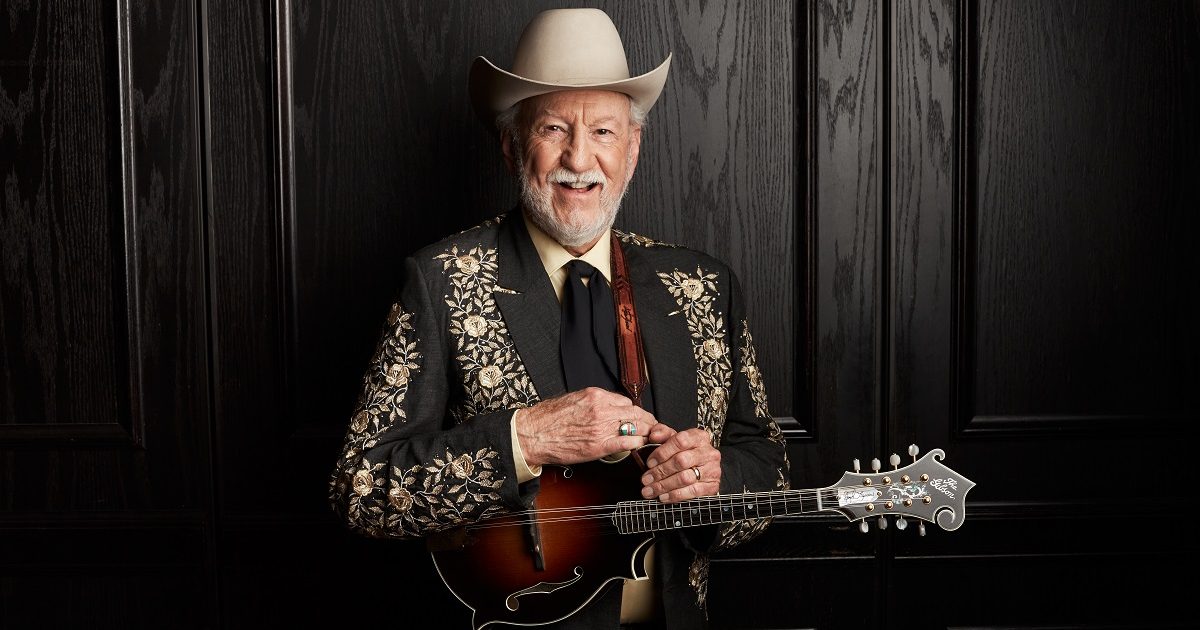
Retiring From the Road, Doyle Lawson Looks Back on 59 Years in Bluegrass

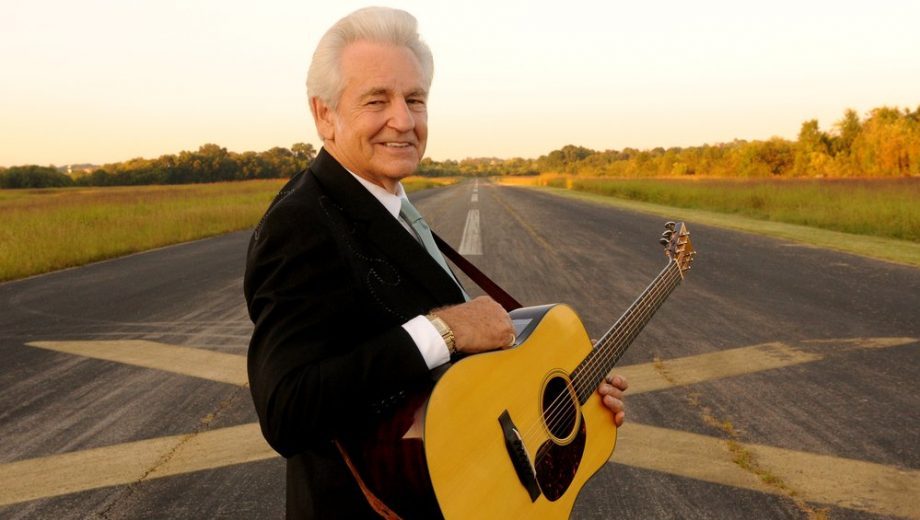
On a Friday afternoon, bluegrass legend Doyle Lawson sits in the second-story conference room of the Ole Smoky distillery in downtown Gatlinburg, Tennessee. Down below is a madhouse of people, places and things. Curious faces from across America rolling into this corner of the Great Smoky Mountains for the fall foliage. That, and wandering into the distillery for endless samples of high-octane legal moonshine, only to ready themselves for Lawson and his band Quicksilver to take the patio stage later that evening.

The inundation of blinking lights, loud noises and mass consumerism at the heart of Gatlinburg is a far cry from the Lawson’s humble beginnings in the rural countryside, in a small town outside of Kingsport just to the northeast. It’s also a long way from the starting line of when and where he first stepped into the music industry as a professional. February 1963. At just 18 years old, Lawson boarded a bus in his hometown and headed for Nashville to play banjo for Jimmy Martin & The Sunny Mountain Boys.

Martin, who grew up just down the road from Lawson in Sneedville, Tennessee, liked what he heard from Lawson and hired him to play banjo. From there, Lawson not only transitioned from Martin to J.D. Crowe & The Kentucky Mountain Boys a few years later, he eventually switched to guitar and then to mandolin — the latter instrument at the heart of Lawson’s signature look and tone.

By the early 1970s, Lawson joined The Country Gentleman, one of the biggest string acts of that period. By the end of the decade, Lawson left that group and formed his own outfit, Quicksilver. Some 42 years down the line, Doyle Lawson & Quicksilver remains a pillar of bluegrass music, headlining major festivals coast to coast, all while picking up several honors — including induction into the Bluegrass Hall of Fame (2012) and countless IBMA awards.

And yet, at age 77, Lawson has decided to hang it up, to walk away from the spotlight — on his own terms, and in his own way. There are only a handful of remaining shows left on the schedule, with Lawson making his final rounds through well-worn stomping grounds in East Tennessee, Western North Carolina and Southwestern Virginia.

Once those final notes are played and 2021 comes to a close, Lawson will say goodbye to the stage, to his bandmates, and to the audience that, over the decades, turned a young Southern Appalachian boy into an elder statesman of the “high, lonesome sound.”

BGS: Playing devil’s advocate here, if COVID hadn’t happened, would you have kept going a little longer?

Lawson: Probably, yeah. I would have gone at least through 2022, or maybe even have gone to making it an even 60 years. But I didn’t. Well, it’s kind of bittersweet. You know, at times, I’m sad to see it come to the end because I love touring. I love the travel part and all that. At the same time, there has been a huge sense of relief and a load taken off my shoulders. Because you’ve got a band and, even in the good times, you had to work hard to keep the band working, sometimes you work for everybody but yourself.

You don’t seem like someone that would drift too far from this. I mean, it’s so much a part of you and your DNA.

The touring is what I’m getting away from. I plan on doing whatever comes along that tweaks my interest. I enjoy producing other people and I’ve done some of that for the last several years. If something came along and I decide to go out and do a little pickin’ [then that’s fine]. What I don’t want to do is if [someone said], “Hey, we’re going to give you all this money if you’ll come over here and pick with so-and-so.” Well, it’s not about the money. If it doesn’t feed me musically, [I won’t do it]. It has to be structured. You know me, I like things cohesive and rehearsed. It’s not about money. Money is a necessity, but the reason I play music, first and has always been, for the love of music. And knowing that if I worked hard, we’d probably do all right monetarily.

When you look back at those early days of being a touring musician, what sticks out the most?

Quite honestly, in the early days, for most of us, we lived [two lives] because, by and large, we all had to work a day job and play music. Sometimes it entailed traveling. Sometimes it didn’t allow you to travel. But, in order to survive, you worked a day job. Of course, back then, primarily we worked clubs three or four nights a week, worked five and a half days a week in a day job. Our feet were in both worlds. But we all longed and yearned and hoped for the day that we could devote all of our energy to the music, rather than having to divide it up. I’m thankful that I was able to do that.

I think about when I’ve talked to Del McCoury, with him telling me about the days he wasn’t on the road playing music, where he was a logger and worked in construction, building nuclear power plants in Pennsylvania.

Yep, he was. I did everything. The last full-time job I had, as far a day laborer, J.D. Crowe and I worked together. He was actually my boss. We worked in the shipping department for a place in Lexington, Kentucky. The orders would come down from the office and we’d fill the order, box them up and ship them out. I’d moved down [to Lexington] from Louisville, where I was working five and a half days in a machine shop, running saws, drill presses and sanders.

Several years ago, you mentioned to me about you and J.D. playing the lounge at the Holiday Inn in Lexington.

[In Lexington], we were playing and still working the day job. We’d play in a club called Martin’s Tavern every Wednesday, Friday and Saturday. Sometimes, the horse ranch people and thoroughbred farms would have a little party and we’d do those. But, a fella that owned a chain of Holiday Inns, his daughter was going to the University of Kentucky. Well, the little place we’d play, the kids would come over from the university. They’d pack it out every night. I mean, you couldn’t get in. So, this fella who owned the chain of Holiday Inns, his daughter saw us, told her dad, “You need to go see this group,” told him how the kids would come out. As it happened, he was looking for somebody that would put some bodies in his lounge because it was dead. So, he came down and talked to J.D. He watched us and was just knocked off his feet.

So, this was J.D. Crowe & The Kentucky Mountain Boys?

Yeah. That was late 1967 to early 1968. So, we took that on. Started working six nights a week. It didn’t take long before I looked at Crowe and said, “Man, I can’t work five and a half days a week and work six nights a week here. So, I’m going for it.” I quit [my day job]. I already had one foot out the door. And Crowe quit, too. That’s when we both gave up trying to work both. I’m going to play music, make it go and lock into something [real].

That’s a big decision.

It was a big decision. Go for it. I followed my heart, as [Crowe] did, too. When I worked for Jimmy [Martin], of course we toured. But it was a different level, Jimmy was in Nashville. In truth, the reason I had to leave Jimmy was because we didn’t work enough. Making what he was paying me, I couldn’t make enough money to stay, you know? That’s why we always had to work a day job. In Nashville, in the early 1960s, if you went to try to get a part-time job, if they found out you played music, most of the time they wouldn’t hire you because they knew you were going to quit or would come in trying to get time off for a show. [The day job] got to me. It was like punching the clock, which I didn’t like doing.

When I think about Bill Monroe and Jimmy Martin as bandleaders, they were like a captain of a team, this hub you went through to find your own path. What did you learn from Jimmy that you applied to being a bandleader?

Well, the one thread that would run from Bill through Jimmy to me would be — do it the way you hear it, it’s your band. The band must do what you want. That’s why Bill was such a force with his mandolin. Sometimes you could hear it when he felt like the band was not quite locked in with him, he’d bear down and you could feel him. Jimmy was the same way. I’m often asked how I’ve maintained that certain sound. Well, it’s easy. They change for me, I don’t change for them. If I was a chameleon, I wouldn’t know what I was. As far as sound-wise, it was a formula I wanted to keep, and did keep. If I kept changing every time I hired somebody for the last 42 years, I likely wouldn’t be around today talking to you.

Whether you realize it or not, you’ve always had one leg in the neo-traditional camp and one in the progressive camp. I think that comes down to the fact that you’ve always believed the most important thing is to serve the song.

It is. I’ve always believed it doesn’t matter where that song originates, where it comes from. It’s in the interpretation of that song that determines at a particular time if it’s bluegrass, country or rock. It’s not the song, it’s how you interpret it. You can make it whatever you want to make it. I’ve always been one who will step a little wide of the mark. But, I’ve never gone past where my peers didn’t go before me. I think there’s room within the realm of tradition and the value of the music to take some liberties. If you go too far, and it becomes something that nobody recognizes, then you’re no longer playing what you say you are. I believe in innovation. I think it’s vitally important for any music to be innovative. Because, if it isn’t, it’ll get stagnant.

You were good friends with Tony Rice. And you recorded a lot with him in the Bluegrass Album Band. We’re coming up on a year since his passing. What do you remember most about him, as a performer and as a person?

One of the most dedicated men to his craft that I’ve ever met. When I was working the last go-round with J.D., Tony’s older brother, Larry, was playing mandolin and I was playing guitar. We lived next to each other in Lexington. Tony came and he would stay at Larry’s. That guitar was never out of Tony’s hand. He was dedicated to it and he was inquisitive. He got to thinking beyond the borders of bluegrass. But then, his heart was in bluegrass. He called me and wanted to do a traditional bluegrass recording to let people know where our heart is. It was some of the most fun recordings I’ve ever done. At the same time, you knew you better come with your A-game because you were with the A-players.

We only meant to do one. We thought that was it. Then Tony said, “Hey, they want another album.” We had done five and Tony said no more, his voice was giving him trouble. And I thought that was the end of it. But it got to where people would say, “When’s your next album coming out?” And I’d say, “You know, we’re not even a band.” Then, Tony called up and said, “Let’s do one more, an instrumental.” So, number six we did the instrumental.

Did you get to talk to him before he passed?

I didn’t talk to him a whole lot. It was hard to talk. Sometimes out of the blue, he’d call me or text me or something. Most of the time he’d text. And I respected that because it was pretty difficult. Out of the clear blue, he’d text, “We had it going didn’t we, brother?” We did.

I would surmise that you still talk to J.D. What did you talk to him about when you decided you wanted to step away and make this decision to retire?

I called him. J.D. and Paul Williams, we’re all real close. We’ve remained friends for more than 50 years. I called J.D. and told him that I was going to hang it up. I said I’m going to step away when I’m still happy with what I just did. He said that’s the smartest thing you’ll ever do — walk away when you can still be proud. Don’t wait until it’s too late. He and I both know that some of our peers did, which is sad to see, because they were my heroes. When I talked to Paul Williams, he said the same thing.

And it just so happened that Sonny Osborne called me about something and I told him. He said, “You’re smart to do that, because if you’re not careful — and you won’t even realize it — you’ll be out there trying to do what you can’t do anymore.” I really wrestled with coming off the road at the end of this year. It took a while. But I’ve made my decision. I’m at peace with it. I can look at my career — and not to be boisterous or egotistical — and I can say that I’ve tried to represent the music and my music about as respectable of way as it could be, and I’m proud of that.


Photo Credit: Kim Brantley
LISTEN: Carley Arrowood, “Letting Go Now”

Artist: Carley Arrowood
Hometown: From Union Mills, North Carolina, and currently living in Newton, North Carolina
Song: “Letting Go Now”
Release Date: November 5, 2021
Label: Mountain Home Music Company

In Their Words: “‘Letting Go Now’ is a bittersweet love song, co-written with my lovely friend, Becky Buller! It’s a lighthearted tune about how sometimes we can just be desperate to hang on to someone we’re sure is the right one, regardless of red flags. We try to silence all the warning signs, but they wind up speaking volumes, and we realize they aren’t as devoted as we are, and it’s hurting us worse if we don’t let go. I love how Becky added a ray of hope to the poor heart in the song, though: ‘There’s a greater picture, a plan that I can’t see…’ refers to God’s awesome plans for our lives, regardless of how we think they should go. I really enjoyed writing this with Becky. I’m so thankful for her friendship and look forward to sharing more co-writing experiences with her in the future!” — Carley Arrowood

Crossroads Label Group · Letting Go Now – Carley Arrowood

Photo courtesy of Carley Arrowood

Bluegrass Memoirs: ‘Industrial Strength Bluegrass’ and the Dayton Bluegrass Reunion (Part 3)

(Editor’s Note: Read part one of our series on the Dayton Bluegrass Reunion here. Read part two here.)

Working on CityFolk’s Dayton Bluegrass Reunion, I heard local terminology for the culture in which this music grew. “Industrial working-class Appalachian migrants” was rarely spoken. “Hillbilly” was said sometimes with disdain, sometimes with pride. The preferred in-group term was “briar.” Briars came from the Appalachian hills, transplants proud of their continuing organic down-home connections. I was told that the call letters of WPFB, where Moon Mullins had represented bluegrass for two and a half decades, stood for “We Play For Briars.”

Don Baker’s introduction to the second act of the reunion framed a dramatic shift of scene from Mullins’ milieu to a younger Dayton band: The Hotmud Family.

Inspired by the New Lost City Ramblers, this band began in 1970 playing old-time music based on pre-war hillbilly recordings. The band included Suzanne Thomas Edmundson, Dave Edmundson, and Rick Good, along with a succession of bassists. Suzanne, born in Dayton of Kentucky parents, was a second-generation briar. According to Jon Hartley Fox the Hotmuds were “perhaps the most significant band to emerge from the vibrant scene of the 1970s in southwestern Ohio” (Industrial Strength Bluegrass, 140-1). 

They began including bluegrass in their sound during a 1974 appearance at the Mariposa Folk Festival. In blending old-time and bluegrass, they placed special emphasis on vocal harmonies, something many old-time bands overlooked. Between 1974 and 1981 they made eight albums and appeared widely at bluegrass and folk festivals. Here’s their 1975 bluegrass/old-time blending of “Weary Blues,” a song originally recorded in 1929 in Atlanta by Chattanoogan Jess Young’s Tennessee Band as “Old Weary Blues”:

The Hotmud Family came to be associated with Dayton’s Living Arts Center, described by Hotmud banjoist Rick Good in Industrial Strength Bluegrass (153-57). Established in 1967 by the Dayton Board of Education, this facility offered after-school instruction in the arts for grades 5-12 students in East Dayton. 

In 1975 it began providing programs aimed at the local Appalachian-based culture. It turned to the Hotmud Family, now a nationally known band with an enthusiastic local fan base from their weekends at Sam’s Bar and Grill. At the Center, Hotmud gave lessons, ran a song circle, and led informal jam sessions. Once a week they held a live Country Music Jamboree, which was broadcast over WYSO, the Antioch College radio station. The Center closed in 1977, but the Jamboree continued with other performers at other local venues until 1986. 

Act Two of the Dayton Bluegrass Reunion opened with a solo rendition of “Red Rocking Chair” by former Hotmud lead vocalist Suzanne Thomas Edmundson. Then came the group’s reunion, when Thomas was joined by the other founding Family members Dave Edmundson and Rick Good along with bassist Gary Hopkins. They did three pieces and an encore. During the 1980s the band gave occasional reunion performances. This was one of their last.

For Act Three, Baker’s stage directions began: “Beer Sign On.” 

A borrowed neon sign hung onstage now lit up for the reunion of a band associated with Dayton’s bluegrass bar scene, the Allen Brothers.

Formed in the late ’60s to back their father Red Allen, they began performing without him and were touring in 1974 when brother Neal died. After a brief hiatus, the three other brothers (Harley, Greg, and Ronnie) carried on into the early ’80s, recording Rounder and Folkways albums. The new Smithsonian/Folkways album Industrial Strength Bluegrasswhich just won Album of the Year at the 2021 IBMA Bluegrass Music Awards — includes Harley Allen’s “Suzanne,” first recorded by the Allen Brothers in 1982, here recreated by Mo Pitney and Merle Monroe:

They continued to play together in the Dayton area into the mid-’80s, but by then Harley had begun a solo career, first joining banjoist Mike Lilly in a band Jon Hartley Fox calls “one of the best bluegrass acts Dayton ever produced” (Industrial Strength Bluegrass 136). In 1985 the Allen-Lilly Band closed a set at the Berkshire Mountain Bluegrass Festival. Harlan County native Lilly led the way into “Little Maggie” with coon dog and motorcycle as Frank Wakefield watched: 

Harley went on to a Nashville career as a singer-songwriter, winning two Grammys and singing on the O Brother, Where Art Thou? soundtrack hit “I Am a Man of Constant Sorrow” before dying at the age of 55. 

At the Reunion, the Allen Brothers put together a band with Harley on mandolin, Greg on banjo, and Ronnie on bass, with Wendell Barrett on guitar, and David Harvey on fiddle.

Here’s how they sounded with a similar band (different fiddler and mandolinist), with Monroe’s “Uncle Pen” enlivened by guitarist Harley Allen’s transformation of Jimmy Martin’s “G run” and a fancy ending, followed by a bluegrass trio rendition of the Paul Siebel’s classic “Louise.”

At the Reunion, they did three tunes and an encore. Then it was intermission time.

The second half began with Baker introducing Act Four, the Dry Branch Fire Squad. This band was led by mandolinist Ron Thomason, a Virginian who had migrated to the region as a child. Around since the mid-’70s, it’s still active today. Thomason came up in Dayton’s regional scene in the ’60s, working in bar bands and on the road with Ralph Stanley. 

Committed to traditional bluegrass, Thomason, now living in Colorado, has had many talented musicians in his band. He is famous for his emcee work, which regularly grows into humorous monologue. Baker’s directions for this act listed two pieces (including one gospel song), separated by:

“Rap — Ron Thomason”

Here’s a sample of Ron’s “rap” — a comic speech from a 2007 California festival:

At the time of The Dayton Bluegrass Reunion, Dry Branch had four albums on Rounder, the start of a long string with that label. Like the Hotmud Family, they were folk and bluegrass festival regulars. 

The band this evening consisted of Ron on mandolin, John Hisey on banjo, Mary Jo Leet on guitar, and Charlie Leet on bass. In 1987 a similar lineup recorded “Aragon Mill,” a Si Kahn song that Ron had learned while working at coal miner’s union rallies with Hazel Dickens:

Act Five brought on another performer still active today, Larry Sparks and the Lonesome Ramblers. Sparks had come up in the Dayton bar scene at about the same time as Ron Thomason. He worked with the Stanley Brothers and Ralph Stanley at the end of the ’60s and made his first album on his own in 1970s. He became a member of the Bluegrass Hall of Fame in 2015 and has a new album out on Rebel. 

At this concert his Lonesome Ramblers had a reunion dimension. Mandolinist and singer Wendy Miller, who’d played on Larry’s earliest recordings and was with the band through most of the ’70s, was back for this evening’s concert. Also in the band were banjoist Barry Crabtree and Larry’s son, Larry Dee, on bass. 

They did three songs: “Dark Hollow,” “Face in the Crowd,” and “Kentucky Chimes,” all regulars from his albums and concerts. He closed with an eight-tune medley of his other hits. There are many videos of Larry’s great singing and lead guitar work. Here’s one of my favorites:

Acts Six and Seven dramatized the transformations of Dayton’s foundational 1956 band — The Osborne Brothers and Red Allen.

Act Six was all reunion. Red Allen had been officially retired since 1984, although he’d recently recorded four tracks on Home Is Where The Heart Is, David Grisman’s new Rounder album, joined on these tracks by son Harley and banjoist Porter Church, who’d been in his band The Kentuckians. 

Red started this band in 1959 with mandolinist Frank Wakefield. In November 1961, in Nashville for the D.J. Convention, they cut six classic tracks at Starday with top bluegrass musicians of the day: Don Reno on banjo; Chubby Wise on fiddle; and John Palmer on bass. The whole great session is on YouTube: 

Sierra Hull reprises Wakefield’s “Mountain Strings” on the new Smithsonian/Folkways album Industrial Strength Bluegrass. The track was nominated for IBMA’s 2021 Instrumental Recording of the Year.

In the early ’60s Wakefield and Allen worked out of the D.C. area, with a radio show in Wheaton, Maryland. In 1964 they did a Folkways album in New York, produced by David Grisman and Peter Siegel. 

Soon after, Wakefield, whose innovative music is discussed by Ben Krakauer in Industrial Strength Bluegrass (182-183), began working with New York band The Greenbriar Boys and later he relocated to Saratoga Springs, New York. Here’s how he sounded in 2008 — still pushing the boundaries:

Red kept the Kentuckians going in the mid-’60s with a succession of great sidemen, among them banjoist Porter Church and mandolinist Grisman, who produced two albums of the Kentuckians on the County label.

In 1967 Red worked briefly for Bill Monroe and took Lester Flatt’s place in the Foggy Mountain Boys when Flatt had heart surgery. The next year he was in Lexington working with J.D. Crowe and Doyle Lawson.

By the early ’70s he was back in Dayton, working with his sons and playing locally what Rick Good calls “bargrass” (Industrial Strength Bluegrass 156). For tonight’s concert Red and Frank’s Kentuckians included Porter Church on banjo, Buddy Griffin on fiddle, Ron Messing on Dobro, and Larry Nager on bass. 

During Red’s four-song set, Red Spurlock and Noah Crase, banjoists who’d played with Red during his early years, sat in for choruses with the band. A reprise of Wakefield’s famous “New Camptown Races” brought guest David Harvey, son of Dorsey Harvey, another influential mandolinist, to play harmony.

The final segment, Act Seven, featured Dayton’s Grand Ole Opry stars, the Osborne Brothers. Two days before the concert the Dayton Daily News said the Osbornes had “achieved the greatest fame of those taking part in this tribute to the flowering of bluegrass music in Dayton.” It would be hard for anyone to follow them. After joining the Opry in 1964 they’d moved from Dayton to Nashville. During the late ’60s and early ’70s, a string of country hits (“Rocky Top” is the best known today) led to industry awards for their vocal work.

With this success the Osbornes’ recordings moved toward a contemporary country radio-friendly sound, mixing pedal steel, piano, fiddle, drums, and electric bass alongside their bluegrass banjo and mandolin. Their live sound also changed. In 1967 they added electric bass; in the early ’70s, a drummer. Next came electric pickups on banjo and mandolin. They did this to make themselves heard in the big country package shows they were playing, where all the other acts were highly amplified. Their “going electric” was viewed with alarm in the acoustic-oriented bluegrass festival world, but it only lasted for a few years.

Throughout these years, their unique vocals remained a constant. They continued to record and tour. Their repertoire drew largely from decades of recordings along with newer material. They now carried a straight-ahead bluegrass band including fiddle and acoustic bass.

This evening, playing with the Osborne Brothers were Paul Brewster on guitar and third voice in the trio, Terry Eldredge on bass, and Steve Thomas on fiddle.  They did four songs, all favorites from their earlier recordings, including a version of “Kentucky,” the Blue Sky Boys hit of the ’30s that they’d recorded for Decca in 1964 and which remained in their repertoire right up until Sonny’s 2005 retirement. Here’s an early ’90s Opry performance of it, introduced by Bill Anderson. The band includes future Grascals member Eldredge on guitar and third voice and Terry Smith on bass, along with second guitarist (and bus driver) Raymond Huffmaster, Dobroist Gene Wooten, and fiddler Glen Duncan. 

According to Baker’s stage directions, the closing act consisted of:

“Music — Medley”

An earlier draft reads:

“[medley in B natural: each unit from each of the 7 segments chooses a song which they play when their turn comes]”

My memory of this is vague, but I think that’s just how the Dayton Bluegrass Reunion ended, in B natural. But it wasn’t over quite yet. In that day’s Dayton Daily News columnist Nick Weiser had announced: 

“Following the Dayton Bluegrass Reunion at Memorial Hall, the Canal Street Tavern, located at 308 E. First St., will have a reception for the audience and the participants of the Bluegrass Reunion Show. Mark Bondurant will open the show at 9:30 with a reception to follow after the show. Many of the musicians from the Memorial Hall show are scheduled to get together and jam at the Canal Street Tavern reception. Admission is $1 at the door.”

I went with my camera…  Next time!

(Editor’s Note: Read part one of our series on the Dayton Bluegrass Reunion here. Read part two here.)


Neil V. Rosenberg is an author, scholar, historian, banjo player, Bluegrass Music Hall of Fame inductee, and co-chair of the IBMA Foundation’s Arnold Shultz Fund.

Photo of Neil V. Rosenberg: Terri Thomson Rosenberg.

Neil would like to thank Tom Duffee, Rick Good, and Al Turnbull.

Tray Wellington Conquers World of Bluegrass With His Five-String Banjo

A few short weeks ago the streets of Raleigh, North Carolina, were once again filled with bluegrass lovers at IBMA’s World of Bluegrass conference and festival. Banjoist and Momentum Award winner Tray Wellington was everywhere to be found during the festivities — performing, hosting this year’s Momentum Awards luncheon, and playing a main stage set at the Red Hat Amphitheater. This is remarkable because if you had looked for Wellington at IBMA just a few short years ago, you might not have run into him except on the youth stage or in the halls, jamming.

Catapulted by his prior work with the talented young band Cane Mill Road, his studies at East Tennessee State University’s bluegrass program, and a stable of accomplished and connected mentors and peers, Wellington went from a newbie to a seasoned veteran faster than a global pandemic could subside — and during it. Efforts for better and more accurate representation in bluegrass have contributed to his momentum (no pun intended), but above all, his talent and his envelope-pushing approach to the five-string banjo are the root causes of his mounting and well-deserved notoriety. 

Last year, during World of Bluegrass, Wellington performed as part of our Shout & Shine Online virtual showcase. For 2021’s edition of the biggest week in bluegrass, we connected via phone after the conference to talk about these leaps and bounds in his career, the ever-increasing tempo of his music-making and performing, and what’s coming up next for the young picker. We also discuss why making the bluegrass community more inclusive is so important — and how his own progress in the industry over a few short years reinforces that point. 

BGS: You were so busy at IBMA this year! Let’s start there — can you talk a bit about the growth that you’ve experienced over the past few years? Because this year you were everywhere and doing everything in Raleigh!

Tray Wellington: [Laughs] Yeah, it was kind of a crazy week! It was a lot of new things, like you said, that I’ve never done before. But I think it really opened me up to a lot more ideas of what I can do in the music industry. I started out the week going to the business conference and then on Wednesday I hosted the Momentum Awards. And that was kind of a crazy thing for me, you know, I’ve never done anything in that regard, as far as hosting a whole awards show. I got asked to do it and I was kind of nervous about actually doing it. I remember getting up there like, “Dang! I can’t back out now!”

It’s a cool experience! Especially when people come up to you afterwards and tell you you did a good job. It makes you feel good about your progress over the last couple of years and I’m glad that people put faith in me and thought I would do a good enough job at it so they did ask me to do it. 

You’re going from being an instrumentalist, a sideman, and a technician of the instrument to being a frontman and a recording artist. I wonder how that shift has felt to you? How does it feel to be in charge and “guiding the ship?” 

It’s been a really weird experience. Before, when I was just being a sideman, I had a great time with that, because it did open me up to a lot of different types of music and getting to learn a lot of music. But that’s something I still try to do with my band now. I try to incorporate those ideas from my band members, because I did learn so much [when I was in other bands]. I think the most important thing in a band is hearing other people’s perspectives. I love the other band members bringing songs to me and being like, “Hey, can we do this?” Working up their music [is just as important] as working up my music and the arrangements for my stuff. 

There have been people who do great front work who choose all of the material for their bands — I’m not saying that doesn’t happen. I just think that when I’ve seen bands that really get along and take each other’s musical perspectives in, it’s been a much more natural and calm feeling. Versus the feeling of, “Oh, somebody messed something up!” That was something I felt more when I was a sideman, I was so serious. It’s good to be serious, but it’s also good to stay relaxed.

To me, you have a very traditional approach to banjo playing while at the same time, you don’t necessarily seem too concerned with what is or isn’t bluegrass. Can you talk about what musically guides you and inspires you as you’re playing more in the bandleader headspace? How do you want to sound and why do you want to sound that way? 

It’s interesting that you mention that, because most of the time I usually get feedback that I’m more of a progressive musician, like 95 percent of the time. So it’s interesting that you say that — I love everybody’s observations. I would say, when I was playing with Cane Mill Road I definitely had more of a traditional approach to the banjo. I still get a lot of my attack from that. When I’m thinking about music, though, I love all forms of music and I want to play all forms of music. That’s something I really try to do. I try to incorporate sounds from jazz — I studied jazz a little bit in college. That was a big thing for me, taking in those sounds and inspirations. As well as taking from other forms of music, because that’s the way the genre grows. 

I’ve been really getting away from trying to sound like anybody, necessarily. That’s been my big thing. I want to be one of those musicians that tries to make my own voice on the instrument overall and gives my own ideas to it. A lot of that came from studying different players, like Béla Fleck and Scott Vestal and Noam Pikelny. Not just studying them, but studying the old school kind of stuff as well. 

You just took IBMA by storm, you’re signed to Mountain Home Music Company — so much is coming down the pipeline for you it almost feels like too big of a question to ask, but I have to ask: What are you excited about? What are you looking forward to as you just finished this really busy, business-y week? 

There’s a lot of stuff going on! It’s something I’m still thinking about myself, like what is my next major step? What’s the next move? That’s something I think a lot about. I’m looking forward to getting out and playing music live again next year. I’m playing more music live this year, but not as much with the pandemic. It’s slowed everything down. I’m also looking forward to getting into the studio at Mountain Home and recording — well, finishing my album. We’ve got some stuff recorded, but we’re kind of in the process of planning and trying to finish that project. I think it’s going to be really fun. I’m really trying to get away — not to like, disagree with what you said earlier! [Laughs] — but I’m really trying to get away from people perceiving me as more of a traditional player. 

You’re trying to sound like Tray Wellington.

Exactly. I’m trying to branch away. I’m more drawn to the modern sounds, so when I present this new album I am wanting it to be more of an eclectic kind of thing. 

I’m also excited about this upcoming performance I did for CNN on W. Kamau Bell’s program, United Shades of America with Nikki Giovanni. We did it at the Highlander Center, which is a historical civil rights school [in East Tennessee]. We went up there and I got to sit with Kamau and Nikki and a lot of great organizers from the area and get to play music for them. It was super fun. I’m wanting to do more stuff there in the future. It’s such a historic place. It’s crazy, before this shoot I didn’t know what the Highlander Center was and I grew up an hour and twenty minutes from there. The government of Tennessee hates the Highlander Center for their work there. It’s such a taboo thing to talk about in East Tennessee. I had never heard of it. They gave me a whole tour of the place and told me a ton of the history and I was like, “I’ve never even heard of this!” They had a building burnt down like two years ago by white supremacists. 

I know!! And this is after the state and the KKK trying so many times to run them out. It’s shocking so few people know about it, but that’s all by design. I’m so glad to hear you’re connected there! Especially with the current movement for inclusion in this music, it makes so much sense to partner with an organization like the Highlander Center, which is based in the home region of these musics and has always been a leader in the fight for justice. 

Yeah, absolutely. With diversity and inclusion in bluegrass, there needs to be more focus on it. Because the typical bluegrass fan base is white people, no matter what walk you’re from. It’s a lot of white people and white men, just to be honest. I think it’s one of those things where, if you want to get outside people into the music you need to encourage people who are of diverse backgrounds that this music can be inclusive. That’s the way that you move towards more people doing it.  There have been a lot of factors that have contributed to this. The biggest problem I’ve seen is not a whole lot of nationwide outreach. There are a few great programs, like Jam Pak in Arizona by Anni Beach, she’s doing great work right now.

We just interviewed Fair Black Rose, of Jam Pak, for the other part of our special IBMA Shout & Shine coverage! 

That’s great work they’re doing there! It’s a band of all diverse people from all walks of life. That’s such a great thing to see. I listened to one of their sets and I thought, “This is such a great thing.” Even when I started music I didn’t see anything like that at IBMA. It was such an interesting thing, despite the pandemic and this being a pretty low-attended year of World of Bluegrass. This was the most diverse year I’ve ever seen. … I remember going to IBMA five or six years ago for the first time and looking around and being like, “I’m the only person of color here.”

It’s that way at a lot of bluegrass festivals I go to — which is crazy, cause if you think about it, this is the International Bluegrass Music Association. There are supposed to be people from all over, as well. I’m not talking bad about IBMA, but I think the biggest need is more outreach. To people of color, but the LGBTQ+ community, too. Sometimes it’s a difficult thing to do, it can be easier said than done, but definitely I think it can be done, because other music forms have done it. For years! And they’ve had very big success. I think it just takes that initiative and drive to do it. 


Photo courtesy of Mountain Home Music Company

WATCH: John Scott Sherrill, “Five Generations of Rock County Wilsons”

Artist: John Scott Sherrill
Hometown: Nashville, Tennessee
Song: “Five Generations of Rock County Wilsons”
Album: Copper Tears
Release Date: October 15, 2021
Label: Lobo Libre

In Their Words: “People often ask me how long it takes me to write a song, and some songs I can write in a couple of hours. But ‘Five Generations of Rock County Wilsons’ took 17 years to write. I got the inspiration when I was taking a bus back in my college years to Illinois from New Hampshire. It took seven days, so I was sleeping as we drove, and waking up at all hours of the day, not knowing where I was. I woke up one morning, looked out the window of the bus, and saw all these men standing around, trying to hold their maps in the wind. I thought they must have plans to do something with that cornfield. I made a note in my notebook and left it until years later, when I found the notebook in my mother’s attic. I opened it up and saw my notations and thought that idea was worth writing about.” — John Scott Sherrill


Photo credit: Rich Guglielmo

LISTEN: Marcel Ardans, “Pencil Pusher”

Artist: Marcel Ardans
Hometown: Prescott, Arizona
Song: “Pencil Pusher”
Album: Traitor
Release Date: October 8, 2021

In Their Words: “Nearing the end of high school, my great-grandfather Stephen Carkeek filled out a survey for his senior yearbook. It simply asked for his hobby, ambition and fate. Stephen’s answer was wrought with truth. He responded, ‘harmonica, banjo tickler and pen pusher.’ The rest of his life was spent working behind a desk. Inspired by his inability to live out his ambitions, I wrote this fiddle tune after attending my grandfather’s funeral and finding Stephen’s yearbook in a now empty house.” — Marcel Ardans


Photo credit: Nick Pagan

LISTEN: Greensky Bluegrass, “Monument”

Artist: Greensky Bluegrass
Hometown: Kalamazoo, Michigan
Song: “Monument”
Album: Stress Dreams
Release Date: January 21, 2022
Label: Thirty Tigers

In Their Words: “I enlisted the help of my buddy Chris Gelbuda to help turn a bunch of ideas that I had had into my first lyrical venture for Greensky. This song is essentially about what it was like to have my life, career, and world slammed to a halt by the COVID-19 pandemic. It was really emotionally shocking to have everything we’ve worked for and built ripped out of our hands almost overnight. With all of that in mind, we decided that the musical vibe of the song should take on the air of the first song that we would want to play when we get back on stage in front of thousands of people dancing and partying in a field at a festival… I think we got pretty close!” — Anders Beck, Greensky Bluegrass


Photo credit: Dylan Langille

From Death Metal to a Fishing Boat, How Billy Strings Finds Renewal (Part 2 of 2)

Billy Strings has had his foot on the gas since he was a teenager, bringing his prolific picking to hundreds of shows around the country each year and winning over a throng of devoted fans in the process. His bluegrass bona fides may be obvious from the outset — he’s quick to cite such greats as Bill Monroe, Doc Watson, and the Stanley Brothers as some of his first musical influences, and no honest spectator could deny his talent on the guitar and mandolin — but astute listeners will also note elements of rock, jam bands, and even heavy metal in his performances, especially as Strings bounds around the stage.

The Nashville-based, Michigan-raised musician’s latest album, Renewal, comes on the heels of an exceptional year: His Rounder Records debut, Home, won the 2020 Grammy award for Best Bluegrass Album. And even as much of the music industry was grounded from touring, his innovative approach to livestreams and digital performances moved the Pollstar Awards to dub him the Breakthrough Artist of the Pandemic. But that breakthrough was more than a decade in the making, and the forces that shaped Strings as a prodigious young picker are still at work today, pushing him creatively in the studio and on stage as well as calming him at home between gigs. Here, in the second half of our BGS Artist of the Month interview, Strings tells us about his upbringing, his latest influences, and the way he unwinds between shows.

Editor’s Note: Read the first part of our interview with Billy Strings.

BGS: Tell me about where you grew up. How do you see its impact on your work today?

Billy Strings: I was born in Lansing, Michigan on October 3, which is my grandpa’s birthday. My mother, who lived in Kentucky at the time, had gone up to Lansing to visit her dad on his birthday, and that’s when I decided to show up. [Laughs] So that’s why I was named Billy as well, because that was my grandpa’s name — I was his little birthday gift.

We lived in Morehead, Kentucky, for a couple of years before coming back home to Michigan, where I really grew up. I grew up in a little town called Muir, population 600. My dad is an incredible guitar player, so he taught me how to play. He was always showing me music when I was a little kid: Doc Watson, Bill Monroe, Lester Flatt, Earl Scruggs, Jimmy Martin, Larry Sparks, and stuff like that — a lot of good bluegrass. We’d hang out at this little campground and play music next to the river by the fire. That was my childhood, man, just sitting there picking by the river.

It was real good until I got to be a teenager and started to turn sour. I had to run off and figure out a new life. I took what my dad taught me when I was a little kid, and all of a sudden I realized that bluegrass is actually pretty sweet and people love this shit — that maybe I could do something with this; that it’s not just something that I do with my dad that I should be halfway embarrassed about.

Who are the artists that you feel really inspired by right now? And are those different than the ones that you feel like you were listening to a lot when you were a kid?

For the most part, it’s still Doc Watson — he’s the main nerve — and Bill Monroe, and Lester Flatt and Earl Scruggs, Ralph Stanley and Carter Stanley, the Stanley Brothers. But I listen to a lot of different shit. I listen to death metal, and lately, I’ve been getting into this music from Mali that Béla Fleck was showing me — some really amazing stuff. And Memphis trap: I’ve been listening to Young Dolph a bunch. There’s just an energy to it. I grew up around crack houses. I’ve seen that shit that they’re rapping about. It just gets me hyped: He’s talking about coming out of nothing and becoming a self-made millionaire. I listen to it before the shows sometimes to get myself hyped up.

You played in rock bands in high school — groups with music that might not sound a lot like what you’re doing today. Is there any lesson or anything from that time that you feel like you still turn to or still apply to the music that you make?

Yeah, performing live. I never learned how to perform in a bluegrass band. I learned how to perform in a metal band. I learned music by playing bluegrass when I was a little kid, but by the time I was doing it on stage it was in a metal band — we were headbanging and running all over the place — and I still can’t help but get into the music like that. I can’t just stand there and play.

You have been in Nashville now for a little while. Has anything that has surprised you about it, good or bad?

I really love Nashville. A lot of your favorite musicians, that’s where they live. You’ll see your favorite singer in the grocery store. I get calls for sessions, and it’s from people who I grew up listening to and who I’ve idolized for my whole life. Like Béla Fleck’s record just came out, and I played a handful of songs on that. I was so honored to play with David Grisman, and Chris Thile, Sam Bush, Stuart Duncan, and Edgar Meyer — all these cats that are just… well, I don’t feel like I’m really in that league. It really was an honor. And there’ve been several things like that! I went from listening to these cats on a record to being on a first-name basis with them… texting and being friends. It’s a trip.

What’s one thing that’s brought you joy recently?

Fishing. I love bass fishing. I grew up doing that with my dad as well, but I didn’t do it for a long time because I was so busy. When the pandemic hit, I started fishing again. I go out there in rain or shine. I just like it for the solitude. Last night, I was in front of thousands of people, and to come home and go out on my boat and be alone in nature — to check out the blue herons and the fucking ospreys, eagles, fish, everything doing its thing — it’s brought me a lot of joy, brought me down to Earth. I put my boat in at 5 o’clock in the morning when the sun is just coming up. I like being out there alone at that time of day. It’s just good for my mind.

And yet it’s so clear from your performances that interacting with listeners gives you a certain joy, too. What are the forms of feedback that you value most from your audience when you’re playing live?

Sometimes when we finish a solo, everybody starts cheering real loud, the whole place gets real loud. That feels good. But sometimes I look out there and I look around and I see individual people and I literally play to them. Last night, we played in Montana and I was looking around and there was this one dude just standing there with his beer just completely still. I didn’t even know if he was enjoying it or not. So I just walked up to the front of the stage and stared directly at him and I just started playing right to him. [Laughs] So he started laughing, and then he took a drink of his beer and started bobbing his head a little bit. I think he just started getting into it by the end of the show.

I’ll look for things like that. The audience is really in control of how I’m feeling up there. Sometimes, when they’re just on fire, I can’t help but have a good time. They feed us the energy, and we give it back to them. It’s reciprocal.


Photo credit: Jesse Faatz

LISTEN: Chris Jones & The Night Drivers, “Groundhog’s Retreat”

Artist: Chris Jones & The Night Drivers
Hometown: Nashville, Tennessee
Song: “Groundhog’s Retreat”
Album: Make Each Second Last
Release Date: October 15, 2021
Label: Mountain Home Music Company

In Their Words: “Instrumentals I write are often ones that would serve as song melodies, too, if they had words, and that’s the case here. I wrote it on the guitar, but envisioned it as a mandolin tune, so I wanted to bring in Mark Stoffel to join in the composition and take it in that direction.” — Chris Jones

“Chris presented me the idea for an instrumental co-write on ‘Groundhog Day,’ which is an important day in the Stoffel household because we get to watch our all-time favorite movie. Need I say the title? In any case, I loved the melody and the structure of the tune …. and to be honest, I didn’t have to add much to it, just a few minor tweaks. But I do take full credit for the title!” — Mark Stoffel


Photo credit: Sandlin Gaither

WATCH: Kristy Cox, “Person of the Year”

Artist: Kristy Cox
Hometown: Nashville, Tennessee, by way of Mount Barker, Australia
Song: “Person of the Year”
Album: Shades of Blue
Release Date: February 4, 2022
Label: Billy Blue Records

In Their Words: “‘Person of the Year’ is such a special song that pays tribute to nurses and doctors who work tirelessly to save others. The last 18 months have been especially hard on them. Jerry Salley and Bill Whyte brought tears to my eyes with their lyrics that ring so true and we wanted to bring that to life in this video, in a way that was respectful to those on the front line. The producer Steve Kinney and team did an amazing job completing that wish. I am so proud of this song and video.” — Kristy Cox


Photo credit: Katrina Burgoyne