You Gotta Hear This: Margo Price, Darren Nicholson, and More

A fresh batch of roots music has arrived! You Gotta Hear This.

To kick off our weekly roundup of new music, singer-songwriter Jacob Augustine shares a music video for “Halfway to Harlem,” a jangling, twanging, and bluesy roots track with post-apocalyptic vibes – and the video to match. For how forbidding the video and lyrics are in their subject matter, the song is still charming and inviting. You’ll also enjoy a new song from Swedish roots duo Orange Oak. “well, well, well” is tender and contemplative and, as they put it themselves, it “explores the struggles of confronting yourself after a period of avoidance and inner conflict.” Still, there’s ample redemption to be found in the alt-folk track.

For a bit of troubadour storytelling, Pennsylvania’s Jeff Mamett unveils “Like Old Uncle Jim.” With a bit of dark country & western tinge, it’s a story song that pays tribute to larger-than-life figures and finds truth even in fiction and mythology. Mamett’s baritone vocal is rich and engaging. Plus, Irish artist Helen O’Shea, who’s now based in New Jersey, calls on her friends the Carlile Family Band for her new track and lyric video for “There Will Be Days.” It’s Americana with a party vibe, but the subject matter is much more deep and involved, passing on wisdom and considering the many cycles of living life. It’s ripe for a sing along!

In bluegrass, mandolinist and singer-songwriter Darren Nicholson launches his new album, Lonesome Trails and Tall Tales, today. To celebrate, we’re sharing “All Trains Must Come to Pass” for release day. It’s a barn-burning traditional bluegrass number that Nicholson co-wrote with Charles Humphrey III and Thomm Jutz. And don’t miss the latest duo recording from Bryan Sutton, this time featuring guitar wizard Tommy Emmanuel alongside. “Don’t Let Your Deal Go Down” is a common choice by Sutton, but in this arrangement with Emmanuel there are equal infusions of jazz and swing alongside bluegrass and flatpicking.

Also out today is a new tribute album to Guy Clark produced by Dan Knobler and released by Truly Handmade Records. Old No. 1 Revisited features performances by Jade Bird, Erin Rae, Brennen Leigh, Kelsey Waldon, Logan Ledger, and more. For our roundup, we’re sharing Margo Price’s rendition of “Rita Ballou.” Both Price and Knobler tell us their stories of how the track came to be below – it’s an absolutely lovely tribute to a songwriting and Americana legend.

There’s so much to enjoy! You Gotta Hear This…

Jacob Augustine, “Halfway to Harlem”

Artist: Jacob Augustine
Hometown: Portland, Maine
Song: “Halfway to Harlem”
Album: I Love You Forever
Release Date: April 29, 2026 (single); May 22, 2026 (album)
Label: Team Love Records

In Their Words: “Post-apocalyptic survivor studies. Car alarms serenading the cities of America to dead battery silence.

“What is it to fall in love, raise a child, and save the world all at the same time? This song explores these themes and questions. Questions I don’t really have the answers to. But questions that need to be asked I think.” – Jacob Augustine

Video Credits:
Directed by Jacob Augustine.
Co-directed, filmed, and edited by Joshua Powers, Wavin AM.
Starring Brandon Wardwell.
Produced by Wavin AM.


Jeff Mamett, “Like Old Uncle Jim”

Artist: Jeff Mamett
Hometown: Central Pennsylvania
Song: Like Old Uncle Jim
Album: Fortunate Son
Release Date: May 1, 2026 (single); August 21, 2026 (album)

In Their Words: “I grew up around people like this – the kind of man whose stories don’t always land the same way depending on who’s listening. With Uncle Jim, I was interested in that gap between what people say about somebody and what you see for yourself. As a kid, you don’t question it the same way, you just take it in.

“The details were important to me – the cigarette, the pony ride, the way he carried himself. Those things felt more honest than trying to explain him. By the end, the truth is there if you’re paying attention, but it doesn’t come out and announce itself. It just sits in the room. I think that’s how a lot of people are. You don’t always know who they are unless you’re looking closely.” – Jeff Mamett


Darren Nicholson, “All Trains Come to Pass”

Artist: Darren Nicholson
Hometown: Canton, North Carolina
Song: “All Trains Come to Pass”
Album: Lonesome Trails and Tall Tales
Release Date: May 1, 2026
Label: Mountain Home Music Company

In Their Words: “‘All Trains Come to Pass’ is a barn-burner! It was written by Thomm Jutz, Charles Humphrey III, and myself. The song speaks metaphorically about the passing of time and how important it is to live in every moment. Breathe it in. The band is kicking on this one, and it was so much fun to record! We hope you enjoy listening to it as much as we did creating it.” – Darren Nicholson

Track Credits:
Darren Nicholson – Mandolin, lead vocal
Kristin Scott Benson – Banjo
Mark Fain – Upright bass
David Johnson – Acoustic guitar
Tony Creasman – Drums
Deanie Richardson – Fiddle
Kevin Sluder – Harmony vocal
Avery Welter – Harmony vocal
Jennifer Nicholson – Harmony vocal


Orange Oak, “well, well, well”

Artist: Orange Oak
Hometown: Stockholm, Sweden
Song: “well, well, well”
Album: almost, I thought to myself
Release Date: May 1, 2026 (song); September 11, 2026 (album)
Label: Nettwerk Music Group

In Their Words: “This song explores the struggles of confronting yourself after a period of avoidance and inner conflict. It moves between self-criticism and a quiet desire for change; realizing escape is no longer sustainable. There’s tension between wanting control and accepting vulnerability. There’s strain in letting go of anger and returning to life with a new sense of honesty. At its core, ‘well, well, well’ is about self-reflection, reconciliation, and finding the courage to begin again and again and again.” – Filippa Frisell and Erik Olsson, Orange Oak


Helen O’Shea, “There Will Be Days”

Artist: Helen O’Shea
Hometown: Born in Limerick, Ireland; living in Long Branch, New Jersey
Song: “There Will Be Days”
Album: Songs In The Key Of O
Release Date: May 1, 2026
Label: White Butterfly Music

In Their Words: “The song ‘There Will Be Days’ started out in a conversation between Caroline Carlile and myself. She was starting out as a young artist with tremendous potential and I was telling her that there will be days when she feels the world is against her, but that is exactly when she must let her starlight shine through. First this line became a poem and then Caroline and I decided to write a song about it together, with help from Jay Carlile and Marc Swersky. The result is this beautiful duet between Caroline and myself with Jay on harmonica and the Carlile Family Band on backing vocals against the music of Andrew Carillo (Joan Osborne), Rob Clores (Jesse Malin), and Aaron Comess (Spin Doctors).” – Helen O’Shea

Track Credits:
Helen O’Shea – Vocals, songwriter
Caroline Carlile – Vocals, songwriter
The Carlile Family Band – Background vocals
Marc Swersky – Producer, songwriter
Andrew Carillo – Guitars
Rob Clores – Keys
Aaron Comess – Drums
Jay Carlile – Harmonica, songwriter

Video Credits: Story & Bone


Margo Price, “Rita Ballou”

Artist: Margo Price
Song: “Rita Ballou”
Album: Old No. 1 Revisited
Release Date: May 1, 2026
Label: Truly Handmade Records

In Their Words: “Many years ago, I was lucky enough to find Guy’s Clark’s perfectly crafted album, Old No. 1, while shuffling through the jukebox at the Devil’s Backbone Tavern in Fischer, Texas. His fingerpicking and storytelling on ‘Rita Ballou’ pulled me in. And I was hooked.

“Guy’s a carpenter in every sense of the word and every song he builds is ornate, solid, and reliable. It’s an honor to interpret his songwriting for this tribute, alongside producer and guitar virtuoso Dan Knobler, harmonies by my talented bandmate Logan Ledger, and the incredible, top-tier musicians that played on this track.” – Margo Price

“Margo Price was the immediate and obvious choice to extol the charms of ‘Rita Ballou.’ These songs do the work, all we have to do is cast them appropriately. So in that spirit I appointed the tracking room at Good Wishes with a proverbial joy carnival of musicians: octopus double drums from Jamie Dick and Dom Billett, powerhouse Jen Gunderman at the keys, the legend Russ Pahl walking into the studio with his steel on his shoulder, Will Honaker holding it down on bass, me strumming and picking. Margo stood out on the floor with us and nailed the song to the wall. Logan Ledger and Nicki Bluhm provided the backup choruses and a good time was had by all.” – Dan Knobler, producer

Track Credits:
Margo Price – Vocals
Logan Ledger – Harmony vocal
Nicki Bluhm – Harmony vocal
Maya de Vitry – Additional harmony vocals
Rachael Davis – Additional harmony vocals
Dan Knobler – Acoustic guitars, electric guitar
Jen Gunderman – Piano, organ, Wurlitzer
Russ Pahl – Pedal steel
Will Honaker – Bass
Jamie Dick – Drums, percussion
Dom Billett – Drums, percussion


Bryan Sutton, “Don’t Let Your Deal Go Down” with Tommy Emmanuel

Artist: Bryan Sutton with Tommy Emmanuel
Hometown: Nashville, Tennessee
Song: “Don’t Let Your Deal Go Down”
Album: From Roots to Branches
Release Date: May 1, 2026 (single)
Label: Mountain Home Music Company

In Their Words: “[Tommy is] another guy that’s just been gracious to me over the years… a big pal and he’s a big energy. Every time he sees me, you just get all of his attention … he’s a wonderful friend and a lovely dude. Certainly, the world knows how strong a musician he is, but you know, the choice for that song, something with energy, that sort of comes from more of a bluegrass background. Those chord changes lend a little more to the swing and jazz world, and that’s where he and I have spent a lot of time playing other songs together.

“I was a partner on his duet record some years ago. We did ‘C Jam Blues’ and some other swing music like that. Trying to choose songs that sort of honor a certain angle of our relationship, musically, so that mix of bluegrass and jazz and swing is where Tommy Emmanuel and I find some common ground.” – Bryan Sutton

Track Credits:
Bryan Sutton – Acoustic guitar, lead vocal
Tommy Emmanuel – Acoustic guitar, vocal


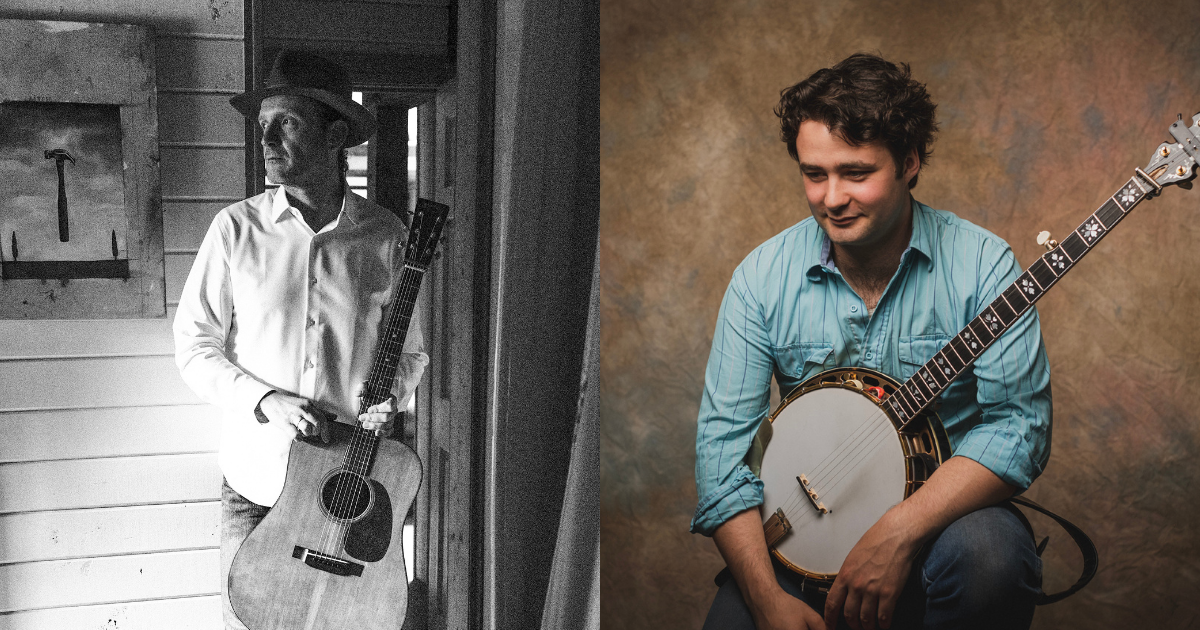
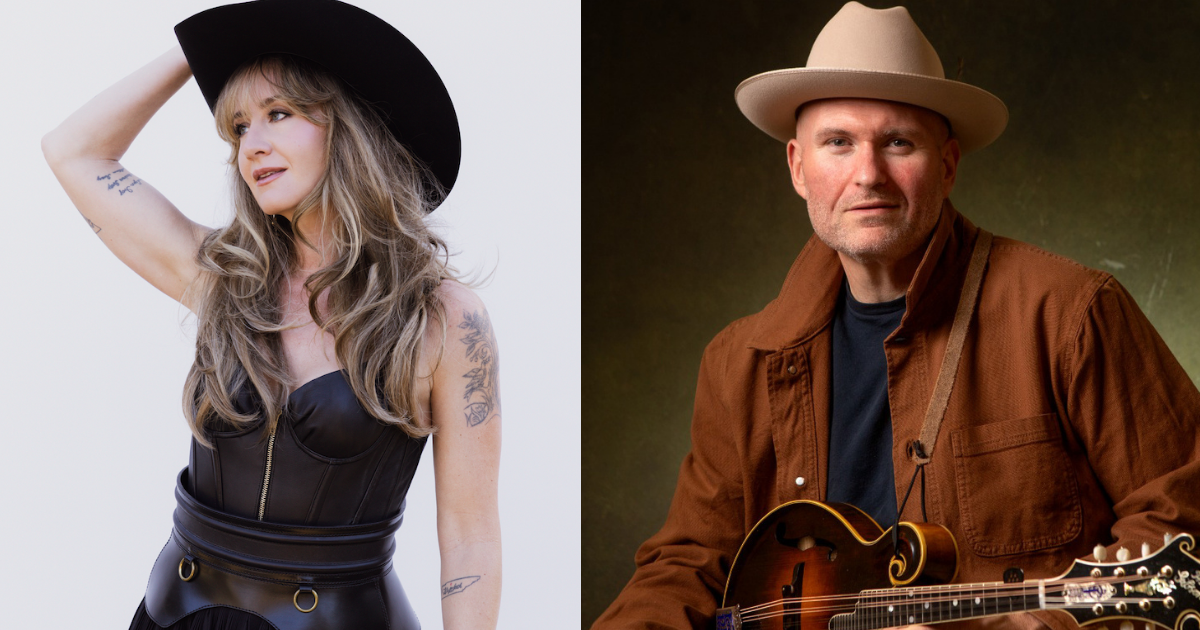
Photo Credit: Margo Price by Yana Yatsuk; Darren Nicholson by Jeff Smith.
The Mythology and Alchemy of Thomm Jutz

Thomm Jutz has worked with a wide cast of characters since moving to Nashville in the early 2000s – John Prine, Nanci Griffith, Todd Snider, Billy Strings, and the SteelDrivers’ Tammy Rogers. But on his latest record, Ring-A-Bellin’, he strived to capture each song with the smallest musical unit possible.

The result of the 18-track album, released April 3, is a distinctly timeless vibe that feels just as much rooted to the present day as it does the mid-1900s or Civil War era, due to its recurring themes of history, mythology, and working with your hands. From self improvement (“Sharpen Your Knife”) to using natural disaster as a metaphor for perseverance (“Holy Mother Mountain”), the mastery that comes with time (“The Hammer And The Anvil”) and becoming more grounded in yourself (“Settle Me Down”), the GRAMMY-nominated transplant from Germany waxes philosophical and takes listeners back to a period long before we walked the Earth.

According to Jutz, the approach – recording with only a small group of people all in the same room not wearing headphones – is his way of replicating the process for how musicians would’ve recorded a century ago.

“This is how I want to make music right now,” he declares. “I don’t want to make a layered record – not because there’s anything wrong with that, it’s just not what I’m feeling at the moment. It’s like saying I don’t want to use red in my paintings right now, because I’ve used enough of it already.”

During a lengthy conversation with BGS at his Belmont office on Music Row, Jutz spoke about his concept of home, how psychology and mythology informed Ring-A-Bellin’, and a companion book that takes listeners even further into the world of his 18 new songs.

You’re releasing this album with a companion book. Tell me a little about what’s inside and why you decided to adopt this approach?

Thomm Jutz: It’s more and more important to create some kind of parallel narrative to the music nowadays. Vinyl has seen a resurgence over the last couple years, but it is not practical for me to take on my one trip to Europe every year. Because of that, I wanted to create something that was still a larger format, fun to hold, and had all the liner notes present without being something so small it’s hard to read.

I’ve also always enjoyed writing and reading – especially during my last 10 years as an instructor at Belmont – so I wanted to articulate some of those thoughts as they relate to the songs on this record in a longer form. When I got to working on it I quickly realized I was in over my head with the graphic design aspect of it, so I consulted my friend Gina Meredith. I just told her what I wanted artwork for and commissioned various folks to create pieces for each song. But rather than tell them what to make, I just sent them the music and had them use the songs as their creative prompts. Because of that I don’t always see the linear connection between the songs and the graphics that were made, but that’s also my favorite part.

A lot of my thoughts on this record revolve around analytic and Jungian psychology, alchemy and things like that, which are difficult to talk about in a tiny CD booklet, so I wanted to do something that allowed for a more longform format.

Overall, this record has a timeless feel – it could be (and is) from 2026, but if I didn’t know any better I wouldn’t second guess if someone told me it was from the mid-1900s or Civil War era as well, especially songs like “Sharpen Your Knife” and “The Hammer And The Anvil.” What are your thoughts on the vibe you were able to conjure up here?

I’m a traditionalist at heart, so everything I do is always trying to bring something new to the way I perceive what came before us, whether that’s lyrically, thematically, or in the recording process – which in this case was mostly all done live. I just think there tends to be more mystery with that music. There’s new music that does that too, but it’s easier for me to find that in old music because the cultural context can be studied since it’s not as close to my own lived experience. No matter how much I listen to or read about Charley Patton, I’ll never understand what he fully experienced because I was never there.

Regarding the songs you mentioned, both talk about people working with their hands, but they’re also metaphors for working on yourself – like you are the hammer, you are the anvil, you are the iron that’s being forged. Those mantras are rooted in human thought and analytical psychology, which is something I’ve dealt with and thought about a lot over the last 15 years. Particularly in terms of how mythology and history go together, and how understood the former is.

On one hand, some people think a myth is a lie and others say a myth is a fact, but both are wrong. A myth is a metaphor and must be understood as one. These songs are an effort to create a mythological framework that is a mirror image of my development as a person and artist. If you ever want to develop as an artist, you must develop as a person first.

With so much of this record wrapped up in concepts like history, psychology, and mythology, what’s the timeline for bringing the 18 songs on it to life?

These songs came from a period of about three years, but when I started I wasn’t setting out to make a record – I just wanted to experiment with a couple things. I had a few songs that I co-wrote with my friend Adam Wright that I wanted to test out with only me singing and playing and Mark Fain on bass. And it worked out really well. As I got fascinated with that process I began looking through my catalog and noticed that the songs which spoke to me the most were all ones that formed a narrative arc.

However, it’s not an autobiographical record that says, “I was born here,” “I did this,” and “This is how it made me feel.” But more so, one that explores spiritual development. I’m not interested in autobiographical songwriting. I find it very claustrophobic how you have to spell everything out to the listener. When you do that you’re shutting them out with nothing to do, which has me opting for a more open approach. A song is only ever truly finished when the listener interprets it for themselves, not with what the person who wrote it intended.

One of the songs on Ring-A-Bellin’ that is tied to more recent events is “Holy Mother Mountain,” which was inspired by the fallout of Hurricane Helene, specifically in Western North Carolina. But it’s also a metaphor for overcoming adversity. Care to explain?

That song is a good example of how writing with someone else – in this case Mando Saenz – can profoundly shape an idea. I remember Helene happening and having this line “Holy Mother Mountain” appear to me out of nowhere. From then on I couldn’t stop thinking about it, so I brought it to a writing session with him and said I didn’t know what to do with it. Then the co-writing dance ensued, with him taking the lead, followed by me for a bit, until it started becoming much clearer that there was no way to move forward without it being about Hurricane Helene somehow.

While it was inspired by that, the song is also about overcoming adversity and understanding that it’s going to happen again. Just because you live through Helene doesn’t mean there’s not another storm coming right behind it. If that storm showed us anything, it’s that perceived climate safety in Appalachia is not true. Also, “mother” and “mountain” are not just a nice alliteration, but there’s also a feminine quality about a mountain. An inverted mountain is a valley – or a place you can seek refuge in – and if you go on top of a mountain, you might find yourself closer to some kind of spiritual awareness.

The song is much more a collection of images that relate to the archetypal images of mother and mountain. Maybe even the word “holy” in the title has something to do with the fact of how little modernity treats nature with respect. Maybe that’s what we need to do – not bring offerings, but bring out attention to it instead of riding around and abusing it like crazy.

On “Too Many Walls” you sing about the idea of home. Given that you moved to the states 25 years ago from Germany, what is “home” to you?

Home and time are two of the biggest themes we write about, and it’s longing that connects the two – longing for home, longing to belong somewhere, longing to live in a different period of time, longing to get over something. Over the last couple years, I’ve also started thinking more about how strange a thing it is to build a house, because you’re just enclosing space that’s been there all along. You’re building and calling it something that wasn’t there before, but the land was always there. It’s a strange construct, and at the same time we need shelter.

From an early age I didn’t feel at home where I was because I longed for a place where music was part of the everyday lived experience. But in Germany after 1945 that was completely out of the picture, because the Nazi regime had completely and absurdly abused any sense of folklore. Since I was longing for an environment where people played music, I went to Ireland for the first time with my wife when I was 18 since it was much closer than coming [to the United States], which we couldn’t afford at the time. I was amazed by the music coming out of the pubs there – it felt so natural, like it was rising out of the Earth.

That fascination carried over into my love of American roots music. In that sense, “home” is where I feel connected to a place through music since that’s my main way of expressing myself. Additionally, southwestern Appalachia and the Black Forest that I’m from in Germany can look astonishingly similar sometimes, so when I go back to visit my parents I occasionally feel like I’m navigating the mountains around Johnson City, [Tennessee]. When I’m in Johnson City I sometimes imagine I’m back in Germany. But Appalachia has more importance to me now because it’s where I live and long to be. If it weren’t for all the writing I do in Nashville and my work at Belmont, I’d be in Appalachia fulltime, because it just speaks to me. When I haven’t been in a while I can start feeling something deep inside me – it’s not a heaviness, but a feeling of “I just really wanna fucking go.” [Laughs]

What has bringing this record to life taught you about yourself?

It’s taught me that I know nothing about graphic design and should always let someone else handle that instead. [Laughs]

In all seriousness, it has taught me that while I don’t consider myself a great singer, I can still enjoy the way I deliver a song if I do it correctly. It’s also taught me that while I have great deficiencies as a guitar player, I do enjoy the way I play guitar and this record, where I’m keenly aware of everything wrong with my playing. Even Tony Rice said that about his playing.

It’s not a sense of having completed my journey as a guitar player, but quite the opposite. It’s more like I’m aware of what’s missing. It’s also taught me that staying on the path of creating and writing a lot. You have to be in it for the long game in today’s environment and be doing it for the right reasons or you’ll run yourself ragged. I already understood that a little bit, but now I understand it even better. Maybe that’s what it’s all about – gaining a little awareness and moving on.


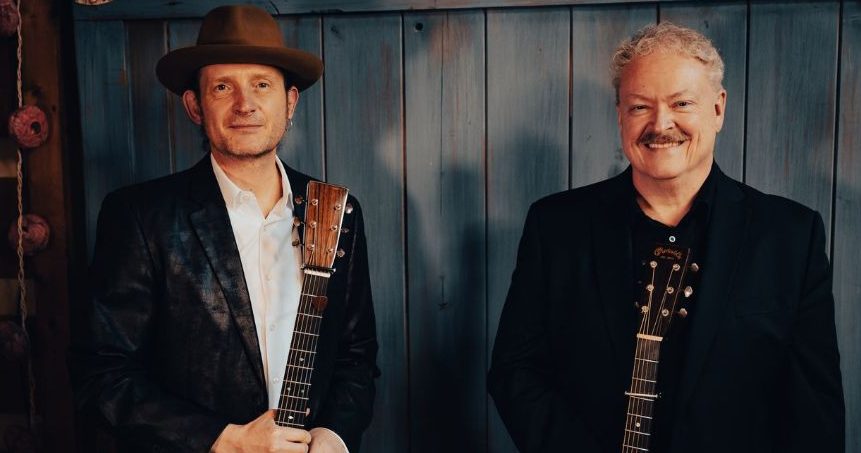
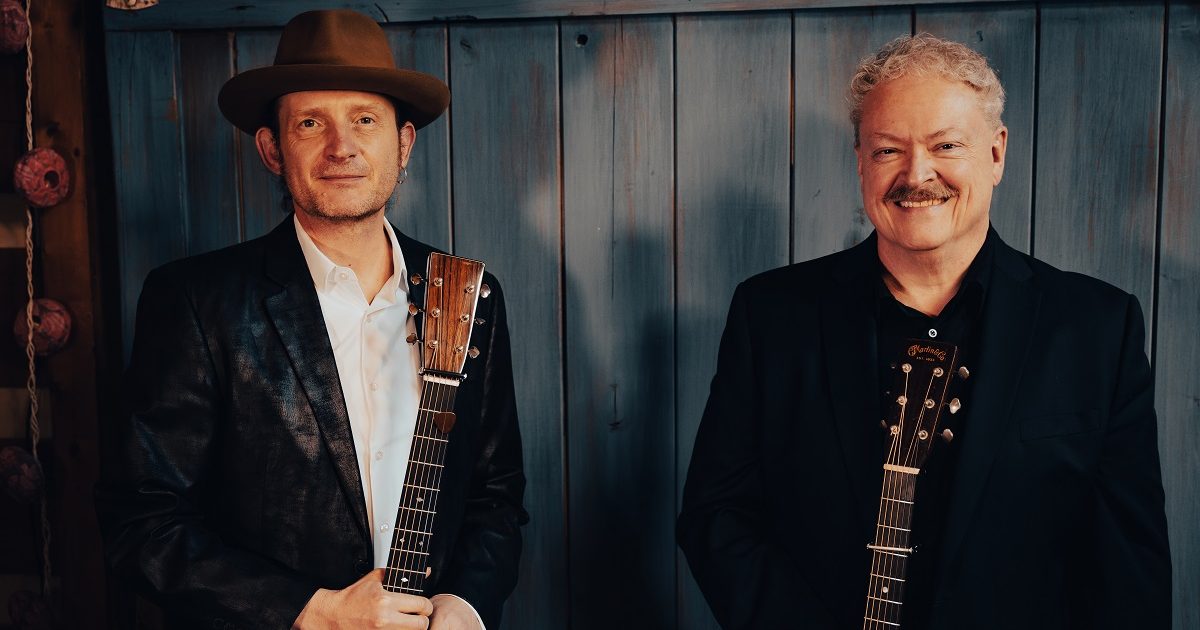
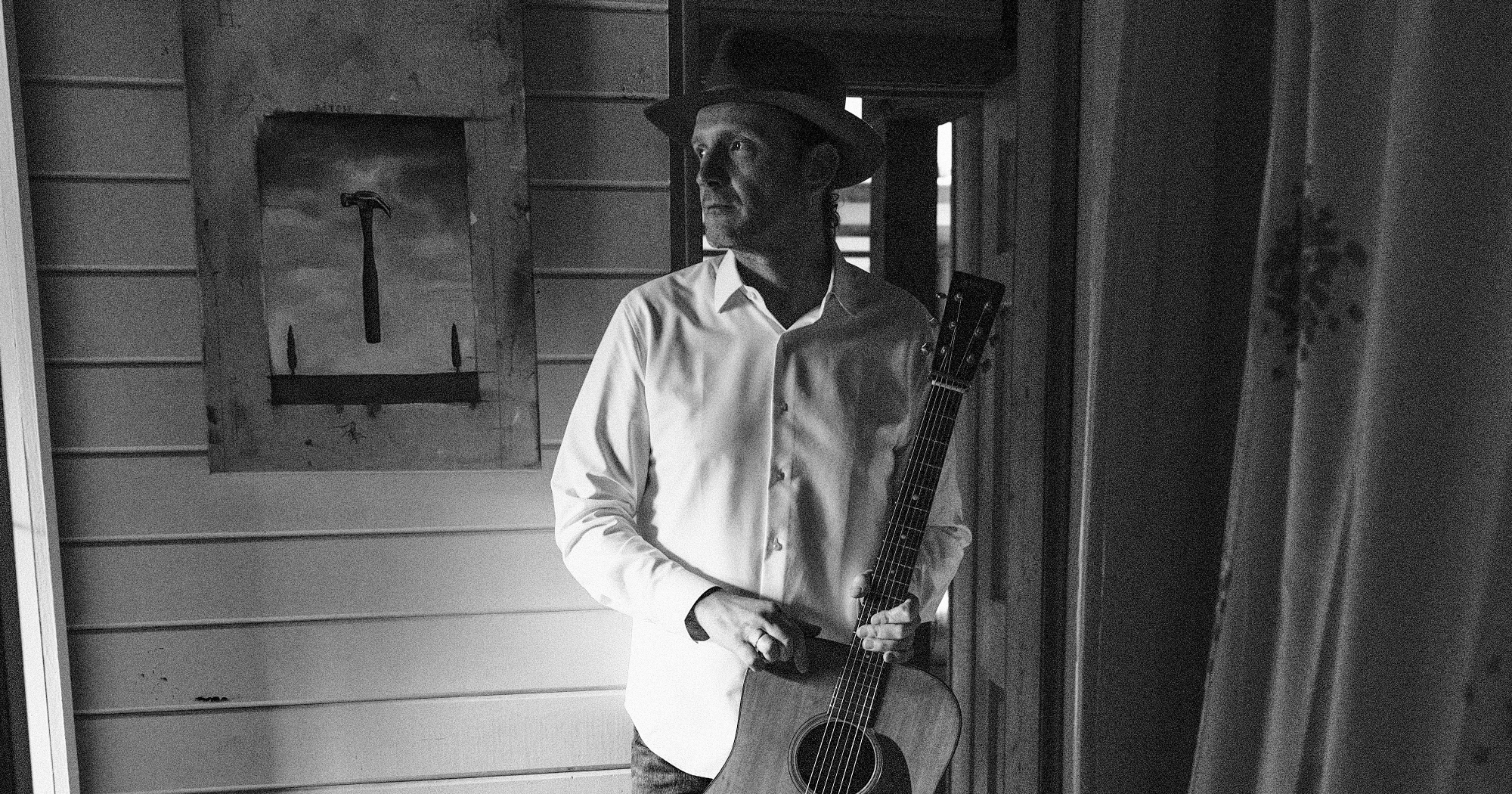
Photo Credit: Don VanCleave

You Gotta Hear This: New Music From Thomm Jutz, Frank Evans, and More

Get ready to enjoy some excellent new roots music – bluegrass, country, blues, and more.

To start us off and get us in a romantic holiday mood, the Bibelhauser Brothers from Kentucky offer their bluegrass rendition of John Prine’s “Glory of True Love.” Releasing, appropriately, on Valentine’s Day, the song reinforces just how well suited Prine originals are to the bluegrass treatment – it doesn’t have to just be “Paradise”! Following up with his own cover of a country classicist, banjo picker Frank Evans pulls together an all-star cast for a live video performance of Roger Miller’s “TJ’s Last Ride.” Evans released the single studio version last week, following it up with Shad Cobb, Thomas Cassell, Mike Bub, and Jimmy Stewart joining him for the excellent live video of the track.

For a bit of gospel, Eighteen Mile releases a new single today, “Living Waters,” showing yet again the deep connections between bluegrass and sacred music. It’s a thoughtful, contemplative, and inspiring breath of fresh air – or, perhaps, a refreshing sip of cool, living waters. Plus, singer-songwriter Thomm Jutz brings us a live performance video of a new bluesy, original track, “Ramblin’ Gamblin’ Blues,” just voice and tender fingerpicked, acoustic blues in duet. Jutz reflects on the undying temptation of such vices and how the low points they often bring can be a vehicle to better things. “Ramblin’ Gamblin’ Blues” heralds Jutz’s upcoming solo album, Ring-A-Bellin’, arriving in April.

To close us out, Nashville honky-tonkin’ staples – and life partners – Hannah Juanita & Mose Wilson have a brand new EP and with it, a video for the title track, “If I Ever Lost You.” Gauzy and retro, Juanita and Wilson put on throwback styles and sounds without it feeling contrived or gratuitous – while all decked out in countrified wedding garb. It makes perfect sense, as they explain, “As we prepare to wed this year, the lyrics hit especially close to home. We drew inspiration from the greats who paved the road: George & Tammy, Loretta & Ernest, Red & Kitty, keeping their timeless storytelling at the core.”

There’s plenty to boot-scoot to below, so get scrolling! You Gotta Hear This…

Bibelhauser Brothers, “Glory Of True Love”

Artist: Bibelhauser Brothers
Hometown: Louisville, Kentucky
Song: “Glory of True Love”
Release Date: February 14, 2026
Label: Common Loon Records

In Their Words: “‘Glory Of True Love’ has been a part of our repertoire during live shows for many years with the Bibelhauser Brothers. It’s a beautiful feeling to ‘grass up’ such a timeless tale of love, written by one of the most prolific songwriters of his generation, John Prine. Recording this single has been a really special way to follow up since dropping our full-length record, Down the Road, including mostly original songs just four months prior, as our band and our signature sound has evolved. This is our first recording featuring Boston, Kentucky, native Turner Hutchens on mandolin, with Jeff Guernsey tracking twin fiddles, Steve Cooley on banjo, Adam on bass, and Aaron singing and playing guitar. We hope you enjoy our own Bibelhauser Brothers spin on this John Prine classic, with more music to come soon!” – Bibelhauser Brothers, Aaron and Adam

Track Credits:
Aaron Bibelhauser – Vocal, guitar
Adam Bibelhauser – Bass
Steve Cooley – Banjo
Turner Hutchens – Mandolin
Jeff Guernsey – Fiddles


Eighteen Mile, “Living Waters”

Artist: Eighteen Mile
Hometown: Upstate South Carolina
Song: “Living Waters”
Release Date: February 13, 2026

In Their Words: “In the Bible, there is a story commonly called the story of the ‘woman at the well.’ In that story, Jesus is talking to a lady who was married five times, likely abused and abandoned in those relationships before eventually becoming an outcast in her society. Jesus, using an analogy, called himself the ‘living water’ and said that she could believe in him and be completely, eternally fulfilled. C.S. Lewis famously said, ‘If I find in myself a desire which no experience in this world can satisfy, the most probable explanation is that I was made for another world.’ This song captures the heart behind everything Eighteen Mile does. We want people to experience and find complete fulfillment in Jesus, the ‘Living Waters.'” – Carson Aaron

Track Credits:
Hallie Ritter – Upright bass, harmony vocal
Carson Aaron – Acoustic guitar, harmony vocal
Emily Guy – Lead vocal
Jack Ritter – Acoustic guitar
Savannah Aaron – Fiddle
Andy Leftwich – Mandola
Steve Pettit – Mandolin
Rob Ickes – Resonator guitar


Frank Evans, “TJ’s Last Ride”

Artist: Frank Evans
Hometown: Toronto, Ontario, Canada
Song: “TJ’s Last Ride”
Release Date: February 6, 2026
Label: Englehardt Music Group

In Their Words: “I’ve loved Roger Miller’s music since childhood, from the Robin Hood soundtrack to constant car rides with his greatest hits, which made choosing one of his songs feel natural. ‘TJ’s Last Ride’ stood out for its Hartford-like imagery and the mournful warmth of a Stanley Brothers ballad. In the session, we agreed to keep it simple – the take you hear is almost entirely the third run-through. I was honored to record it with Casey Campbell, Mike Bub, Justin Moses, Shad Cobb, and Jake Stargel.” – Frank Evans

Video Performance Credits:
Frank Evans – Banjo, vocals
Jimmy Stewart – Dobro, vocals
Mike Bub – Bass
Thomas Cassell – Mandolin
Shadd Cobb – Fiddle
Jake Stargel – Guitar

Video Credits:
Videographer – Kyle Horan
Video Editor – Frank Evans


Thomm Jutz, “Ramblin’ Gamblin’ Blues”

Artist: Thomm Jutz
Hometown: Nashville, Tennessee
Song: “Ramblin’ Gamblin’ Blues”
Album: Ring-A-Bellin’
Release Date: February 13, 2026 (single); April 3, 2026 (album)

In Their Words: “Going on the road at 19 was the perfect way to live at the time. No responsibilities but to make it to the next gig. Do what you know how to do and move on. That way of living follows its own archetypal patterns, that’s why it doesn’t matter where you are, you could be going up and down the Mississippi River in 1898 or the damn Autobahn in Germany in 1998.

“There’s always somebody waiting to play another game, frequently with a bottle of booze. For some people, that charm never wears off. It did for me. I got sick of the people I was with, sick of myself for sitting down at the table to play their game.

“As it turned out, that part wasn’t over when I moved to Nashville – as it turned out, it was necessary, so better things could come.” – Thomm Jutz


Hannah Juanita & Mose Wilson, “If I Ever Lost You”

Artist: Hannah Juanita & Mose Wilson
Hometown: Nashville, Tennessee
Song: “If I Ever Lost You”
Album: If I Ever Lost You (EP)
Release Date: February 13, 2026

In Their Words: “‘If I Ever Lost You’ is a love letter to the golden era of country delivered in a classic, heartfelt shuffle. It’s our first co-release and our first duet, built from years of collaboration and crafted as a performance we both get to share on stage. The song speaks from the heart; love is everything when it’s here, and its absence is everything we fear. As we prepare to wed this year, the lyrics hit especially close to home. We drew inspiration from the greats who paved the road: George & Tammy, Loretta & Ernest, Red & Kitty, keeping their timeless storytelling at the core.” – Hannah Juanita & Mose Wilson

Track Credits:
Hannah Juanita – Vocals
Mose Wilson – Guitar, vocals
Jeff Taylor – Piano
Norbert McGettigan III – Bass
Matty Meyer – Drums
Ryan Stigmon – Pedal steel


Photo Credit: Thomm Jutz by Don VanCleave; Frank Evans by Scott Simontacchi.

Award-Winning Bassist Vickie Vaughn Is Ready to Travel On

If you’ve listened to bluegrass made in the last decade, odds are you’re not only familiar with but absolutely enamored by the utter powerhouse that is Vickie Vaughn. Named the IBMA Bass Player of the Year thrice in a row (2023, 2024, & 2025), Vaughn has established herself as more than a class act – she’s an integral anchor of today’s bluegrass scene and beyond. Presently touring with the acclaimed all-women supergroup Della Mae, Vickie has a slew of accolades under her belt, having sung background vocals with Patty Loveless, toured with High Fidelity, and collaborated with just about every esteemed bluegrass musician under the sun.

November 21, 2025 saw Vaughn set sail unto uncharted waters with the release of her debut full-length solo album, Travel On. Released by Mountain Home Music Company, Vaughn deploys an all-star cast to bring her dynamic compositions to light. The record features guest vocals from Ronnie McCoury, Casey Campell on mandolin, Wes Corbett on banjo, Cody Kilby on guitar, Dave Racine on drums, harmony vocals from Justin Hiltner, Lillie Mae, and Frank Rische, and fiddle from Deanie Richardson, who also serves as the record’s producer.

Travel On champions Vaughn as its frontwoman, a role she hasn’t chronicled in studio since her six-song EP came out a decade ago. Her songwriting is full of dynamic abundance, from the deeply stirring gospel song “The Pilot,” to the absolutely raging “Sleepin’ in the Rain” to the emotive and heartfelt “Mama Took Her Ring off Yesterday.” Vaughn manages to strike a full range of emotions throughout the album’s thoughtful arc, a narrative bound by her buoyant relationship to both rhythm and melody alike.

Ahead of the album’s release, BGS had the unmatched pleasure of sitting down with Vickie Vaughn for a chat about Travel On, music, machinations, musicianship, and more.

Congratulations on the album release! I want to hear all about Travel On, but I’m wondering if you’d be able to take us back to the start for a bit and tell us about your personal musical history.

Vickie Vaughn: Oh golly! I started really early because of my cousins, who I adored growing up. I really looked up to them and they were just great singers who sang all the time and could play piano and guitar. I grew up in a Baptist church. When I was little, maybe six years old, the preacher’s wife found out that I could sing, so she asked me to come sing in the choir. I grew up singing in church and then when I was nine years old, back in Kentucky where I’m from, I got hired as a background vocalist. I know it sounds insane – I’m so normal now, but I was like a freak kid! I could hear harmony and sing every part. When the guy running the Kentucky Opry found that out, I was hired as a kind of novelty act at nine years old. I was there every weekend from when I was nine to when I moved out at 17 as a resident female vocalist and background vocalist.

As for the instrument side of things, my parents had me play classical piano and I hated it so much. I honestly got into bluegrass kind of late for a bluegrass musician – around 14. You know, Sierra Hull, Kimber Ludiker – they started when they couldn’t speak words, but I was a little late to the game. I would go to these bluegrass jams and there would be a bass there, but nobody would be playing bass. So I would pick it up, and I could add decent rhythm, stay on beat, learn the open chords. But then I started taking lessons from this guy named Scottie Henson. He traveled with the Grand Ole Opry touring band back when that was a thing. He was a banjo player, but he taught me how to play bass, which is incredible.

When I was 17, I moved to Nashville to go to Belmont and I was a classical vocalist there. I moved to commercial vocals my junior year and bass was a hobby. I got involved in the bluegrass ensemble and that’s kind of how I got known as a bass player in school. And then I got hired by a touring band from a girl I knew from bluegrass ensemble. The rest is history!

As you were growing up drenched in music, do you recall any songs that particularly sparked inspiration or curiosity for you as a child?

I remember when I was in the car with my dad, I used to love the music he listened to. Mama would always listen to Southern gospel and that was just not my jam. I remember telling Dad, “I hate the stuff that mom listens to.” And he was like, “Oh god, me too.” And I just remember thinking, “You’re so cool, Dad.” Once, we were listening to a classic rock station and the freaking “Wreck of the Edmund Fitzgerald” came on – I know there are all these memes about it now. But I remember having a moment with him in the truck where I was just like, “What is this?” And he was like, “Oh yeah, it’s a true story.” And I was like, “Get out!” That one really struck me.

Another one, which isn’t really a song, but there was this radio station, the local country station – 93.3 WKYQ. On the weekends, starting at 10 p.m. on Fridays and Saturdays, there was a radio program called the Outlaw Hours, and they would play stuff like Waylon Jennings, Merle, Steve Earle, Charlie Robison. It was outlaw music, edgier rootsy stuff, even some edgier bluegrass stuff. I remember riding in the car back from the Kentucky Opry and I’m just like, “Daddy, let’s listen to Outlaw Hours.” He was like, “You like that stuff??” Because I was little, and you know, a lot of that was not appropriate for a child to listen to, but I just loved it.

I can totally see how that influence carries through into your music today.

Well, I liked the subject matter. It wasn’t all about love. I don’t really like to write songs about love. There are already a lot of songs about love. I don’t have anything unique to say about love. I have something unique to say about the way I process a hangover. Or my faith! My faith is so individualistic and personal. If I feel like I don’t have a new idea, I’m not gonna write it or sing about it.

What is the songwriting process like for you? How did you go about selecting the songs on this album?

This might sound silly too, but do you ever walk around the house and just sing about what you see? So many of my songs come out that way. Like with “Bottle of Wine” – I collect wine, so I always have some on hand. Then it was the day after a breakup and I was super hungover, because I had decided to just drink about it. I walked out of my bedroom and I saw all these empty bottles of wine on the coffee table. And I thought, “I don’t want to see another bottle of wine. Maybe I’ll write that into a song when I’m feeling better.” That’s how most of my songs come out, the hook will come to me and then I’ll just expand on it. Sometimes I like to co-write, like with Thomm Jutz, we co-wrote “Bottle of Wine.” But then “The Pilot,” a song about my faith, I wrote by myself. Faith is so, so personal. Even if a person of faith and I could agree on some fundamental levels, my faith and my walk are so different than literally anyone else’s. So I had to write my own unique faith-based song.

Then “Mama Took Her Ring Off Yesterday” I co-wrote with Deanie Richardson. I brought that idea to her because my dad passed and he was one of my best friends in the world. He hated sappy sad songs, so I didn’t want to write that. I knew I needed to write a song, then I went to visit my mom about three months after he passed. We went to a Mexican restaurant and she slid her left hand over past the chips and salsa, showing me that she took her ring off. I support her and everybody grieves differently, but I still told her I thought it was early for that. But she’s bootstrap Kentucky and she was like, “We have to move on. Life doesn’t stop.” I was just left thinking, “Wow, Mama took her ring off yesterday. That’s the moment I need to write about.” I took it to Deanie because she knew my dad and knows my mom and she really walked with me through my grieving process.

That one turned out so beautifully! I’m curious – you’ve had an extremely successful bluegrass career for a number of years. What made now feel like the right time to put out a solo album?

The awards. Women always apologize for winning and here I am, apologizing for saying “my awards,” but that’s really what it was. People are paying attention. If I’m gonna write a song, I don’t want it to hit deaf ears. Making a record is such an expensive and painstaking process and your heart and soul go into it. After my dad died – well, he was such a cheerleader for me. And an inspiration – he just inspired me. If I was feeling bad about something, I felt like if he believed in me, then I could do it, you know? I didn’t believe in myself without him for a long time, so I couldn’t do it. Especially in the music industry, you can’t do shit if you don’t believe in yourself. It’s too hard. So I waited a while until I felt like there were enough people who believed in me and then I believed in myself. That’s when I felt like I had the energy and the belief to make a record that people would actually hear.

That makes a ton of sense. How do you feel like your relationship to music has changed now that you’ve taken on the role as captain of a project?

This is the first time I’ve ever made a full-length record that’s my own and not just playing on somebody else’s. And of course, Deanie is producing it, but being in control of the material and the direction of the record – it’s funny that you ask, because I almost didn’t realize the direction of the record until it was done. I realized after I heard it all in one setting. The concept is vulnerable joy.

Working on anybody else’s record and supporting them in that way – especially with the bass, which is such a big vibe creator as an instrument – I never felt like I could choose, or was confident enough to choose, the direction. But finally, here I am in my mid-30s, and I’m ready. It was so fun taking the reins artistically, getting to sign off on every bit of it. Every choice I felt in my heart. I was able to say, “If this doesn’t scream Vickie as fuck Vaughn, then I don’t want it!” I would rather not make a record [any other way]. Because when I was younger, I made EPs that I thought other people would like. That was the point for me. But now I’ve traveled around and I know what works. I know what an audience likes to hear; that base is covered. The process of just having to make it totally “me” – that was my favorite part.

How did you go about choosing the community to help you out with bringing this record to life?

So the engineer, Sean Sullivan, I’ve worked with him for a long time on other people’s records, and then I did a small project with him that never got released. This might sound nitpicky, but I feel like the sound engineer in a recording process makes one of the biggest differences. It’s hard when there’s too much input – that’s the producer’s job. But I wanted to work with Sean because he’s so efficient, he’s quick and he has such a calm spirit. He gives direction or a suggestion so seldom that when he does I really take it to heart.

And then, as for Deanie Richardson, my producer, I always knew that she was an amazing musician, but this is the first time that I have really been enamored with her production abilities. It’s the first time I’ve worked with her as a producer. She has taken each song and made it into my record. I would come to her with just bass and vocals, and she would just shape each song and make them each sound different. She’s a freaking genius! And she’s totally unafraid to just be herself. She’s an unashamed woman and that’s the energy I wanted in my record.

The band on the record is all folks that I’ve known and played with here in town. I didn’t want there to be anybody on the record I hadn’t played with or loved or traveled with. Because it’s my first record and I know me, and I know that I would be self-conscious if there was a stranger in the room. And then Justin, my best friend, he just matched my freak so hard on there. We have such a beautiful community.

It’s so beautiful how y’all uplift and support each other! How is it feeling for you to finally have this piece coming out into the world?

I’m terrified, but I don’t know – I kind of like that! I like a challenge. If I’m not scared, then I don’t care. I’m really excited to hear what folks think about it. I want to see what songs touch people and learn from that. And I’m really excited for Deanie to be introduced as a producer, and for everybody to see her talents in that area. I’m really excited to learn from the release. I’ve learned so much in the process already, because there’s so many firsts, and I’m excited for the reception of this record to influence my next. That one will be even more me. I never want to stop growing!


Photo Credit: Laura Schneider

The SteelDrivers Celebrate 20 Years, Usher in New Chapter With ‘Outrun’

With four lead vocalists, seven studio albums, one GRAMMY Award to their name, and countless fans won over, The SteelDrivers have been one of this century’s most consistent and trailblazing bluegrass bands. That longevity can be credited to three things – the strength of their catalog of all-original songs, their collective precision picking, and the family atmosphere the band has cultivated together since forming in 2005.

Despite not joining forces until then, banjoist Richard Bailey says he’s known bandmates Tammy Rogers (fiddle) and Brent Truitt (mandolin from 2012 to present) since they were teenagers. His first run in with Mike Fleming (bass) and Mike Henderson (mandolin 2007 to 2011) came not long after during a college ski trip, with the group remaining close ever since. In the early 2000s Bailey relocated to Nashville from Memphis and reconnected with Henderson, regularly joining him at the Station Inn during Sunday night bluegrass jams and setting the foundation for what would eventually become The SteelDrivers. Then one day Henderson rang him up and was glowing about a young kid he’d just started writing with named Chris Stapleton who was wanting to play a little bluegrass.

“We eventually got together at his house and nobody knew Chris except for Henderson,” Bailey tells BGS. “We rehearsed a few bluegrass standards and then Chris began singing and Tammy, Mike, and I all looked at each other and went, ‘damn!’ I remember asking if the song he sang was an old Stanley Brothers tune and he said that it was actually one that he wrote.”

By that point, Henderson and Stapleton had already been penning songs together for a few years, with one of their most notable co-writes to that point being “Higher Than The Wall” from Patty Loveless on 2003’s On Your Way Home – a full seven years before The SteelDrivers eventually cut it on 2010’s Reckless. With their songwriting prowess already well established, the band opted to lean all the way in, keeping to the pattern of only recording songs crafted by them. Early on that mostly consisted of songs from Stapleton and Henderson, but has extended to all of the band in the years that followed, with Rogers writing the entirety of 2020’s Bad For You and the band’s newest member, Matt Dame, contributing songs for the first time ever on the group’s latest effort, Outrun.

“Starting with our very first record we determined that we were only going to play original music and we’ve never wavered from that,” explains Rogers. “It’s always been when you come to see The SteelDrivers that you’re not going to hear an updated version of ‘Little Cabin Home On The Hill’ or a modern country song done bluegrass style. There’s nothing wrong with any of that, but the whole point of the band originally was two songwriters coming together – Chris Stapleton and Mike Henderson – and everything else grew around that.”

That persistence of sticking with original material doesn’t only extend to The SteelDrivers recorded catalog, though. As Rogers points out, you’ll also be hard-pressed to hear any covers during the band’s live show. Per Bailey, the only such instance came during their televised Grand Ole Opry debut in 2008 when Charlie Daniels joined them on stage for a sing along to Flatt & Scruggs’ “I’m Gonna Sleep With One Eye Open.”

However, the band has regularly employed and worked with writers outside the group to craft songs centered around what Fleming describes as “uneasy listening music where bad things happen to good people.” This includes the likes of the venerable Verlon Thompson (“Booze And Cigarettes”), George Strait, Martina McBride, and Pam Tillis collaborator Leslie Satcher (“Outrun,” “Bad For You”); and German-born Thomm Jutz (“I Choose You,” “Cut You Down”), with whom Rogers has written over 140 songs (and counting).

“We’re fortunate to have always had wonderful songwriters in the band no matter who the membership was,” clarifies Fleming. “As it’s morphed through different CDs and personnel the strength of the songwriting has never wavered. Our goal has always been to serve the song, no matter who is singing it.”

Regardless of who’s been writing – or singing the songs for that matter – the band’s impeccable storytelling and bluesy grit has never faltered, even when lineup changes shook the band to its core. The first of those came in 2010 when Stapleton left to begin pursuing his solo career – a move that has resulted in him becoming not just one of the most well known country singers, but one of the most renowned vocalists of any genre globally. Henderson followed a year later, with Gary Nichols and Truitt stepping in to fill each of their shoes, respectively.

“I would’ve loved it had Stapleton never left the band – I mean who doesn’t want to be in a band with Chris Stapleton?” Rogers continues, “But when he left we had to make the decision of do we keep going or do we stop, because it wasn’t going to continue the same way that it had before. It wasn’t even a choice to me, though – I wanted to keep playing. To me that was better than no SteelDrivers at all.”

With two of their founding members gone, the band set out to prove they could still create bluegrass bangers and it didn’t take long for their efforts to pay off. Five years into their new look lineup The SteelDrivers won their first GRAMMY Award, taking home the honor for Best Bluegrass Album with The Muscle Shoals Recordings at the Academy’s 58th annual gathering in 2015. According to Rogers, the GRAMMY completely changed the band’s trajectory and continues to have a positive impact over a decade later.

“There’s been a lot of discussion in recent years about the validity of the GRAMMYs, but for us the recognition from the Academy has been a game changer,” states Rogers. “There’s a huge difference between being GRAMMY-nominated and a GRAMMY winner. For us, we were suddenly validated and were able to play bigger shows and venues that wouldn’t have considered or booked us prior to winning.”

In addition to validating their decision to keep pushing on, the band’s success post-Stapleton has also proven that they excel at finding new vocalists with their own distinct styles and vibrant storytelling to fill the void. First it was the funky, bluesy, and soulful sensibilities of Nichols. After him came the rock ‘n’ roll energy and piercing holler of Kelvin Damrell – who Rogers described as “the highest pitched singer of anyone we’ve had in the band.” He’s the only Kentuckian other than Stapleton to ever be in the band and sang lead for over three years – including on 2020’s Bad For You – prior to stepping aside in the summer of 2021.

It was then that the band recruited Matt Dame, solidifying the lineup they still have today. While each of the four singers have their own sounds, Rogers says there’s also plenty of characteristics that tie each of their eras together. “We figured out early on that it’s not about finding someone who sounds like Chris, but finding someone with a soulful, gravely, raspy and bluesy quality and letting them put their own spin on things,” says Rogers. “Aside from looking for those attributes we’ve never asked anyone to sing a certain way. Even though they sound similar, within two seconds of listening to a song I can tell whether it’s Kelvin, Chris, Gary, or Matt singing. They’re all distinct in my mind.”

Arguably even more impressive than the band’s success and consistency in sound through its different chapters has been their knack for continuing to make cutting edge bluegrass music with singers not steeped in bluegrass history with voices that generally “don’t fit” the traditional blueprint. From Stapleton on, the band has gravitated toward gritty blues and southern rock more than anything else. They’re comfortable at the confluence of electric and acoustic sounds, with one foot firmly planted in the past and the other stirring up dust and turning heads as it propels string band music into a completely new dimension.

“Chris Stapleton was not a bluegrass singer,” insists Fleming. “He was more of a blues singer, but the arrangements were always with bluegrass instruments. As a result, our propensity was to go toward playing bluegrass, but we never shied away from a song we thought we might not be able to play. For instance, ‘Midnight Train To Memphis’ from our first album was a bluesy rock ‘n’ roll number that Richard Bailey messed around on with on banjo one day. We have these bluegrass instruments, but we’re not confined to exclusively playing that way as long as we’re serving the song.”

Much like they’ve always served the song, The SteelDrivers’ fans have served them well in return, sticking by their side and continuing to buy tickets and albums through the years as the group has weathered changes in their lineup and sound. It’s led to an unprecedented run of success that Rogers jokingly compared to another bluegrass great.

“It’s almost the Ralph Stanley model,” she jokes. “After Carter [Stanley] passed away he had Larry Sparks, Roy Lee Centers, and Keith Whitley join him. It was a great line of singers that followed, all of whom embodied that Carter Stanley sound. We’ve also had several incredible vocalists with their own styles come through the band that we’ve been able to have success with by honing in on a singular sound together.”

The latest person the band brought in to hone in on that sound, Matt Dame, is a longtime Nashville songwriter and session player who joined in 2021 after a referral by friend and esteemed writer Gary Baker (John Michael Montgomery, Alabama, Lonestar). A couple rehearsals followed and by the end of July he was out on the road playing his first shows with the group. Having worked behind the scenes in the music industry for nearly as long as The SteelDrivers had been around, the move to performing in front of large crowds night in and night out was a big adjustment for Dame, but one he quickly found himself falling in love with.

“You do anything for 15 or 20 years and it becomes your comfort zone,” admits Dame. “I really enjoyed the session world, but it’s a lot different. Now I get a realtime reaction to what I do – there’s no stopping to go live again because you were flat. What I’ve loved most from our shows is the crowd singing the songs back to us, which can really carry you along.”

“There’s never a spot where you lose the audience or feel the need to kick into ‘Wagon Wheel’ to get everyone singing again, because the body of original work is so strong. It stands tall on its own,” he continues. “That speaks more to the power of the song than of any one vocalist, which says a lot because the band has had some incredible singers through the years. I’m just hanging on and trying to put my own spin on things.

“We’re all different, but one way we’re all the same is we all can deliver the songs in our own way that’s very believable. It sounds like somebody’s really living what they’re singing, not just going through the motions.” Even having been on the outside looking in for so long, Dame says that it’s hard to ignore the formidable nature of The SteelDrivers’ songwriting catalog, one that he’s thrilled to finally be a part of on Outrun – the band’s first project on the famed Sun Records (and also the label’s first bluegrass album). The record is his second with the band following 2023’s gospel project, Tougher Than Nails, that saw him only singing and playing guitar. Now, on his second go-round, he integrates himself even further, helping to write the songs “On My Way,” “Emma Lee,” and “Rosanna.”

“It was a really cool feather in my hat to be able to write some songs for this album and getting to do it on Sun Records is like the icing on the cake,” he exclaims. “I’m a huge Elvis fan and growing up in Arkansas listened to Johnny Cash all the time, so my eyes lit up when I heard we’d be their first bluegrass album ever.”

In addition to featuring the co-writes from Dame, Outrun also sees the band paying tribute to Henderson, who died unexpectedly from a pulmonary embolism in September 2023 – mere weeks after the release of Tougher Than Nails – with cuts of his songs “Prisoner’s Tears” and “Painted And Poison.” Although he hadn’t played with The SteelDrivers since 2011, his loss shook the band, which Rogers calls him the architect of, along with the entire bluegrass and country worlds.

“We knew we wanted to honor him in some way, which is what kickstarted talks for this new record and led to our shortest cycle between records yet,” confides Rogers. “In addition to recording two of his songs on it we’re also planning to have a slideshow commemorating him and 20 years of the band on some of our tour dates later this year.”

It’s tough enough to survive as a band for two decades when everything is going right, so it speaks volumes for The SteelDrivers making it as long as they have with all the obstacles that have gotten in their way. At the same time, the group’s unrivaled level of talent – both on their respective instruments and with their insatiable songwriting – have more than cemented their place in the bluegrass and American roots music zeitgeist for generations to come. For Dame, it’s a legacy that’s equally intimidating and exciting to be a part of.

“Professionally I’ve grown, because I’m doing something that’s new to me, but also because I’m doing it surrounded by a band where everybody does their parts with excellence,” he reflects. “If you don’t carry your weight it’s really going to be noticeable, which has pushed me to be better with everything that I bring to the group.”


Photo Credit: Glenn Rose

LISTEN: Martin Simpson & Thomm Jutz, “Come All You Fair And Tender Ladies” (feat. Cara Dillon)

Artist: Martin Simpson & Thomm Jutz
Hometown: Sheffield, England & Nashville, TN
Song: “Come All You Fair And Tender Ladies” (featuring Cara Dillon)
Album: Nothing But Green Willow: The Songs Of Mary Sands And Jane Gentry
Release Date: September 29, 2023
Label: Topic Records

In Their Words: “‘Come All You Fair And Tender Ladies’ is one of the most hauntingly beautiful songs that I know. It is one of the better-known songs from the Sharp collection that is still sung on both sides of the Atlantic. Depending on where it is sung and by whom, different shades of meaning are illuminated – only a truly great song has this quality. We ran through this song twice in Cara’s kitchen, then headed upstairs to her studio and recorded it in one take. I have been a fan of Cara’s singing for a long time. Playing this song with her and Martin Simpson, one of the greatest guitarists on the planet, has been a highlight of my musical life.” – Thomm Jutz

“I’ve long considered that ‘Come All You Fair And Tender Ladies’ was one of the brightest jewels of Anglo-American folk songs. It has a bitter lyrical intensity and an exquisite and poignant melody which serves it so well. This setting and performance was the work of no time in recording terms, but it is three lifetimes worth of musical and personal experience, which allowed it to be captured with such ease. I loved working with Thomm on Nothing But Green Willow, and Cara Dillon is simply one of the finest singers of traditional song, as she demonstrates here.” – Martin Simpson


Photo Credit: Booney Crawford

Tim Stafford & Thomm Jutz Excavate the Stories of Appalachia on ‘Lost Voices’

Tim Stafford’s 97-year-old mother, Bernice, still saves newspapers—big stacks of yellowing back issues, should she ever need to retrieve some scrap of local intel. She will clip the occasional notice from those aging pages and dispatch them to her son Tim Stafford, too. The Blue Highway cofounder and former member of Alison Krauss & Union Station now lives 40 miles south of his Kingsport, Tenn., hometown.

Late in 2021, Bernice didn’t even need to cut and post. Instead, she simply handed him a recent series from the Kingsport Times News and pointed at Kinnie Wagner. An Appalachian outlaw, Wagner ran off with the circus, ran moonshine for a sheriff, and repeatedly ran away from jail after killing multiple cops nearly a century earlier. The saga might be a song, Stafford thought, but Bernice just wanted her son to know he was also a dashing folk legend.

“He was this self-styled ladies man. Have you seen pictures of him, that Harry Houdini haircut?” Stafford, 62, says, laughing from his home outside of Greeneville, Tenn. “She wanted to let me know that her grandmother thought he was the stuff. He was a local hero.”

Despite a master’s degree in history from nearby East Tennessee State University and a lifelong enthusiasm for Appalachian lore, Stafford had never heard of Wagner. As he began to ponder the renegade, complexities emerged—his deification by disenchanted locals as a Robin Hood acolyte whose funeral was allegedly attended by 10,000, his vilification by locals who had lost family members to a murderer, the gray area in between. “In the ’20s, before mass media, it was easy to build up this myth,” Stafford says. “But good or bad, it’s the sort of thing that needs to be preserved. His story was definitely a lost voice.”

“The Ballad of Kinnie Wagner” is now an early standout on Lost Voices, an absorbing debut LP written and recorded alongside Nashville songwriter Thomm Jutz. Above darting banjo and pensive fiddle, the pair relay a first-person synopsis of Wagner’s deeds and misadventures, ending on twin notes of resignation and redemption.

That sense of sympathetic storytelling indeed shapes most of Lost Voice’s 14 tales, from a barnstorming Black baseball team in the Appalachian foothills to the region’s amateur physicians and midwives who healed with home remedies passed among generations and neighbors. Lost Voices is a thematically sprawling bluegrass record, reaching across multiple decades, disparate traditions, and far-flung regions to offer cautionary and sometimes complicated accounts alongside songs of hopeful redemption. Think of it as Howard Zinn’s hidden American histories meets Wilma Dykeman’s ethnographic Appalachian books, bound by an unfailingly poised melodies.

“Bluegrass is all about sad stories, morbid stories—murder ballads, you know?” Stafford says. “But one thing I have learned is that there are very few topics that can’t be songs. And some of the ones we have written are pretty far out.”

Jutz may, at first glance, seem like an unlikely writing partner for these songs of the rural South. Born in 1969 in Germany’s southwest corner, not far from the Swiss and French borders amid the Black Forest, he is a classically trained guitarist. But a 1981 television performance by Bobby Bare captivated him, prompting an obdurate interest in country and its kin.

“The allure of this music is that it lives in the past and present at the same time, but it’s almost easier to learn about it if you look to the past,” says Jutz, 53, between classes at Nashville’s Belmont University, where he teaches songwriting. “But I didn’t live in an environment where that was around me, so I had to find it in literature and music. So I’ve always been interested in American history.”

In 2002, Jutz landed a “diversity visa” and emigrated to Nashville a year later, soon pulling triple duty as a producer, touring guitarist, and songwriter. The tunes seemed to pour out. After meeting The SteelDrivers’ Tammy Rogers at a Music City industry soiree in 2016, for instance, their regular writing sessions yielded an astonishing 140 songs before the pair finally released a dozen last year.

He found an even faster rhythm with Stafford, especially after most cowriting sessions reverted to Zoom during pandemic lockdowns. Stafford had played on Jutz’s sharp 2016 solo debut, Volunteer Trail, but their work together first trickled in, with maybe five songs finished during Stafford’s occasional sojourns west to Nashville. During the pandemic, Jutz used the break from touring to earn a graduate degree in Appalachian Studies from Stafford’s alma mater. They’d meet several times a week online and talk about stories they’d recently learned, two regional history buffs swapping new finds. They’ve now finished more than 100 songs together, each an attempt to give volume to one of these so-called lost voices.

“We’d catch up a little bit first: What’s been happening since last week? What have you been reading? Guitars, whatever,” remembered Jutz. “But we had this running list of titles, concepts, and scenes we wanted to write about, all distinctly American. Our cowriting sessions are expensive—we always end up buying books because we talk so much about what we read.”

For his coursework, for instance, Jutz had to dive into The Dollmaker, the lauded 1954 novel by Kentucky writer Harriette Arnow, a tragic work that exposed the unstable underbelly of transitioning from tolerable rural penury to tempting urban prosperity. Stafford had already read it and even gotten to know the family, so discussions of its painful plot flowed. The pair reduced it into four graceful and heartsick minutes, a tender ballad for what’s left behind when you leave tradition in the rearview. On Lost Voices, Dale Ann Bradley delivers the resulting “Callie Lou” with lived-in sympathy, as if she too has shielded her eyes from bright city lights.

Stafford, on the other hand, recommended Where Dead Voices Gather, Nick Tosches’ fraught and freewheeling biography of Emmett Miller, a yodeling star of early 20th-century blackface minstrelsy. His commercial participation in that vile, racist system helped foster country music and all the pop that followed. How would Miller feel, they wonder aloud in “Vaudeville Blues,” to live on infamy and influence? He is neither a sympathetic figure nor abject villain here, just a person weighed down by his choices.

“He informed so many people, from Jimmie Rodgers to Hank Williams,” says Stafford. “But he’s this cat who was so misty that we don’t know much about him. I like that approach.”

Just then, Stafford brings up Jesus, zigging in a way that reflects not only his debut with Jutz but also the ecumenical approach to their partnership at large. As the world’s largest religion, Christianity doesn’t represent a lost voice, per se, but many of its core tenets—“turn the other cheek, do unto others, all very revolutionary stuff,” Stafford says—have been largely discarded in the commodified modern American iteration. The pair harmonizes sweetly during “Revolutionary Love,” more a non-denominational hymn of forgiveness and forbearance than some attempt to proselytize. It feels like a campfire hymn.

Lost Voices’ most disarming quality, though, might be how Stafford and Jutz sing about their subjects with the elan of students and not the stolid erudition of professors, which they have both been. There is a sense of delighted wonder as they deliver “The Blue Grays,” an admiring portrait of a Black baseball team in Elizabethton, Tenn., that proved a formidable foe for two decades. “Code Talker,” their ode to the indigenous Americans whose native languages became an indispensable cryptological tool during World War II, not only celebrates their accomplishments but lampoons their cross-generational oppression in the United States.

This isn’t a political record, Stafford says, but it’s hard not to feel its gentle push for inclusion, empathy, and appreciation, extended far beyond people who happen to look like you. “I know the bias against bluegrass, this music, and the region itself. Some of those stereotypes are based in reality,” offers Stafford. “But there is diversity here, mystery, and these stories are not that hard to find.”

Lost Voices is the public launch of the prolific Stafford-Jutz tandem, not at all the culmination. Jutz has already gone through his Civil War phase; the first song the pair wrote together was actually about it. He is now deeply invested in how the Roaring ’20s gave way to Whimpering ’30s and how those decades continue to shape culture a century later. Decades ago, Stafford gave up his doctoral pursuits (“the application of metaphor theory to the history of ideas,” he says with a bemused chuckle) to instead pursue bluegrass.

But he soon learned about the academic exploration of bluegrass, even getting to know the historian Neil V. Rosenberg. He’s now working on the follow-up to Rosenberg’s canonical Bluegrass: A History, trying to pull that epic forward 50 years. There will be, it seems, no dearth of new interests.

“Everything is interesting, and everything has to be interesting if you’re a writer of any kind—poets, novelists, songwriters, journalists, all first cousins,” Jutz says, his words rushing with excitement. “You look for meaning, living images, things that spark your creativity. That’s the job description.”


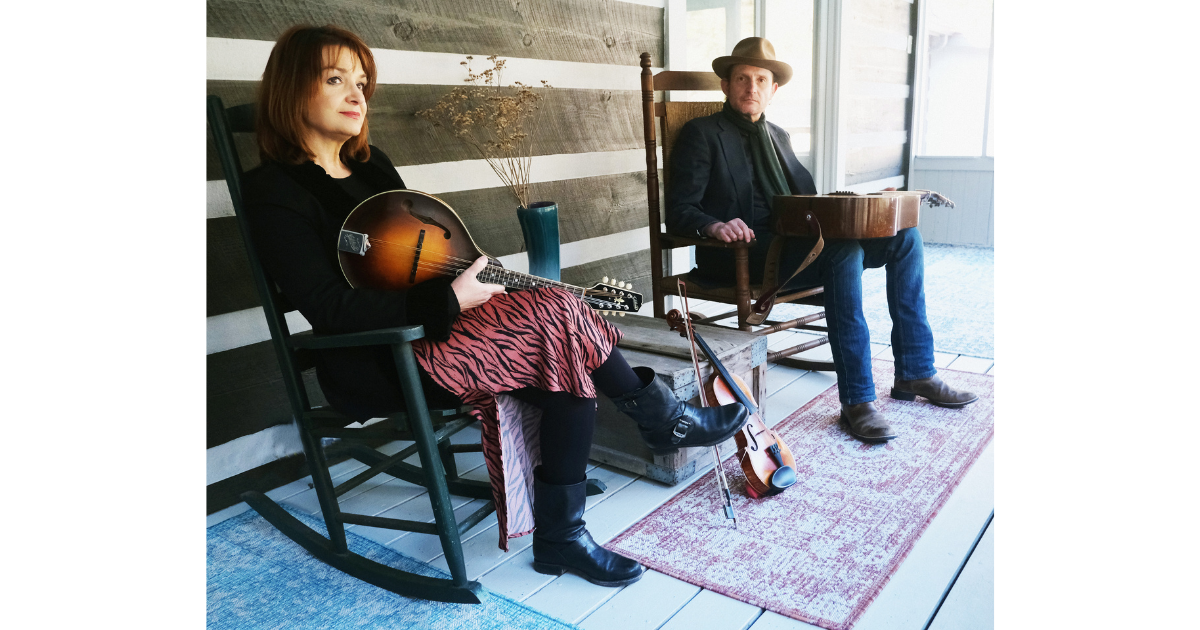
Photo Credit: Jefferson Ross

LISTEN: Tim Stafford & Thomm Jutz, “Take That Shot”

Artist: Tim Stafford & Thomm Jutz
Hometown: Kingsport, Tennessee; and Buehl, Germany (actual) / Nashville, Tennessee (felt)
Song: “Take That Shot”
Album: Lost Voices
Release Date: June 28, 2022
Label: Mountain Fever

In Their Words: “‘Take That Shot’ is a song about how images influence our perceptions of people and events. We cover a pretty wide range of photos in this song. From Billy the Kid, to Marilyn Monroe, to Bill Monroe and Robert Johnson. Tim and I are both very interested in history, so writing these types of songs comes natural to us.” — Thomm Jutz

“If you’re like me, you can’t pass up the chance to snap a photo in certain situations — a beautiful scene, something unusual that catches your eye. ‘Take That Shot’ is kind of unique in the bluegrass field, since there aren’t many ‘grass songs about photography, and especially historically important ‘shots.’ But they capture so much, about us individually and our culture — without words.” — Tim Stafford


Photo Credit: Jefferson Ross

Tammy Rogers & Thomm Jutz Keep It Simple on ‘Surely Will Be Singing’ Debut

Oftentimes keeping things simple yields the most profound results. Such is the case for accomplished fiddler Tammy Rogers of The SteelDrivers and well-traveled guitarist Thomm Jutz, the reigning IBMA Songwriter of the Year. Surely Will Be Singing, a new compilation of their co-writes, marks their first album together.

Having known of each other through bluegrass and roots music circles for years, the two finally met at a SESAC music industry dinner and awards show in 2016. Although neither won any awards that night, Rogers and Jutz were seated together, leading to the beginning of a long and fruitful friendship. After exchanging phone numbers on their way out of the gala while waiting in the valet line, the two met up at Rogers’ home the following week for their first songwriting session. Coming from that meet-up was “Old Railroads,” a song Jutz recorded for his 2017 album Crazy If You Let It as well as Eric Brace & Last Train Home’s Daytime Highs & Overnight Lows. Since then, Rogers and Jutz haven’t slowed down, writing on average one song per week for an cumulative total of over 140 songs and counting.

BGS: Considering you’ve written over 140 songs together, how’d you go about dwindling those down to the 12 that made it on the album?

Tammy Rogers: It’s a really hard process because we write so much together and love all the songs. They’re all like children to us. That being said, we don’t usually set out with the mindset of writing for Del McCoury or Tim McGraw. We just sit down and write whatever we’re feeling that day. Oftentimes a book, show, current events or just a random conversation will spark an idea. When we started talking about doing this record, the idea of keeping it simple kept coming up. Part of that was because when we began recording, we were still in serious lockdown mode. We knew we wouldn’t be able to get together in a big studio with our friends to record something really grand, so the simplicity was born out of necessity. The songs we chose lend themselves well to simple production.

Thomm Jutz: We also searched our catalogs for songs that would work well as duets. We’re also both big fans of the Carter Family, the Monroe Brothers, the Blue Sky Boys and other early country music. We didn’t necessarily want to make a full-band record. We wanted to have some bands on it, but at this point in my life with my own work I’m really intrigued by just whittling it down to duo and trio stuff with as much simplicity as possible.

Earlier y’all mentioned getting song inspiration from everything from current events to books and even television. Do you try to tie a lot of those themes back into your own lives with your songwriting or do you prefer going the fictional route? Or is it a bit of both?

Rogers: I don’t even know that I could even quantify how that would split because Thomm is the kind of writer who always has his antennas up. Whether he’s reading a book, watching a documentary or just letting his mind wander in conversation, I think he’s always listening for a phrase or thought that could turn into a song. I’m the same way. Just the other day I said something to a friend and immediately thought, “Hey, that’s a song!” I texted it to Thomm and he was on board. It’ll probably be the next song we work on. When you’re a writer and you’re really in the flow of it, anything can inspire. And if something catches your ear, whether it’s a fleshed-out story or a phrase that could be a title, you run with it. I do that all the time without thinking of a backstory. A phrase will pop into my head or I’ll say something and someone will follow up with something else and an idea snowballs from there.

Jutz: It’s important to pay attention. I think that’s the whole job description of a songwriter, or at least 90 percent of it. It’s also important to take good notes, whether it be a verse, one line, a title or just a general idea. I write all that stuff down, but like Tammy, I don’t try to overthink things. It’s important to keep an open mind because if you bring that into a co-writing session someone may interpret something completely different than you. But Tammy and I mostly write off of titles or general ideas. One of the nice things with bluegrass is that there’s a sort of vocabulary that goes with it. There are rules of what you say and how you say things that help us to focus on that structure when we’re writing. It’s like figure skating. You have to do certain poses or jumps to express yourself within the given parameters. That’s something I’ve always been intrigued about with bluegrass and American roots music. There’s a sense of structure already there and you have to try to do right by that.

Tammy, a moment ago you mentioned Thomm always having his antennas up. Going off that, what is it you each appreciate most about one another as songwriters and artists?

Tammy: One of the things I love most about writing with Thomm is that I’m from the Appalachian Mountains of East Tennessee and even though he’s from Germany, he’s studied my part of the world and is familiar with the culture. If I tell him we should try coming at something with a Carter Family approach or the Monroe and Stanley Brothers he knows exactly what I mean. That makes the process so fun and easy. I don’t think we’ve ever argued about a song and the direction it should go. It really allows us to get inside of a song and go to that place.

Jutz: I think what we both appreciate about each other is that we both take the work very seriously without taking ourselves too seriously. That’s not something that either of us came up with, but rather something that William Faulkner said when asked about writing for movies out in California. I think that mindset is a good recipe for a successful collaboration. In regards to Tammy, she’s just so musical. Not to say that other songwriters aren’t, but Tammy and I approach songwriting as instrumentalists. With that comes a different skill set that allows us to communicate differently than with people who work primarily as songwriters only. It’s very different writing with someone who’s a good instrumentalist, which Tammy obviously is.

That’s the second thing I find unique about our writing relationship, it just comes easy. We get along well and we’re close to the same age but have completely different life experiences. Tammy has children and I don’t, for example. Our lives are very similar and very different at the same time, which makes for a great exchange of ideas.

Speaking of the songwriting process, I love the song “Speakeasy Blues” and the Prohibition Era vibes it radiates. Can you tell me about the song’s story and how you pieced it together for the album?

Jutz: It doesn’t really tell the story of a book, but Tammy and I both had just read a book by North Carolina author Terry Roberts called The Holy Ghost Speakeasy and Revival. It’s a really cool story about the prohibition era and a preacher who had his own train and would recruit misfits to join his crew, preaching to them and selling them liquor. It’s a wild story. One day we were talking about it and I remember Tammy saying that “Speakeasy Blues” sounded like a good song idea, and we ran with it.

Rogers: That song is a great example of how Thomm and I write. We share a lot of books and always share stories we enjoy with one another. It’s fun making music with literary sources because not everyone who hears the song has read the book, which leaves some nuances of the song up to interpretation. On that song in particular, after framing it into the Prohibition Era, we sought to make sure it had a fast tempo and driving beat similar to a train because in the book that’s how they traveled. There’s stuff like that that’s almost subliminal that you may not catch as a listener but that we were aware of when constructing it. Those little easter eggs are fun.

Jutz: Another interesting side to that song is that the book’s author, Terry Roberts, wrote the liner notes for our record. After sending it over and asking him to write for us he said he first listened to it while in London and upon hearing the first line of “Speakeasy Blues” said, “That’s Jedediah. That’s the preacher from my book!”

Rogers: I just started reading another book of his called A Short Time to Stay Here. I really like the title, so maybe one day it’ll become a song, too.


Photo Credit: Anthony Scarlati

WATCH: Jr Williams, “Railroad Town Without a Train”

Artist: Jr Williams
Hometown: Irvine, Kentucky
Song: “Railroad Town Without a Train”
Album: Railroad Town
Label: Mountain Fever Records

In Their Words: “When Mark Hodges and I talked about me recording a solo project, he mentioned some writers that would have material I could look through. One of the first songs was by Tim Stafford and Thomm Jutz, called ‘Railroad Town Without a Train.’ Listening to it twice, I knew I had to record it. It reminds me so much of my hometown, and the railroad yards left pretty much abandoned by a drop in the coal industry. I also realized there were many towns like this in Eastern Kentucky, West Virginia, Virginia, Pennsylvania, Tennessee, and I’m sure the Carolinas. I knew that it would resonate with a lot of people in this region. I’ve had tremendous feedback from it and appreciate the guys for such an incredible tune.” – Jr Williams

Photo Credit: Stuart Rose