LISTEN: Cedar Hill, “Smilin'”

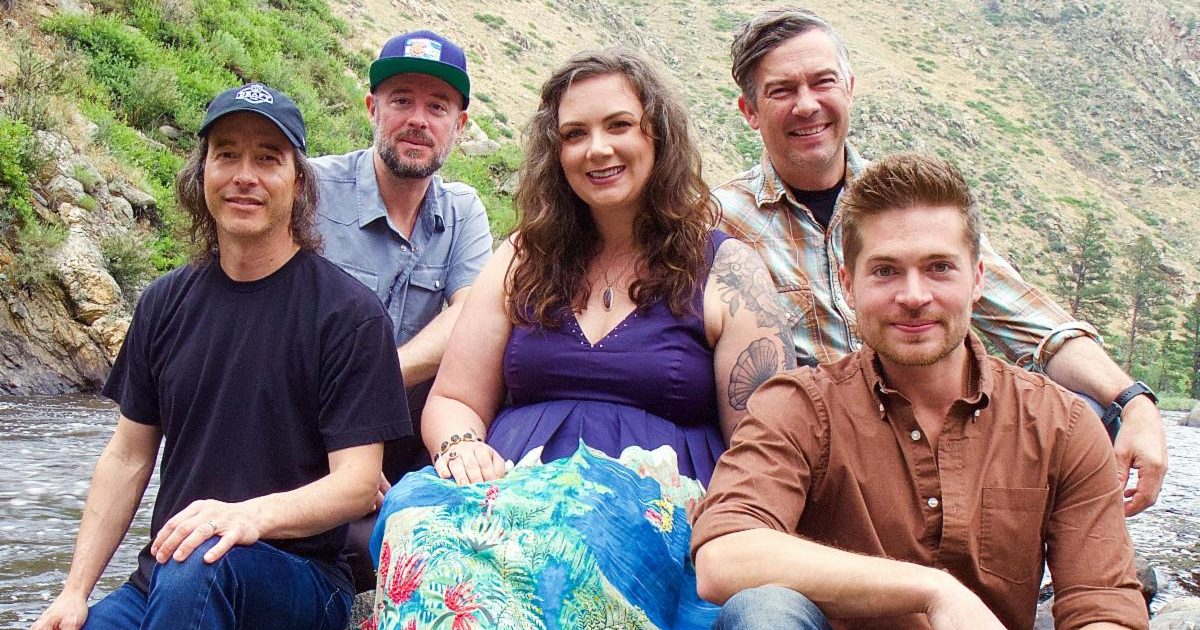
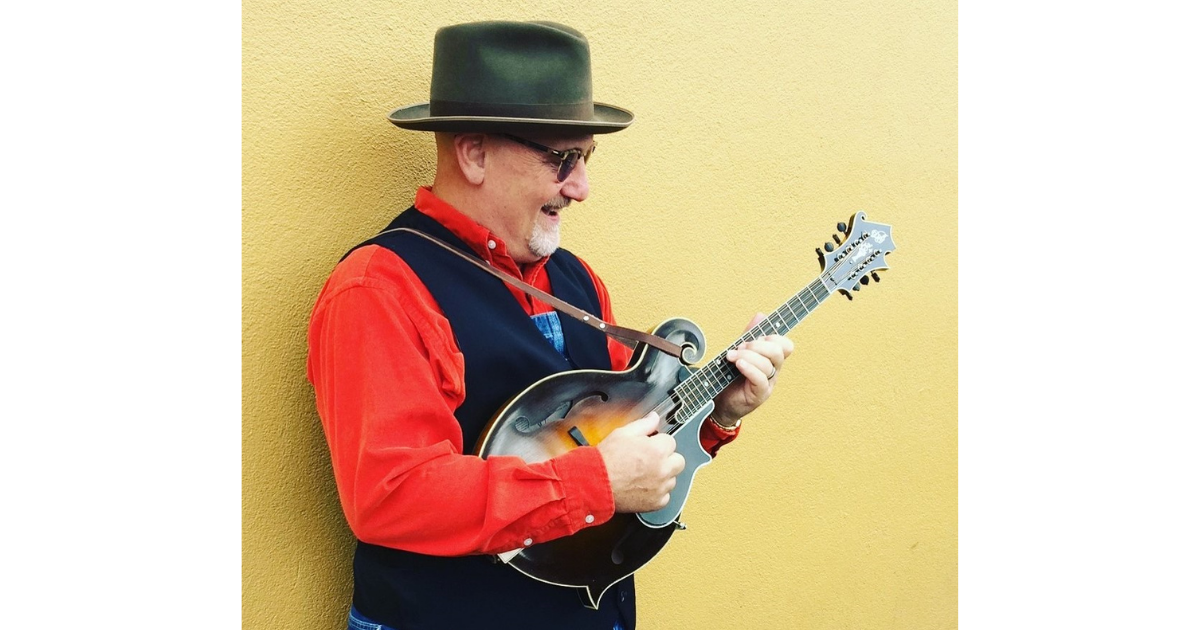
Artist: Cedar Hill
Hometown: Dexter, Missouri
Song: “Smilin’”
Album: New Chapter
Release Date: February 8, 2022
Label: Mountain Fever Records

In Their Words: “The first time I heard ‘Smilin’,’ I knew I wanted to record it. In fact, I thought it needed to be recorded because the message needed to be heard. Songs, especially in the bluegrass genre, quite often carry life lessons and or meaningful messages. Often a simple sincere gesture can be more effective than many words to change a person’s outlook or perspective. I can think of no better time to put the message this song delivers into practice. There are many times when a sincere smile is just what the doctor ordered. Or as the song says, just what the ‘Preacher’ ordered.” — Frank Ray, Cedar Hill

Mountain Fever Music Group · Smilin’

Photo Credit: Kady Carter

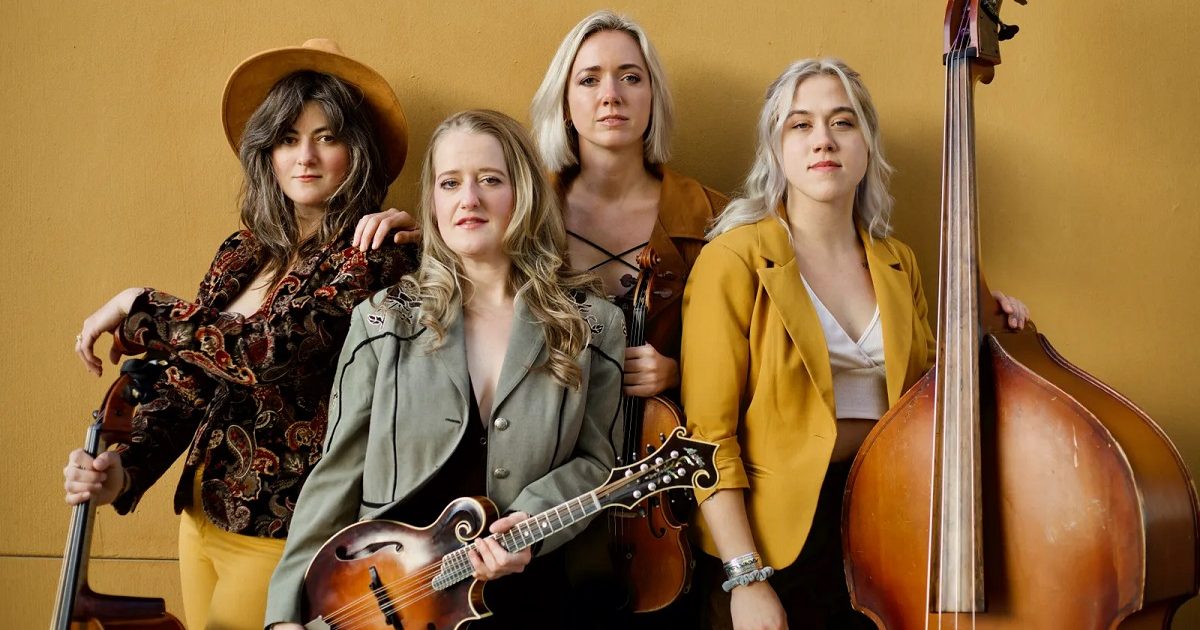
LISTEN: Lonesome River Band, “Mary Ann Is a Pistol”

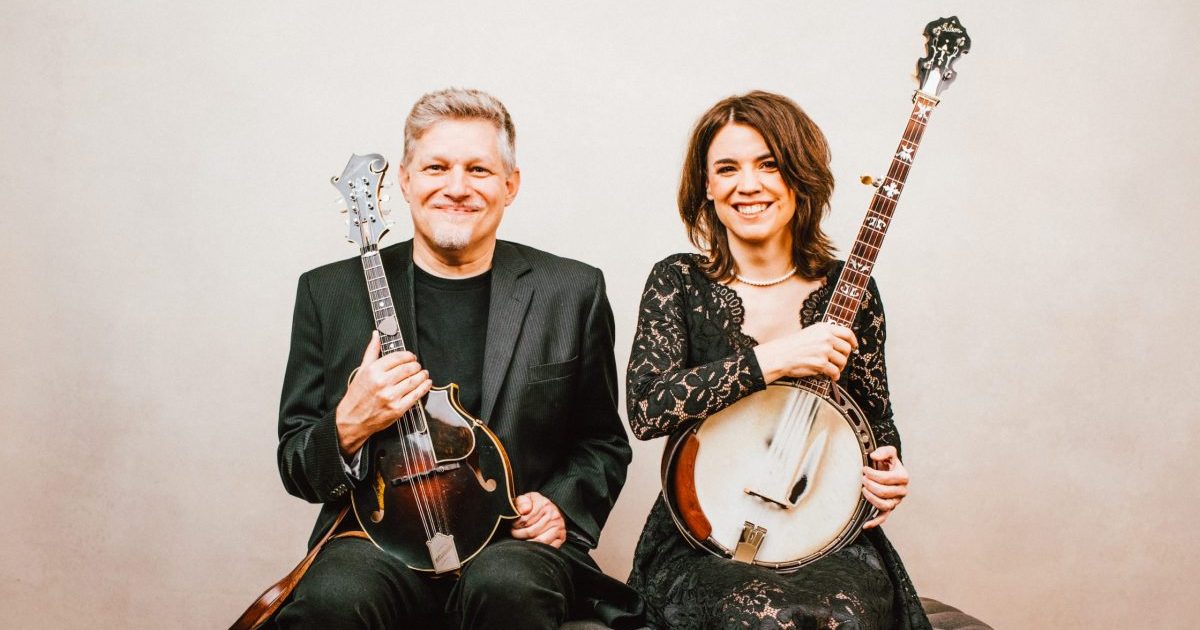
Artist: Lonesome River Band
Hometown: Floyd, Virginia
Song: “Mary Ann Is a Pistol”
Release Date: February 4, 2022
Label: Mountain Home Music Company

In Their Words: “The LRB has been doing the Jimmy Martin classic, ‘Mary Ann,’ since around 1985. And it’s been a mainstay in our live shows ever since. Last year, I was digging through a bunch of cassettes I had from the ’80s and ’90s — I still love the sound of them — and ran across one of my favorite records ever by Brother Phelps (check them out if you haven’t heard these albums) recorded in 1995. They did a rocking version of this Dennis Linde song, and the more I listened to it, the more it became a bluegrass song in my head and a perfect song to follow the Jimmy Martin ‘Mary Ann.’ We hope you enjoy our version of ‘Mary Ann Is a Pistol!’” — Sammy Shelor, Lonesome River Band

Crossroads Label Group · Mary Ann Is A Pistol – Lonesome River Band

Photo credit: Courtesy of Lonesome River Band

Carolina Calling, Asheville: A Retreat for the Creative Spirit

LISTEN: APPLE • SPOTIFY • STITCHERAMAZON • YOUTUBEMP3


Asheville, North Carolina’s history as a music center goes back to the 1920s and string-band troubadours like Lesley Riddle and Bascom Lamar Lunsford, and country-music pioneer Jimmie Rodgers. But there’s always been a lot more to this town than acoustic music and scenic mountain views. From the experimental Black Mountain College that drew a range of minds as diverse as German artist Josef Albers, composer John Cage, and Albert Einstein, Asheville was also the spiritual home for electronic-music pioneer Bob Moog, who invented the Moog synthesizer first popularized by experimental bands like Kraftwerk to giant disco hits like Donna Summer’s “I Feel Love.”

It’s also a town where busking culture ensures that music flows from every street corner, and it’s the adopted hometown of many modern musicians in a multitude of genres, including Pokey LaFarge, who spent his early career busking in Asheville, and Moses Sumney, a musician who’s sonic palette is so broad, it’s all but unclassifiable.

In this premiere episode of Carolina Calling, we wonder and explore what elements of this place of creative retreat have drawn individualist artists for over a century? Perhaps it’s the fact that whatever your style, Asheville is a place that allows creativity to grow and thrive.

Subscribe to Carolina Calling on any and all podcast platforms to follow along as we journey across the Old North State, visiting towns like Shelby, Greensboro, Durham, Wilmington, and more.


Music featured in this episode:

Bascom Lamar Lunsford – “Dry Bones”

Jimmie Rodgers – “My Carolina Sunshine Girl”

Kraftwerk – “Autobahn”

Donna Summer – “I Feel Love”

Pokey LaFarge – “End Of My Rope”

Moses Sumney – “Virile”

Andrew Marlin – “Erie Fiddler (Carolina Calling Theme)”

Moses Sumney – “Me In 20 Years”

Steep Canyon Rangers – “Honey on My Tongue”

Béla Bartók – “Romanian Folk Dances”

New Order – “Blue Monday”

Quindar – “Twin-Pole Sunshade for Rusty Schweickart”

Pokey LaFarge – “Fine To Me”

Bobby Hicks Feat. Del McCoury – “We’re Steppin’ Out”

Squirrel Nut Zippers – “Put A Lid On It”

Jimmie Rodgers – “Daddy and Home”

Lesley Riddle – “John Henry”

Steep Canyon Rangers – “Graveyard Fields”


BGS is proud to produce Carolina Calling in partnership with Come Hear NC, a campaign from the North Carolina Department of Natural & Cultural Resources designed to celebrate North Carolinians’ contribution to the canon of American music.

LISTEN: Chris Castino & Chicken Wire Empire, “Kangaroo”

Artist: Chris Castino & Chicken Wire Empire
Hometown: St. Paul, Minnesota
Song: “Kangaroo”
Album: Fresh Pickles
Release Date: February 4, 2022

In Their Words: “My love for bluegrass began (in earnest) in 1993. As a guitarist in a jam band then, the mid ’90s were full of wonderful crossovers: Leftover Salmon was emerging, The Pizza Tapes were floating around, my favorite Tony Rice record …Sings Gordon Lightfoot came out, heck, even Phish was playing bluegrass. A lot of that music was lively, fun, and irreverent. And that’s what ‘Kangaroo’ (written in 1995) is as well. The tune is bouncy — fitting, I suppose. And little kids love it, which makes me happy!” — Chris Castino

chris castino · Kangaroo

Photo Credit: David Jackson

BGS Top 50 Moments: Del McCoury Plays Banjo With Sam Bush

One of the first-ever viral moments on BGS was a special behind-the-scenes Soundcheck video featuring Sam Bush and Del McCoury from their 2012 duo tour, “Sam and Del.” In it, the two legends prepare for the first night on the road at the Birchmere in Alexandria, Virginia, warming up both their instruments and their familial-like banter on stage:

“Friends, he got up out of the bunk this morning and his hair was perfect,” says Sam. “I don’t know how he does it.”

“Well I’ll tell you what, I laid it on the shelf overnight and just put it back on the next morning!” retorts Del, quick as a whip.

But somewhere around the 2:45 mark, magic happens. For the first time in nearly fifty years, Del prepared to play five-string banjo on stage. It was a moment that few had witnessed prior (even Sam), much less known he was capable of. Turns out, the Bluegrass Music Hall of Famer actually started his career in Bill Monroe’s band as the banjo player before being shuffled to guitar and backing vocals, his unmistakable high lonesome tone becoming his calling card.

“It’s just a love fest?” says Sam Bush of their time together on stage.

Same for us, Sam. Same for us.

Video credit: Natalie Fava of Wonderscope.

WATCH: Ethan Sherman, “Cup & Porch” (Live)

Artist: Ethan Sherman
Hometown: Los Angeles, California
Song: “Cup & Porch”
Album: Indoor Vistas
Release Date: March 4, 2022

In Their Words: “This is one of the first tunes I wrote for this record. Broadly, it’s inspired by some musical ideas I’ve picked up listening to folks like Bryan Sutton and Béla Fleck over the years. One of the many things I love about their composing is the way they take timeless fiddle-tune-y themes through rhythmic mazes that seem totally arbitrary at first, but reveal themselves to be deceptively melody-driven the more you listen. That’s something I tried to do with this tune, as well as give everyone lots of room to improvise and play off each other within the arrangement.

“This new record (Indoor Vistas) was tracked remotely over lockdown, so this video session was one of the first times I’ve played these tunes with other musicians, in the same room, in real time! Joining me in this video are Gabe Witcher on fiddle, Greg Fleischut on mandolin, and Tim McNalley on bass. The album version features McNalley, Thomas Cassell, Matthew Davis, and Avery Merritt.” — Ethan Sherman


Photo Credit: Evan Zee

Inspired by Tony Rice, Punch Brothers Give ‘Em ‘Hell on Church Street’

It was banjo player Noam Pikelny who heard first. On December 26, 2020, he messaged his Punch Brothers bandmate Chris Eldridge to tell him the news that Tony Rice, their bluegrass hero and Eldridge’s guitar mentor, had died on Christmas Day. “It just didn’t seem like it could be real,” says Eldridge. “It was a complete shock.”

The band felt more than just sadness at the legend’s passing; there was regret, too. Eldridge had thought about calling Rice to tell him what they had been working on — a reimagining of his landmark album, Church Street Blues — but had resisted the urge. “I thought, you know what, it’ll be cooler if I can just give him the music. ‘Hey, we made a thing for you…!’” The moment had never come. It was a heartbreaker.

Hell on Church Street, Punch Brothers’ sixth full album, was recorded in Nashville the month before Rice died. The 1983 solo record that inspired it is high canon among bluegrass lovers with its wistful songs and fiddle tunes repurposed as dazzling guitar solos, laid down in the period when Rice was opening up bluegrass music in multiple directions at once. Punch Brothers have remained faithful to the original tracklist, but equally to Rice’s boundary-pushing creativity.

What emerges is a kaleidoscopic mise en abyme — their versions of Rice’s versions of songs by Bob Dylan, Tom Paxton, Gordon Lightfoot, et al. — both reflecting bluegrass’s rich progressive history and refracting through their own endlessly inventive perspective. Those hoping for Chris Thile to indulge in some light Gordon Lightfoot karaoke, in other words, will be disappointed. A few have already cried sacrilege. Witness the internet backlash that accompanied the band’s release of the title track, which resets Norman Blake’s famous lyrics to an urgent 5/4 meter.

“You never want to admit you look at internet comments but some people were pissed,” says Eldridge. “I thought, oh boy, wait til these people hear ‘Gold Rush!’”

Even Pikelny admits he had a few early qualms about the technical ambition of that initial recording. “It took us a day and a half [in the studio] to play it with the effortlessness and ease it needed. But I’m glad we stuck with it, because if we were just going to play it like it’s already been played then really what’s the point? It becomes like a Civil War re-enactment.”

“And it’s just not true to the spirit of what Tony himself exemplified his entire career,” adds Eldridge. “This record was never a memorial — it was a living tribute created in the spirit of some of the deep lessons we learned from Tony: you have to be yourself. If you’re going to make music, play it the way only you can play it.”

Certainly only Punch Brothers would take bluegrass standard ‘Gold Rush’ and turn it into a piece of esoteric free-time improv, ethereally led by Gabe Witcher on fiddle. “For the record we all love that Bill Monroe tune,” says Eldridge, with a wry smile. “But I don’t even think I’ve played a fiddle tune that’s been that deconstructed and stripped of basic elements like pulse and beat before.” It is, laughs Pikelny, certainly not a version likely to be heard at a contest any time soon: “Contestant 11, you’ve been disqualified!”

Hell on Church Street is a record that might never have been made but for the pandemic. The band’s need to quarantine before they could assemble in the studio had restricted their time together and they were looking for a project that would satisfy them musically without turning their precious time in each other’s company into a songwriting bootcamp. “When we’re on the road together it’s camaraderie, it’s therapy,” says Pikelny. “We said, ‘What can we do that we can still enjoy being with each other?’”

Their minds turned back to a similar conversation they had had in Japan two and a half years previously. During their residency at the Blue Note in Tokyo, the band were asked to prepare a set of bluegrass standards for the 2019 Rockygrass festival (or, as Pikelny puts it: “Don’t bring all your original shit!”). With limited time to rehearse — or perhaps, given the allure of the Japanese capital, not a great deal of inclination — someone had suggested paying tribute to an artist or record they loved. The response was unanimous, almost instantaneous. It had to be Church Street Blues. “That record was so sacred to all of us,” says Eldridge.

The live set that followed at Rockygrass became one of the great wish-you-were-there experiences: a performance fizzing with spontaneity, in an atmosphere crackling with passion. It had been a busy festival for all of them — bassist Paul Kowert playing a set with Hawktail, Pikelny performing with Stuart Duncan — and when they took to the stage, they had been working on the material for just four hours. But the coupling of their collective virtuosity with one of bluegrass’s most beloved of song collections created instant electricity.

In Nashville last November they saw the chance to reignite that experience. “It’s not something we get to do much these days,” says Eldridge, “make music by the seat of our pants. And it’s one of the things that initially brought us together, all the way back the first time the five of us got in a room together. It’s something very special to us, and with this project we got to tap into that side of the band that tends to lie dormant for long stretches — to enjoy what it’s like when we don’t have super tight arrangements, when we just have to listen and be very reactive.”

It also allowed them to delve far more deeply into the songs on Church Street Blues than they ever have had before. “You get closer to the material when there’s a responsibility to make it your own,” says Pikelny. His own parents had loved Tom Paxton, for instance: Pikelny had been familiar with “Last Thing On My Mind” since he was a kid. “It had always seemed like just another heartbreak song — it was only when we started working on it I realised how profoundly sad it is.” At the start of their arrangement, Thile’s voice yearns out over the lone plucked notes of the fiddle, a sound like the ebbing of lost time.

But it’s “Streets of London” where Punch Brothers’ ability to mine the meaning of a song and transform it into sonic expression is most evident. Where Rice rendered the melancholy of Ralph McTell’s lyrics through his bell-like baritone, here the stories of abandoned, lonely lives are tossed about in broken melody and dismembered harmony. This is a sad song that’s been restrung with anxiety and tautened with menace, in a manner that detaches it from some nostalgic past and confronts you with the shamefulness of our world’s ongoing poverty and isolation.

What the band wishes, above all, is for the album to honour Rice’s own experimental and fearless musicianship. To most, the man himself had remained an enigma, withdrawn from the bluegrass world and even his peers to the end of his life, ever since the loss of his voice had stopped him performing. “He seemed like a king off in a castle,” says Pikelny. “I wish I’d once got to hear what Tony Rice’s guitar sounded like in a room, but he wasn’t accessible in the way of so many bluegrass heroes.”

But to Eldridge he had been more — a family friend and musical mentor, the man who used to crash on his parents’ sofa when his touring schedule brought him through DC. Eldridge can still recall the moment, aged 12, when Rice effectively changed the course of his own life forever. They were at the Graves Mountain bluegrass festival in Virginia, “and all of a sudden I was like, that’s a Zeus on stage and he’s throwing thunderbolts,” he remembers. “It wasn’t so much that his playing was so great, it was obviously really great that goes without saying, but the impression on me was that every note he’s playing is meaningful and is very direct. It was like they transcended being musical notes and took over your whole being.”

“Isn’t it true that the reason your nickname Critter got reinstated was due to Tony?” interjects Pikelny.

“It was entirely due to Tony! When I was in utero my parents referred to me as the critter, people called me it as a little boy but eventually they stopped and everyone called me Chris. Then when I went down to Merlefest with some of my college friends in 2001, we were hanging out with Tony, and the name came back with a vengeance! And here we are today…”

It’s a touching thought: that Rice’s legacy should have made so personal and lasting a mark on Eldridge, even as it continues to influence the musical world that he and Punch Brothers inhabit. “I would argue that he more than anybody ushered bluegrass into its modern form, in terms of the new standards of musicianship and song selection. He was probably more responsible for that than anybody.” Pikelny nods his head: “The way the music has expanded in all these different directions, Tony was involved in every single one of them, whether it was J.D. Crowe & the New South or David Grisman. It was like a superpower. He was such a team player, there was something about the way he played when he was around he just elevated everybody.”

They’ll never know exactly what their hero would have made of Hell on Church Street. Pikelny suspects there would be bits of it he may have even hated. But they hope that he would have recognised it as, above all, a love letter. “I hope he’d be proud,” says Eldridge. “Of what he encouraged us — and everybody else — to do.”


Photo Credit: Josh Goleman

LISTEN: Junior Sisk, “Patches on My Heart”

Artist: Junior Sisk
Hometown: Ferrum, Virginia
Song: “Patches on My Heart”
Album: Lost & Alone
Release Date: Single: January 25, 2022; Album: Spring 2022
Label: Mountain Fever Records

In Their Words: “Tony Mabe, our banjo player and old country buff, brought this song to my attention. It’s an old early ’60s Sonny Burns honky-tonk tune. The first time I heard it I said, ‘That would make a great bluegrass song!’ We worked it up to fit our style and I think it turned out to be a straight-ahead grass tune that fit us well. It’s like a brand new song that most have never heard. Hope everyone enjoys our version!” – Junior Sisk

Mountain Fever Music Group · Patches On My Heart

Photo credit: Sharon Quesenberry

Tammy Rogers & Thomm Jutz Keep It Simple on ‘Surely Will Be Singing’ Debut

Oftentimes keeping things simple yields the most profound results. Such is the case for accomplished fiddler Tammy Rogers of The SteelDrivers and well-traveled guitarist Thomm Jutz, the reigning IBMA Songwriter of the Year. Surely Will Be Singing, a new compilation of their co-writes, marks their first album together.

Having known of each other through bluegrass and roots music circles for years, the two finally met at a SESAC music industry dinner and awards show in 2016. Although neither won any awards that night, Rogers and Jutz were seated together, leading to the beginning of a long and fruitful friendship. After exchanging phone numbers on their way out of the gala while waiting in the valet line, the two met up at Rogers’ home the following week for their first songwriting session. Coming from that meet-up was “Old Railroads,” a song Jutz recorded for his 2017 album Crazy If You Let It as well as Eric Brace & Last Train Home’s Daytime Highs & Overnight Lows. Since then, Rogers and Jutz haven’t slowed down, writing on average one song per week for an cumulative total of over 140 songs and counting.

BGS: Considering you’ve written over 140 songs together, how’d you go about dwindling those down to the 12 that made it on the album?

Tammy Rogers: It’s a really hard process because we write so much together and love all the songs. They’re all like children to us. That being said, we don’t usually set out with the mindset of writing for Del McCoury or Tim McGraw. We just sit down and write whatever we’re feeling that day. Oftentimes a book, show, current events or just a random conversation will spark an idea. When we started talking about doing this record, the idea of keeping it simple kept coming up. Part of that was because when we began recording, we were still in serious lockdown mode. We knew we wouldn’t be able to get together in a big studio with our friends to record something really grand, so the simplicity was born out of necessity. The songs we chose lend themselves well to simple production.

Thomm Jutz: We also searched our catalogs for songs that would work well as duets. We’re also both big fans of the Carter Family, the Monroe Brothers, the Blue Sky Boys and other early country music. We didn’t necessarily want to make a full-band record. We wanted to have some bands on it, but at this point in my life with my own work I’m really intrigued by just whittling it down to duo and trio stuff with as much simplicity as possible.

Earlier y’all mentioned getting song inspiration from everything from current events to books and even television. Do you try to tie a lot of those themes back into your own lives with your songwriting or do you prefer going the fictional route? Or is it a bit of both?

Rogers: I don’t even know that I could even quantify how that would split because Thomm is the kind of writer who always has his antennas up. Whether he’s reading a book, watching a documentary or just letting his mind wander in conversation, I think he’s always listening for a phrase or thought that could turn into a song. I’m the same way. Just the other day I said something to a friend and immediately thought, “Hey, that’s a song!” I texted it to Thomm and he was on board. It’ll probably be the next song we work on. When you’re a writer and you’re really in the flow of it, anything can inspire. And if something catches your ear, whether it’s a fleshed-out story or a phrase that could be a title, you run with it. I do that all the time without thinking of a backstory. A phrase will pop into my head or I’ll say something and someone will follow up with something else and an idea snowballs from there.

Jutz: It’s important to pay attention. I think that’s the whole job description of a songwriter, or at least 90 percent of it. It’s also important to take good notes, whether it be a verse, one line, a title or just a general idea. I write all that stuff down, but like Tammy, I don’t try to overthink things. It’s important to keep an open mind because if you bring that into a co-writing session someone may interpret something completely different than you. But Tammy and I mostly write off of titles or general ideas. One of the nice things with bluegrass is that there’s a sort of vocabulary that goes with it. There are rules of what you say and how you say things that help us to focus on that structure when we’re writing. It’s like figure skating. You have to do certain poses or jumps to express yourself within the given parameters. That’s something I’ve always been intrigued about with bluegrass and American roots music. There’s a sense of structure already there and you have to try to do right by that.

Tammy, a moment ago you mentioned Thomm always having his antennas up. Going off that, what is it you each appreciate most about one another as songwriters and artists?

Tammy: One of the things I love most about writing with Thomm is that I’m from the Appalachian Mountains of East Tennessee and even though he’s from Germany, he’s studied my part of the world and is familiar with the culture. If I tell him we should try coming at something with a Carter Family approach or the Monroe and Stanley Brothers he knows exactly what I mean. That makes the process so fun and easy. I don’t think we’ve ever argued about a song and the direction it should go. It really allows us to get inside of a song and go to that place.

Jutz: I think what we both appreciate about each other is that we both take the work very seriously without taking ourselves too seriously. That’s not something that either of us came up with, but rather something that William Faulkner said when asked about writing for movies out in California. I think that mindset is a good recipe for a successful collaboration. In regards to Tammy, she’s just so musical. Not to say that other songwriters aren’t, but Tammy and I approach songwriting as instrumentalists. With that comes a different skill set that allows us to communicate differently than with people who work primarily as songwriters only. It’s very different writing with someone who’s a good instrumentalist, which Tammy obviously is.

That’s the second thing I find unique about our writing relationship, it just comes easy. We get along well and we’re close to the same age but have completely different life experiences. Tammy has children and I don’t, for example. Our lives are very similar and very different at the same time, which makes for a great exchange of ideas.

Speaking of the songwriting process, I love the song “Speakeasy Blues” and the Prohibition Era vibes it radiates. Can you tell me about the song’s story and how you pieced it together for the album?

Jutz: It doesn’t really tell the story of a book, but Tammy and I both had just read a book by North Carolina author Terry Roberts called The Holy Ghost Speakeasy and Revival. It’s a really cool story about the prohibition era and a preacher who had his own train and would recruit misfits to join his crew, preaching to them and selling them liquor. It’s a wild story. One day we were talking about it and I remember Tammy saying that “Speakeasy Blues” sounded like a good song idea, and we ran with it.

Rogers: That song is a great example of how Thomm and I write. We share a lot of books and always share stories we enjoy with one another. It’s fun making music with literary sources because not everyone who hears the song has read the book, which leaves some nuances of the song up to interpretation. On that song in particular, after framing it into the Prohibition Era, we sought to make sure it had a fast tempo and driving beat similar to a train because in the book that’s how they traveled. There’s stuff like that that’s almost subliminal that you may not catch as a listener but that we were aware of when constructing it. Those little easter eggs are fun.

Jutz: Another interesting side to that song is that the book’s author, Terry Roberts, wrote the liner notes for our record. After sending it over and asking him to write for us he said he first listened to it while in London and upon hearing the first line of “Speakeasy Blues” said, “That’s Jedediah. That’s the preacher from my book!”

Rogers: I just started reading another book of his called A Short Time to Stay Here. I really like the title, so maybe one day it’ll become a song, too.


Photo Credit: Anthony Scarlati

BGS & Come Hear NC Explore the Musical History of North Carolina in New Podcast ‘Carolina Calling’

The Bluegrass Situation is excited to announce a partnership with Come Hear North Carolina, and the latest addition to the BGS Podcast Network, in Carolina Calling: a podcast exploring the history of North Carolina through its music and the musicians who made it. The state’s rich musical history has influenced the musical styles of the U.S. and beyond, and Carolina Calling aims to connect the roots of these progressions and uncover the spark in these artistic communities. From Asheville to Wilmington, we’ll be diving into the cities and regions that have cultivated decades of talent as diverse as Blind Boy Fuller to the Steep Canyon Rangers, from Robert Moog to James Taylor and Rhiannon Giddens.

The series’ first episode, focusing on the creative spirit of retreat in Asheville, premieres Monday, January 31 and features the likes of Pokey LaFarge, Woody Platt of the Steep Canyon Rangers, Gar Ragland of Citizen Vinyl, and more. Subscribe to the show wherever you listen to podcasts, and be on the lookout for brand new episodes coming soon.

LISTEN: APPLE • SPOTIFY • STITCHERAMAZON • POCKET CASTS • YOUTUBE • MP3