Stuart Duncan’s Coffee Is a Disaster, But His ‘Goat Rodeo’ Fiddling Is Sublime

Stuart Duncan, speaking by phone from his home outside of Nashville, is at a loss over how to describe the beautiful dissonance of the just-released collaborative album, Not Our First Goat Rodeo.

“I think all of us have — even if it is nebulous — some sort of idea in the back of our mind of how we’ll sound performing any given piece of music,” he tells BGS. “As soon as a little bit of rehearsal happens, the glue starts to come together within a very short period of time – 10 minutes, whatever – of rehearsing and talking. ‘Here’s where the emphasis is.’ ‘Make your note a little shorter, Stuart.’ Those things come together really quickly. Then it is just capturing the best performance of those ideas and moving on.”

A multi-instrumentalist who’s perhaps best known for his sublime fiddle playing, Duncan has racked up awards and accolades for his work in the Nashville Bluegrass Band and as a highly sought-after sideman for acts ranging from Garth Brooks and Robert Plant to Diana Krall and Panic at the Disco. The final piece to the Goat Rodeo quartet — which also encompasses Yo-Yo Ma, Chris Thile, and Edgar Meyer — Duncan’s virtuosity contributes crucially to the group’s category-defying sound.

This Artist of the Month interview is the first of four installments as BGS salutes the incredible and iconic musicians of Not Our First Goat Rodeo.

BGS: Your first album together (The Goat Rodeo Sessions from 2011) was described as being partly composed and partly improvised. Was that the same approach this time?

Duncan: I would say even more composed, [although] all the material has some improvisation in it. Certainly for me. But there are things that I have to do the way they are written or else it won’t arrive at the proper conclusion — which is what the whole “goat rodeo” name means. Everything has to go just right or catastrophe happens.

This album’s studio session was only ten days for the ten songs, so there wasn’t a lot of time to fool around.

The writing and the sheet music had to be together before we even arrived at the studio or any kind of first rehearsal. The first album involved at least a day or two of rehearsals, and more time for writing. We had like nine months to get that together. This one was more like nine weeks. It came together fast.

We were staying at a nice home in the Berkshires. We had all of our sheet music laid out. Edgar was taking notes. He was the primary copyist — doing the notations for Yo-Yo’s parts, because he was more familiar that sort of bowing. Last-minute tweaks were happening up until the night, even the day, of the first session.

Were there particular musical pieces you brought to the table?

I arrived with little stabs of things for both projects. The most obvious one this time was the pizzicato hammering on thing in “Your Coffee Is a Disaster.” That’s something I had been working on for a long time. It is something that I sort of arrived on while holding my violin in a recording studio waiting for something to get finished in another room. Just noodling around. Holding the instrument like a mandolin and playing it that way on my lap rather than a bow. It took Edgar hearing that and realizing it was the same tempo — or could be played at the same tempo — as one of his other intros. Playing those together kind of started Edgar thinking: “Hey, what if we sandwiched these two ideas?”

So there was a good deal of puzzle piecing the arrangements?

When Edgar’s bowing his bass, and Yo-Yo’s bowing and I’m bowing, we’ve got a lot of bowing. Lots of sustained possibilities. We like to use this to our maximum potential. Like having the violin go down and the cello go up at the same time — and they cross each other in a moment of dissonance. The bass comes in and provides a counterpoint underneath that strengthens that dissonance and comes to a resolution, we hope, at some point.

The middle part of “Your Coffee Is a Disaster” has some of that — counterpoint of violin and cello not arriving at the same note at the same time but a half a beat staggered from each other.


It sounds like an especially stimulating creative environment.

With the minds of Edgar and Chris on compositions thrown in with what I have to offer, as far as improv, it’s a thick soup — it’s a chowder.

Were there instances of too many ingredients in the chowder?

Oh sure, it’s way easy to go too far. Some folks, even some folks close to me, have said that we should have thrown out a few more things than we did. Other people, you know, are perfectly happy. It is an individual thing. I just want to get comfortable enough with what we did in the studio to perform it again live at some point.

Despite the limited time you four have had together, you all seem to have a great camaraderie.

We had to stop each from telling jokes so we could get some work done, or it would be Story City where we could sit there all day and tell stories. It kept people focused on the job at hand. We were so glad to be together again. It was really great, and we hope for more.

And has some communication shorthand developed too?

There were times when little nuances of translations had to occur between something that Yo-Yo would say to Edgar because Yo-Yo would know Edgar knew what he meant, but maybe wasn’t so sure he knew that Chris would know. Some deep Latin term from the classical world. So, Edgar would then translate the question to Chris, although Chris would probably know a lot about classical music. There were a couple times when Edgar had to reframe the question to ring Chris’s bell, then Chris would have to translate it to me. It would have to go around in a circle before I would understand what was being talking about.

There were some bowing things that happened where I was equally as frustrated at getting it right as Yo-Yo. I remember one time Yo-Yo said, “Why is the bowing so different for this [song]?” It was a piece that I had started writing on the mandolin. And Chris said, “It wouldn’t seem weird to you if you ever wielded a flat pick.”

Is everyone’s very broad musical interests a key factor to Goat Rodeo being such a unique collaboration?

Completely, definitely. Not just because we all have wide interests musically, but also you are dealing with two monster composers who can weave all of that information into something believable, however unlikely the premise might be.

I’ve also heard Yo-Yo say in interviews that he’s listening to everyone else at the same time he is concentrating on playing. His ears are open; he’s not just using his eyes and his musical abilities. That’s a huge important thing for all of us. Because of what other people do, it influences what we do.

We are completely used to that in the bluegrass, jazz, swing worlds where we are trading licks. Someone plays a lick and you echo what they play. Then make it your own and it goes back around. But when you’re dealing with a written piece of music, that is played the same way each time, there are other things you can listen for with each other. Where the note lands. Where someone else is feeling a flourish or a cascade of notes.

Also, you have someone like Edgar, who can write something into a piece of music that sounds like improv. He know to leave a space as if someone was thinking of the next thing to play rather it being right there. He’ll leave a few rests in there as if someone is playing off the top of their head. Leaving space for the listener.

What is one recording that ranks as a G.O.A.T. (greatest of all time) for you?

Apart from all of bluegrass, old-time, jazz, swing, and blues that I grew up playing, loving and still worship, one of my favorite recordings is the Bach: Complete Sonatas & Partitas for Solo Violin by Arthur Grumiaux from the early ‘60s.

You can spend decades appreciating different kinds of music and then you think you don’t like classical music that much or it doesn’t hold your interest. Then somebody hands you something like that and says, “Check this out,” and it blew me away. I’ve been a fan of that recording ever since.

My sensibilities of how to perform a piece of music with Yo-Yo Ma were changed by hearing that recording. I became more sensitive to what was required from a violin to play that kind of music. The more aware, the more you can immerse yourself in what your instrument is capable of doing.

(Editor’s note: Read the remaining installments of our Artist of the Month interview series here.)


Photo credit: Josh Goleman
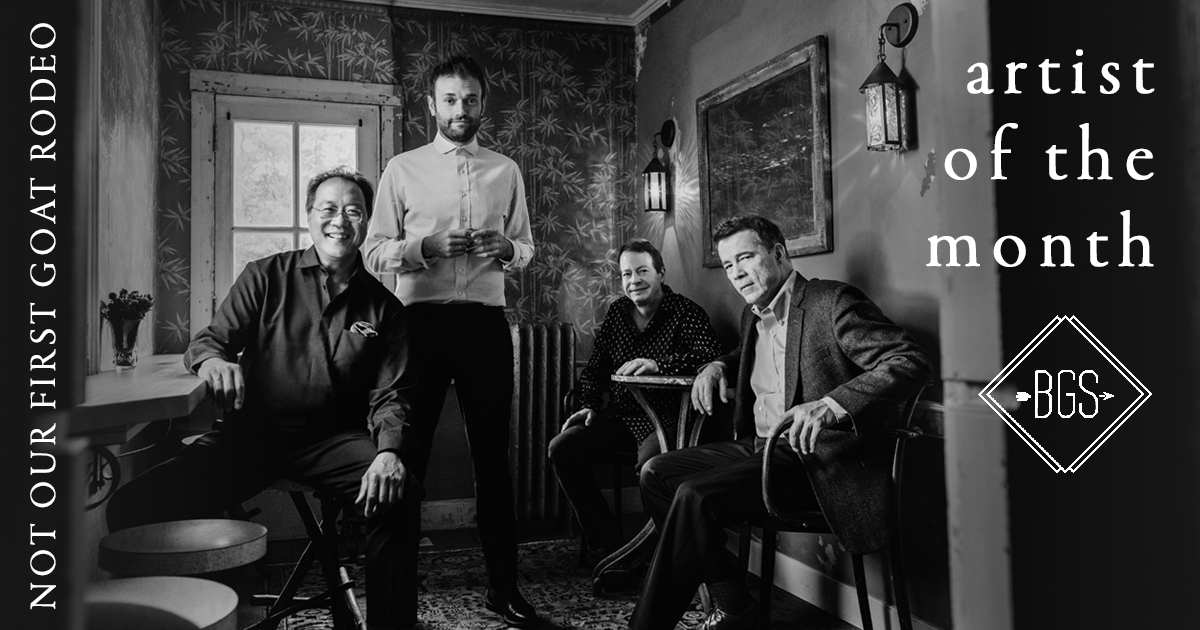
Artist of the Month: Not Our First Goat Rodeo (Yo-Yo Ma, Stuart Duncan, Edgar Meyer, and Chris Thile)

A remarkable blend of improvisation and composition, Not Our First Goat Rodeo is the just-released second volume of music from four American acoustic icons: Yo-Yo Ma, Stuart Duncan, Edgar Meyer, and Chris Thile. The eclectic group chose their name based on the aviation term “goat rodeo,” indicating a delicate situation in which 100 things need to go right to avoid disaster.

That intricacy is apparent throughout Not Our First Goat Rodeo, and so is the band members’ mutual respect and sense of joy that stems from collaboration. One such example is “The Trappings,” a cinematic piece featuring Aoife O’Donovan, who lent her talents to the first collection and returns as a guest vocalist for the new project, too.

Sharing the story behind the track, Yo-Yo Ma recalls: “‘The Trappings’ came out of a question of aesthetics. I believe Edgar was talking about pop music, how he used to think, ‘Oh, if something’s too poppy, I’m not going to like it.’ But that’s like saying ‘classical music is boring,’ or that jazz, rock, rhythm and blues are one way, or even ‘people from different countries are’…. You know that as soon as you make a general statement like that, it’s not true, because you can think of hundreds, thousands of exceptions. ‘The Trappings’ is one of those.”

The group’s initial set, 2011’s The Goat Rodeo Sessions, is a classical crossover masterpiece that won Grammy Awards for Best Folk Album as well as Best Engineered Album, Non-Classical. The critically acclaimed project also spent 11 weeks at No. 1 on Billboard‘s bluegrass albums chart. Nine years (and many other outside projects) later, the group’s camaraderie and undeniable chemistry remain intact.

Yo-Yo Ma observes, “What is so amazing about playing with Chris, Edgar, Stuart, and Aoife is that when I’m working with them, I’m almost not a full participant, because I’m actually a fan. I’m such a big fan that I approach what they’re doing with a mixture of wonder and awe at these fellow musicians whom I feel very close to, but who are doing things that are almost beyond my imagination.”

This month BGS will conduct interviews with each of the ensemble’s members about Not Our First Goat Rodeo as well as their individual inspirations and insights. Check out our Tunesday Tuesday featuring “Voila!” and enjoy this brand new Essentials Playlist featuring music from Yo-Yo Ma, Stuart Duncan, Edgar Meyer, and Chris Thile.

Read part one with Stuart Duncan here. Read part two with Edgar Meyer here. Read part three with Chris Thile here. Read part four with Yo-Yo Ma here.


Photo credit: Josh Goleman

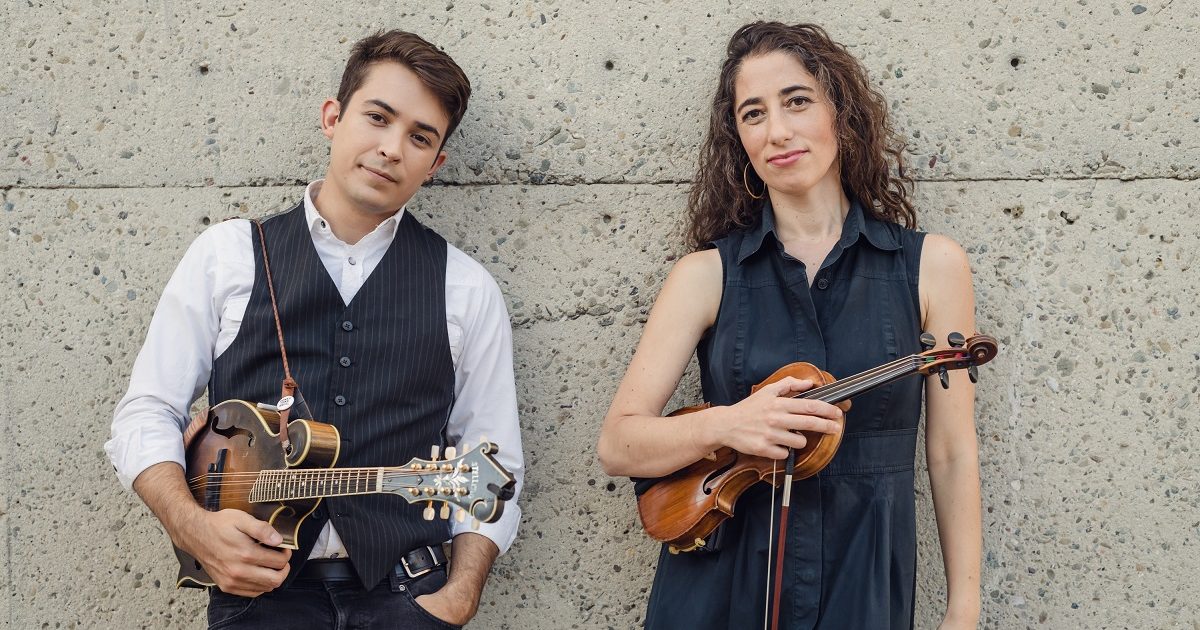
BGS 5+5: Scroggins & Rose

Artist: Scroggins & Rose
Hometown: Oakland, California
Latest Album: Curios
Release Date: June 26, 2020
Personal nicknames (or rejected band names): We’re not really the nickname types. haha I think for a while we thought of calling ourselves Spiral or something like that, but we landed on Scroggins & Rose pretty quickly.

What other art forms — literature, film, dance, painting, etc. — inform your music?

Alisa Rose: I believe any art that I experience influences what I create. I love the floaty mysticism of Chagall’s paintings, the elegant structure in Martha Graham’s dances, the lyricism of Morrison’s books, and the beautiful details of Proulx’s stories. I hope a bit of all of these seep into what I create.

Tristan Scroggins: I’ve always loved paintings and have been inspired by how they can convey so much meaning and emotion through things other than the picture itself. The brush strokes and colors and style all tell their own story without necessarily being the center of attention and I try to incorporate that idea into my playing as much as I can. With composition I/we draw inspiration from a lot of different sources. One of my favorite writing games we did while writing the tunes on this album was listening to an album of tongue twisters and trying to write tunes based on the rhythm of certain ones.

What was the first moment that you knew you wanted to be a musician?

AR: When I was 6, I read a story about Paganini and how he played the violin so beautifully that he made people cry. I was really struck by the power of music, and from then on I thought I would like to be a violinist.

TS: I grew up listening to my dad play the banjo but it had never crossed my mind to play music until I was 8 years old. I was watching my dad perform and was overcome with a sense of pride and I asked him to teach me to play. It was never a conscious decision after that to be a musician. I always just assumed that I was going to do that.

What rituals do you have, either in the studio or before a show?

AR: Before a big show I like to have a few hours of relaxed practice with some slow work on intonation, basics, and the pieces I’m going to perform. I also try to eat well (I like lots of protein before a performance) and go on a walk or a run in nature if possible. With Scroggins & Rose performances it’s important for us to improvise and warm up together as well to make sure we are both attuned to each other and able to connect well on stage.

TS: For a long time I would do confidence exercises/meditations. I’m pretty shy in everyday life so I had to consciously embody the persona of someone who wanted to be the center of attention. For Scroggins & Rose shows we usually warm up together and will do some improvisation games so that we can get in the mindset of reading body language and musical cues on stage.

Which elements of nature do you spend the most time with and how do those impact your work?

AR: I spend as much time as I can walking through redwoods and exploring the rocky dramatic Californian coastline near my home in the Bay Area. For me, music is deeply associated with my experiences in the natural world and many of my tunes are inspired by the feeling of specific places I’ve been to. For instance, “Wisconsin Wayside” is about driving through beautiful green rolling hills and cornfields on winding country roads in Dane County where I grew up. I also spend a lot of time thinking about melodies I’m working on while I hike; the melodies often find their own path while I’m walking on one.

TS: I spend a lot of time looking at nature but not really being a part of it. I’ve gotten to see lots of really beautiful things but usually through a car windshield. Those sceneries and landscapes are often used as inspiration for textures and moods in composition (such as the “wide-open” feeling of tunes like “the French Cowboy” or “Wyoming”). I also find myself writing about birds a lot. I wouldn’t call myself a “bird watcher,” but I do spend a lot of time watching birds and I have written a number of tunes about birds.

How often do you hide behind a character in a song or use “you” when it’s actually “me”?

AR: Although the music I write has no words, to me the tunes are often about a character or story that is not my own. I feel music is a powerful way for people to connect to each other around the shared experience of listening, even if what each of us hears is unique. To perform a tune, like an actor, I find I need to experience the story and emotions as my own, even if they were not originally conceived that way.

TS: I think this is a really interesting question as someone who mostly writes instrumental music, because I think the answer is “always.” Or at least almost always. Whenever I write a tune about a personal event or feeling I don’t feel the need for any restraint because, ultimately, people are going to interpret the tune in their own way. That’s the nature of instrumental music. It’s like a magic trick where the interesting part of the performance is only happening in the viewer’s mind. Of course I can lead the audience’s interpretation by telling them what I wrote it about before it’s played, but even then what each note means to me will be different from what it means to them.


Photo credit: Lenny Gonzales

MIXTAPE: Bradley & Adair’s Generations and Inspirations Collide

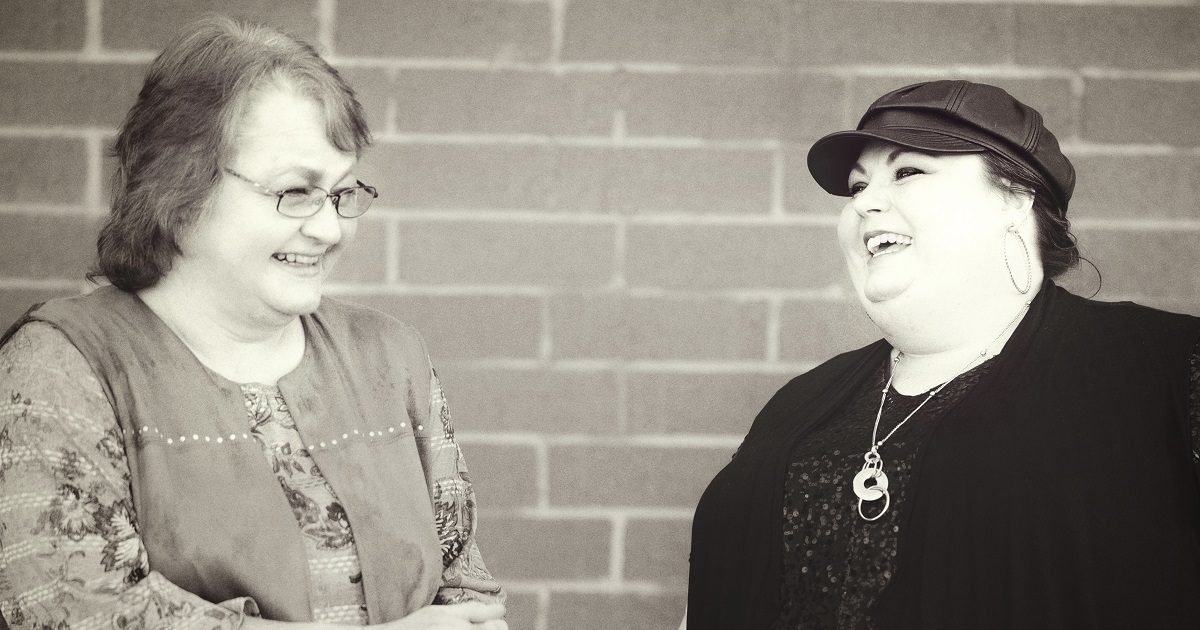
“We went into the studio and decided to do a whole album of duets. These are old songs, some of them are from the ‘40s, ‘50s, early ‘60s, one from the ‘80s, and a new song. We grew up with these songs and our parents grew up with these songs. Just like our latest record, many of the songs on this playlist are songs we’ve loved all of our lives. At the same time, some of them are newer, or unique takes on previous hits. That’s the great thing about music is the diversity and uniqueness that comes with it. We hope you enjoy some of our picks!” — Dale Ann Bradley and Tina Adair

Jack Greene – “There Goes My Everything”

This was the first song I heard on the radio. – DAB

The Osborne Brothers – “Once More”

I’ve been listening to them my whole life and am a student of their classic and seamless harmonies. This song is an example of that. – Tina

Simon & Garfunkel – “The Sound of Silence”

It’s a prophetic song that is still unraveling today as in the ‘60s. A look at human nature that continues to be so thought-provoking. – DAB

Alison Krauss & Union Station – “So Long, So Wrong”

This song encompasses everything I love about bluegrass. Great playing, fantastic vocals and an absolute amazing production/arrangement. – Tina

Glen Campbell – “Galveston”

It’s just a consummate recording in every way. – DAB

Brandy Clark – “Stripes”

This is one of my favorite written “new” songs. Brandy is one of the most clever songwriters in Nashville right now and this song shows it. Fun fact… I have a version of this recorded. Maybe someday I’ll let everyone hear it. Ha ha! – Tina

The Grateful Dead – “Ripple”

This is a song from The Grateful Dead that so much expresses the way I feel spiritually. – DAB

Blue Öyster Cult – “(Don’t Fear) The Reaper”

Talk about drive and timing with an iconic guitar riff, and one of the best rock bands ever. – DAB

Reba McEntire – “Fancy”

Well I’ve always been a huge fan of Bobbie Gentry’s voice and songwriting; however, one of my heroes in this business has been the one and only Reba McEntire (for her ability to interpret a song, entertain you and her amazing business sense). I admire her on so many levels. Her version of “Fancy” is one that can always entertain a crowd … and I love that. Reba was my first concert I attended outside of local bluegrass festivals. – Tina

The Stanley Brothers – “Jacob’s Vision”

Great writing and singing in pure Appalachian style. This song touched my heart the first time I heard it. – DAB

Harry Chapin – “Cat’s in the Cradle”

This is a song that has taken my breath away. – DAB

Poco – “Crazy Love”

I love the harmonies and guitar fingerpicking and just Poco’s overall laid-back feel with this song. It’s always been a fave of mine. – Tina

Mason Williams – “Classical Gas”

I love the guitar and this is so good! We all wanted and tried to play this. – DAB

Ludwig van Beethoven – “The Moonlight Sonata”

It’s such an emotionally driven piece. I always got lost while listening and felt several different feelings. – DAB

Linda Ronstadt – “Desperado”

Any style, any arrangement… we’ve all been “Desperado.” – DAB


Photo courtesy of Pinecastle Records

LISTEN: Steep Canyon Rangers with Asheville Symphony, “Radio”

Artist: Steep Canyon Rangers with Asheville Symphony
Song: “Radio”
Album: Be Still Moses
Release Date: March 6, 2020
Label: Yep Roc Records

In Their Words: “We’ve been lucky to perform these songs with some great conductors over the last few years, but the opportunity to record them with our hometown symphony and the combination of [producer] Michael Selverne and [arranger] Michael Bearden was too good to pass up. They brought the arrangements to life and helped reimagine some of our older tunes. We’re so grateful for everyone’s efforts in making it happen. To hear the power and sweep of a full symphony behind these songs is truly amazing.” — Graham Sharp, Steep Canyon Rangers

“It was such a cool yet unusual experience to work as a band on a collection of songs we’ve recorded over the years and have performed live hundreds of times, by adding the ASO and producer Michael Selverne. This brought the songs to a new place with an entirely new life and sound. We also recorded with the band in a truly live setting to capture the energy of the performance.” — Woody Platt, Steep Canyon Rangers


Photo credit: David Simchock

LISTEN: Steep Canyon Rangers, Asheville Symphony, Boyz II Men, “Be Still Moses”

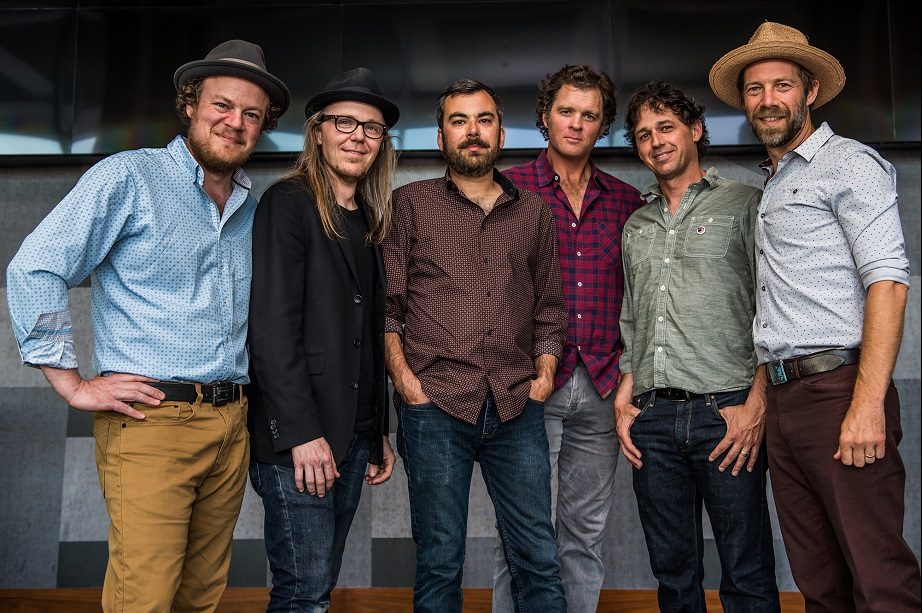
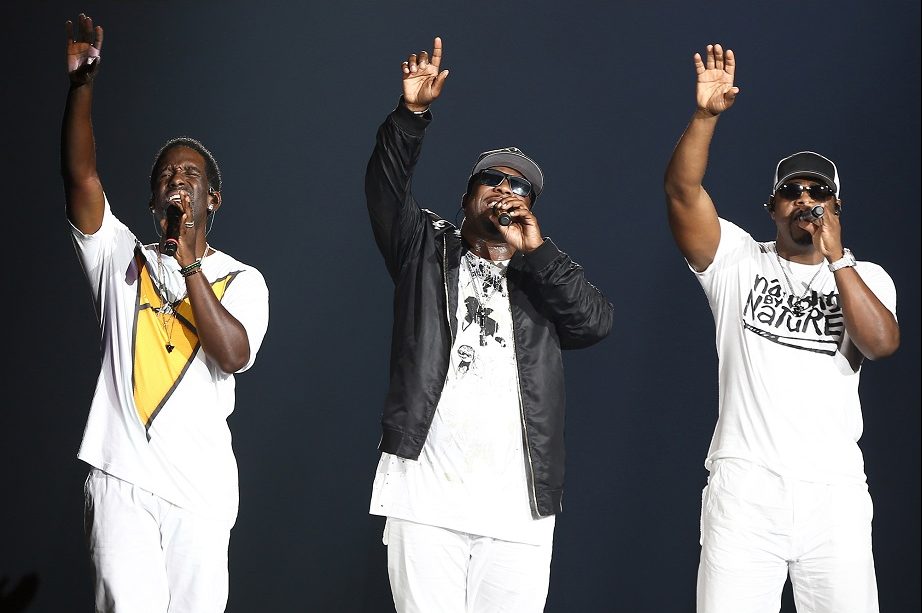
Here’s a surprise from the Western North Carolina music scene. Steep Canyon Rangers and Asheville Symphony have partnered with R&B group Boyz II Men for a refresher of “Be Still Moses.”

Instinctively believing that these genres would blend, Steep Canyon Rangers’ producer Michael Selverne collaborated with musical director Michael Bearden to bring all the entities together, thus elevating an SCR crowd favorite into something special for all three groups.

“We always get this chill when we know we are in the right place,” says Boyz II Men’s Shawn Stockman. “And we got a few chills working on this project.”


Photo credit of Steep Canyon Rangers: David Simchock
Photo credit of Boyz II Men: Debby Wong

Provided by Yep Roc Records

3×3: Ariel Bui on Southern Manners, Fiona Apple, and Analog-Loving Freaks

Artist: Ariel Bui
Hometown: Nashville, TN (now)
Latest Album: Ariel Bui
Personal Nicknames: Ms. Ariel. In the South, it's considered polite to put "Ms." in front of ladies' first names, especially when you're also a piano teacher.​

What song do you wish you had written?
"I Know" by Fiona Apple

If money were no object, where would you live and what would you do? 
If money were no object, I'd build and live in an off-grid Earthship somewhere rural, but not too far from civilization and travel a lot from there. I love Taos, New Mexico, and the Mediterranean, and would love to travel the world and see where else I'd like to land. I want to learn more about my Vietnamese roots and would love to learn to play Vietnamese traditional folk instruments and songs. Also, if money were no object, I'd go all out with my art and compose an opera or a symphony, become an opera singer, learn to conduct, paint, weave baskets, knit, grow my own food, bird watch, volunteer all over the world with activist organizations, and do whatever I want.

If the After-Life exists, what song will be playing when you arrive?
"Videotape" by Radiohead

How often do you do laundry?
Not often enough. Probably every two to three weeks. Luckily, I have way too many hand-me-down clothes.

What was the last movie that you really loved?
Fight Club

If you could re-live one year of your life, which would it be and why? 
I would re-live 2015 — the year I recorded this album to analog tape with producer/engineer Andrija Tokic at the Bomb Shelter in East Nashville; the year I flew up to Brooklyn to be a part of the analog mastering process with Paul Gold at Salt Mastering; the year I collaborated with musicians Jon Estes, Dave Racine, Jem Cohen, Emma Berkey, and Lizzie Wright in the making of music. I truly enjoy being deep in the throes of the musically creative process, in a collaborative effort that is true to my artistic vision. Andrija is really fun to work with. He is a wonderful human and is very respectful of my integrity and artistic vision. He really brought forth his own genius to accentuate my songwriting, guitar playing, and singing, while introducing me to the otherworldly experience of working with amazing session musicians. I met so many other great people who float in and out of the Bomb Shelter, too, and I feel like I got inducted into some family of insanely talented, analog-loving freaks.

What's your favorite culinary spice?
Cinnamon

Morning person or night owl?
Night owl

Coffee or tea?
Tea


Photo credit: Jessica Ferguson