Larry Sparks Is a Surprisingly Zen Bluegrass Star

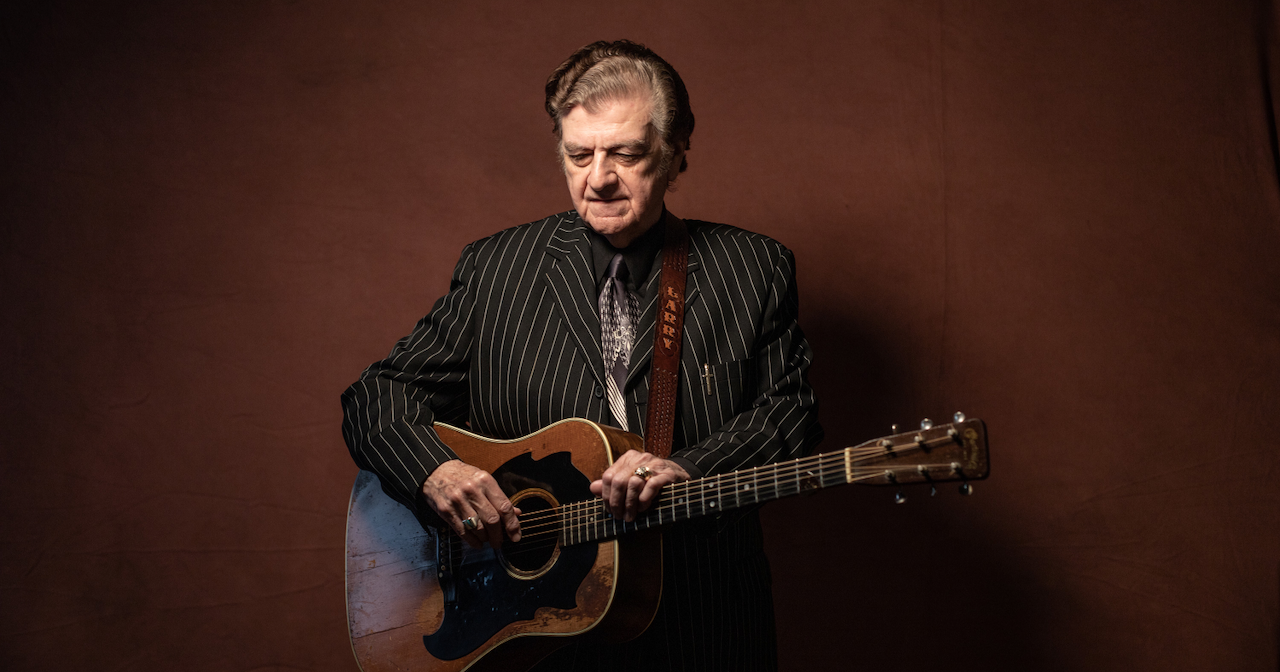
Speaking to Bluegrass Music Hall of Fame inductee and IBMA Award winner Larry Sparks over the phone, you might never guess you’re conversing with a living legend. He’s remarkably humble, down to earth, and plainspoken. And his approach to making bluegrass – as he has professionally for more than 60 years – is surprisingly zen.

His latest album, Way Back When, was released in late October 2025 and the project finds Sparks in exactly the same sonic space as any of his excellent LPs from the last six decades. If you were to take a short audio sample of Way Back When, it would be genuinely difficult to identify from which era of his lauded career it came. The project is warm, lively, and resonant, sounding like you’ve been dropped into a cozy living room with perfect acoustics and a superlative bluegrass string band.

The songs, as well, are timeless and classic, whether fresh tracks, iconic covers, or an old-timey instrumental fiddle tune with familial origins. Like his vocal style, guitar picking, and production preferences, Sparks’ song curation also feels like an intuitive extension of his personality. When he describes how he accomplishes this consistency across eras and executes the timelessness of his albums, it seems as though he becomes a sort of bluegrass guru.

“When songs touch me, they touch my feelings,” he explained to BGS . “When the song touches me, it’s saying something. I’ll take that and see what I can work with, and make it my song.

“The song’s me and I’m the song. And that’s the way that they did it back in the day. They become that song – the older singers, they became those songs. That’s the way that I do it, I try to make that song me and me the song.”

It’s a secret ingredient lacking from too many bluegrass records out there today. Not just his inhabitation of songs so that they can inhabit him, but also treating bluegrass like the forebears of this music did. As a living, breathing, cutting-edge thing that doesn’t need to be built on a foundation of regurgitation and emulation and litmus testing. Like Sparks puts it so simply – and eloquently – in our conversation, bluegrass has mainstream appeal. It requires heart, soul, and being present – becoming the music and becoming each song.

That right there is exactly how Sparks became a Bluegrass Music Hall of Famer and a hero to many – Alison Krauss, Billy Strings, and this writer included. It’s also how he’s maintained a consistent (never boring, stale, or regressive) sound over the course of his 62-year career. And, it’s what keeps him motivated to continue looking forward while inspiring all of us and reaching new audiences.

Let’s start by talking about your excellent new album, Way Back When. When I first listened to it in the fall, when it was released, I was struck by how old-school it sounds. The production style sounds so timeless, it sounds so warm and live – like real bluegrass. It also feels like it could have been pulled from almost any era of your career. with the way that it’s produced and the way that it stands out sonically. I wondered how you accomplished that?

Larry Sparks: I try to do things normal and just go for it. And all of the band– you just feel what you’re doing. You make it real. It’s hard to explain. It’s just, I sing and play from my heart, soul, and mind. Some songs you don’t have to do that, you just – like the old saying – rear back and let it go.

But some songs need attention, and you have to become that song and the song becomes you. That’s the way that I think probably all these songs are, everything I sing is pretty much that way. But, I don’t know, the feel just comes out natural. It’s more of an older feel, the real feel. That’s the way I like things. So much [that’s] added in today’s recording and music and everything, it’s okay – I’m not saying anything about it! But myself, I’d rather keep it pretty real, just like it used to be.

Are you tracking in isolation booths? Or are y’all tracking in the same room and live? It doesn’t sound like you’re putting the music under the microscope, as it were.

No, I don’t like that. You have to [sometimes], but I’d rather [not]. It’s [an] all in the same room deal. Sometimes you’ve gotta do an overdub break or something. You miss your hot lick, you gotta do it over again. Overdubs are good to use, but I don’t like to depend on them. I’d rather do it straight down the line, and if you make a mistake you do it over, you can overdub a spot or something.

Something else that stood out to me listening to the album is how consistent your sound has been over the decades. You have your own way of singing, you have a style that’s really consistent – as well how you pick the songs that go on your recordings. And you certainly have your own guitar-picking style. Almost no one picks like you these days. How do you think it is true, across 60 years in music, that when you listen to Larry Sparks, you know you’re hearing Larry Sparks and Larry Sparks alone?

It’s a natural style for me. I respect the older songs an awful lot. The older music and the older singers, that came along before I did, in the ‘30s, ‘40s, and ‘50s. I was a kid, but I remember the music mighty, mighty well in the ‘60s. All the older country singers were embedded in me, too. Some of the people just stayed in me. They were good singers and their music, their singing was real. It embedded in me.

I still had my own way of singing and playing. I never did wanna copy someone else. And although I respected what they did very much, the older music and the older country and bluegrass [artists] and whatever else – there is other music, too. It just became natural for me to have my own style of singing and playing, and I never really worked on it to do that. It’s just me, and the band pretty well feels what I’m doing.

The whole thing, you gotta keep it natural, real, and feel what you’re doing, from your heart and soul. That’s the way I do it. It’s nothing I plan to do. It just comes out that way.

I think that’s why it works and is so consistent across your entire career, because it’s not a costume that you put on, it’s not affectation, it’s not a target that you’re trying to hit. It’s just you being you.

People can feel that, too. The audience can feel what you feel. Most of ’em, they can feel exactly what you feel, what you do.
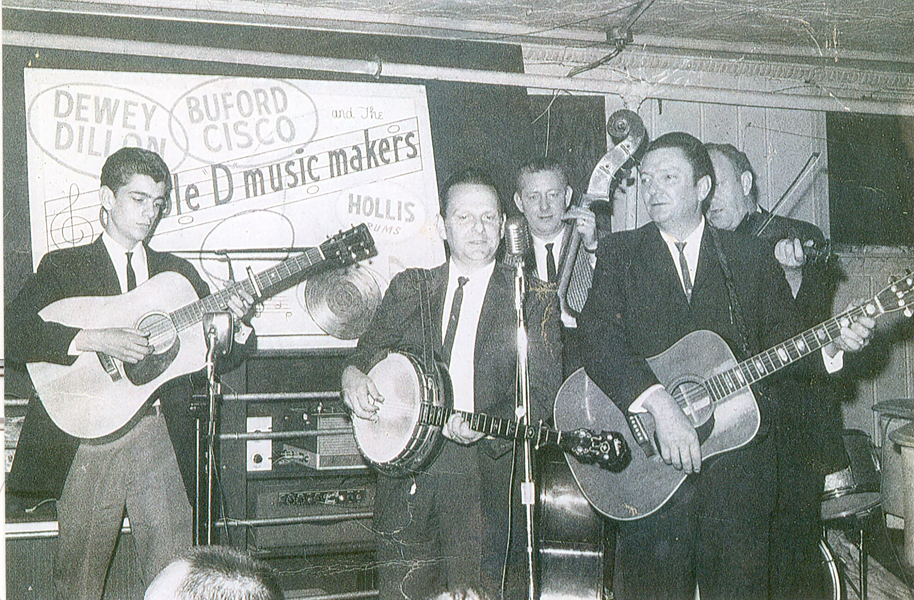
Larry Sparks (far left) performs with the Stanley Brothers before Carter Stanley’s death. Circa 1964. Image courtesy of Rebel Records.

I so appreciate that you bring up heart and soul, because I think people make the assumption that bluegrass is not a music that’s based on heart and based on soul. Especially when you listen to some barn burning, shredding bluegrass or jamgrass.

But for me, this music has always been as much about the stories, the heart, and the soul – and the feeling of it. And that’s clearly such an important part of it for you, too, and the storytelling. I think a lot of people don’t realize heart and soul are an important part of the tradition of bluegrass.

Yeah, sure it is. I’ve worked under the bluegrass name for years. Bluegrass is about 80 years old now, and I have been into it 62 of those years.

Wow.

I can’t believe I’ve been into it that long under the bluegrass name. My music is considered bluegrass, but actually a lot of my stuff could go either way. I’m considered bluegrass and that’s fine. I appreciate it. I’m honored, but a lot of my stuff can go into country or some other direction, too.

I just hold to what I’m doing and [what has] been a good business for me over the years. But you have to make it work and look ahead. The music is music, but you gotta make a business out of it. If you don’t, it’s not gonna work. And that’s what I did. It’s worked out for me. A lot of the bluegrass [industry] is not easy. It’s not one of the easiest forms of music to “make it” in.

And, it’s always been set behind [other] forms of music. I’d really like to see it be possible for bluegrass to be played on all stations. To play it [alongside] new country, modern country, rock and roll. Whatever it is, mix it up. But get bluegrass to program directors. If it ever could get played on other stations, with the right songs and the right artist – put in with everything else they’re doing – it would work. I don’t know if it’ll ever come to that or not, but that’s what it’s always been. We’ve always – like the old saying – took the backseat to the other forms of music.

But we got enough fans and that keeps it [going]. … I’m honored and I’m thankful for it. But it takes a lot of years, a lot of hard work. It’s not easy. I’ve done it all myself. I’ve done my own management, my own booking, my own phone calls, my own writing. This, that, this, that, this, that. I’ve done it all. Like I said, I’m gonna keep doing it, it’s working. It’s fine.

Like you mention, these songs really could go both ways. I love how much country is on this album, and you do such a great job of illustrating that bluegrass and country will always be related and that they cross-pollinate.

And I totally agree, bluegrass has mainstream appeal. And always has! I don’t know why we pretend like it doesn’t.

Yeah, we need more promotion on bluegrass. I wanna keep doing everything I can for it, because I respect it very much. Bill Monroe, the Stanley Brothers, and Flatt & Scruggs – these three names put [bluegrass] on the path and all that played bluegrass come after those three names.

Those three names are in you. I never did want to actually copy any one of those three names, but you take those three names – just to give you an idea. Take those three names I said and you put the Osborne Brothers with ‘em. Put Jim & Jesse with ‘em. Put Jimmy Martin, Mac Wiseman and others – and Larry Sparks – all those names. Every one of ’em are different sounds, different style. But they’re still on the same path. That’s what you gotta have. That’s what I knew, “I better stick to that and not be a copy.”

Let’s talk a little bit about your guitar playing style, because I think you’re carrying on a tradition of a particular kind of guitar picking in bluegrass that is rarer and rarer today. So few people who still make records and perform shows pick like you do. I love how front-and-center your guitar is on this album. Could you talk a little bit about your picking style and maybe who your influences were or how you came up in that type of picking?

Other guitar players are really good and there are a few players out there that can. But the way I do things, my playing is like my singing. I play the melody. And I don’t play over the melody. There’s less notes than normal guitar, it’s more of a feel. It’s hard to explain, but I just play the feel of the song and the melody. I try not to overdo it. I play it and when I hit a note or a slide or a backward– or whatever I do, a pull-off, I want it to come from me. I want it to be me and I wanna feel that note I’m doing, feel that slide I’m doing, whatever I’m doing. And [I want to] keep it that way and not overplay the song.

I also wanted to talk about the instrumental on the album, “Sleepin’ Lula.” Speaking of things that are rarer and rarer in bluegrass, having the clawhammer banjo on it is excellent. It feels like no one flogs the banjo anymore. There’s a lot of old-time players, a lot of clawhammer players, but it doesn’t really seem like anybody’s flogging it anymore. Hearing the instrumental, when the clawhammer kicks in, it was reminding me of that era of early bluegrass when you were just as likely to hear frailing banjo as a three-finger in a bluegrass band.

That’s great. Yeah, I thought it turned out pretty good. I was pleased with it. That’s an old tune. My grandpa, I got a recording of him playing that in 1953. Him and some guys, and he’s from Jackson County, Kentucky. Very good fiddle player. Very good. He was one of the best, he could’ve done something with his talent. He was born in 1877. Back in those days, up to the turn of the century, ‘20s, ‘30s, ‘40s, and ‘50s, he just played square dances around locally and stuff. He never did really go out. Stringbean asked him to go out with him some, but he never wanted to leave or go ‘round traveling and stuff. But he could have filled the bill for anything. He was that good.

I heard the tune from him. And I had never heard it before. “Sleepin’ Lula” – that was my grandma’s name, his wife’s name. She died in 1910 in childbirth and I never got to see her, of course. But her name was Lula, and so he recorded that “Sleepin’ Lula.” And I don’t know, I’m not going to say for sure if he wrote it. There’s a couple other fiddle players I heard play that from back in the ‘20s or ‘30s. But all respect to him. There wasn’t a player like my grandpa.

I don’t know who it came from. I don’t know if it came from my grandpa and he put it together because his wife’s name is Lula. Or if “Sleepin’ Lula” was the name [he gave another tune.] Someday I may try to trace that out a little further.

The other fiddlers that you know played it, did they use the same title for it, too?

Yeah!

Interesting. That’s so cool!

Yeah, it’s something else.

You’re a famous bluegrasser. You’ve been famous to me, for instance, my whole life. I was honestly nervous and a little starstruck to have this conversation. [Laughs] But you’re also becoming more famous at this moment, because two of the biggest bluegrass names to ever come out of the genre – Alison Krauss and Billy Strings – they’re such big fans of yours. I feel like both Alison and Billy see your legacy, they see how important it is, and they are translating that importance to people that maybe don’t know who you are or are just learning about you for the first time.

So I’ve just been curious to ask you, how do you feel about having these prominent “fans” – and it’s not just Alison and Billy, obviously. What does it mean to you to be part of that constellation of people that they look to as influences? And, what does it mean to you to see your music reach new audiences thanks to them and others?

It’s a new world. It’s a different world than what I’m used to. Which, there’s nothing wrong with it. I’m very honored that they stand behind what I do and my music. And, for the music, I’m very honored and thankful that they like it and that they maybe have it in their shows sometime or whatever.

But yeah, the new crowds in bluegrass – we have a very good crowd, but it’s bigger than it ever has been, now, bluegrass music is. But we still have that limited crowd [coming] from other forms of music. And that’s why I said, if it ever got to play on the big stations, give us a little room and respect for the bluegrass. It’s very important music and if the big country stations would give us some respect and get bluegrass to their program directors…

Don’t just [throw it out there]. You gotta be careful. Give it the right thing, the right artists, the right songs, and it would really help our music. It really would help.

But if it never happens, we still got a good crowd and we get more people all the time coming in. It’s a kind of a new crowd coming in, a new age group coming in. We still have a lot of the older people, but the younger people are coming into it. Teens to 20 years old, I’m seeing that happen more. That’s good. Bluegrass, it needs more push, it needs more promotion.

Do you see what Billy Strings is doing as that push or as that promotion? Can you tell, with younger fans coming in, that they started as Billy Strings fans and found you that way? I wonder, is there any way you’re measuring the impact of people talking about you and pushing your music?

I can’t really tell on that, for sure. I can’t. I’m just seeing people that’s young – teenagers and stuff – that wants to learn to play the music and are trying to play. And then that age group I was telling you about is. It’s coming in stronger all the time.

I’ll be honest with you. I don’t listen to other music. I don’t listen to anything hardly, music-wise. You gotta keep yourself fresh. But I respect other music. I respect it. All forms of music. I don’t have anything against the big bands and all the new names. But I like that old stuff. Of course, bluegrass and old country. And other things, blues, I like a lot of that.

You seem remarkably humble and so down to earth. You follow the songs, you put heart and soul into ‘em. But you’re literally a Hall of Famer and you’re one of the last of the first big generation of bluegrass makers that are still doing it today. You’re a legend to all of us. Does it feel like you’re a legend? To you, on the inside? Or no?

I would be to a lot of people, a legend, and to a lot of people I would be famous, I would be a star. But when I went into this business, went into music in my teens, I never looked at it as wanting to be a star or to be famous. I never looked at those two things. I wanted to take what talent I had. I knew I had something to offer. I had to put it together and see what I could do [to] make it work.

I don’t know if I’m a star or famous to people. I hope so, because that’d be nice. I’m pretty honored.


Photo Credit: Images courtesy of Rebel Records. Lead image by Michael Wilson.
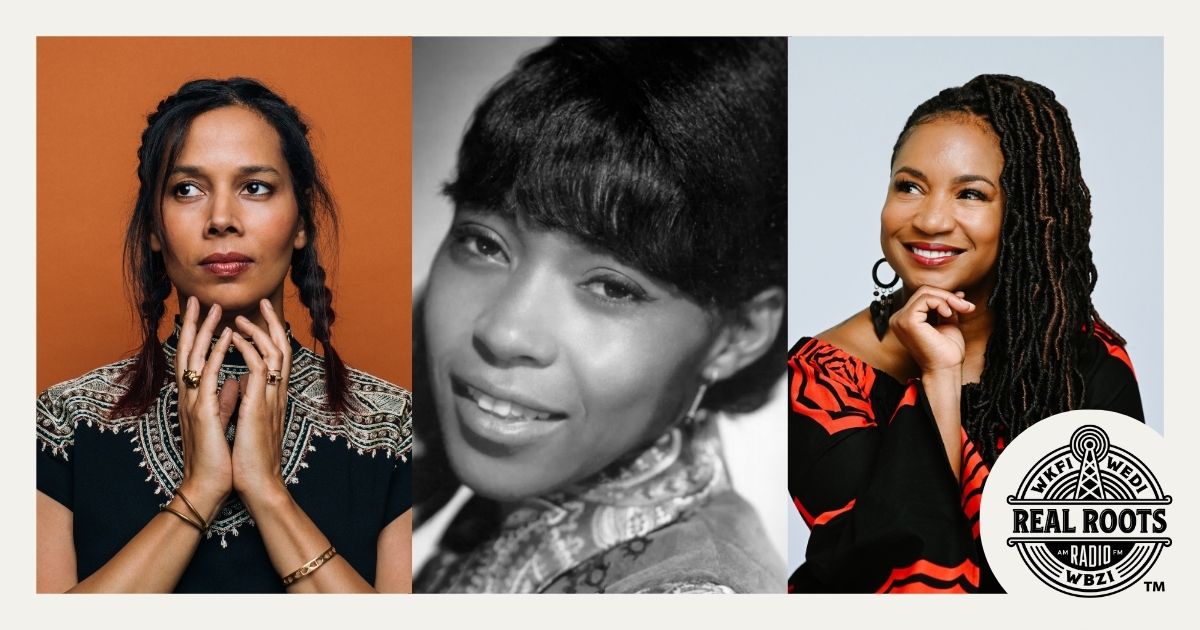
Celebrating Black History Month: Rhiannon Giddens, Linda Martell, Miko Marks, and More

To celebrate Black History Month – and the vital contributions of Black, Afro-, and African American artists and musicians to American roots music – BGS, Good Country, and our friends at Real Roots Radio in Southwestern Ohio have partnered once again. This time, we’ll be bringing you weekly collections of a variety of Black roots musicians who have been featured on Real Roots Radio’s airwaves. You can listen to Real Roots Radio online 24/7 or via their FREE app for smartphones or tablets. If you’re based in Ohio, tune in via 100.3 (Xenia, Dayton, Springfield), 106.7 (Wilmington), or 105.5 (Eaton).

American roots music – in any of its many forms – wouldn’t exist today without the culture, stories, skills, and experiences of Black folks. Each week throughout February, we’ll spotlight this simple yet profound fact by diving into the catalogs and careers of some of the most important figures in our genres. For week three of our celebration, RRR host Daniel Mullins shares songs and stories of Linda Martell, B.B. King, Miko Marks, Darius Rucker, and Rhiannon Giddens. Be sure to check out the first week and second week of the series, too.

We’ll return for one last edition next Friday to bring you even more music celebrating Black History and the songs and sounds we all hold dear. Plus, you can find a full playlist with more than 100 songs below from dozens and dozens of seminal artists, performers, songwriters, and instrumentalists from every corner of folk, country, bluegrass, old-time, blues, and beyond.

Black history is American roots music history; the two are inseparable. As we celebrate Black History Month and its legacy, we hope you’ll join us in holding up and appreciating the artists who make country, bluegrass, blues, folk, and Americana the incredible and impactful genres that they are today.

Linda Martell (b. 1941) 

She was a trailblazer, a pioneer, and a voice that country music wasn’t ready for – but she made sure they heard her anyway!

Linda Martell, the first commercially successful Black female country artist, broke barriers in the late 1960s with her soulful voice and undeniable talent. In 1969, she made history with her hit song “Color Him Father,” reaching the Top 25 on the country charts before the release of her debut album – Color Me Country on Plantation Records — resulting in two more charting singles. She became the first Black woman to perform on the Grand Ole Opry, making a dozen appearances on the historic radio program and appearing as a special guest on television programs like Hee Haw, proving country music is for everyone.

Despite her success, the industry wasn’t kind. Racism and label conflicts cut her career short, leaving her influence overlooked for decades. She would spend many of those decades settling into domestic life, working a variety jobs including as a school bus driver. Still, her legacy lives on, inspiring a new generation of Black country artists. She is an influence on many African American country artists today, including Mickey Guyton. When Rissi Palmer began her program on Apple Music Radio, it was intentionally named “Color Me Country” after Martell’s historic album. As she puts it, she was “paying homage to the foundation on which my house is built, and that is Linda Martell.”

In 2021, Martell was recognized with CMT’s Equal Play Award and has had an even greater spotlight shone on her groundbreaking work after she made guest appearances on Beyoncé’s Cowboy Carter album, resulting in Martell’s first GRAMMY nomination at age 83. Thankfully, Linda Martell is finally getting the recognition she deserves. Her story is one of resilience, talent, and breaking down barriers—one song at a time.

Suggested Listening:
Color Him Father
Before the Next Teardrop Falls

B.B. King (1925 – 2015)

Let’s talk about a blues icon who found inspiration in country music – B.B. King! Born on a Mississippi plantation in 1925, B.B. grew up listening to blues. But did you know he also had a love for country music? As a young man, he was inspired by the guitar playing of country stars and tried to emulate the sound of a crying steel in his bluesy pickin’ style with his guitar, Lucille. He would frequently collaborate with country music stars both on stage and in the recording studio, including on his album, Deuces Wild, which featured appearances from Willie Nelson and Marty Stuart.

He performed at Willie’s FarmAid, on the GRAMMYs with Keith Urban, and even appeared on the popular That Nashville Music TV Show with Jerry Reed. In the ’90s, the hit all-star album Rhythm, Country & Blues closed with a legendary collaboration between B.B. King and George Jones on the old story song, “Patches.”

B.B. King proved that great music knows no boundaries. Blues, country, rock and roll – it’s all about storytelling from the soul and letting the good times roll! B.B. King was inducted into the Rock & Roll Hall of Fame in 1987. He passed away in 2015 at the age of 89.

Suggested Listening:
Patches” (featuring George Jones)
Let the Good Times Roll” (featuring Brad Paisley)

Miko Marks (b. 1973)

She’s breaking barriers, blending genres, and bringing a fresh voice to country – meet Miko Marks. Born in Flint, Michigan, Marks has been redefining country since the early 2000s. She was named Best New Country Artist in 2006 by New Music Weekly and won several awards at the Independent Music Awards in the early aughts as well. With a voice that’s equal parts soul, blues, and traditional country, she has a compelling sound full of power and conviction.

After years of industry struggles, Marks focused on her role as a mother for the next decade-plus. She mounted a powerful comeback with her 2021 album, Our Country, earning critical acclaim and recognition from Rolling Stone and NPR. The equally impressive follow-up, Feel Like Going Home, was released in 2022. She was named one of CMT’s Next Women of Country that same year.

Miko’s music speaks of resilience, hope, and inclusivity, carving a space for new voices in country. Her release Race Records features her take on country classics from The Carter Family, Willie Nelson, and more. From performing at the Grand Ole Opry to rocking major festivals, Miko Marks is a name you need to know. If you haven’t heard her yet, now’s the time!

Suggested Listening:
Tennessee Waltz
Freeway Bound

Darius Rucker (b. 1966)

From Hootie & the Blowfish to country superstardom, Darius Rucker has done it all. This GRAMMY-winning artist first made waves in the ’90s by leading popular alt-rock band Hootie & The Blowfish, which he helped found while attending the University of South Carolina. They scored half a dozen Top 40 hits, including “Hold My Hand,” “Let Her Cry,” and “Only Wanna Be With You.” There were seeds even then of his future country success, especially with the band’s bluegrass-flavored “Desert Mountain Showdown” from their Musical Chairs album.

Rucker began pursuing a country career in 2008. His debut country single, “Don’t Think I Don’t Think About It,” made history as he became the first Black artist in over 25 years to top the country charts. He was named CMA’s New Artist of The Year in 2009, making him only the second African American artist to win a CMA award – the first being Charley Pride. He would join the Grand Ole Opry in 2012 as only the third Black member of country music’s oldest institution.

He has continued to release many country hits, including nine chart-toppers. In 2013, he released the biggest song of his career, his take on an Old Crow Medicine Show song, “Wagon Wheel.” This number one hit is only the fourth country song to be RIAA-certified Diamond (for 10 million units) and earned Darius Rucker a GRAMMY Award for Best Country Solo Vocal Performance, making him only the third Black artist to win a country vocal performance GRAMMY. With his distinctive voice, heartfelt lyrics, and undeniable charm, Darius Rucker continues to break barriers and bring fans together. Whether it’s rock, country, or beyond, one thing’s for sure – this guy’s got soul.

Suggested Listening:
Don’t Think I Don’t Think About It
If I Told You

Rhiannon Giddens (b. 1977)

From the rolling hills of North Carolina to the world stage, Rhiannon Giddens is a musical force re-centering American roots music. A singer, songwriter, multi-instrumentalist, and historian, Giddens brings the forgotten voices of history back to life one song at a time. After leading the GRAMMY-winning old-time band, the Carolina Chocolate Drops, she has focused on her solo career for now more than a decade.

Rhiannon blends folk, blues, gospel, country, Celtic influences, and more into her dazzling brand of American roots music, all while shining a light on Black contributions to the American musical landscape. Her voice? Soulful. Her banjo? Revolutionary, as she is a recipient of the Steve Martin Prize for Excellence in Banjo and Bluegrass. Giddens has also earned MacArthur Genius honors, collaborated with folks like Elvis Costello, Eric Church, and Gillian Welch, written ballet music, and even composed a Pulitzer Prize-winning opera! (She did study opera at Ohio’s Oberlin College after all.) She has even written several children’s books based off some of her original songs.

Recently, Giddens has partnered with fellow Carolina Chocolate Drops co-founder Justin Robinson to shine a light on fiddle & banjo music from North Carolina. Whatever she sets her sights on, Rhiannon Giddens tackles it head on, inspiring us all in the process.

Suggested Listening:
Julie
Don’t Let it Trouble Your Mind
Hook and Line


Want more Good Country? Sign up on Substack for our monthly email newsletter full of everything country.

Listen to Real Roots Radio online 24/7 or via their FREE app for smartphones or tablets.

Photo Credit: Rhiannon Giddens by Ebru Yildiz; Linda Martell courtesy of the artist; Miko Marks by Karen Santos.

Embrace the Past,
Move Forward

Music has and continues to be a form of healing for Fancy Hagood. The Arkansas-raised singer who takes his forename from the Drake song – not the Bobbie Gentry and Reba McEntire hit – first began writing songs as a queer junior high student struggling to fit in before dropping out of school at 17 to chase his newfound dreams in Nashville.

Despite growing up listening to everything from contemporary Christian music to The Chicks, Shania Twain, Tim McGraw, Destiny’s Child, and Missy Elliott, it was choir and theatre that brought Hagood’s own creative aspirations to life.

“I really found myself in those classes,” Hagood tells Good Country. “I was dealing with a lot of bullying at the time and writing music became one of the few ways I could truly express myself.”

But upon his arrival to Nashville, Hagood was told that a career as a queer country musician was unlikely. This was followed by a move to Los Angeles, coupled with a transition to pop, that led to him to opening for the likes of Meghan Trainor and Ariana Grande as he juggled a day job at Forever 21. Those opportunities coincided with a decrease in creative control over his own work, something he’s taken back for himself on 2021’s Southern Curiosity and his most recent project, American Spirit, which released October 25.

“I was hell-bent on this album not being a breakup record, but instead one about healing, moving forward, and finding yourself,” Hagood says of American Spirit. “I don’t want to be on the road singing songs about my ex, but I do want to sing about reclaiming your story, bouncing back, and that being the most powerful thing after experiencing something like that.”

Speaking on the phone from his Nashville home, Hagood detailed his ambitious Music City move, experiences with gatekeeping, his work with Apple Music, and more.

What was it like for you moving to Nashville so young? I imagine on one hand it’s quite empowering, but it can also be overwhelming too.

Fancy Hagood: On my song “Fly Away” I sing, “You were scared as hell to take the highway/ You barely knew how to drive…” and that’s the truth. I got my driver’s license when I was 16 and I never drove on the highway until I moved to Nashville, so it was very much a culture shock. I know a lot of people don’t view Nashville as a big city compared to New York or Los Angeles, but when you’re coming from small-town Arkansas it felt like the whole world had opened up for myself. There were parts of it that were really intimidating, but for the most part I had so much enthusiasm that you couldn’t really tell me anything. I had this idea that I was going to be a country superstar and you couldn’t tell me otherwise.

I know things haven’t always been easy for you though. You’ve dealt with some gatekeeping and other hurdles along the way. What’s that been like?

Before I moved to LA, I was getting all this attention in Nashville, selling out shows on my own. A lot was going on for not having any music out in the world yet. I quickly got a publishing deal, but instead of things taking off from there I started getting a bunch of people putting their own opinions on me and putting their own stuff into my music, thus limiting me because of their own fears. That was something I never had going into all of this – fear. It’s a complicated thing when you start mixing art and commerce. The powers that be recognize you have talent, but in figuring out how to make money from it they start thinking of Middle America and who’s going to buy it, leading to a fear game rather than just letting the artist be an artist.

When I moved to LA and got a record deal, that’s where other people’s fears began sinking into my own train of thought and my delusion began slipping away. I was accomplishing all these things, from performing on Dancing With the Stars to hitting the road with Ariana Grande, but on the inside I felt miserable. I realized I’d sacrificed so much of myself and my art to get to a place where other people found it comfortable for me to be successful, but a year and a half into it I just imploded and lost all the deals.

It wasn’t until moving back to Nashville in 2016 that I was able to shake all that off. In 2018 I signed a new publishing deal and began work on my album Southern Curiosity, a slow burn that didn’t release until 2021. It was a really difficult transition having [to go from] a Top 40 hit and everyone treating you like you’re the king of the castle to no hits, no deals, and nobody wants to touch you with a ten-foot pole. It was a humbling experience that taught me that the industry in place was not set up for someone like me to be successful. Because of that, my train of thought stopped being about how do I fit into the industry to thinking about how to create my own, which is exactly what I’ve been doing since Southern Curiosity.

One way you’ve been building that community you speak of is through your role as the host of Trailblazers Radio on Apple Music. What’s that gig meant to you?

I’ve never experienced a company that puts their money where their mouth is quite like Apple. They were supportive of me and my first record before hosting a radio show was even a thought. They first came to me after I guest-hosted on the late Leslie Jordan’s Apple Radio show, which I did three or four times with him. After that, they approached me with the Trailblazers idea and threw me into the deep end. When they offered it to me in 2021 I’d never done radio before and just recently we were picked up for our fourth season. My idea is to feature artists who don’t typically get those opportunities, allowing country music to be for everyone. If you look at our playlist you’ll see all kinds of artists on there, not just what country radio suggests Nashville is.

It’s also been meaningful getting to sit across from actual legends and people who have shattered the glass ceiling in country music. Each artist that’s come through our doors has taught me that not one artist’s journey is the same, which has done a lot for inspiring, motivating, and informing me as an artist.

Are there any particular moments or guests from the show that stand out?

I’d never met Jelly Roll before he came in for his interview and his heart just blew me away. Who he is at his core is so full of joy and his philanthropic side was really inspiring to me. He had just sold out Bridgestone Arena and donated all the money to an organization that helps incarcerated youth. Even when we weren’t recording he was wanting to know more about me, my art, and what I do. He’s just a stand-up person.

A moment ago you mentioned Leslie Jordan, whose loss you touch on (along with your grandmother’s) on the song “Good Grief.” I guess that goes back to songwriting being a method of healing?

Yeah, it came about during a writing session with my friend Jeremy Lutito on a particularly solemn day. We were both in sad moods, but in typical fashion when two guys are alone in a room the last thing they’ll do is ask, “What’s on your heart?” We got to talking about a situation with his family where their dog had passed away the night before, which led to a conversation about grief and having to walk his kids through it for the first time. As he was telling me this I just fell apart thinking of how grief is such a hard thing to come to terms with and reckon with, but sometimes it’s ultimately a good thing. We’d been struggling all day, but that song came about in only an hour or so. It was pure magic.

I’ve seen you refer to this album as a “breakup record,” and I feel like one song that really captures that essence is the title track, “American Spirit.” How’d it come about?

I wrote that with Gina Venier and Summer Overstreet. It started with this idea of cigarette season or a time in your life where you’re smoking and stressed. But with Gina, who’s also a queer artist, it evolved into a song about becoming someone else’s vice. It’s not an unheard-of story in the South, people not being able to fully speak to who they are or how they feel – there’s a lot of closet cases among us. I’ve dealt with that a lot in my time in Nashville and I know others have, too. The song is mostly a nod to those experiences and being an openly queer person dealing with others who aren’t open but are addicted to your openness and freedom and not being able to let that go.

What has music taught you about yourself?

It’s taught me that I’m resilient and can get through anything along with the power of believing in yourself. I’ve gone through a lot in this industry, but I keep coming back. This is what I love and I’m never going to stop.


Need more Good Country? Sign up on Substack to receive our monthly email newsletter full of Good Country direct to your inbox. 

Photo Credit: Natalie Osborne

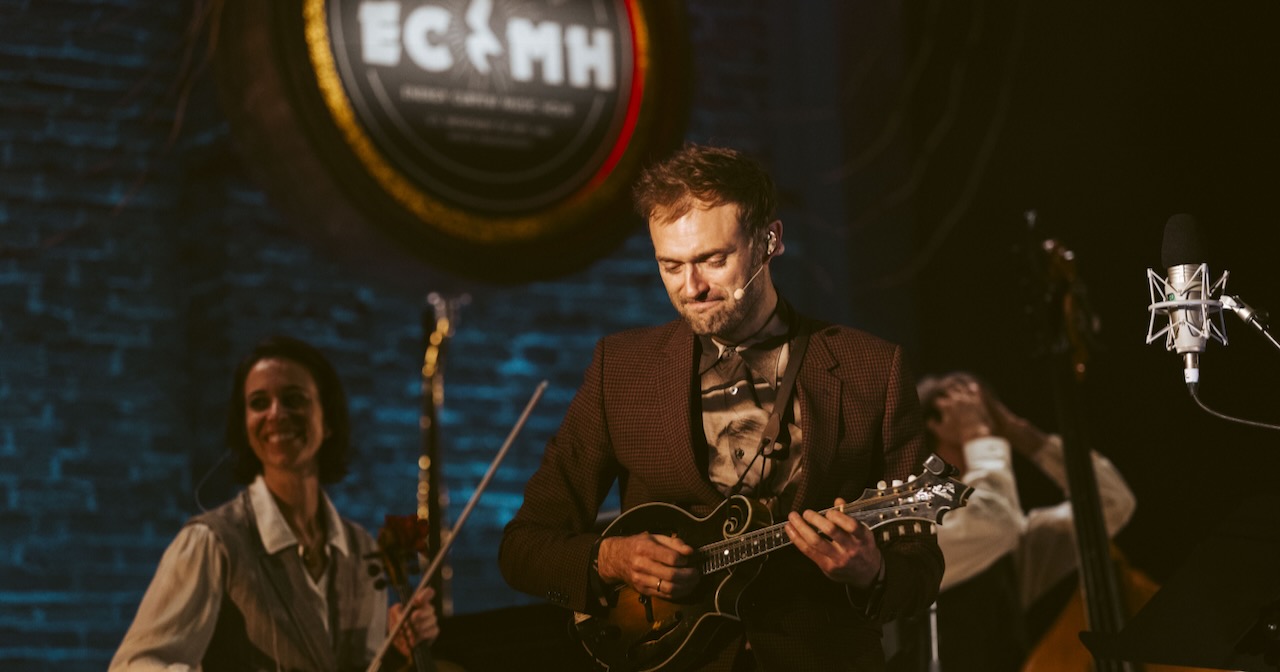
Chris Thile Dives Into New Audible Variety Show, ‘Energy Curfew Music Hour’

Punch Brothers’ new audio-based variety show, The Energy Curfew Music Hour, takes listeners to a fictitious, not-so-distant future where, as the show materials describe, “diminishing resources and extreme weather have ushered in a worldwide effort to ration electricity. America has instituted a weekly ‘energy curfew’ where the power grid goes down completely and we all live electricity-free for 24 hours. The Energy Curfew Music Hour hits the airwaves an hour before the lights go out while the nation tunes in and turns off together before the Dark Day.”

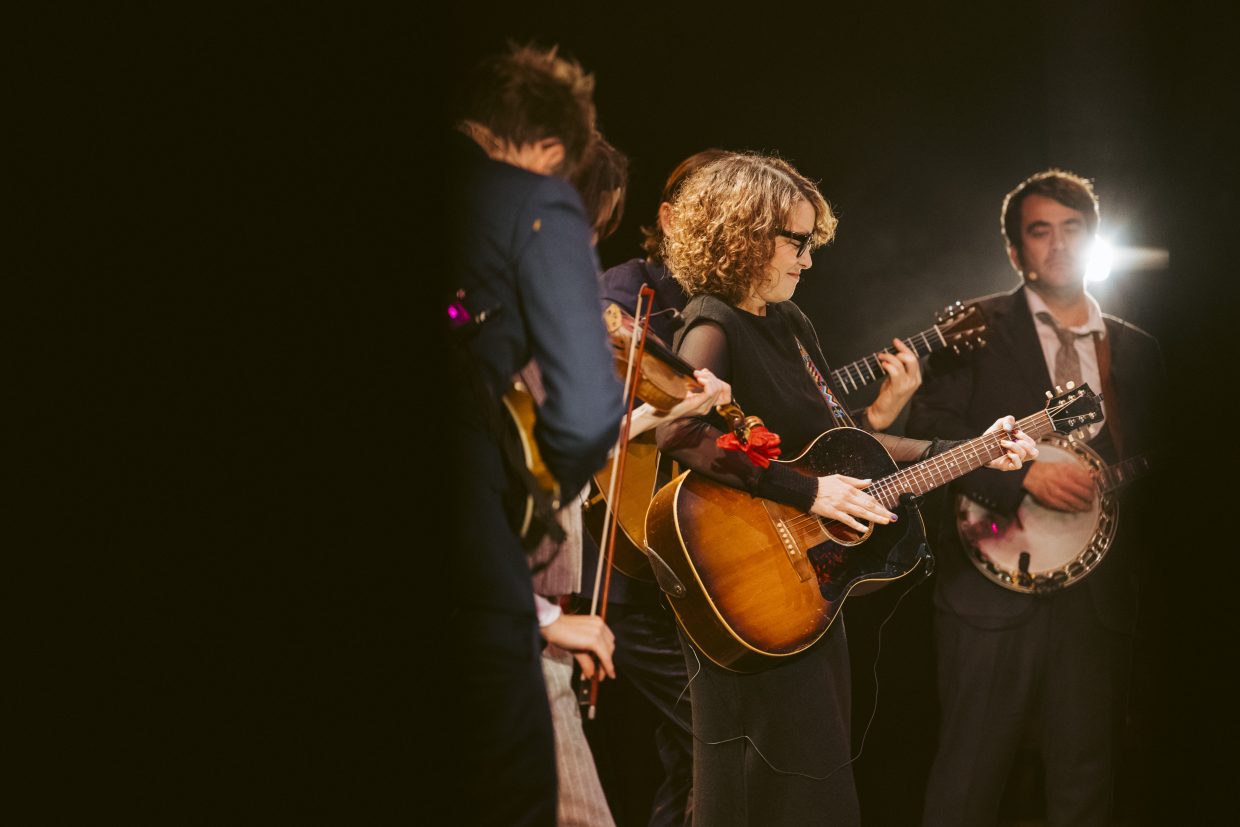
The Audible exclusive, eight-episode series was recorded in front of a live audience at the Minetta Lane Theatre in New York in early 2024 and features a cavalcade of all-star performances backed by Punch Brothers, who serve as co-hosts and house band.

BGS executive director Amy Reitnouer Jacobs spoke to Punch Brothers’ frontman Chris Thile about the show and what’s next for the band.

What a good way to start my week, chatting with you! I’d love to start by hearing how The Energy Curfew Music Hour started.

Chris Thile: [My wife, Claire Coffee] and I came up with the idea a long time ago… originally it was like a show within the show for Live From Here.

We always thought maybe two-thirds of the way in the show, we would all of a sudden flash-forward to a future that was like this. And we’d gather round one microphone, because I’ve always loved the sounds of those old variety shows and their campy-ness.
And then of course, practically speaking, there’s not much of a platform for acoustic music out there. That was the thing I missed the most on Live From Here: I was obliged to at least try to concern that show with the width and breadth of the music being made in the world, regardless of aesthetic.

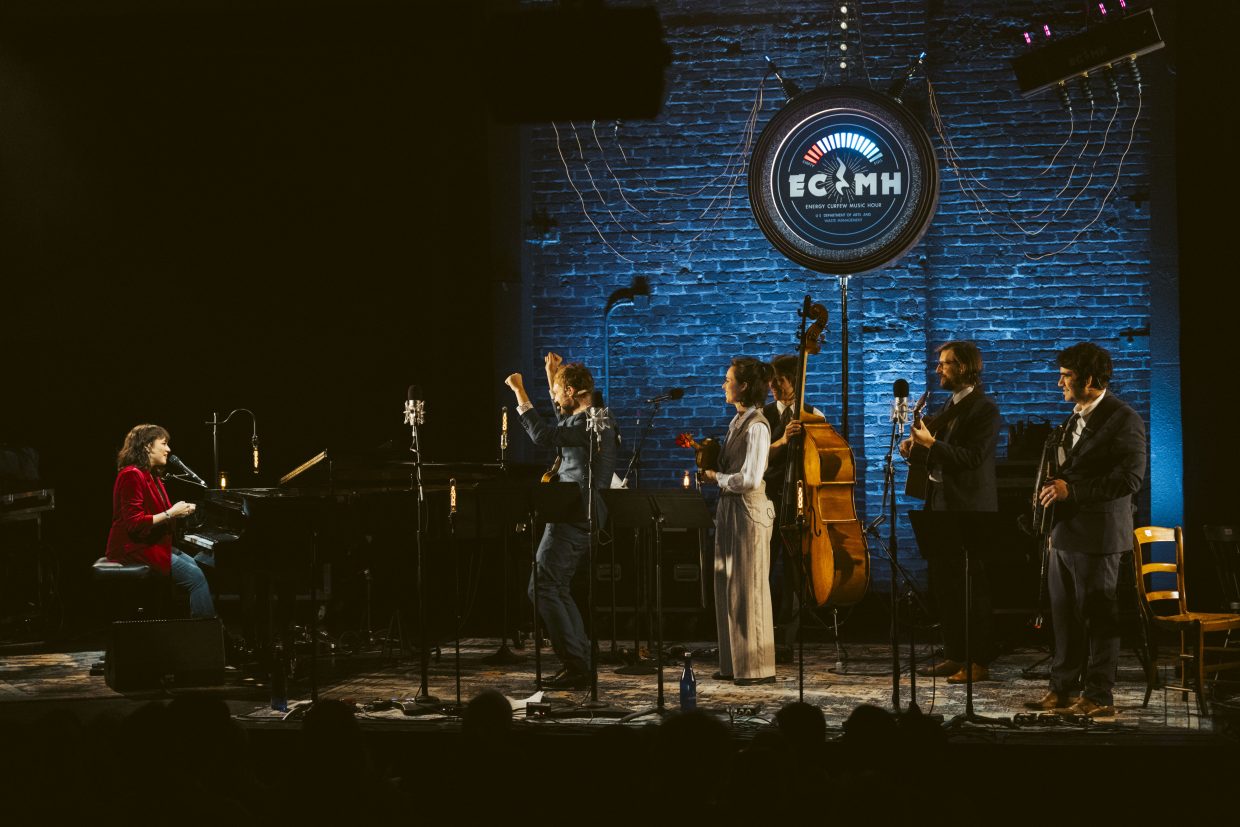
Norah Jones joins Punch Brothers on stage at Energy Curfew Music Hour at Audible’s Minetta Lane Theatre in New York City.

There’s something in what you mentioned about old-time radio shows with one microphone. When you think about when those were popular, it was the Dust Bowl, the Depression, a time that was really hard for most people. And the radio brought everyone together. So, in an age where we are so splintered as a society, I find [Energy Curfew Music Hour] very comforting. But there are elements of dark humor throughout too… am I reading too much into it?

Oh, no you’re right on it. There’s a certain aspect we always talked about, trying to strike the balance between shameless optimism and at the same time as I think it is really staring the monster [of reality] in the face. The extent to which we’ve imagined life has changed in a very short amount of time is huge. None of us have pseudonyms. We’re all [playing ourselves], so it can’t be that far in the future.

The extent to which we’ve imagined that life has changed is dramatic and potentially traumatic. And there’s some gallows humor throughout that. But despite taking place in this “dystopian future,” there’s nothing actually futuristic about the show. We wanted it to feel like a little bit of escapism, but a little bit real too.

Yeah, we know that change happens very fast in our world today. It’s not that hard to put yourself in those shoes when you’re listening.

That’s good to hear. Claire and the band and I keep talking about the increased emphasis on collaboration, compared with Live From Here, which was more just “Here are some acts that we love…” But those acts coexisting or working with me or the band … those were few and far between on that show, whereas on this show, it’s every episode. That’s also something of an analogy for the kind of thing we have to do just as human beings, not just as musicians, to effect the kind of change that we’re all hoping to see [in the world].

Gaby Moreno guests with Punch Brothers during the Energy Curfew Music Hour.

Can you talk a little more about working with Claire? I know you guys have worked together on Attention!, [a new narrative live show for mandolin and orchestra], which you’re taking more places now. What is your process like being married and collaborating?

I think I realized [during the pandemic] how shamelessly I had used Claire’s incredible taste as a sounding board for just about everything I’d done since we met. So I hired her to produce the solo record I made, Lay Songs. Then I hired her for Attention! and she helped me tell the story of how I met Carrie Fisher on a rooftop bar in San Diego in my mid-twenties, in what ended up being a really silly story, but also a very foundational experience for me in many ways.

When you’re telling a story like that – really when you’re working on any art – you get so inside of the thing, it’s very difficult to know how it’s coming across or if any of the stuff that’s so clear to you is landing with any other human. Claire is one of the very few people in my life who has absolutely no problem telling me when I’m full of shit, and it can be intense, but it invariably yields a better result.

So, when a couple people had asked me whether I wanted to do something like Live From Here again, I thought about it for a little while and remembered Claire’s and my idea for a show within a show. I asked Claire whether she would be interested in trying to make that a whole show and then fairly soon after that, the idea of Punch being the house band and co-hosts with me materialized and it was really off to the races.

It all felt very comfortable and natural. Claire is not a musician by trade; she’s an actor and writer and now director, and she’s always been the person that all her writer friends go to for their first round of notes. She has an extraordinary ability to strip away and identify what’s in between the writer and their audience – of what’s getting in the way. We’ve benefited a lot from that.

Sylvan Esso perform during a taping for Energy Curfew Music Hour episode 5 at Audible’s Minetta Lane Theatre in New York City.

You’ve got some incredible names in this first season as guests – Norah Jones, Lake Street Dive, Jon Batiste, Kacey Musgraves, and James Taylor, just to name a few. Who brought the most surprising acoustic performance to the show?

Sylvan Esso came in and were really excited to not do what they normally do. To be there with them using Punch Brothers, wielding us like a laptop and basically muting and unmuting us, but all in analog! I think that was a moment of proof-of-concept for me. When we did that, I found myself cackling with surprise and delight. I hadn’t suspected that it would crack the show open to a whole other level.

You’re premiering some new Punch Brothers songs on the series too. Is there something else cooking for the band? What’s ahead now that you’ve added Brittany Haas to the lineup?

The band feels very, very new. We’re in uncharted territory and it’s so interesting. Four-fifths of the band is the same. You change one component and it feels completely new in the writing room, in the rehearsal room, and on stage. At this stage in the band’s career, that’s really interesting. So yes, there are new Punch Brothers songs and they’re being written specifically for Energy Curfew now, but of course, with an eye towards whatever’s coming next.


Season One of The Energy Curfew Music Hour is out now via Audible and is available to stream for free for Amazon Prime members. Discover more about the show here.

Photo Credit: All photos by Avery Brunkus, courtesy of Audible.

Brat Summer Hits Bluegrass – Everything You Need To Know

Brat summer has come to bluegrass music – like seemingly every other corner of our culture. This viral social media sensation continues to mystify internet scrollers, news anchors, journalists, and analysts of certain generations, but the trend – based on the wildly popular hyperpop/dance album, brat, released by DJ and pop star Charli XCX in June – has found a sure footing in one perhaps unlikely corner of the music industry: bluegrass.

This fact was no more evident to the editorial staff at BGS than at our A Bluegrass Situation after show at Newport Folk Festival  last month, where recent BGS Artist of the Month and banjo magnate Tony Trischka posed an earth-shattering question to the cavalcade of bluegrass and roots music stars waiting backstage: “Who here is brat?”

Reactions were mixed. Trischka and his cohort attempted to explain “brat” to the gathered artists and comedians; those with knowledge of the conversation hesitated to identify who among the star-studded lineup identified as “brat” to Trischka and who did not, out of respect for those present.


View this post on Instagram


A post shared by Hawktail (@hawktailband)

While our Newport Folk Festival lineup may have been an organic blend of brat and non-brat, elsewhere in the roots scene critically-acclaimed and award winning artists, pickers, and bands have gleefully brought brat to the forefront of a busy bluegrass festival and music camp season with many videos and posts celebrating brat summer. Impeccable instrumentalists, GRAMMY and IBMA Award nominees and winners, and industry leaders have all been seen making posts, referencing brat, and doing viral accompanying dance moves for XCX’s “Apple.” Meanwhile, new acoustic string band supergroup Hawktail have declared it’s a “Britt summer,” instead, celebrating their bandmate, fiddler Brittany Haas.

Do you or someone you know identify as brat? Are you, too, enjoying a bratgrass summer? You aren’t alone. These bluegrass artists and bands are certainly brat. And, with a few more weeks left before we usher in fall, there’s still plenty of time for bratgrass to continue to entrance and enlighten the bluegrass community.

Sister Sadie

@sistersadiemusic We’re practicing up on our dance moves for our set here at Rocky Grass 🏔️✨ we can’t wait to see y’all out there 💓🍏 #rockygrass #charlixcx #apple #sistersadie #ootd @jaelee @maddie 🫧🫶 @Gena Britt @Dani Flowers @Deanie Richardson ♬ Apple – Charli xcx

Look, we already knew Sister Sadie are brat, because No Fear = brat. The transitive property applies. Brat brat brat. Whatever this legendary lineup tackles, from exciting covers to TikTok dance trends, we’re here for it. Bratgrass epitomized. No notes, very demure. Very cutesy.

Maddie Witler

@maddiewitler 🍏 🍏 so fun my first ever tiktok dance video and a reason to wear this dress that I always chicken out on @Charli XCX dance by @Kelley Heyer #charlixcx #apple #theapple #brat #pop #fyp #trend #dance #pride #cat ♬ Apple – Charli xcx

Mandolinist, instructor, multi-instrumentalist, and coffee expert Maddie Witler was one of the very first bluegrass adopters of brat – some would argue, even well before the eponymous album. Witler has toured and performed with so many of bluegrass’s greats from all across the genre map, and now has crafted a vibrant online presence and business through TikTok, Patreon, and, of course, bringing the “Apple” dance and brat chartreuse to bluegrass.

Missy Raines & Allegheny, The Onlies, and More

@snooplemcdoople Old time brat summer #bratsummer #oldtime #missyraines @Tristan Scroggins @viv.and.riley @TheOnlies ♬ Apple – Charli xcx

Missy Raines is one of the winningest musicians in the history of the IBMA. Clearly, Raines is also brat. Here, she and members of her band, Allegheny (Ellie Hakanson and Tristan Scroggins), are joined by the Onlies (Sami Braman, Vivian Leva, Riley Calcagno, Leo Shannon) as well as several other instructors and musicians at Targhee Music Camp in Alta, Wyoming in the Grand Tetons. Sounds plenty brat to us!

Seth Taylor


View this post on Instagram


A post shared by Seth Taylor (@sethtaylor427)

In-demand guitarist and multi-instrumentalist Seth Taylor currently tours with Sarah Jarosz, bringing brat with them everywhere they go. Or, should we say, “brat paisley summer.” Which, naturally, we’ve gone ahead and agreed is 100% a thing. Taylor is a bluegrass shredder who’s performed and recorded with countless artists and bands in country, Americana, folk, and beyond. Plus, his tasty acoustic guitar cover of Sabrina Carpenter’s “Please Please Please” feels pretty brat to us, too.

While we wish we could report a Pickin’ on Brat album is currently in the works or that Charli XCX will launch surprise bluegrass remixes with a Sierra Ferrell feature verse coming soon, rest assured the BGS team will continue to monitor, address, and report on the very important issue of bratgrass to our audience and readers – brat or not.

As more and more TikTok trends and hits from the current pop and Top 40 charts filter into string band music – like Taylor Ashton or Sister Sadie covering Chappell Roan, Seth Taylor’s “Please Please Please” rendition, Molly Tuttle singing Beyoncé, and many more examples crossing our feeds daily – it’s clear this bratgrass summer is first and foremost for the demure and mindful rootsy girls, gays, theys, and every brat in between.


40 Years Of Mountain Stage’s ‘Outlaws and Outliers’ Laid Out On Compilation Record

Born out of humble beginnings in 1983, Mountain Stage has blossomed to become not just one of Appalachia’s most sought after musical platforms, but one of all of Americana and roots music’s most cherished stages. Broadcasting bi-monthly to nearly 300 NPR stations nationwide, the program has welcomed everyone from John Prine to Wilco, Wynonna Judd, and even Widespread Panic during its historic 40-year run. To celebrate the achievement, Mountain Stage and Oh Boy Records have partnered to release the 21-song Live On Mountain Stage: Outlaws and Outliers (released April 19).

According to Larry Groce — Mountain Stage host from 1983 to 2021 and one of the compilation’s curators — distilling 40 years of music into one album was quite the task. Deliberations began with a list of over 150 songs before landing on the 21 that made the album.

“At first we just looked at the artist named and began to narrow it down from there,” Groce describes the process to BGS. “After several narrowings we began listening to some of them, getting the list down to about 30 before cutting it further down to the 21 that made the album.”

Sticking close to the country, folk, and bluegrass sounds of the show’s West Virginia home, the album includes performances from Appalachia’s own – like current Mountain Stage host Kathy Mattea, Tyler Childers, Sierra Ferrell, and Tim O’Brien alongside A-listers like Prine, Eric Church, Alison Krauss, and Jason Isbell. Helping to attract and keep such a diverse array of talent returning has been the program’s artist-first approach, which caters to the performers and platforms great songs over all else.

“We’re not trying to be trendsetters and we aren’t trying to be hip,” asserts Groce, who broke onto the scene as a singer-songwriter with his song “Junk Food Junkie” in 1976. “We try to look at things in the long run by booking talent we think will last. Our goal has always been to put the artist at the center of the show rather than myself, the program, or anyone else. There’s people that would argue that we should always be pushing the brand, but that’s not the way we — or anyone else — operates in West Virginia.”

One of the many artists appreciative of that approach is Molly Tuttle, who last appeared on Mountain Stage in 2023 to support her album City Of Gold, which has since earned her a second Grammy win for Best Bluegrass Album. Born in California, Tuttle didn’t become aware of the show until moving to Nashville in 2015. She’s gone on to play the show three times, the first being a visit in 2018 that provided the performance of “You Didn’t Call My Name” that made the compilation.

Of the show, Tuttle says what she’s cherished most about her time on it is the chance to collaborate and catch up with her colleagues.

“It’s one of the few places where you get to meet, converse and collaborate with other musicians, which typically only happens for us on the road at music festivals,” explains Tuttle. “That really speaks to the trust Larry Groce and the entire Mountain Stage team have in giving the artists freedom to do what they want. What results is a well curated show that’s become one of the most important showcases around for this kind of music.”

In agreement with Tuttle is Tim O’Brien, a native West Virginian who made his Mountain Stage debut in the late ’80s with Hot Rize, an occasion he credits to his mother that has sparked too many follow-up visits to count.

“She called my sister and I — who were living in Colorado at the time — to tell us about it after hearing about it on the local radio back home,” recalls O’Brien, whose song “Cup Of Sugar” from a 2021 appearance is featured on the record. “She immediately thought we’d be a good fit for it, so she wrote them a postcard one day asking when they were going to get Hot Rize on. It was a good fit the first time, and always has been.”

“I remember writing her back saying ‘Your son’s band is much more famous than we are,” Groce jokes as he looks back on the moment. “The question is, does he want to go on the show, not whether we’ll have him or not. And sure enough, we booked Hot Rize shortly thereafter.”

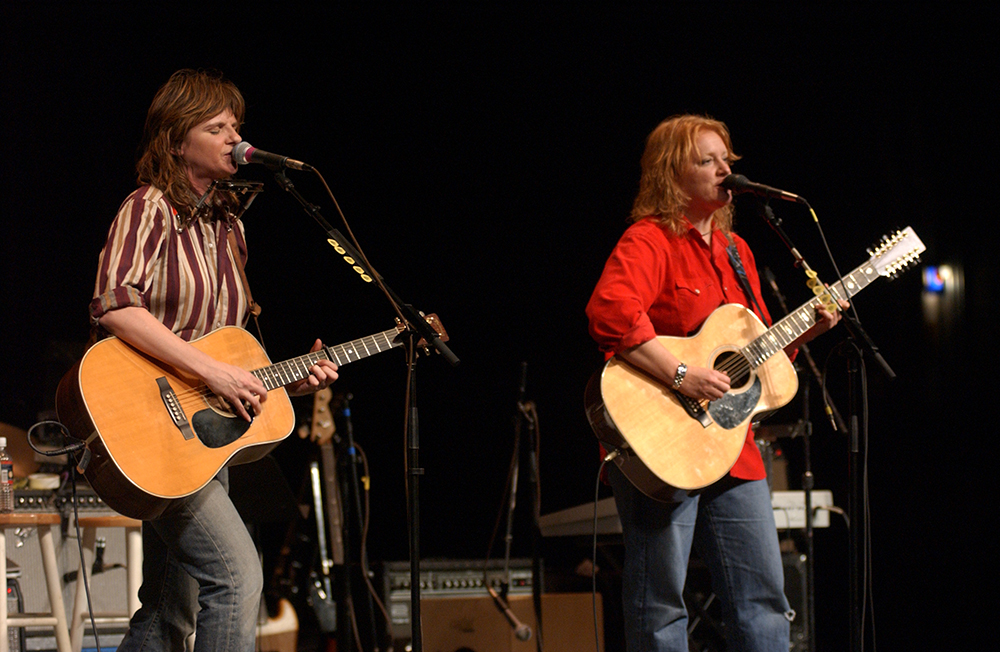
The Indigo Girls perform on Mountain Stage. Photo by Brian Blauser.

It’s that attitude of never feeling above anyone or anything that has helped Mountain Stage to excel and have the lasting legacy that it does. It captures its home region of West Virginia and Appalachia better than most any other music-related program does, both in sound and in sentiment. It’s the latter that’s arguably been the biggest asset in attracting bigger names as the show taps into the majestic mountains around them.

“There’s many different kinds of people that live in Appalachia, but one thing that’s really bedrock is supporting one another, and that shows with Mountain Stage and how they put the program on,” reflects O’Brien. “It’s intimate and friendly, just like the state.”


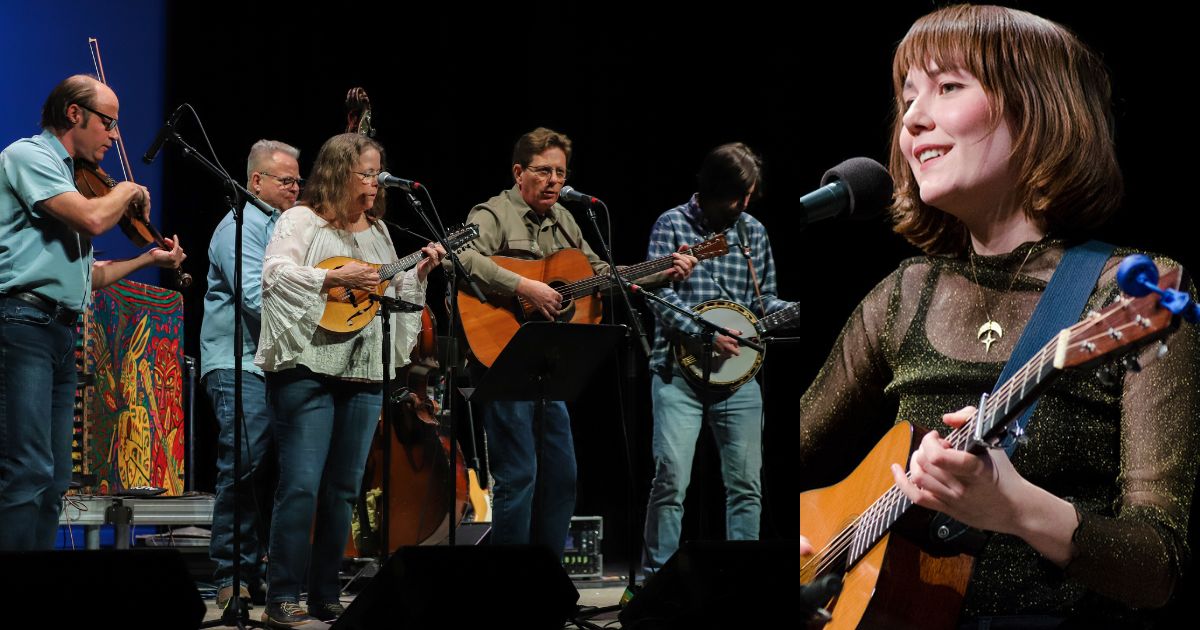
Photo Credit: Tim O’Brien Band performing on Mountain Stage by Chris Morris; Molly Tuttle performs on Mountain Stage by Josh Saul.

Radio Waves to Musical Bliss: Talia Schlanger’s Harmonious Journey

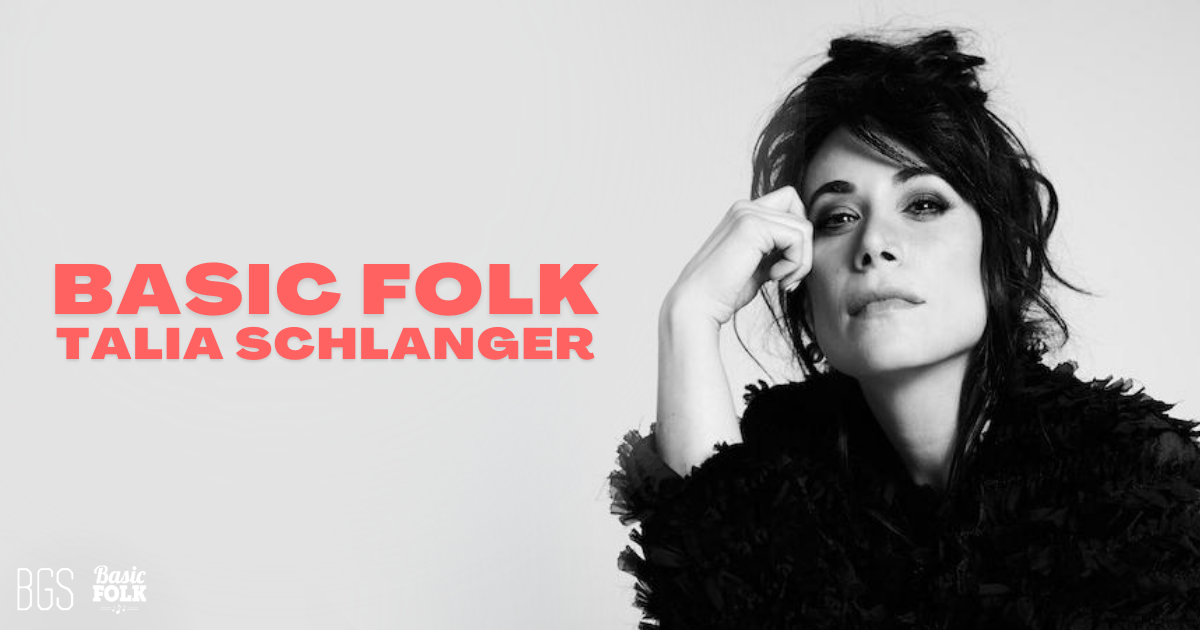
Canada’s Talia Schlanger is best known for her work in broadcasting, guest-hosting Q with Tom Power on CBC and Alec Baldwin’s “Here’s the Thing” podcast, as well as having taken over for David Dye on NPR Music’s World Cafe from WXPN in Philadelphia. Before all that, Schlanger was an actor and singer in many theater productions including Mamma Mia, Queen’s We Will Rock You, and Green Day’s American Idiot. While she has found much success in her two previous careers, something has been pulling on Talia for years. She wanted to write, record, and perform her own music. She had something to say and made the brave leap into the unknown, leaving her coveted role at World Cafe in order to say it. This culmination of events has led Talia to her debut album, Grace for Going.

LISTEN: APPLE • SPOTIFY • STITCHERAMAZON • MP3

In our conversation, Schlanger shares insights into her upbringing in Thornhill, Ontario within a Jewish family deeply rooted in faith and family heritage. She reflects on the impact of her grandparents, Holocaust survivors whose stories shaped her childhood. Talia also talks about her unique journey from performing eight shows a week in theater productions to becoming a distinguished radio host. Her evolution as a singer, her bravery and some important boundaries have allowed her to find her authentic voice while maintaining a crucial work-life balance. Throughout the interview, she touches on themes of personal growth, acts of kindness, and her commitment to learning and curiosity, offering a fascinating glimpse into the life and career of this remarkable person.


Photo Credit: Katherine Holland

The BGS Radio Hour – Episode 218

Welcome to the BGS Radio Hour! Since 2017, this weekly radio show and podcast has been a recap of all the great music, new and old, featured on the digital pages of BGS. This week we have a vertigo-inducing bluegrass whirlwind from our Artist of the Month Béla Fleck and an all-star lineup, we take a listen to some energetic and ethereal — yet totally traditional — bluegrass banjo from Jeremy Stephens, we dive into the latest from Watchhouse’s new release, and much more!

APPLE PODCASTS, SPOTIFY

Watchhouse – “New Star”

We’ve watched Andrew Marlin and Emily Frantz go through quite a few changes throughout their career in music, but one of the most joyful to watch has been their journey as parents. Even with COVID-19 halting touring for more than a year, their young daughter Ruby has already been to 34 U.S. states and nine different countries!

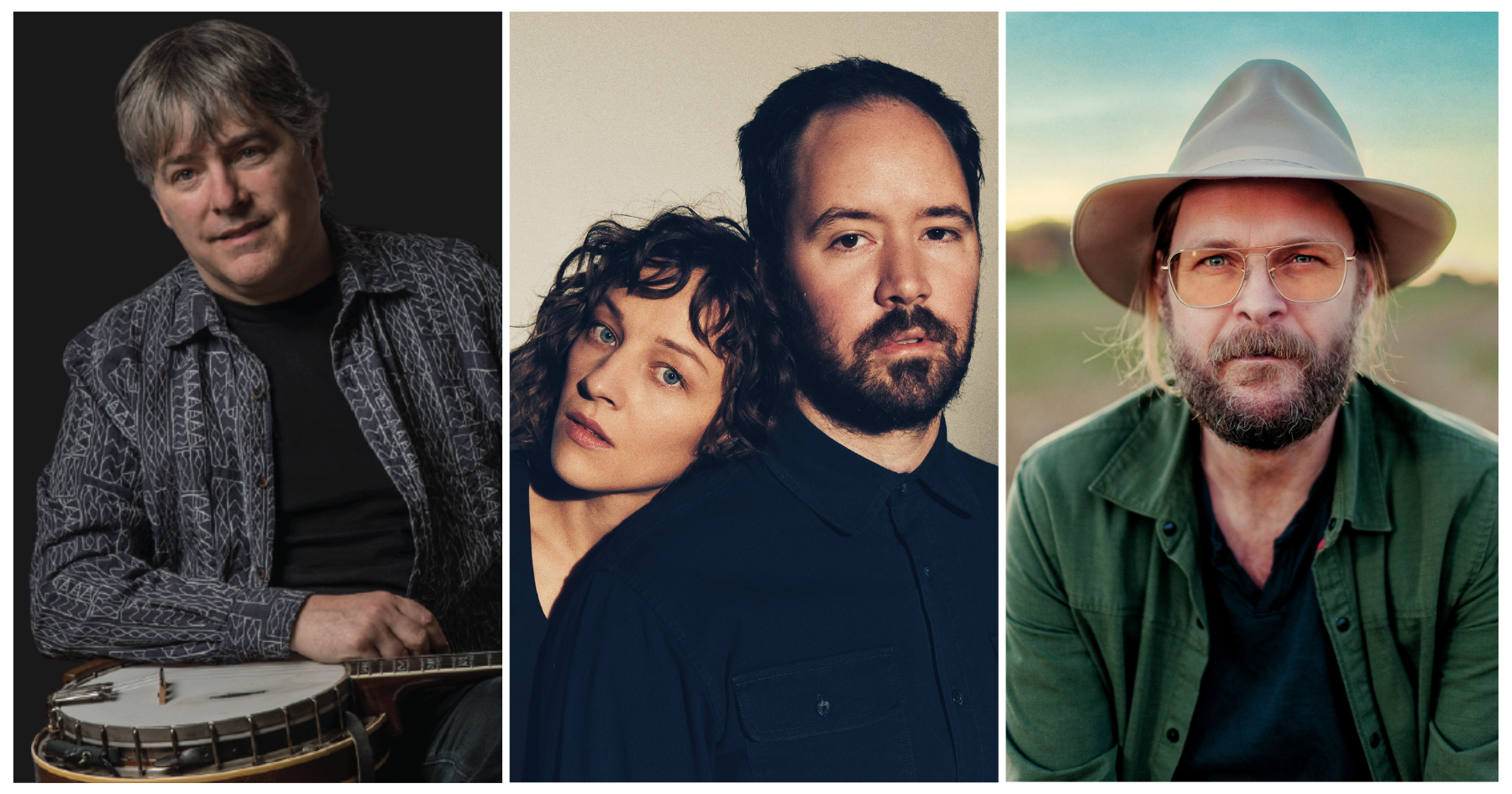
After their pandemic hiatus, the family of three is back on the road again as Watchhouse, the duo formerly known as Mandolin Orange, touring their new self-titled album. And Ruby, now a toddler, has perhaps transitioned back to road life even more smoothly than her father, who admits he’s still “struggling to find my sea legs.” For a recent Cover Story we spoke to Marlin about their name change, their new album, creativity through the pandemic, parenthood, and oh so much more.

Bobby & Teddi Cyrus and Billy Ray Cyrus – “Roll That Rock”

Husband and wife duo Teddi & Bobby Cyrus are joined by Bobby’s cousin, Billy Ray Cyrus, on “Roll That Rock,” a grooving bluegrass gospel song that they wrote together. According to Billy Ray, “When I started singing ‘Roll That Rock’ my inner spirit said Bobby Cyrus will know exactly what to do with this. He did. He wrote the gospel truth and then sang the daylights out of it with Teddi and a killer bluegrass band reminiscent of Earl Scruggs and Bill Monroe.”

AJ Lee & Blue Summit – “Monongah Mine”

A new favorite of BGS, California-based bluegrass band AJ Lee & Blue Summit tell the story of the 1907 Monongah, West Virginia mining disaster in this new track.

Béla Fleck – Vertigo

20 years since his last bluegrass album, Béla Fleck just returned this past week with My Bluegrass Heart . Home is where the heart is, after all! All September we’re celebrating Béla as our #ArtistOfTheMonth! Hear tracks from the new project — featuring an all-star lineup — and more on our Essentials Playlist, including this song featuring Sam Bush, Stuart Duncan, Bryan Sutton, and Edgar Meyer.

Paul Thorn – “Sapalo”

In this track with an R&B groove, Mississippi’s Paul Thorn turns the contents of a YouTube video of James Brown high on PCP into a song of redemption. Yes, you read that right! As he puts it, “It’s about being optimistic with whatever time you’ve got left.”

Elder Jack Ward – “The Way Is Already Made”

Elder Jack Ward puts his God-given talents to work on a new album that’s full of joyful gospel and sacred soul — as evidenced on its title track, “The Way Is Already Made.”

“If you’ve got that God-given gift you can do it — your choice if you want to sing rock ‘n’ roll, blues, gospel — but I choose the right side.”

The Grascals – “Maybelle”

“Maybelle” is a song that sounds like it came from deep within the mountains — exactly what The Grascals were looking for. From the haunting words to the clawhammer banjo and fiddle, “Maybelle” will grab your attention.

Hiss Golden Messenger – “Sanctuary”

On a recent episode of The Show On The Road, host Z. Lupetin dials in to North Carolina to chat with Grammy-nominated songwriter MC Taylor, who for the last decade and a half has created heart-wrenchingly personal and subtly political music fronting Hiss Golden Messenger.

The Way Down Wanderers – “Everything’s Made out of Sand”

The Way Down Wanderers recorded “Everything’s Made Out of Sand” in one take, belting and stomping into one antique microphone. The song’s lyric, music, and sonic landscape all capture the inspiration they gathered from the temporary nature of all things.

Seth Mulder & Midnight Run – “Carolina Line”

Seth Mulder & Midnight Run recorded “Carolina Line” with an Osborne Brothers-inspired arrangement that represents many of their various musical influences.

Matthew Fowler – “Going Nowhere”

In a recent edition of 5+5, Matthew Fowler spoke on the bold authenticity of Glen Hansard, a memorable birthday show in his hometown, Orlando, putting himself in the “hot seat” of a song, and much more.

The Felice Brothers – “To-Do List”

The Felice Brothers chose the very first take of “To-Do List” as the keeper, capturing the loose, playful quality of the group just getting the tune under their fingers. “The song was originally a slow waltz with the lyrics: ‘Into the fire that burns them/that’s how the idiots run,’ but I didn’t know where to go from there. I had written down a to-do list on the adjacent page and began to sing it and it seemed to work well with the phrasing. I wrote down many pages of ridiculous things and chopped them up into the melody. This is how the song came into being.”

Mike Younger – “Killing Time”

The lyrics of Mike Younger Music’s “Killing Time” take comfort in the remembrance of past friendships forged in the fire of struggle. Younger believes that artists have nothing to lose by speaking their truth and doing so unapologetically through song. “I greatly admire those writers and creative people in general, who, through their work, have lent their voices to the struggle for equity in our society, like John Lennon, Woody Guthrie, Bob Dylan, Joni Mitchell, Nina Simone, Marvin Gaye, Bob Marley, and others.”

Jeremy Stephens – “Sockeye”

Banjo player and multi-instrumentalist Jeremy Stephens (co-founder of High Fidelity) has an old school, traditional approach to bluegrass that’s anything but backward. His new solo album, How I Hear It, includes several instrumentals that demonstrate this fact. “Sockeye” captures the energy and ethereal quality of Stephens’ live playing in a way many more sterile bluegrass albums, and purposefully more modern sounding records, can only aspire to.


Photos: (L to R) Béla Fleck by Alan Messer; Watchhouse by Shervin Lainez; Hiss Golden Messenger by Chris Frisina

The BGS Radio Hour – Episode 211

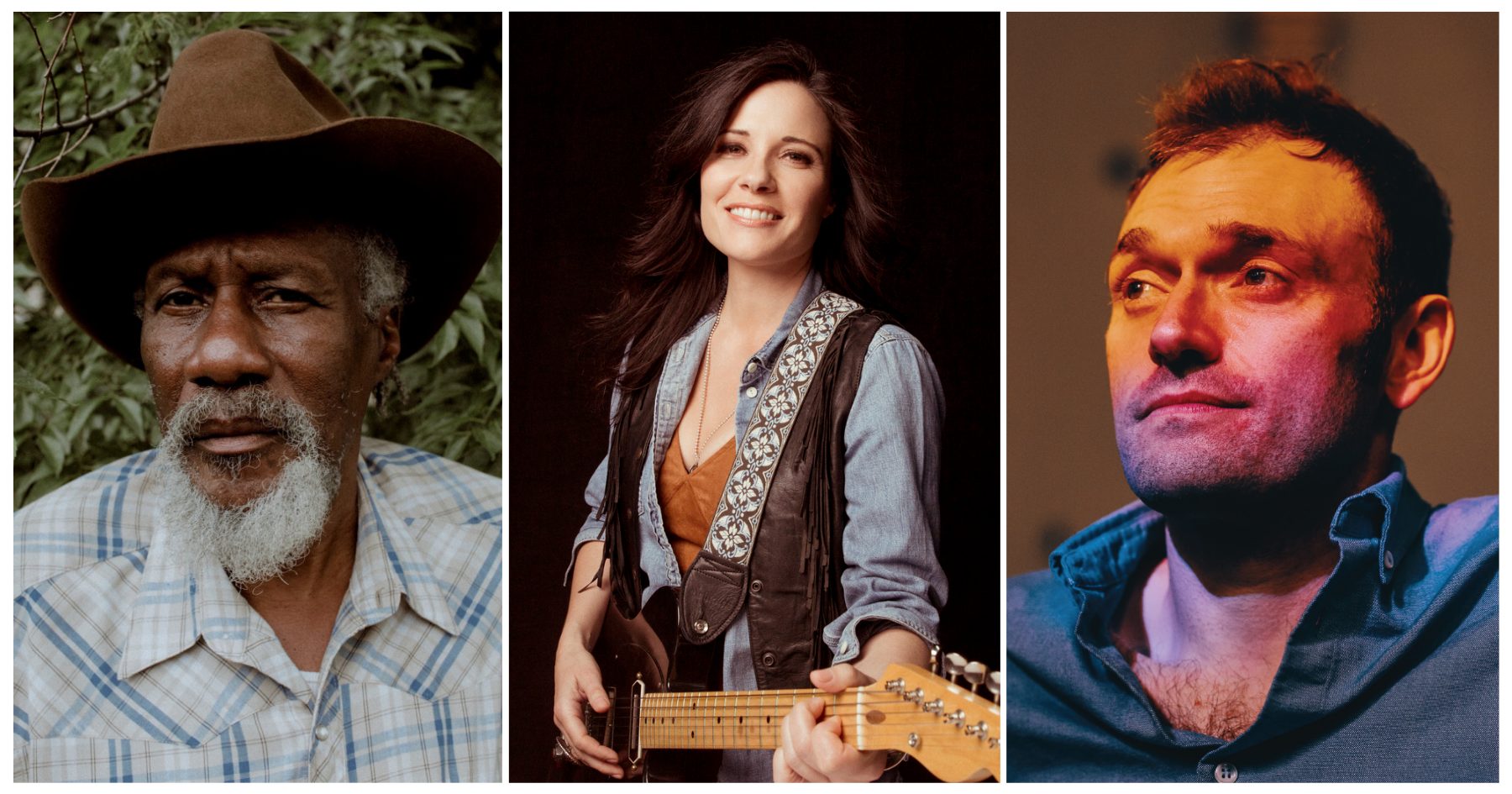
Welcome to the BGS Radio Hour! Since 2017, this weekly radio show and podcast has been a recap of all the great music, new and old, featured on the digital pages of BGS. This week, we bring you new music from our June Artist of the Month, Chris Thile, as well as Robert Finley, Oliver Wood, and much more! Remember to check back every week for a new episode of the BGS Radio Hour.

APPLE PODCASTS, SPOTIFY

Robert Finley – “Sharecropper’s Son”

Singer-songwriter Robert Finley first picked up a guitar at age 11. He was raised in Jim Crow-era Louisiana amongst a family of sharecroppers and knew from a young age that his dream was to sing. Now, at sixty-seven-years-old, that dream is alive and well with his newly-released, third solo album, Sharecropper’s Son, made in collaboration with Dan Auerbach of The Black Keys. BGS recently caught up with Finley to talk about the new album, and how his upbringing and vast life experiences have shaped his music.


DoomFolk StarterKit – “Look at Miss Ohio”

For David Swick of DoomFolk StarterKit, recording any of Gillian Welch’s work is an honor. His cover of “Look at Miss Ohio” has a balance of lightness and melancholy in its’ arrangement, which Swick says represents the song’s theme of “making peace with uncertainty.”

Zach Person – “Wanna Fly”

Zach Person was inspired to write “Wanna Fly” after reflecting upon the social and political intensity of 2020. He cites “Dylan-esque” protest songs and the openness of the western plains as the two main influences of this powerful track.

Lula Wiles – “Call Me Up”

“Call Me Up,” from Lula Wiles’ new album, Shame and Sedition, is a lighter track amongst an album that aims to transform listeners and enact change. Between tender harmonies and mellow piano chords, the trio describes meeting with an old acquaintance, singing, “I know you’ve been taking it rough / You gotta just call me up.”

Oliver Wood – “Face of Reason”

BGS spoke with Oliver Wood of The Wood Brothers for a 5+5 in support of his new solo record, Always Smilin’. He told us about his biggest influences — from Ray Charles to Levon Helm — as well as how hard times can be processed through songwriting. When asked to write a mission statement for his career, he stated: “Just be completely yourself, because that’s all you have, and that’s enough.”

Dana Sipos – “Breathing Barrel”

Dana Sipos’ “Breathing Barrel” is a meditation of being at peace with the present moment. Written immediately upon returning home to the city from a music residency at the Banff Centre for the Arts, deep in the foothills of the Canadian Rockies, this song is an attempt to integrate a very powerful experience into the more mundane, everyday life.

Shannon McNally – “This Time”

Shannon McNally reimagines Waylon Jennings’ “This Time” by giving the lyrics a personal spin — singing not about a lover, but instead about her relationship with the music business as an artist and as a woman. For McNally, the song’s directness is a breath of fresh air, and it helped her get into the headspace that permitted her to sing the rest of the album.

Chris Thile – “Laysong”

The name Chris Thile is likely familiar to fans in any corner of roots music. Growing up in southern California, Thile rose to popularity with his childhood (and sometimes still adult) band Nickel Creek, and has since helped form the Punch Brothers, the Goat Rodeo Sessions, and other noteworthy collaborations. However, this summer Thile brings something special — a completely solo album entitled Laysongs. In celebration, he is our Artist of the Month, so be sure to stick around all month long for exclusive content from Chris Thile.

Mara Connor – “Old Man”

Mara Connor recorded “Old Man” at the same age Neil Young was when he wrote it about a caretaker who lived on his ranch. When she first heard the track, she was struck by the amount of empathy the songwriter exhibited at such a young age. Connor states that the song is an affirmation of how the world would be a better place if we took the time to see the humanity in each other’s eyes.

The Grascals – “Thankful”

2020 was a difficult year for us all, and it seems that we need uplifting music more now than ever before. “Thankful” is just that. The lyrics are a powerful reminder of the things we have to be grateful for and of the important things in life.

Rising Appalachia – “Catalyst”

Inspired by their recent release and the blooming of spring, Rising Appalachia’s Leah Song created a Mixtape for BGS, entitled Rising Appalachia’s Love Songs for Blooming Spring. The playlist features heartbreakers and heart-menders from John Prine to Hozier that are sure to make your heart bloom.

Eli Lev – “As It Is”

Eli Lev’s “As It Is” began to develop halfway through a 10-day meditation retreat he went on near the Florida coast at the beginning of the year. He states, “I experienced silent sunrises over the ocean and brilliant sunsets over the bay that brought on infinite color variations and led me to a unique insight that everything is changing while staying exactly ‘as it is’ in every moment.”

Kyle LaLone – “Learning How to Love”

Featuring the sweet sounds of classic country twang and harmonies by singer-songwriter Michaela Anne, Kyle Lalone’s “Learning How to Love” is a song that details the process of understanding how to be a good partner and showing up for someone in a relationship.


Photos: (L to R) Robert Finley by Alysse Gafjken; Shannon McNally by Alysse Gafjken; Chris Thile by Josh Goleman

The BGS Radio Hour – Episode 209

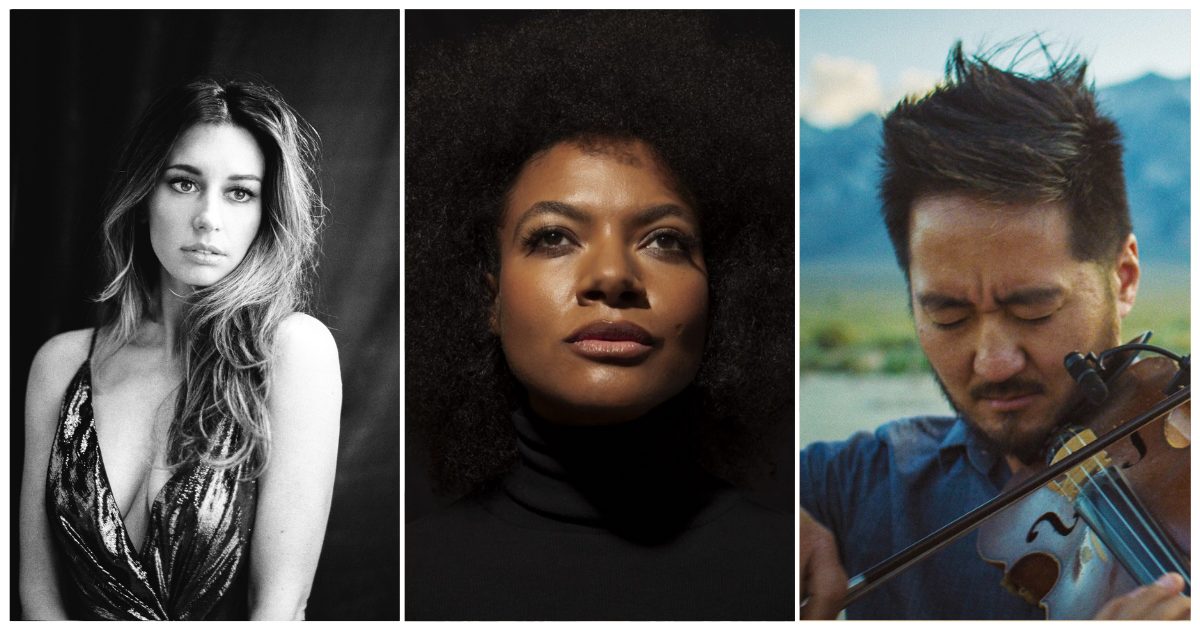
Welcome to the BGS Radio Hour! Since 2017, this weekly radio show and podcast has been a recap of all the great music, new and old, featured on the digital pages of BGS. This week, we bring you new music off of the beautiful new album Outside Child from Allison Russell, as well as bluegrass songs to celebrate springtime, and much more! Remember to check back every week for a new episode of the BGS Radio Hour.

APPLE PODCASTS, SPOTIFY

Kishi Bashi – “Waiting For Springtime”

To start off this week’s roundup, we visit our conversation with Athens, Georgia-based Kaoru Ishibashi, better known as Kishi Bashi, about his new EP Emigrant. When COVID hit, he and his daughter packed into a camper and hit the road, from the southeastern U.S. all the way to Oregon, over a period of several months. Along the way, he fleshed out the songs that became Emigrant through visiting places like the Ozarks, the Dakotas, and Montana, including Heart Mountain: a World War II Japanese internment camp he visited many times during the production of his documentary Omoiyari: A Songfilm by Kishi Bashi.


Reid Zoe – “When I Go”

This new track from singer-songwriter Reid Zoé is, on the surface, a song about dying, but really it’s about all of the questions that come with being a human on earth.

Full Cord – “Right In Step”

With a catchy melodic hook and low-tuned banjo, “Right in Step” is a lovely bluegrass tune full of love, hope, and togetherness – hopefully a respite from the uncertainty of the pandemic.

Sean McConnell – “Price of Love”

It’s been said that everything in this world comes with a price. For Nashville’s Sean McConnell, that price is reflected in loving someone — be it family, friend, or significant other — and the eventuality and certainty of you losing them. Yet still, he suggests, most of us are willing to take that risk for love, to give up our hearts completely. It’s the price that our heart pays for love in return.

The Deep Dark Woods – “How Could I Ever Be Single Again?”

A new song from pan-Atlantic singer-songwriter The Deep Dark Woods was inspired by English folk band Steeleye Span. Featuring Kacy Anderson on fiddle, the tune asks the titular question, “How Could I Ever Be Single Again?”

Sam Robbins – “Raining Sideways”

“Raining Sideways” is one of Sam Robbins’ most-requested songs, a stream of consciousness lyric that’s one of the most raw and authentic he’s ever written.

Lera Lynn – “A Light Comes Through”

A recent episode of The Show on the Road featured a deep dive with silky-voiced, southern gothic-folk songwriter Lera Lynn. Stick around to the end of the episode to hear Lynn introduce her favorite broken-romance number, “So Far.”

Graham Sharp – “Truer Picture of Me”

BGS recently caught up with Steep Canyon Rangers’ banjo player and songwriter Graham Sharp about the release of his new solo record, Truer Picture. We talked about Steve Martin’s influence on the Rangers and Sharp himself, as well as his approach to songwriting, nature inspirations, and the way literature and music coincide.

Our Native Daughters – “Quasheba, Quasheba”

Our Artist of the Month for May, Allison Russell, wrote this song for her many-times-great-great-grandmother Quasheba, who survived being enslaved, being ripped away from everything she knew, the horrible Middle Passage, having her children taken, and more. Russell says her art and a loving community have inspired her to connect with her ancestors and find connection through intergenerational strength, resilience, and transcendence, despite intergenerational trauma and abuse.

Grace Pettis – “Paper Boat”

Singer-songwriter Grace Pettis literally dreamed up “Paper Boat,” a song about coming of age, trying to fit in, and losing our innocence. She’s joined by her producer, Mary Bragg, on tender harmony vocals.

Allison Russell – “The Runner”

We spoke with our May Artist of the Month, Allison Russell, about the inspiration behind and creation of her honest and stunning album Outside Child, including this track “The Runner.” Read our two-part interview here.

Lost & Found – “Wild Mountain Flowers for Mary”

We hope, wherever you’re reading this from, that snow, frost, and the cold are truly retreating, giving way to longer days, warmer weather, and the gorgeous, humid, cicada-soundtracked days of summer. But, before we get to full-blown bluegrass season – and, hopefully, our first live music forays since COVID-19 shut the industry down in early 2020 – let’s take a moment to intentionally enjoy spring with 12 bluegrass songs perfect for collecting a wildflower bouquet, romping and frolicking in the meadow, and pickin’ on the back porch while the evenings are still cool.

Accidentals – “Wildfire”

The Accidentals spoke with BGS on loving and learning from Brandi Carlile, singing on stage with Joan Baez, the magic in meeting strangers and finding common ground, and much more in this edition of 5+5.


Photos: (L to R) Lera Lynn by Alysse Gafkjen; Allison Russell by Marc Baptiste; Kishi Bashi by Max Ritter