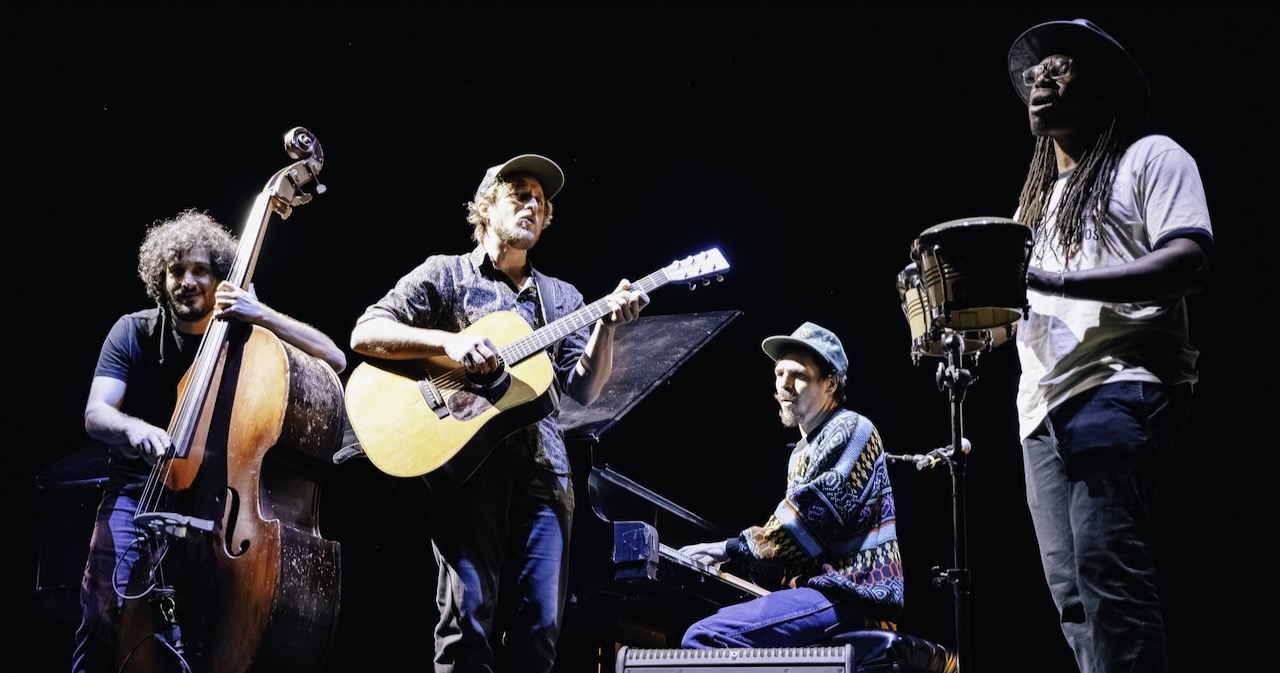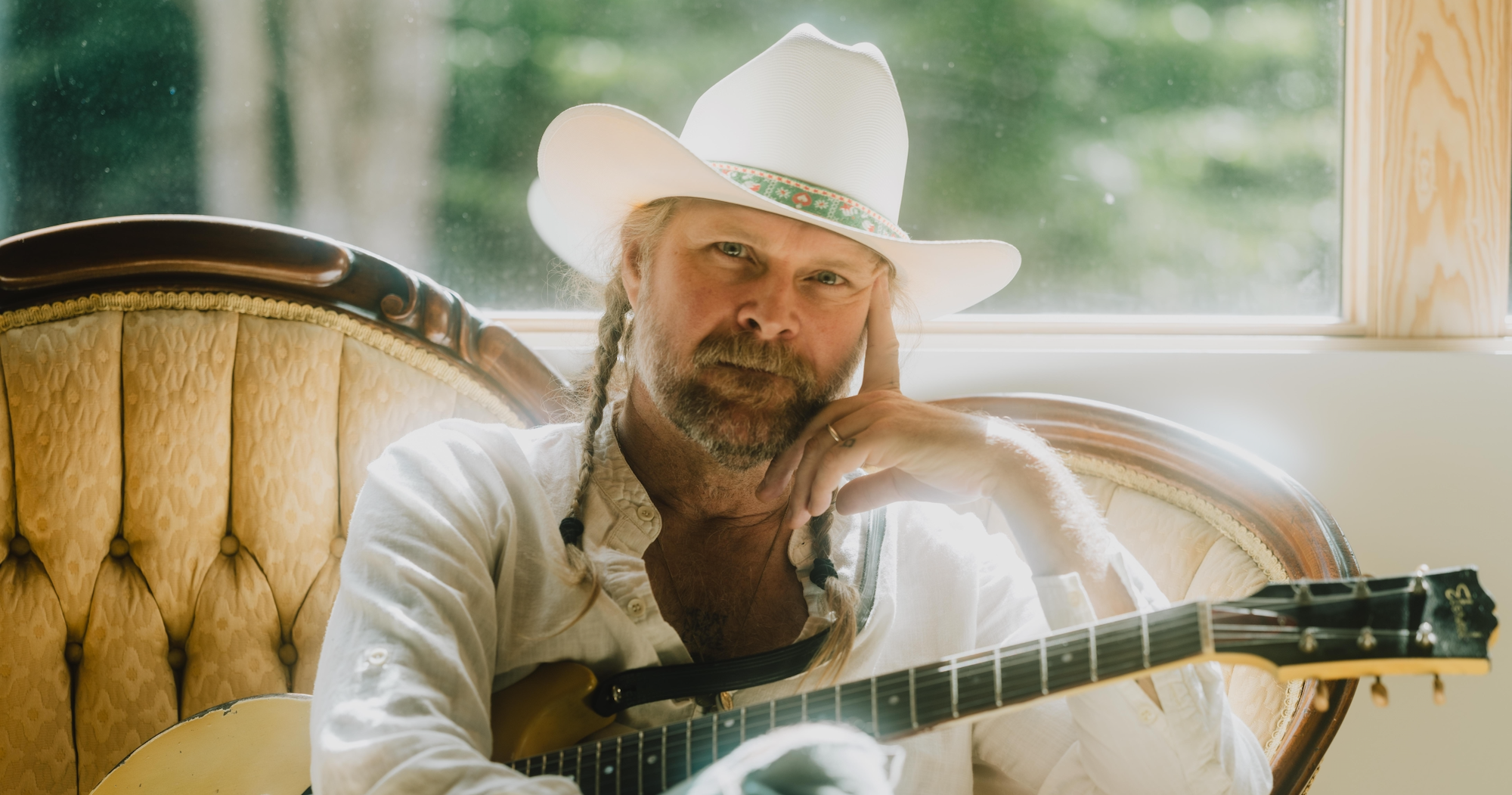
The Expansive Universe of Hiss Golden Messenger

Next year, singer and songwriter MC Taylor will have been leading Hiss Golden Messenger for two decades. For most of that time, critics and listeners have relied on a few familiar narratives about Taylor: that he is a singular figure, for example; or that his move from California to Durham, North Carolina, marked a formal shift from punk to Americana; or even that he thinks slightly more than he feels. Talking to Taylor, from his home in Durham (well, there was a Zoom call involved), I found these cliches about his practices were limiting, factually accurate but emotionally untrue.

Instead of laser-focusing on one narrative, on telling the same stories over and over again, listening to Taylor speak, I encountered a new understanding of his practice, one which placed Taylor in the background and moved his bandmates and genre-play into the foreground – shifting from the centrality of a singular figure to a greater emphasis on generosity and expansiveness.

That the new album is called I’m People is the first clue that Taylor wants to expand the perception of his music; it’s a title that considers mutuality as central to the enterprise of musicmaking. So, how does one expand this thinking – one could consider him geographically or complicate these tales of origin, or think about who is playing on this record, or even refuse the standard narratives of genre.

Instead of focusing on the fact that Taylor began playing in hardcore bands in California, think about the other influences: that he played in a band named after Joni Mitchell’s Court and Spark, an album marked by an urbane distrust of other people’s desires. Or that, around the time he was carefully listening to Mitchell, he was also following that most American portable utopia, the Grateful Dead. Or think about his move to Durham, not strictly to play in a band, but to study folk music academically.

Or, consider how this album was recorded – at least partially – in upstate New York. A more cynical writer would note that Taylor borrows from Dylan’s Nashville Skyline, and that album itself was the foundation of a more isolated, lonely understanding of tradition after abandoning folk music, seeking a slightly more commercial understanding. Recording this in the Hudson Valley could be considered a pilgrimage or homecoming.

I don’t think that it is a homecoming just for Taylor; the record sounds lush, expansive formally, too. Perhaps because the people who sing or play on this record play in a collective of other bands, including Rhett Miller, the Mountain Goats, Bonny Light Horseman, and the Hold Steady.

The expansive nature of the band is not only connected to the history of music they listen to, or the other bands that they play in, but also more unexpected influences like Sade. The idea that Taylor is the band is false, and it is not even that Hiss is the band. Taylor expands the possibility of Hiss, but Hiss itself pushes the possibilities – because of where they come from, their other projects, and even the possibility of geography. Not because Durham is magically a place where music coalesces, but because for a long time it was a college town where rent was relatively cheap and lots of people liked playing music together.

When addressing genres, the promotional material calls the album Americana – but Americana is a useless category, one which might be country or folk or something else entirely. I’m People has a kind of intense richness that is neither of these genres. Listening to the LP, something happens where the expansion or fracturing of those playing on this record becomes its own kind of post-genre.

There are a lot of reasons not to love America right now, but emphasizing the American instead of Americana allows us to consider this album as a consequence of the totality of American music – Taylor addresses the improv nature of jazz as part of this, or traditional folk music, or even 1970s easy-listening. He speaks fondly of the detective novels of Elmore Leonard, and on at least one of his early albums the photography of William Gedney became a powerful totem.

I think of I’m People as a kind of ebbing and flowing for and against tradition, part of that decades-long wrestling with aesthetics and history. Consider the last song, “Depends on the River,” is another of his great songs about waterways. In a 2016 profile of Hiss, New Yorker critic Amanda Petrusich wrote about Hiss’s long tradition of river songs and how it fits into a century of metaphors from blues singer Geeshie Wiley to Joni Mitchell, working this tradition. Petrusich writes: “Taylor frequently evokes river imagery in his work; the river, of course, can be understood as its own kind of road, a direct line to somewhere else, far away.”

I don’t know if that’s wrong, but I also think about rivers as they turn into oxbow lakes, rivers which flow into swamps – literally bogged down – rivers that flow into oceans, and rivers that dry up depending on the season. Hiss’s meandering, deepening quality depends on that river, both the direct line that Petrusich talks about and the larger metaphor, one where Taylor literally talks about whether he dares to cross it. On I’m People, he not only crosses it and crosses it again, but brings along a whole community of other performers. And, an audience who is hungry for the difficulty and ambivalence of so much time playing – and thinking – with him, to the other side.

I know you have a degree in folklore studies, I also noticed that in the last few years there has been a cluster of second- or third-generation performers who have some academic training in folk traditions (see also: Jake Blount, Jake Xerxes Fussell, Willi Carlisle, etc.). Can you talk a little bit about the kind of intersection of formal and informal folk studies and also about your relationship to people who are making this kind of work? I’m thinking about the line on the song “Mercy Avenue” where you talk about the “boys on the corner knowing more than those with PhDs.”

MC Taylor: Well, it’s been a really long time since I was in the academics here. And that universe was one that I feel like I passed through briefly. I wasn’t destined to be in that realm forever. So, I’m not sure that I can totally speak to [that]. Like the place of academic/creative work.

I will say that my time in that space was a really good time for me, when I was restarting my brain and re-centering myself. School was a good way for me to step away from whatever I had been doing previously. I did a lot of field work at that time. I interviewed a lot of people, and I think that it made me a much better listener.

I think that, more than anything else, [that] is what I came away with, this feeling that people really, really like to be heard. So I think I just really tried to develop my listening skills.

Can you talk a little bit about working with a band – especially this band – and about how the bandmates are part of their own creative worlds? Is there a kind of politics there, or a kind of community making?

The basic tracking of the album was done with JT Bates playing drums and percussion, Cameron Ralston playing bass – both electric and upright – and Josh Kaufman, who was producing the record with me, playing guitars, mandolin, piano. My friend Chris Boerner was engineering the record. He plays guitar.

The road version of Hiss Golden Messenger, you know, [are] involved in a whole variety of things. JT, Cameron, and Josh play in Bonny Light Horseman. All three of them have also at various times been members of Hiss and have toured with Hiss. And in fact, that’s where those guys met – playing in Hiss. All of us have known each other for many, many years, so I consider those guys really good friends.

But we’ve never made a Hiss Golden Messenger record before. … They’ve worked on [other] records [together], but we never came together to create a Hiss Golden Messenger record together. It was this funny and unique situation in which we were already old friends, doing something that felt new and fresh. It didn’t feel like a complicated record to make for me. I think Josh Kaufman maybe would say the same thing, but Josh was performing sort of a different task than I was in the situation. It was a complicated record to write, but that was something of the solitary endeavor that took place over probably a year or a year and a half.

I really love those guys and I am delighted that they could be there to play on the record. I think of them as absolute top-tier musicians, every one of them. Cameron is currently playing with the Mountain Goats, he plays all kinds of jazz, he plays in the Spacebomb House Band. JT Bates plays drums with Big Red Machine, which is Aaron Dessner and Justin Vernon. And [he’s] just a legendary drummer in Minneapolis. Josh Galvin plays with everybody.

There are some songs on this album about hope and I wondered about making work about hope in this specific social and political moment? “Shaky Eyes” or “Heavy Worlds,” for example.

[I am interested] in how we [have] the energy to get through the messiness of life. And not only this particular time that we’re living through – although that is the most depressing. But just like life in general. I don’t think that we can do – or I don’t think I can do – life alone. So, in a way this record is me writing to myself. Maybe now [about] how important other people are.

I think I realized that the most important part is moving through, and needs to involve being around [other people]. Over the past few years, just speaking personally, the idea of community has felt like a more and more important part of it.

Thinking about that – and how dense/lush the production here is – though you are marketed as “Americana,” I wonder about how you view genre. And also how your band does – I’m thinking about background vocalist Annie Nero’s bio for radio: “She loves to find the common thread between musical ideas and genres…but also break free of genres because life’s too short to limit ourselves based on perceived taste!”

I listen to lots of different stuff. I think all of that stuff finds its way into what I’m doing. It’s a little tricky. I used to have a stronger stay-in-your-lane [attitude] about the term “Americana,” but I just don’t think that I care very much anymore. It’s not a word that I generally use. But I understand why it exists. Many of my favorite songwriters exist in that world.

What would you call your genre then?

I mean, I wouldn’t. I guess that’s what I’m saying.

Like, if I was at the dog park and I was talking to a stranger, and they said, “Oh, you’re a musician? What kind of music do you play?” I’d probably say, “Kind of rock and roll.” I generally am not describing my music in terms of genre, I guess. If I told someone that I played rock and roll, and they asked me to extrapolate on that, I would say something like, “Rock and roll that’s really swinging.” I try and concentrate on the rhythmic elements. I love singer-songwriter type music from the ’60s and ’70s. I like really oddball stuff. I love Bruce Ruffin reggae; I love free jazz. There’s a lot of music that I have inside of me. There’s a lot of music that Josh, Cameron and Chris – [that] we all have inside of us. I think it’s just a question of how we get it out and put it into use in a way that feels genuine and not forced. …

Thinking about the tension on this album between distinct geographical spaces and a more universal emotions – for example on “Seneca (Time is a Mother, Baby)” or “Mercy Avenue.” And also that becomes a larger theme of your work, thinking about how Amanda Petrusich writes about your decades-long commitment to writing about rivers. There’s even the river song on this album. What do you think your relationship is to the land, to rivers – especially. when you sing “Depends on the River.” Or is there specifically one river?

On previous Hiss records there are specific geographical places like city names mentioned. And not only are those places part of the fabric of the story that I’m trying to tell, but they sort of served as poles, maybe? What I’m trying to accomplish is sort of like a poetic travelog of my life growing up in America. I’ve been traveling as a musician since I was 18. I have been, it seems like, everywhere in this country – more than once or some places 10 times. I’ve been all over every highway. So, maybe the dimension of place names throughout is sort of like carving my name on a tree or something. It’s just kind of like, “I was here.” “This is where we are in this song right now.” “This is where we are in my life.” And then, “Now we’re over here.”

In terms of rivers, a river is always flowing, always changing. A river can kill you if you’re not careful. It can keep you alive and get you to the next place if you treat it with respect and understand its rules. The coda on that song, [“Depends on the River”], the last thing that we hear on the record is “the line depends on the river exactly.” I guess the meaning depends on what river of life we’re talking about. It depends how lucky we get.

I’ve always been impressed by the wide range of your reading, listening, and looking. For example, your careful thoughts on the photos of Gedney. What are you reading, what are you listening to, what are you looking at these days?

Well, you know what I’m reading right now? I’m like about 200 pages into this Gary Stewart biography. Gary Stewart, the country singer. It’s called I Am From the Honky-Tonks. Gary Stewart actually was someone that Chris Smith from [record label] Paradise of Bachelors turned me onto like 15 to 16 years ago. Those of us that are obsessive about him all knew that this book was coming. It’s finally out and yeah, if you’re Gary Stewart fan, it’s kind of like you can’t believe it exists. I’ve been waiting for it.

In terms of what I’m listening to, I’m always listening to all kinds of stuff. I just bought this record [that’s] The Sun Ra Arkestra doing Disney themes. It’s so beautiful, really makes you think about those compositions in a different way, [about] actually how deep they are. I’ve been revisiting some Ted Lucas. I’ve really been liking this McCoy Tyner record called Asante. It’s a 1974 record; might be my current favorite. It’s very deep in the zone with like Alice Coltrane and Pharoah Sanders – that era. Oh, it’s beautiful. [I’ve been listening to] some Paul Brady from ‘78. He’s amazing! I’ve been listening to Welcome Here Kind Stranger. [Also] a record that I was checking out for a while [was] by the Universal Liberation Orchestra. It’s kind of this weird, very minimal– I guess it would be jazz.


Photo Credit: Graham Tolbert
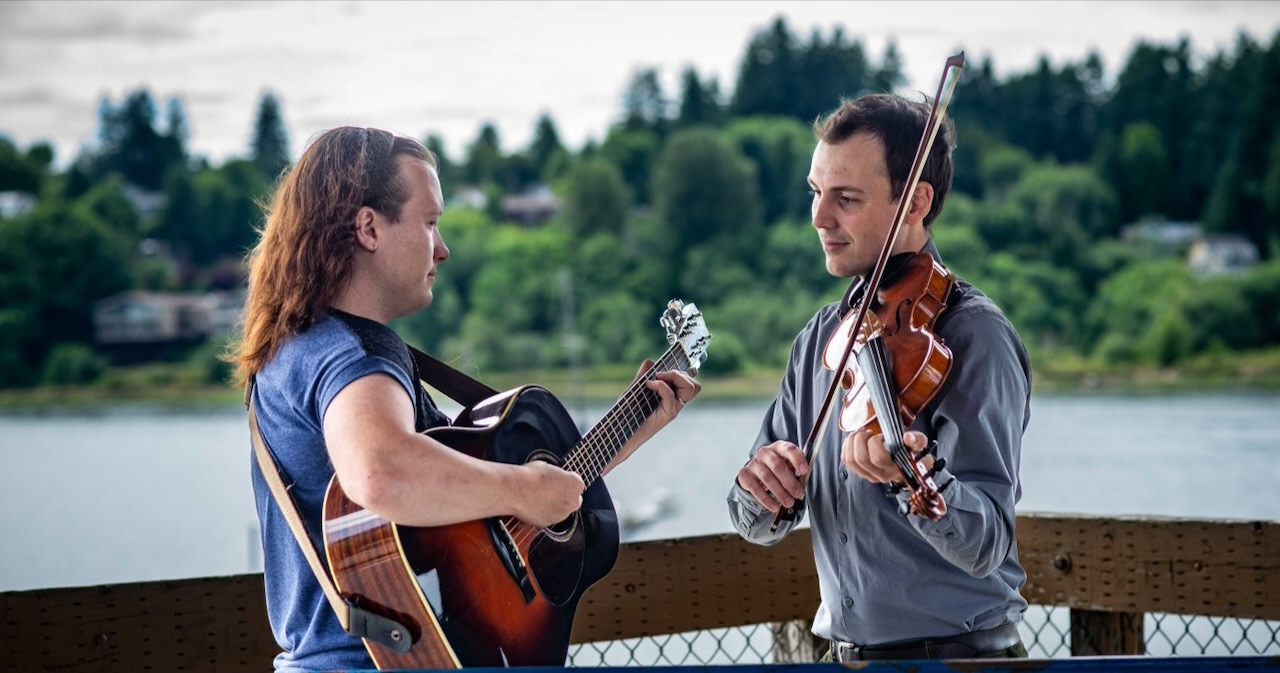
BGS 5+5: Countercurrent

Artist: Countercurrent (Brian Lindsay and Alex Sturbaum)
Hometown: Olympia, Washington
Latest Album: Flow (released March 3, 2025)

Which artist has influenced you the most – and how?

It’s a three-way tie for me between Great Big Sea (gateway drug into trad music, consummate performers, wonderful harmonies), early Solas (dazzling musicianship, tight arrangements, and an unmistakable guitar style) and the Grateful Dead (fearless improvisation, and pushing the boundaries of what is possible while keeping one foot firmly in folk). – Alex Sturbaum

Chicago fiddler Liz Carroll has probably had the most comprehensive influence on me – she is a master of creative interpretations of traditional fiddle tunes and composing new tunes in a trad idiom. Much of how I think about melodic improvisation and variation around a melody is influenced by her playing. Her recordings over the years showcase some incredible arrangements and beautiful production, ranging from very minimal, traditional-sounding, to lush and modern tracks. – Brian Lindsay

If you had to write a mission statement for your career, what would it be?

“Play ’em happy, sing ’em angry.” We want our music to inspire joy and resilience and to generally make folks feel good. However, we also want to call out the injustice we see in the world every day and use our music to aid the fight against fascism in whatever way we can. – AS

“Every tradition is a living tradition, if we participate.” Musical traditions don’t thrive when we only admire them inside a glass case, they benefit from curating the archives of the past, honoring the figures who have shaped it today, and welcoming new contributions that reflect today’s influences (cultural, political, technological, etc.). Most importantly, music communities thrive when we make music that we really love to listen and move to. – BL

Genre is dead (long live genre!), but how would you describe the genres and styles your music inhabits?

We draw from a lot of different folk traditions – Celtic, old-time, maritime, jam-band music, and more – but fundamentally, Countercurrent is a dance band. We cut our teeth playing for contra dancing, that’s still the main thing we do, and everything we play is built around groove and drive. One of our favorite things in the world is bringing our music to venues outside of folk communities and getting an audience to unironically throw ass to fiddle tunes. – AS

In a nutshell, “modern fiddle tune dance jams.” Our focus is to create music that moves people, both physically and emotionally, and our vocabulary comes from the genres of Irish, American old-time, and adjacent fiddle and song traditions. We add our own compositions using that vocabulary, but incorporating our musical influences from genres like jam bands, funk, electronic, and rock that we love. – BL

What is a genre, album, artist, musician, or song that you adore that would surprise people?

We both really enjoy the offbeat songwriter Dan Reeder. We had the pleasure of getting to see him and his daughter Peggy in Seattle recently – one of their rare tours from Germany – and we have been enjoying singing his songs together in green rooms and tour vehicles. I also have a sizable soft spot for Owl City. – AS

I’m very fond of the music of blues singer and instrumentalist Taj Mahal. I got some of his recordings when I was quite young and got to see him live near my home when I was in high school. I also love Moon Hooch, who essentially make saxophone-based EDM with live drums (I have an unabashed love for the saxophone, and brass instruments in general, though I don’t play any). – BL

Since food and music go so well together, what is your dream pairing of a meal and a musician?

I once had a Thai meal with roasted coconut and pork belly right before seeing Gillian Welch perform The Harrow and the Harvest in its entirety, and to be honest I have been thinking about both ever since. – AS

A meal consisting entirely of East Asian dumplings of every variety, with Kishi Bashi, whose music I adore and also appears to be an incredibly interesting and kind person. – BL


Photo Credit: Molly Walsh

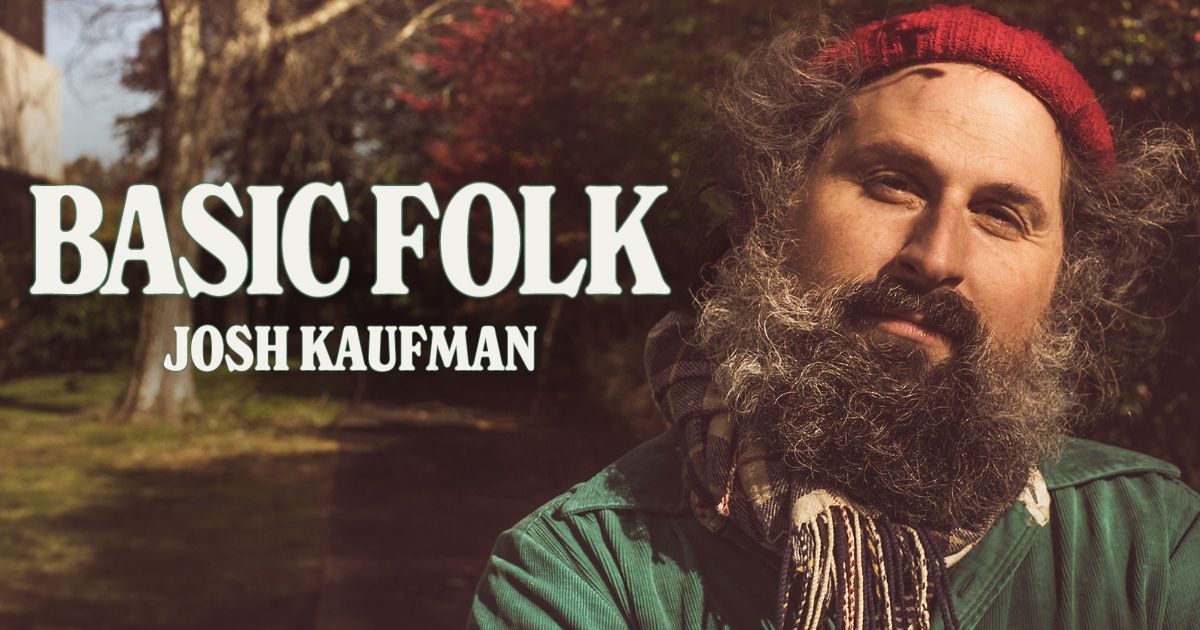
Basic Folk: Josh Kaufman

Multi-talented musician and producer Josh Kaufman is known for his work with Josh Ritter, The National, and his band Bonny Light Horseman. I’ve known Josh for many years, after meeting him in Pittsburgh while he was on tour with Dawn Landes. I felt instant friendship with him (and, honestly, with the entire Dawn Landes band that day). We haven’t seen each other very much over the last 15 years, but since he left that impression on me I’ve always rooted for him in his career.

LISTEN: APPLE • SPOTIFY • AMAZON • MP3

In our Basic Folk conversation, Josh shares anecdotes from his childhood, including memories of his journalist mother interviewing legendary musicians and the backstage snacks that left a lasting impression. He reflects on his early musical influences, the role of music in his family, and how his parents supported his passion for music from a young age. Then we dive into Josh’s experiences playing in bands in New York City during his high school years and how those formative experiences shaped his relationship with music and the city itself.

As a producer, Josh discusses his approach to working with artists by emphasizing the importance of capturing the raw, live energy of a performance. He talks about his instrumental album, What Do the People in Your Head Say to Each Other, and how embracing imperfection has become a central theme in his work. He also touches on his collaborations with notable musicians, including Bob Weir of the Grateful Dead, and the impact of those experiences on his career. Josh Kaufman is the most sought out producer in roots music these days. Look out for him producing some great records in 2025 and beyond.


Photo Credit: James Goodwin

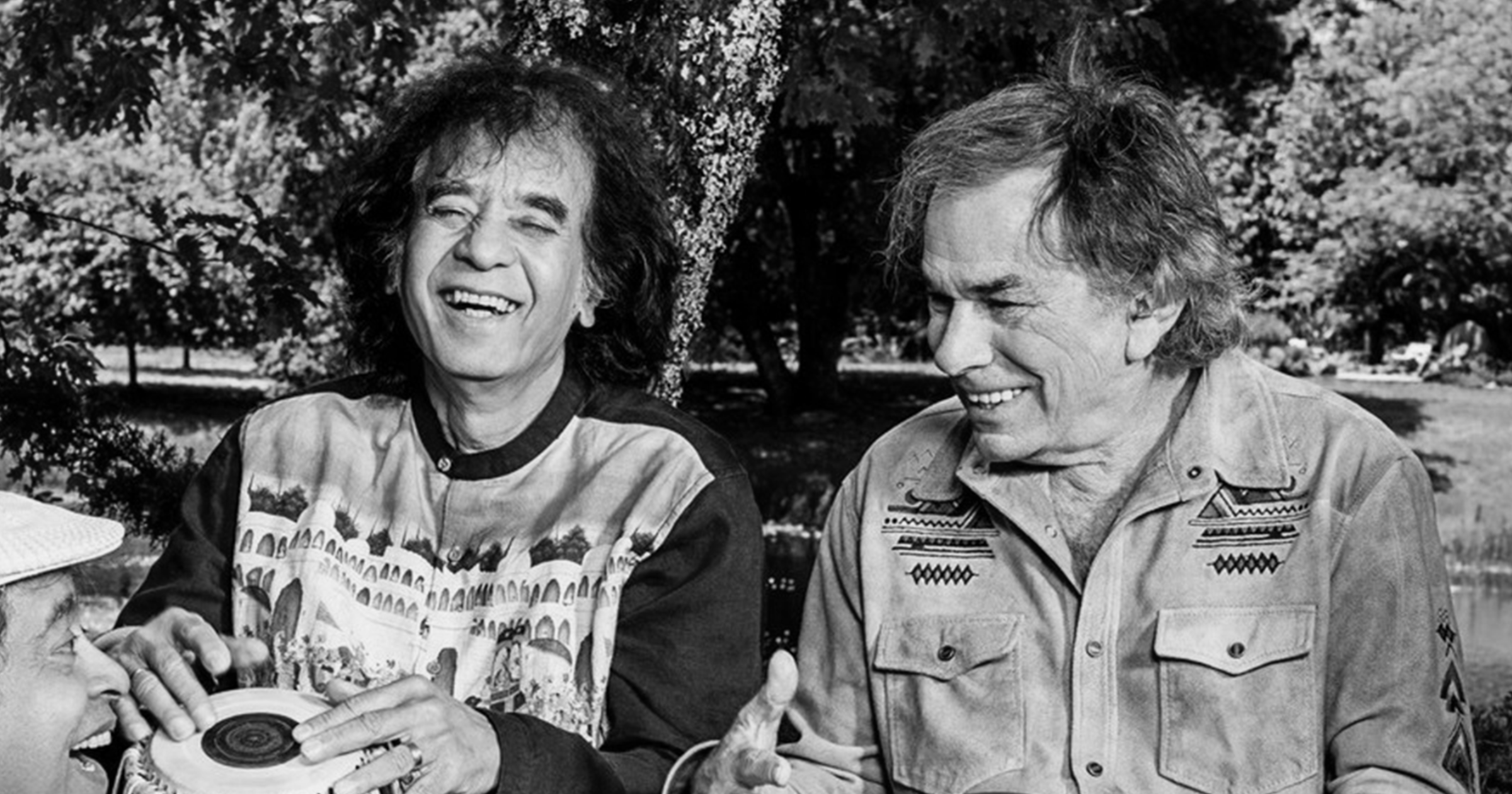
Grateful Dead Drummer Mickey Hart Remembers Tabla Genius Zakir Hussain

“I am here. I’m ready to play.”

That, Mickey Hart recalls, is the first thing Zakir Hussain said to him when the young Mumbai-born tabla player, having recently arrived in the U.S., knocked on the door at the Grateful Dead drummer’s Marin County ranch.

“Oh, okay,” Hart says he replied. “Here we go.”

That was 1970 and go they did, forming a deep musical and personal bond that lasted from that day until Hussain’s death from lung disease on Dec. 15 at just age 73. Hart had been studying with Hussain’s father Ustad Alla Rakha, Ravi Shankar’s long-time tabla partner.

“His father said, ‘I can’t play with you because I play the quietest instrument in the world and you play the loudest,’” Hart says, laughing in the den of his ranch house on a recent Zoom chat. “But he said, ‘My son, he could play with you. I will send him to you.’ And so he did.”

And? “It was just magic,” Hart says, beaming with the memories.

Soon Hussain moved into the barn studio facility at Hart’s ranch. And they played. And played.

“We played for four hours one time,” he says, then realizing that was nothing. “We played for four days and nights! Four days and nights! We really got to know each other and played every day. He was the crown prince of tabla, and when his father died he became the king.”

Father and son, in fact, duetted on Hart’s first solo album, Rolling Thunder, released in 1972. Soon other collaborations followed, including the creation of the Diga Rhythm Band, which grew around a multi-cultural percussion ensemble Hussain formed at the Ali Akbar College of Music in Berkeley. The group’s lone 1976 album also featured Hart’s Grateful Dead mate Jerry Garcia on two tracks.

“He loved Jerry, they just loved each other,” Hart says. “Their personalities were very similar. Jerry was really kind, loving, thoughtful, and so was Zakir.”

Hart and Hussain sparked creative energy in each other and an eagerness to explore.

“He taught me various ways rhythms could be used, exposed me to rhythms that I could never imagine, which I took to immediately, and I wanted to learn them,” Hart says. “When we did Diga Rhythm Band together, that was the first time I had to learn composition. He composed half of it and I composed the other half.”

If Hart had to learn new discipline, Hussain had to unlearn some.

“When he came to America he kind of picked up on some American traits, and he liked the looseness of my style,” Hart says, slipping back and forth between talking of Hussain in the present and past tenses with the freshness of this loss. “It freed him from the strictness of Indian classical music. My gig was a little serpentine, you know. His is straight down the pike. As accurate as he could be, it is like a machine. He’s the Einstein of rhythm, so playing with Einstein was really cool. But I didn’t have that sensibility. That’s not the way we did it in the Grateful Dead, right? And he loved that. He really took to it. And that’s what he said I taught him. It was a wonderful combination, a meeting of the minds and a meeting of the hearts.”

The meeting, and the mutual growth and openness to new vistas, continued as Hussain had key roles on Hart’s 1990 album At the Edge, 1991’s Planet Drum (which won the first-ever GRAMMY Award for World Music), 1996’s Mystery Box, 1998’s Supralingua and 2000’s Spirit Into Sound. Each brought together a world-circling community of percussionists on stage as well as in the studio.

With 2007’s Global Drum Project, the Planet Drum ensemble coalesced around a core of Hart, Hussain, Puerto Rican conguero Giovanni Hidalgo and Nigerian talking drum master Sikiru Adepoju, the quartet mounting several dazzling concert tours and coming together again for the 2022 album In the Groove. The joy they brought each other was clear to anyone who saw their shows.

The same spirit sparked much exploration throughout Hussain’s life. Around the same time he was creating Diga, he teamed in Shakti with jazz guitar boundary-breaker John McLaughlin, Indian violinist L. Shankar, and Indian percussionists Ramnad Raghavan and T.H. Vinayakram, rooted in traditional styles but reaching to new territories. Hussain and McLaughlin teamed regularly through the years with several other lineups (at times called Remember Shakti) and a triumphant final Shakti album and tour in 2023.

Hussain also had his own regular tours and recording projects with different ensembles under the name Masters of World Percussion, as well as a 2015 tour leading an East-West ensemble with veteran jazz bassist Dave Holland inspired by the oft-overlooked world of Indo-jazz.

Taking another tack, with Béla Fleck and Edgar Meyer he created a banjo-bass-tabla triple concerto, “The Melody of Rhythm,” crossing lines of progressive bluegrass and both Western and Indian classical as documented on a 2009 album with the Detroit Symphony Orchestra. The three came together again in 2023 for the album At This Moment, which also features Rakesh Chaurasia on the Indian bamboo flute, the bansuri.

Other collaborators, among many, included Yo-Yo Ma, Van Morrison, George Harrison (Hussain played on the 1973 album Living in a Material World), Bill Laswell, and even Earth, Wind & Fire. He also had a long association with saxophonist Charles Lloyd that produced several wonderful albums, including 2022’s Sacred Thread, a trio with guitarist Julian Lage. And, of course, he made countless concert appearances and recordings with the top artists of Indian classical music.

“No one has crossed more borders than him,” Hart says. “Yeah, I’ve crossed a few myself. Not like him. He’s gone beyond me or anybody else I’ve ever met or heard of. He took to the air and went to all these different places, interacted magnificently with all these different cultures. What an incredible ambassador of music.

“And he was very kind when he played with you. He never overplayed, which he could do in an instant. But he was so kind, such a great person that he reserved himself. He never tried to show you up, he was never in competition with me. He was harmonious and rhythmically blissful, in a way. I guess you could call this bliss, bring the bliss word into this.”

Can Hart hear Hussain in some of his own and the Dead’s music?

“Oh God, yes!” he says. “Think of all the Grateful Dead rhythms.”

He cites “Playing in the Band,” for which he wrote the music with Bob Weir, adapting a piece called “The Main Ten,” a version of which appeared on Rolling Thunder.

“That’s 10/4 rhythm,” he says. “Nobody played 10/4 then! And there was ‘Happiness Is Drumming,’ which became ‘Fire on the Mountain.’ That was one we did in Diga. And the 7/4 on ‘Terrapin Station,’ and a lot on Blues for Allah. That was what we were playing in Diga and Phil Lesh picked up on it and everybody picked up on that rhythm and that became ‘King Solomon’s Marbles.’ No one did that in rock ‘n’ roll.

“So Zakir influenced me in so many ways, subtle ways and obvious ways. He was a big influence on the Grateful Dead. And he loved the way Bill [Kreutzman] and I interacted. That became kind of a model for him in some ways because it made it, I don’t know how you’d say it, legal for him in a way. He said, ‘Oh! Now I can do this! This is okay!’ Because only two drummers could do something like that.”

With all that, where would Hart recommend someone wanting to get to know Hussain’s music start? At first he insists that he couldn’t possibly narrow it down.

“I’d rather not,” he says. “Anything he ever played on is a wonder.”

But he gives it a little thought, mentioning several of the cross-cultural albums they made together, before focusing on Venu, a very traditional session he recorded in 1974 featuring Hussain in duet with Indian classical bansuri flute player Harisprasad Chaurasia. This came about when George Harrison’s “Dark Horse” tour, which featured the Indian all-star ensemble Ravi Shankar & Family (including Hussain’s father) as well as Western musicians, did shows in the Bay Area. Harrison and Shankar arranged for a private concert to be held at the historic Stone House, a granite building in Fairfax.

“We brought a bunch of them back to Marin County,” Hart says. “I had just got a 16-track machine from Ampex, threw it in the back of my pickup with a bunch of hay and all that. We went there and did the first 16-track remote recording.”

The music on the album is gripping, two long pieces featuring the venerable Rag Akir Bhairav, a devotional melody meant for the early morning hours, unfolding with grace and power. The first part is largely Chaurasia solo, with Hussain coming in for the second half, the pairing at times delicately rippling, at others building to frenzies, always in perfect, empathic sync.

Hart also cites Sarangi, a second album which he and Hussain co-produced at the same event with Ustad Sultan Khan’s sinewy playing of the bowed instrument that gave the album its title, accompanied by tabla player Shri Rij Ram.

Legacy is a difficult thing to predict. But to Hart, Hussain’s artistic importance is found in the drive the two of them shared to experience all music and cultures and to bring them together.

“He brought together cultures that no one had ever dreamt of, from Egypt with me and [oud player] Hamza El Din, from Nigeria with [drummer] Babatunde Olatunji, with Airto from Brazil. We introduced into the Western world something filled with all these gems and wondrous rhythms. That’s something that will never be forgotten. And all the cultures he touched around the world for all these years. He made quite a difference. There is no place that he’s played that he is not revered.”

It’s talking on a personal level, though, that Hart becomes emotional, effusive, as he reaches back through time to that day Zakir Hussain came to play.

“We just fell in love with each other,” he says. “We really liked each other. He is such a kind man. I don’t know anybody who doesn’t like him. I can’t say that about anybody else, actually.”

He throws his head back and laughs.

“He’s singular in that respect. And it reflected in his music and the way he played with other people.”


Photo Credit: Jay Blakesburg

9 Bluegrass Covers of Grateful Dead Classics

It’s certainly true that the Grateful Dead were never a bluegrass band, starting with the fact that their lineup had not just one drummer, but two. And yet it also can’t be denied that the group’s musical DNA has a wide streak of bluegrass deep within, both in terms of licks and improvisational flair.

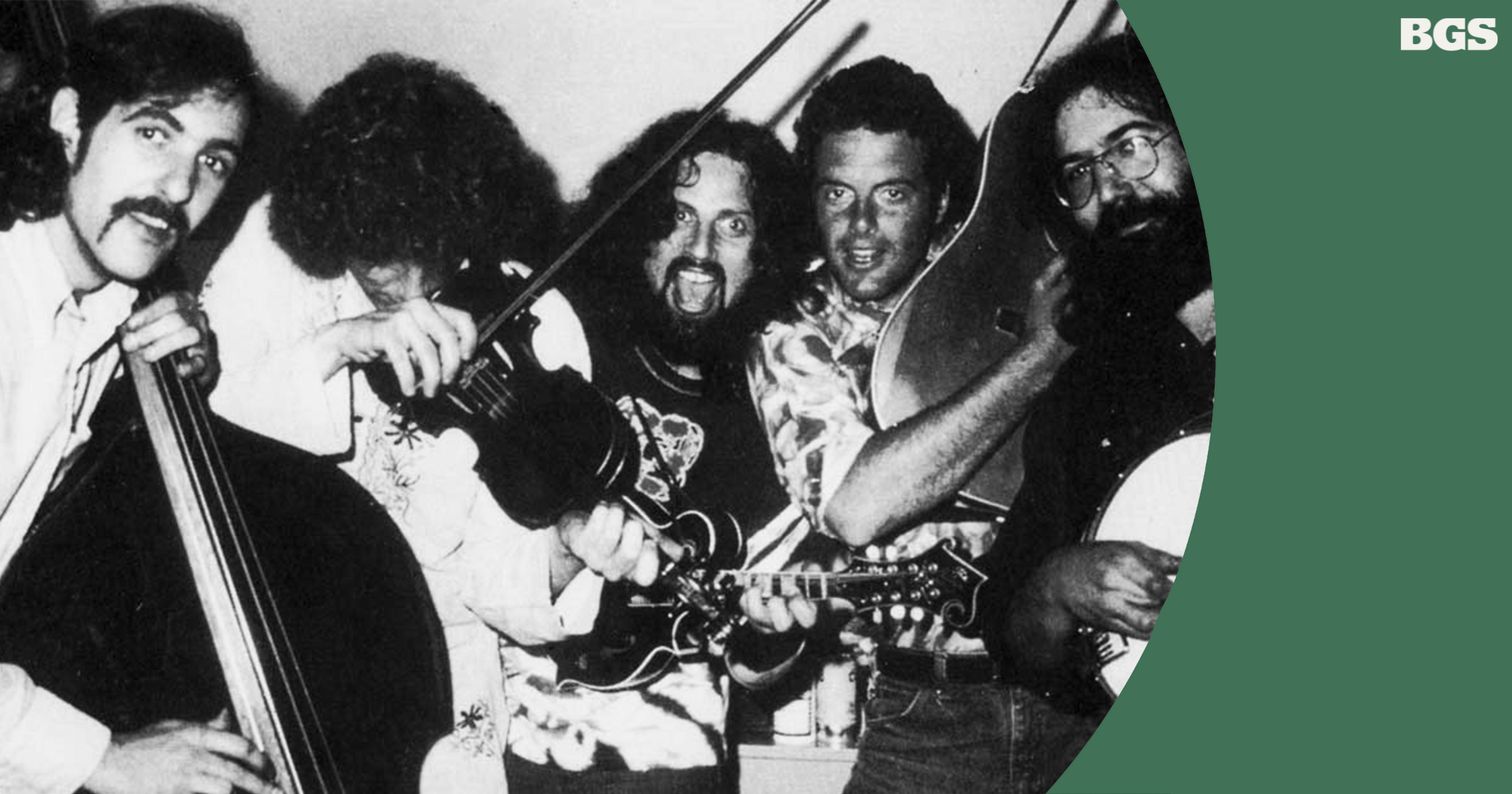
In large part, that’s due to the late Jerry Garcia – “Captain Trips” – who started out as a banjo player before finding his most famous calling as the Grateful Dead’s lead guitarist. Before that, Garcia played in folk circles for years, and his many extracurricular collaborators included David Grisman, Peter Rowan, Don Reno, Chubby Wise and other titans of the genre. More than a quarter-century before O Brother, Where Art Thou? took bluegrass to the top of the charts, Garcia’s 1973 side project, Old & In the Way, stood as the top-selling bluegrass album of all time.

Garcia and the Dead’s bluegrass bona fides are solid indeed, as shown by artifacts like the Pickin’ on the Grateful Dead series (not to mention Grass Is Dead, a tribute act). But maybe the strongest testament to the strength of the Dead’s bluegrass-adjacent side is what other artists have made of their catalog. Countless bluegrass musicians have covered Dead songs in ways that would appeal to even the staunchest chair-snapping purists. Here are some of the best.

“Friend of the Devil” – The Travelin’ McCourys (2019)

This rounder’s tale is the granddaddy of ’em all, a bluegrass staple from almost the moment it appeared on the Dead’s 1970 proto-Americana classic, American Beauty. Long a picking-circle staple at festivals, it’s been covered by everybody from Tony Rice to Elvis Costello. But here is a fantastic cover by one of the finest family bands in all of bluegrass, captured onstage at the Grey Fox Bluegrass Festival in 2019. In contrast to the manic pace of the original, this version proceeds at more of an elegant glide. But it’s still got plenty of get-up-and-go, with killer solos over walking bass and a great Ronnie McCoury lead vocal.

“Dire Wolf” – Molly Tuttle (2022)

Among the most acclaimed young artists in bluegrass, Molly Tuttle is a two-time Guitar Player of the Year winner from the International Bluegrass Music Association. She also won IBMA’s Album of the Year trophy for 2022’s Crooked Tree, which included the 1970 Workingman’s Dead standard “Dire Wolf” as a bonus track. Equal parts folk fable and murder ballad, it’s something like “Little Red Riding Hood” with an unhappy ending. And Tuttle’s vocal is even more striking than her guitar-playing.

“Wharf Rat” – Billy Strings (2020)

Possibly even more acclaimed as a guitarist is William “Billy Strings” Apostol, another IBMA Awards fixture (and multiple Entertainer of the Year winner) who is frequently likened to Doc Watson. But few guitarists have ever conjured up Garcia’s sound, spirit, and all-around vibe as effectively as Strings. A song about a lost soul in a seaside town, “Wharf Rat” first came out on the Dead’s eponymous 1971 live album. Strings’ 2020 live version from the Capitol Theatre in Port Chester, New York, is amazing, as Strings doesn’t sing it so much as inhabit it. The money shot is his guitar solo that begins just after the five-minute mark.

“Scarlet Begonias” – The Infamous Stringdusters (2020)

Gambling is one of the Dead’s recurrent tropes and “Scarlet Begonias” gives it a playful spin with a loping guitar riff. The original dates back to 1974’s From the Mars Hotel and it’s been widely covered in oddball styles by the likes of electronic duo Thievery Corporation and the ska band Sublime. But “Scarlet Begonias” has never had it so well as in this excellent bluegrass version by The Infamous Stringdusters, shot onstage at Seattle’s Showbox just ahead of the pandemic in early 2020.

“Ripple” – Dale Ann Bradley (2019)

More often than not, vocals tended to be the Dead’s weak link. But that is not a problem for Kentucky Music Hall of Famer and five-time IBMA Female Vocalist of the Year Dale Ann Bradley. The elegiac “Ripple” began life as the B-side to the “Truckin’” single and was also a show-stopper on the Dead’s 1981 acoustic live album, Reckoning. Bradley covered it on her 2019 LP, The Hard Way, with Tina Adair providing truly lovely vocal harmonies.

“Uncle John’s Band” – Fireside Collective (2022)

One of the Dead’s folksiest numbers, “Uncle John’s Band” kicked off Workingman’s Dead at an easy-going amble – a clear departure from the psychedelic excursions of the Dead’s earliest work. This live version by the young Asheville, North Carolina, band Fireside Collective reimagines “Uncle John’s Band” as sprawling jam-band fodder.

“Cassidy” – Greensky Bluegrass (2007)

“Cassidy” first appeared on-record as a Bob Weir solo tune on his 1972 side-project album, Ace, but it’s been on multiple Dead live albums over the years. It’s always been something of an enigma, inspired by a young girl as well as Neal Cassady. Michigan jamgrass ensemble Greensky Bluegrass gets to its beat-poet heart on this version from 2007’s Live at Bell’s.

“Tennessee Jed” – Front Country (2018)

A frequent theme for the Dead was being in motion, whether traveling toward something or running away from it. So it follows that homesickness would be an aspect of their music, perhaps most overtly on this wistful song from the double-live LP, Europe ’72. California’s Front Country put “Tennessee Jed” through its paces in this 2018 version from their “Kitchen Covers” series.

“Touch of Grey” – Love Canon (2014)

If the Dead wasn’t a bluegrass band, they most definitely weren’t a pop band, either. But the group had occasional brushes with the Hot 100, most famously with the 1970 statement of purpose “Truckin’” and its “what a long strange trip it’s been” tagline (even though the group had only been together about five years by then). “Truckin’” stalled out at No. 64 and was later eclipsed by its 1987 sequel “Touch of Grey” – an actual Top 10 hit with its bittersweet conclusion, “We will get by, we will survive.”

From Charlottesville, Virginia, Love Canon strips away the ’80s pop keyboards and covers the song well as straight-up bluegrass on 2014’s “Dead Covers Project.”


Photo Credit: Old & In the Way, courtesy of Acoustic Disc.

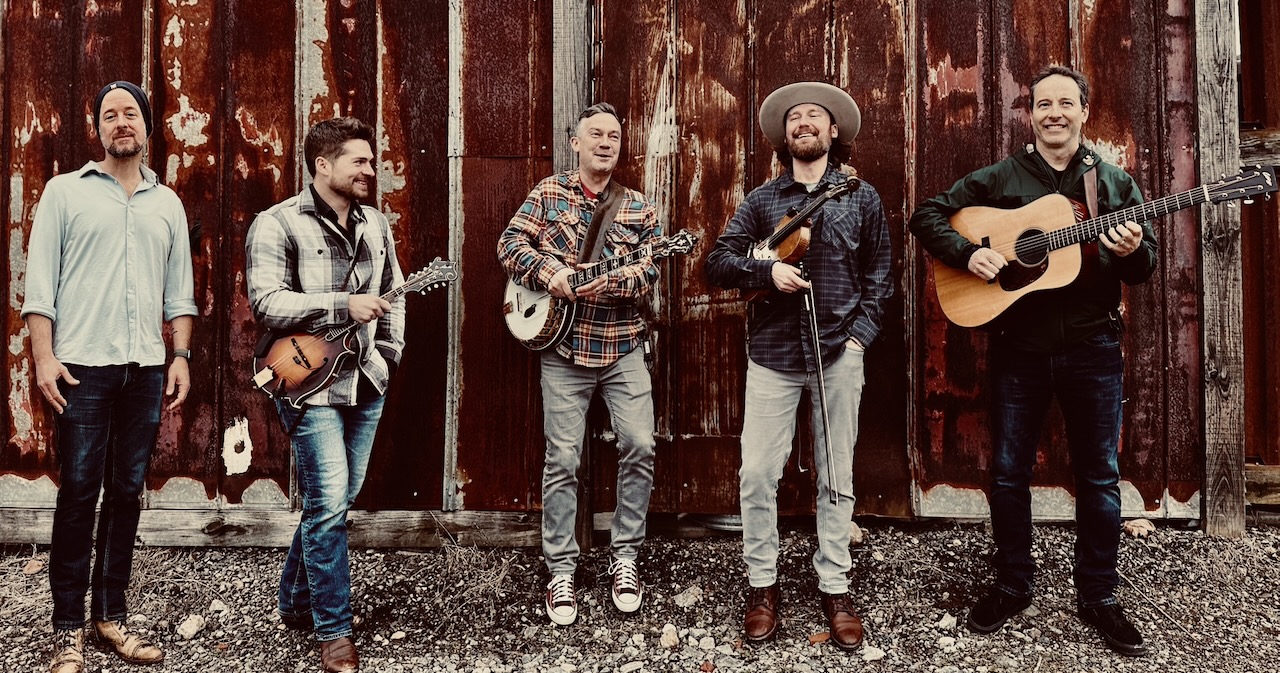
25 Years On, Yonder Mountain String Band Keep Redefining Bluegrass

For a quarter century Yonder Mountain String Band has inspired a generation of bluegrass fans with its fusion of traditional sounds and intricate jams. That trend continues on Nowhere Next. The band’s first full-length album since 2022, it showcases the abilities of its two newest members – mandolinist and vocalist Nick Piccininni and fiddler Coleman Smith – front and center.

Piccininni connected with the group in January 2020 and Smith was added earlier this year, joining the band’s longtime core of bassist Ben Kaufmann, guitarist Adam Aijala, and banjo player Dave Johnston, collectively bringing a new energy to the band that harkens back to its early days – when they also consisted of the frenetic and oftentimes unpredictable Jeff Austin. Despite being in the band for nearly five years now and co-writing nine of the album’s 11 songs, Piccininni says that joining up with such an established collective was intimidating at first.

“It’s definitely daunting when you come into something that’s been around as long as these guys have,” Piccininni admits to BGS. “But working with Adam, Ben, and Dave has actually come very naturally. They’ve made me comfortable in expressing opinions about the music and giving my two cents. They’ve not once made me feel like I was an outsider.”

In our latest installment of First & Latest, we chart the band’s evolution and trailblazing nature from their 1999 debut, Elevation, all the way to their brand new album, Nowhere Next, a collection that features old favorites familiar to longtime fans alongside new songs sure to make you fall in love with them all over again.

Two songs on this record – “Didn’t Go Wrong” and “River” – have been a part of your live show for years, even making it on to different iterations of your Mountain Tracks compilations. What made y’all want to finally give them a proper studio treatment?

Adam Aijala: Ben sings on and had been pushing both of those. We have about 30 songs we’ve written over the years that aren’t on a formal record yet. Even before Nick joined the band, we’d been thinking about getting into the studio and recording some of them. That being said, I still prefer to write new stuff. When people ask me how you keep going after a quarter century, I always say that if we weren’t writing new material I don’t know that we would still be around. You’ve got to keep things fresh, whether that’s learning new covers or having your own new stuff to perform.

Given the mix of new and old on this record, both in terms of the song selection and rotation of band members, what are your thoughts on where Nowhere Next stacks up with the rest of the Yonder catalog?

AA: When Get Yourself Outside came out, I thought that was our best record, but now I think this one is. I still hold an affinity for albums like Elevation and Town by Town, but I’m really happy with Nowhere Next and what we were able to do on it. It’s still bluegrass, maybe not the traditional kind, but Yonder Mountain’s bluegrass with varied rhythms, tempos, and styles.

One of our biggest influences is The Grateful Dead, and they’re the same way. In the years between their albums – from their self-titled first album to their Skulls & Roses live album, Wake of the Flood, Terrapin Station, and Workingman’s Dead – they evolved in different ways, but always stuck to a similar blueprint no matter what musicians happened to be around them. Similarly, you can still hear elements of what we did on our first few albums today, which songs like “Didn’t Go Wrong” and “River” further help bridge the gap to.

One song that I feel ties together all of the elements that make up “Yonder Mountain’s bluegrass,” that you just spoke of really well, is Nick’s song, “Secondhand Smoke.” Mind sharing a bit about how that one came to be?

Nick Piccininni: The basis of that is that I went through a divorce and when I separated from my wife the first apartment I got had my landlord living downstairs. He was unfortunately confined to a wheelchair and just sat there chain-smoking cigarettes one after the other. I only lasted a month there before I went out and found a new place. In that sense the song was very literal, but there was also the aspect of going through a big change in your life while living in a small town and feeling like everyone is watching you and talking behind your back.

Interesting. I picked up on the themes of deceit, but the literal reference to secondhand smoke is a nice touch. What does the band’s songwriting process look like as a whole, especially with Nick and Coleman now part of the band?

AA: Everybody in this band has written songs that I really like. With that in mind, I don’t think it’s a “too many cooks in the kitchen” kind of situation. It’s more like, I trust that we’re going to get the best song by letting everyone have a listen, peek at it, and hear what they have to say, whether it’s with one of my songs or someone else’s. I’m not someone to hold my ideas close. It’s better not to be married to them, for me at least. For instance, when Dave tells me he doesn’t like something of mine, it doesn’t bother me because he’s not saying it to be hurtful, he’s just giving his opinion and I trust him when it comes to that.

For me most of my songwriting ideas start with music first. I don’t have a great writing regimen or practice, I just wait for something to spark interest and roll with it. But if it’s music first and I don’t really have an idea on what it would be about, I think on the mood of the music and what those chords and potential melody makes me feel and go from there.

What about you, Nick? And has your process changed at all since joining Yonder?

NP: Historically, for me, I’ve been a music-driven ideas guy too. On most days I’ll sit down at home, pick up my guitar and record or work on a few voice memos. Lately I’ve also gotten into a better habit of working on a lyric while on an airplane or sitting at a hotel because we have so much downtime with all of our travel. At the same time, things have changed a lot in the last four and a half years of being with Yonder though. Prior to joining them I’d never co-written. Getting that outside perspective on my songwriting is something I’d not experienced before and has been incredibly beneficial to me.

Although it’s not Nowhere Next or new songs, I wanted to briefly discuss your I’d Like Off EP, a previously unreleased project from 2010 featuring former member, Jeff Austin, that dropped earlier this year. What was the motivation behind finally sharing those recordings?

AA: When we recorded it our intent was to do a full album. We recorded about 13 tracks for it in pre-production at my house, some of which ended up on the EP and others that were never recorded. We’ve had a couple projects like this that we’ve sat on so long that we didn’t see much of a point in releasing so far down the road, but with this one we decided to move forward since everything was done aside from it being mixed and mastered. We’ve been playing “What the Night Brings” and other songs from it live regularly, as well. It helps to keep us interested, which in turn keeps the crowd interested and connected to what we’re doing as well.

What has your time with Yonder Mountain String Band taught you about yourself?

AA: It’s helped to hone my social interactions. If there’s one thing in life I’ve learned it’s that the world doesn’t revolve around you, especially when you’re a traveling outfit with multiple people. You’ve got to learn to roll with things and when we first started the band I wasn’t like that. Before I joined the band, I traveled all over the country in my own vehicle by myself. I got so used to going where I wanted when I wanted, but in a band it’s the exact opposite.

NP: It’s taught me how impatient I can be. Musically, it’s been cool because I’ve usually played banjo, fiddle, and more melodic instruments, but stepping into a mandolin role has taught me just how much of the snare drum of bluegrass it really is and learning to just do one very simple thing repeatedly and lock in on it. It’s been one of the most challenging things I’ve had to take on and pushing myself to do it to the best of my ability has been neat.


Photo Credit: Robin Vega

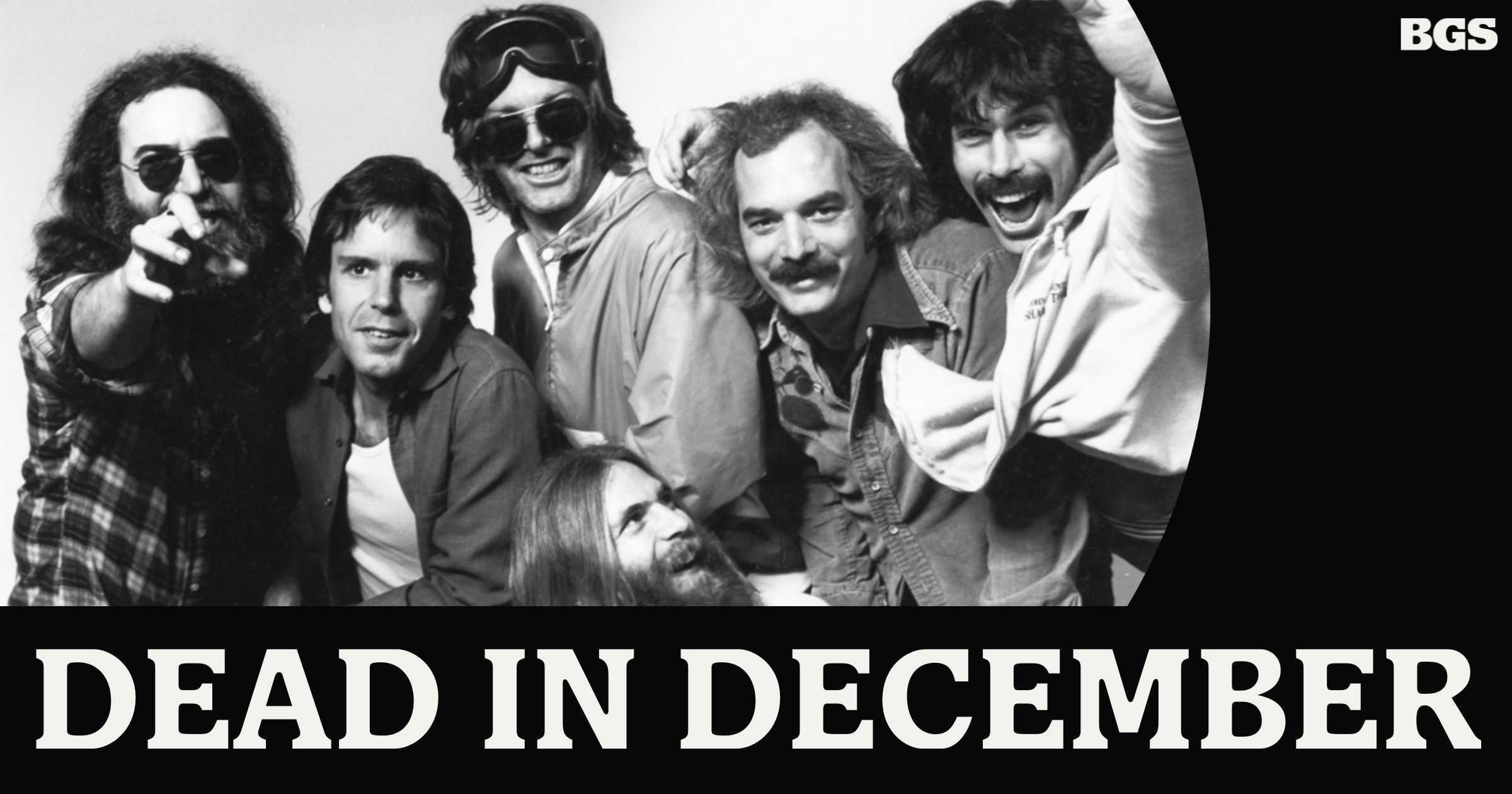
Artist of the Month: Dead in December

(Editor’s Note: This December, we continue our annual series – see also: Dolly in December, Dawg in December, Dylan in December, and Del in December – by celebrating the iconic, trailblazing jam band, the Grateful Dead, all month long! We’ll be featuring the Grateful Dead as our Artist of the Month, celebrating their enormous impact on bluegrass and roots music over the next few weeks.

To kick off our coverage, BGS contributor Garret Woodward pens a heartfelt and personal AOTM reveal. Plus, don’t miss our exhaustive Essential Grateful Dead Playlist below.)

The single most profound moment within my 39 years of existence (thus far) is the first time I heard the Grateful Dead. Not far behind that life-altering experience were my initial encounter with LSD (in high school) and finally cracking open Jack Kerouac’s seminal 1957 novel, On the Road (in college).

Summer 1994. I was nine years old and living a simple, yet happily mischievous childhood in the small North Country community of Rouses Point, New York. One mile from the Canadian Border. One mile from the state line of Vermont. Solitude. Desolation. Rural America. Mornings spent building tree forts and wandering vast cornfields surrounding my childhood home. Afternoons jumping off the dock into nearby Lake Champlain.

Even at that time, I was a bona fide music freak. Whether it was Top 40 radio (Gin Blossoms, Melissa Etheridge, Collective Soul, Sheryl Crow) blasting out of the small boom box in my bedroom or whatever my parents shoved into the cassette deck in the family minivan (Willie Nelson, Beatles, Rolling Stones, Nat King Cole, George Jones), I was in search of “the sound.”

But, everything in my existence changed one evening that summer at a family cookout at our camp on the lake. Sitting at the picnic table — chowing down on some burgers, beans and potato salad — I noticed a hat my aunt’s boyfriend was wearing. The logo on the front was of a dancing bear, with the back featuring a skull with a lightning bolt. I inquired.

“It’s the Grateful Dead,” he replied with a Cheshire Cat grin emerging from a bushy beard. “Have you ever listened to the Dead, man?” No, I replied. After dinner, he walked me over to his early 1990s Volkswagen Jetta. He hopped in, rolled the windows down and turned on the stereo. Again, with a grin, as if he knew what was going to happen once he pressed play and cranked the volume.

It was the Skeletons from the Closet album. The opening tune, “The Golden Road (To Unlimited Devotion),” hit me like an undulating series of waves in some endless ocean of melodic tones and lyrical truths. It was just like when Dorothy Gale entered the world of color in The Wizard of Oz.

Nothing really was ever the same after that moment. It was not only the first music I’d discovered on my own – without the radio or my parents’ influence – the Dead, for some unexplained reason at the time, immediately became “my band.” Something clicked deeply inside of me. I awoke. And I had arrived.

Soon, a seismic shift occurred in my adolescent life. I wore Dead shirts to my Catholic elementary school to the dismay of the nuns. Tacked up Jerry Garcia posters on my bedroom wall. The swirling sensation of “Sugar Magnolia” or “St. Stephen” echoing from the boom-box. Incense burning on the windowsill overlooking the cornfields and unknown horizon of my intent. I even had a small shrine to Jerry on my bookshelf for several years after he died. I was all-in.

Musically, the Dead were a bunch of incredibly talented bluegrass, folk, and jazz freaks, who were inspired by the onslaught of the Beatles to plug in and go electric. The band itself was this massive sponge, one which soaked in any and all influences it crossed paths with — either onstage or merely wandering down the road of life. That authentic sense of curiosity and discovery is key to the Dead’s magic throughout its decades of improvisational splendor.

At its core, the Dead’s message resonated within my often-bullied and ignored self as a kid. If you like the Dead, you’ll always find a friend out there in the universe to connect with. The band’s symbols are beacons of love, compassion, and acceptance once you walk out the front door. In essence, I’d found my tribe, this wild-‘n’-wondrous ensemble of loving oddballs, eccentric weirdos, and all-around jovial folk. My kind of people, who remain so to this day.

The Dead is about personal freedom. To not only be yourself, but to also seek out the intrinsic beauty of people, places and things in this big ol’ world of ours. Have adventures. Pursue wisdom. Radiate love. Be kind. Damnit, be kind. All of these things offered from the music and its followers were placed in my emotional and spiritual toolbox as I began to wander the planet on my own following high school, college and impending adulthood.

And here I stand. Age 39. That nine-year-old discovering the Dead is still inside of me somewhere, still burning incense and blasting “St. Stephen.” That youngster’s excitement for all things music (especially live), endless curiosity for what lies just around the corner, and running with a reckless abandon towards the unknowns of tomorrow are as strong and vibrant as ever — especially through this ongoing catalyst that is my career in the written word.

Case in point, I recently headed to the Bluegrass Music Hall of Fame & Museum in Owensboro, Kentucky, for another celebratory weekend for its current exhibit: “Jerry Garcia: A Bluegrass Journey,” on assignment and on the ground covering the festivities. An incredibly curated collection of rare Garcia artifacts and wisdom, the showcase will run onsite until next spring.

Before the inception of the Grateful Dead, Garcia was completely immersed in the bluegrass and folk scenes in the San Francisco Bay area in the late 1950s and early 1960s. He was part of numerous acoustic acts and ensembles throughout the bountiful period — the culmination of that vast knowledge and in-depth experience being poured into the Dead’s formation in 1965.

To note, there’s a lot to be said about Garcia’s talents on the banjo being applied to what would become his signature tone on the electric guitar. And to that notion, add in the sheer lyrical aptitude of Robert Hunter, who not only penned many of the Dead’s iconic melodies, but was also on a parallel journey to Garcia’s early on and throughout the band’s 30-year trajectory.

And there I was in Owensboro, some 400 miles from my current home in Western North Carolina. Traveling for hours just to arrive on the mighty Ohio River – the state line of Kentucky and Indiana, this crossroads of the Southeast and Midwest. And for what? To push further and farther down the cosmic rabbit hole that is Jerry Garcia, the Grateful Dead, and those who follow.

The next 48 hours were a whirlwind of sound and scope. Seemingly endless tribute sets to Garcia and the Dead at the Woodward Theater inside the museum from the Kitchen Dwellers, Lindsay Lou, Fireside Collective, and members of the Infamous Stringdusters to late-night jam sessions in hotel rooms next door.

The Grateful Dead are arguably the only musical entity to exist that – regardless of who or what genre is being represented – once one of their tunes is placed into a performance, folks either show up in droves or are already present with ears perked up to what’s radiating out from the stage. It’s a fact that no matter what style of music you play, if it involves the Dead in some form or fashion, Deadheads are game to check it out. You could be a polka group and we’ll be right there, standing front row, the second you roll into “Althea” or “Shakedown Street.” The music provides, always and forever.

Before I left Owensboro and the Garcia celebration at the museum, I found myself on a bourbon distillery tour on Saturday afternoon. I walked into the enormous facility and checked in with the host. All by myself and waiting for the tour to start, the host tapped me on the shoulder.

“You like the Dead?” his face lit up, pointing to the Dead stealie tattoo on the back of my right leg. “Sure do, my brother,” I shot back with a smile of solidarity. We talked about our favorite live Dead recordings and where we’ve caught Dead & Company in concert recently, kindred spirits now eternally connected by this band of roving musical pirates. It’s a genuine interaction that happens often to Deadheads and something I don’t ever take for granted.

Even as we stand in this uncertain time in American history – where nothing is the same, everything is the same – the Grateful Dead remain this portal to escape, to purposely choose compassion, camaraderie, and community. It’s about cultivation of one’s self and of the sheer magnitude and gratitude of daily life, so long as you stroll this earth with the pure and honest intent to connect, to listen, and to understand.

“I will get by, I will survive.”


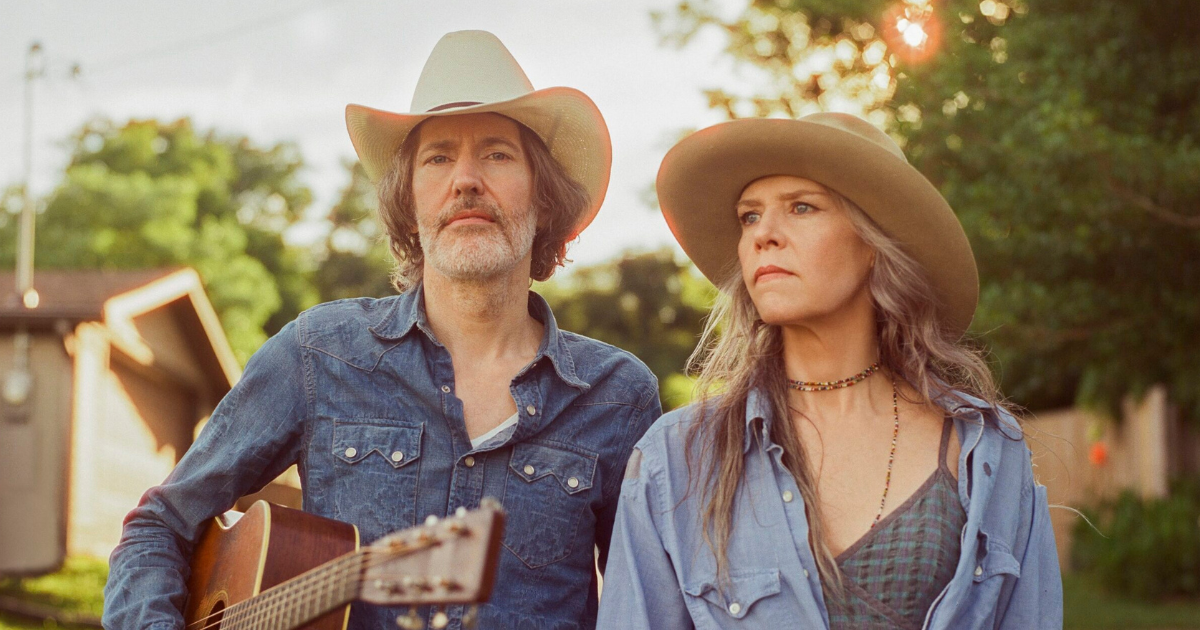
Ruination & Revival: Our Exclusive Interview with Gillian Welch & David Rawlings

In the catalog lore of Gillian Welch & David Rawlings, it’s April 14 that’s known as “Ruination Day”— the historically resonant date marking the “Black Sunday” of the Dust Bowl, the Titanic’s sinking, and the assassination of Abraham Lincoln. Themes of hard times and disaster have long floated throughout the duo’s music, but they found themselves facing catastrophe with new urgency on March 2, 2020, when a tornado laid waste to their Woodland Studios in their home city of Nashville.

That studio, which the duo took over in 2001, has the unusual distinction of being hit by three separate tornadoes over the years: it’s an unassuming icon of ruination and revival that’s withstood decades of change in personnel, technology, and weather. It became foundation and the namesake for August’s Woodland, a collection of new, original material from Welch and Rawlings after two deliciously deep archival releases and a set of covers titled All the Good Times (Are Past & Gone).

Having rescued their tapes, guitars, and other equipment from calamity, throughout 2020 Rawlings and Welch set about rebuilding Woodland around its original mid-century imprint. The creation of the record and the reconstruction of the studio became two spiritually intertwined processes, the rooms rechristened with songs that excavate the nature of change; Rawlings wrote violin, cello, and viola parts that friends laid to tape in the room he’d restored to its 1960s-era use for recording strings.

Even with the substantial building project, the extended pandemic circumstances offered ample time for writing new material together and the duo amassed dozens more tunes than they could ever release as one record. They ruminated on making a double album for a while. “We had so many songs kicking around because we didn’t want anyone to feel shortchanged if we were both singing,” Welch says.

A single-album concept instead snapped into place around “Empty Trainload of Sky,” which opens Woodland with Welch’s reflections on an unsettling optical illusion. The two tussle with loss and weariness across the record, gesturing at questions of how to keep moving through life’s seasons without hammering into any hard answers. Woodland feels like a statement of renewal and endurance from Welch and Rawlings, the sort of subtle roll forward that’s set them apart from other songwriters for so many years. The musicians spoke with BGS about their new material, old ideas, and what they still feel like they have left to do.

Prior to Woodland, the two of you had spent a lot of time working with your archival material for the Boots releases in 2020. What was the relationship you had between spending so much time working with this older material and then focusing your attention on a new record?

Gillian Welch: Not to put the Lost Songs stuff down, because I’m really happy that we, one, saved it from the tornado, and two, at that point, decided, “Why did we save this? Do we think it has value?” We decided yes, so we put it out. We haven’t given people a lot of opportunities to connect the dots between our albums. Years tend to go by, and I don’t know if they think we’re just on vacation or what, but we’re always writing. I’m happy that stuff’s in the world now.

I still stand behind our decision to not make an album out of that stuff. We’re really album-oriented artists,and if we can’t find a narrative that at least we understand, then it’s not an album. Sometimes people will put out a record and four or five years later, maybe they’re playing one song off it, maybe two. Traditionally, if we put it out, we’ll keep playing it, so we really have to like the song a lot.

So, did that archival material influence this record? Honestly? No. It just reinforced our yardstick, the filter we have in place, like, are we making a record? And the answer for all those lost songs was, “No, we’re not making a record.”

David Rawlings: We were working on some of the songs in late 2020, early 2021, but in general, they are not close in my mind. A lot of the stuff either took more final shape afterwards, or a few of the songs were kind of in shape before. But boy, working on those 50 songs was an awful lot and didn’t leave a lot of space for other things around it. It was really important, because that was one of the first things I was able to do here at the studio as I started to bring it back to life, post-tornado.

You’ve talked about having enough material to make a double album, how did you narrow everything down to the 10 songs that made the cut? What did you feel held these together?

GW: They seemed, in a way, to address the present moment. They were the most clearly about now and because of that, they seem to all fit together. Even though there’s plenty of contradiction within the album, there are these crazy undercurrents of loss, destruction, resurrection and perseverance; sadness, joy, emptiness, and fullness. It’s ripe with contrast. That’s just how we were feeling.

DR: There were different ideas, but I didn’t realize there was that large of a group, that there was the collection of 10 songs that felt like they amplified each other. I think all of the records that we’ve made that feel the best to me, one song sort of affects the way you think of the next and the whole album has a feeling that you’re not going to get if you just listen to your three favorites. I think that that feeling is heavier, or better. That, to me, is the benchmark of what you’re aiming for when you’re trying to make a record. One hopes that these other songs – one that you love for this reason, or that reason – that they eventually fall into some group like that. Or maybe we just start putting out singles.

Gillian, to what extent did everything you went through with the tornado recovery change your relationship with the natural world?

GW: I’m not sure that it did. I’ve always been really comfortable with the fact that there are things larger than us that are out of our control. It’s always sort of been a great relief to me, because I try so hard to navigate and control the things I can. Dave and I are such perfectionists. I don’t know how else to put it, except that it’s a great relief to just give it up for the things that are completely beyond your control. So I don’t worry about it really. The weather is going to be what it’s going to be. Woodland’s been hit by three tornadoes. Every tornado that’s come through Nashville has hit Woodland, but it’s still there. So I think I’m just not going to worry about it.

How do you feel like you both still challenge each other?

DR: Well, I think it’s the same as it ever was. If there’s something that doesn’t hit one of us right about something we’ve written or played, we will eventually come into agreement about that. I think we have a kind of way of taking what the other does, seeing what’s good about it and what isn’t. And that kind of ping ponging back and forth with thoughts, ideas, structures, and everything is what leads us to the stuff that we end up liking the best, and, more importantly, that other people respond to the most.

GW: I think we’re both still completely committed to trying to write better songs. It’s really interesting, because decades go by –we’ve played so many shows, and your voice changes. It just happens with the miles and it doesn’t have to be for the worst. There are things we can do now that we couldn’t do when we were kids, and certainly there are things that we can’t do now that we did in our early 20s. But I’m just so glad that there’s still a lot to explore. Musically, topically – I definitely don’t feel stale or tired of this. I feel like we both have a crazy sense of adventure.

What are some of those things that you feel like you can do now that you couldn’t do when you were younger artists?

GW: I feel like I’m able to listen while we play now, in a more elevated way. I can both listen to the smallest nuances of what I’m playing and singing and I can listen to what Dave’s playing and singing. I can make all these micro-adjustments to our four instruments, but at the same time, I can hear the sum of what we’re doing. I can also just listen to the whole sound and adjust for the whole thing. I’m not sure I used to be able to do that, or it didn’t occur to me to do it.

It sounds like a mixing board of the mind.

GW: Yeah, it’s like that! There are things that I admire so much in other musicians and sometimes I can see little echoes of that stuff that I like in our music, that we’re now able to do.

Whatever happens, at the end of the day, Dave and I are always pretty confident in, “Well, we did our best.” We really don’t slack off. If we missed the mark, whatever. You’ve just got to say, “We really tried.” It’s very exciting to feel like we’re getting closer to the music that inspired us to do this in the first place. We have a couple songs that I know came from my deep love of Jerry Garcia’s music and the Grateful Dead.

Sometimes, when we’re sitting playing in the living room, we’ll hit a passage and I’ll think, “Oh boy, Jerry really would have liked that.” That’s a good feeling, and that’s always been a great motivator – to try to do stuff that you think your idols would approve of. “Barroom Girls” got written because I thought Townes [Van Zandt] would like it. He was showing up at our gigs and stuff, and so I wanted to write a song that I thought Townes would like.

David, when Nashville Obsolete came out, you talked about this idea of keeping a place for old ways of doing things when the rest of the world has kind of pushed them aside. The last few years have had so much change, so fast – how has that idea developed for you?

DR: All of this equipment [in Woodland], almost none of it is new. It’s all the same stuff. It’s taking it a step further and maybe optimizing it for our own purposes. We’re still cutting on two-inch tape, mixing to quarter inch tape, and going through all analog equipment. The final step of going digital is the very last thing that happens. It’s not a museum, in the sense that I use a computer system – we’ve designed a bunch of DTMF code and different relays and stuff to run a lot of the equipment that we’re using. I will use modern technology in any way that I can that doesn’t touch the audio, in order to have things reset to where they are, or to have the lacquers cut with a particular precision. I will design whatever I need to in that department.

So, the goal is never for it to be a museum. The goal is always, how can you make the best sounding art? How can you do any of the stuff as well as you can? It feels the same with songwriting and music. There are modern songs that I admire so much, that you look and go, “How is that put together?” There’s stuff that goes back to the dawn of recorded music, from the late ’20s and ’30s that I think the same thing of. You just look around and cast your net at what moves you and what touches you, and then try to use those things as a jumping off place to contribute yourself.

At this point in your career, what do you still want to do that you haven’t gotten to do yet?

GW: I could say something quippy, like I still want to write a song as good as “Me and Bobby McGee” or “Like a Rolling Stone” or “Blue Eyes Crying In the Rain.” I still want to write a song that people will be singing for a long time. I still keep trying to do good work. Each song that we write is something that hasn’t existed before. So each time we start a song, I want to fulfill that inspiration.

So, you know, it’s like breadcrumbs— “Oh, I haven’t done that,” and you take another little step forward. Where will it ultimately lead? I have no idea. I’m sort of inching forward. Dave and I have never really had a grand plan. We just keep wanting to make music, so that’s what we do.

DR: I just always think that I want to get good at this. I really love the process of writing and performing in front of people, and have since the very first time I was able to get up on stage and play guitar. That was winning the lottery. When we started writing our own material and having people respond to it, there’s nothing really better. It’s a question of longevity, how long can we keep doing things and keep thinking of things that people feel are meaningful in their lives? How long can we stay relevant?

I don’t think that I’ll ever have a feeling of arrival. It’s all pushing forward. How can I play guitar better? How can we write better songs? How can I sing better? How can we record things better? It’s the learning that’s fun, it’s not even necessarily about getting better. It’s about wanting to explore and the pleasure in that process and the doing of it. I’m not real goal-oriented, there’s never been a statue I wanted to win. We’ve gotten some lifetime achievement awards over the past few years, and I’m like, “Are you kidding? We’re just starting to do this! I don’t know what you’re talking about!” It’s not memoir time, and it never will be.


Photo Credit: Alysse Gafkjen

Women’s History Spotlight: Hazel & Alice, Dale Ann Bradley, and More

March is Women’s History Month, and BGS, Good Country, and Real Roots Radio have partnered to highlight a variety of our favorite women in country, bluegrass, and roots music with our Women’s History Spotlight.

Each weekday in March at 11AM Eastern (8AM Pacific) on Real Roots Radio, host Daniel Mullins will be celebrating a powerful woman in roots music during the Women’s History Spotlight segment of The Daniel Mullins Midday Music Spectacular. You can listen to Real Roots Radio online 24/7 or via their FREE app for smartphones or tablets.

Then, we will have a Friday recap here on BGS featuring the artists highlighted throughout the previous week. No list is comprehensive, but we hope to feature some familiar favorites as well as some trailblazers whose music and impact might not be as familiar to you.

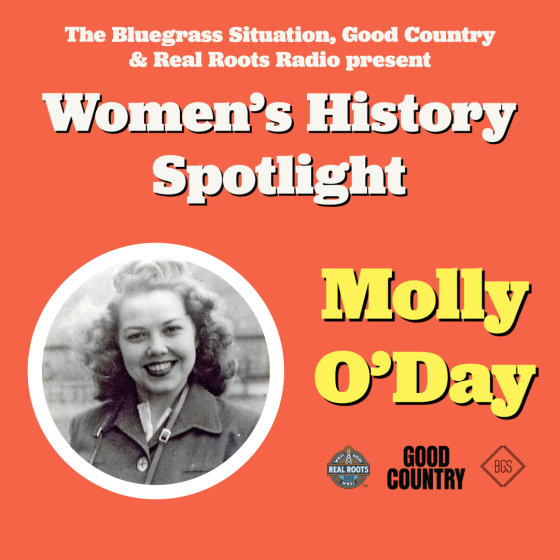
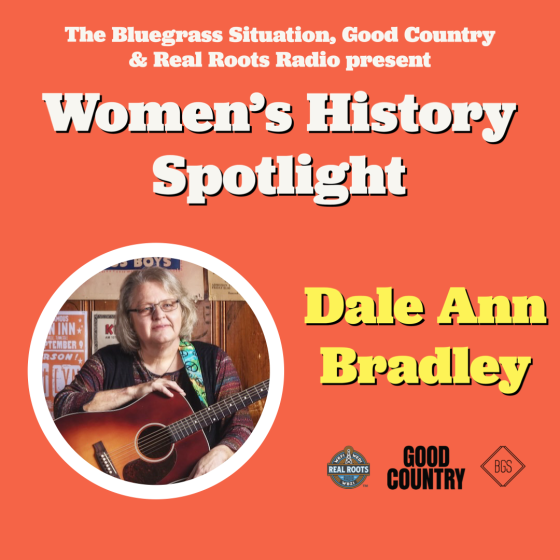
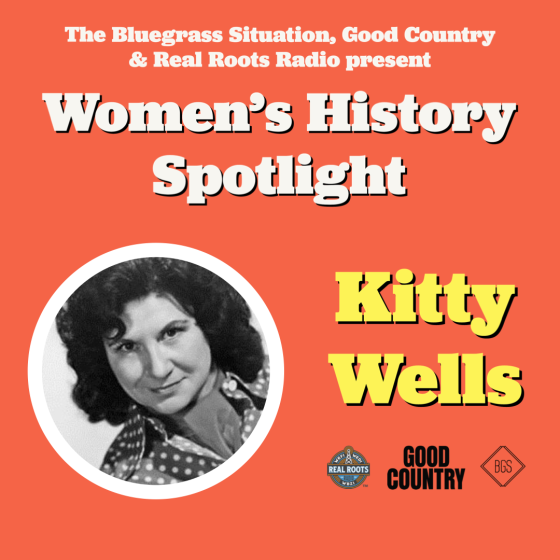
This week’s edition of our Women’s History Spotlight features musicians and artists like IBMA Award winner Dale Ann Bradley, the legendary Dolly Parton, Bluegrass Music Hall of Fame inductees Hazel Dickens & Alice Gerrard, early country hitmaker Kitty Wells, and Kentuckian-West Virginian Molly O’Day. Tune in next week for the final installment of our Women’s History Spotlight!

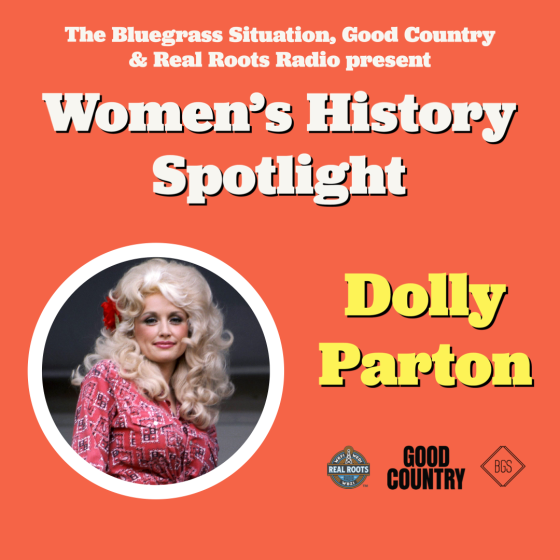
Dolly Parton

You knew it was coming. You can’t tell the story of country music (or American pop culture) without Dolly Parton. Growing up in Sevier County, Tennessee, she is not just the Queen of the Smoky Mountains, but quite possible the Queen of the Universe (if there was such a ridiculous title). Her rags-to-riches story will continue to be told and re-told for generations. Aside from her beautiful voice and philanthropic work (the millions of books that she gives to children through Dolly Parton’s Imagination Library is her proudest achievement), there are numerous other aspects about Dolly Parton that are remarkable.

Her business acumen is frequently praised, but it still bears repeating. Aside from her numerous endeavors (including Dollywood), it’s often worth remembering that she fought to regain control of her own career and decision-making from Porter Wagoner after her star began shining brighter than his scope of influence. (Remember, it was the ending of this business relationship that was the impetus behind Dolly writing one of her most famous songs, “I Will Always Love You.”) Call it a business decision or just genius, but Dolly’s ability to juggle embracing her role as an undeniable sex symbol and avoiding being labeled as “unwholesome” by conservative crowds has to be one of the most difficult tightrope walks in American entertainment.

Vanity Fair’s 1991 article “Good Golly, Miss Dolly did a deep dive into the dichotomy of Dolly’s role as a sort of clean sex symbol: “Dolly, in her openness, demystifies sex. ‘One of the things that makes the image work is that people understand that I look one way, but am another, that there’s a very real person underneath this artificial look,’ she theorizes. ‘It’s not like I am a joke. People can laugh at me, but they don’t make fun.’ … Indeed, Dolly Parton has become the billboard for sex without being the product itself.”

It is the way that she ensures that the “very real person” that is Dolly Rebecca Parton doesn’t get lost in the glitz, glamor, and boob jokes that is part of the reason why she is so endearing and universally beloved by folks from all walks of life; in a world where polarization is en vogue, Dolly is one of the few topics on which everyone agrees! She epitomizes the best of us.


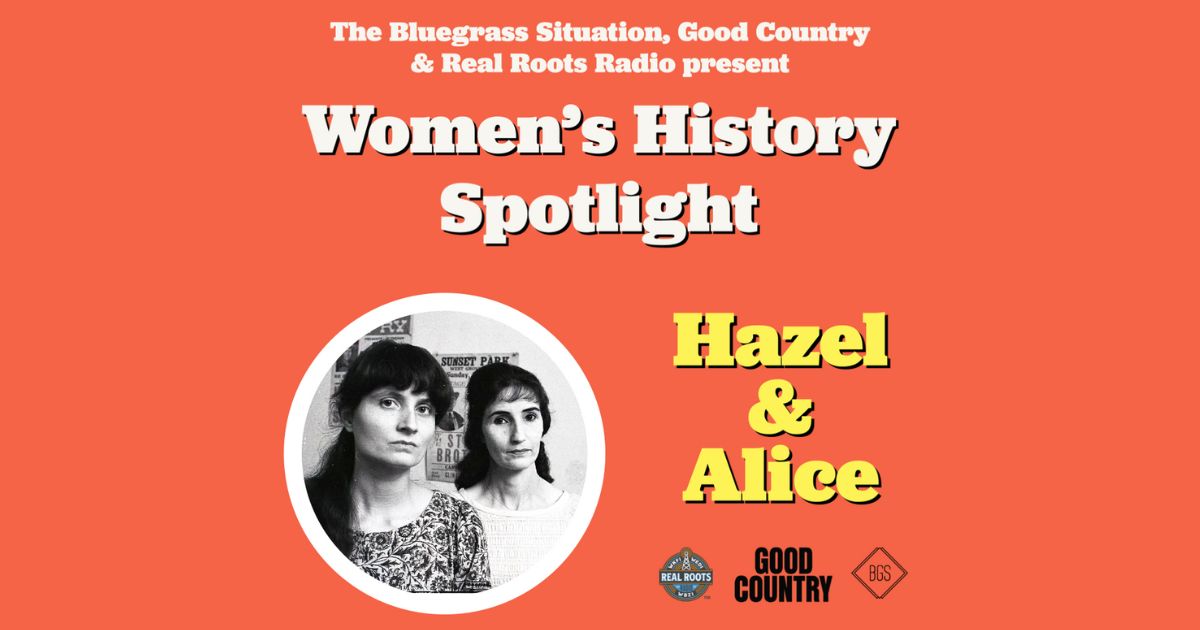
Hazel Dickens & Alice Gerrard

Members of the Bluegrass Music Hall of Fame, Hazel Dickens & Alice Gerrard were an unlikely pair who blasted down doors for women in bluegrass. Hazel hailed from the mountains of West Virginia, while Alice was from across the country in Seattle, Washington. Alice attended Antioch College in Yellow Springs, Ohio, where she was exposed to folk and bluegrass music. While a student there, she helped coordinate bringing The Osborne Brothers to the Antioch campus, making history as the first major bluegrass concert held on a college campus! After college, she wound up in the D.C. area, becoming active in their flourishing bluegrass scene, where she became friends and musical partners with Hazel Dickens – who had moved to the region with her family to find factory work years earlier.

Hazel & Alice became some of the first female bluegrass bandleaders and recorded some classic albums for Smithsonian Folkways and Rounder Records before embarking on successful solo careers by the mid-’70s. With Hazel’s mountain sound and Alice’s more folk-oriented sensibilities, their music appealed to both traditional bluegrass fans and those who were being introduced to the genre via the Folk Revival. Their original material which highlighted a woman’s perspective were critical in bringing a voice to women in the bluegrass canon. Decades later, their music and legacy is still rippling across American roots music, with artists as diverse as Rhiannon Giddens and Dudley Connell still celebrating their influence and impact.


Molly O’Day 

Born Lois LaVerne Williamson, country pioneer Molly O’Day was born in Pike County, Kentucky. She would become a popular radio star in West Virginia by the early 1940s, eventually leading Molly O’Day & The Cumberland Mountain Folks. Her band crossed paths with Hank Williams on the radio circuit and Molly even sang quite a few of his songs on radio and later in the recording studio. Molly learned “Tramp On The Street” from Hank Williams and it would land her a recording contract with Columbia Records. (Fun Fact: Her band at the time of her first Columbia recording session featured a young Mac Wiseman on bass!)

In an era when the term “hillbilly music” was still commonly used, Molly’s music, retroactively, could have country and bluegrass labels applied to it. Her powerful voice felt just as at home on an ancient balled like “Poor Ellen Smith” as it did on soul-stirring gospel songs like “Matthew 24.” By the early 1950s, Molly and her husband grew weary of life in the limelight and essentially retired from the music business, both dedicating their life to ministry. She would record a few gospel albums for some small record labels in the ensuing years, but her final album was released in 1960. She would pass away in the late 1980s, but she left a mark on country music and earned the respect of her peers at a time when the list of female country pioneers was relatively short.


Dale Ann Bradley

Revered as one of the most heartfelt bluegrass singers of her generation, this Kentucky songbird’s career started in earnest as a member of the Renfro Valley cast in her home state of Kentucky. The Renfro Valley Barn Dance was an extremely popular barn-dance style radio program in the 1930s and it spurred the creation of Renfro Valley as a country music entertainment destination in Kentucky. This helped kickstart the careers of folks like Steve Gulley, Jeff Parker, Dale Ann Bradley, and more by the 1990s.

While at Renfro Valley, Bradley would eventually join The New Coon Creek Girls, one of bluegrass’s only “all-girl” bands at the time, and aptly named after The Coon Creek Girls, a pioneering female string band of the 1930s who also started on The Renfro Valley Barn Dance.

Dale Ann’s soulful voice, largely influence by the Primitive Baptist tradition which she grew up around, quickly gripped the bluegrass world, leading to a successful solo career for the last three decades. In addition to recording songs that hearken to those familiar with mountain people and mountain ways, the appeal of Dale Ann’s voice has led her to adapt songs from outside of the genre to her style of bluegrass, tackling tunes from Tom Petty, Bobbie Gentry, The Grateful Dead, Jim Croce, and everyone in-between! Her diverse material has led me (and many others) to the conclusion that no matter the material, if Dale Ann is singing it, I already know I’m going to like it!


Kitty Wells

Hailed as the original Queen of Country Music, Kitty Wells hit a massive reset button on the role of women in country music after the massive success of her breakthrough hit, “It Wasn’t God Who Made Honky Tonk Angels.” Written by J.D. Miller, it was penned as the antithesis of Hank Thompson’s hit, “The Wild Side of Life.” After writing the song, the search began for a woman to sing it. Kitty Wells had pursued a country career, to little avail, and had essentially consented that maybe it wasn’t in the cards for her, when she was contacted to record the song. “It Wasn’t God Who Made Honky Tonk Angels” would become the first Number One hit by solo female in country music history, and its status as one of the most iconic country songs of all time only grows.

This explosion of success led to many other hit records by Kitty Wells, and opened the doors for those who would follow in her wake like Jean Shepard, Loretta Lynn, Dolly Parton and more! You can’t celebrate Women’s History Month without honoring the gal who famously sang the line, “It’s a shame that all the blame is on us women!” (Still kind of bummed that Margot Robbie didn’t sing that line in Barbie. Seems like a missed opportunity to me!)

As an added bonus, here’s another cool version from 1993, where Dolly Parton, Loretta Lynn, and Tammy Wynette recruited Kitty Wells to join them on a new version of this country classic on their collaborative album, appropriately entitled Honky Tonk Angels.


Sam Grisman Project Honor “Dawg Music” In Their Own Way

There’s something special that occurs when music is rooted in friendship and a shared mission. Perhaps no one exemplifies this better than Sam Grisman Project, founded by the youngest son of “Dawg music” pioneer David Grisman. Seeking to honor the likes of his father, Jerry Garcia & the Grateful Dead, and other musical heroes, SGP maintains a singular style and groove.

With its core iteration featuring seasoned multi-instrumentalists and songwriters Ric Robertson, Chris “Hollywood” English, and Aaron Lipp – and often featuring a host of other guests who run the musical gamut – SGP is bringing fresh authenticity, originality, and passion to the roots music and jam band scenes.

BGS spoke with Sam Grisman in early February 2024 about the origins of, inspirations, and plans for this remarkable and rising group.

What are the origins of Sam Grisman Project?

Sam Grisman: Ever since rekindling my musical friendship with the great Ric Robertson, who I’ve known since I was 14, I’ve been wanting to start a band that showcases the impact that the legacy of my dad and Jerry’s music has had on me. Ric and I started scheming on ways to make some music together and what that might look like. I figured we might have a good opportunity to play out in the live touring landscape if we paid tribute to the catalog of music that my dad and Jerry recorded together; that it could create the space for us to really do whatever we might want musically. We’re not limiting ourselves to the catalog of music that my dad and Jerry played together or individually, but we are honoring the spirit of what they did together, which was to dive into great songs that they had a shared love of.

I’ve always had a talented group of friends, going back to the time that I spent growing up at bluegrass festivals, fiddle camps, and the Mandolin Symposium. We have chemistry, and that is irreplaceable. Ric started playing music with Aaron Lipp around the time we turned 20 and he has been a part of my musical reality since then. He and Ric have developed strong chemistry, where they’ve been finishing each other’s musical sentences for years now. Aaron is from Naples, New York, about an hour away from Rochester, New York, which is where the great Chris English hails from. When Ric started making some music with Chris and telling me about what an amazing drummer and human being he is, I knew he would fit into the core of this band perfectly.

Who are you honoring with this project and why?

We’re honoring the musical heroes who influenced us the most. For me, because they provided the soundtrack to most of my earliest musical memories, that’s my dad and a lot of his friends who came through our house in Mill Valley to record. The friend who came around the most was Jerry [Garcia], but also John Hartford, Mike Seeger, Doc Watson, Tony Rice, Del McCoury and Ralph Stanley.

We honor our heroes, not just my dad and Jerry. We play lots of John Hartford music and Townes Van Zandt songs. Lots of Bob Dylan’s music, some Alan Toussaint, Dr. John, John Prine, Warren Zevon, Randy Newman, and Peter Rowan.

Can you describe what Dawg music is and what you’ve learned from your father?

Dawg music is a highly evolved form of acoustic music that is a synthesis of many different genres including old-time, bluegrass, hot club swing, jazz, and funk, with elements of classical music. It’s really a sort of genre-less genre pioneered by my father. It showcases – but is not limited to showcasing – the sound of the mandolin. The instrumentation in his quintet has traditionally been one or two mandolins, guitar, upright bass, and violin, but that’s expanded over the years to include percussion and drums.

That instrumentation of percussion, mandolin, guitar and bass is what I modeled the core of this band after. I’ve learned so much from my father about music and the music business – how to treat your friends and how to honor your elders. I am profoundly grateful to have been born to my particular set of parents and I’m grateful that there are other folks who have a deep appreciation for my dad’s impact on the musical landscape. I’d like for people to also appreciate how wonderful a human he is, so this is a small way that I get to share my dad with other people. He loves everybody, he’s grateful for the support, and he can feel it.

Who are some of the musical guests that have performed with SGP, and what does that mean to SGP?

It means a lot. It’s a representation of the community that we’re a part of. We’ve brought in some of our heroes as guests including dear family friends like Lowell Levenger “Banana” from the Youngbloods, Maria Muldaur, Eric Thompson, and Peter Rowan. We’ve had my dad sit in three times, which has been an absolute honor, and we’ve had a whole slew of our guests who bring different insights and a similar passion to the project: Dominick Leslie, Alex Hargreaves, Roy Williams, Bennett Sullivan, Nathaniel Smith, Phoebe Hunt, Lindsay Lou, my dear friend Tod Patrick Livingston, Mike Witcher, Chad Manning, Wyatt Ellis, Matt Eakle (the great flute alumnus from my dad’s quintet), and more. Eddie Barbash came and played a set with us in New York. Max Flansburg, who has a similar passion for this material and highlights a different corner of the Garcia/Hunter catalog than we do, played two of our New Year’s shows with us. We also had our old-time banjo hero, Richie Stearns, on all of those gigs that weekend. We’re going to have Logan Ledger on some shows coming up, and we’ll have Victor Furtado and Nathaniel Smith in the band.

When did SGP start touring in its current iteration, and how is the experience of touring with your best friends?

We had our first run as a band in January 2023. This conversation with you comes at the end of our longest break as a band, where we’ve had the entire month of January off. We’re starting back up on February 4th in Tucson, at a festival called Gem and Jam. It’s an absolute treat to travel the country with the people I care the most about, and to make great music and memories and friends everywhere we go. It’s important to anchor ourselves and ground ourselves in the music, because there’s a lot of work that goes into being out on the road that can make you lose perspective on how special it is to be doing something that you love for a living and to be able to do it for people who love what you’re doing.

SGP is obviously celebrating and continuing a particular musical legacy, but doing so with your own flavor. What makes SGP unique?

Our branding is our individuality and our honesty. I grew up in the house where my dad and Jerry recorded all of this music and I really do enjoy playing that music with my best friends. It gives me a sense of purpose to be able to play some of that music for folks who are passionate about it. There’s definitely room in the live music space for bands who take a preservationist approach to carrying on the musical traditions and catalogs of artists that came before them. A lot of musicians try to sound like their musical heroes, but that’s not our approach. I hired my friends to participate because I love their individuality and how they play, sing, and write music. I wouldn’t want to steer them towards sounding more like Jerry Garcia or my father.

We have been influenced by listening to tons of great music our entire lives, but we try to stay true to ourselves when we’re playing, so nobody is reaching for a sound that isn’t theirs. We all enjoy injecting our individuality into this music and having the flexibility to take the material in different directions depending on how we’re feeling. It’s amazing to have such versatile friends to work with.

How does original material fit into the broader vibe of SGP?

All three of the core guys – Ric Robertson, Aaron Lipp, and Chris English – are amazing songwriters. All the time I’ve known Ric, since we were teenagers, he’s been writing great songs. He was always a great singer, but he’s become one of my absolute favorite singers on the planet. There’s a lot of his music that lends itself incredibly well to looser, more long-form arrangements, which is something that SGP has become comfortable with.

Aaron Lipp is also an amazing songwriter who writes incredibly poignant music and aphoristic lyrics. Chris English writes amazing, feel-good music – not always overtly happy, but always with a strong message. His tunes add a lot of depth to our sets and take us to a more groove or bassline-oriented place, which is really refreshing for us and our audiences. I think there’s always going to be room for original music in SGP. As much as these guys are inspired to play their own tunes, I want to play them.

You released a great EP in 2023. Is there anything else currently in the works?

We’re gonna make a full length album at some point in 2024. Over the course of the last hundred or so gigs we’ve developed a pretty good repertoire and a strong rapport with each other. I don’t think it would take very long to put some of these tunes down in the studio, but we also multitrack most of our shows and we have an archive of live music to sort through. We’re going to be putting some shows up on Nugs.net pretty soon. We have a pro-taping policy to encourage folks to come and tape the show. I share Jerry [Garcia]’s philosophy that if you bought a ticket to the show, the performance is really yours as long as you’re not charging anybody else for it. Some of those shows have made it to archive.org, which is a free internet resource where folks can listen to live music. At some point we’ll probably put together some compilations of live material and put them up on the streaming services. I think our live show is always going to be the emphasis of what we do, so it’s important to have some recorded examples out there for people to check out.

What’s in store for SGP in 2024, and what does pursuing that mean to you?

We’ve got another solid year shaping up. We played about a hundred gigs in 2023 and we’ll probably make it pretty close to that in 2024. I’m going to expand the cast of characters a little bit in 2024 and bring some other friends into the fold. I’m looking forward to introducing my new friends and audiences to my dear musical compatriots who care about this music as much as I do. I’m grateful and humbled to get to do it. It means a lot to get to honor my father every night by playing his music. We take out the mandola that he gave me for my 21st birthday, the mandola he recorded “Opus 38” on. We get to play “Opus 38” on that very same mandola for people who appreciate what’s happening, and I feel like he and Uncle Jerry are with us every night. It’s a big blessing all around.


Photo courtesy of the artist.