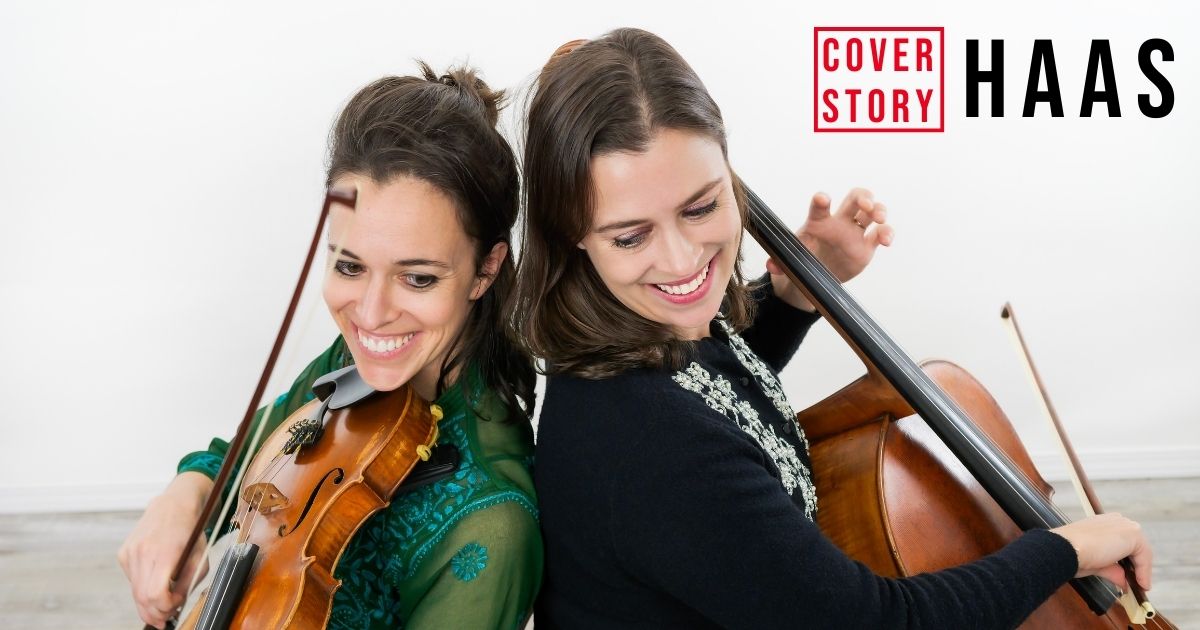
Cover Story: Brittany and Natalie Haas on Sharing Melody, Rhythm, and Space

What changes about the oft championed phenomenon of “family harmonies” when the voices entwined together are not voices at all, but strings, plucked and bowed and fingered? It’s a question that immediately comes to mind as you hear the first notes of Haas, the recent duo album released by sisters, fiddler Brittany Haas and cellist Natalie Haas. It’s also a question that immediately came to mind as we chatted via Zoom last month.

“I feel like I connect more deeply with Brittany than anyone else from a rhythmic standpoint,” Natalie responds after a thoughtful pause. “That’s not so much the family harmony thing, but it does play into everything.”

The familial blend they’ve established as adults – in many ways, Haas is their first deliberate and intentional music making as a pair since their teen years – defies any and all boundaries and language, as they swap melodic hooks and call and respond and toggle between accompanying and leading, adding texture and tenderness or vigor and enthusiasm. Their interplay is as comfortable and cozy as you would expect these two sibling virtuosos to be together, their reunion the not-so-subtle underpinning that makes the entire collection of tunes and sets sparkle.

This is family harmony – and family rhythm – but unspooled, complicated, and set to a new acoustic, Celtic, chambergrass sound that defies categorization. Haas also gently and kindly stands in implied opposition to more masculine, performative, and competitive musicians and groups in similar spaces. It’s a brilliant, crave-able album that showcases how much can be accomplished musically when one’s goal isn’t just the cooperative music one creates, but the space one opens up with another in which you cultivate that cooperative music.

I wanted to start by just asking y’all how long it’s been since you put out music together, or since you’ve been in like a creative space together? How does it feel to be “reunited” in this way?

Natalie Haas: We sort of played together as kids in chamber music groups and youth symphony together. And we went to fiddle camps together – that was how we got excited about maybe doing music as a career. That would sort of continue throughout the year, because the way for us to continue all that excitement and motivation that we got at fiddle camps was for us to play together.

We did the odd gig together as teenagers, like farmers markets, school performances, and that kind of thing. Then we sort of went our separate ways and we’re both very busy doing our own thing, but we took every chance we got when other people would hire both of us to be on their gigs. We always said yes because we just wanted to hang out with each other. So this is like the first time that we’ve done anything like this and it’s pretty exciting.

The way that your musical paths have diverged, they don’t feel like they’re that separate from each other. It feels like the vocabulary that you both draw from is very similar. When you started sitting down to think about doing an album together, what changed about the way that you thought about music separately or together? 

Brittany Haas: That’s a cool question. I think, it all felt kind of new in a way, but also so familiar, you know? Because it’s us. We have made a lot of music together. I think on my side, it was really cool because Nat already had a bunch of tunes. So some of [our collaboration] was just like, schedule based, it was like, “Okay, we know we want to do this thing, because we’ve been getting odd gigs.” It was really like motivated by the fact that we had shows coming up, and that was a reason to be like, “Let’s have new material for that.”

Then we were like, “Here’s our days when we can put together material.” Nat had just done a writing session where she had all this new stuff ready to go. These are the tunes that she’s cranking out and they feel very much like they come from something or some place that is like so near and dear to me, because it’s from our shared fiddle-camp upbringing. That’s like the source, the well, where the tunes come from, even though they’re new and different. It feels like very homey, I guess? The kind of tunes. And then I think we’ve just both grown a lot over the decades as musicians and as arrangers. We like bring more stuff to the table than when we were teenagers.

NH: I should certainly hope so! [Laughs]

That is the goal. [Laughs] That leads really naturally to my next question, which was going to be about material curation, especially because you both have demanding schedules that kept you apart, I’m sure, during the album creation to some degree. What was it actually like when you were like setting aside that time, like you’re talking about, to get together to make the music? What was the curation process like? It’s all originals, but one, yes?

NH: Yes. And yeah, that’s the nice thing about us both being busy is when you set aside a block of time, that’s all you are focused on. Brittany had all these amazing musical ideas and made all of my tunes better the minute she got her hands on them. The arranging process, it was pretty easy, because we’re both, comfortable switching back and forth between roles. I was just amazed at how much we got done in such a short amount of time, both in the arranging process and in the recording process. It all felt very easy. [Laughs]

BH: We did the bulk of it together, I think we had like a week or maybe slightly under a week when we first met to gather the material. And wasn’t that before we even knew we were making a record then?

NH: Oh yeah, that was preparing for a tour. Our first adult sister tour.

BH: No, no, no – second.

NH: Oh, second. Yeah! Because we toured Ireland. Right. We were playing all of these trad tunes, our shared repertoire from our of teenage years. And then for [Haas], we decided to make it all original. For the most part.

BH: Do you remember the moment when we actually said, “Let’s record this”?

NH: Uh… well, I think we toured it first. Then Brittany brings her handheld recorder to all of those gigs and recorded everything. We listened back to it and decided that it was actually pretty good and that we should make something of it. I think we had another tour coming up, of Australia, and we decided it would be fun to have something for people to take away with them.

BH: At that point, we didn’t meet again until a few days before the studio. We had arranged the material and toured it, so we kind of had it under our hands pretty good. And then a long amount of time passed, but during that time it was good to listen back to stuff and decide what we wanted to change.

We had like a couple days of rehearsals and revisions. That was from listening and emailing and saying like, “I have this idea about this. What do you think of that?” Then we had like three days in the studio before it went back to email, because Natalie lives in Spain and we’re also both busy doing stuff. So it was emailing like, “Do you like this take?” and, “Is it okay if I edit out the second B part on this?”

Did you trip into or over any sort of feeling like, “This reminds me of when we were playing together as kids” or did it feel like you were getting back on the bicycle in a way?

BH: I’d say mostly yes. It’s just really easy. I think in other collaborations, people aren’t always so willing to just try anything. We have this basis of, “I love you no matter what, and even though you’re being really annoying and you’re asking me to do something I don’t want to do, I’m still going to do it, because might as well.” It’s an ease of communication, which I think mostly comes from family. [Laughs]

NH: We were never really a band as kids. We did the odd gig, but it was always just for fun. Our parents weren’t pushing us into performing together. So yeah, no bad memories, really, associated with playing together as kids. But we do have the ease of having this shared history of fiddle camps and learning from the same kind of mentors.

BH: Since we’re both like primarily collaborators, this project was like running our own band. As adults we’ve both come into our own and we’ve probably become more opinionated about musical things as a result of that. So it’s fun to meet again where there’s a lot of give and take.

What do you think of the term, “chambergrass?” Is this album chambergrass? Is that even a thing?

BH: I like the term, but I’m not sure it applies here. I also don’t mind it applying here. I guess maybe that wouldn’t have been what I would have gone to, because from my perspective, it just feels so much more Celtic. It’s still in that sort of “past of American music,” that’s more over there in the Celtic Isles. It doesn’t feel very grassy, but I mean, that’s a part of me as a musician. So, it’s not like it’s not in there.

NH: It does feel like chamber music to me. Yeah… I’m not familiar with all of the myriad grass terms. [Laughs]

BH: We grew up going to Valley of the Moon Fiddle Camp, where there were a lot of genres meeting. So the boundaries were very blurred, and both of us having worked with Darol [Anger] from a young age, he’s all about blurring and negating the idea of boundaries. It’s everything, it’s all of that, it’s all the influences and where they’re going. I know the current Celtic world less than Nat does, but it seems like a lot of the forward-thinking, new tunes on stringed instruments are happening in chambergrass, the new acoustic realm, so it’s definitely an influence on both of us.

NH: It does have a Celtic bent, but it is Celtic from an American perspective – because we’re American. I’ve listened to a lot of stuff in the new acoustic realm – like Brittany said, all of our influences are coming out, and it’s hard to define a genre.

BH: I think Nat, for all of her “I don’t totally play bluegrass” sense of self, she can and she does sometimes. Some of the bluesier tunes that she writes lend themselves to that area.

You make very in-the-moment music, there’s a lot of improvisation, there’s a lot of dialogue, and this kind of music can often feel very – it’s silly to say this cause you’re literally performers – but it can often feel very performative and like there’s a lot of hubris in it. I also feel like new acoustic music, newgrass, jamgrass, and that sort of “Let’s jam out together, let’s be in the moment together!” music, it can often feel really masculine and toxic. How do you go about creating this space you’ve made together, to have those moments, to be together and present and making music, but it doesn’t feel like you’re being self-absorbed or self important?

BH: That is something I think about when I’m listening to music – and sometimes when I’m playing it. Sometimes I do feel like I’m uncomfortable, like that’s not something that I want to do. Even though you think that that’s what the music calls for in this moment, it can feel a little bit too masculine.

It’s like, “No, I don’t want to take a really long solo there.” I think I’m embracing that it’s okay to say, “No, I’m not gonna do that.” It’s a tricky one, because a lot of our heroes in that realm of creating this newer music, they’re men, and that nature is informing the music that they’re making and the way that they’re arranging it. It does have that hubris thing built into it. On some level, that is important and it does work well, for stepping into the moment and taking a great solo. You kind of have to have that attitude. But, it’s not necessarily masculine or feminine. Like it doesn’t have to be either one. It could be both.

What we’re trying to do, it’s a little more tune- or melody-based than based on soloing, so it lends itself well to a tight arrangement. That may not be the right term, because it still is loose, there still is a conversation going on. But, if there is a solo it’s pretty short, it’s this little thing we’re going to do to give a breath of fresh air here. It’s not like, “And now, we will rip for 50 more bars!”

“And now everybody look at me!”

BH: Yeah! I think in a duo especially, because we’re very equal and we like sharing, that’s just kind of part of the vibe. Even when Natalie’s filling more of an accompanist role, it’s still such a powerful, interesting sound. It’s so varied that it doesn’t fade into the background. It’s super interesting all the time. It’s like both voices are very equal, even if mine is higher.

NH: It’s interesting because, like Brittany said, a lot of our heroes are men. That’s definitely a generational thing in the Celtic music world, because like, the people that we grew up sort of – I don’t want to use a phrase like “hero worshipping” – that we admired and wanted to copy were mostly men, with a couple very key exceptions. But then, my generation in the Celtic music world is almost exclusively women. There are some men doing it, but it’s very different than the bluegrass thing.

Also like Brittany said, soloing is not as much a part of it. That changes the dynamic a little bit. But it is kind of a melody>accompaniment hierarchy going on. But I wouldn’t say that that’s necessarily a male thing, I don’t know.

As Brittany said before – and I hate to associate this with just feminine energy – but both of us coming from being collaborators in our other projects rather than soloists, per se, you could say that that is the more feminine approach, maybe, to music making. It does feel very equal because the melody playing is getting passed back and forth all the time. And it does feel very conversational, even though the soloing thing is not as prominent as it might be in some other genres.


I think that’s part of why you can listen through y’all’s entire album and it doesn’t feel stale, it doesn’t feel boring, while it also doesn’t feel like it’s trying too hard. It doesn’t feel like you guys have something to prove.

NH: That’s part of the thing with having done it at this point in our lives, it doesn’t feel like we have anything to prove anymore. We’re doing it because we want to, not because we’re trying to prove anything to the world.


Photo Credit: Irene Young
Alison Brown and Sierra Hull Swap Licks on Classical-Flavored Tune

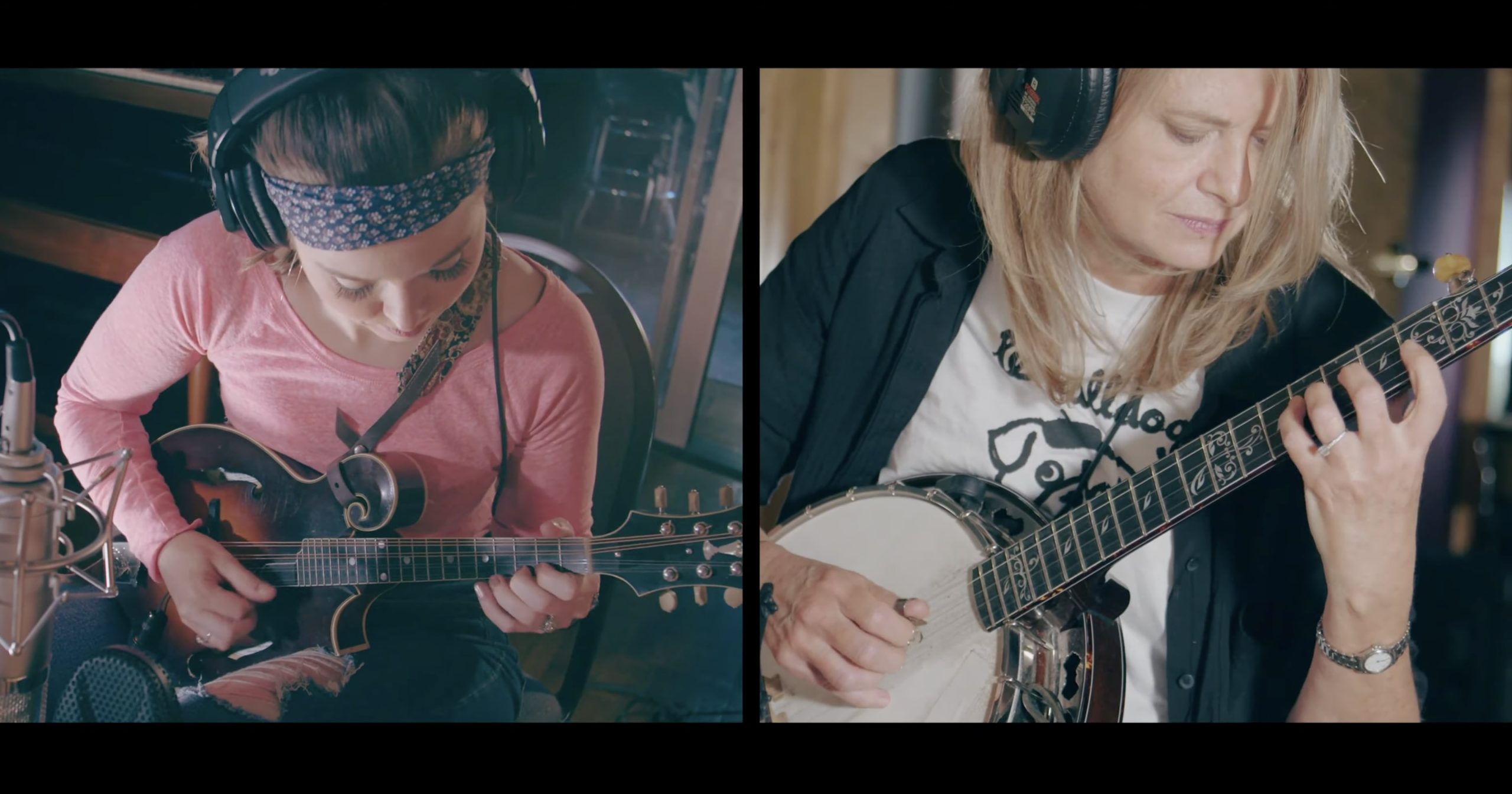
Two of the most accomplished musicians in bluegrass – certainly two of the most notable women players in the history of the music – have joined together on a mind-blowing chamber-grass duet. Alison Brown, the first woman to win the Banjo Player of the Year Award from the IBMA, and Sierra Hull, the first woman to win Mandolin Player of the Year, joined forces on Brown’s recent album, On Banjo, and a classical-influenced original tune, “Sweet Sixteenths.”

Both Brown and Hull are virtuosic players adept in many styles and “Sweet Sixteenths” shows just how effortlessly they bring bluegrass improvisation and energy into what’s regarded as a more stoic format, creating an exciting, jaw-dropping, impossibly complicated – yet, totally down to earth – sound. Their synchronicity is just as impressive, inspiring a sort of wonder that chamber-grass is well known for: How much of this is planned out, and totally written-through, and how much is off-the-cuff and in the moment?

Bluegrass pickers are so well equipped to confound and delight us with these sorts of questions and that fact is no more apparent than in this live, studio performance video by Brown and Hull. We hope you also enjoy “Sweet Sixteenths.”


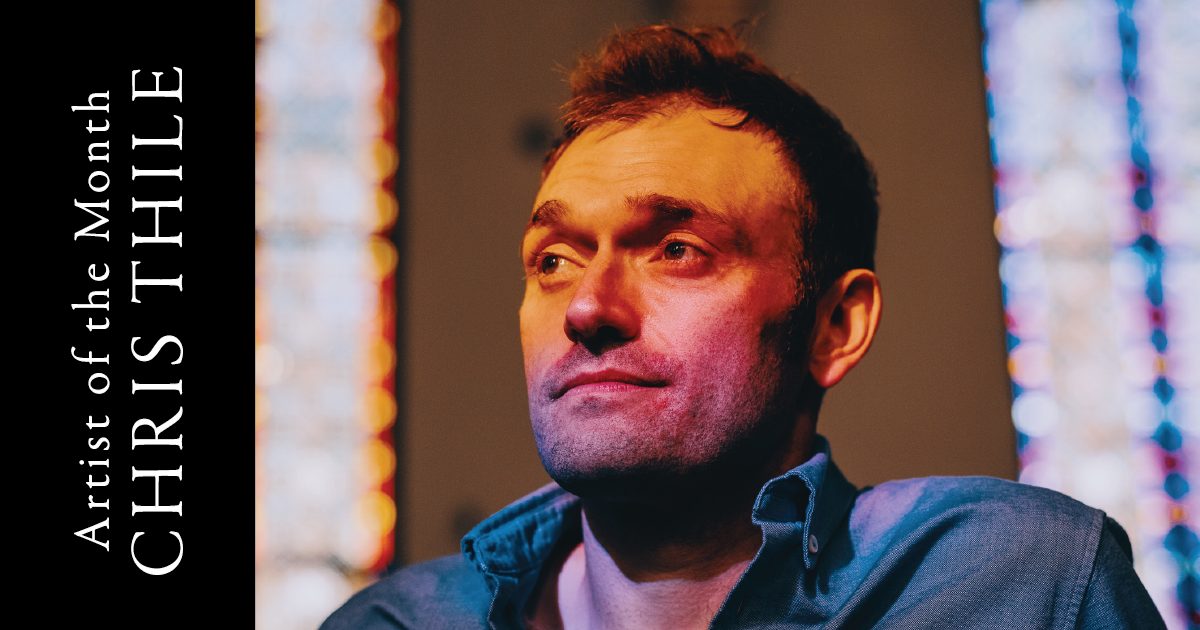
Chris Thile Considers His Community and Christian Upbringing in ‘Laysongs’ (1 of 2)

For a while, Chris Thile might have been the busiest man in bluegrass. The former public radio host has snagged four Grammy awards and a prestigious MacArthur “Genius Grant,” all the while maintaining his status as a founding member of Punch Brothers, the Goat Rodeo Sessions, and Nickel Creek, collaborating with plenty of other Americana firebrands along the way. But on his latest album, Laysongs, Thile slowed down.

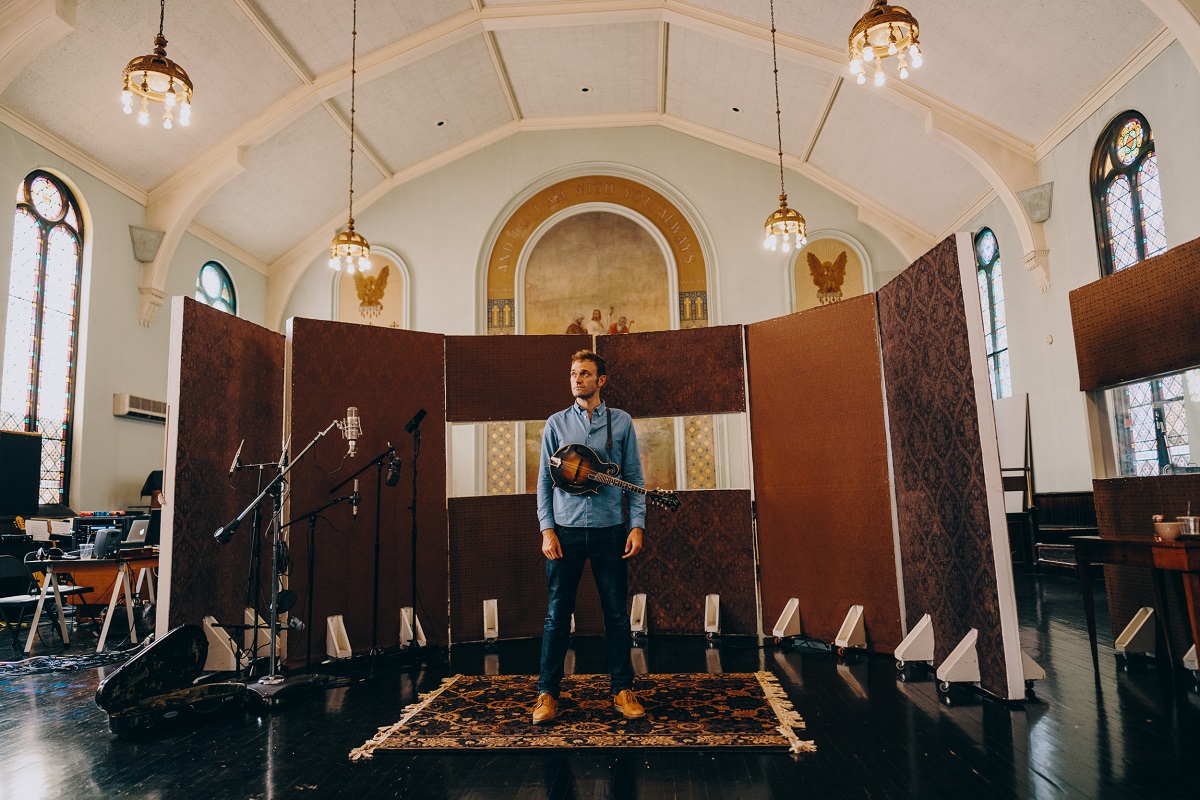
A solo album in the truest sense — it’s just Thile and a mandolin, after all — the album was recorded by engineer Jody Elff at Future-Past, a studio housed in an old church in Hudson, New York. The setting was a perfect match for the religion-influenced album, which ranges from the biblical passages of Thile’s Christian upbringing to mythological ideas about gods and gathering from the Greeks and the Romans. Below, in the first of a two-part interview, BGS caught up with Thile about recording the new album, finding inspiration in memories from his adolescence, and the dearly missed joy of a packed concert hall.

BGS: You recorded this album in a church in upstate New York. What did that atmosphere lend to the album, whether purely sonically to the recording or more generally as inspiration?

Thile: That was such a stroke of luck in a time that felt like it was a little thin on luck overall. [Laughs] We were weathering the earlier stages of the pandemic in Hudson, New York, and someone told me about a church right in the middle of town that had been converted into a studio. I went and checked it out and played a few notes in there and absolutely loved it. It’s not the most awe-inspiring church, but there were stain-glassed windows and very odd paintings that all brought me right back to my childhood.

I never attended a grand, elegant church growing up. This was still a beautiful church, but it was helpful that it wasn’t, y’know, St. Patrick’s in downtown New York — that it had a whole lot of that whole human-beings-just-trying-to-do-the-best-with-what-they-have kind of a vibe. Getting to be there was really helpful in terms of getting into character for the songs that I was recording. So much of the record comes from solitude… Actually, the solitude of the pandemic felt a lot like the solitude of spending one’s adolescence in a church pew.

What do you mean by that?

I spent so much of my adolescent time in church wondering if I was the only person there who was doubting the existence of God, or who couldn’t not think about how attractive the girl two pews over was. “Wait, I’m going to hell now probably, right?” Or, “Wait, is there hell? What is going on?” The pandemic thrust me and a lot of other people that I know back into that sort of lonesome, existential monologue: “Has every single choice I’ve made up to this point been wrong, perhaps?”

The sort of strange dialogue that we have with ourselves late at night started reminding me of those weird dialogues I would have with myself in church. I could well imagine at 16 years old sitting in this pew at Christian Community Church in Kentucky. I could well imagine there was a little angel and devil on my shoulder kind of duking it out. The centerpiece of the record, “Salt (in the Wounds) of the Earth” is very much a grown-up version of that feeling—but you know, also, how grown-up, really? I’m 40 now, and so much of the time, this felt like a rebirth right back into adolescence, smack in the middle of the most awkward period of our lives.

I loved being in that church for all those reasons. It was so easy to put myself in the headspace I was in when I had written the lyrics or when I discovered the power of those songs that I didn’t write that are on the record. It just lent a certain weight to those performances.

Why did it feel like the right time to approach religion specifically here? Was there anything you felt you had to tread carefully around?

If there’s a silver lining of this whole incredibly disorienting and distressing affair, it’s the chance to gain a little context: to have been forced to take a massive step back and to take a look at our lives, whether we wanted to or not. One of the things I saw, in the midst of missing the community that I’d inserted myself into, was that community often ends up acting in ways that are similar to my experience of organized religion.

How so?

A lot of people who grow up with religion and veer away from it at a certain point are veering away from what they — what we — perceive to be a poisonous exclusivity, or habitual exclusionism. I think that’s one of the main turn-offs for my generation on organized religion. You start meeting people who aren’t welcome in the flock, and you start wondering why. Having taken a step back, I see the same kind of exclusionary behavior in my current community. If you take a look at your own community, it’s probably full of people who think a lot like you do, and who feel very similar to the way that you do about whatever’s going on right now, and who live in a very similar way. I worry that we, as human beings, are trading one messed-up thing for another messed-up thing.

I adore community. I love it so, so much. For instance, the Telluride Bluegrass Festival: I feel like those are the high holy days of my acoustic music-making community, and to be deprived of them is so painful. You feel cast adrift, untethered. I can’t wait to get back and I’ll never take that for granted again. But I also want to go back there with my eyes wide open as to whom I have habitually not welcomed into that community. What barriers am I being a part of unknowingly placing between people and that community that I love so much? And what harm is that doing that community?

Tell me about how that harm appears on the record.

There’s a lot in the record about coming together, but there’s also a lot in the record about our compulsive need to compare ourselves favorably to other people. In an effort to feel better about ourselves, we look for someone to feel better than. That’s what “Salt (in the Wounds) of the Earth” is about. I took a look at this thing that had been a big deal for me in my adolescence, The Screwtape Letters by C.S. Lewis, and I was wondering: What would those demons be up to with me, right now? They would be preying on this compulsive desire to feel good about myself. One of the easiest, dirtiest ways to feel better about yourself is by looking at someone else and going, “Well, I’m better than that guy.”

In “Laysong,” the lyrics mention “drown[ing] out the enemy.” It made me wonder what it is that you consider the enemy — maybe it’s this comparison trap, maybe not — and how you drown it out.

When I wrote that lyric, the enemy was he or they that would talk loudest regardless of whether they had the best idea. “I’m gonna say whatever I have to say louder than anyone is saying anything else, and therefore it will be all that’s heard, and the discussion will be on my terms.” That felt like the enemy. And at that moment, in that lyric, I had to write it. It fit with the shape of the melody. The idea of drowning out the enemy — I couldn’t shake it, even though it’s not what I believe to be right. [Laughs] Hopefully you can get a sense of that in the performance, that it’s coming from an angry and not altogether balanced place. In that moment, I was pursuing the idea of drowning out the enemy with beauty, with restructuring, with anything, really. Let’s get a love song, let’s get a hard-times song, anything but a song about the front page of the newspaper.

The record starts there and ends with the Hazel Dickens song, “Won’t you come and sing for me.” When I get back into the concert hall, there’s no way I’m not ending my solo set with that song, the performance is going to be sincere—especially at the end of all this solitary music-making. [Laughs] But “Laysong” is very much like an altar call for the record. “Here’s what we’re gonna discuss.” Who knows where we’re gonna come out? I know that when I listen to a record, there’s a collaboration that starts there. I would love to imagine that happens when people listen to my records, too—that it starts a conversation. I can’t wait to feel that in the concert hall. No piece of music is done until you [the audience] hear it. And I am so dearly looking forward to that completion of this little bit of work.

Editor’s Note: Read the second half of the BGS Artist of the Month interview with Chris Thile.


Photos: Josh Goleman

STREAM: Christopher Jones, ‘Bach: The Goldberg Variations’

Artist: Christopher Jones
Hometown: Morgantown, West Virginia
Album: Bach: The Goldberg Variations
Release Date: May 7, 2021

Editor’s Note: Christopher Jones is director of the Appalachian Music Ensemble, a performing group at West Virginia Wesleyan College. He got his start, however, in the classical world. He holds a bachelor’s degree in cello performance, and a master’s and doctorate degree in music composition from West Virginia University. For his newest project, he has reworked Bach’s iconic Goldberg Variations for mandolin, banjo, and guitar.

In Their Words: “This project is something that I had thought about for a long time. Not necessarily that I wanted to record it myself, but that it was something that I really wanted to hear. When everything shut down last year and the world was upended, I made a split-screen video of the ninth variation, and then the second, and realized I might as well do a studio recording of the entire thing. I think I turned to this piece as something that had that satisfying and comforting sense of order and normalcy, even though the scope of the whole thing can feel chaotic. Each variation is an exercise in perspective, begging the question of ‘How many different ways can I look at the same problem?’ It was a lens to try and make sense of things.” — Christopher Jones


Photo credit: Lauren Smith

From Goat Rodeo to Songs of Comfort, Yo-Yo Ma Believes Music Builds Bridges

The world’s most famous cellist Yo-Yo Ma is spending the pandemic at home in Cambridge, Massachusetts, with his family. It has been a situation that he describes, rather humorously, as being an adjustment for everyone. “Two-thirds of my marriage has been on the road. Forty-two years and suddenly my wife sees me home every night, and every day and every morning.”

Yet he says the experience has been a real blessing, too. “All the tensions of being home and preparing to leave, or coming back home to recuperate and then leave again, are all gone,” he explains by phone, before adding “replaced by, of course, the incredible fractures and ruptures in our society.”

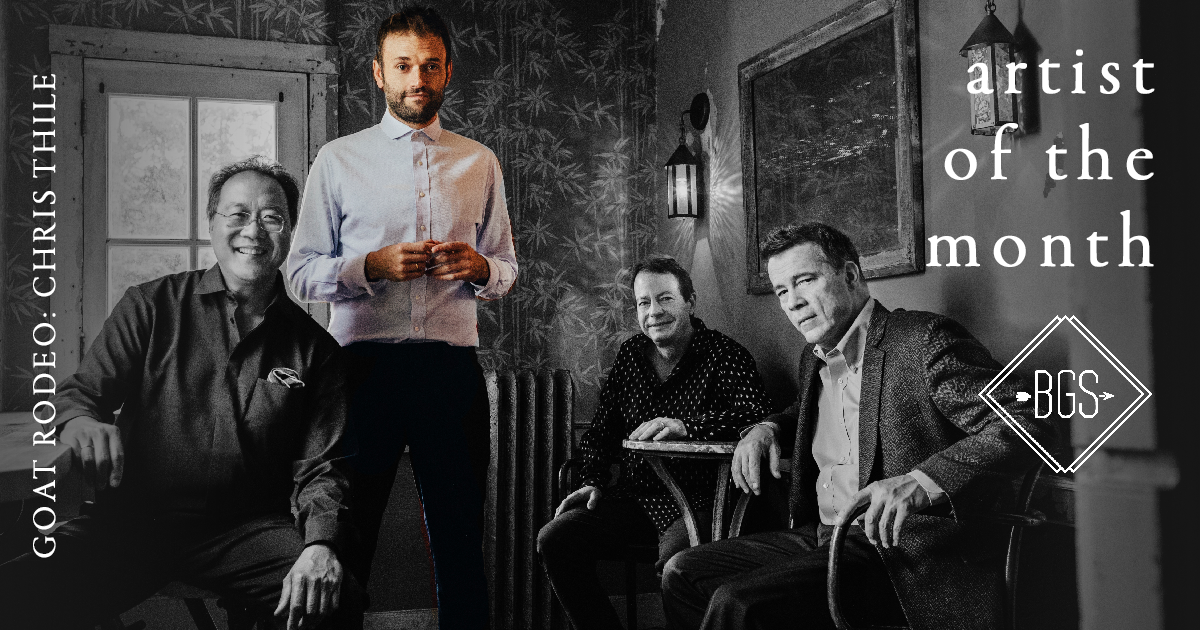
Besides pondering a “tsunami of crises,” Ma talks about the joys of getting the band back together — a lineup informally known as Goat Rodeo, which also encompasses Stuart Duncan, Edgar Meyer, Chris Thile, and special guest Aoife O’Donovan. This Artist of the Month interview is the fourth of four installments as BGS salutes the incredible and iconic musicians behind the ensemble’s second project, Not Our First Goat Rodeo.

BGS: Like the first album, Not Our First Goat Rodeo was recorded at James Taylor’s studio in the Berkshires. Was there a comfort level about returning there?

Totally. The studio is aesthetically beautiful. It is right there in the middle of the Berkshires, the middle of the woods, and it’s a barn that has been built for that reason. We work hard. We play hard. And going back to it is fabulous because everybody in the band is so busy. So, just to get the time from their busy lives to get together is a feat, but when we get together, it feels like we never left. So, add to the great acoustics and the set-up of the barn, another added feeling of “the band is getting back together again.”

Since it was in August, was there a summer vacation vibe?

It was like camp except we weren’t 12 years old. [Laughs] Adult camp! We spend all day together. We have meals together. But it was also work. I have to say that Edgar, Chris, and Stuart worked like dogs, way into the night. Working on scores, working on correcting things. They worked really, really, really hard, but we also had a really good time.

Although the four of you don’t play together often, it seems that a high level of trust exists within the group and with the audience.

That’s such a good question, because you are talking about both the external and internal relationship of building trust. It starts with the trust we have in one another, interpersonally. Between Chris and Edgar. Between Chris and Stuart. Stuart and Edgar. Edgar and me. If you were to draw a networking line between all of us, and Aoife included, it’s trust on every level. Trust and respect. I think the two go together. In that, if someone has a deep opinion about something, there’s going to be deep respect for that. We might try it and it might evolve into something else. There’s never an argument…

The trust also comes from the philosophy: it’s not “It’s my way, your way or the highway.” It’s more like “I know certain things and you know certain things and I love what you know and you like what I know and respect what I know.” So we are just working it out all of the time.

So that allows for the freedom of creativity, to follow a musical idea and see where it takes you?

You know, that other thing about that is where you place your ego. We live in a world where some people think their ego walks in front of them. And [with Goat Rodeo], every one of us has a pretty strong ego because otherwise we can’t go and perform. But the egos never lead. We actually make fun of our own egos or each other’s.

Another thing is, we all have strengths and vulnerabilities, [but] we never, ever pounce on anybody’s vulnerability. I’m the oldest guy there. I’m full of warts. You can probably make fun of me until the cows come home but I think they treat me nice. There’s respect but they never step on someone’s vulnerability. It’s like a great relationship — a great domestic relationship. We didn’t get into pushing buttons. We’re so clear about the work that needs to be done. That’s how you build trust. You accept the whole person, and you treasure the parts that they excel in. You don’t tramp on weaknesses. But while we have a lot of fun!

What is one recording that ranks as a G.O.A.T. (greatest of all time) for you?

When you ask a question like that, I can’t help but think about different time periods. If the well-lived life is the life that has been explored, then obviously at all times in your life you will have had different influences that have sparked new interests.

I will give you a musical example of recent vintage. There’s this 23-year-old musician named Jacob Collier from England. He’s almost self-taught. He sings. He plays dozens of instruments. He goes and creates. I find more and more as I get older and older, I am just stupefied by young talent in a way I never was. So someone like Jacob Collier comes along and he does harmonies in ways that are so astounding. I think he studied with Herbie Hancock and his level of inventiveness is so astounding. I feel like Salieri hearing Mozart for the first time. This guy just appears and he can spin and juggle 36 balls in the air while he’s talking to you. I just can’t take this! It’s just so amazing!

Chris is someone like that. Chris has that kind of mind. And I think working with Edgar gives me that sense of him. Because here’s this mind who is a perfectionist mind, in that he works things out in the perfectionist mentality where the abstract is really close to the reality. Usually I have an image of something and I’m going to translate that into a feeling, into a sound, and here it is. Edgar likes manipulating things in the abstract. That’s hard to do, because most of us like to work in the visible world, [which is a] tiny part of the spectrum in the universe.

So the invisible world, whether it is the larger universe or the micro universe, is something that most of us can’t experience… To go to trusting the abstract world, which we can’t see, and say that it’s real is very difficult. And so the question is, What is our faith in the invisible? That’s a big question. For me it is not a political question. It is a human question. As in, who do you trust and on what subjects? That’s very difficult because the world has become so complex.

And the world is so immediate and immense, and you are inundated from so many sides.

So, I grew up in three cultures, and each culture said, “We are the best!” I grew up as a 7-year-old — that is when I came to the States — saying, “Are you all crazy? You can’t all be right because you are claiming you’re the most right and that’s not logical!” So I had to figure out what that means. Just like, is bluegrass music the best? Is classical music the best? Is jazz the best? Is R&B the best? Is hip-hop the best?

I decline to think that way because that just gets me in trouble. Just because it doesn’t make sense. It doesn’t make sense logically. It doesn’t make sense to me sociologically. It doesn’t make sense to me as an American citizen because I take pride in all of the inventions we have made to the expressive world. And every new invention we have is a combination of a number of worlds.

You posted some music performances to your pandemic-inspired project, Songs of Comfort, to bring a little solace to people. How gratifying is it that it’s taken on a life of its own, with people around the world uploading videos?

One of the things that I have found out in this first trimester of the pandemic is how deeply people need one another. How deeply they need community. After lockdown, we see the beaches fill up, the bars fill up, and some people say that the economy must move. It’s totally understandable that we have that drive to be together. My way of thinking about it is to say, let’s be a community given the means we have.

In music, in service, it is always asking the question, “How can we help?” So it came from that impulse. That is a very natural impulse, which so many people have added to, or responded to, because we are all going through different versions of the same thing. We’re losing people. We’re stressed. We can’t find food. We can’t earn our living. We can’t plan. We can’t move around. We can’t be with one another.

But guess what? Music travels lightly. This is where the ephemeral is an advantage. It’s not something that needs to be moved by FedEx or a delivery person, but something we can transfer anywhere we want. It goes through walls. That’s why I say, in culture, music builds bridges because the bridges are not physical. Music doesn’t build walls; it builds bridges, because I can send you a link and there you have it.

I relished not only doing Songs of Comfort, but being able to Zoom into hospitals or getting to play for one patient. To send some music to one specific person to say, “I hear this is what you are going through. I’m so sympathetic. I’d like to send you this piece of music. Here it is. I recorded it on my phone.” And then send it to someone. That’s pretty personal. That to me is the essence of the aesthetic experience.

(Editor’s note: Read the remaining installments of our Artist of the Month interview series here.)


Photo credit: Josh Goleman

Chris Thile Keeps His Goat Rodeo Bandmates From Falling Out of Trees

For more than a quarter of a century, Chris Thile has been constant force in the American music scene — and he’s still shy of 40. The musical polymath always seems to have some project going on: whether as a duo (pairing most prominently with both Michael Daves and Edgar Meyer), a trio (Nickel Creek), quartet (Goat Rodeo), and quintet (Punch Brothers). And he has won Grammys in all of those groupings.

Last summer, Thile rendezvoused with his Goat Rodeo brethren — fiddler Stuart Duncan, cellist Yo-Yo Ma, and bassist (and fellow MacArthur “Genius Grant” honoree) Edgar Meyer — to record their long-anticipated sophomore effort, Not Our First Goat Rodeo, which came out in June. What Thile finds is so special about this collaboration is that it features musicians who are, he says, “excited by, and invigorated by, discomfort. Like a good stretch. I think this project is defined by the willingness of its participants to stretch outside of their perceived comfort zones.”

This Artist of the Month interview is the third of four installments as BGS salutes the incredible and iconic musicians of Not Our First Goat Rodeo.

In a BGS interview a couple years back, you said, “I think any album worth listening to is a concept record.” Was there a concept or an overarching theme behind the new album?

Thile: I don’t know if I would, at this point in my life, back myself up on that no worthwhile album has been made without a concept. If indeed I said that I would walk that back just a touch. But the vast majority of records that have made a serious impact on me have had some sort of perceptible topics of conversations, governing principles, or thematic glue. With instrumental records, the themes start to become the play of contrasts and similarities between the individual participants, and the characteristics they assume in concert with one another.

The two actual lyrical vocal songs [on Not Our First Goat Rodeo] — there’s one other vocal song that has no lyrics — are both meditations on work/life balance. They both zoom the lenses in on the less-written-about parts of the relationships. We tend to write songs about the beginnings and ends of relationships, but we don’t necessarily write songs about the middle. Because the beginnings and ends can be so explosive. Hopefully, if your relationship is successful, your relationship will be in the middle until one of you dies.

Certainly the five of us together often talk about work/life balance. How our families are. How we are doing in context of our families, and how our families are doing in the context of our various endeavors. Lyrically that was something that Aoife and I talked about writing in the midst of those kinds of discussions and thoughts. Instrumentally, the themes are more abstract, but no less present. This project has a built-in [structure] of Stuart, Yo-Yo, Edgar, and me bouncing off of each other. Like, what’s it going to sound like when you smear those four people together? And when you get Aoife into the mix, it becomes a whole other thing.

Is writing lyrical songs for Goat Rodeo different compositionally than in other songwriting situations?

It is different. Since the project is so instrumentally focused, it’s ultimately an instrumental project that happens to have a couple of vocal moments in there. We came up with the music together, then Aoife [O’Donovan] and I went off, having discussed the various things we wanted to write about. But when we are writing that music, it is still kind of like instrumental music that happens to have some vocals on it. “The Trappings” being slightly more like you might expect a vocal song to be. “We Were Animals” came right in sort of the middle.

“Every Note a Pearl” was very much an instrumental, then we wanted some more instruments that could slide around. Also, we wanted some more stuff [happening] while Edgar was pizzicato and Stuart playing tenor banjo and me on the mandolin. We wanted Yo-Yo to have some friends in Sustaining Instrument-land. So, we felt, “OK, Aoife and I can help with that.” But we were never tempted to add words to that one. Because the project is driven by instrumentalizing, the vocals are more balanced in terms of where the interest is coming from. Often, if there are vocals in a piece of music, we are focusing on the vocals, and in this music we are not necessarily playing to those expectations.

The voices then are like fellow instruments?

Yes, absolutely. And they’re not given a place of greater prominence than any one instrumentalist is.

Can you talk about Aoife’s unique contributions to Goat Rodeo projects?

When we first did the project, it was an all-instrumental project. And then, I think it was Yo-Yo’s idea. During our practice, he said, “Chris, you sing. Why don’t you sing a little bit?” And I said, “OK.” It was pretty organic. It was like, “Wouldn’t it be lovely to have another singer on these ‘singing songs’?” Aoife and I had never done anything officially together. It had always been at music festivals. Late-night jam sessions. Those type of things. I think both of us had so much fun singing together that I instantly thought of Aoife and I sent everybody recordings of her. Everyone was into it and off we went. It was still with the full knowing that it was an instrumental record.

That fits in with the group’s general philosophy of not conforming to any genre or expectations — to include anything into the music that makes it work.

That’s absolutely right. Nothing’s off limits. If one of us is interested in something, then it’s like, “Hell yeah!” I love that this record can go from something like “Every Note a Pearl” to “Not for Lack of Trying,” and the idea we’re going to be playing around with sliding slowly from one diatonic chord that is well within diatonic harmony to another — but we’re going to pass through all the points along the way, just very slowly. As if the music is melting/spontaneously generating.

And that’s a thing we’re going to pursue — we’re going to see what happens when we chase a thought. More so [on this album] than the first one, actually. This time through the composition process, more was on the table. We had already pursued our first instincts. It was time to really open up to what the possibilities were — having a foundation to begin with in the form of the first record.

Goat Rodeo features four exceptional musicians and it feels like you all try to bring out more in each other.

I love the ways in which it challenges me. I think it challenges each one of us. Maybe the defining characteristic of this ensemble is that what might stretch one of its members might be the absolute comfort zone of another. What might stretch Stuart as far as he’s ever been in one direction is a walk in the park for Yo-Yo. And vice versa. What might be absolutely stretching Yo-Yo to the point the farthest reaches of his exploration is like falling off a log for Stuart.

I love that aspect of this project. Something that’s super easy for me would be hard for Edgar. And something that’s super easy for Edgar would be hard for me. It runs through the whole ensemble like that. So you always have a guide. One of us can always teach the rest of the class about stretching ourselves as musicians.

Even within a piece.

Oh absolutely. Who’s the master of a given concept can switch throughout the course of a piece. And the learner can instantly become the master. And the master can become the learner, with the idea that we all get better at it as we go along. I love hearing the sound of when one of us is out on the limb right now but one of us totally has it. Don’t worry, that person is going to make sure you don’t fall out of the tree. Because you know that they will return the favor.

What is one recording that ranks as a G.O.A.T. (greatest of all time) for you?

My world was totally blown open by Kendrick Lamar by How to Pimp a Butterfly. I think that is an extraordinary work. Talk about an album hanging together structurally. I think that is just a master class in developing one theme. I still have so much to learn from that record. That’s on the list. That’s definitely up there with the greatest records ever. It’s still opening my ears. The way I understood it when I first heard it is completely different from how I understand it now. One of the big differences is that I understand how little I understand about it. I think the best records do that. They open up your worldview — not just your musical view.

(Editor’s note: Read the remaining installments of our Artist of the Month interview series here.)


Photo credit: Josh Goleman

As ‘Goat Rodeo’ Returns, Edgar Meyer Makes Every Three-Note Chord Count

Lucky is how Edgar Meyer says he feels that he and his Goat Rodeo collaborators — Yo-Yo Ma, Chris Thile, and Stuart Duncan — were able to get together for the ensemble’s second album, Not Our First Goat Rodeo. They weren’t so lucky, however, when it came to their tour, which was supposed to start in August. “That’s not going to happen right now,” he tells BGS, adding, “We were looking forward to cherry-pick from both records.”

Along with their 2011 debut, which won two Grammy Awards, the Goat Rodeo albums represent two of the many high points in Meyers’ illustrious career. Renowned for his artistry on the double bass as well as for his compositional skills, the award-winning musician has been honored with a MacArthur Fellowship and the Avery Fisher Prize — the only bassist to have won either. Meyer also might be the man most responsible for Goat Rodeo’s existence. Having collaborated with both Ma and Thile, he introduced them to each other; later he and Thile recommended Duncan to Ma as the one to round out their quartet.

This Artist of the Month interview is the second of four installments as BGS salutes the incredible and iconic musicians of Not Our First Goat Rodeo.

BGS: Was there less preparation time for Not Our First Goat Rodeo than for the first album?

Meyer: I’d say in terms of learning how to play the parts, yes. But Stuart, Chris, and I spent 20 days together writing and that’s very similar to the first one. That’s probably more important than learning how to play it. We were not particularly well rehearsed or knew the music when we [all] got together, but the important part — which is the writing — had about the same amount of effort.

How was it building these pieces together?

It’s a joy. It is a unique endeavor and we were able to go somewhere we probably wouldn’t go with another set of people.

And did songs evolve a lot once you all got into the studio?

Not much in terms of the actual notes. Maybe the feeling of it — that would evolve some. Occasionally, there might be a kind of loosely mandolin/bass improvised area that became more consistent in what it is. But there’s not a lot of that. Actually [the] music did not change immensely while recording, except in terms of it gelling. And in terms of people really understanding everyone else’s and their own roles, and making it into a whole.

All four of you had more familiarity playing with each other this time. Did that make it easier for everyone to gel?

Overall, yes. It’s tricky in that we attempted to try to find things that were wholly different from the first one. I wouldn’t say that we entirely succeeded in that, but I don’t think we were disappointed either. We just felt obligated to try and find brand new places to go. At the end of the day, it still sounds exactly like that same set of people — and I don’t think we were able to deeply change it. I think it is nine years later and I think we are all a little bit different. It is a different record, but very recognizable from the first one.

Were there musical territories that you all were specifically interested for this album?

For each piece we do, there’s always something that we are trying to explore that is new in some way for one or all of us — that’s almost a baseline. An esoteric example would be… I relate to harmony most centrally as a three-voice thing. For me if there’s more than three voices usually, no matter what the type of counterpoint is, most of these things are not going to track all four at the same time. But it is possible with good three-part writing to have the listener track all three voices almost all the time. That’s just what I find. Obviously somebody with enough skills will try to turn that on its head.

Depending on which way you count, there are either 19 possible three-note chords or there are 12. The modern music guys like to say 12, but their way of counting says that the major chord is the same thing as a minor chord. So, I prefer to count 19 and make those redundancies separate chords.

So, for “Not for Lack of Trying,” we experimented; there’s a chorale that it’s kind of built around — a three-part chorale. It has a repeated phrase. I think we tried to get one of each kind of chord. And maybe it’s a 24-note chorale [because] the last five chords are the ones that were used in the beginning. But there’s at least one of each of the 19 kinds of three-note chords in that chorale. That’s not something we did on the first record.

But there’s always some kind of something that somebody or all of us are trying to explore. And it’s not going to usually be something like, “Oh, we wanted to see if we could mix some bluegrass with some Caribbean music.” It’s going to be much more melodies, rhythms, harmonies — very specific musical questions.

What was your reaction listening to how Not Our First Goat Rodeo came together as a completed album?

I think mainly good… it’s a little more even than the first one. Maybe it doesn’t have some of the crazy highs, but it is a little more consistent. It’s more like somebody’s doing it for the second time.

This time everyone was a little more consistent with what instruments they played. Was that a conscious choice?

It’s just how it went down. The truth is on that count we were trying to emulate the first record. I probably like the variety of the first one slightly more. What we knew before we started the project was that an instrumentation of mandolin, violin, cello, and bass is not a very good instrumentation, and we knew the three of us would have to switch instruments in order to make the textures really work. Then when we are all on our main instruments, you can hear the comfort. You can hear all of us doing what we do best, but if you had to listen to those four instruments for a whole recording it wouldn’t work as well.

Song titles on both Goat Rodeo albums are very fun, like “Waltz Whitman.” Does one person tend to come up with the titles or are they batted around and one title rises to the top?

Chris and I had a session on the phone for about a half an hour the day before we turned in the album. “Waltz Whitman” was Chris’s, and he didn’t like it when he said it. I liked it a lot and made him stay with it. And, of course, he likes it now.

A lot of projects that Chris and I’ve done, and that I have done in general probably, have a lot of titles with useless meanings that the listener will never know about. Because we don’t put a lot of stock in titles. And so we could slap almost anything on there. This one actually didn’t have anything that we wouldn’t be afraid to have on the front page of the paper. There’s no hidden stories behind these titles. That’s unusual. Maybe it’s a new trend for me.

What is one recording that ranks as a G.O.A.T. (greatest of all time) for you?

It’s a tough one because I will start by rejecting the question. What has had bigger impressions on me are particular pieces of music, and not particular recordings of them. The set of my favorite Beethoven, Bach, and Mozart pieces have had a bigger influence on me than single recordings have. My primary method of browsing in my formative years was less recordings than sitting at the piano and going through those composers’ scores. Although my list of influences is broad, at the top of it is Beethoven, Bach, and Mozart, and my primary way of knowing them is not through recordings.

So it’s their compositions overall?

Yes, that is exactly right. And the scores themselves. Because that is what we have from them. Whereas with Stevie Wonder, the way I know him is through a recording; so that’s how I’m influenced by him. But with these classical composers, it is not through the recordings. Like I’ve said that’s the most important. It probably depends primarily on the vintage. It’s a tough one, because some people who lived during the times of recordings are not well-documented. Anyway, that’s a true answer though. That’s how it works for me. The essence of what moves me is the writing.

(Editor’s note: Read the remaining installments of our Artist of the Month interview series here.)


Photo credit: Josh Goleman

Ross Holmes, “Overture”

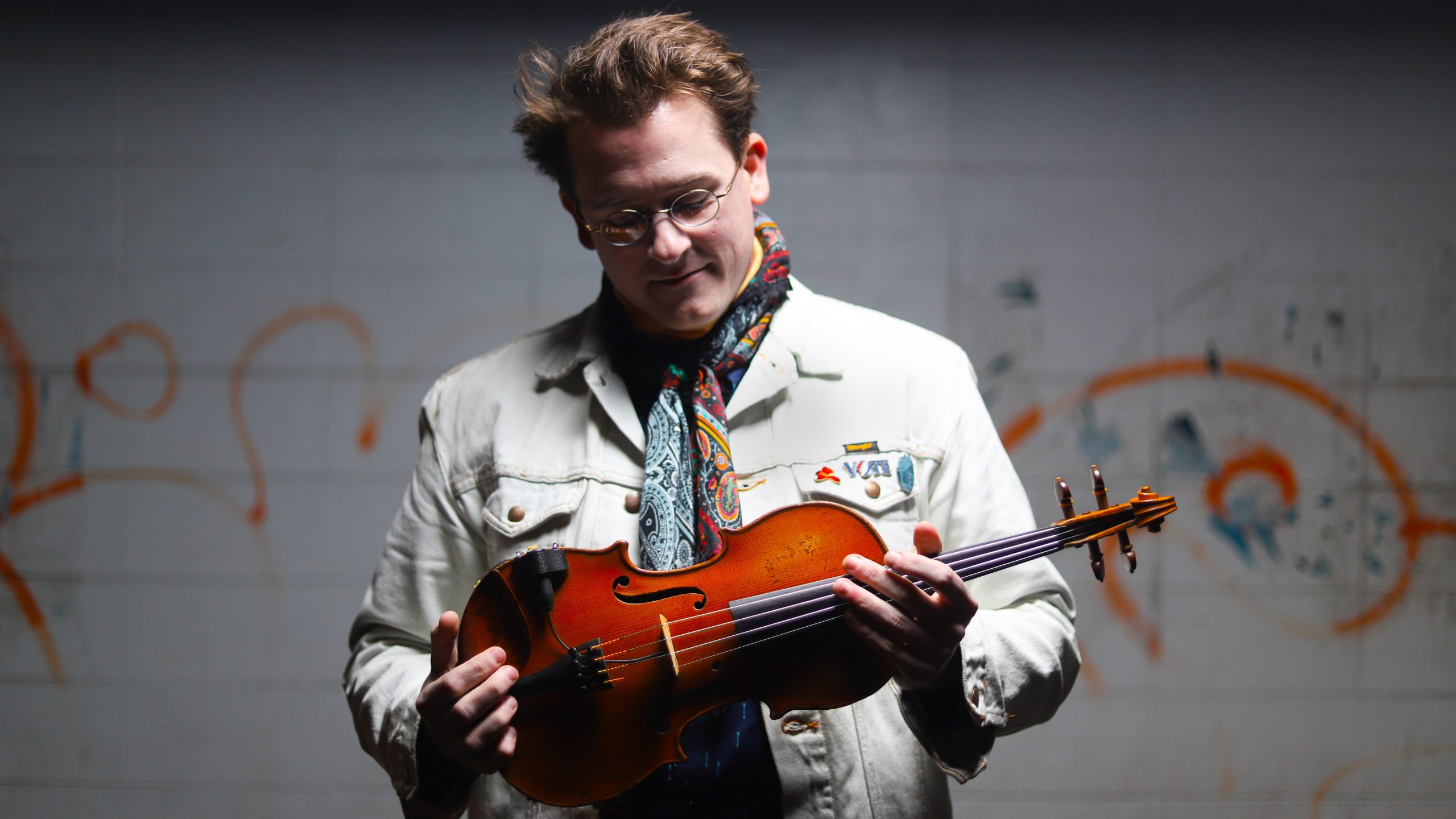
An instrument as agèd, storied, and established as the violin — henceforth in this piece obstinately referred to as “fiddle” — carries with it vestiges and artifacts of its own history into any/all of its new musical forays. It’s one of the most charming qualities of the instrument, that whether a rosin-laden bow grinds and saws against the strings or whether it floats, gently ringing an intransigent harmonic, a fiddle is still a fiddle. It is the sum of its disparate parts. 

Many virtuosos, hobbyists, and career musicians have staked their entire artistic worldviews on the paradoxes contained within the instrument. We in roots music quite often enjoy the musical aftereffects, songs and compositions that gleefully train magnifying glasses on paradigms such as classical versus jazz, old-time tunes versus minuets and cadenzas, or perhaps a chamber orchestra versus a square dance band. Ross Holmes, a session player, composer, and fiddler (Nitty Gritty Dirt Band, Mumford & Sons), counts himself among the violinist vanguard tinkering with the existential building blocks of the violin fiddle – a tradition and subculture he grew up with. “Overture,” an original, grandiloquent composition from Holmes, is something of a manifesto on the concept. (Listen below.)

The nearly fifteen-minute-long piece is performed entirely solo, beginning with a meditative, droning theme that Holmes describes as a “secular prayer.” As he carefully, intricately unspools each melodic turn, infusions from across the map — geographical and genre — are delivered directly from Holmes’ brain-as-musical-sponge to the listener’s ear. Each fluttering bow stroke, aggressive shuffle, and stunning double-stop speaks to the contributions of the fiddle in nearly every culture on earth. Throughout “Overture,” these global influences reflect the United States’ “melting pot” status — the greater piece for which this is the overture, after all, is titled: American Fiddle Suite. (Its remaining movements are a work-in-progress.)

Fiddling, by its nature, will be an outgrowth of all of the history, culture, and art that has flowed through it over the course of its centuries-long existence. What distinguishes Holmes and “Overture,” however, is the intention with which he connects all of these widespread dots. It makes sense, it’s tangible, and at its essence, it’s beautiful. It’s all the more impressive then, that though “Overture” is an entirely composed, ostensibly “classical” piece, not a note is yet written down. Holmes plays it all by memory — his memory, and the fiddle’s, too.


Photo credit: Micah Mathewson

Stuart Duncan’s Coffee Is a Disaster, But His ‘Goat Rodeo’ Fiddling Is Sublime

Stuart Duncan, speaking by phone from his home outside of Nashville, is at a loss over how to describe the beautiful dissonance of the just-released collaborative album, Not Our First Goat Rodeo.

“I think all of us have — even if it is nebulous — some sort of idea in the back of our mind of how we’ll sound performing any given piece of music,” he tells BGS. “As soon as a little bit of rehearsal happens, the glue starts to come together within a very short period of time – 10 minutes, whatever – of rehearsing and talking. ‘Here’s where the emphasis is.’ ‘Make your note a little shorter, Stuart.’ Those things come together really quickly. Then it is just capturing the best performance of those ideas and moving on.”

A multi-instrumentalist who’s perhaps best known for his sublime fiddle playing, Duncan has racked up awards and accolades for his work in the Nashville Bluegrass Band and as a highly sought-after sideman for acts ranging from Garth Brooks and Robert Plant to Diana Krall and Panic at the Disco. The final piece to the Goat Rodeo quartet — which also encompasses Yo-Yo Ma, Chris Thile, and Edgar Meyer — Duncan’s virtuosity contributes crucially to the group’s category-defying sound.

This Artist of the Month interview is the first of four installments as BGS salutes the incredible and iconic musicians of Not Our First Goat Rodeo.

BGS: Your first album together (The Goat Rodeo Sessions from 2011) was described as being partly composed and partly improvised. Was that the same approach this time?

Duncan: I would say even more composed, [although] all the material has some improvisation in it. Certainly for me. But there are things that I have to do the way they are written or else it won’t arrive at the proper conclusion — which is what the whole “goat rodeo” name means. Everything has to go just right or catastrophe happens.

This album’s studio session was only ten days for the ten songs, so there wasn’t a lot of time to fool around.

The writing and the sheet music had to be together before we even arrived at the studio or any kind of first rehearsal. The first album involved at least a day or two of rehearsals, and more time for writing. We had like nine months to get that together. This one was more like nine weeks. It came together fast.

We were staying at a nice home in the Berkshires. We had all of our sheet music laid out. Edgar was taking notes. He was the primary copyist — doing the notations for Yo-Yo’s parts, because he was more familiar that sort of bowing. Last-minute tweaks were happening up until the night, even the day, of the first session.

Were there particular musical pieces you brought to the table?

I arrived with little stabs of things for both projects. The most obvious one this time was the pizzicato hammering on thing in “Your Coffee Is a Disaster.” That’s something I had been working on for a long time. It is something that I sort of arrived on while holding my violin in a recording studio waiting for something to get finished in another room. Just noodling around. Holding the instrument like a mandolin and playing it that way on my lap rather than a bow. It took Edgar hearing that and realizing it was the same tempo — or could be played at the same tempo — as one of his other intros. Playing those together kind of started Edgar thinking: “Hey, what if we sandwiched these two ideas?”

So there was a good deal of puzzle piecing the arrangements?

When Edgar’s bowing his bass, and Yo-Yo’s bowing and I’m bowing, we’ve got a lot of bowing. Lots of sustained possibilities. We like to use this to our maximum potential. Like having the violin go down and the cello go up at the same time — and they cross each other in a moment of dissonance. The bass comes in and provides a counterpoint underneath that strengthens that dissonance and comes to a resolution, we hope, at some point.

The middle part of “Your Coffee Is a Disaster” has some of that — counterpoint of violin and cello not arriving at the same note at the same time but a half a beat staggered from each other.


It sounds like an especially stimulating creative environment.

With the minds of Edgar and Chris on compositions thrown in with what I have to offer, as far as improv, it’s a thick soup — it’s a chowder.

Were there instances of too many ingredients in the chowder?

Oh sure, it’s way easy to go too far. Some folks, even some folks close to me, have said that we should have thrown out a few more things than we did. Other people, you know, are perfectly happy. It is an individual thing. I just want to get comfortable enough with what we did in the studio to perform it again live at some point.

Despite the limited time you four have had together, you all seem to have a great camaraderie.

We had to stop each from telling jokes so we could get some work done, or it would be Story City where we could sit there all day and tell stories. It kept people focused on the job at hand. We were so glad to be together again. It was really great, and we hope for more.

And has some communication shorthand developed too?

There were times when little nuances of translations had to occur between something that Yo-Yo would say to Edgar because Yo-Yo would know Edgar knew what he meant, but maybe wasn’t so sure he knew that Chris would know. Some deep Latin term from the classical world. So, Edgar would then translate the question to Chris, although Chris would probably know a lot about classical music. There were a couple times when Edgar had to reframe the question to ring Chris’s bell, then Chris would have to translate it to me. It would have to go around in a circle before I would understand what was being talking about.

There were some bowing things that happened where I was equally as frustrated at getting it right as Yo-Yo. I remember one time Yo-Yo said, “Why is the bowing so different for this [song]?” It was a piece that I had started writing on the mandolin. And Chris said, “It wouldn’t seem weird to you if you ever wielded a flat pick.”

Is everyone’s very broad musical interests a key factor to Goat Rodeo being such a unique collaboration?

Completely, definitely. Not just because we all have wide interests musically, but also you are dealing with two monster composers who can weave all of that information into something believable, however unlikely the premise might be.

I’ve also heard Yo-Yo say in interviews that he’s listening to everyone else at the same time he is concentrating on playing. His ears are open; he’s not just using his eyes and his musical abilities. That’s a huge important thing for all of us. Because of what other people do, it influences what we do.

We are completely used to that in the bluegrass, jazz, swing worlds where we are trading licks. Someone plays a lick and you echo what they play. Then make it your own and it goes back around. But when you’re dealing with a written piece of music, that is played the same way each time, there are other things you can listen for with each other. Where the note lands. Where someone else is feeling a flourish or a cascade of notes.

Also, you have someone like Edgar, who can write something into a piece of music that sounds like improv. He know to leave a space as if someone was thinking of the next thing to play rather it being right there. He’ll leave a few rests in there as if someone is playing off the top of their head. Leaving space for the listener.

What is one recording that ranks as a G.O.A.T. (greatest of all time) for you?

Apart from all of bluegrass, old-time, jazz, swing, and blues that I grew up playing, loving and still worship, one of my favorite recordings is the Bach: Complete Sonatas & Partitas for Solo Violin by Arthur Grumiaux from the early ‘60s.

You can spend decades appreciating different kinds of music and then you think you don’t like classical music that much or it doesn’t hold your interest. Then somebody hands you something like that and says, “Check this out,” and it blew me away. I’ve been a fan of that recording ever since.

My sensibilities of how to perform a piece of music with Yo-Yo Ma were changed by hearing that recording. I became more sensitive to what was required from a violin to play that kind of music. The more aware, the more you can immerse yourself in what your instrument is capable of doing.

(Editor’s note: Read the remaining installments of our Artist of the Month interview series here.)


Photo credit: Josh Goleman

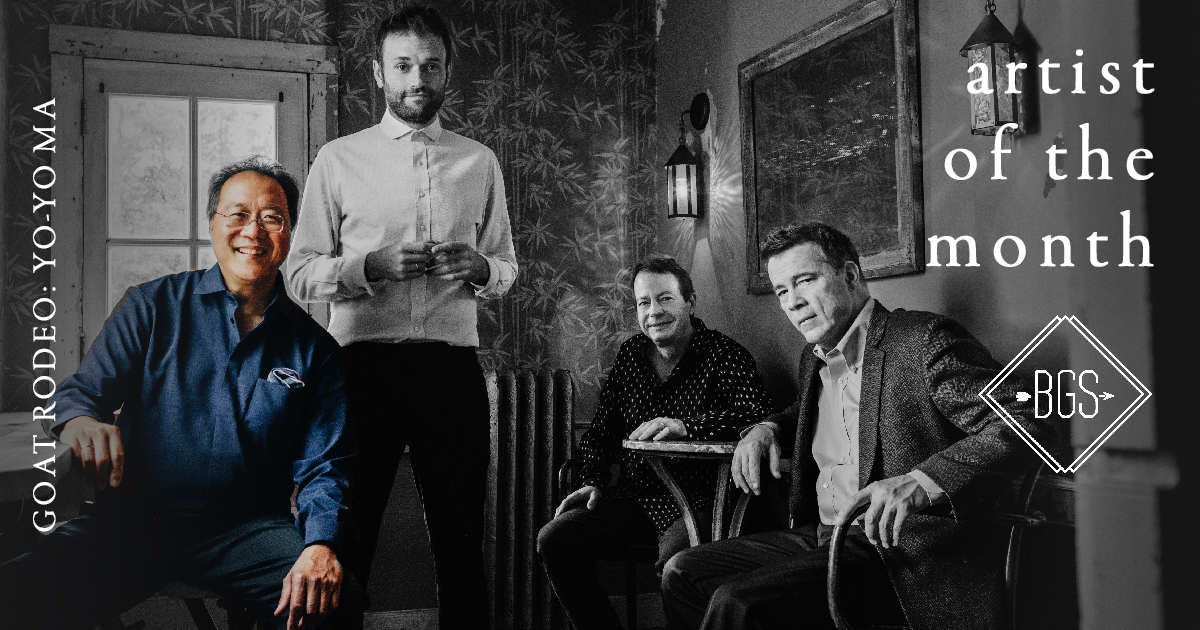
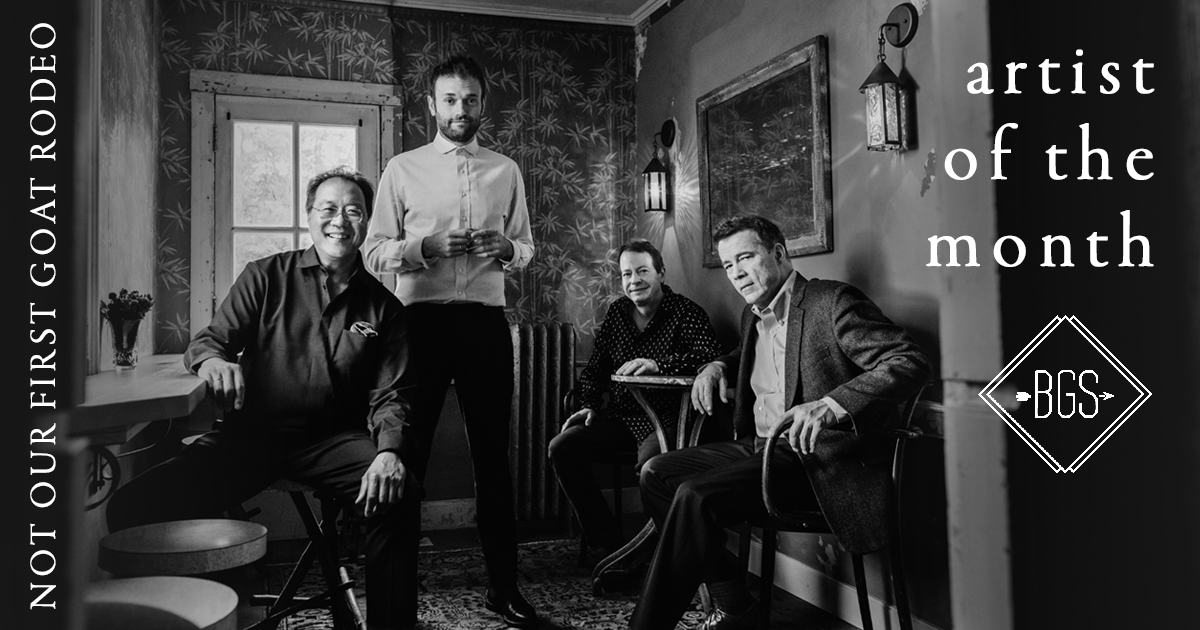
Artist of the Month: Not Our First Goat Rodeo (Yo-Yo Ma, Stuart Duncan, Edgar Meyer, and Chris Thile)

A remarkable blend of improvisation and composition, Not Our First Goat Rodeo is the just-released second volume of music from four American acoustic icons: Yo-Yo Ma, Stuart Duncan, Edgar Meyer, and Chris Thile. The eclectic group chose their name based on the aviation term “goat rodeo,” indicating a delicate situation in which 100 things need to go right to avoid disaster.

That intricacy is apparent throughout Not Our First Goat Rodeo, and so is the band members’ mutual respect and sense of joy that stems from collaboration. One such example is “The Trappings,” a cinematic piece featuring Aoife O’Donovan, who lent her talents to the first collection and returns as a guest vocalist for the new project, too.

Sharing the story behind the track, Yo-Yo Ma recalls: “‘The Trappings’ came out of a question of aesthetics. I believe Edgar was talking about pop music, how he used to think, ‘Oh, if something’s too poppy, I’m not going to like it.’ But that’s like saying ‘classical music is boring,’ or that jazz, rock, rhythm and blues are one way, or even ‘people from different countries are’…. You know that as soon as you make a general statement like that, it’s not true, because you can think of hundreds, thousands of exceptions. ‘The Trappings’ is one of those.”

The group’s initial set, 2011’s The Goat Rodeo Sessions, is a classical crossover masterpiece that won Grammy Awards for Best Folk Album as well as Best Engineered Album, Non-Classical. The critically acclaimed project also spent 11 weeks at No. 1 on Billboard‘s bluegrass albums chart. Nine years (and many other outside projects) later, the group’s camaraderie and undeniable chemistry remain intact.

Yo-Yo Ma observes, “What is so amazing about playing with Chris, Edgar, Stuart, and Aoife is that when I’m working with them, I’m almost not a full participant, because I’m actually a fan. I’m such a big fan that I approach what they’re doing with a mixture of wonder and awe at these fellow musicians whom I feel very close to, but who are doing things that are almost beyond my imagination.”

This month BGS will conduct interviews with each of the ensemble’s members about Not Our First Goat Rodeo as well as their individual inspirations and insights. Check out our Tunesday Tuesday featuring “Voila!” and enjoy this brand new Essentials Playlist featuring music from Yo-Yo Ma, Stuart Duncan, Edgar Meyer, and Chris Thile.

Read part one with Stuart Duncan here. Read part two with Edgar Meyer here. Read part three with Chris Thile here. Read part four with Yo-Yo Ma here.


Photo credit: Josh Goleman