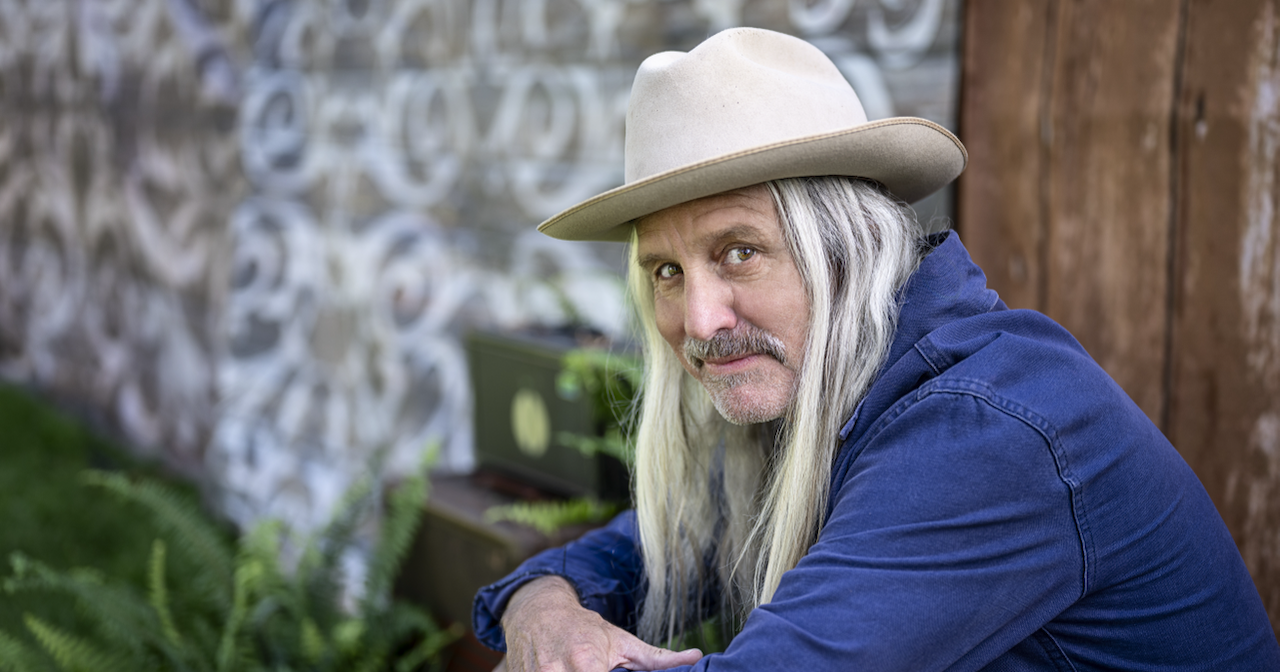
Steve Poltz Loves a Tangent

Steve Poltz has built a career by following each song wherever it wants to go. Sometimes that means a meticulously fingerpicked melody. Sometimes it means a story that veers off into comedy, confession, or absurdity before circling back to the heart of the matter. That tangential nature – equal parts songwriter, raconteur, and road-tested troubadour – has become his signature, especially onstage, where no two of his shows are ever the same.

Poltz’s new album, JoyRide (released January 30, 2026), reflects that same restless curiosity. Trim, deliberate, and capped at 10 songs, it distills decades of touring, collaboration, and lived experience into a tightly sequenced record designed to be heard in one sitting. From satirical observations about modern life to deeply personal reflections shaped by years on the road, JoyRide captures Poltz at a moment of clarity – still chasing the perfect song, still trusting instinct over plan, and still finding meaning in the long way around.

Long before JoyRide, Poltz earned his reputation the slow way – by logging miles, swapping verses with fellow songwriters, and learning how a room breathes. Founder of the San Diego-based rock band the Rugburns and co-writer of Jewel’s breakthrough “You Were Meant for Me,” he has never been defined by that early success, instead carving out a singular path marked by humor, humility, and an almost reckless openness.

In a conversation with BGS, we spoke with Poltz about the making of JoyRide, the longtime relationships that have sustained him, and the zany, unpredictable ride that has been his career. Whether sharing a bill with old friends or holding a crowd rapt with nothing more than a guitar and an improvised aside, Poltz approaches music less as a performance than as a conversation – one where the destination matters less than the unexpected connections made along the way.

Let’s start with early memories. Was there a moment when music really clicked for you?

Steve Poltz: I remember when I was in second or third grade, I stuttered, had asthma, eczema, and I didn’t hang out with many people. I started playing guitar when I was six. So I brought the guitar to school for show and tell. And I sang the song “Sloop John B” in class. And other kids brought snakes, brought their moms who were nurses or doctors or firemen, and their dads and stuff. I sang a song on guitar. I went out and sat alone. I remember I opened my lunch and I looked up and there were six girls around me. I thought, “This is all I have to do!” That was it. That was the plan.

I had a friend who was a DJ at San Diego State University [radio station] KCR, and she moved in with these roommates. They had brought this record by that had just come out by this woman named Rickie Lee Jones. It was her eponymous debut LP. And, oh my God, I listened to that record nonstop. There was a song called “On Saturday Afternoons in 1963,” which is still one of my favorite songs. It was in the movie Stripes with Bill Murray.

Man, two years ago I played Byron Bay Bluesfest in Australia and Rickie Lee Jones was on after me. Just the way the world works and the universe works, I knew her percussionist who plays the vibes, Mike Dillon. He sees me, and he’s sitting with Rickie Lee Jones, who’s like my hero. She’s one of my favorite lyricists ever. I’m a Dylanologist, and still, Rickie Lee Jones – those first two records especially – her poetry, the way she puts the songs together, I put it at the top of my whole pyramid.

[At Bluesfest] I told her I’d do a cover of “On Saturday Afternoons in 1963” and I segue into it from John Hartford’s “Presbyterian Guitar.” She loved John Hartford, too. She comes out during the song in front of 5,000 people, sings the second verse, and I just started crying. It was one of those full circle moments. These are the people that are my heroes.

You’ve become very deliberate about keeping your albums, like JoyRide, short and sweet. Why?

We’re just in such a quick world, where people don’t have the attention span. I’ve come to this conclusion that 10 songs is the perfect amount of songs to have on a record. Leave all these other ones on the cutting room floor. Put them out later on B-side compilations or something. Keep it under 33 minutes. It fits on vinyl perfectly. It doesn’t lose any of the resolution. If people are into you, it’s not too hard to give 32 minutes of your time. My hope is they go, “Let’s hear it again.” That’s my fantasy. One day I’ll get it right.

You’re known as a road warrior. What still thrills you about touring?

I feel like I’m kind of like the Grateful Dead in that I’m better experienced live than on record. Live, there’s magic. I’m still looking to make the perfect record. Maybe when I’m 80. I can’t believe Bob Weir just died, I mean he’s so young, 78. I’m like, “God, that’s like 12 years older than I am, I better get my shit together.”

I love it when things don’t work on the road. When something goes wrong, when animals attack. It took me a lot of years to get there, but sometimes things are really good when they don’t work. It messes with the audience. It’s like mental jiu jitsu.

Perhaps not surprisingly, you often reference comedy as an influence. How important is humor to your music?

I loved Andy Kaufman. I loved Richard Pryor. The early Steve Martin albums, Cheech and Chong – I memorized all that stuff. When I heard Allan Sherman sing “Hello Muddah, Hello Faddah!” I remember thinking, “Why can’t every song be like this?” Same thing with listening to the Dr. Demento [radio] show. Dr. Demento was huge. He played the Rugburns [on his show]. “Weird Al” Yankovic used to come to our shows and loved [our 1995 record] Dick’s Automotive. Because of that song, he wrote “Albuquerque.”

What are some of your earliest musical memories? You mentioned Rickie Lee Jones earlier. What are some other early prominent memories of being moved or touched by a song? Where were your first performances?

My uncle took me to see Julian Bream at the Hollywood Bowl. Classical guitar. That was it. I wanted to learn classical guitar. You know, with my left foot up on a stool, with a nylon string guitar, the way you hold it all in the proper classical way. I learned to read music. Fernando Sor’s etudes. My first gigs were in Mexican restaurants in San Diego. Four hours of classical guitar. Free meals. One night I got the courage to sing “Time in a Bottle.” The waitress said, “I didn’t know you could sing.” That night ended with me running out a window and leaving my left shoe behind. I never went back to that restaurant.

And then there was another one in El Cajon and it was called El Amigo. The El Amigo Ballroom. Then I got a job at Round Table Pizza in La Mesa. I got fired because I sang on the mic and I sang “The Rodeo Song.” One night, I got really drunk with the manager and I didn’t know the owner was in the audience. That was where I kind of learned mic control, because the manager was like, “Man, you’ve got a good voice for speaking. I want you to be the guy who says, ‘McDonald, party of four, you’ve got a large pepperoni pizza.’”

One night the manager got me really drunk. He was a younger guy. I started singing “The Rodeo Song,” which was this Canadian song that went, “Well, it’s 40 below and I don’t give a fuck, got a heater in my truck and I’m off to the rodeo.” And the chorus goes, “You piss me off, you fucking jerk, you get on my nerves.” It’s like a really juvenile song that was played on the radio in the late ‘70s. They would have all these bleeps where the cuss words were. And I sang it on the mic. Then the next morning I got a call from the manager. He’s like, “You need to come in and pick up your check.” I said, “We’re getting paid early.” And he goes, “No, you’re fired. We need pizza makers, not entertainers.”

Let’s talk about JoyRide. Tell us about the opening song, “If It Bleeds, It Leads.”

It started with a guitar riff. A major seventh chord. Then the melody. Then the words came. And the next morning when I woke up, I was kind of laughing. I always saved ideas, it’s like a junkyard of melodies, words, everything in my iPhone on my notes page, and then also in my voice memos. And I went, “Oh, this fits.” [Quotes:]

I can never watch the news with you because you yell back
You scream like they can hear you in the television set
What am I to do when all you’re doing is yelling at the top of your lungs?
You’re even scaring all the pets.
You’re scaring all, you’re scaring all, you’re scaring all the pets.

And it just worked out perfectly. You just kind of shave off syllables and fit it into this sort of Sudoku puzzle or something.

And next thing you know, it’s like you’re fishing and you have this song on the line. Like, where do I want it to go next? You can say, “I remember one time when you went and grabbed your pistol.” And so that harkens back to Elvis Presley, who I was lucky enough to meet when I was nine years old. He put me on his shoulders. I’m like, “I gotta name check Elvis in this.”

The songs comprising JoyRide seem especially quirky, even by your standards. Can you tell us about some of the ones that you have the most affection for?

“Petrichor,” which is track two, I really love because it’s really fast fingerpicking. I wrote that with Gary Nicholson, who wrote a bunch with John Prine and toured with Guy Clark. He’s just a wonderful songwriter. I went over to his house and I was like, “I have this idea for this song called ‘Petrichor.” I showed him the guitar riff, we wrote that song, and it’s a banger. I love playing that live. There’s one called “At It Again” that I wrote with Jim Lauderdale that I love playing live, and I love playing “Love a Little Bigger.”

There’s a song called “Hair Lift,” where I learned a tuning from Richard Thompson. It’s just my E string goes down to C and my A string goes down to G, and everything else is the same. He uses that tuning in “1952 Vincent Black Lightning,” but he capos it up. So I took that tuning and wrote this song called “Hair Lift.” I love singing that song because it’s got lines in it that are just so goofy, they still make me laugh. Stuff that I find funny, not everybody else does, which makes me laugh even harder.

My favorite one to do live is called “The Son of God,” and that’s because I get to play myself and Jesus. I’m having a conversation with Jesus, and that whole song came about because when I was a kid – it’s one of my fondest memories – [there] was this door-to-door salesman [that] came to our house. He was selling Funk & Wagnalls encyclopedias. Dude, it was like a new iPhone. All the answers to everything were in this set of encyclopedias, and I begged my parents to get them. I begged them and they got the Funk & Wagnalls encyclopedias for me.

My mom said, “You gotta read every one of them cover to cover.” And I did. Every day I would just read the encyclopedia, because I found all this knowledge so fascinating about everything. Words I’d never heard of and countries I’d never heard of. Niger! I mean, come on. And I’d want to read everything about it. So I was thinking when I made up this song, “The Son of God,” like, “Hey, whatever happened to all those Funk & Wagnalls encyclopedias?” I had this fantasy that Jesus called me up and he was trying to get rid of them, because you have to have a storage unit in heaven.

What came together perfectly on this record?

It’s hard to get me into the studio, so just that it happened is like a dream. I’m always on the road. But I recorded at this guy’s house in Nashville. The vibe was good. That’s everything to me. I wrote songs with Jim Lauderdale. One with Vince Herman. It all came together naturally.

You spent ten years in Nashville before returning to San Diego. What did that city give you?

From the moment I got there, it was where I was meant to be. Everywhere you go, you’re making contacts. Coffeehouses are where everything happens. People are polite. You don’t know who anyone is. Your Uber driver might get you a record deal. I remember I was at this coffeehouse and I looked over and there was Lisa Loeb, who I hadn’t seen in years because I toured and opened for her back in the ‘90s. I hadn’t seen her since that tour and she just happened to be in town and I was in this coffeehouse and she was like, “Steve?” “Lisa?” And she said, “You know, I always come here to write and hang out.” Then, the same coffeehouse, there is another amazing person just a week later. And then at a different coffeehouse, Jim Lauderdale. Then me and Jim became really close – and must have like 30 songs [written together] – and it just went on and on and on. Like wherever I went, I was just making contacts.

Circling back to where we started our conversation, some people don’t want humor or irony or banter in their music, staples and bedrocks of JoyRide and perhaps your entire career. How do you continue to approach and navigate those variables?

Luckily, there are hundreds and thousands of artists for everything. Some people want to slam dance or listen to really serious bluegrass. Some want to cry. My audience wants stories. They want to laugh and to cry. They want to hear some guitar playing. In today’s world, part of the whole thing is you got to be consistent, you’ve got to get out there, and you got to keep doing it, because nobody’s going to just tap you on the shoulder and say, “Hey, kid, I’m going to make you a star.” It just really doesn’t happen.

I like small rooms. Low ceilings. Shoulder to shoulder. Quiet listening rooms. Tangents. That’s the ultimate job.


Photo Credit: Jay Blakesburg
John C. Reilly Is Mister Romantic

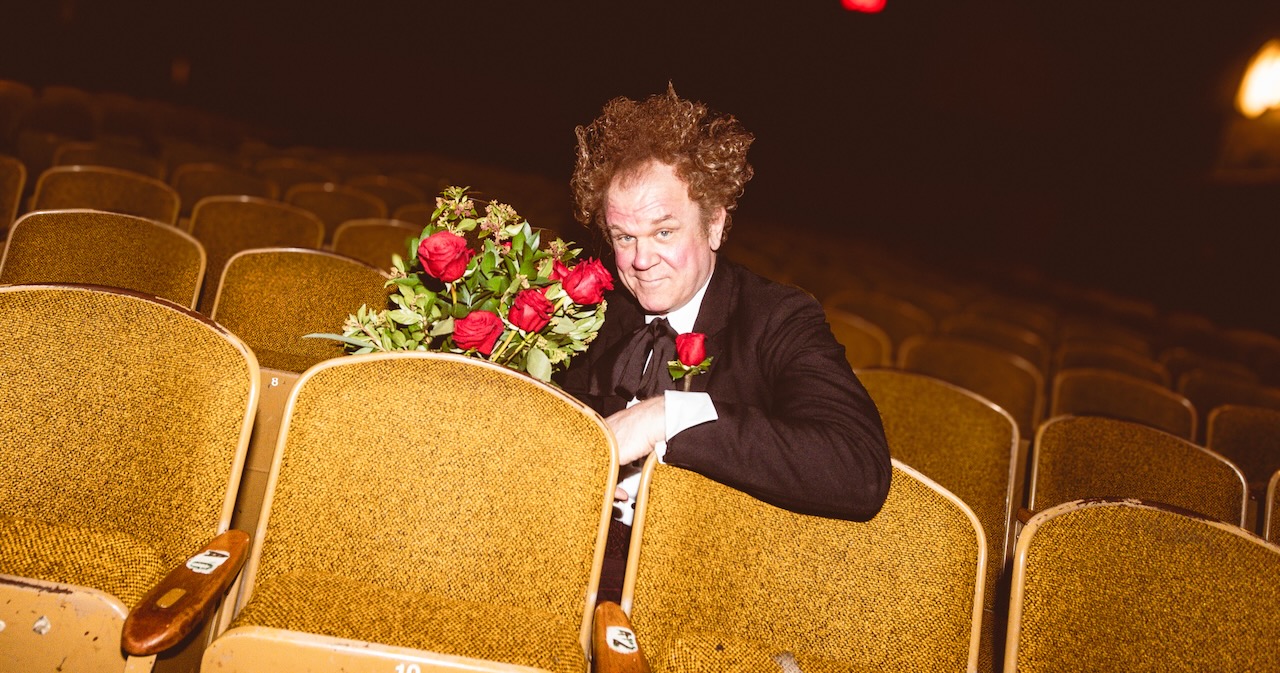
As John C. Reilly cavorts around a converted Brooklyn warehouse, his wiry hair branching heavenward, he looks a bit like a heavily rouged version of his eccentric Dr. Steve Brule. But Dr. Brule isn’t here, and neither is Reilly, in a sense. A fellow named Mister Romantic holds court instead, serenading and chatting up audience members in an effort to win their hearts. He swoons and croons, he has a microphone that looks like a rose, and he really, really wants to be loved forever, lest he be doomed to an eternity in a steamer trunk.

Reilly is the rare sort of actor whose talents span cutting dramas and gut-busting comedy antics, and underneath all of it, he’s maintained a soft spot for musical theater. Audiences have gotten a peek at that in Reilly’s Oscar-nominated embodiment of Chicago’s “Mister Cellophane,” and while he’s hammed it up as Dewey Cox in Walk Hard. He’s long nurtured his musicianship, too, with a handful of bands in his youth, a blues outfit, and his more recent cadre of bluegrass friends.

After finishing his duties as Jerry Buss in Winning Time: The Rise of the Lakers Dynasty, Reilly fixed his energy on finding some sort of remedy to the discord that he felt dominating everyday life. Mister Cellophane only got the one song, as Reilly has noted, so he drew upon more than twenty years of his own tune-collecting to develop a repertoire that felt suited to his mission and was close to his own heart. He’s pulled most of his material from the early 20th century body of the American Songbook, which Reilly expands to include a handful of Tom Waits numbers. Though Mister Romantic works a special kind of magic in person, he issued a baker’s dozen of recordings on his album What’s Not to Love? in mid-June, a more permanent evidence of his visitation.

He credits Los Angeles’ famed venue Largo with being the nexus of countless creative relationships – including Mister Romantic compatriots like David Garza, fiddler Gabe Witcher, and Sebastian Steinberg, who joins the ensemble on their recordings. The crew keep remarkably stony faces as Reilly improvises his appeals to the crowd, part of the story built around Mister Romantic’s cosmic arc: “He’s been traveling in this box for thousands of years trying to find love, and he just fails over and over. He doesn’t have a memory of the past, but the band does, and they’re stuck in this purgatory cycle with him,” Reilly says.

In chatting up different audience members between selections (“I’m not gay or straight, I’m desperate,” he offers), Reilly hopes to get everybody in the room feeling like they can open up a little bit. The songs, for Reilly, facilitate that softening in a sort of bucket-brigade through time. “‘What’ll I Do?’ could’ve been forgotten by the 1930s, but people loved that song and kept passing it along, and here I am, doing it again,” he says. “I think that’s the way to pay things forward, to pass along what you think is good.”

Now with an album release and several more Mister Romantic shows in his rearview mirror, Reilly is impassioned and reflective as he considers the value of vulnerability in a prickly modern world. His fervent belief in the fundamental goodness of human nature spills over as he shares his efforts to bring a little more love into people’s lives.

You made a point to tell your first audience participant that you weren’t bringing her up there to shame her or embarrass her, which got me thinking about how you’re watching people react to your character in real time. What has that been like for you with these performances?

John C. Reilly: It’s been a really special part of the show. I don’t know what I expected it to be when I started doing this, just kind of improvising my way through, but it’s been amazingly consistent. I say that stuff about “I’m not going to embarrass you or do anything weird” because people just don’t know what the hell the show is about, what the boundaries are. I really want to make people feel like I’m going to take care of them up there. The joke is not going to be on them.

With the audience, I’ve noticed if you really see people and the best in them, or you look for qualities that you find attractive, and you talk about them – it’s amazing the way people let down their guard and open up. It makes the whole audience feel like I’m talking directly to each one of them, even though I only get to four or five people during each show.

Have you had any reactions that have caught you off guard?

Sometimes I ask pretty heavy questions, like, “Have you ever been in love? How long did it last?” People generally want to play along, there’s no one that has ruined the interaction. People always ask me, “Are those people plants?” They’re never plants. The second thing they ask is, “Does anyone ever not cooperate?” I have to say, it’s like, 100% cooperation so far. I think part of it comes from the loving approach and the fact that I say at the beginning what the mission of the night is going to be.

It’s a really encouraging part of the show for me personally, because you really do want to believe that, in their heart of hearts, people are good. When I do this show, that is what I think when I go through the audience. I try to look at every single person directly at some point. The whole point of the show is connection – to the music, the world, to each other – and creating a live unique moment with a group of people. Whatever’s happening outside in the world is one thing, but in here, we’re all going to be connected by the end of the night.

There was a moment where you kind of scolded someone for having their phone out, but you somehow did it in the nicest way possible, where you brought it back to maintaining a connection in the moment.

I try not to even engage with what phones even are. We try to make it clear that you’re not supposed to use your phone during the show. I called that guy out just because I was surprised to see it in his hand. My point was not to say, “You broke the rules!” or get mad at him. There have been other times when people have their phones out. The point of those interactions is always to point out what’s special about this moment without a phone. When I said that, the audience almost started cheering [note: this is true]. Everyone is getting to this place where they’re starting to realize the cost of using a phone, and the separation that it creates between you and a performance or an experience.

How did Largo get to be such a major fixture in your life?

Largo has been a big part of my life since it opened in the early ’90s. It’s been a big part of my development as a singer and as a musician. I had my bluegrass band there for a long time. Mark Flanagan, who owns the place, creates such a special vibe in there, and does not allow cell phones during the shows. The audience ends up being focused in this way that’s different than other places I’ve been.

It’s kind of this temple of quality and entertainment, especially music. When I first started going to Largo, it was Jon Brion and all these different musicians moving through there – a lot of my friends who I play with now, who I played with in the past in other bands. Walk Hard, the songwriters from there – all those guys were all part of the Largo scene in one way or another. It really feels like home when I’m there, and it has its priorities right. It’s not just a place that’s about profit and selling beers, slamming them in and slamming them out. There’s a real soul to the place. I shudder to think what LA would be without Largo.

Is your bluegrass band something you think you’ll return to?

The blues, bluegrass, and this kind of show-tune world are all different aspects of me. I had a blues band before I had a bluegrass band. But I love bluegrass music, for the same reason I love all these American Songbook standards that I’m doing. That’s part of the conversation about the show that I think is really important, that Americana doesn’t just mean white Southern folk music from the 1930s.

People talk about, “What kind of category does [Mister Romantic] fit in?” To me, it’s Americana. A lot of these songs were written by Americans, and they’re not classical music. I think bluegrass definitely falls under the Americana banner, but I think songs in the American Songbook also fall under the Americana banner. Blues music falls under the banner. Why is blues music separated as African-American music? It’s part of America’s history. We should all embrace under the same umbrella.

You’ve talked about using Mister Romantic as a vehicle for getting people to open up a bit more to love and empathy. I think of romance as only one slice of the pie when it comes to loving or forms of love – why go with “romantic” as your channel into exploring empathy?

To me, romance is appreciating a beautiful sunset, or the way a flower looks or smells. Appreciating some weird little detail about a person that makes them unique, that makes you cherish them. It’s not just a Valentine’s Day card. Think about the reason that you got crushes on different people in the past. Sometimes it’s about the physical looks, but oftentimes it’s like, “Man, I just love the way that person does their art.” You crush out on people because of why they’re special. That, to me, is romantic.

On the surface of it, this guy Mister Romantic is trying to fall in love, but he doesn’t even really know what that is. He has so little experience. All he knows is, it’s a deep connection with someone else that will then stay with you forever. I’m not trying to get anyone to be anything. To me, the show is an opportunity to come together. If you’re craving connection, then you should come. I’m not trying to lecture people. I’m just pointing out the inherent truth about human beings, that we do love each other, that the secret to civilization and the reason that human beings are still around on earth is because of love.

I was seeing a lack of empathy – a coarseness to our dialogue, or a viciousness to our debate, and I thought, “Well, that’s distressing. What could I do that might lessen that?” And I decided I’ll do a show about love, and I’ll invite people to come see it, and maybe they’ll feel what I’m feeling. [Mister Romantic] is more about reminding people of what is true about us. On a good day, I think, everyone feels that people are ultimately good when the chips are down.

There’s a line from bell hooks’ All About Love about how “cynicism is the great mask of the disappointed and betrayed heart,” and when I re-read that recently, it resonated with how the crowd felt at the end of the show—like this cynical layer that a lot of us have was dissolved for a bit while we were laughing and having a good time together.

Yeah! It’s not just about me and what I’m saying. It’s also the music. The music has an alchemical effect on people that does put air in their balloons. I didn’t know that quote, but I agree with it. I say misanthropes are actually the most romantic people of all. They’re the most sensitive. They’re so sensitive that when they experience disappointment, they retreat into this place of, “Well, if it can’t be perfect, then everything is terrible.” But if you’re really truthful about the way life is, there are all these gray areas. Everyone is not an asshole. That’s a generalization. To be a true misanthrope, you’re generalizing, and not seeing what’s really there.

You have to be open to someone being a good person. I think that’s just the truth of the way things are. I do think if you’re worried and you want things to be better in the world and in your own personal life, you have to be willing to be vulnerable, and willing to reflect a world that you want to see. These things sound so rudimentary, or maybe cliché, but that’s where we’re at. We’re having to fight for empathy, to say, “Human beings have value across the board.” Human rights are at stake right now in the world. So it’s not a cliché. It’s not a thing that’s assumed to be true by everyone. These things have to be regenerated, generation after generation.

What’s something you’ve learned about yourself in the process of bringing Mister Romantic to life?

I’ve learned a lot about the courage it takes to invite people to a place and say, “I’m going to sing for you.” I had to learn what my voice is when I’m not impersonating other people. How do I sing? How do I convey my spirit through my voice? Those are big things, and making this album was a huge step. The personal journey to get yourself to believe that it’s good enough to share –that’s a big struggle for everyone, especially the first time they do it. Mister Romantic was a big step in that direction for me saying, “Whatever, I may not be the most perfect singer, but the reason that I’m singing is a good reason, and I’m going to keep doing it.”

You have to kind of have this blind faith in the mission, because there’s all kinds of slings and arrows that you can generate for yourself. But then you remember the core of it – these experiences that you have during the show, that I have from the show – and that tells you what you should be doing with yourself, what is important. If touching people the way this show touches people isn’t important, then I don’t know what is. It has given meaning to my life at a time when I was really struggling for meaning.


Make plans to meet Mister Romantic at a show near you.

Photo Credit: Bobbi Rich

Steve Treviño on Only Vans with Bri Bagwell

My fairly new and hilarious friend, Steve Treviño, kindly welcomed us into his home podcast studio to film this episode of Only Vans. We talk about sleeping with your road manager, comedy and music parallels, representing Mexican-American culture, The Comedy Store, mentors, and more.

LISTEN: APPLE • SPOTIFY • AMAZON • MP3

Comedian Steve Treviño must be one of the most generous, kind, and brilliant human beings. I know he’s hilarious, and we have spent tiny pockets of time together in passing before this interview, but this man is a legit all-around family man, entrepreneur, road warrior, and not to mention, an extreme giver of his time. As you’ll find out, he was going to Canada to do a big show the morning after this interview and still agreed to this somehow– and invited Kyle and I to use his podcast room at his house in the Texas Hill Country (because my RV was in the shop)!

In our Only Vans conversation, Steve and I get into what we have in common, like being on the road, being with a partner who is also an entertainer, and the parallels of the music biz and the comedy biz. I love his insider insight into Nashville vs. Texas and we talk about Steve being an integral part in opening Gruene Recording Studio, seven minutes from my house. His hustle is unmatched and it’s so beautiful how much he loves and supports Texas music. Wait ’til you hear his Pat Green story – and the Randy we mention a lot is, in fact, Randy Rogers.

Steve takes a phone call with his wife Renae mid-podcast, which ends up being our first comedic bit together about it potentially being about Steve having cancer… anyway, Renae is @iamrenaewithana on Instagram. She is equally as talented and brilliant, and Steve would probably argue she is more of those things than him. But give him and her a follow and if you have not seen Steve live, he’s going everywhere and his tour sells out quick! SteveTreviño.com is the website, and if you haven’t yet – what are you doing? – check out his comedy specials for down-to-earth, real-life, feel-good, truly memorable comedy!