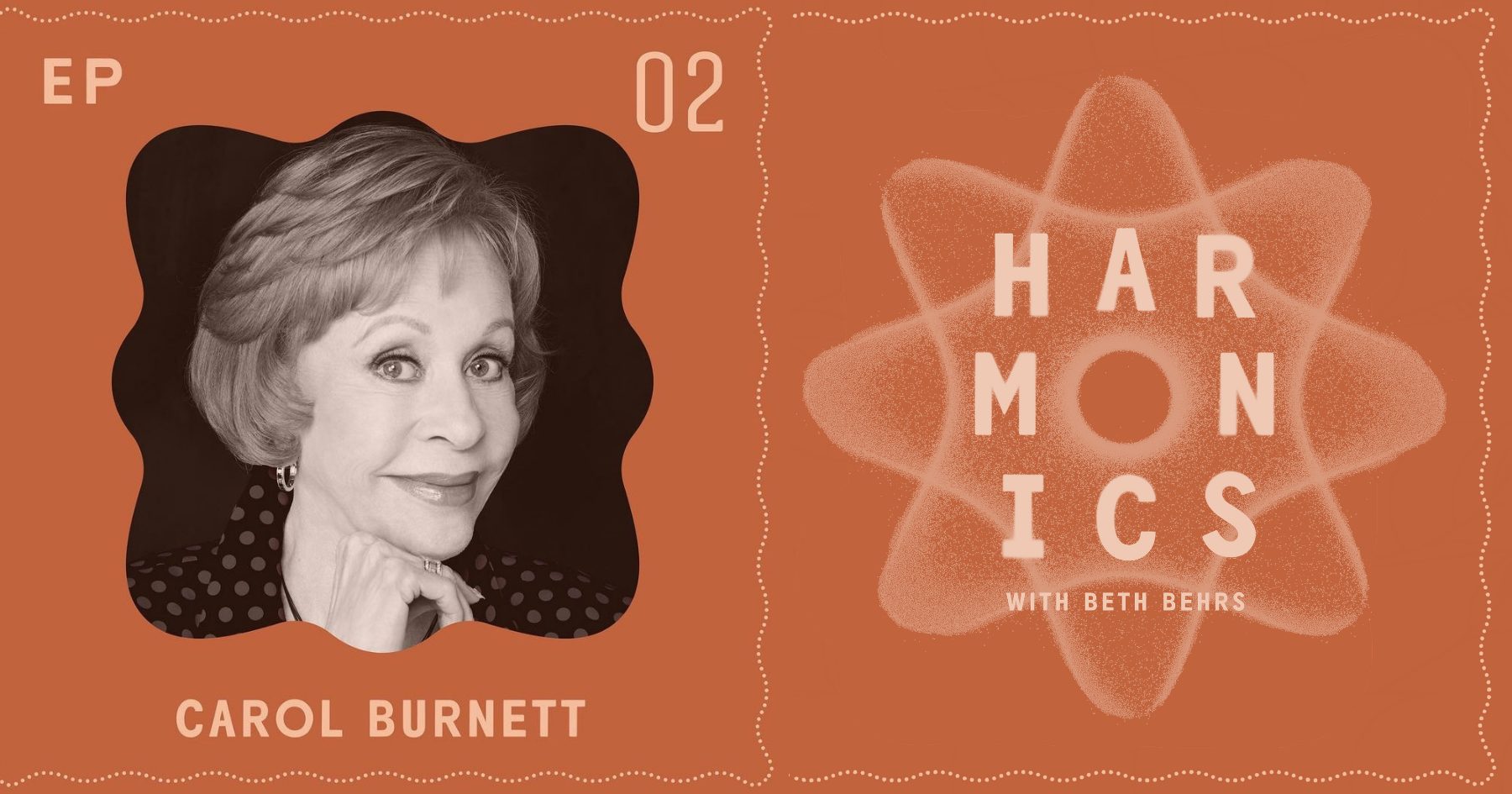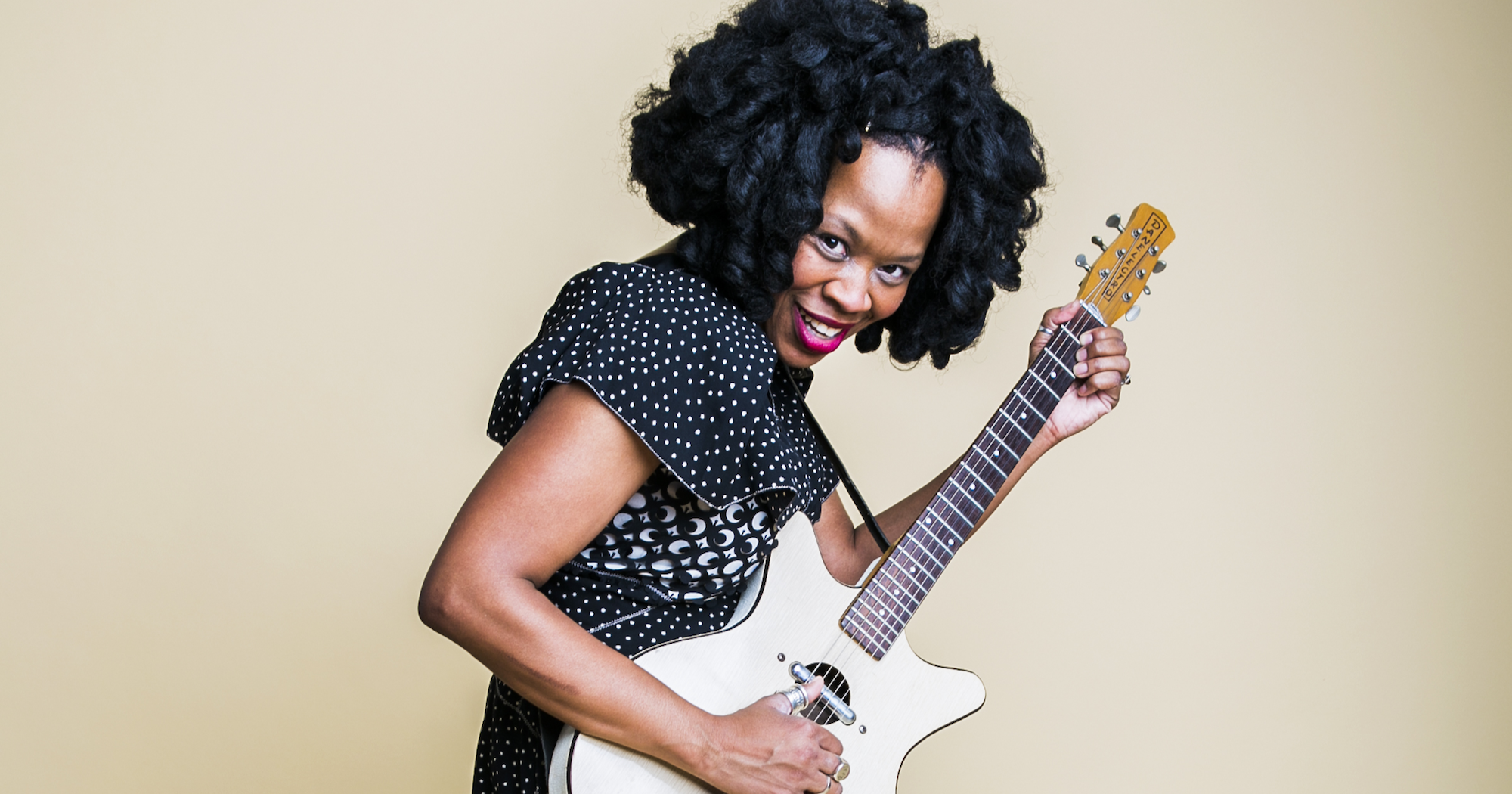
Queen Esther Made a Civil War Album Unlike All the Rest

Civil War albums are all too common in roots music, bluegrass, country, and Americana. Usually, these concept projects romanticize and valorize one of the darkest periods in our nation’s history, while cheerfully and cartoonishly detached from reality and untethered from the nuances of this horrifying and violent period of tumult in the U.S. Revisionism and imperialism are enacted by fiddles and banjos in loose, contrived musical period garb.

Audiences seem to devour this kind of idyllic reimagination of the Civil War and the issues that gave rise to it. Though chattel slavery and its foundational role in our economy were central to the conflict, Civil War concept albums rarely interrogate those facts, instead leaning on listeners’ love for story songs and cursory understanding of “brothers against brothers” narrative paradigms to sell records and tickets. The sketchiness of this practice is overlooked across the board, perhaps due to the sheer ubiquity of such efforts.

On February 6, artist, musician, songwriter, actor, and playwright Queen Esther released a very different sort of Civil War album, Blackbirding. Enabled by a grant from The National Parks Arts Foundation, Queen Esther worked and lived in residence at Gettysburg National Military Park in Gettysburg, Pennsylvania, for a month in 2020. During that time, she communed with the land, the place, and the losses and griefs seeped into the blood-soaked soil, plumbing stories, myths, memory, and feelings to craft her 12-song reckoning with the Civil War. Original songs, songs from that time period, and fascinating covers combine into a work of roots music and theater, dramatization and storytelling interwoven with knowledge-bearing and memory-keeping.

Queen Esther being a Southern Black feminist multi-hyphenate creative is exactly why Blackbirding stands out among its peers in the curséd Civil War concept album space. There is no idealization or revisionism happening in Queen Esther’s songs. Instead, there’s a tangible humanity and an awe-inspiring alchemy of grief, loss, and crimes against humanity into beautiful, redemptive music.

Queen Esther first brought Blackbirding into the world as a piece of performance art with a staged reading in 2024. Even now, in its LP form, these songs lean forward, doing narrative work perceptible whether on stage or off, and coaxing listeners to abandon passive listening and – as all theater asks – inhabit a third, artistic, creative space together in our interaction with these compositions.

The central point of the album is made over and over again across the 12 tracks and throughout our lengthy and in-depth BGS conversation. “Blackbirding,” the 19th-century practice of kidnapping free Black folks and selling them into slavery or back into slavery, never really went away. The Civil War was not won. Reconstruction failed. Slavery itself was not abolished, but rebranded. As such, Blackbirding, whether from the perspective of its content or its genre aesthetics, isn’t a throwback or time capsule album. This is music made in the present, for the present, about the present, and it calls on all of us – again, in the present – to reckon with and consider how we each contribute to or act in defiance of the continuation of racial apartheid and imperialism in the United States.

Do not fear, though, because Queen Esther’s approach to such musicmaking is remarkably joyous, grounded, and compassionate. It’s clear she’s not only ready to engage in the conversations this music evokes, but that is exactly her purpose. And the ultimate culmination of her many talents. In this way, she yet again distinguishes herself from other such concept albums in Americana.

I’ve been a fan of yours for a few years, ever since we discovered your TED Talk. When I first watched it, it was so revelatory. It felt like you supplied vocabulary – and knowledge and expertise – that I wish I would’ve had my whole life to help describe the multi-ethnic origins of roots music and bluegrass and country. If all of this came from “Scotch-Irish tradition,” then why does bluegrass sound like bluegrass? Why does country sound like country? Why doesn’t it sound like Irish music or Scots music or music from the British Isles? It sounds different.

I just wanted to start by saying thank you for that talk – and thank you for all of the insight, feeling, and emotion that you bring to these intellectual topics that people tend to forget are about real humans, real experiences, and real music.

Queen Esther: Absolutely. I really appreciate you saying that. I think more often than not, Black people have these conversations amongst ourselves. We wait until the door is closed and then we talk. I think we should have more conversations with everyone in the room. As long as they’re willing to listen. That’s a tall order. Much more so than you would think.

I’m really happy about this album, especially because people are starting to have conversations around the songs, topics, and everything that I’m bringing up. The fact is that slavery has never ended. It was just modified. The Civil War has never ended. It just evolved. “Blackbirding” has never ended. It just got a lot more inclusive.

Those three things are standing in the way of America being America. There is the America that is on paper – the one that is in the brochure with the Statue of Liberty, the flag behind it, and mom, and apple pie, and all of this stuff. And none of it is true. It’s all a marketing ploy. The actual America that really exists, that’s the one that Black people have had to endure and survive for hundreds of years. That’s the America that turned its back on us.

You know as well as I do that there are so many Civil War albums in bluegrass, folk, string band music, and Americana. So many are built upon the revisionist history that you’re talking about. The manicured, sanitized “picket fence and 2.5 kids” version of the “American Dream.” So, normally when I get a pitch about an album like this, it just goes straight to my email archive. Knowing you and knowing your work – and especially the way that you bring theater and all of your multi-hyphenate titles into crafting and creating – I was so excited to have a chance to talk about approaching the Civil War and approaching Gettysburg as an inspiration for music.

Blackbirding is set in the present. You’re talking about how slavery never went away, how reconstruction failed, and how the Civil War was not won. You’re contextualizing this art in the present sonically, as well. Because, like you’re saying, the Civil War never ended, slavery never ended, blackbirding never ended. Can you talk a little bit about placing all of this discourse in the present and not just in period garb, as it were?

I have to say perspective is a powerful thing. As a Black woman, as a Southerner, as someone that’s two generations removed from slavery, as a creative, I never heard any of this told from a Black perspective. It was always “the lost cause”: “These Yankees came and they just attacked us from out of nowhere. We were living this beautiful life and they just ruined everything.” When nothing could be further from the truth.

They literally terrorized Black people. They tore us apart, they raped our children. They did all manner of evil constantly, under the guise of Christianity. And it was even uglier than anyone would dare to imagine. Which is why they’re struggling to hide Black history, to hide lost history, to make sure that it stays lost. To not have anyone like me turn over the rock to see what’s underneath.

At the same time, these songs from minstrelsy, these songs from not that long ago, they’re important songs. They should be rediscovered. The problem that I’ve always had is that once you have that technical prowess as a musician and once you plumb the depths with that music, no one was bringing that music forward into the present. Not unless they were … putting it in a historical context, and that’s important, but to bring it into the now [is just as important]. …

Having a sense of intellectual curiosity, it’s really important. It doesn’t matter that you’re not the smartest, but that you are curious intellectually and that you are brave enough to explore that curiosity is way more important. That’s really my bedrock. That’s where I’m coming from now.

I’m a generative performing artist. … We are the ones who generate our work and we perform that work. Some people don’t necessarily perform their work. They just write it or they create it and they’re looking for other people to do the work, to perform the work, so that they can get their work out there. Lots of songwriters like that. Lots of lyricists are like that. That’s beautiful. That’s great. …

The songs would come to me, they would just float up in my head. It’s like a patchwork quilt. You take all these different kinds of fabric and all these bits and pieces. But you’re making this mosaic that turns into this overall image that is bigger than whatever bits and pieces you brought to it in the first place.

Talking about that mosaic, it makes me think that of course we would end up at this point, with a project like this, with a conversation like this, and with a body of work that couldn’t have been made if you had tried to step outside of yourself or your own identity to make it.

Exactly. All of that fueled me. I was reaching out in different genres, not just musically, but in the world. I was doing a lot of alternative theater, I was doing cabaret. I was doing performance art, I was doing solo performance. I was doing storytelling. I’d get up on stage and I would do just about anything. That was a world in and of itself.

Now, after a certain point, when you’re a generative performing artist, you’re looking for grants so that you can develop the work in general. It takes seven to nine years to develop a musical. It takes five to seven years to develop a play. When you see someone go, “Oh yeah, my new play, it’s up.” They put in a heavy grind! That’s five years of rewrites and workshops and readings. Some theater taking them on with their theater company and developing that work until it was ready for a test audience, not even necessarily ready [to open]. It’s just a lot of hard work and a lot of heavy lifting. There are certain grants that make that possible, where you just have to go away and you have to write and create.

I found a grant that would let me do that with this album through the National Park Service. The National Parks Arts Foundation has grants to at least a dozen National Parks. You can go to the park, you can live on the park, and they will pay you.

This project is also a work of theater. What jumped out to me first and foremost in that regard is what you’re talking about – the residency, the grant, being on location. Bluegrass, roots music, country music, they all ask us to be in a place together, but not in the same way that theater does. Theater is very much created so the audience are not passive participants. It actively invites listeners and collaborators and bystanders into a space and into a place.

You are doing that with this body of work – and with your residency at Gettysburg. I thought that was one of the most fascinating things about this project. Using theater, with a capital T, to help do that work of transporting all of us to the battlefield, to Gettysburg, to the geographical place that you are evoking with these songs.

I’ve been doing theater ever since I could stand up straight. Think about the cavemen, just standing in front of their brethren and telling a story about what happened to them that day. If my grandmother were here right now and in on this conversation, she’d tell you that I was telling stories ever since I could talk. I would just make things up. She would be sitting there washing dishes and I would try to distract her by making up something wild or crazy or imaginative. I don’t know, I just gotta say something to make her drop that dishcloth or at least laugh or something. [Laughs]

What is fantastic realism? Fantastic realism is when you have ordinary circumstances and then something extraordinary just pops right in. … So the idea of theatricalizing whatever was happening around me as a little kid, [that’s fantastic realism]. If we were sitting here at a table talking, for example, and then an elephant came along and took the hat off your head – that kind of a thing. Just the outrageous Southern tall tale. Bombastic storytelling is always floating just beyond your reach, I think, as a Southerner. It’s just how we do.

And of course, like everything in the South, this is an African tradition. This is an oral tradition handed down from West Africa. West African traditions [are] something else that people have a really hard time saying out loud and acknowledging. It’s not that other cultures didn’t tell stories, but our influence as Africans, as enslaved Africans, of our African ancestors on the South and on America, is seismic. It’s time for people to make the shift however small, however great, and center that and acknowledge it. They can’t even acknowledge it. …

I’m going to tell you a story. I almost always start [performances] with, “You wanna hear a story? I got a story to tell you.” Sometimes I’ll sing it, sometimes I’ll say it with music happening around me or behind me. But this is a story that you’re gonna want to hear. And every single song on [Blackbirding] is wrapped up in a story. There’s a story that’s around it that’s historical. There’s a story that resonates into the now, and there’s a story that I bring to you as an audience when I’m performing the song itself.

I’m thinking about how there’s so much music made in these genre spaces that is also putting on a costume, or telling a story, or doing theater, but that often isn’t grounded in reality at all. It’s all construction. So where some people might interface with your art and think, “Oh, this is a musical, this is theater, this is going to be a play, this is going to be ‘make believe.’” It’s actually so much further from that.

Oh no, it’s reality!

Exactly. And to me, that’s the whole story here. The thing I wanted to talk about most about Blackbirding is the point that you made right at the top – and that you’ve made throughout this conversation. You’re not talking about something that was happening a while ago and isn’t happening today.

Look, the 13th Amendment said slavery’s over “except.” Except? That’s a gigantic loophole. Except for what? Except for incarceration. That means if you’re incarcerated, you’re a slave. What if someone said to you, “You’re fired except on Tuesdays”? Then I’m not fired. You have to come in on Tuesday for four hours. Other than that you’re fired. You don’t work here. How much sense does that make? No one would hear an employer say that and go, “Am I fired or not?” Am I free or not?

You are free. Except they had to make that exception. They had to. Why? Because when the Civil War ended, this country was in absolute shambles. And because Black people were the actual currency. There were 4 million of us and we were basically worth trillions in today’s money.

We went off and we started our own little hamlets and towns, and we started working for ourselves. Suddenly there was this massive tilt. Black people were the money and had all of these resources, energy, and power. And just by sheer force of will, we started building for ourselves, which is why they started tearing us down. Showing up to each and every single community and just murdering people, burning people [alive] in their homes. Coming up with all of these lies built on pseudoscience to justify all of the things that they did. …

But it never ended. Pulling Black people over on the road, out in the middle of nowhere for no reason whatsoever. Beating them up. Maiming them, murdering them in some instances. This has always been the way. This has always been the case.

I’m imagining you on site at Gettysburg. How do you take that sort of emotional devastation or the intrinsic triggering and challenging nature of these topics and turn them into something beautiful? Do you see them as beautiful to begin with? I’m trying to imagine how you take care of yourself emotionally and psychically as you’re doing this important work. Because I think there must be an emotional toll to it, but you clearly are built for it as well. This feels like your wheelhouse – and the way you talk about it and the comfortability you have in having these conversations.

Simple. I am not an atheist. I am not an agnostic. I believe in God. I believe in Jesus. I’m a Christian, and I know that God is with me. I feel God’s presence upon me. I feel God hovering over me, protecting me divinely. I feel that I’m walking in divine purpose and in divine order. I know that I am divinely protected, that the blood of Jesus covers me everywhere I go. …

There’s this point at which inspiration takes over. There’s a point at which you are no longer there, and inspiration is there instead. An actor prepares– the idea is that you have technique, right? Your technique is there whether you’re playing an instrument or singing or washing the dishes or driving the car.

Let’s say driving the car. I don’t know how to drive. So, every time I get behind the wheel and the car is moving, even if it’s moving slightly, I’m screaming like a banshee. I’m so excited. But when I get in a car [with my partner], he just does what he’s been doing. He doesn’t think about it. He adjusts the window here and he readjusts this here, he puts the key in, and he does all of these dozen or more motions. He just does it automatically.

That’s the idea. When you make art, when you’re on stage, when you’re performing, when you’re creating, there has to be something that takes over. Inspiration takes over. Once you’ve got the technique, set the technique, learning how to drive the car, what do you do? Something else takes over. And I’m telling you, that’s something else for me, personally, is not my ego. For me, that’s the Holy Spirit.

I remember when I got to the house [at Gettysburg], everything was explained to me, and they gave me the keys. I’m sitting there in the parlor, I’m arranging everything, and it’s still light outside. I thought, “You know what? Why not?” I took my camera and I walked to Devil’s Den. The first song that I wrote was “The Devil May Care (But Jesus Knows).” I came back and I wrote that down like I was writing someone a letter. It just poured right out of me.

I can’t even begin to explain the process. I wrote it down and I wrote down the chords. I shaped it around everything that I did and I thought, “This is a complete song.” What is that song about? It’s about Devil’s Den, the Valley of Death, which is what they called that area in between Devil’s Den and Little Round Top. These soldiers would climb into Devil’s Den, which is these hulking, gigantic rocks. There was this big snake that lived there. It was huge. They called it the devil. It was so huge, it was as big around in the middle as a grown man’s waist. There were children that liked to play around that rock, so the townspeople got up the courage and killed it.

They would climb inside of that perfect coverage for a sniper and they would shoot Yankee soldiers that they could [see] from Little Round Top and they would fall into the Valley of Death. That was a run, Plum Creek – a run is a creek – and it was so filled with blood they just called it a bloody run. From where the creek started, all the way past the house that I lived in, all the way through that valley of death, was just nothing but human blood.

To be a soldier caught in [Devil’s Den] meant that you could not be saved. Someone would have to come and get you if you were wounded. More often than not, those soldiers died, not because they were shot and they fell down and they died. They died because no one came to get them. They died because they were wounded and the wounds got infected and they just bled out or [succumbed].

That Valley of Death comes for you, not just at the end of your life. It comes for you at any given moment, at any crisis that you have. Over and over and over again.

Can you talk a little bit about how you approached genre on these songs? Because I really love that you didn’t make a “time capsule” record that’s trying to sound like it came from the 1800s. At the same time, you’re collapsing time musically and creatively so that you can draw on those textures and on those sort of old-timey elements to do that storytelling for you, sonically. How did the production process actually look or feel as you were putting this collection together?

I think that when you have a kid or when you give birth to a kid, you just let that kid be the kid. You’re not sitting there going, “I want this kid to be this,” or “I want this kid to be that.”

That’s a really good metaphor. Just let them be themselves.

And what you’re doing, really, is sitting back and waiting to see what that kid turns into. You have no idea how they got so great at math. This kid is a mathematician. You can’t balance your checkbook. This kid is just explosively running in this whole other direction that you can’t even fathom. You have no idea what your children will do, what they will become. And none of it really has anything to do with you.

It’s the same thing. These songs came to me and when they came to me, sometimes fully formed, I literally wrote down what I heard in my head. And that really is it. Each song is its own world. I just let the song be what it is, whatever it is. However it came to me, I just let it be what it is.

I consider myself to be a transcriber of the song. I’m sitting there. The song is in my head and I’m just writing it down as quickly as possible. I’m someone with a butterfly net chasing the butterfly through the jungle. I’m running after the butterfly and I’m hoping that it doesn’t get away. It’s fluttering. It’s right above my head. Sometimes I capture it, sometimes I don’t. My job as a producer is to make sure that song sounds exactly the way it did in my head.

Even the cover songs, the Olivia Newton John song, “Magic.” When Olivia Newton John is singing that, it’s one way. It’s interesting. But I’m a Black woman and I’m singing that about my ancestors, and my family, and all of us in community. It turns into a completely different song.

You have to believe that we’re magic. Nothing can stand in our way. You have to believe that because, ultimately really, Black people never thought we were supposed to survive any of this.
Toni Morrison says that in an infamous speech that she gave, we were not just supposed to survive any of it. …

When the song comes, it comes as it comes. I knew that I had the goods as a producer, because the song sounded in the room the way they did in my head. That’s the best feeling. But moreover, more than anything else, you have to develop your own aesthetic. You have to know what’s good, what’s not good, and why. You have to know your own mind. You have to know your own aesthetic. And you have to have the courage and the willpower to stand on it.


Photo Credit: Whitney Browne
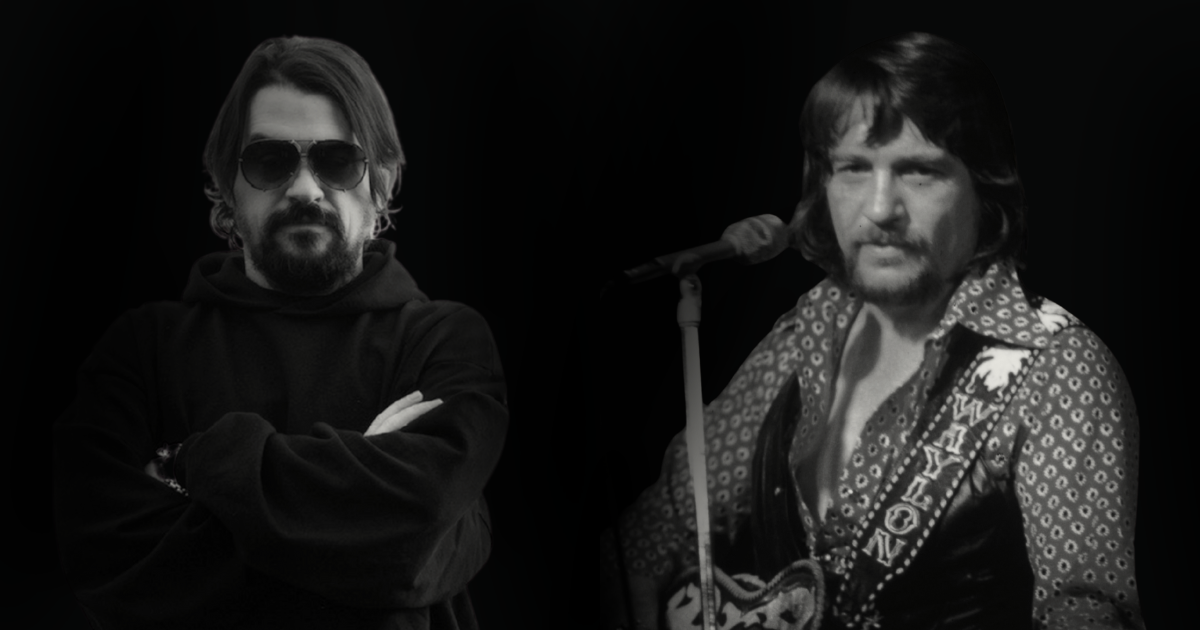
Shooter Jennings’ Heartfelt Tribute to His Legendary Father

Being the son or daughter of a legendary artist can often cause self-esteem and identity problems, especially if offspring choose their famous parent’s profession. But that clearly hasn’t been the case with Waylon Albright Jennings, much better known to music fans as “Shooter.”

The son of greats Waylon Jennings and Jessi Colter, Shooter Jennings has forged an impressive career as a singer, songwriter, instrumentalist, and producer covering over three decades, while displaying an idiomatic flexibility that’s seen him excel with both country and rock projects. Though he never uses the term “prodigy,” he was playing drums at five, taking piano lessons at eight, and sitting in with his father’s band on guitar at 14, while often spending time riding on his dad’s tour bus. Since then, he’s done an array of projects from heading bands to helming sessions, but he’s also always upheld a mantra of his father’s, which is stressing authenticity and passion in whatever he’s doing, writing, or playing.

Towards that end, Shooter’s newest venture both pays tribute to his famous father and reaffirms the musical values both have always championed. That’s the album Songbird (released October 3 via Son of Jessi/Thirty Tigers), which is the first of a planned posthumous trilogy of releases from the famed vocalist, who was one of the most distinctive and dominant voices to emerge in modern country during the ’70s and ’80s. Waylon’s landmark recordings, both as a solo artist and later in collaborations with Willie Nelson, Johnny Cash, Kris Kristofferson, Tompall Glaser and Jessi Colter, not only ushered in the “outlaw country” movement, they signaled a major step forward for artistic independence and creative freedom that resonated across the popular music spectrum.

Waylon Jennings was an innovative and vital figure not only as a performer, but as a personality. His voice and stature helped give gravitas to an otherwise forgettable TV show (The Dukes of Hazzard) and helped fuel a drive for authenticity within country. Still, despite that quest for freshness and originality, Waylon knew how to make hits. He had 16 number one tunes on Billboard‘s Hot Country Songs chart and 11 number one albums on Billboard‘s Top Country Albums chart during his amazing career, while always being a staunch advocate for his view of what constituted country.

Though Shooter has always called himself “an MTV kid who went down the rabbit hole with rock and roll,” he’s also long held a great reverence and respect for country. He began sorting through hundreds of his father’s personal studio recordings during the summer of 2024. Having just begun an exclusive residency at Hollywood’s historic Sunset Sound Studio 3 (which he redubbed “Snake Mountain”), Shooter began examining the tapes with veteran engineer Nate Haessly. Things moved quickly, his initial goal of finding previously lost Waylon songs he could share with the world morphing into instead deciding the best way to present what turned out to be a rich treasure trove of recordings. The material he was hearing was recorded between 1973 and 1984 and featured such guest stars as Tony Joe White and Jessi Colter.

“I started listening to this material last year and knew right away I had to put it out,” Shooter said during a recent phone interview with Good Country. “Once we began thinking about what we would put out there first, ‘Songbird’ just really kind of took over.

“Everyone that I played the song for heard it and they were really emotionally affected. Many broke out in tears the first time they heard it. It was an example of my father’s philosophy about doing songs from other people. Any song that he chose to record he would turn it into his own type of anthem. I really think that was the case with ‘Songbird,’” Shooter continued. “It gives the album a power and special flavor, and I’m really proud of everything on it.”

Songbird was released the first week of October, with Jennings’ evocative and stirring cover of the Fleetwood Mac tune its lead single. It debuted at number six on Billboard‘s Top Album Sales chart and it’s been in either the Top 10 or 20 on a host of other charts as well, representing the highest any Jennings LP has charted in 35 years. The 10-track release contains several other notable singles, most of them already previously complete. But on a couple of cuts, Shooter utilized the talents of surviving members of The Waylors, including guitarist Gordon Payne, bassist Jerry Bridges, keyboardist Barny Robertson, and backing vocalist Carter Robertson to add some spice. Elizabeth Cook and Ashley Monroe were also enlisted to help propel Songbird to new heights. Shooter mixed the songs in a purely analog fashion on Sunset Sound Studio 3’s custom 1976 DeMedio API mixing board.

Another song that’s quite appropriate in these times of extreme social conflict and division is Waylon’s version of Johnny Rodriguez’s “The Cowboy (Small Texas Town),” which finds him urging both cowboys and hippies to direct their ire away from each other and towards those causing greater structural harm to society. Additional recommended cuts include a sizzling Jennings version of Johnny Cash’s “After The Ball” and “I’d Like To Love You Baby” that features Jessi Colter.

Both “Wrong Road Again” and “I’m Gonna Lay Back With My Woman” are trademark Jennings numbers, while his version of Jesse Winchester’s “Brand New Tennessee Waltz” is also solid. The one criticism that some hardcore Waylon fans might make is Songbird doesn’t offer any previously unissued gems that he penned, feedback that Shooter’s been around long enough to anticipate. “What we went through and chose here were numbers that were made memorable through his treatments,” he continued.

“That’s something that my father always talked about and stressed, that whenever you do a song, make sure that you’re not just replicating something else, you’re making your own statement. That’s why Songbird has such an impact and that’s the case with everything on this album. These are songs that he loved from other people and wanted to perform and put his own stamp on them.”

Though born in Nashville, Shooter made the move to Los Angeles in 2001. Since then, he’s comfortably moved back and forth between rock and country. He’s had a mixed amount of success as a performer, cutting 11 albums and EPs in both genres. His biggest country hit came on the 2005 LP, Put The O Back in Country. That album’s lead single, “Fourth of July,” peaked at No. 22. The album version featured a cameo by George Jones, who sang the chorus to his signature song, “He Stopped Loving Her Today,” at the end. Unfortunately that was purged from the radio version, but Jones was credited on the Billboard charts.

The album also spotlighted Shooter’s then-new band, The .357s, which consisted of Leroy Powell on guitar, Bryan Keeling on drums, Ted Kamp on bass, Robby Turner on steel, and backing vocals by Bonnie Bramlett. Later that year his song “Busted in Baylor County” was featured in the 2005 film version of The Dukes of Hazzard. Furthermore, Jennings portrayed his father in the Johnny Cash biopic Walk The Line alongside Joaquin Phoenix and Reese Witherspoon. His rendition of his father’s song “I’m A Long Way From Home” was featured on the film’s soundtrack.

Still, Shooter’s greatest fame has come as a producer for a wealth of recordings. He was introduced to the studio as a child, his earliest exposure being inside Chips Moman’s studio in Nashville. His rock influences come through in his at times freewheeling use of studio technology that wasn’t in general use during his father’s heyday, but on any of his productions he’s never let the artist’s voice be overwhelmed by layers of excessive production or backdrop.

He’s been nominated for five GRAMMYs in that role and won two. A short list of memorable sessions he’s produced include such artists as Brandi Carlile (Best Americana Album GRAMMY), Tanya Tucker (Best Country Album GRAMMY), and American Aquarium, as well as Jessi Colter, Jamey Johnson, Jaime Wyatt, The White Buffalo, Hellbound Glory, The Mastersons, Julie Roberts, Kelsey Waldon, Yelawolf, Marilyn Manson, Jason Boland, Billy Don Burns, Avi Kaplan, Billy Ray Cyrus, and Angry Grandpa. Just this year alone, Shooter Jennings produced acclaimed releases by the Turnpike Troubadours, Charley Crockett, and Jake Owen.

When asked what he enjoys most or looks for in terms of production collaborations, Jennings says, “The people that I truly enjoy working with the most are the ones who have their own ideas of what they want to do, how they want to sound, or what they want to sing. Then they bring those ideas into the studio and we take it from there. I’m not really quite as good when it comes to just taking someone who doesn’t really have a sense of who they are and saying why don’t you try this or try that.

“With Charley [Crockett], for instance, that guy comes into the studio and he’s already got all these things together and we can just hit the road from there and take it forward. A guy like Duff [McKagan], who can just write their ass off, or a group like American Aquarium, I can get really excited. Brandi [Carlile] came to me and wanted me to work with her and that was a fantastic experience. But in general, if you’re someone who has their concept of what they want to do, then we can sit down and really make it work in the studio.”

Shooter also has amassed some good credits in the worlds of broadcasting, film, and television. As well as getting the chance to portray his father in the 2005 film Walk The Line, he has made celebrity appearances on television shows CSI, Marvel’s The Punisher, and American Revolutions, while also playing a gunslinger in the 2013 film The Other Life.

Back in 2009, Shooter participated in a CMT Crossroads session, paired with close friend and fellow musician Jamey Johnson. The evening’s set list consisted entirely of duets, including a cover of “Outlaw Shit” from the Waylon Forever album, two songs from Jennings’s discography – “God Bless Alabama” and “It Ain’t Easy” – and four songs from Johnson’s album That Lonesome Song including “High Cost Of Living,” “Mowing Down The Roses,” “Between Jennings and Jones,” and “In Color.”

Shooter cites Glenn Danzig and the band Oasis as folks that he hasn’t yet worked with whom he’d like to in the future. But right now, his main focus is on the two remaining Waylon Jennings posthumous recordings – though he’s not sure yet exactly when they will come out or what will be on them.

“One thing I can say for sure is that there’s a lot more great music coming,” Shooter concluded. “I was really amazed at how much great stuff is there, and I think the fans are going to really be thrilled when we get these next two out there. My father did a lot of great music before he passed, and we’re going to get as much of it out there as we can.”


Photos courtesy of Shooter Jennings.

John C. Reilly Is Mister Romantic

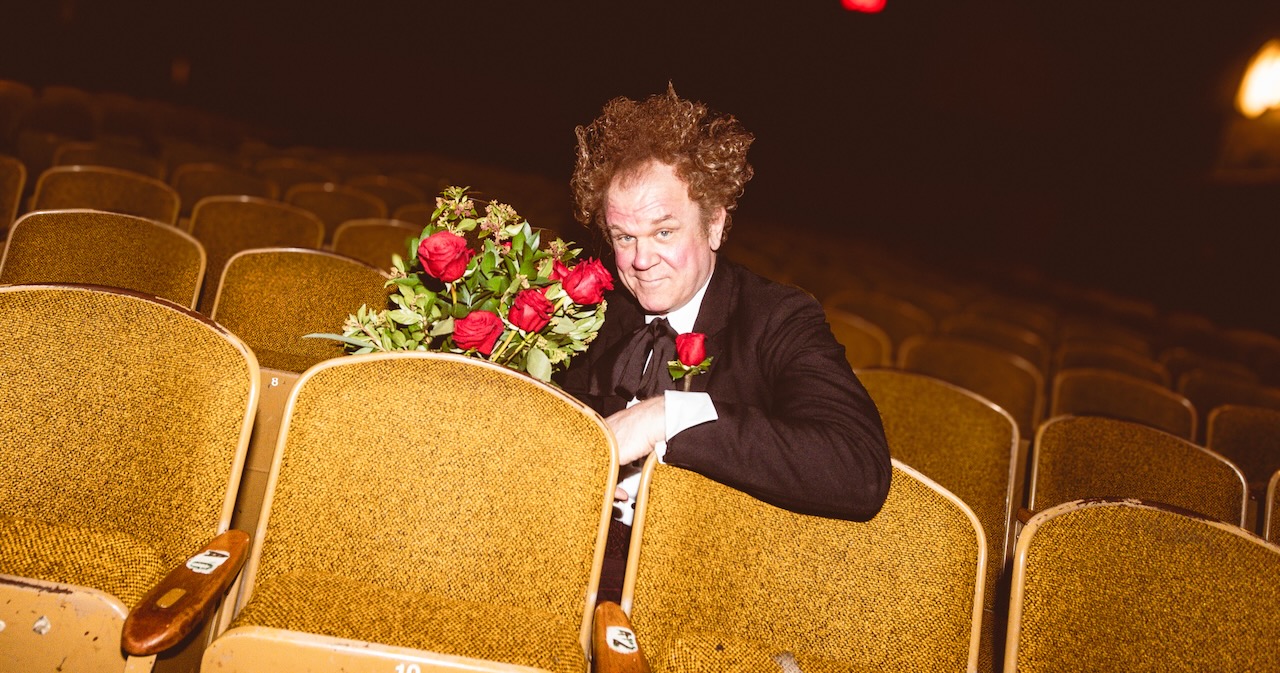
As John C. Reilly cavorts around a converted Brooklyn warehouse, his wiry hair branching heavenward, he looks a bit like a heavily rouged version of his eccentric Dr. Steve Brule. But Dr. Brule isn’t here, and neither is Reilly, in a sense. A fellow named Mister Romantic holds court instead, serenading and chatting up audience members in an effort to win their hearts. He swoons and croons, he has a microphone that looks like a rose, and he really, really wants to be loved forever, lest he be doomed to an eternity in a steamer trunk.

Reilly is the rare sort of actor whose talents span cutting dramas and gut-busting comedy antics, and underneath all of it, he’s maintained a soft spot for musical theater. Audiences have gotten a peek at that in Reilly’s Oscar-nominated embodiment of Chicago’s “Mister Cellophane,” and while he’s hammed it up as Dewey Cox in Walk Hard. He’s long nurtured his musicianship, too, with a handful of bands in his youth, a blues outfit, and his more recent cadre of bluegrass friends.

After finishing his duties as Jerry Buss in Winning Time: The Rise of the Lakers Dynasty, Reilly fixed his energy on finding some sort of remedy to the discord that he felt dominating everyday life. Mister Cellophane only got the one song, as Reilly has noted, so he drew upon more than twenty years of his own tune-collecting to develop a repertoire that felt suited to his mission and was close to his own heart. He’s pulled most of his material from the early 20th century body of the American Songbook, which Reilly expands to include a handful of Tom Waits numbers. Though Mister Romantic works a special kind of magic in person, he issued a baker’s dozen of recordings on his album What’s Not to Love? in mid-June, a more permanent evidence of his visitation.

He credits Los Angeles’ famed venue Largo with being the nexus of countless creative relationships – including Mister Romantic compatriots like David Garza, fiddler Gabe Witcher, and Sebastian Steinberg, who joins the ensemble on their recordings. The crew keep remarkably stony faces as Reilly improvises his appeals to the crowd, part of the story built around Mister Romantic’s cosmic arc: “He’s been traveling in this box for thousands of years trying to find love, and he just fails over and over. He doesn’t have a memory of the past, but the band does, and they’re stuck in this purgatory cycle with him,” Reilly says.

In chatting up different audience members between selections (“I’m not gay or straight, I’m desperate,” he offers), Reilly hopes to get everybody in the room feeling like they can open up a little bit. The songs, for Reilly, facilitate that softening in a sort of bucket-brigade through time. “‘What’ll I Do?’ could’ve been forgotten by the 1930s, but people loved that song and kept passing it along, and here I am, doing it again,” he says. “I think that’s the way to pay things forward, to pass along what you think is good.”

Now with an album release and several more Mister Romantic shows in his rearview mirror, Reilly is impassioned and reflective as he considers the value of vulnerability in a prickly modern world. His fervent belief in the fundamental goodness of human nature spills over as he shares his efforts to bring a little more love into people’s lives.

You made a point to tell your first audience participant that you weren’t bringing her up there to shame her or embarrass her, which got me thinking about how you’re watching people react to your character in real time. What has that been like for you with these performances?

John C. Reilly: It’s been a really special part of the show. I don’t know what I expected it to be when I started doing this, just kind of improvising my way through, but it’s been amazingly consistent. I say that stuff about “I’m not going to embarrass you or do anything weird” because people just don’t know what the hell the show is about, what the boundaries are. I really want to make people feel like I’m going to take care of them up there. The joke is not going to be on them.

With the audience, I’ve noticed if you really see people and the best in them, or you look for qualities that you find attractive, and you talk about them – it’s amazing the way people let down their guard and open up. It makes the whole audience feel like I’m talking directly to each one of them, even though I only get to four or five people during each show.

Have you had any reactions that have caught you off guard?

Sometimes I ask pretty heavy questions, like, “Have you ever been in love? How long did it last?” People generally want to play along, there’s no one that has ruined the interaction. People always ask me, “Are those people plants?” They’re never plants. The second thing they ask is, “Does anyone ever not cooperate?” I have to say, it’s like, 100% cooperation so far. I think part of it comes from the loving approach and the fact that I say at the beginning what the mission of the night is going to be.

It’s a really encouraging part of the show for me personally, because you really do want to believe that, in their heart of hearts, people are good. When I do this show, that is what I think when I go through the audience. I try to look at every single person directly at some point. The whole point of the show is connection – to the music, the world, to each other – and creating a live unique moment with a group of people. Whatever’s happening outside in the world is one thing, but in here, we’re all going to be connected by the end of the night.

There was a moment where you kind of scolded someone for having their phone out, but you somehow did it in the nicest way possible, where you brought it back to maintaining a connection in the moment.

I try not to even engage with what phones even are. We try to make it clear that you’re not supposed to use your phone during the show. I called that guy out just because I was surprised to see it in his hand. My point was not to say, “You broke the rules!” or get mad at him. There have been other times when people have their phones out. The point of those interactions is always to point out what’s special about this moment without a phone. When I said that, the audience almost started cheering [note: this is true]. Everyone is getting to this place where they’re starting to realize the cost of using a phone, and the separation that it creates between you and a performance or an experience.

How did Largo get to be such a major fixture in your life?

Largo has been a big part of my life since it opened in the early ’90s. It’s been a big part of my development as a singer and as a musician. I had my bluegrass band there for a long time. Mark Flanagan, who owns the place, creates such a special vibe in there, and does not allow cell phones during the shows. The audience ends up being focused in this way that’s different than other places I’ve been.

It’s kind of this temple of quality and entertainment, especially music. When I first started going to Largo, it was Jon Brion and all these different musicians moving through there – a lot of my friends who I play with now, who I played with in the past in other bands. Walk Hard, the songwriters from there – all those guys were all part of the Largo scene in one way or another. It really feels like home when I’m there, and it has its priorities right. It’s not just a place that’s about profit and selling beers, slamming them in and slamming them out. There’s a real soul to the place. I shudder to think what LA would be without Largo.

Is your bluegrass band something you think you’ll return to?

The blues, bluegrass, and this kind of show-tune world are all different aspects of me. I had a blues band before I had a bluegrass band. But I love bluegrass music, for the same reason I love all these American Songbook standards that I’m doing. That’s part of the conversation about the show that I think is really important, that Americana doesn’t just mean white Southern folk music from the 1930s.

People talk about, “What kind of category does [Mister Romantic] fit in?” To me, it’s Americana. A lot of these songs were written by Americans, and they’re not classical music. I think bluegrass definitely falls under the Americana banner, but I think songs in the American Songbook also fall under the Americana banner. Blues music falls under the banner. Why is blues music separated as African-American music? It’s part of America’s history. We should all embrace under the same umbrella.

You’ve talked about using Mister Romantic as a vehicle for getting people to open up a bit more to love and empathy. I think of romance as only one slice of the pie when it comes to loving or forms of love – why go with “romantic” as your channel into exploring empathy?

To me, romance is appreciating a beautiful sunset, or the way a flower looks or smells. Appreciating some weird little detail about a person that makes them unique, that makes you cherish them. It’s not just a Valentine’s Day card. Think about the reason that you got crushes on different people in the past. Sometimes it’s about the physical looks, but oftentimes it’s like, “Man, I just love the way that person does their art.” You crush out on people because of why they’re special. That, to me, is romantic.

On the surface of it, this guy Mister Romantic is trying to fall in love, but he doesn’t even really know what that is. He has so little experience. All he knows is, it’s a deep connection with someone else that will then stay with you forever. I’m not trying to get anyone to be anything. To me, the show is an opportunity to come together. If you’re craving connection, then you should come. I’m not trying to lecture people. I’m just pointing out the inherent truth about human beings, that we do love each other, that the secret to civilization and the reason that human beings are still around on earth is because of love.

I was seeing a lack of empathy – a coarseness to our dialogue, or a viciousness to our debate, and I thought, “Well, that’s distressing. What could I do that might lessen that?” And I decided I’ll do a show about love, and I’ll invite people to come see it, and maybe they’ll feel what I’m feeling. [Mister Romantic] is more about reminding people of what is true about us. On a good day, I think, everyone feels that people are ultimately good when the chips are down.

There’s a line from bell hooks’ All About Love about how “cynicism is the great mask of the disappointed and betrayed heart,” and when I re-read that recently, it resonated with how the crowd felt at the end of the show—like this cynical layer that a lot of us have was dissolved for a bit while we were laughing and having a good time together.

Yeah! It’s not just about me and what I’m saying. It’s also the music. The music has an alchemical effect on people that does put air in their balloons. I didn’t know that quote, but I agree with it. I say misanthropes are actually the most romantic people of all. They’re the most sensitive. They’re so sensitive that when they experience disappointment, they retreat into this place of, “Well, if it can’t be perfect, then everything is terrible.” But if you’re really truthful about the way life is, there are all these gray areas. Everyone is not an asshole. That’s a generalization. To be a true misanthrope, you’re generalizing, and not seeing what’s really there.

You have to be open to someone being a good person. I think that’s just the truth of the way things are. I do think if you’re worried and you want things to be better in the world and in your own personal life, you have to be willing to be vulnerable, and willing to reflect a world that you want to see. These things sound so rudimentary, or maybe cliché, but that’s where we’re at. We’re having to fight for empathy, to say, “Human beings have value across the board.” Human rights are at stake right now in the world. So it’s not a cliché. It’s not a thing that’s assumed to be true by everyone. These things have to be regenerated, generation after generation.

What’s something you’ve learned about yourself in the process of bringing Mister Romantic to life?

I’ve learned a lot about the courage it takes to invite people to a place and say, “I’m going to sing for you.” I had to learn what my voice is when I’m not impersonating other people. How do I sing? How do I convey my spirit through my voice? Those are big things, and making this album was a huge step. The personal journey to get yourself to believe that it’s good enough to share –that’s a big struggle for everyone, especially the first time they do it. Mister Romantic was a big step in that direction for me saying, “Whatever, I may not be the most perfect singer, but the reason that I’m singing is a good reason, and I’m going to keep doing it.”

You have to kind of have this blind faith in the mission, because there’s all kinds of slings and arrows that you can generate for yourself. But then you remember the core of it – these experiences that you have during the show, that I have from the show – and that tells you what you should be doing with yourself, what is important. If touching people the way this show touches people isn’t important, then I don’t know what is. It has given meaning to my life at a time when I was really struggling for meaning.


Make plans to meet Mister Romantic at a show near you.

Photo Credit: Bobbi Rich

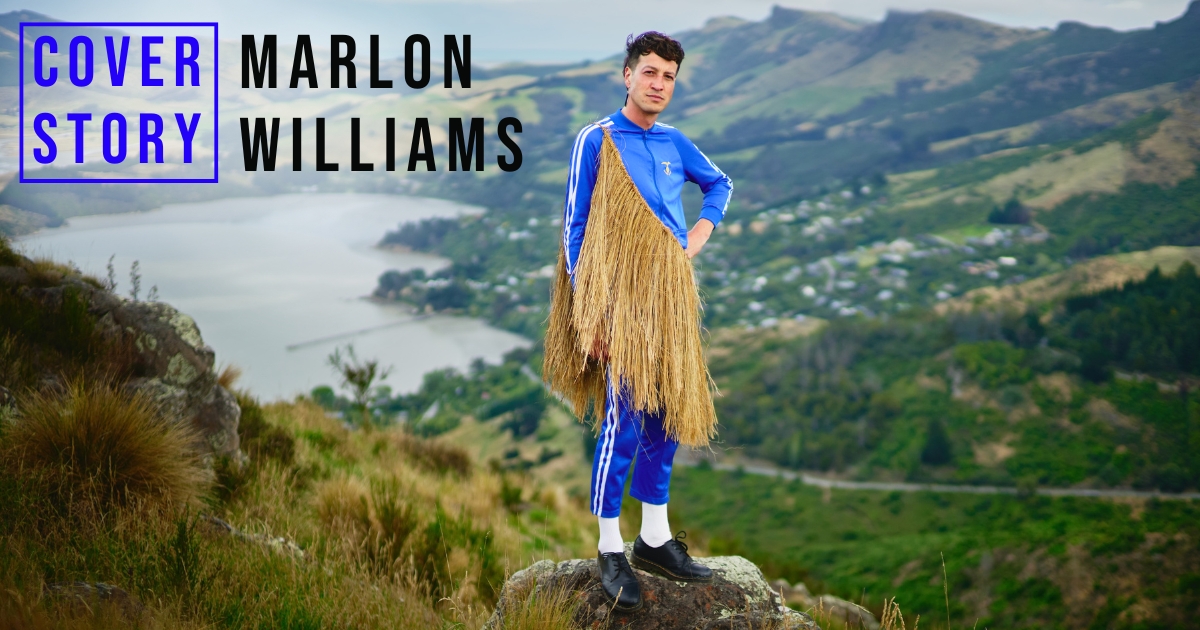
Marlon Williams’ ‘Te Whare Tīwekaweka’ Is a Homecoming Like Never Before

When he was in his early twenties, Marlon Williams watched a series of major earthquakes flatten Ōtautahi/Christchurch, the largest city in Te Waipounamu (the South Island of New Zealand). In the wake of that tragedy, the Māori New Zealand artist ascended onto the national and later international stage as a singer-songwriter, guitarist, and actor with a million-dollar smile and a golden, heaven-sent voice.

As a narrative device, it would be easy to enshrine his experiences during the earthquakes as a baptism by fire, a star emerging from the flames. However, as he puts it, “It’s tempting to say that experience fostered the folk scene here, but we’d been building something for a while before the earthquakes. When you look backwards through the haze of time, it’s easy to start telling yourself stories.” It’s a fitting reminder that things are never as simple as they look on the surface.

Now, fifteen years on, Williams is on the brink of showing us how deep things go with the release of his fourth solo album, Te Whare Tīwekaweka (The Messy House). In a similar tradition to the outdoorsy, range-roving sensibilities of his previous three records, the album represents an antipodean blend of country and western, folk, rock and roll, and mid-to-late 20th-century pop, connecting the musical dots between America, Australia, and Aotearoa (New Zealand).

This time around, however, Williams – a member of the Kāi Tahu and Ngāi Tai iwi (Māori tribes) – made the decision to step away from English and sing in his indigenous tongue, te reo Māori. Therein, his guiding light was a traditional Māori whakatauki (proverb), “Ko te reo Māori, he matapihi ki te ao Māori,” which translates into “The Māori language is a window to the Māori world.” As displayed by the album’s lilting lead singles, “Aua Atu Rā,” “Rere Mai Ngā Rau,” and “Kāhore He Manu E” (which features the New Zealand art-pop star Lorde), he’s onto something special.

During the reflective, soul-searching process of recording Te Whare Tīwekaweka, Williams found solidarity in his co-writer KOMMI (Kāi Tahu, Te-Āti-Awa), his longtime touring band The Yarra Benders, the He Waka Kōtuia singers, his co-producer Mark “Merk” Perkins, Lorde, and the community of Ōhinehou/Lyttelton, a small port town just northwest of Ōtautahi, where he recuperates between touring and recording projects.

From his early days performing flawless Hank Williams covers to crafting his own signature hits, such as “Dark Child,” “What’s Chasing You,” and “My Boy,” Williams’ talents have seen him tour with Bruce Springsteen and the Eagles, entertain audiences at Newport Folk Festival and Austin City Limits, and appear on Later with Jools Holland, Conan, NPR’s Tiny Desk, and more. Along the way, he’s landed acting roles in a range of Australian, New Zealand, and American film and television productions, including The Beautiful Lie, The Rehearsal, A Star Is Born, True History of The Gang, and Sweet Tooth.

From the bottom of the globe to the silver screen, it’s been a remarkable journey. The thing about journeys, though, is they often lead to coming home, and Te Whare Tīwekaweka is a homecoming like never before.

In early March, BGS spoke with Williams while he was on a promo run in Melbourne, Australia.

Congratulations on Te Whare Tīwekaweka. When I played it earlier, I thought about how comfortable and confident you sound. Tell me about the first time you listened to the album after finishing it.

Marlon Williams: It was that feeling of nervously stepping back from the details and seeing what the building looks like from the street. I felt really pleased with how structurally sound it was.

What do you think are the factors that allow you to inhabit the music to that level?

I’ve spent my entire life singing Māori music. No matter my shortcomings in speaking the language fluently and having full comprehension in that world, the pure physiology of singing in te reo Māori has been my way in. There’s a joy and a naturalness that has always been there. That gave me the confidence to take the plunge and really enjoy singing those vowel sounds and tuning on those consonants.

We’ve talked about this before. Part of what facilitated this was singing waiata (songs) written in te reo Māori by the late great Dr. Hirini Melbourne when you were in primary school (elementary school). 

Those songs are so simple and inviting, especially for children. They really help you get into the language on the ground level. A lot of what he did for this country can feel quite invisible, but most of us have some knowledge of the sound and feeling of the language as a result. It feels like a really lived part of my upbringing. His songs gave me a push forward into something that could have otherwise felt daunting and deep.

For those unfamiliar, could you talk about who Dr Hirini Melbourne was?

Hirini Melbourne was a Tūhoe and Ngāti Kahungunu educator and songwriter from up in Te Urewera [the hill country in the upper North Island of New Zealand]. He was born with a real sense of curiosity about the world and a sense of braveness and self-belief about taking on Te ao Māori [the Māori world] and bringing it to people in a really straightforward way. Hirini decided the best way was writing songs children could sing in te reo Māori about the natural world around us.

If you listen to his album, Forest and Ocean: Bird Songs by Hirini Melbourne, you’ll also see a lot of Scottish influence in terms of balladeering, melodies, and instrumentation. Later, he started collaborating with Dr. Richard Nunns. They’d play Taonga pūoro [traditional Māori musical instruments] and go into some very deep and ancient Māori music. Hirini’s whole career was this beautiful journey that was tragically cut short [in his fifties].

When I think about your music, I think about historical New Zealand country musicians like Tex Morton and John Grenell, who emerged from Te Waipounamu before finding success in Australia and America in the mid-to-late 20th century. 

I wasn’t super aware of that tradition until I learned about Hank Williams and completely fell in love with country music. After that, I realised there was a strong tradition back home. I guess it gives you a sort of reinforcement, a sense of history, and a throughline you can follow to the present moment.

I also think about New Zealand’s lineage of popular singers. People like Mr Lee Grant, Sir Howard Morrison, John Rowles, and Dean Waretini, who I see as antipodean equivalents to figures like Roy Orbison, Scott Walker, and Matt Monro. What does it say to you if I evoke these names around your album?

A lot of the celebration around this record is the celebrating the ability of Indigenous people – in this case, Māori specifically – to absorb what is going on in the world and make something from it. You can think about it in other terms, but I think about it in the sense of creativity. If you think about Māori religions like Ringatū [a combination of Christian beliefs and traditional Māori customs], there’s this willingness and this sort of epistemological elasticity to be able to go, “Oh, these things make sense together.” I can wield this tool. I’m going to come to it with my own stuff and create something unique and strong that is a blend of worlds. The main energy that was guiding me on this record was that tradition of synchronisation.

When do you consider to have been the starting point for Te Whare Tīwekaweka?

The literal start point was May 2019. That was the first time I sat down, had the melody and the structure of “Aua Atu Rā” and realised there was an implication in the music of what the song was about. This lilting lullaby was emerging. I’d say it was boat stuff. That was the first moment when I realised I was writing a waiata. I didn’t quite have it yet, but the phrasing was in [te reo] Māori, and I knew where it was telling me to go. At the time, I had a [Māori] proverb in my head, “He waka eke noa,” which means, “We’re all in this boat together.” I’ve always struggled with it. I believe it’s true, but we’re also completely alone in the universe.

From there, everything locked into place.

It strikes me that feeling connected could be considered an act of faith. You have to believe that it’s more than just you.

If I think about faith, I think about surrender, being humble, having humility, and going to a place I can acknowledge as new ground. I think faith is a useful word here.

Tell me about the conditions under which Te Whare Tīwekaweka came together.

It was pretty patchy in terms of the momentum of it. Once I had “Aua Atu Rā” loosely constructed, I took it to Kommi [Tamati-Elliffe], who helped me make sense of the grammar. After that, it sat there for a bit.

Kommi is a writer, rapper, poet, activist and lecturer in Māori and Indigenous Studies and te reo Māori. They perform te reo Kāi Tahu, the dialect of the largest iwi (tribe) within Te Waipounamu (the South Island of New Zealand). How would you describe them?

Kommi is a shapeshifter. I can’t work out how old they are. I found it hard to work out what they thought of me, but I knew there was this lovely softness there that belies a lot of deep thinking and some real sharpness. They’re very enigmatic as a person and a creative entity. One time, we got drunk at a party and talked about some work they were doing on phenomenology through a Te ao Māori lens. We were talking about that and making the most crass puns imaginable. There was this dichotomy of high-level and low-brow thinking that felt really playful.

What you’re telling me is you felt safe with them?

I guess. That’s all I can hope for in a collaborator.

Let’s get back to Te Whare Tīwekaweka

After I’d been sitting on “Aua Atu Rā” for a while, my My Boy album came out. In retrospect, you can also hear a lot of the direction that eventually went into Te Whare Tīwekaweka was already starting in My Boy. That took off for a bit, but all the while, I was back-and-forthing on songs in [te reo] Māori with Kommi. They’d send me lyrics all the time and I’d play around with them without really committing anything to paper.

Once I was near the end of touring My Boy, I started to turn my attention back to Te Whare Tīwekaweka. Then I agreed to let the director Ursula Grace Williams make a documentary about me [Marlon Williams: Ngā Ao E Rua – Two Worlds]. I thought, “Right, they’re filming me, so I better do what I’m saying.” Part of the intentionality was that the documentary would frame it into a real thing and make it happen. There was nowhere to hide.

Across the album, you sing about living between worlds, love, the land and sea, the weather, solitude, and travel, often through metaphors that invoke the natural world. Why do you think you gravitate towards these themes?

On a very basic level, I’m a very sunnily disposed person in terms of the way I comport myself. I feel desperately in love with people in the world and feel terrified of losing people, situations or understandings. These are the things I think about. The fact that I write songs like this is my outlet for ngā kare-ā-roto [what’s going on internally] and my darker side. I like to be warm and friendly in how I deal with people, but a little bit more severe when it comes to matters of the heart.

What do you think it has meant to make an album like this right now in Aotearoa and Te Waipounamu (New Zealand)?

Personally, I have a sense of achievement from having built something in that world. It also does something for my sense of family, in terms of representing a side of them very publicly that hasn’t always been accessible to them. There’s a lot of Kāi Tahu dialect on the album, so in terms of iwi, it feels good to put something on the map that speaks directly to the region. At the same time, this all sits within a very heated and fractious national conversation. On one level for me, it’s by the by; on another level, it’s great to have Māori music accepted into the mainstream. Whatever the political conversation going on is, if you can compel people with music, you’re really winning the battle on some level.

Taking things further, what do you think it means to be presenting Te Whare Tīwekaweka to a global audience?

Most places I go overseas, there is a sense of goodwill and excitement about marginalised languages being platformed. There’s a broader appetite due to people having instant access to a range of music through the internet. The threads you can draw together now are so vast and ungeographically constrained that I think people’s Overton window of what they’ll sit with and take in, even without knowing they’re not fully comprehending it, has shifted. I think people are generally either really open to that or completely shut off, which is something I don’t personally understand.

We can’t get around talking about Lorde singing on “Kāhore He Manu E.” It felt like she really met you where you were standing.

This speaks to the album in general. It was about bringing things to where I was standing. I didn’t want to jump into anyone else’s world. I had it in the back of my mind that I wanted her to sing on it. In the past, she kindly offered, “If you ever want me to sing on something, I’ll do it.” I could hear her on it from the moment I started writing it. There have been a few songs like that which have been very easily labored. They don’t take much writing and are always my favorite songs. It was important to me to get her involved in a way that wouldn’t be a post-hoc addition. She had to be part of the stitching of the record itself.

How do you feel in this moment, as you prepare to see what happens next?

I’m just excited to get these songs out into the world and see what they morph into when I start getting on stages and seeing what they do in a room. That’s going to change the way they feel and the way they want to be played. The second creative part of it is getting to the end of the tour and realising that the songs have become completely different from on the record. That can be a fun thing. Sometimes, it leads to remorse that you didn’t record them in the way they’ve gone. Other times, you realise you’ve completely ruined the song and gone away from what was good about it. I’m excited for the deployment.

Well, there’s always the live album.

Exactly.


Photo Credit: Steven Marr

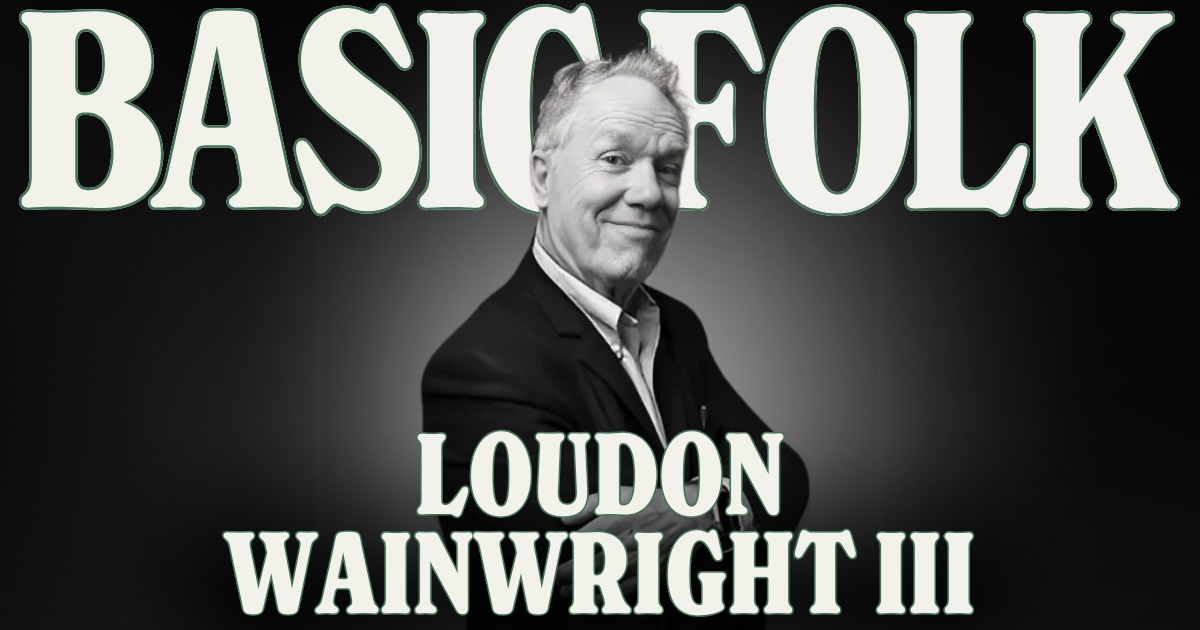
Basic Folk: Loudon Wainwright III

The legendary Loudon Wainwright III, whose career has spanned over five decades, is known for his deeply personal songwriting and sharp wit – and oversharing. The patriarch of the Wainwright folk dynasty (which includes Rufus, Martha, their late mother Kate McGarrigle, as well as Lucy and her mother Suzzy Roche), Loudon reflects on the balance between oversharing and maintaining privacy in his music in this episode of Basic Folk. He candidly discusses the lines he draws when writing about family and how his experiences with grief have shaped his art. I’m proud to say that I think we found a line he would not cross in our conversation! Listen in to hear history in the making.

LISTEN: APPLE • SPOTIFY • AMAZON • MP3

We also discuss his latest live album, Loudon Live in London, and his unique ability to unsettle and surprise his listeners during performances. We talk about his late father and namesake, Loudon Wainwright Jr., the famous writer for LIFE Magazine, who is present in everything LW3 does. We dive into his early days, including insights on his debut album thanks to a recent essay by Morrissey that highlights its significance. Moz points out that Wainwright has “the pep and readiness of someone who knows we will all soon be skeletons.”

After reading Loudon’s very detailed memoir, Liner Notes, I had to ask him about his relationship to memory and also his reputation for memory. Loudon also touches on his acting career, revealing how roles in popular films – especially Big Fish and Knocked Up – have introduced him to new audiences. Elsewhere he reveals that he was at the 1965 Newport Folk Festival where Dylan went electric and shares his memories of that fateful day.


Photo Credit: Lloyd Bishop

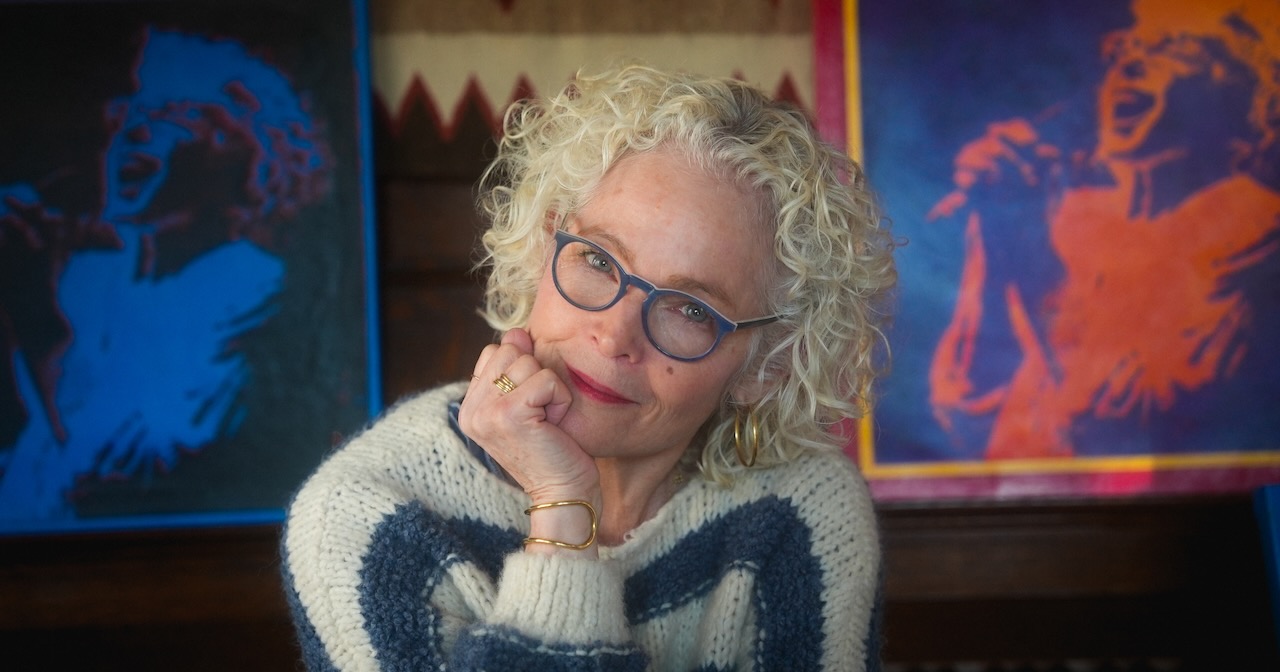
BGS 5+5: Amy Irving

Artist: Amy Irving
Hometown: San Francisco, California
Latest Album: Always Will Be (out April 25, 2025)

What has been the best advice you’ve received in your career so far?

I’ve been an actor all my life. I began on this new path, making music with the band GOOLIS, a few years back. And I’ve been learning so much from them, especially our band leader Jules David Bartkowski.

I remember going into the studio to record our sophomore album, Always Will Be, and Jules suggested I improvise some. Well, let me tell you, as an actress, I had been traumatized in acting school improv class. I was never comfortable acting without a script. I’ve always considered my gift was in interpreting playwrights’ words. So, when I sang, I followed the notes exactly. But Jules and Aaron, our keyboardist, insisted that I try. I complained my mistakes would be so loud and they replied, “Oh yeah, Amy, we never make mistakes here.” Okay, I got it. I did it. And now you can’t keep me down on the farm.

What rituals do you have, either in the studio or before a show?

Before every show, after sound check, I retreat to my dressing room, to meditate and rest my voice. It’s a time to conserve my energy. I eat some protein that will not talk to me on the stage. Half a beta blocker keeps my hands from shaking. I do a vocal warmup, either alone with a taped class or over FaceTime with my wonderful vocal coach, Celeste Simone. Gabriel Barreto, my son and manager and record producer and photographer, then digs his elbows into my tight shoulders. When it’s five minutes to showtime, I usually run to the bathroom and have to throw up (yes, I get terrible stage fright), knock back a shot of tequila, then Jules leads us all in an exercise of shaking all the tension from each part of our bodies.

Genre is dead (long live genre!), but how would you describe the genres and styles your music inhabits?

Working with bandleader Jules is a thrill, because our music covers so many genres, once he decides on his arrangements. He has taken the songs of Willie Nelson and transformed them from punk rock to samba.

Broadly speaking, Jules was going for a kind of golden age of mid- to late-century global pop/rock approach. To offer a more specific example: the first song of the record Always Will Be, “Dream Come True,” was, for Jules, an attempt to channel 1960s Italian rock acts like Mina and Adriano Celentano, while throwing in some Vegas-style late Elvis maximalism and some doo-wop baritone sax. On the song “Getting Over You,” he was trying to find an intersection between The Clash and The Supremes. On “Everywhere I Go” he was trying to mix the Mexican influence of the original with the connected worlds of Klezmer and Balkan music and 1970s Ethiopian jazz.

Since food and music go so well together, what is your dream pairing of a meal and a musician?

I’d like to eat foie gras and fig jam on a baguette with a glass of pinot noir while Édith Piaf sings to me “Non, je ne regrette rien.”

Does pineapple really belong on pizza?

I think anything goes. I remember a long time ago when Wolfgang Puck first opened Spagos on Sunset Boulevard in Los Angeles, I was appalled to see “Jewish Pizza” on the menu. Well, it was smoked salmon and cream cheese pizza and I’m here to tell you it was delicious!


Photo Credit: Gabriel Barreto

Reba’s Best On-Screen Moments

With her signature red hair and easy smile, Reba McEntire has maintained her gilded perch in the hearts of music fans for decades. In fact, 2024 marks the 50-year anniversary of her launch into stardom. The multi-hyphenate talent grew up singing in three-part harmony with her siblings as the local treasures of their small Oklahoma town. When Reba enrolled at Southeastern Oklahoma State University to pursue becoming a schoolteacher, she continued to perform locally on occasion. Serendipitously, her delivery of “The Star Spangled Banner” at the 1974 National Finals Rodeo caught the attention of country artist Red Steagall, who shepherded her through the kindlings of her musical career in Nashville.

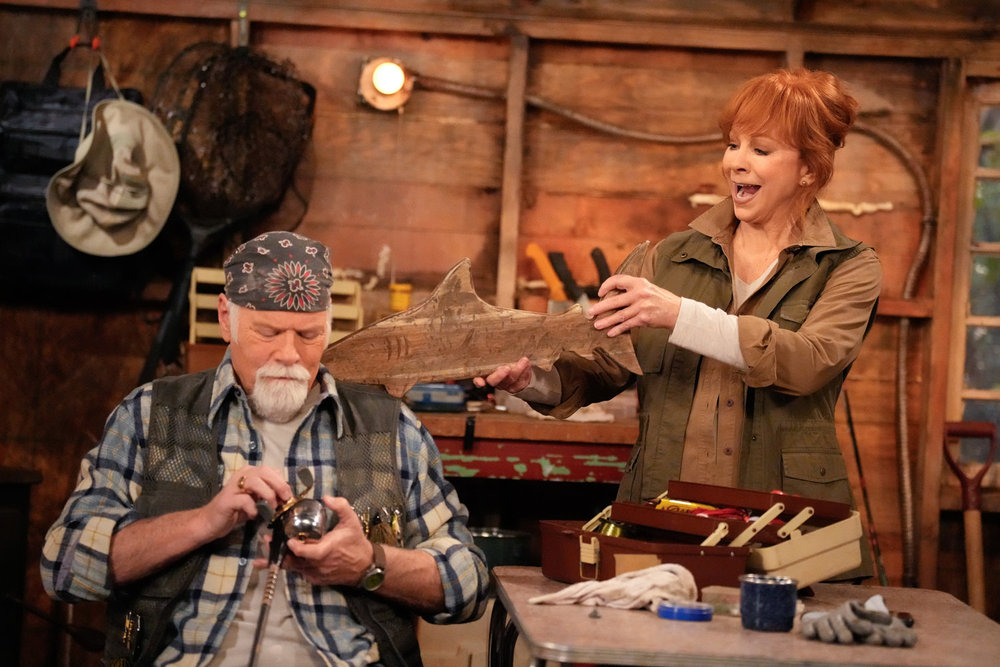
(L-R) Rex Linn as Emmett, Reba McEntire as Bobbie on Happy’s Place, “Fish Fry Monday,” Episode 104. Photo by Casey Durkin/NBC.

After over a decade of soaring success in country music, Reba took her first strut across the silver screen in 1990. The monster movie Tremors was just the first of the star’s rolling list of Hollywood credits. Immediately, Reba ignited a second love and poured herself into building up an acting career.

From her famous self-titled sitcom to serving as a recurring judge on The Voice, Reba’s icon status endures the test of time. For decades, she has masterfully committed to the balancing act of maintaining both her singing and acting endeavors.

Her most recent feat saw her return to the sitcom stage with the launch of her new show Happy’s Place (NBC / Peacock) in October. To honor this beloved country diva’s ever-thriving legacy, we’ve compiled a short list of our favorite on-screen Reba moments.

Tremors (1990)

A canon event for ’90s media, Reba started out strong with Tremors as her inaugural film role. This monster-studded Western cult classic is lauded for its apt casting and ’50s-esque creature feature vibes. Alongside Kevin Bacon, Fred Ward, and Michael Gross, Reba stars as “Heather Gummer,” a woman living in the small desert town of Perfection, Nevada. When Heather and her neighbors find themselves under attack by formidable, underground, carnivorous creatures known as “Graboids,” they must strategically wield their wit and weapons in order to survive.

While many struggle to transition between creative mediums, Reba’s first film appearance earned her the adoration of many. Her charisma and comedic timing accentuate the film’s charm, cementing her status as a versatile star capable of straddling the worlds of both music and acting alike.

Reba (2001 to 2007)

Few have the charisma and mass appeal to headline a sitcom titled in their own name. Even fewer have the charisma and mass appeal to do so for six successful seasons! Reba, the eponymous American sitcom, was a pillar of 2000s TV, running from 2001-2007. For five of its seasons, the feel-good show aired on Friday nights ranked 4th in its time slot, often with over 4 million viewers per episode.

The show follows “Reba Harte,” a middle-aged Houstonian woman whose life is torn asunder by discovery of her husband’s affair with his consequently pregnant dental hygienist mistress. Simultaneously, Reba’s own 17-year-old daughter becomes pregnant, and Reba must flex and pivot with all of her might in order to support her children.

Though the final episode of Reba aired well over a decade ago, the 2020s witnessed a resurgence of the show’s iconic theme song through a viral trend on TikTok. “I’m a Survivor,” performed by Reba and written by Shelby Kennedy and Phillip White, became an ironic anthem perfect for dramatizing even the most mundane of inconveniences.

Happy’s Place (2024)

The Queen of Country returned to her sitcom throne again this fall when the first episode of Happy’s Place aired on October 18, 2024. Similarly to her self-titled show, Happy’s Place centers around a woman whose life has been jostled by the discovery of previously unknown, kept-secret family members. In the case of Happy’s Place, Reba portrays Bobbie, a spunky Tennesseean who has been running her late father’s bar – the titular Happy’s Place – since his death several years earlier.

Much to her chagrin, Bobbie is dumbfounded by the news that she must share ownership of the bar with her newly-acquainted half-sister Isabella, the child of her father’s illicit affair. While reckoning with her father’s infidelity and forming a relationship with a sister decades her junior, Reba delivers a performance both comedic and heartwarming. The first season will be six episodes in total and it can be streamed on NBC (Fridays at 8PM ET) or on Peacock the day after airing.

Doing Push-Ups on The Voice (2024)

@reba Push-ups and inspirational quotes…we’re working more than just our vocal cords at #TheVoice ♬ original sound – Reba McEntire

Having made her debut on The Voice during its premiere season as a “Battle Advisor” to Blake Shelton’s team, Reba’s presence has been peppered throughout the show across its entire duration. During Season 24, Reba replaced Shelton as a coach, a position she maintains to this day.

Currently in the midst of its 26th season, Reba has dazzled viewers countless times, but this moment is our favorite. Just a few weeks ago, Gwen Stefani blocked Reba (a tactic judges use to prevent another coach from adding a singer to their own team during blind auditions). In a coy ploy at diverting attention from her made-for-TV snakery, Stefani drapes her body over the “BLOCKED” graphic and begins to do push-ups. As if the moment wasn’t iconic enough, Reba pushes the scene into absurdity when she follows suit, launching into a push-up routine in perfect form, putting Stefani to shame. Reba’s feat begs the question–should she pursue a third career in athletics?

Barb & Star Go to Vista Del Mar (2021)

This uncommon comedy follows the journey of two oddly antiquated 30-somethings Star and Barb (played by Kristen Wiig and Annie Mumolo) as they leave their Nevada home for the first time to venture out on a Florida vacation. The two ultimately must disentangle themselves from an evil woman’s plot to wreak havoc in the fictional Florida town.

The offbeat film’s charm is only augmented by a cameo from Reba, who graces the set as “Trish,” the embodiment of Star and Barb’s playful ideations and daydreams. Trish emerges as a water spirit to guide the two lifelong friends with her wisdom and encouragement – a role Reba, with her natural charm and benevolence, portrays with ease.

Malibu Country (2012)

With “don’t reinvent the wheel” seemingly as their ethos, the visionaries behind Malibu Country did not stray far off the beaten path. In this project, Reba returned to the world of sitcoms in 2012 to depict the role of Reba MacKenzie. Reba’s country star husband has been caught (yep, you guessed it) cheating on her and she must upheave her life. She and her two children move to her ex-husband’s property in Malibu where they start life anew and Reba decides to recommit to the music career she had abandoned in order to start her family. The show only ran for one 18-episode season in 2012/2013, but it did garner a fairly hefty viewership during its short life.

Young Sheldon (2019 to 2022)

In this Big Bang Theory spinoff, Reba guest stars as a hair stylist named June, appearing in a total of six episodes throughout seasons 3-5. June is the eccentric ex-wife of Coach Dale, the new boyfriend of Meemaw, Sheldon’s grandmother. As ever, Reba delights the show with her comedic timing and warm approach; her presence doubly adored given that Young Sheldon brought her and Annie Potts, both beloved Southern talents, onto the same screen.

She even pulled off the gaffe of a career in one scene where she sings karaoke… poorly. In addition to stealing the audience’s heart, Reba also met her current partner, Rex Linn, while filming.

Reba has proven time and time again her status as national treasure. Though just a snapshot of the legend’s perpetually blossoming career, this list demonstrates just how impactful Reba’s life as an actress has been – astonishingly while also maintaining her official title as Queen of Country, recording and releasing albums, co-headlining a residency in Las Vegas, and much more.

At 69 years old and still yet to peak, we look forward to all the Reba roles, songs, and iconicity to come.


Photo Credit: Both photos by Casey Durkin/NBC.
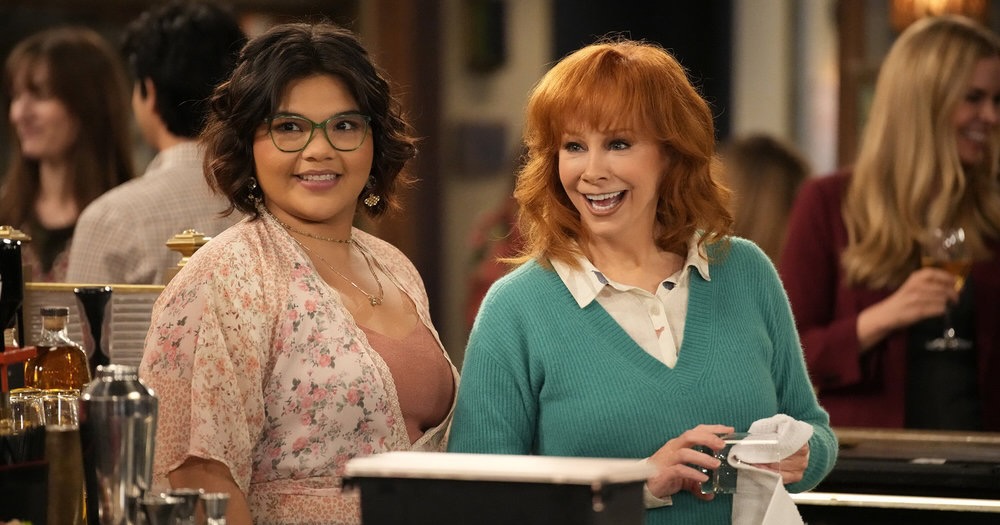
Lead Image: (L-R) Belissa Escobedo as Isabella, Reba McEntire as Bobbie on Happy’s Place, “Ladies Night,” Episode 107.

Tim Heidecker on the Battle of Life and Everything ‘Slipping Away’

Sitting in a Nashville hotel room one recent morning, Tim Heidecker is awaiting his Americanafest showcase. It’ll take place later that evening at 3rd & Lindsley. And Heidecker’s dreading the gig. Not because he doesn’t enjoy the act of performance. It’s simply the format in which the show will be set up: solo.

“It’s not my preferred way of presenting my songs,” Heidecker says. “I just came off the road with my band. Playing every night for two weeks. I’m a little road tested and warmed up. But, these songs benefit from other people playing them with me.”

That sense of vulnerability and, perhaps, a slight fear of what may or may not lie just around the corner of the grandiose ether surrounding all of us are core themes at the heart of Heidecker’s latest album, Slipping Away.

Though many may know Heidecker for his comedic brilliance – as part of innovative comedy duo Tim & Eric, on an array of beloved TV shows or across the big screen in major Hollywood films – he’s also been a lifelong singer-songwriter. And a damn fine one, too.

Now 48, Heidecker offers Slipping Away (available October 18 via Bloodshot Records) as a genuine snapshot of a human being wrestling with middle age and the intricacies of daily life. Just like many of us in the same boat of age and awareness.

Sonically, Slipping Away straddles psychedelic alt-country, surf rock, and indie folk. The ethereal attitude and lyrical ethos flows in the same river as Pavement and Wilco, with hints of Guided By Voices and They Might Be Giants felt throughout.

In an era of doom and gloom, Heidecker’s humor and zest are much needed – the notion that sometimes all you can do is laugh in pure amazement at the absurdity of what’s outside your front door.

“They say that Jesus Christ is coming back some day/ But if I were him, I think I would stay,” Heidecker sings during “Bows and Arrows.” “Up in the clouds, hanging out with dad/ Cuz things down here, things are going bad.”

In truth, much like his comedy, Tim Heidecker’s music is aimed at the idea of connectivity. Finding common ground with you and me. And his constant yearning to expose the lunacy and mysteries of one’s existence within the cosmic universe is why we’ve come to turn to Heidecker for comfort and solidarity in uncertain times.

I replayed the album this morning while having coffee with my girlfriend. And, in a good way, I started having existential thoughts. It made me think, “This is an honest snapshot of someone on the cusp of 50, who’s looking at the chaos of their youth in the rearview mirror and looking at the unknowns of growing older through the windshield.”

Tim Heidecker: That’s beautifully put. Can I use that? [Laughs] I mean, yes, I agree with that. It’s funny, you writers, critics and journalists are always better at vocalizing what I’m trying to say than I am. And I appreciate it. These things come from such a subliminal place for me that it’s nice to hear how it’s received or how it’s perceived. A lot of the writing of this record came right after the pandemic. There was this real, palpable feeling of an apocalyptic kind of mentality happening.

It still feels like that every day, though. That’s the world we live in now.

Yeah, for sure. And it was very crisp in 2020, 2021, 2022. In my comedy, I’ve tried a few different times to write shows about that. I’ve had a couple of projects that didn’t go very far, that were sort of about the end of the world. So, it’s been on my mind for a while and I wanted to do a record with that sort of concept or theme. And I started writing songs, letting the record be this way of getting those ideas out of my head.

With the title, Slipping Away, is that a reference to how fast time goes?

Picking the title of a record is always a pain and challenge to crystallize it. But, to me, there’s two meanings. The first half of the record is maybe a little more upbeat and positive and there’s this feeling of being content or being happy. Then, it can also mean things falling apart and disintegrating [in the second half]. There’s Slipping Away Side A and there’s Slipping Away Side B.

There’s also a very ethereal vibe to the album, too, where it’s like a dreamlike state.

Mm-Hmm.

With the song “Hey, Would You Call My Mom for Me,” was that a real encounter you had with somebody?

It was. We were on tour up in Vancouver. They have a big area of Vancouver that’s kind of been surrendered to addicts. They call it “Zombie Town.” I was walking around there and a kid asked me that. It was early in the morning and it took me off guard. I gave him 20 bucks and was like, “Sorry, I can’t.” I just couldn’t get involved. But, I came back to that line of, “Hey, would you call my mom for me?” Especially after the pandemic and living in Los Angeles, seeing a lot of people on the street. I felt like I wanted to capture that moment. Little journalistic songwriting there.

I’ve read that you’re an atheist/agnostic. And I wonder – with the pandemic and just life in general – if you’ve started to have maybe a crisis of faith or identity as you’ve gotten older?

I wouldn’t say crisis.

Recalibration, maybe?

Recalibration is fair. Honestly, I’m fairly firm in my agnosticism. I wouldn’t consider myself an atheist. I think it’s kind of an irrelevant question for me [about] what’s going on outside of reality. But, I’ve started therapy and working on some personal issues, health issues and stuff this past year. I don’t want to say midlife crisis. But, it’s this feeling of like, “Alright, I’ve been kind of coasting on my instincts for a long time. And it’s gotten me to where I am, which is a pretty good place. But, I’d like to figure out how I’m going to spend the rest of my life here – maybe a little happier, a little less anxiety-ridden, easier to be around.”

It’s been a couple years of taking the old car into the shop and getting it adjusted for long-term use. I mean, I’ve been touring with this band for the past couple years. And part of me is like, “Man, love this so much. How many more of these am I going to get to do? How many more of these runs where you’re just on the bus and you’re playing every night?” It takes a lot of work to get to that place where things are going well.

There’s the line on the record – I think it may be my favorite line on the record – [in the song “Something, Somewhere”] that goes, “There is a feeling I get, when things are going good but it’s coming to an end.” You’re at that place where things are working, something you’re working on or a project where you see the end. It’s that end of summer melancholy feeling. And I think you can zoom out and look at your life a little bit that way, too.

I couldn’t find much about your early music years. And I was curious about where music begins for you, and as somebody like yourself who came of age in early 1990s Pennsylvania. Was music just something that was always there?

Yeah. I came from a very musical family. My grandmother was very religious. She could play piano and she could play by ear. So, she could sit at the piano and figure out songs. My mom loved music and my dad was a big classic rock guy. He had a great record collection, then he updated his record collection to tapes as we were driving around in the ’80s. He would play the golden oldies and the best of the Beatles, [those] red and blue compilation [albums] a lot. I was always very performance driven, dressing up and doing shows and playing from as far back as I can remember. We had a piano in the house, and eventually a guitar came around. It was just something my parents really encouraged, I guess. My sister took piano lessons. It was just part of our education. I went to Catholic school, so there was a lot of singing. Just a lot of music around all the time.

Eventually, that led to bands being formed. My cousin had a hardcore punk band. And I gravitated towards those kinds of people who were also into music. I had an uncle who had really great taste in music and turned me on to all kinds of artists in the ’80s and ’90s [like] Billy Bragg. I remember him being a big fan of [Billy]. And it was fairly easy to put a band together. We all wanted to be on TV or make movies or create stuff. But, the band was the thing that you could put together after a good Christmas of getting a practice amp and a starter guitar. Your friend has a drum set and you could go into a basement and make something. We used to rent four-track tape recorders from the music store and make demos.

I hear a lot of influences on Slipping Away – indie rock, folk, alt-country. I hear a lot of stuff, too, that I grew up in the ’90s loving. I hear some Pavement influences. With Pavement, they always came across as a band where you could do whatever you wanted, and a song can be whatever you want it to be – something I always loved about them.

I loved Pavement. In fact, they’re a really important band for me, because when I was in high school my head was really firmly in the classic rock ’60s and ’70s world. I didn’t really connect to anything modern. I didn’t like pop punk music. I mean, it was okay. But, I didn’t really like the hardcore scene, the emo scene. I found it really boring and exhausting to listen to, and I couldn’t hear what they were saying. I didn’t like a lot of hip-hop. Whatever was happening in the early ’90s, I was not connecting with it.

And then I heard [Pavement’s] Crooked Rain, Crooked Rain record. I remember hearing the drumstick in [opening track] “Silence Kid.” And I was really into Exile on Main St. by The Rolling Stones, so it was a connection, a through line from the Stones to Pavement, where it felt like, “Oh, these guys are happening now.” That opened me up to Guided By Voices, The Jon Spencer Blues Explosion, Yo La Tengo, and that Matador Records scene. I was like, “Oh, I am of my age now. I’m of my time.” [Laughs]

When you’re touring, is it weird people may have preconceived notions of what to expect and expectations that aren’t accurate?

Yeah. I mean, that’s diminishing a little bit now. I think people are getting the message. There’s still people that are confused. They’re waiting for the punchline to drop. It took me a while to figure out how to behave as a performer when I’m doing my music. I’ve found this little sweet spot, where I can still be funny and I can still be myself. I don’t have to pretend to be this pretentious singer-songwriter, because I’m not. I’m just me. I don’t want to keep it too serious, so I lighten the mood enough where people get a little bit of both – they get the full picture, they get the full version of me.

One of the songs on Slipping Away is “Dad of the Year,” where you sing about how you had all these expectations growing up and conquering the world, as we all do. And now you’re in your late forties and you’re like, “Well, that didn’t really happen. But, in this other way, I’m actually really happy with where I landed.”

For sure. The goal is to get to that place where you’re content and satisfied with wherever you are. And in the way the world is, it’s very hard to not compare yourself to everything else that’s going on, to people you don’t know. Why do people care about Ben Affleck and J. Lo? [Laughs] When I see a picture of them, there’s this intrusive thought of, “Why aren’t they taking pictures of me?” And if you really are honest, I think everybody has varying degrees of that. And that’s the battle of life – to find ways of knowing how to be happy with where you’re at. But, don’t squash ambition, because ambition is very important, too.

To that, it does feel like you’re in a good place right now.

I’m in a great place. I’m in Nashville. I’m excited for the record to come out. I hope people sit with it. Some records you just need to sit down and listen to. I mean, Slipping Away is only 30 minutes. [Laughs] This isn’t coffee shop music.


Photo Credit: Chantal Anderson

BGS 5+5: The Lost Wayne

Artist: The Lost Wayne (AKA Hunter Hoffman)
Hometown: DMV (DC/Maryland/Virginia)
Latest Album: Tangerine
Personal nicknames (or rejected band names): Hamster, Smooch

Which artist has influenced you the most and how?

There have been, and there continues to be, so many that it’s hard to narrow it down to just one. But the artist who has had the deepest impact on me has definitely been Noah Gundersen. My sister introduced me to his music in my early 20s and I have been a massive fan ever since. His honesty and vulnerability in his writing is something I’ve always admired and been drawn to. We’re both around the same age and I felt the experiences he was singing about were lining up exactly with my life. I’ve seen him play live many times, both solo and with a full band, and you can feel the crowd just completely magnetized to him and feeling every lyric and emotion of each song. One way I like to test if a song is well written is if it’s message and gravitas holds up with just the artist and their instrument. His music is equally impactful with the fullness of produced sound or a solo acoustic set. He’s inspired me in so many ways in finding the deep truths in my songwriting and how to translate that into performing live. I could go on and on, but I feel like it’s starting to sound creepy so I’m going to stop!

What was the first moment that you knew you wanted to be a musician?

I moved to New York to go to acting school at The Neighborhood Playhouse and in my college years I had played little open mic showcases on campus and had written a handful of songs. I had dreams of becoming a musician, but was primarily focused on acting. I set a goal for myself that I wanted to get a show playing a full set of original music, so I went to an open mic at the former coffee shop/concert venue Waltz-Astoria in Queens. Pedro Gonzalez and his wife Song were the owners, and after I played my two-song slot he asked if I wanted to perform a set that weekend, since another artist had dropped out at the last minute. All of a sudden my dream became a reality in the first few weeks of moving to the city. After I finished my set and felt the rush of baring my soul through my songs on stage, I knew this was no longer going to only be a therapeutic hobby. I’m grateful to say I’ve been able to juggle both acting and music in my adulthood and I take pride in saying I am an actor AND a musician. It’s been a wonderful ride so far.

What other art forms – literature, film, dance, painting, etc. – inform your music?

All of them. I just finished reading Rick Rubin’s book, The Creative Act: A Way Of Being, and it’s really opened me to finding inspiration everywhere. I’ve grown to appreciate how individual and subjective art is for everyone and that what I appreciate and connect to could be the complete opposite experience for someone else. So even if I don’t relate to something or “like” it, I try to keep my mind open and attempt to analyze why it doesn’t. Art helps us define who we are to ourselves, and as an artist I try to consume as much as I can, because you never know what’s going to hit you.

What has been the best advice you’ve received in your career so far?

Steal from other artists. And not in the copyright way, but in the inspiration. Sometimes if I’m caught in a writer’s block or a creative lull in my songwriting, I get so much from learning a new song from an artist I love. Or messing with it to sound a different way and make it cater to my voice. I’m also self-taught on guitar and have relatively zero knowledge of music theory, so when I learn and practice other people’s music, I discover new chord progressions or playing styles that can be so helpful to my own songwriting.

How often do you hide behind a character in a song or use “you” when it’s actually “me?”

I’ve written a few songs through a sort of character in mind, but inherently every song I write is a form of me. 95% of the songs I’ve written have started from me in a room with my guitar, sitting with whatever feelings or circumstances are making their way through my life, and doodling around ’til something sparks. Sometimes I’m in a sad place and out comes a corny love song, or I’m happy as a clam and I word vomit a full existential crisis, my world burning down around me. At the end of the day it’s all me, whether I’m inhabiting a character or not, I have to start with the truth of it for myself. I think it can be a great exercise to write from the perspective of a character, and I can attest it’s a lot of fun, but my favorite songs I’ve written are the ones that are uncomfortably me. My experiences and stories are the only things I can honestly share, and if I can write a song that impacts someone the way so many artists have impacted me, then hopefully I’ll find myself in the ballpark of making something meaningful.


Photo Credit: Shannen Bamford

Harmonics with Beth Behrs: Carol Burnett

For the second episode of Season 2, we bring you a conversation between host Beth Behrs and legendary comedian, actor, singer, and entertainer Carol Burnett.

LISTEN: APPLE • SPOTIFY • STITCHERAMAZON • POCKET CASTS • MP3

Beth is still pinching herself after this interview with her hero: Carol Burnett has been the object of her idolization since childhood and is the ultimate reason Behrs is now a physical comedian. Not only has Burnett’s infectious comedic style influenced Behrs in every which way, but the two have both worked with CBS — for decades between them — and during the episode they bond over their shared experiences of working in front of a studio audience.

Burnett has had a long relationship with country music — the Carol Burnett Show featured country and roots artists and figures from Glen Campbell to Minnie Pearl. One episode included a parody of the CMA Awards: the Rural Music Awards, featuring Vicki Lawrence as one country singer, “Donna Cargo,” performing “S-P-L-I-T,” a gut-busting parody of Tammy Wynette’s “D-I-V-O-R-C-E.” Burnett even had a variety television special with the patron saint of Harmonics, Dolly Parton, filmed at the Grand Ole Opry House in Nashville in 1979.

In this amazing episode, Burnett tells her story of how not-so-random chance and divine intervention helped pave the way for her dreams of musical comedy that would become a lifelong career — one that would lead her to become the first woman to host a televised sketch comedy show.

She reminisces on friends and mentors — one in particular being Julie Andrews — who supported her on her way through show business and discusses the experience of being a woman in a “man’s game.”


Listen and subscribe to Harmonics through all podcast platforms and follow Harmonics and Beth Behrs on Instagram for series updates!