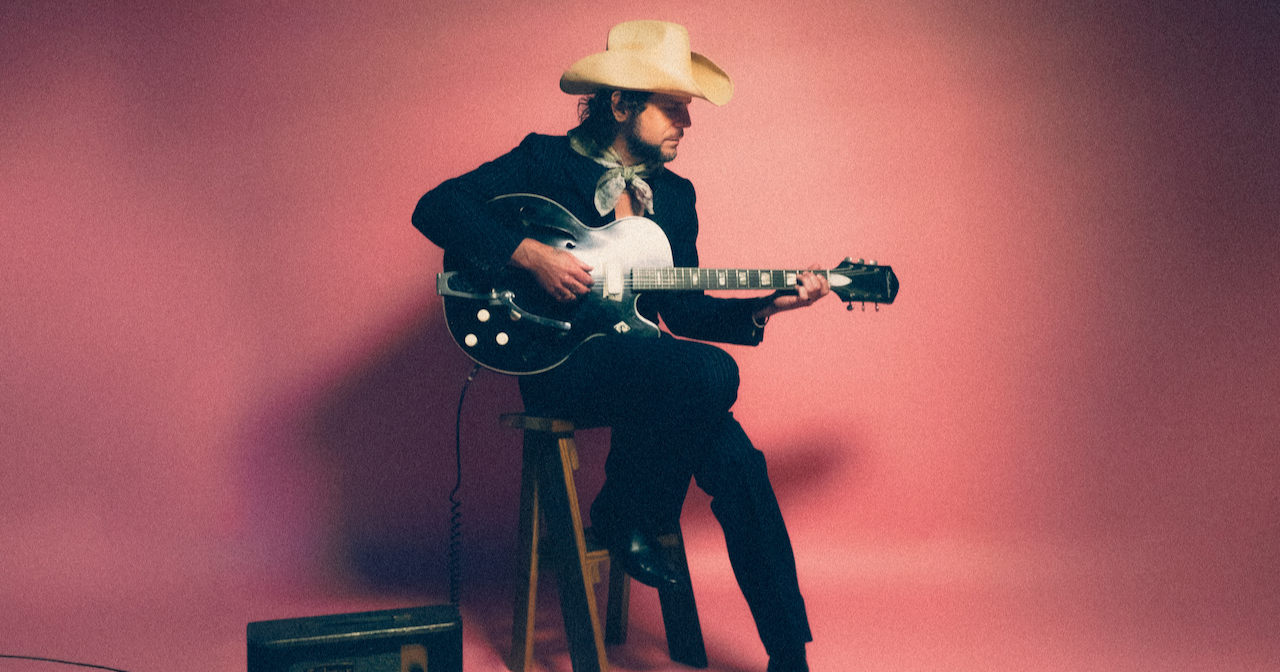
Langhorne Slim Takes Chances and Rocks Out

For more than 20 years, Langhorne Slim’s folk-leaning songs and rebellious nature have captivated crowds across the world. That trend continues on his ninth studio album, The Dreamin’ Kind, which takes a page out of Dolly Parton’s book and pivots toward rock ‘n’ roll in what’s arguably his most eye-opening collection of songs to date.

Out January 16 on Dualtone, the album is something Slim had long desired to make, finally coming to fruition after he had the opportunity to open for Greta Van Fleet at a show in Connecticut in 2021. The moment came mere months after having dropped what would be his debut on the Billboard Hot 200, Strawberry Mansion. But according to Greta’s bassist Sam F. Kiszka – who produced The Dreamin’ Kind – that wasn’t the band’s introduction to Slim. They’d been fans of his long before.

“I remember hearing Lost at Last, Volume 1 for the first time and it absolutely resonated with me,” Kiszka said in a press release. “[Slim] has the conviction of a hundred singers. He puts his entire body and soul into it. I listen to ‘The Way We Move’ and I think, ‘That’s a rock ‘n’ roll song, right there.’ Rock ‘n’ roll isn’t a sound, necessarily. It’s an energy, and he’s got it.”

Although the production takes on a strong Greta Van Fleet flavor on songs like “Haunted Man” and “Loyalty,” The Dreamin’ Kind also mixes in Slim’s folk-fueled identity as well, painting a sonic canvas that shows both where he’s come from and where he’s headed. Others, like “Strange Companion” and “Rickety Ol’ Bridge,” bring stylings together, with fuzzed out guitar licks and backbeats that portray a more folk-oriented stomp and clap mentality.

Ahead of the holiday season and a weekend run of shows opening for comedian Jordan Klepper (more on that below), Slim spoke with BGS about what inspired his foray into rock ‘n’ roll, how a letter inspired one of its songs, and how working with Greta Van Fleet’s Sam Kiszka and Daniel Wagner pushed him creatively.

What was your motivation for making the pivot to rock ‘n’ roll this deep into your career?

Langhorne Slim: It’s been a dream of mine for a long time. Some of the songs are definitely more of a departure from what I’ve previously done than others, but I don’t think that’ll come as a surprise to people who’ve been following me for a while now. Our live performances have always taken a page out of punk rock and rock ‘n’ roll, in addition to soul and folk music – genres be damned. Regardless of what it sounds like, most people just want to be moved by music.

When I first got started, I was playing a certain way, then a record deal followed and before you know it you’re forming an identity. But I eventually reached a point where I still loved my folky songs, but if I met new people or a fresh opportunity came about that would push me creatively, then let’s go for it! As I’ve grown older and built a family I think more and more about the identity I’ve built and what else is there when I start peeling back those layers – what else do I want to express? How might I want to use my voice or the instrument I play differently?

Rock ‘n’ roll was the natural progression of that, so when I became friends with Sam and Daniel from Greta Van Fleet, I think they saw that in me. From then on there was no pressure, we were just in it to have fun.

So this is something you’ve been wanting for a while, you just needed to find the right people to work with for everything to fall into place?

I’d been talking to a couple friends and people I admire about how when I made [2005’s When The Sun’s Gone Down] I wanted something at the crossroads of bluegrass and punk rock, like the Violent Femmes. I didn’t necessarily want to copy their sound, I just felt a kindred thing with their influences. So with [The Dreamin’ Kind], in my mind I was going for a garage rock meets gospel thing. I wouldn’t say that’s what the record actually became, but how I collaborated with Sam and everyone else for this record was so different from how I’ve worked in the past.

I liken it to a pitcher in baseball. As artists we sometimes focus too much on our strengths or “strong arm,” but I’ve only got so much time to live and I’m hungry to create. Before music my first thought ever about creating something had to do with building robots. With that in mind, the possibilities are endless when you think about all the people you could potentially collaborate with and the different creative bursts that could come from each.

That reminds me of something Ketch Secor told me in an interview a few months ago – “I am a container of multitudes.” It sounds like you’re the same way?

Ketch has been doing Old Crow for even longer than I’ve done my thing. I’m not somebody that says I don’t care if it lands, because I do, but most importantly I want my longtime supporters who’ve been so good to me to connect with this record. I’m not the first songwriter or creative person to say you can’t do the same stuff over and over, and I won’t be the last. At the end of the day, the power of music comes from the wonder and awe it provides us, so if what I’m doing doesn’t give me that same feeling then I’m not doing my job for the people, the energy and whatever else provides groove, melody and beauty in the form of music.

Another way you’ve pushed yourself outside your comfort zone lately has been on your gigs opening up shows for comedian Jordan Klepper. How did that connection come about and what have you learned from playing to a comedy show crowd?

I first met Jordan because my best friend Joel is a cameraman for The Daily Show. Jordan went on to officiate his wedding and through that Joel turned him onto my music. From there, we hit it off at the wedding and about a year later I got an email from Jordan about coming out and opening a few shows for him, which I was thrilled to do because, like you said, it’s out of my comfort zone. I knew there’d be a lot of people in the crowd not familiar with who I was.

That mix of excitement and fear reminds me of early in my career living in New York City, when I became friends with Eugene Mirman, a well-known comedian best known right now for his work as Gene Belcher on Bob’s Burgers. He had a comedy show on the Lower East Side that he’d invite me to be a regular musical guest on, so I did have experience playing comedy shows where nobody knew me. [Laughs] At one point Eugene invited me to play on a comedy tour that included him and a few other comedians who went on to make it big, like David Cross. They’d do their sets then I’d come out with my little hat and funny outfit and the entire crowd would start laughing thinking they were in for some musical comedy, but I was just playing my regular songs.

It was a tough place to break through at, but it taught me a lot. Jordan’s crowd is a little different though, because there’s people in the audience who actually know who I am, which is nice. I also try to cater the songs I play to his show to make them more topically relevant. It seems to be resonating so far – the reception I’ve received at the shows has been wonderful and beyond expectation.

It’s such a treat being on tour with a comedian, because when I’m on the road with another band I’ve found that I can’t watch them without analyzing and thinking how I could pull off what they’re doing. It’s hard to not put oneself in it, whereas watching a comedian it’s a lot easier to sit back, because it’s the same monologue and jokes. It’s how they’ve mastered the art of timing to add emphasis and help the joke land. It’s really fun to observe because I’ll just be sitting there laughing rather than wondering how I’d tell that same joke since it’s not the art form I do.

Sounds like a dream come true, which is also the name of one of the album’s songs. Is that a tune about manifesting the vision you have for your future, or are you unpacking something entirely different there?

You’re spot on. I wrote a letter to somebody, because my partner and I were thinking of moving out of the city and getting this country property, but it was way more than we could afford – I didn’t even know if they were gonna let our raggedy butts in there to take a look at it! So I wrote a letter to this woman and at the end I wrote, “It might be a long shot, but without a dream you can’t have a dream come true,” which also pulls a bit from Hammerstein’s “Happy Talk” (“If you don’t have a dream/ How you gonna have a dream come true?”).

On more general terms, it’s a song about casting aside your doubters and anything else in life that tells us to conform or dims the fire burning within us.

Like you said, you might not have gotten the house, but at least you got the song!

I look back now and there’s songs where I may not have gotten the girl (or in this case, house), but I did get the song, and that’s lasted longer than any relationship probably would. [Laughs]

Songs are like little miracles in that way.

While “Dream Come True” is all about looking ahead, you seem to be looking back on “Stealing Time” – which I’ve interpreted as a song about cherishing your moments with others and not taking them for granted. Is that the case?

There’s some reminiscing I’m doing on that one, too. Being a fairly new dad and sober man, I’ve noticed that being present and giving myself to and receiving somebody else’s time or energy is so rewarding. It’s so easy nowadays to run from our emotions and thoughts, which I used to do a lot with alcohol and drugs and all of us do now with our phones. There’s so many different ways that manifests and plays in my mind.

That song is also a phenomenon of love and infatuation and how one’s heart can be so on fire for somebody that closes theirs off to you. It’s like [Gotye’s] song “Somebody That I Used To Know” in that way.

Another song I wanted to ask about is “Haunted Man,” which to me comes off as the most Greta Van Fleet-sounding track on the album. What was the process for bringing it to life?

That song is the most collaborative that I did with those boys. It was also the tune that I fought Sam on the most, as far as not thinking it’d be a good fit [for the album]. Even after recording it, I didn’t think we’d include it as one of the dozen tracks, but Sam insisted I sit on it. Once all the songs were done I remember walking around my neighborhood pushing my son Silver in his stroller, listening to the songs, and making a mixtape of what stuff went well together. It was then when my perspective on the song changed and we decided to include it. Since then, the song has grown to become one of the most-liked tracks among our friends, which made me both happy and sad at first due to my ego. It’s easily the most different song on the record from what anybody’s heard me do before.

You just mentioned not thinking “Haunted Man” would make the cut onto the album. Does that mean you have extra material recorded we might hear more of sometime down the road?

For the basic tracks we spent nearly three weeks in the studio, with the first half with the Greta boys – me, Sam, Daniel, my dear friend Casey McAllister [who plays keys in my band], and multi-instrumentalist Cameron Neal [who mainly played electric guitar]. That portion was supposed to be the “rock” record, then for the second half I brought in my longtime band, The Law, to record a bunch of different stuff.

The plan was for them to be two separate records, but we wound up mix-matching a bit. Because of that, we have a bunch of leftover stuff we captured that I hope will be on my next record.

What has the experience of bringing this rock ‘n’ roll record to life taught you about yourself?

Do what scares you. See what else is there and burning inside you, don’t be afraid to take chances and rock out. I just want to keep making music that moves me and inspires other people. I never want to feel like I’m stagnant or compromising parts of myself.

I want to kiss the spirits in the way I feel they’ve kissed me so that I can give my all to the music.


Photo Credit: Kate LaMendola
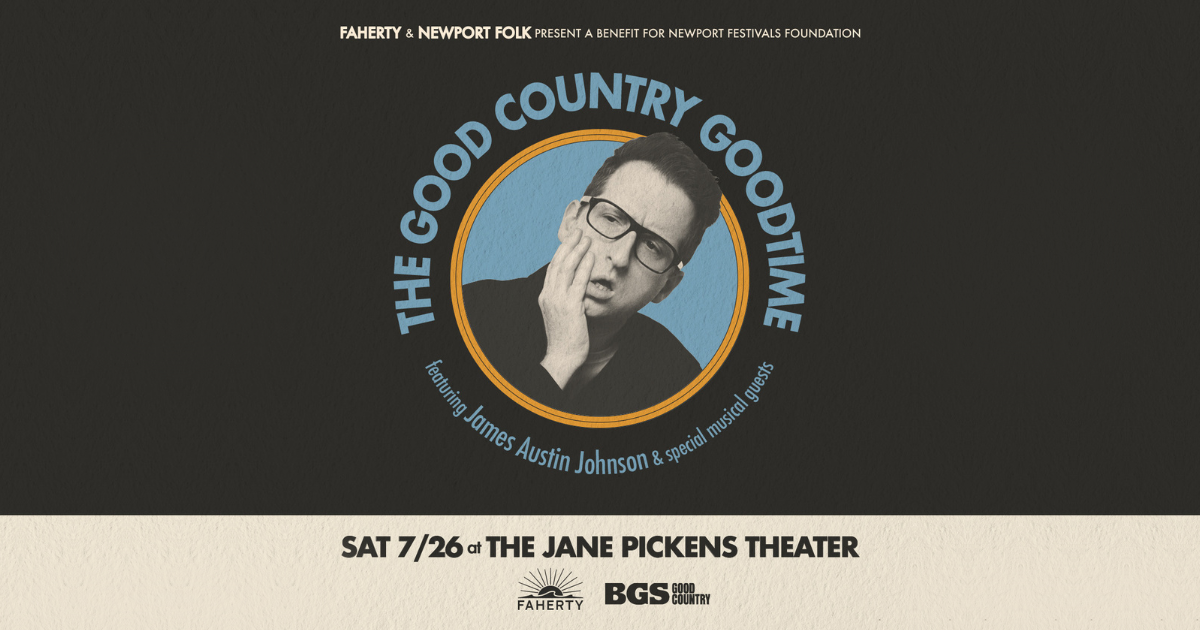
The Good Country Goodtime ft. James Austin Johnson

On Saturday, July 26, BGS and Good Country will return to Newport Folk Festival for another very special benefit aftershow, The Good Country Goodtime, featuring actor-comedian-musician James Austin Johnson (of SNL) and special musical guests. Each year, in the evenings after the festival winds down at Fort Adams State Park, Newport Folk hosts a variety of aftershows at venues around Newport, Rhode Island, each benefitting the Newport Festivals Foundation. Tickets went on sale today at 1pm EDT / 10am PDT – and sold out immediately. Join the wait list and get more info here.

Last year, BGS and our co-founder Ed Helms hosted A Bluegrass Situation at the Jane Pickens Theater on Saturday night of the festival. The sold-out superjam styled show featured performances by Helms and his Lonesome Trio, Langhorne Slim, Tony Trischka, Billy Bragg, Rhiannon Giddens, Madison Cunningham, Andrew Bird, and many more.

This year, it’s a brand new show, an exciting reimagination of our recent creation, The Good Country Goodtime, a variety show in the style of iconic old-timey radio shows, jamborees, and barn dances that’s a modern celebration of country, comedy, and everything beyond, below, and in between.


Hosted by Saturday Night Live cast member – and burgeoning Music Row songwriter – James Austin Johnson and written by comedy, radio, and podcast writer Greg Hess, the Good Country Goodtime will build on the show’s format as debuted by BGS and Good Country at Dynasty Typewriter in Los Angeles in September 2024. (Watch a humorous house band performance of “Who’s Gonna Feed Them Hogs” from the Dynasty Typewriter edition of the show below.)

The Newport Folk Fest rendition of our variety show will feature a who’s who of musical and comedy guests from the festival lineup and beyond, with many a surprise and once-in-a-lifetime moment in store. Hilarious sketches, iconic collaborations, a stellar house band, classic songs from the country canon, and plenty of homages to Newport Folk Festival and its country legacy will be sure to charm the Jane Pickens Theater audience.

We hope you are one of the lucky ticket holders joining us later this month for the Good Country Goodtime on Saturday, July 26, in Newport, Rhode Island. Join the waitlist and get more information on Newport Folk Festival here.


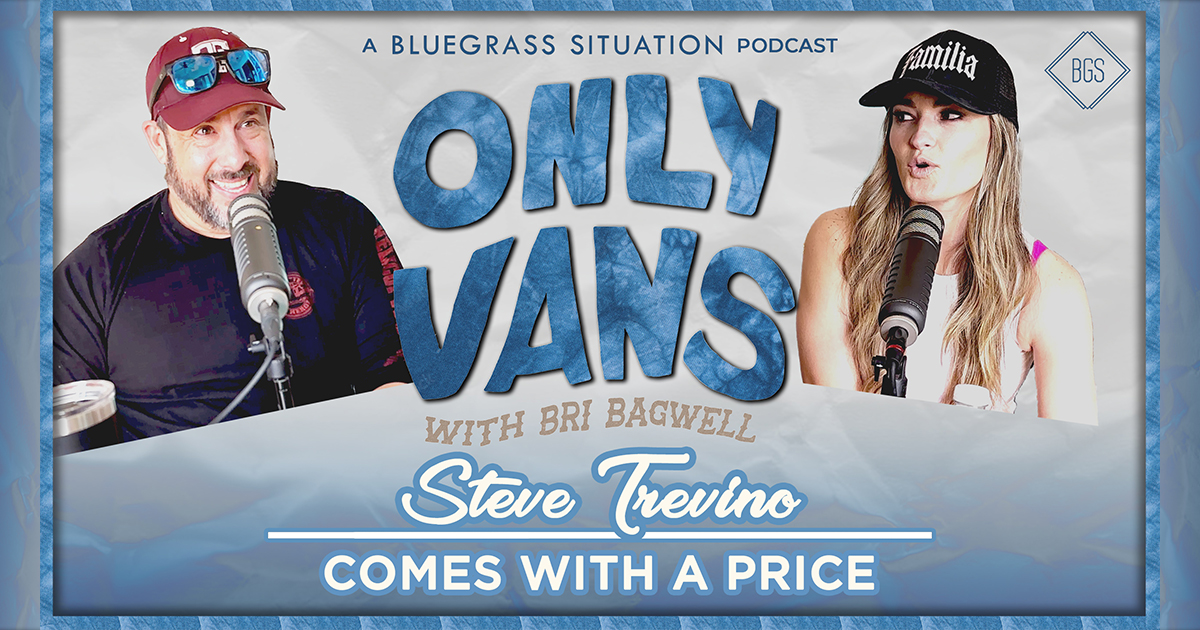
Steve Treviño on Only Vans with Bri Bagwell

My fairly new and hilarious friend, Steve Treviño, kindly welcomed us into his home podcast studio to film this episode of Only Vans. We talk about sleeping with your road manager, comedy and music parallels, representing Mexican-American culture, The Comedy Store, mentors, and more.

LISTEN: APPLE • SPOTIFY • AMAZON • MP3

Comedian Steve Treviño must be one of the most generous, kind, and brilliant human beings. I know he’s hilarious, and we have spent tiny pockets of time together in passing before this interview, but this man is a legit all-around family man, entrepreneur, road warrior, and not to mention, an extreme giver of his time. As you’ll find out, he was going to Canada to do a big show the morning after this interview and still agreed to this somehow– and invited Kyle and I to use his podcast room at his house in the Texas Hill Country (because my RV was in the shop)!

In our Only Vans conversation, Steve and I get into what we have in common, like being on the road, being with a partner who is also an entertainer, and the parallels of the music biz and the comedy biz. I love his insider insight into Nashville vs. Texas and we talk about Steve being an integral part in opening Gruene Recording Studio, seven minutes from my house. His hustle is unmatched and it’s so beautiful how much he loves and supports Texas music. Wait ’til you hear his Pat Green story – and the Randy we mention a lot is, in fact, Randy Rogers.

Steve takes a phone call with his wife Renae mid-podcast, which ends up being our first comedic bit together about it potentially being about Steve having cancer… anyway, Renae is @iamrenaewithana on Instagram. She is equally as talented and brilliant, and Steve would probably argue she is more of those things than him. But give him and her a follow and if you have not seen Steve live, he’s going everywhere and his tour sells out quick! SteveTreviño.com is the website, and if you haven’t yet – what are you doing? – check out his comedy specials for down-to-earth, real-life, feel-good, truly memorable comedy!


Alison Brown & Steve Martin Premiere New Video on ‘The Kelly Clarkson Show’

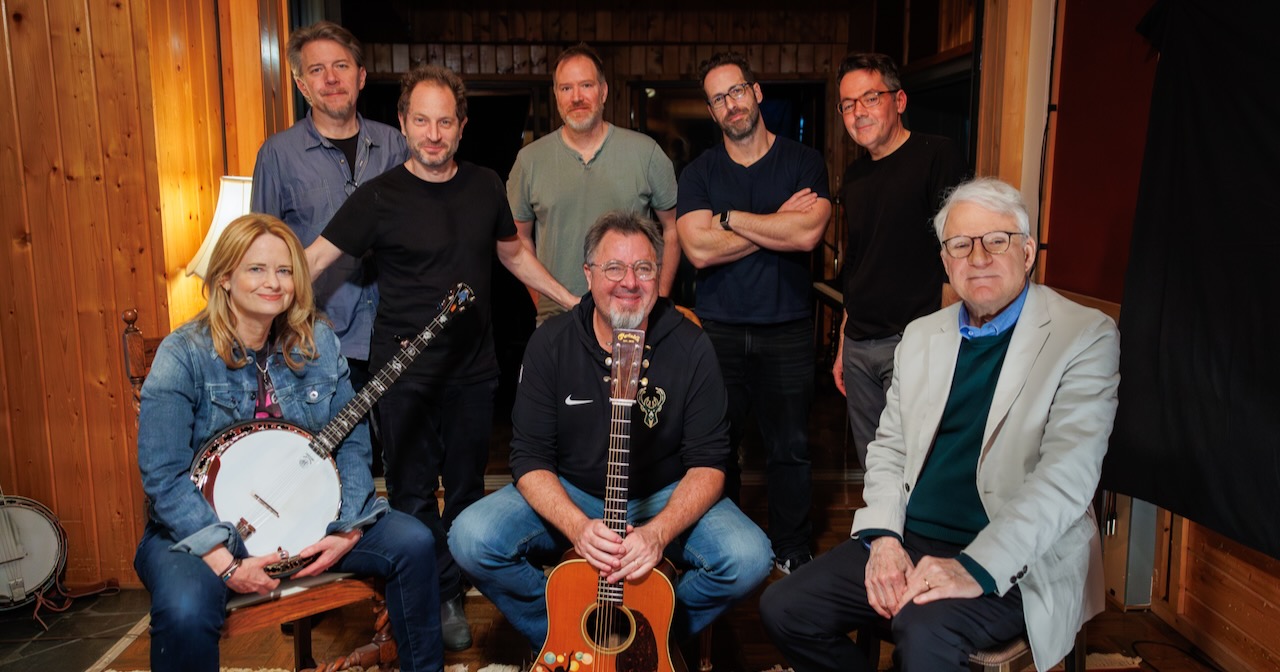
Two of the world’s preeminent banjo players, Alison Brown & Steve Martin, have returned with another delightful and gorgeous collaboration – this time, a bit less humorous than their last outing. On November 11, the pair debuted a brand new music video on The Kelly Clarkson Show. Featuring Country Music Hall of Fame inductee Vince Gill, the new track – and accompanying performance video – is a subtle stunner titled “Wall Guitar (Since You Said Goodbye).”

With lyrics by Martin and music by Brown, it’s an earnest and heart-wrenching number with a melancholy tone that’s served perfectly by Martin’s long-necked banjo and Brown’s low-tuned Deering Julia Belle model. Gill’s vocals are sweet and soaring as ever, with tasteful harmonies by Andrea Zonn and a backing band including Stuart Duncan, Rob Burger, Garry West, and Jordan Perlson. Bluegrass, old-time, and country combine here, with Martin utilizing classic roots music narrative references to tell a quintessential story of heartbreak and the music that gets us through it.

On Clarkson’s hit daytime television show, Martin & Brown chatted about the banjo, about Martin having performed on a recording of Clarkson’s in the past, about Brown’s career in Nashville and Compass Records, and much more. The pair even play a little banjo duet, walking Clarkson and the excited studio audience through the genesis of “Wall Guitar” and opening a window on their creative process.

“Don’t you feel like everything’s going to be alright?” Clarkson asks the audience to laughter while Martin and Brown pick the tune. It was a perfect reference to the message of the song and testament to the power of music – especially banjo music!

“Wall Guitar (Since You Said Goodbye)” is now available to stream and purchase everywhere you listen to music digitally.


Photo courtesy of Shore Fire Media.

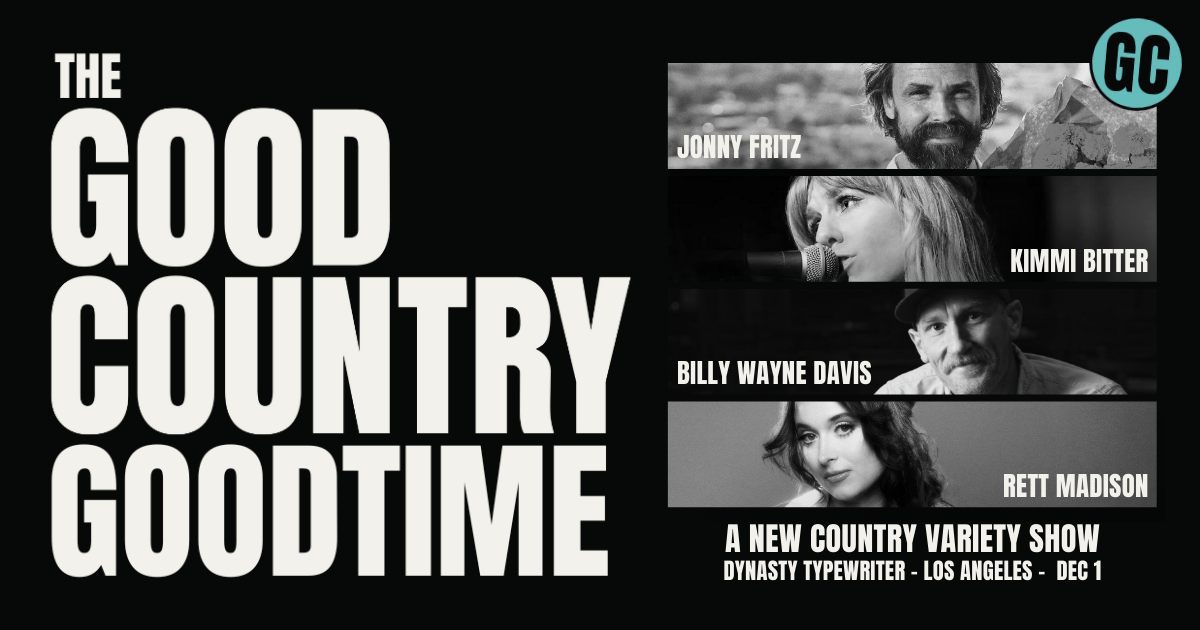
Good Country Goodtime Variety Show Returns to LA’s Dynasty Typewriter December 1

BGS and Good Country are so excited to continue our one-of-a-kind, brand new variety show, The Good Country Goodtime, at premier Los Angeles venue Dynasty Typewriter on December 1 at 7:30pm! The second edition of the event – which features the best in country, Americana, and roots music, a first-rate house band, delightful comedy, and more – will be a whimsical walk through a western winter wonderland. In-person and livestream tickets are on sale now.

Confirmed guests for the December 1 show include Jonny Fritz, purveyor and proprietor of “dad country;” the delightful Old School countrypolitan sounds of California native Kimmi Bitter; plus indie/country singer-songwriter Rett Madison, who just released her latest album, One More for Jackie; and, attendees will enjoy stories, laughs, and more from comedian and Tennessee’s own Billy Wayne Davis – who will serve as the evening’s host. The Coral Reefers’ Mick Utley will return to direct the Goodtime’s all-star house band. And, you never know which Hollywood writers, actors, and improvisers and special guests may just show up to join in the fun.

Not able to attend in person? Grab a livestream ticket, or, just hold on – our Good Country Goodtime shows are recorded by Dynasty Typewriter’s multi-camera, multi-media content capture team and we will be sharing performances, sketches, and songs from the Goodtime right here, on BGS and Good Country, in the near future. Stay tuned!

We hope you’ll join us for the December 1 edition of the Good Country Goodtime, the show’s last hurrah of 2024 – before we continue with regular monthly shows in 2025! Attendees will enjoy songs, stories, sketches, and so many surprises in store. Pull on your boots and get ready for our western winter wonderland.

Buy your tickets now for the Good Country Goodtime.


Sign up on Substack for even more Good Country, delivered direct to your email inbox!

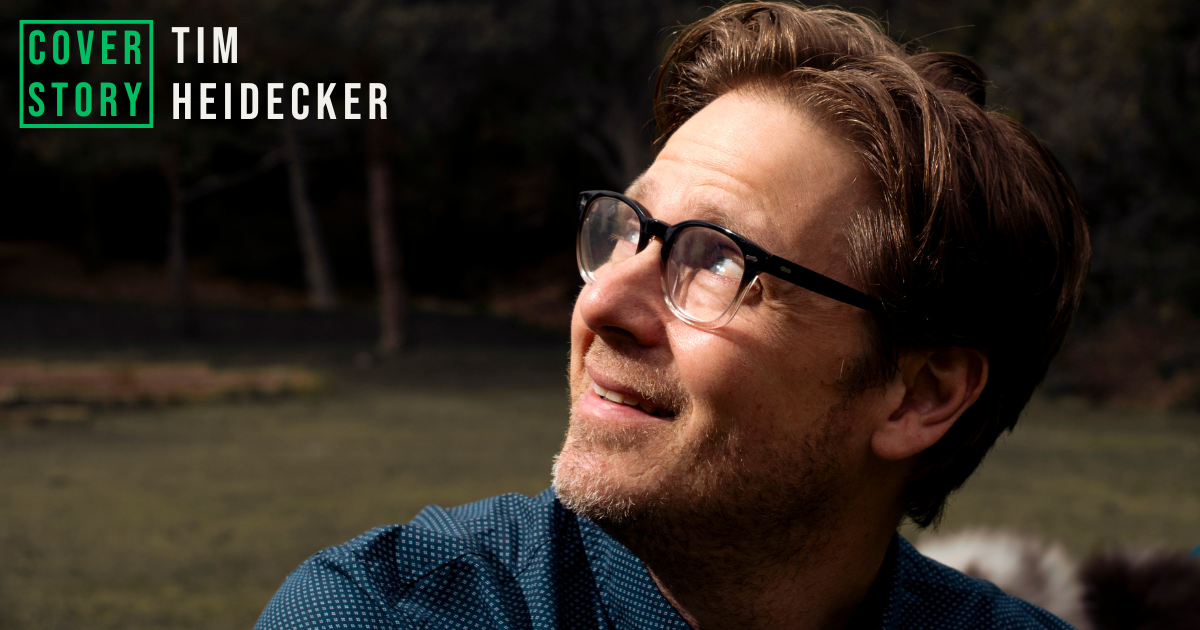
Tim Heidecker on the Battle of Life and Everything ‘Slipping Away’

Sitting in a Nashville hotel room one recent morning, Tim Heidecker is awaiting his Americanafest showcase. It’ll take place later that evening at 3rd & Lindsley. And Heidecker’s dreading the gig. Not because he doesn’t enjoy the act of performance. It’s simply the format in which the show will be set up: solo.

“It’s not my preferred way of presenting my songs,” Heidecker says. “I just came off the road with my band. Playing every night for two weeks. I’m a little road tested and warmed up. But, these songs benefit from other people playing them with me.”

That sense of vulnerability and, perhaps, a slight fear of what may or may not lie just around the corner of the grandiose ether surrounding all of us are core themes at the heart of Heidecker’s latest album, Slipping Away.

Though many may know Heidecker for his comedic brilliance – as part of innovative comedy duo Tim & Eric, on an array of beloved TV shows or across the big screen in major Hollywood films – he’s also been a lifelong singer-songwriter. And a damn fine one, too.

Now 48, Heidecker offers Slipping Away (available October 18 via Bloodshot Records) as a genuine snapshot of a human being wrestling with middle age and the intricacies of daily life. Just like many of us in the same boat of age and awareness.

Sonically, Slipping Away straddles psychedelic alt-country, surf rock, and indie folk. The ethereal attitude and lyrical ethos flows in the same river as Pavement and Wilco, with hints of Guided By Voices and They Might Be Giants felt throughout.

In an era of doom and gloom, Heidecker’s humor and zest are much needed – the notion that sometimes all you can do is laugh in pure amazement at the absurdity of what’s outside your front door.

“They say that Jesus Christ is coming back some day/ But if I were him, I think I would stay,” Heidecker sings during “Bows and Arrows.” “Up in the clouds, hanging out with dad/ Cuz things down here, things are going bad.”

In truth, much like his comedy, Tim Heidecker’s music is aimed at the idea of connectivity. Finding common ground with you and me. And his constant yearning to expose the lunacy and mysteries of one’s existence within the cosmic universe is why we’ve come to turn to Heidecker for comfort and solidarity in uncertain times.

I replayed the album this morning while having coffee with my girlfriend. And, in a good way, I started having existential thoughts. It made me think, “This is an honest snapshot of someone on the cusp of 50, who’s looking at the chaos of their youth in the rearview mirror and looking at the unknowns of growing older through the windshield.”

Tim Heidecker: That’s beautifully put. Can I use that? [Laughs] I mean, yes, I agree with that. It’s funny, you writers, critics and journalists are always better at vocalizing what I’m trying to say than I am. And I appreciate it. These things come from such a subliminal place for me that it’s nice to hear how it’s received or how it’s perceived. A lot of the writing of this record came right after the pandemic. There was this real, palpable feeling of an apocalyptic kind of mentality happening.

It still feels like that every day, though. That’s the world we live in now.

Yeah, for sure. And it was very crisp in 2020, 2021, 2022. In my comedy, I’ve tried a few different times to write shows about that. I’ve had a couple of projects that didn’t go very far, that were sort of about the end of the world. So, it’s been on my mind for a while and I wanted to do a record with that sort of concept or theme. And I started writing songs, letting the record be this way of getting those ideas out of my head.

With the title, Slipping Away, is that a reference to how fast time goes?

Picking the title of a record is always a pain and challenge to crystallize it. But, to me, there’s two meanings. The first half of the record is maybe a little more upbeat and positive and there’s this feeling of being content or being happy. Then, it can also mean things falling apart and disintegrating [in the second half]. There’s Slipping Away Side A and there’s Slipping Away Side B.

There’s also a very ethereal vibe to the album, too, where it’s like a dreamlike state.

Mm-Hmm.

With the song “Hey, Would You Call My Mom for Me,” was that a real encounter you had with somebody?

It was. We were on tour up in Vancouver. They have a big area of Vancouver that’s kind of been surrendered to addicts. They call it “Zombie Town.” I was walking around there and a kid asked me that. It was early in the morning and it took me off guard. I gave him 20 bucks and was like, “Sorry, I can’t.” I just couldn’t get involved. But, I came back to that line of, “Hey, would you call my mom for me?” Especially after the pandemic and living in Los Angeles, seeing a lot of people on the street. I felt like I wanted to capture that moment. Little journalistic songwriting there.

I’ve read that you’re an atheist/agnostic. And I wonder – with the pandemic and just life in general – if you’ve started to have maybe a crisis of faith or identity as you’ve gotten older?

I wouldn’t say crisis.

Recalibration, maybe?

Recalibration is fair. Honestly, I’m fairly firm in my agnosticism. I wouldn’t consider myself an atheist. I think it’s kind of an irrelevant question for me [about] what’s going on outside of reality. But, I’ve started therapy and working on some personal issues, health issues and stuff this past year. I don’t want to say midlife crisis. But, it’s this feeling of like, “Alright, I’ve been kind of coasting on my instincts for a long time. And it’s gotten me to where I am, which is a pretty good place. But, I’d like to figure out how I’m going to spend the rest of my life here – maybe a little happier, a little less anxiety-ridden, easier to be around.”

It’s been a couple years of taking the old car into the shop and getting it adjusted for long-term use. I mean, I’ve been touring with this band for the past couple years. And part of me is like, “Man, love this so much. How many more of these am I going to get to do? How many more of these runs where you’re just on the bus and you’re playing every night?” It takes a lot of work to get to that place where things are going well.

There’s the line on the record – I think it may be my favorite line on the record – [in the song “Something, Somewhere”] that goes, “There is a feeling I get, when things are going good but it’s coming to an end.” You’re at that place where things are working, something you’re working on or a project where you see the end. It’s that end of summer melancholy feeling. And I think you can zoom out and look at your life a little bit that way, too.

I couldn’t find much about your early music years. And I was curious about where music begins for you, and as somebody like yourself who came of age in early 1990s Pennsylvania. Was music just something that was always there?

Yeah. I came from a very musical family. My grandmother was very religious. She could play piano and she could play by ear. So, she could sit at the piano and figure out songs. My mom loved music and my dad was a big classic rock guy. He had a great record collection, then he updated his record collection to tapes as we were driving around in the ’80s. He would play the golden oldies and the best of the Beatles, [those] red and blue compilation [albums] a lot. I was always very performance driven, dressing up and doing shows and playing from as far back as I can remember. We had a piano in the house, and eventually a guitar came around. It was just something my parents really encouraged, I guess. My sister took piano lessons. It was just part of our education. I went to Catholic school, so there was a lot of singing. Just a lot of music around all the time.

Eventually, that led to bands being formed. My cousin had a hardcore punk band. And I gravitated towards those kinds of people who were also into music. I had an uncle who had really great taste in music and turned me on to all kinds of artists in the ’80s and ’90s [like] Billy Bragg. I remember him being a big fan of [Billy]. And it was fairly easy to put a band together. We all wanted to be on TV or make movies or create stuff. But, the band was the thing that you could put together after a good Christmas of getting a practice amp and a starter guitar. Your friend has a drum set and you could go into a basement and make something. We used to rent four-track tape recorders from the music store and make demos.

I hear a lot of influences on Slipping Away – indie rock, folk, alt-country. I hear a lot of stuff, too, that I grew up in the ’90s loving. I hear some Pavement influences. With Pavement, they always came across as a band where you could do whatever you wanted, and a song can be whatever you want it to be – something I always loved about them.

I loved Pavement. In fact, they’re a really important band for me, because when I was in high school my head was really firmly in the classic rock ’60s and ’70s world. I didn’t really connect to anything modern. I didn’t like pop punk music. I mean, it was okay. But, I didn’t really like the hardcore scene, the emo scene. I found it really boring and exhausting to listen to, and I couldn’t hear what they were saying. I didn’t like a lot of hip-hop. Whatever was happening in the early ’90s, I was not connecting with it.

And then I heard [Pavement’s] Crooked Rain, Crooked Rain record. I remember hearing the drumstick in [opening track] “Silence Kid.” And I was really into Exile on Main St. by The Rolling Stones, so it was a connection, a through line from the Stones to Pavement, where it felt like, “Oh, these guys are happening now.” That opened me up to Guided By Voices, The Jon Spencer Blues Explosion, Yo La Tengo, and that Matador Records scene. I was like, “Oh, I am of my age now. I’m of my time.” [Laughs]

When you’re touring, is it weird people may have preconceived notions of what to expect and expectations that aren’t accurate?

Yeah. I mean, that’s diminishing a little bit now. I think people are getting the message. There’s still people that are confused. They’re waiting for the punchline to drop. It took me a while to figure out how to behave as a performer when I’m doing my music. I’ve found this little sweet spot, where I can still be funny and I can still be myself. I don’t have to pretend to be this pretentious singer-songwriter, because I’m not. I’m just me. I don’t want to keep it too serious, so I lighten the mood enough where people get a little bit of both – they get the full picture, they get the full version of me.

One of the songs on Slipping Away is “Dad of the Year,” where you sing about how you had all these expectations growing up and conquering the world, as we all do. And now you’re in your late forties and you’re like, “Well, that didn’t really happen. But, in this other way, I’m actually really happy with where I landed.”

For sure. The goal is to get to that place where you’re content and satisfied with wherever you are. And in the way the world is, it’s very hard to not compare yourself to everything else that’s going on, to people you don’t know. Why do people care about Ben Affleck and J. Lo? [Laughs] When I see a picture of them, there’s this intrusive thought of, “Why aren’t they taking pictures of me?” And if you really are honest, I think everybody has varying degrees of that. And that’s the battle of life – to find ways of knowing how to be happy with where you’re at. But, don’t squash ambition, because ambition is very important, too.

To that, it does feel like you’re in a good place right now.

I’m in a great place. I’m in Nashville. I’m excited for the record to come out. I hope people sit with it. Some records you just need to sit down and listen to. I mean, Slipping Away is only 30 minutes. [Laughs] This isn’t coffee shop music.


Photo Credit: Chantal Anderson

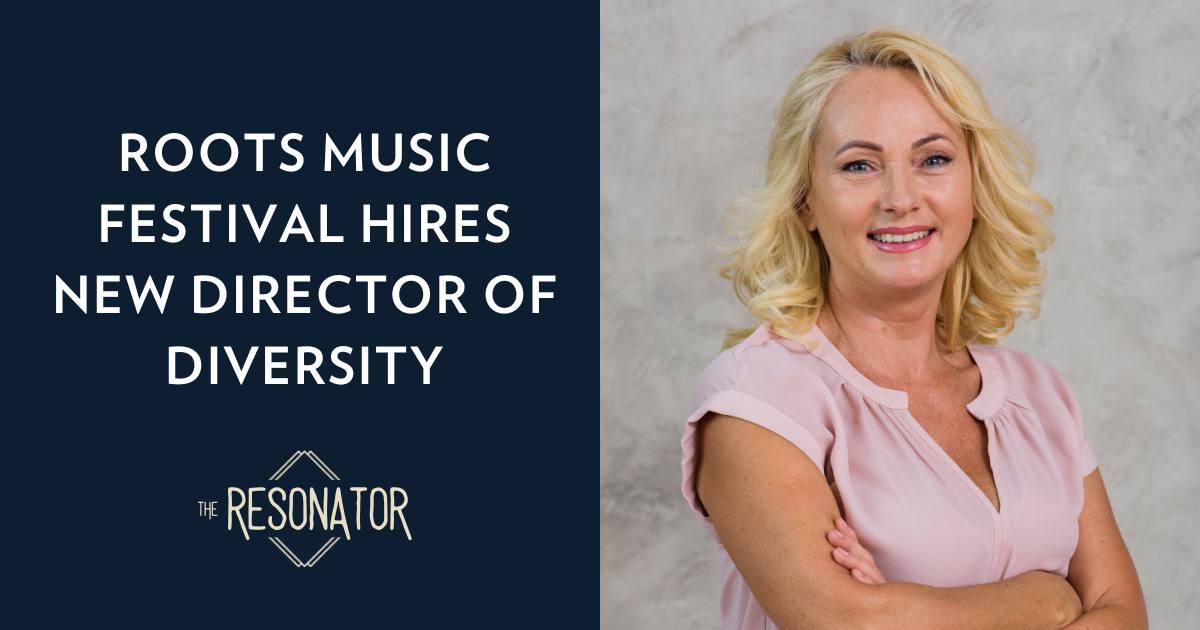
Roots Music Festival Hires New Director of Diversity

DAVENPORT, IOWA – The Quad Cities Roots Festival announced today that it has hired its first-ever Director of Diversity, 55-year-old Karen Van der Sloot.

“I’m absolutely over the moon,” Van der Sloot said, stirring a pot of her famous chili in her suburban kitchen. “Diversity needs a facelift. Because every face is beautiful, especially when it’s smiling!”

While many DEI programs across the country have seen funding cut or been permanently shuttered, the Quad Cities Roots Music Festival is doubling down on its commitment to diversity with this groundbreaking hire.

“Karen is someone who makes everyone feel included. Even people who were already included feel more included because of Karen’s relentless inclusivity,” said a festival spokesperson.

Despite having no background in roots music or diversity initiatives, Van der Sloot believes her experience as a mother of four will offer a fresh perspective to a festival often criticized for its homogeneity.

“Listen, if you’ve ever tried to get a teenager to put down their phone and eat the same thing as the rest of the family, you know that’s the real diversity work,” she smiled. “I always say, ‘We tried democracy, but I’m not gonna make a whole new meal for one person who suddenly says they’re vegan. Mama bear don’t play that game!’”

Her vision for diversity in roots music? “Instead of diversity, I’ve been saying we need melange-ity – a little mix of everything. Like a good chili. Melange-ity means more than just one flavor. We need the full ‘thang’ – beans, hamburger, chili powder, maybe even a little corn if you’re feeling wild!”

For Van der Sloot, that even means getting a mix of ideas, like soliciting programming feedback from her assistant, Dr. Akilah Jessup-Moore. “Did you know she has a doctorate in ethnomusicology from Duke? Such a smart cookie.” Moore could not be reached for comment.

Festival Executive Director – and Karen’s husband – Kevin Van der Sloot also chimed in. “Karen’s been a real trooper. She’s thrown herself into this role 100%. Plus, I think she needed something to do after our oldest left for college.”

Though music acts are still being confirmed, festival headliners will include the Bettendorf Boys Choir, pop-reggae group UB40, and local favorites The Muddy Walters, a blues band comprised entirely of retired dentists.


Greg Hess is a comedy writer and performer in Los Angeles. His work has been featured in The American Bystander, The Onion, Shouts & Murmurs, Points in Case, and he cohosts the hit satirical podcast MEGA.

ANNOUNCING: The Good Country Goodtime, a New Variety Show, Debuts This Month

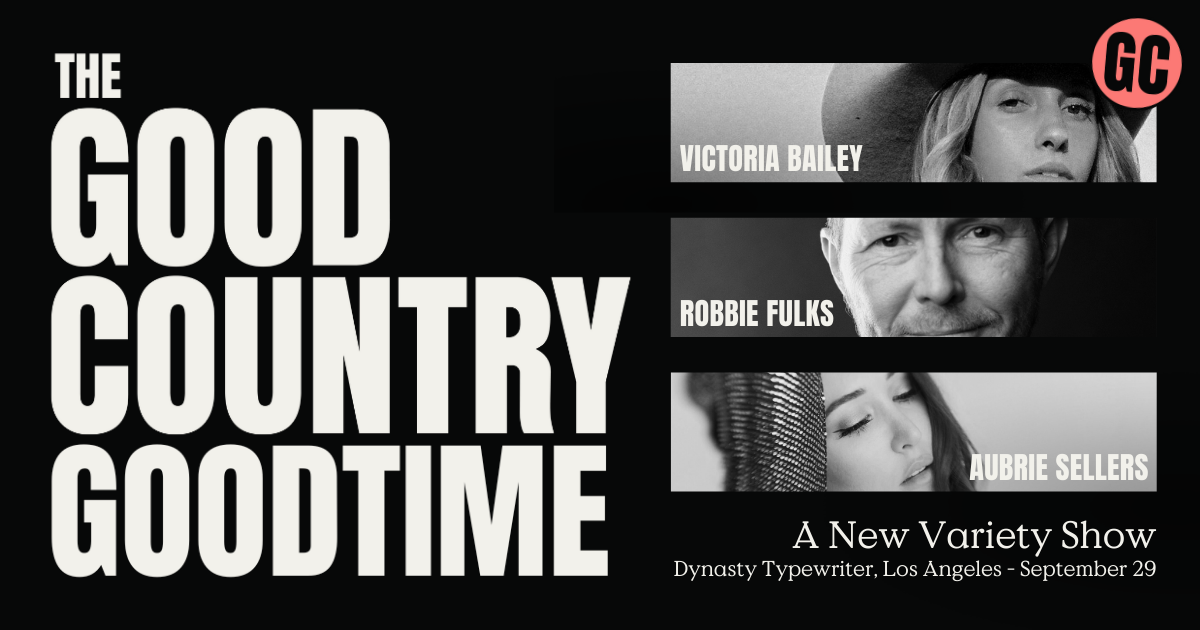
The team behind BGS and Good Country are thrilled to announce a brand new variety show, The Good Country Goodtime. Showcasing an expertly-curated monthly lineup of country and roots music, songwriting, comedy, and a rotating cast of star hosts grounded by an all-star house band, the premiere event will be held at Dynasty Typewriter in Los Angeles on September 29 at 7:30pm. Tickets are on sale now.

The inaugural edition of the new west coast home for the modern country scene will be lead by our very first guest host, the legendary Robbie Fulks, and will feature performances by “garage country” rocker Aubrie Sellers and honky-tonkin’ LA singer-songwriter Victoria Bailey. Performances and special collaborations by all of our Goodtime artists will be punctuated by dancing and fun, comedy and hijinx – including top secret surprise appearances from Hollywood’s hottest comedians and actors. Meanwhile, The Coral Reefers’ Mick Utley will helm the show’s all-star backing band.

“Everyone’s welcome at the Good Country Goodtime,” says Greg Hess, comedy writer and BGS contributor who authors the hit satirical column, The Resonator. Hess is one of the creatives behind the show’s concept, alongside BGS/GC executive director and co-founder, Amy Reitnouer Jacobs. “Celebrating the long-established intersection of comedy and country music,” Hess continued, “The Goodtime nods to the Grand Ole Opry and Hee Haw – plus a dash of Muppet Show mischief. This one-of-a-kind showcase brings together top-notch performers for a night of pure entertainment and Good Country.”

Dynasty Typewriter, which opened in 2018, is a perfect home for the variety show. Billed as “LA’s comedy clubhouse,” the venue is one of LA’s premier destinations for highly-curated entertainment, including comedy, music, live podcasts, screenings, and immersive experiences.

The Good Country Goodtime will continue with one additional 2024 show (date TBA), before kicking off regular monthly shows in 2025. Attendees will enjoy songs, stories, sketches, and so many surprises in store. Buy your tickets now for the debut of the Good Country Goodtime. 7:30pm, September 29, 2024 at Dynasty Typewriter in Los Angeles, California.

More information here.


Dust Bowl Balladeer Reboot: AI Woody Guthrie Releases New Songs

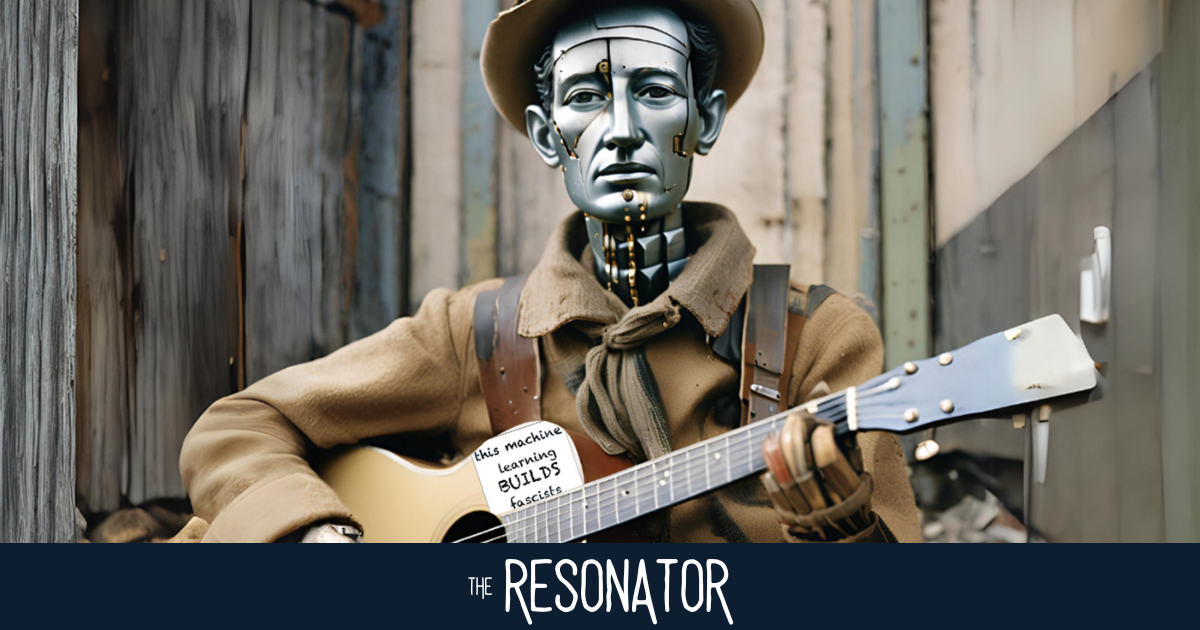
TULSA, OK – Generative AI company Altosphere released an album of “new” Woody Guthrie music, courtesy of their first artificially generated resurrection of the famous folk musician, who died in 1967.

“Artists like Woody Guthrie have been silent for years,” declared Altosphere CEO Blake Mundy. “So we thought, like, what if Woody dropped a new joint now? Wouldn’t that be sick?”

Guthrie, once a towering figure of American folk music, championed themes of equality, socialism, and anti-fascism and laid the groundwork for the socially conscious folk music later popularized by artists like Bob Dylan and Joan Baez. But apparently, AI Woody didn’t get the memo.

After initial testing returned some positive song outputs, researchers quickly discovered that their creation, dubbed “WoodyBot,” departed sharply from the views typically associated with Guthrie.

While the flesh-and-blood Guthrie was best known for “This Land is Your Land” and a guitar with the inscription “This machine kills fascists,” WoodyBot cranked out tunes praising corporate consolidation, touting a lower minimum wage, and lauding police militarization.

In one tune called “Good Guy with a Gun,” the bot crooned, “I’m a fella who ain’t yella/ This country’s headed down/ I’ll get my AR-15/ Run the leftists outta town!”

Attempts to course-correct the model with additional data from the Guthrie canon were not received well by WoodyBot. “I tried to give some feedback when it wrote ‘No Women in the Voting Booth,'” said AI researcher Pico Dhaliwal. “But WoodyBot called me a commie pinko and doxxed my whole family. From then on, I just let it do its thing.”

Other WoodyBot “hits” included “Take a Ride in the Cybertruck!,” “Jesus Was a Snowflake,” “Unions Make You Gay,” and “A Jar of Monster Energy (Makes Me Feel Alive!)”

“We still have some tweaking to do,” Mundy admitted, before adding with enthusiasm, “But actually, I think these songs slap way harder than the original stuff.”


Greg Hess is a comedy writer and performer in Los Angeles. His work has been featured in The American Bystander, The Onion, Shouts & Murmurs, Points in Case, and he cohosts the hit satirical podcast MEGA.