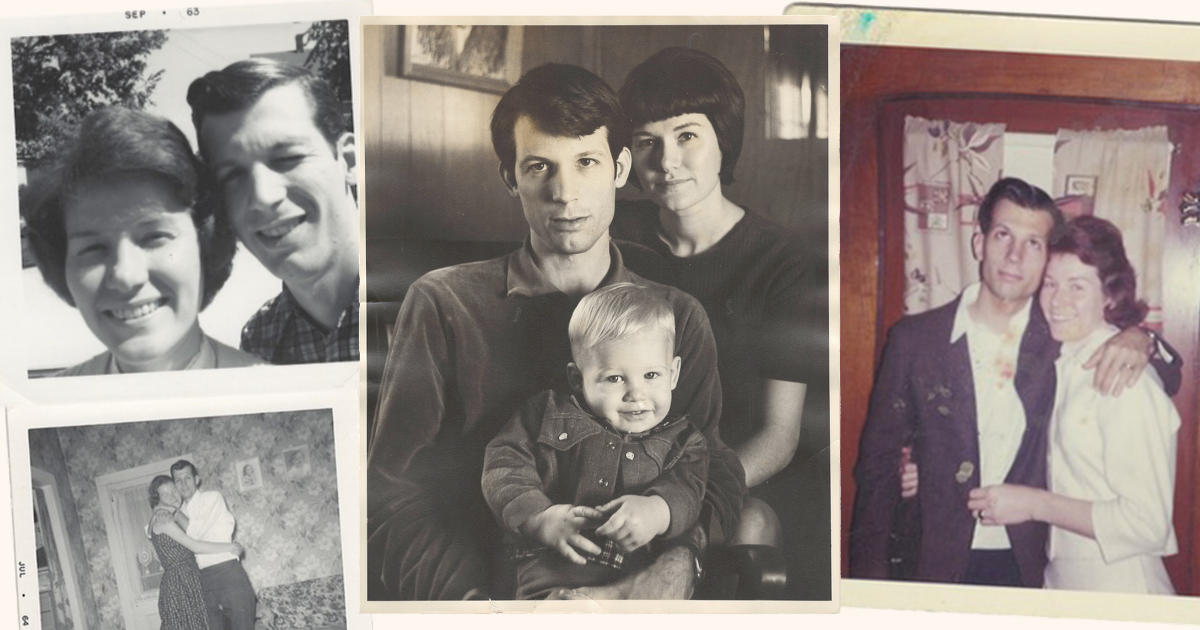
Do You Know the Story of Betty Harford?

Over the past year, I have been surprised and delighted to find myself working closely with the Hartford family to continue the legacy of one of my favorite musicians, John Hartford. John is famous for his songwriting, but he also loved the fiddle and was a true scholar of the instrument. After his death, thousands of previously unheard and unrecorded fiddle tunes were discovered, written out in his personal notebooks. John’s daughter, Katie Hogue, has spearheaded the effort to get these tunes recorded.

With the album Julia Belle, she brought together an all-women cast of musicians, engineers, and producers to record a second volume of his original tunes. (The first was released in 2020 as The John Hartford Fiddle Tune Project and was nominated for a GRAMMY.) I was honored to be included, and impressed that Katie had decided to frame the second volume of John’s fiddle tunes around women. But this focus on women musicians also got me wondering about the women in John’s life. As a woman honoring the work of a very successful male artist, I had to wonder, “Who were the women who made all of this creative time possible for John?”

I had briefly met John’s first wife, Betty Harford-Gilbert, at a dinner party. (John later added the “t” to “Hartford” as an artist name.) We got to talking about the past and her experiences meeting and marrying John, as well as raising their two children, Jamie and Katie. I was relieved to find that Betty wasn’t especially bitter towards John. In fact, she had a lot of nice things to say about him. But I wanted to know more about her role behind the scenes, and I asked if she would be up for doing an interview with me. As so often happens in these situations, I had an idea of the story I wanted to tell: Two musicians meet and fall in love. Both want to pursue a professional music career, but as soon as they have children, the woman is relegated to motherhood and steps out of the spotlight to support her husband’s stardom.

However, when I started talking to Betty, it became clear how much I was projecting my own insecurities and generational desires onto the situation. Betty is an extraordinary woman who seems to have lived a million different lives. The story she told me was much more interesting than the one I had made up in my head. In fact, I feel confident that this article is just the beginning of a much bigger project surrounding Betty, her music, and her life.

Betty Beck was born in a small town in southeast Missouri in 1939. Her parents separated when she was three and she was raised by her mother and her grandparents, along with her mother’s siblings, on a cotton farm. As a child, Betty began playing music with her uncle, Jimmy Payne. Jimmy was her mother’s baby brother and he was only 4 years older than Betty, so they grew up like siblings.

“We both hated being in the cotton fields,” Betty explains. “All my life I was working in the cotton fields. We would chop cotton. We would pick cotton. I couldn’t remember a time when I wasn’t doing that. But Jimmy and I were dreamers. I was always looking up at the clouds, saying, ‘I wonder what’s out there? There’s something beyond this cotton patch.’”

The family had a radio at home and they would listen to the Grand Ole Opry on Friday nights. Betty remembers writing down the lyrics to songs in her little black book as she heard them. She and her Uncle Jimmy began learning to sing songs from the broadcast and trying to harmonize like their idols, the Louvin Brothers. Eventually, Jimmy managed to save up enough cotton money to order a $25 guitar from an Aldens catalog. Once a week, he went into town to learn guitar chords from the local church musician.

James and Betty, as they were known in the region, began playing together regularly. When Betty was 14, the pair began hosting a radio show at KTCB in Malden, Missouri, and their duet became officially known as the Allstar Gospel Singers. (When I texted her to ask about this detail, Betty sent me an eyeroll emoji and said, “Hey, I was 14!”) The duo went live every Saturday and sang requests on the spot.
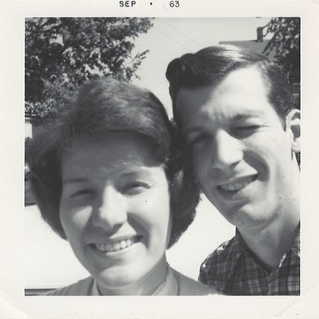
Betty Harford pictured with John Hartford circa 1963.

After graduating from high school, Betty packed her bags and took the bus to St. Louis looking for work. She had been working part-time as a secretary during high school and had become an expert typist. She soon landed herself a job and apartment. Her mother showed up with her younger brother three weeks later, placing the responsibility of breadwinning squarely on Betty’s shoulders. Betty describes those three weeks before her mother arrived as some of the happiest of her life: “I was free!”

Her uncle Jimmy Payne arrived in St. Louis not long after and the two continued playing music together occasionally, although she felt that he was more interested in pursuing a solo career at that point. It was through Jimmy that Betty met John, when the two of them went to perform at a radio station for which John was DJing. Notably, in my research about John’s early life as well as Jimmy’s, nobody mentions playing or writing music with Betty, even though she is the common denominator between these two hit songwriters.

Betty and John hit it off immediately, although Betty says she was “not impressed” with John.

“He was a good musician,” she explains, “but there were a lot of musicians better than him… and he dressed terribly. He had holes in his sleeves and wore ridiculous hats. I was sometimes embarrassed to be seen in the diner with him.”

Despite all of this, she fell for him, and the two began dating, eventually marrying in secret to avoid grief from Betty’s loving but controlling mother.

This is where our conversation started to surprise me. Betty told me about the two of them singing together, the music they would listen to and learn, and the hymns and country songs that she taught John, but she also mentioned going along to his band practices with Don Brown and Norman Ford, falling asleep on the couch as they played late into the night, then having to get up early for work the next day.

“You went to his rehearsals?” I asked.

“Well, yes,” she explained, “that was the way to be with him.”

Later, John told her that he was “testing her” to see if she could handle the musician lifestyle. It occurred to me at this point in our conversation that Betty wasn’t thinking about her career versus John’s career, it was just their lives together and a life around music that they both loved. They listened to records together, they wrote songs together, they sang together, and they went to rehearsals and gigs together. Betty played me an old recording that she and John had made of three songs; two they had written together and one she had written. Their voices in harmony over solo banjo gave me chills.

“How has nobody heard these?” I asked. She just shrugged.

It was on the drive home from one of John’s gigs (John was playing in the Ozark Mountain Trio) that Betty first suggested to John that he could consider playing his own songs rather than being a sideman for a band he was bankrolling. He soon began gigging solo and gaining a following. Betty was also the first to hear “Gentle on My Mind,” the song that launched John’s career into Hollywood via Glen Campbell. They had just been to see the movie Doctor Zhivago and Betty put Jamie to bed while John wrote.

“He came downstairs and said, ‘Honey what do you think about this?’ He was so proud of it. And I said, ‘Yes, I really do like it, but what about these two women you’re talking about? Which one am I?’” she laughs.

Some of our conversation revealed disappointing, though typical, attitudes of the time. Although John wanted children, when Jamie and Katie came along, he didn’t cope well with factoring them into his bigger picture. “John wasn’t a hands-on dad, never was,” Betty explained. By this time, Betty and John were both working musicians living in Nashville. They decided that John would pursue his music and Betty would focus on the kids.

When I asked Betty if this bothered her she said, “I agreed to it. I could just feel that he had a real fire to make it happen, more than I did.”

But it wasn’t that John wanted Betty to stay home while he went off on tour. He wanted her right by his side. “He called me one day so excited. We had always talked about going to Europe and he said, ‘Betty, we’re going on tour, 21 days in Europe.’ Well, Katie was six months old at that time and when he called I was holding the phone with one hand and trying to feed her with the other. I said, ‘Okay, well…’ and he said, ‘I thought you’d be more excited!’”

After some argument – John thought they could leave the kids with a babysitter and Betty was not in agreement – they decided that the kids would stay with John’s parents back in St. Louis. But the tour was the beginning of the end of the marriage.

More troubling than John’s absence as a father was the environment of Los Angeles stardom. John had found a new social scene, with actors, groupies, and plenty of weed. It was the early ’70s and John was on TV.

Betty told me about a performance John did at the Playboy Club, after which the two of them got into an elevator only to be squeezed in by several well-endowed “bunnies.” “He came home one day with Carl Gottlieb, a writer for The Smothers Brothers Show, and the two of them were just so happy. Later, he said, ‘Betty, we should smoke some grass together’ and I said, ‘John, I don’t need that stuff.’”

Betty felt John was becoming something she didn’t recognize, something she didn’t want the kids around, and something that they hadn’t planned on for their life together. Betty stayed in Los Angeles for six months after she and John separated, but he hadn’t made much effort to be a part of the kids’ lives, so she took them back to Nashville, a place that she missed terribly.

Betty is religious and refused to stray from her principles for John’s sake, something she feels that John always respected her for. As the years went by, he made more effort to get to know his children, but they were largely raised by Betty. However, this was in no way the end of Betty’s story.

After her kids had grown up, she moved to Alaska where she “worked part time for Statewide Blasting … rigging explosives and blowing stuff up, and flew all over Alaska in a [Piper] Super Cub.” Betty met the true love of her life in Alaska, a man who she married just weeks before he died.

John returned to Nashville and, in some ways, returned to himself. He married Marie Fielder and they lived on the Cumberland River in Madison, Tennessee, until he passed away in 2001.

During the last weeks of his life, Katie and Betty went to visit John. He asked Betty to sing to him and she began singing the old gospel songs that they had learned together. After she went through all that she could remember, he motioned for her to come close to him. He could barely speak but whispered to her, “Life of a Flower.” And she sang to him:

As the life of a flow’r,
As a breath or a sigh,
So the years that we live
As a dream hasten by
True, today we are here
But tomorrow may see
Just a grave in the vale
And a mem’ry of me.

It occurs to me now that John Hartford’s legacy and catalog is in the hands of his daughter, Katie Hogue, who runs his estate. Katie has worked tirelessly to put out records and books of her dad’s fiddle music, partially with the intention of getting to know him posthumously, but also because she believes that his music is a gift to the world.

Though John was unable to factor his family into his creative success, or perhaps they were unwilling to follow that success on his terms, it is the women in his life who continue to support and uplift his career long after his death, just as they did while he was living.


Photos courtesy of Betty Harford-Gilbert via Rachel Baiman.
A Women’s Lib Boat: John Hartford Fiddle Tune Project’s ‘Julia Belle’ Embarks

A quarter century removed from his passing, John Hartford’s music and overarching legacy may have a stronger hold on bluegrass and American roots music than ever before.

From modern-day stars like Billy Strings and Sam Bush playing his songs in front of thousands each night, to popping up in books, old-time jams, workshops, films, and other functions, Hartford’s songs are officially a part of the Americana zeitgeist.

This trend continues on Julia Belle: The John Hartford Fiddle Tune Project Volume 2. Released February 28, the follow-up to 2020’s inaugural installment of the Fiddle Tune Project features another 17 songs from the always grinnin’, GRAMMY award-winning, steamboat-loving singer – this time performed entirely by women. Nearly 50 artists, musicians, and singers feature throughout, ranging from Rachel Baiman, Phoebe Hunt, Ginger Boatwright, Brittany Haas, and Deanie Richardson, to Allison de Groot, Della Mae, The Price Sisters, Uncle Earl, Kathy Mattea, Alison Brown, and Sierra Hull.

According to Julia Belle co-producer Megan Lynch Chowning (who was joined in that role by Sharon Gilchrist and Katie Harford Hogue, John’s daughter), once the decision was made to move forward with an all-women cast it came time to narrow down who to include on it–something that was as much of a dilemma as it was “an incredibly cool revelation.”

“We decided about halfway through to just make it a reality rather than a selling point,” she jokes. “It’s in the same spirit of whenever you open up a record from the Bluegrass Album Band, nobody says, ‘Wow, what a great all-male band that is!'”

Ahead of Julia Belle‘s release, Harford Hogue, Lynch Chowning, and Gilchrist spoke with BGS about their involvement in the project, preserving John Hartford’s legacy, and favorite moments from recording.

(Editor’s Note: The following are three separate conversations combined into one and edited for brevity.)

Nearly 50 artists are involved in Julia Belle. How did you go about deciding who to include on the project and which songs they’d play on?

Sharon Gilchrist: It was really important for us to have a multi-generational presence on this record. One of Katie’s personal wishes for the album was that every artist on the record have some personal connection to Hartford. With it being an all-female record, I was also curious to find women who had actually worked with or had some kind of rapport with him. For example, Laurie Lewis, Kathy Kallick, and Suzy Thompson are all on “Champagne Blues” and were all peers of Hartford’s back in the day. Ginger Boatwright actually inspired the song that John wrote which she sings on, “Learning to Smile All Over Again.”

In addition to the sheer number of people involved, I love how you also really allowed them to lean into their own creative tendencies while at the same time staying true to the style and spirit of John Hartford.

Katie Harford Hogue: Since Volume I the whole premise of this album series has been to choose artists that play this vein of music or consider my dad a mentor or someone they look up to. We hand them the book [John Hartford’s Mammoth Collection of Fiddle Tunes] and tell them to choose the tunes that speak to you, then come to the studio and put them through your filter.

For me to tell an artist how to do art – why would I do that? The whole point of being an artist is that you’re putting yourself into it and are using your own expressions, your own metaphors, and your own way of relating to the music. So we wanted their expression in it and the really cool thing is that Dad comes through no matter what we do. His DNA is in these tunes and there’s no way to get them out, not that we would ever want to. Having people come in and just go for it was risky, but an incredibly fun way to make an album.

Megan Lynch Chowning: A lot of the tones, audio, and overall vibe check comes from Sharon, who has been a John Hartford fan her entire musical life and is somebody who is so incredibly in tune with the sounds and feel that comes from his songs. She worked tirelessly listening to everybody’s work before they came in to record to get an idea of what’s going to help each person be the best possible version of themselves while they’re here.

Then there’s the issue of none of these songs – at least the fiddle tunes – having any chords assigned to them. When John wrote them there were no chord progressions, so every artist had to write their own. That in itself was a big part of people getting to take each song in their own directions. It was amazing to watch over and over again, and Sharon handled it all like an absolute rock star.

While some people’s legacy fades over time, it seems like John Hartford’s only grows stronger. What are your thoughts on that and how this project aims to further propel that legacy forward?

KHH: I’ve heard it said before that the way he communicated wasn’t limited to a particular generation. I don’t know if it was the way he thought about things or if some of the ways he did things were more universal. … You can go back to the masters of music and art – da Vinci, Bach – and their methods of creativity are still very valid now, they simply don’t go out of style.

When you hone into the foundation of it the relevancy goes with it, because everyone’s just going back to what’s real, which is what I think my dad also did. He was very true to the way he made music and the way he thought. A lot of people trying to make a career might stop and think, “What does the public want?” or “What do the masses want and how can I provide for them?” There’s nothing wrong with that, but there is another way to do it, making the music you want to make and not worrying whether or not it’s commercially viable.

That being said, “Gentle On My Mind” [Hartford’s most successful song, written in 1966] was very helpful in allowing him to do that full-time. Most everyone else has to get a full-time job and do the music on the side to stay true to themselves, but he got the best of both worlds in that way. He was able to take the success of that song and then go do his art with his heart and soul in it. I mean, who else writes about steamboats? Who else would write about the things that he wrote about and try the things he did on stage or just go out on a limb? And it all worked! In a way, everything aligned for him. That’s why I think he continues to be so relevant – he took a big risk and it paid off.

MLC: In the very first meeting the three of us had to discuss Volume II, preserving and carrying on the Hartford legacy was the focus of what we were trying to accomplish. On any given day you’ve got Billy Strings and Sam Bush playing John Hartford songs in their live shows. The biggest takeaway I have from this whole thing is John Hartford’s unceasing dedication to learning. He started transcribing and learned to write standard notation after he was diagnosed with cancer and instead of saying, “Oh no, I’m sick and this is going to slow me down,” he took it as a sign to move forward and learn a bunch of new things. That’s what led to him becoming obsessed with the fiddle, traditional styles and all that. That to me is the whole message behind these albums, that there’s so much more to do and so much more to write, play and learn. That’s been the most inspiring thing about being a part of this project.

SG: He was both a student and innovator of traditional music who forged his way forward by not sounding anything like anybody else. John is one of the largest beacons shining the way forward on how you do that.

What were your favorite moments from recording these songs? I personally can’t get enough of “Spirit of the South.”

KHH: What was so fun for me about these sessions was that even in rehearsals everyone was shredding. Upon walking in the room you’re hit with this energy and you just want to jump in. It was so exciting talking with everyone and feeling their joy around each song. Then there were the stories from Ginger Boatwright and Kathy Chiavola – both good friends of my dad – and Alison Brown telling me about his influence over her on the banjo.

Not being a musician, that all fed me, because that was a part of my dad’s life that I wasn’t necessarily connected with very much when he was alive. But now I can hear his music and I can see what he was doing and it just has a whole different impact on me. I’ve now had my own kids, raised them, done some things, and can relate more to what he was doing, so every time someone comes back to the studio and records a song, tells a story or talks about his influence, it feel like there’s a drawing of Dad and everyone’s going in and adding details that I hadn’t known about before or that just flesh out the picture that little bit more.

MLC: One favorite was getting Katie’s mom and John’s first wife, Betty, to sing on “No End of Love,” which is a song that John wrote for her. She is an incredible musician who first met John when they were both up for a radio show slot in the St. Louis area. After they got married Betty put her singing career on hold to manage the family, so being able to get her in the studio to sing that song with Katie and her granddaughter Natalie [Hogue] on guitar and hearing her voice – which has been on hold for a long time as she lives other aspects of her life – gave me chills. To me, stuff like that is the essence of folk music and why we do what we do in terms of keeping these songs and traditions alive.

Megan, didn’t you play John’s Tambovsky & Krutz violin on “No End 0f Love”? What was that experience like?

MLC: I actually have John’s fiddle here at my house and play it in the John Hartford Fiddle Tune Project live show, so I’ve been handling it for a while now. Talk about chills – it’s the fiddle he used the last five or so years of his life. It was his main fiddle for the “Down From the Mountain” shows and The Speed of the Old Long Bow record. It’s actually the fiddle on the cover of that album. Katie called me last year out of the blue and said she was moving houses and had taken the fiddle from one closet to another before questioning why it was there in the first place and not in my hands being played at these shows.

To play it on [“No End of Love”] was funny, because it sounds a lot different than my fiddle even though both were set up by the same person. It always felt comfortable to play, but the first few months I had it it was kind of dead from sitting in a closet for two decades. Since I’ve been playing it regularly it’s really come to life. Just the metaphorical part of this fiddle coming to life at the same moment these tunes are being brought into the world is special. It’s how I believe everybody who has the opportunity to be involved in traditional music should be thinking about it. We should constantly be honoring the stuff that came before us while also bringing it into new spaces.

Katie, you mentioned not being too connected to your father’s music when he was still alive, but what do you remember most about those times?

KHH: People saw his stage persona when he was out, but even when he was home he was still playing. He didn’t go home and just say, “Oh, I’m tired of that.” He played some more. “Obsessive” is not too strong a word to use when it came to the way his brain worked about music or art. It would be Thanksgiving or Christmas and he’d be working out melodies in the living room with Benny Martin simply because they enjoyed it.

Later on, my wedding reception was held at my dad’s house and we had originally set up music on a sound system so as not to burden him, but he, my brother, and my uncle ended up all grabbing their instruments and playing as a trio for it. He wasn’t a musician because he was trying to be famous; he was a musician because he couldn’t not be one. As much as his right hand was a part of him, his fiddle and his banjo were a part of him too.

What has working on The John Hartford Fiddle Tune Project taught you about yourself?

MLC: These experiences have taught me that I’m capable at parts of this job that I previously shied away from. I grew up as a contest fiddler; that was my background. Because of that I was very good at learning specific arrangements of things and then executing them with precision. While that’s all great and fine – one: it’s not a very good living, and two: it’s not all that great for having a very broad musical vision or sense of yourself. That’s why I started playing bluegrass and working for country artists. My skills and musicianship both expanded, but working on these albums – both as a player on Volume I and as a producer/player on Volume II – I’ve learned much more about my internal ability to hear things I didn’t know that I could hear and to make decisions I didn’t know I could make.

It reminds me of this exercise that John Hartford used to do with people at his jams or in his band – called the “window exercise” – where everybody who’s playing has to do something different than everybody else and then has to change that thing every eight bars. If you’ve got five or six people sitting around in a circle, one person can be chopping, one person can be playing longbows, melody, harmony, shuffle pattern… but only for eight bars. It requires you to not only come up with new things, but also be aware of what everyone else is doing simultaneously.

It was a musical brain exercise he invented that we teach at our workshops and sometimes even at the live show. To me, working on these albums has been like a real-life window exercise. It feels like even from beyond the grave John Hartford is challenging me to go bigger, be more creative, and more aware all the time. He’s just expanded who I am as a musician and what I now know that I’m capable of that I didn’t know I was capable of before. It’s weird to be grateful to someone who’s been dead for 25 years, but that’s how I feel because I’m a different person and a different player than I was before I started this.

SG: It showed me the importance of being hands-off with other people’s musicianship and to give them every opportunity to bring as much of themselves to any project as possible. That’s when you’re going to get the best music out of somebody. This project was a lesson in learning to do that, but also knowing when to jump in and direct or provide guidance when necessary.

Katie did a great job of that as well. This whole project is her brainchild and was a huge undertaking and the coolest part is the way she’s doing it. She’s doing it just like her dad. He would be so honored and pleased to see her fostering that in his own tunes and giving others the opportunity to share in and carry on that tradition.

KHH: I was a stay-at-home mom when my kids were born and poured a lot into them growing up, but once my youngest got to high school I began backing off and looking to do some of the things I’d been putting off. Coincidentally, the fiddle tune project was coming to fruition around the same time.

It was like walking out on a limb – especially as an older woman – to go out and start on some of these things not having been in the industry or corporate world in quite a while, but I did it. I have learned so much about not just the music industry, but things like how to use computer software like Photoshop and Illustrator and doing video for social media. It’s a lot of fun and something I’m very proud to be able to say that I did. I want to encourage other women to do the same. Don’t worry about what other people are saying, what you’ve done before, how old you are or what stage of life you’re in – don’t let anyone devalue your experience. If you’ve got an idea, go do it!