Welcome to another edition of our weekly round-up of new roots music! You Gotta Hear This…
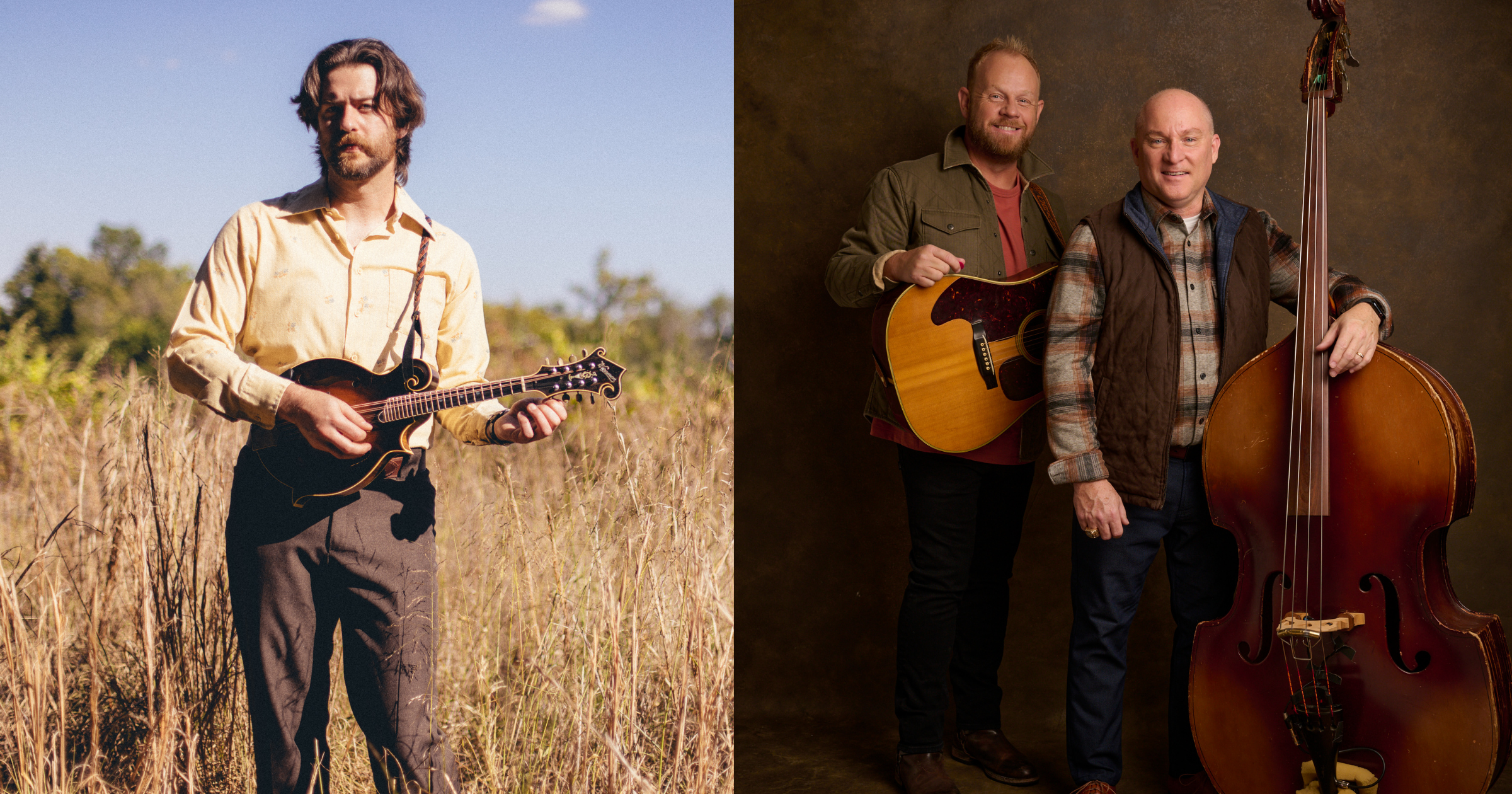
To get us started this week, Dailey & Vincent continue to tease tracks from their upcoming album, A Beautiful Life, which will arrive on June 12. In the meantime, they’re sharing a music video for “Moon Shines on the Still,” another delightfully bluegrassy number for the country-and-gospel-and-bluegrass powerhouse duo. The fresh single’s breakneck tempo doesn’t stymie any of the fine pickers who shred throughout the feisty song about moonshine running and that good ol’ mountain dew. For another bluegrass duo, check out fiddlers Deanie Richardson & Kimber Ludiker launching their new track, “Rutland’s Reel.” It’s an acrobatic and challenging tune by Howdy Forrester with several complicated parts, but these two turned it into a stellar twin fiddle number anyway. What, like it’s hard?
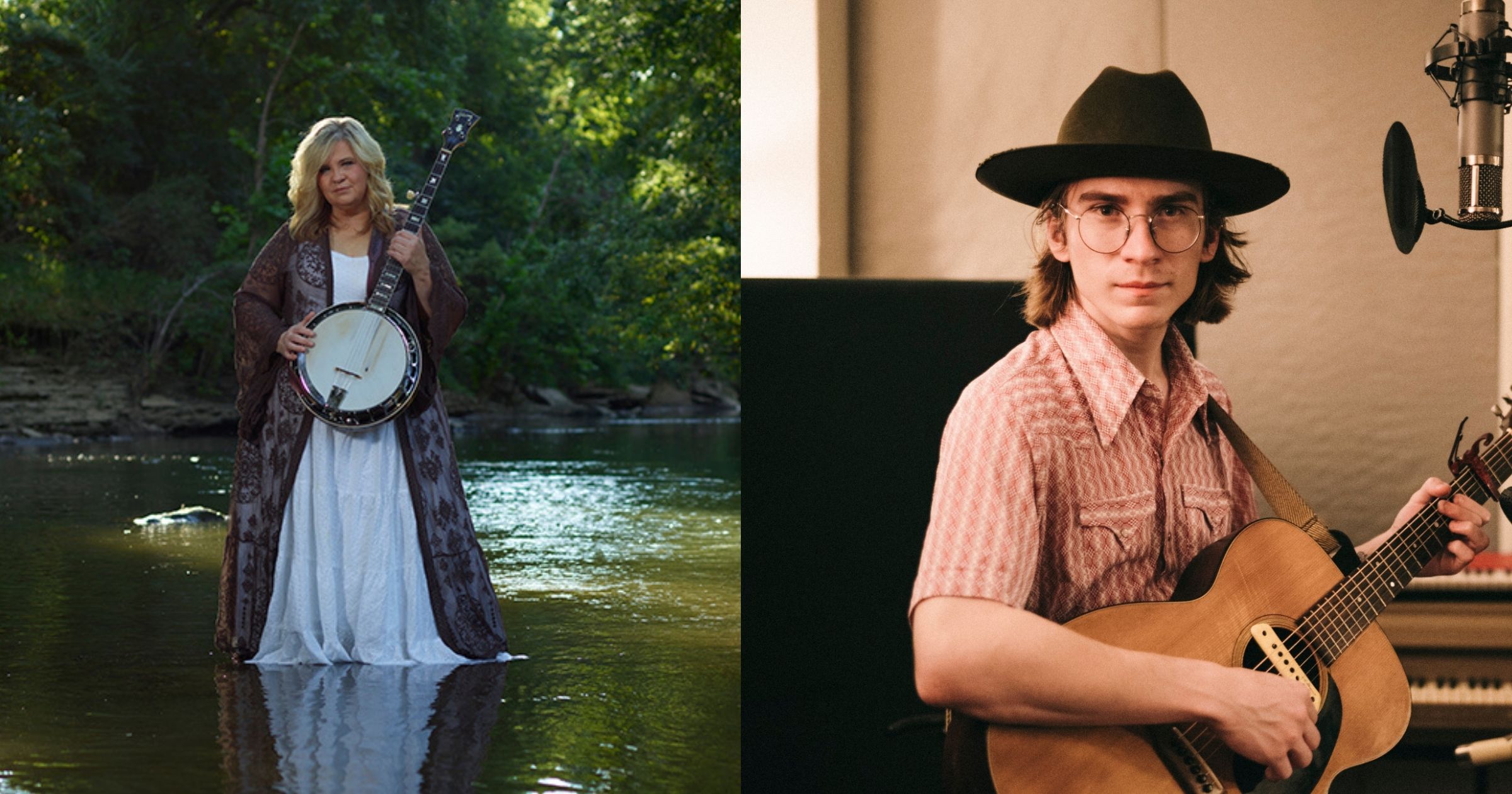
From Asheville, North Carolina, Appalachian string band TANASI infuse their songs and tunes with influences from around the world. “Give Me Love (Give Me Peace On Earth)” is their timely rendition of a George Harrison song, on which Dobroist and multi-instrumentalist Billy Cardine plays a chaturangui, a slide instrument that draws from Indian classical music traditions. Watch a performance video for their cover below. Singer-songwriter Maisy Owen has shared a new music video today, too. “Dark On A Sunny Day” is lush indie folk wrapped in a sonic dreamscape, with a slightly dark and gritty tinge to pair perfecdtly with her evocative lyrics. The beat pulses forward, pushing and pulling the track ahead.
Plus, mandolinist Jarrod Walker – who you may know from Billy Strings’ band – just this week announced an upcoming solo album, Nighthawk, his first release as an artist in his own right. Prior to the album announcement Wednesday, Walker unveiled an upcoming tour in May. Now the lead single/title track from his debut LP is available everywhere, and we’re sharing the lyric video visualizer for the remarkably straight-ahead bluegrass number below. Nighthawk arrives in full on May 8.
Bluegrass, folk, and indie; mandolins, fiddles, and banjos; moonshine, darkness, and emotions – there’s something for everyone to enjoy. You Gotta Hear This:
Dailey & Vincent, “Moon Shines on the Still”
Artist:Dailey & Vincent Hometown: Nashville, Tennessee Song: “Moon Shines on the Still” Album:A Beautiful Life Release Date: April 10, 2026 (single); June 12, 2026 (album) Label: Pillar Stone Records
In Their Words: “‘Moon Shines on the Still’ is a fun, up-tempo song with a lot of personality. It’s the kind of record that makes you want to roll the windows down and enjoy the ride.” – Jamie Dailey
“We had a blast recording this one. ‘Moon Shines on the Still’ has energy, heart, and a sound that feels both fresh and true to who we are.” – Darrin Vincent
Maisy Owen, “Dark On A Sunny Day”
Artist:Maisy Owen Hometown: Nashville, Tennessee Song: “Dark On A Sunny Day” Album:Dark On A Sunny Day Release Date: April 10, 2026 (single); May 1, 2026 (album) Label: Tompkins Square
In Their Words: “There was a period of time two years ago in the summer when I was writing almost every night. ‘Dark On A Sunny Day’ was one of the first songs I kept. There’s a kind of honesty that comes with someone’s early work, something I always look for when I deep dive into a new musical obsession. Something early is something pure. This is the only song on the album with a full band arrangement. The instrumentation is dark and unceasing. There is no metaphor or veil regarding the lyrics, they are candid.” – Maisy Owen
Artist:Deanie Richardson & Kimber Ludiker Song: “Rutland’s Reel” Release Date: April 10, 2026 Label: Mountain Home Music Company
In Their Words: “‘Rutland’s Reel’ was written by one of my ultimate fiddle heroes, Howdy Forrester. In typical Howdy fashion, it’s got several parts and is challenging to play. It was a lot to take this one on as a twin fiddle piece and Kimber took on the challenge of learning the harmony part. She nailed it! I’m so proud to have this tune on our record honoring the great Howdy Forrester.” – Deanie Richardson
Artist:TANASI Hometown: Asheville, North Carolina Song: “Give Me Love (Give Me Peace On Earth)” Album:TANASI Release Date: April 9, 2026 (single); May 8, 2026 (album)
In Their Words: “This song by George Harrison feels especially relevant right now – we need as many songs about peace and love as possible in difficult times. It echoes both backward and forward, carrying layers of meaning that resonate personally and globally. In addition to honoring the song itself, we wanted to pay tribute to Harrison’s influence – particularly his role in bringing classical Indian instruments like the sitar into popular music. Alongside his signature Dobro, Billy Cardine plays the chaturangui, a slide instrument developed by his teacher in India, Debashish Bhattacharya. With its 22 strings, it creates a rich, shimmering tone reminiscent of the textures heard in many of Harrison’s recordings. Mary Lucey and Anya Hinkle share the lead throughout, trading lines and weaving their voices together in sister-like harmony.” – TANASI
Track Credits: Billy Cardine – Dobro, chaturangui Mary Lucey – Bass, vocals Anya Hinkle – Guitar, vocals
Jarrod Walker, “Nighthawk”
Artist:Jarrod Walker Hometown: Lithia, Florida Song: Nighthawk Album:Nighthawk Release Date: April 8, 2026 (single); May 8, 2026 (album)
In Their Words: “A few years back, I stumbled upon the word ‘Nighthawk’ in The Dictionary of Obscure Sorrows, a collection of definitions for newly invented words that describe unnamed emotions, feelings, and experiences. Initially, ‘Nighthawk’ began as a moody, vibey track, but Christian Ward and I soon realized it worked better as a straight up bluegrass song. Once we committed to that approach we were able to lock down a couple verses, a chorus, and everything started to take shape. One of the trickest parts of songwriting is revisiting an unfinished song, returning to that headspace to add final touches Eventually we added a third verse which tied it all together with a big ribbon and bow. Now I couldn’t imagine it without it. I find that with trad bluegrass it’s best to keep things close to home or else you risk losing the essence of the song. I say that now, but ask me how I feel next year. The band knocked this one out in a few takes and later Billy [Strings] added a killer tenor harmony. Ultimately, ‘Nighthawk’ wound up being by far one of the grassiest tracks on the record.” – Jarrod Walker
Track Credits: Jarrod Walker – Vocals, mandolin Cory Walker – Banjo Jamie Dick – Drums Christian Ward – Fiddle Jake Stargel – Guitar Royal Masat – Upright bass Billy Strings – Background vocals
Photo Credit: Jarrod Walker by Jesse Faatz; Dailey & Vincent by Gregg Roth.
If you’ve listened to bluegrass made in the last decade, odds are you’re not only familiar with but absolutely enamored by the utter powerhouse that is Vickie Vaughn. Named the IBMA Bass Player of the Year thrice in a row (2023, 2024, & 2025), Vaughn has established herself as more than a class act – she’s an integral anchor of today’s bluegrass scene and beyond. Presently touring with the acclaimed all-women supergroup Della Mae, Vickie has a slew of accolades under her belt, having sung background vocals with Patty Loveless, toured with High Fidelity, and collaborated with just about every esteemed bluegrass musician under the sun.
November 21, 2025 saw Vaughn set sail unto uncharted waters with the release of her debut full-length solo album, Travel On. Released by Mountain Home Music Company, Vaughn deploys an all-star cast to bring her dynamic compositions to light. The record features guest vocals from Ronnie McCoury, Casey Campell on mandolin, Wes Corbett on banjo, Cody Kilby on guitar, Dave Racine on drums, harmony vocals from Justin Hiltner, Lillie Mae, and Frank Rische, and fiddle from Deanie Richardson, who also serves as the record’s producer.
Travel On champions Vaughn as its frontwoman, a role she hasn’t chronicled in studio since her six-song EP came out a decade ago. Her songwriting is full of dynamic abundance, from the deeply stirring gospel song “The Pilot,” to the absolutely raging “Sleepin’ in the Rain” to the emotive and heartfelt “Mama Took Her Ring off Yesterday.” Vaughn manages to strike a full range of emotions throughout the album’s thoughtful arc, a narrative bound by her buoyant relationship to both rhythm and melody alike.
Ahead of the album’s release, BGS had the unmatched pleasure of sitting down with Vickie Vaughn for a chat about Travel On, music, machinations, musicianship, and more.
Congratulations on the album release! I want to hear all about Travel On, but I’m wondering if you’d be able to take us back to the start for a bit and tell us about your personal musical history.
Vickie Vaughn: Oh golly! I started really early because of my cousins, who I adored growing up. I really looked up to them and they were just great singers who sang all the time and could play piano and guitar. I grew up in a Baptist church. When I was little, maybe six years old, the preacher’s wife found out that I could sing, so she asked me to come sing in the choir. I grew up singing in church and then when I was nine years old, back in Kentucky where I’m from, I got hired as a background vocalist. I know it sounds insane – I’m so normal now, but I was like a freak kid! I could hear harmony and sing every part. When the guy running the Kentucky Opry found that out, I was hired as a kind of novelty act at nine years old. I was there every weekend from when I was nine to when I moved out at 17 as a resident female vocalist and background vocalist.
As for the instrument side of things, my parents had me play classical piano and I hated it so much. I honestly got into bluegrass kind of late for a bluegrass musician – around 14. You know, Sierra Hull, Kimber Ludiker – they started when they couldn’t speak words, but I was a little late to the game. I would go to these bluegrass jams and there would be a bass there, but nobody would be playing bass. So I would pick it up, and I could add decent rhythm, stay on beat, learn the open chords. But then I started taking lessons from this guy named Scottie Henson. He traveled with the Grand Ole Opry touring band back when that was a thing. He was a banjo player, but he taught me how to play bass, which is incredible.
When I was 17, I moved to Nashville to go to Belmont and I was a classical vocalist there. I moved to commercial vocals my junior year and bass was a hobby. I got involved in the bluegrass ensemble and that’s kind of how I got known as a bass player in school. And then I got hired by a touring band from a girl I knew from bluegrass ensemble. The rest is history!
As you were growing up drenched in music, do you recall any songs that particularly sparked inspiration or curiosity for you as a child?
I remember when I was in the car with my dad, I used to love the music he listened to. Mama would always listen to Southern gospel and that was just not my jam. I remember telling Dad, “I hate the stuff that mom listens to.” And he was like, “Oh god, me too.” And I just remember thinking, “You’re so cool, Dad.” Once, we were listening to a classic rock station and the freaking “Wreck of the Edmund Fitzgerald” came on – I know there are all these memes about it now. But I remember having a moment with him in the truck where I was just like, “What is this?” And he was like, “Oh yeah, it’s a true story.” And I was like, “Get out!” That one really struck me.
Another one, which isn’t really a song, but there was this radio station, the local country station – 93.3 WKYQ. On the weekends, starting at 10 p.m. on Fridays and Saturdays, there was a radio program called the Outlaw Hours, and they would play stuff like Waylon Jennings, Merle, Steve Earle, Charlie Robison. It was outlaw music, edgier rootsy stuff, even some edgier bluegrass stuff. I remember riding in the car back from the Kentucky Opry and I’m just like, “Daddy, let’s listen to Outlaw Hours.” He was like, “You like that stuff??” Because I was little, and you know, a lot of that was not appropriate for a child to listen to, but I just loved it.
I can totally see how that influence carries through into your music today.
Well, I liked the subject matter. It wasn’t all about love. I don’t really like to write songs about love. There are already a lot of songs about love. I don’t have anything unique to say about love. I have something unique to say about the way I process a hangover. Or my faith! My faith is so individualistic and personal. If I feel like I don’t have a new idea, I’m not gonna write it or sing about it.
What is the songwriting process like for you? How did you go about selecting the songs on this album?
This might sound silly too, but do you ever walk around the house and just sing about what you see? So many of my songs come out that way. Like with “Bottle of Wine” – I collect wine, so I always have some on hand. Then it was the day after a breakup and I was super hungover, because I had decided to just drink about it. I walked out of my bedroom and I saw all these empty bottles of wine on the coffee table. And I thought, “I don’t want to see another bottle of wine. Maybe I’ll write that into a song when I’m feeling better.” That’s how most of my songs come out, the hook will come to me and then I’ll just expand on it. Sometimes I like to co-write, like with Thomm Jutz, we co-wrote “Bottle of Wine.” But then “The Pilot,” a song about my faith, I wrote by myself. Faith is so, so personal. Even if a person of faith and I could agree on some fundamental levels, my faith and my walk are so different than literally anyone else’s. So I had to write my own unique faith-based song.
Then “Mama Took Her Ring Off Yesterday” I co-wrote with Deanie Richardson. I brought that idea to her because my dad passed and he was one of my best friends in the world. He hated sappy sad songs, so I didn’t want to write that. I knew I needed to write a song, then I went to visit my mom about three months after he passed. We went to a Mexican restaurant and she slid her left hand over past the chips and salsa, showing me that she took her ring off. I support her and everybody grieves differently, but I still told her I thought it was early for that. But she’s bootstrap Kentucky and she was like, “We have to move on. Life doesn’t stop.” I was just left thinking, “Wow, Mama took her ring off yesterday. That’s the moment I need to write about.” I took it to Deanie because she knew my dad and knows my mom and she really walked with me through my grieving process.
That one turned out so beautifully! I’m curious – you’ve had an extremely successful bluegrass career for a number of years. What made now feel like the right time to put out a solo album?
The awards. Women always apologize for winning and here I am, apologizing for saying “my awards,” but that’s really what it was. People are paying attention. If I’m gonna write a song, I don’t want it to hit deaf ears. Making a record is such an expensive and painstaking process and your heart and soul go into it. After my dad died – well, he was such a cheerleader for me. And an inspiration – he just inspired me. If I was feeling bad about something, I felt like if he believed in me, then I could do it, you know? I didn’t believe in myself without him for a long time, so I couldn’t do it. Especially in the music industry, you can’t do shit if you don’t believe in yourself. It’s too hard. So I waited a while until I felt like there were enough people who believed in me and then I believed in myself. That’s when I felt like I had the energy and the belief to make a record that people would actually hear.
That makes a ton of sense. How do you feel like your relationship to music has changed now that you’ve taken on the role as captain of a project?
This is the first time I’ve ever made a full-length record that’s my own and not just playing on somebody else’s. And of course, Deanie is producing it, but being in control of the material and the direction of the record – it’s funny that you ask, because I almost didn’t realize the direction of the record until it was done. I realized after I heard it all in one setting. The concept is vulnerable joy.
Working on anybody else’s record and supporting them in that way – especially with the bass, which is such a big vibe creator as an instrument – I never felt like I could choose, or was confident enough to choose, the direction. But finally, here I am in my mid-30s, and I’m ready. It was so fun taking the reins artistically, getting to sign off on every bit of it. Every choice I felt in my heart. I was able to say, “If this doesn’t scream Vickie as fuck Vaughn, then I don’t want it!” I would rather not make a record [any other way]. Because when I was younger, I made EPs that I thought other people would like. That was the point for me. But now I’ve traveled around and I know what works. I know what an audience likes to hear; that base is covered. The process of just having to make it totally “me” – that was my favorite part.
How did you go about choosing the community to help you out with bringing this record to life?
So the engineer, Sean Sullivan, I’ve worked with him for a long time on other people’s records, and then I did a small project with him that never got released. This might sound nitpicky, but I feel like the sound engineer in a recording process makes one of the biggest differences. It’s hard when there’s too much input – that’s the producer’s job. But I wanted to work with Sean because he’s so efficient, he’s quick and he has such a calm spirit. He gives direction or a suggestion so seldom that when he does I really take it to heart.
And then, as for Deanie Richardson, my producer, I always knew that she was an amazing musician, but this is the first time that I have really been enamored with her production abilities. It’s the first time I’ve worked with her as a producer. She has taken each song and made it into my record. I would come to her with just bass and vocals, and she would just shape each song and make them each sound different. She’s a freaking genius! And she’s totally unafraid to just be herself. She’s an unashamed woman and that’s the energy I wanted in my record.
The band on the record is all folks that I’ve known and played with here in town. I didn’t want there to be anybody on the record I hadn’t played with or loved or traveled with. Because it’s my first record and I know me, and I know that I would be self-conscious if there was a stranger in the room. And then Justin, my best friend, he just matched my freak so hard on there. We have such a beautiful community.
It’s so beautiful how y’all uplift and support each other! How is it feeling for you to finally have this piece coming out into the world?
I’m terrified, but I don’t know – I kind of like that! I like a challenge. If I’m not scared, then I don’t care. I’m really excited to hear what folks think about it. I want to see what songs touch people and learn from that. And I’m really excited for Deanie to be introduced as a producer, and for everybody to see her talents in that area. I’m really excited to learn from the release. I’ve learned so much in the process already, because there’s so many firsts, and I’m excited for the reception of this record to influence my next. That one will be even more me. I never want to stop growing!
Happy first Friday of November! Let’s kick off a month of new music roundups with our first edition of our usual weekly collection for November.
To begin, banjoist Gena Britt – whom you may know from Sister Sadie – releases her brand new solo album, Streets, Rivers, Dreams & Heartaches today. We’re sharing “What Kind of Memory Will You Be” off the new project to celebrate its launch. It’s one of Britt’s favorite tracks from the album. Her Sister Sadie bandmate, fiddler Deanie Richardson, is also included in our roundup today, joining fellow fiddler Kimber Ludiker (of Della Mae) on a twin fiddle rendition of a rip-roaring original instrumental, “No-See-Um Stomp.” It’ll have you dancing and smacking the hell out of some sandflies, too.
Singer-songwriter and guitarist Sammy Brue previews his upcoming album that pays tribute to one of his creative heroes, Justin Townes Earle, by crafting songs from inhabiting and being inspired by Earle’s journals. Brue wrote “Lonely Mornings” based on snippets of unrecorded lyrics in Earle’s journals, before Earle’s own recording of “Lonely Mornings” was released on ALL IN last year. The tunes stem from the same source, and feel connected, but show the intricate ways a single origin point can grow into two distinct songs. Watch the video for Brue’s “Lonely Mornings” below.
Our Missouri bluegrass pals the HillBenders bring us a brand new music video for their most recent single, a rock and roll and disco-infused string band version of Ola Belle Reed’s classic, “I’ve Endured.” The band leans into their genre-blending tendencies and highlight a couple of new members in the new studio music video, too. Plus, Americana-folk singer-songwriter Brendan Walter launches his new album, Disappearing Days, today and we’re sharing a new music video for his song “Pipe Dream.” Contemplating the realities and trials of building a career in the music industry, “Pipe Dream” and the album together demonstrate Walter’s goals in music are anything but far-fetched.
Make sure to check out a new single from guitarist-writer-archivist Cameron Knowler, as well, who covers Elizabeth Cotten’s “Wilson Rag” in a simple, pared-down arrangement featuring acoustic guitar, pedal steel, and kick drum. Knowler tweaks Cotten’s original arrangement slightly, continuing the age-old tradition of musical transfer and cross-pollination in bluegrass, old-time, and beyond.
It’s quite a nice roundup to get the month rolling, isn’t it? Check it out for yourself below, ’cause You Gotta Hear This.
Gena Britt, “What Kind of Memory Will You Be”
Artist:Gena Britt Hometown: Star, North Carolina Song: “What Kind of Memory Will You Be” Album:Streets, Rivers, Dreams & Heartaches Release Date: November 7, 2025 Label: Mountain Home Music Company
In Their Words: “This song was penned by one of my Sister Sadie bandmates Dani Flowers and co-written by Paul Sikes. She had actually sent it to us several years before she ever joined the band. I remembered it and pulled it back out when I was starting to gather songs for this recording. I asked her if she would mind if I recorded it one weekend that we were on the road and she graciously agreed. We had so much fun working this up and recording it in the studio. It ended up being one of my favorite tunes on the album. And, that Dobro ride at the end of the song by Jeff Partin is out of this world good! I hope everyone enjoys listening as much as we did recording it!” – Gena Britt
Track Credits: Gena Britt – Banjo, lead vocal John Meador – Guitar, harmony vocal Alan Bartram – Acoustic bass, harmony vocal Jason Carter – Fiddle Jonathan Dillon – Mandolin Jeff Partin – Resonator guitar Tony Creasman – Drums, percussion
Sammy Brue, “Lonely Mornings”
Artist:Sammy Brue Hometown: Ogden, Utah Song: “Lonely Mornings” Album:The Journals Release Date: November 12, 2025 (video); January 23, 2026 (album) Label: Bloodshot Records
In Their Words: “The song ‘Lonely Mornings’ was written in collaboration with Justin Townes Earle’s journals. After I wrote this song, New West Records released a new album of Justin’s called ALL IN which contained unreleased recordings and songs of his. I was ecstatic to find a song called ‘Lonely Mornings’; it was like a sign. Even though our songs didn’t sound similar, they are connected through a couple lines at the end of his last verse and a similar cadence on the tag line. I found the early rendition of his lyrics and they seemed to be almost a decade old, which goes to show how long Justin really carved a song like it was made of marble. I found inspiration and a whole song in just one verse of his true version of ‘Lonely Mornings’ before I even knew it existed. To me, this song holds the mundane scenes that go with living the artist lifestyle. It also holds a sentiment that we both share, which is the love of spending a morning alone… a writer’s heaven.” – Sammy Brue
The HillBenders, “Tradical Volume 1: I’ve Endured”
In Their Words: “We’ve always leaned into ‘bluegrass meets rock ’n’ roll,’ a tag our late manager Louis Myers, co-founder of SXSW, gave us early on. So when we started talking about a new recording project, we didn’t feel the need to change course. Like I tell people, we blame our love for traditional roots music and classic rock on our parents’ vinyl collections. There are so many great legacies to pull from in that wax.
“Instead of putting out a standard album or EP, we decided to start a new series called Tradical, where we let those two loves live together. The first release is Tradical Volume 1: I’ve Endured. For the traditional side we went to Appalachian songwriter Ola Belle Reed’s classic ‘I’ve Endured’ and gave it a rock almost disco groove.
“This track also lets you hear our newest bandmates and singer-songwriters, Andrew Morris (banjo/mandolin) and Jody Bilyeu (keys/mandolin). Jody takes the lead vocal on this first Tradical release. This song is our nod to the rocky road that is show business and to the people who keep going against the odds simply because they love music and performing.” – Jimmy Rea
Track Credits: Jim Rea – Guitar, harmony vocal Gary Rea – Bass, harmony vocal Jody Bilyeu – Mandolin, lead vocal Andrew Morris – Banjo John Anderson – Drums
Cameron Knowler, “Wilson Rag”
Artist:Cameron Knowler Hometown: Yuma, Arizona Song: “Wilson Rag” Album:East of the Gilas (Lagniappe Session) Release Date: November 14, 2025 (EP) Label: Castle Dome Records
In Their Words: “As far as anyone knows, Elizabeth Cotten composed ‘Wilson Rag’ and recorded it a few times on various projects. Though her performances often include a third part which changes slightly from take to take, I decided to focus on the first two parts, adding a bit of reharmonization to make the tune sing with my buddy Will Ellis’ pedal steel playing. Ellis also engineered this track at his home studio in East Nashville, where varied bird songs quietly spilled through a large window. I’m the one playing the ratty Lyon & Healy kick drum from the nineteen teens or twenties, which was performed live with an early-1900s Antonio Grauso acoustic guitar, tuned quite low. I’m also using one of Guy Clark’s old thumbpicks. This tune sure feels great under the fingers and is one that I’ve played for quite some time.” – Cameron Knowler
Artist:Deanie Richardson & Kimber Ludiker Song: “No-See-Um Stomp” Release Date: November 7, 2025 Label: Mountain Home Music Company
In Their Words: “I wrote ‘No-See-Um Stomp’ after meeting a flock of no-see-ums for the first time on the East Coast. As a PNW girl, I was mortified by their existence and the one billion bites I suffered. This tune came out of me very quickly. The first part is the swarm and the second part… human agony. I recorded it once with my band Della Mae and, although there’s an amazing ‘twin guitar’ moment with Avril Smith and Molly Tuttle, I always heard this tune as a twin fiddle tune. As you know, you never encounter just one of these bugs, so I’m very excited to have a twin fiddle version of this with Deanie Richardson. We took a mild ‘controlled chaos’ approach to this, which fits the tune perfectly. Instead of linear twin fiddle parts, we depart here and there, swarming around each other just like the little critters this tune was written for.” – Kimber Ludiker
Artist:Brendan Walter Hometown: Dallas, Texas Album:Disappearing Days Song: “Pipe Dream” Release Date: November 7, 2025 Label: RECORDS/Sony Music Nashville
In Their Words: “I started writing this song while I was still in college, when I was figuring out if I wanted to pursue my majors or follow my lifelong dream of being a musician. At first, music felt like a pipe dream due to the fact that I knew nothing about the industry or how to get started. During college and for about a year after graduating, I bartended full-time to survive while nurturing this dream to make music my full-time gig. Those long nights definitely lit a fire under me to fully pursue music. I had no idea how I was going to accomplish my dreams in this wildly new world, but I knew I wanted it more than anything else and I wasn’t going to stop until I could make it a reality.
“Now, having a couple years in the industry under my belt, I still feel like I’m the new kid on the block, but I know a lot of other artists have felt that way so I thought it was fitting to show a glimpse of my struggles and aspirations along the way. I also worked in a strum pattern inspired by Mumford & Sons, because their music got me into playing guitar and writing songs. I had the opportunity to play with session musicians for the first time when making my debut album and, on this song specifically, I got to play with the very talented Kurt Ozan. Hope everyone enjoys this one!” – Brendan Walter
Photo Credit: Gena Britt by Tom Turk; Sammy Brue by Joshua Black Wilkins.
Country and folk, bluegrass and new acoustic music all come together in this week’s edition of our new music and premiere roundup!
First up, country singer-songwriter Dallas Burrow is joined by Ray Wylie Hubbard on a brand new music video for their duo track, “Read ‘Em and Weep,” from Burrow’s upcoming September release. The song was inspired by classic gambling songs, so of course Ray Wylie was the perfect special guest to tap for the track and the country & western-styled video. Also bringing a new music video this week are Americana/folk trio The Last Revel, of Minneapolis. “Static” is about the overwhelm and confusion of new love.
In bluegrass, Chris Jones & the Night Drivers tap Jim Lauderdale for a new track, “How Small of Me.” Despite knowing each other for decades, it’s the first time Jones and Lauderdale have collaborated in the studio. Jones’ labelmates Deanie Richardson & Kimber Ludiker debut another new twin fiddle tune, this time offering their take on a Frank Wakefield classic, “New Camptown Races,” with a mighty backing band.
From experimental string band fringes we have a few stellar selections, as well. Award-winning banjoist Tray Wellington readies a new EP – set for release August 8 – with a performance video of an original song, “Man on the Moon,” continuing his creative relationship and fascination with the earth’s celestial relative. It’s jammy, expressive, and contemplative and shows a blend of many of the different styles of ‘grass he often employs. Mandolinist and composer Ethan Setiawan has new music on the way, too. His next project, Encyclopedia Mandolinnica, arrives mid-August and to celebrate, he’s shared a track featuring Joe K. Walsh called “Mount Holly.”
Finally, you won’t want to miss the return of Thompson the Fox, Tokyo’s quartet of mind-bending pickers who combine jazz, bebop, new acoustic, bluegrass, and so much more. Volume 2 of The Fox In Tiger’s Clothing – entitled TIGER – drops next month, so we’re sharing “Minute Waltz Rag,” the group’s reimagination of Chopin’s quintessential composition that’s ragtime, bluegrass, classical, and jazz altogether. Still, it’s incredibly easy to listen to – and impressive in technique and artfulness, both.
It’s all right here on BGS and, truly, You Gotta Hear This!
Dallas Burrow, “Read ‘Em and Weep” featuring Ray Wylie Hubbard
Artist:Dallas Burrow Hometown: New Braunfels, Texas Song: “Read ‘Em & Weep” featuring Ray Wylie Hubbard Album:The Way The West Was Won Release Date: July 18, 2025 (video); September 26, 2025 (album) Label: Forty Below Records
In Their Words: “This song, which serves as the opening track of the album, is actually a musical sequel to a song I wrote with my good friend Charley Crockett called ‘The Only Game in Town,’ which I wrote all the verses for after he brought me a chorus and a chord progression. In that song’s third verse the narrator tells us, ‘The dealer is [his] friend and the house always wins.’ This song you might say serves as a challenge to its prequel, with the opening verse declaring, ‘I heard the dealer was your friend, I heard you know him well.’ Both, stylistically, were inspired by great gambling songs like ‘Mr. Mudd and Mr. Gold’ by Townes Van Zandt and ‘Dust of the Chase’ by Ray Wylie Hubbard. It was only fitting then that Ray Wylie would sing on this tune. I gave him the whole record to listen to and this was the one he picked out to sing on. It was quite the honor to have him sing the entire second verse, since he’s always been one of my biggest inspirations and heroes. The tune opens with producer Lloyd Maines counting it off and playing a striking harmonic guitar part. As the track continues to build it is further brought to life by Lloyd’s legendary Dobro playing, and Katie Shore’s immaculate fiddle work.” – Dallas Burrow
Chris Jones & the Night Drivers, “How Small of Me” featuring Jim Lauderdale
Artist:Chris Jones & The Night Drivers Hometown: Nashville, Tennessee Song: “How Small of Me” Release Date: July 18, 2025 Label: Mountain Home Music Company
In Their Words: “Jim Lauderdale and I have been friends for decades now, but this is the first time we have ever sung together on a recording, so I’m really happy about this. Meanwhile I co-wrote the song with John McCutcheon, somebody I first met when I was a teenager, and though more recently, he’s somebody who the band and I have performed with a few times at the Walnut Valley Festival in Kansas, we had never written a song together until last year, and ‘How Small of Me’ is one of our first results.” – Chris Jones
Track Credits: Chris Jones – Acoustic guitar, lead vocal Jim Lauderdale – Harmony vocal Mark Stoffel – Mandolin Grace van’t Hof – Ukelele Jon Weisberger – Bass Tony Creasman – Drums Chris Scruggs – Steel guitar
The Last Revel, “Static”
Artist:The Last Revel Hometown: Minneapolis, Minnesota Song: “Static” Album:Gone For Good Release Date: July 18, 2025 Label: Thirty Tigers
In Their Words: “It’s a simple little song about how overwhelming and confusing love can feel especially in the beginning. It’s about losing yourself and everything you have just to spend time with the only person that seems to be vibrating at the same frantic frequency while everything else seems still and static.” – Lee Henke
Artist:Deanie Richardson & Kimber Ludiker Song: “New Camptown Races” Release Date: July 18, 2025 Label: Mountain Home Music Company
In Their Words: “‘New Camptown Races’ is a song that Kimber and I played together last year and it went so well we knew it was one we wanted on this record. I went to a recording from one of my fiddle heroes, Randy Howard, on this. I will admit, I did steal a few licks from Randy on this one. Love that my dear friend is with us on this track.” – Deanie Richardson
“We have long loved Frank Wakefield’s great mandolin tune ‘New Camptown Races,’ which quickly became part of the bluegrass canon when he first recorded it in 1957. We set out to create a twin fiddle reimagining of this classic Bb tune with the spirit of a high-energy late-night jam with phenomenal playing by Tristan Scroggins on mandolin, Kristin Scott Benson on banjo, Cody Kilby on guitar, and Hasee Ciaccio on bass.” – Kimber Ludiker
Ethan Setiawan, “Mount Holly” featuring Joe K. Walsh
(Click to listen)
Artist name:Ethan Setiawan Hometown: Cornish, Maine Song: “Mount Holly” featuring Joe K. Walsh Album:Encyclopedia Mandolinnica Release Date: July 23, 2025 (single); August 15, 2025 (album) Label: Adhyâropa Records
In Their Words: “This one’s for the Fogels, at whose cabin in Vermont I spent a couple of great New Years, and who smoke the most delicious meat at all hours at festivals in the Northeast. I started to work on the tune in 2022 or 2023 up in Vermont and then finished it soon before tracking with Joe in early 2024. I finished it without a mandolin in hand, which lately has been a good exercise in letting my ear rather than my hands guide the composition. I’m playing mandola and Joe is playing octave mandolin, because we had to get in those low mandolins!” – Ethan Setiawan
Thompson the Fox, “Minute Waltz Rag”
Artist:Thompson the Fox Hometown: Tokyo, Japan Song: “Minute Waltz Rag” Album:The Fox In Tiger’s Clothing, Vol.2: TIGER Release Date: August 9, 2025 Label: Prefab Records
In Their Words: “Following our May release of The Fox In Tiger’s Clothing, Vol.1: FOX, we’re excited to announce the upcoming release of its sister album, Vol.2: TIGER, coming out on August 9.
“The album title is a play on two phrases from different cultures: the Japanese proverb, ‘The fox borrowing the tiger’s authority’ and the English idiom, ‘A wolf in sheep’s clothing.’
“While Vol.1: FOX consisted entirely of our original compositions, Vol.2: TIGER is a collection of cover tunes. Ahead of the album’s release, we’ve just shared a music video for ‘Minute Waltz Rag.’ It’s a reimagining of Chopin’s beautiful waltz, which I arranged in two-time for this quartet. We hope you enjoy it!” – Takumi Kodera
Artist:Tray Wellington Hometown: Raleigh, North Carolina Song: Man on the Moon Album:Spatial Awareness (EP) Release Date: July 18, 2025 (single); August 8, 2025 (EP) Label: Free Dirt Records
In Their Words: “‘Man on the Moon’ is one of the most personal songs I’ve ever written. I wanted to capture how easy it is to hide struggle behind a smile and how many of us carry that weight silently. Writing has always helped me process things I hadn’t fully acknowledged and I hope it can do the same for someone else. This track was also one of my favorites for production as it’s one of the songs I feel like we really captured the feelings of the song throughout.” – Tray Wellington
Video Credit: Rob Laughter
Photo Credit: Tray Wellington by Heidi Holloway; Dallas Burrow by Melissa Payne.
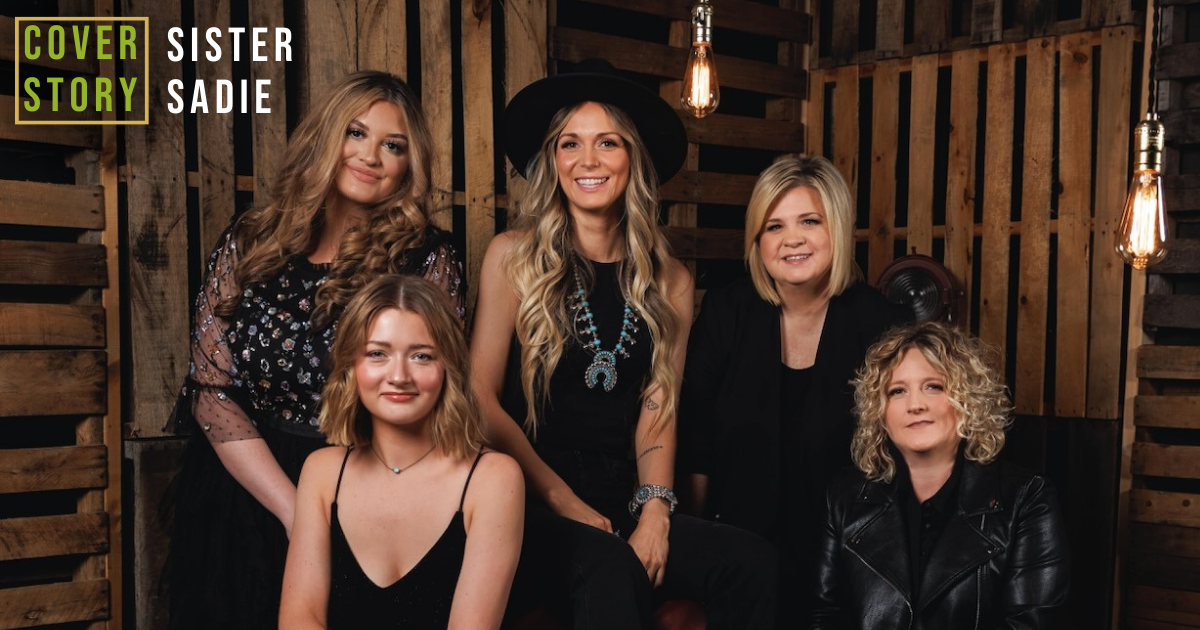
The last time BGS spoke at length with Sister Sadie, in December 2020, they were two-time IBMA winners, GRAMMY nominees, and clearly on their trailblazing way with two albums to their credit. Fast-forward five years and the group, now in its thirteenth year, is back as BGS Artist of the Month with their new and fourth album, All Will Be Well, following last year’s No Fear.
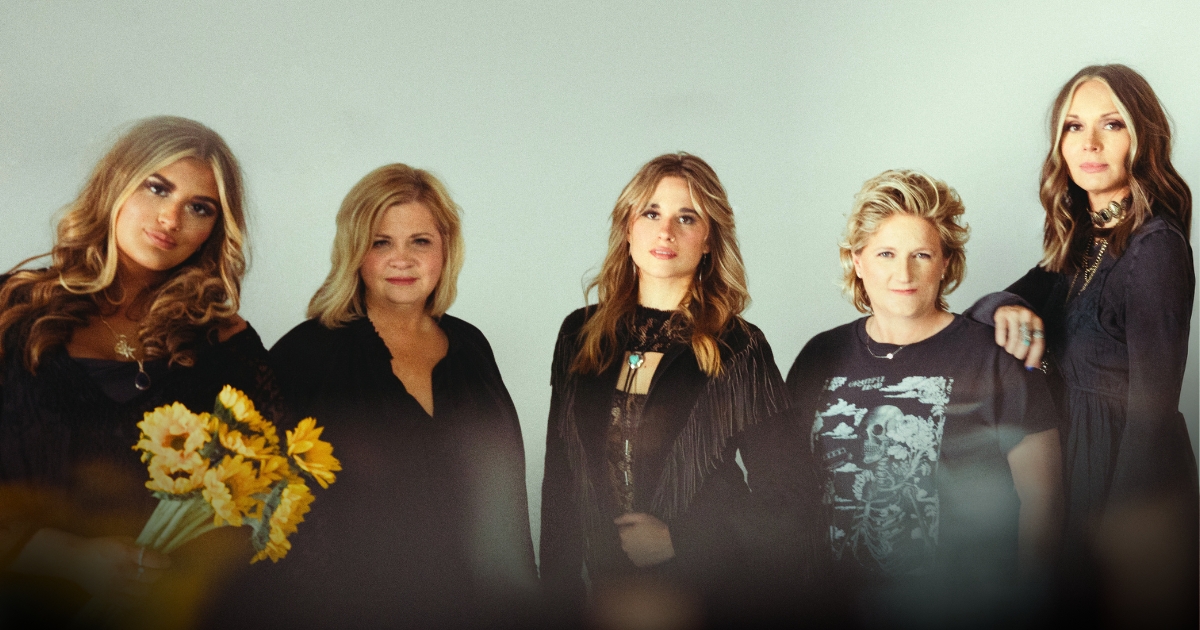
Sister Sadie 2025 includes founding members Gena Britt (banjo, vocals) and Deanie Richardson (fiddle) with Jaelee Roberts (guitar, lead vocals), Dani Flowers (guitar, vocals), Rainy Miatke (mandolin, vocals), and Katie Blomarz-Kimball (bass, vocals). Along the way to solidifying this lineup, the band notched a few more personal and professional milestones. Since becoming the first all-female band to win IBMA Entertainer of the Year in 2020 they’ve won three Vocal Group of the Year awards from the trade organization as well; performed at The Grand Ole Opry numerous times, fulfilled what they describe as “our ongoing bucket list” of goal festivals and other dates they hoped to play; charted several Number One singles; and were among the artists requested to perform at Patty Loveless’s Country Music Hall of Fame induction.
All Will Be Well is the band’s second project for the Mountain Home Music Company label. It was tracked at Crossroads Recording Studios in Arden, North Carolina, with Clay Miller engineering and Richardson producing. While the band did not set out to write a concept album, All Will Be Well is in many ways just that in its explorations of life lessons, experiences gained, and finding closure – the latter powerfully represented in “Let The Circle Be Broken,” a revealing take on ending the cycle of generational trauma.
Sister Sadie gathered together from various points to speak with BGS. Their six-member Artist of the Month interview, following, has been edited for space and clarity.
How have your many accomplishments to date brought the band to this point?
Deanie Richardson: We never intended to be a full-time band. We were friends who played a one-off at the Station Inn. That went so well that we decided to do another one. Gena started getting phone calls from promoters and we thought, “That might be fun. Let’s do it.” From there, we got a call from a record label and it grew organically, doing everything ourselves, because we weren’t looking to do it a hundred percent.
With every person that’s come into Sister Sadie, the whole band has shifted. The energy changes every time you bring in a new vocalist, a new player. You have to just let this thing guide itself. With each personnel change comes a new sound and you have to rebuild and regroup. I feel like that has happened since the last time we spoke with you guys. With Katie and Rainy here now, the energy feels perfect.
We finally have this team around us – booking agents, management, publicists – helping now and we get to focus more on the music and the amazing women in this band. So, for me, it feels like every step led to where we are right now, and it feels so right.
Gena Britt: With these personnel changes we’ve gained some wonderful songwriters, and they bring this creativity to the band. Like Deanie said, we’ve evolved into what we are today and that has a lot to do with being together, being creative together, growing as a band, and Deanie and I growing as businesswomen. It’s incredible to think of where we were when we first started and had no intention of doing this. And here we are. We have an incredible team behind us and it’s working. All the ingredients are here.
Let’s talk about the theme of All Will Be Well and sequencing the songs to tell that story.
Dani Flowers: When we went in to make the record, we definitely did not go, “This is [the title], this is the theme, and this is what it’s going to be about.” But it almost feels like we did.
We all write songs and send them to each other in Dropbox, an Apple Music playlist, and listen to them over and over. We put our opinions in as to what we might want to sing, what we hear other people singing, what songs we think are a good fit for the band, and it comes together into this thing that we almost never could have planned.
I do feel there is an overarching production style, even a theme, throughout the sequencing. But it wasn’t planned, which is the crazy thing. Deanie did the sequencing, and even outside of the band we’ve had so many folks comment on how it’s such a journey. I think the sequencing on this record is really something.
DR: The title No Fear was about Gena and I facing fears of losing some powerful personnel and deciding, “Do we want to quit? Do we want to keep going?” We decided we wanted to be all in, no fear, let’s get a team around us and do this thing. When Dani brought “All Will Be Well,” the Gabe Dixon song, I thought instantly that would be a great title, coming from No Fear: “We’re going all in on this thing, and whatever happens, all will be well.”
Once we finished the record, I started listening to the tunes. I would go on walks around the neighborhood, listen to the record over and over, and it felt like a journey. It felt like you’re taking a trip or a drive, starting with “Winnebago.” Jaelee’s singing is so powerful – that had to be the first song. You step in this Winnebago, you’re going through your drive, and then “I Wish It Would Rain” just felt like the next thing.
I imagined this person going through … call it a trip or just life in general and that being the case with this sequencing. It’s telling a big story. There’s a lot of personal connections in the writing and the song choices, from “Let The Circle Be Broken” to “First Time Liar” to all of it. This record is a representation of the deepest parts of all of us.
DF: Sister Sadie members had a hand in nine out of these thirteen songs. So there’s a lot of originals here, there’s a lot of our personal stories, our personal feelings and experiences, and it’s not perfect. I love that the record is called All Will Be Well. It’s not “all is well at this very moment.” It’s that even when we make mistakes, when we are in good moods, in bad moods, we have this overall feeling that we are going to get where we want to go. It might not be butterflies and daisies right now, but we know we’re going to get there.
Jaelee Roberts: The sequencing really is quite something, because these songs means so much to all of us individually. Even though I didn’t have a hand in writing them, at the time that I was in my life, some of these songs meant so much to me. The fact that I got to sing some of them, that they trust me to sing their songs, is so cool. I was excited when Deanie sent the sequencing to listen to our final mixes in that order, because it really is like going on a journey. The sequencing is absolutely perfect.
Can you select one track and walk us through the recording process?
DR: We all play acoustic instruments, so from sitting in my kitchen with our instruments, working out arrangements, that’s how we walk into the sessions. We recorded at Crossroads and we trust Clay Miller a lot. He’s great. He sets up the mics, we walk in and record. There’s not a lot of discussion as far as gear and mics.
The song lets you know what it needs. It will arrange itself and produce itself. “Winnebago,” for instance, has dissonant chords. I heard right away a B-3 organ accenting that. So on that song there’s electric guitar, steel guitar, the B-3, some piano. We brought things in that add an incredible amount of texture to our bluegrass instrumentation, our acoustic instruments.
GB: When we got to the studio, I had just acquired a baritone banjo that I hadn’t had an opportunity to play very much. It really lent itself to the sound of “Winnebago” and “Do What You Want.” I don’t know how to explain the feel of that song, but it just fit so well. So I played baritone banjo on a couple of tunes, which was great.
How do your playing styles and backgrounds come together to create the band’s sound?
DF: We are all such music fans, and through our upbringings and our own exploration of music, we’ve all been exposed to the best songs. We have pretty high standards when it comes to writing our lyrics and what we want to sing. We love a good lyric. We love creative harmonies. We have great instrumentalists in this band, so we especially love a melody with a really cool hook. You can find that in any genre. Onstage we quite often cover rock and roll songs, pop songs, old and new country songs. Katie comes from a jazz background. Rainy comes more from West Coast bluegrass. Gena and Jaelee and Deanie all come from traditional bluegrass. I come strictly from a country background. You can find a good song, good lyrics, good melodies, in any genre.
Katie Blomarz-Kimball: My background is in jazz. I didn’t really grow up with country or bluegrass music. Since I’ve lived in Nashville for about ten years now, I’ve definitely dipped my toe into the genres, but it’s hard when you’re playing with some of the best bluegrass musicians on the scene to come in and not be like, “Am I good enough for this? Can I do this?”
One of the very first things Deanie said to me at the rehearsal two hours before the first show I ever played with them was, “I want you to play like you would play it.” That was important to me, because there is a really interesting perspective that can happen when people from different backgrounds come together in one group. And I think it can change, depending on what naturally migrates as a group. Adding some of my quirky bass playing can influence one way or another for things to have a different feel or vibrancy behind it that maybe shifts the music slightly. It’s definitely a fun part of this experience for me.
DR: We all come from different genres of music that we love, but we have country and bluegrass as a deep-rooted passion. That’s basically why we’re here. Because we are so creatively different, I think that’s a plus. Each of us brings something to the situation that changes it, adds to it, and you have to figure out ways to highlight or bring to the table everyone’s strengths. Once you do that, the sound starts coming together.
Deanie, you produced All Will Be Well. What does the term “producer” mean to you? Is it a democratic process?
DR: It is democratic up to pushing the red button. Everybody has input, but there comes a time when you have to call it, when you have to say, “That’s brilliant. I’m sure you think you could do it better, but I don’t need better. I need feel; I need it to feel a certain way.” This is a killer band, and they don’t need me to tell them how to play or sing. But there has to be some person that says, “You just wrecked me, you just turned me into a puddle on the floor, and I’m not going let you do it again because of that.” That’s what a producer is for me.
We all arrange these songs, pick these songs, write these songs, and at the end of the day, we’re making great records that I am so proud of. That’s not because of something I did. That’s because of something this band did. It’s a group effort. It is six very talented, capable women who I respect and value tremendously. It’s just that there has to be someone calling the shots, if you will.
Could we talk about writing “Let The Circle Be Broken” and presenting it to the band?
DR: We spend a lot of time in the car together, riding up and down the road, so we talk about everything. We know each other’s deepest, darkest secrets. We know the pain we’ve been through, the love we’ve been through, the relationships we’ve been in. We know everything about each other. I love being with a group of people you’re that connected to and that close with, and getting to be creative with them and make music together. That’s the ultimate thing for me. That’s honestly why I stay in tears all the time – because I love these women so much.
Dani, Erin Enderlin, and I got together right after my dad died. We were talking about all the shit I went through as a child growing up with him and all that Dani went through having an abusive mother. Each of the women in this band has experienced some form of generational trauma or abuse from someone in our lives. When we brought the song to the band, everyone knew my story and Dani’s, so it wasn’t a surprise.
Everyone was very supportive about telling the story and getting the song out, and it felt like the right time to do it. Once he passed away, I was ready to finally talk about it. It’s a very personal story, but it doesn’t say anything specific about what I went through. The song hopefully relates to anyone who’s experienced any sort of abuse.
We didn’t write it to make a statement. We wrote it because that’s where we all were, having that conversation that day. The more we talked, the more the song came to life. It was a beautiful thing and very therapeutic to write. I am extremely proud of how it came out, what each girl brought to this tune, and how they supported and loved me through it.
How do you protect yourself, mentally and emotionally, when performing the song live?
DR: Sometimes I don’t. Sometimes I cry, sometimes I get upset. I just want to feel the song as I feel it every night. Some nights it’s just a song for me, some nights I just want to get through it, some nights I feel so much peace with it, and some nights I feel like he’s there. We played in Ogden, Utah, recently, and I could feel his presence and I got very upset.
One night in a theater I looked over at the girls while we were playing the song and I thought about each of them individually and how I know all these things about them. I know the struggles they’ve been through, the people who’ve hurt them, all the things they’ve felt, and struggled with, and beat, and have experienced in their lives.
At that moment, the song was theirs too. It was their experience as well. That night, walking across the stage as I’m playing that play-out at the end, I looked at each of them and told them I loved them as I walked by them. I’ve been doing that every night since, because I don’t feel like it’s just my song. I feel like it represents each of us. These are strong, amazing, talented women, and I’m so grateful to be in their presence every day.
DF: For me, this song is about the fact that we are in control now. We have the ability to stop the cycle that’s happened through our families and could very well carry on to our own children, if we didn’t take accountability, stand up, and say, “This goes no further.” So, for me, there’s not really a need for protection. It’s more letting it all out. Watching the crowd’s reaction every time we perform it is so therapeutic because you can tell there’s always somebody that really needed to hear what we had to say.
You both used the word “therapeutic.” What part does music play in your healing, in your mental health?
DR: It’s the only reason I’m still alive.
DF: To put it in perspective, imagine going through one of the worst things a person could go through, then to live your life and get to a place where … like, for Deanie, her dad passing away … to be able to sit down with two other women that are going, “I know almost exactly what you’re talking about. I have been through this as well. We are going to get it all out through the thing we all love the most.” And then to take that song you wrote that’s so honest and so vulnerable, play it for the people you’re in a band with, and have them all react with such compassion, saying, “Yeah, we have to do this.” And not only record the song, but there also was a conversation about how much we’re going to say about what the song is about, because some of us are really ready to talk about the things that happened to us, and we know that affects the entire band.
To have everybody embrace that, and then to get onstage and perform that with those people every night, to look at these women and tell them you love them — I can’t think of anything more therapeutic than to be able to say, “This happened to me,” and have so many people — the people that you wrote the song with, the people in the band with you, the people who made the record with you, and the people in the crowd listening and buying the record and all the comments we get on this song … I cannot think of anything more therapeutic for a person who has gone through something so traumatic. Other than actual therapy — I’m an advocate for actual therapy!
Rainy Miatke: Music plays such a huge role in my mental health and my healing journey. At times in my life when I’m not playing as much music, I can really feel the difference. Since I was a little kid, I’ve used music, writing melodies, writing songs, playing, and singing as a way to process the emotions I was going through. Now, being part of a band that is on a similar journey and path as I am, in my life and musically, and playing these powerful songs that the band has written about very personal subjects, it feels like we’re all in this together and here for each other, and it feels so healing.
When Deanie’s up there playing that part at the end of “Circle,” I sometimes find myself feeling really emotional and having to almost compartmentalize it, but also sometimes just letting it happen and processing some of the things that I’ve been through, too. I’ve found these people that I can do that with, and that I can process that stuff with through music, so it feels really special.
Sister Sadie, one of the most electrifying, interesting, and resonant bands in bluegrass today, have just released their latest album, All Will Be Well, via Mountain Home Music Company. The award-amassing collective of impeccably talented women have once again raised the bar for themselves, offering an LP with limitless star power, heart, and unapologetic grit – musically and otherwise.
Over the years since their origin – a one-off supergroup-style show in 2012 at the World Famous Station Inn in Nashville – Sister Sadie have undergone quite a few metamorphoses. As is the case for many bluegrass groups, where band names may be retained as lineups constantly change, members leaving, returning, and swapping out, the ensemble has seen many a superlative woman picker join or leave their ranks over the last decade plus. Somehow, over these many transitions, the group has emerged with a cogent, cohesive sound – and a brand and sense of identity that remain indelible, whomever they may boast among their members at any given time.
It’s remarkable that this musical identity and their mission statement can be so clear, but is no surprise with stalwarts fiddler Deanie Richardson and banjoist Gena Britt as the sole remaining original members of the group. It’s even more remarkable that this new project, All Will Be Well, truly feels like the most true and one-for-one representation of the band recorded and released to date. No matter what changes may come for this assemblage of women, their perspective – as a band, as songwriters, as collaborators and peers, as first-rate bluegrass pickers – comes more and more into focus. As a result, All Will Be Well shines, tackling generational and familial trauma, highlighting class and social stratifications, uplifting women, femme folks, and the narratives that touch on their lives, all while welcoming and engaging all of their fans, no matter who they are or how they came to love this music.
Most of all, though, this album is pure fun. Redemptive and forward-looking? Yes. Intricate, detail-oriented, and technically on point? For sure. Cerebral, heartfelt, and emotive? That, too. But is it also down-to-earth, danceable, and rowdy? Oh, of course!
Sister Sadie are a bluegrass band, but they’re so much more. The mantle they take up with their music, recordings, and live performances was perhaps lifted in portions from the shoulders of the Chicks, and Alison Krauss, and Lynn Morris, and Ashley McBryde. These songs would feel equally at home on mainstream country radio or your local, once-a-week bluegrass radio show. As driving and barn-burning as they can be, there are as many moments of tenderness, embodied love, tearful compassion, and boundless empathy – for ourselves and for each other. For every sort of “Goodbye Earl” winking moment there are equal touches of “When You Say Nothing At All” and “I Never Wanted To Be That Girl” and “Wrong Road Again.” Whether soaring, blazing, or slowly smoldering, this band moves in and out of each texture with ease.
As for any/all of the all-women groups that have been born of bluegrass, Sister Sadie could have at any point across their lifespan rested on the perceived “novelty” of being a band comprised of all women pickers, singers, and songwriters. Instead, they know firsthand that the reality for women in roots music is one that requires superlative skills, ardent commitment, and a polish and care often not mandatory for the cis, straight, male bands occupying similar niches. Sister Sadie are diamonds forged by such pressure, though, not just rising up to industry expectations, but exceeding them – while finding self expression, originality, and insight in their work. A novelty group this is not. A “mere” supergroup? Not that, either. This is a band, not just a collection of last names and ampersands.
It’s an obvious, forest-for-the-trees sort of statement, but these women are certainly greater than the sum of their parts. With mandolinist Rainy Miatke, guitarists and singer-songwriters Dani Flowers and Jaelee Roberts, who often split frontwoman and lead singer duties, and bassist Katie Blomarz-Kimball currently filling out the band, Richardson and Britt demonstrate time and time again that there are always more women to call who are qualified and interesting and engaging enough to join the ranks of Sister Sadie. And they clearly haven’t even begun to exhaust those resources.
The central messages of All Will Be Well are incredibly apt and well-timed for this particular social and political moment, as well. It’s striking to find these women, as on “Let the Circle Be Broken,” offering and accepting redemption from themselves and each other, instead of any external force or power. Perhaps, in that truth is where they also find their greatest strengths within the music industry, too.
From their GRAMMY nominations to their many (individual and collective) IBMA Awards, this jaw-dropping band truly does not need any external factor to validate their music, their mission, or their existence. It’s how they started, too, a simple pick-up gig at the Station isn’t a particularly ambitious origin story, it’s even passé. Usual. But, from the outset then, the foundation of Sister Sadie hasn’t been one of ladder climbing, belt notching, or industry achievement. It’s been about expressing themselves, making great music, and having a whole hell of a lot of fun.
It’s no wonder, then, that with an album like All Will Be Well, they continue following in the exact trail they’ve blazed for themselves, being, becoming, or striving to arrive at the best version of Sister Sadie possible in each and every present moment, with whomever they find among their ranks. And, above all else, doing it for their own edification and joy before any other purpose. That’s what makes this band a true supergroup. Sister Sadie knows that All Will Be Well, because they are determined to make that reality so.
We are so proud to have Sister Sadie return for their second stint as Artist of the Month. Enjoy our Essential Sister Sadie Playlist below and read an all-skate interview feature with the entire band here. Plus, we’ll be dipping back into the BGS archives for all of the many times we’ve covered and collaborated with this incredible group. So follow along right here on BGS and on social media as we celebrate Sister Sadie for the entire month of July.
You Gotta Hear This! It’s another excellent roundup of track and video premieres plus new music arriving on digital “store shelves” today. There’s bluegrass, folk, Americana, and more.
Kicking us off, Kentucky’s Bibelhauser Brothers enlist their hero and friend Sam Bush on their rendition of “One Tin Soldier,” from their upcoming album, Down The Road. As an added bonus, Aaron Bibelhauser and Sam Bush had a nearly hour-long chat about the track, too – you can find and watch that video below. Also in a bluegrass space, Irish ‘grasser Danny Burns offers his cover of “Brother Wind,” a modern classic written by Tim O’Brien. Dan Tyminski joins Burns on the track, which does O’Brien and Darrell Scott’s versions of the song justice, for sure.
Alt- and indie-folk outfit JOSEPH return with new music, bringing us a video for their new track, “Bye and Bye,” borrowing a classic and often ecclesiastical line to explore growth, loss, and the drawn out transformations life brings each of us – while tipping their hat to a bar by the same name. You can also hear Appalachian mountain music duo the Wildmans perform “Autumn 1941,” a song co-written by Berklee’s Mark Simos and Roger Brown that touches on the harrowing reality of eugenics in the mountains of the Southeast.
East Nashville’s favorite band of lovable bluegrass delinquents, East Nash Grass, released a new single earlier this week, too! Don’t miss the excellent and lovely “Followin’ You,” written by ENG guitarist James Kee and new Travelin’ McCourys fiddler Christian Ward especially for Maddie Denton to sing. Plus, Nick Dumas is readying a bluegrass album, offering our readers a peek at a new video for “Where Have You Been,” a song about how sometimes folks you love “go away” without actually leaving.
There’s still more fantastic roots music, though! Award-winning fiddling phenoms Deanie Richardson and Kimber Ludiker are teaming up on a twin-fiddle album coming soon from Mountain Home Music Company; you can hear “Cacklin’ Hen,” the first offering from that project, below. And, wrapping us up this week, Jessica Willis Fisher went into the studio with Bryan Sutton playing guitar and mandolin to record the heartfelt and touching, “Seeds,” a country/Americana flavored track about interrupting generational cycles of pain and trauma and refusing to reap the seeds someone else may have sown in your heart and mind.
It’s quite the collection of music, and, as we say every week: You Gotta Hear This!
Bibelhauser Brothers, “One Tin Soldier” (Featuring Sam Bush)
Artist:Bibelhauser Brothers Hometown: Louisville, Kentucky Song: “One Tin Soldier” featuring Sam Bush Album:Down The Road Release Date: May 15, 2025 (single) Label: Common Loon Records
In Their Words: “Our latest collaborative effort, ‘One Tin Soldier,’ marks the first studio version of the familiar song that features Sam Bush singing and playing mandolin. The Father of Newgrass jumped right in as an honorary Bibelhauser Brother on this fourth single from our forthcoming album, Down The Road, slated for release this October. (I actually had a candid, nearly hour-long conversation with Sam on video to chat about the track – check that out here.) With his help, we’ve made an honest attempt to frame this song as a missing link in ‘newgrass’ history, connecting the dots between some larger-than-life personalities quintessential to the evolution of the bluegrass world. Much like many of our heroes, we’d like to keep the traditional torch burning bright, while igniting our own flame, fusing elements of blues, country-rock, and soul with our primordial bluegrass sensibilities.” – Aaron Bibelhauser
Track Credits: Sam Bush – Mandolin, vocal Adam Bibelhauser – Vocal, bass Aaron Bibelhauser – Vocal, guitar Steve Cooley – Banjo Jeff Guernsey – Fiddle
Danny Burns, “Brother Wind” (Featuring Dan Tyminski)
Artist:Danny Burns Hometown: Donegal, Ireland Song: “Brother Wind” featuring Dan Tyminski Album:Southern Sky Release Date: May 16, 2025 (single); August 22, 2025 (album) Label: Bonfire Recording Co.
In Their Words: “I first discovered ‘Brother Wind’ on the Transatlantic Sessions on BBC many moons ago. I’ve had the great pleasure of knowing Tim O’Brien and working with him — he was one of my very first collaborators in Nashville when we cut a few songs at John Prine and Ferg’s Butcher Shoppe [studio]. I asked him about ‘Brother Wind’ and he said, ‘Yeah, you should cut it.’ So, we did — tried to stay true to his original version while adding something new. Having Dan T. come in and sing on it brought it to another level of cool.” – Danny Burns
Track Credits: Danny Burns – Vocals, guitars Dan Tyminski – Vocals Ethan Burkhardt – Upright bass Billy Contreras – Fiddle Matt Menefee – Banjo, mandolin Cody Kilby – Guitars Jerry Roe – Drums
Video Credit: Shot by Ryan Kay at the Station Inn, Nashville, Tennessee.
Nick Dumas, “Where Have You Been”
Artist:Nick Dumas Hometown: Sturgeon Bay, Wisconsin Song: “Where Have You Been” Album:Where Have You Been Release Date: May 16, 2025 Label: Skyline Records
In Their Words: “Everyone has been in that place – where someone close to you just isn’t there like they used to be, even if they haven’t gone anywhere. This song really struck me because of how real and universal that feeling is. And when Jim Van Cleve came in to mix it, he completely brought out the emotional tension in a way that blew me away. There’s this haunting, almost cinematic atmosphere that he created in the mix – it’s ominous, raw, and it elevates the story in a way that made me hear the song differently. It gave the whole track this weight, like you’re walking through fog trying to find someone.” – Nick Dumas
Artist:East Nash Grass Hometown: Madison, Tennessee Song: “Followin’ You” Album:All God’s Children Release Date: May 13, 2025 (single); August 22, 2025 (album) Label: Mountain Fever
In Their Words: “East Nash Grass was touring Ireland the first time I heard the demo recording of ‘Followin’ You,’ which I was told that our guitar player, James Kee, and our good songwriting pal and fiddler, Christian Ward, had written for me to sing on our upcoming record, All God’s Children. We were on the way to our next gig, driving through scenery too incredible to describe, and I was enchanted by an iPhone recording of Christian playing the guitar and singing this new song. The chorus is simple: following you. That’s all. And right there, in the beauty of simplicity, I understood that we had all been brought together to make this music to share, not because someone told us to or because of any hidden agenda; but purely because there was no other option for us.” – Maddie Denton
Track Credits: Harry Clark – Mandolin James Kee – Guitar Jeff Partin – Bass Maddie Denton – Fiddle Cory Walker – Banjo Gaven Largent – Dobro
JOSEPH, “Bye and Bye”
Artist:JOSEPH Hometown: Portland, Oregon Song: “Bye and Bye” Release Date: May 16, 2025 Label: Nettwerk Music Group
In Their Words: “This song is about being a woman in her late thirties with none of the results she expected from the plans she made – no husband, no house, no kids, no religion. The start of the song came one night when I was getting dinner with my then-girlfriend Talia at a bar called the Bye and Bye on Alberta St. in Portland. Our sister Allie had just quit the band, I was about a year past my divorce, I had a hunch the relationship I was in couldn’t keep going in its current form. I told Talia, ‘I feel like, in a way, I just died. Like everything I am – every bit of identity I’ve had – is over.’ I started crying in the way that isn’t tidy so I ran to the bathroom and let the tears rip. It had been a rough few days and as I sat on the toilet lid bawling I opened my notes app and typed ‘Crying in the bathroom of the Bye and Bye/ Saturday’s mascara in my eye/ it’s Tuesday.’” — Natalie Closner
Artist:Deanie Richardson & Kimber Ludiker Hometown: Nashville, Tennessee; Silver Spring, Maryland Song: “Cacklin’ Hen” Release Date: May 16, 2025 Label: Mountain Home Music Company
In Their Words: “I’ve been a Kimber Ludiker fan for many, many years now since I heard her play at the Grand Master’s Fiddler contest. I was a judge that year and she completely blew me away. I think Kimber is one of the most tasteful, versatile fiddlers that we have in bluegrass music today and the work she’s done with Della Mae speaks volumes for her integrity and her talent. Kimber and I have been talking about doing a twin fiddle record for at least three years now and we’re so glad that we found a home and so glad that we found a place to record this record. Mountain Home has been so generous and good to me and allowed Kimber and I the space to come record this twin fiddle record. And we took it back-old school — just twin fiddles through the whole thing and we’re super excited for you guys to hear some fun music.” – Deanie Richardson
“Deanie Richardson has long been one of my favorite fiddlers and has always been my favorite to play with. We’ve been dreaming about a twin fiddle record for years and Mountain Home is the perfect label to share our excitement and vision. With our bands Della Mae and Sister Sadie, we’ve both had a long commitment to showcase and create a platform for women in this music, and we’re excited to add our fiddling to the canon of tunes in our music. I especially hope young girls will be excited to have more and more recordings of instrumentals played by women to inspire their learning.” – Kimber Ludiker
Artist:The Wildmans Hometown: Floyd, Virginia Song: “Autumn 1941” Album:Longtime Friend Release Date: July 11, 2025 Label: New West Records
In Their Words: “‘Autumn 1941’ is a song Roger Brown, former Berklee College of Music President, co-wrote with Berklee songwriting professor Mark Simos. Mark has written for Alison Krauss, the Infamous Stringdusters, and Del McCoury. Del recently released the other song in this series titled ‘Working for the WPA.’ The ‘Autumn 1941’ story hails from Roger’s North Carolina Appalachian roots, it was passed down through his family and while some of the specifics remain unknown, different versions of this story of eugenics prove to be true across Appalachian regions and more largely other minorities throughout American early-mid 20th century history. Stories of this same movement took place in Virginia and communities like Floyd, our hometown. Once we got into the studio with this song, it just flowed and out of it came a haunting authenticity we hadn’t yet discovered in our music.” – The Wildmans
Jessica Willis Fisher, “Seeds”
Artist:Jessica Willis Fisher Hometown: Nashville, Tennessee Song: “Seeds” Album:Blooming Release Date: May 16, 2025 Label: Bard Craft Records
In Their Words: “When we’re young, much of our life is shaped in ways we can’t control. Seeds are planted in our life and when we grow up, we can be left reaping the effects of toxic generational patterns. A big part of my life the last few years has been weeding out so many beliefs and habits that, if left to continue to grow, would choke me to death in many ways. Some days are harder than others and I still have doubts that rise up about which way to go in life, how to best move forward, how to heal from the abuse I experienced when I was younger.
“That vulnerability and honesty felt important to include on this record which centers around healing and growth.” – Jessica Willis Fisher
A quarter century removed from his passing, John Hartford’s music and overarching legacy may have a stronger hold on bluegrass and American roots music than ever before.
From modern-day stars like Billy Strings and Sam Bush playing his songs in front of thousands each night, to popping up in books, old-time jams, workshops, films, and other functions, Hartford’s songs are officially a part of the Americana zeitgeist.
This trend continues on Julia Belle: The John Hartford Fiddle Tune Project Volume 2. Released February 28, the follow-up to 2020’s inaugural installment of the Fiddle Tune Project features another 17 songs from the always grinnin’, GRAMMY award-winning, steamboat-loving singer – this time performed entirely by women. Nearly 50 artists, musicians, and singers feature throughout, ranging from Rachel Baiman, Phoebe Hunt, Ginger Boatwright, Brittany Haas, and Deanie Richardson, to Allison de Groot, Della Mae, The Price Sisters, Uncle Earl, Kathy Mattea, Alison Brown, and Sierra Hull.
According to Julia Belle co-producer Megan Lynch Chowning (who was joined in that role by Sharon Gilchrist and Katie Harford Hogue, John’s daughter), once the decision was made to move forward with an all-women cast it came time to narrow down who to include on it–something that was as much of a dilemma as it was “an incredibly cool revelation.”
“We decided about halfway through to just make it a reality rather than a selling point,” she jokes. “It’s in the same spirit of whenever you open up a record from the Bluegrass Album Band, nobody says, ‘Wow, what a great all-male band that is!'”
Ahead of Julia Belle‘s release, Harford Hogue, Lynch Chowning, and Gilchrist spoke with BGS about their involvement in the project, preserving John Hartford’s legacy, and favorite moments from recording.
(Editor’s Note: Thefollowingare three separate conversations combined into one and edited for brevity.)
Nearly 50 artists are involved in Julia Belle. How did you go about deciding who to include on the project and which songs they’d play on?
Sharon Gilchrist: It was really important for us to have a multi-generational presence on this record. One of Katie’s personal wishes for the album was that every artist on the record have some personal connection to Hartford. With it being an all-female record, I was also curious to find women who had actually worked with or had some kind of rapport with him. For example, Laurie Lewis, Kathy Kallick, and Suzy Thompson are all on “Champagne Blues” and were all peers of Hartford’s back in the day. Ginger Boatwright actually inspired the song that John wrote which she sings on, “Learning to Smile All Over Again.”
In addition to the sheer number of people involved, I love how you also really allowed them to lean into their own creative tendencies while at the same time staying true to the style and spirit of John Hartford.
Katie Harford Hogue: Since Volume I the whole premise of this album series has been to choose artists that play this vein of music or consider my dad a mentor or someone they look up to. We hand them the book [John Hartford’s Mammoth Collection of Fiddle Tunes] and tell them to choose the tunes that speak to you, then come to the studio and put them through your filter.
For me to tell an artist how to do art – why would I do that? The whole point of being an artist is that you’re putting yourself into it and are using your own expressions, your own metaphors, and your own way of relating to the music. So we wanted their expression in it and the really cool thing is that Dad comes through no matter what we do. His DNA is in these tunes and there’s no way to get them out, not that we would ever want to. Having people come in and just go for it was risky, but an incredibly fun way to make an album.
Megan Lynch Chowning: A lot of the tones, audio, and overall vibe check comes from Sharon, who has been a John Hartford fan her entire musical life and is somebody who is so incredibly in tune with the sounds and feel that comes from his songs. She worked tirelessly listening to everybody’s work before they came in to record to get an idea of what’s going to help each person be the best possible version of themselves while they’re here.
Then there’s the issue of none of these songs – at least the fiddle tunes – having any chords assigned to them. When John wrote them there were no chord progressions, so every artist had to write their own. That in itself was a big part of people getting to take each song in their own directions. It was amazing to watch over and over again, and Sharon handled it all like an absolute rock star.
While some people’s legacy fades over time, it seems like John Hartford’s only grows stronger. What are your thoughts on that and how this project aims to further propel that legacy forward?
KHH: I’ve heard it said before that the way he communicated wasn’t limited to a particular generation. I don’t know if it was the way he thought about things or if some of the ways he did things were more universal. … You can go back to the masters of music and art – da Vinci, Bach – and their methods of creativity are still very valid now, they simply don’t go out of style.
When you hone into the foundation of it the relevancy goes with it, because everyone’s just going back to what’s real, which is what I think my dad also did. He was very true to the way he made music and the way he thought. A lot of people trying to make a career might stop and think, “What does the public want?” or “What do the masses want and how can I provide for them?” There’s nothing wrong with that, but there is another way to do it, making the music you want to make and not worrying whether or not it’s commercially viable.
That being said, “Gentle On My Mind” [Hartford’s most successful song, written in 1966] was very helpful in allowing him to do that full-time. Most everyone else has to get a full-time job and do the music on the side to stay true to themselves, but he got the best of both worlds in that way. He was able to take the success of that song and then go do his art with his heart and soul in it. I mean, who else writes about steamboats? Who else would write about the things that he wrote about and try the things he did on stage or just go out on a limb? And it all worked! In a way, everything aligned for him. That’s why I think he continues to be so relevant – he took a big risk and it paid off.
MLC: In the very first meeting the three of us had to discuss Volume II, preserving and carrying on the Hartford legacy was the focus of what we were trying to accomplish. On any given day you’ve got Billy Strings and Sam Bush playing John Hartford songs in their live shows. The biggest takeaway I have from this whole thing is John Hartford’s unceasing dedication to learning. He started transcribing and learned to write standard notation after he was diagnosed with cancer and instead of saying, “Oh no, I’m sick and this is going to slow me down,” he took it as a sign to move forward and learn a bunch of new things. That’s what led to him becoming obsessed with the fiddle, traditional styles and all that. That to me is the whole message behind these albums, that there’s so much more to do and so much more to write, play and learn. That’s been the most inspiring thing about being a part of this project.
SG: He was both a student and innovator of traditional music who forged his way forward by not sounding anything like anybody else. John is one of the largest beacons shining the way forward on how you do that.
What were your favorite moments from recording these songs? I personally can’t get enough of “Spirit of the South.”
KHH: What was so fun for me about these sessions was that even in rehearsals everyone was shredding. Upon walking in the room you’re hit with this energy and you just want to jump in. It was so exciting talking with everyone and feeling their joy around each song. Then there were the stories from Ginger Boatwright and Kathy Chiavola – both good friends of my dad – and Alison Brown telling me about his influence over her on the banjo.
Not being a musician, that all fed me, because that was a part of my dad’s life that I wasn’t necessarily connected with very much when he was alive. But now I can hear his music and I can see what he was doing and it just has a whole different impact on me. I’ve now had my own kids, raised them, done some things, and can relate more to what he was doing, so every time someone comes back to the studio and records a song, tells a story or talks about his influence, it feel like there’s a drawing of Dad and everyone’s going in and adding details that I hadn’t known about before or that just flesh out the picture that little bit more.
MLC: One favorite was getting Katie’s mom and John’s first wife, Betty, to sing on “No End of Love,” which is a song that John wrote for her. She is an incredible musician who first met John when they were both up for a radio show slot in the St. Louis area. After they got married Betty put her singing career on hold to manage the family, so being able to get her in the studio to sing that song with Katie and her granddaughter Natalie [Hogue] on guitar and hearing her voice – which has been on hold for a long time as she lives other aspects of her life – gave me chills. To me, stuff like that is the essence of folk music and why we do what we do in terms of keeping these songs and traditions alive.
Megan, didn’t you play John’s Tambovsky & Krutz violin on “No End 0f Love”? What was that experience like?
MLC: I actually have John’s fiddle here at my house and play it in the John Hartford Fiddle Tune Project live show, so I’ve been handling it for a while now. Talk about chills – it’s the fiddle he used the last five or so years of his life. It was his main fiddle for the “Down From the Mountain” shows and The Speed of the Old Long Bow record. It’s actually the fiddle on the cover of that album. Katie called me last year out of the blue and said she was moving houses and had taken the fiddle from one closet to another before questioning why it was there in the first place and not in my hands being played at these shows.
To play it on [“No End of Love”] was funny, because it sounds a lot different than my fiddle even though both were set up by the same person. It always felt comfortable to play, but the first few months I had it it was kind of dead from sitting in a closet for two decades. Since I’ve been playing it regularly it’s really come to life. Just the metaphorical part of this fiddle coming to life at the same moment these tunes are being brought into the world is special. It’s how I believe everybody who has the opportunity to be involved in traditional music should be thinking about it. We should constantly be honoring the stuff that came before us while also bringing it into new spaces.
Katie, you mentioned not being too connected to your father’s music when he was still alive, but what do you remember most about those times?
KHH: People saw his stage persona when he was out, but even when he was home he was still playing. He didn’t go home and just say, “Oh, I’m tired of that.” He played some more. “Obsessive” is not too strong a word to use when it came to the way his brain worked about music or art. It would be Thanksgiving or Christmas and he’d be working out melodies in the living room with Benny Martin simply because they enjoyed it.
Later on, my wedding reception was held at my dad’s house and we had originally set up music on a sound system so as not to burden him, but he, my brother, and my uncle ended up all grabbing their instruments and playing as a trio for it. He wasn’t a musician because he was trying to be famous; he was a musician because he couldn’t not be one. As much as his right hand was a part of him, his fiddle and his banjo were a part of him too.
What has working on TheJohn Hartford Fiddle Tune Project taught you about yourself?
MLC: These experiences have taught me that I’m capable at parts of this job that I previously shied away from. I grew up as a contest fiddler; that was my background. Because of that I was very good at learning specific arrangements of things and then executing them with precision. While that’s all great and fine – one: it’s not a very good living, and two: it’s not all that great for having a very broad musical vision or sense of yourself. That’s why I started playing bluegrass and working for country artists. My skills and musicianship both expanded, but working on these albums – both as a player on Volume I and as a producer/player on Volume II – I’ve learned much more about my internal ability to hear things I didn’t know that I could hear and to make decisions I didn’t know I could make.
It reminds me of this exercise that John Hartford used to do with people at his jams or in his band – called the “window exercise” – where everybody who’s playing has to do something different than everybody else and then has to change that thing every eight bars. If you’ve got five or six people sitting around in a circle, one person can be chopping, one person can be playing longbows, melody, harmony, shuffle pattern… but only for eight bars. It requires you to not only come up with new things, but also be aware of what everyone else is doing simultaneously.
It was a musical brain exercise he invented that we teach at our workshops and sometimes even at the live show. To me, working on these albums has been like a real-life window exercise. It feels like even from beyond the grave John Hartford is challenging me to go bigger, be more creative, and more aware all the time. He’s just expanded who I am as a musician and what I now know that I’m capable of that I didn’t know I was capable of before. It’s weird to be grateful to someone who’s been dead for 25 years, but that’s how I feel because I’m a different person and a different player than I was before I started this.
SG: It showed me the importance of being hands-off with other people’s musicianship and to give them every opportunity to bring as much of themselves to any project as possible. That’s when you’re going to get the best music out of somebody. This project was a lesson in learning to do that, but also knowing when to jump in and direct or provide guidance when necessary.
Katie did a great job of that as well. This whole project is her brainchild and was a huge undertaking and the coolest part is the way she’s doing it. She’s doing it just like her dad. He would be so honored and pleased to see her fostering that in his own tunes and giving others the opportunity to share in and carry on that tradition.
KHH: I was a stay-at-home mom when my kids were born and poured a lot into them growing up, but once my youngest got to high school I began backing off and looking to do some of the things I’d been putting off. Coincidentally, the fiddle tune project was coming to fruition around the same time.
It was like walking out on a limb – especially as an older woman – to go out and start on some of these things not having been in the industry or corporate world in quite a while, but I did it. I have learned so much about not just the music industry, but things like how to use computer software like Photoshop and Illustrator and doing video for social media. It’s a lot of fun and something I’m very proud to be able to say that I did. I want to encourage other women to do the same. Don’t worry about what other people are saying, what you’ve done before, how old you are or what stage of life you’re in – don’t let anyone devalue your experience. If you’ve got an idea, go do it!
Music is a balm, isn’t it? We’re finding that to be especially true in this week’s edition of our premiere round-up, You Gotta Hear This!
Check out a brand new country track from singer-songwriter Phillip Lammonds. Californian-turned-Nashvillian Jake Neuman and his band the Jaybirds brought us a new video for “Saved” off their recent EP, Little Bitty Town, too. Plus, bluegrass supergroup Sister Sadie keep the country vibes going – with a delicious ’90s bent and bluegrass instrumentation – on their brand new single, “Make Me Stay or Make Me Go.”
You’ll also find guitarist, singer-songwriter, and composer Jordan Tice previewing his new song, “Mean Old World,” which drops on Tuesday, November 12, and announces his upcoming album, Badlettsville. In addition, Rachel Sumner’s Traveling Light Sessions video series continues with a live trio performance of “Head East.”
Also don’t miss Kim Richey performing a short set of songs as part of the AEA Sessions captured at Americanafest earlier this year – it’s the latest in our series partnering with AEA Ribbon Mics.
It’s all right here on BGS and, indubitably, You Gotta Hear This!
In Their Words: “I wrote ‘Who’s Right, Who’s Wrong’ when I was thinking back to being a kid really digging into the sounds that came from my papa Parton’s wooden upright RCA radio. I sat criss-cross applesauce on countless summer afternoons, just glued to the tones and the sorcery of it all, wondering where the songs came from. How’d they get in that box? Fast forward a half a lifetime or so, I’m still scratching my head. Anyway, the craft in all this has taught me one thing: songs are like fish, they swim around until you catch ’em!” – Phillip Lammonds
Jake Neuman and the Jaybirds, “Saved”
Artist:Jake Neuman and The JayBirds Hometown: Bakersfield, California Song: “Saved” Album:Little Bitty Town Release Date: November 8, 2024 (video); June 14, 2024 (EP) Label: Peacedale Records
In Their Words: “‘Saved’ was the first song I wrote when I moved to Nashville. I remember having the first line or so on paper and feeling like I had something, so I immediately went to my number one writing partner – Amanda McCaslin of McCaslin Blue – and asked her what she thought. We spent the afternoon pacing around the yard and putting a line or two down every few minutes until we put something together that I am really proud of.” – Jake Neuman
Video Credit: Directed by Greg D Griffith
Sister Sadie, “Make Me Stay or Make Me Go”
Artist:Sister Sadie Hometown: Nashville, Tennessee Song: “Make Me Stay or Make Me Go” Release Date: November 8, 2024 Label: Mountain Home Music Company
In Their Words: “‘Make Me Stay or Make Me Go’ brings to mind everything I loved about ’90s country. This was written by three of my favorite writers: Jessi Alexander, Al Anderson, and Gary Nicholson. This song screams sawing fiddles and a good ole line dance. Who didn’t love country music in the ’90s? I feel like it’s creeping around the corner again, too; at least I hope it is. This is all of us Sadies tipping a hat to the country music we love so much with our bluegrass instrumentation and some very talented friends to help.” – Deanie Richardson, fiddle
Track Credits: Jaelee Roberts – Lead vocal Deanie Richardson – Fiddle Gena Britt – Banjo, harmony vocal Dani Flowers – Harmony vocal Maddie Dalton – Upright bass Mary Meyer – Mandolin Seth Taylor – Acoustic guitar, electric guitar Dave Racine – Drums, tambourine Russ Pahl – Pedal steel guitar Catherine Marx – Hammond B3 organ
Jordan Tice, “Mean Old World”
Artist:Jordan Tice Hometown: Nashville, Tennessee Song: “Mean Old World” Album:Badlettsville Release Date: November 12, 2024 (single) Label: Padiddle Records
In Their Words: “‘Mean Old World’ is about the inevitable loss and change that life brings. I wrote it rather quickly while watching my neighbors through the windows as they loaded a U-Haul truck to move out. Something about watching material objects being put into boxes signifying the end of an era of someone’s life really struck a chord with me and I was able to live in the feeling long enough to get this song out. That flood of emotion that occurs when a temporal event marks the end of a chapter you will never return to is a familiar sensation that I’ve felt when I’ve moved myself, while I’ve watch my hometown of Nashville knocked down and changed, and when I’ve lost loved ones and had relationships end. Hope it gives you a good cry.” – Jordan Tice
Track Credits: Jordan Tice – Guitar, vocals, Aoife O’Donovan – Harmony vocals Andrew Marlin – Harmony vocals Patrick M’Gonigle – Fiddle, mandolin Paul Kowert – Bass Sean Sullivan – Recording, mixing, Mark Goodell – Aoife O’Donovan vocal recording Mike Monseur – Mastering
AEA Sessions, Kim Richey, Live at Americanafest 2024
Artist: Kim Richey Hometown: Zanesville, Ohio Songs: “Chapel Avenue,” “Angels’ Share,” “The Absence Of Your Company,” “Take The Cake”
In Their Words: “I really enjoyed working with the gang at [AEA] Ribbon Mics. The mics are great and the folks are wonderful to work with.” – Kim Richey
“Kim is a treasure. Every song is like a masterclass in songwriting and her voice invites you right into tableaus her songs create.” – Julie Tan, AEA Ribbon Mics
Artist:Rachel Sumner & Traveling Light Hometown: Boston, Massachusetts Song: “Head East” (Traveling Light Sessions) Album:Heartless Things Release Date: November 7, 2024 (video); May 10, 2024 (album)
In Their Words: “‘Head East’ is our next release from Heartless Things (Traveling Light Sessions). It has an extra special place in my heart, because it was the first song I ever wrote. Thirteen years ago, I moved to Boston from the Mojave Desert in California (where I grew up) and felt such a connection with the city and a feeling of possibility that I got there – a feeling I didn’t find in my hometown. This song was a plea to my younger brother to get out and find his good fortune elsewhere, just as I had.
“For this song, Kat Wallace trades her fiddle for the tenor guitar, and Mike Siegel adds a sublime third-part harmony that makes the chorus feel like heaven. ‘Head East’ has had many lives and arrangements, but this one is quite possibly my favorite.” – Rachel Sumner
Last month, Sister Sadie took the stage at Nashville’s Station Inn to showcase and celebrate their latest album, No Fear. And although the title itself could be an ode to the group’s unrelenting urge to hop genre fences – from bluegrass to country to pop and back again – it’s also a nod to the resiliency of the band itself.
With No Fear, Sister Sadie showcase three-part, songbird harmonies backed by a keen musical aptitude that’s equally distributed throughout the quintet. The 13-song LP combines the “high, lonesome sound” of bluegrass with a blend of country and pop sensibilities a la The Chicks, Little Big Town, or Pistol Annies.
“There’s a space for bluegrass meets Americana meets country meets pop — that’s what I’m manifesting,” says fiddler and de facto band leader, Deanie Richardson.
To note, the Station Inn appearance was a full-circle sort of thing for the ensemble. First coming together at the storied venue by pure happenstance in December 2012, Richardson, banjoist Gena Britt, and former members guitarist Dale Ann Bradley, bassist Beth Lawrence, and mandolinist Tina Adair were simply a collection of pickers and singers from different circles in Music City.
That initial gig went extremely well, so much so that more shows were booked and things started to unfold into a full-fledged band – albeit one where the members still held day jobs and were raising families. But, the music felt right and so did the performances, so why not tempt fate and see where this ride may go?
Well, what a ride it has been thus far. Appearances on the Grand Ole Opry. Three IBMA awards for Vocal Group of the Year (2019, 2020, 2021) and one for Entertainer of the Year (2020), with Richardson taking home Fiddle Player of the Year in 2020. And a Grammy nomination for Best Bluegrass Album for the 2018 release, Sister Sadie II.
But, in recent years, three of those founding members — Bradley, Lawrence, and Adair — left to pursue other projects, which, in turn, posed one lingering question to Richardson and Britt — where to from here?
“When we started 12 years ago, when we hit that first note at the Station Inn, we felt this magical chemistry in the band,” Richardson says. “Somehow, every time we reinvent this [band], I still feel that magical chemistry when we play music.”
Instead of throwing in the towel and saying it was good while it lasted, Richardson and Britt forged ahead, come hell or high water. They regrouped and reemerged into this next, unknown chapter. Soon, Jaelee Roberts and Dani Flowers came into the fold, both bringing songwriting prowess as well as providing guitar and vocal harmonies to ideally complement Britt. Then, in 2023, bassist Maddie Dalton hopped onboard.
“It’s an eclectic group of ladies and of musical tastes,” Richardson says. “Our home, our hearts and our souls are in bluegrass music. That’s what we love, that’s our passion, but there’s a lot of room for growth there.”
The new album, it’s not bluegrass. It’s not country. It’s just good music. In my opinion, it would be a shame to pigeonhole your music.
Deanie Richardson: Well, that would be our dream, Garret, for someone to not try to put some sort of label or pigeonhole it into somewhere. But, unfortunately, it happens. We went in there with great tunes and just let them arrange themselves, let them work themselves out in the studio. And this is what we got. So, I didn’t go in with bluegrass in mind. I didn’t go in with country in mind. I just went in with all my pals, people I love — great players and great songs.
Is that more by design or just how things have evolved?
DR: I think that’s how it’s evolved. That was not the original [Sister] Sadie. That’s this combination of girls right here. When you have personnel changes like we’ve have along the way, the energy changes — everything shifts.
Gena Britt: You have to reinvent yourself.
DR: You’ve got to figure out where you land when Jaelee Roberts comes in and changes everything. And then you’ve got to figure out where you land when Dani Flowers comes in. And Maddie Dalton. We’ve had three new members. That changes the energy. It changes the vibe. It changes the feel. It changes the vocals. It changes everything. This whole band has grown organically over the last 12 years. This is just where it is right now. We’re about to go in and record a new one and, shoot, it may sound like ZZ Top. I don’t know — you never know.
And I have a lot of solidarity with that, the attitude of just go in and see what happens, see what sticks and see what works.
Dani Flowers: Every single person in this band is a big fan of good writing and good songs. Just trying to serve the song and make sure it had what it needed rather than trying to put any one certain song in a box that it might not fit in.
How does that play into personal goals with the band’s expectations? There’s a lot of a crossover factor in the music. I hear just as much country as I do bluegrass in there.
GB: We’re just going for what we feel. We want to be excited about the song as we want everybody that’s listening to be excited. When we’re in the studio, these songs were brought to life in such a great way.
With the new members, what was kind of the intent coming into the group?
Jaelee Roberts: When I was asked to audition, I was kind of flabbergasted, because I looked up to Sister Sadie. These are all my heroes playing together in a band. And I had grown up around them. It was such a surreal feeling to get to audition. I get to not only learn more from them than I was already learning from them, but I get to part of that and grow with them, bring my spin on stuff.
DF: It was definitely a no-brainer for me when it came to joining the band. I’ve known Deanie since I was 16 or 17, Gena since I was 19 or 20. I’ve always admired them both. They’re incredible at what they do. It was really great for me. I was in the music industry for a while. I had a record deal. I wrote for a publishing company. And then, I had a kid and kind of stopped doing it all for a while. So, to join a band full of women that I already love was a great way to get back into playing music.
And with founding members of a band leaving, there’s this creative vacuum that can occur, where maybe there are more opportunities for other people to step up.
DR: Oh, that’s so great, because it’s true. With the personnel changes we’ve had, there’s been more opportunities for different styles, different vocalists, different everything. It’s crazy how that energy shift just redirects everything. You find a new tunnel or rabbit hole to go down or a new vision. It’s super fun to hear those potential songs and figure out whose voice is going to work. If you listen to a song, it actually tells you where it wants to go.
GB: This band is kind of a melting pot. We all bring such different things to the band. And then, when you put it all together and mix it all together, it’s this great recipe for things that are magical. It’s just heartwarming, too. We actually hangout together when we’re not playing on the road — not a lot of bands do that.
With the band shakeup and everything that’s happened to Sister Sadie in recent years — winning the IBMA for Entertainer of the Year, switching record labels to Mountain Home — what made you decide to keep it going? Was there a moment of maybe shutting it down and doing something else?
DR: One hundred percent. You’re on it. With the last personnel change, Gena and I were on the phone like, “We’re 10 years into this thing. Is it time to call it? Maybe it’s just time.” This band happened by just a group of friends getting together and playing the Station Inn. Then, “Hey, that went really well. Let’s playing the Station Inn again.” Then, Gena starts getting calls from promoters. Do a few shows. Then, Pinecastle says, “Hey, let’s do a record.” We do a record. We do another record. We get nominated for a Grammy.
But, we’ve never really gone in 100 percent. It’s just been organic. I’ve got a ton of things going on. I’ve got a seven-year-old. Gena’s got a job and two kids. It’s never like, “Let’s form a band and let’s go do this.” It was always sort of The Seldom Scene thing — we’ll play when it makes sense. And then, I was like, “What if we give this thing everything we’ve got? What if we put in one 110 percent? What if we got a team? What if we got a manager? What if we got a new record label? What if we got a booking agent? Let’s devote one year to this 110 percent and see what happens” — that’s where we are.
I’m 52 years old. I’ve been doing this and on the road since I was 15. This is the best record we’ve ever done. Going all in was the best choice that we could’ve made.
Photo Credit: Eric Ahlgrim
This website uses cookies to improve your experience. We'll assume you're ok with this, but you can opt-out if you wish.AcceptRejectRead More
Privacy & Cookies Policy
Privacy Overview
This website uses cookies to improve your experience while you navigate through the website. Out of these, the cookies that are categorized as necessary are stored on your browser as they are essential for the working of basic functionalities of the website. We also use third-party cookies that help us analyze and understand how you use this website. These cookies will be stored in your browser only with your consent. You also have the option to opt-out of these cookies. But opting out of some of these cookies may affect your browsing experience.
Necessary cookies are absolutely essential for the website to function properly. This category only includes cookies that ensures basic functionalities and security features of the website. These cookies do not store any personal information.
Any cookies that may not be particularly necessary for the website to function and is used specifically to collect user personal data via analytics, ads, other embedded contents are termed as non-necessary cookies. It is mandatory to procure user consent prior to running these cookies on your website.