Ken & Brad Kolodner Find a Groove With Hammered Dulcimer and Clawhammer Banjo

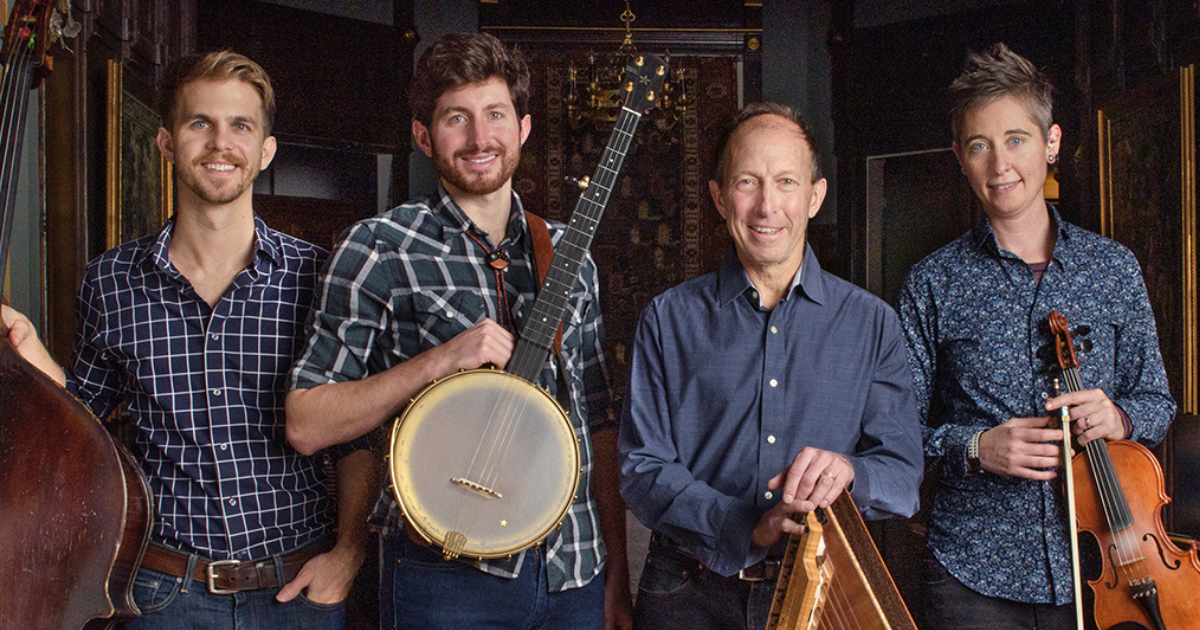
Ken & Brad Kolodner — the father-and-son acoustic duo from Baltimore — began playing together more than 15 years ago now in living room jam sessions. At the time, neither of them knew they would wind up doing this professionally — but here they are, with their fifth studio album, Hand’s Cove.

The collection contains a baker’s dozen songs that range from originals (penned by Brad) to traditionals to a rendering of John Hartford’s “Steam Powered Aereo Plane.” Listeners get a nice mix of old and new — as well as a variety of instrumentals and vocal selections. The album is bookended by refreshed versions of two songs from their 2010 debut, with “Otter Creek” kicking things off and “Bradley’s Tune” bringing them to a close.

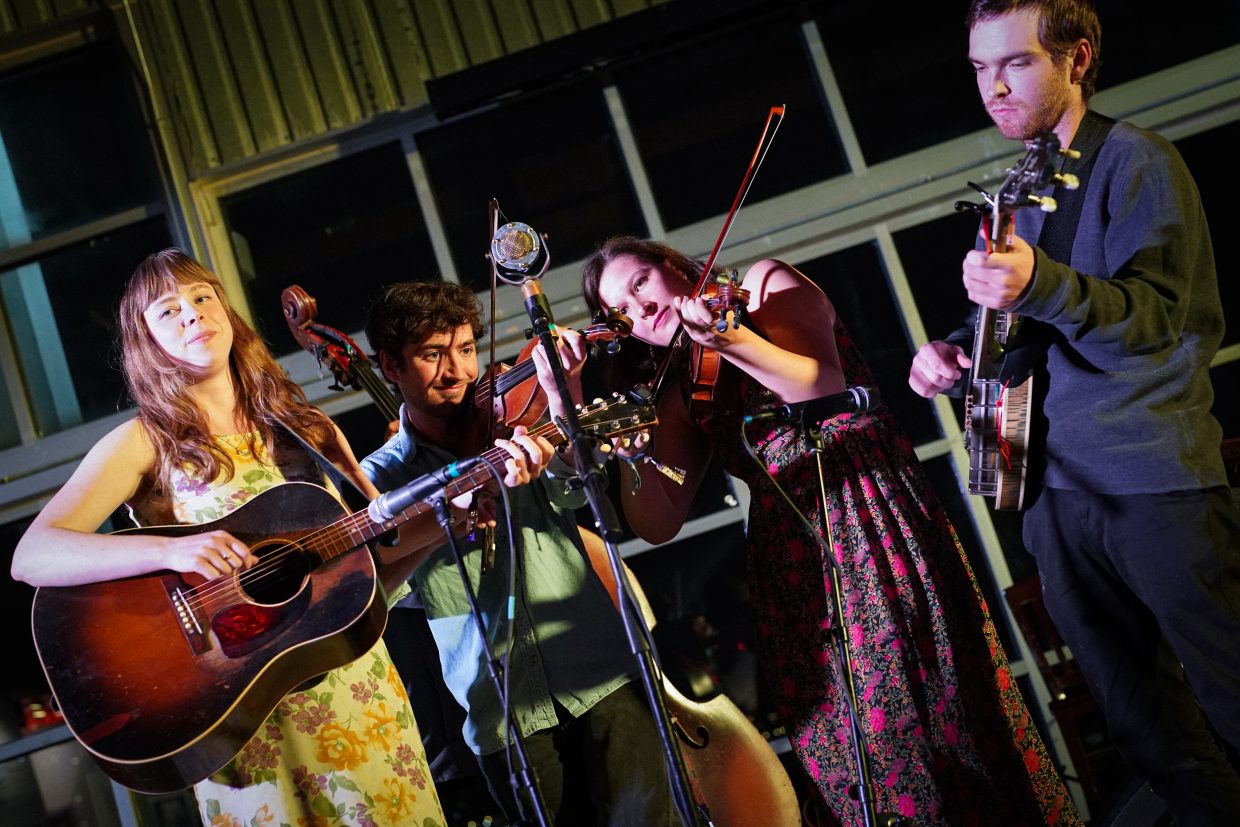
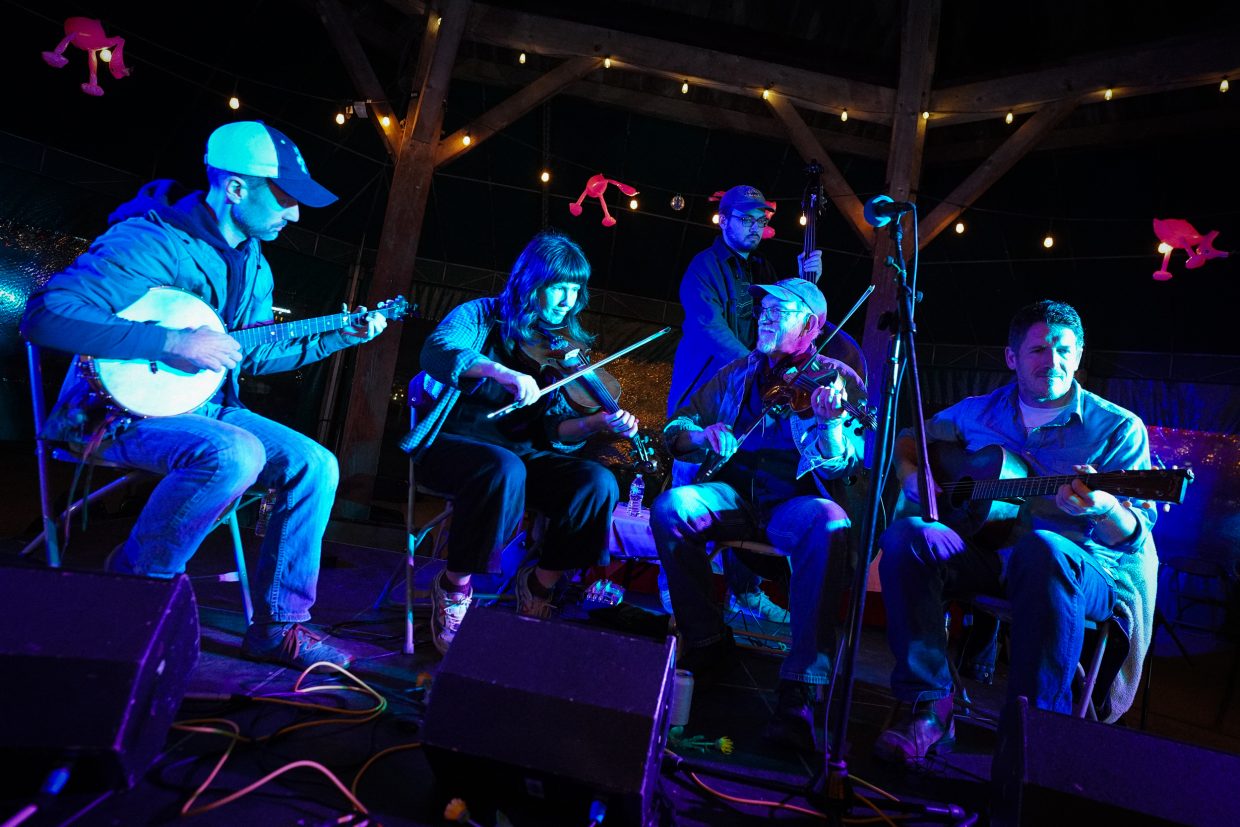
Although billed as Ken & Brad Kolodner, the ensemble is technically a four-piece. Singer-guitarist Rachel Eddy and upright bass player Alex Lacquement have been with the duo for many years. The group’s sound is distinctly bluegrass-inspired, yet there is also something hard to define. Much of that comes down to the combination of Ken and Brad’s instruments — the hammered dulcimer and clawhammer banjo, respectively. That rare blend provides more of a rhythmic vibe than some of their peers while remaining true to the bluegrass spirit.

BGS caught up with Ken and Brad Kolodner just after they had gotten back from what sounded like a fun trip to Scotland, and they shared stories about how they discovered their instruments, where they go to find creative inspiration, and why they think about the concept of cover songs in a whole different way.

BGS: For starters, tell me when and where you guys recorded the album and how long it took.

Brad: We recorded the album in a handful of sessions over last fall and into early winter in Baltimore. A studio just north of town called Stages — a lovely recording studio with an engineer named Dave Nachodsky. We recorded much like we do on many of our albums where we’re all in separate rooms. While we’d love to all play in the same space, the nature of our instruments, including the hammered dulcimer, [means] we’re all separated. But we had a nice experience, tracking everything live.

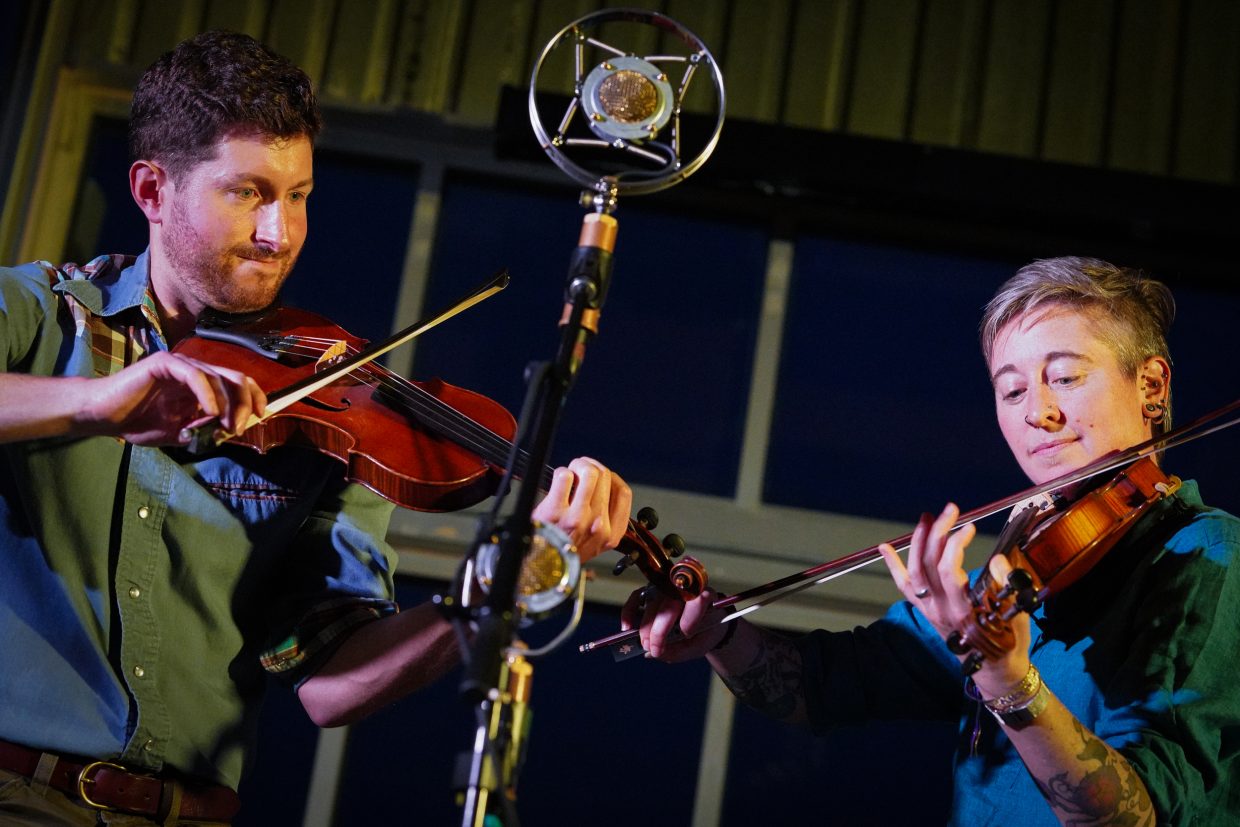
Ken: We did record one piece together in one room — the twin fiddles on “Shuckin’ the Brush.”

Brad: That’s right. One tune we went knee to knee, as they say.

Tell me a little bit about the title track. I was surprised to learn that Hand’s Cove is up in Vermont. I assumed it was somewhere down South. So I’m curious to hear more about the setting that inspired it.

Brad: Well, much of our music is Southern Appalachian-inspired — old-time and roots music. Being that we’re from Baltimore, you know, what is the connection to Vermont? We have a deep family connection there. My mom, Alison, is from Vermont and has lots of family up there. So we often spend time there in the summer — and back when my grandparents were still living, we’d visit them in the winter. They have a family house called The Camp that’s been passed down for generations, about a hundred years now. We would go there in the summer, spend time in The Camp and write music inspired by the setting.

It’s very reminiscent of a setting you’d find in the hills of Appalachia. The beautiful Adirondacks out in the distance and the Green Mountains behind you. Very mountainous and rural area. And then Hand’s Cove is a marshy area right next to The Camp in Vermont, where you can take a canoe or a kayak. The tune of course is an instrumental, but it’s meant to evoke the feeling of being in the cove and paddling around. And it connects to this important moment in the Revolutionary War where Ethan Allen and the Green Mountain Boys hid out in the cove, planning their attack on Fort Ticonderoga, which is right across the lake.

Ken: And the tune itself, which Brad wrote, is highly syncopated with the dampened hammered dulcimer and the percussiveness of the clawhammer banjo. We embrace the two instruments and accentuate the syncopation.

I wanted to ask about your musical influences. Where do they differ and where do they coexist?

Ken: Well, I guess my history goes back quite a bit longer. The music that I listened to the most was in the folk-rock sphere. But I went from there to bluegrass. And from bluegrass into old-time, and then into traditional Irish and Celtic music in general. But I also spent a lot of time listening to hammered dulcimer recordings from all over the place. I toured with a band called Helicon for a bunch of years. Our mission was to play music from wherever we could find it. That included traditional music from South America, Eastern Europe, certainly Celtic music. But I started my fiddling career listening primarily to old-time. That was the style of music that I was most drawn to. So, my influences are all over the place! I can’t point to a particular band or artist. 

Brad: Growing up in the ‘90s, I was into some popular music. But in terms of what influences my approach to banjo, I was certainly introduced to old-time from being around my father. Although while I was listening to it, I don’t think I was really delineating what was old-time or bluegrass or Irish or traditional music. It was all just acoustic music played on string instruments. When I heard clawhammer banjo for the first time, I didn’t really think of it as old-time music or bluegrass; it was just the instrument itself and the tone. That’s really what drew me in. Specifically, Richie Stearns who is a fabulous player out of Ithaca, New York. His approach to the banjo caught my ear. There are certainly other players like Adam Hurt, Chris Coole… These are household names in a clawhammer banjo player’s repertoire. Deeply influential.

Was the hammered dulcimer your first instrument, Ken?

Ken: No, I actually started out with fiddle. I hadn’t played an instrument as a kid except for a very brief stint on the piano. But I really had no interest in playing anything. So I picked up the fiddle in my early 20s. I didn’t even understand the differences between old-time, bluegrass, Celtic styles, whatever; I thought it was just fiddle. But I had attended some conventions like the Deer Creek Fiddler’s Convention, which was just a local one. And I went down to Galax before I played the fiddle. Spent a couple of days there and thought it all looked so fun. So I started to teach myself fiddle. And probably two years after picking up the fiddle is when I got my first hammered dulcimer. You know, in those days there was no internet or anything to listen to. I didn’t really know people that played. So I bought recordings and just taught myself.

You do a mix of originals and covers. When you’re doing a cover — whether it’s a standard or, say, a song by John Hartford — what is it that you look for in a song?

Brad: Well, I actually never use the word “cover.” I mean this as more of an abstract concept… You know, I mostly play traditional, old-time music. But I think of these tunes as having a lifespan that just carries on. Like once the song is born, it is then carried on and transmitted through generations. You know, traditional tunes are in a sense covered and covered and covered — to the point that they may be unrecognizable from the original. And I really embrace that: allowing your own creative influences to impact that tune as you process it. I say all that to point out that when you choose to record or perform a song, it’s probably because it connects with us in some way. It brings back some memory or emotion.

For us, “Steam Powered Aereo Plane” is interesting. Because Rachel Eddy, our longtime bandmate, has been performing the song for many years. In one way, the song doesn’t really make any sense; it’s a silly, kind of classic John Hartford collection of non sequiturs. It’s a very peculiar, whimsical song. I can’t really speak for Rachel, but I think there is a playfulness to that song specifically that they connected with. And in turn, Ken and I appreciated that Rachel chose this song. It sort of speaks to that more whimsical side of our musicality. 

That’s a good segue because I know there are two other members of your group. What do Rachel and Alex bring to the group specifically?

Brad: Well, Rachel is a West Virginia native. Fiddle player, guitar player — also a really nice banjo player and singer. Rachel is this kind of Swiss army knife in our band that can play any of those instruments at an extremely high level. An excellent, driving style that matches what we’re trying to do. With Alex, similarly, it’s a very driving push that matches the banjo-dulcimer groove. Alex can take these great solos. He really understands the bluegrass vocabulary and has a deep music theory background.

Ken: And both have such a positive energy that they bring to the band. They definitely do not sit in the background. They contribute in many ways to the musical sense of the ensemble and how to put it all together.


Photo Credit: Joanna Tillman
Brad Kolodner’s
Gourd Banjo Journey

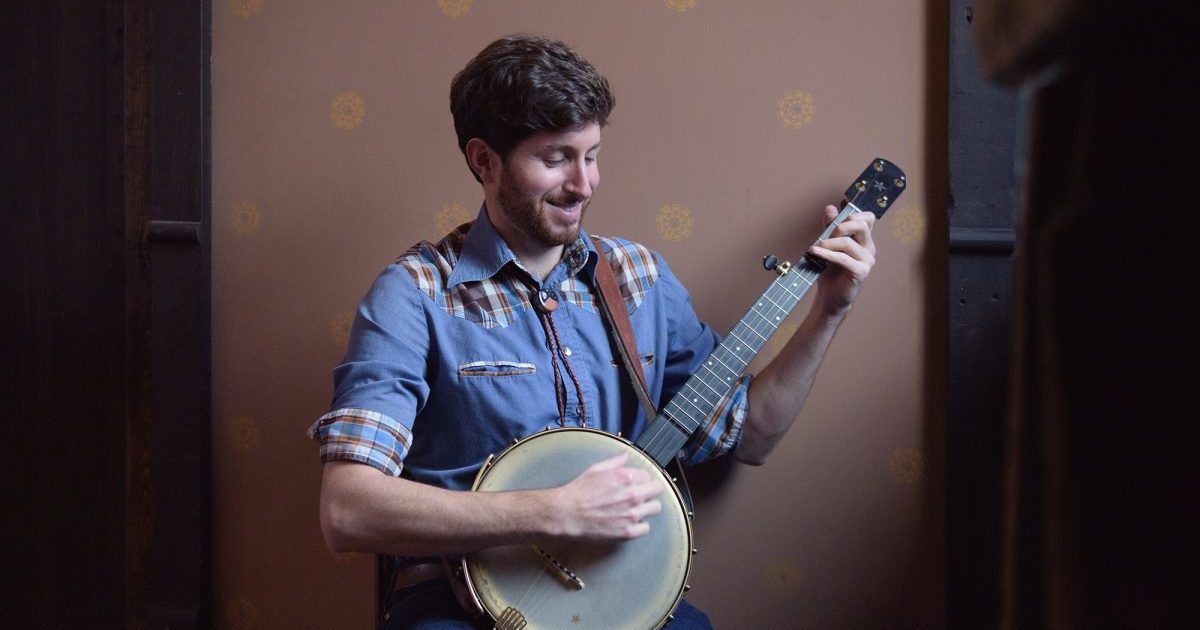
My gourd banjo journey began on a crisp, winter day in downtown Ithaca, New York. While an undergrad at Ithaca College early in my banjo-playing days, I stopped by the local acoustic instrument store and saw a peculiar banjo-like creature hanging high up on the wall. I was instantly hooked. It had five strings and a short drone string just like my banjo. I could play the same clawhammer style I was familiar with, but everything felt and sounded different. The instrument had an earthy, plunky, and rich tone. Besides being completely fretless and tuned a few steps low, the head was made of a gourd that smelled like dirt. Flash forward 15 years and here I’ve just released an album of solo, unaccompanied gourd banjo music called Old Growth.

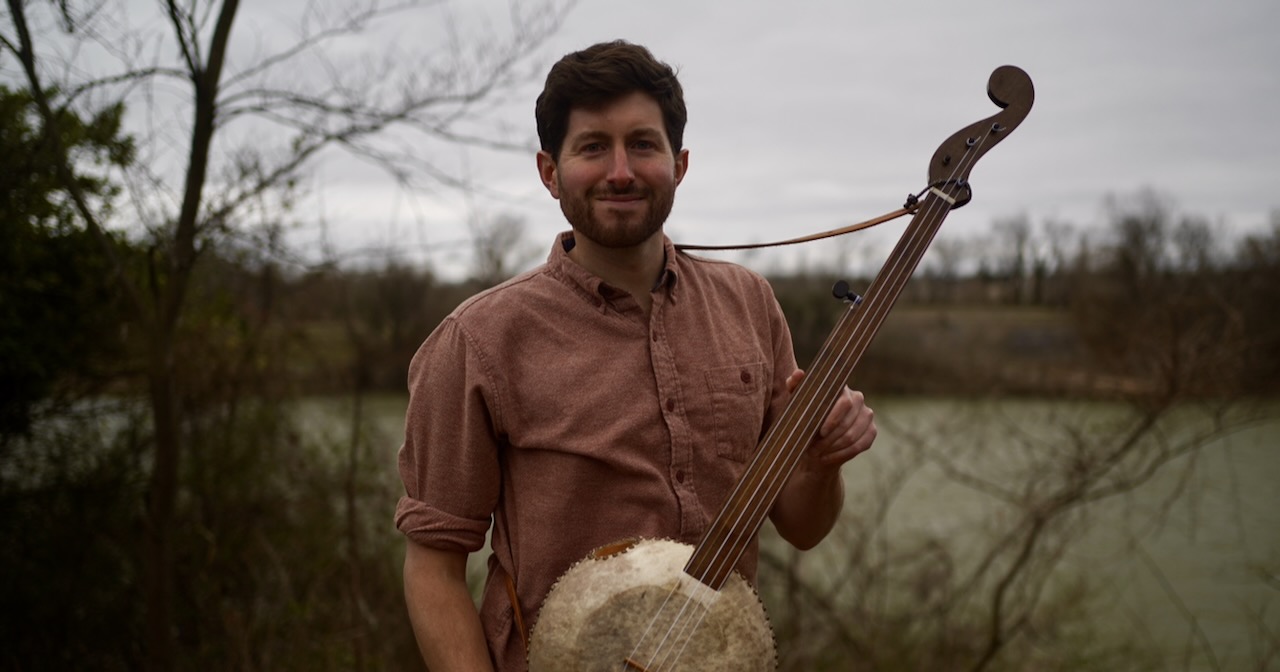
These days, I play a gourd banjo built by Pete Ross, an immensely talented banjo maker who lives in my hometown of Baltimore, Maryland, a town full of banjo history. The first professional banjo maker in the world, William Boucher, set up shop in Baltimore in the mid-19th century. The neck of this banjo, notably the scroll-shaped headstock, is modeled after the Boucher style. In addition to being a tool for creative exploration, the gourd banjo serves as a prism into the complex history of the banjo. It’s a reliable conversation-starter everywhere I go. For more on banjo history, I encourage you to read Well of Souls by Kristina Gaddy.

While compiling this list, I was struck by the sheer variety in tone and texture possible with the gourd banjo. While the instrument connects to the early roots of old-time music, it continues to serve as a platform for innovation. Every player is unique. This list features gourd banjoists from around the world playing traditional and original material. Let’s go on a deep dive into the gourd banjo! – Brad Kolodner

“Josie-O” – Adam Hurt

Arguably the most influential gourd banjo album of our time, Adam Hurt’s Earth Tones is sublime. Cover to cover, this is a dreamy album of solo gourd banjo pieces and it’s on regular rotation at my house. Adam is one of today’s most influential clawhammer banjo players and there’s no question his gourd banjo playing, and this album specifically, introduced the gourd banjo to much wider audiences inspiring countless musicians along the way.

“Old Growth” – Brad Kolodner

The title track of my new album Old Growth is a dark, spooky tune I wrote in the depths of winter, yearning for those sun-filled summer days in the vibrant forests just north of town. I tuned my banjo extra low on this track, hence the extra mellow vibes. The title speaks to the seemingly ancient sound of the gourd while nodding to how this music continues to evolve.

“Julie” – Rhiannon Giddens

A song inspired by a conversation between an enslaved woman and her mistress during the Civil War, Rhiannon Giddens’ use of the gourd banjo is particularly poignant on “Julie.” Rhiannon is a tremendous ambassador for the banjo. She’s reframing the conversation around the history of the instrument and the role Black folks have played and continue to play in American Roots music. The early incarnations of the banjo made by enslaved Africans were gourd banjos.

“Rolling Mills” – Pharis & Jason Romero

Based in Horsefly, British Columbia, Pharis & Jason Romero build some of the most gorgeous (gourd-geous?) banjos in the world. Jason Romero built the gourd banjo he’s playing on this track. Both are immensely talented musicians who take great care in their instrument building and songcraft.

“Darling Cora” – Nora Brown

One of the most exciting young banjo players on the scene today, Nora has a deep reverence for the roots of old-time music. Her playing is absolutely sublime. She plays a gourd banjo very similar to mine also built by Pete Ross in Baltimore. All gourd banjos are handmade, which gives each one a unique sound.

“Long Hot Summer Days” – John Showman & Chris Coole

Chris Coole is a banjo hero of mine and his gourd banjo playing on this John Hartford track fits perfectly. The slinky nature of the fretless gourd truly embodies those sluggish long, hot summer days.

“Gourdness” – Arnie Naiman

Arnie is one of Canada’s finest banjo players and a clever tunesmith to boot. I first heard his playing on the compilation album The Old Time Banjo Festival produced by Cathy Fink & Marcy Marxer.

“Goodbye, Honey, You Call That Gone” – Jake Blount

Ok so, technically, Jake isn’t playing a gourd banjo on this track. He’s playing a fretless banjo with nylon strings which sounds an awful lot like a gourd banjo. The next incarnation of the banjo in the mid-19th century after the gourd banjo was along the lines of what you’re hearing on this track.

“Four and Twenty Blackbirds Dancing on a Deer Skin / Twin Sisters” – Teilhard Frost

Teilhard Frost resides on Wolfe Island in Ontario and is a longtime member of the band Sheesham, Lotus & Son. He set out to build gourd fiddles many years ago and now specializes in gourd and tackhead banjos.

“The Rain Done Fell on Me, Pt. 1” – Justin Golden

Primarily known as a blues guitarist and songwriter, Justin Golden plays a mean gourd banjo. Based in Richmond, Virginia, Justin is a gem of a human – and he’s been going through a real challenging time as he’s currently battling stage 4 cancer. There’s a GoFundMe for him here.

“Wild Bill Jones” – Ken & Brad Kolodner

When my father Ken and I first started making music together nearly 15 years ago, we figured the fiddle and banjo would be the core focus of our music. We soon realized the percussive nature of the hammered dulcimer and the drive of clawhammer mesh together beautifully. The gourd banjo adds yet another dimension to this unusual texture, especially when cranked up to the tempo of “fast.” That’s Ken Kolodner on hammered dulcimer, Rachel Eddy on guitar, Alex Lacquement on bass, and myself on gourd banjo.

“Western Pine” – Talise

In compiling material for this list, I came across this lovely original song by the Canadian artist Talise featuring gourd banjo. I’m excited to dig more into her work!

“Jagged Mountain Is on Fire (Gourd Banjo)” – Andrea Verga

Born and raised in Italy, Andrea Verga is one of today’s most inventive and creative clawhammer banjo players. He writes adventurous melodies; this tune is inspired by the jagged peaks of the Dolomite Mountains in Andrea’s home country.

“Ard Aoibhinn / The Hunter’s Purse” – Steve Baughman

Steve is one of today’s most influential Celtic fingerstyle guitar players – he’s also one of the most creative banjo players out there. He even plays clawhammer on guitar! This medley features a pair of Celtic tunes played on gourd and mandolin.

“Pompey Ran Away” – Clarke Buehling

Considered to be the first banjo melody officially documented, “Pompey Ran Away” dates back to the 18th century. Hailing from Fayetteville, Arkansas, Clarke Buehling is a renowned banjo player and historian who has long been an advocate for the gourd banjo.


Photo Credit: Frank Evans

PHOTOS: The 5th Annual Baltimore Old Time Music Festival

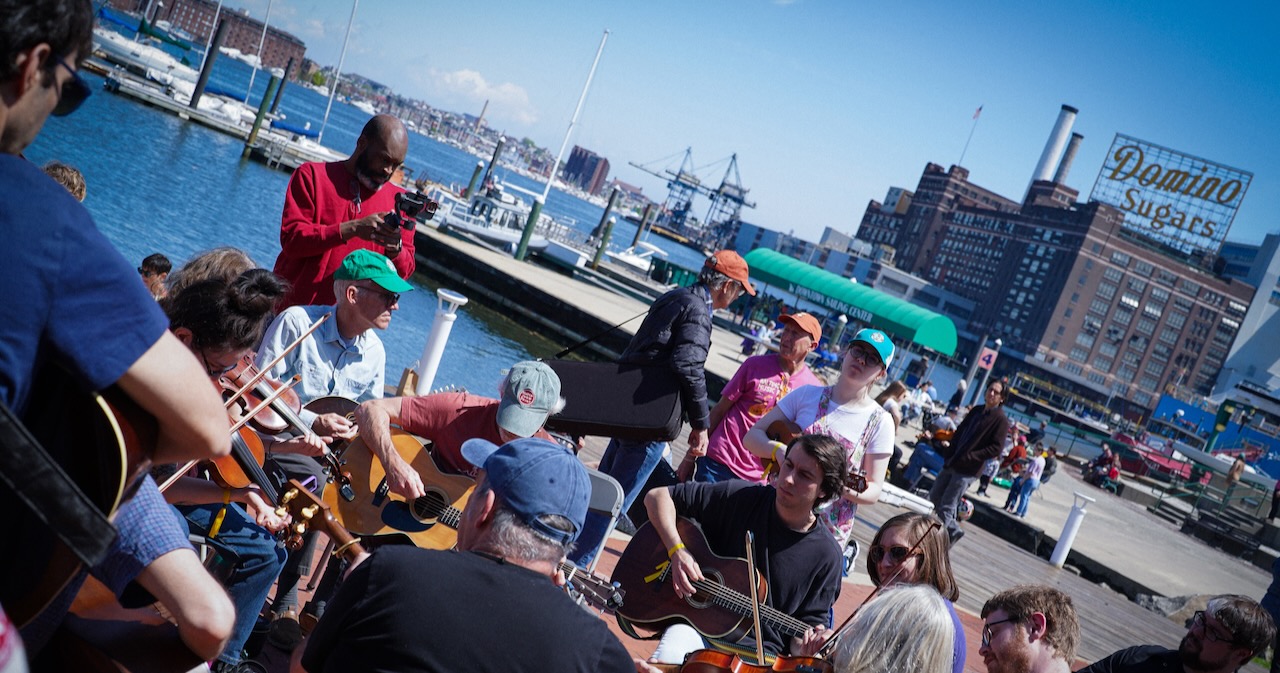
More than 1,500 people from 26 different states made their way to the fifth annual Baltimore Old Time Music Festival, bringing pickers, fiddlers, and players of all stringed instruments to rejoice along the waters of the Charm City’s Inner Harbor last month, on April 19 and 20.

A convincing demonstration of the city’s thriving old-time and roots music scene, the Old Time Festival saw attendance more than triple from 2023 as it packed the Baltimore Museum of Industry (BMI) in the first year at its new location after four memorable years at Creative Alliance.

Presented by the Center for Cultural Vibrancy and hosted by father-son duo Ken & Brad Kolodner, this year’s event boasted a lineup of high-profile artists and groups both honoring the traditions of old time, and seeking to broaden them.

BMI and its astonishing collection of artifacts set a remarkable scene that grew to life with performances early Friday evening on the Harborview and Pavilion stages, each presenting splendid views of the Inner Harbor and famous landmarks, like the Domino Sugar sign glowing just to the southeast.

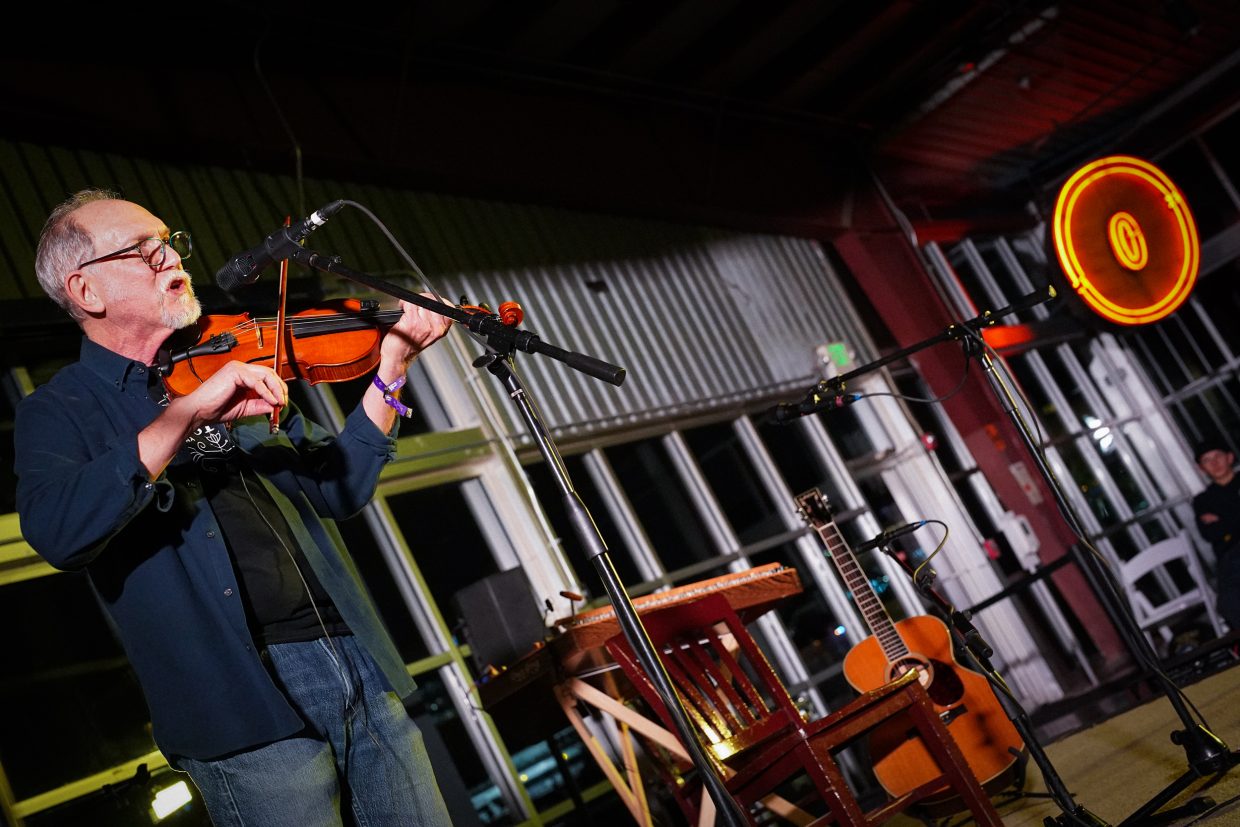
Old Time legend Bruce Molsky at the festival Kickoff Concert.

Saturday afternoon brought a loaded schedule of not only live music, but workshops, presentations, and open jam sessions in every nook and corner of the fascinating museum – and outside on its docks, too, where old pals reconnected and total strangers became friends as they played underneath the warm sun all day long.

“We’re clearly witnessing a huge period of growth for our old time community,” said Brad Kolodner, who’s a member of numerous Baltimore-based string bands and, as he does each spring, performed alongside his dad at this year’s festival.

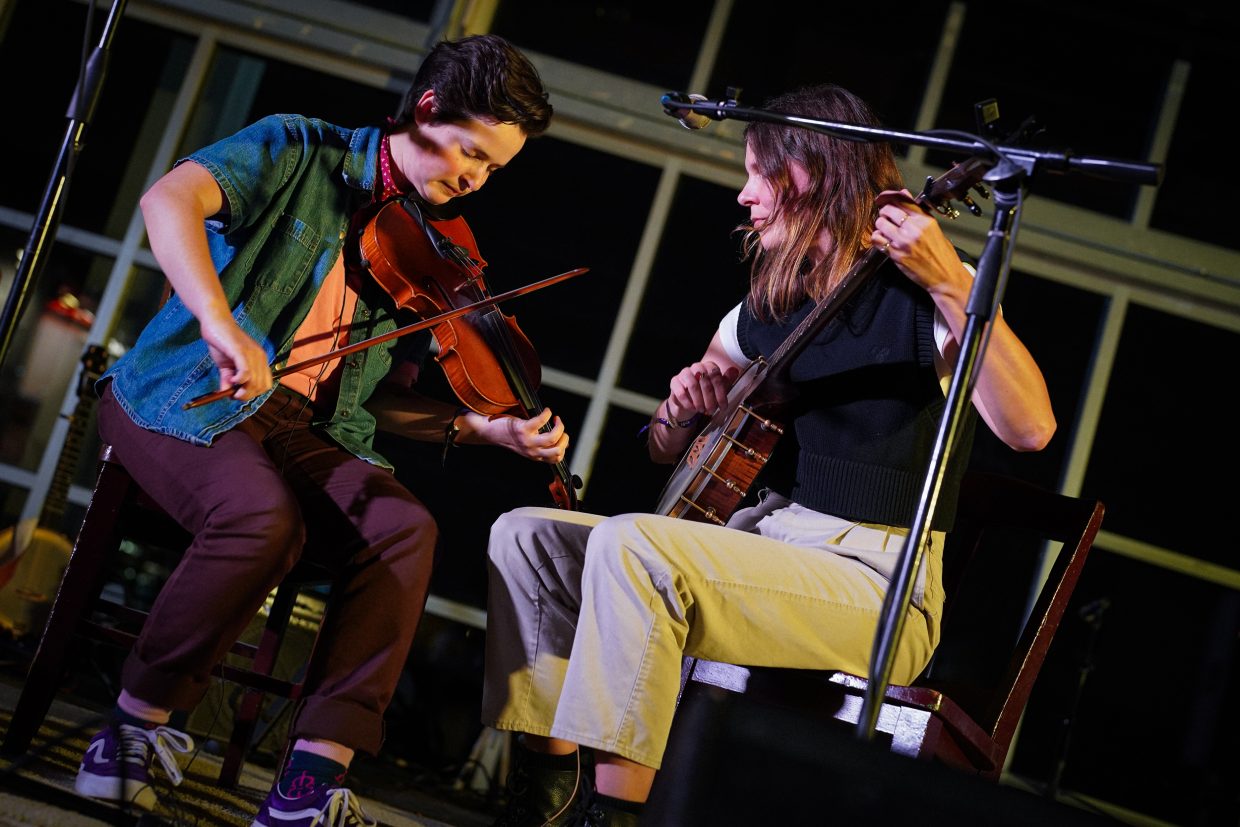
Twin fiddling from festival co-founder Brad Kolodner and Rachel Eddy.

“This marks 10 years that my father and I have been organizing events, square dances, jams and concerts, and this is the culmination of those efforts and work done behind the scene as well. We know that this is already a landmark event for Baltimore, but we took it to another level this year thanks to so much support, the amazing venue and of course the artists, who were incredible.”

Ascending Seattle-based string band The Onlies headlined both nights and served up numerous delightful sets across Friday and Saturday, as did Allison de Groot & Tatiana Hargreaves, the Horsenecks, and Bruce Molsky, a widely respected fiddler, banjoist, guitarist, vocalist and educator.

The Onlies dazzling at the Kickoff Concert.

“This festival brought together all the most positive and wonderful aspects of roots and old-time music,” said Molsky, who has recorded and performed with a long list of legendary musicians.

“It really represented all the things I love about this music, including the community,” he continued. “The cross-section of music and kinds of musicians that Brad and Ken programmed was kind of perfect.”

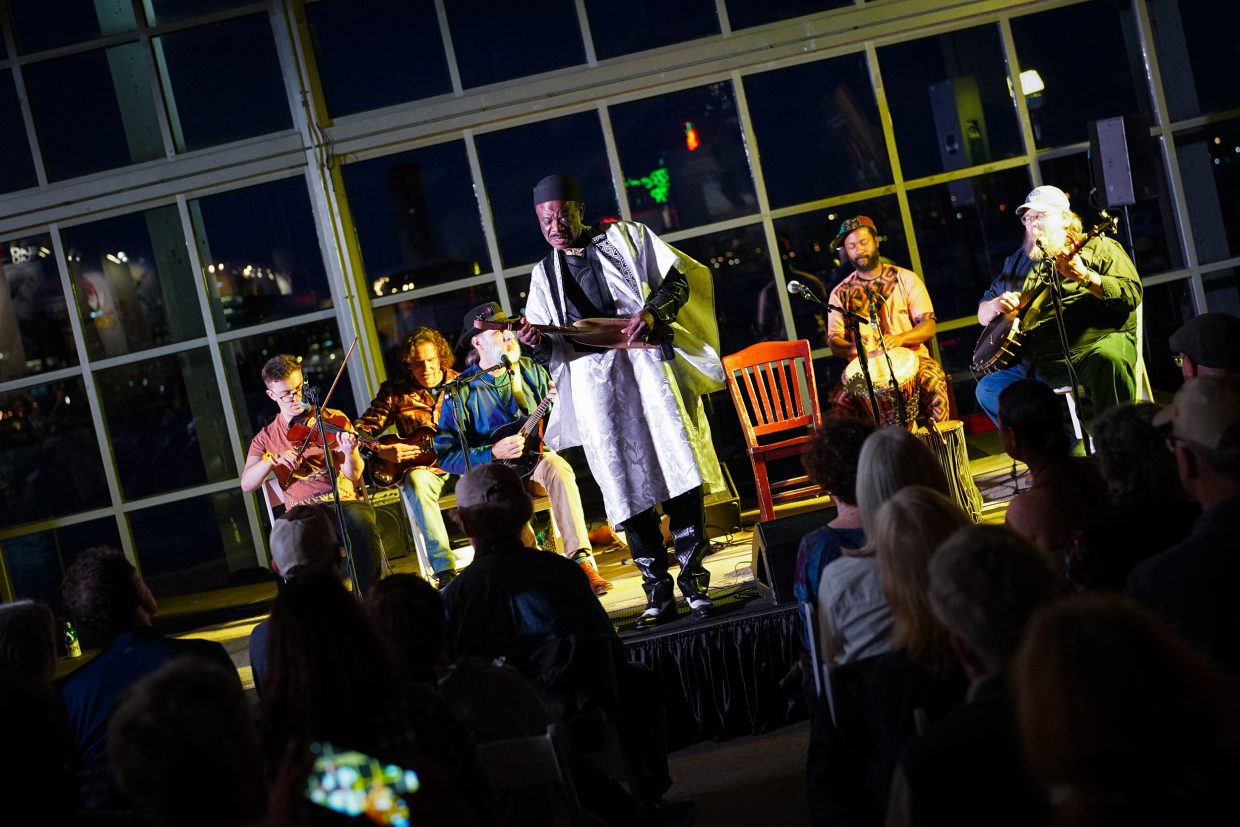
From Africa to Appalachia (one of the weekend’s most anticipated acts) is the fascinating project featuring Grammy-nominated master Malian griot Cheick Hamala Diabate, old-time banjo player Riley Baugus and multi-instrumentalist Danny Knicely.

From Africa to Appalachia featuring Cheick Hamala Diabate, Riley Baugus and Danny Knicely.

Through its uncommon blend of sound and perspective, the dynamic group illustrates and educates on the historical connection between West African and Appalachian music, a theme crucial to the Baltimore Old Time Music Festival.

“This band — these people — is my heart,” said the spirited Diabate as he detailed his adventures in America, where he’s worked with star musicians and been cast in major motion pictures.

Diabate mesmerized with blazingly fast fingers on the ngoni and played his custom gourd banjo that was handcrafted by Baltimore’s own Pete Ross.

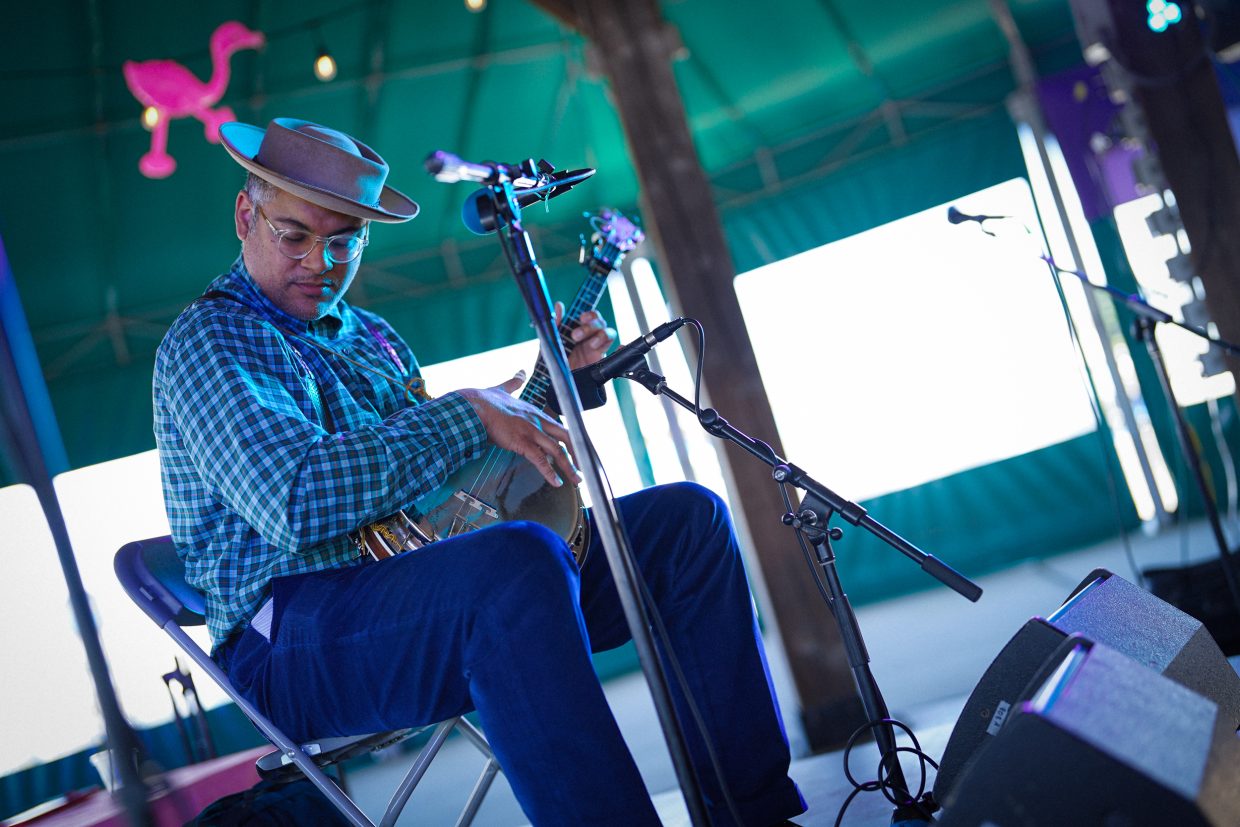
Dom Flemons, the American Songster, performs on the Pavilion Stage.

In each of his unforgettable appearances, Diabate riveted with stories and offered advice to concert goers. Presenting a session on Old Time Roots, he spoke alongside modern day old-time pioneer Dom Flemons — a co-founder of the award-winning Carolina Chocolate Drops and himself a Grammy nominee, who delivered two unforgettable performances on Saturday.

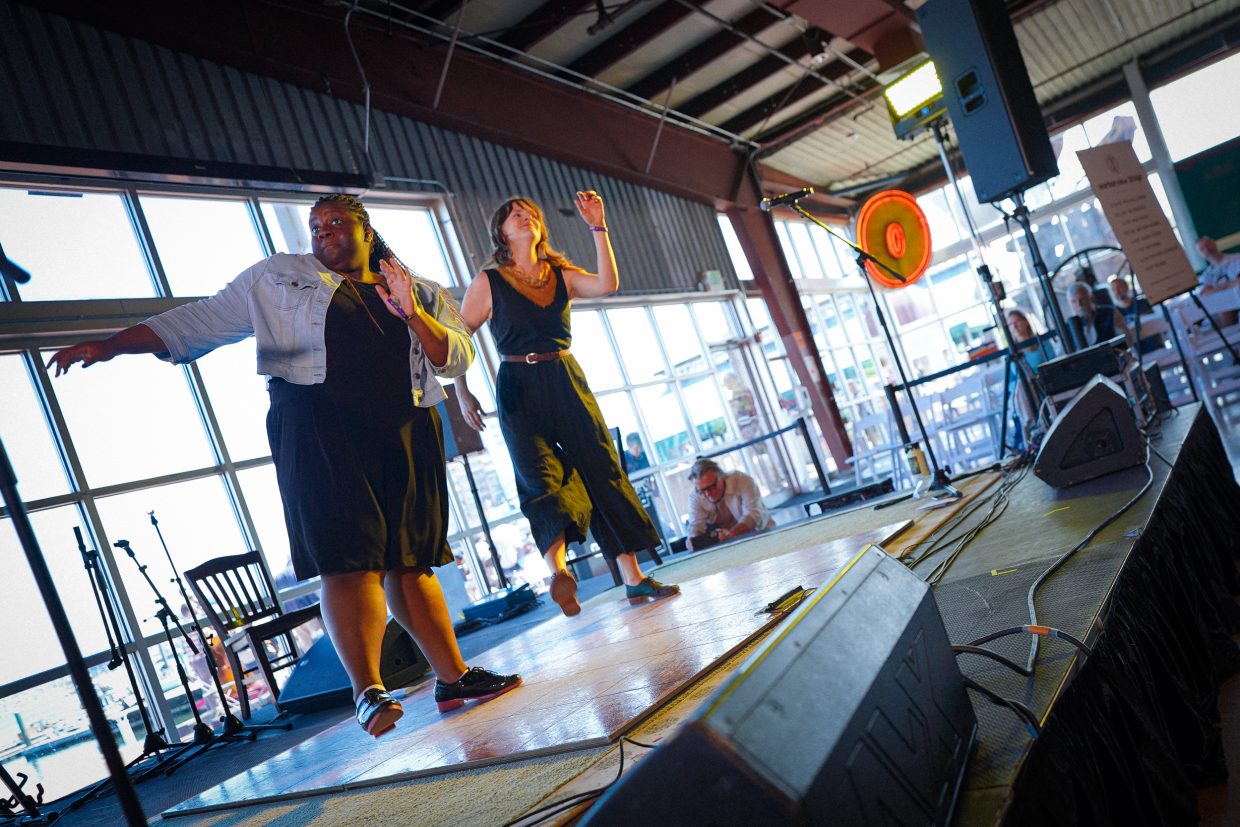
Another spectacular presence at the event, Becky Hill is a percussive dancer, choreographer, square-dance caller and educator who has focused her research on Appalachian percussive dance, flat footing and clogging. She considers the old-time space one where dancers are an equal part of the conversation with instrumentalists.

As a performer on both Friday and Saturday at the festival, Hill displayed her interest in the intersections of clogging, flatfooting and tap dance. To do so, she invited tap dancer Roxy Hill to join her at BMI, where they used old-time sounds to examine the relationship between the different dance styles.

Tap dancing and flatfooting with Roxy King and Becky Hill.

“They’re all American roots percussive dance forms. Both tap and flatfooting originated here and are unique to this complicated melting pot of the U.S. … To have the space to present our dance dialogue on stage feels really significant,” Hill said.

“It opens up new audiences for both tap dancing and flatfooting and it shows that there’s connective tissue across music and dance genres in the U.S. … In particular, what the festival is doing with the Center for Cultural Vibrancy is to expose that connection between all different aspects of old-time music.”

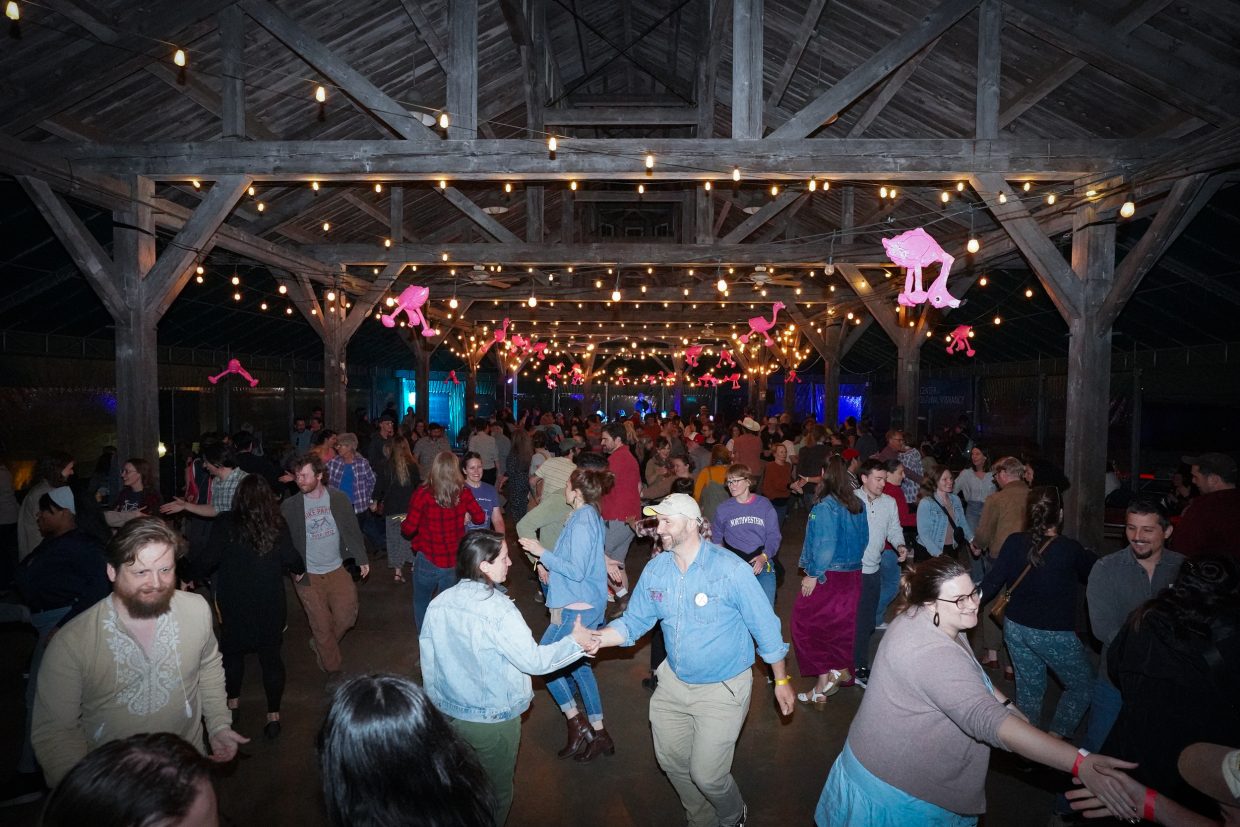
Dance, as it is each year, was a primary feature of the latest Old Time Music Festival, and the two days were capped with a jubilant old fashioned Baltimore square dance that twirled and howled into the late hours on Saturday night.

Square dancing in the pavilion with over 300 participants.

The lively affair took over the pavilion as hundreds of attendees let loose with friends and family. Veteran caller Janine Smith, who’s stoked many Charm City celebrations, led the way with the help of the Horsenecks and other performers from the lineup before all the artists on site joined together to close out the special occasion.

For Molsky and others deep into their careers, the festival provided a refreshing post-pandemic chance to catch up with longtime friends forged on the old time touring circuit, but also to interact with festival goers themselves.

“This kind of music isn’t the thing where a big star is sequestered until they walk out on stage,” he said. “Part of it is walking out there and remembering people’s names and getting to know them. I don’t consider that to be work. I love that.”

Molsky lived in the D.C. area for years and spent time in Baltimore, but he was impressed by what he sees as an undeniable “vibrancy” in the Charm City’s music landscape and its people.

The all star square dance band featuring Bruce Molsky and the Horsenecks.

“I think Brad has a lot to do with that,” Molsky said. “When somebody walks up to me and says, ‘Hey man, I’ve been listening to your music for 20 years, it’s so nice to meet you in person,’ I’m moved by that. This festival was just a great festival for meeting people.”

Beyond introducing artists to listeners, the Kolodners intentionally designed the event to help cutting-edge musicians show what they’re doing to expand the traditional confines of the old-time genre.

“It’s going to grow into something beautiful and it already is,” Hill observed.

“It’s unique because it highlights all the different ways that this tradition is evolving by not only celebrating its roots but by having new conversations within it, too, like what Tatiana and Allison are doing or like Roxy and myself,” she continues. “We’re pushing the boundaries and we’re experimenting within the structures that old-time music provides. And I think that is part of how vernacular music traditions keep evolving.”

Allison de Groot and Tatiana Hargreaves perform at the Kickoff Concert.

With its 2024 version in the books, the Baltimore Old Time Music Festival has firmly established itself as one of the fastest growing and most influential gatherings of its kind anywhere in the country. Eyeing sustainable growth and a balance of honoring and augmenting old-time customs, the Kolodners are optimistic for what the future holds.

“We’re pleased to make so much progress, to create an enriching experience for everyone involved and we’re thrilled to be at BMI for years to come,” said Brad Kolodner.

“We’re proud of the intergenerational aspects we’ve built into it. We offer children’s programming and make it free for families, all with the hope that we can keep driving interest and participation in old time moving forward. Above all, we aim to celebrate diversity and the true roots of this music through the performers we invite to be here with us.”

Be sure to save the date for next year’s Baltimore Old Time Music Festival, which will return to BMI on April 18 and 19, 2025. More information here.

Becky Hill and Ben Nelson, in conversation with feet and banjo.

Photo Credit: All photos by Casey Vock and courtesy of the Baltimore Old Time Music Festival.

BGS 5+5: Brad Kolodner

Artist: Brad Kolodner
Hometown: Baltimore, Maryland
Latest Album: Chimney Swifts
Personal nicknames: B-rad, Dadley, BK

Which artist has influenced you the most … and how?

My father Ken, hands down. As long as I can remember, my father’s music has been the soundtrack of my life. To be fair, I didn’t have much choice in the matter. The living room in our house was filled with the sounds of his hammered dulcimer and fiddle playing (along with the scores of students who banged away on their dulcimers and scratched out tunes on fiddle). I’d be lying if I said my sister and I always loved the ruckus. In all seriousness, the music must’ve been seeping in all those years. When I finally picked up the banjo as a teen, old-time music clicked and it felt right.

My father quickly became a musical mentor and eventually a bandmate and musical peer. His experience playing a multitude of traditional folk music styles through his years with his band Helicon has informed how I approach music with a creative, open mind while respecting the traditional roots of the music. His musicality and sense of dynamics are captivating. He really feels every note and it’s something I strive for in my playing. While piecing together material for my new solo album Chimney Swifts, it was a natural choice to include my father on the project as I wanted to highlight both the groovy and mellow sides of his playing. It’s always a joy to make music with him and I’ll treasure that feeling as long as I can.

What was the first moment that you knew you wanted to be a musician?

Singing “I’ve Been Everywhere” for the student talent show at the Meadowlark music camp in Maine back in 2007 was a catalyst for my love of being on stage sharing music. I had just wrapped up my very first week learning the basics of clawhammer banjo in a workshop with Richie Stearns, who ultimately became a banjo hero of mine. I could only play a very clumsy “bum-ditty” so I wasn’t quite ready to show off my newfound love of the banjo. However, I was eager to share the one song I had memorized in my life up to that point for the student talent show.

Years earlier, I spent weeks memorizing all the places in “I’ve Been Everywhere,” which caught my ear when I heard Johnny Cash’s version in a commercial. Suffice to say, I didn’t do too well in school for those few weeks. With my tail between my legs, I hopped up on stage and sang the song. As a relatively shy kid at that point in my life, I emerged from my shell after belting out each verse with the crowd roaring along the way. I can’t say I knew I wanted to be musician at that moment but it’s certainly the first time I tasted that high performers can get on stage in front of an electric audience. There’s actually a home video of that original performance.

What’s your favorite memory from being on stage?

I’ve been fortunate to have some incredible experiences performing with my father Ken at venues like the Kennedy Center, Winfield, and Clifftop and with Charm City Junction at Grey Fox, IBMA, and the Charm City Bluegrass Festival. However, there is one night that really jumps out: the opening concert at our inaugural Baltimore Old Time Music Festival in 2019. After moving back to my hometown in my early 20s around 2012, I made it my mission to reboot the local old-time music community. I cofounded our biweekly old-time jam with my dad, started the Baltimore Square Dance with some pals, and hosted a monthly house concert series with the long term goal of putting together an old-time music festival someday. Well, that dream became a reality in 2019 when I, with Baltimore Old Time Music Festival in partnership with the Creative Alliance, cofounded an arts organization here in town. I’ll always treasure the memory of standing on stage during the kickoff concert in a packed concert hall rocking out during the encore playing “Tennessee Mountain Fox Chase” with the biggest smile on my face. This year, we’re hoping to have our “2nd” Annual Baltimore Old Time Music Festival in mid-November.

Which elements of nature do you spend the most time with and how do those impact your work?

There’s really nothing more nourishing or magical than the time I’ve spent deep in the dense woods on top of a mountain in Clifftop, West Virginia, at the Appalachian String Band Festival. As an artist, I spend much of my time making music in the context of my work — playing a show, teaching lessons, leading a local jam, etc. While I’m deeply grateful for this lifestyle, I need those soul-nourishing experiences in which I play music simply to play music. Clifftop provides that space. It’s a gathering of thousands of old-time musicians who huddle under soggy EZ-ups ’til the wee hours playing fiddle tunes. The natural beauty of the setting adds to that magic.

There’s something about the shared experience trudging through the mud, square dancing in a dusty dirt road, and watching the sunrise with your buds grooving out on fiddles tunes that can’t be matched anywhere else. I can’t tell you how many times I’ve gotten lost meandering through the woods with sounds of far-off old-time jams swirling around the forest. There’s a hike next to the campground that weaves through a rhododendron grove amidst rock formations atop a ridge before descending to a little mountain stream. It’s the quintessential West Virginia swimming hole and it’s a hike I look forward to every year. Most of all, I’ve made some dear pals at Clifftop who have become my closest musical collaborators including Alex Lacquement and Rachel Eddy who are featured on my latest album, Chimney Swifts. While the music is what draws me in, it’s the people who keep me coming back year after year.

Since food and music go so well together, what is your dream pairing of a meal and a musician?

Well, since you asked… Before I played music, I was (and still am, sadly) a diehard Baltimore Orioles fan. The earliest musical memory I have, besides listening to my father’s music, is seeing John Denver hop up on top of the Baltimore Orioles dugout during the seventh inning stretch to sing “Thank God I’m a Country Boy” back in 1997 just a couple weeks before he tragically passed away in a plane crash. After that performance, my parents gifted me some John Denver CDs and I listened to them more than anything else as a kid — really. I would fall asleep to his albums on repeat and my parents would have to come in and turn them off after I dozed off. So, it would be my dream to sit with John Denver at an Orioles ballgame on a warm summer night while eating a Boog’s BBQ sandwich and drinking a Natty Boh beer (a classic Baltimore combo). Oh, and an Orioles win would be nice, but I don’t want to ask for anything unrealistic…


Photo credit: Joanna Tillman