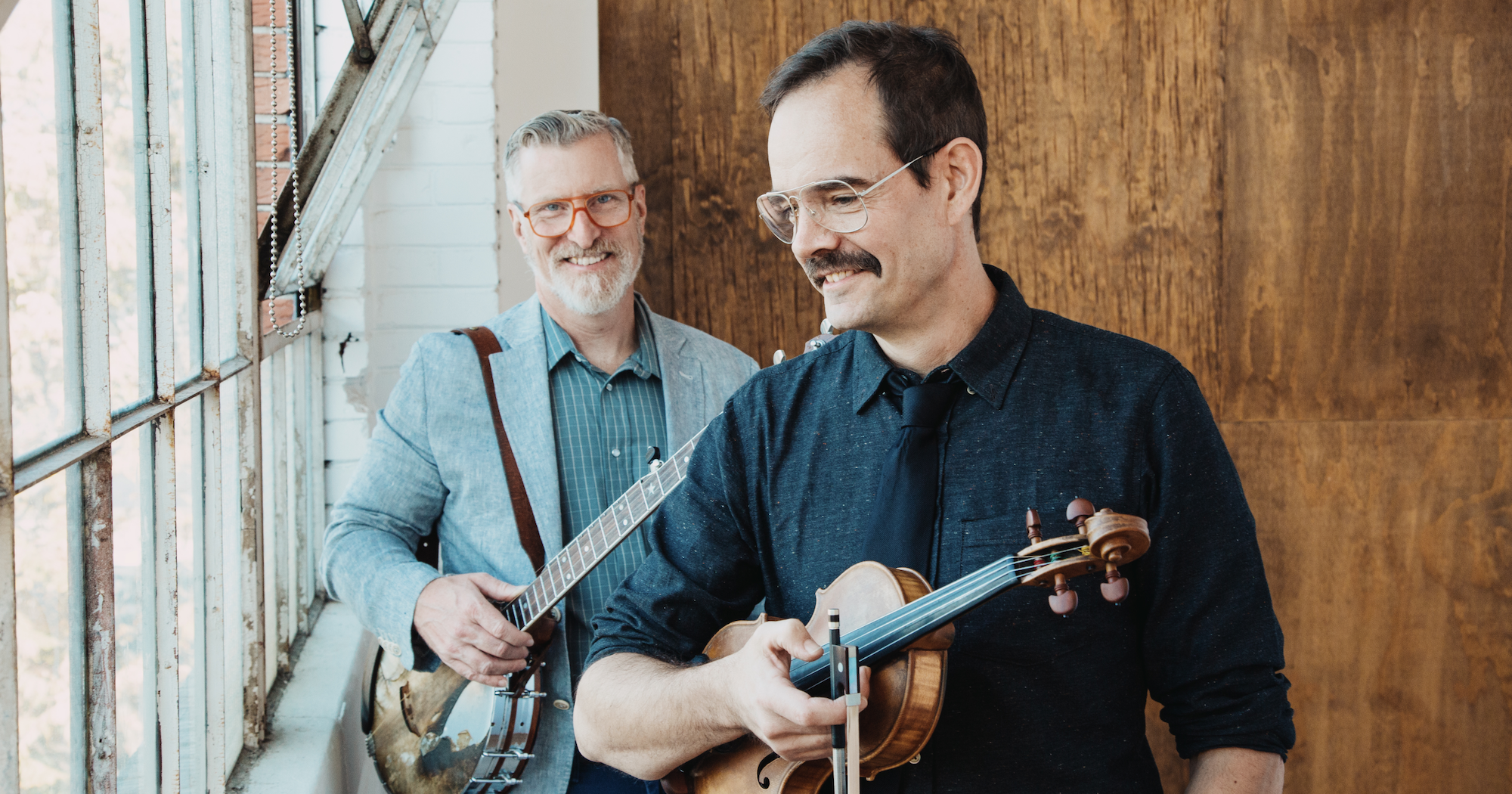
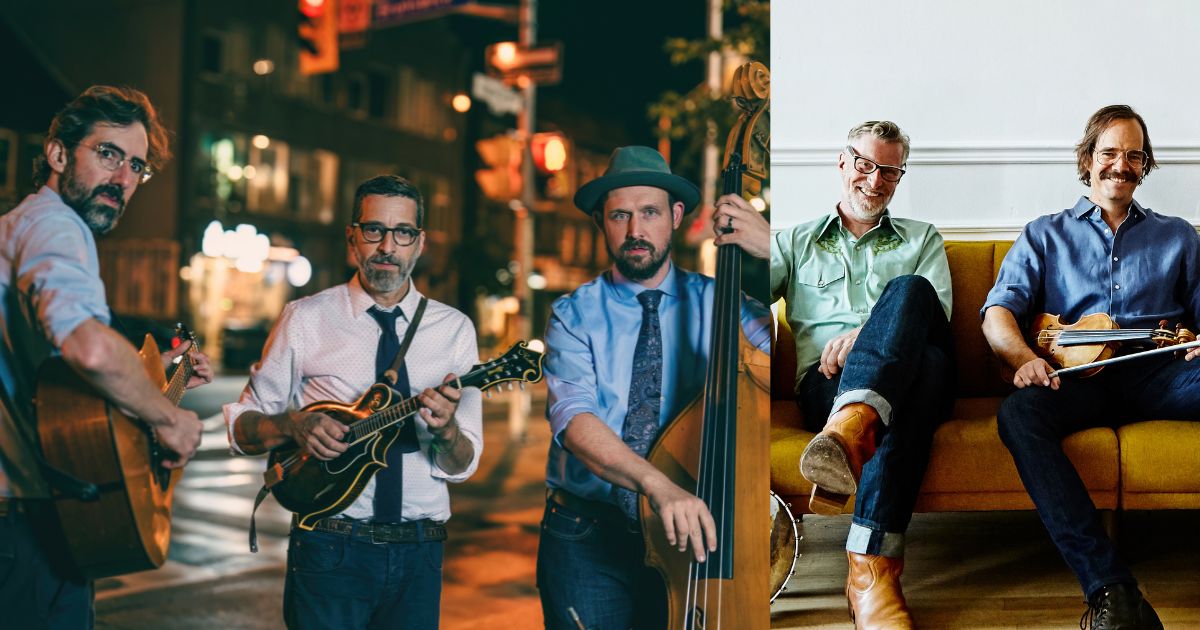
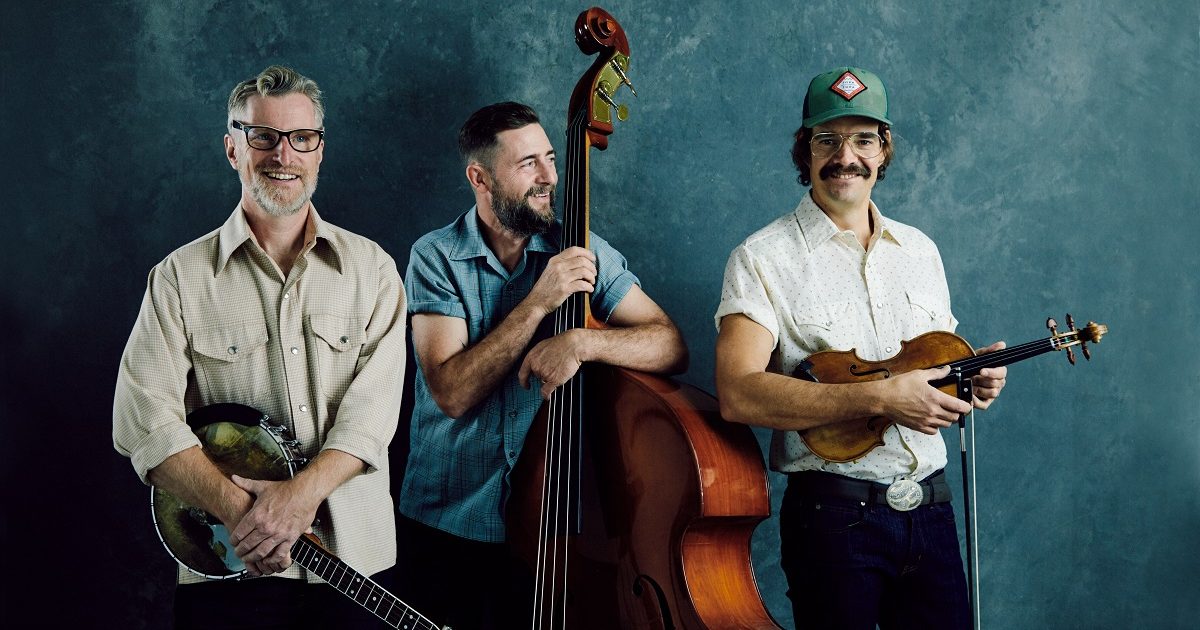
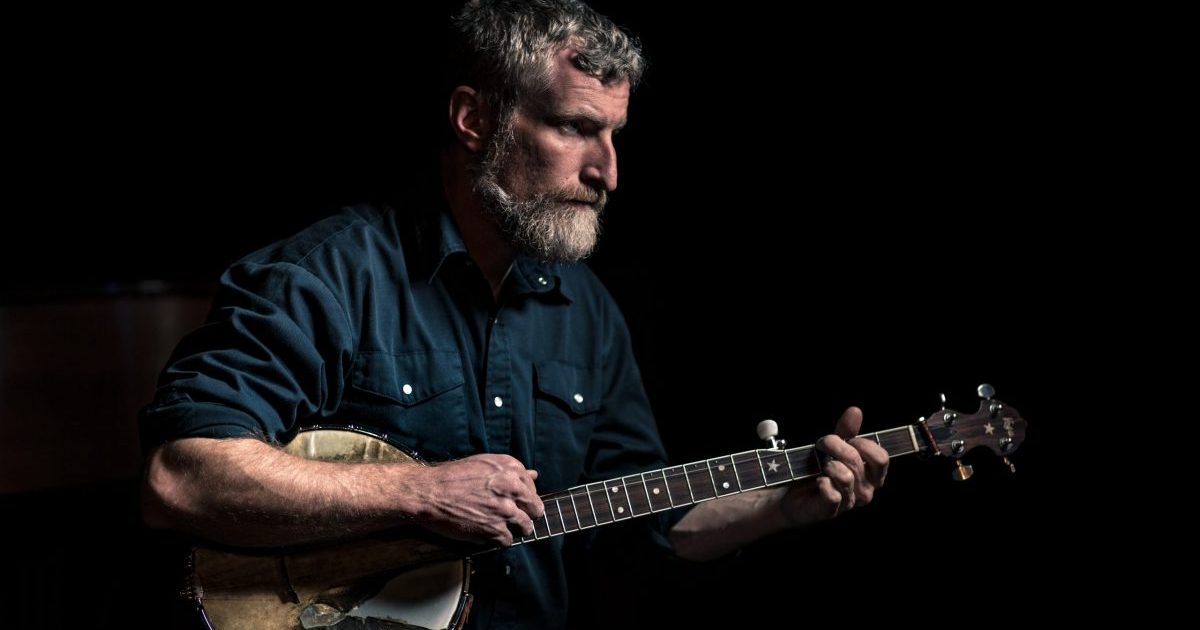
Artist:Frank Evans Hometown: Toronto, Ontario, Canada Latest Album: Debut album is in the works
Which artist has influenced you the most – and how?
It’s always difficult to narrow that question down to one artist, but if it has to be one, I would say Alan O’Bryant of the Nashville Bluegrass Band. His ability to sing and play banjo at the same time, with so much dynamic intensity, still gives me chills whenever I hear it. When I was just starting out on the banjo, my teacher, Chris Coole, gave me a compilation CD of all these different banjo styles. “When I Get Where I’m Goin'” was on there and I must have listened to it on repeat ten thousand times. That band has really influenced how I arrange songs for a full bluegrass outfit. It was a huge honor to have Alan come into the studio to produce The Slocan Ramblers’ latest album. He was such a joy to work with.
What’s your favorite memory from being on stage?
All the guys in The Slocan Ramblers used to joke that if you’re a banjo player, you’re never safe from another banjo player appearing out of nowhere and asking you a very specific question about your instrument. I guarantee I’ve been that person.
A funny example of that happened back in 2015 when we were at MerleFest. They’d asked a few bands to do some early-morning TV interviews to help promote the festival. It was 5 a.m. and the gates were all closed. We had just gone live with the first interview when a guy popped out from behind a bush about 50 yards away and shouted, “Is that a Presto tailpiece on your Style 11?” How he knew what kind of banjo I was playing from that far away, I have no idea – but it was almost impossible to keep my composure after that.
What other art forms – literature, film, dance, painting, etc. – inform your music?
I’ve always been a fan of graphic novels and comic art. Growing up in Toronto, I was lucky to be surrounded by a healthy community of artists and great comic shops – especially my favorite, The Beguiling. Chester Brown, Harvey Pekar, and R. Crumb have always been some of my favorite artists.
Back in eighth grade, we had a year-long culminating project that could be on any topic and I decided to write a graphic novel about Edden Hammons, the old-time fiddler from West Virginia. It was a lot of fun and a ton of work, but I got to sell a few copies at The Beguiling, which was pretty cool. The last time this hobby came up was when The Slocan Ramblers asked me to come up with a cover for their Queen City Jubilee album. It’s a little out there, but I like how it turned out.
Does pineapple really belong on pizza?
Being born in Ontario — the birthplace of the Hawaiian pizza — I firmly believe that pineapple belongs on pizza. It actually took me a long time to come around to it, but a fresh Hawaiian slice from the right place is hard to beat. One of my favourites was a little spot called 2 for 1 Pizza in Kensington Market, Toronto. They’d pull a regular-sized slice from the oven, cut it in half, and hand you “two for one.”
What would a perfect day as an artist and creator look like to you?
I’ve really enjoyed the days I’ve spent in the studio since moving to Nashville. I feel very lucky to have been invited to be part of a number of projects here, ranging from experimental old-time records to working on the soundtrack for King of the Hill. If you’ve ever been unsure about what to practice, spending a day in the studio among amazing musicians will fix that. Recording has a way of putting everything under a microscope, which can sometimes feel crippling, but it’s also extremely rewarding when you notice tangible improvement from the last session.
I’ve also started working on my own solo record, which has been both rewarding and humbling. I plan to start releasing some of the tracks next year.
A few years back, we put out an album called Modern Old-Time Sounds for the Bluegrass and Folksong Jamboree. The title was a nod to that 1960s trend of naming records in a way that tried to cover every possible base. It was tongue-in-cheek, but it still sums up what we do – and what you’ll hear on our latest Lonesome Ace Stringband album, Big Wing. We don’t really play old-time music so much as make a modern old-time sound, and that’s exactly what this playlist is all about
Up here in Canada, we have a wealth of traditional music – distinct regional fiddle styles from coast to coast, songs and ballads that reflect the multicultural makeup of our country, and Indigenous music that predates all of it. Even with this abundance of homegrown music to draw from, many of us have found ourselves charmed by the traditional “old-time” sounds of the American South.
Being far away – geographically and culturally – from the source of the music you love presents some challenges, but it also affords a certain freedom. The first step is always to understand where the music comes from and its history; eventually, though, we all need to find our own voice within it. That’s sometimes easier to do when you’re removed from entrenched scenes and long-established communities.
One way I see this playing out in the old-time music coming from Canada is that writing original tunes and songs seems to come naturally and early in the journey. Whether it’s composing new tunes in the tradition or letting the sounds and themes of traditional music color our lyric writing, we’ve developed a wealth of modern old-time sounds up here – and I’m excited to share a few examples in this playlist. – Chris Coole, Lonesome Ace Stringband
“Maggie At The Door” – Arnie Naiman
Arnie Naiman has been playing old-time music longer than anyone else on this list. When I first met him in the early ’90s, he’d already been playing for around 20 years. Back then, he was mostly on fiddle, but sometimes he’d pull out the banjo at the end of the night and share some of the original tunes he always seemed to be writing. This led to us making a couple of albums together – and to me becoming a lifelong fan. “Maggie at the Door” is a great example of how he can write a banjo tune that also works on the fiddle – not as easy as it sounds. It was written for his dog and it’s probably the most badass-sounding tune ever written for a golden retriever.
“Lonesome Song” – Rube & Rake
Rube & Rake are Josh Sandu and Andrew Laite. Both live in St. John’s, Newfoundland, and are writing beautiful songs while touring hard. We ran into them in the UK last year and were instantly taken by their deft playing and the “low lonesome” sound of their harmony singing. “Lonesome Song” is a moody example of all that.
“Platform Four” – The Slocan Ramblers
The Slocan Ramblers are Canada’s bluegrass band – at least as far as I’m concerned. Although Frank Evans no longer plays full-time with the group, I chose this tune to remind everyone that while he’s mostly known for his three-finger bluegrass playing these days, he’s also on another level as a clawhammer player. There are a few licks on “Platform Four” that he’ll probably take to the grave.
“Narrow Line” – Mama’s Broke
Mama’s Broke are another duo from Eastern Canada (Nova Scotia). We crossed paths with Lisa Maria and Amy Lou Keeler at the Baltimore Old-Time Gathering a few years ago. They put on a riveting show and blew us away with their singing and playing. The arrangements on their records are so imaginative – they capture the spaciousness of their live sound while layering on subtle textures. “Narrow Line” is an excellent example of this and one hell of a song.
“White Horse Plains” – The Red River Ramblers
The Red River Ramblers feature the music of Douglas Richard Sinclair, a Red River Métis musician whose last album, Reverie, showcased original tunes inspired by the Métis fiddle tradition. “White Horse Plains” highlights Douglas’ tuneful guitar playing and answers the question: What would Norman Blake have sounded like if he’d been Métis?
“Saint Elizabeth” – Kaia Kater
Kaia Kater’s 2016 album Nine Pin made a lot of folks take notice of this exceptionally talented songwriter. Kaia is a perfect example of someone who’s really tried to get to the roots of the music; she studied Appalachian traditions at Davis & Elkins College in West Virginia. She’s taken what she learned there and carried it to a creative place that defies genre or categorization. “Saint Elizabeth” is a perfect example.
“New Caledonia” – Pharis & Jason Romero
Pharis & Jason Romero probably need no introduction to anyone here. They’re old friends of ours and we’re big fans of their music. It almost seems remiss to share a song that doesn’t feature their beautiful singing and lyrics, but we’re always enchanted by Jason’s tune writing, backed by Pharis’ always-right-on-the-money guitar playing. “New Caledonia” is one of those tunes that instantly takes you somewhere. It manages to say a lot without a single word.
“The Wheels Won’t Go” – Hannah Shira Naiman
Hannah Shira Naiman comes to the music honestly. She grew up learning fiddle and banjo from her dad, Arnie Naiman, while listening to her mom, Kathy Reid-Naiman, sing the songs of Jean Ritchie, the Georgia Sea Island Singers, and the Delmore Brothers. Hannah has taken it all in and made something uniquely her own. “The Wheels Won’t Go” is the title track of her 2022 album.
“Wellington” – Allison de Groot & Tatiana Hargreaves
Allison de Groot is one of our most treasured banjo exports – clean, hard-driving, and full of tone. Best known these days for her work with Tatiana Hargreaves, she’s also a fine composer. “Wellington” is one of her own tunes, a reminder that she’s as creative as she is technical.
“Mama’s Boy” – Lotus Wight
Lotus Wight (AKA Sam Allison) is best known for his work with Sheesham and Lotus & Son. He’s a beautiful banjo player, a lovely jaw-harpist, a rock-solid bassist, and even plays the contrabass harmoniphoneum. I didn’t know until his last album that he’s also a moving songwriter, somewhere between John Hartford and Leon Redbone. “Mama’s Boy” tells the story of the three men who were fathers to Sam over the course of his life. I can’t remember the last time I heard such an honest and tender song.
“From Silence” – Daniel Koulack
Daniel Koulack hails from Winnipeg, Manitoba, where he’s been making music and teaching banjo for many years. (Allison de Groot is one of his students.) Daniel has always been game to take the clawhammer banjo to new and unexpected places – which might explain “From Silence,” possibly the only clawhammer banjo and saxophone duet in the known universe.
“At the Airport” – Old Man Luedecke
Old Man Luedecke is one of the crown jewels of Canadian singer-songwriters and he also happens to be one hell of a clawhammer banjo player. He’s written most of his songs on the banjo (at least the early ones), which gives them those unmistakable twists and turns – in both phrase and melody. And he has that rare gift for putting a bit of hope into everything he writes, whether the song is sad, funny, or introspective. “At the Airport” is a perfect example.
“May Day” – The Andrew Collins Trio with The Lonesome Ace Stringband
The Andrew Collins Trio (Andrew Collins, James McEleney, Adam Shire) collaborated with us on “May Day,” a tune Andrew and I wrote together many years ago. These three are next-level players who are always pushing the boundaries of what’s possible on their instruments. Known for mixing new acoustic bluegrass with classical and jazz influences, we had fun diving into some weird old-time with them on this track from our new album.
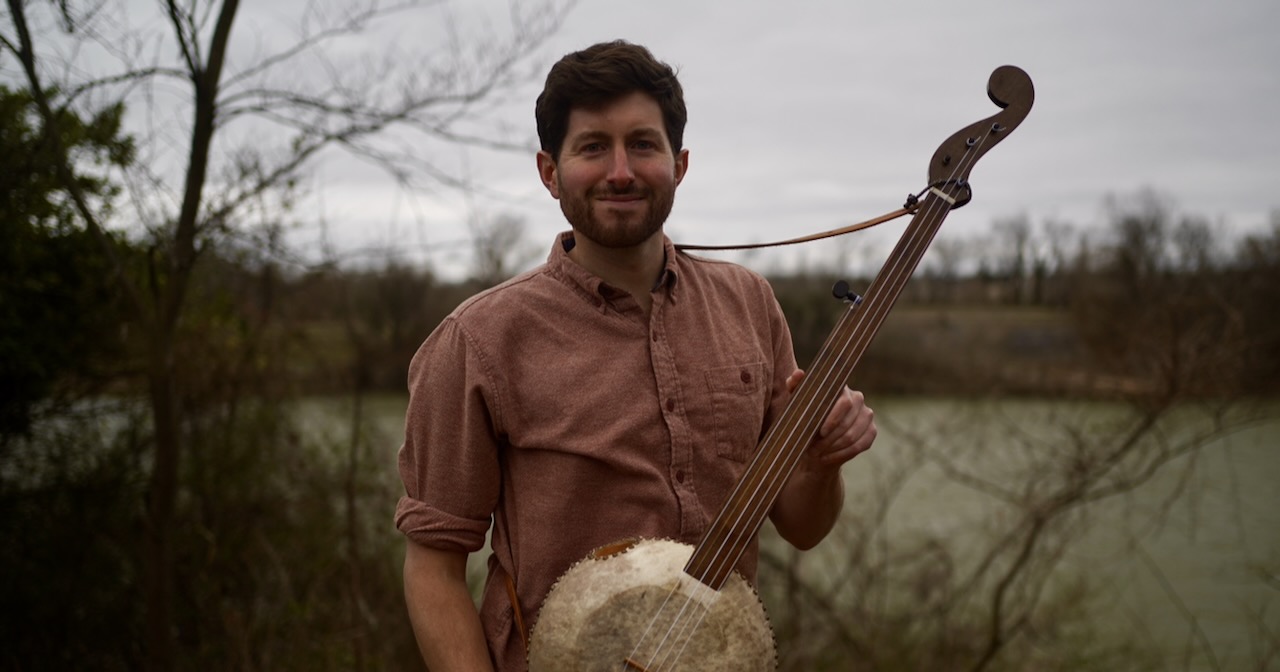
My gourd banjo journey began on a crisp, winter day in downtown Ithaca, New York. While an undergrad at Ithaca College early in my banjo-playing days, I stopped by the local acoustic instrument store and saw a peculiar banjo-like creature hanging high up on the wall. I was instantly hooked. It had five strings and a short drone string just like my banjo. I could play the same clawhammer style I was familiar with, but everything felt and sounded different. The instrument had an earthy, plunky, and rich tone. Besides being completely fretless and tuned a few steps low, the head was made of a gourd that smelled like dirt. Flash forward 15 years and here I’ve just released an album of solo, unaccompanied gourd banjo music called Old Growth.
These days, I play a gourd banjo built by Pete Ross, an immensely talented banjo maker who lives in my hometown of Baltimore, Maryland, a town full of banjo history. The first professional banjo maker in the world, William Boucher, set up shop in Baltimore in the mid-19th century. The neck of this banjo, notably the scroll-shaped headstock, is modeled after the Boucher style. In addition to being a tool for creative exploration, the gourd banjo serves as a prism into the complex history of the banjo. It’s a reliable conversation-starter everywhere I go. For more on banjo history, I encourage you to read Well of Souls by Kristina Gaddy.
While compiling this list, I was struck by the sheer variety in tone and texture possible with the gourd banjo. While the instrument connects to the early roots of old-time music, it continues to serve as a platform for innovation. Every player is unique. This list features gourd banjoists from around the world playing traditional and original material. Let’s go on a deep dive into the gourd banjo! – Brad Kolodner
“Josie-O” – Adam Hurt
Arguably the most influential gourd banjo album of our time, Adam Hurt’s Earth Tones is sublime. Cover to cover, this is a dreamy album of solo gourd banjo pieces and it’s on regular rotation at my house. Adam is one of today’s most influential clawhammer banjo players and there’s no question his gourd banjo playing, and this album specifically, introduced the gourd banjo to much wider audiences inspiring countless musicians along the way.
“Old Growth” – Brad Kolodner
The title track of my new album Old Growth is a dark, spooky tune I wrote in the depths of winter, yearning for those sun-filled summer days in the vibrant forests just north of town. I tuned my banjo extra low on this track, hence the extra mellow vibes. The title speaks to the seemingly ancient sound of the gourd while nodding to how this music continues to evolve.
“Julie” – Rhiannon Giddens
A song inspired by a conversation between an enslaved woman and her mistress during the Civil War, Rhiannon Giddens’ use of the gourd banjo is particularly poignant on “Julie.” Rhiannon is a tremendous ambassador for the banjo. She’s reframing the conversation around the history of the instrument and the role Black folks have played and continue to play in American Roots music. The early incarnations of the banjo made by enslaved Africans were gourd banjos.
“Rolling Mills” – Pharis & Jason Romero
Based in Horsefly, British Columbia, Pharis & Jason Romero build some of the most gorgeous (gourd-geous?) banjos in the world. Jason Romero built the gourd banjo he’s playing on this track. Both are immensely talented musicians who take great care in their instrument building and songcraft.
“Darling Cora” – Nora Brown
One of the most exciting young banjo players on the scene today, Nora has a deep reverence for the roots of old-time music. Her playing is absolutely sublime. She plays a gourd banjo very similar to mine also built by Pete Ross in Baltimore. All gourd banjos are handmade, which gives each one a unique sound.
“Long Hot Summer Days” – John Showman & Chris Coole
Chris Coole is a banjo hero of mine and his gourd banjo playing on this John Hartford track fits perfectly. The slinky nature of the fretless gourd truly embodies those sluggish long, hot summer days.
“Gourdness” – Arnie Naiman
Arnie is one of Canada’s finest banjo players and a clever tunesmith to boot. I first heard his playing on the compilation album The Old Time Banjo Festival produced by Cathy Fink & Marcy Marxer.
“Goodbye, Honey, You Call That Gone” – Jake Blount
Ok so, technically, Jake isn’t playing a gourd banjo on this track. He’s playing a fretless banjo with nylon strings which sounds an awful lot like a gourd banjo. The next incarnation of the banjo in the mid-19th century after the gourd banjo was along the lines of what you’re hearing on this track.
“Four and Twenty Blackbirds Dancing on a Deer Skin / Twin Sisters” – Teilhard Frost
Teilhard Frost resides on Wolfe Island in Ontario and is a longtime member of the band Sheesham, Lotus & Son. He set out to build gourd fiddles many years ago and now specializes in gourd and tackhead banjos.
“The Rain Done Fell on Me, Pt. 1” – Justin Golden
Primarily known as a blues guitarist and songwriter, Justin Golden plays a mean gourd banjo. Based in Richmond, Virginia, Justin is a gem of a human – and he’s been going through a real challenging time as he’s currently battling stage 4 cancer. There’s a GoFundMe for him here.
“Wild Bill Jones” – Ken & Brad Kolodner
When my father Ken and I first started making music together nearly 15 years ago, we figured the fiddle and banjo would be the core focus of our music. We soon realized the percussive nature of the hammered dulcimer and the drive of clawhammer mesh together beautifully. The gourd banjo adds yet another dimension to this unusual texture, especially when cranked up to the tempo of “fast.” That’s Ken Kolodner on hammered dulcimer, Rachel Eddy on guitar, Alex Lacquement on bass, and myself on gourd banjo.
“Western Pine” – Talise
In compiling material for this list, I came across this lovely original song by the Canadian artist Talise featuring gourd banjo. I’m excited to dig more into her work!
“Jagged Mountain Is on Fire (Gourd Banjo)” – Andrea Verga
Born and raised in Italy, Andrea Verga is one of today’s most inventive and creative clawhammer banjo players. He writes adventurous melodies; this tune is inspired by the jagged peaks of the Dolomite Mountains in Andrea’s home country.
“Ard Aoibhinn / The Hunter’s Purse” – Steve Baughman
Steve is one of today’s most influential Celtic fingerstyle guitar players – he’s also one of the most creative banjo players out there. He even plays clawhammer on guitar! This medley features a pair of Celtic tunes played on gourd and mandolin.
“Pompey Ran Away” – Clarke Buehling
Considered to be the first banjo melody officially documented, “Pompey Ran Away” dates back to the 18th century. Hailing from Fayetteville, Arkansas, Clarke Buehling is a renowned banjo player and historian who has long been an advocate for the gourd banjo.
Our second round-up of new music and premieres for the month of May is here already!
Starting us off, California bluegrass outfit AJ Lee & Blue Summit have dropped a new track, their excellent cover of a Gillian Welch classic, “Tear My Stillhouse Down,” with Lindsay Lou joining in on harmonies. Kyle Ray takes us to the beautiful, contemplative riverbanks in Kentucky with an early listen to his ripping bluegrass-y track, “River Song,” which will arrive right in time for wading season.
For a bit of old-time, the Lonesome Ace Stringband have a delightfully quirky tune, “Carpet Beetle,” with a funky visualizer video to match. Danceable, poppy, and soulful, it’s old-time that’s modern and timeless, both. Plus, you can catch a music video for “Hikikomori,” a song about emotions and isolation from country/neo-folk phenomenon Jack Van Cleaf’s new album, JVC, which is out today.
It’s all right here on BGS! You know what you gotta do? You Gotta Hear This.
AJ Lee & Blue Summit, “Tear My Stillhouse Down”
Artist:AJ Lee & Blue Summit Hometown: Santa Cruz, California Song: “Tear My Stillhouse Down” Release Date: May 9, 2025 Label: Signature Sounds
In Their Words: “My mom showed this song to me when I was really young and I’ve loved it ever since. I’m a lifelong fan of Gillian Welch and this has always been one of my favorite songs of hers. We’ve covered this song for years in the band and have found that audiences from coast to coast love it when we play it live. It’s a popular jam song in the campgrounds at our favorite festivals. I think of this song as Appalachian rock and roll!” – AJ Lee
“Gillian adds to the best of authentic stories from history with this song. Country music, traditional American music, bluegrass, folk – it all pulls from and sings about every real aspect of life. Death, addiction, love, poverty, fun, murder. This song is about falling prey to a cycle of creation, consumption, and distribution of a potent poison that you know only really has one way of ending. Popcorn Sutton would love this one, without a doubt.” – Scott Gates
Track Credits: AJ Lee – Mandolin, vocals Lindsay Lou – vocals Scott Gates – Guitar, vocals Jan Purat – Fiddle, vocals Sully Tuttle – Guitar, vocals Sean Newman – Bass, vocals
In Their Words: “John and I wrote this tune last year. I showed up with a two-part tune that was sort of like the A/B of ‘Carpet Beetle,’ but was way more note-y and pretty. Once we started playing it, it felt too ‘precious,’ at least for the mood we were in that day. We deconstructed the melody significantly, removing about half the notes in the A part, and added a bit of ugly drama. We did the same with the B part, but left the ‘prettiness’ of the melody intact. Then, we came up with a really evil chord progression for the C part. Soon, we were in paradise. Someone told us that the A part makes you feel icky, the B part makes you want to dance, and the C part makes you want to break things – I tried to reflect that in the video. We were thrilled to have Alan Mackie (bass) on this session and you can see real footage of us all recording the track live in the studio at the end of the video. The title comes from a household pest that John and I were both struggling with at the time of the composition, but that we now have under control.” – Chris Coole
Track Credits: Chris Coole – Banjo John Showman – Fiddle Alan Mackie – Bass
Video Credit: Editing by Chris Coole
Kyle Ray, “River Song”
Artist:Kyle Ray Hometown: Barren County, Kentucky Song: “River Song” Release Date: May 16, 2025
In Their Words: “‘River Song’ came to me in a quiet moment of reflection – looking back on my life, looking ahead, and doing my best to find peace in the present. Anyone who grew up in the South knows there’s always that one place you go to think. For me, it was the river. I tried to capture those thoughts and emotions in this song – what it felt like to sit by the water, surrounded by silence, and make peace with everything in my life. Just me, that river, and the Lord.” – Kyle Ray
Track Credits: Kyle Ray – Lead vocals, songwriter Alan Hester – Background vocals, producer Malcolm Lyon – Banjo Simon Holden-Schrock – Mandolin
Jack Van Cleaf, “Hikikomori”
Artist:Jack Van Cleaf Hometown: Encinitas, California Song: “Hikikomori” Album:JVC Release Date: May 9, 2025 Label: Dualtone Records
In Their Words: “I first came across the word ‘Hikikomori’ on a visit to my mom’s house. She had something called ‘The Box of Emotions,’ a deck of cards featuring colorful, abstract images alongside definitions of obscure emotional states. ‘Hikikomori,’ written on a black card, described a particular kind of social isolation that felt consistent with the depressive slump I had fallen into after graduating from college, which is what a lot of the record was born out of.” – Jack Van Cleaf
Track Credits: Jack Van Cleaf – Lead vocals, songwriter Aaron Krak – Drums Shaker Hunt Pennington – Bass Ethan Fortenberry – Acoustic guitar, baritone guitars, electric guitar Austin Burns – Electric guitar Annika Bennett – Background vocals
Video Credit: Directed by Joey Brodnax.
Photo Credit: AJ Lee & Blue Summit by Trinity Maxon; Jack Van Cleaf by Joseph Wasilewski.
In Their Words: “Andrew and I wrote this tune together about 20 years ago. It was the first of May and we spent it in the sun, picking fiddle tunes, looking at flowers, and getting in the groove with the mycorrhizal network. This melody revealed itself to us in the early afternoon, setting the vibe for the rest of the day. I’ve always found this tune beguiling. It’s hard to put your finger on its mood; to me, it’s ultimately hopeful, but it has to go through a lot before it gets there! I’ve recorded ‘May Day’ three times now; each version is very different. I can’t seem to keep away from this tune! It was so wonderful for John and me to have the chance to collaborate with Andrew, Adam, and James on this release!” – Chris Coole, the Lonesome Ace Stringband
Track Credits:
Andrew Collins – Mandolin Chris Coole – Banjo James McEleney – Bass Adam Shier – Guitar John Showman – Fiddle
Video Credits: Edited by Chris Coole. P.D. archival footage filmed by Arthur Edward Pillsbur from the Prelinger Collection. Photo Credit: Andrew Collins Trio by Andrew Collins; the Lonesome Ace Stringband by Jen Squires.
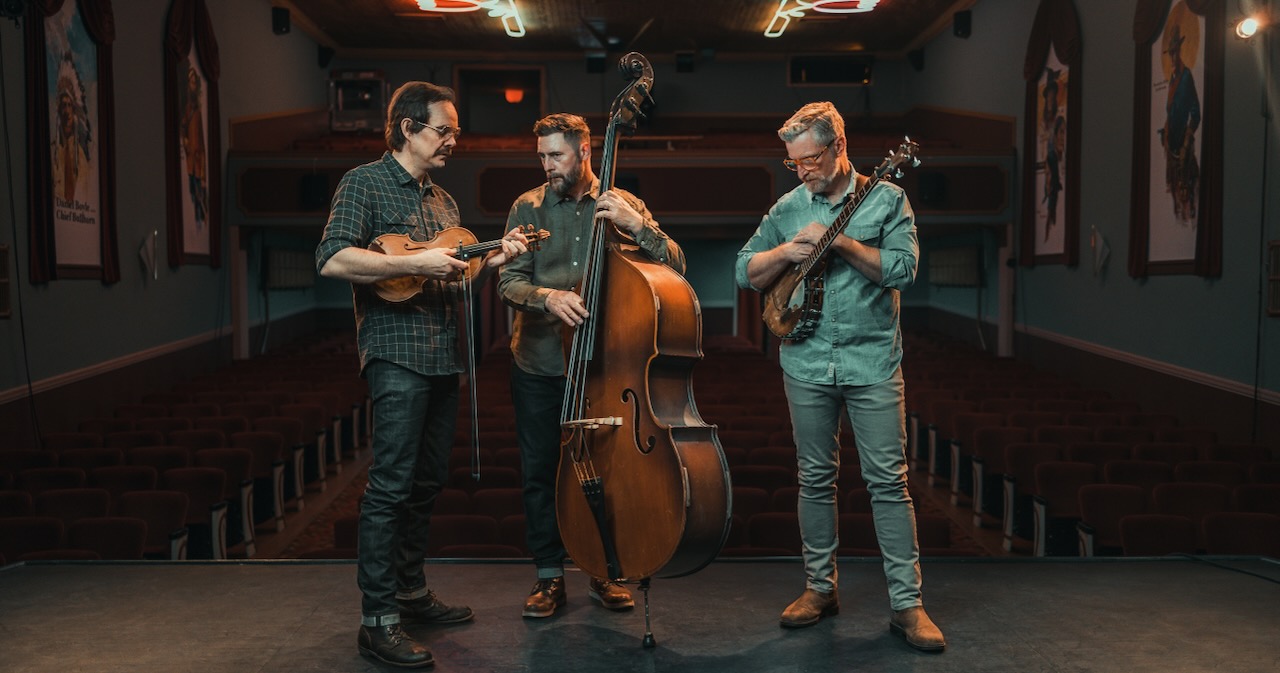
Artist:Lonesome Ace Stringband Hometown: Toronto, Ontario, Canada Latest Album:Try to Make it Fly
(Editor’s Note: Answers provided by Lonesome Ace Stringband banjoist Chris Coole.)
Which artist has influenced you the most … and how?
Although I think the answer for each of us individually would be different, I think the most obvious single influence on us as an ensemble would be John Hartford. Specifically, the last several albums he made with the “John Hartford Stringband” (which featured Bob Carlin and Mike Compton, among others). Their approach to playing old-time fiddle tunes, especially on the albums Wild Hog In the Red Brush and Speed of the Old Long Bow, was based on a highly improvised and reimagined way of playing backup that Hartford called “Windows.” Although it wasn’t a conscious decision, and we don’t follow the approach to the letter, I think the spirit of those albums really influenced the way we play and perform old-time music, especially (instrumental) fiddle tunes.
What other art forms — literature, film, dance, painting, etc. — inform your music?
As a band, I think the art form outside of music that has had the biggest impact is the crank (prank) phone call. For years we’ve been listening to the Jerky Boys. We are old enough to remember the late ’80s and early ’90s when underground Jerky Boys cassette tapes were passed around organically and treasured by all who were lucky enough to possess them. About five years ago, the guys from The Henhouse Prowlers introduced us to Longmont Potion Castle, who has been anonymously releasing psychedelic crank calls since the ’80s (he’s still at it). You might think I’m being tongue in cheek when I say that these influence us as a band, but the attention to detail – especially in regard to language – and the level of improvisation are both relatable to music and inspiring. Most importantly though, it’s a great reminder that we live in a crazy world, and it’s best not to take yourself or anyone else too seriously.
What rituals do you have, either in the studio or before a show?
We like to get our heart rates up before a show if possible and maybe a bit of stretching. This often involves us having an aerobics dance party to ’80s pop and new wave. “Betty Davis Eyes” by Kim Carnes is a favorite, as is “Dance Hall Days” by Wang Chung. [John] Showman favours doing some version of the “Mountain Climber” while Max [Heineman] and I are usually doing jumping jacks, dancing on the spot, or some sort of hippie clogging. Seeing three middle-aged men dancing around in the green room to The Pretenders or Blondie seems to warm the hearts of promoters and venue staff and there are probably bootlegged videos of us doing it circulating around.
If you had to write a mission statement for your career, what would it be?
The title of our new album is Try to Make it Fly. That is a line from one of the songs called “Sweeter Sound.” I’d say that song encapsulates what our mission as a band is. We are all in our 50s and have been playing music professionally (mostly full time) since we were teenagers. That song is about not giving up, even when everything might seem to be pushing you in the other direction. It’s about keeping sight of what’s important – community, friends, family, art – and letting the quality of those things in your life be the gauge of your success. With where we are in our lives and careers, that seems to be the only way forward.
Since food and music go so well together, what is your dream pairing of a meal and a musician?
There’s a song on the new album called “Smoke on the Shoulder” which is basically a recipe for smoking pork shoulder. We all love to cook and appreciate good food. We rarely miss a chance to stop at a good BBQ joint when tour routing allows. With this in mind, I’m going to say the food would be smoked brisket and pulled pork with sides of coleslaw, beans, and macaroni. The musical accompaniment to this meal would be provided by, none other than, George Jones.
Artist:The Lonesome Ace Stringband Hometown: Toronto, ON / Horsefly, BC Song: “Crossing the Junction / Deer River” Release Date: June 2, 2023
In Their Words: “The Junction is the neighborhood in Toronto that John and I live at either end of. In the early days of the pandemic, one of us would have to cross the Junction every time we wanted to get together to play music. There was such an uncertain and ominous vibe to everything at that time, even something as simple as walking across your own neighborhood seemed fraught and uncertain. I think you can feel that tension in this tune we wrote together.
“The second tune in this medley is named after a river I grew up fishing in Eastern Ontario. There are lots of waterfalls, and plunge pools as the river runs from pool to pool – I think you can hear it tumble along, especially in the first part of this tune.” – Chris Coole
Artists:John Showman and Chris Coole Hometown: Toronto, Ontario Song: “Long Hot Summer Days” Album:Much Further Out Than Inevitable – A Fiddle and Banjo Tribute to Some Music of John Hartford Release Date: December 2, 2022
In Their Words: “This is one of 14 tracks from our new John Hartford tribute album. I’d always loved Hartford’s original version of this song, but a few years back, I heard my friend Maddie Witler play this song while we were on tour in Germany. I was taken by how she’d interpreted the melody and made it a bit more bluesy (at least in my memory). I tried to bring some of that into my cover of ‘Long Hot Summer Days.’ It’s played on a gourd banjo, which definitely helps bring the ‘skank’ a little. This is just one more example of Hartford’s masterful ability to use word imagery to turn a song into something more like a movie.” — Chris Coole
Artist:The Lonesome Ace Stringband Hometown: Toronto, Ontario / Horsefly, British Columbia Song: “The Hills of Mexico” Album:Lively Times – Live at the Anza Club Release Date: November 26, 2021
In Their Words: “We recorded ‘The Hills of Mexico’ on our first album, Old Time. Since then it’s become our most requested piece. Although the original version of this song comes from Roscoe Holcomb, our version owes more to the band The Renegades, which featured the singing of Carol Elizabeth Jones. Our interpretation has evolved in the ten years since we recorded it, so it was great to capture it in this live performance from back in 2019. The new album, which will be streaming on November 26, was recorded at a live show in Vancouver, BC. It features some of our favorite songs by artists such as John Hartford, Gus Cannon, Bill Monroe, Marty Robbins, and The Stanley Brothers.” — Chris Coole, The Lonesome Ace Stringband
Artist:Chris Coole Hometown: Toronto, Ontario Song: “My Name Is Lie” Release Date: August 13, 2021
In Their Words: “I guess this song is a banjo-y meditation on the post-truth era we seem so hopelessly bogged down in. It’s sung from the perspective of the lie itself. I was inspired by the Dock Boggs song, ‘A Conversation With Death’ or ‘O Death,’ where death is given a voice. So, if a lie could talk, ‘My Name Is Lie’ is what I imagine it might be saying in today’s world. I’m not sure how obvious it is, but the last two verses deal with the Pandora’s box that is social media and how it has allowed lies to access ‘light speed’ so to speak.” — Chris Coole
Photo credit: Tyler Knight
This website uses cookies to improve your experience. We'll assume you're ok with this, but you can opt-out if you wish.AcceptRejectRead More
Privacy & Cookies Policy
Privacy Overview
This website uses cookies to improve your experience while you navigate through the website. Out of these, the cookies that are categorized as necessary are stored on your browser as they are essential for the working of basic functionalities of the website. We also use third-party cookies that help us analyze and understand how you use this website. These cookies will be stored in your browser only with your consent. You also have the option to opt-out of these cookies. But opting out of some of these cookies may affect your browsing experience.
Necessary cookies are absolutely essential for the website to function properly. This category only includes cookies that ensures basic functionalities and security features of the website. These cookies do not store any personal information.
Any cookies that may not be particularly necessary for the website to function and is used specifically to collect user personal data via analytics, ads, other embedded contents are termed as non-necessary cookies. It is mandatory to procure user consent prior to running these cookies on your website.