Della Mae, “Peg Monster”

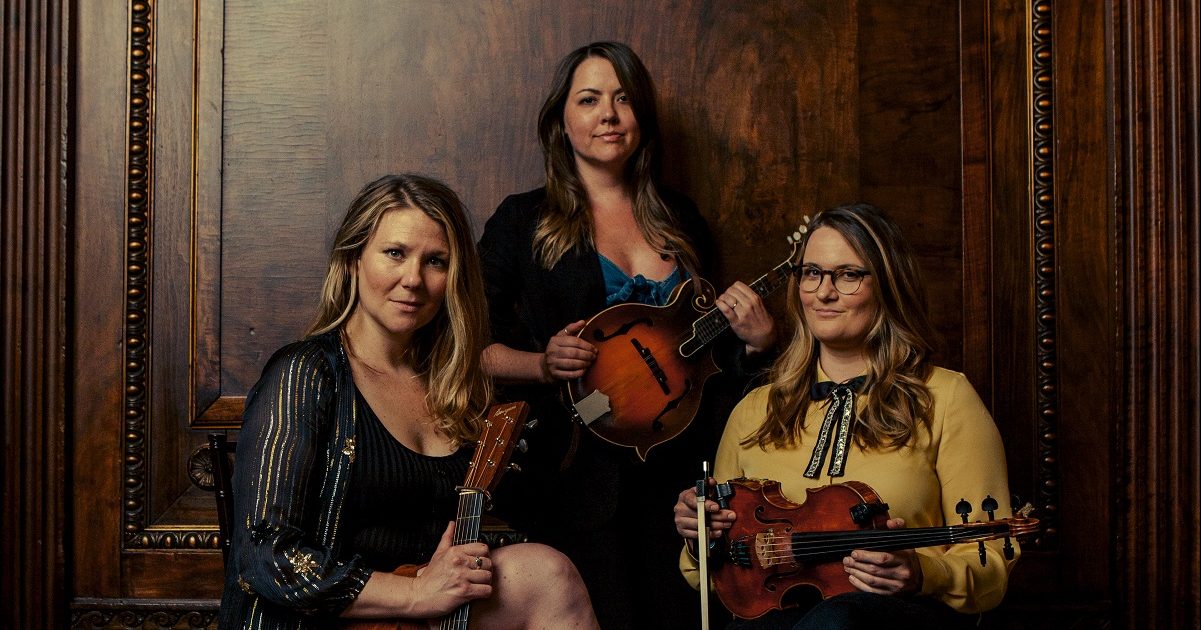
Time and again Della Mae demonstrates that of their indisputable strengths as a dynamic, powerhouse string band, a conglomeration of some of the most talented musicians and writers in bluegrass and roots music, their most impressive trait must surely be their unrelenting taunting of every convention handed down to them by those genres. Even now, as they make what some would call “the pivot to Americana,” they laugh off that very idea on Headlight, the record tasked with the brunt of that rebrand. The subtle, crooked smile of self awareness makes appearances throughout this collection of songs, but is flaunted outright on “Peg Monster,” the record’s sole instrumental. 

Written by fiddler Kimber Ludiker, “Peg Monster” is an impressively ancient-sounding tune, drawing on Ludiker’s deep fiddling pedigree and the expansive musical vocabularies that have won her two Grand Master Fiddle Championships. The melody strikes listeners as haunting, as if emanating from a shady holler or a decades-old campsite at a fiddle convention. It builds like a campsite jam, too, with a dash of Jenni Lyn on mandolin and a ripple of Avril Smith’s flatpicking. Then, as seamless as the rest, through the crack left in tradition’s door by that haunting vibe — and beckoned through by the Dellas’ virtuosic irreverence — organic, campfire percussion and low rumbling organ pads fill in the spaces artfully left by each instrumentalist. 

Pigeonholing and “recommended if you like” habits will always attempt to relegate Della Mae to countless ones versus others, but, as they consistently and artfully remind us, this band refuses to give up their autonomy and self-expression for the sake of tidiness and clean labels. “Peg Monster” shows it — hell, their entire catalog does; Della Mae loves living in the spaces in the middle, and with Headlight that’s exactly where they’ve made their home.

Della Mae Offer Encouragement and Illumination on ‘Headlight’

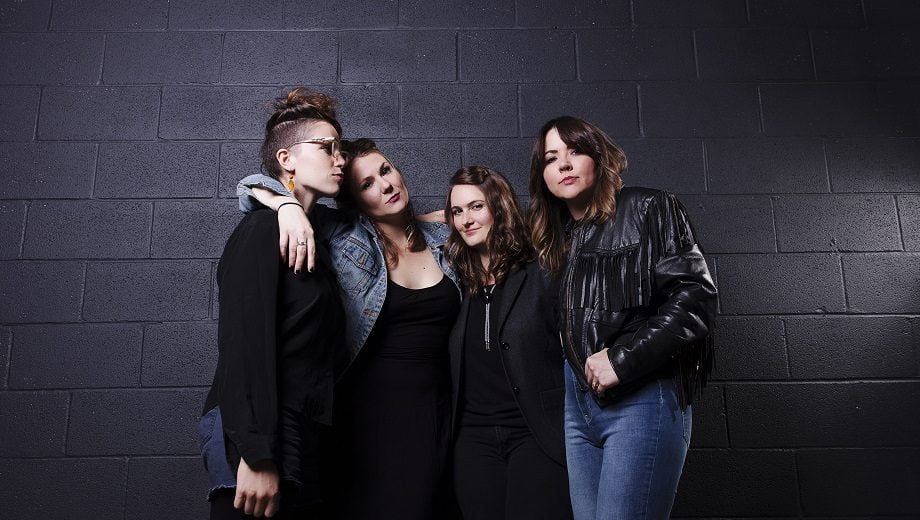
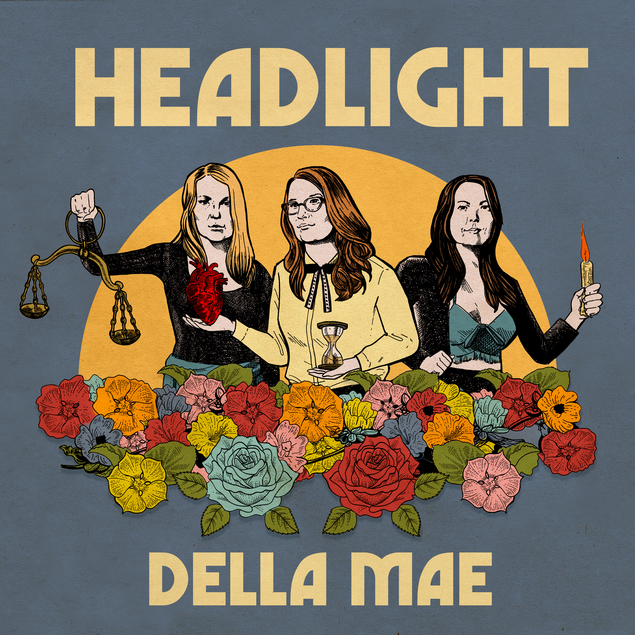
Della Mae have shaken up bluegrass and old-time stages for the better part of the last decade, with a mile-long resume that even includes a stint as cultural diplomats with the U.S. State Department. With Headlight, the Boston band’s first full-length album in five years, they’re providing their most powerful statement yet.

Written primarily on retreat at MOXE, a women-owned creative retreat outside of Nashville, the band taps into a more overt kind of activism than we’ve seen from them before, with lyrics that lift up victims of abuse, lend solace to the weary, and offer a single directive in the fight for change: to always keep moving forward.

Produced by Dan Knobler and recorded at Sound Emporium Studios in Nashville, the album features vocal powerhouses like the McCrary Sisters alongside instrumental heavyweights such as keyboardist Jen Gunderman and guitarist Molly Tuttle. Its tracks boast the fast picking and sublime harmonies that Della Mae fans have come to expect. BGS caught up with lead singer and songwriter Celia Woodsmith, discussing the new music and the band’s long record of working for equality in bluegrass and beyond.

BGS: The album opens with “Headlight,” a powerful song about standing up in the face of abuse. What drove you to write it?

Woodsmith: “Headlight” was definitely a hard one to write but it came out really quickly. I had been trying to write a song that could capture this feeling, the #MeToo movement feeling, and nothing was coming out. It really was after Christine Blasey Ford testified in front of Congress that it happened — the song came out in about twenty minutes, a very quick thing. I think I’d finally just had it.

As we [the band] have gotten older and more mature as human beings and as women and as musicians, it’s been easier and easier to not really care what other people think of us. [Laughs] It’s easier to say what we want to say, without fear that we might “ruin our career” or that the backlash will be too hard to handle. Truly, I didn’t write it as a political song, and I didn’t write it as something to divide people. I wrote it as an anthem, an ode to all the women in my life and the women I’ve seen all over the world who have stood up and been brave and been ridiculed for it.

Are there ways that you feel like your fans and your listeners could be “headlights” in their communities?

One of the lyrics is, “No need to be rude, just sit back and listen.” I think right now, especially, we really don’t listen to one another; we don’t want to listen to one another. There are a lot of takeaways that I hope people can grab from this song, but if standing up for women’s rights is beyond them, then I hope that they can just get through the song, just listen to it, just think about it. That’s all I can hope for.

As a listener yourself, what’s something in music in the last year or two that has made you particularly hopeful about what’s to come?

The first thing that comes to mind is the album by The Highwomen — Brandi Carlile, Maren Morris, Amanda Shires, and Natalie Hemby. That album, that project, really made me happy. First of all, that these women were badass enough to stand up and say, ‘This is a problem in country music. You don’t play our songs and you don’t play our albums, and we are absolutely going to stick this in your face.”

You have people constantly, your whole life, telling you that you’re “pretty good for a girl.” Believe me, Della Mae has gotten plenty of that. And it’s so frustrating. But when these high-profile women stand up for the rest of us, it elevates all of our voices. To have an album like The Highwomen do so well, be so well done — and by these four powerhouses — made me so hopeful for the future, hopeful that other young women are going to see this same thing and say, yeah, you know what? You should play our music. We are good enough.

Della Mae has been a presence like that for women all over the world, working with the State Department, performing in countries where women might not always see other women on stage. In your travels, were there times when you encountered a bluegrass community in places where people might not expect to find it?

Yeah, absolutely. We have found really amazing bluegrass musicians in Russia, and we’ve found them in the Czech Republic, and we’ve found them in France. Bluegrass is everywhere. It’s quite amazing to me, actually. We met a really amazing three-finger-style banjo player in Uzbekistan. This woman just learned how to do it from YouTube, and we were the first bluegrass musicians she’d ever jammed with.

Another time, these young Russian bluegrass musicians we sat down to pick with asked us to play [one of our songs] “Sweet Verona,” and they played right along with us. It was truly astonishing. That goes to show how small the world is. If you have an internet connection, you can listen to just about whatever you want, and you can learn. Bluegrass is a global thing, it’s everywhere. But it’s everywhere because it’s folk music, and I think that people can really relate to it.

I’ve seen quotes where Della Mae describe Headlight as the album you’ve always wanted to make. What were you enabled or empowered to do here that you haven’t been able to do in the past?

I think that kind of ties back into the “not-giving-a-crap-anymore” thing. We had always been afraid to have drums on an album, we’d always been afraid to plug in, use effects. [Because] we were in bluegrass, and kind of cornered into that genre, it felt like we couldn’t expand our musicianship, because we didn’t want to anger our fans.

We obviously care a lot about our fans, but [now] we think that we can take our fans with us, take them along for the ride. We’ve been playing for ten years. Our fans know that we can play a fiddle tune, and that we can play bluegrass standards. But we can also plug in and rock out and really perform songs that have meaning behind them, and do it with a lot of flair.

Do you think the pressure to adhere to tradition can be an obstacle for bluegrass musicians today?

I think that’s a problem being faced by bluegrass musicians, I think especially young musicians, but I think it’s getting better. Alison Brown, an absolute legend on the banjo, said it last year in her IBMA keynote speech: Change is coming to bluegrass, whether or not they want it. We have to start opening our arms more to different expressions of bluegrass.

There can be traditional bluegrass — that’s fine — but if someone has drums, or someone plugs in, or someone plays in an untraditional way, that doesn’t mean that we have to eliminate them completely from the genre. If we do that, then bluegrass music will slowly start to die. People won’t want to play it when they can’t play around with it, when they can’t give to it their own expression and their own creativity.

Recently I think there’s more openness to what bluegrass is, as opposed to what it isn’t. People will always say, “Well, that’s not bluegrass, they don’t have a fiddle,” or, “That’s not bluegrass, they don’t have a banjo.” More often lately, though, it’s been more like, “Oh, these musicians can play bluegrass, but they can also play a bunch of other stuff.” It’s better to celebrate that than to distance yourself.

Your new song “The Long Game” tackles the idea of temporary sacrifice for an ultimate goal. What are some of your challenges in playing the long game, and what keeps you looking forward?

We’re very lucky that this is our career, that we can travel around the world, meet people, write songs. But the day-to-day stuff is really hard. You’re kind of coaching yourself — “Just drink another cup of coffee and you’ll be fine.” When you’ve been a band for ten years, a lot of interpersonal stuff comes up. You may lose members over the years. We’ve had members turn over, and each time it’s difficult. It’s always the closing of a chapter, and then moving on a new way of thinking about Della Mae.

I love this band, and I love the women I play with, and I feel so grateful that we’re able to do this together. We’re really a family and a team, so I think that’s part of the long game, too — accepting change and learning to deal with it in a positive way, as opposed to a negative way. You’re always going to have surprises along the road, and you’ve just got to, well, keep playing the long game.


Photo credit: David McLister

LISTEN: Della Mae, “Bourbon Hound”

Artist: Della Mae
Hometown: Nashville, Tennessee
Song: “Bourbon Hound”
Album: The Butcher Shoppe EP
Release Date: March 1, 2019
Label: Rounder Records

In Their Words: “I was brainstorming a topic to write a song about, and as a last ditch effort started naming all the types of bourbon in my cabinet at home to come up with ‘Bourbon Hound.’ Della Mae premiered it in the Grey Fox dance tent and it immediately became a fan favorite. The recording features Molly Tuttle on high vocal harmonies and Avril Smith on guitar.” — Celia Woodsmith, Della Mae

“With the shows we’ve played this year and the EP we just recorded, we’re really getting back to the mission statement of Della Mae. This band was created to showcase women in roots music. It’s been so great to play with our original guitarist, Avril Smith, again, and to work alongside Molly Tuttle on this track and others on the forthcoming EP.” –Kimber Ludiker, Della Mae


Photo credit: Ryan Nolan

Roland White: A Tribute to a Bluegrass Hero

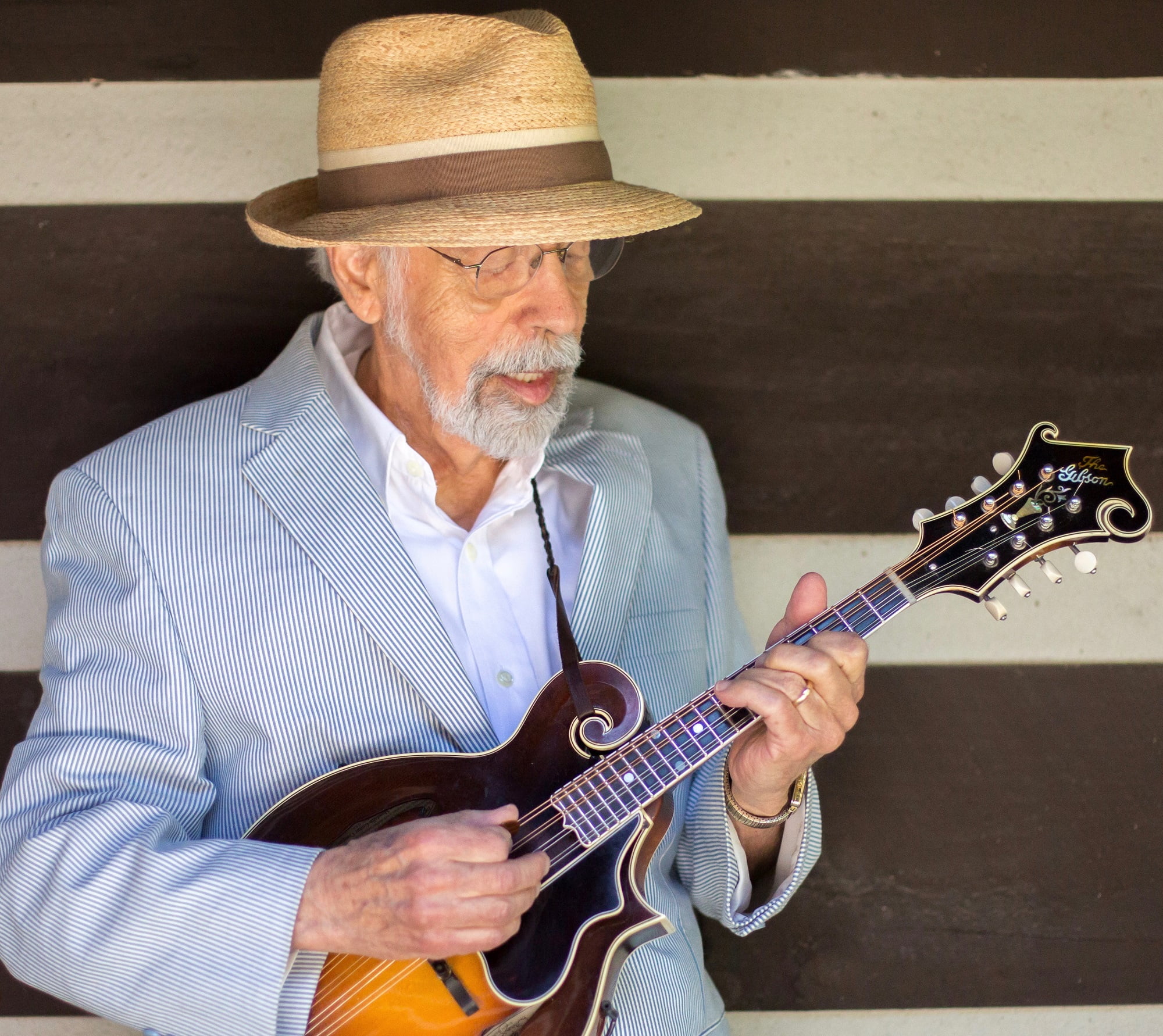
To begin, a disclosure: Roland White is kind of a hero of mine for his perseverance, his originality, his sense of humor, his experience and much more. Also, he’s an employer of mine; I’ve been playing in the Roland White Band on most of its dates for close to 15 years now, and I’ve recorded two albums with him, including his new one, which I also co-produced. Lastly, and maybe most importantly, Roland’s a friend of mine. And he has a great story.

Played with Bill Monroe, the Father of Bluegrass? Check. Played with Lester Flatt? Check. Toured around the world as a member of the Country Gazette and then the Nashville Bluegrass Band? Check. Had a band with Béla Fleck? Check. Helped organize and make Jim Lauderdale’s very first album? Check. Fronted his own band since the turn of the century? Check.

That’s a lot of boxes, and any one of them could be turned into a meaty article. Here, though, I’m going to concentrate on the story of the group whose legacy inspired the new album, Roland White & Friends: A Tribute To The Kentucky Colonels; it’s the starting point for the larger Roland White story, illuminating the way it was for young bluegrass musicians in the 1950s and 60s and how Roland, his brother Clarence, and the rest of the Colonels were able to craft an enduring and influential body of music.

Shortly after he turned 16 in 1954, Roland’s family relocated from Maine to Southern California. He was already playing the mandolin by then, and younger brothers Clarence and Eric were playing guitar and banjo (tenor, not the bluegrass 5-string). They joined their sister, JoAnne, who sang, around the house and at local functions. Soon after moving to Burbank, the boys rather casually entered a talent contest, and in short order found themselves dressed in hillbilly clothes and, as The Three Little Country Boys, performing on a variety of local stages and radios shows — even, if briefly, on television. All of this before any of them had heard a lick of what was just beginning to be called bluegrass.

Roland recalls that it was in a comment from a visiting uncle in the middle of 1955 that he first heard Bill Monroe’s name — and naturally, it was in connection with the instrument they shared. “My uncle Armand asked me if I’d ever heard of Bill Monroe. He said, ‘He plays the mandolin, he’s on the Grand Ole Opry and,’” Roland adds with a grin, “‘he is fast!’” Not surprisingly, that piqued his interest — but to actually get hold of a record was, at the time and under the circumstances, something of a project, involving a walk into town to the music store, perusing a catalog, ordering it, waiting, and then picking up the little 45rpm disc of his choice: “Pike County Breakdown.” (It was actually the B-side of “A Mighty Pretty Waltz,” and yes, it was fast.)

What followed was a “conversion” experience of the kind that was happening around the same time to other people his age, give or take a few years — a cohort that includes the slightly older Mike Seeger and Ralph Rinzler; the slightly younger Del McCoury and Neil Rosenberg (like Roland and Clarence White, all members of the International Bluegrass Music Association’s Hall of Fame); and the slightly younger still Jerry Garcia, David Grisman, and Peter Rowan. What most of them had in common was some distance, geographic and sometimes sociological, from the Southeastern epicenter of the emerging bluegrass sound; what all of them had in common was a profound desire to hear and play more of it.

More records soon made their way into the White household, often mail-ordered from Cincinnati’s Jimmie Skinner Music Center, and so did a five-string banjo, which Roland learned to play in the Scruggs style. Eric moved over to bass, and the band, now just The Country Boys, began studying the picking and singing of Monroe, Flatt & Scruggs, Reno & Smiley, the Stanley Brothers, Jimmy Martin, and more. While they focused on the whole sound, there was room, too, for Clarence to study the lead guitar stylings of Earl Scruggs, Don Reno, and the Stanley Brothers’ George Shuffler, as well as the rhythm guitar playing of Flatt, Martin, and others. And though skilled banjo players were still rare — especially in California — by 1958, they’d met and recruited Arkansas native Billy Ray Lathum for the job, allowing Roland to devote himself once again exclusively to the mandolin.

1959 was a big year for The Country Boys. For one thing, they were joined by Leroy McNees — Leroy Mack, as he’s still known — whom they met first as a fan, but soon persuaded to take up the Dobro. Mack not only rounded out the band’s sound, but quickly became a valuable asset as a songwriter. For another, the band got its first bookings at the Ash Grove in Los Angeles, a key venue in the emerging folk revival, and one that also booked national bluegrass acts as they made their long journey out to the West Coast.

Indeed, the Ash Grove turned out to be an important place where folk audiences and bluegrass musicians could meet one another; as Roland put it, “Playing the Ash Grove opened the way for us to play to a totally new audience — a folk music audience that we had known nothing about. They dressed differently from the Country-Western audience (they were college students, professors, beatniks, doctors, and lawyers) and they paid close attention to the music.”

Not only did the Ash Grove provide the group a new audience, it gave them a different sound; the less raucous, more attentive audience and more sophisticated sound system allowed Clarence White to hear himself better than ever before. Within a matter of weeks, he began to take solos — plenty of practice time at home had allowed him to explore and build on what he’d been hearing on records — and The Country Boys started to build a unique sound that featured lead acoustic guitar in a way that reached well beyond their influences.

By 1961, The Country Boys — now a five-piece band — had built a good circuit for themselves, playing to folk audiences at the Ash Grove and on college campuses around Southern California while maintaining a foothold in the dynamic country music scene. Their prominence gave them an inside track that landed them an appearance on The Andy Griffith Show — just before Roland got his draft notice, a then-common occurrence. While he served for the next two years, the band continued without him, taking a couple of important steps, including the replacement of bass player Eric White with Roger Bush; a name change to The Kentucky Colonels; and recording their first LP in 1962. The project, which featured some of Leroy Mack’s most enduring originals, also debuted Clarence’s distinctive, increasingly powerful lead guitar work. Over in Germany, where he was stationed, Roland admits that “it floored me.”

By the time Roland was discharged from service in the fall of 1963, Mack had left the band, replaced by transplanted Kentucky fiddler Bobby Slone. With Mike Seeger’s then-wife, Marge, acting as their booking agent, the Colonels were booked for their first East Coast tour, playing folk clubs in the Boston area, New York, Washington D.C., Baltimore and beyond. In each, they made connections with local bluegrass musicians, ranging from melodic banjo pioneer Bill Keith to the members of the Country Gentlemen to David Grisman, and when they came east again in 1964 — a trip anchored by an appearance at the Newport Folk Festival — they did more of the same. Interestingly, though, and a sign of the distance that still separated the folk revival circuit from the country music one, they never got even as far south as Nashville; as Roland says, “there was nothing for us there.”

Sadly, while their focus on folk audiences had served to give them broader appreciation than they might have gotten while working in Southern California’s country music scene, it also meant that, as those audiences began turning their attention to more electrified folk-rock and newly emerging rock artists, the Colonels would see harder times. Though they continued playing into 1966, the group eventually disbanded, with Roland soon taking the guitar/lead singer job with Bill Monroe and moving to Nashville, and Clarence turning first to studio work, and then to electric guitar playing with the Byrds.

Even so, the magic that the Colonels had made continued to appeal to both Roland and Clarence, and in 1973, they reformed their original brother trio with Eric. Adding banjo man Herb Pedersen and dubbing themselves the New Kentucky Colonels, they embarked on an April tour of Europe and, though the banjo position remained unstable, they started to make plans for more touring and recording — only to have them come to an end when Clarence was killed by a drunk driver while loading out from a Palmdale, California club.

What did the band leave behind? Not much in the way of recordings, unfortunately. The Kentucky Colonels made hardly any in the studio — the album done while Roland was in the Army and an all-instrumental album, Appalachian Swing!, one of the most influential bluegrass recordings of the 1960s are the sum total — and while enough of their shows were recorded at the Newport Folk Festival, at California venues, and on that final European tour to fill a couple of albums, they’ve often been out of print or hard to find.

Yet it’s clear — and the new record makes the point with its wide-ranging roster of guests, from guitarists like Billy Strings, Molly Tuttle and Jon Stickley to banjoists such as Kristin Scott Benson (Grascals) and Russ Carson (Ricky Skaggs & Kentucky Thunder) and fiddlers like Brittany Haas (Hawktail), Kimber Ludiker (Della Mae) and Jeremy Garrett (The Infamous Stringdusters) — the legacy of the Colonels can’t be measured so simply. From songs like “If You’re Ever Gonna Love Me” and “I Might Take You Back”— both co-written by Leroy Mack, and recorded by scores of bluegrass artists — to guitar showcases like “Listen to the Mockingbird” and “I Am a Pilgrim,” their influence has been carried forward through the bluegrass generations, not only by Roland White, but by Tony Rice, Jerry Garcia, and a host of others who met and heard and jammed with them during those critical years in which they were playing the national folk music circuit.

And for Roland White, for whom those years were just the beginning of a storied career that has taken him, by turns, deeper into the heart of bluegrass and further out to broad-ranging audiences, the opportunity to revisit them in the company of new generations of musicians has been an exciting one. “I really enjoyed playing and singing with all these musicians,” he says. “They appreciate the old music that we made, but they brought their own touch to it, too. It’s good to know that these songs, and these sounds are in good hands.”


Illustration by Zachary Johnson
Photo by Russell Carson, Carson Photoworks
MIXTAPE: Kimber Ludiker

Have you heard Della Mae?  This five-female bluegrass powerhouse was recently nominated for IBMA’s Emerging Artist of the Year Award, and has been making waves on the festival circuit throughout the country.  And the Belles of Bluegrass are about to take their sound to a [much] wider audience as they head to Central Asia for a US State Department musical diplomacy tour next month.

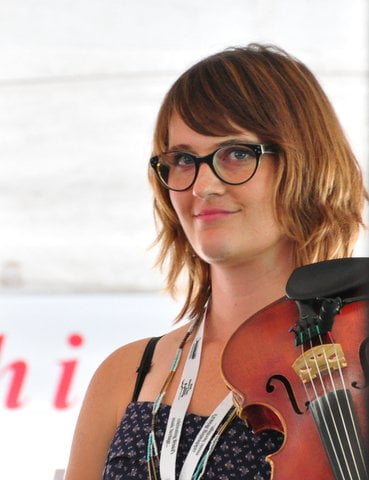
Fiddler Kimber Ludiker, a multiple Grand National Fiddle Champion winner in her own right, tells us in her own words about their impending trip, and what songs she’ll be listening to during her travels…

‘While putting together this mix tape, I thought I’d approach it as ‘what music will I take with me to Central Asia for 42 days when I won’t have streaming capabilities or YouTube?’  My band, Della Mae, is flying to Pakistan on Nov. 6th for a musical diplomacy tour with the US State Department. The program is called American Music Abroad. If you play music, I’d highly recommend (preemptively) applying for one of these trips. We will travel to Pakistan, Uzbekistan, Turkmenistan, Kyrgyzstan, Kazakhstan, and Tajikistan to give free concerts, work with children, play for diplomats and government officials, and collaborate with local musicians. And you can follow our trip blog exclusively with The Bluegrass Situation!

Here’s what’s at the top of my playlist for the trip:

ARTIST:  Rose Cousins
TRACK:  The Darkness

‘Rose Cousins is one of my very favorite people. Her songwriting is excellent. She’s Canadian. She’s magnetizing. She’s great. She just released a new album called We Have Made a Spark. It’s packed with talented musicians and original material. Hard to pick a track… the whole album will be going with me on this State Department trip.

ARTIST:  Dr. Dog
TRACK:   Shadow People

‘My awareness of Dr. Dog began when one of the guys offered to carry Courtney’s banjo onto the plane so she didn’t have to check her guitar. Beyond being incredibly nice individuals, I love what these guys are doing. Their music is so vibey, they put on amazing live shows, and they have killer music videos.’

ARTIST:  Lake Street Dive
TRACK:  I Want You Back

‘The first time I heard Rachael Price sing, my entire life changed. If this band isn’t on your radar, get it on there. Mike #1 (Calabrese) is a really creative drummer, Mike #2 (Olson) is a great electric player and has a really fun approach to the trumpet, and Bridget Kearny is one of the best bass players I’ve heard. Ever. And they ALL write songs. I used to see Lake Street Dive as much as possible when they were a Boston-based band. Now they are in Brooklyn. Go see them right away. They just put out an EP of covers called Fun Machine that will leave you smiling.  Also, in this video, Bridget’s denim onesie should not go unnoticed.’

ARTIST:  Tony Rice
TRACK:   Cold on the Shoulder

‘This recording is my favorite performance of Cold on the Shoulder.  Vassar Clements is playing fiddle. He’s my hero and biggest inspiration. The combination of Tony Rice, Vassar, John Hartford, and Jerry Douglas is the greatest.  Big thanks to Jason Carter for sending these my way.’

ARTIST:  Cahalen Morrison & Eli West
TRACK:  Our Lady of the Tall Trees

‘These guys are phenomenal. Our Lady of the Tall Trees is my favorite album right now by far. The music is so accessible and beautiful. They are the best of what’s out there right now.’

ARTIST:  Rubblebucket
TRACK:  Came Out of a Lady 

‘I LOVE this song by Rubblebucket. There’s no explanation besides that I love the groove, the title, and the mood it puts me in.’

You can learn more about Della Mae through their website www.DellaMae.com, and stay tuned to The Sitch this November for their exclusive dispatches from Central Asia musical diplomacy tour!