An Oral History of the Infamous Stringdusters

BGS was founded 14 years ago and from the very beginning, we’ve been covering, collaborating with, and cheering on the Infamous Stringdusters. Our first posts about the group published to our site in 2013 – not even a year after our launch – spotlighting banjoist Chris Pandolfi’s Bluegrass Manifesto, the band’s only-four-years-old marquee event The Festy Experience, and their most recent album at that time, Silver Sky. Now, in 2026, they’re not only our Artist of the Month for the second time, they’ll be headlining our stage at Bourbon & Beyond this September, too. But, our love for the band – and the many partnerships we’ve built together – began, like most, back in 2007 with their now iconic debut album Fork in the Road and a banner year for the group at IBMA’s World of Bluegrass and the IBMA Awards.

Back then, when the Stringdusters took home trophies for Song of the Year (“Fork in the Road”), New Artist of the Year, and Album of the Year, perhaps no one – not even the band themselves – would have predicted the seismic, existential impact they would end up having on bluegrass and the as-yet-unnamed subgenre thereof: jamgrass. Twenty years on, the Stringdusters celebrate their duo of decades with 20/20, an album of 20 songs celebrating 20 years of defining and redefining bluegrass and jamgrass.

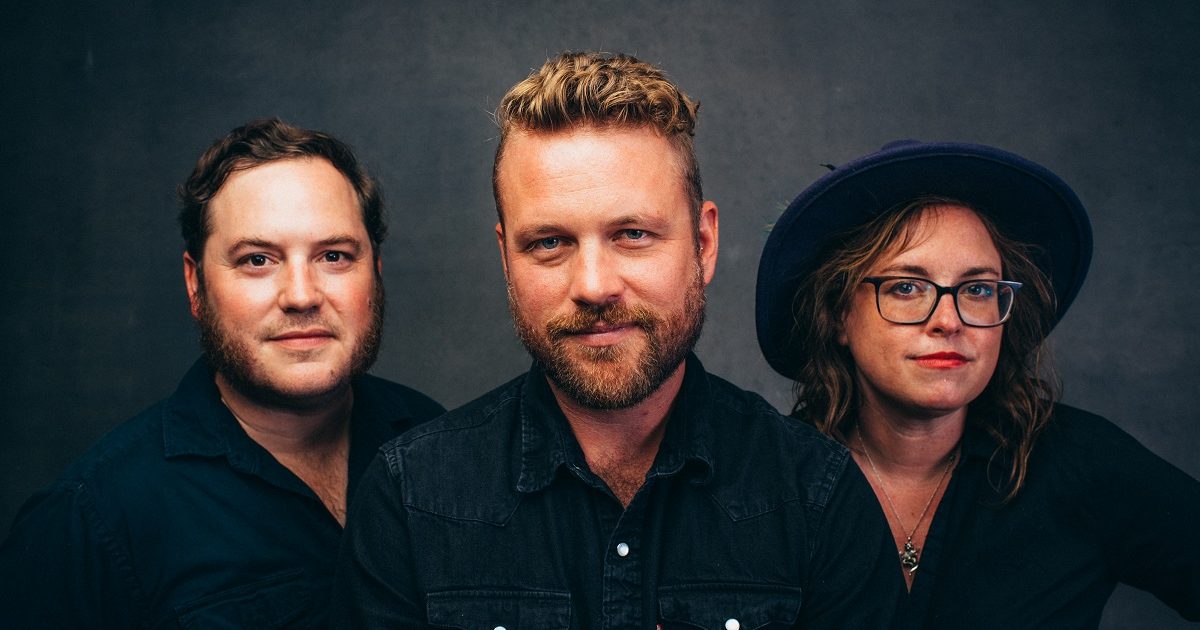
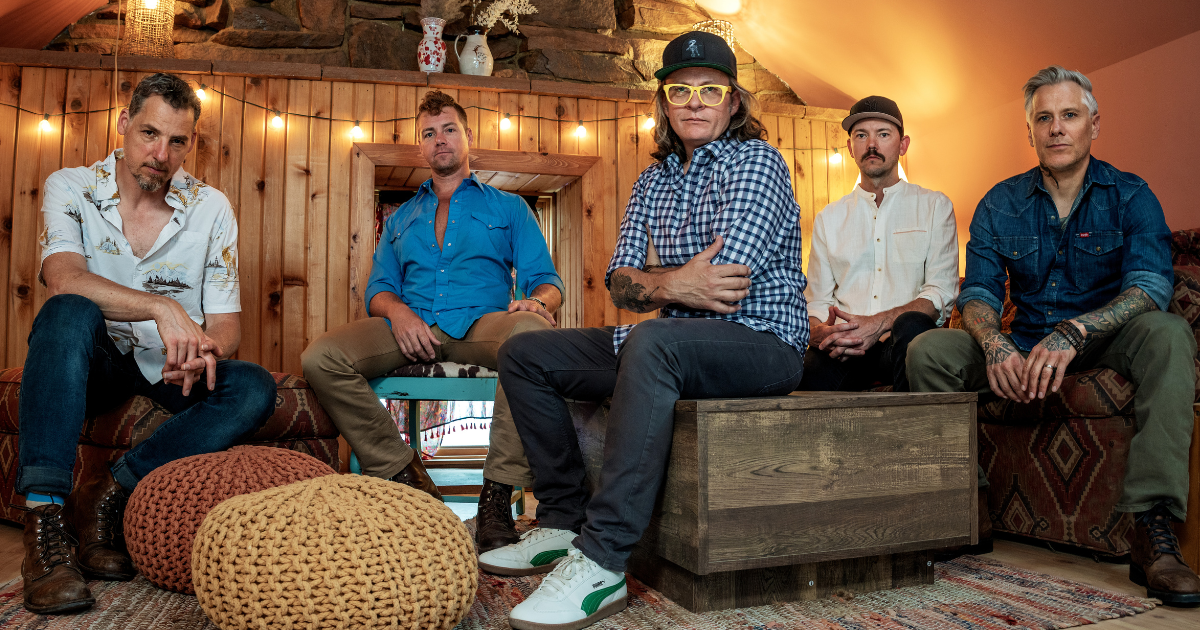
For our Artist of the Month coverage, BGS and Good Country co-founder Amy Reitnouer Jacobs sat down with all five members the Infamous Stringdusters for a wide-ranging conversation of a band that epitomizes bluegrass, jamgrass, and psychedelic string band music in the 2000s.

First of all, again, I wanna just thank you for doing this. We are so thrilled to have you guys as our Artist of the Month and congratulations on 20 years of the ‘Dusters.

I wanna start this with Panda actually, and this is not gonna be just an oral history interview, but I think, looking back on 20 years, it feels appropriate to start from the beginning. So let’s talk about origins and start back at Berklee [College of Music], if that’s cool. Tell us a little bit about the beginning of the band.

Chris Pandolfi: I arrived at Berklee in 2001, which was the year that Andy [Hall] had just left Boston for Nashville. I first met Critter [Chris Eldridge] through Zach Hickman, who was playing in Josh Ritter’s band. He went to Oberlin [University] with Critter. We got together and we were playing, and Zach had some free studio time at a spot in New Hampshire and we were gonna go record some music, just for fun. Our careers were not underway in any way, shape, or form. We didn’t have any grand designs here. We were just gonna go record some music and have some fun.

Then, on the precipice of this recording, we went down to the Cantab Lounge to meet this guy named Andy Hall. We went there and–

Andy Hall: [It was] The Plough and Stars.

CP: The Plough and Stars! Andy was playing–

AH: I don’t remember exactly if I was playing or if you were playing.

CP: And the next day we were in New Hampshire at this recording studio and we made this EP called Stable Horse. Essentially, Andy was already living in Nashville, so around that same time, he had met Jeremy [Garrett] and they were playing together. It was that recording session that got the wheels turning for me. Like, “Oh, we could do this thing with other people our age,” and not fall into the very sort of common thing in bluegrass where you get hired by someone else and you’re essentially a sideman.

We were recording and teeing things up, and we all had other gigs at that time. It was me, Andy, Jesse [Cobb], Critter, and Alan Bartram from the Del McCoury Band. But that was my earliest memory of “We could start a band with our contemporaries.” And Zach Hickman, I give him credit, he facilitated that.

I don’t even think we had the name “Stringdusters” yet. Alan got the offer to go play with Del McCoury and we had met Travis [Book] at IBMA, so we called him up and he came and lived in my driveway for a few months. True story.

Travis Book: You can really get away with a lot if you park your car in someone’s driveway and then try to stay outta the way.

So Andy and Jeremy, what are the origins of you guys starting to play together?

AH: Was it Ronnie Bowman? Was that the first time? I was in Ronnie Bowman’s band and the fiddle player and Ronnie had a bit of a falling out while we were on the road and–

CP: We were all at a festival, so we scooped up Jeremy and he got on the bus with Ronnie Bowman!

Jeremy Garrett: Yeah, I definitely knew about you two beforehand. And, of course, in bluegrass everyone’s a fan of Ronnie Bowman. He’s such a crooner and such a cool cat. I definitely had plenty of experience before, but this was like one of my first major Nashville gigs. And it was eye-opening very quickly that, as a sideman, it’s pretty limiting.

The conversations I remember started happening pretty fast in the back rooms: “Hey, let’s maybe consider doing something of our own. Long-term, how can we make this happen?” But it was just like whispers. I remember going to IBMA – that’s where I met Chris Pandolfi and he blew me away with his melodic banjo playing style and this futuristic sound that he had. I’d really never played with that before, because I came from a very traditional side of bluegrass.

CP: Didn’t I give you a copy of my record? I remember you telling me that.

JG: Yeah. And I listened to that record all the way home from IBMA – I’ll never forget – and my dad was riding with me. I was just like, “This guy’s awesome.” Overall, it felt like all of us coming together through our connection in Nashville and these music parties that used to happen on the reg. I don’t know if they still do. We would have huge jam sessions, especially at Panda’s Pad. There’d be 20-30 people all gathered up in somebody’s backyard, picking. And it was almost every night. So you can’t help but get tight and start seeing the writing on the wall, the possibilities, through those kind of connections.

CP: These days in Nashville are so different. It’s so much “cooler” now. There’s so many young people playing bluegrass and when you hear about a lot of the socializing in Nashville, it’s a lot of young musicians. When we were having these parties, it was a real diverse mix of ages. You had Sam Bush there, you had Scott Vestal, you had Ronnie Bowman, and the McCourys. We were the young cats around and there wasn’t a very vibrant young scene. We were intermingling with a lot of the elder statesmen of bluegrass.

That’s a really special time in Nashville. I can remember that’s when I started hanging out in town and there was like a magic in the air. That intergenerational mix doesn’t organically seem to be happening as much, but maybe it is and I’m just not invited to parties anymore.

So Travis, were you coming to Nashville from Colorado? Where were you before then?

TB: Yeah, I was living in Durango and Anders Beck from Greensky [Bluegrass] and I started playing music together in maybe 2002. There were gigs and we were learning this music and then Andy Thorn and some other friends – that’s Leftover Salmon – they just showed up in a music store one day. Andy was probably 19 on college break and we hung out with him for three days straight. When he went back to North Carolina, we called him up. We’re like, “Dude, you gotta come back! We gotta make a band! We’ll play RockyGrass, you’ll win the banjo contest, we’ll win the band contest.” Anders and I were like, “We can see the future, but we need Andy Thorn,” because he was such a compelling musician and just such a natural. Still is.

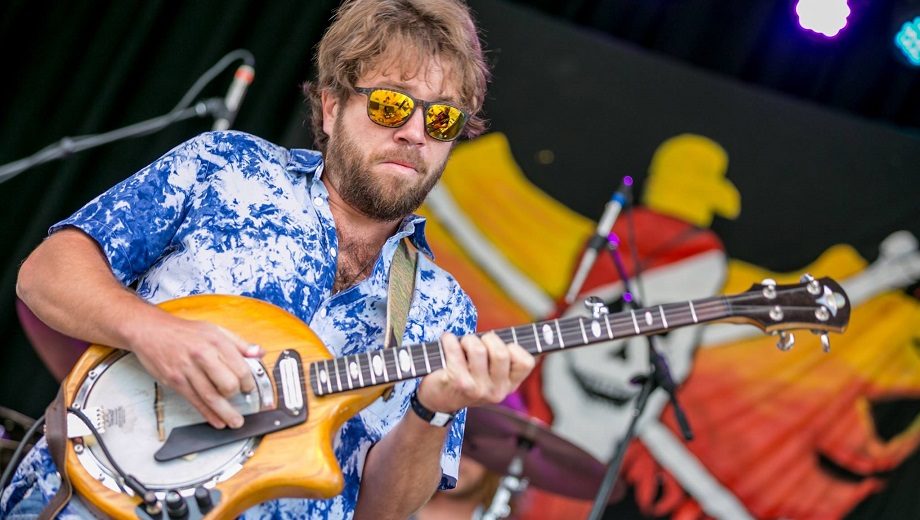
We started this band called the Broke Mountain Bluegrass Band with Jon Stickley, who’s also a visionary in our music. We were all picking and almost entering that same path as Leftover Salmon or Yonder [Mountain String Band]. We were already doing this like hippie bro band, just loving playing music and camping and playing festivals and going to hot springs and just fucking around. It was brilliant.

But then we went to IBMA, which at the time was the best way to show off your band and position yourself in the context of the larger [bluegrass] world. Try to get some gigs and go party your absolute brains out for a week. We were pretty rough around the edges, but one night I stepped off an elevator and Chris Eldridge came around the corner. [He] was like, “We need a bass player for this jam. Will you come jam with us?” I went into this little alcove and it was essentially the Stringdusters. It was Critter and Pandolfi and Andy Hall and Jeremy and Jesse Brock. I was just hanging out, holding on for dear life. I’m partying, I have a backpack full of beer, I have no shoes on, and I looked around and all my band mates were just there sitting along the hallway floor listening to the jam.

Andy’s partner at the time, Janice, said, ” Do you ever think about moving to Nashville?” I just laughed. Absolutely not. But I had fixed myself in their mind and once they exhausted all the possibilities of people who could play bass in Nashville – at least this is my understanding – they dug into their collective consciousness and called me up to audition. They’re like, “We think you’re the guy. When can you move to Nashville?” So I went out there to work on Fork in the Road that summer. What was this, 2004? Am I right, guys?

AH: I think that would’ve been 2005.

TB: Yeah, you’re right. 2005. [I] moved out there in September and lived in this guy’s driveway. It was kinda wild.

Falco, I promise we’re getting to you. We’re almost there!

In pretty quick succession though, you’ve got the core crew with Critter and Jesse [Cobb] at that time, you record the album, and get signed to Sugar Hill. And then things just start happening! Can you walk me through the time between recording and the IBMA Awards in ’07?

CP: There’s a lot of extremely disorganized touring. We’re driving around in two cars. I still have the notebook from the gigs – we were getting paid a few hundred bucks a night, maybe a thousand on a good night. Doing everything that we could.

We didn’t have grand designs on anything. The IBMA Awards was a really big moment for our band. Thinking back, it was a moment of legitimacy, of just getting [to] one of the hardest things as a band, which is the collective feeling that this thing is gonna stick together. That’s the peril of starting a band with players who you think are really good: at any time anyone could get hired away for something. But we were playing gigs, we were loving life, we were working on our music, and we were poor as could possibly be. I just remember the IBMA Awards as a big moment of solidity, of that feeling like we could really do this, we could really be in this for a long time.

TB: There was that first summer we had a couple of big anchor gigs, but a lot of it was really just driving around and killing time in between these anchors and hoping that we could reach the right audiences. I think that the big bluegrass scene was ripe for some young pickers who were taking it seriously and committed to each other.

JG: Yeah, getting gas in the tank right off the bat was huge for us, that’s for sure. And we spent a lot of time in between those gigs just going to be in the wilderness and spending time together. I don’t know, for lack of a better way of explaining it, [we were] bonding like a band.

But man, when you’re a real band and you’re not just like a frontman or whatever, you’ve got a real synergy with other guys in a group. It’s special. And I feel like a lot of what brought us together and [what] makes us as tight as we are now was those off times where we were discovering our lives and just doing cool stuff like that. Creating this thing together.

I do need to know who came up with the name. Where did the name come from?

CP: Ben Eldridge.

AH: Yeah!

CP: We were working with a list of pretty mediocre names and Ben came up with “Stringdusters.” After 20 years, I can say there’s a lot of bad band names out there, but the Stringdusters – I think it’s a cool band name and it suits us.

All right. Now we bring Falco into the mix. So how did you get mixed up in all this? Tell us your origin story.

Andy Falco: So, Critter fell off the back of a truck and I got picked up – no! What happened was, I’d known Pandolfi and Andy Hall from the Northeast bluegrass scene. I was playing with this guy, Buddy Miriam, who’s on Long Island, and who actually was friends with Bill Monroe because he got struck by lightning at the Berkshire Mountain Bluegrass Festival, which of course was Grey Fox. And Monroe found out about it and reached out and they became friends. So he learned a lot of mandolin directly from Monroe.

My brother was getting into bluegrass and was like, “You should come to this bluegrass festival.” I went up there and saw Doc Watson and really got into playing bluegrass. ​I moved to Nashville maybe a year after Panda and Critter did. Andy Hall was already playing in Dolly Parton’s band. And I had met Jeremy, actually by accident, at SPBGMA. My first time in Nashville, some guy came up to me and said, “Hey man, how are you doing? How’s everything been?” I was like, “Great. This is my first time in Nashville. Everything’s been great.” Then he stopped and said, “Man, I thought you were someone else.” And he says, “Come meet my son.” That was Jeremy’s dad, and that’s the first time I met Jeremy.

When I moved to Nashville, these guys were starting the band. I was watching them doing their sets at IBMA. It was killer. Then when Critter left, they asked if I’d be in. I wasn’t gonna start until September and one month later was the IBMA Awards. So I just joined the band and here they are, winning all these awards.

JG: I would like to say, I’ll never forget your first gig. You killed it harder than literally anybody I’ve ever worked with to this day. Absolutely stepped into the role and blew it away. And it was very obvious at that moment that he was the right man for the job, for the Stringdusters.

AF: I had big shoes to fill with Critter – and Critter and I were friends. In fact, I knew Critter before I met anybody in the Stringdusters. We met at seven o’clock in the morning on the last day of IBMA, when we’d pick all night and our door was open. And here comes Critter with his guitar.

CP: Critter introduced us.

AF: Yeah.

CP: He said to me, “Do you want to go hear the fastest guitar player alive?” And I said yes.

AF: I worked with Critter, too. Critter was very supportive of coming over when I was preparing to join the band, showing me the parts that he played on the record. So I had a really good foundation, thanks to Critter, of what he had done. Then I was able to put my stamp on it.

So what is that pivot then? You all mentioned the kind of shift that occurred, moving you away from traditional bluegrass and more towards jamgrass. How did you find your own sound? What was the decision to pivot?

AH: I remember a specific show where we decided we were gonna try and extend some [of the] set. I think it was the Animus Theater in Durango and it was a Colorado bluegrass crowd, which was more of a dancing crowd. They were used to more diverse sounds. I don’t remember, we were just like, “Let’s try and put a jam in this one song,” or whatever. So we’re playing, we’re jamming, and we’re extending whatever song it was. The whole crowd was just dancing. The energy was feeding back and forth and it was like, “Whoa! This is so much more exciting,” in contrast to everyone sitting silently and clapping in between songs. We made a choice one night and we saw the crowd just light up and dance and lose themselves in the music, and that fed our energy.

CP: Also, we were into that stuff.

AH: Yeah.

CP: But we hadn’t really made that connection yet. The real moment that I remember is we opened three shows for Railroad Earth. We played the 9:30 Club. We played Theater of the Living Arts and, I think, and we played Burg Williamsburg, when our van broke down and we showed up last minute. Those are the gigs that I referenced in the Bluegrass Manifesto. When I did the IBMA keynote that grew out of that, it really referenced those. I remember a few shows, too, where we would come off stage and we’re like, “Oh my god, that jam. Let’s do that again.”

We played these shows with Railroad Earth and it connected some dots that didn’t connect automatically, even though we had Grateful Dead, Phish, playing all the time. We were really coming from that IBMA buzz and awards. And, like anything, it took some time to discover, [it took] some experience. That was when some real change started happening around our business. Then the music really followed that trend.

JG: I’ll say, you guys, don’t forget about the Zeltfestivals. They were beyond anything that I personally had ever experienced. We went out and these people were going absolutely bonkers for our music – they had barricades out there and stuff. I’d never seen any of that at a bluegrass show. To me, that was fire in the tank.

AF: I think that also a big part of that is just, I know for myself, not growing up playing bluegrass music and then getting turned onto it by Garcia and Grisman and people like that. But I think it was just like when I started learning bluegrass. There’s a way that you have to do it and then, finally, you get to a certain point where all these dots are being connected, where you start to let these other influences come out, because you start to get more comfortable as a band. You start to allow that like, “Yeah, why can’t we do it? Why can’t we mix these things?” Even just as individual players. Why can’t you play this style? Blending these kind of jammy elements and these rock elements and then seeing how it worked.

You all have such varied individual projects and influences. Do you still think that you’re shifting your sound? What are you listening to and is that influencing what you’re doing?

AH: It’s definitely influencing what we’re doing. I think, to Falco’s point, I feel like I’m allowing [in] more and more of my original influences that I grew up with. I was a metal dude in high school. I think the older I get, the more I enjoy letting in who I am.

AF: Getting away from the “that ain’t a part of nothing” bullshit, right? Like, what? Who’s to say, right?

JG: Yeah, at the end of the day it’s art and you gotta let that lead itself, if you’re a true artist. Otherwise, you’re doing a preservation society kind of thing in the bluegrass world. For the longest time, I felt we were all paying homage to this awesome music, but we’re not letting it breathe like it should sometimes. It’s very fun to be an artist and be able to have the permission to just kinda let it flow, which is what we let ourselves do. We let the art dictate what we did, and we were true to ourselves in that way. That was something that served us very well. Still does.

You all live in different places now. I know the band is not as centered in Nashville as it used to be, but you did talk about the off-times and how that bonded the group early on. How do you stay bonded as a band now? How have things shifted? Being a decentralized band, how has the writing recording process changed for y’all over the last 20 years?

JG: I think that’s an important point. Yes, we’ve changed a lot over the years, but we’ve been able to stay tight because of those early formative years when we were all just broke traveling around in a band. I didn’t have any brothers growing up, but these guys are definitely my brothers and they know more about me than anybody else in this world. To allow each one of us to have the freedom to live where we wanna live and come together the way that we want to come together, I think that has been really one of the main things that have kept us together.

Over the years we’ve all developed little side things outside of the band. I think that’s been healthy. For me, I like to do my own solo music, music that I write and I like to perform – and stuff that wouldn’t necessarily fit within the confines of the Stringdusters. But I still want to get that art out there. We continue to challenge each other. Music can be competitive in a not-healthy way. But I feel like we do it in a healthy way, in the sense that we drive each other to just be the best that we can be at what we do.

CP: I got married last fall and in the run up to my wedding, one of my aunts asked me, “Are all your bandmates gonna be there?” In my mind I had this moment where I was like, “Are my band mates gonna be there?” You might as well ask me if my family is gonna be there! It’s just life at this point. After 20 years, it’s cool to observe the level to which you become each other’s family.

That’s the definition of community and you don’t think about these things when you’re going into this life, but there are some incredible unintended consequences. That informs the music and that informs all the life experiences too.

And here we are, 20 years later. That’s pretty cool.


Explore more of our Artist of the Month coverage of the Infamous Stringdusters here.

Photo Credit: Daniel Milchev

You Gotta Hear This: New Music From Larry Keel & Jon Stickley, Gwen Levey, and More

Our new music and premiere roundup is ready and waiting for you, ’cause You Gotta Hear This!

Bluegrass gospel group Eighteen Mile from upstate South Carolina have released their very first single, “Above The Clouds” today. Dripping with rich harmony vocals, the track offers encouragement to anyone experiencing doubt, anxiety, and pain. Supergroup neo-folk assemblage Geckøs – featuring Howe Gelb, Mark McCausland (AKA McKowski), and M. Ward – dropped a new single earlier this week, as well. “Lo Hice” started as an instrumental number, but morphed and changed when it reached the group, ending up as one of their favorite tracks on the upcoming album.

Guitar greats Larry Keel and Jon Stickley have joined forces on a new project; their self-titled EP will be available in just a week. To mark the occasion, we’ve got a sneak preview of one of the tracks from that collection, “Take the Air,” featuring just two guitars in an exciting and engaging instrumental dialogue. Singer-songwriter – and Sister Sadie band member – Jaelee Roberts has released her brand new solo album today, sharing its title track below. “Let Me Be Lonely” was written by Kelsi Harrigill (formerly of Flatt Lonesome) and hit country writer Wyatt McCubbin and it showcases Roberts’ love of traditional country sounds.

Don’t miss another country sensation, Gwen Levey, too, who shares a brand new music video for “Lighter,” the title track from her upcoming EP that is another excellent anthem for survivors of systems of violence. Beginning with subdued solo guitar and voice, the song soars into crisp modern country that will certainly have you feeling… lighter.

It’s all right here on BGS and You Gotta Hear This!

Eighteen Mile, “Above The Clouds”

Artist: Eighteen Mile
Hometown: Upstate South Carolina
Song: “Above The Clouds”
Release Date: August 29, 2025

In Their Words: “I wrote ‘Above The Clouds’ during a season when I was wrestling with uncertainty and learning to trust God more deeply. The song became a reminder to myself that no matter what we face – doubt, anxiety, or pain – God is steady and present above it all. I wanted the music to feel hopeful, something that lifts listeners up and reminds them that the sun still shines above every storm.” – Hallie Ritter

“We hope this song is an encouragement to listeners in all areas of life who may be dealing with clouds of doubt, pain, and anxieties. The sun will always shine above the clouds.” – Eighteen Mile

Track Credits:
Hallie Ritter – Upright bass, lead vocal, songwriter
Carson Aaron – Acoustic guitar, mandolin, harmony vocal
Emily Guy – Harmony vocal
Jack Ritter – Acoustic guitar
Savannah Aaron – Fiddle
Andy Leftwich – Mandolin


Geckøs, “Lo Hice”

Artist: Geckøs
Hometown: Tucson, Arizona; Portland, Oregon; and Omagh, Ireland
Song: “Lo Hice”
Album: Geckøs
Release Date: August 26, 2025 (single); September 26, 2025 (album)
Label: Org Music and PIAPTK Records

In Their Words: “‘Lo Hice’ is a song that started off in Ireland as an instrumental track. The bare bones was written specifically with Matt in mind to see if it perked his ears enough to finish it off. He picked it up and breathed brand new life into it. The song came alive with his voice and slide guitar and his Spanish lyrics took it to a whole new world. One of the beautiful things about Geckøs is I’m slowly learning how to speak the Spanish tongue, or at least I know how to say things like, ‘It’s fucking hot outside.’ We finished the song together in Bristol with John Parish driving the ship, and the puzzle was complete. It’s become one of my favourite tracks on the album. Definitely in the top eleven.” – Mark McCausland (AKA McKowski)


Larry Keel and Jon Stickley, “Take the Air”

Artist: Larry Keel and Jon Stickley
Hometown: Lexington, Virignia (Larry); Asheville, North Carolina (Jon)
Song: “Take the Air”
Album: Larry Keel and Jon Stickley (EP)
Release Date: September 5, 2025

In Their Words: “‘Take the Air’ is one of those musical ideas that came to me like a gift. It’s based on a happy riff that I would play every time I picked up my guitar during the height of COVID lockdown. It was such a time of stress and anxiety, yet I also experienced so much connection with the world around me. When life slowed down, the planes stopped flying overhead, and the wheels of the world stopped turning, suddenly everything in the natural world felt so much more alive. I posted a short video of myself playing it one day and got a text from Larry shortly after saying, ‘Hey man, let’s do some duo shows someday.’ It took about four years, but we’re finally making it happen. The arrangement of this tune purposely leaves some space to take a breath. I hope listeners find it as uplifting as I do.” – Jon Stickley

Track Credits:
Larry Keel – 2008 Andrew White handcrafted parlor style guitar
Jon Stickley – Preston Thompson D-EIA acoustic guitar


Gwen Levey, “Lighter”

Artist: Gwen Levey and The Breakdown
Hometown: Nashville, Tennessee
Song: “Lighter”
Album: LIGHTER
Release Date: August 29, 2025 (single); October 24, 2025 (EP)
Label: GAL Productions

In Their Words: “If my previous EP, Not The Girl Next Door, was about all of the toxicity I was experiencing the first few decades of my life, ‘Lighter’ is about shedding all that sh*t and stepping into my healing era. The EP represents the light I’ve been able to find to carry me through some very dark days. The two-and-a-half minute song is an upbeat anthem as a survivor of not only an eating disorder, but of overcoming abuse and life’s tribulations, and my hope in writing it is that other survivors will also feel empowered.

“Being a survivor has given me the voice I have today. I co-founded Rise Above Justice Movement, a coalition of survivors impacted by systems of violence. The theme song for RAJM is ‘Barefoot & Pregnant,’ my viral pro-choice country anthem that has amassed over 20 million views, won several awards, and will premiere on PBS this summer. To this day, RAJM has several notable followers, including Rosie O’Donnell, the founder of the MeToo movement Tarana Burke, Alanis Morissette, and many others. ‘Lighter’ will be another anthem for our survivor movement.” – Gwen Levey


Jaelee Roberts, “Let Me Be Lonely”

Artist: Jaelee Roberts
Hometown: Nashville, Tennessee
Song: “Let Me Be Lonely”
Album: Let Me Be Lonely
Release Date: August 29, 2025

In Their Words: “‘Let Me Be Lonely’ is one of my favorite songs on the album for sure! I am such a huge lover of classic/traditional country music and there isn’t a day that goes by that I don’t listen to it. I am beyond excited that I got to record a song that allowed me to give a nod to that sound. My friend and mentor, Kelsi Harrigill, sent me the demo of ‘Let Me Be Lonely’ that she wrote with hit country songwriter Wyatt McCubbin, and I knew before I’d even gotten halfway through the first listen that I absolutely had to put it on my album. As I’ve mentioned several times, I love sad songs with my whole heart, and this song has all the ingredients that make the perfect sad country song – lyrically and melodically. Kelsi and Wyatt joined me on this recording singing harmony vocals, which just topped it off for me. There is steel and fiddle on this track (which are my favorite instruments), and I sure hope that y’all enjoy my little tip of the hat to the trad country music that I love so much!” – Jaelee Roberts

Track Credits:
Jaelee Roberts – Lead vocal
Kelsi Harrigill – Harmony vocal
Wyatt McCubbin – Harmony vocal
Byron House – Bass
Cody Kilby – Guitar
Andy Leftwich – Mandolin
Ron Block – Guitar
Stuart Duncan – Fiddle
Russ Pahl – Steel guitar
John Gardner – Percussion


Photo Credit: Larry Keel and Jon Stickley by Lexi Simcic; Gwen Levey by Meaghan Campbell.

The Travis Book Happy Hour: Wyatt Ellis

Wyatt Ellis can’t even drive a car, but he’s making waves in the bluegrass community. A prolific tune-writer and a dedicated student of the mandolin, he’s growing and learning at a rate you only find in the under-20 set. I was surprised to find that he’s also humble, articulate, and a total professional. It’s not hard to envision him reaching the highest echelons of acoustic and bluegrass music, and doing it very soon. I was grateful to my friend Jon Stickley for the introduction to this bluegrass wunderkind.

LISTEN: APPLE • SPOTIFY • STITCHERAMAZON • MP3

This episode was recorded live at 185 King Street in Brevard, North Carolina on June 11, 2024.

Timestamps:

0:06 – Soundbyte
0:36 – Intro
1:46 – Live show introduction by Bill K
3:07 – “Blue Smoke”
7:04 – On “Blue Smoke” and “Get Lost”
8:16 – “Get Lost”
13:17 – “When My Blue Moon Turns To Gold Again”
16:58 – “Blue Night”
20:00 – Interview
28:09 – “Watson Blues”
31:38 – “Rabbit In A Log”
34:30 – Interview
40:00 – “Whites Creek”
44:40 – “How old are you?” and JAM
46:17 – “Cold On The Shoulder”
49:17 – “Long Lonesome Day”
54:10 – “Rollin’ In My Sweet Baby’s Arms”
58:29 – Outro


Editor’s Note: The Travis Book Happy Hour is hosted by Travis Book of the GRAMMY Award-winning band, The Infamous Stringdusters. The show’s focus is musical collaboration and conversation around matters of being. The podcast includes highlights from Travis’s interviews and music from each live show recorded in Brevard, North Carolina.

The Travis Book Happy Hour is brought to you by Thompson Guitars and is presented by Americana Vibes and The Bluegrass Situation as part of the BGS Podcast Network. You can find the Travis Book Happy Hour on Instagram and Facebook and online at thetravisbookhappyhour.com.

Photo Credit: Joseph Cash

BGS 5+5: Jon Stickley

Artist: Jon Stickley
Hometown: Durham, North Carolina
Latest album: Jon Stickley Trio, Meantime’s Up
Personal Nicknames: Stick, Sticky, Stickers, Sticky-Poo, J. P. Poo, Stickles, Stickles McGee, JP Stickles, Stickman

Which artist has influenced you the most … and how?

David Grisman, who at the time was already a monster Bill Monroe-style bluegrass mandolin player, took a huge step forward and created Dawg music, an amalgamation of many different styles with a reverence for the bluegrass music that was at the root of his sound. I take the same approach with the Trio. Every composition is an exploration of some new idea that we are experimenting with, but we do it all through the lens of, and according to the standards of, the traditional bluegrass music of Bill Monroe.

What was the first moment that you knew you wanted to be a musician?

I guess I knew I was going to be a musician as long as I can remember! An early memory is being in children’s choir in church. I distinctly remember my friends not wanting to be there, and thinking it was odd because I was just having a blast following the notes along the page. Later in life, I was in an entomology class in college thinking about what to do with my upcoming summer. I had two opportunities: a summer missionary program, or joining the band Broke Mountain in Durango, Colorado. I joined the band, and now here I am!

What’s the toughest time you ever had writing a song?

I’ve always had to sit down and work on songs. They don’t often come to me out of thin air. Over the course of writing and recording our new album, my two sons were born, so time to sit and work on music suddenly became virtually nonexistent! We had a session around the corner and I needed one more tune. I decided to get my old Martin D-18 out and see if it brought me some inspiration. I started noodling around on a little metal lick just getting some frustration out when it started turning into something. I called the song “Triumph in Between” because I actually couldn’t believe I was able to put something together in time with so much LIFE going on.

What has been the best advice you’ve received in your career so far?

I got a lot of good advice and just overall inspiration from working with Dave King, the drummer for The Bad Plus who produced a couple of albums for us. He said, “Be the most YOU that you can be. No one else can do that. It will make you stand out, and ultimately get the gig! It is a superpower.” Every time I remember to follow that advice, I stop stressing about comparing myself to others.

Since food and music go so well together, what is your dream pairing of a meal and a musician?

Haha, the first thing that came to mind was cheeseburgers with Jerry Garcia. He was such a deep guitarist and I always love listening to interviews where he talks about his approach and practice routine and whatnot. He was just such a dedicated student of the guitar. Pretty sure we both share a fondness for cheeseburgers!


Photo Credit: Tom Farr

LISTEN: Jon Stickley Trio, “Future Ghost”

Artist: Jon Stickley Trio
Hometown: Asheville, North Carolina
Song: “Future Ghost”
Release Date: February 5, 2021
Label: Organic Records

In Their Words: “‘Future Ghost’ was written during the beginning of the pandemic, shortly after finding out I was going to be a father. I was having so many conflicting feelings, and a little difficulty sorting them all out. I ended up thinking a lot about the cycle of life and how impermanent everything is. At one point I thought I saw a ghost in the hallway, and it looked like me. Somehow, the idea that I could someday be a ghost, haunting this house, gave me a great sense of comfort and motivation to make the most of my time. This song ended up really capturing that energy.” — Jon Stickley


Photo credit: Sandlin Gaither

MIXTAPE: Songs That Changed Jon Stickley’s Life and Still Blow His Mind

When I was a senior in high school, my lacrosse teammate Andy Thorn loaned me a couple CDs and a mandolin. The two CDs were the original David Grisman Quintet album and Sam Bush’s Glamour and Grits. I was an angsty teen drummer in a punk band, and when I popped the Grisman album in my Sony Discman and pushed play, my life changed forever.

We started a little band and I started learning mandolin and making weekly trips to the local record store to buy every “newgrass” album I could. I didn’t know anything, so searching through the bluegrass/country section was an adventure of discovery. I learned to recognize the font that Rounder Records used and started using liner notes to find other musicians to listen to.

A lot of the tracks on this list are track #1 on the album, and I think that’s because when I heard them for the first time, they magically seared themselves into my brain. When I hear them today they inspire the same excitement as they did when I first heard them, and they have had an enormous impact on the music that I create for the Jon Stickley Trio. — Jon Stickley

David Grisman – “E.M.D.”

The first track I ever heard in the vein of bluegrass/newgrass. I heard David Count “1,2,3,4…” just like the Ramones! Then they launch into the most indescribable, unbelievable, clean, rockin’ jam I’ve ever heard. Also my first introduction to my guitar hero, Tony Rice. Nothing compares to this track!

Sam Bush – “Whayasay”

Another leading cut. This was my introduction to the one and only Sam Bush. His kickoff tells you everything you need to know about Sam’s music. It’s masterful, tasteful, and it freakin’ ROCKS. Then he goes totally Mark Knopfler at the end. Blew my young mind!

Jerry Douglas, Russ Barenburg & Edgar Meyer – “Big Sciota”

I picked this record up at the store because, on the back cover, they are dressed in gorilla suits. I thought, these dudes MUST be cool. Something about the tone of this record is unparalleled. It’s just the nicest-sounding acoustic record I’ve ever heard. Still cook dinner to it almost every night and my wife walked down the aisle to another track from the album called “The Years Between.”

Ricky Skaggs & Kentucky Thunder – “Pig In A Pen”

Holy crap. This is another album I bought blind at the record shop knowing absolute nothing about the music. To this day I have never heard anything rock this hard! Also, my first intro to a big guitar hero, Bryan Sutton.

Bryan Sutton – “Decision At Glady Fork”

Senior year of high school my uncle Pat took me to the Béla Fleck Bluegrass Sessions concert. I knew who Sam Bush and Béla were, but it was my first time hearing Jerry Douglas, Stuart Duncan, and the young Bryan Sutton. They played this song and the audience pooped their pants!

Béla Fleck – “Blue Mountain Hop”

The ultimate supergroup in my opinion. This song got me thinking about composition and arrangement in a new way. It seems like each new part of the song was written with each individual soloist in mind. Also the giggles and growls in the intro remind you that they’re having a ball.

Béla Fleck & the Flecktones – “Sinister Minister”

Two words. Victor Wooten. Blew. My. Young. Mind! I’ve listened to this version of this song more times than I can count, and it’s one of the covers that we do in the trio. The Flecktones probably had more of an impact on our trio than anyone else out there.

The Bluegrass Album Band – “Blue Ridge Cabin Home”

This is another album where I had no idea what I was buying. It wasn’t until I looked at the back of the CD that I realized that Tony Rice was on it. It was my introduction to J.D. Crowe, Doyle Lawson, Bobby Hicks, and Todd Phillips. I fell in love with bluegrass banjo by listening to this song, and I was thrilled to find out there were five more volumes!!!

The Nashville Bluegrass Band – “Dog Remembers Bacon”

Another record store score that I grabbed just because “bluegrass” was in the title. LOL. These guys became my favorite group for years and this was always one of my favorite tracks. I learned about Gillian Welch from this album. Stuart Duncan is the best fiddler in the world!

Acoustic Syndicate – “No Time”

Man, I love these dudes SO much. My Uncle Pat gave this album to my dad around ‘98, and I promptly stole it. The chill energy of this album really spoke to me and I feel like it really embodies the spirit of the North Carolina festival scene. Super sentimental band for me!

Tracks from our new album “Scripting the Flip” that draw heavy on these influences:

Jon Stickley Trio – “Scripting the Flip”

This song is pretty much a bluegrass fiddle tune turned on its head. It reminds me of some of my favorite newgrass instrumentals that take the music somewhere new.

Jon Stickley Trio – “Driver”

Well, given that my buddy Andy Thorn got me into this music waaaaay back in the day, I had to bring it full circle and write a tune for him to come in and play on. This piece definitely draws on the music of the Flecktones and some of the tunes they play in odd meters.

Jon Stickley Trio – “Bluegrass in the Backwoods”

Kenny Baker, Bill Monroe’s longtime fiddler, was surprisingly one of the most innovative of the classic bluegrass pickers! He is thought of as a traditional fiddler, but his music is really anything but. I think this tune was way ahead of its time and we love the elements of gypsy jazz and Latin music in the melody. We HAD to cover this on at some point and it was so much fun!


Photo credit: Sandlin Gaither

WATCH: Jon Stickley Trio, “Animate Object”

Artist: Jon Stickley Trio
Hometown: Asheville, North Carolina
Song: “Animate Object”
Label: Organic Records

In Their Words: “‘Animate Object’ is the trio’s current theme song. At heart, it’s a little flatpicking tune to have fun with, but we’ve rhythmically turned it on its head like we like to do. This video was shot in three different locations with deep significance to us. The World Famous Station Inn represents our love and respect for our bluegrass roots. Spirit of the Suwannee is where our band was born, and where we thankfully return every year to connect with that spirit and experience rebirth under the live oaks. And finally, the [Caverns and] Bluegrass Underground symbolize the deep, introspective dive we’ve taken into ourselves in search of the meaning of our music and where it is coming from. This track is the next step in a never-ending evolutionary journey that is the Jon Stickley Trio.” — Jon Stickley


Photo credit: Sandlin Gaither

LISTEN: Andy Thorn, “Thornado”

Artist: Andy Thorn
Hometown: Boulder, Colorado
Song: “Thornado”
Album: Frontiers Like These
Release: June 21, 2019
Label: Thornpipe Music

In Their Words: “This tune came from exploring the key of A on banjo with no capo. Playing in A with no capo opens up a lot of different melodic possibilities on banjo and when I found the main riff I started basing a song around it. The tune really comes to life with the tasteful back and forth of Bobby Britt’s fiddle and Andrew Marlin’s mandolin. I love Jon Stickley’s creative use of open strings and harmonics on the jam. And Miles Andrews holds the whole thing together on his gut string bass. At just over six minutes it’s longer than your typical banjo tune, but if you give the whole track a chance it will take you on quite a ride. Enjoy ‘Thornado’!” — Andy Thorn


Photo credit: John Ryan Lockman (Show Love Media)

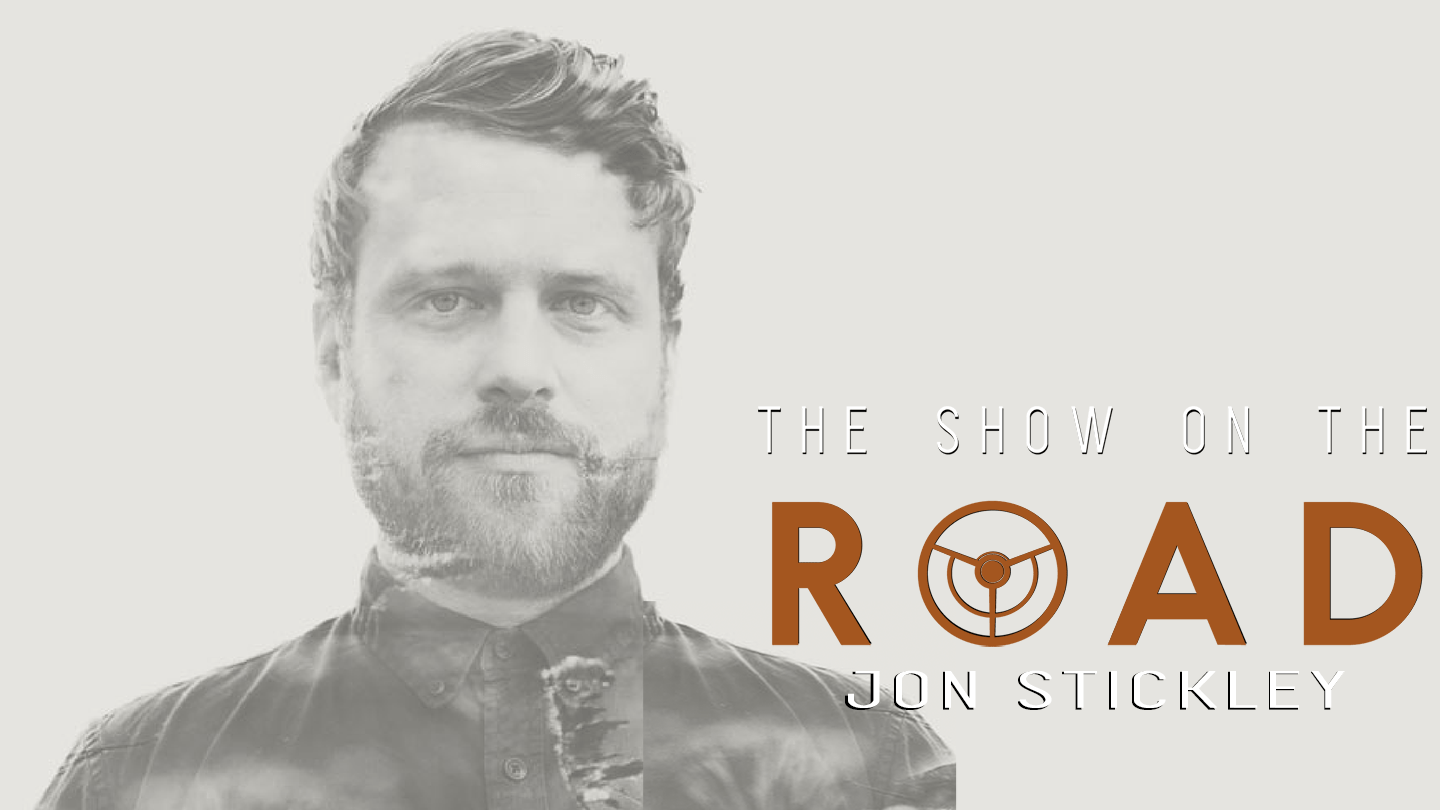
The Show On The Road – Jon Stickley

This week, one of the preeminent guitar pickers and instrumental adventurers working today, Jon Stickley.

LISTEN: APPLE PODCASTS • MP3

Based in Asheville, North Carolina, Stickley leads one of the most sonically innovative, shreddingly mind-expanding, and confoundingly impossible-to-categorize acoustic groups, the Jon Stickley Trio.

Host Z. Lupetin spoke with Jon in a hotel bathroom a while back to hear his side of his guitar hero story. Listen for an exclusive acoustic performance from Jon at the end of the episode.

Roland White: A Tribute to a Bluegrass Hero

To begin, a disclosure: Roland White is kind of a hero of mine for his perseverance, his originality, his sense of humor, his experience and much more. Also, he’s an employer of mine; I’ve been playing in the Roland White Band on most of its dates for close to 15 years now, and I’ve recorded two albums with him, including his new one, which I also co-produced. Lastly, and maybe most importantly, Roland’s a friend of mine. And he has a great story.

Played with Bill Monroe, the Father of Bluegrass? Check. Played with Lester Flatt? Check. Toured around the world as a member of the Country Gazette and then the Nashville Bluegrass Band? Check. Had a band with Béla Fleck? Check. Helped organize and make Jim Lauderdale’s very first album? Check. Fronted his own band since the turn of the century? Check.

That’s a lot of boxes, and any one of them could be turned into a meaty article. Here, though, I’m going to concentrate on the story of the group whose legacy inspired the new album, Roland White & Friends: A Tribute To The Kentucky Colonels; it’s the starting point for the larger Roland White story, illuminating the way it was for young bluegrass musicians in the 1950s and 60s and how Roland, his brother Clarence, and the rest of the Colonels were able to craft an enduring and influential body of music.

Shortly after he turned 16 in 1954, Roland’s family relocated from Maine to Southern California. He was already playing the mandolin by then, and younger brothers Clarence and Eric were playing guitar and banjo (tenor, not the bluegrass 5-string). They joined their sister, JoAnne, who sang, around the house and at local functions. Soon after moving to Burbank, the boys rather casually entered a talent contest, and in short order found themselves dressed in hillbilly clothes and, as The Three Little Country Boys, performing on a variety of local stages and radios shows — even, if briefly, on television. All of this before any of them had heard a lick of what was just beginning to be called bluegrass.

Roland recalls that it was in a comment from a visiting uncle in the middle of 1955 that he first heard Bill Monroe’s name — and naturally, it was in connection with the instrument they shared. “My uncle Armand asked me if I’d ever heard of Bill Monroe. He said, ‘He plays the mandolin, he’s on the Grand Ole Opry and,’” Roland adds with a grin, “‘he is fast!’” Not surprisingly, that piqued his interest — but to actually get hold of a record was, at the time and under the circumstances, something of a project, involving a walk into town to the music store, perusing a catalog, ordering it, waiting, and then picking up the little 45rpm disc of his choice: “Pike County Breakdown.” (It was actually the B-side of “A Mighty Pretty Waltz,” and yes, it was fast.)

What followed was a “conversion” experience of the kind that was happening around the same time to other people his age, give or take a few years — a cohort that includes the slightly older Mike Seeger and Ralph Rinzler; the slightly younger Del McCoury and Neil Rosenberg (like Roland and Clarence White, all members of the International Bluegrass Music Association’s Hall of Fame); and the slightly younger still Jerry Garcia, David Grisman, and Peter Rowan. What most of them had in common was some distance, geographic and sometimes sociological, from the Southeastern epicenter of the emerging bluegrass sound; what all of them had in common was a profound desire to hear and play more of it.

More records soon made their way into the White household, often mail-ordered from Cincinnati’s Jimmie Skinner Music Center, and so did a five-string banjo, which Roland learned to play in the Scruggs style. Eric moved over to bass, and the band, now just The Country Boys, began studying the picking and singing of Monroe, Flatt & Scruggs, Reno & Smiley, the Stanley Brothers, Jimmy Martin, and more. While they focused on the whole sound, there was room, too, for Clarence to study the lead guitar stylings of Earl Scruggs, Don Reno, and the Stanley Brothers’ George Shuffler, as well as the rhythm guitar playing of Flatt, Martin, and others. And though skilled banjo players were still rare — especially in California — by 1958, they’d met and recruited Arkansas native Billy Ray Lathum for the job, allowing Roland to devote himself once again exclusively to the mandolin.

1959 was a big year for The Country Boys. For one thing, they were joined by Leroy McNees — Leroy Mack, as he’s still known — whom they met first as a fan, but soon persuaded to take up the Dobro. Mack not only rounded out the band’s sound, but quickly became a valuable asset as a songwriter. For another, the band got its first bookings at the Ash Grove in Los Angeles, a key venue in the emerging folk revival, and one that also booked national bluegrass acts as they made their long journey out to the West Coast.

Indeed, the Ash Grove turned out to be an important place where folk audiences and bluegrass musicians could meet one another; as Roland put it, “Playing the Ash Grove opened the way for us to play to a totally new audience — a folk music audience that we had known nothing about. They dressed differently from the Country-Western audience (they were college students, professors, beatniks, doctors, and lawyers) and they paid close attention to the music.”

Not only did the Ash Grove provide the group a new audience, it gave them a different sound; the less raucous, more attentive audience and more sophisticated sound system allowed Clarence White to hear himself better than ever before. Within a matter of weeks, he began to take solos — plenty of practice time at home had allowed him to explore and build on what he’d been hearing on records — and The Country Boys started to build a unique sound that featured lead acoustic guitar in a way that reached well beyond their influences.

By 1961, The Country Boys — now a five-piece band — had built a good circuit for themselves, playing to folk audiences at the Ash Grove and on college campuses around Southern California while maintaining a foothold in the dynamic country music scene. Their prominence gave them an inside track that landed them an appearance on The Andy Griffith Show — just before Roland got his draft notice, a then-common occurrence. While he served for the next two years, the band continued without him, taking a couple of important steps, including the replacement of bass player Eric White with Roger Bush; a name change to The Kentucky Colonels; and recording their first LP in 1962. The project, which featured some of Leroy Mack’s most enduring originals, also debuted Clarence’s distinctive, increasingly powerful lead guitar work. Over in Germany, where he was stationed, Roland admits that “it floored me.”

By the time Roland was discharged from service in the fall of 1963, Mack had left the band, replaced by transplanted Kentucky fiddler Bobby Slone. With Mike Seeger’s then-wife, Marge, acting as their booking agent, the Colonels were booked for their first East Coast tour, playing folk clubs in the Boston area, New York, Washington D.C., Baltimore and beyond. In each, they made connections with local bluegrass musicians, ranging from melodic banjo pioneer Bill Keith to the members of the Country Gentlemen to David Grisman, and when they came east again in 1964 — a trip anchored by an appearance at the Newport Folk Festival — they did more of the same. Interestingly, though, and a sign of the distance that still separated the folk revival circuit from the country music one, they never got even as far south as Nashville; as Roland says, “there was nothing for us there.”

Sadly, while their focus on folk audiences had served to give them broader appreciation than they might have gotten while working in Southern California’s country music scene, it also meant that, as those audiences began turning their attention to more electrified folk-rock and newly emerging rock artists, the Colonels would see harder times. Though they continued playing into 1966, the group eventually disbanded, with Roland soon taking the guitar/lead singer job with Bill Monroe and moving to Nashville, and Clarence turning first to studio work, and then to electric guitar playing with the Byrds.

Even so, the magic that the Colonels had made continued to appeal to both Roland and Clarence, and in 1973, they reformed their original brother trio with Eric. Adding banjo man Herb Pedersen and dubbing themselves the New Kentucky Colonels, they embarked on an April tour of Europe and, though the banjo position remained unstable, they started to make plans for more touring and recording — only to have them come to an end when Clarence was killed by a drunk driver while loading out from a Palmdale, California club.

What did the band leave behind? Not much in the way of recordings, unfortunately. The Kentucky Colonels made hardly any in the studio — the album done while Roland was in the Army and an all-instrumental album, Appalachian Swing!, one of the most influential bluegrass recordings of the 1960s are the sum total — and while enough of their shows were recorded at the Newport Folk Festival, at California venues, and on that final European tour to fill a couple of albums, they’ve often been out of print or hard to find.

Yet it’s clear — and the new record makes the point with its wide-ranging roster of guests, from guitarists like Billy Strings, Molly Tuttle and Jon Stickley to banjoists such as Kristin Scott Benson (Grascals) and Russ Carson (Ricky Skaggs & Kentucky Thunder) and fiddlers like Brittany Haas (Hawktail), Kimber Ludiker (Della Mae) and Jeremy Garrett (The Infamous Stringdusters) — the legacy of the Colonels can’t be measured so simply. From songs like “If You’re Ever Gonna Love Me” and “I Might Take You Back”— both co-written by Leroy Mack, and recorded by scores of bluegrass artists — to guitar showcases like “Listen to the Mockingbird” and “I Am a Pilgrim,” their influence has been carried forward through the bluegrass generations, not only by Roland White, but by Tony Rice, Jerry Garcia, and a host of others who met and heard and jammed with them during those critical years in which they were playing the national folk music circuit.

And for Roland White, for whom those years were just the beginning of a storied career that has taken him, by turns, deeper into the heart of bluegrass and further out to broad-ranging audiences, the opportunity to revisit them in the company of new generations of musicians has been an exciting one. “I really enjoyed playing and singing with all these musicians,” he says. “They appreciate the old music that we made, but they brought their own touch to it, too. It’s good to know that these songs, and these sounds are in good hands.”


Illustration by Zachary Johnson
Photo by Russell Carson, Carson Photoworks