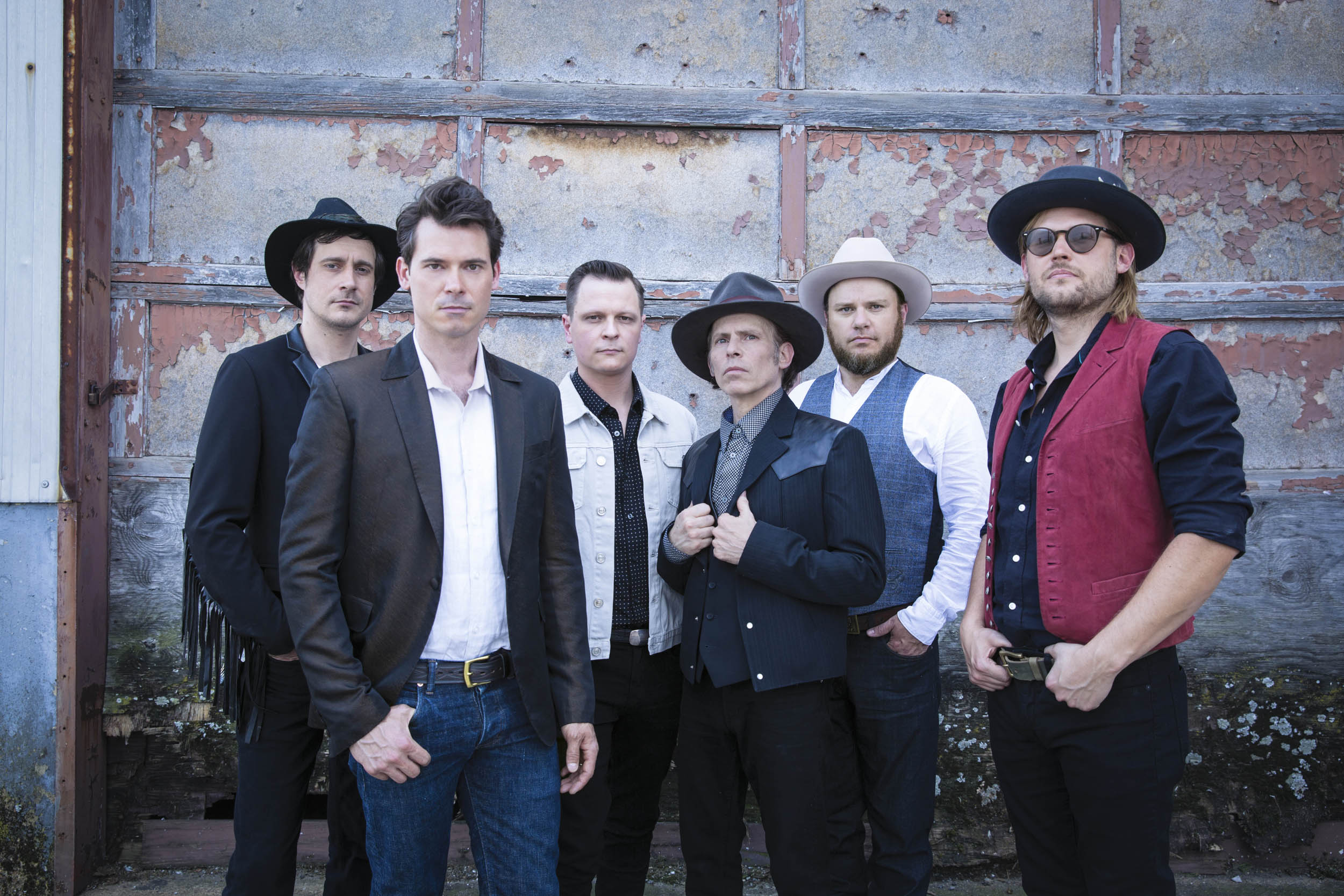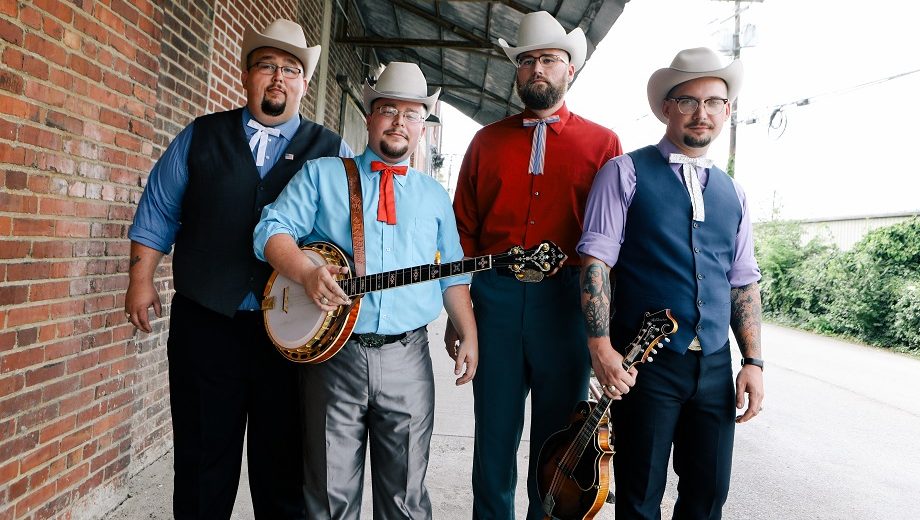
The Po’ Ramblin’ Boys Make Old-Time Music New

Plenty of artists find a day job while they work on their careers in music. CJ Lewandowski found a career in music while working his day job. A mandolin player and singer, he was working at Ole Smoky Distillery in Sevierville, Tennessee, and would frequently fill in as musical entertainment when a hired act fell through. Eventually, the distillery approached him about forming a band, and the Po’ Ramblin’ Boys were formed.

“There’s never really been a plan,” jokes Lewandowski, who says that regular hours on stage helped the longtime friends tighten up fast as a band. “We play the music that we like, and we happen to have some songs that we’ve written.” That no-plan plan has gotten them pretty far. In 2018, the group won Emerging Artist of the Year at the IBMA awards and in August they released their Rounder Records debut, Toils, Tears, and Trouble. They’ll also appear at Bourbon & Beyond festival in Louisville, Kentucky, on September 20.

The twelve-song album includes fan favorite “Old New Borrowed Blue,” an original, as well as inventive interpretations of songs by legends and unsung genre heroes alike. The band’s Stanley Brothers-inspired take on Roy Acuff’s “Searching for a Soldier’s Grave” is right at home alongside the Boys’ rendition of “Bidding America Goodbye,” made popular by Tanya Tucker. And “Next Train South,” originally recorded by Dub Crouch, Norman Ford & The Bluegrass Rounders in 1974, pays homage to the bluegrass tradition of Lewandowski’s native Missouri.

But as much as the Po’ Ramblin’ Boys have found solace in the bluegrass sounds of generations past, Lewandowski says he’s most inspired by the potential in the genre’s future. “I’m excited about the possibilities: the possibilities of where we can take it, the possibilities of who we can meet, and the possibilities of who we can influence,” he says. “I just hope we’ll be able to leave our mark on bluegrass as much as bluegrass has left its mark on us.”

Lewandowski opened up to The Bluegrass Situation about the role music played in his upbringing, how their days as a house band helped the Po’ Ramblin’ Boys find their footing, and why old-time music will never fade away.

BGS: What first brought you to bluegrass?

Lewandowski: I found bluegrass when I was a teenager, at a time in my life when it felt like everything was leaving me. I was a mama’s boy, and my mom passed away when I was ten. Then I had some other folks, family members, pass away. Things were changing within myself as well. I was trying to discover myself, and all this other stuff was piling up on me, too.

I found bluegrass music at that time, and along with it, I found a bunch of friends. I was never somebody with a bunch of friends in my own age bracket, and all these folks playing music around home here were thirty, forty, fifty years older than me, but I related to them. My grandpa died around that same time, too, and he was a pretty big influence on me, so I found some folks that became grandfather figures to me. They took me under their wings.

One thing I say a lot is that bluegrass has always been there for me. It’s been my medicine. It’s helped me through all those hard times, and put me in a lot of good situations, too. It’s a constant — it’s always there.

For Toil, Tears, and Trouble, you recorded several songs that were written or made popular by other artists — “Bidding America Goodbye,” “Cold Hard Truth” — as well as less-known songs by Missouri bluegrass artists. Why?

There’s a lot of great material out there. You could take a really popular song and completely change it and make it your own, or you could take a song that doesn’t even sound like it would apply to your music — the songwriter might not even know what bluegrass music was, but the song is great — and we can put our bluegrass touch to it and make it something that works. We like to pay homage to people of the past, but we want to start our own past as well, carve our own little niche out.

We’ve got songs on the album that have never been recorded before, by anyone, and that doesn’t mean they have to be written in-house by the band. “Hickory, Walnut, & Pine,” “Next Train South”– most people have never heard of them. It’s cool to dust off those songs, to pay homage to someone who might have not been in the limelight as much as Jim & Jesse, or the Osborne Brothers, and then add our own influence.

So obviously you’ve been inspired by bluegrass, but I’m sure you haven’t been entirely insulated from other kinds of music. You recorded a gospel album a few years ago, in fact. What other genres of music have impacted the way you sound?

Gospel has always been a part of all of our raisin’s. Country, of course, has influenced us too. If we all weren’t playing bluegrass music, we’d probably be out playing old country stuff. We all like steel guitar, and we all like twin fiddles. We all really like ’80s and ’90s country a whole lot, too — Alan Jackson, Randy Travis. We’ve been called honky-tonk bluegrass. And you never know where you’re gonna find something new.

With your job as the house band at the distillery, you logged more hours of stage time than most bands do in years of their careers. How do you feel like that experience benefited you?

We were playing anywhere between five to ten hours a day, sometimes seven days a week, [we] were teaching people about bluegrass music and entertaining them at the same time — and working day jobs. It was almost like a paid practice. We learned pretty quickly that imagery was a huge part of the show. We started in bib overalls, and then we’d go to summer suits, with our hair styled, and then we’d go to the cowboy hats for the springtime.

There’s always been a progression. There has to be something. You have to realize that a lot of the folks who came into that distillery didn’t know what bluegrass was, and they left with a sense of it. We were exposing new people to bluegrass music, which has always been a goal of ours. It was an education for them, but an education for us as well — all the while, we were getting tighter as a group. We spent over a year and a half solely playing at that distillery, with no intentions at all of traveling or anything. It allowed us to hone in on a lot of things together.

You often hear people describe your music as “old-time.” What does that mean to you?

The music that we play is the music that we were raised up on. There’s always been a progression to bluegrass music, since the very beginning of it. You can look at when Flatt & Scruggs came on the scene — key changes, tempo changes, five-string banjo roll, all that crazy stuff. So over the recent years of bluegrass music, it’s progressed, but it’s progressed somewhat faster than we — the band, I mean — may have wanted it to.

So we rewound the progression a little bit and found where we thought the music should be in this time. Some people would say that there’s stuff older-sounding than what we’re playing. And then a lot of people say that there’s stuff that sounds newer than what we’re playing, of course. People can take it however they want to, because everyone has a different definition of traditional, everyone has a different definition of old-time, or old-fashioned, everyone has a different definition of progressive music, as well. So we kind of keep it simple and say that we play bluegrass. [Laughs]

Are there any aspects of bluegrass music that you think it’s particularly important to try to preserve, or that you worry are vanishing?

Excuse my language, but I think that’s a big ol’ crock of shit. This music has been around for a long time, and it’s bigger than it ever has been. Yes, everywhere has their own definition of bluegrass and how they want to play it and how they want to present it. And there’s a lot of freedom in that. Just look at Bill Monroe: He evolved until the day he died. I’d tell anybody, just play the music that you love, and if you’re true to yourself and true to your music, the music can’t die. It won’t die. It’ll never die.


Photo credit: Amy Richmond
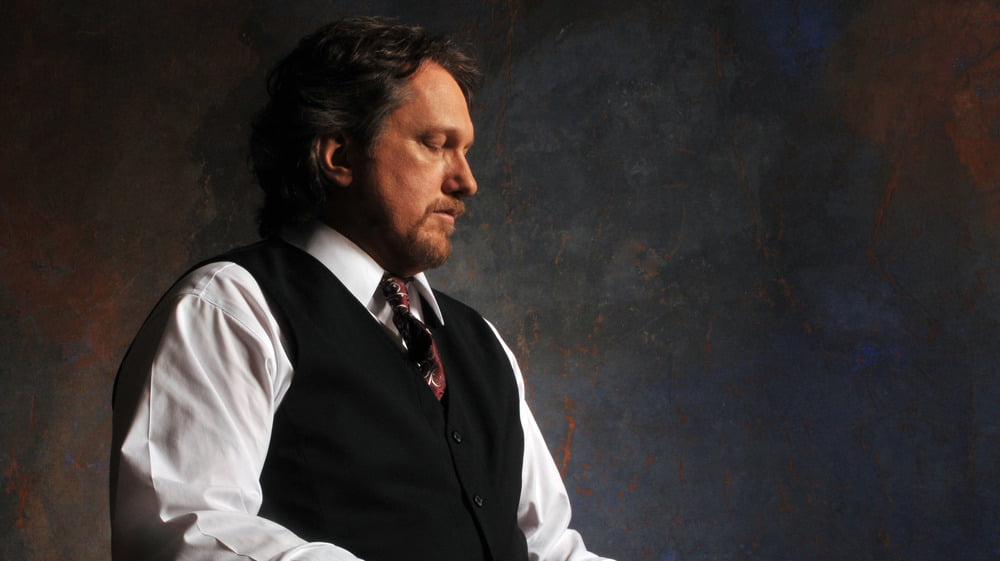
Hangin’ & Sangin’: Jerry Douglas

From the Bluegrass Situation and WMOT Roots Radio, it’s Hangin’ & Sangin’ with your host, BGS editor Kelly McCartney. Every week Hangin’ & Sangin’ offers up casual conversation and acoustic performances by some of your favorite roots artists. From bluegrass to folk, country, blues, and Americana, we stand at the intersection of modern roots music and old time traditions bringing you roots culture — redefined.

With me today in the Writers’ Rooms at the Hutton … Jerry Douglas. Welcome!

Hello. How are you?

I’m good. How are you?

I’m good. I’m having a wonderful week.

Yeah, you’re getting puppies!

I’m getting puppies today! I’m getting puppies today. My granddaughter’s at the house — another puppy, then I’m gonna go see my new grandson on Sunday — more puppies. It’s puppy week!

That’s good livin’!

It is good livin’. I love it.

Okay. Let’s talk about this dobro thing that you’ve got going on.

I’m sorry. [Laughs]

As you should be. [Laughs] What was it about the dobro that first lured you in, so many moons ago?

I don’t know if it was the dobro by itself or the guy who was playing it. Josh Graves played the dobro with Flatt & Scruggs, and he was the one that made me want to become a musician. It wasn’t just the way he played it, because I was hearing Bashful Brother Oswald, at the same time, playing with Roy Acuff and that was good, but Josh Graves stepped up to the microphone and he blew the doors off the place! He could keep up with Earl Scruggs, and he played bluesy, too. He played the blues. I think that was the difference for me, because I was growing up close to Cleveland, Ohio, so I was hearing a lot of rock ‘n’ roll at the same time, and it all worked for me — made the instrument work for me.

My dad had a bluegrass band, but there wasn’t a dobro player within a million miles of me. [Laughs] I told somebody the other day that I stood a better chance of getting hit by a car than to find a dobro. It was not something you saw and they didn’t know what it was. You’d go to a music store and say, “Do you have any dobros?” and they’d look at you like …

But you found each other.

We did.

You’re like Béla Fleck with the banjo, to me. Musically, you guys both do things with these instruments that isn’t normally expected. Who’s leading that exploration — is it you or the instrument? Are you following where it’s taking you?

I’m trying to take the instrument to new places. It’s a great bluegrass vehicle, which has been proven over and over again, with Josh Graves and Mike Auldridge and Rob Ickes. There are several people who really can play one of these things. But I keep exploring and trying to find other ways to use it — in classical music, jazz, rock ‘n’ roll. I created a pickup that works with it that keeps it sounding like a dobro, but you can play to a 24,000-seat place without feeding back. You can compete with a telecaster.

Nice. Do you ever get tired of it and think, “I’m gonna switch to the French horn” or something? Does the mastery ever stop? Is it every complete? Or is there always something new to learn and explore?

There’s always something new. I keep my ears open, and I sort of adapt other things to the guitar. The guitar’s a conduit of whatever’s in [my head], what’s rolling around in there all by itself. It’s a cobwebby place. [Laughs] But I think that I’m kind of trying to lead it from one place to another, but I do get tired of hearing it. I got so tired of it that I started carrying around refrigerator-sized racks of things to make it sound not like a dobro. And then I got tired of that, and I just wanted to hear a dobro again! So it’s a necessary evil.

But I love the sound of the guitar. These newer guitars don’t sound like the dobros did that were on the records that I learned to play from. So I keep a lot of those old guitars around, too. The guy that builds my guitars has actually just come out with a line of guitars that sound like the old guitars. Because, when I play with the Earls of Leicester, I play only old guitars, but he’s got this new guitar I played on the new record with the Earls and no one noticed.

Old sound, new technology. Probably sturdier.

Better construction, yeah. The older dobros, the Dopyera brothers got really lucky. [Laughs] The cone, a lot of things about the guitar haven’t changed since 1927. But the construction has, and how they’re big, beefy, low-ended things that have all these voices that the old dobros didn’t have. But the haunting element, for me, that drew me in in the first place, that’s missing from the big, beefy, hybrid guitars.

You mentioned the Earls of Leicester. I mentioned the Transatlantic Sessions and other collaborations, but your latest record is a Jerry Douglas Band joint called What If. Where do you see that album fitting into the wider landscape of your work?

That was really pushing my audience, I think. I quit a long time ago trying to make records for my audience.

I would think you would’ve had to.

I make them for me. I figure, if they really like me, they’ll go wherever I go.

Or wait until the next thing comes.

Or just wait until it comes back around to what you like! [Laughs] I love that record because it’s so big and full. It’s the full band effort with two horns and electric guitar, and everything is on this record. Except keyboards. But John Medeski is gonna play with me at MerleFest! So who knows where we go from there. But I just like the full sound and being able to, more or less, play the band, at this point. It’s dobro driven, and I write everything on the dobro, but everybody gets a little piece of the action.

[Tell me a memory of or something you gleaned from] Earl Scruggs.

Earl Scruggs was probably the first thing I remember hearing — ever. Then, when I got old enough, even at five years old, I knew that was good. I knew that was a good sound. It was obvious, just the way my dad would react to it and everybody, before I ever saw him. And then, when I saw him, he was on a pedestal to me, as was Josh Graves and the whole band. That was like seeing the Beatles for me, at six or seven years old, to see Flatt & Scruggs live in Youngstown, Ohio, at Stambaugh Auditorium. I even know what date it was and everything. It was like seeing the Beatles.

And then, I grow up and I move to Nashville and Earl Scruggs becomes my friend. That’s just nuts. But then, to get on the bus with him and be playing in his band, just to wind him up and let him start telling stories … because he was a very quiet man, a very quiet, reserved man. But when he got started telling stories, he couldn’t stop. It was so good! Everything was so good. Every minute, every second that I spent with him, I cherished. I’m blessed to have hung out with and been in the presence of some of these people. And Earl Scruggs is way up there on the top of the heap. There are not many people you can look at and say, “That guy is definitely a legend.” He’s like a George Washington, Abraham Lincoln kind of guy. [Laughs] I haven’t met many of those, a couple others maybe, but he was the first one — the first sound I ever heard and what influenced me in the journey that I’ve had, and what made me take the path that I took.

Well, thanks, Earl.

Thanks, Earl. Gee-whiz.

Watch all the episodes on YouTube, or download and subscribe to the Hangin’ & Sangin’ podcast and other BGS programs every week via iTunes, SpotifyPodbean, or your favorite podcast platform.

Another Ring in the Tree: A Conversation with Ketch Secor

Maybe it’s true in life, but it’s certainly true in writing about music that the longer you do it, the more often you hear echoes of the past — not only in the music itself, but in artists’ attitudes and, especially, in their stories. Hearing Old Crow Medicine Show’s Ketch Secor recount the odyssey that preceded the band’s settling in Nashville, it’s easy to be reminded of the contintent-spanning journey taken by Western swing ensemble Asleep at the Wheel some 30 years earlier. Like AATW, who eventually were embraced by all but the most benighted purveyors of authenticity — and with whom they recorded a blistering “Tiger Rag” in 2015 — Old Crow have made their way into the heart of hillbilly music’s most cherished institutions, signified by their 2013 induction into the Grand Ole Opry cast.

Yet the group’s ascension to Opry membership was hardly predictable, much less preordained. Old Crow’s stature in the country music world has been built on a determination to make their own sound that’s every bit as strong as their allegiance to the broad swath of hillbilly music music that forms its foundation. When Marty Stuart invited them to join the Opry, he mentioned an early description of the radio barn dance as a “good-natured riot,” and it’s a description that obviously applies to the band’s shows, too — a simultaneous looking back and looking forward that has made legit fans out of the likes of bluegrass Hall of Famer Del McCoury. With Volunteer marking the group’s 20th anniversary, it seemed like a good time to look back at how they got from there to here.

The press release mentions this is the 20th anniversary of the band.

That’s no joke, brother.

Does the band have a hard start date — a day you could point to and say, “This is the day the band was formed”?

Well, the band left — that’s the day the wheels turned, and we left our home — in October of 1998, because grape season was over, and we had money. We had picked enough, and raised enough, and washed enough dishes, and cleaned enough attics, and played enough nursing homes, and bought enough cartons of cigarettes to get across the border in style.

I was thinking about this because the occasion for this interview is the release of a new record and, 20 years ago, the record industry and the music industry looked a lot different than it does now. And you guys have become what you are during this period of tremendous change and turmoil.

For example, when we crossed that border and finally got waved through into Canada in the fall of 1998, one of the things we had packed was our boombox, so that we could dub our tapes. Because this band sold cassettes. In 1998, this band sold cassettes on the street corner for $10 — Canadian. That was crazy. We were selling them, too. Our tape was flying out of the box — we had a shoebox full.

Why was that?

Well, it was not the quality of the tape. The tape wasn’t very good. We recorded it with one microphone hung from the ceiling, on a four-track recorder. It sounded really, really shitty — low-fi, low quality. That tape was called Trans:Mission. It was the time to dream, with your body, the things that you wanted to have happen. It was the time to read Bound for Glory by Woody Guthrie and think, “I’m going to get on that boxcar, too, goddammit; I’m going to hobo. I’m going to thumb it, I’m going to flag the diesel down. I’m gonna go West.” A good time in life to take that risk, and drop out. Isn’t that what it’s all about? Isn’t that where all of the magic lies, in that moment of deciding that you’d rather wear a mask — and pick a really great one?

So you made your way to Nashville …

That happened three or four years later. Now, I had already been to Nashville before I got to Ottawa. I had been here with another band in 1997, and played on the street corner here. I was gonna busk! I’ve been busking Nashville for like 23 years, or something stupid like that.

What’s the value of busking? I mean, aside from the financial.

Well, we can’t all play like Del McCoury, or anyone in that band — particularly when we’re kids. But we had the passion. It’s the same passion. I was never gonna get as good at playing the fiddle as Jason Carter, but I had the same drive to play as hard as Jason plays. And I couldn’t get onto a stage anywhere because … well, one, I was drunk. I had taken this old-time loyalty oath that made me fiercely pro-old-time and anti-bluegrass, so I didn’t play well with others. I was rabble-rousing. And also, I sucked. So where was I gonna go, with all of that energy and drive, but none of that finesse? And I was somewhat unapproachable. I might have smelled bad. I might have had blood on my shirt, or on my mouth. That was part of the mask I wore, was unapproachability.

Being in Tennessee seems to be important to the band, at this point. Is that a fair statement?

Yeah. I think, as soon as we got to Tennessee, it got a lot more legit.

In what way?

It got legit because it got more focused on the idea that, all right, this band is the soap box. In the chapter previous to our move to Nashville as Old Crow — which is the chapter that runs from about 1999 to about 2000-and-a-half — in that chapter, we were probably as interested in farming and making whiskey and planting by the lunar signs as we were about playing live shows. And that was where learning about early hillbilly and country music was as much an engagement with the landscape of the music as it was with the actual performance of the music. When it got to Nashville, then it became about doing that in Nashville, which had a different musical landscape.

So, in our journeying, we start with the quixotic journey, which is the fire, the odyssey. And then we end up in this sort of hillbilly monastery up in east Tennessee and west North Carolina. And then we come to Nashville, and we end up in this crack house kind of mentality of revolving doors of freaky people, motel rooms, and rent money going out and booze coming in, and songs, and percolation, and Del McCoury, and the road. The beginnings of the way the road would look. It became more vocational and less about kind of artistic presence and disturbance. As buskers, we were as much protesters as we were entertainers.

You guys still feel that way?

Yeah.

How does it express itself? Musically?

Oh, there’s a ferocity to what we do, and an intensity. I mean, I’m feeling it right now, which is why I’m jacked up. But I’m jacked up always. I’m always jacked up, when I talk about the fiddle, and when I talk about John Hartford and Del McCoury. I’m always jacked up because that stuff’s just so powerful.

When I hear “volunteer,” especially in a music-related setting, I think of the Volunteer State — Tennessee. Is the title a reflection, in part or in whole, of the environment in which you’re in now? Or does it have some other significance?

What I think it means is that it hearkens to the pack mentality of our youth. The band really took this oath, this pledge, and we all volunteered to risk our lives, to sacrifice personal identities, personal goals, for collectivity. To be very much a band. The way that we lived together — it’s like we had all signed up, that we would do it come hell or high water. And it turned out it was both.

There’s an audience connected to old-time and bluegrass and country music — all the variety that gets presented on the Opry — by virtue of where they were born, who they grew up with, and the community they live in. And then there are whole other audiences who are drawn by maybe musical affinity, or some kind of cultural signifying. One of the features of our world in the last few years has been that the differences between all these people has become more apparent and the edges become a lot sharper. You guys are also heading for your fifth anniversary as Opry cast members. You play the Opry, which is still kind of a focal point for one community, and then you go out and tour and play for all these other audiences. It feels to me like that’s reflected in some way in this record. Is that true?

When we play the Opry, we’re mostly playing for tourists. But we’re also playing in a kind of center of all of hillbillydom. And when we play the “Wabash Cannonball” on the Grand Ole Opry, we sound more like the Woody Guthrie role than we do the Montgomery Gentry role, or even the Roy Acuff role. Roy is kind of the same as Woody. He’s a good example because, though politically, he’s certainly on the right — he’s from East Tennessee, he’s a Republican, he’s a conservative dude, he wants to shut down the Opry because he doesn’t want to share the same locale as the peep shows and the drug dealers, so he advocates moving it out. But he’s singing music that makes you want to desegregate a school, because that’s the power of the “Great Speckle Bird,” that’s the power of the “Wabash Cannonball.” They’re actually very front-line songs, really excited, rabble-rousing kind of proletariat sounds.

That’s the thing about country music: The people, en masse, who believe in the power of folk music, just by nature of having an underserved class being championed by a music — that’s a very expansive concept, one that can’t be pigeonholed in any particular political realm. We played the Budweiser stage last week, and most people were about 25 years old or younger. We’ll play gigs this summer where everybody’s 25 or older, 50 or older — we’ll see crowds from Delaware to Red Rocks and everything in between. We’ll play in Oklahoma to drunk leftists, and we’ll play in New York City to conservative lawyers. And everywhere we go, we will allow people to step into a world that has no political affiliation. That is the world of Old Crow, the entertainer. And the Old Crow who’s an entertainer, I always think of him as this top hat-wearing bartender that’s serving it up to the people, no matter what the color of the skin is, or who they voted for. Because the Old Crow, he doesn’t vote. He just pours.

So what’s the connection between Old Crow, the entertainer, and that volunteer collective that stepped up and took its oath? What you described as the fundamental nature of the band — of you coming together and making this choice to pursue something — seems to imply a certain kind of purposiveness that goes beyond being an entertainer.

The political party here is, live music is better. The revival tent, or the voting booth, or the campaign rally is one in which you believe that live music has the power to change the world. I like records fine, but we’re a live band. What we do is play the music that we play in the moment that you’re hearing it. If you’re on your phone getting a message from a friend, you missed it. Sorry, dude. If you go to the beer line, that’s cool, we’re going to keep doing it. You don’t have to hang on every word. But this is our tent here. It’s the live music hour. That’s what we do.

We’re having this conversation, in part, because you made a record. So if live music is where it’s at, and that’s one of the changes in the music industry over those 20 years, and that records no longer occupy the same position in the music world, what are you wanting to do with this record?

Put another ring in the tree upon which this Old Crow has been precariously perched these 20 years. It’s just another ring in the tree, another notch in the belt.


Photo credit: Danny Clinch

Nitty Gritty Dirt Band: An Unbroken Circle

In 1971, Richard Nixon was president and the United States was divided. It was an era marked by civil rights struggles, Vietnam War demonstrations, and labor union losses. The counterculture movement that evolved in the 1960s was continuing to take shape and was intrinsically linked to the outpouring of a whole generation’s worth of musical innovation. Amidst social upheaval, at a time when your music reflected your politics, a common ground was forged among unlikely sources. The Nitty Gritty Dirt Band’s milestone 1972 album, Will the Circle Be Unbroken, single-handedly bridged generational and cultural gaps by pairing country music veterans with young hippies from Southern California.

“I don't think we realized the sociological impact that that record would have,” says Jeff Hanna, founding singer and guitarist of the Nitty Gritty Dirt Band. “On the surface, it looked like, 'What the hell are they doing making music together?'”

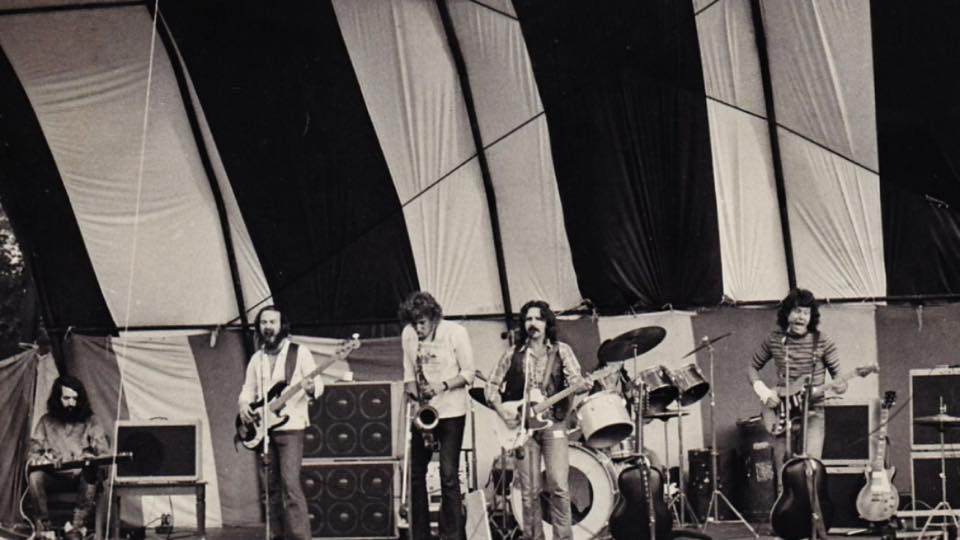
The Nitty Gritty Dirt Band formed in Long Beach, California, in 1966 and became a staple of the wave of California rock that included acts like the Byrds, the Flying Burrito Brothers, and the Eagles who were all exploring old-time country sounds in their own music. By the time the recording sessions for the Circle record began, the Dirt Band was fresh off the success of their cover of Jerry Jeff Walker’s “Mr. Bojangles,” which had become a Top 10 pop single. Record executives and fans, alike, were anticipating a follow-up in the same vein. But the band’s manger and producer, Bill McEuen — brother of band member John McEuen — had another idea: to get the band in the studio with the bluegrass and country musicians that had influenced them when they were coming up.

“I have a lot of respect for [the Dirt Band] for doing it, for going out on a limb, you know, and doing that kind of thing in the middle of a career that was just really on its way up at that point,” says multi-instrumentalist and longtime Dirt Band collaborator Jerry Douglas. “They were the famous people on the record and their guests were the people that they were introducing to their audience, you see. So it was kind of going out on a limb for them. You know, the record company didn't wanna do it. Nobody wanted to do it. They just kind of pushed it through and it was a success.”

When it came time to recruit a slew of Nashville greats for the project, the generational divide ended up working in the Dirt Band’s favor. Their friendship with the Scruggs family began when Earl Scruggs brought his children, who were fans of the band, to a gig they played at Vanderbilt University in 1970. Scruggs became the first artist they invited to guest on the Circle record. They snagged Doc Watson the same way: his son, Merle, was a fan of the band.

“One of the things that was really interesting with a lot of these acts is, their kids were fans of the band. There was kind of a stamp of approval from the younger generation,” recalls Hanna. “And Merle Watson said something like, ‘Well daddy you love the way they sing and play.’ And also the invitation was, ‘We've got Earl Scruggs.’ And Doc said, ‘Yeah, that sounds like fun,’ so there it went.”

Other guests included heavyweights like Jimmy Martin, Mother Maybelle Carter, and Roy Acuff.

“I mentioned to Bill McEuen, at one point, that I'd read this article about Roy Acuff where he said he'd play real country music with anybody anywhere. And we talked about that and Bill said, ‘Well, let's see if he'll put his money where his mouth is,’” Hanna says.

But Acuff wasn’t an easy sell: His initial meeting with the band didn’t go as well as they were hoping. It turns out that the idea of West Coast hippies in their early 20s recording in Woodland Studios in Nashville was a bit of a hard pill to swallow.

“[Acuff] came in and he was just largely unimpressed with us. He was kind of like — he wasn't totally negative — it's just kind of flat and he said later, ‘Well, I don't trust a man that I can't see his face,’ and we all had like massive beards and mustaches and long hair,” Hanna remembers. “Meanwhile, we got in the studio and recorded our tracks with Merle Travis and, lo and behold, Roy Acuff comes strolling in, or sort of quietly walks in the back of the studio at the end of the day. And Bill played him — it was either ‘Nine-Pound Hammer’ or ‘Dark As a Dungeon’ — one of those. And Roy got this big smile on his face and he said, ‘Well, that ain't nothin' but country. I'll be here tomorrow. Be ready.’ So we cut those tracks, so he was in.”

The result was a monumental cross-generational album that combined genres and styles.

“Just to put it in context: You've got Merle Travis's Travis-picking; you've got Earl Scruggs' Scruggs-style banjo; you've got Maybelle Carter, Carter scratch; and Doc Watson — even though flat-picking isn't named after him, it should be,” says Hanna. “I mean, just all these guys that were just so big in our world.”

The Dirt Band’s love of country and old-time sounds goes way back, so it was a natural progression for them to want to honor and record with these musicians.

“A lot of us got into bluegrass because of the folk boom in the mid-60s. A lot of us also had older siblings and they'd bring home these records by Peter, Paul, and Mary or the the Kingston Trio,” says Hanna. “When I first started playing guitar, I bought a Pete Seeger instructional LP and book that had a section about the Carter Family and Maybelle Carter and her playing style, as well … I was a huge fan of the Everly Brothers. We all were. The Everlys, Buddy Holly, Eddie Cochran, Chuck Berry, Little Richard: that stuff killed us. But I think something we all had in common was our deep love of the sounds of Appalachia. And blues for that matter. But a lot of it was acoustic music, I've gotta say.”

Singer/songwriter Jackson Browne joined the Nitty Gritty Dirt Band when he was 17 years old, after meeting them at a gig at the Paradox club in Tustin, California, a little town in Orange County. “Getting to play with them was a huge installment in my musical education because I got to sit there and play these really intricate songs,” Browne recalls. “I mean, they were all better players than me, so I learned a lot.”

What struck him immediately about the band, he says, was their vast musical palette.

“The Dirt Band was great because they were true music fans and music aficionados. They weren't just kids that were playing folk music that they heard. They dug deep, is what I'm saying,” says Browne. “They found recordings of the Memphis Jug Band and those things were hard to find. I mean, like that wasn't just lying around. And they were kind of musicologists even then, from the very beginning.”

This year, the Nitty Gritty Dirt Band celebrated their 50th anniversary as a band. In commemoration, they returned to Nashville for a star-studded concert at the famed Ryman Auditorium last September, which aired on PBS and was released on DVD. Aptly titled Circlin’ Back, the show was both a nod to the first Circle record and a career retrospective that incorporated the musicians that have impacted the band’s history. Vince Gill, Alison Krauss, Rodney Crowell, Jerry Jeff Walker, John Prine, Jerry Douglas, and Jackson Browne were among the handpicked guests.

“What was even cooler to me than playing the show that night was the rehearsals that we had before,” Douglas recalls. “The first time you do a run-through of one of those songs is so magical. It has all of this extra spark and fear and everything in it. So there were sparks flying in the rehearsal hall when we were doing these things and trying to figure out who played on what.”

Just as the Dirt Band introduced their audience to their earlier influences on the first Circle record, the Circlin’ Back anniversary show connected the next generation of artists and fans together. Musicians like Vince Gill and Jerry Douglas, who remember buying the first Circle record when it came out, are now considered “little brothers” of the Dirt Band. Although they are each musical powerhouses in their own rights, the anniversary show was an opportunity for them to play with some of their heroes.

“I think the first time I played on the song with Jackson Browne that I played lap steel on, I held my breathe through the whole thing,” Douglas says. “I'm such a fan of all of those guys and then they bring Jackson Browne in, and I'm playing on this thing with Jackson Browne and I'm just going nuts inside. So much raw emotion that's happening.”

The Nitty Gritty Dirt Band has always had the ability to tap into emotion. Through their shared love of traditional music, they impacted legions of listeners by bridging generations and styles. Their legacy is littered with stories of parents and children bonding over the first Circle record, which is arguably one of the most significant releases in the history of music. At a time of cultural unrest, it showcased music’s ability to bypass divides and cross boundaries. The Nitty Gritty Dirt Band was Americana before Americana had a name, and their genre-bending illustrates the most important facet of music: how it connects us all.


Photo of the Nitty Gritty Dirt Band in the early 1970s courtesy of the artist.