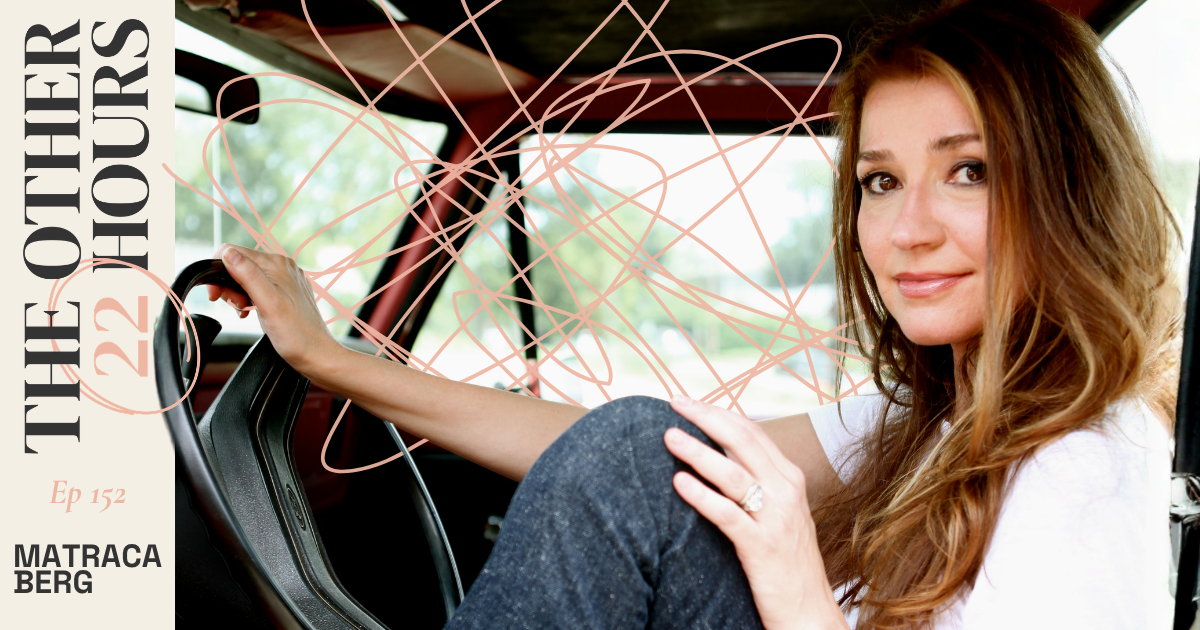
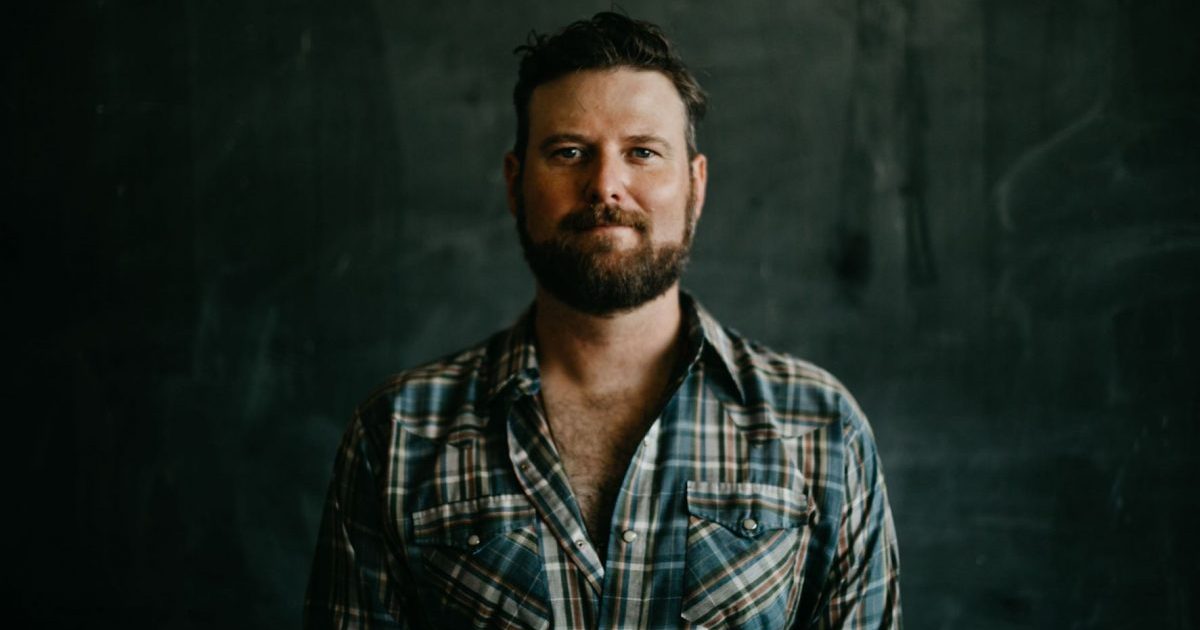
We often treat commercial success as the final destination of a creative life, but for legendary songwriter Matraca Berg, it was just the first act. Her songs became major country hits for Martina McBride, Trisha Yearwood, Deana Carter, Kenny Chesney, the Chicks, Patty Loveless, and Reba McEntire, among many others. Matraca’s catalog defines generations of American songwriting.
We sit down with the GRAMMY-nominated member of the Nashville Songwriters Hall of Fame on the Other 22 Hours to explore the realities of achieving massive success while battling paralyzing stage fright, the transition from the multi-platinum physical sales era of the 1990s to modern streaming, and how she keeps her creative tank full as the industry has changed around her. In a culture obsessed with youth and immediate output, Matraca offers a grounded, reassuring perspective on aging within an art form, artistic alignment, and learning to trust.
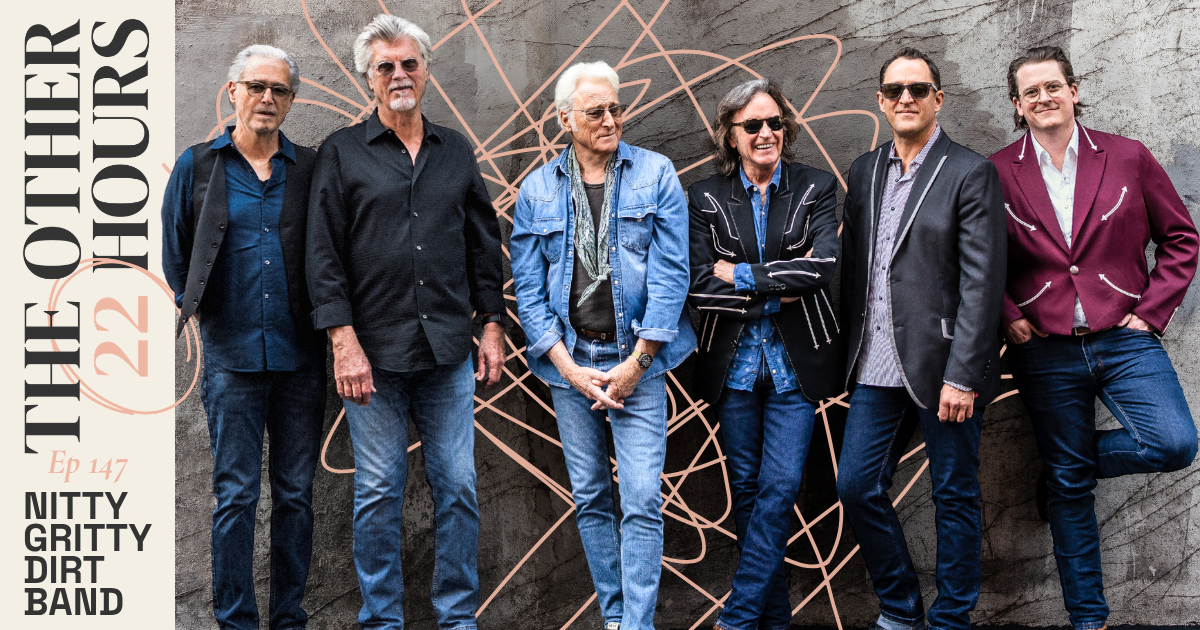
As a founding member of the legendary Nitty Gritty Dirt Band and a three-time GRAMMY winner, JeffHanna has navigated nearly 60 years in the music industry. His resumé includes credits with the likes of Linda Ronstadt, Emmylou Harris, Johnny Cash, and many others. In this episode of the Other 22 Hours we explore the geography of inspiration, from the 1970s Troubadour scene in LA to his 40 years anchored in Nashville’s songwriting community. Jeff reflects on the economy of a perfect line, the creative vitality of a “hard reset,” and why the bedrock of this work has to begin with the simple intention of having fun.
In our last Bluegrass Memoir, “Beginnings,” I described David Hoffman’s documentary, Earl Scruggs with his Family and Friends. By the time NET aired it, the Revue was already off and rolling with Earl’s new music.
In 1970, bluegrass festivals – the first was in 1965 – were becoming quite popular. The music’s supporters had discovered that such events could present their favorite music to broader, younger, urban audiences. These larger crowds brought their tastes and preferences with them. At these booming festivals, new acts like the Earl Scruggs Revue spoke to musical perspectives shaped by contemporary popular music.
The Revue played to large numbers at Monroe’s Bean Blossom Festival that spring and to Carlton Haney’s Camp Springs Festival on Labor Day weekend. Earl’s solo album, Nashville’s Rock, and Randy and Gary’s solo album, All the Way Home, were released that year.
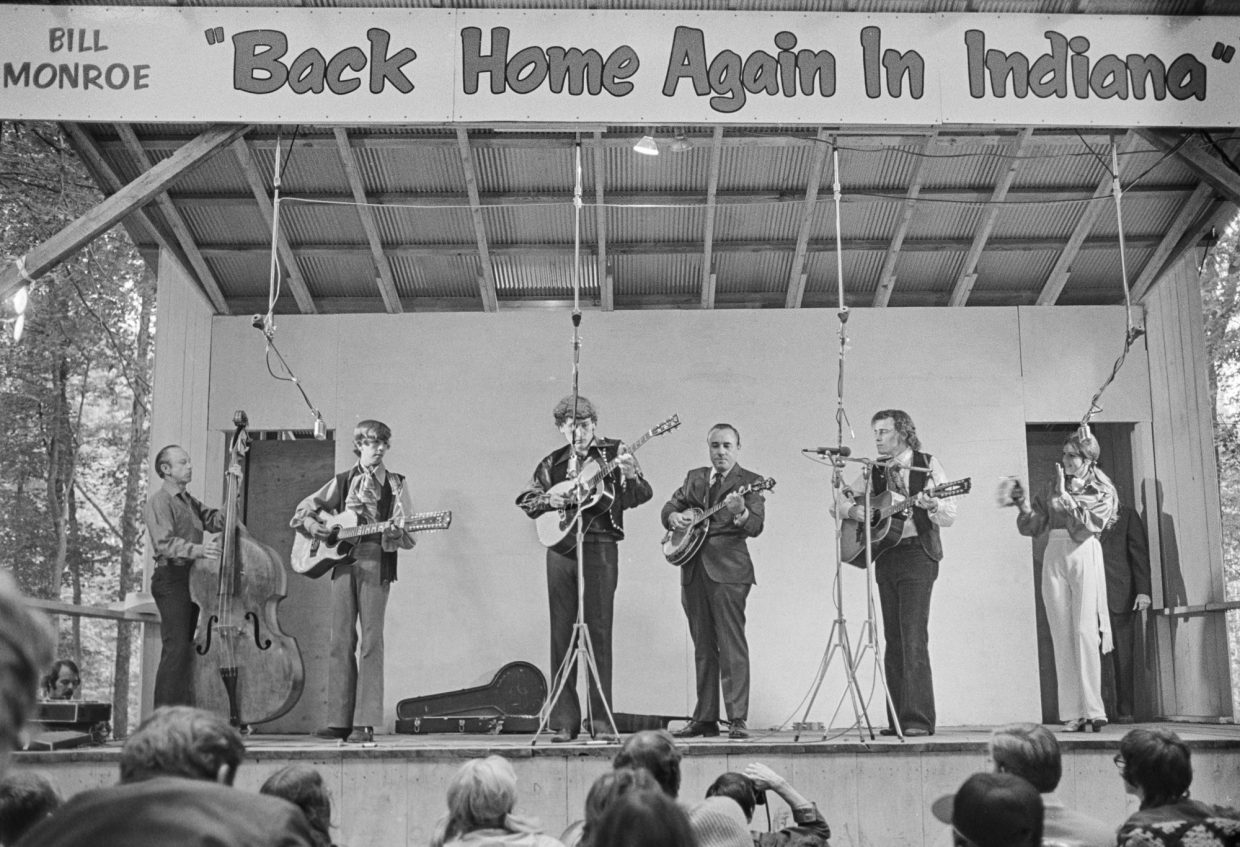
The Earl Scruggs Revue at Bill Monroe’s annual Bean Blossom festival, Bean Blossom, Indiana, June 1970. (L-R) Unidentified bassist, Jody Maphis, Randy Scruggs, Earl Scruggs, Gary Scruggs, and Leah Jane Berinati. Photo by Carl Fleischhauer.
In 1971, Columbia released Earl Scruggs: His Family and Friends (C 30584), a soundtrack album that included much of the content of Hoffman’s documentary along with two additional fine vocals by Doc Watson. In its liner notes, Don DeVito characterized the show’s topic:
Earl Scruggs is a man who has paid his dues. You can forget the generation gap … Earl has always been an innovator and an adventurer…
Also in 1971, newgrass music emerged. Its key figure at that time was singer-songwriter and banjoist John Hartford, whose “Gentle on My Mind” had been a 1967 Glen Campbell hit. John had flourished in the LA television business as a writer for The Smothers Brothers Comedy Hour and a performer on The Glen Campbell Goodtime Hour.
Hartford and Scruggs – they’d met in 1953 – had developed what Bob Carlin, in My Memories of John Hartford (University Press of Mississippi) calls “a deep friendship.” When Hartford returned to Nashville in 1971, he recorded what is now considered the first newgrass album, Aereo-Plain. The Revue’s Randy Scruggs played bass on this ground-breaking disc alongside Tut Taylor, Vassar Clements, and Norman Blake.
The Revue and Hartford were at the center of Nashville’s jam-based music, which embraced musicians from new scenes blending rock and older genres – folk, bluegrass, and country. Both bands appeared at a number of bluegrass festivals in 1971 and the Revue was busy recording in Nashville.
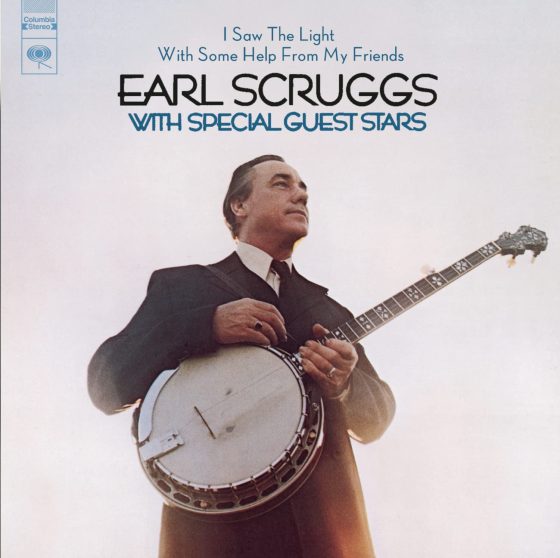
I Saw The Light With Some Help From My Friends(1972)
Earl was working on his next album, I Saw The Light With Some Help From My Friends: Earl Scruggs with Special Guest Stars. The back liners of the album (Columbia KC31354) described it as “Earl Scruggs and The Earl Scruggs Revue in performances with Linda Ronstadt/The Nitty Gritty Dirt Band/Stacey Belson and Arloff Boguslavaki.”
Stacey Belson was a pseudonym for blues singer Tracy Nelson, then with the band Mother Earth. Arloff Boguslavaki was Bob Dylan’s pseudonym.
Bill Williams’ liner notes describe the fabulous jam sessions that were happening at the Scruggs family house – hence the album’s concept:
Picture, if you will, the group sitting around together at the Scruggs home (although the actual locale was shifted to Columbia Studios) …
For this album, the studio became the living room and the producer was Don Law, the Nashville vet who’d worked in the ’30s with blues legend Robert Johnson and western swing pioneer Bob Wills and in the ’50s with Flatt & Scruggs.
At this Scruggs family jam session were Earl and sons along with their Madison High School contemporary, drummer Jody Maphis. Also in the room were fiddler Vassar Clements, in the process of moving from Hartford’s band to join the Revue, and several others who’d later join the Revue, including pianist Bob Wilson, a Detroit R&B musician who’d moved to Nashville and subsequently recorded with Bob Dylan.
Each of the featured star guests are heard in solo, sometimes singing in harmony with each other. Earl plays on every cut. Great to hear his backup work with all its nuances! Randy’s lead guitar and Vassar’s fiddling appear throughout.
It was as if these people had showed up at the Scruggs home one evening to play for and with each other – an old-fashioned domestic music session, with the host going around the room inviting each to perform and providing musical backups for all. The evening’s repertoire was the kind of stuff you might expect at such an event: mostly recent country, folk, blues and rock – things you might have heard on the radio lately in 1971.
The sound was that of contemporary popular music, suggesting that this was what you’d hear if the Earl Scruggs Revue came to your living room, festival, or auditorium.
The album’s first side opens with an LA country soul rock tune, Bonnie and Delaney’s “Lonesome and a Long Way From Home.” Gary is singing lead and playing bass; Nelson adds harmony. This is rocking R&B – Wilson’s piano opens the break and, with fiddle and drums, keeps it rocking to the end. Earl’s banjo is out front throughout.
Next comes Merle Haggard’s “Silver Wings,” sung by Linda Ronstadt with harmony by Nelson. The backup piano and Dobro are joined by a fiddle break. Straight-ahead Nashville country.
Track three features “Boguslavaki” (Dylan) singing Charles E. Baer’s 1896 hit, “It’s a Picture From Life’s Other Side,” a song that had gone into the folk tradition and been frequently recorded by hillbilly and gospel singers in the ’20s and ’30s. The laid-back fiddle, bass, and drums, along with Nelson’s harmony on the chorus, mark this as a parlor folksong.
It’s followed by Nelson’s performance of “Motherless Child Blues,” where accompanying musicians Earl, Norman Blake, Randy, and Vassar stretch out with some nice blues breaks.
This side closes with Mike Nesmith’s “Some of Shelley’s Blues,” performed with members of the Nitty Gritty Dirt Band, with Gary Scruggs and Jeff Hanna doing the singing and Earl and Randy both taking instrumental breaks.
The second side of the album opens with a vocal by Gary on another Bonnie and Delaney cover, “Never Ending Song of Love.” Ronstadt sings a county cover, Cash’s “Ring of Fire.”
Dylan brings out another pre-war country folk oldie, a great “Banks of the Ohio.” While Nelson is featured singing folksinger Bruce “Utah” Phillips’ “Rock Salt and Nails,” a song first recorded by Flatt & Scruggs in 1965, with Ronstadt adding harmony on the chorus.
The Nitty Gritty Dirt Band contributes another Nesmith song, “Propinquity.” The side closes with the album’s title track, a sing-along for everyone, “I Saw the Light.” The album was released in 1972.
Will the Circle Be Unbroken (1972)
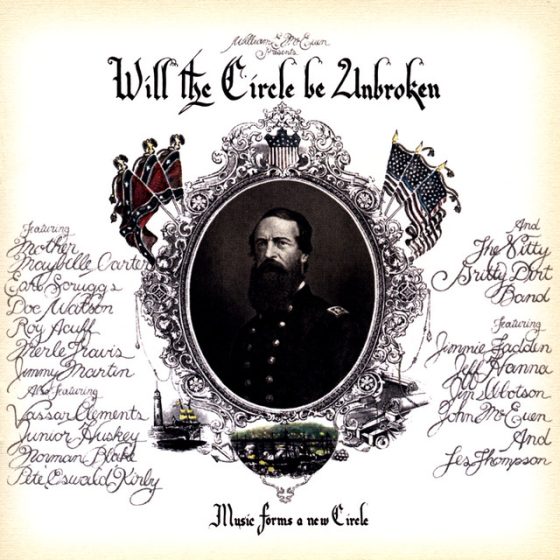
Around the same time as I Saw The Light was made, banjoist John McEuen of the Nitty Gritty Dirt Band asked Earl to be on their new three-LP concept album, Will The Circle Be Unbroken. Scruggs was playing in Denver with the Revue when he and McEuen met. The Dirt Band’s sound, with McEuen’s skilled Scruggs-style banjo, appealed to him, as did their project to honor and make music with the earlier generation’s pioneers. That had been his own goal in bringing Maybelle Carter into the studio to record with Flatt & Scruggs back in 1961.
Earl, well-connected in Nashville as an Opry star with record, television, and movie hits, helped bring a number of his country music friends into the project. Both Gary and Randy were also involved, as were several of Hartford’s Aereo-Plain band members, notably fiddler Vassar Clements and Dobro player Norman Blake.
Unlike Earl’s Nashville’s Rock album, which covered recent rock and pop hits on the banjo with Nashville studio backing including electric instruments and, on several cuts, a soulful female vocal trio and a string section, this album had completely acoustic backup by the Dirt Band as they covered legacy hits by country, bluegrass and folk pioneers like Roy Acuff, Maybelle Carter, Doc Watson, and Jimmy Martin.
Earl played a pivotal role in the making of these recordings, playing guitar or banjo on sixteen tracks. The whole Scruggs family can be heard: Randy contributed guitar, autoharp, or voice on eleven tracks, Gary sang on eight, and Louise and Steve sang on one track.
Of the many interesting performances on this award-winning album, Randy Scruggs’ acoustic guitar version of “Both Sides Now” was perhaps the most remarkable; the final selection in the set, it followed a group sing-along of the title track, similar to the closing on the Earl’s I Saw The Light, in which all of the Scruggses sang. These recordings, released in 1972, were made in August 1971.
The Scruggs Brothers (1972)
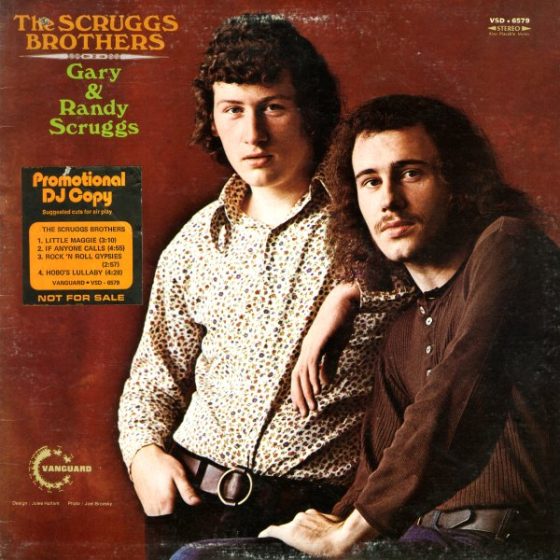
Also recorded in 1971 was Gary and Randy’s second Vanguard album, The Scruggs Brothers (Vanguard VSD 6579). Some of the same musicians who played on I Saw The Light performed here, like Tracy Nelson, the Dirt Band’s Jeff Hanna and John McEuen, pianist Bob Wilson, and drummer Karl Himmel; but the album had more of a country rock sound. It opened with “Little Maggie,” a song Flatt & Scruggs had recorded at Carnegie Hall in 1962. With Gary’s bass and Jody Maphis’ drums leading the way, it sounded something like the Nashville studio A-listers Area Code 615’s 1969 version.
Throughout the album, Randy played a majority of the solo breaks, some on acoustic guitar but most on electric, in a heavy metal style similar to what I heard him playing in Maine in 1975. Four tracks were their own compositions, two by Gary and two collaborations.
On one, the instrumental “Trousdale Ferry Rag,” Earl played banjo. This up-tempo, bluegrass-style piece has an unusual ending, shifting to a slow blues beat. Most notable is Gary’s “Lowlands,” a great ballad set to the tune of Earl’s “Sally Ann,” which both brothers had been hearing at home all of their lives (Flatt & Scruggs recorded it in 1960). Gary plays guitar, Randy picks banjo.
Covers of older (dare we say traditional?) material includes a rocking version of Jimmie Rodgers’ “T for Texas,” and the other cut on which Earl played banjo, “Hobo’s Lullaby,” which features a sing-along chorus similar to that on the closing of the I Saw The Light and Will The Circle Be Unbroken albums. Another older piece was “The Johnson Boys” (Flatt & Scruggs did it 1962) on which John McEuen’s frailed banjo created the album’s most old-timey sound.
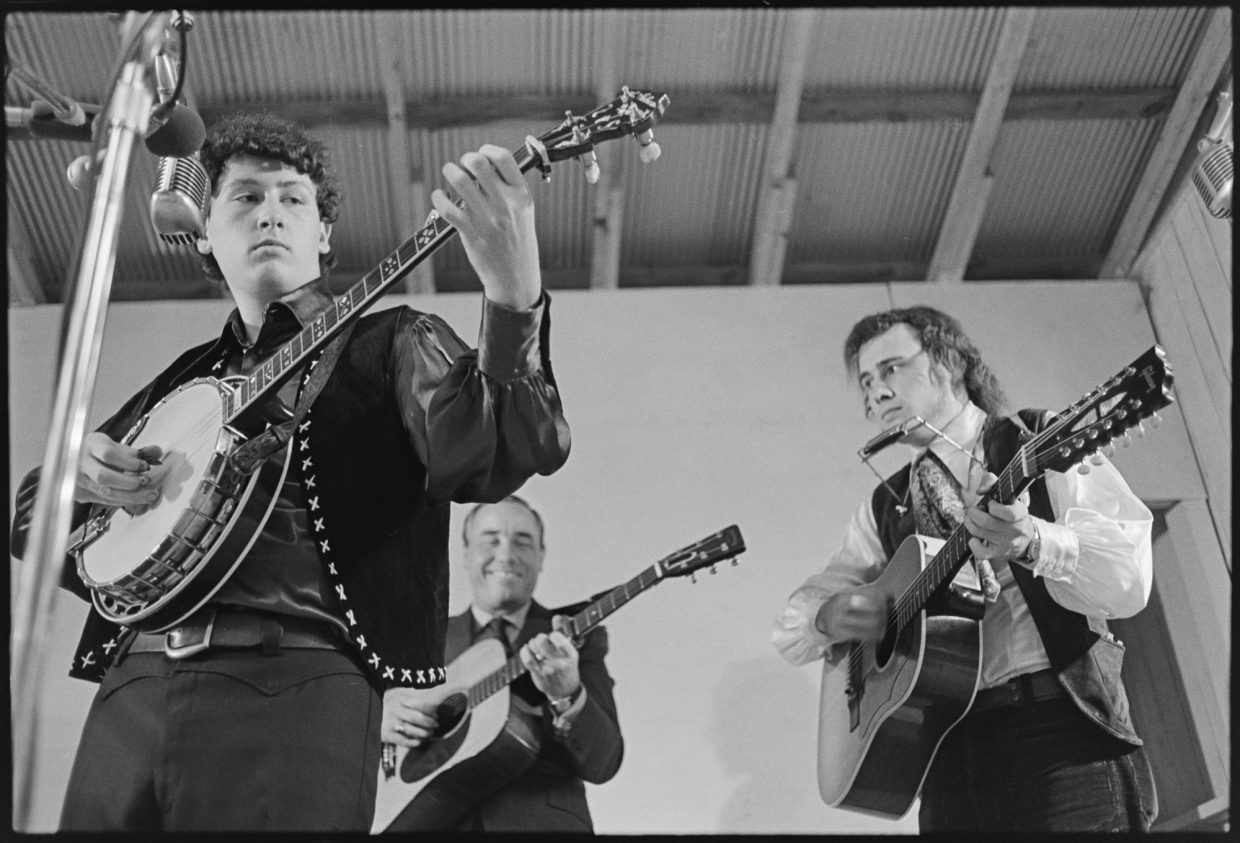
The Earl Scruggs Revue at Bill Monroe’s annual Bean Blossom festival, Bean Blossom, Indiana, June 1970. Randy Scruggs, Earl Scruggs, and Gary Scruggs. Photo by Carl Fleischhauer.
The boys’ continuing involvement with country rock is reflected in two songs that originated in 1967 with the LA band Hearts and Flowers. “Rock and Roll Gypsies,” which closes the first side of the album, seems to have been an attempt to garner radio play – it’s the only track on the record to include string section backup. The other Hearts and Flowers-connected track, “Bugler,” a sad song about the death of a dog, had recently been covered by Clarence White with the Byrds.
Live at Kansas State (1972)
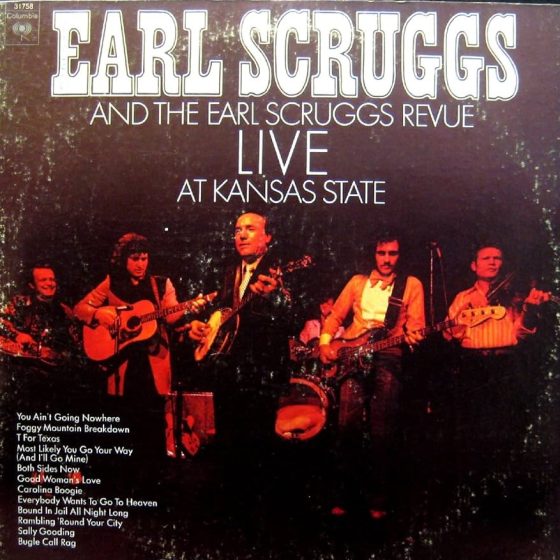
During this year of extensive studio recording, the Revue was also out playing on the road. Although Earl Scruggs: His Family and Friends included a few examples of the group in action outside the studio, Live at Kansas State (Columbia KC 31758) was their first full show album.
Many of the songs the Revue did at this 1972 concert remained in the band’s regular repertoire and showed up, for example, at the 1975 Maine concert, including “T for Texas,” “Paul and Silas” (they titled it “Bound in Jail All Night Long”), “Sally Goodin[g],” “Carolina Boogie,” “Everybody Wants to Go to Heaven,” and “Foggy Mountain Breakdown.”
Several were on their recent albums, like “You Ain’t Going Nowhere” and “Both Sides Now.” Bluegrass classics included “Good Woman’s Love” and “Bugle Call Rag.”
In 1998, a reviewer for No Depression wrote that Live at Kansas State was “probably their album most deserving of a full reissue … a surprisingly cohesive ‘bluegrass-rock’ blend, the likes of which has seldom been heard since.”
In 1972, the band included fiddler Vassar Clements and Dobroist Josh Graves, a bluegrass icon who’d just left Lester Flatt’s band. The album package has several photos of the band; these are notable in that they include everyone but pianist Bob Wilson, who is very much present in the album’s audio.
Wilson had moved to Nashville from Detroit’s R&B scene. His first years in Nashville were slow going, but that changed when Bob Dylan came to town to record Nashville Skyline and wanted “a funkier piano sound than the usual Nashville cat could produce.” The success of his work on Dylan’s album gave him plenty of studio work and he also found time to go on the road with Scruggs.
“When I was with the Earl Scruggs Revue,” he recalled, “Earl always introduced the band, and when he came to me, he always told the crowd, ‘And this is the man who played piano on Nashville Skyline, Bob Wilson.’ I must admit the applause felt really good.”
In his memoir, Bluegrass Bluesman, Graves spoke of the challenges he enjoyed while rocking with the Revue: “Earl and that bunch forced you to work up new licks. You had to come in there on the stuff they were playing. It was so loud I couldn’t hardly stand it, but I really enjoyed it. It opened a lot of doors for me. They were into a lot of things. …”
“Earl was doing the same old tunes with a little modern touch. Earl got bored with bluegrass – I’ll tell you that. He just didn’t want to play it anymore. They had that big beat, that sound behind it, and that’s what he liked.”
“He’d play ‘Foggy Mountain Breakdown’ with that band and people would go wild.”
The Revue carried on into the early ‘80s, with albums that drew from contemporary pop music and brought younger country, folk, and rock stars in as guest artists. We’ll touch on a few of these next time.
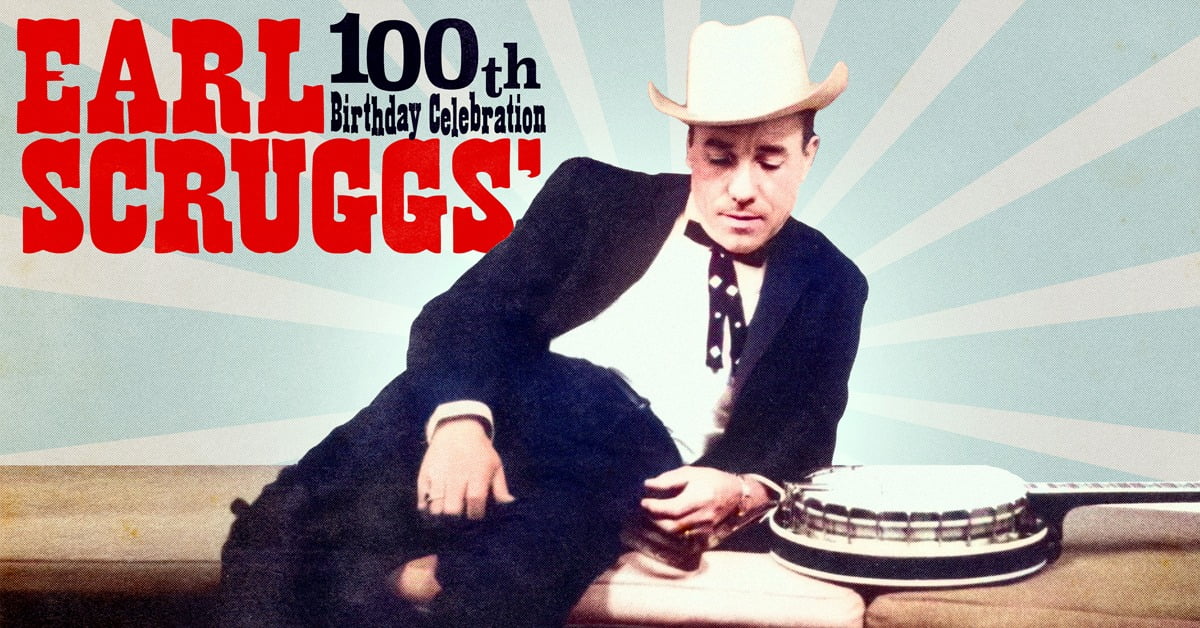
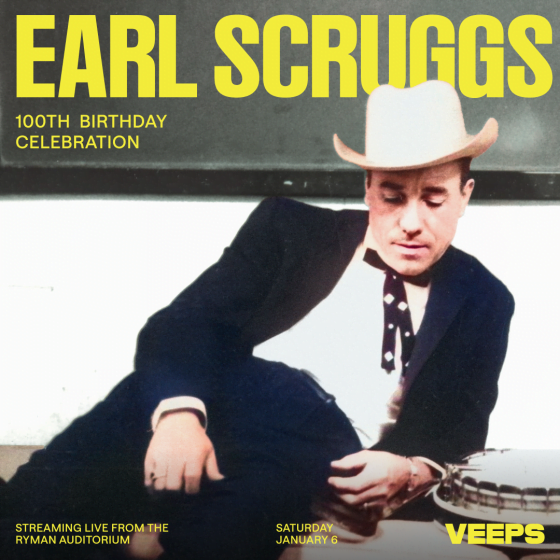
January 6, 2024 would be the 100th birthday of Earl Scruggs, a musician and artist who helped create bluegrass music and who was and is perhaps the most prominent and well known banjo player to have ever lived. Scruggs passed away in 2012, but this posthumous celebration – to be held at Nashville’s Ryman Auditorium – speaks to his undying musical legacy. The performance will benefit the Earl Scruggs Center, a museum in Shelby, North Carolina that’s dedicated to Scruggs, the local community, and its residents, and inhabits the former courthouse just up the highway from unincorporated Flint Hill, where he was raised.
The show, with musical director Jerry Douglas, will feature performances by bluegrass and roots music luminaries such as The Earls of Leicester, The Del McCoury Band, Gena Britt, Alison Brown, Sam Bush, Michael Cleveland, Stuart Duncan, Jimmie Fadden, Béla Fleck, Jeff Hanna, Sierra Hull, Bronwyn Keith-Hynes, Jim Mill, Justin Moses, Jerry Pentecost, Todd Phillips, Harry Stinson, Bryan Sutton, Tony Trischka, Abigail Washburn, Pete Wernick, and more. Limited tickets are still available and, for those who may not be able to attend in person, the entire show will be livestreamed via Veeps.com for $14.99.
It promises to be a quintessential Nashville evening, a star-studded lineup with endless appearances, special guests, and with certainly plenty of heartfelt remembrances and tributes in store. Livestream viewers will get a rare chance to be invited “flys on the wall” for a magical and one-of-a-kind concert.
Earl Scruggs’ legacy will certainly live on – for another hundred years and, we hope, beyond. BGS and many other roots music and bluegrass communities and organizations will continue to celebrate Scruggs’ centenary throughout the year, so keep an eye out for upcoming content that celebrates Earl Scruggs and his three-finger style.
Lead image courtesy of the Ryman Auditorium; inset graphic courtesy of Veeps.
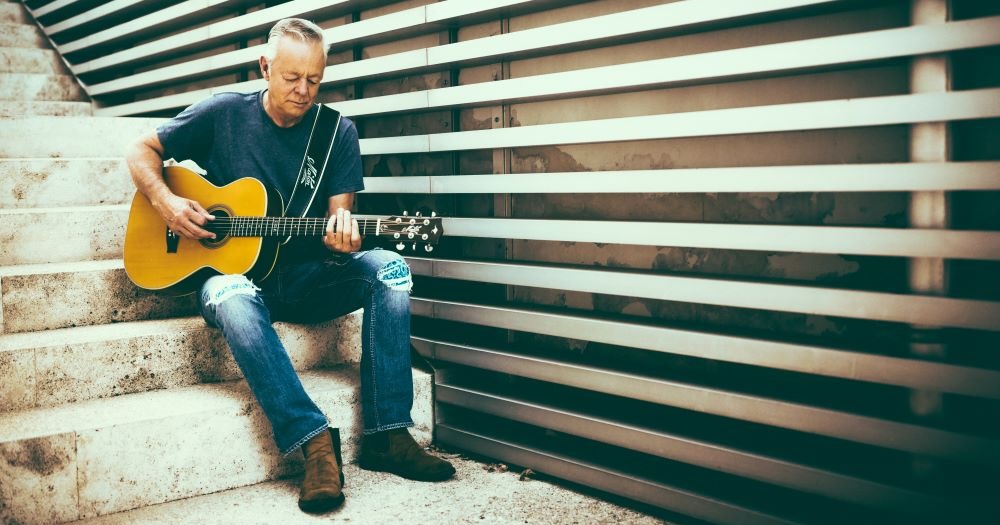
Artist:Tommy Emmanuel Hometown: Nashville, Tennessee Song: “Tennessee Stud” featuring Nitty Gritty Dirt Band Album:Accomplice Two Release Date: April 28, 2023 Label: CGP Sounds
In Their Words: “I’ve always loved this song. I wanted to pay tribute with Nitty Gritty to Doc Watson and the original version that appears on the Will The Circle Be Unbroken album. Jeff Hanna sang on that version with Doc. Jeff and I split the verses up so we could come together on the choruses. It was a very relaxed feeling recording with the Nitty Gritty guys. They know it so well and I loved coming up with little changes in the riffs and chords to try to add my own touch to this classic. I love working with such an iconic band. I see them still giving music their ALL! Their passion for music, good songs, and performing for the fans is all still present when you see them and doesn’t seem like the years have taken their edge at all. More power to Nitty Gritty!” – Tommy Emmanuel
Artist:Drew Kennedy Hometown: New Braunfels, Texas Song: “Peace and Quiet” Album:Marathon Release Date: June 17, 2022 Label: ATLAS AURORA
In Their Words: “I wrote this song with two heroes of mine — Matraca Berg and Jeff Hanna — at their house one cloudy morning in Nashville. The hook arrived all gift wrapped and ready to go during a conversation with a friend after a show. I asked him how he had survived a two-year stint in rural Arkansas for work, being more accustomed to the hustle and bustle of Dallas, and he shrugged his shoulders and said, ‘I guess I just made peace with the peace and quiet.’ I love it when songs find you like that. I took the idea to Matraca and Jeff and that morning the three of us made this magical little song. I love the second verse so much: I woke up with the morning raining down upon my windowpane in perfect harmony with ‘Faded Love,’ and you won’t catch me complaining. Still gets me every time I sing it!” — Drew Kennedy
Nitty Gritty Dirt Band frontman Jeff Hanna goes way, way back with the music of Bob Dylan — to the very first time he ever saw him more than half a century ago. It was December 5, 1964, at Wilson High School in Long Beach, California.
“Yeah, $3.50 advance, $4.50 at the door, just Bob with an acoustic guitar and harmonica rack,” says Jeff. “It was after ‘Another Side of Bob Dylan,’ so the tail end of all-acoustic Bob, right before the electric stuff. He was on the cusp of making a change in musical intent and boy, was it great. Quite a thing for a 17-year-old kid.”
A bit more than two decades later, Jeff’s son Jaime had his mind similarly blown with his first Dylan experience at the ripe old age of 14.
“Red Rocks in Colorado, 1986 with Tom Petty,” says Jaime. “My little brother and I went with dad, sat at the soundboard where there was this lunch-bag full of joints. It was pretty cool and iconic to be there at that moment. And you could say it was my dad’s fault! He knew seeing him would be important for me.”
Dylan remains a multi-generational touchstone six decades after he broke onto the scene, and the Hanna men’s viewpoints through time help animate Dirt Does Dylan. A 10-song tribute to the Dylan songbook, it’s the Dirt Band’s first studio album since 2009’s Speed of Life. It’s also the group’s first album to feature its new lineup, in which Jaime has joined the family business as singer/guitarist and occasional drummer. Also new to the lineup are bassist Jim Photoglo and fiddler/mandolinist Ross Holmes, joining longtime drummer/harmonica wizard Jimmie Fadden and keyboardist Bob Carpenter alongside Jeff Hanna on vocals and guitar.
This isn’t the first time the Dirt Band has covered Dylan. 1989’s second volume of the long-running Will the Circle Be Unbroken series featured Dylan’s “You Ain’t Goin’ Nowhere,” with Roger McGuinn and Chris Hillman reprising their roles from the iconic version on the Byrds’ 1968 classic, “Sweetheart of the Rodeo.” But Dirt Does Dylan is a deep dive into all things Bob, with versions of some of the great bard’s definitive songs — “I Shall Be Released,” “She Belongs to Me” and “The Times They Are A-Changin’” among them. The latter song features an all-star cameo guest list of Rosanne Cash, Steve Earle, Jason Isbell and The War and Treaty all taking a verse.
“That one’s generational, back to that 1964 Wilson High School gig for me,” says Jeff. “As you know, Bob has never wanted to be labeled as a ‘political’ or ‘protest’ writer. But as an observer of history and society and culture, he’s always so brilliant. He wrote that one at the apex of the Civil Rights movement, which it fit right into, and yet it’s still timeless with a consistent message across the ebb and flow of the world and society and humanity. Jason and Rosanne and everybody else all brought something unique to the tune, yet it hangs together in a beautiful way.”
Other highlights include the rousing sing-along version of “Quinn the Eskimo (Mighty Quinn),” a Dirt Band soundcheck standard since Manfred Mann had a hit with it in 1968; “Girl From the North Country,” based on the 1969 Nashville Skyline version; and “I Shall Be Released,” best-known for the classic version sung by The Band keyboardist Richard Manuel on “The Basement Tapes.” Then there’s “Don’t Think Twice, It’s Alright,” 1963 B-side to “Blowin’ in the Wind” and even more of a back-pages trip for Jeff Hanna than most of these songs.
“Me and Jimmie (Fadden) and Bruce (Kunkel) were like folk puppies, and our hangout spot was McCabe’s Guitar Shop in Long Beach,” says Jeff. “We’d go there after school, grab a guitar off the wall and play. That fingerpicking pattern to ‘Don’t Think Twice’ was tricky and real cool, and learning it was like a rite of passage. It was all part of the folk process to learn that tune.”
Father-son dynamics played into “Forever Young,” with Jeff taking the first verse and Jaime the second (and Carpenter the closing third verse). That seemed fitting, given that “Forever Young” was a song Dylan reputedly wrote for his son Jakob, a future pop star as leader of The Wallflowers. The Hannas singing to each other makes it a touching intergenerational moment.
“Since it started as a song Bob sang to his son, us doing it as a father-son thing, too, came out really cool,” says Jaime. “Dad singing to me, ‘May your wishes all come true’ and then me singing, ‘May you have a strong foundation’ to him. Yeah, Dylan, he’s a pretty good writer, that guy.”
As was the case for so many projects, the coronavirus pandemic upended the planned timeline for Dirt Does Dylan. After whittling a list of around 80 possible songs down to several-score tunes to attempt in the studio, they did most of the recording in the spring of 2020. First up was the Nashville Skyline song “Tonight I’ll Be Staying Here With You,” which also wound up in the pole position on Dirt Does Dylan — eventually. The virus shutdown suspended work for about a year, and then it took another year after that to get all the i’s dotted and t’s crossed. Ray Kennedy, whose best-known credits include Lucinda Williams and Steve Earle, co-produced at his Room & Board Studio in Nashville.
“Ray’s like the mad-scientist dude from Back to the Future in a lab coat and chef’s hat,” says Jeff. “His whole sonic scene is a throwback to all this amazing analogue stuff. He’s got an incredible collection of instruments and microphones in his studio, and we used ’em all. He’d say things like, ‘Beatles records sounded pretty good, didn’t they? This is the mike they used.’”
Now that Dirt Does Dylan is out in the world, maybe it will somehow lead to another in-person encounter with the man himself. Jeff has had a couple of experiences over the years, most memorably in early 1990. It was right after the Dirt Band’s second Circle album won three Grammy Awards, and Al Kooper guided Hanna backstage to usher him into Dylan’s presence.
“We walked through this maze of tents, velvet ropes, bodyguards,” Jeff recalls. “The last rope lifted and there’s Bob in this big chair in a room tricked out with lamps and scarves. Al and Bob go way back and he introduced me, set it up nice: ‘This is Jeff Hanna who just won a Grammy, he’s a good friend and would love to meet ya.’ And I told him his music has meant so much to me — the wrong thing to say because it never lands. Then I said we’d just won a Grammy for an album with ‘You Ain’t Goin’ Nowhere,’ he looked at me for a second and said, ‘Yeah, you sure did, didn’t you?’ He had a smile on his face, but…what did that mean? Like everybody else when it comes to Dylan, I’m still analyzing. Anyway, that was it, somebody took me by the elbow and we were out. ‘What just happened?’ I asked Kooper. And he said, ‘You just met Bob Dylan, and that’s how it goes.’”
It’s fitting that the track list for Dirt Does Dylan, Nitty Gritty Dirt Band’s new Bob Dylan tribute album, includes “Forever Young.” Coming up on six decades since they formed as a group of young folk enthusiasts, the Dirt Band still sounds plenty spry. Revisiting the songs of Dylan, an artist who is very much part of their collective DNA, was an opportunity for the Dirt Band to reconnect with their own roots — especially the loose-limbed rundown of “Country Pie,” the penultimate track on Dylan’s Nashville Skyline album from 1969.
“We started out as a jug band in 1966, and the approach to that one was very much like that, kind of warts and all,” says Dirt Band frontman and co-founder Jeff Hanna. “We didn’t have a washboard or a jug, but Jimmy Fadden was playing a tape box with brushes and had on a harmonica rack. We were all gathered around a Telefunken mike from 1947, and Bob Carpenter started everybody whistling, too. Pretty cool, like we’re a Dixieland jug band. People like to dissect Dylan, but I’m pretty sure ‘Country Pie’ is just about pie.”
Somehow it’s been 13 years since the Dirt Band’s prior studio album, 2009’s Speed of Life. Dirt Does Dylan makes around 30 albums they’ve released over the years, and it’s the first to feature their current lineup. Along with long-timers Hanna, drummer/harmonica player Jimmie Fadden and keyboardist Bob Carpenter, the 2022 edition of the Dirt Band features bassist Jim Photoglo, fiddler/mandolinist Ross Holmes and Jeff’s son Jaime Hanna as singer/guitarist. Prior to the Dirt Band, Jaime was a sometime member of The Mavericks while also playing in the duo Hanna-McEuen with Jonathan McEuen, son of Dirt Band co-founder John McEuen.
“My brother and I used to sing Dirt Band songs along with the records, and with our dad,” says Jaime Hanna. “All very informal. I didn’t really start singing seriously until after moving to Nashville when I was 19. So my dad and I have sang together for 30 years and we know how to sing with each other since we’re, you know, related.”
“Blood harmony, as they say in bluegrass,” adds Jeff.
Early on, Jackson Browne was in the Dirt Band’s initial 1966 six-man lineup before departing for solo stardom, but the Dirt Band actually had a hit before he did. Released in 1967, “Buy for Me the Rain” just missed cracking the Top 40 of the Billboard singles charts. Continuing forward, the Dirt Band evolved beyond its jug-band roots to the country rock then blossoming in California alongside the Flying Burrito Brothers and Byrds — whose 1968 album Sweetheart of the Rodeo would be formative for generations of artists.
“Sweetheart had a huge impact on everybody, including us,” says Jeff. “So did Buffalo Springfield, and The Lovin’ Spoonful on the East Coast. Our band was right on the cusp of awkwardly transitioning from acoustic jug band to the California country-rock band that made the Uncle Charlie album in 1970, when we put our own spin on it.”
Uncle Charlie & His Dog Teddy yielded the Dirt Band’s biggest-ever hit, a definitive cover of Jerry Jeff Walker’s “Mr. Bojangles,” which cracked the Top 10 in early 1971. They would come close to matching that a decade later with hits including “An American Dream” and “Make a Little Magic,” a period when they were on the pop charts a lot more often than the country charts.
But over the long haul, country music was where they wound up after the pop hits faded, in part because those roots were so strong. The Dirt Band’s country roots were certainly at the center of their signature album, Will the Circle Be Unbroken, which was released 50 years ago. Featuring a cast of country, folk and bluegrass legends — Earl Scruggs, Doc Watson, Mother Maybelle Carter, Roy Carter and Merle Travis among them — Circle was an intergenerational summit that stands alongside Sweetheart as signpost for what came to be Americana music.
“The impact of Sweetheart was a mind-altering gateway for expanding boundaries in acoustic music, and it took us to Will the Circle Be Unbroken,” says Jeff. “That impact turned out to be profound. The festival scene was just starting to broaden. Everybody in the bluegrass world had to keep things traditional. But Circle helped keep open the door that John Hartford, Newgrass Revival and Earl Scruggs Revue had cracked open. It’s humbling to have been part of that.”
One of the most notable aspects of the first Circle album (there have been two sequels) was the between-song interludes of dialogue. Dirt Band manager/producer Bill McEuen kept tape recorders running non-stop during the sessions, capturing priceless spoken-word bits from Carter, Watson, Acuff and others. It made for a complicated and time-consuming editing process at the back end, and was the major reason that more than a year elapsed between the time Circle was recorded and then finally released. But it was worth the wait.
“We were still out there touring for Uncle Charlie and we kept asking when it was coming out,” Jeff says. “Bill would say, ‘Trust me.’ And he did a masterful job editing and assembling all of it. We had no idea what a treasure trove of oral history would come out of that. Just to hear Mother Maybelle, Doc and Earl and Merle Travis and Jimmy Martin talk was remarkable. When Bill finally played it for us, it blew our minds. Then he had to convince the record company that this very expensive three-record package would be viable in the market. It retailed for 12 bucks, a lot of dough in 1972. But…it worked out.”
As designed by Dean Torrence, the Dirt Band’s regular album-cover designer (and also the “Dean” in the rock duo Jan & Dean, of “Dead Man’s Curve” fame), Will the Circle Be Unbroken also had a symbol that would probably not pass muster today. It looks like the cover of a photo-album scrapbook about the Civil War, with a portrait of the obscure Union Admiral David Porter flanked by two sets of flags — American to the right, Confederate to the left.
“There was a metaphor there, about hippies versus rednecks in 1971,” says Jeff. “Now that’s a horrible way to describe our friends from the South. But we were longhairs from California, and none of us grew up playing this music on back porches in Appalachia. So here we were coming to Nashville to record with a lot of folks that appeared to be pretty conservative, although we never talked politics. But there was definitely a cultural and generation gap with the Vietnam War raging, protests in the streets. It was quite a time. And for that time, those flags seemed like an innocent metaphor.”
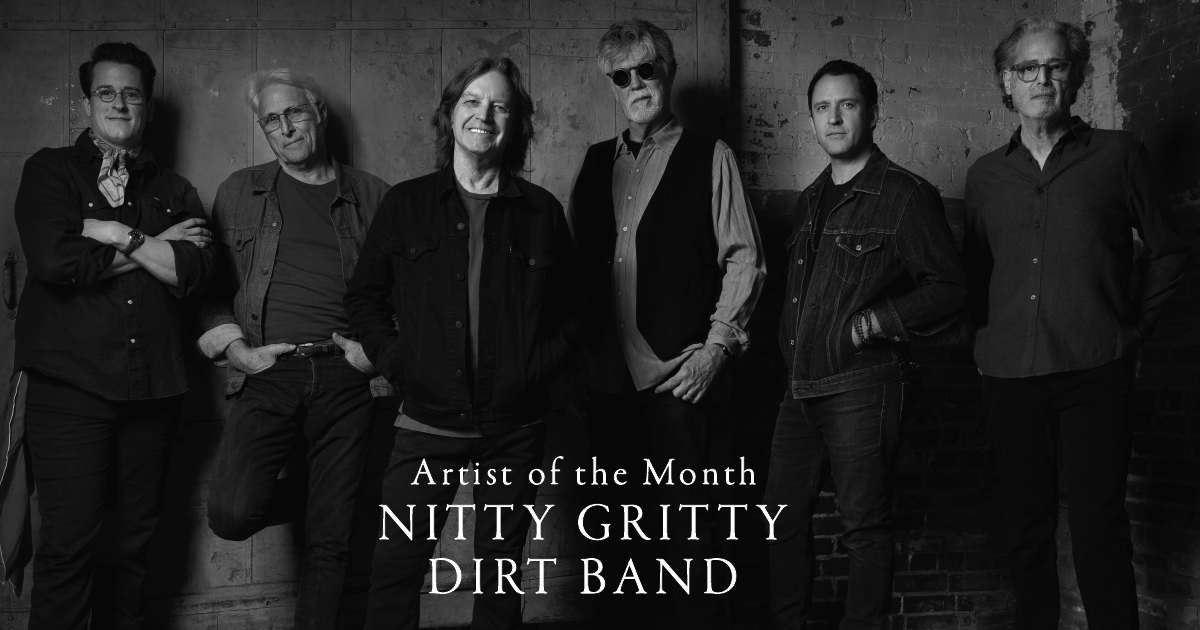
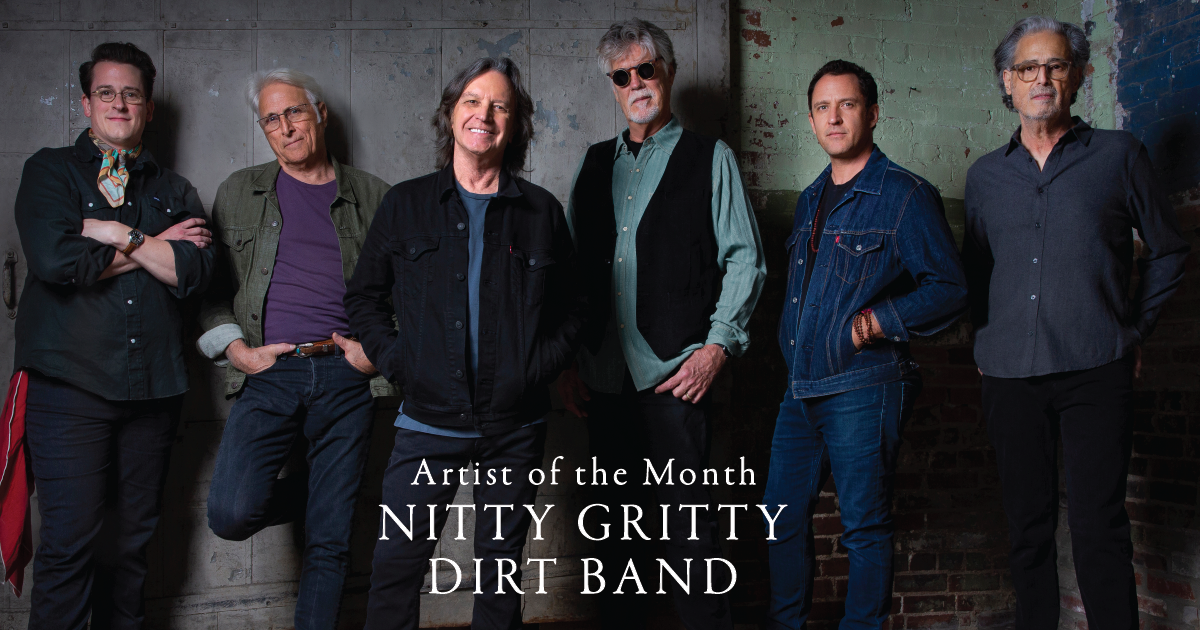
One trailblazing band is paying tribute to a true folk hero with Dirt Does Dylan, a new album by Nitty Gritty Dirt Band. The collection covers 10 favorites by Bob Dylan with guests such as Rosanne Cash, Steve Earle, Jason Isbell, and The War and Treaty. Singer-guitarist Jeff Hanna and drummer Jimmie Fadden, among the group’s co-founders in 1966, are joined by longtime bandmate Bob Carpenter and three new members: fiddler Ross Holmes, singer-songwriter and bass player Jim Photoglo, and singer-guitarist Jaime Hanna (Jeff’s son). They’ve previewed the May 20 project with videos for “I Shall Be Released” (featuring Larkin Poe) as well as a new performance clip of “Forever Young.”
On that poetic track, Jeff Hanna takes the first verse and Jaime Hanna follows with the second. “Since it started as a song Bob sang to his son, us doing it as a father-son thing, too, came out really cool,” says Jaime Hanna. “Dad singing to me, ‘May your wishes all come true’ and then me singing, ‘May you have a strong foundation’ to him. Yeah, Dylan, he’s a pretty good writer, that guy.”
Look for two interviews in the weeks ahead from the Dirt Band, our BGS Artist of the Month in May. First, they’ll discuss their roots and longevity — in fact, 2022 is the 50th anniversary of their seminal album, Will the Circle Be Unbroken. Later in the month, we’ll dig further into Dirt Does Dylan, exploring how that iconic songwriter shaped the band’s music.
Of course, at the Bluegrass Situation, we’ve been fans of Nitty Gritty Dirt Band for the duration. We published a retrospective about the first Circle album in 2016. Then in 2019, Hanna spoke to BGS about Will the Circle Be Unbroken, Volume Two, sometimes referred to as Circle 2. (A third volume followed in 2002.) Naturally we’ve covered Dylan as well, from a look at Love and Theft to selecting 15 bluegrass covers from his esteemed catalog.
We certainly agree with the Dirt Band and Dylan that the times they are a changin’, but we will say that some music never goes out of style. Please enjoy our BGS Essentials playlist for Nitty Gritty Dirt Band below.
Welcome to another week of long reads! The BGS archives are simply chocked full of golden content from across the years. So each week we’re sharing our favorite longer, more in-depth articles, stories, and features to help you pass the time. If you haven’t already, follow us on social media [on Facebook, Twitter, and Instagram] for our #longreadoftheday picks — and as always, we’ll put them all together right here at the end of each week.
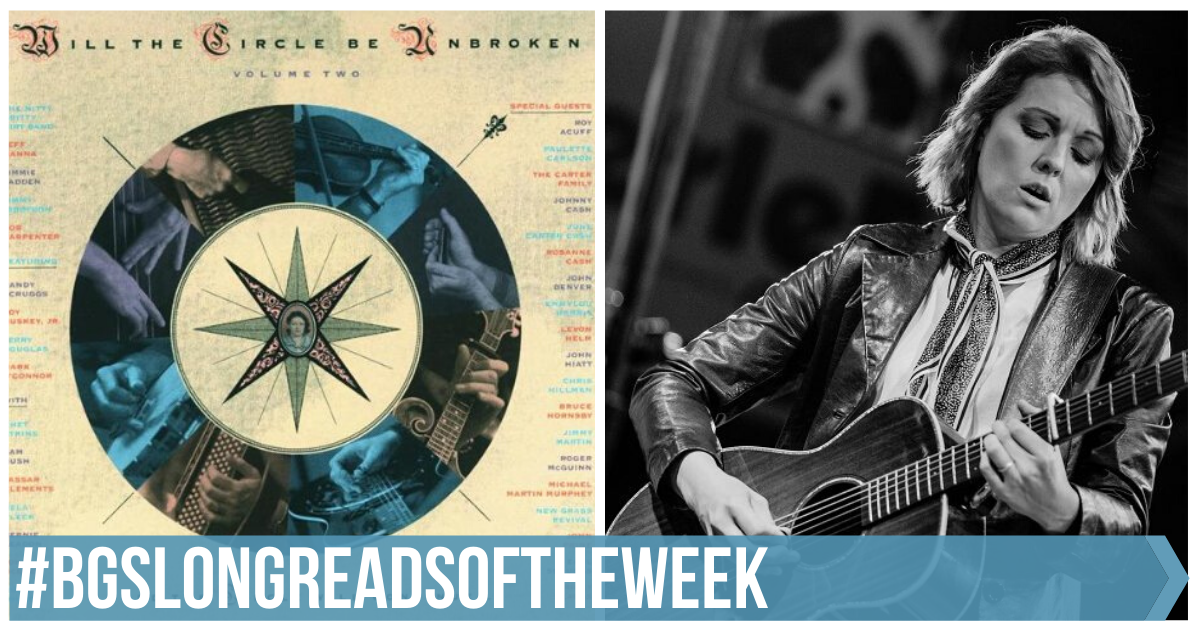
Our long reads this week are bluegrass two by two by two, they’re historic, they’re virtuosic, and they remain unbroken, too. Read more:
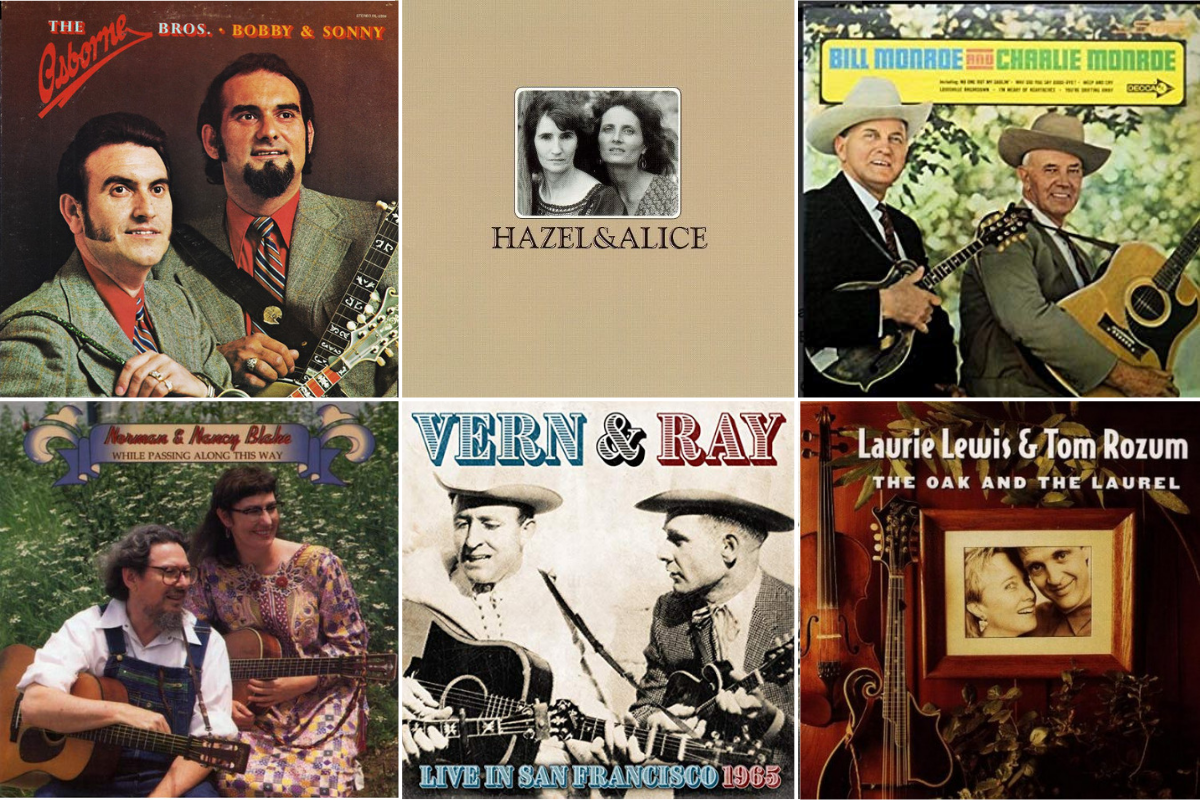
Ever since the earliest days of bluegrass and old-time all anyone has ever needed to start a “band” is just two folks, pickin’, singin’, and otherwise. This long read, a delightful collection of twenty-two of the greatest pairs to ever render a number together and call it bluegrass, could easily kill and an entire afternoon or evening — it’s a rabbit hole you’ll want to follow to its end. From Charlie and Bill to Skaggs and Rice and so much more, too. [Check out the full story]
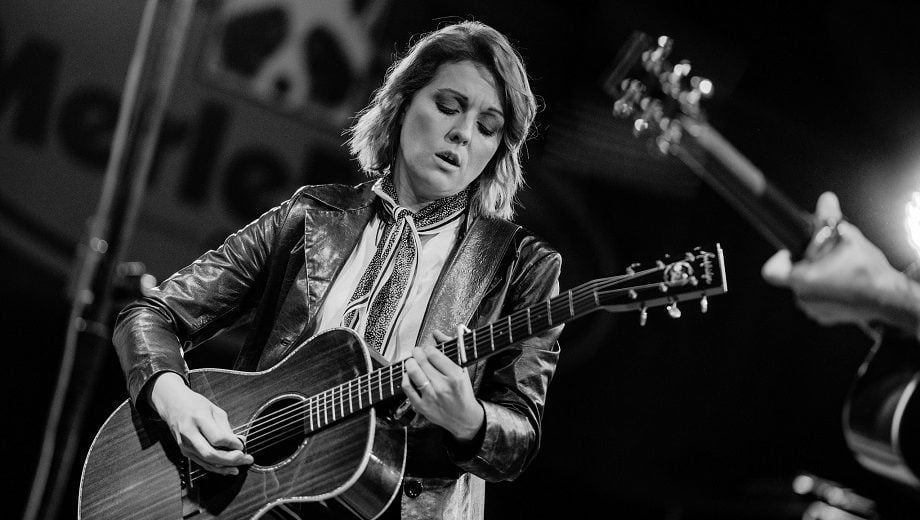
Just about a year ago now, in the afterglow of MerleFest 2019, we published this conversation with Brandi Carlile that we had in Doc Watson’s dressing room backstage at the festival grounds in Wilkesboro, NC. Carlile was about to headline the iconic bluegrass, Americana, and roots festival for the very first time — a somewhat historic occurrence that was not lost on those gathered in the storied main stage green rooms of the thirty-plus-year event. [Read the conversation]
In our interview with singer/songwriter, mandolinist, and multi-instrumentalist Sierra Hull, we dig into the fresh sonic territory she explores on her most recent album, 25 Trips. For the first time, Hull worked with producer Shani Gandhi, who helped shape the album’s diverse production styles — from stripped down tracks with just guitar and vocals, to familiar bluegrass arrangements, to songs with fuller production than those found on Hull’s first four albums. [Read more]
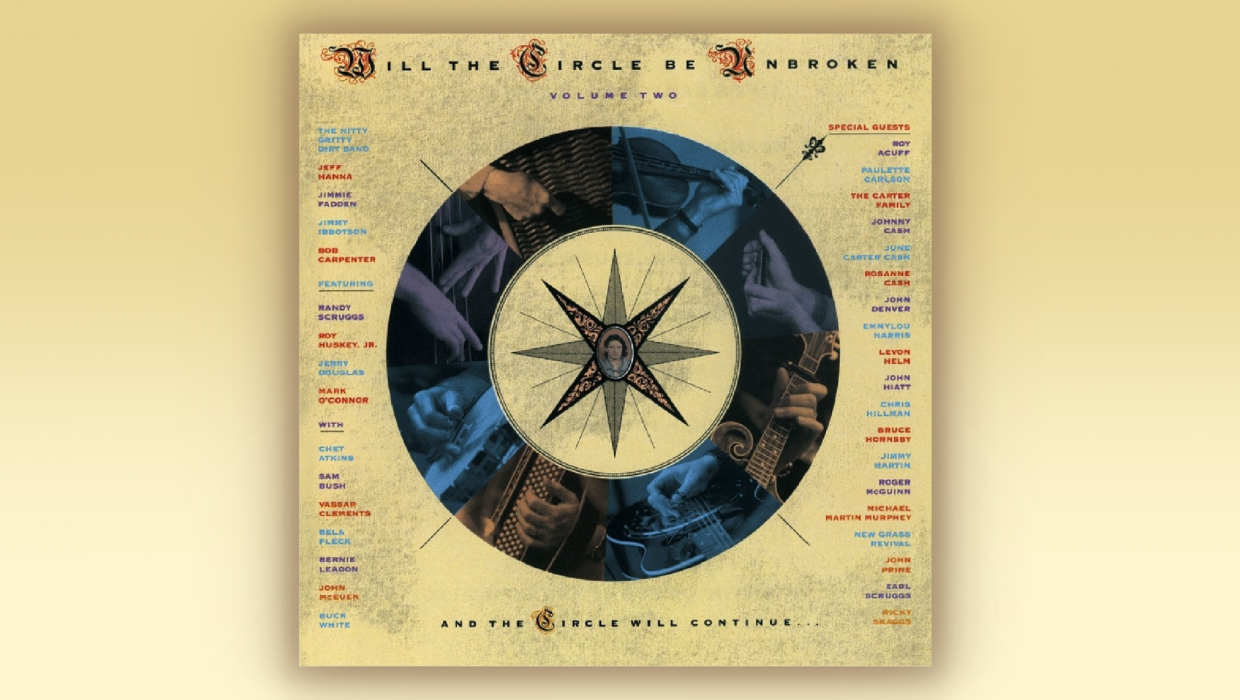
In September of last year, to mark the 30th anniversary of the “Circle 2” album, we had a conversation with Jeff Hanna about how the group was able to issue a follow-up to the first iconic Will the Circle be Unbroken record that somehow recaptured that magic while covering plenty of new ground. We coupled our interview with a special screening of archival footage from the documentary film about the making of Circle 2 at the Country Music Hall of Fame and Museum. [Read the interview on BGS]
This website uses cookies to improve your experience. We'll assume you're ok with this, but you can opt-out if you wish.AcceptRejectRead More
Privacy & Cookies Policy
Privacy Overview
This website uses cookies to improve your experience while you navigate through the website. Out of these, the cookies that are categorized as necessary are stored on your browser as they are essential for the working of basic functionalities of the website. We also use third-party cookies that help us analyze and understand how you use this website. These cookies will be stored in your browser only with your consent. You also have the option to opt-out of these cookies. But opting out of some of these cookies may affect your browsing experience.
Necessary cookies are absolutely essential for the website to function properly. This category only includes cookies that ensures basic functionalities and security features of the website. These cookies do not store any personal information.
Any cookies that may not be particularly necessary for the website to function and is used specifically to collect user personal data via analytics, ads, other embedded contents are termed as non-necessary cookies. It is mandatory to procure user consent prior to running these cookies on your website.