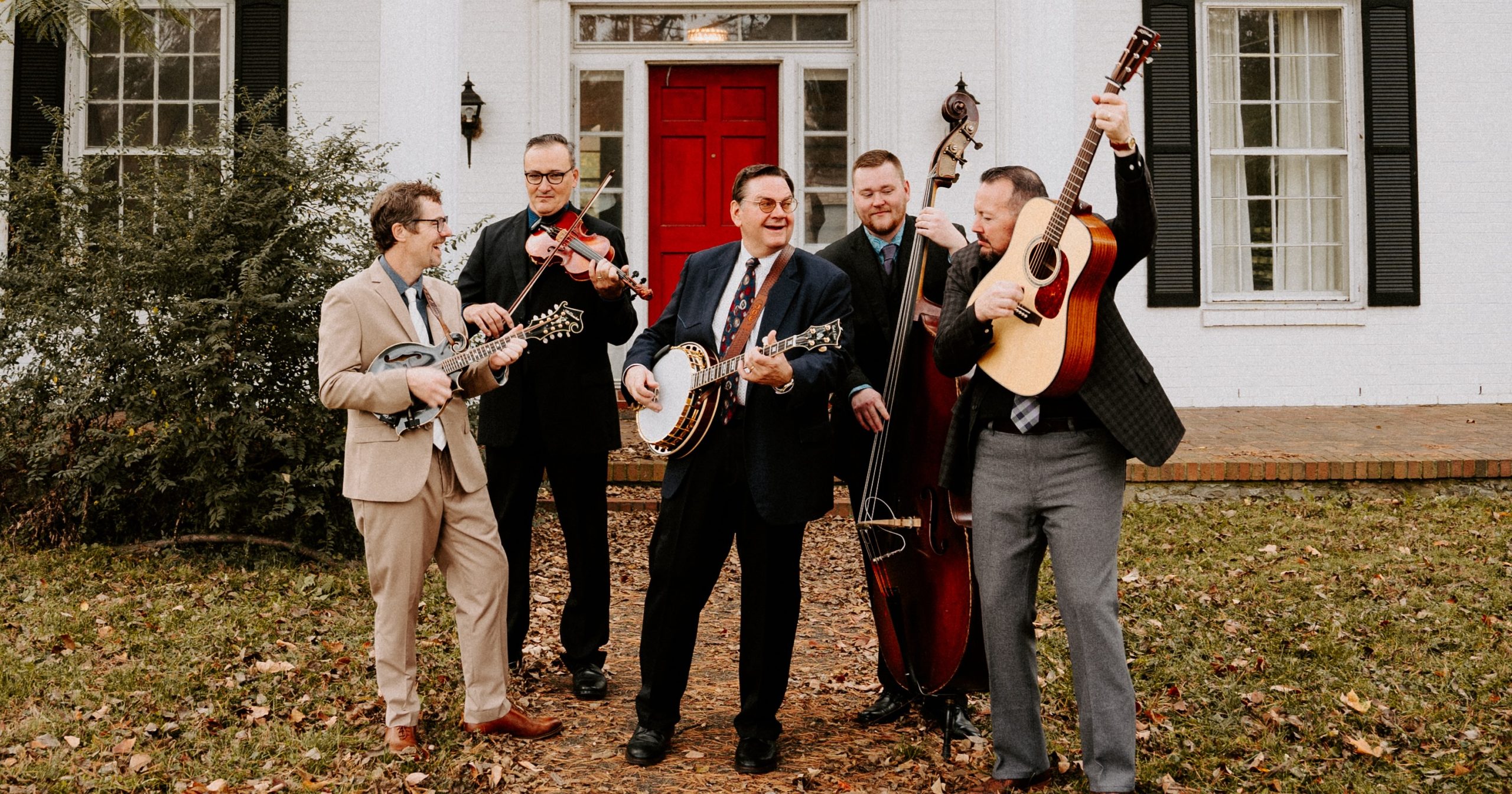
100 Years of Grand Ole Opry
Makes a Mighty Book

The sheer variety and singularity of the Grand Ole Opry – whether in just one of its shows or in just one of its many eras – would be paralyzing enough, if tasked with telling its complete, unabridged story to a broad audience. The assignment of taking the entire century-long history of the world’s longest running radio show and condensing it between the covers of a book would have to be heart-stopping. How could one ever take such a complex story full of twists, turns – and plenty of the idiosyncrasies found in human beings who make and love country music – put it down in 350+ pages?

It’s hard to imagine, but that’s exactly what writer Craig Shelburne, historian Brenda Colladay, and a host of Opry members have done with the brand new book, 100 Years of Grand Ole Opry. Shelburne – a BGS contributor and former managing editor for our website – worked with Colladay to penetrate the vast, lush archives of the Grand Ole Opry to posit its history decade by decade, chapter by chapter in the new hefty, coffee-table-ready tome. They completed dozens and dozens of interviews with Opry members, artists, musicians, employees, executives, and broadcasters and, as a result, the history book feels remarkably alive and vibrant – just like the show itself.

The book, released in April of 2025, demonstrates and reiterates time and again that the Grand Ole Opry isn’t a relic – nor has it ever been. It’s a living, breathing, adaptive being that’s enacted by a strong community of stakeholders not only from across the company that owns the brand, Ryman Hospitality, but the music industry as a whole, too. 100 Years of Grand Ole Opry showcases a country and cultural icon not waning or winding down after a century of triumphs (and trials and bumps and scrapes, too). No, instead, this book finds the Opry, beloved by all of us, merely at its next transition point, moving purposefully from the last 100 years to the next 100 years.

We sat down with Craig Shelburne on the phone to chat about the immense undertaking of writing this book, the surprises found and lessons learned along the way, and what makes the Grand Ole Opry so special, all for our Artist of the Month celebration of Opry 100.

This is such a gargantuan task, staring down the entire 100-year history of the Opry and being asked to turn it into a book. Where do you even begin? How did you take that first bite? What did it feel like to you to enter this process of creating a book?

Craig Shelburne: Yeah, 100 years is a massive undertaking and we – my co-writer Brenda Colladay and I – spent some time at Frothy Monkey in East Nashville sketching out some of the important Opry milestones in those eras when things really seemed to be shifting. As we did that, we realized that we could probably have each chapter be roughly a decade. At one point, we realized we wanted to have some breakout sections, but we didn’t know how to do that.

I wanted the book to be very readable, [without] a whole bunch of sidebars. So instead of designing sidebars, we have these pages that are interludes in between the decades, in between the chapters. You have the history of bluegrass, or the ways that the Opry has been on television, or what the Opry looked like when it went into the 21st century and a new era of technology. [That] was our chance to expand on one particular theme, rather than try to weave [those themes] into the narrative or take away from the narrative. It could be distracting if you dropped [a sidebar] into the manuscript every time the Opry was on television. Those interludes also gave us a chance to use some of these magnificent color photos [from the Opry archives] just because they’re beautiful photos. We didn’t have to necessarily set them up within the text. …

It was intimidating for a while until one night, late at night, I was writing and I realized that the main character of the story is the Opry itself. There are so many people that have passed across the stage, from Roy Acuff and Minnie Pearl up to the modern era. I wanted the artists and the cast members to be represented well, but really the main figure throughout this 100 years is the show itself. And it’s a show. It’s not a stage, it’s not a building. It’s a show.

Once I could get my head around the fact that this was the leading character in a 100-year story, the narrative started to fall into place. That was a breakthrough for me.

I also love how that format parallels the structure of the show itself. That you have segments, sets of artists performing, you have commercials and announcers and little games with sponsors, and you have talk-back sessions from artists. When you go to a show, it’s not just one thing from start to finish, it’s a bunch of different things – and there are obviously lots of interludes built in. So there’s something about the structure of the book that parallels the show in a nice way.

And telling the story of how the segmented portions of the Opry came to be was one of my favorite parts of writing the book. Basically, the Opry hired their music librarian – who was a very organized individual – to try to reign in some of the chaos from when the Opry was at what is now the Belcourt Theater [in the 1930s]. I think back then it was called the Hillsboro Theater. His name was Vito Pellettieri and he realized if he could wrangle three or four artists within the same timeframe, then these performers would now have a rough idea of when they needed to be standing side stage, instead of disappearing as musicians might have been wont to do.

Then of course, being the Opry, owned by an insurance company, the business people sensed an opportunity there and thought, “Let’s sell those segments to sponsors and advertisers.” And so that’s how the 30-minute segments came to be. Whether it was dog food or condensed milk or tobacco, if there was a sponsor for each segment, the Opry made more money that way, too. The Opry has been pretty creative in how it positions itself and how it can take advantage of good ideas quickly.

I know you spoke to dozens of artists, stakeholders, musicians, executives, broadcasters, and announcers. You and your co-writer Brenda Colladay must have done hours and hours of interviews for this book. Can you tell us a bit about that process and who you most enjoyed or were most excited to sit down with?

On one hand, the general narrative crafting you’re talking about sounds like really grueling work, but on the other hand, it sounds like doing that through these interviews was probably the most fun part of this process.

I would say the interviews were the most fun. I agree with you on that. I have the Opry show schedule as a shortcut on my smartphone now, because I would always try to figure out who was playing and who we needed to talk to.

As it should be, we started our interview series with the one and only Jeannie Seely. We felt like she needed to be first, and she deserved that. She only got about halfway through what she wanted to say [during our first meeting], so we set up another interview. It was wonderful to talk to her. Both of those afternoons were great, because with Jeannie, she’ll tell you the way it actually was. Some of it was very positive and some of it was critical, but it’s her perspective. And she was there! I didn’t get to see the Opry in the ‘60s or ‘70s, and she did. Getting to hear it directly from her was fantastic. She was also hilarious, when you got to sit down and joke around with her a little bit.

It was really important to talk to people firsthand and to go deeper than just, “Hey, what do you think of the Opry? Why is it important?” So the Opry opened up its entire archive to me, which was videos, books, newspaper clippings – pretty much anything that I wanted to look at, read, or watch. When I knew I had an interview coming up, I would spend several hours reading clippings and reading stories in order to come up with questions specific to their Opry experience. Rather than just, “Tell me about when you moved to Nashville. Tell me about this. Tell me about that.” Those aren’t questions, those are just prompts. When the people came in to talk to us, we were usually in pretty much a supply closet for camera equipment. It was a really small room. We didn’t have any cameras. We wanted everybody to be casual and comfortable and not worry about makeup and hair.

Then it became a very comfortable conversation. We started every interview with the same question, which was, “What is going through your mind in those moments before the curtain comes up?” Everybody had a different answer. That put them in the frame of mind of talking about the Opry, I think, more than talking about themselves. They went pretty deep, back in their memories, of how they discovered the Opry and what it’s meant to them. Quite a few of those artists went to the Opry as kids. So then they started talking about their family and what the Opry meant to their family, there were a lot of emotions.

I think some of those artists expected it to be like a 10 or 15 minute interview to grab that [sound] bite that says, “I sure do love the Opry.” But we went really deep and spent more than an hour talking with some of these artists. You don’t get to put everything like that into the book, but suddenly now we have an oral history from these modern contemporary performers that will live forever. When somebody writes about the Opry in 50 years from now, they have it straight from the artists, [speaking] about their path to that stage.

I think that’s one of the best accomplishments of this book, that it tells the story in such a rich, full way that isn’t just the mythology and isn’t just the good parts and the glitzy parts. It sounds like part of how you were able to accomplish that is by having these interviews set up in such a way that you could build trust with folks, so they didn’t feel like they were just giving you that marketing sound bite. They could really tell you those full stories.

I think a lot of that came from the Opry headquarters. They wanted us to tell [it] the way it happened. A woman named Jenn Tressler, she handles a lot of the talent requests there and I think she primed most of these artists about what the interviews would be like and what the goal was. Just [so they would] be comfortable and [know] no topic is off limits. Artists were asked some pretty sensitive questions sometimes about the relationship with the entertainment industry in general, including the Opry and the artists rose to the occasion.

We wanted to tell the actual story. I’ve often felt that nobody wants to read a book where everybody’s happy and there’s no conflict. There’s conflict in this one.

From your interviews or from writing this book, what was a story or two about the Opry that stuck out to you or surprised you? Or, that brought you to learning something new that maybe you wouldn’t have tripped over into if you hadn’t done this book? Is there a story or two that stand out to you?

The first one would be just how young everybody was when they got involved with the Opry. George D. Hay was a young man; Harry Stone, who was one of the early program directors, had just turned 30 when he took on that role. The artists were [in their] 20s and 30s. You had a very young Bill Monroe, Roy Acuff, Minnie Pearl, coming on the stage and changing the game for country music.

Sometimes the Opry is perceived as the elder statesman of country music – and that’s true and they’ll always have a place there, it’s wonderful. But a lot of the shake-ups at the Opry and a lot of the progress that’s been made was because of these young, innovative perspectives. That happened over and over. I think without that viewpoint from people who were younger, the Opry would’ve struggled through the last hundred years. There would’ve been times somebody might’ve said, “I want it to stay the same way, ’cause this is how we’ve always done it.” It’s never the right answer, to do it just because it’s always been done that way. I think that was pretty fascinating to me.

The other thing I didn’t realize was that it was not until I believe 1978 that the Opry was ever aired on television. It was a PBS special. If you wanted to see the Opry, you had to come to Nashville for the first 53 years. After that one night on the PBS special, it didn’t happen again until the following year. Being able to see the Opry, you had to come to Nashville, and I think executives at that time feared that if you put it on television, people would stay away from the show and they wouldn’t sell tickets anymore. But time has proven just the opposite. People saw it on television, how exciting it was and they felt like they needed to be there, myself included. I watched it growing up in Nebraska as a teenager and I just was fascinated by it. By that time, of course, it was on TNN.

I watched it many a Saturday night with my grandparents and I didn’t always know who those legendary figures were that were sharing the stage with Alan Jackson or Clint Black or Alison Krauss. But because of the Opry, I got a country music education as a teenager before I moved to Nashville in 1994. By the time I got here, I feel like I had a leg up on other people who wanted to write about country music that were my age.

You’re pointing out another fact that we often forget about country music, hillbilly music, these traditions that made these musics. It’s that all of them are constantly changing and growing, morphing and adapting to the future – and responding to the present.

Like, the reason the Opry became what it is today was because of technology, because of the “Air Castle of the South.” Because of radio, because there wasn’t a lot of competition on the literal bandwidth, and because the tower was so tall it could reach so many people all across the country. To think that, nowadays, when we view “tradition” in 2025, we think that means not changing something.

Wrong!

But the Opry has always been changing and always been using cutting edge technology to do that. And country wouldn’t exist without technology, without the railroad, without industrialization, without radio, without recording technology becoming portable and handheld.

Oh, absolutely. Well said. It has to change, and the Opry does figure out a way to reach new listeners and engage with people that have never been there. Obviously, when you go to the Grand Ole Opry House for a show now, the emcee will say, “Who’s never been to the Opry before?” And a lot of hands go up. They’re constantly marketing the show – as they should be. They want people to have a seat in the Ryman or the Opry House to see how special the world’s longest running radio show is. I give them a lot of credit for always trying to reach new people and not just looking for what they’ve done already in the past. They take a lot of pride in the fact that no two shows have ever been the same.

I was just listening the other night [on the radio] and I was able to catch the Opry debut of Grupo Frontera. I thought it was such a perfect example of what you’re talking about, that a Spanish-speaking, Spanish first language group that makes country. Of course, it’s Mexican folk and Tejano and Latin folk and all these other things as well – but it’s certainly country & western. [They were] making their debut and you could hear the building shaking through the radio. It felt like one of those iconic ovations we hear about from the old days, with everybody stamping their feet in the balcony of the Ryman. The Opry is still doing that. And not only are they doing it, but this year for Opry 100, they’re doing it over and over again where they’re having these shows with these special moments, reaching new audiences.

And it was a brilliant move, because those fans now have a general idea of what the Grand Ole Opry is, how it is performed, and they got to hear some music from people they maybe hadn’t heard of. I know Frank Ray was on the show that night, he might’ve gained some fans from those who came to see Grupo Frontera. It’s a win for everybody when an artist of that caliber plays the Opry.

There was a great moment, after doing some digging, where I found the full performance of when Porter Wagoner invited James Brown to come play the Opry. It was like a 20-minute segment – there are some things online where you hear bits and pieces of it. But the Opry archive had it from start to finish, so I just sat there and listened to it. There was some screaming and hollering going on that night, too. It was exhilarating to listen to it. Then I found an oral history from Porter Wagoner – I quoted it in the book – that said, when you bring someone of world-renowned stature to the Opry, it benefits the Opry. You want the Opry to be in the news, because it draws attention to the show.

We’ve already talked about Jeannie Seely, but I wrote my concluding question with her in mind, as well. She passed in August of this year and when she did she had performed on the Opry almost 5,400 times. (The number is 5,390-something.) That longevity is incredible. So thinking about longevity, we’re standing here at the milestone of a hundred years of the Grand Ole Opry, looking at potentially another 100 years of the Grand Ole Opry coming up.

Do you see this modern era of the Opry as its golden age? Do you think the golden age of the show is yet to come? And who are you seeing that’s just getting their start “in the circle” nowadays that is gonna be like Jeannie Seely in a few decades, thousands of appearances into their Opry career?

Yeah [the future] looks strong to me, too. Something I never put into context until I wrote the book was that in the 1990s the Opry lost Roy Acuff, Minnie Pearl, Grandpa Jones, Bill Monroe, and Dottie West. And you just think, “How do you recover from that?” They did. They figured out a way to press on.

There were definitely growing pains and bumps, but some of those figures that they picked out in the early 2000s have become advocates for the Opry, champions for the Opry. The ‘90s country stars that I love, like Lorrie Morgan, Pam Tillis, Vince Gill, Steve Wariner, and Marty Stuart are still out there. They still play the Opry – and they’re the elder statesmen now. I do think the cast members that joined in the ‘90s and 2000s are gonna become a foundation for the show.

I think you’ll be seeing Trisha Yearwood out there quite a bit as she settles into the “twilight years” of her career. I sense that she will be out there singing alongside Kathy Mattea and Suzy Bogguss. I think Opry is in really good hands with the young women that they’ve invited to be part of the cast. More than once, without any prompting, artists like Carly Pearce and Lauren Alaina have said they feel the responsibility to be here. And I think Lauren Alaina is very likely to inherit the comic routines of Jeannie Seely – she’s pretty much already there. She had us rolling in laughter in her interviews. She’s got the natural timing of a comedian, but she’s got hit songs, too.

I think the Opry is in really good shape right now. They’ve done a good job of connecting to a younger audience that wants to play it. It’s a career goal now for a lot of inspiring artists. I think when I moved here in the ‘90s it was seen as living history and you had to have some history to get on that stage. But now you just have to have a good story, some musical talent, and an ability to connect with an audience. That’s easier said than done, but if you can have those three things, the Opry will take a chance.

I think they’ve found a recipe for success. They set themselves up to succeed. There are times in the music industry where it seems like things are crumbling or those pillars are not as strong as they used to be. But I think right now the Opry is as strong as it’s ever been. I don’t see it going anywhere anytime soon.


Lead image courtesy of Ryman Hospitality Properties.
How-dee! And Happy 100 to the Grand Ole Opry

In 1925, world leaders were signing the final treaties coming out of WWI; Congress authorized work on Mt. Rushmore as a national memorial; the Scopes Trial was held in Tennessee; and the first patent on radio transmission was only 28 years old.

And, in 1925, WSM first broadcast its barn dance – soon to become the Grand Ole Opry.

One hundred years later, the Grand Ole Opry is the world’s longest-running radio program. After a century that saw changes unparalleled in world history, audiences are still drawn to the Opry. Every week thousands make the pilgrimage to the Grand Ole Opry House in Nashville while others tune in around the world. The show continues to inspire new generations of performers to aspire to step “into the circle” on the Opry House stage.

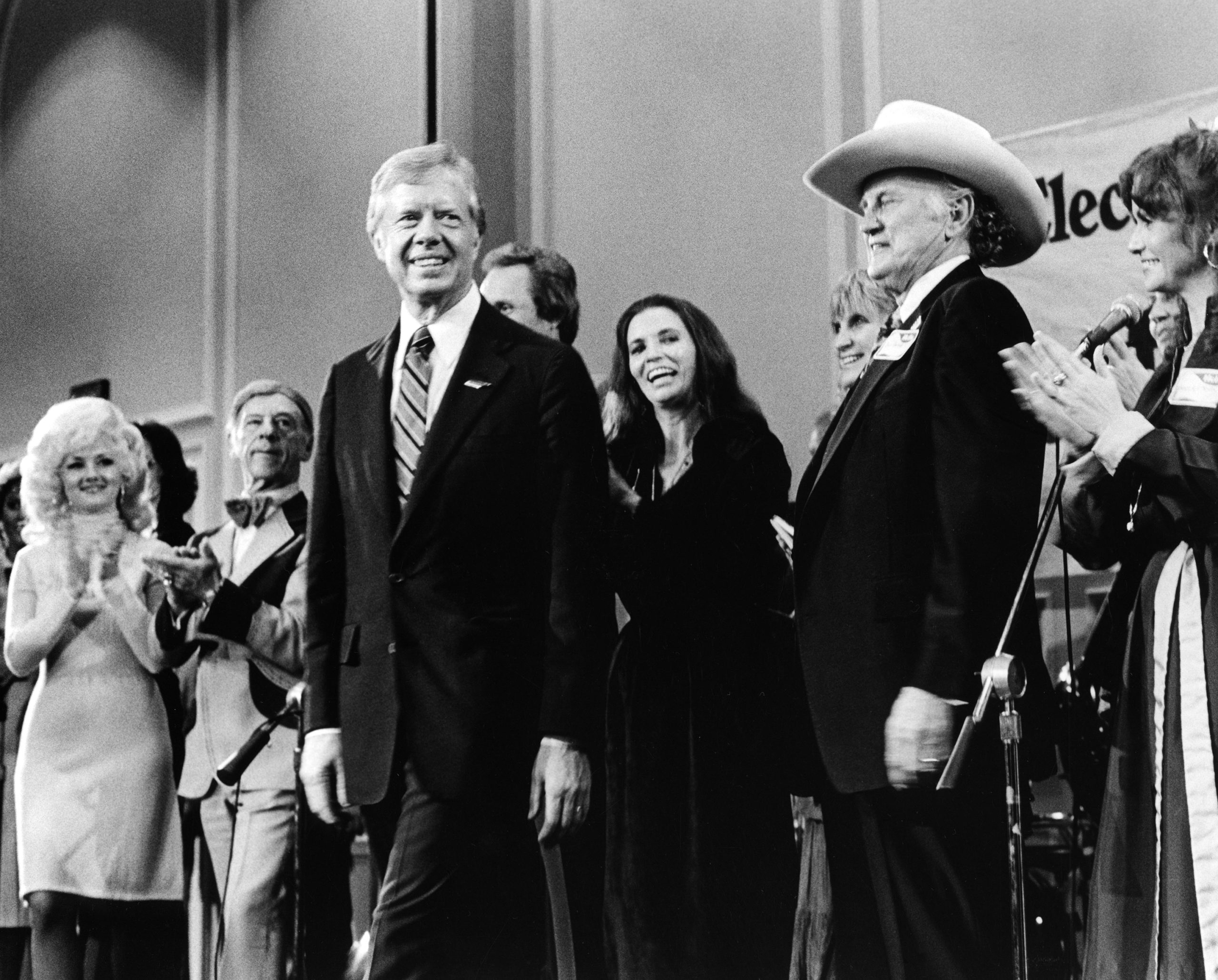
President Jimmy Carter on the Grand Ole Opry stage with Kelly Foxton, Hank Snow, Mel Tillis, June Carter Cash, Skeeter Davis, Bill Monroe, Jeannie C. Riley, and others on October 9, 1980. Photo courtesy of Ryman Hospitality Properties.
In The Beginning Was Insurance

In the 1920s, Edwin Craig was watching radio stations emerge across the nation – and seeing the money-making potential for sponsors and owners. He convinced Cornelius Craig, his father and founder of the National Life and Accident Insurance Company, that a radio station could sell a lot of insurance.

Soon, the fifth floor of the company’s downtown Nashville building held a radio studio. The call letters WSM stood for “We Shield Millions,” the company’s motto. A program that would become the lifeblood of country music started as a way to promote life insurance.

The hiring of George D. Hay away from Chicago’s WLS was the beginning of the WSM Barn Dance. The 30-year-old who called himself The Solemn Old Judge and started every show with a steamboat whistle would set the tone for much of the Opry’s 100 years – including its name.

Which all started with a clash of cultures.

Some upper-crust Nashville residents complained the only radio they could hear on weekends was string band programming from the dominant WSM station. In response, WSM began carrying the syndicated “Music Appreciation Hour.”

The Barn Dance slot followed the classical program, and Hay, not one to pass up a good line, said, “For the past hour, we have been listening to music largely from Grand Opera, but from now on, we will present ‘the Grand Ole Opry.”

George D. Hay is pictured at microphone with a whistle and Uncle Jimmy Thompson is seated in this 1925 photograph from when the Grand Ole Opry was still the WSM Barn Dance. Photo courtesy of Ryman Hospitality Properties.
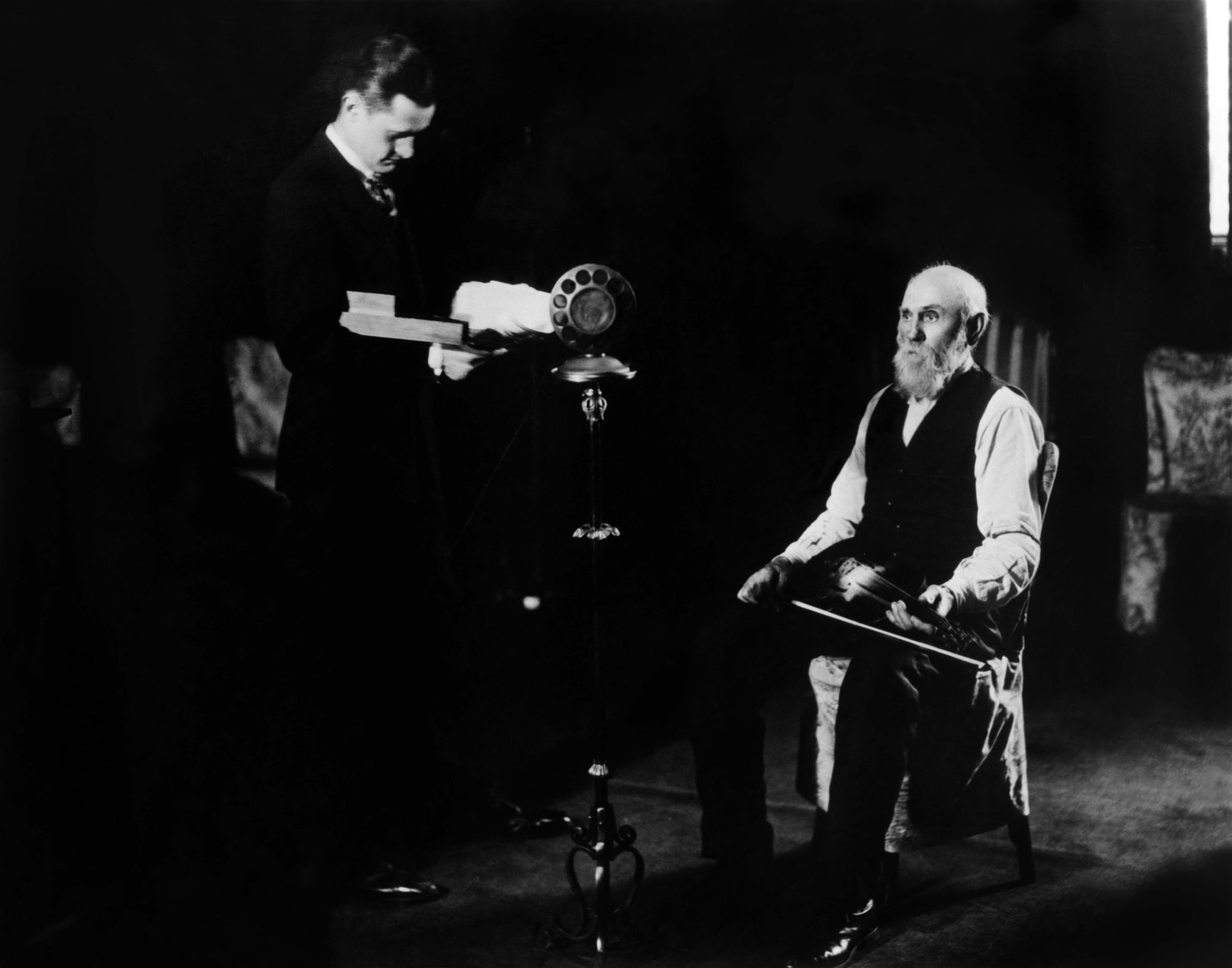
For years, the Shield Men – door-to-door National Life and Accident insurance salesmen carrying the company’s shield logo – introduced themselves as representing the Grand Ole Opry. They would even listen outside windows to see who was tuned in to the Opry – and who would be a likely customer.

The earliest WSM shows relied on local talent, running heavily toward fiddlers and string bands. But Hay would invite whoever he thought the audience would like.

DeFord Bailey, a Black musician grounded in both the blues and old-time string band music, became a regular, wowing audiences with his harmonica. Kitty Cora Cline, the first female soloist, performed on hammered dulcimer, and Fred Shriver played the accordion. Uncle Dave Macon on his banjo with Sid Harkreader on fiddle and guitar set the stage for the comedy that would remain central to the Opry’s success, with songs like, “Keep My Skillet Good and Greasy.”

A Beacon

As the recording industry grew, the variety of musicians available to the Opry grew, as well. The show began featuring brother duets, cowboy music, Western swing and solo crooners. Bill Monroe & the Blue Grass Boys were featured stars for decades.

Opry singers expressed the joys of new romance, the happiness of Sunday dinner on the lawn, the sorrow of lost love, and the loneliness of leaving home. Audiences across America listened – and related. The Opry became a focus of family life.

Dolly Parton, like many rural listeners, grew up without electricity. Her family faithfully listened to the Opry on a battery-powered radio. Waylon Jennings’ dad would hook their radio to the car battery. Jeannie Seely’s family would pile in the car and drive up a hill until they could get the signal. Opry history is filled with stories of musicians who listened as children – and dreamed of growing up to perform, like their idols, on the iconic stage.

Opry member Dierks Bentley, who gracefully moves between country and bluegrass, told BGS, “Being invited to join at all is the biggest honor – especially for me, personally. I grew up listening to all the Opry greats on the radio with my dad, so becoming a member is like having the ultimate backstage pass to see the best musicians in the world. And to be invited by Marty Stuart … hands down, it was one of the coolest nights of my life.”

Dan Rogers, the Opry’s senior vice president and executive producer, said the Opry has always been a place to celebrate the good times and be uplifted during the tough times. “Think about,” he said, “the folks who tuned in on Saturday nights during World War II. That was their only source of entertainment throughout the week.” Minnie Pearl, with her signature “How-dee,” and Roy Acuff gave them respite from war news.

On the first show after the 9-11 attacks in 2001, Rogers said, “Our background singers sang an a cappella version of ‘God Bless America.’ And one by one, the people in the audience stood and sang along. And I remember thinking, I bet everybody tuned in across the country is singing along to ‘God Bless America.’”

The Opry’s response to the COVID-19 crisis created desperately needed connection during a frightening time of isolation.

Just a week after deciding that live audience shows weren’t safe, Opry staff arranged a pared-down streaming production with no audience and a skeleton crew. Longtime cast members Bill Anderson, Jeannie Seely and Connie Smith held down the first night alongside Mandy Barnett, Michael Cleveland & Flamekeeper, and Sam Williams.

For the second weekend of restrictions, veterans Vince Gill, Marty Stuart, and Brad Paisley sat on stools spread out across the stage and pulled off what Rogers called “a beautiful, beautiful show.”

Watching from his office, Rogers started reading comments from grateful listeners. For months, people marked their calendars to tune in. They wrote, “I’m in Europe. I set my alarm. It’s 2 a.m. here, but I wanted to experience this with a community.”

Marty Stuart, Vince Gill, and Brad Paisley perform for an empty Grand Ole Opry House during the COVID-19 lockdowns in 2020. Photo by Chris Hollo, courtesy of Ryman Hospitality Properties.

Kathy Mattea, the newest Opry inductee, feels those connections whenever she performs there.

People may have sung along to her hit “18 Wheels and a Dozen Roses” in their car or in the shower, but at the Opry, she says to BGS, “Here’s your chance to sit with an audience and sing this song that everybody knows. Nobody knows who the person next to them voted for and it doesn’t matter at that moment.”

“The Ellis Island of Country Music”

In the early days of radio, what was called hillbilly music was as limitless as the range of a 50,000 watt radio station. And the Opry remains dedicated to maintaining those wide open spaces.

Garth Brooks and Trisha Yearwood, in their forward to the book 100 Years of the Grand Ole Opry, refer to the show as the “Ellis Island of Country Music – a place where all are welcome.”

Contemporary country often has been accused of being homogenous and limited. But despite the factors that have controlled commercial country, the Opry maintains its open-arms attitude. Rogers said, “The two core tenets of an Opry show are celebrating the past, present, and future of country music, and also showcasing multiple genres under the country music umbrella.”

In any show, he said, “You might have something that’s on the top 20 of the country charts today. And you’ll have country classics. You might have a contemporary Christian song, Americana string music, or even something from outside the genre by somebody who just happens to be a country music fan or was influenced by country music.”

In 1974, the R&B-oriented Pointer Sisters included an original country song, “Fairytale,” on their second album. The cross-over hit earned them an invitation to the Opry stage, where they became the first Black group to perform.

Ringo Starr appeared for the first time in 2025 and James Taylor’s debut on November 11 will be remembered as a big part of the 100th anniversary celebration.

And, Rogers said, “Because we can do it, it’s fun to take a chance on a new artist.”

Before his first Opry appearance in July 2022, Zach Top had no hits to his name. But Rogers remembered the programming team saying, “You don’t see an artist like that every day. It sure feels to us like our audience would absolutely eat that guy up!” Today, Top’s music is everywhere.

Bluegrass has been a staple since before it had a name and it has never lost its place on the stage. Bentley and Del McCoury played “Roll on Buddy, Roll On” when the Grand Ole Opry House first reopened after the 2010 flood closed its doors for months.

Charlie Mattos is a 10-year veteran Opry announcer and longtime co-host and producer of WSM’s morning show. He said that on any given night, a portion of the Opry House audience “may truly have never seen a bluegrass band play.”

“And when Del McCoury and the boys finish with an incredible instrumental,” Mattos continued, “or Sister Sadie blisters the stage … the enthusiasm that comes out of that crowd, the immediate standing ovation for the insane musicianship that they have just witnessed …” Mattos said, “it blows their minds.”

Mattea said, “Bluegrass is front porch jazz – the virtuoso playing and the vocals and the harmonies and the trading off of licks. That’s how I fell in love with bluegrass.” And the Opry exposes millions to that brilliance.

A Good-Natured Riot

The Opry show is a complex set of acts and sets requiring precision planning, flexibility, and good nature on the part of the announcers – and commitment on the part of the performers. Rehearsals are brief or non-existent. Timing is everything.

Borrowing a phrase from George D. Hay, the Opry is still sometimes called a “good-natured riot.”

Mattos said, “When you come to see the show live, you see it all. The set changes. The artists leaving as the announcer sends them off. You can see the stage crew out there and usually in 90 seconds they can completely swap things around.”

But while reading a commercial during set changes, Mattos may notice the stage manager giving the “stretch” signal. He might have to keep talking for as long as four minutes – a millennium in radio time.

Sometimes the commercials themselves become the entertainment.

The first time Glad Wags sponsored an Opry segment, Chuck Morgan was announcing. While he stood off-stage reading the dog food commercial, house bassist Bill Linneman came up behind him and started barking. “By my last year there, there were like 20 people behind me going at it,” Morgan said. (The consensus is that Connie Smith does a great chihuahua imitation.)

A Family

Jeannie Seely – who racked up nearly 5,400 performances on the Grand Ole Opry before her passing in August 2025 – remembered it was more than the music that fueled her desire to join the Opry: “That’s hearing these people, like Mr. Acuff and Minnie [Pearl] and Jimmy Dickens and all of them, coming together every week,” she says in 100 Years of the Grand Ole Opry. “They always sounded like they were so glad to be together. They picked on each other and joked, and I thought, that’s just like a family.”

And they were family. When the plane Jim Reeves was aboard crashed in a wooded Nashville suburb, Marty Robbins and Ernest Tubb joined the search party, as did the elegant Nashville socialite Sarah Ophelia Colley Cannon – known as Minnie Pearl.

Opry star Jean Shepard was expecting her second child with husband Harold “Hawkshaw” Hawkins when Hawkins died in the plane crash that also killed Patsy Cline and Cowboy Copas. After months feeling adrift, as Shepard was quoted in the 100 Years book, “I looked down my driveway one day and here come two big black limousines full of the so-called ‘higher-ups’ from the Grand Ole Opry. They said, ‘We want you to come back to the Grand Ole Opry.’ And it really meant a lot to me.”

The family feeling is no accident. In earlier years, Opry members had to perform a specified number of Saturday nights a year. While there’s no set number today, Rogers said they look for a sense of commitment in new members. “It truly is about that relationship,” he said.

Rogers quoted Mattea, upon her invitation to become a member, saying, “These people treat you like family, no matter what.”

One of Mattea’s favorite Opry memories involves a bass player who toured with her. “He was sitting on a stool, playing and singing some old Western swing chestnut, and suddenly Riders in the Sky leaned into the dressing room in full regalia and started singing harmony.

“He was gobsmacked. He felt it was the highlight of his life,” she said.

Bluegrass performer Kody Norris’ music is influenced heavily by first- and second-generation bluegrass. But the band’s preference for flashy suits dates back to a family-friendly welcome Norris received 25 years ago.

His parents took nine-year-old Kody backstage at the Opry, “and I met Bill Anderson. And he had on a red rhinestone suit. That’s the first one I ever saw up close, where I could touch it.”

Later that day, upon meeting his equally rhinestone-clad hero, Porter Wagoner, young Kody got so excited he spit out his chewing gum. Wagoner graciously grabbed two Opry-logoed napkins, one of which the little boy used for his gum. The other one the grown Norris still keeps in perfect condition.

The Circle is Unbroken

In 1974, the Opry left its revered home of decades, the Ryman Auditorium, to move to the deliciously air-conditioned 4,400-seat Grand Ole Opry House.

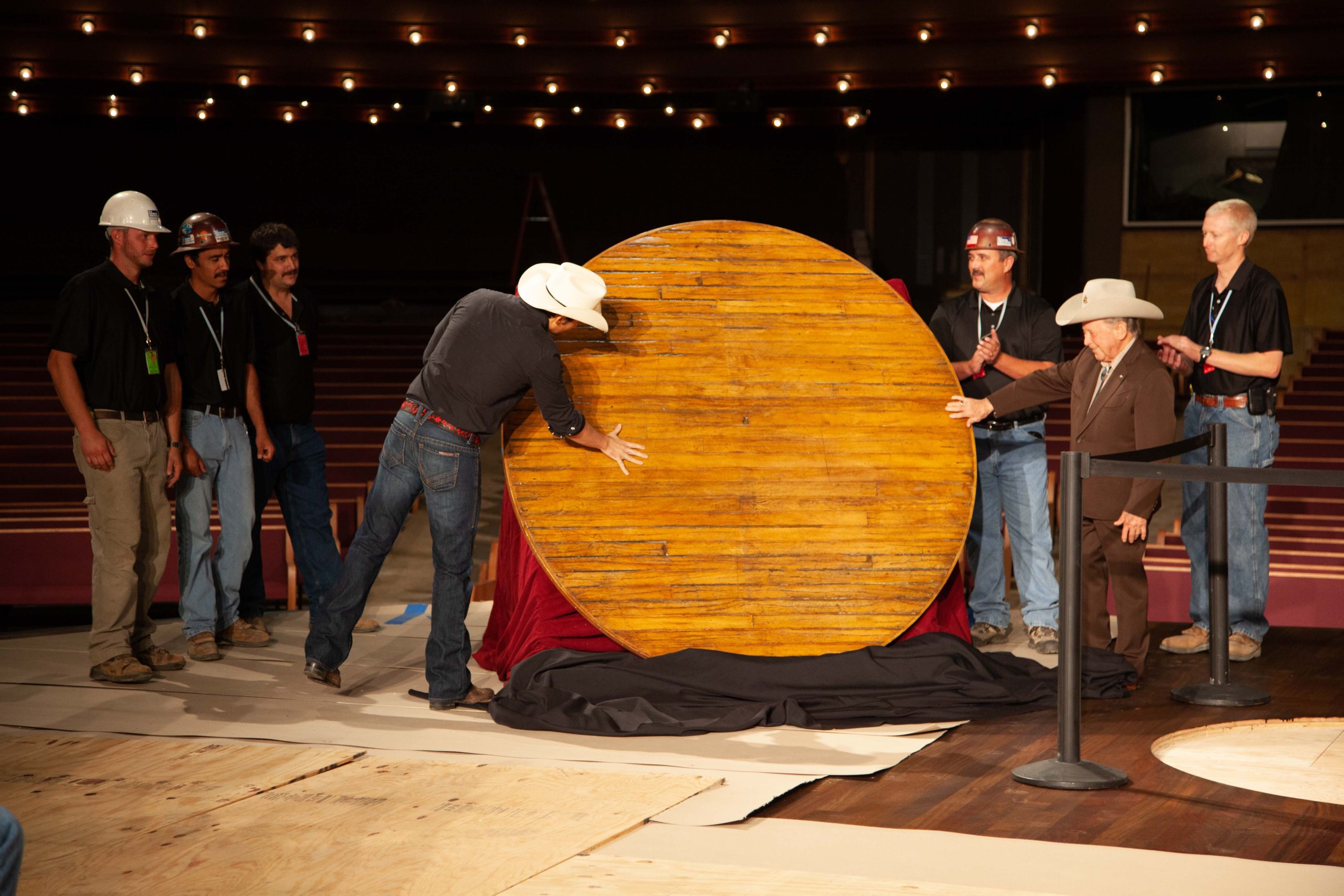
To honor its longtime home, the Opry crew cut a circle out of the Ryman stage and inset it in the new Opry House stage. The circle symbolizes the Opry’s continuity, respect for the past, and optimism for the future.

Mattea experienced that sense of a completed circle on the day she became an Opry member.

“Suzy [Bogguss] was there. We’ve toured together and sung on each other’s records. She’s my closest artist friend, and she was the only one at the ceremony who was not a member. And I thought how generous it was of her to be there.

“So, while I was overflowing with celebration, to get to invite my friend to the party publicly in the name of the Opry was the sweetest gift. It was a moment I’ll never forget, and I’m going to be there for her induction, too.” Bogguss will officially be inducted as an Opry member in early 2026.

Braid Paisley and Little Jimmy Dickens return the Circle to the Opry stage after the 2010 flood. Photo courtesy of Ryman Hospitality Properties.
Join The Celebration

There’s nothing low-key about the Grand Ole Opry – so in the classic Opry spirit, fans have had plenty of opportunity to celebrate the centennial all year long.

Earlier this year, NBC broadcast a three-hour anniversary special, with dozens of stars ranging from Reba McEntire to Jelly Roll to The War and Treaty. The Opry also took the show to London’s Royal Albert Hall for the very first time. You can stream clips of these and other Opry events on YouTube and social media.

With the Virgin Music Group, the Opry has produced the album Opry 100, Country’s Greatest Songs (released November 7). Among the unforgettable recordings are Vince Gill singing his heart-rending “Go Rest High on That Mountain,” Dolly Parton singing “I Will Always Love You,” and Ashley McBryde covering the classic “Your Cheatin’ Heart.” You can order the album from the Opry site.

Craig Shelburne, Brenda Colladay, and Opry members and employees collaborated on 100 Years of the Grand Ole Opry, a book filled with anecdotes and photos that vividly illustrate the Opry’s remarkable history. And to teach your children well, there’s also a new childrens’ picture book written by Emily Frans and illustrated by Susanna Chapman. Find them in your local bookstore.

And, on November 28, 2025, the official 100th anniversary of the Grand Ole Opry we all hold dear, the Opry is celebrating with two huge birthday party shows featuring country stars and Opry members like Vince Gill, Ricky Skaggs, Trace Adkins, Dailey & Vincent, Bill Anderson, Jamey Johnson, Marty Stuart, and many, many more. Tickets are available here.

Of course, the celebrations will continue in 2026.

“The Opry is the core and soul of country music,” Bentley said. “It’s a place where the past, present and future of our genre all come together. There isn’t anywhere else like it.”


Continue exploring our Artist of the Month coverage of Opry 100 here.

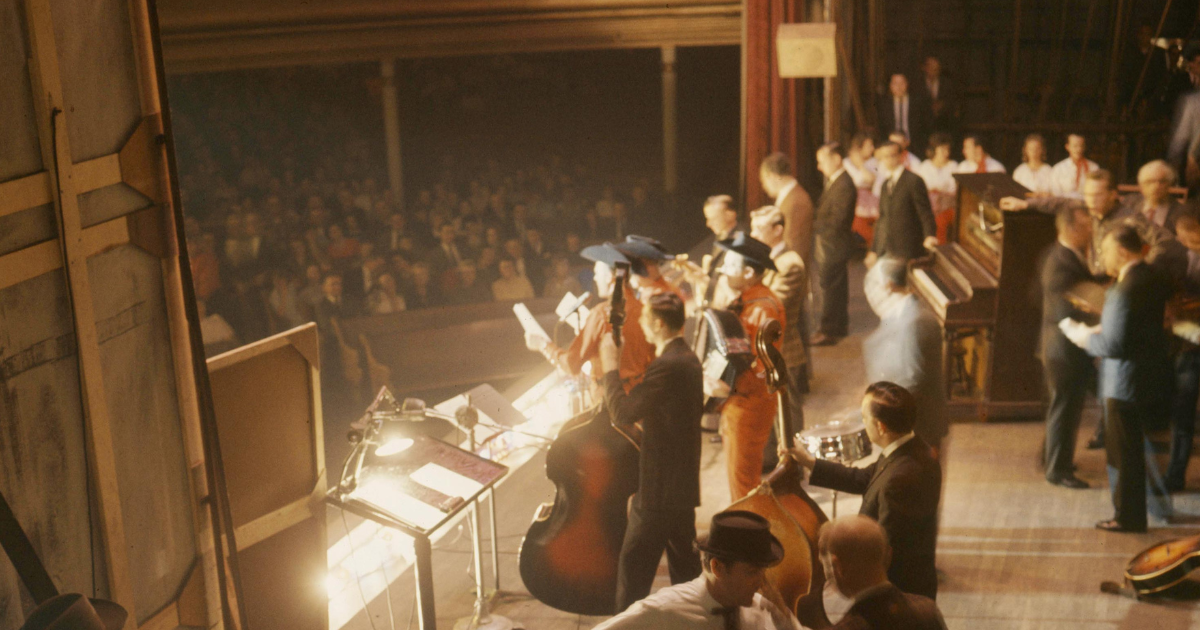
All photos courtesy of Ryman Hospitality Properties, credits and attributions as marked. Lead image: Bill Monroe & the Blue Grass Boys and the Opry Square Dancers take the Opry stage at the Ryman Auditorium in the 1960s.

MIXTAPE: “Tempus Fugit” – Joe Mullins’ Past, Present, and Future Playlist

I’m rarely satisfied with the status quo. And I love roots music that is bona fide. Well, I’ve used up most of my Latin vocabulary very quickly.

I didn’t know what “Tempus Fugit meant until I got a wonderful new song from Tim Stafford and Missy Raines, both great artists, writers, and old friends. Missy and I were together with our bands at Americanafest in Nashville in 2024. I was chatting with her and said, “We’ve been doing this a long time,” since we got acquainted in the 1980s, as we were both learning everything about the bluegrass community. Missy said, “Yes, but we have heard so much great music and met so many wonderful people. And getting older isn’t a bad thing!” Then she told me she and Tim had a song about the subject. I had to hear it and I loved it!

Our new single, “Time Adds Up (If You’re Lucky)” is out just a few weeks after the new gospel album from JMRR was released in March. Thankful and Blessed is a collection of eight new sacred songs and two revived oldies. I’m grateful for the opportunity to deliver the spiritual message and provide an inspiring gospel collection, but I’m thankful for a great variety of music, and I’ve been blessed by the powerful talents of great musicians, singers and songwriters of all kinds.

So, this Mixtape is truly a mix – some songs from the past that inspire me, a tune from the current JMRR gospel album, and our latest bluegrass single from an album releasing in the near future. Carpe diem! – Joe Mullins

“Time Adds Up (If You’re Lucky)” – Joe Mullins & The Radio Ramblers

“Time Adds Up (If You’re Lucky)” is the new bluegrass single by JMRR. “Tempus Fugit” are the first words of the song, meaning time flies. The lyrics were so relatable for me at this phase of life. I have been on stage with a banjo and on radio in some capacity since 1982. Now, over four decades later, I have my first grandchild – and she’s gorgeous by the way!

I’m not just lucky, I’m thankful and blessed.

“My Ropin’ Days Are Done” – Blue Highway

Tim Stafford is such a great writer! This is a favorite recording of one of the most consistent bands of the past 30 years. Wayne Taylor sings with soul and the song is as lonesome as a one-car funeral procession.

“Yardbird” – Larry Cordle

Music has to be fun sometimes! I love a good sad song, but clever lyrics that are so entertaining have been penned by Larry Cordle for years. And the mighty Cord is a great singer, too. Cord is also one of my favorite people, one of those who you always look forward to seeing. He’s been very supportive of my recording career, providing many songs. He and Larry Shell wrote “Lord I’m Thankful” in our new gospel album and a new working man’s song in the Radio Ramblers bluegrass album that releases soon.

“Andy – I Can’t Live Without You” – Ashley McBryde

She has such a believable delivery, and this song is gritty and sincere. The beauty of simplicity can’t be beat – a great voice, a killer song, and one guitar.

“Gonna Be Movin'” – Larry Sparks

Sparks is a stylist, both vocally and instrumentally. He’s an original in every way. I’m pretty sure he has his own zip code. Interestingly, Larry sings three of the four vocal parts in the quartet portions of this recording from the 1980s. Randall Hylton was a superb songwriter and performer whose home-going was way too soon. His bluegrass gospel songs will be enjoyed eternally and this is one of Randall’s best. I was fortunate to have a song from Randall’s catalog that was never recorded, and it’s the a cappella selection in our new album.

“Looking at the World Through a Windshield” – Daniel Grindstaff with Trey Hensley

One of East Tennessee’s great banjo men, Daniel Grindstaff, produced one of my favorite recordings of 2024. I love good, driving country music. I’ve managed a small network of radio stations for many years and we feature a lot of hard-hitting country music from every era. Daniel and Trey nailed this old truckin’ tune with a contagious, grassy groove.

“Beneath That Lonely Mound of Clay” – George Jones & The Smoky Mountain Boys

Yes, it’s a sad song. Graveyard tunes have always been part of the bluegrass and country canon. But I want the world to be aware of this album. Jones went to the studio with Roy Acuff’s band in the very early 1970s and recorded his favorite Acuff songs. The album wasn’t released until 2017. I’m a huge fan of George’s music from his six-decade career and he was in his prime here with an acoustic band that helped define country music on the Grand Ole Opry stage.

“Journey On” – Joe Mullins & The Radio Ramblers

If you’re enjoying the mixtape in order, we need something uplifting after our stop at the cemetery. This is a new song featuring the Ramblers quartet. The perseverance of the saints is celebrated in this tune from our new album Thankful and Blessed.

“From Life’s Other Side” – Lee Ann Womack

I was fortunate enough to produce an award-winning album during the pandemic. This song is on the 2021 IBMA Album of the Year, Industrial Strength Bluegrass. The album celebrates music I grew up on in my neighborhood, Southwestern Ohio. Dave Evans was an Ohio singer and songwriter with soul oozing out of every note he breathed, like Lee Ann Womack. Her treatment of one of Dave’s rare songs was a highlight of that album that is so special to me.

“Lonesome Day” – The Osborne Brothers

I must include an Osborne Brothers song, because I’ve listened to their music almost daily for my entire life. Bobby’s vocal delivery and Sonny’s banjo genius are among my greatest influences. This cut was produced about 1977. They went to the studio to record a collection of songs from their traditional bluegrass roots, after crossing over into mainstream country during the previous decade. You’ll be hard-pressed to find a more pure voice, and each instrument rings with huge tone because of the perfect touches, including Kenny Baker and Blaine Sprouse on fiddles, and the legendary Bob Moore on bass. Just turn it wide open on repeat!


Photo Credit: Brandy Buckner

Women’s History Spotlight: Ola Belle Reed, Loretta Lynn, and More

Each year, March is Women’s History Month, and BGS, Good Country, and Real Roots Radio partnered all last month to highlight a variety of our favorite women in country, bluegrass, and roots music with our Women’s History Spotlight.

Each weekday in March at 11AM Eastern (8AM Pacific) on Real Roots Radio, host Daniel Mullins has been celebrating a powerful woman in roots music during the Women’s History Spotlight segment of The Daniel Mullins Midday Music Spectacular. You can listen to Real Roots Radio online 24/7 or via their FREE app for smartphones or tablets.

Then, each Friday we’ve hosted a recap here on BGS featuring the artists highlighted throughout the previous week. No list is comprehensive, but we hope to feature some familiar favorites as well as some trailblazers whose music and impact might not be as familiar to you.

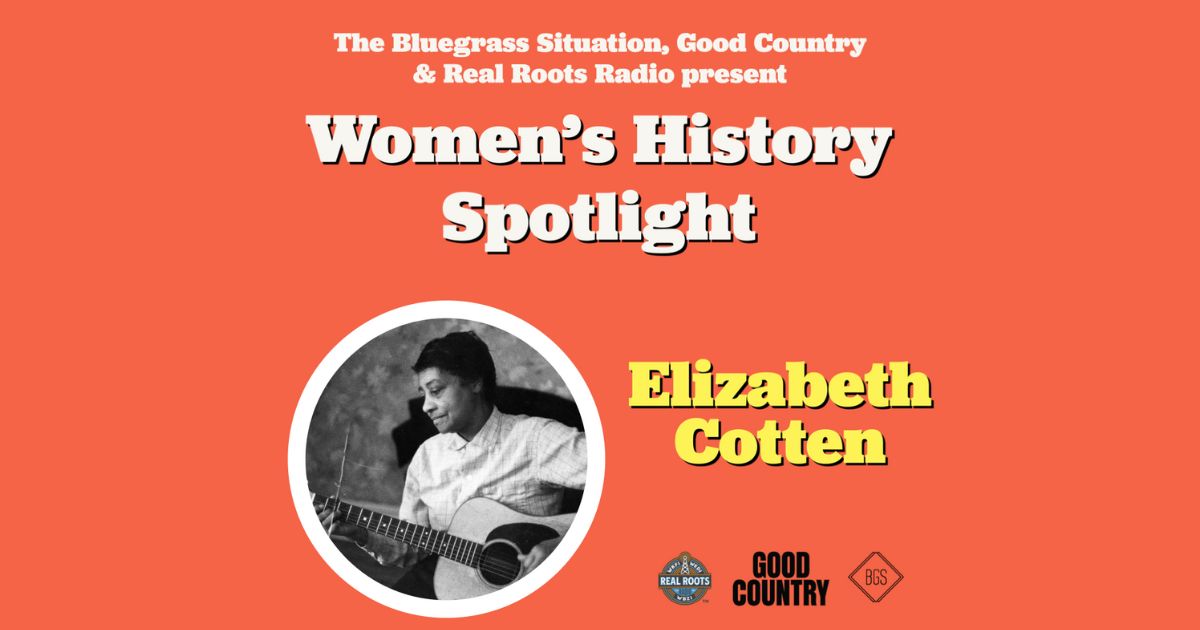
Let’s look back at March and the vibrant history of women in roots music with our final edition of our Women’s History Spotlight, featuring Elizabeth Cotten, Patty Loveless, Ola Belle Reed, Alison Krauss, and Loretta Lynn.

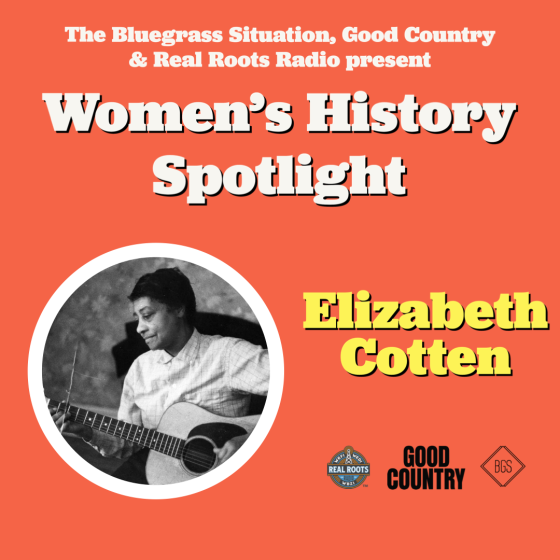
Elizabeth Cotten

Born in 1893, this North Carolina native had a profound impact on American roots music. While she learned how to play the guitar as a child, and even then began writing songs, she shelved her musical dreams and became a domestic worker, but fate had other plans for Elizabeth Cotten. Decades later (in her sixties), she became a housekeeper for the Seeger family following a chance encounter at a department store. The Seegers, of course, are known through roots music circles for the family’s reputation as talented musicians and respected musicologists, featuring Mike Seeger of the Bluegrass Music Hall of Fame, Peggy Seeger, their half-brother Pete Seeger, and more. With the family’s love for music, Elizabeth dusted off her guitar, which she hadn’t touched in decades.

The Seeger family was blown away by Elizabeth’s talent. She had a unique approach to the instrument, due to her being left-handed she would play the instrument upside-down, resulting in the strings being inverted, and allowing her to play the melody with her thumb and the bass lines with her fingers. Additionally, her signature style including some unique alternating bass lines, a technique which is now referred to as “Cotten-style.” Mike Seeger would record Elizabeth for Smithsonian Folkways, introducing her music to the world, including her original composition, “Freight Train,” which has been covered countless times, including by Bob Dylan, Joan Baez, Mac Wiseman, Jim & Jesse, Doc Watson, and more! Other hits of Elizabeth’s include “Shake Suagree” and “Oh Babe It Ain’t No Lie,” which have been recorded numerous times throughout roots music. With the popularity of the Folk Revival, Elizabeth would perform with acts such as Muddy Waters and Mississippi John Hurt, and would eventually win a Grammy in 1984, before passing away at the age of 94 in 1987.


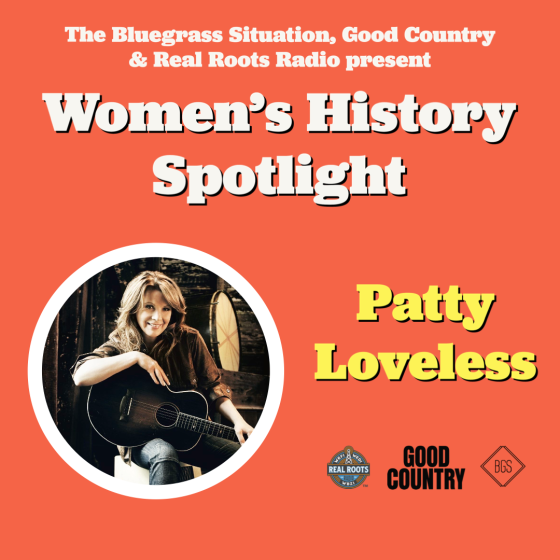
Patty Loveless

The pride of Elkhorn City, Kentucky and a 2023 inductee into the Country Music Hall of Fame, Patty Loveless was a leader of country music’s new traditionalist movement of the ’80s and ’90s, which also saw many successes for fellow Kentuckians Ricky Skaggs, Dwight Yoakam, The Judds, and Keith Whitley. The daughter of a coal miner, Patty’s neo-traditional sound was mixed with rock and roll attitude and plenty of mountain soul. Over 40 of her singles reached the Billboard Country Singles charts, including “On Down The Line,” “Timber, I’m Falling In Love,” “I’m That Kind of Girl,” “Blame It On Your Heart,” “Here I Am,” and dozens of others.

Like many country artists (especially women), Patty’s commercial success declined at a time when the artistic quality of her music did not. Her stunning rendition of Shawn Camp’s “The Grandpa That I Know” from On Your Way Home moved my father to tears for years, and I know that he was not alone in that. For many, her pair of Mountain Soul albums are still essential listening. On these projects, she celebrates her Kentucky roots with bluegrass-flavored albums littered with special guests including Earl Scruggs, Del McCoury, Travis Tritt, Ricky Skaggs, and more. Patty’s six minute-plus interpretation of the Darrell Scott-penned hit, “You’ll Never Leave Harlan Alive,” has haunted listeners for over 20 years. Even if it never tickled the Billboard Country Singles chart, there’s a reason Chris Stapleton recruited Loveless to perform the anthem with him during the 2022 CMA Awards — because it still showcases her mountain soul at its finest.


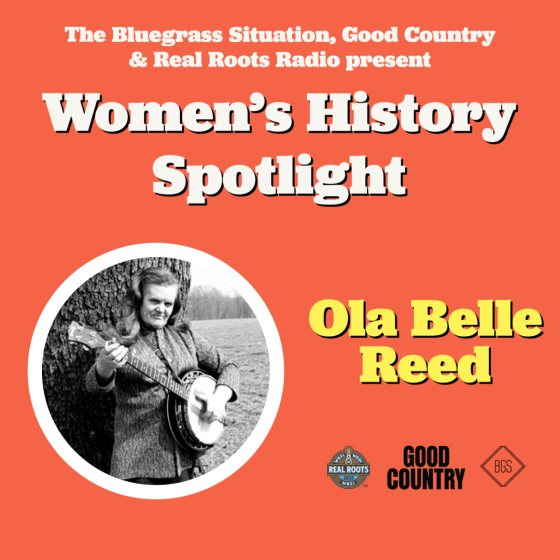
Ola Belle Reed

Picking up the clawhammer banjo as a youngster, Ola Belle Reed brought the music she heard growing up in Grassy Creek, North Carolina with her when her family migrated to the Maryland-Delaware-Pennsylvania area. Ola Belle Reed would entertain Appalachian migrants in the region with various bands, winning them over with her powerful mountain music. (She even turned down an offer to join Roy Acuff’s Smoky Mountain Boys!) The region’s Appalachian population supported Ola Belle, founding a few of the region’s more popular music parks over the ensuing decades, including New River Ranch in Rising Sun, Maryland and Sunset Park in West Grove, Pennsylvania.

Ola Belle Reed would find a new audience on Wheeling, West Virginia’s WWVA in the 1960s. In addition to presenting Appalachian music to new audiences, her legacy includes many original songs that sound as old as the hills. Songs like “High On A Mountain,” “I’ve Endured,” and “You Led Me To The Wrong” have been recorded by Del McCoury, Marty Stuart, Tim O’Brien, Robert Plant & Alison Krauss, Jason Carter, and more! Ola Belle Reed suffered a stroke in 1987. The following year, she became the first woman to be recognized with a Distinguished Achievement Award by the International Bluegrass Music Association. She passed away in 2002.


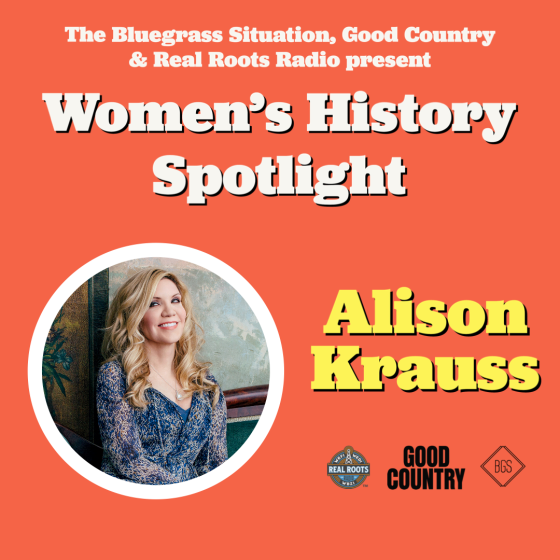
Alison Krauss

One of the most Grammy-awarded artists of all time (27 trophies and counting), Alison Krauss’s angelic voice has taken bluegrass to new heights, while she has become one of the most transcendent vocalists of her generation, branching into country, Americana, adult contemporary, rock, and more. A member of the Grand Ole Opry (the historic radio program’s youngest cast member at the time of her membership) and the Bluegrass Music Hall of Fame (currently the youngest Hall of Famer), Alison was a bit of a violin prodigy as a youngster, becoming enamored with bluegrass when she was exposed to bands like J.D. Crowe & The New South and The Bluegrass Album Band under the tutelage of John Pennell.

She recorded her debut album for Rounder Records when she was just a teenager and by the time she reached adulthood, she blossomed into a full-blown roots music star. The success of her solo albums and records with Union Station returned bluegrass to mainstream country circles at a time when it was desperately needed, providing a shot in the arm for the genre and introducing legions of new fans to the music. Krauss joins names like Flatt & Scruggs and The Osborne Brothers as some of the handful of artists to take bluegrass into the mainstream consciousness. Her ethereal voice has also resulted in highly touted collaborations with Robert Plant, James Taylor, Kenny Rogers, Brad Paisley, Shenandoah, Don Williams, and more.


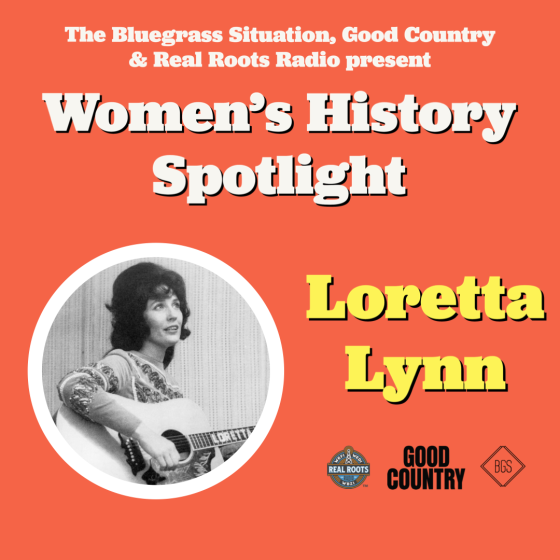
Loretta Lynn

Country music’s most awarded woman artist, Loretta Lynn completely broke the mold. Nashville had had “girl singers” before, and there had even been female artists singing songs about women’s issues, but often they had been written by men (a la “It Wasn’t God Who Made Honky Tonk Angels.”) To have a woman artist singing songs about women’s issues written by a woman was absolutely groundbreaking, and frankly, it intimidated many men in the industry. While now beloved country standards, Loretta sang controversial songs about a wife’s right to say “no” (“Don’t Come Home A Drinkin’ (With Lovin’ On Your Mind)”), birth control (“The Pill”), the stigma attached to divorced women (“Rated X”), beating the tar out of women chasing after her husband (“Fist City”), and more. Coincidentally, all of the songs I just mentioned hit number one even though they were banned by some country radios stations – except “The Pill” which peaked at number five.

In addition to songs that connected to women, her heartfelt numbers about growing up in poverty in Butcher Hollow, Kentucky endeared her to fans as well and instilled a sense of pride in folks with similar backgrounds — “They Don’t Make ‘Em Like My Daddy Anymore,” “You’re Looking At Country,” and the autobiographical “Coal Miner’s Daughter.” Her vulnerability in not only openly dealing with issues in her own marriage, but unpacking her own mental health on the big screen with the Coal Miner’s Daughter biopic opened the country music industry’s eyes to so many issues that women were wrestling with behind closed doors until Loretta Lynn. Loretta continued making fabulous music late in life (check out “Miss Being Mrs,” where she sings about being a widow), until her passing at the age of 90 in 2022. For these reasons and more – and with all due respect to Kitty Wells – there’s a reason that many country music enthusiasts view the late Loretta Lynn as the Queen of Country Music (myself included).

For our final bonus video as we conclude this fun series, here is the story behind Loretta writing “You Ain’t Woman Enough.” Loretta was as real as it gets!


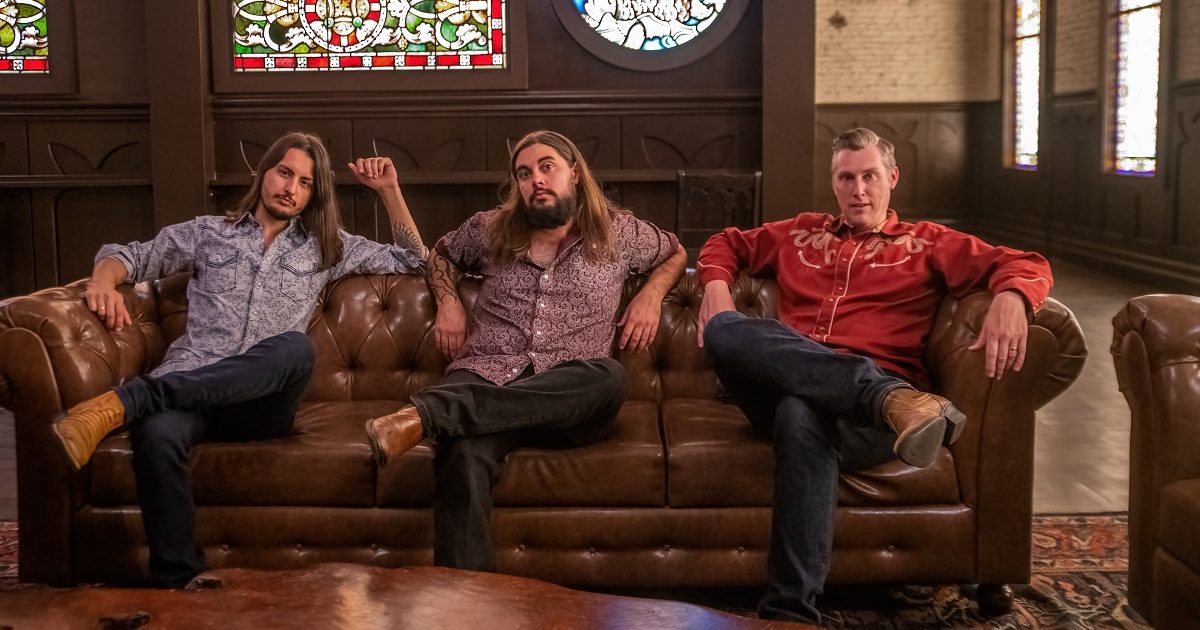
WATCH: The Royal Hounds, “Pickin’ in the Graveyard”

Artist name: The Royal Hounds
Hometown: Nashville, Tennessee
Song: “Pickin’ in the Graveyard”
Album: Whole Lot of Nothin’
Release Date: October 15, 2021

In Their Words: “When I was learning to play bass, I used to go to a bluegrass festival called Old Timer’s Day. It was next to a graveyard. There were so many pickers that many groups would spill over into the graveyard and have pickin’ circles out there. I always loved the idea for a song called ‘Pickin’ in the Graveyard.’ Up the street from where I live is Spring Hill Cemetery. Lots of notables are buried there: Roy Acuff, Earl Scruggs, Jimmy Martin, Floyd Cramer, Kitty Wells, Hank Snow, and my favorite, John Hartford. I just love the notion that the ghosts of the musicians in this graveyard come out at night and have a grand pickin’ party. The final verse is kind of an homage to John Hartford. In the song, I say, ‘Lower me down in a Batman cloak/ we’ll all ride to heaven in a river boat.’ This is a reference to the fact that Hartford was accidentally buried in a Batman cloak and he had a lifelong fascination with river boats. He even had a license to sail them.” — Scott Hinds, The Royal Hounds


Photo credit: Bill Foster

On ‘I’m With You,’ William Elliott Whitmore Puts Family Wisdom to Use

Over the last few years, William Elliott Whitmore has been thinking a lot about how we – as individuals and as a society – have a tendency to repeat our mistakes, and how we’re always trying not to. Yet the tone of his new album, I’m With You, is still infused with optimism, which often stems from the wisdom he’s learned from his family.

I’m With You is Whitmore’s first album of new material in five years, though its material wouldn’t sound out of place alongside his early songs like “Old Devils” or “Don’t Need It.” As always, his banjo and guitar are central to the album’s sound, while his raspy singing voice remains an effective tool at getting his point across.

Though the album does have some heavy themes, Whitmore often points out the silver lining in a situation, and moreover, he’s comfortable chatting up a stranger — a trait not uncommon to the Midwest. He spoke with BGS by phone from his farm in Lee County, Iowa, where he’s quarantining with his wife and their six-month-old baby.

BGS: There are several family relationships that you reference in the album’s first song, “Put It to Use,” and you’ve had family members as characters in your songs for a long time. Why is that bond with your family so inspiring?

Whitmore: Yeah, the bond with my family has always been inspiring. I’m pretty lucky in that I’ve got a big family that’s close by. Aunts and uncles and cousins. My folks were great people, full of wisdom and just caring, beautiful people, but through different circumstances they passed away when I was in my teens. So, that’s when I started writing songs, and in fact, that’s what made me start doing that — to codify what they had always been teaching me. And as a way to deal with it and not just go off the deep end. They pop up in songs a lot, and have since the beginning.

I don’t have them here, so I just think about their words of wisdom and lessons. I think we all get those lessons from someone, whether it’s your folks and a grandparent or a neighbor or a cool uncle or aunt. That cool person down the block that introduced you to The Ramones when you were a kid. [Laughs] It’s like, “Hey, check out Black Sabbath!” So you go, “I should listen up.” Not just music, but lessons, and we can gather that from anywhere. “Put It to Use” is about, OK, you’ve gathered all this good information. Now, put it to use. And more than just music — let’s try to love each other.

Was it someone in your family that introduced you to banjo?

Yeah, both of my grandpas played the banjo. One of them passed away when I was one year old, so I never knew him, but I actually have his old banjo. And one died when I was in my teens, and he was a banjo picker from the Ozark Mountains down in Missouri. My folks loved country music. My mom loved Willie Nelson and Charley Pride – those were her favorites. And in fact, my parents’ first date was a Charley Pride show at a county fair.

But [my interest in] the old-time stuff, Appalachia music and Ozark mountain music, came from my grandpa, and he played the banjo. When he passed away, I got his banjo because I was into playing guitar. I was like, “Oh, the banjo… it’s not THAT different than a guitar.” And I inherited all of his old records. He loved Roy Acuff and the Stanley Brothers. Again, it’s getting that influence from wherever you can.

Were those records your gateway to bluegrass? How did you become aware of bluegrass?

Yeah, those records. … He had a lot of compilations with 15 different artists on one record. You’d find out about a bunch of different stuff, like how Bill Monroe pretty much invented bluegrass by playing old-time music faster than everybody else. [Laughs] And the subtle differences between that and the old-time, slower stuff. A lot of it does have to do with tempo. The feeling is there for all of it, but Bill Monroe kicked it into that next gear.

It’s this whole rich history that’s really cool, and there’s still a lot to learn about, too. So I took that bluegrass influence, but I also liked Minor Threat and Bad Religion and Public Enemy, growing up in the ‘80s and ‘90s. There’s a theme running through all of this — punk and country and bluegrass and blues. Using simple tools to convey a message. No matter where you come from or what color you are, there’s a way to do this.

One thing you do well on this record, in my opinion, is setting the scene. While a lot of songwriters write primarily about themselves, or about love, you are writing about what’s around you. When did you become interested in environmentalism, for example?

That’s a great compliment, first of all. I’m right here on the farm I grew up on, and I’m very lucky to have that. So, the woods and nature and planting gardens — my folks were both naturalists. They wouldn’t have had the word for that, but they loved the land and they appreciated nature. That was passed on to us kids, the appreciation for the trees and the plants and the deer out in the field, and how we live among them and we’re part of it. We’re not above them. The grass in the meadow, the flora and the fauna that we see all around us, we’re just a part of that.

So it just doesn’t make sense to me, as an adult, why anyone would want to pour oil in the water, or level a whole forest, and cut every old-growth oak tree in the forest, just for the money! You want to live in harmony with nature, and sometimes you do have to cut a tree, but you want to be selective and do it in a smart way. … There are so many ways to do it mindfully. That’s my slant on it, and it all comes from living in the woods and living on a farm, and being instilled with those things at an early age.

Listening to your older records, I was struck by how much your singing voice has become more commanding. Did that come from you having to sing on stage, and use it as an instrument? At what point did you sense that your voice was becoming stronger?

That’s another great compliment. I didn’t even know if it was, but you know, it’s funny how things change over 20 years. I first started touring — gosh, it’s been over 20 years ago now. I used to smoke a lot of cigarettes and a lot of weed. … Well, maybe don’t write down “weed.” Oh, whatever, I don’t care. I just had a fucked up voice, but it was all I had. I was like, I wish I could croon like Dean Martin and Morrissey or Ralph Stanley, and have a beautiful voice, and I could never quite get there. So you just work with what you got, right?

So, I quit the cigarettes – and only the cigarettes. [Laughs] My voice changed after that, maybe, but it did come with playing a couple hundred shows a year, for years, and just being on stage, at least in the beginning, where they didn’t know who you are. It’s hard to be a presence when you’re by yourself. I was doing a lot of punk clubs and DIY spaces and bars, where they might not even care that you’re there. So you do have to make your presence known. I had to be more commanding. I am a loudmouth anyway, so it was natural. Put a microphone in front of me and I’ll make you listen! [Laughs] “I’m gonna start singing and you’re gonna wanna listen!” was my attitude, which is funny now.

But that did help me use it as almost a cudgel. Over the years, I’ve tried to sharpen that and make it more of a surgical thing and not a blunt instrument. [Laughs] I mean, I’m only dealing with guitar, banjo, and voice, and a beat — a kick drum now. Each one of them has to count. Any would singer would tell you, you take the time to write these lyrics, and in a live setting they just get lost. You’re just hollering. You have to learn to cut through. … Now it’s a bad habit to break because I’ll be singing in a quiet place, where everyone’s sitting down and listening and no one’s talking, and I’m just yelling like someone needs to hear me ten miles away. It’s those years of screaming over a bar room. I can’t shut it off.


Photo credit: Chris Casella

Bluegrass Memoirs: New Twists & Scruggs Pegs Take Off

In December 1953, Decca released “Plunkin’ Rag” by the Shenandoah Valley Boys. It was the first recording by a banjoist other than Earl Scruggs to use Scruggs pegs: Hubert Davis. 

Born in Shelby, North Carolina, in 1932, Davis grew up in a musical family. He was already playing the banjo when, at the age of ten, his older brother, fiddler Pee Wee, brought Earl Scruggs, a co-worker from Lilly Mills, into the family home for some music. Earl had just moved to town to work at the factory. He was boarding with another Lilly Mills employee, Grady Wilkie. In Earl Scruggs and Foggy Mountain Breakdown: The Making of an American Classic author Thomas Goldsmith tells how Earl’s mother prevailed on her friend Wilkie to help Earl get a job at the mill. Wilkie, a guitarist, and Earl stowed their instruments in the car when they drove to work. In a 1977 interview, Hubert Davis told Bruce Nemerov that Pee Wee, Grady, and Earl: 

…worked on the second shift. They would catch up about supper time and they’d run out to the car and get their music out and run in to the packing house. They’d play for thirty minutes or an hour and go back to work. Swaller their food whole to get more time for pickin’. And I was there, son, at suppertime every evening. I was sitting there against the wall listenin’. 

By the time Hubert was fourteen (1946), he was studying Earl’s playing with Monroe on the Opry. Occasionally Earl came home, visited the Davises, and gave Hubert a banjo tutorial: “he’d show me the parts I didn’t have right.” 

At fifteen Hubert began playing professionally. By 1951 he was working for Virginian Jim Eanes. In 1948 Eanes had been an original member of Flatt & Scruggs’s Foggy Mountain Boys, but was quickly hired away by Monroe. Bluegrass historian Jack Tottle tells what happened after Eanes joined Bill at the Opry: 

His full baritone-range voice turned out to be incompatible with Monroe’s mountain tenor for duet singing. To Jim’s frustration, no matter how high he sang, it was still too low for Monroe’s high vocal harmony. 

Eanes subsequently developed a career as a mellow country singer with a bluegrass band, recording for a small North Carolina label, Blue Ridge. Soon after Hubert joined him Jim had a hit with “Missing in Action,” a Korean war-themed country song. Ernest Tubb’s major-label cover on Decca was also a hit, giving Jim an opportunity to sign with Decca. 

Eanes began recording in Nashville in 1952 with producers Paul Cohen and Owen Bradley. In October 1953, after several country-sound sessions using studio musicians, Eanes returned to record with two members of his bluegrass band, the Shenandoah Valley Boys: Hubert Davis and Bobby Hicks. 

They made two banjo instrumentals: “Ridin’ the Waves” and “Plunkin’ Rag.” These were issued on a 78, credited not to Eanes but simply to The Shenandoah Valley Boys. In “Plunkin’ Rag” Davis used both Scruggs pegs to create the melody. Chet Atkins, playing backup guitar, is heard playing responsorial licks to the melody in its peg sections, and Bobby Hicks — this was his first recording session — contributes fiddle breaks. 

“Plunkin’ Rag” was released in December. By that time Davis had left Eanes, who then advertised over the air for a banjo player. A lanky teenager named Allen Shelton got the job. At the start, Eanes said, “he could only play one tune, but he would play all the time.” An enthusiastic learner, Shelton was a fan of Davis: “he was second to Scruggs as I ever heard it.” 

When the time came for Eanes’ next Decca session in Nashville, on March 2, 1954, Davis had rejoined the band. At this point, probably in February, as Davis recalled, he and Shelton met. Both later spoke of sitting up all night in a hotel room working on “some licks Scruggs was playing.” 

It’s certain that one of the two banjos in that hotel room had Scruggs pegs. Some of the licks they were working on must have involved the pegs, for Davis came to Eanes’ session with two instrumentals that used them: “Cotton Picker’s Stomp” and “There’s No Place Like Home.” 

“There’s No Place Like Home” was the title Decca gave to Davis’s version of “Home Sweet Home.” As with “Plunkin’ Rag,” Davis used the pegs to play the melody. But this was not a new composition, but a very old song, dating back to 1823. The novelty here, its hook, was the idea of using Scruggs pegs to play a familiar melody.

A few months later another banjo picker made a recording using Scruggs pegs. Haskel McCormick was the 16-year-old banjo picker on “Banjo Twist” by the McCormick brothers of Westmoreland, Tennessee. The track was on their first single, released in August 1954 by Hickory Records, Roy Acuff’s new Nashville label. McCormick, who would go on fill in for the hospitalized Earl with Flatt and the Foggy Mountain Boys a few times in 1956, incorporated portions of the hooks from both of Scruggs’ hits, in this, the first of three pieces he recorded that used the pegs. Here’s a brief bio of McCormick by NCTV, which opens with “Banjo Twist:”

Columbia recognized the popularity of Scruggs’ instrumentals that fall by reissuing four of them, including all three Scruggs peg-hook tunes, in their “Hall of Fame” series. While young banjo pickers like McCormick were writing new tunes with his pegs, Earl now took another direction, using one of them in his breaks for Lester’s song, “Till the End of the World Rolls Around.” Columbia released it in December 1954. 

By then Allen Shelton, now in the Raleigh-based band of Hack Johnson and his Tennesseans, had elaborated on the idea of playing “Home Sweet Home” with Scruggs pegs. Early in 1955 Shelton recorded a version of “Home Sweet Home” with Johnson that included a vocal trio on the chorus. Their Colonial single was a regional hit. 

This prompted Reno & Smiley, who recorded for King (a widely distributed independent label) to make a cover. Reno, traveling through North Carolina, heard the Johnson single and called King owner Syd Nathan to tell him about it. Nathan ordered him to get their band into the studio right away and record it. He couldn’t get in touch with his band members… 

…so I went to the studio in Charlotte and cut it by myself. I dubbed in three vocal parts and banjo, guitar, and bass. It took me most of the night and I don’t want to cut any more like that! 

The recording was a bigger hit than Johnson’s, and helped Reno & Smiley, one of the most influential early bluegrass bands — but until that point solely a recording act — launch their touring career.

Although Hubert Davis was first to record “Home Sweet Home” (as “There’s No Place Like Home”) with the pegs, it and the other instrumental he recorded with Jim Eanes didn’t get released until June 1955, after the Reno & Smiley version. By then, Shelton and Johnson had released “Swanee River,” another old familiar song with the same juxtaposition of pegs and vocal trio. Another similar piece, “Old Kentucky Home,” appeared soon after under a new band name. Hack Johnson was gone; now, with the same sound on the same label, they were The Farmhands. 

In the fall of 1955, Earl Scruggs recorded his fourth and last instrumental with a peg hook. In it he reset his peg for the second-string so that it moved up to C from B. His hook riff went through two chords instead of one. “Randy Lynn Rag,” celebrating the birth of his son, was released in February 1956. 

By now the idea of using the pegs to play old familiar pieces had caught on. Early in 1956 Sonny Osborne recorded four tunes using the pegs for Gateway, the Cincinnati label he’d been with since 1952: “Hand Me Down My Walking Cane,” “Jesse James,” “Swanee River,” and “Auld Lang Syne.” Accompanying him in the studio were Red Allen, guitar; Bobby Osborne, mandolin and fiddle; Art Stamper, fiddle; and Les Bodine, bass. These were the last recordings made under Sonny’s name, done just a few months before the first MGM sessions by the Osborne Brothers and Red Allen.

In May Columbia released Flatt & Scruggs’ new gospel single. Earl used the pegs to play his part of the melody in the breaks to the quartet “Joy Bells.” 

It was getting radio play that summer when a letter came to Mike Seeger from Moe Asch, owner of New York’s Folkways Records, asking him “to produce an LP of Scruggs-style banjo playing.” Seeger was certain his older half-brother, Folkways star and folk banjo guru Pete Seeger, “was the reason that Moe wrote me.” 

Living in the Washington-Baltimore area, Mike Seeger had been taping bluegrass shows at local country music parks. “Most bluegrass players were establishing new songs and sounds and so didn’t record the old-time tunes that they played on shows,” he said. Seeger wanted to demonstrate “the connection of the new style to the older music” so he focused on the old-time repertoire for the album. 

He started recording that fall of 1956, with the help of local bluegrass musician and collector Pete Kuykendall. They began after a Monroe show at New River Ranch in Rising Sun, Maryland, where Blue Grass Boy Joe Stuart lingered backstage to play his banjo setting of an old-time fiddle tune for Seeger’s portable tape recorder. Subsequently, eight other DC region banjoists, most of them young, were recorded. A trip south captured pioneers from western North Carolina, including Earl’s older brother Junie. Earl was not on the album. Finally, one picker from New York City’s Washington Square bluegrass scene was recorded. 

Seeger’s friend Ralph Rinzler, living in New York at the time, wrote the album notes. Here for the first time the word “bluegrass” was used in print to describe and explain the music. American Banjo Three-Finger and Scruggs Style, the first bluegrass LP, had a total of 31 tracks by fifteen banjoists. Scruggs pegs are heard on two cuts. 

On side B, band 3, Smiley Hobbs, a North Carolinian virtuoso living in northern Virginia, used the pegs to play the melody of the old folksong “Rosewood Casket” in a vocal-instrumental combination similar to Shelton’s.

The very last track on side B featured the Washington Square picker, seventeen-year-old New Yorker Eric Weissberg. Backed by Seeger on guitar and Rinzler on mandolin, he played a two-song medley, combining the tunes of the traditional ballad “Jesse James” and folk revival star Woody Guthrie’s popular composition “Hard Ain’t It Hard.” He used the pegs on the latter piece, which the Weavers, the most popular folk revival group at the time, had recently popularized. Weissberg’s mix of traditional and folk revival repertoire was a harbinger. 

In the next Bluegrass Memoir, more on Eric Weissberg.


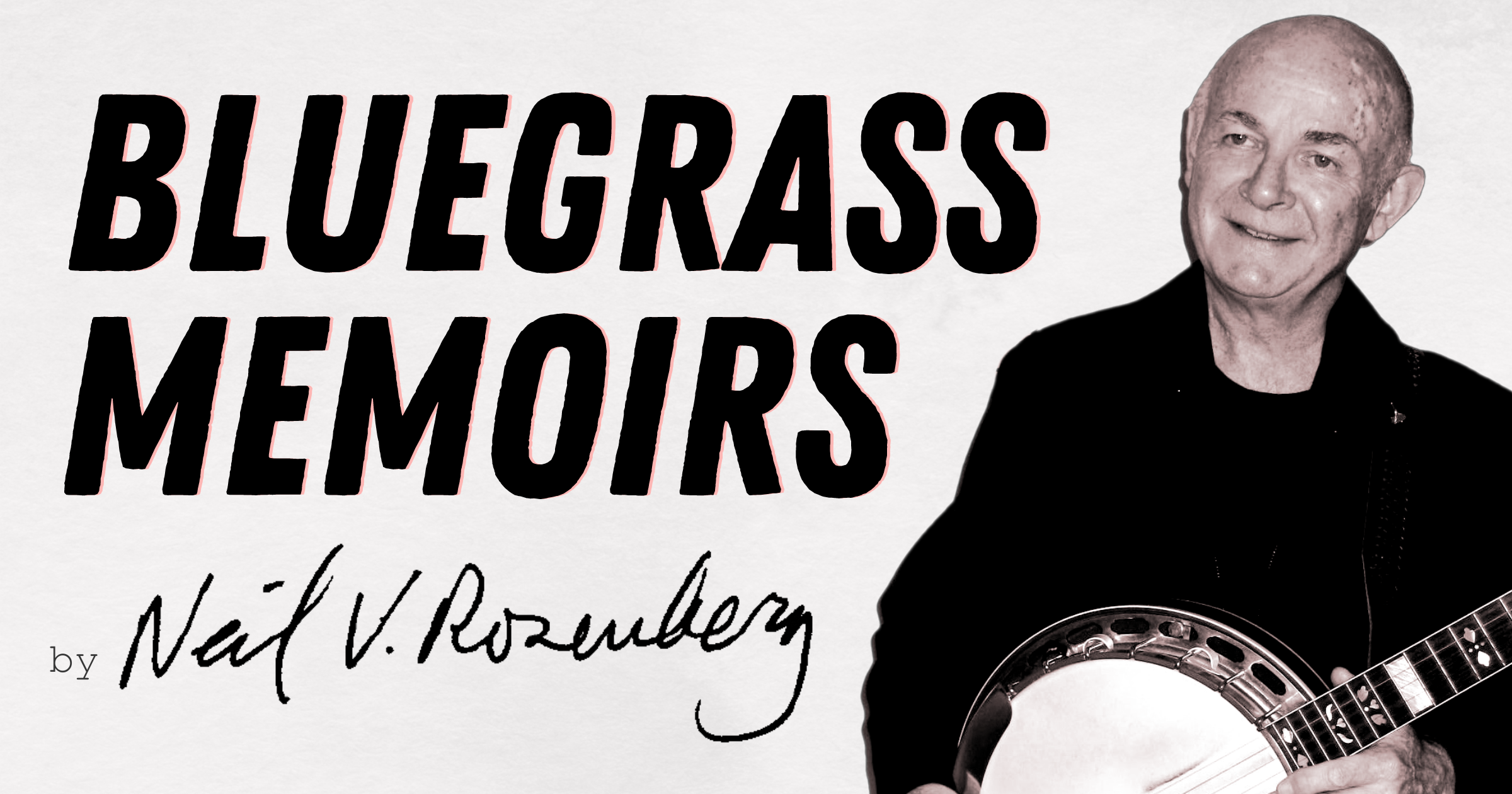
Neil V. Rosenberg is an author, scholar, historian, banjo player, and Bluegrass Music Hall of Fame inductee.

Photo of Neil V. Rosenberg: Terri Thomson Rosenberg

LISTEN: Newport Folk Festival Opens Bluegrass Archive for Saturday Stream

Where do you begin to talk about bluegrass at Newport Folk Festival? And how do you capture 60 years of musical magic in just one show? The curators of the festival’s archive have taken a very cool approach, pulling out musical highlights from their first decade as well their most recent decade for the upcoming Burnin’ & Pickin’ Bluegrass set.

The 90-minute show — featuring some recordings that have never before been released — will stream during the festival’s Revival Weekend on Saturday, August 1, starting at 1:37 pm ET. The list of performers on the show has not yet been announced, but considering the breadth of talent that the festival has hosted, you might hear iconic figures like Roy Acuff, Bill Monroe, and Doc Watson, or a new generation that includes Carolina Chocolate Drops, Old Crow Medicine Show, or Gillian Welch & David Rawlings. Legendary artists like Joan Baez, Johnny Cash, and Elizabeth Cotten could potentially show up on the set list, too.

One thing we do know: The Burnin’ & Pickin’ Bluegrass set will include this previously unreleased recording of Ralph Stanley and Ray Cline’s “Sally Goodin'” from 1968.

To honor the festival’s incredible heritage, please consider a donation to Newport Festivals Foundation, which in the last year has provided financial relief to over 400 musicians impacted by the pandemic and over 100 grants for music education programs across the country.

Billy Glassner, archivist for Newport Folk Fest, tells BGS, “Bluegrass has always been an important ingredient in the Newport Folk magic. From its first year in 1959 when Earl Scruggs brought the Cumberland Gap to the shores of the Narragansett Bay up through last years’ collaboration between Billy Strings and Molly Tuttle, that high lonesome sound has been a constant companion to the Newport Folk Festival.”

Glassner hints at more music to come from the vault, too. He adds, “The Newport Folk Archives house an embarrassment of bluegrass riches and curating this set proved to be a joyful yet challenging experience. The only way we were able to make the tough decisions of what to cut was with the knowledge that this is only the beginning of our efforts to make the recorded history of Newport more available to our fans.”

Tune in to Newport Folk’s Festival Revival Weekend from Friday, July 31-Sunday, August 2.


Rose Maddox: The Remarkable Hillbilly Singer Who Made Bluegrass History

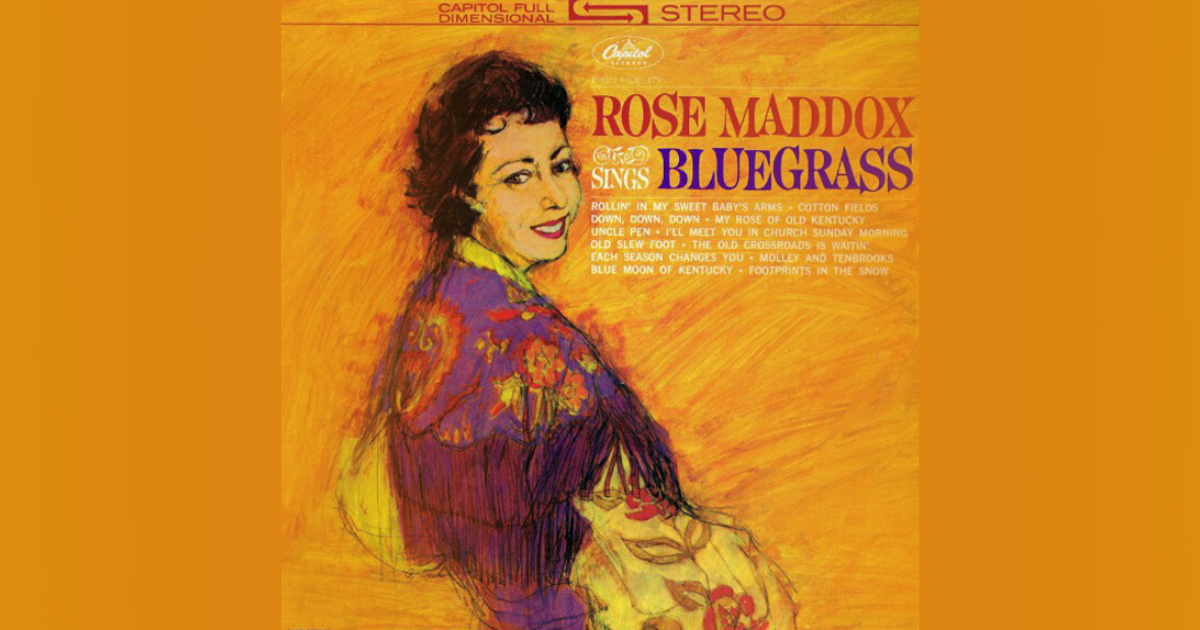
Rose Maddox, the lead singer of the Most Colorful Hillbilly Band in America, made a significant mark in bluegrass, too, as the first woman ever to record a bluegrass album. Her incredible rags to-riches story touches on boxcars and sharecropping, the Grand Ole Opry and Buck Owens, and finally the Father of Bluegrass Music himself, Bill Monroe, who laid the foundation for that seminal 1962 Capitol Records LP, Rose Maddox Sings Bluegrass.

Born on August 15, 1925, in Boaz, Alabama, Roselea Arbana Maddox arrived in a family with some musical heritage. Her paternal grandfather was a fiddler and roaming preacher, while her uncle Foncey gave lessons to locals and performed in blackface. Rose’s father, Charlie Maddox, worked as a sharecropper and hired hand. After getting stiffed for a job chopping wood, Charlie decided to skip town and finally indulge his wife Lula’s lifelong dream of living in California, panning for gold. They sold everything they had and stashed away the proceeds — just $35. The two oldest children stayed behind, while the youngest five and their parents set out for the Golden State in the spring of 1933.

How? On foot. Then hitchhiking. And after crossing over the state line to Mississippi and encountering another family who explained train-hopping, the seven Maddoxes rode the boxcars all the way west. Rose was 7 years old. They settled and resettled in various towns, with their situation once so dire that Lula had to place Rose with another family — but Rose acted up so often that the family gave her back. When Charlie got harvesting work in Modesto, the family followed and became what they called “fruit tramps.”

With some stability, the kids were putting down roots in Modesto. They collected whiskey bottles, turned them in for a penny a piece, then spent their dimes on movies. One Sunday the Sons of the Pioneers appeared in person at the Strand Theater. At that moment, Rose had found her calling — to be a singer. Her brother Fred had a similar epiphany while picking cotton that fall. After hearing that the band who’d just played the rodeo made $100, he decided it was time to get into the music business. Acting as manager, he found a furniture store to sponsor some radio spots. The caveat was simple: The furniture store owner wanted a girl singer. Thus, the Maddox Brothers & Rose were launched — with the spunky lead vocalist just 11 years old.

They followed the California rodeo circuit and played bars for tips, then won a State Fair competition that crowned them California’s best hillbilly band. However, things unraveled for a time in the early 1940s, as Fred, Don, and Cal were drafted in World War I, and Rose became an unhappy bride at 16, then a single mother at 18. Auditions with Roy Acuff and Bob Wills went nowhere. She played occasional gigs with other bands until the war ended and the Maddox Brothers & Rose reformed, with the youngest Maddox child, Henry, now joining on mandolin.

Playing dances as well as radio shows, the group shifted their sound to get people moving. Their look got an overhaul after Roy Rogers recommended Los Angeles tailor Nathan Turk, a pioneer of flashy Western stagewear. They also signed a deal with 4 Star Records, an indie label that marketed them as Most Colorful Hillbilly Band in America. Their repertoire ranged from Woody Guthrie’s “Philadelphia Lawyer” to Hank Williams’ “Honky Tonkin'” to the gospel tune “Gathering Flowers for the Master’s Bouquet.” They made their Opry debut in 1949, where they met Bill Monroe, and became the first hillbilly band the play the Las Vegas Strip. That same year, however, Charlie and Lula Maddox divorced.

By 1950, various members of the family were living in Hollywood. A beautiful woman of 25, Rose took courses in modeling and vocal control, although Lula would not allow her to date. The band appeared on broadcasts like Hometown Jamboree and Town and Country in Southern California, as well as the regional show, the Louisiana Hayride. Columbia Records signed her as a solo act in 1953. With rock ‘n’ roll in full force in 1956, the Maddox Brothers & Rose sputtered, then disbanded, and not without some bitterness as Rose’s career still flourished. The Opry didn’t appreciate her first solo appearance though, when she wore a blue satin skirt that exposed her bare midriff. Nonetheless she relocated to Nashville (with the ever-vigilant Lula) and became an Opry member in 1956, but quit about six months later when Roy Acuff complained she (and not other Opry members who were touring) made appearances on too many local TV shows.

That professional setback might have given the perception that Rose couldn’t have a career without her brothers. That proved quite untrue. Hometown Jamboree in Los Angeles hired her, which led to plenty of gigs. When the Columbia deal ended, she recorded for two independent labels before signing with Capitol Records in 1959. When Lula tried to boss around producer Ken Nelson, he banned her from all future sessions. Rose, by this time 33 years old and still under her mother’s thumb, was secretly delighted. Taking things a step further, Rose eloped with a nightclub owner that December, then embarked on a European tour.

For Capitol, she made her first Billboard chart appearance ever with the honky-tonk weeper “Gambler’s Love,” climbing to No. 22 in 1959. Her first solo album, The One Rose, dropped in 1960, followed by a gospel set titled Glorybound Train. By 1961, she took “Kissing My Pillow” and “I Want to Live Again” to No. 14 and No. 15, respectively. Johnny Cash invited her to join his road show and Buck Owens asked to record some duets. Those twangy tracks, “Loose Talk” and “Mental Cruelty,” both entered the Top 10 in 1961. Her third album for Capitol, A Big Bouquet of Roses, appeared later that year.

The year 1962 proved to be the pinnacle of her career, as Bill Monroe encouraged her to make a bluegrass album. Because they recorded for competing labels, Big Mon anonymously played on the first day of the two-day session, recording several numbers from his own repertoire. Donna Stoneman stepped in on mandolin on the second day with the remainder of the material. Reno & Smiley joined the session too. Monroe later told Maddox biographer Jonny Whiteside, “The Maddox Brothers & Rose always had their own style, but you must remember their home was Alabama, and I always thought they sang a lot of the old Southern style of singin’. So I enjoyed helpin’ her on one of her albums. She had some great entertainers workin’ on it, and it didn’t take long at all.”

Maddox herself explained, “Bill Monroe has always told me that I sang bluegrass, and to me what he was talkin’ about is just what I call ‘hillbilly.'” She may not have agreed with the terminology, but she certainly adhered to the enthusiasm of the best bluegrass singers. Rose Maddox Sings Bluegrass became the first bluegrass LP recorded by a woman. Its release coincided with the chart success of an earlier country single, “Sing a Little Song of Heartache,” which rose to No. 3 (and practically begs for a bluegrass remake).

Without Lula to intervene, Rose’s life on the road nearly derailed her, with infidelity, volatility toward band members, and a propensity for Benzedrene wrecking her marriage and her professional reputation. A heavy schedule of international touring wreaked havoc on her voice, too. The singles she did release were moody, if not morbid. Although she eclipsed Patsy Cline and Kitty Wells to be named Cashbox‘s female country artist of 1963, her chart momentum fizzled out after her final album with Capitol, 1963’s Alone With You. Still she continued to tour with Buck Owens and Merle Haggard, with her grown son Donnie as her sideman.

Maddox occasionally recorded for small labels in the ’70s and ’80s to modest results, while her venues now included the San Francisco gay bars that embraced the Urban Cowboy phenomenon, as well as the annual gay rodeo in Reno, Nevada. She performed with the Vern Williams Band in folk clubs, too, and recorded a 1984 album with Merle Haggard & the Strangers that was funded by fans. A number of Arhoolie Records reissues helped keep her loyal audience appeased, while introducing her vivacious music to a new generation. She and her brother Fred patched things up for a 50th anniversary celebration of the Maddox Brothers & Rose in Delano, California.

Too often overlooked among the country performers of her era, Maddox landed her first Grammy nomination for her 1994 Arhoolie release, $35 and a Dream, in the category of Best Bluegrass Album. She recounted her exceptional career in the 1997 biography, Ramblin’ Rose: The Life and Career of Rose Maddox, and died the following year at age 71 in Ashland, Oregon. Remarkably, her life story has not been adapted for Hollywood, nor has she been inducted into the Country Music Hall of Fame or the Bluegrass Hall of Fame. Yet her catalog still shines as a beacon for listeners who seek out traditional music with an undeniable West Coast flair.

On the final track of that final album, Johnny Cash intones, “I worked with Rose Maddox a lot back over the years. And I found that when she started working my show that she was probably the most fascinating, exciting performer that I’d ever seen in my life. She was a total performer. She captivated the audience. She held them in the palm of her hand and made ‘em do whatever she wanted to. The songs that she sang were classics, and I loved the way she sang and kind of danced at the same time. I thought there was, and still think that, there will never be a woman who could outperform Rose Maddox. She’s an American classic.”


BGS Presents 30 Years of ‘Will the Circle Be Unbroken, Volume Two’ at Americanafest

What started as a music video concept for the Nitty Gritty Dirt Band evolved into a 1989 full-length film documenting the all-star recording sessions for Will the Circle Be Unbroken, Volume Two. Nitty Gritty Dirt Band co-founder Jeff Hanna will present a rare screening of clips from The Making of Will the Circle Be Unbroken, Volume Two at the Country Music Hall of Fame and Museum on September 11 at 11 a.m., during AmericanaFest.

Hanna will be joined by bluegrass virtuoso Sam Bush, who appears in the film and on the album with New Grass Revival. Craig Shelburne, managing editor of the Bluegrass Situation, will moderate.

Produced by Joanne Gardner Lowell and Rosanne Cash, the film captures the band in the studio recording their groundbreaking project. Select clips will show performances by Johnny and June Carter Cash; Jerry Douglas; Emmylou Harris; Bruce Hornsby; Jimmy Martin; New Grass Revival; John Prine; Earl Scruggs; Randy Scruggs; Ricky Skaggs; and others. Will the Circle be Unbroken, Volume Two won three Grammy Awards as well as the 1989 CMA award for the Album of the Year.

Three decades after its release, Joanne Gardner Lowell offered some keen perspective on the film through an email interview with the Bluegrass Situation.

BGS: What was it about the Nitty Gritty Dirt Band and this project that made it a compelling film subject for you?

JGL: ACME Pictures was contracted to make a video for the title track. This is pretty common. We signed the contract and when I asked what day during the multi-week schedule this song would be done, Jeff said, “All of them.” When I realized we would need to go to the studio every day for weeks to get this song, it seemed obvious we should shoot the whole experience — so we did.

How would you describe the mood, or the vibe, in the room during these sessions?

It was joyful in the studio. Each day the musicians came so ready to create and collaborate. We were honored to be in the room with it all. Being live made everyone really stay on top of their game. It felt like a family reunion on many days, and there was always a lot of humor and laughter. Our primary director, Bill Pope, captured so much of the mood with his amazing camera work.

It was also shot during the holiday season, so people were in a happy mood. Emmylou brought a handmade Christmas ornament you can see hanging in some of the shots. And my partner Rosanne Cash came into the studio with her newborn Carrie. I don’t think she was even two weeks old. Rose handed her to me and I held her tight while running sound for the track Rose and John Hiatt did together. Carrie never made a peep!

It was crucial to capture the acoustic nature of these sessions. What was your audio setup like?

I had a simple Nagra tape recorder just to have an edit track to work from and to record interviews. I had a single mic that I would place in the room to catch all the conversation, as some of that was obviously not recorded for the album and we wanted it for the film. Although, during our interview with Emmylou Harris, the band loved what she said so much that those comments ended up on the album.

Do you remember any particularly fun encounters with the legendary musicians in the film?

We caught some great moments and they’re in the film. The ending of a fast-paced “Valley Road” with Bruce Hornsby was a favorite. The band all stops for a second to look at each other — then they realize they got it and they all start shouting and cheering.

After Jimmy Martin’s session one day, he went out for some cocktails and came back into the studio while Ricky Skaggs was working. We captured Jimmy (feeling no pain and wearing a coonskin cap) as he and Ricky ripped into a spontaneous version of “The Old Crossroads.”

This film was Mr. Acuff’s last filmed appearance and that was special. I have to say — each time the song “Will the Circle Be Unbroken” was performed, it was magic. Every single time.

The Dirt Band did a masterful job of keeping things upbeat and fun for everyone. Every one of them was so engaged in each song — and brought individual songs or artists to the project. They were like marathon runners, giving their all each day and then coming back the next day to do it again.

What were some of the hurdles you faced in the film’s creation and release?

The very existence of this film was due to a California record company exec telling me that we would be in breach of contract if we didn’t deliver this video for the agreed-upon budget. When I explained this “song” was going to require us to shoot for several weeks, this delightful woman didn’t seem to care. I think it was meant to be — we HAD to make it work.

Bill couldn’t figure out how to light the dimly lit studio without a pile of light stands in every shot — and in everyone’s way. So, he created a giant light box and hung it from the ceiling. You don’t see a single light stand.

We didn’t have any money to sync up the video with electronic slates or fancy editing gear. I moved a cuts only 3/4″ video editing system into my office and had to sync the shots up by eye more than once… if we didn’t have an audio track running. Watching Mark O’Connor’s fingers or Earl Scruggs’ fingers to make sure you lock each note made for some very long nights. Those fingers were flying!

Rosanne and I sold 50 percent of the film rights to a company who released it on home video. Unbeknownst to us, the entire archive of that company was acquired by another company that isn’t interested in letting us buy the remaining rights, so we remain in limbo.

What do you hope a modern viewer will experience when watching these clips 30 years later?

This is a piece of living history. The first Circle album influenced every single musician I know. Watching the creation of the second — especially thirty years on — reminds you what kind of power music has.

It makes me sad to count off how many artists from this project are gone now: Johnny Cash, all of the Carter Sisters, Earl and Randy Scruggs, Vassar Clements, Chet Atkins, Levon Helm, John Denver, Roy Acuff, and dear Roy Huskey, Jr. In this world of instant technology, I think this 30-year-old film puts the viewer right into the studio for a front row seat at this amazing recording. I’m very proud of it.