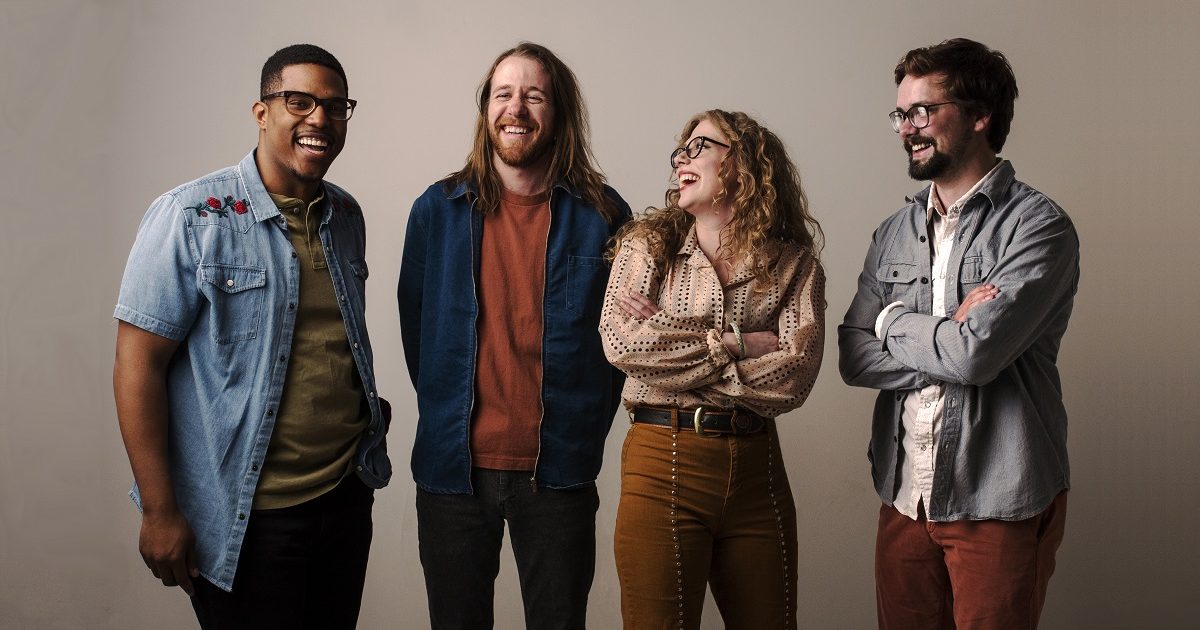
Barbaro Brighten the Midwest Bluegrass Scene

Barbaro’s first full-length studio album, Dressed in Roses, stands as a true testament to their musical identity and the sound that has launched one of the Midwest’s most in-demand acoustic acts. In a phone interview with Kyle Shelstad, the Minnesota group’s guitarist and lead singer, BGS discussed the arranging process behind these songs, how the band has grown, and the current state of the Midwest bluegrass scene.

BGS: You’ve released singles and an EP in the past, but tell me a little about this album. What was the impetus for making Dressed in Roses?

Kyle Shelstad: In general, I feel like the album is a good testament to our sound right now, and also to where we’re hoping to go. We recorded this with the unit being together for about a year. Some of the songs Isaac [Sammis, on banjo] and I had for a couple years prior, before Rachel [Calvert, on fiddle and vocals] and Jason [Wells, on bass] joined the band. After they joined the band these songs kind of had a new life and developed their own sounds.

You re-recorded the songs “Barbaro” and “Loathe.” Did that experience shine a light on how you’ve developed as a band in the past few years?

Exactly. While the arrangement was pretty similar, I think the way we play it as a group has definitely changed. So I think our goal in doing that was to pay homage to the sound we have now and the work we’ve been doing on it.

I think this is your most consistent album yet. When the band first came together did you have an idea of what you wanted the sound to be like, or has that organically grown over the years?

It’s definitely organically grown, but I’ve also always had an idea of what I wanted to do. Isaac and I started playing together as just a guitar and banjo duo, and we had to find ways to make that… well, not super annoying. So we tried to focus on texture and arrangements.

I’m glad to hear that you think it has a consistent sound because part of it, for me, I was concerned. It has a lot of different thoughts and ideas thrown at it. In that sense I think this album is a lot about us trying to figure out our sound. Developing it that way.

Some of your songs seamlessly turn from folk ballads to sections of straight-up funk. How much discussion was there in arranging these songs that are so texturally complex?

I think it’s twofold on that. A lot of these songs I come into with an idea of how I want them to progress and where I hear the song going. But adding Jason on the bass throws some of these ideas on their heads, because he had literally never listened to bluegrass before we got him to play with us. He’s done a lot of studying and research on his own to figure out how that sound works, but at the same time that’s not necessarily what he wants to play. There will be times where I’ll say, “Hey dude, maybe you should just play the root note four-on-the-floor,” and he’ll say, “I don’t know, man, I don’t really like that.”

He really brings a different flavor. When I think the song is going one way he’ll take it a completely different direction. I’ll come in with the ideas and the direction of the tune. That main idea and where I want it to go. But sometimes how we get to that point changes because of the players we have, with Rachel and Jason having such a classical background. These songs moving in all these different directions is part of us trying to figure out our sound and how to cohesively bring these ideas that we enjoy together.

Also, I listen to a lot of jazz trios, and while there’s form there, it’s not like it’s verse-chorus-verse-chorus-bridge-chorus-out. I guess part of me feels like I can’t write that kind of stuff very well. Or when I do it sounds too corny to me or something. I enjoy that certain jazz music goes somewhere. There’s always a little thing thrown in there to catch your ear or catch you off-guard.

One thing I’ve noticed when seeing you live is that, while you do have these very cerebral arrangements, you have no problems engaging the audience and taking them with you through these songs.

Yeah, that’s our goal and what we’ve always been trying to figure out. How to write a set list that can put forward what we’re trying to accomplish with these songs but also keep people engaged. I think that took us a little while to figure out. Unfortunately we can’t play songs that we want to play all the time. It depends on the crowd and we need to figure out how we’re going to best get these songs across to this crowd or that crowd.

Did you have any epiphanies or learning experiences in the course of making this album?

As far as epiphanies go, I used to play with Kitchen Dwellers, which is a completely different type of music from what I’m playing now, but a lot of it was based on improvisation and free-flowing. So when you bring in people like Jason and Rachel who are very classically-focused — that’s sometimes an uncomfortable place for them to be. That’s something where we’ve figured out how to work together. We can still have some solid structure, but then find opportunities where we can open up and allow the music to flow in whatever direction that might be.

Speaking of different types of music, what was it like working with your producer Adam Gruel? Horseshoes & Hand Grenades [Gruel’s band] is such a different sound from what you play. How did he influence you as a producer?

I’ve known Adam and the Horseshoes guys for a while. I first met them when we were in the Telluride band competition years back, so he’s always been a buddy of mine. He heard that we were recording an album and reached out to let us know that he had done some producing work and would be super interested in working with us.

That was kind of my first thought, too: “The kind of music you do is completely different from what we’re doing.” But I thought about who Adam is as a person and I thought having that type of energy in the studio would really help us out. Sometimes we’ll sit in rehearsal and spend four or five hours on one section of a song and just beat it to death. To the point where we hate each other and we hate the song.

So bringing Adam in there was a good idea because he knows when to move forward and he has this incredible energy and positivity that allowed us to not fall into that dark hole. After two takes he’d be like, “All right, we got it, let’s move on.” I think that really helped us accomplish what we needed to accomplish in the amount of time that we had.

The Midwest is a hidden gem for bluegrass music with bands like yours, Barbaro and Horseshoes & Hand Grenades. What do you wish people knew about the bluegrass scene in the Midwest?

I think there’s a lot of different bands and a lot of people who are passionate about the music. I moved out here because of the scene. I moved to Minneapolis because of Pert Near Sandstone and what they’d done here. I think that knowing there’s a lot of really great music up here and a lot of big music fans.

There are amazing local bands that play really good tunes and bring people out and keep it full at the bar until the end of the night. It’s a lively scene and it’s only growing. One of our goals is to bring more diversity to the scene and open people up to the idea that this music spreads really wide. There’s lots of different ways that this music can be interpreted. We’re just trying to grow and build this scene even more.


Photo credit: Jeff Mateo
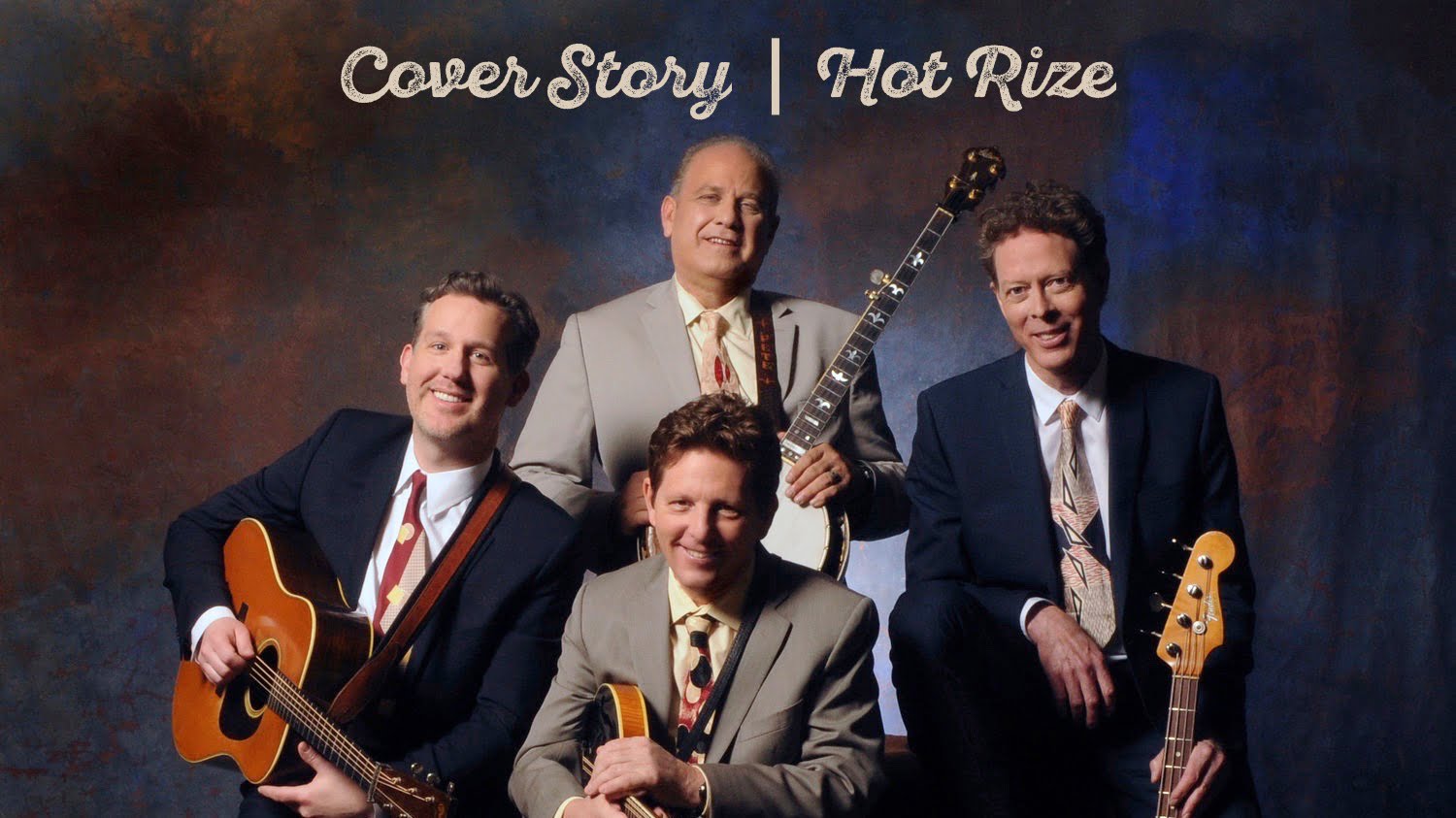
Hot Rize Turns 40: Nick Forster and Tim O’Brien Look Back

He’s had 40 years to think about it, but it took Nick Forster a while to get to a real answer to some existential questions about Hot Rize, the bluegrass-rooted band he, mandolinist-singer Tim O’Brien, banjo wizard Pete Wernick and guitar master Charles Sawtelle formed in in Denver in early 1978. Just what is it that made Hot Rize, well, Hot Rize? And just what is it that make the band — which will host the 29th annual International Bluegrass Music Association Awards on Sept. 27 in Raleigh, North Carolina — still treasured, still distinctive, lo these two score years later?

Forster paused at the question, and then hemmed and hawed a bit before giving it a try. First he tried to break it down to the talents and sensibilities they each brought to the mix. Then he tackled the way they all interacted — the natural combo of O’Brien’s and Wernick’s instrumental skills, O’Brien’s voice, the instinctive guitar skills of Sawtelle (and later of Bryan Sutton, who stepped in when Sawtelle died of cancer in 1999). And then he looked at the balance of celebrating traditions and exploring new paths with choices of material. Blah blah blah. Whatever.

Finally, almost sheepishly, he mentioned one other thing: “Also maybe, I don’t know if it came through sonically, but we were having fun!” he offered. “We were pretty young and had a sense of humor and were having fun!”

Well, there we have it. For fans, for anyone who’s heard the band, there’s no “maybe” about it. From the very first gigs through the three-night anniversary celebration at the Boulder Theater in January with guests Sam Bush, Stuart Duncan and Jerry Douglas — commemorated on the new 40th Anniversary Bash album, recorded in January at the Boulder Theater — it’s that ineffable spirit that stands out, even if we can’t really identify it any better than Forster did.

But let’s let O’Brien have a stab at it as well.

“I don’t want to compare to Bob Marley or anything,” O’Brien says, risking those dangerous waters anyway. “But he was trying to make country music and rock ’n’ roll, and that’s what came out. He had his thing and place and time and what he did. We were too hippiefied and too Western or something to play it like the guys from the Southeast, I guess. We were a Boulder band, a college town band. But we were also a reaction to the Newgrass movement. We adjusted the steering a bit. That was a little too far to the left of us. So we went to the center, but we were still a good deal left of center. … So I don’t know,” he concludes. “It was a weird recipe that seemed to work.”

Not that they followed any recipe, let alone a long-term game plan.

“We thought we’d just play for the summer,” says O’Brien, pulling one right out of the Famous Last Words file.

That was the view from their first gig, in Denver, on May 1, 1978, growing out of jam sessions at the Denver Folklore Center, where they all had found jobs. From the very start there was something different, distinctive about them — the first song the four of them remember playing together was not bluegrass at all, but “Wichita Lineman.” Just two weeks after the May Day gig they were up in Minneapolis booked to play on a new public radio show called Prairie Home Companion, and a month after that they were on the bill of the Telluride Bluegrass Festival. And without even thinking about it, they found themselves in a full-time proposition.

“The fact that we didn’t have a long commitment meant we would just be a band for as long as we had gigs,” Forster says, noting that Wernick, a.k.a. Dr. Banjo, served as de facto booking agent as well as band member. “So we kept saying, ‘Yes.’ Pete would say, ‘Do you want to play this wedding? This party? This club?’ ‘Yes!’ We had a goal of trying to make $100 a week take-home pay each. That was a lot of pressure on Pete.”

It was quite the time. Forster and O’Brien were in their mid-20s, Wernick and Sawtelle in their early 30s, all having found their way to Colorado from various points on the compass, meeting through working at the Denver Folklore Center. Fairly quickly, jam sessions grew into something more solid. Forster was recruited to play electric bass (which packed into a car trunk more easily than an acoustic bass), though it was an instrument he’d never played before. As soon as they hit the road they found themselves in the middle of some amazing settings.

“It was an incredible time to be in a bluegrass band, in my view,” Forster says, a time when many of the founding fathers of the form were still going strong, while a new generation — the “newgrass” crowd — was searching for fresh ways to expand the bluegrass lexicon. “I don’t know that we’re fully the third generation of bluegrass, but maybe two-and-a-half. So if we played festivals in the late ‘70s, and because there weren’t as many bands then, a lot of times you’d play the whole weekend, Friday, Saturday and Sunday, two shows a day. So Bill Monroe and Ralph Stanley and Jim & Jesse, and [such younger bands as] Seldom Scene and Hot Rize would do two sets a day.”

That was just a part of the vibrant world in which they found themselves.

“Between the sets, you’d sit at your merch table and there’s Bill Monroe sitting at the merch table, and Jim & Jesse, and you’re at someone’s farm in Oklahoma or Georgia, so lots of personal hang time with everyone.”

They didn’t exactly become pals with the old-timers, but a community quickly formed among the younger musicians, particularly after Hot Rize became a client of booking agent Keith Case, whose roster included Newgrass Revival (featuring Sam Bush), John Hartford, autoharp magician Bryan Bowers and Norman and Nancy Blake. Case took advantage of any opportunity to have two or more of those acts sharing bills as much as he could.

“That was so incredible,” Forster says, “to be part of this rolling band of gypsies. Almost every other weekend you’d run into one or even three or four of them.”

Gig by gig it kept going, and kept getting bigger, abetted by their association with their, uh, friends, Western swing ensemble Red Knuckles & the Trailblazers. (“Oh yeah,” Forster sighs. “Those guys.”) By 1990 it had gotten so big that Hot Rize was named Entertainer of the Year in the very first IBMA Awards. But it had also gotten so big that O’Brien and Forster in particular found themselves reassessing things.

“Three things happened concurrently,” Forster says. “We achieved so many of our original goals, frankly. We got to make records, got a bus, got to play the Opry and Austin City Limits, could play any festival. Spectacular. I don’t mean to sound ungrateful, but we felt a little like, ‘Okay, we’ve done this. This is the end of a chapter.’ Pete and Charles, being older than Tim and me, said, ‘You guys, you don’t understand! This is the brass ring! We hit the jackpot! We’re a band and we can play together and it’s going to get better.’ And we being in our mid-30s rather than mid-40s thought, ‘That’s cool, but we’re going to do other things.’”

And so Hot Rize went into “rest mode,” as Forster puts it. O’Brien, who had established himself as an in-demand songwriter, signed a solo deal with RCA and recruited Forster, who had gone on tour with Sam Bush and John Cowan, to join his band. In the course of that, Forster came up with the idea for a radio show combining roots music and discussion of environmental sustainability, about as Colorado a concept as you could find. That show, eTown, launched in 1991, with its demands ultimately being too much for him to stay on the road with O’Brien.

Meanwhile, Wernick started Live Five (sometimes known as Flexigrass) with some Klezmer-meets-Dixieland approaches, while Sawtelle worked with Peter Rowan and opened a studio, taking on production gigs. There were many calls for reunions, and now and then they would get together for one-offs or a few gigs. When Sawtelle was diagnosed with cancer in 1996 there was a feeling that they needed to do something bigger and took on a full tour, resulting in a live album. After Sawtelle died in 1999 there were occasional shows with several guitarists stepping in, including Peter Rowan a few times. Then Sutton came on board as a full-time member in 2002, though “full-time” was still fairly sporadic, peaking with a 2014 album, When I’m Free, and the first real tour since the sorta-hiatus.

And then they saw that 40th anniversary looming and it was too big to overlook.

“The approach was frankly just celebratory,” Forster says of the concerts. “This is a milestone and it should not go unnoticed. So let’s just do something fun and have a party.”


Photo credit: Jim McGuire

RECAP: Telluride Bluegrass Festival

For as long as I’ve been involved in the bluegrass world, people have been telling me of the transformative powers of Telluride Bluegrass Festival.

Every time festivals would get discussed, one of the first questions inevitably was ‘well have you been to Telluride?’ to which I would mumble some lame excuse about not having the time or money or anything else that would come to mind.

But this year, with the launch of the new site (and a complete lack of excuses), I booked my ticket and headed east.

I arrived in the valley early Thursday evening, the peaks of the Rockies surrounding me, after a gorgeous two and a half hour drive from Durango.  After settling in to the house, my group and I walked over to catch the last of John Prine on stage.  The sun was setting, casting an amazing, warm light on everything around us, and I knew I was already in love with this place.

We all headed over to my first Nightgrass show at the auditorium of the local high school, where one of my current favorites, Joy Kills Sorrow, took to the stage prior to Laura Marling (who, despite being a phenomenal singer and songwriter, was a bit too mellow for a set that started at 12am).

Friday, I awoke to the sounds of Edgar Meyer and Mike Marshall on the main stage (the entire festival is conveniently simulcast on local radio station KOTO) and spent the morning wandering the main street in town, eventually settling at Elks Park stage to see Bryan Sutton, Sam Bush, Jerry Douglas, and Luke Bulla perform a tribute to the late Doc Watson. The woman introducing the set summed it up best: ‘We’re proposing a toast to our good fortune: to being human, healthy, and happy, right here.’  Right here.  For these few days.  Everyone together, collectively sharing in such amazing music.  Telluride’s mysterious and magical spell was beginning to weave itself around me.

After watching Doc’s tribute, we headed to the main stage to catch Del McCoury.  If you haven’t seen Del live, YOU NEED TO DO IT.  The man is a legend, and a showman to the greatest degree.  Just… ugh, seriously promise me you’ll see him.  It’s unlike anything else.

John Fogerty wrapped up the night.  Do you realize how many Fogerty songs you know??  Probably not, because the man played for over two hours and we all knew EVERY WORD.  Apparently it’s just something that’s built in to the American subconscious: they lyrics of John Fogerty.

Despite a laaaaate evening the night before (the jams around town tend to last til the wee hours), I was up on Saturday for an early morning gondola ride up the mountain, but not before catching the last few songs in Bela Fleck and Edgar Meyer‘s workshop ‘How to Play Badly Without Anyone Noticing’ (with special appearance by Chris Thile), which is one hell of a way to kick off any day.

Spent the majority of my day at Elks Park stage, with new favorites Della Mae showing off their impressive and catchy musical prowess (seriously, go listen to these ferociously talented ladies right now…), followed by a Woody Guthrie tribute show featuring Tim O’Brien (Hot Rize), Emma Beaton (Joy Kills Sorrow), Peter Rowan (Peter Rowan Band), Kristin Andreassen (Uncle Earl) and Vince Herman (Leftover Salmon).  The Guthrie show was really something…. as the voice of the audience swelled during a rousing rendition of ‘I Ain’t Got No Home,’ it was pretty clear just how relevant Woody’s lyrics remain.

Later that night we all headed over to see Bruce Hornsby (where Bela Fleck and Chris Thile made guest appearances!), and the 1987 version of me was secretly [not-so-secretly] thrilled with the swell of the opening chords to ‘Mandolin Rain’ (admit it you totally love that song too…).

Sunday was a day to end all days.  From Peter Rowan to Brett Dennan to the Punch Brothers (in one of their best performances I have ever seen, only to be surpassed later that evening when they played Nightgrass), to Glen Hansard (of The Swell Season), and eventually the Telluride House Band with Bela, Sam, Stuart, Edgar, Bryan and Luke, it was a pretty remarkable meeting of the minds on one stage.

Sunday night wrapped with a post-show Nightgrass performance with the Punch Brothers (they played til almost 2am), followed by a late night on the porch, waiting for the sun to rise, incredibly resistant to the inevitable return to reality we all faced the next day.

People aren’t kidding when they say that Telluride is transformative.  It was unlike any festival event I’d attended prior (so clean!  so nice!  so organized!) and left me feeling more inspired than I’d been in a long time.  You’ll just have to check it out for yourself next year [no excuses].