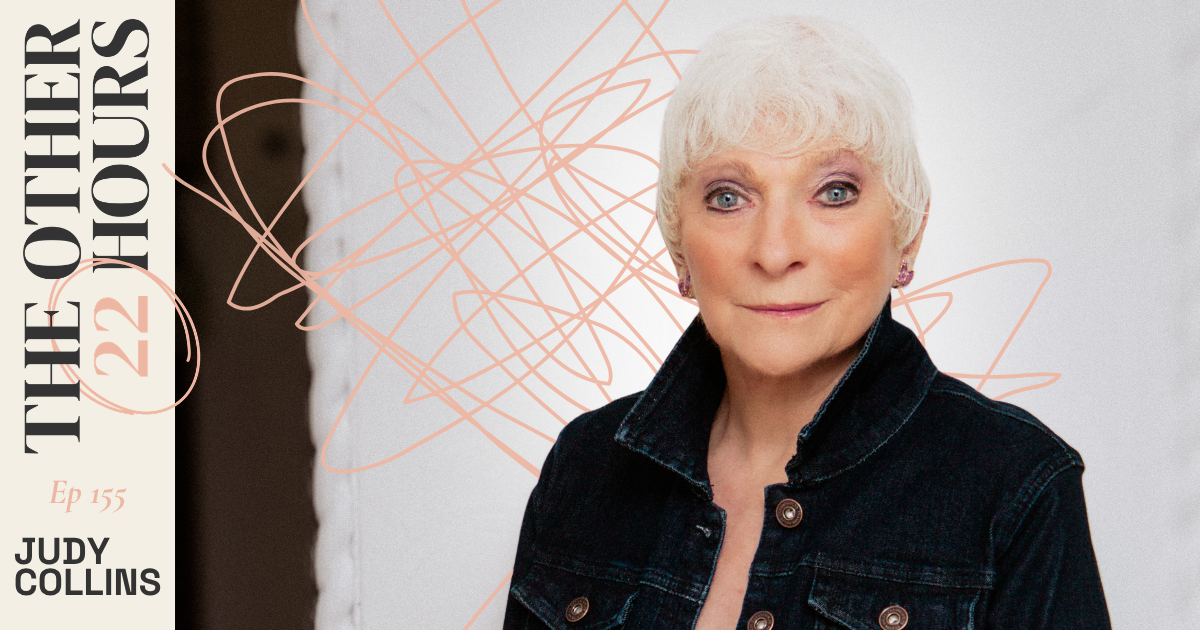
“We write to find out who we are.” For over six decades, Judy Collins has been a pillar of American music: from a GRAMMY award for “Both Sides Now,” two platinum records, and an Oscar nomination to writing more than eight books and landing her first No. 1 album at 80 years old.
But behind the staggering accolades is an artist who still treats her craft as a sacred, daily blue-collar job. In this episode of The Other 22 Hours, we explore the quiet discipline of her daily routines, the sanctuary of her 48 years of sobriety, and what she calls the “secret channels of songs.” Judy shares her philosophy on processing grief through poetry, the necessity of maintaining community in a solitary profession, and turning off the noise to protect the soul.
New Music Friday is here! And here’s what we’re listening to today. You Gotta Hear This:
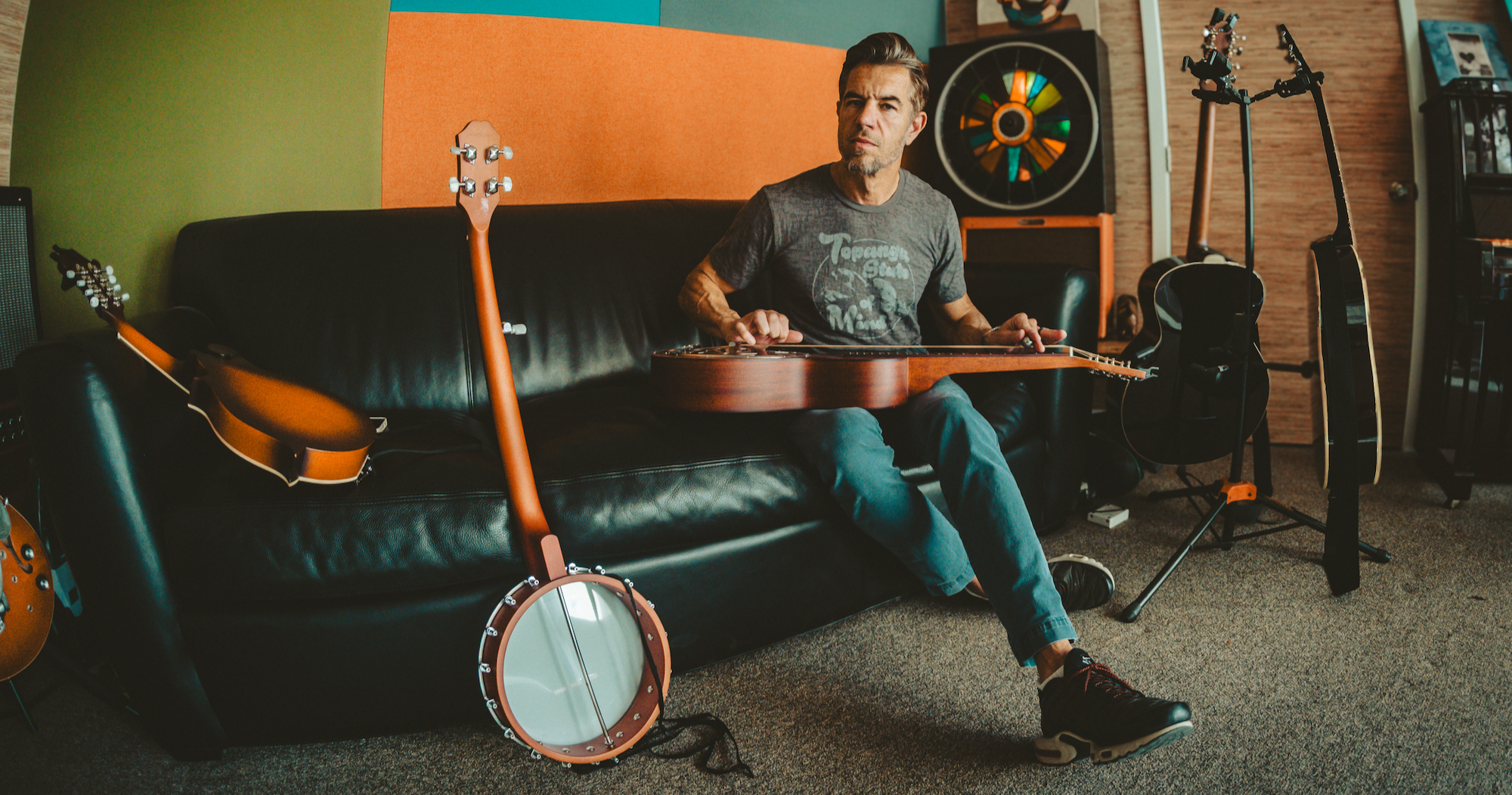
Kicking us off, Western North Carolina’s premier bluegrass outfit Balsam Range bring us a bluegrass classic: a train song. “Life I Left Behind” is out today, the latest single from the IBMA Award-winning group is soulful and brooding, built on strong harmonies and the clean modern bluegrass sound the band has become known for. Below, bassist and singer Tim Surrett describes how the track is personal to him and his family.
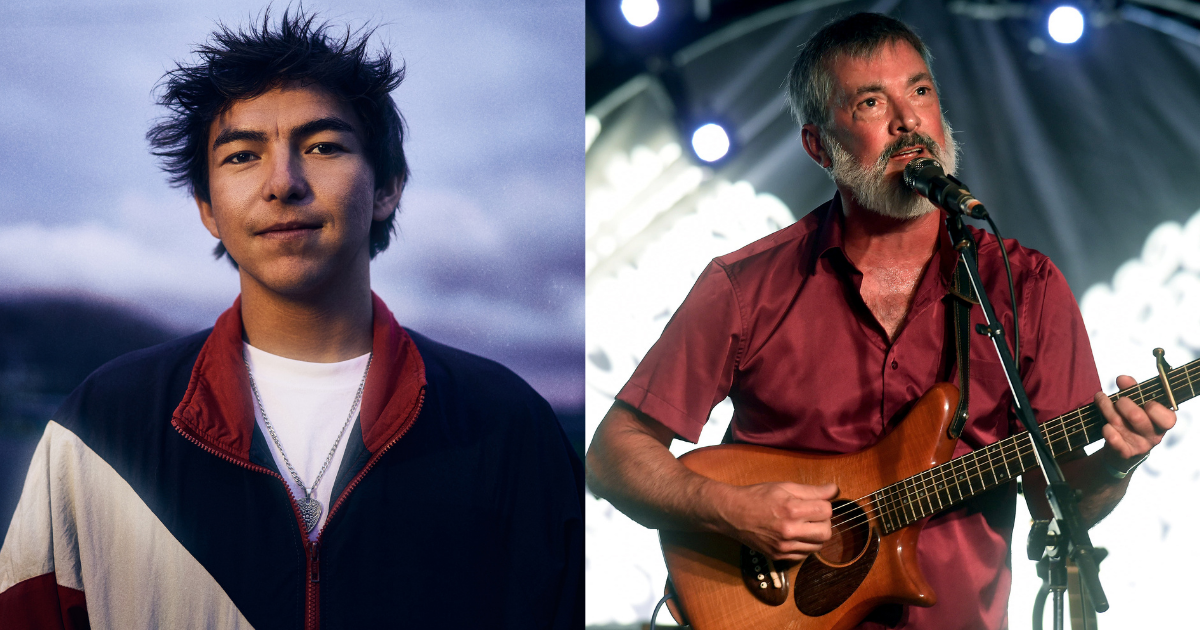
From north of the NC border and a few steps towards jamgrass, guitarist and singer-songwriter Larry Keel has dropped a new, hilarious song this week entitled “Butt Dial.” Yep, it’s about exactly what you think it’s about – and it was co-written with bluegrass legend Peter Rowan. Keel and Rowan each tell us about the song and its inspirations and you can take a listen as well.
Rachel Sumner & Traveling Light share a new music video today for “Yodelay,” a cozy and vibrant song about the afterglow of good times and fellowship. Written by Sumner and Dinty Child of Session Americana, the group tracked the song at eTown in Colorado after winning studio time at the Telluride Bluegrass Festival band contest last year. An EP, also titled Yodelay, is on the way later this month.
Country star-on-the-rise Wyatt Flores has a new single out this week as well, as he looks ahead to his next album, Scared of Heights, coming in late July. “Half The Man” showcases the level of contemplation and introspection always evident in Flores’ writing and the grit and red dirt he brings to modern, mainstream country.
Rounding out our collection this time is Memphis-via-New York singer-songwriter Kate Prascher, whose new song “Jubilee” was inspired by a stroll across an old train trestle in the Hudson River Valley. Folky in a timeless fashion with a delicious and slow sonic build, “Jubilee” carries some of the eeriness Prascher felt when writing the song walking that train track.
Trains, butt dials, good times with good friends – exactly what we want in our weekly round-up! Enjoy, ’cause You Gotta Hear This!
Balsam Range, “Life I Left Behind”
Artist:Balsam Range Hometown: Haywood County, North Carolina Song: “Life I Left Behind” Release Date: June 5, 2026
In Their Words: “There has always been a connection between bluegrass and trains. It’s personal for me because my dad worked nights for 30 years on the Norfolk Southern Railroad. Sometimes he would take me to work with him so I could ride the trains all night. There is a mysterious romantic quality about the freedom of the rails, and I think this new song has a bit of that. There’s a conflict between the freedom of going and the life left behind.” – Tim Surrett
Track Credits: Caleb Smith – Acoustic guitar, lead vocal Tim Surrett – Upright bass, resonator guitar, harmony vocal Marc Pruett – Banjo Alan Bibey – Mandolin Stephen Hudson – Fiddle, harmony vocal
Wyatt Flores, “Half The Man”
Artist:Wyatt Flores Hometown: Stillwater, Oklahoma Song: “Half The Man” Album:Scared of Heights Release Date: June 5, 2026 (single); July 31, 2026 (album) Label: MCA/Island Records
In Their Words: “I finally feel like I know who I’m supposed to be, right here in this moment. I’m not second-guessing myself anymore on what the music’s supposed to be, what I’m supposed to be chasing, or who I’ve become. This is who I am now in 2026. Still figuring out my struggles and mental health but finally getting the confidence to step back into this and to believe in myself again.” – Wyatt Flores talking about his upcoming album, Scared of Heights.
Larry Keel, “Butt Dial”
Artist:Larry Keel Hometown: Lexington, Virginia Song: “Butt Dial” Release Date: June 3, 2026
In Their Words: “‘Butt Dial’ is a real-life, happy accident story that led Peter and a friend to reconnect and have a fun, late-night phone conversation. The lyrics are mostly Peter’s and I tweaked some words and phrasing to sync with the music I wrote for the song. Collaborating with Peter is such an easy, natural process. Can’t wait for more!” – Larry Keel
“Butt dialing is one of those phenomena of the guess times we live in. Sometimes you are listening to a soundtrack of a friend’s life, like entering someone’s dream, you can only wonder what is going on! In the song the butt dialing friends finally connect! Writing with Larry Keel is like that, jumping into an unknown dream!” – Peter Rowan
Track Credits: Larry Keel – Guitar, vocals Winston Mitchell – Mandolin Justin Doyle – Bass Kyle Tuttle – Banjo
Kate Prascher, “Jubilee”
Artist:Kate Prascher Hometown: Memphis, Tennessee Song: “Jubilee” Album:Sunday Afternoon Release Date: June 3, 2026 (single); August 28, 2026 (album) Label: First City Artists
In Their Words: “‘Jubilee’ follows a ghost train. I wrote it while walking on an old train trestle in Rosendale, New York, a town ringing with the eerie history of a stone quarry, carrying memories of my hometown across it. By the time I climbed down from the track, the song was mostly written. It’s a lyrical exploration of the word ‘jubilee’ as both a signal of celebration and of forgiveness.” – Kate Prascher
In Their Words: “‘Yodelay’ is about having such a good night out that you decide to dwell in that feeling a little longer. Instead of jumping right back into work or the next thing on the calendar, it’s about lingering in the glow of a great evening, sleeping in, and appreciating life, love, and light. Dinty Child (Session Americana) and I wrote the song together after the chorus came to me before a show we were playing. We ended up finishing it from separate songwriting retreats, sending ideas back and forth over text. The song felt playful from the beginning and I loved the way the title seemed to carry more than one meaning. I’ve always been drawn to songs that let sound and language blur together a little bit.
“After Rachel Sumner & Traveling Light won the Telluride Bluegrass Band Contest last year, part of our prize was studio time at eTown in Boulder, Colorado. We decided to use it to record a cowboy EP featuring a mix of old songs and new originals. ‘Yodelay’ became the title track because it captures the spirit of the record so well – inviting and fun on the surface, with a little more waiting for the listener underneath.” – Rachel Sumner
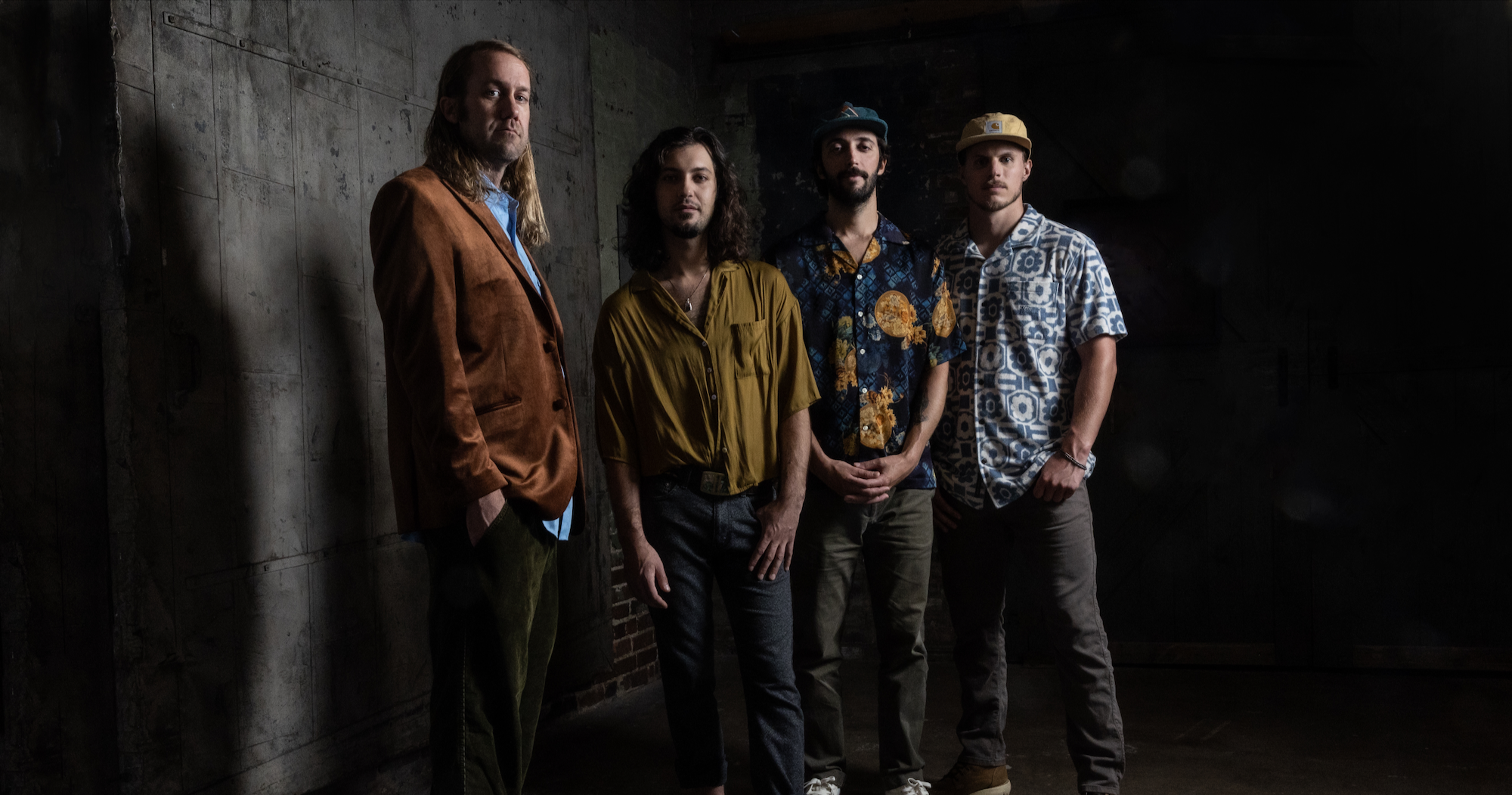
Magoo has been lighting up Colorado’s vibrant and crowded jamgrass scene since 2022. Their collision of string band music with danceable beats, jazzed up instrumental breaks, and anthemic lyrics rooted in rock has led guitarist Erik Hill to coin the phrase “bluegrass with lasers” to describe their sound and style.
After turning heads with two volumes of Magoo The EP in 2023 and 2024, the band – now comprised of Dylan Flynn (Dobro), Courtlyn Bills (mandolin), A. Denton Turner (bass), and Hill – have finally unleashed their full-length debut, What A Life. The 10-song compilation sees the upstart group of pickers contemplating everything from the sacrifices of a life lived on the road, the places that have transformed us, and how our stories are all connected.
Across 52 minutes of run time, the musicians rip their way through meandering jams that flow freely from one song to another as if it was a live show, an approach Hill says was intentional to keep the album from feeling sterile.
“Our live shows and recordings are very important to us, so it was imperative that this album not feel so copy and paste or cut and dry like studio projects often can be,” explains Hill. “I think we landed on a nice, organic feel that stretches the songs out, but not as much as we do when you see us live. In that sense, it serves as a good bridge between the two.”
During a free-flowing conversation with the band inside the green room at The Burl in Lexington, Kentucky, midway through their winter tour, Magoo spoke about the DIY approach to What A Life, Telluride’s significance to the group, near-death experiences, and more.
Why was now the right time to release your debut record?
Erik Hill: We had all the songs that we wanted to record. With the EPs we released previously, we basically recorded the couple originals that we had at the time along with a few covers. Eventually we started collecting a nice set of original music and figured it was time to do a full-length album.
Denton Turner: A big part of it is just having all the parts in place, from our management to booking people, so we can hit the road full speed. But in order to do that right it was important we have an album out to go with it – we needed a product to market. That was a big motivator for us this year, having an album to really kick in the door and make the most of our 100+ shows this year. Getting those other pieces in place on our team gave us ample time to focus on recording. When you’re trying to do everything it’s easy to half-ass it all, so having them by our side allows us to focus on and tackle what we love – the music – head on.
And with What A Life you opted to tackle it in your own DIY studio. Tell me about that experience?
Courtlyn Bills: I’ve made about 80 records in the past, but for this one everything was set up special just to make this album. I was moving and had my dad drive up a bunch of equipment from Texas, including my console he’d been holding in storage that was previously owned by Prince.
EH: Sessions were scattered throughout the month when we weren’t touring. Any time we were able we’d try getting over to Courtlyn’s to bang out a tune or two.
CB: There were a lot of 4 a.m. sessions. The coffee pots were flowing! The only big difference from one session to the next came on the jams, which we decided to use our pedal boards on and mic them up simultaneously. The only other thing is that I changed the action in my mandolin near the end of some tunes, which is why my mandolin sounds a bit thicker to close out three songs. There was a lot of us repeatedly asking each other, “How does your instrument sound?” Because there’s no turning back now, so no pressure. [Laughs]
DT: Even though we’re coming from touring and going straight into recording and back to touring – which seems hectic in a way – it’s nice for me doing [songs] one at a time. Being in a studio can be a grueling, tedious process, so having the luxury of being able to do it ourselves when it made sense for us was nice. We were able to just focus on one song or two songs at a time and give them all our attention. It didn’t feel like we were on the clock and paying by the hour with the pressure to get it all done quickly. Instead we were able to focus on banging out a song then hitting the road and discussing what next song we want to do and develop next before coming back being ready to give that song the attention it deserves, which was a lot of fun.
Courtlyn, you mentioned having a deep catalog of producer credits already. Has it always been a goal of yours to record your own band’s projects?
CB: I first started working in a studio when I was 15, mostly with younger artists that have less developed material, which I love. However, what I don’t love recording is my own music, which is why I never made a record for myself up to this point. But the cool thing about Magoo is, even though I write for and sing a lot with them, it feels like I’m working for a band and not myself. Knowing that removed a lot of the pressure of it being a make or break thing because I could trust my dudes. If they said something was good I wouldn’t question it, I’d just say, “Let’s move on!”
If I’m not mistaken, the only song you didn’t record at the DIY studio was “Angel Of Telluride,” which you flew to Nashville to knock out with its feature artist, Sam Bush. How’d that one come about?
CB: That connection came about through Jeff Fasano, an amazing photographer who used to shoot the rock band I was in prior to Magoo. Whenever we first met I had just started playing mandolin and I remember him telling me that he could see into my soul and could tell that playing it was my destiny, not rock music. I knew he was also close to Sam, so when I eventually wrote “Angel Of Telluride” I did it to be a Sam Bush song.
One day Jeff emailed Sam about the song and once he realized we were a real band and not full of shit he gave me a call and said he’d be honored to be a part of it. When we got to recording, I remember asking him if he wanted a producer credit on the song and he turned it down even though he was still effectively acting as a producer, because every freaking note, chord change, and tone shift he hit was spot on.
DT: Sam actually beat us to the studio the day we recorded. We wound up spending the entire day hanging out with him. It reminds me of a line in “What A Life” – “Buy the ticket, take the ride.” You only get one life, so don’t shy away from taking chances and shooting for the stars. Who knows, you might just wind up at a studio in Nashville recording with one of your heroes. Working with Sam never would’ve happened if we hadn’t taken the chance, and I’m so glad we did. I hope it inspires others to bet on themselves and their abilities too.
That song also holds a lot of significance given what the Telluride Bluegrass Festival has meant to the band, notably how you wound up bringing Courtlyn into the fold. Can you tell me about that?
Dylan Flynn: Erik, myself, and my Uncle Paul [Flynn] were the original Magoo and would regularly attend and pick around at festivals like Telluride, Rockygrass, and Tico Time. Then a few years ago Courtlyn, still new to bluegrass at the time, stumbled into our campsite. We ended up picking all week, through the night until 8 a.m. each day.
Then at one point when we were watching Greensky Bluegrass perform I remember him turning to me and saying, “I want to be in your band” and I responded, “I just met you like five minutes ago. Let me talk to the guys about it first.” [Laughs] But after spending all that time with him there and seeing not just how his brain works, but also how far along he was as someone still new to bluegrass, it was a no-brainer. In the weeks after Telluride it dawned on us that he was the missing piece we needed, not just as a player but as a person as well.
We rode with that lineup for about a year until my Uncle Paul decided he wanted to step away from music to travel the world – he’s actually rooting us on from Thailand right now. But when he departed, Denton was presented to us by a mutual friend. Similar to Courtlyn, after being introduced he tagged along to play several gigs before we formally asked him to join us long-term.
DT: I still remember them proposing to me and making it official with a Slim Jim ring. I still have mine and see it every day. It’s on the bus sitting on the butter tray in our fridge. [Laughs]
Sounds like you’re preserving it like one of those Big Macs you see in a museum that’s unchanged after 20 years!
Switching gears now – Courtlyn, what led to your move from the rock world into bluegrass?
CB: I was seeing the String Cheese Incident and going to festivals like Hulaween a lot, but I still didn’t quite love or understand bluegrass yet. I come from a really progressive and heavy world of jazz fusion, metal, and radio rock, but once I started hearing Cheese do more bluegrass-leaning songs I started falling in love and learning how to do them myself.
Then in 2019 – still prior to picking up a mandolin – I ingested DMT for the first time. When I did, I remember a friend who’d been telling me for years that even though I didn’t know it, that I was a mandolin player. [He] put a 1916 Gibson A[-style mandolin] into my hands and told me to shred. I don’t know how to explain it besides it being like “Dr. Strange,” but with numbers. It was that moment I became a mandolin player.
From there I formed a Celtic band and began plugging away with that, all the while realizing I had to get this bluegrass thing figured out. Bluegrass is one of the most prominent genres in the counterculture-ish scene that I loved being a part of, from String Cheese people to Deadheads and Spreadnecks and beyond. One day I sat myself down and said bluegrass is gonna have to be it – you are married to bluegrass now. Then I started going online and listening to pickers like Ricky Skaggs, Sierra Hull, Jarrod Walker, and David “Dawg” Grisman, slowing down YouTube videos to learn their breaks. That was about it. Once I learned what was going on in bluegrass musically, then it was obvious that these guys and gals are monsters. To be able to create such a back pocket with no drums on that mash grass stuff – there’s nothing like it.
You’re right, there is nothing like it! With that in mind, is that what your song “What A Life” is about – taking chances and being grateful to make a living making music?
CB: The melody and chorus for that song came together really quickly one day in my buddy’s living room. At that time in my life, the songs I was writing didn’t hold a lot of meaning or significance, so I wanted this one to be profound. The last verse really says it all: “What a life/ Is what I thought before I got swallowed by the tide/ Something felt amazing/ But I knew it wasn’t on the other side.”
I had a near-death experience when I was 19 and that is where I take a lot of the song’s inspiration from – although in the beginning I try to get cute talking about grandpas and other relatives and how their actions and memories have impacted the person you are in this very moment. Despite how insignificant those stories may seem to you right now, the fact that they were passed down and made it to you means they must’ve been pretty big moments in their and your family’s history.
So even though something like hopping into a stranger’s car and hauling ass to Telluride may not seem significant to anything other than the present moment, it’s so much more than that. We’re all connected in the climb and the work we put in together to build the memories we cherish. If none of us were here, what would be the point?
DF: …There’d be no life at all. That’s my favorite line in the entire song: “If none of us were here there’d be no life at all.” [Laughs]
A big part of the musical life and memories in your Colorado stomping grounds are its vibrant jamgrass community, a talented and tight-knit group that reminds me a lot of the Kentucky scene I’ve been fortunate to grow up in. What are your thoughts on the scene there and where Magoo fits into it all?
EH: We’re pretty lucky to call Colorado our home base. It’s certainly a breeding ground for a lot of great bands and even better music fans. People that love our type of music are everywhere in Colorado, no matter what town you’re in. From Denver to Boulder and up in the mountain towns, people want to hear that jam music, bluegrass, or a mix of both. It keeps us constantly busy and buzzing with new ideas to explore.
DF: We also have so many friends who are a part of great bands like Clay Street Unit, Tonewood String Band, and The Fretliners. I have more friends in my life now than ever before because of the community that we’re building. It’s also funny too – like one day I was driving home and saw [the Infamous Stringdusters’] Andy Hall in my neighborhood and am in awe, only to find out he lives half a mile down the road. My number one Dobro inspiration is Andy Hall, so having him so close by is a testament to just how unbelievable the music scene is in Colorado right now.
CB: There’s just something about being above 8,500 feet [elevation] that pushes people to their limits, whether it’s climbing a mountain or writing a song. The special thing about Colorado is the people here are making music for their friends. They’re making music for their little community to get together and have a good time. Someone like Vince Herman isn’t out there writing a song to have a number one hit. He’s writing a song so his family and his homies can get in front of the stage and throw down and feel comfortable and have the time of their lives, which is exactly what we’re getting to do now.
All: What a life!
What has bringing this album to life taught you about yourselves?
EH: Doing this album DIY style, we had to learn to trust ourselves and say, “Hey, this is really good.” You can sit here and nitpick each part and each take fucking forever, but at the end of the day what we have is really good, good enough to put out for people.
DT: For me, it’s in line with the phrase “what a life,” to take the chance and take the ride, call Sam Bush, whatever. I hope it inspires others the way it inspired me. When I met these guys, I lived three and a half hours away on a good day, but I saw what was going on and wanted to be a part of it. That meant getting in my car and driving to Denver multiple times a week to practice and learn the material. People thought I was crazy, but if you want something, you’ve got to go for it and give it your all. When you do that, amazing things can happen.
This whole experience has been a case in point of that, especially with the Sam Bush thing and making that call. We didn’t sit there and second guess ourselves about it and look at what happened. It’s always worth your time to give it a shot. You never know where the ride will take you. For me, that’s what this is all about.
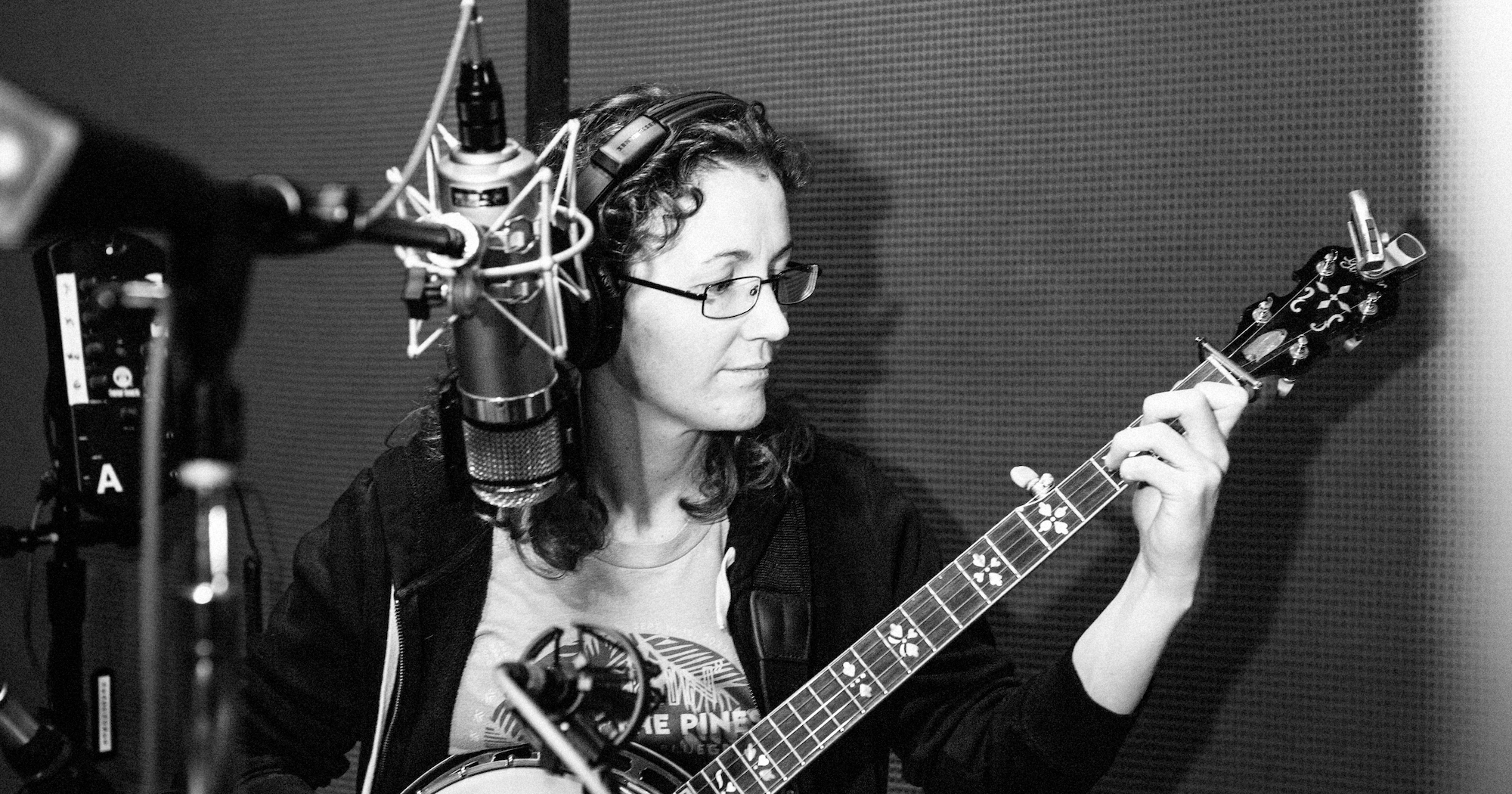
Artist:BB Bowness Hometown: Somerville, Massachusetts Latest Album:Goodtime Revival (released November 1, 2025) Personal Nickname (or rejected band names): BB (short for Catherine)
Which artist has influenced you the most – and how?
It’s tough to choose just one person, but I’d have to say Béla Fleck. He has expanded what’s possible on the banjo for all of us banjo nerds. Hearing him play classical, jazz, bluegrass and so many other styles, all with stunning fluency, is such an inspiration to me. And his tune writing is masterful, tunes like “Sunset Road,” “The Overgrown Waltz,” and “Big Country” feel so beautiful and singable to me. It’s really hard to write tunes that come anywhere close to that level of completeness.
What was the first moment that you knew you wanted to be a musician?
I’ve always been drawn to music, since growing up in a traveling New Zealand craft market. There was a stage manager in the fair, Ralph Bennett-Eades, who played guitar and sang really great. His boys played guitar and drums so I always saw the cool, older kids playing music. Then after learning banjo for a few years, I headed to the states for the first time and got to attend some festivals and camps including Telluride and Rockygrass in Colorado. Seeing the amazing musicians perform on stage at those festivals made me really want to try music for a living. Fifteen-year-old me thought, “Wow, people do this for a job?!” Turns out it’s not that easy to get those jobs, but it’s been an incredible journey so far.
What has been the best advice you’ve received in your career so far?
The great Tony Trischka once told me it’s great if you can learn to sing. I’ve thought back on that comment frequently through the years, being primarily an instrumentalist. But it really rings true! Being able to sing in a band and contribute to the show as a vocalist by singing harmonies is a big plus. It’s also so great in general for your musicianship to learn to sing so that your ears are more connected to your hands. Having a decent ear is a must for singers and I’ve found it very helpful for my banjo playing to work on developing my ear.
If you didn’t work in music, what would you do instead?
I’ve always fantasized running a New Zealand coffee shop that sells baked goods. It’s got to be a waterfront cafe so that I can wake up early, go for a surf, and then make coffee and baked goods for people.
What would a perfect day as an artist and creator look like to you?
I love the days where you’re not sitting in a van for 10 hours. Any day where the drive is short and you get to play music with your friends for people who’re listening is a very good day! Throw in some vegetables with dinner and a little private spot to practice some before the show and I’m positively delighted.
Normally, when singer-guitarist Nick Hexum plays a gig, it’s fronting legendary hard rock band 311, performing for massive audiences in huge venues around the globe. But, on a recent evening in Knoxville, Tennessee, he was backed by Americana/bluegrass act Water Tower in front of a small crowd at the Open Chord, a cozy space on the west side of the city along Kingston Pike.
“I’ve always been drawn to music that has energy, and there’s so much energy in flatpicking, the banjo, the tremolo picking of the mandolin,” Hexum tells BGS backstage. “This stuff has rock and roll energy that predates rock and roll.”
For Hexum, this deep dive into bluegrass, country, and Americana of late has become something of an intrinsic mission from within. It’s the current soundtrack of a 55-year-old rock star carefully aiming to dig up and examine the melodic roots of his past – these existential anchor points needed to move forward.
“This whole experience is just bringing it really full circle, like a home,” Hexum says. “My mom is from Nashville, so this is me getting in touch with [memories of] when we used to go to visit my great aunt Margaret in Gatlinburg and she’d play the autoharp.”
Retracing old routes, both geographically and sonically, was no more apparent for Hexum than when he and Water Tower appeared at Americanafest in Nashville. The stop in Music City was part of a larger tour throughout the Southeast in an attempt for Hexum to not only reconnect with his past, but also create an opportunity to break new ground for his craft – especially outside of the hard rock juggernaut that is 311.
“I’m just grateful that fans are showing up and are open to seeing me do something completely different,” he says.
During the intimate set in Knoxville, Hexum and Water Tower crowded around a single microphone, weaving in, out, and around each other in a whirlwind of acoustic instruments and Hexum’s signature vocals. The show ran a gamut of material, whether it be classic 311 numbers or selections from Hexum’s latest solo record, Phases of Hope and Hollow.
“The intimacy [of the show], it’s wonderful to be so up close. It’s totally different [for me] from a technical situation – it takes silence,” Hexum reflects.
This project is the brainchild of Hexum and Water Tower’s Kenny Feinstein. Water Tower is a rising ensemble from Los Angeles, one which initially started as an old-time/punk group, only to lean further into becoming a high-energy string band. They raised more than a few eyebrows when they performed at the recent Telluride Bluegrass Festival in Colorado.
“We’re walking into another side of Nick,” Feinstein says. “311 is all about bringing people together through unity and different styles of music, so this is another slice of Nick’s personality.”
For Feinstein, working with Hexum has been this surreal experience, personally and professionally. As a millennial growing up in the late 1990s and early 2000s, Feinstein was a huge 311 fan, so much so he vividly remembers their video for the smash hit “Amber” and seeing 311 guitarist Tim Mahoney sporting a mohawk haircut.
“My friend and I saw the video and [decided] we needed mohawks,” Feinstein reminisces with a laugh. “So, all three of us went to a party [that night] and got our heads shaved into a mohawk.”
This latest musical chapter for Hexum and Water Tower happened serendipitously through the sober community both Hexum and Feinstein are part of in Los Angeles. Leading up to their crossing paths, Hexum had been heading down the rabbit hole of an Apple Music playlist that featured singer-songwriter Faye Webster. His ear perked up.
“I really like her songs, the pedal steel [sound], and the beautiful arrangements,” Hexum says of Webster. “And then, I reached out to Drew Vandenberg, who produces her music. We started talking about working together and one of the things I wanted to do was learn some of those instruments. So, I bought a pedal steel and took some lessons.”
Making space in his studio for the pedal steel, Hexum wanted to add a few more instruments into his creative arsenal, including the mandolin. Cue Feinstein. Meeting him through the sober community, Hexum asked Feinstein if he would teach him how to play the mandolin.
“I had [Kenny] over and I was like, ‘Let’s do something that sounds like [Faye Webster],’” Hexum says. “And he was just a cornucopia of ideas.”
At that juncture in his career, Hexum “mostly had played six-string guitar,” with these other instruments “a new world” for the artist. And yet, even though he was just learning how to play them, he was already well-versed in the sounds of bluegrass and country.
“Nick saw a dulcimer on my wall and I was really impressed that he knew what that was,” Feinstein recalls. “He told me about his heritage and [growing up] in Omaha and how he loved country and bluegrass. Then I said, ‘We should jam sometime.’”
That initial jam session between Hexum and Feinstein resulted in the duo writing five songs right out of the gate. Soon, Feinstein brought in Water Tower banjoist Tommy Drinkard and wrote several more.
“And now we’re on tour. It’s so special to see the humility that [Nick] carries, the gratitude and appreciation for all of his fans after so many years of doing it,” Feinstein says. “It just inspires us to have gratitude for where we’re at now, and to know the journey we’re on is about continuing to lessen the suffering [of others through music].”
“There’s so many people out there in the crowd crying, really taking it in,” Drinkard adds. “These are very intense subjects and Nick does a good job of explaining where he’s coming from with the songs he’s writing.”
For Hexum, this recent journey into the bluegrass realm has become this incredibly cathartic experience. He found himself not only dissecting his past and that of his parents, but also that of his ancestors going back generations.
“My mom is from Tennessee and my grandpa was a Southern Baptist minister,” Hexum notes. “Half of my family does have these southern roots, so when I hear bluegrass, it just feels like part of my DNA.”
Beyond the new music itself, Hexum views this ever-evolving project as part of his ongoing quest to find himself through this vibrant kaleidoscope of sound and purpose. It’s about stripping everything down, focusing on the essence of a particular melody, and always being aware of the beauty of the sacred platform that is live performance. Turn off the amps, pick up the acoustic guitar and huddle around a lone microphone, together.
“It has gotten to a point where I’m like, ‘All right, time is limited here, and I want to make the most of the time that I have now,’” Hexum says humbly. “I mean, when you see your kids get older and get their driver’s license and stuff like that, you just feel this passing of an era. And so, for me, it’s getting into a different mode of songwriting – really focusing on sincerity and simplicity.”
Artist:The Unfaithful Servants Hometown: Victoria, British Columbia, Canada Latest Album:Fallen Angel (released October 17, 2025) Personal Nicknames (or rejected band names): Quince/Quincy; Cobby; Dyl/Dilly; Cuss
(Editor’s Note: Answers supplied by mandolinist Jesse Cobb.)
Which artist has influenced you the most – and how?
Sam Bush, both solo and with New Grass Revival, Strength in Numbers, and many others. When I first started playing mandolin, I learned old-time fiddle tunes from the likes of Gus Ingo, Blind Kenny Hall, Bill Monroe, Bobby Osborne, and others all from LPs, by ear. I also had a few books around – Jack Tottle’s mandolin book, fakebooks, and some others. I recall going to the library in Superior, Wisconsin, and checking out albums/tapes of many artists.
Among the picks one time was New Grass Revival’s On The Boulevard. I was likely 10-12 years old and pretty new to playing at the time. I remember putting on the record and just being blown away by the overall intensity, sound, clarity, timing – everything seemed so leveled-up compared to the bluegrass and old-time music I’d been listening to. Sam particularly caught my ear as a mandolin player. The tone, attack, intensity, rhythm, changed my whole view of a mandolin’s role in a band. I still get this feeling every time I hear Sam’s music or get the opportunity to play with him! A real game changer for me.
What’s your favorite memory from being on stage?
My first time on the main stage at Telluride Bluegrass. I had been listening to recordings/watching videos of that stage with the house band, New Grass Revival, and others for literally my whole childhood! When I first played there with The Stringdusters, the feeling of looking over the massive crowd and up to the mountains in the distance was very special. It felt like a dream being there at that time and was a very emotional affirmation that all the time, sacrifice and hard work was worth it.
Genre is dead (long live genre!), but how would you describe the genres and styles your music inhabits?
The Unfaithful Servants draw from such a deep well of influences: old-time fiddle tunes to Vulfpeck; Doc Watson and Townes [Van Zandt] to Rush; Edgar Meyer to Jaco Pistorius; The Band to Polyphia; Bach to the Flecktones! Given our varied influences and our span of four decades in ages, we try to put this all together to inform our sound.
In my mind, the closest genre that encapsulates this is Americana. I think that we have more in common with artists like Sierra Ferrell and the Avett Brothers than with traditional bluegrass bands, although that influence/drive is incorporated as well. With the intensity of the Stanley Brothers and the technical aspirations of Punch Brothers, the groove of classic funk and lyrical depth of Neil Young, we try to create our own sound encompassing them all!
What is a genre, album, artist, musician, or song that you adore that would surprise people?
I really like ’80s rock music – think Steve Vai, Damn Yankees, Warrant, Def Leppard. I grew up listening to old-time music almost exclusively and working very hard to live up to the feel and sounds I was hearing in that. I recall being at a soundcheck at a theatre in northern Minnesota one time, probably around 13-14 years old. Walking into the venue for soundcheck, the crew was ringing out the room with the most exciting thing I’d ever heard. The song was “Peace of Mind” by Boston and I was blown away, very similar to the way Sam Bush hit me! I recall asking the crew, “What is this?” This started a long infatuation with ’80s hair bands, electric guitar shredding, and the crazy vocalists in the genre. I know a surprising amount of lyrics to ’80s hair bands and love to karaoke them when I can, for better or worse!
Does pineapple belong on pizza?
While I can confidently answer no for me, it’s kind of like asking, “What is bluegrass?” except without a point. I don’t like the flavor of pizza sauce and pineapple together, personally, but that doesn’t make it wrong for everyone! Much like trying to define genres, it’s completely up to personal taste.
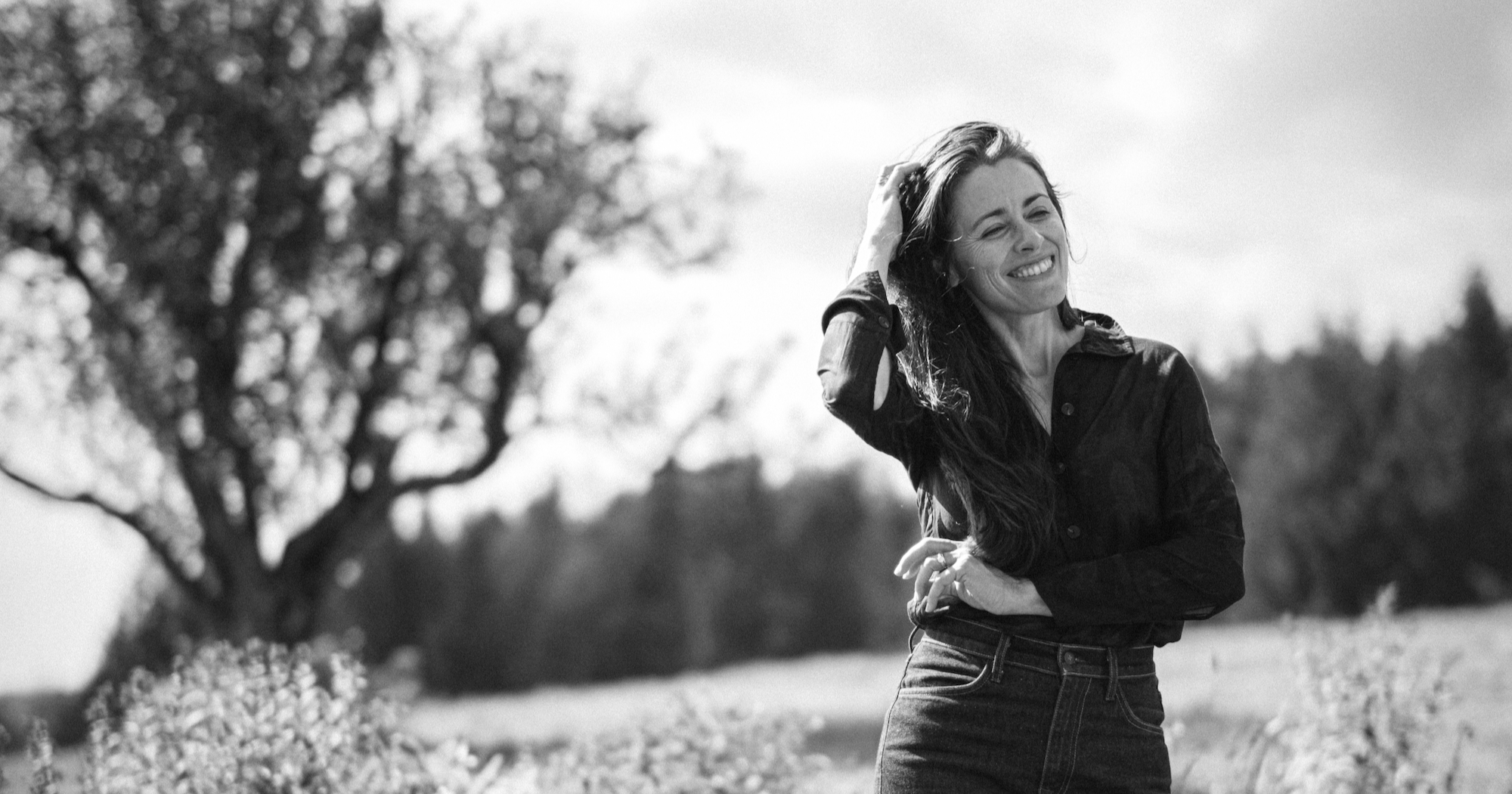
New days and clean slates keep coming for singer-songwriter Caitlin Canty. She is sharpening her skills, raising a family, and continuing to build a body of work that reflects resilience, quiet strength, and resolute honesty. Her new record, Night Owl Envies the Mourning Dove, is a testament to her evolving artistry – an album that turns natural solitude, domestic change, and hard-earned wisdom into a collection of songs that sound both grounded in the earth and untethered from time.
Canty was born in Proctor, Vermont, in 1982 and grew up surrounded by rural landscapes and the gentle rhythms of small-town life. Raised by a schoolteacher mother and a housepainter father, she found song in ordinary moments – singing in chorus and playing trombone in school before receiving her first guitar and VHS-tape lessons at age 17. After earning a biology degree from Williams College she moved to New York City, where she worked for the Emmy-nominated series Live from the Artists Den while pursuing music on her own terms.
Her early releases – including Golden Hour (2012) and the breakout Reckless Skyline (2015) – drew acclaim for her “casually devastating voice” and “hauntingly urgent” Americana ballads. She won the Telluride Troubadour songwriting competition in 2015 and began touring extensively across the U.S. and Europe, collaborating with artists like Peter Bradley Adams and Jamey Johnson, and earning praise from Rolling Stone, NPR, and No Depression for her gritty lyricism and radiant poise.
In recent years, she and her husband, musician Noam Pikelny, moved back to Vermont, settling on a mountaintop near her childhood home. There, Canty continues to record, tour, and write – with the same battered 1939 Recording King guitar that has accompanied her throughout her career.
One of the album’s most tender tracks, “Don’t Worry About Nothing,” carries the voice of a mother consoling and encouraging against the endless churn of small anxieties. It is at once lullaby, sermon, and reminder: that one bad thing does not mean the whole world has collapsed.
“There is a mom’s voice and perspective to focus and worry about the things that do matter,” Canty explained. “But also how little worries and little jealousies can work against us… Tornadoes, awful things, [they] remind you how short life is and what’s actually important.”
The song’s origins stretch back to a small mishap – her young son’s toy castle tumbling down – but its weight comes from deeper, darker places. In March 2020, a tornado tore through her East Nashville neighborhood, missing her home by mere yards. Not long after, the pandemic upended the world. The castle was a metaphor, she realized, for the way everything can crash at once, yet perspective offers a way forward.
For Canty, who released Reckless Skyline a decade ago, the test of time has reshaped her relationship to both music and ambition. “My real goal is to be writing more and better songs,” she said. “My real goal is to be connecting with more people through those songs, playing with musicians that I adore, and getting on good stages. Not worrying about courting people, but to do right by the music.”
Doing right by the music has meant widening her scope. Night Owl Envies the Mourning Dove reaches for longevity, not trends. It sits comfortably in a lineage of songwriters who, like Canty, trust the songs to outlive themselves. “I look to musicians who have had longer careers, like Dolly Parton,” she said. “She is singing songs that she wrote in her 20s. There are so many who have a gorgeous output of songs that are their lifelong friends. It’s not about when they were written or how people liked them then.”
Canty doesn’t wait around for the muse. To her, waiting for inspiration is “a fool’s errand.” She compares songs to photographs – fleeting impressions that must be captured before they fade. “You take a picture and you remember it as notable and beautiful and there is something about it that makes you want to share it. That type of inspiration sparks a song. It happens countless times a day.”
But the challenge, she says, is to honor the purity of that first flash. “You are lucky if you have the time from start to finish to complete the song and make the world go away. The fewer co-writers the better, including myself. If you open it up again in two weeks, or a year, you have different eyes… and that brings too many people and opinions into the room rather than one solid voice.”
Some of her most recent songs arrived in just such a spark – like during a violent rainstorm in Vermont. Alone in her cabin as thunder cracked over the mountains, Canty felt a song arrive like lightning. Hungry, shivering, and unable to leave, she turned to the page. “That’s when it is about honoring your craft and keeping your calluses hard,” she said. “Writing songs and tending to those fires.”
Much of the new album reflects Canty’s sense of place. After years of calling Nashville home, in Vermont the woods, weather, and solitude shape her work. Songs like “Electric Guitar” hum with what she calls “domestic noise” – the sound of home life creeping into the music. “Examining what home means is another strong thread in a lot of these songs,” she said. “There is a lot of domestic noise in ‘Electric Guitar’ of a life settled and tied to the home front.”
The landscape also plays a role. Birds, trees, and storms become metaphors for transformation and survival, grounding her reflections on motherhood and the passage of time.
Every songwriter brings along artists who came before them and for Canty, one such artist is Lucinda William and her landmark album, Car Wheels on a Gravel Road. Canty first heard it in college while working as a server to make ends meet. Living in a big house with wide kitchen windows, she found herself singing along to those raw, unvarnished songs. “The sound, the songwriting, the singing – it all was a high-water mark for me,” Canty recalled. “It had the mystery of how something so simple could be so powerful. Why is this message of another person hitting my heart and staying embedded? How do I do that?”
Since Reckless Skyline, Canty has been described as gentle, quiet, restrained. But she resists those labels. “I don’t think that that is what this record is,” she said. “There might be fingerpicked and more solitary numbers, but a lot of the songs are more electric and grittier, and closer maybe to Reckless Skyline or Car Wheels in that regard.”
There’s grit beneath the quiet, steel beneath the lull. That mix – of softness and resolve – has become her artistic fingerprint. At the core of her music lies a devotion to truth.
“I could never act,” Canty admitted. “As a kid, I loved band and singing. Music is getting to truth and getting yourself out of the way of a song. If it’s the truth, then I feel comfortable singing it.”
That truth may be wrapped in storms or in stillness, in the clatter of home or in the electric hum of a live stage. But it is always there – steady, unpretentious, and deeply human.
With Night Owl Envies the Mourning Dove, Caitlin Canty has crafted more than an album – it is a meditation on resilience, a love letter to songwriting itself, and a statement of intent. She is not chasing spotlights or trends, but tending her fires, shaping her craft, and writing songs that might someday be her lifelong friends.
“My real goal,” she repeats, “is to be writing more and better songs… to do right by the music.”
For Canty, that’s enough. And for those who listen, it is everything.
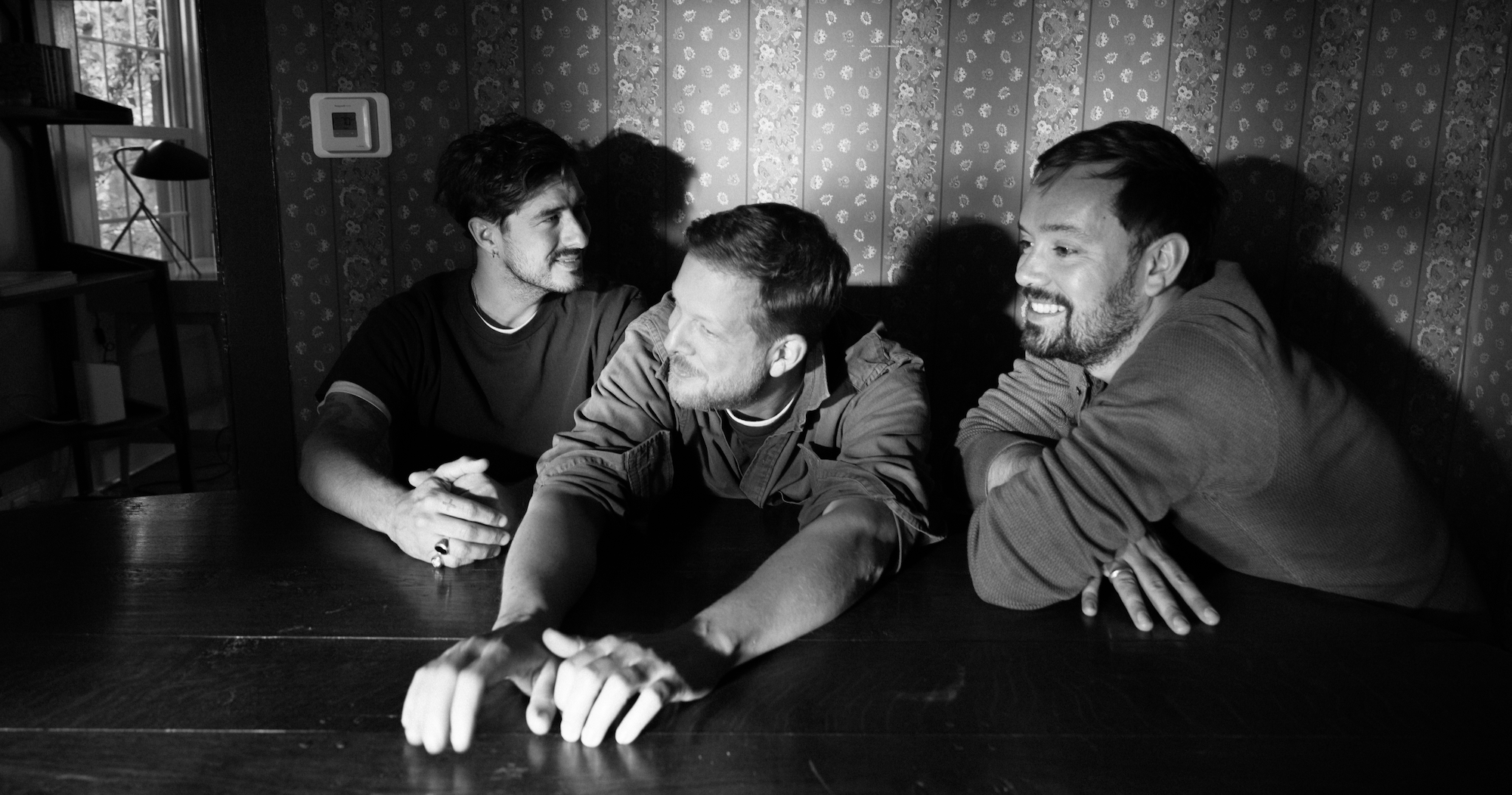
When Rushmere was released in March of this year – Mumford & Sons’ first album in seven years – critics noted its homecoming feel. The songs, the sound, the oh-so-yearning lyrics; they all combined to take the listener back to the beginning.
Tracks like “Malibu” and “Caroline” do not, perhaps, hit the wild highs of “Little Lion Man.” There’s a subtler expression at play in the album, reflecting an evolution from youthful exuberance to the quiet wisdom that only comes with experience. But a decade and a half on from Sigh No More, the band have clearly doubled back from their more experimental forays – 2018’s Delta; Marcus Mumford’s solo project, (self-titled) – to celebrate what brought them together in the first place. In Rushmere they had returned to their rootsy roots, and found peace there.
This month, the band heads back out on tour to Chicago, Philadelphia, Montréal, and more. In November, they’ll return to Europe, and ultimately to the UK, where their final leg will climax at London’s 20,000-capacity O2 arena. Months on the road this year and playing to sold-out venues have proven one thing: people still can’t get enough of them.
And yet the world is a very different place to when their debut album hit the shelves in 2009. When Mumford & Sons first toured Sigh No More, Barack Obama was President of the United States. In the UK, the biggest question on people’s lips was what Kate Middleton would be wearing at her royal marriage to Prince William.
Today’s social backdrop feels meaner, more fractious, less optimistic. Widening rifts in society have made it harder for people to celebrate shared values, even cherish the same moments together. Mumford have split with one of their own band members as a direct consequence of our rapid political polarization. What is it, then, that felt so fresh back then – and that still appeals today?
Matt Menefee first encountered the Mumford sound when his progressive bluegrass band, Cadillac Sky, were at their peak. “We were heading up out of Texas to play Telluride in 2010, and we played some gigs en route,” says Menefee. “So we’d stopped at a hotel, and there was Marcus on MTV, and someone said, ‘Oh, this band’s headlining the festival.’ Our lead singer already had the record and so we listened to it all the way up there.”
For a group of musicians that favored a raucous, punk rock vibe, Mumford’s gleeful-yet-soulful energy was something new. “We were like, ‘Oh man, this is something else!’” Menefee recalls. “To hear these cohesive, in-your-face anthems… it was raging. The melodies and the lyrics were beautifully crafted as well. It was a force that blew our guys away.”
Mumford’s Telluride set became an instant classic (it’s still spoken of in awe today). “It was just a party,” remembers Jerry Douglas, whom the band had asked to join them on stage. “The guys looked so excited. I’ve been to that festival so many times and you can get jaded. But I’m watching them jump up and down and I’m going, this is what it’s supposed to feel like.” He describes that electric closing set as one of the best he’s seen in Telluride’s 51 iterations.
Douglas is one of the many Americana musicians that Mumford and bandmates Ben Lovett, and Ted Dwane sought out to learn from in their early years and have built enduring relationships with. They included Douglas in their performance at the SNL 50th anniversary show, after he had recorded lap steel for Rushmere track “Caroline” – although he laughingly points out that it didn’t make the final mix. “It changed it, it took the band away from just sounding like themselves. I kind of Jackson Browne-ed them a little bit…”
Those collaborative relationships are one of the reasons that Mumford & Sons continue to matter, not least to the musical communities they’ve done so much to elevate. After their first meeting, Menefee became a regular guest artist with the band and has been their go-to banjo player since Winston Marshall’s departure. “You watch them interact with people,” says Menefee, “and they’re so humble, so sweet, so encouraging. They really look after everybody. They’re good, good dudes.”
In August, Mumford & Sons relaunched their Railroad Revival Tour, whose 2011 iteration involved travelling the Southwest in vintage trains alongside Old Crow Medicine Show and Edward Sharpe and the Magnetic Zeros. This summer’s rolling festival picked up where that one had left off, traveling between New Orleans and Vermont. The long list of musicians joining them on board ranged from Nathaniel Rateliff and Ketch Secor to Lainey Wilson and Molly Tuttle to Trombone Shorty and Chris Thile.
Lucius’s Jess Wolfe was one of the musicians sharing the stage with Mumford, after forging a bond with Marcus at celebrated, now infamous jams arranged by Brandi Carlile in Joni Mitchell’s living room. “Sitting listening to our hero sing – that’s such a humbling experience, it’s going to bring people close quite quickly,” laughs Wolfe. She describes Mumford & Sons as “natural collaborators – they feel like brothers from the minute that you step foot in the room with them.” It’s that comforting familiarity that expresses itself in their music and forms a major part of their appeal.
Having first heard their sound while working on the Brooklyn open mic circuit, Wolfe was struck by how it reflected the songs that her peers were writing, “except that these were songs that everyone could suddenly, with ease and without thinking, just sing along to. It was like a conversation you were having with an old friend.”
Their pulsing, anthemic melodies, underlaid with a signature stomp, quickly became an in-demand and much replicated sound in the industry. Banjo and mandolin players found themselves getting far more calls for session work. For musicians like Menefee who had spent years justifying their choice of instrument and trying to persuade a sceptical mainstream of its charms, the change was remarkable. “When Mumford hit, it was like, banjo’s cool!”
“I’d go do demo sessions for songwriters on Music Row and for years the publishers would ask you for ‘like, a Mumford thing,’” Menefee continues. “And I should say that’s not all they do – their Delta record is one of my favorites, with its beautiful marriage of electro pop and effects. But I witnessed the success of the other bands that followed in Mumford’s wake. They had a huge influence.”
Douglas believes it’s no exaggeration to say they changed the sound of the musical landscape. “And people either liked it or they didn’t. But it’s a heartbeat, you know? That’s the thing about it. It gets people excited and it makes them feel good. That endorphin rush happens and everybody goes to their happy place. And we need that right now. We need to go to our happy place.”
There, perhaps, lies the key to their successful return after seven years away from the limelight. Every night they play, Menefee sees crowds “losing themselves” in the singalongs. “There’s an anger and a vulnerability that really pierces the heart,” he says. “And it’s so freaking singable.”
The band themselves have admitted to be “stoked” to be headlining festivals in the UK again and there’s little sense of ego at their appearances. Instead, they host shows that have the feel of a party at which they themselves are enthusiastic guests. “It’s just so much fun,” says Menefee. “There’s a real joy in it, a rest from all the chaos.”
Perhaps, right now, we all need a bit more Mumford in our lives.
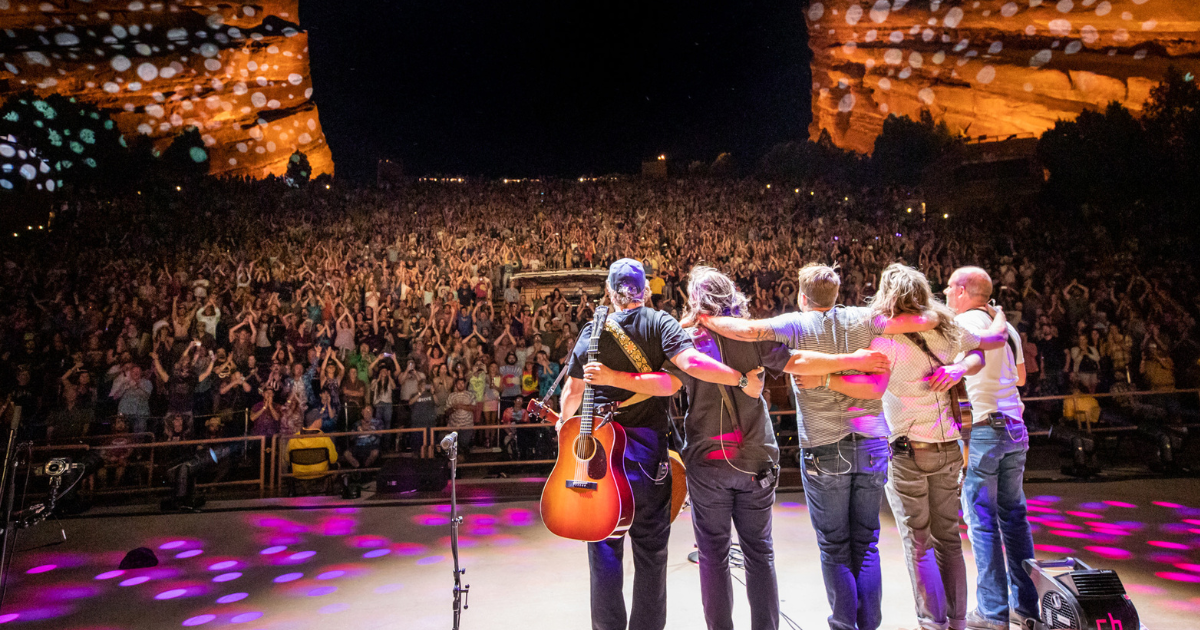
On a recent afternoon, Paul Hoffman is standing in a parking lot in Harrisburg, Pennsylvania. Lead singer/mandolinist for Greensky Bluegrass, Hoffman is pacing around the backstage lot before the gig at XL Live that evening deep in reflection about questions posed over the phone – the core of which focus on the upcoming 25th anniversary of the groundbreaking jamgrass outfit. A while back, in the depths of rural New Hampshire, I interviewed Hoffman for another project and I asked him just what the original intent was behind Greensky Bluegrass.
“To play heavy metal music on acoustic instruments,” he replied, a sly grin emerging across his face.
Now, 25 years since its inception, Greensky Bluegrass has adhered directly to Hoffman’s sentiments. These days, the group has become a marquee live act, one which uses its string instruments to transcend all genres of music, whether bluegrass or blues, rock or country, funk or soul – or even heavy metal.
Case-in-point, the ensemble’s latest album, XXV, is not only an ode to a quarter-century of passion, purpose, and performance, but also a mile marker by which Greensky Bluegrass can measure their own road to the “here and now” – this realm where the passage of time doesn’t necessarily matter, only fleeting moments onstage with the ones you love do.
XXV brings together many of those dear friends and collaborators of Greensky – Sam Bush, Billy Strings, Lindsay Lou, Nathaniel Rateliff, Aoife O’Donovan, Holly Bowling, Ivan Neville, Natalie Cressman, and Jennifer Hartswick. Each of these special guests represent chapters of the band’s continued journey to something – somewhere, anywhere – that kind and curious folks congregate in the name of fellowship, compassion, and sonic joy.
With the starting line of Greensky Bluegrass being an impromptu Halloween gig in 2000 in Kalamazoo, Michigan, other pivotal dots pop up quickly along the way. Like the inevitable camaraderie between the group and other Michigan artists like Strings and Lou, who came up in the same scene and have supported each other ever since. Or, like Sam Bush himself – Bluegrass Hall of Famer and the symbolic face of the Telluride Bluegrass Festival – being featured on the project, reminding how the Telluride stage brought Greensky Bluegrass into the national spotlight when they won its famed band contest in 2006.
For Greensky, the friendships made along the way brought endless opportunities to play alongside one another at a show, a festival, or late-night jam. Opportunities that would always be too good to pass up – don’t forget, fun is the original point, and should remain so.
XXV is also a fresh snapshot of Greensky Bluegrass. The songs are pulled from across the entire timeline of the outfit, from their early days in Kalamazoo to the mountains of Colorado. From the bright lights of Nashville to the backroads of Southern Appalachia. From the blue skies of Anytown, U.S.A., to the sandy beaches of some international destination.
After 25 years, what remains is a band of genuine souls where gratitude is only matched by hunger and curiosity for what resides just around the next corner. Greensky Bluegrass, decades later, remain ready to surprise the listener and to carry on the pure intent that emerged those many years ago.
Now that this album’s coming out, whether consciously or subconsciously, the celebration of 25 years is currently underway. What’s been kind of rolling through your mind?
Hoffman: Primarily gratitude. I’d be remiss to not be grateful that we’ve been able to [do this for 25 years]. It’s a celebration, truly. It feels so cool. We’re doing [the anniversary shows] in our hometown and playing the [Wings Event Center in Kalamazoo] for the first time, which we’ve talked about since we were a very young band. And, you know, something interesting I’ve learned is how excited people are about this retrospective project. In true Greensky fashion, it’s this unique, hybrid idea. Like, “What if we did this? What if it took this turn? What if we recorded this and revamped this?”
We didn’t just make a new record, we stopped to reflect and commemorate in a way that was meaningful to us. And it seems like it’s translating. It’s not even out yet. It’s a unique perspective on gratitude that maybe I didn’t expect. [For XXV], I don’t want to say that it was easy or something. Because we did it pretty quickly and we didn’t have to write any material and we didn’t have to make huge choices about how to present it, because there already is an arrangement and an idea. But, in some cases, we did things differently because we could and we were not beholden to some authority on how it needs to go.
[The recording process] was so casual and creative in this really innocent way – “Let’s just record this and see what happens.” And we just kept recording stuff. We didn’t even know what we were going to do next. Every moment is monumental in some way or another, but 25 years is nothing to scoff at. And this all was birthed from, “What could we do?” With making new music and new albums, there’s a pressure to create something better than we’ve ever done. Or genuine to the brand we’ve created and to ourselves, but also exploratory enough [and] a departure from the norm enough that it’s new and exciting. It feels like such a relief to do [XXV], to approach creating new material from a different perspective.
How did you decide on the guests?
I wanted to find guests that celebrate our story, that are close to us and collaborators and such, but also elevated the material in some meaningful way. And there were real pleasant surprises along the way there.
What did it mean to have Billy and Lindsay on the record, seeing as all of you emerged from the same scene in Kalamazoo and have always supported each other?
I mean, to say that it was sort of obvious and natural is probably an understatement. We joked about why we chose “Reverend,” because Billy plays it [live]. But, I also feel it’s an important song. And for me as a writer, it’s kind of a landmark in my journey as a creative. But again, even though I knew [Billy] would crush it on the guitar solo, some of the phrasing choices he makes are subtly different than mine – I love it. And, man, I can’t stress enough, what a gift [“Reverend” is]. I wrote that song almost 20 years ago. It means something different to me now, and it has throughout my life singing that song.
You’ve always been a very sonically elusive band. Was that by design or just how things evolved?
I think that we just have a spirit to not be limited. So, if we want to emulate all the things we love – and we’d love a diverse amount of things, musical things – we honor the acoustic nature of our heritage as a band, but we want so much more. We want [things] to keep us interested and engaged. We’ve allowed ourselves that creative freedom to try anything. And we think we’ve jumped the shark many times. [Laughs]
With getting older, you also start having different perspectives on what you were creating and how you want to present it.
Yeah. You know, art is timeless in some ways, because you can change your opinion about it or the way you relate to it as you mature.
When you had mentioned that you guys “jumped the shark many times,” I think that’s one of the things I appreciate about Greensky – you’re not afraid to just take a leap.
It’s one of my favorite things about musicians I admire, too, are the ones that I watch struggle to either challenge themselves, push themselves, push their boundaries, or convey a message with emotion that’s challenging, you know? If you’re willing to make a mistake, if you’re willing to truly find the line of your capacity, you have to be willing to cross it to know where it is. I’ve always said – in my later maturity – that I wonder if I’ve crossed it too many times, and in sort of a noble quest with noble intentions. [Laughs]
That’s something I love about Billy’s playing a lot. Despite being one of the greatest guitar players I’ve ever seen, I’ve watched him up there grasping for things and struggling. Struggle doesn’t always have to have a negative [connotation]. To not struggle would be complicit and boring.
The upcoming Halloween shows in Kalamazoo are the official 25th anniversary of when the stars aligned, when you, Mike [Bont], and Dave [Bruzza] played together as Greensky for the first time.
When you started asking the question, my brain went to right about now, [25 years ago]. We met [a few] weeks before Halloween. I was a college freshman and I went to this bar called the Blue Dolphin, where there was a bluegrass open mic. I saw Dave and Bont play and approached them after the thing and was like, “Hey, I just bought a mandolin,” that I’d gotten in late August before moving to college. So, I’d only had it for four or five weeks.
I didn’t know what the hell I was doing at all or what bluegrass even was. I bought the mandolin because of David Grisman, who’s so bluegrass-adjacent that I didn’t know who Bill Monroe was. I knew “Shady Grove.” [All of] which is still just a remarkable thing for me to think about. Like, what hell would my life have been had I not made that choice [to play mandolin]? What a bizarre twist of fate and then here we are 25 years later.
So, you guys met and you said, “Let’s jam”?
Yeah. A couple days later, I showed up at Bont’s house for a rehearsal. Him and Dave would just get together and pick. They were both learning bluegrass. Everything was so casual and just for fun. They would have band practices where we would get together and learn songs and stuff. And I just showed up for the next one and then didn’t go away.
What was the name of that [open mic] band?
Greensky Bluegrass. They were already playing as Greensky Bluegrass, which was named by a friend of Dave’s that played mandolin with him a little bit for fun. It was a joke in jest, “Wouldn’t it be funny to have a bluegrass band named Greensky Bluegrass?”
I don’t think I ever knew that you guys were called Greensky before the official [2000] Halloween show.
Well, I mean, what is “official” is interesting to think about. They were already [Greensky]. It wasn’t their first open mic, either. So, the first time the three of us [“officially”] played was the Halloween show. But, I think I joined them at open mics for a week or two or something [before Halloween]. And Halloween was a party. There was a poster made for fun or something. We were on the bill. Dave was in another band called Seeds & Stems. It was a house party in a house that Dave lived in. [Laughs] A pretty wild party, if I may say so.
So, it was billed as Greensky Bluegrass?
“Billed” is still kind of generous. But, yeah, we played a set in the basement and in the living room. I think the living room upstairs was just acoustic and then the jam band played downstairs in the basement, like colleges do, you know? A couple days later, we played a show at a venue in town, Club Soda in Kalamazoo, that was kind of a legendary rock club through the ‘90s and stuff. It was small, but we played there on a triple bill November 5 or something, [just] days later. And that one, I [still] have the poster. I think that was our first paid show.
Were you doing covers or did [Dave and Mike] have originals, too?
They were playing just bluegrass standards for the most part. It’s funny, that [first] night [I met] Dave, he gave me CDs – Seldom Scene, Live at The Cellar Door, a Rounder Records bluegrass compilation, and a Bill Monroe live show. And [he] was like, “Listen to these. See you on Tuesday at Bont’s house.”
In hindsight, man, to be 18 and have that kind of freedom, you know what I mean? I’ve been recently jamming on electric guitar at my house by myself for fun. And I’ve been thinking, “I wonder if I could find some dads around to start a band with for just fun.” And that experience is so foreign to me now, because I’m so immersed in this thing that’s become my life.
Looking back on it, you kind of jumped into the deep end pretty quickly.
I didn’t take a mandolin lesson until COVID. [Laughs] I was self-taught, because I already knew how to play the guitar – “knew how to,” I use that a little loosely, too. Took some [music theory] classes in high school and college and I’m sort of classically trained. But, I was able to teach myself my own instrument for a really long time. I should have sooner harnessed the strength of learning from another, because when I took a lesson during COVID from a friend, I was like, “I should’ve done this a lot sooner.” [Laughs]
You know, so much of what I was learning in those early days was how to express myself as a writer and find my voice. That stuff always superseded my need for technical prowess. I think we all kind of share that sentiment, all five of us – how to present this passion piece is more important than how to do it. We took on this every-other-week gig and stuff like that [in Kalamazoo]. And the commitment to go play shows for the same crowd every other week inspired us to grow, because we needed to. We had that jam band sensibility of satiating the fans. What can we do next week that’ll keep people excited? What can we do that’s new? How can we make this better?
When you look back, you can see where the dots connect. But, when it’s happening in real time, you don’t realize what the domino effect is, where all of a sudden you’ve found yourself in this band that you’re still in 25 years later.
Yeah. I was 18 [when we started the band]. I’ve lived with Dave and Bont for 25 years of my life. I didn’t even live with my parents that long. [Laughs] I’ve spent 200+ days of [every] year of my life with those two guys for 25 years, and the other ones for many years, as well. It’s kind of wild. It’s so cool that we created this project, [which has become] just a celebration of our relationship and that’s so much more important than what it has become. We care about each other and we genuinely have a lot of aligned goals, artistically and personally. We’re still grinding for it, and I’m grateful for what we have.
I think we’ve been very successful. I feel less “grinding” now and more, “Let’s just go and have some fun and play some shows.” Play where people want us to play and not measure our success by how many tickets we sell. And I’m starting to learn that more now. It took 25 years for me to figure out that what we have is great. We’ve got something cool, let’s just keep doing it.
And that’s got to be a nice place to get to, because you don’t get to 25 years by accident. The fact the original three members are still there is amazing, because that story is not that common in the grand scheme of things in this industry.
Even in our culture. It’s not even [common] in business partnerships, families, friendships. And the reality of that – that I’m learning with age – is that relationships change and everything shouldn’t be measured by the testament of time. I want to find value in a moment that is for the sake of “now” and not some transactional [thing]. Like, if I’m nice to you “now,” then we’ll have this friendship that serves us both and we’ll be there for each other. All that kind of stuff is great, but I want to live in the moment.
I think what’s remarkable is that we’ve stayed together, because we’ve all grown and changed in similar ways and our journeys have aligned the whole time, or for the most of the time. We’ve veered away from each other and back to each other many times. But, when one of us has wanted something different, we’ve all kind of shared that desire. In a way, we’ve been able to all be very sincere to ourselves and grow and change together.
I don’t mean to speculate what other bands are like or anything like that, but I don’t have a lot of relationships in my life that have lasted this long. And not just people, but to things like food or activities I enjoy. The only thing maybe is the way I’ve worn my hair for 30 years. [Laughs] When we grow, our tastes change for all things. But, my [creative, intrinsic] tastes for these four other men have not changed.
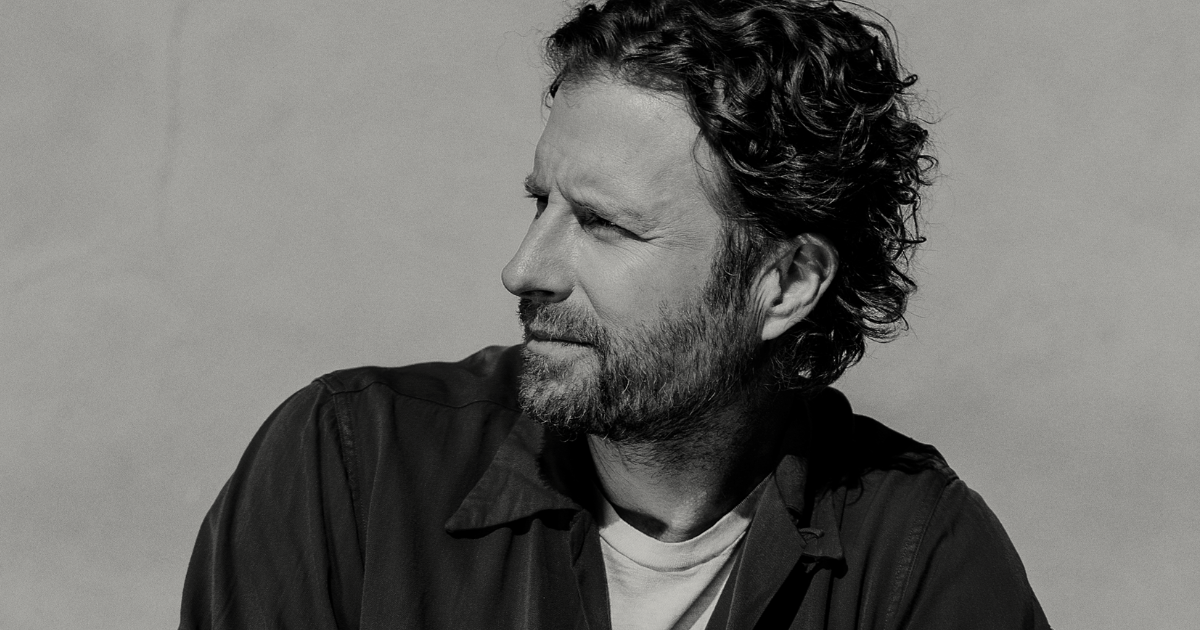
In 1994, a not yet 20-year-old Dierks Bentley threw all caution to the wind when he packed up his dorm room at the University of Vermont with hopes to never return. Bentley’s relocation would not only forever change the course of his life – it would go on to catalyze his tremendous impact on roots music at large.
After a trip with his father to Nashville made quite the impression, Bentley decided to complete his college degree at Vanderbilt, dedicating his studies to English (the major most proximal to songwriting). After graduating, Bentley continued to foster both his musical education and career; his day job entailed archiving old country performances at The Nashville Network (in fact, his diligent field work even got him banned temporarily from the Grand Ole Opry), while his evenings were filled with bar gigs and songwriting sessions. After five years of grunt work, 2003 saw Bentley release a self-titled album with Capitol Records. His first single, “What Was I Thinkin’,” made waves on the country charts. Since then, Bentley has been responsible for the release of 20 No. 1 country singles and 10 additional studio albums, the latest of which, Broken Branches, arrived in June.
While Bentley’s career has seen major commercial country success, his deep respect for expansion and immersion has made him a beloved fixture within bluegrass, as well.
Of his instrumental move to Nashville, Bentley has shared, “I moved to Nashville in 1994 – I was trying to find that seed of truth, that authenticity, that thing ‘country music’ that I had in my head. And I got here and it was definitely different than I expected it to be. It’s big business, a lot of money.
“Luckily, for me, I found a little bar called the Station Inn where bluegrass music existed – and I found what I was looking for. Just the sound of a five-piece bluegrass band blew my mind. And they’re not trying to take meetings all the time and meet producers, and get their foot in the door. It’s funny, I moved to Nashville looking for country music, but I found bluegrass.”
Whether it’s his proclivity for cross-genre conversation, songwriting prowess, or patinaed tenor delivery, Dierks has proved himself a mainstay favorite for country, Americana, and bluegrass fans – here at Good Country and BGS, and beyond. In honor of his recent album release and his huge Broken Branches tour with Zach Top and the Band Loula concluding this month, we present you with our Dierkscography, a non-comprehensive compilation of more than 15 songs meant to show off some of our favorite Dierks gems from across genres sampled from the many years of his remarkable career.
“Never You” featuring Miranda Lambert, Broken Branches (2025)
Dierks’s new album, Broken Branches, arrived fresh off the press with a slew of impressive collaborators, from Riley Green to Stephen Wilson Jr. Dierks fondly calls the record a “special” display of “making music in the studio with our buddies.” Country giant and longtime collaborator Miranda Lambert joins Bentley on this banjo-driven track, with the pair’s velvety duet vocals imbuing tenderness and warmth into one of the album’s only love songs.
“High Note” featuring Billy Strings, Gravel & Gold (2023)
This rip-roaring tune off of Bentley’s tenth studio album features a whole handful of bluegrass greats. Not only does Billy’s high tenor soar above Dierks gravelly tones during choruses, his famous flatpicking joins the likes of Sam Bush, Bryan Sutton, and Jerry Douglas for a superjam ending.
Of the collaboration, Dierks recalls, “Bryan Sutton first tipped me off to Billy Strings about seven years ago, mentioning that the future of bluegrass was in good hands. I was totally blown away the first time I saw him. I’ve cut songs like these since my first record, and I knew I wanted to have him on this one, I’m such a huge fan. It was a lot of fun to have him, Jerry, Sam, and Bryan all passing licks around – having them all on this record means a lot to me personally.”
“American Girl” (2024)
Who doesn’t love an Americana “American Girl”? Bentley delivers this country-fied Tom Petty classic alongside some BGS favorites, including Chris Eldridge on guitar and Noam Pikelny on banjo. Dierks reprised the hit single joined by Bronwyn Keith-Hynes, Sierra Hull, and Molly Tuttle on stage at the 2024 CMA Awards, bringing down the house.
“For As Long As I Can Remember,” Broken Branches (2025)
The country canon has seen its fair share of heartache, murder, trains, and drinking. Also on his latest release, “For As Long As I Can Remember” shirks these motifs in favor of something a little more wholesome – a warm and adoring ballad dedicated to the strength of enduring familial bond. An ode to his brother and father, Dierks reminds that respect and love can be country, too.
“Train Travelin’,” Dierks Bentley (2003)
With many of his nascent Nashville days edified by nights at the Station Inn and in the surrounding bluegrass scene, iconic bluegrass family the McCourys quickly became repeat collaborators for Dierks. Their features pepper many of his earlier albums, dating all the way back to his debut self-titled release in 2003. “Train Travelin’” would become the first of many, with other gems such as Good Man Like Me (Modern Day Drifter, 2005) and Last Call featuring Ronnie McCoury (Feel That Fire, 2009) dotting the road to Bentley’s eventual bluegrass-centric album, Up On The Ridge.
“Up On The Ridge,” Up On The Ridge (2010)
The titular track off of Bentley’s bluegrass-inspired album is thrumming with energy, both quickly-paced and haunting with its descending melodic hook. Up On The Ridge was Bentley’s fifth studio album, featuring a star-studded list of bluegrass collaborators including Alison Krauss, Punch Brothers, Chris Stapleton, Tim O’Brien, Sam Bush, and beyond. Del McCoury even joins forces with Bentley and Punch Brothers to deliver a deliciously grassified cover of U2’s “Pride (in the Name of Love)” further evidencing the album as a culmination of both tradition and innovation.
“Freeborn Man,” (Live, 2025)
Another of our favorite timeless covers, Dierks has been adorning his Broken Branches Tour this summer with his vigorous take on “Freeborn Man.” This rendition includes a fiery feature by Zach Top, nearly toppling the stage with talent.
“Hoedown for My Lowdown Rowdy Ways” featuring Dierks Bentley, Lowdown Hoedown (Jason Carter, 2022)
With Jason Carter fiddling his heart out on Dierks’ records since 2003, it’s of course a polite roots custom for Dierks to return the favor. Released as part of Carter’s second solo album, Lowdown Hoedown, “Hoedown for My Lowdown Rowdy Ways” has Dierks singing harmony and strumming away on the bluesy breakdown. Lowdown Hoedown also features a tender Jamie Hartford number, “Good Things Happen,” that Dierks Bentley covered on his 2005 album Modern Day Drifter, yet another frame of conversation between the two artists.
“Prodigal Son’s Prayer” featuring The Grascals, Long Trip Alone (2006)
This acoustic tune features the bluegrass sensibilities of the Grascals, a long-running group lauded for their instrumental prowess. The song loosely follows the parable of the prodigal son, ultimately centering themes of repair and reconciliation. The song also features the stomps and hums of incarcerated individuals from Charles Bass Correctional Complex, who had been in Bentley’s producer’s Bible studies course at the time.
“Free and Easy (Down The Road I Go),” Long Trip Alone (2006)
From the same release, this breezy banger remains a hallmark of Bentley’s career, even after nearly two decades since it dropped. The fifth of his singles to top Billboard’s Hot Country charts, “Free and Easy (Down The Road I Go)” lures in listeners with its fast-paced country twang and life-affirming sentiment.
“Beautiful World” featuring Patty Griffin, Feel That Fire (2009)
No stranger to incredible collaborators, Dierks Bentley asked iconic folk and country singer-songwriter Patty Griffin to accompany him on this track, gushing, “Her voice is one of a kind and she’s such an important figure in the American music scene… She’s just amazing. And so I asked her.”
The result is a tender homage to the beauties of the world, largely inspired by his wife, who was pregnant with their daughter at the time of the song’s conception. “You hear people sometimes say, ‘Man, I can’t imagine bringing a child into this world. It’s so bad.’ That’s just such a negative outlook,” Dierks says. “You cannot live your life with that viewpoint of the world. Yes, there are a lot of things that are wrong, but it is a beautiful world, and you need to find the positive in it.”
“Heart of a Lonely Girl,” Home (2012)
From Bentley’s sixth studio album, Home, comes this spirited, emotionally deep number. The narrative song was penned by the infinitely talented Charlie Worsham, who would go on to join Bentley’s touring band a decade later – and you can currently see him on stage each night during the Broken Branches tour.
“Trip Around the Sun,” featuring Dierks Bentley, I Built a World (Bronwyn Keith-Hynes, 2024)
Fiddler Bronwyn Keith-Hynes first connected with Bentley through Molly Tuttle & Golden Highway, the popular bluegrass group that opened for him several times on tour. She’s also married to Jason Carter, so Dierks wasn’t just a professional collaborator, but a member of her personal Nashville network, as well. It’s no surprise, then, that she’d end up on stage with him at the CMA Awards and, in the same year, he would guest on her acclaimed and GRAMMY Award-nominated album, I Built a World.
“Mardi Gras” featuring Trombone Shorty, Black (2016)
Soaked in Louisiana charm, this tune was inspired by Dierk’s 2015 galavant on a Mardi Gras parade float. Featuring the indelible hornsmanship of Trombone Shorty, the track grooves along with bluesy undertones. “Getting Trombone Shorty to do his thing on it, what a great guy. I love working with him. He is so laid-back and so good at what he does,” Bentley boasts of his collaborator.
“Travelin’ Light” featuring Brandi Carlile, The Mountain (2018)
Featuring the powerhouse vocals of Americana giant Brandi Carlile, this tune appears on Bentley’s 2018 album, The Mountain. The collaboration between the two icons came to fruition after Bentley saw Brandi perform at Telluride Bluegrass Festival, inspiring him to approach her about dueting on the track.
“Sun Sets in Colorado,” Gravel & Gold (2023)
Written reflecting his pandemic move to Colorado (though he has since returned to Nashville), Bentley released this tune on Gravel & Gold. The song shouts out New Grass Revival and Telluride in a verse: “Sing an old new grass song with me/ Telluride along with me,” while also featuring New Grass Revival founding member Sam Bush on mandolin. Bryan Sutton also joins in on the studio recording, yet another sparkling collab with bluegrass greats.
Want more Good Country? Sign up to receive our monthly email newsletter – and much more music! – direct to your inbox.
Photo Credit: Robby Klein
This website uses cookies to improve your experience. We'll assume you're ok with this, but you can opt-out if you wish.AcceptRejectRead More
Privacy & Cookies Policy
Privacy Overview
This website uses cookies to improve your experience while you navigate through the website. Out of these, the cookies that are categorized as necessary are stored on your browser as they are essential for the working of basic functionalities of the website. We also use third-party cookies that help us analyze and understand how you use this website. These cookies will be stored in your browser only with your consent. You also have the option to opt-out of these cookies. But opting out of some of these cookies may affect your browsing experience.
Necessary cookies are absolutely essential for the website to function properly. This category only includes cookies that ensures basic functionalities and security features of the website. These cookies do not store any personal information.
Any cookies that may not be particularly necessary for the website to function and is used specifically to collect user personal data via analytics, ads, other embedded contents are termed as non-necessary cookies. It is mandatory to procure user consent prior to running these cookies on your website.