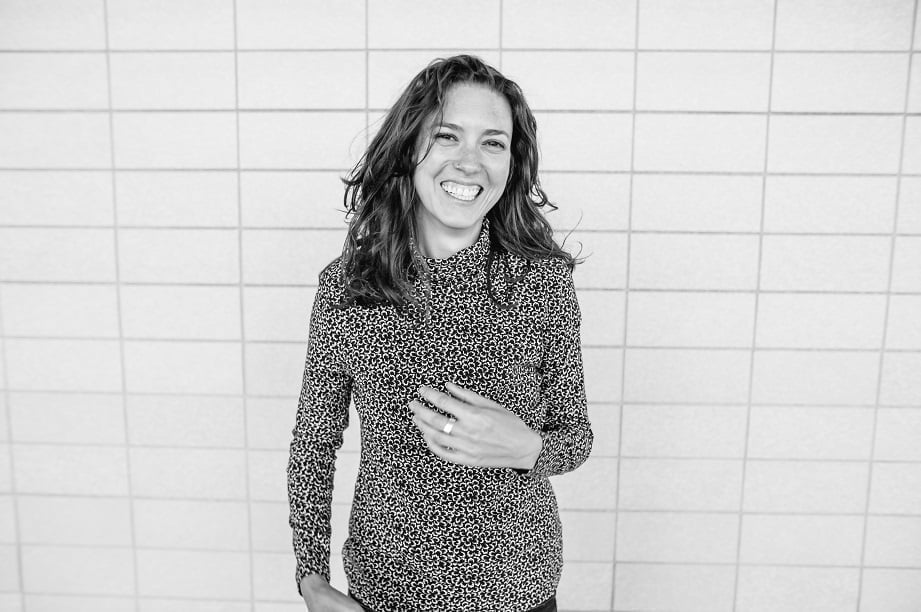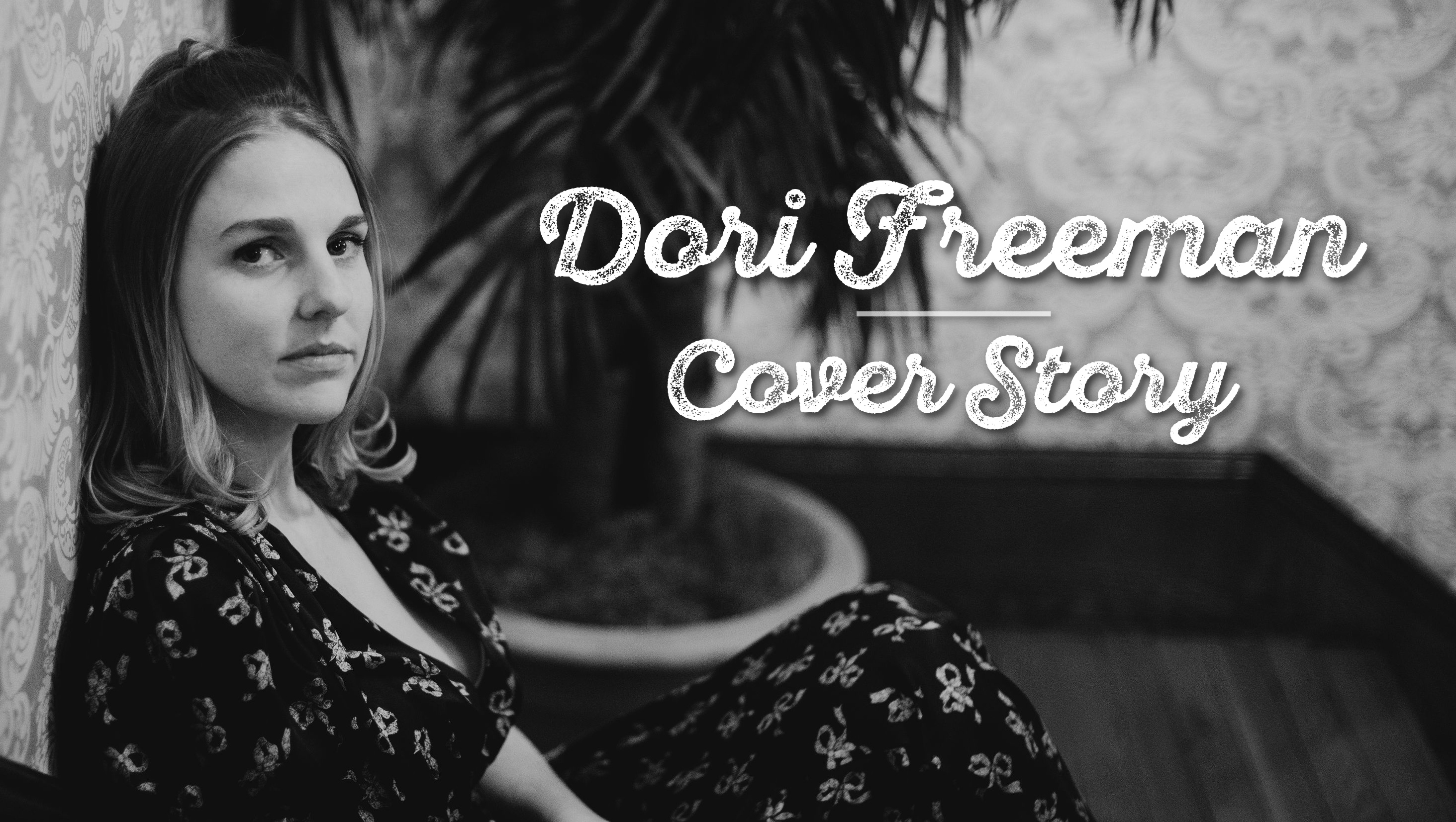
Dori Freeman: From Appalachian Roots to ‘Every Single Star’

Dori Freeman has been hurt and felt torn. We know because she’s told us so, always with unblinking frankness in crisp pop songs with deep Appalachian roots. But even if we couldn’t understand her words, we’d hear the pain in her soprano, which rings out with melancholy strength only gained from living.

In her new album Every Single Star, the Galax, Virginia, native pushes her blend of familial mountain grit and mid-century-inspired polish even further into its own creative territory. Never one to shy away from truth, Freeman writes about motherhood, expectations, and relationships from a distinctly female perspective.

BGS: In the songs on Every Single Star we seem to hear real contentment. While there’s still some conflict, especially when it comes to having to be away from your daughters, there is peace, too. Was writing these songs a different experience than writing your first two albums?

Dori Freeman: Definitely. I had recently been married when I started writing a lot of the songs on this record. It was the first time I’d been in a happy, stable relationship, which obviously will have an effect on the themes in the songs you write. I was in a different headspace. For the previous two records, I was in different phases. Whether it was getting over a particularly difficult relationship or looking back on that and thinking what I didn’t want to have. With this one, I was with someone that I really love. So the songwriting was different.

I did a lot of imagining scenarios, which I didn’t do as much with the first two records. Those were based more on very direct experiences. On Every Single Star, the songs about my daughter are very direct and personal, but some of the other ones, like “Of Me and You” — that was a song that I wrote for a friend of mine who’d had a relationship that didn’t work out so well. I’ve had to look for different sources of inspiration this time around. When you’re happy, it definitely makes songwriting harder. [Laughs]

I’m happy you have that problem.

It’s a great problem to have. [Laughs]

Do you have a favorite memory of playing one of these new songs live over the past several months?

Nothing too specific stands out, but one of my favorite songs on the record is “All I Ever Wanted.” One of the things that’s nice about performing that song is almost every time I’ve done it, I’ve had women come up to me afterwards and say how much they enjoyed the song. That was the intention: to write a song fully from a woman’s perspective that other women could relate to. So it’s nice to have girls come up and tell me they liked it.

You’ve said you admire Peggy Lee and the mid-century aesthetic. What is it about the ’50s and ’60s sound that you like?

Peggy Lee is one of my favorite singers of all time. I don’t know what it is. I think for one thing, they still recorded in a more live situation, in a bigger room, so everything sounded a lot fuller on records back then. I also like the style people sang in in that era. My dad played a lot of that music for me growing up. Actually, he just made a record with mandolin, playing a bunch of swing tunes, so he’s really drawn to that music too. I think that it’s that I always listened to it, and I can’t help but have it influence what I do.

You grew up in such a musical family. When you were a kid, did y’all just sit around and play music together?

Yeah, definitely. I was always in choir in school. I didn’t really start to play guitar and sing in front of people by myself until I was about 15 or 16, but even when I was little, I would go jam at parties and festivals with my dad and grandpa, and then sit around and watch people play music.

As I got older, I started to perform with my dad and grandpa on stage. They used to have a little show on Friday nights at the frame shop that my family runs. So that’s one of the first places I really got some good practice performing in front of people. We still do shows together. We still play together as a trio with my husband as well, who plays drums with us now. So yeah, it’s still very much a family thing.
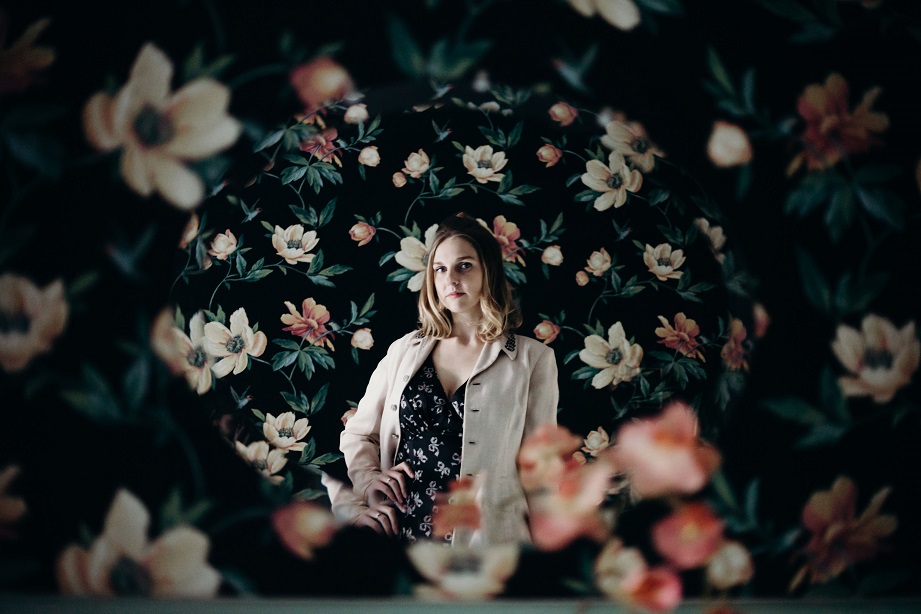
You’ve said that people don’t really talk about motherhood in the music industry. Are there specific experiences you’ve had or witnessed that made the great motherhood omission personally more evident to you?

Yeah, I can think of one in particular, when my daughter was not quite a baby, but not quite 2 years old — so she was still pretty little and motherhood was still a pretty new thing to me. It was also around the same time I was putting out my first record, so it was hard to manage all those things and to figure out how to balance them. I was at a music conference. I won’t say which one. They had this thing where they wanted a bunch of women to get together and talk about problems they faced in the industry as women. So people were raising their hands, going around, and sharing their experiences.

There was a lot we’d all been through, with sexism and dealing with men being inappropriate in a whole variety of ways. That is obviously a huge issue too. But I remember raising my hand and saying, “You know, it’s hard being a mom on tour, especially if there’s no green room, or you don’t have a babysitter to look after your child while you’re playing and then figuring out logistics — you can’t just stay anywhere after a show.”

I just remember crickets in the room. It got overlooked so quickly — everyone moved on. No one really seemed to care. And this was in a group of women. I think most of them, if not all of them, probably didn’t have children. I can understand why it didn’t seem important. But it was not a good feeling to share something personal and important to me and have it seemingly immediately overlooked and dismissed.

I can imagine. You’ve said it was cathartic to write songs about your daughter for this album. What kind of healing do you experience when you write songs about her?

I feel like she becomes more a part of what I’m doing, especially when she’s not physically present. If I can perform on stage and sing songs that are about her, I feel like she’s involved in some way. That makes me feel better because sometimes I’m on the road for four or five days at a time, which I know is not that long, but when you have a child — especially a young one — it starts to feel like a long time after a while.

It was really important for me with this record to write a couple of songs about her, and also to make sure that people knew when I was performing them on stage that they were about her. I always introduce the songs as being about my daughter. I want the audience to know she is an important part of my life. I want to feel like my daughter is involved, even when she’s not there. I guess it helps me feel better about missing her.

It helps you, but it also seems like talking about it openly — just saying, “This song is for my daughter” — could go a long way toward normalizing motherhood in music. Many women artists are also mothers.

Absolutely. I feel like in most industries, it’s hard to be a working mother, but being a musician brings a very specific set of challenges. One of the questions I get so often — and it’s one of my least favorite questions — is, “Do you travel with your daughter?” or “How come your daughter’s not with you?”

I just think, “Well, do you bring your daughter to a board meeting? Do you bring your child on your business trips?” I realize that music seems like fun and not a lot of work, but it is a lot of work. It’s a job, as much as I love it. So it doesn’t always make sense to have my child there, and I don’t think it’s fair to be judged for that.

You’ve stepped confidently into this tradition of strong Appalachian women — strong Appalachian women artists, in particular. Instead of me assigning a definition to what that means, how would you describe the particular strength of an Appalachian woman?

Oh gosh. That’s a tough one. I can give you one example: When I think of a strong, Appalachian woman, I think of my great grandmother. She was from eastern Kentucky and had seven or eight siblings that were younger than she was. She raised them from the time she was 13 on. When she was an adult, she went right into having her own children. She took care of everything. She did the housework. She raised the children. She killed the chickens to cook. It was classic, what you imagine when you think of Appalachia 70 years ago.

If her life had been different — if she’d grown up somewhere else or maybe with more opportunity or more money — she would have pursued music in some way. I know she really loved music. She loved to sing and play guitar. She taught my grandfather how to play guitar.

I feel like in a roundabout way, she has some part in my choice to be a musician. My grandfather has been such a big influence on me musically, and if it wasn’t for her passing on her love of music to him, then it wouldn’t have made its way to me. Even though she couldn’t pursue those things in her own life, she wanted to make sure she passed them on so that someone eventually could.


Photo Credit: Kristina LeBlanc
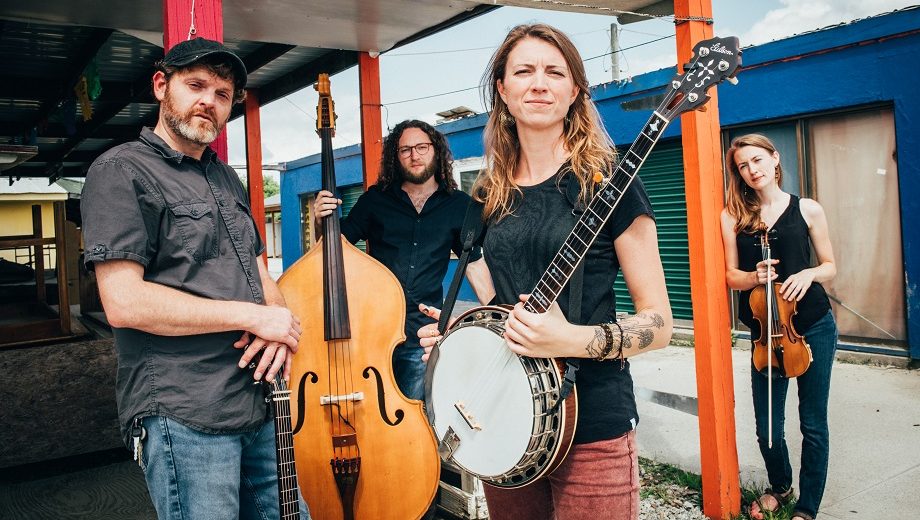
LISTEN: The Gina Furtado Project, “The First Pebble”

Artist: The Gina Furtado Project
Hometown: Front Royal, Virginia
Song: “The First Pebble”
Album: I Hope You Have a Good Life
Release Date: September 27, 2019
Label: Mountain Home Music Company

In Their Words:I Hope You Have a Good Life is full of experiences of my own life that, together, amount to my pursuit of and theories on how to achieve happiness. Isn’t that the end goal for us all? The songs are my attempt at packaging these theories within common, everyday experiences of tribulation and victory. ‘The First Pebble’ is about the stunning joy of reaching rock bottom only to discover one’s own resilience and strength. It has been so empowering to slowly begin to realize that the ‘worst case scenarios’ are always incredible resources for growth. I hope ‘The First Pebble’ will remind someone of that when they need it!” — Gina Furtado


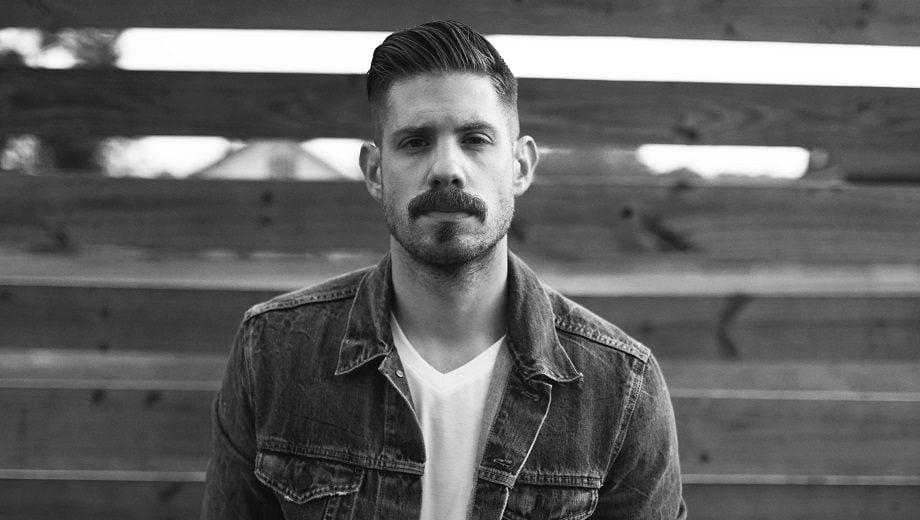
Photo credit: Sandlin Gaither

LISTEN: Luray, “Mountain”

Artist: Luray
Hometown: Richmond, Virginia
Song: “Mountain”
Album: Dig
Release Date: July 26, 2019
Label: 6131 Records

In Their Words: “‘Mountain’ is about noticing a place in nature that is untouched, that is concerned with higher things… more noble, timeless things. I went camping by myself one weekend in this beautiful little spot in central Virginia. This song was part of that time, and I remember working on the lyrics all weekend while hiking alone and feeling this sense of being a tiny dot, of being inconsequential in the scheme of all things. That gave me peace, and put things in perspective. That’s the only real ‘religion’ that makes sense to me. The mountain being holy.” — Shannon Carey, Luray

https://soundcloud.com/6131records/mountain/s-2liqg


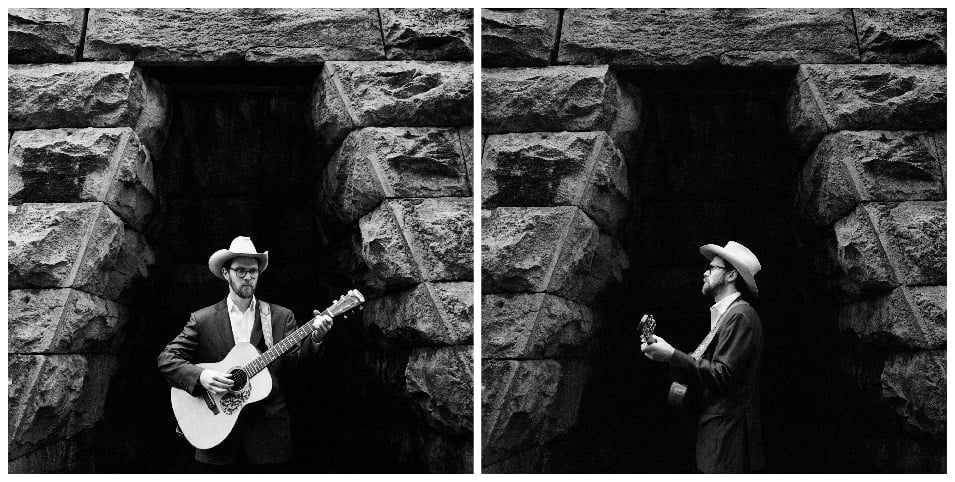
Photo credit: Jake Cunningham

LISTEN: Michael Paul Lawson, “Memories and Throttle”

Artist: Michael Paul Lawson
Hometown: Norfolk, Virginia
Song: “Memories and Throttle”
Album: Some Fights You’ll Never Win
Release Date: July 12, 2019

In Their Words: “Driving has always been a kind of therapy for me. It’s where I do a lot of personal reflection and allow myself to sink into thoughts and feelings that I need to work through. Around the time I wrote ‘Memories and Throttle,’ I was trying pretty hard to win back the affections of someone that was pretty resolute in their position. I would get in the car and a thousand different scenes would play out in my head, each one ultimately leading to the same outcome. But even when I’m in a better place and not longing for some lost love, I still find myself going back through past relationships when I’m on the road. It’s a nostalgia trigger, and it’s addicting.” — Michael Paul Lawson


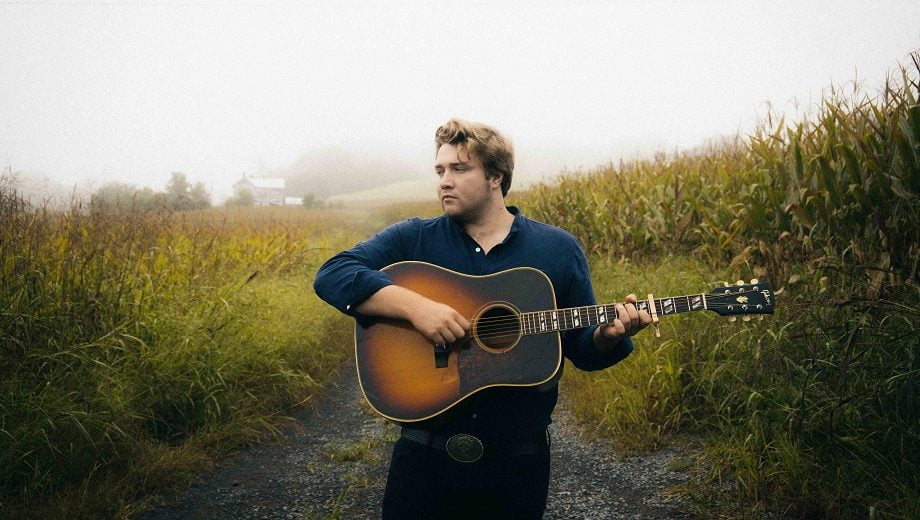
Photo credit: Rico Marcelo

BGS 5+5: Carl Anderson

Artist: Carl Anderson
Hometown: Charlottesville, Virginia
Latest album: You Can Call Me Carl (EP release, May 31)
Personal nicknames (or rejected band names): BIG CARL

Which artist has influenced you the most … and how?

I’m not sure I can point to any one artist as being my main influence. Growing up my mom would listen to folks like James Taylor, Simon & Garfunkel, Joni Mitchell, and a handful of other singer-songwriters. At the same time I was also heavily influenced by what my sister was listening to and that was more along the lines of The Smashing Pumpkins, Rage Against the Machine, Weird Al, The Beatles. Some of it I was really moved by, other stuff not so much, but I took it all in nonetheless.

What’s your favorite memory from being on stage?

I had the opportunity to tour around the United Kingdom and Germany this past August with my friends, Sons of Bill. I would have to say my favorite recent memory of being on stage came during a performance in Munich. I remember really connecting with the audience that night and thinking how special it was that here we were, a couple of Virginia boys far from home playing songs that at one point didn’t exist. That night we got what anyone who does this can really ask for and that is an audience’s undivided attention.

What other art forms — literature, film, dance, painting, etc — inform your music?

I am influenced by all sorts of different art. I like to think of it as all being valuable source material. In the last few years I began painting on a semi-regular basic and have enjoyed learning about different painters throughout history and how they worked. I like that Mark Rothko kept traditional office hours while he worked on the Seagram Murals. I’ve taken to such a schedule with my writing and it has actually worked quite well for me.

What was the first moment that you knew you wanted to be a musician?

I remember sitting around with my mom and sister when I was in middle school and listening to the first Nickel Creek record and being moved by the songs. I think it was in that moment that I knew I wanted to try and affect people like that. I had started learning a little guitar prior but hearing that music and getting goosebumps that put fuel on the fire. I was on the path from that point forward.

If you had to write a mission statement for your career, what would it be?

I think my mission is simple. I want to try and write honest songs and be as earnest with people in my performances as I can. I am just a man who, like everyone else, is insecure and looking for love. I feel like I am able to share parts of myself with my music that are otherwise difficult to articulate.

LISTEN: Mike Frazier, “Save Me”

Artist: Mike Frazier
Hometown: Winchester, Virginia
Song: “Save Me”
Album: Where the Valley Kissed the Sky
Release Date: May 31, 2019
Label: Geneva Records

In Their Words: “Writing Where the Valley Kissed the Sky was a departure from my norms in a lot of ways. For starters it was the first time I’d really focused on writing in a narrative style as opposed to being directly autobiographical. ‘Save Me’ is told from the perspective of a character who has just moved back to Virginia’s Shenandoah Valley after some time away, and is quickly reimmersed in the desperation plaguing that area and a lot of the country. This leads to an overwhelming plea for help and guidance through tumultuous times. I also really tried to expand things sonically with this record and create a landscape that blended traditional Americana instrumentation with a bit of a modern sound. I think we really found that on ‘Save Me’ especially with the incorporation of more synth and organ than I’d used in the past.” — Mike Frazier


Photo credit: Brett Ballachino

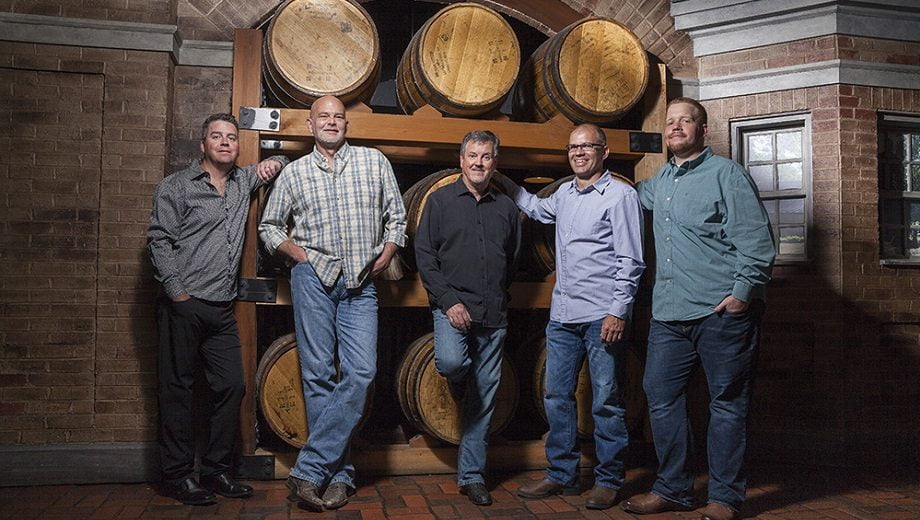
STREAM: Lonesome River Band, ‘Outside Looking In’

Artist: Lonesome River Band
Hometown: Floyd, Virginia
Album: Outside Looking In
Release Date: May 24, 2019
Label: Mountain Home Music Company

In Their Words: “We are so excited about this new release! It is a diverse mixture of great songs that we tried to deliver in our traditional, yet edgy approach. We feel there is something here for every listener — without changing our ‘Lonesome River Band approach.’ We hope everyone will enjoy this project as much as we enjoyed recording it.” — Lonesome River Band vocalist/guitarist Brandon Rickman


Photo credit: Anthony Ladd

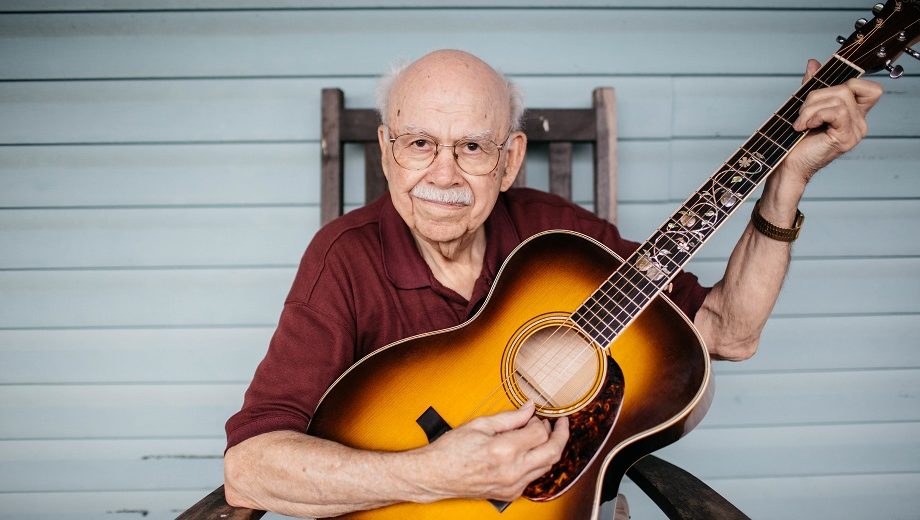
WATCH: Willard Gayheart, “Ern & Zorry’s Sneakin’ Bitin’ Dog”

Artist: Willard Gayheart
Hometown: Galax, Virginia (born in Hazard, Kentucky)
Song: “Ern & Zorry’s Sneakin’ Bitin’ Dog”
Album: At Home in the Blue Ridge
Release Date: May 24, 2019
Label: Blue Hens Music

In Their Words: “My granddaughter Dori [Freeman] put this on her second album and she likes to joke that even with all the great songs she’s written herself, people always want to hear this one. It’s just a funny song about a couple of bachelors named Ern and Zory Grigbsy who lived down the road from me when I was a kid. They had a store on one side of the road and their house on the other. We had to walk everywhere we went back then as there weren’t many automobiles. So, walking that road past their house, I was always so scared of that dog they had. And I was just thinking about that and decided to write this song. We put that on that first Highlanders record we did with Bobby [Patterson].” — Willard Gayheart


Photo credit: Kristen H Photography

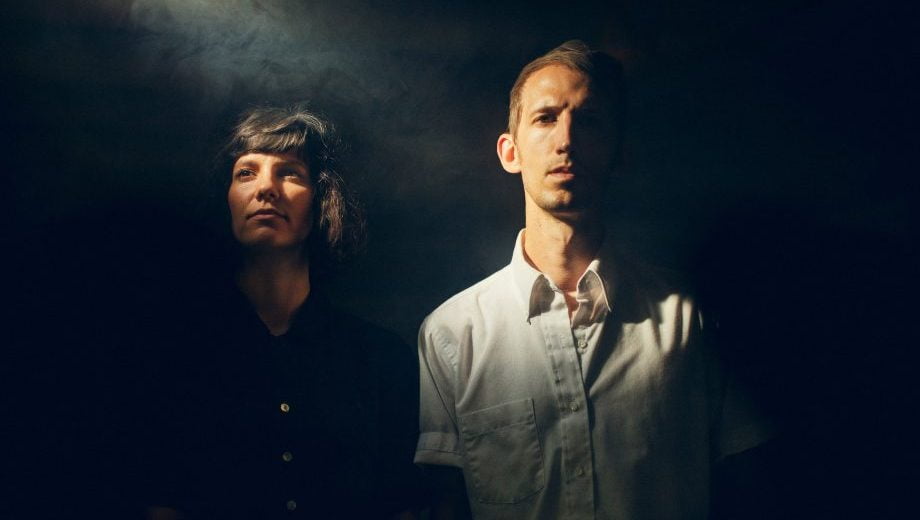
BGS 5+5: Lowland Hum

Artist: Lowland Hum
Hometown: Charlottesville, Virginia
Latest album: Glyphonic (out May 10, 2019)

What’s your favorite memory from being on stage?

Last year we were opening a run of shows for The Oh Hellos and something surprising took place at the Columbus, Ohio, performance. It’s a regular part of our show to invite the audience to interact if they so choose and that particular audience was extremely participatory. Throughout our show they were super engaged and communicative and towards the end, someone yelled out, “Have you ever crowd surfed?!” I (Daniel) used to be in a rock band for a number of years so I said, “Well, yes, but not in this band,” to which he replied, “Do you want to?” We laughed and then we played our second to last song.

As the final note of that song lingered in the air, the crowd started chanting “CROWD SURF, CROWD SURF, CROWD SURF” with increasing volume. I turned to Lauren and handed her my guitar. I walked toward the crowd as they continued chanting and then stepped to the edge of the stage, turned backward and fell into their arms. The crowd went wild and began passing me around the room. Because our band is a duo and half the band was in the crowd during this, there was no music accompanying this rock and roll moment.

After a while, I cried, “To the stage” and the crowd passed me pack up toward the front of the room. Then a burly security guard grabbed me with one hand and threw me gently back on stage where I landed on my feet. Lauren informed me that I looked at her with delight on my face and said, “I feel so serene.” I think we are probably the quietest band that has ever had an experience like that. It was a glorious evening for us both. Thank you, Columbus.

What rituals do you have, either in the studio or before a show?

When approaching the studio, we generally designate an amount of time where we will stay in a place/mode of operating that we refer to as “yes town.” In “yes town” all ideas are explored and we don’t allow editing or assessing. This openness to any and all ideas gives even partially formed notions the space they need to come to fruition. At a certain point, we then shift into editorial mode and we are able to more clearly identify which elements of a song or arrangement belong in the final version of the recording.

Before shows we often make a cup of black tea and try to find a place to sit outside or by a window to have a bit of slow presence. We read in an essay recently that human beings are not meant to move through space at any speed other than walking and when we do, it takes time for our full selves to arrive at the place where we are physically present. This idea resonates with us and I think the tea ritual is our way of trying to allow our minds to catch up with our bodies and realize where we are on any given night of a tour.

Which artist has influenced you the most … and how?

We can’t answer which artist has influenced us most, but we’ve been consistently inspired by Devon Sproule the last few years. Her ability to approach songwriting with a profound gravity while maintaining a sense of wonder and rigorous exploration is both refreshing and challenging. We are taken with the imagery she shares in her songs, the playful arrangements on her recordings and her unaffected, evocative vocal performances. Devon reminds us to pay close attention and to stretch out and try reaching into unknown spaces sonically and thematically.

What other art forms — literature, film, dance, painting, etc. — inform your music?

Our creative process has always been inspired by literature, film and visual art ever since the early days of Lowland Hum, leading to multiple songs exploring the work and life of Toulouse Lautrec and a mildly jealous lyric about Andrew Wyeth catching Lauren’s eye, but more recently, Lauren created a music video featuring the work of an incredibly gifted dancer named Edward Villella. The video is a visual companion for our song, “Slow,” using imagery from “Reflections In Space,” and “Mystery of Space.” “Reflections In Space” is a film by Bernard Beane, Philip Courter and Harold M. Weiner, that features the interpretive dance of Edward Villella and the work of other visual artists inspired by outer space. Whenever we encounter the creative explorations of other people, we notice that new spaces in our minds open up.

What was the first moment that you knew you wanted to be a musician?

When I (Daniel) was 12 years old, my granddad took me to a local CD store in Greensboro, North Carolina, where I grew up and told me I could select any album and he’d buy it for me. For some reason, I picked out the Beatles’ White Album as my selection, probably because it included two CDs and I thought I was being clever. I became obsessed with it. As an extremely sensitive kid who felt emotions strongly. Somehow the songs made me feel empathized with and soothed, and I had never had that experience with music before. This obsession led me to begin writing songs in the weeks and months following that trip to the CD store. My mom is a fan of those early, angsty, preteen musings, but she’s the only one.


Photo credit: Serena Jae

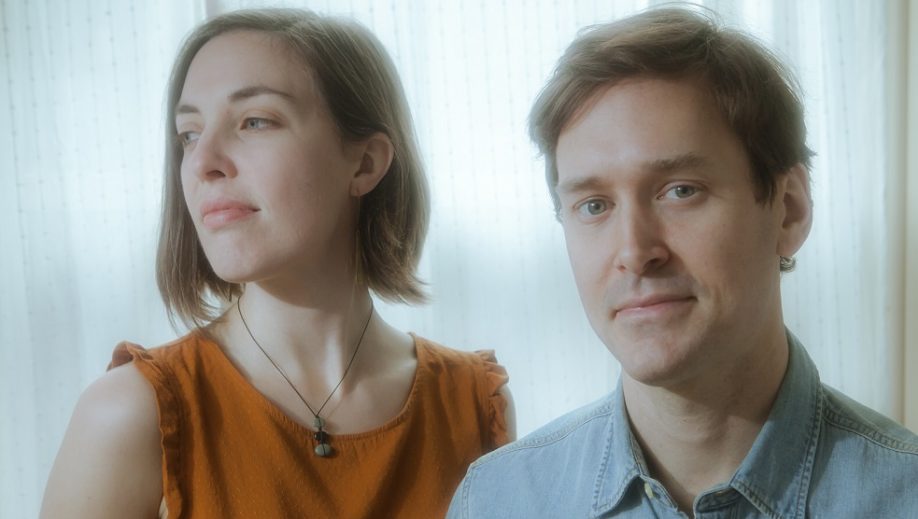
STREAM: The Honey Dewdrops, ‘Anyone Can See’

Artist: The Honey Dewdrops
Hometown: Virginia, but now living in Baltimore, Maryland
Album: Anyone Can See
Release Date: March 1, 2019

In Their Words:Anyone Can See came out of wanting to record the feeling of our live show. It’s the sound of us playing and singing together side by side and letting the songs unwind themselves down the paths they wanted to go. This is a record about what we’ve been thinking and feeling over the last few years. The songs are about what we can and cannot see, and the process of trying to see even when we’re not sure what we’re looking at.” — The Honey Dewdrops


Photo credit: Michael Patrick O’Leary