Modern Old-Time Sounds From Canada

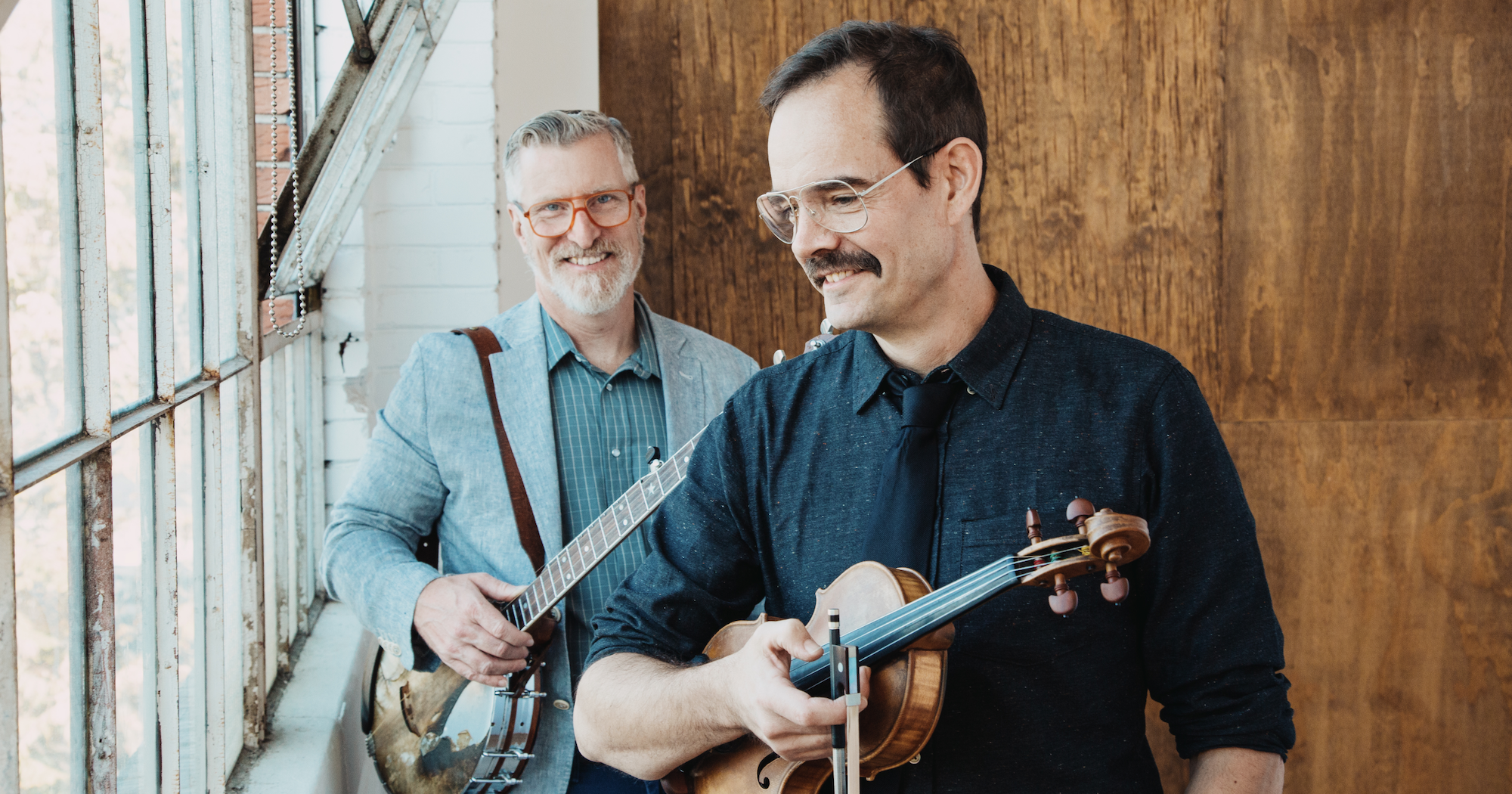
A few years back, we put out an album called Modern Old-Time Sounds for the Bluegrass and Folksong Jamboree. The title was a nod to that 1960s trend of naming records in a way that tried to cover every possible base. It was tongue-in-cheek, but it still sums up what we do – and what you’ll hear on our latest Lonesome Ace Stringband album, Big Wing. We don’t really play old-time music so much as make a modern old-time sound, and that’s exactly what this playlist is all about

Up here in Canada, we have a wealth of traditional music – distinct regional fiddle styles from coast to coast, songs and ballads that reflect the multicultural makeup of our country, and Indigenous music that predates all of it. Even with this abundance of homegrown music to draw from, many of us have found ourselves charmed by the traditional “old-time” sounds of the American South.

Being far away – geographically and culturally – from the source of the music you love presents some challenges, but it also affords a certain freedom. The first step is always to understand where the music comes from and its history; eventually, though, we all need to find our own voice within it. That’s sometimes easier to do when you’re removed from entrenched scenes and long-established communities.

One way I see this playing out in the old-time music coming from Canada is that writing original tunes and songs seems to come naturally and early in the journey. Whether it’s composing new tunes in the tradition or letting the sounds and themes of traditional music color our lyric writing, we’ve developed a wealth of modern old-time sounds up here – and I’m excited to share a few examples in this playlist. – Chris Coole, Lonesome Ace Stringband

“Maggie At The Door” – Arnie Naiman

Arnie Naiman has been playing old-time music longer than anyone else on this list. When I first met him in the early ’90s, he’d already been playing for around 20 years. Back then, he was mostly on fiddle, but sometimes he’d pull out the banjo at the end of the night and share some of the original tunes he always seemed to be writing. This led to us making a couple of albums together – and to me becoming a lifelong fan. “Maggie at the Door” is a great example of how he can write a banjo tune that also works on the fiddle – not as easy as it sounds. It was written for his dog and it’s probably the most badass-sounding tune ever written for a golden retriever.

“Lonesome Song” – Rube & Rake

Rube & Rake are Josh Sandu and Andrew Laite. Both live in St. John’s, Newfoundland, and are writing beautiful songs while touring hard. We ran into them in the UK last year and were instantly taken by their deft playing and the “low lonesome” sound of their harmony singing. “Lonesome Song” is a moody example of all that.

“Platform Four” – The Slocan Ramblers

The Slocan Ramblers are Canada’s bluegrass band – at least as far as I’m concerned. Although Frank Evans no longer plays full-time with the group, I chose this tune to remind everyone that while he’s mostly known for his three-finger bluegrass playing these days, he’s also on another level as a clawhammer player. There are a few licks on “Platform Four” that he’ll probably take to the grave.

“Narrow Line” – Mama’s Broke

Mama’s Broke are another duo from Eastern Canada (Nova Scotia). We crossed paths with Lisa Maria and Amy Lou Keeler at the Baltimore Old-Time Gathering a few years ago. They put on a riveting show and blew us away with their singing and playing. The arrangements on their records are so imaginative – they capture the spaciousness of their live sound while layering on subtle textures. “Narrow Line” is an excellent example of this and one hell of a song.

“White Horse Plains” – The Red River Ramblers

The Red River Ramblers feature the music of Douglas Richard Sinclair, a Red River Métis musician whose last album, Reverie, showcased original tunes inspired by the Métis fiddle tradition. “White Horse Plains” highlights Douglas’ tuneful guitar playing and answers the question: What would Norman Blake have sounded like if he’d been Métis?

“Saint Elizabeth” – Kaia Kater

Kaia Kater’s 2016 album Nine Pin made a lot of folks take notice of this exceptionally talented songwriter. Kaia is a perfect example of someone who’s really tried to get to the roots of the music; she studied Appalachian traditions at Davis & Elkins College in West Virginia. She’s taken what she learned there and carried it to a creative place that defies genre or categorization. “Saint Elizabeth” is a perfect example.

“New Caledonia” – Pharis & Jason Romero

Pharis & Jason Romero probably need no introduction to anyone here. They’re old friends of ours and we’re big fans of their music. It almost seems remiss to share a song that doesn’t feature their beautiful singing and lyrics, but we’re always enchanted by Jason’s tune writing, backed by Pharis’ always-right-on-the-money guitar playing. “New Caledonia” is one of those tunes that instantly takes you somewhere. It manages to say a lot without a single word.

“The Wheels Won’t Go” – Hannah Shira Naiman

Hannah Shira Naiman comes to the music honestly. She grew up learning fiddle and banjo from her dad, Arnie Naiman, while listening to her mom, Kathy Reid-Naiman, sing the songs of Jean Ritchie, the Georgia Sea Island Singers, and the Delmore Brothers. Hannah has taken it all in and made something uniquely her own. “The Wheels Won’t Go” is the title track of her 2022 album.

“Wellington” – Allison de Groot & Tatiana Hargreaves

Allison de Groot is one of our most treasured banjo exports – clean, hard-driving, and full of tone. Best known these days for her work with Tatiana Hargreaves, she’s also a fine composer. “Wellington” is one of her own tunes, a reminder that she’s as creative as she is technical.

“Mama’s Boy” – Lotus Wight

Lotus Wight (AKA Sam Allison) is best known for his work with Sheesham and Lotus & Son. He’s a beautiful banjo player, a lovely jaw-harpist, a rock-solid bassist, and even plays the contrabass harmoniphoneum. I didn’t know until his last album that he’s also a moving songwriter, somewhere between John Hartford and Leon Redbone. “Mama’s Boy” tells the story of the three men who were fathers to Sam over the course of his life. I can’t remember the last time I heard such an honest and tender song.

“From Silence” – Daniel Koulack

Daniel Koulack hails from Winnipeg, Manitoba, where he’s been making music and teaching banjo for many years. (Allison de Groot is one of his students.) Daniel has always been game to take the clawhammer banjo to new and unexpected places – which might explain “From Silence,” possibly the only clawhammer banjo and saxophone duet in the known universe.

“At the Airport” – Old Man Luedecke

Old Man Luedecke is one of the crown jewels of Canadian singer-songwriters and he also happens to be one hell of a clawhammer banjo player. He’s written most of his songs on the banjo (at least the early ones), which gives them those unmistakable twists and turns – in both phrase and melody. And he has that rare gift for putting a bit of hope into everything he writes, whether the song is sad, funny, or introspective. “At the Airport” is a perfect example.

“May Day” – The Andrew Collins Trio with The Lonesome Ace Stringband

The Andrew Collins Trio (Andrew Collins, James McEleney, Adam Shire) collaborated with us on “May Day,” a tune Andrew and I wrote together many years ago. These three are next-level players who are always pushing the boundaries of what’s possible on their instruments. Known for mixing new acoustic bluegrass with classical and jazz influences, we had fun diving into some weird old-time with them on this track from our new album.


Photo Credit: Jen Squires
Guitarist Jackie Venson on Her Instrumental Peer, Yasmin Williams

(Editor’s Note: For a special Artist of the Month feature and op-ed, acclaimed guitarist, composer, and improviser Jackie Venson considers the impact, musicality, and originality of her peer Yasmin Williams. Read more about Venson on BGS here. Explore more AOTM content on Williams here.)

As someone who gets pigeonholed as a blues guitarist, I’ve publicly reckoned with what I feel is an othering of blues as no longer really art, but instead what might be seen as a wax museum-ification of a formerly revolutionary genre. Too many established musicians and fans alike don’t want blues to evolve, but to instead be preserved in amber. Yet, its sibling folk music has not only never entirely fallen out of fashion, it has evolved and even prospered specifically because its brightest figures have refused to let tradition and academic codification stagnate the genre. Whether you’re talking about Bob Dylan going electric or Bon Iver collaborating with hip-hop superstars, folk musicians understand that cross pollination and new ideas are vital to growth. To my ears, Yasmin Williams is a proud continuation of that tradition of evolving folk.

To listen to the music of Yasmin Williams is to listen to the thrill of musical mutation in action, to hear and feel playing that is in constant communication, not only with itself, but with myriad styles and personalities. Given how adventurous and playful Williams’ music is, it’s not too surprising that her gateway to music was in fact a video game, specifically Guitar Hero 2.

In a review of Williams’ breakout 2021 album Urban Driftwood for taste-making music site Pitchfork, writer Sam Sodomsky connected Williams’ percussive, tap-heavy fingerpicking style to the mechanics of that game, as well as folk guitar legend John Fahey. Rhythmic intensity and love for the thrill of performance are the unifying elements of Williams’ otherwise impossible-to-pin-down style; this isn’t folk as a study or stuffy examination of tradition, it’s folk as expression at its most pure, music for entertainment, communication, and friendly competition all at once.

Williams’ latest batch of singles from her just-released album, Acadia, impeccably illustrates this eclectic and freewheeling approach to folk. “Hummingbird” is a dazzling collaboration with banjo player Allison de Groot and fiddle phenom Tatiana Hargreaves that recalls Richard Thompson’s lush, melodic picking but marries it to the breakneck intensity of traditional bluegrass.

On the other end of the folk spectrum, “Virga” finds Williams teaming up with Darlingside for a gorgeous and stately slice of indie folk that would fit right in with the likes of Sufjan Stevens and Bibio. Somewhere in the middle is “Dawning,” a bluesy folk number that features Williams dueting on guitar with Aoife O’Donovan of Crooked Still fame, who also provides enchanting, wordless vocals that give the song an almost ambient quality, as if Sigur Rós moved to Appalachia.

Even on songs that are more traditional, Williams playfully inserts pop and experimental elements. Take “Sunshowers,” which opens Urban Driftwood with beautiful fingerpicking that in turn gives way to a simple yet addictive bass-like hook that wouldn’t be out of place on a Post Malone single. Or, consider the album’s title track, which features djembe playing by Amadou Kouaye and adds an almost IDM (Intelligent Dance Music) quality to the song. Or, “Nova to Ba,” a collaboration with Argentine musician Dobrotto that effortlessly transitions from cinematic grandeur to relaxing ambient textures.

As a musician, I can’t help but be entranced by the marvelous skill and tone on display in Williams’ music. But more importantly, as a listener, I’m struck by the immediacy and tunefulness of the songs. Like Williams’ early inspiration, Guitar Hero 2, these songs are hard to put down once you start, and the difficulty never gets in the way of the fun.

“Juvenescence,” one of Williams’ most popular songs, is a handy representation of her skills – the impeccable picking, the daredevil runs that would impress even Eddie van Halen, the self-dueting in the finale. But it’s also immensely listenable and never a chore. Equally impressive is “Swift Breeze,” where Williams utilizes her guitar as an organic drum machine, getting a booming kick drum sound out of the body and rim shot-like hits out of other components, all while arpeggiating like she just got off a tour as the lead guitarist for a Midwest emo outfit.

It might seem odd to bring up emo in a feature on a folk musician, but there is a considerable amount of drama and theatricality in Williams’ music, even though most of it is instrumental. “Adrift,” in particular, has just as many emotional pivots and anthemic hooks as a Panic! At The Disco song. Here, the guitar comes in first, then the strings, but the swaggering hooks and melancholic valleys are there. It’s not hard to reimagine “Restless Heart,” from Williams’ debut album, Unwind, as an emo anthem either; it has a killer riff to kick things off followed by a pick slide and some heavy ringing chords. Even the title sounds like something the Get Up Kids would have used. If Dashboard Confessional was ever looking for their own Tim Reynolds to do an acoustic tour with, all I’m saying is Williams’ name should be high up on the list.

Every genre should be so fortunate as to have an artist like Williams, a performer who challenges herself without losing sight of what makes music a pleasure to listen to. A musician who commits to pushing the boundaries of the genre they call home, rather than maintaining a status quo. No genre should be inflexible and we need more musicians like Williams – period – who push themselves musically just as much as they do technically.

(Editor’s Note: Continue your Yasmin Williams Artist of the Month exploration here.)


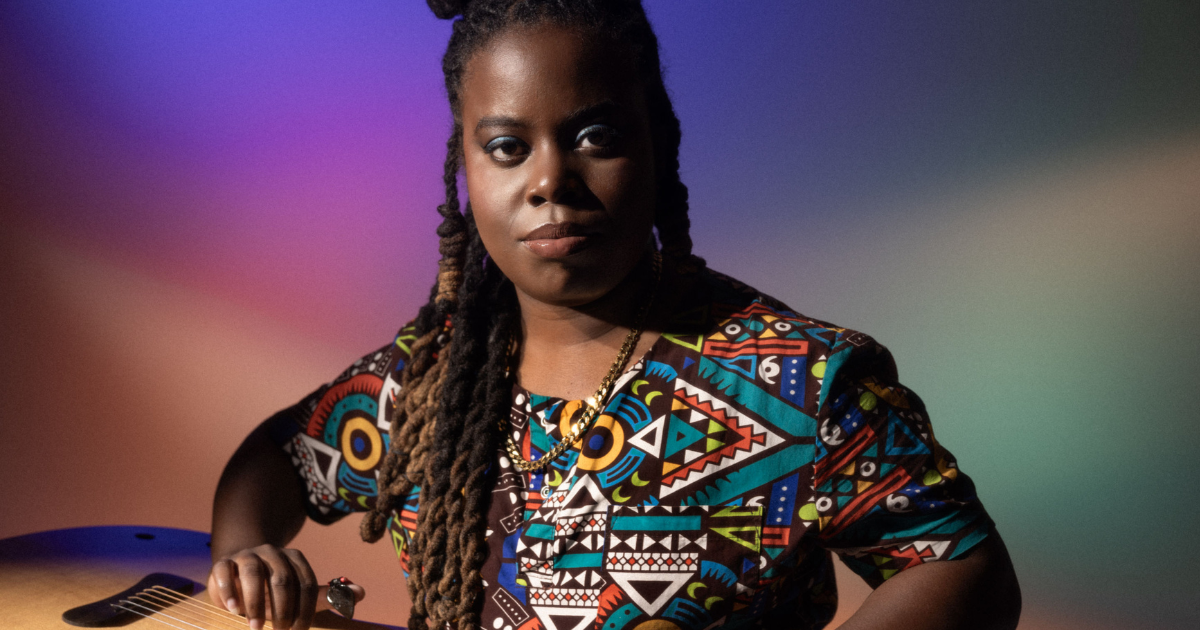
Photo Credit: Ebru Yildiz

‘Acadia’ Expands Guitarist Yasmin Williams’ Creative Universe

Oscar Wilde said, “If a thing is worth doing, it is worth doing well. If it is worth having, it is worth waiting for. If it is worth attaining, it is worth fighting for. If it is worth experiencing, it is worth putting aside time for.”

Composer and guitarist Yasmin Williams can certainly relate to the sentiments in Wilde’s reflection. Williams – who went from New York University in 2017 to releasing her first LP in 2018 to performing across the world – says when she picked up the acoustic guitar, it was about “trying to become the best guitarist [she] could be.”

Though a straightforward aspiration, and one that Williams has pursued fervently between the release of her debut album and now of her third record, Acadia, Williams has lived through ups, downs, and unknowns of the music industry, which have shifted her goals along the way. Particularly between 2020 and 2024, when Williams wrote the songs that would become Acadia, the inherent nature of public visibility and the process of establishing herself in the music landscape led Williams to discern what exactly is worth doing, having, waiting for, attaining, fighting for, and experiencing as a musician. It’s this amalgamation of inner realizations and external escapades that make Acadia the compelling journey it is.

Listening to each piece is like exploring a miniature world. Songs like album opener “Cliffwalk” unlock the door to an event memorable to Williams and all the emotions that came with it – performing at Newport Folk Festival and writing most of the song the night before, with the rest unfolding as an improvisation on stage. Pieces like “Virga” and “Dream Lake” reflect the duality of positive and negative challenges that come with nurturing a career as a musician. The two tracks are fittingly written with this direct connection to the other in mind.

Acadia as a whole is brimming with collaboration, a potpourri of artists, instruments, and culture, songs like “Harvest,” “Hummingbird,” and “Dawning” speak directly to what can grow from embracing new friendships, communities, and the unique creative resonance that can be found therein.

Acadia may encompass a fixed window of time in her life, but much like the many meanings of its title and Williams’ own ethos for the album – a place of peace, a place where creativity can blossom – the project endures as an oasis, a reminder from the past thriving in the present that scatters new seeds for music in the future, as Williams continues to walk down a trail of her own design.

Speaking with BGS by phone before a tour that will take her across the U.S. and to the UK later this year, Williams talked about the value of empowerment and patience, the expectations of the music industry, insights that came from producing her own music, and more.

What was the evolution of your vision for Acadia like and how did things develop as you met new artists and had so many new experiences from 2020 to 2024?

Yasmin Williams: I wasn’t really envisioning the album being as expansive as it is. Back in 2020 and even before that, I was still focused on just trying to become the best guitarist I can be, trying to become more confident in my playing and more confident in my abilities.

When I played Newport Folk Festival [in 2021], it gave me the confidence and the encouragement that I needed to realize that I can actually do this for a living – be a professional musician. It definitely lit a spark and after that, I realized I should take meeting people more seriously. Not necessarily networking, but just trying to make friends with musicians that I’m meeting at these festivals since I keep seeing the same people. That’s kind of how the collaborations came about: Just me being not afraid to tell people, “Hey, I really like your music. I’d love to do something with you,” or people telling me that and me not being afraid to follow up with them because, I guess I dealt with some sort of– I don’t want to say, “inferiority complex,” but like, I feel like the musicians that are on the record have been doing their thing for long time. I’d be afraid to reach out to people and ask them to collaborate with me.

After 2021, I got over that fear, which helped immensely. That led to the collaborations and that led to me thinking, “My next record can be what I want it to be but, I can also invite people to do things that I cannot do.” Like, I don’t play saxophone, I don’t play drums. I’m not super comfortable singing on my music yet and inviting all of these people to do those things really created the atmosphere and the universe that I wanted for Acadia. I wanted it to be something that my other two records aren’t necessarily, which is a more expansive kind of universe.

How did you approach conveying themes, motifs, or emotions when writing music to include others versus writing for yourself?

Every song was different. As far as [asking myself], “How does this person fit into the theme or the emotion that I’m trying to present?” What I did was, I told the collaborator, “Here’s what emotion or mood I’m trying to evoke here. Does this make sense to you? Do you think you can do this? Let’s figure out a way to do it.” I gave them slightly free reign, but help if they needed help figuring something out.

Where does your dedication to informing folks about the social and historical aspects of music, and the prospect of personal responsibility around that, fit within your music career?

It took me years to figure out if I even wanted to be involved in making people aware of the historical aspects of the music that I was playing. I also had to learn a lot about music that I was playing and about folk music in general, because I didn’t really grow up listening to folk music at all or bluegrass or things like that. So I’ve learned a lot in the last five, six, seven years.

Things changed when I finished [my album] Urban Driftwood. Just remembering, going to protests up here in Washington, D.C. when George Floyd’s murder happened and seeing all of the political unrest and social unrest around here where I live, and obviously seeing it on the news everywhere else definitely made me change my mind. As far as being open about, for example, speaking about being a Black female guitarist, which is not something I really wanted to do in my late teens, early 20s. I definitely came around to it and now see it as a necessity.

To me, social media is a great tool to try to help educate folks, because there’s so much online at our fingertips that’s just factually incorrect. Anything I can do to try to help mitigate that, I think is good. I think it’s important for me now to be involved in the full scene in a way that’s positive and educating people – to just get involved in things or be involved in ways that I’m interested in. I’ve always been a history nerd anyway so to me, it makes sense now to do that, whereas before, I guess I just wasn’t mature enough to understand why I would have to be a musician and educate folks and have a social media presence. But now I don’t have a problem at all.

What would you describe as the most challenging aspect of making Acadia and how did you wade through that experience?

Figuring out how to finish some of the songs. I realized I have to let time pass and let it come to me. “Sisters,” for example, I came up with that melody like, two, three years ago now? And it was stuck being a two-, three-minute song for years. I thought, “This doesn’t feel done.” But I couldn’t come up with anything. Then, the night before my recording session, I came up with four extra minutes of material. For me, I can’t force the issue of finishing a song. It just kind of has to come to me. And whenever it comes, it comes. And these songs, some of them took a really long time to get finished. So that was probably the most difficult part of it.

What was the most interesting new musical technique or process you explored while making Acadia and why was it so meaningful?

Producing was the most interesting part of it; hearing what people heard in my music was by far the most interesting aspect of recording. Just hearing how people process it, then hearing what they do in response. Pretty much everyone grasped what I was trying to accomplish in the song that they’re featured on.

For example, “Hummingbird” with Allison de Groot and Tatiana Hargreaves. They both come from a more, I guess, old-time tradition, which is very different than [the kind of song] “Hummingbird” is. It took a little while for us to kind of get the song in the studio, because the song is very difficult, first of all, to play. But they absolutely nailed it. Hearing how they heard the timing and the syncopation and the melody, and the melodic aspects of the song, and how they thought, “Okay, I can fit in here and drop out here and harmonize here,” it was really interesting to see how people’s brains worked and how it’s so different from how mine works but it somehow fits together pretty seamlessly.

How did you discern your feelings when a collaborator might encourage you to try something new, versus deciding to stay true to yourself and your voice as a composer and musician?

I feel like I was more so bringing the collaborators to a different place that maybe they weren’t used to and pretty much everybody who’s on the record was willing to do that and go to somewhere new.

Once the recording process and collaboration process got started, it was really easy for me to just tell people, “Okay, I want this, this, and this.” And most of the time, people are just like, “Yeah!” With Darlingside and the song “Virga,” I made it clear that I actually wanted them to do lyrics and then we worked on that. They were open to it for the most part so for me it was easy. But maybe for some of the collaborators it was about getting them out of their usual music making mode and into a more open-minded mode.

Being ready to make an album like this, it took living life and having different experiences.

(Editor’s Note: Continue exploring our Artist of the Month coverage of Yasmin Williams here.)


Photo Credit: Ebru Yildiz