Get ready to enjoy some excellent new roots music – bluegrass, country, blues, and more.
To start us off and get us in a romantic holiday mood, the Bibelhauser Brothers from Kentucky offer their bluegrass rendition of John Prine’s “Glory of True Love.” Releasing, appropriately, on Valentine’s Day, the song reinforces just how well suited Prine originals are to the bluegrass treatment – it doesn’t have to just be “Paradise”! Following up with his own cover of a country classicist, banjo picker Frank Evans pulls together an all-star cast for a live video performance of Roger Miller’s “TJ’s Last Ride.” Evans released the single studio version last week, following it up with Shad Cobb, Thomas Cassell, Mike Bub, and Jimmy Stewart joining him for the excellent live video of the track.
For a bit of gospel, Eighteen Mile releases a new single today, “Living Waters,” showing yet again the deep connections between bluegrass and sacred music. It’s a thoughtful, contemplative, and inspiring breath of fresh air – or, perhaps, a refreshing sip of cool, living waters. Plus, singer-songwriter Thomm Jutz brings us a live performance video of a new bluesy, original track, “Ramblin’ Gamblin’ Blues,” just voice and tender fingerpicked, acoustic blues in duet. Jutz reflects on the undying temptation of such vices and how the low points they often bring can be a vehicle to better things. “Ramblin’ Gamblin’ Blues” heralds Jutz’s upcoming solo album, Ring-A-Bellin’, arriving in April.
To close us out, Nashville honky-tonkin’ staples – and life partners – Hannah Juanita & Mose Wilson have a brand new EP and with it, a video for the title track, “If I Ever Lost You.” Gauzy and retro, Juanita and Wilson put on throwback styles and sounds without it feeling contrived or gratuitous – while all decked out in countrified wedding garb. It makes perfect sense, as they explain, “As we prepare to wed this year, the lyrics hit especially close to home. We drew inspiration from the greats who paved the road: George & Tammy, Loretta & Ernest, Red & Kitty, keeping their timeless storytelling at the core.”
There’s plenty to boot-scoot to below, so get scrolling! You Gotta Hear This…
Bibelhauser Brothers, “Glory Of True Love”
Artist:Bibelhauser Brothers Hometown: Louisville, Kentucky Song: “Glory of True Love” Release Date: February 14, 2026 Label: Common Loon Records
In Their Words: “‘Glory Of True Love’ has been a part of our repertoire during live shows for many years with the Bibelhauser Brothers. It’s a beautiful feeling to ‘grass up’ such a timeless tale of love, written by one of the most prolific songwriters of his generation, John Prine. Recording this single has been a really special way to follow up since dropping our full-length record, Down the Road, including mostly original songs just four months prior, as our band and our signature sound has evolved. This is our first recording featuring Boston, Kentucky, native Turner Hutchens on mandolin, with Jeff Guernsey tracking twin fiddles, Steve Cooley on banjo, Adam on bass, and Aaron singing and playing guitar. We hope you enjoy our own Bibelhauser Brothers spin on this John Prine classic, with more music to come soon!” – Bibelhauser Brothers, Aaron and Adam
Track Credits: Aaron Bibelhauser – Vocal, guitar Adam Bibelhauser – Bass Steve Cooley – Banjo Turner Hutchens – Mandolin Jeff Guernsey – Fiddles
Eighteen Mile, “Living Waters”
Artist:Eighteen Mile Hometown: Upstate South Carolina Song: “Living Waters” Release Date: February 13, 2026
In Their Words: “In the Bible, there is a story commonly called the story of the ‘woman at the well.’ In that story, Jesus is talking to a lady who was married five times, likely abused and abandoned in those relationships before eventually becoming an outcast in her society. Jesus, using an analogy, called himself the ‘living water’ and said that she could believe in him and be completely, eternally fulfilled. C.S. Lewis famously said, ‘If I find in myself a desire which no experience in this world can satisfy, the most probable explanation is that I was made for another world.’ This song captures the heart behind everything Eighteen Mile does. We want people to experience and find complete fulfillment in Jesus, the ‘Living Waters.'” – Carson Aaron
Track Credits: Hallie Ritter – Upright bass, harmony vocal Carson Aaron – Acoustic guitar, harmony vocal Emily Guy – Lead vocal Jack Ritter – Acoustic guitar Savannah Aaron – Fiddle Andy Leftwich – Mandola Steve Pettit – Mandolin Rob Ickes – Resonator guitar
Frank Evans, “TJ’s Last Ride”
Artist:Frank Evans Hometown: Toronto, Ontario, Canada Song: “TJ’s Last Ride” Release Date: February 6, 2026 Label: Englehardt Music Group
In Their Words: “I’ve loved Roger Miller’s music since childhood, from the Robin Hood soundtrack to constant car rides with his greatest hits, which made choosing one of his songs feel natural. ‘TJ’s Last Ride’ stood out for its Hartford-like imagery and the mournful warmth of a Stanley Brothers ballad. In the session, we agreed to keep it simple – the take you hear is almost entirely the third run-through. I was honored to record it with Casey Campbell, Mike Bub, Justin Moses, Shad Cobb, and Jake Stargel.” – Frank Evans
Video Performance Credits: Frank Evans – Banjo, vocals Jimmy Stewart – Dobro, vocals Mike Bub – Bass Thomas Cassell – Mandolin Shadd Cobb – Fiddle Jake Stargel – Guitar
Video Credits: Videographer – Kyle Horan Video Editor – Frank Evans
Thomm Jutz, “Ramblin’ Gamblin’ Blues”
Artist:Thomm Jutz Hometown: Nashville, Tennessee Song: “Ramblin’ Gamblin’ Blues” Album:Ring-A-Bellin’ Release Date: February 13, 2026 (single); April 3, 2026 (album)
In Their Words: “Going on the road at 19 was the perfect way to live at the time. No responsibilities but to make it to the next gig. Do what you know how to do and move on. That way of living follows its own archetypal patterns, that’s why it doesn’t matter where you are, you could be going up and down the Mississippi River in 1898 or the damn Autobahn in Germany in 1998.
“There’s always somebody waiting to play another game, frequently with a bottle of booze. For some people, that charm never wears off. It did for me. I got sick of the people I was with, sick of myself for sitting down at the table to play their game.
“As it turned out, that part wasn’t over when I moved to Nashville – as it turned out, it was necessary, so better things could come.” – Thomm Jutz
Hannah Juanita & Mose Wilson, “If I Ever Lost You”
Artist:Hannah Juanita & Mose Wilson Hometown: Nashville, Tennessee Song: “If I Ever Lost You” Album:If I Ever Lost You (EP) Release Date: February 13, 2026
In Their Words: “‘If I Ever Lost You’ is a love letter to the golden era of country delivered in a classic, heartfelt shuffle. It’s our first co-release and our first duet, built from years of collaboration and crafted as a performance we both get to share on stage. The song speaks from the heart; love is everything when it’s here, and its absence is everything we fear. As we prepare to wed this year, the lyrics hit especially close to home. We drew inspiration from the greats who paved the road: George & Tammy, Loretta & Ernest, Red & Kitty, keeping their timeless storytelling at the core.” – Hannah Juanita & Mose Wilson
Track Credits: Hannah Juanita – Vocals Mose Wilson – Guitar, vocals Jeff Taylor – Piano Norbert McGettigan III – Bass Matty Meyer – Drums Ryan Stigmon – Pedal steel
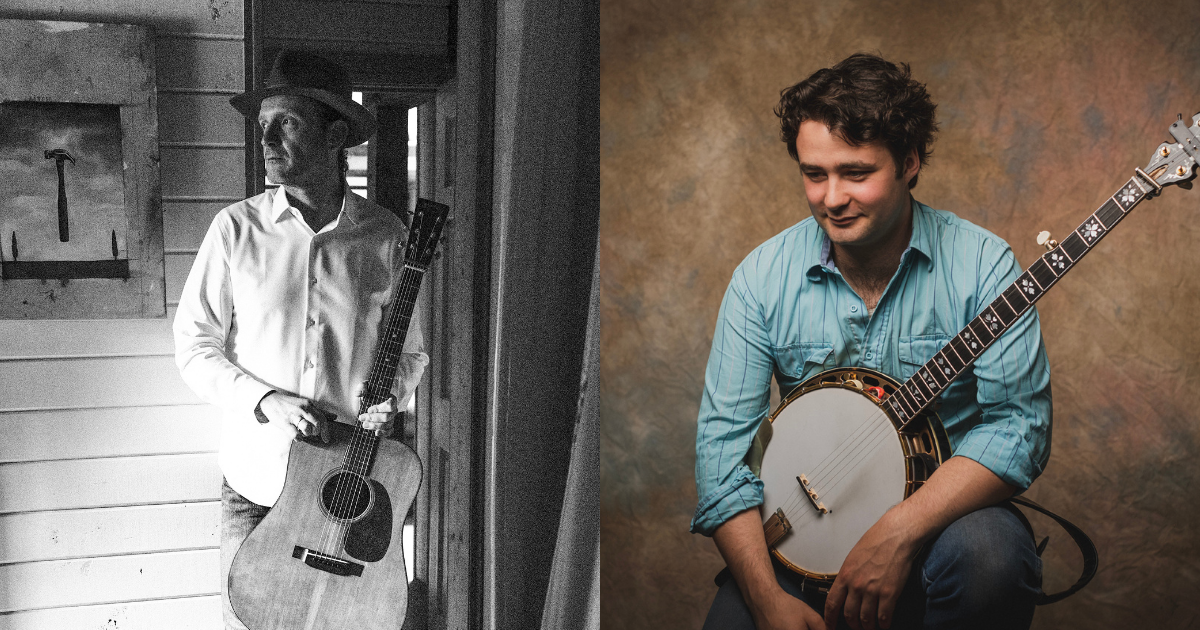
Photo Credit: Thomm Jutz by Don VanCleave; Frank Evans by Scott Simontacchi.
Artist:Frank Evans Hometown: Toronto, Ontario, Canada Latest Album: Debut album is in the works
Which artist has influenced you the most – and how?
It’s always difficult to narrow that question down to one artist, but if it has to be one, I would say Alan O’Bryant of the Nashville Bluegrass Band. His ability to sing and play banjo at the same time, with so much dynamic intensity, still gives me chills whenever I hear it. When I was just starting out on the banjo, my teacher, Chris Coole, gave me a compilation CD of all these different banjo styles. “When I Get Where I’m Goin'” was on there and I must have listened to it on repeat ten thousand times. That band has really influenced how I arrange songs for a full bluegrass outfit. It was a huge honor to have Alan come into the studio to produce The Slocan Ramblers’ latest album. He was such a joy to work with.
What’s your favorite memory from being on stage?
All the guys in The Slocan Ramblers used to joke that if you’re a banjo player, you’re never safe from another banjo player appearing out of nowhere and asking you a very specific question about your instrument. I guarantee I’ve been that person.
A funny example of that happened back in 2015 when we were at MerleFest. They’d asked a few bands to do some early-morning TV interviews to help promote the festival. It was 5 a.m. and the gates were all closed. We had just gone live with the first interview when a guy popped out from behind a bush about 50 yards away and shouted, “Is that a Presto tailpiece on your Style 11?” How he knew what kind of banjo I was playing from that far away, I have no idea – but it was almost impossible to keep my composure after that.
What other art forms – literature, film, dance, painting, etc. – inform your music?
I’ve always been a fan of graphic novels and comic art. Growing up in Toronto, I was lucky to be surrounded by a healthy community of artists and great comic shops – especially my favorite, The Beguiling. Chester Brown, Harvey Pekar, and R. Crumb have always been some of my favorite artists.
Back in eighth grade, we had a year-long culminating project that could be on any topic and I decided to write a graphic novel about Edden Hammons, the old-time fiddler from West Virginia. It was a lot of fun and a ton of work, but I got to sell a few copies at The Beguiling, which was pretty cool. The last time this hobby came up was when The Slocan Ramblers asked me to come up with a cover for their Queen City Jubilee album. It’s a little out there, but I like how it turned out.
Does pineapple really belong on pizza?
Being born in Ontario — the birthplace of the Hawaiian pizza — I firmly believe that pineapple belongs on pizza. It actually took me a long time to come around to it, but a fresh Hawaiian slice from the right place is hard to beat. One of my favourites was a little spot called 2 for 1 Pizza in Kensington Market, Toronto. They’d pull a regular-sized slice from the oven, cut it in half, and hand you “two for one.”
What would a perfect day as an artist and creator look like to you?
I’ve really enjoyed the days I’ve spent in the studio since moving to Nashville. I feel very lucky to have been invited to be part of a number of projects here, ranging from experimental old-time records to working on the soundtrack for King of the Hill. If you’ve ever been unsure about what to practice, spending a day in the studio among amazing musicians will fix that. Recording has a way of putting everything under a microscope, which can sometimes feel crippling, but it’s also extremely rewarding when you notice tangible improvement from the last session.
I’ve also started working on my own solo record, which has been both rewarding and humbling. I plan to start releasing some of the tracks next year.
A few years back, we put out an album called Modern Old-Time Sounds for the Bluegrass and Folksong Jamboree. The title was a nod to that 1960s trend of naming records in a way that tried to cover every possible base. It was tongue-in-cheek, but it still sums up what we do – and what you’ll hear on our latest Lonesome Ace Stringband album, Big Wing. We don’t really play old-time music so much as make a modern old-time sound, and that’s exactly what this playlist is all about
Up here in Canada, we have a wealth of traditional music – distinct regional fiddle styles from coast to coast, songs and ballads that reflect the multicultural makeup of our country, and Indigenous music that predates all of it. Even with this abundance of homegrown music to draw from, many of us have found ourselves charmed by the traditional “old-time” sounds of the American South.
Being far away – geographically and culturally – from the source of the music you love presents some challenges, but it also affords a certain freedom. The first step is always to understand where the music comes from and its history; eventually, though, we all need to find our own voice within it. That’s sometimes easier to do when you’re removed from entrenched scenes and long-established communities.
One way I see this playing out in the old-time music coming from Canada is that writing original tunes and songs seems to come naturally and early in the journey. Whether it’s composing new tunes in the tradition or letting the sounds and themes of traditional music color our lyric writing, we’ve developed a wealth of modern old-time sounds up here – and I’m excited to share a few examples in this playlist. – Chris Coole, Lonesome Ace Stringband
“Maggie At The Door” – Arnie Naiman
Arnie Naiman has been playing old-time music longer than anyone else on this list. When I first met him in the early ’90s, he’d already been playing for around 20 years. Back then, he was mostly on fiddle, but sometimes he’d pull out the banjo at the end of the night and share some of the original tunes he always seemed to be writing. This led to us making a couple of albums together – and to me becoming a lifelong fan. “Maggie at the Door” is a great example of how he can write a banjo tune that also works on the fiddle – not as easy as it sounds. It was written for his dog and it’s probably the most badass-sounding tune ever written for a golden retriever.
“Lonesome Song” – Rube & Rake
Rube & Rake are Josh Sandu and Andrew Laite. Both live in St. John’s, Newfoundland, and are writing beautiful songs while touring hard. We ran into them in the UK last year and were instantly taken by their deft playing and the “low lonesome” sound of their harmony singing. “Lonesome Song” is a moody example of all that.
“Platform Four” – The Slocan Ramblers
The Slocan Ramblers are Canada’s bluegrass band – at least as far as I’m concerned. Although Frank Evans no longer plays full-time with the group, I chose this tune to remind everyone that while he’s mostly known for his three-finger bluegrass playing these days, he’s also on another level as a clawhammer player. There are a few licks on “Platform Four” that he’ll probably take to the grave.
“Narrow Line” – Mama’s Broke
Mama’s Broke are another duo from Eastern Canada (Nova Scotia). We crossed paths with Lisa Maria and Amy Lou Keeler at the Baltimore Old-Time Gathering a few years ago. They put on a riveting show and blew us away with their singing and playing. The arrangements on their records are so imaginative – they capture the spaciousness of their live sound while layering on subtle textures. “Narrow Line” is an excellent example of this and one hell of a song.
“White Horse Plains” – The Red River Ramblers
The Red River Ramblers feature the music of Douglas Richard Sinclair, a Red River Métis musician whose last album, Reverie, showcased original tunes inspired by the Métis fiddle tradition. “White Horse Plains” highlights Douglas’ tuneful guitar playing and answers the question: What would Norman Blake have sounded like if he’d been Métis?
“Saint Elizabeth” – Kaia Kater
Kaia Kater’s 2016 album Nine Pin made a lot of folks take notice of this exceptionally talented songwriter. Kaia is a perfect example of someone who’s really tried to get to the roots of the music; she studied Appalachian traditions at Davis & Elkins College in West Virginia. She’s taken what she learned there and carried it to a creative place that defies genre or categorization. “Saint Elizabeth” is a perfect example.
“New Caledonia” – Pharis & Jason Romero
Pharis & Jason Romero probably need no introduction to anyone here. They’re old friends of ours and we’re big fans of their music. It almost seems remiss to share a song that doesn’t feature their beautiful singing and lyrics, but we’re always enchanted by Jason’s tune writing, backed by Pharis’ always-right-on-the-money guitar playing. “New Caledonia” is one of those tunes that instantly takes you somewhere. It manages to say a lot without a single word.
“The Wheels Won’t Go” – Hannah Shira Naiman
Hannah Shira Naiman comes to the music honestly. She grew up learning fiddle and banjo from her dad, Arnie Naiman, while listening to her mom, Kathy Reid-Naiman, sing the songs of Jean Ritchie, the Georgia Sea Island Singers, and the Delmore Brothers. Hannah has taken it all in and made something uniquely her own. “The Wheels Won’t Go” is the title track of her 2022 album.
“Wellington” – Allison de Groot & Tatiana Hargreaves
Allison de Groot is one of our most treasured banjo exports – clean, hard-driving, and full of tone. Best known these days for her work with Tatiana Hargreaves, she’s also a fine composer. “Wellington” is one of her own tunes, a reminder that she’s as creative as she is technical.
“Mama’s Boy” – Lotus Wight
Lotus Wight (AKA Sam Allison) is best known for his work with Sheesham and Lotus & Son. He’s a beautiful banjo player, a lovely jaw-harpist, a rock-solid bassist, and even plays the contrabass harmoniphoneum. I didn’t know until his last album that he’s also a moving songwriter, somewhere between John Hartford and Leon Redbone. “Mama’s Boy” tells the story of the three men who were fathers to Sam over the course of his life. I can’t remember the last time I heard such an honest and tender song.
“From Silence” – Daniel Koulack
Daniel Koulack hails from Winnipeg, Manitoba, where he’s been making music and teaching banjo for many years. (Allison de Groot is one of his students.) Daniel has always been game to take the clawhammer banjo to new and unexpected places – which might explain “From Silence,” possibly the only clawhammer banjo and saxophone duet in the known universe.
“At the Airport” – Old Man Luedecke
Old Man Luedecke is one of the crown jewels of Canadian singer-songwriters and he also happens to be one hell of a clawhammer banjo player. He’s written most of his songs on the banjo (at least the early ones), which gives them those unmistakable twists and turns – in both phrase and melody. And he has that rare gift for putting a bit of hope into everything he writes, whether the song is sad, funny, or introspective. “At the Airport” is a perfect example.
“May Day” – The Andrew Collins Trio with The Lonesome Ace Stringband
The Andrew Collins Trio (Andrew Collins, James McEleney, Adam Shire) collaborated with us on “May Day,” a tune Andrew and I wrote together many years ago. These three are next-level players who are always pushing the boundaries of what’s possible on their instruments. Known for mixing new acoustic bluegrass with classical and jazz influences, we had fun diving into some weird old-time with them on this track from our new album.
At whatever level you may be plugged into the online bluegrass scene, you have surely heard, seen, or scrolled into content by Bronwyn Keith-Hynes and Brenna MacMillan. These two young, talented pickers are part of a vibrant and blossoming community of traditional musicians and folk artists that includes folks like Cristina Vane, Victor Furtado, Hilary Klug, Wyatt Ellis, and many more.
What makes these creators stand apart, especially Keith-Hynes and MacMillan, is that they aren’t just shoehorning social media into their art-making and creative processes to move up Music City ladders and check abstract music industry boxes. Instead, they’ve intentionally demonstrated how powerful, engaging, and charming content can be when it’s made with art, creativity, tradition, and joyful, cooperative generation as its focal points. Instead of bending over backward to construct virality and lean into transient socials trends, they let their talent, their songs, and their communities do all the talking.
In May, Keith-Hynes released her second solo album, I Built a World, her first project to center songs and her recently-developed, impressive vocals. Drawing on musicians and pickers from her immediate circle and her main gig – Molly Tuttle & Golden Highway – as well as tapping notable country stars and bluegrass legends, the project finds Keith-Hynes at her most confident and unbothered. This is a fiddler-singer-front woman who has found her voice – literally, through work, practice, and vocal lessons as well as figuratively, not satisfied to craft a career on bowing the fiddle alone.
Later this year, MacMillan will release her debut solo album. Its lead single, “What’s to Come,” features Ronnie McCoury and is indeed a harbinger for the superb album to follow. This project, which highlights MacMillan’s prolific songwriting and features her musical community fleshing out the band, is built directly upon the successes she, Keith-Hynes, and others have found on the internet. Eschewing labels, management, or traditional roll outs, MacMillan will release the project herself, with funds raised on GoFundMe, bringing the music directly to her consumers on her own website and socials channels without “middle men.”
So, not only are MacMillan and Keith-Hynes innovating on ideas around what it means to be a side person, a career picker, and multi-hyphenate, professional traditional musicians, they’re taking all of their expertise as online brands and businesswomen to find success for themselves, on their own terms. They’re focusing on what matters, centering their communities, and making incredible, superlative music at the same time.
BGS connected with MacMillan and Keith-Hynes together via video chat to talk about their unique approaches to making albums, content, and music, while highlighting the deep and tight-knit “bluegrass influencer” circle they’ve each helped create since moving to Nashville and putting their all into bluegrass.
I wanted to start by talking about community and musical community – one of the reasons why I wanted to have you both in conversation with each other is how you each rely on, draw from, and center your musical communities in what you create. It may look like these are solo projects that you’re making, but they’re clearly not solitary projects – and they don’t really feel like vanity projects, either. from the outside looking in either. It really feels you’re making music with other people so you can make music with other people. Could you talk about your work, your solo albums, and working in your communities?
Bronwyn Keith-Hynes: Yeah, I think first and foremost, me and Brenna are good friends and we just ended up being drawn together. We both moved to Nashville around the same time and ended up doing a lot of things together and had a lot of similar interests. That’s cool to find. I haven’t found that many women who have my same interests until I moved to Nashville and then all of a sudden I felt like there was a whole bunch. It’s been really awesome to find that.
First of all, I’m just such a fan of so many people, and I wouldn’t want to make music any other way. My project was based around songs from my community, which was really special to me. It was like a little nerve wracking reaching out to friends and people I respected to be like, “Do you have a song that you’re not going to record that I could record?” But, thankfully, a lot of people did – including Brenna – and I ended up recording one of her songs. And, she sang on it and it was awesome!
I feel like I couldn’t do it alone. I know my strengths and then I know other people’s strengths and I want to make sure we’re all [drawing on our strenghts]. I don’t know if singing is my strength, but it’s something I feel passionate about and feel driven to do for whatever reason. I know the things that I want to put out in the world; I want to make sure the music I’m making has the best parts of myself, but then the best parts of everyone else who’s playing on it.
I think that folks who aren’t just straight white men in this industry, we realize from the get-go that we have to have others with us. We have to do it together. Otherwise we’re not going to go the distance. I feel that in both of your music, as well. But Brenna, I wonder what that question brings up for you, as you’re thinking about and positioning your album to release as well?
Brenna MacMillan: It’s funny, because when Bronwyn asked about songs that I had, I had like a bunch and at that time I wasn’t even thinking about [making] an album at all. I think it was maybe like a couple months later that I decided, based on my friends that kept being like, “You should record some of these songs!” And I was like, “I guess…” I wasn’t thinking about it at all whatsoever.
Then that’s another way like to get my songwriting out there, too. And why wait for someone to come to me for songs if they don’t even know that there are songs? Besides my friends, which is who I first would want to do my songs anyway. It’s funny, because obviously it’s really cool putting out your own music, but I still get more excited when “Riddle” comes on than when “What’s to Come” comes on. [Laughs] That is so cool!
Someone else’s vision for your song, it’s like the coolest thing ever to me. Because, I know what my brain comes up with so it’s not shocking, but someone else’s ideas around something that you wrote – it’s like the coolest thing ever, and I guess that’s why I love the community. I feel like community is like the word that I say way too much, but I do I love it. For Bronwyn, Cristina [Vane], Hilary [Klug], Emily, and Mallory, to some extent back in 2018, we all were moving to town around that time and then 2020 hit and I think that’s when we all got a little closer, because we were all bored and wandering around. I took a lot of walks with my friends, individually, we tried to stay across the path from each other, but I think those bonding moments brought us closer. We were like, “Let’s get coffee” or “let’s get dinner,” and then we ended up making a video or something and it all evolved into great friendship, plus people online being like, “Oh, we like to hear you guys play together!”
One of the things I love most about that whole community of content creators – you’re talking about Cristina Vane and a lot of these other folks you create with here in Nashville – it never feels like you’re trying to shoehorn bluegrass into contemporary content creation. It really seems that making bluegrass music and making roots music with your friends is the impetus, and then you made it fit into social media – instead of vice versa. Like, it’s happened organically and from a community standpoint first, and not just from “I have a social strategy. I have a five year plan.” Do you agree or disagree?
BM: Oh yeah, I agree. There’s not much strategy that’s happened in here. There’s not a lot of that going on. [Laughs]
And yet, I can tell you objectively from the outside looking in, y’all are still operating with 110% more strategy in mind than most of bluegrass. [Laughs]
BKH: I feel like Brenna and I have both talked about – correct me if I’m not saying this right, Brenna – wanting social media to serve us, rather than for us to serve social media. The end goal, for at least for both of us, is not like to become a social media star, it’s to have it serve us, to get our names and our music out to more people.
BM: Yeah! And it felt like it was very random that social media took off for me. I was just like, “Where are you guys coming from? Why do you want to hear me kick off a J.D. Crowe song like every day?” But at the same time, it has its own frustrations and that’s when me – and I think a bunch of the other girls that do this side by side with their music careers – we’re like, “We’re going to have this, but only if it makes sense for helping promote our live gigs and any projects we’re doing.” But as soon as I get nasty comments, or this, or that I’m like, “Oh, I will literally just get off of this app if it’s going to go this direction.” I just block people and then keep going.
I want an audience who will appreciate the things that I want them to appreciate. I think that I’ve trained my audience, too. Basically I shoved it in there, “You are going to listen to this slow song and try to enjoy that. And if you don’t, then I’m going to take you [out of my following]…” Because there have been some people who think that I am a content creator on there, and I’m like, “No, I play music and I took an hour out of my day and posted this video and we’re lucky that happened. Now I’m on my way to a gig and I don’t need some [negative] comment.” But you could come to a live gig and request a song!
Brenna, one of the things I love about your upcoming album and the messaging around it is that you’re really doing a direct-to-consumer business model and roll out. You’re being like, “Y’all can come to me. You already know how to find me, so this is where you can find the music, too.” I think it’s amazing and again, it’s the cutting edge of what the future of bluegrass will be while it’s also so fucking trad. It’s like back in the day, when bluegrass music required taking the car battery out of the car to play a show in the high school auditorium and then putting the battery back in to drive to the next high school auditorium.
It’s like you’re doing that in the 21st century. You’re being a DIY bluegrass musician, but in 2024. Can you talk a little bit about the direct to consumer model you’re using with your album roll out?
BM: I was like, I need to build a website so that there’s everything in one place – I remember why I did it, too, because there are a bunch of fake accounts. I knew I needed something out there to be authentic and to have all of my official links. That was literally my number one goal with the website. So now, here’s the link to my website, you can find my YouTube channel, my Facebook, my Instagram, my TikTok from there. And you’re going to know you’re in the right place. I’ve basically just started to try to push everything to my website and go from there to everything else, even if it’s taking you back to Instagram. Because [the website is] where everything’s going to happen, so that you know that it’s me instead of some person scamming you. I guess with that in mind, I started trying to link everything, like in my stories, when I’m talking about anything coming up, I just say, “Go to my website!”
Bronwyn, I wanted to ask you again about community and about bringing your circle, your scene into your album. I love all of the features on your album and I also love that it doesn’t just feel like you’re reaching for a Collaborative Recording of the Year nomination.
[All laugh]
But I wanted to know how it felt to you, as you were thinking about who you wanted to have on the record and why you wanted to have them on the record?
BKH: I’m glad to hear you say that it feels like it’s in service of the music, because that was definitely my intent. It was the funnest part of [recording the album], for me. I did kind of make those decisions after the tracks were done and I’d done my vocals. I just didn’t know how it was going to turn out until I heard it. Then I would brainstorm with Brent [Truitt], and Jason [Carter], and whoever about who to get on it. Dudley Connell was somebody I was really excited about and I’d never met him. I didn’t know him. Someone just gave me his number, I called him up and left him a nervous voicemail. But yeah, he turned out to be the sweetest guy ever – and he’s a bluegrass hero, I love all those Johnson Mountain Boys records.
It’s crazy especially being a new singer, I haven’t heard my voice recorded much ever. Then to hear my voice with all these other voices that I know and I’ve heard a lot – to hear like that combination for the first time – it was like very surreal!
What was it like working with Dierks [Bentley]? We all know his bluegrass pedigree and his connections to the Station Inn and to the McCourys and that he’s always had one foot so solidly in bluegrass, but y’all would have gotten to know him and got to spend some time with him on the road with Molly Tuttle & Golden Highway, too. I wondered how how that conversation happened and also what it felt like to you to have someone who has gold records and platinum records collaborating with you on your record?
BKH: I grew with his Up On The Ridge album, it was literally one of the first bluegrass albums I heard around my college years. I was obsessed with it and I thought it was so cool. It got me into listening to the more trad stuff, but I’d always loved his music and then being Jason [Carter’s] partner, and Jason and he were friends even before he was famous. So they’ve been friends from the get go.
I’d met him a few times through Jason and then again when we were on tour [opening for him], that was cool. ‘Cause I felt like we could meet [more as peers], not just because I’m somebody’s partner. But now, this is my gig and this is your gig. And you’re asking us to sit in every night. I felt a little bit more comfortable to make that ask. He just came into Brent’s studio one day and tracked it in under an hour. He’s great! Very quick.
Brenna, talk to me a little bit and if you have features on your upcoming album – and if you can’t talk about them yet, that’s totally fine.
BM: I know, I was trying to think of what I should say – I don’t know, I’m the one in charge! But let me check, I don’t know if Brenna wants to tell all that yet. [Laughs]
At the very least, we can talk about Ronnie [McCoury] and “What’s to Come.” Ronnie’s one of my favorites. Talk a bit about, again, bringing in community and bringing in the scene that already surrounds you.
BM: The core band in the studio was [Mike] Bub on bass and Jake Stargel on guitar. Me, I played banjo on four or five of the tracks, but I have been writing a lot on clawhammer lately and I know that I’m not good at it, so I had Frank Evans come in for those and then I had Cory [Walker] play on a couple very last minute. I was thinking, it’s just going to be better if he does it.
When the special guests ideas popped in my brain, I was thinking, “Do I want special guests to be like my friends, my age, or like people that I really are like heroes of mine? Is this the time to ask them? I don’t know.” Nobody knows who I am, but that’s okay. I had met Ronnie a handful of times in kind of settings where it was like, “I’m here with so and so” and I’m just a little curmudgeon. [Laughs]
“What’s to Come,” it’s like a reflective life song. I know that I sound like a small baby when I sing, and I was thinking of someone with an older sounding voice. Like wanting ancient, lonesome vibes so that there could be old and young together, pondering about life. If you’re young or if you’re old, you still ask all the same questions about life.
Also, [Ronnie’s] gritty mandolin playing. I love it so much. Jarrod Walker played on most of the core mandolin stuff, but he happened to be out of the country that session. I was like, this is perfect! But it’s funny, because I didn’t even know if Ronnie was going to bring his mandolin! [Laughs]
To wrap up, here’s a question I had for both of you, because you’re both musical shape shifters. You move in and out of musical contexts so easily; you’re both side people, you’re both front people, you’re both social media brands. How do you maintain your senses of self?
BKH: I feel like I can’t get away from myself! I don’t feel like I ever even think about that. The only way I’ve struggled with that a little bit, or thought about that more, is doing the solo projects. That’s where I’m like, “Wow. OK. What would Bronwyn do next?” But I think I know what I like and I know what I want to do. I’m just like, “How am I going to do that? I need to figure that out.
BM: I think similarly, I don’t really think about it that much. I think I know what I like, too. And I know what I don’t like. From the get go, I’ve very much just been myself online. I come home from the lab job and do a video with dark circles [under my eyes] and grunge and smelling like hemp trash. That’s what I established from the beginning. So now, I feel comfortable being myself.
Pretty much everything has been my own ideas and, it’s funny, because ten of my eleven songs are originals on the album, three of which are co writes, but hearing it come to life in the studio with other people, it still ended up being what I thought it should be. Which is weird, because there’s no way that I could bring some of these musicians into the studio who are eons beyond what I could imagine, but they knew exactly what the track needed. It does sound like me still and what my vision would have been if I had expressed it [all myself].
BKH: I feel like I’m like more myself these days than I’ve ever been. I feel like for a while, starting out in bluegrass, I had a lot of ideas of what a woman in bluegrass needed to look like, or be, or act like. In the last couple years, maybe inspired by being with Molly in Golden Highway, I feel like I’ve been able to let a lot of that stuff go – about how I should dress and whatever. Now, I embrace the things I actually like.
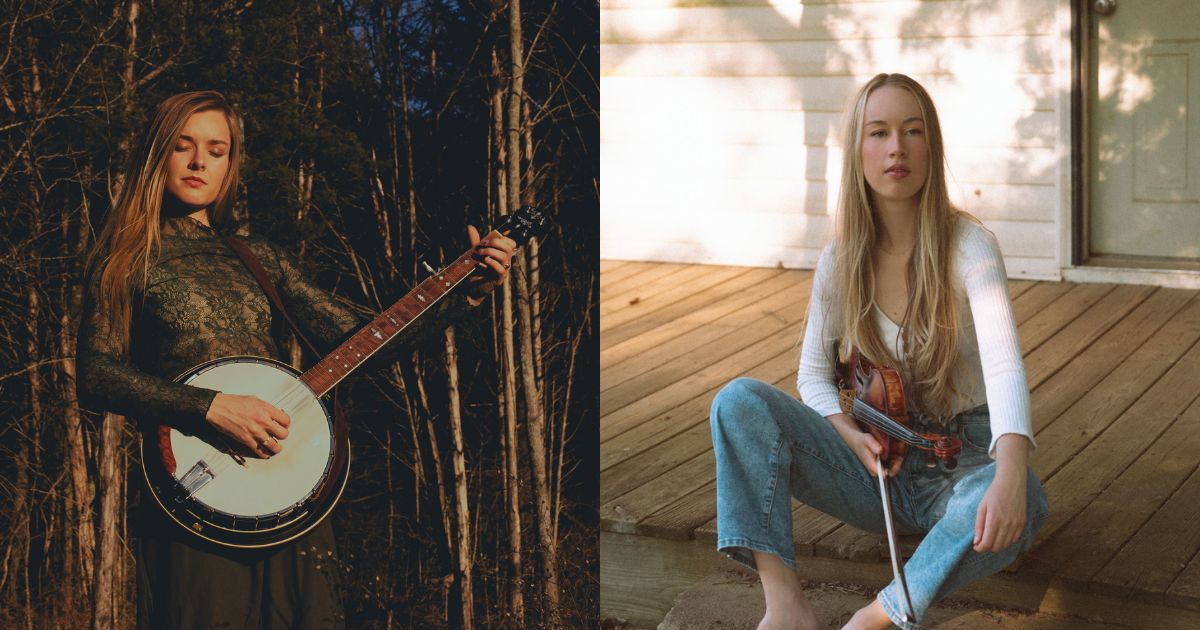
Photo Credit: Brenna MacMillan by Sophie Clark; Bronwyn Keith-Hynes by Alexa King Stone.
Artist:George Jackson Hometown: Nashville, Tennessee Song: “Alhaji” Album:George Jackson’s Local Trio Release Date: July 18, 2023 (video); August 18, 2023 (album) Label: Adhyâropa Records
In Their Words: “I feel a much stronger sense of identity with this record. In many ways, it’s still working with the concepts that I was getting at with Time and Place, trying to be a part of something with a long history while also trying to bring myself to the table as an outsider, but now there’s a lot more confidence in bringing together the different elements I’m interested in and continuing to form my voice with less fear of ‘doing it wrong.’
“(Banjoist Frank Evans) can go very deep in old-time as well as bluegrass music, and also has an interest and proficiency as an improviser and with jazz concepts. He just feels like such a natural fit for me musically. (Bassist Eli Broxham) has such a fearless spirit in the way that he approaches music.
“Fellow fiddle player John Mailander (Bruce Hornsby, Billy Strings) produced the record, collaborating closely with the trio to achieve this boundary-pushing vision. Something that I’m proud of with this record is that it doesn’t sound like music that has been made before — we were able to push old-time in genuinely new directions using arrangements, samples, and recording techniques.” – George Jackson
Photo Credit: Libby Danforth
This website uses cookies to improve your experience. We'll assume you're ok with this, but you can opt-out if you wish.AcceptRejectRead More
Privacy & Cookies Policy
Privacy Overview
This website uses cookies to improve your experience while you navigate through the website. Out of these, the cookies that are categorized as necessary are stored on your browser as they are essential for the working of basic functionalities of the website. We also use third-party cookies that help us analyze and understand how you use this website. These cookies will be stored in your browser only with your consent. You also have the option to opt-out of these cookies. But opting out of some of these cookies may affect your browsing experience.
Necessary cookies are absolutely essential for the website to function properly. This category only includes cookies that ensures basic functionalities and security features of the website. These cookies do not store any personal information.
Any cookies that may not be particularly necessary for the website to function and is used specifically to collect user personal data via analytics, ads, other embedded contents are termed as non-necessary cookies. It is mandatory to procure user consent prior to running these cookies on your website.