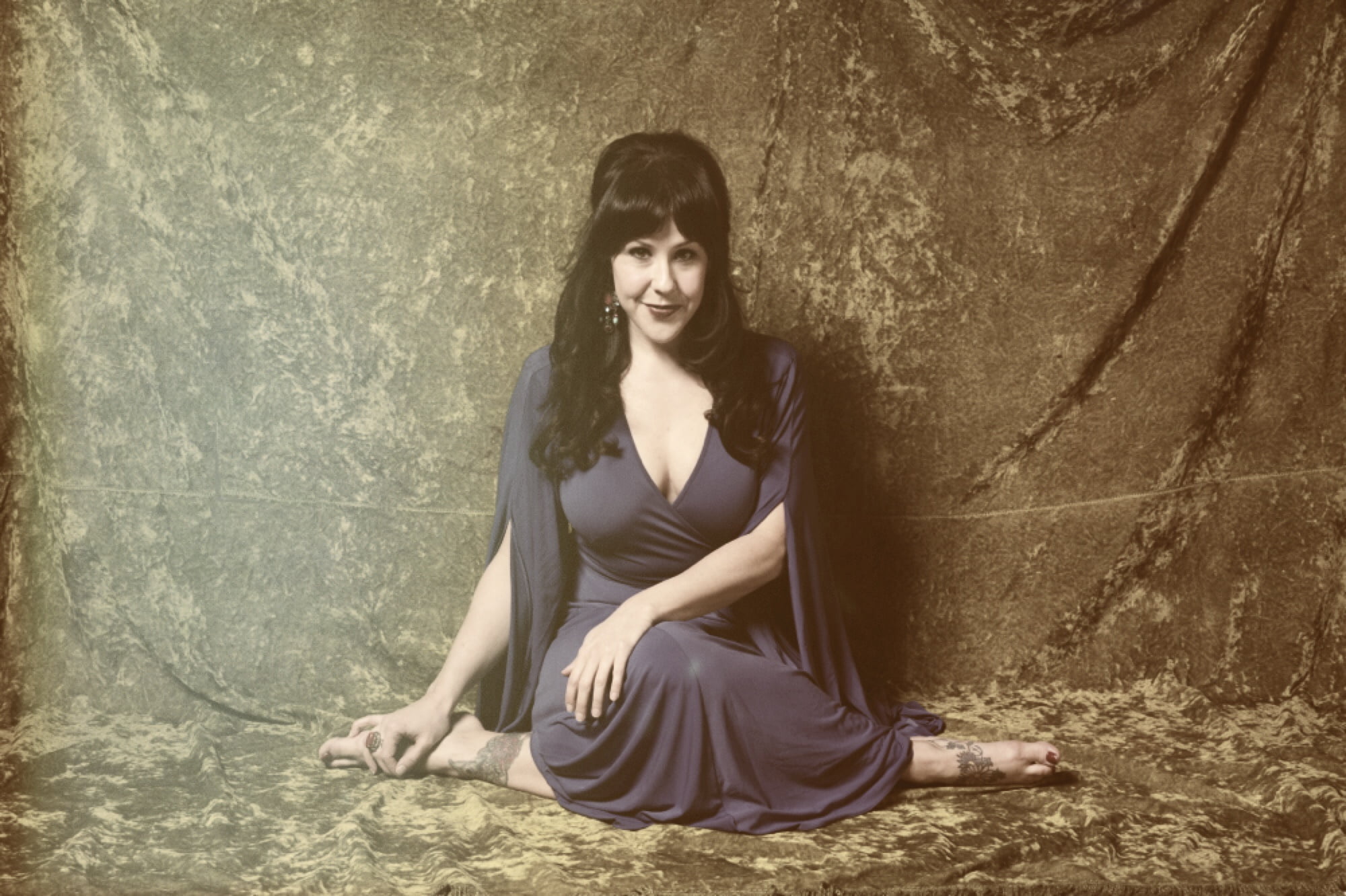
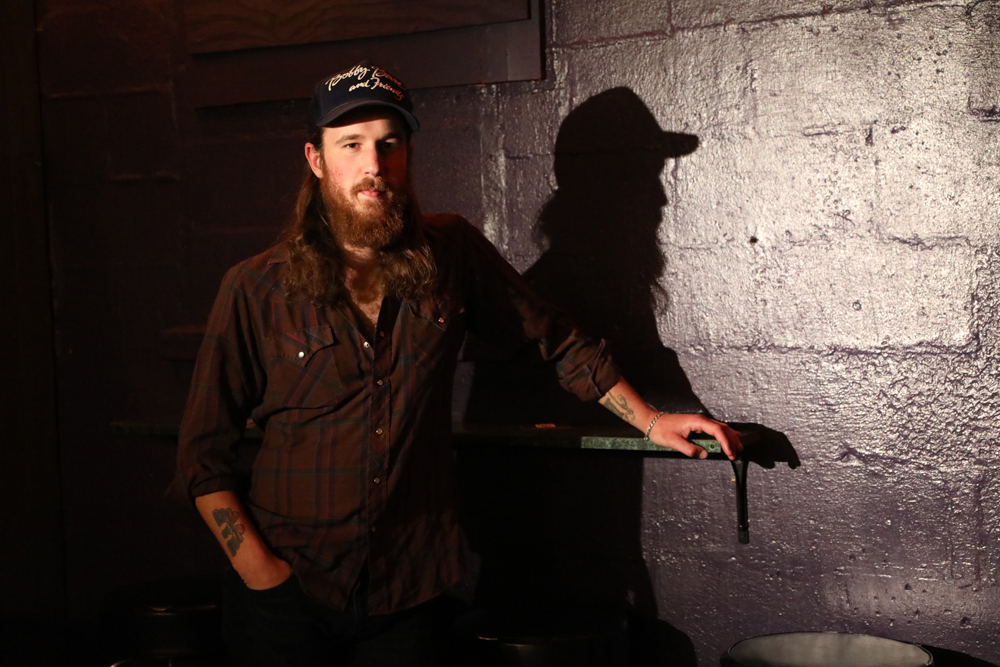
3×3: Alex Williams on Austin, English, and Traveling Back to the ’70s

Artist: Alex Williams
Hometown: Pendleton, IN
Latest Album: Better Than Myself
Personal Nicknames: Skinny

If you could safely have any animal in the world as a pet, which would you choose?

Buffalo

Do your socks always match?

Never

If you could have a superpower, what would you choose?

Time travel to live in the early/mid-1970s.


Fredericksburg! Thank yall very much. Till next time. 

A post shared by Alex Williams (@alexwilliams_official) on

Which describes you as a kid — tree climber, video gamer, or book reader?

Tree Climber

Who was the best teacher you ever had — and why?

Mrs. Douglas … English teacher who really got me into writing.

What’s your favorite city?

Austin, TX


Boots or sneakers?

Boots

Which brothers do you prefer — Avett, Wood, Stanley, Comatose, or Louvin?

Louvin

Head or heart?

Heart


Photo credit: Nicole Flammia

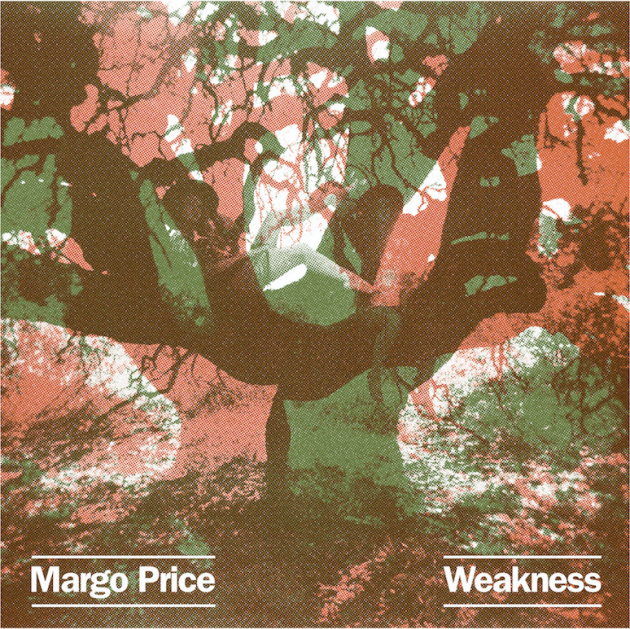
Margo Price, ‘Weakness’

In an environment where we watch live streams of musicians daily and get constant updates on everything from the songs coming out of their mouths to the food going in, it can be downright refreshing when an artist holds something back. There’s a confidence that comes from just plopping a creation down without the fanfare — hello, Arcade Fire — that can sometimes accompany an album release. Surprise albums are quite frequently the best ones, often simply because whoever is releasing them knows that they’re just good enough to live on their own, no mass pre-marketing required.

Today, Margo Price dropped Weakness, a long-awaited taste of new music without any hints or promotional campaigns: It’s four songs that give a sample of the direction that she’s been heading for a forthcoming sophomore LP. Terrific, succinct, and diverse, it’s both joyous and completely cutting — a signature that Price showcased all across her debut, Midwest Farmer’s Daughter. It begins with the title track, “Weakness,” a jangly modern honkytonk that would make Merle Haggard grin about the dichotomy that lives inside us all: “Sometimes I’m my only friend and my own worst enemy,” she sings. Who out there can’t relate to that feeling that no one can understand our deepest dreams, but our thoughts also breed our worst nightmares? For an artist who has shared the stage with Kris Kristofferson and played Saturday Night Live, there’s comfort that comes from hearing how Price wrestles with the same demons we all do — and, while the EP itself is a surprise, it’s not at all shocking that she took the opportunity to be, once again, as honest as possible. Despite her “Weakness,” it’s truth that takes the utmost strength.

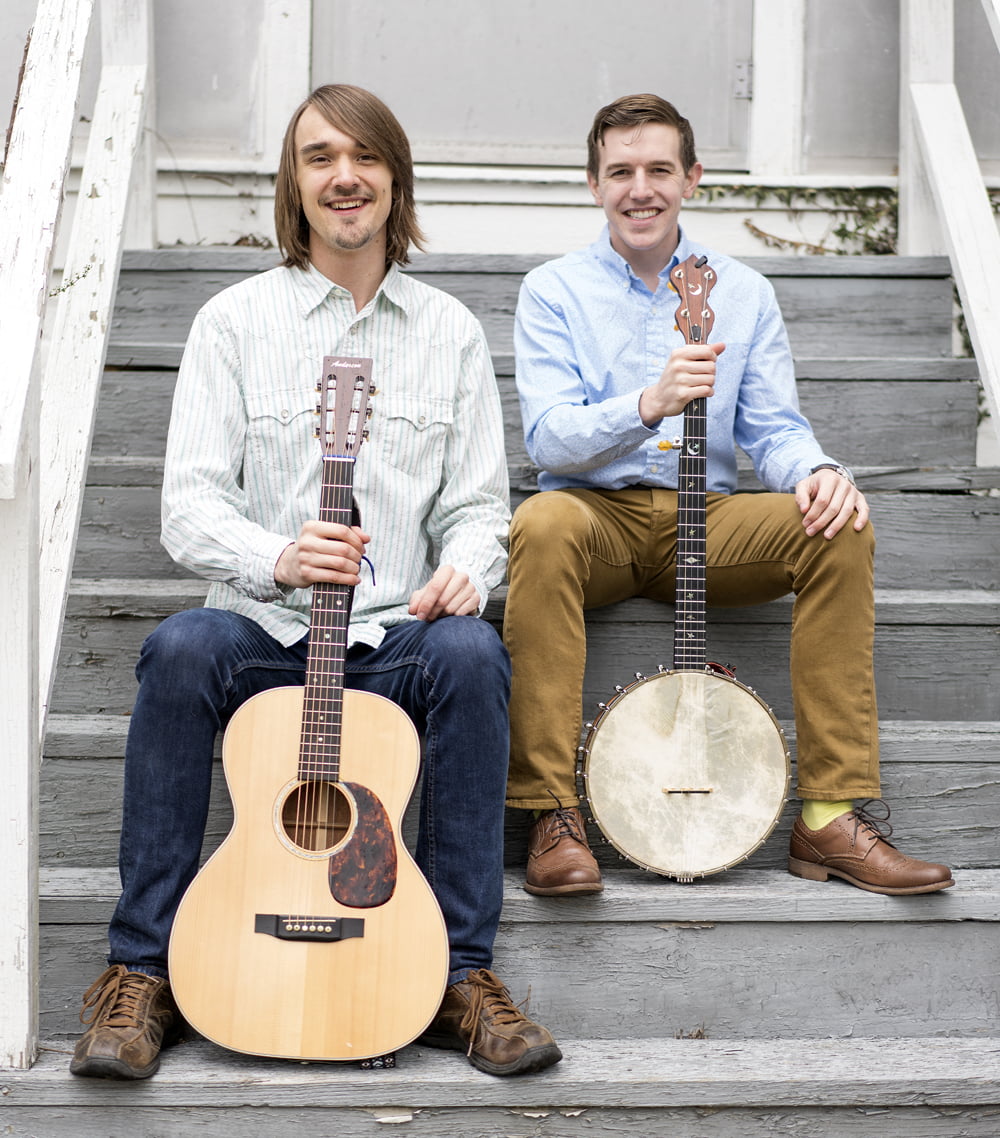
From Appalachia with Love: A Conversation with Sam Gleaves and Tyler Hughes

Sam Gleaves and Tyler Hughes are very proud to have grown up in southwestern Virginia, a swathe of Appalachia that birthed the Carter Family, the Stanley Brothers, Jim & Jesse McReynolds, and so many more icons of roots music. Released in June, their self-titled duo album is a collection of old-time, traditional country, and mountain music that, on the surface, feels like an album exhumed from a time capsule of southwest Virginian music from bygone eras. But, when you begin to unpack Sam and Tyler’s perspective — yes, they’re native Virginians steeped in their homeland’s musical heritage, but they’re also young and openly gay — you begin to fully appreciate the subtlety, the thoughtful care, and the love that they’ve put into curating and recording this set of tunes.

Speaking to Sam and Tyler was a welcome reminder that, in a time when phrases like, “middle America,” “silent majority,” and “forgotten middle class,” have become daily buzzwords and when the divisions between urban and rural, rich and poor, right and left are seemingly at their greatest, it’s more important than ever that we have these difficult conversations, that we listen to each other, and that we love one another.

So much of what you guys are doing on the record is simply putting a spotlight on perceptions of and presuppositions about people who come from central Appalachia in general. On “Stockyard Hill,” an original song and the first track on the album, you sing, “I’m proud of the way that I came up …” How did your families inspire this song through watching you grow up in the music and grow up to be who you are, living truly and openly?

Sam Gleaves: I wrote this song based on the words and experiences of my great aunt, Corrine Thompson — my grandmother’s sister. She’s an amazing woman, a real matriarch, a really loving, good presence in my life. I feel like she’s a great example of a really open-minded, intelligent, progressive person from southwest Virginia. She’s a great example of someone who defies a lot of stereotypes about people from central Appalachia. I’ve only ever known her to be loving and accepting of all people. She would think that a lot of the political discourse — this really hateful, divided situation that we have now — is so contrary to who she is as a person, the culture that she comes from, and the culture that I come from.

Tyler Hughes: As far as family influence, I grew up in an average, working/middle-class family. They are real people. I think that’s what influences my music and specifically the music that we put together on this album the most. I come from a strong union family: My grandpa was a union coal miner for over 30 years. My family is much like Sam’s in being very accepting and loving. There’s not really a judgmental side to them. They have a great appreciation for the place we come from, but they also have a wider view of the world beyond just what happens in southwest Virginia. I think that’s what influences me most and what makes me most proud to say that I am from southwest Virginia. Probably the number one thing I want to tell people when I meet them is that I’m from southwest Virginia, because people do have such misconceptions, but there are people out there that don’t fit into these exaggerated beliefs and misconceptions.

SG: I came out when I was in high school and I had a really close community of friends around me between my classmates in school, people that I played music with in the old-time music community, and also my family. When I came out to my family, they all knew other gay people. It wasn’t an unfamiliar or unexpected thing, when I came out. [Laughs] I think my parents gave me permission to be who I am. Not only as a gay man, but as an artist and a human being. A lot of people don’t get that permission from their parents. They never discouraged me from singing professionally, and they never told me my writing wasn’t important, but just the opposite. They wanted me to write and they wanted me to travel, to sing, to get to know musicians.

I definitely have had to think a lot about how I talk about these issues because, when I recorded my first album, Ain’t We Brothers, everyone that interviewed me asked me what it was like to be a gay man living in Kentucky and growing up in southwest Virginia. In rural places all across America, LGBTQ people need a lot of support. There are a lot of needs that aren’t met, in terms of communities not being able to come together and celebrate our identities, and also work for equal rights. There’s a lot of work to be done, but I’ve been very fortunate to have a good, welcoming experience being openly gay, in the old-time community, but also just living in Virginia and Kentucky.

Following on that then … I wonder if either of you considered that this project could potentially be that very permission for a listener? There are a lot of LGBTQ individuals in these spheres — Appalachia, the South, roots music — that aren’t out. Did you think this could be validation for other LGBTQ artists to be out and to lay claim to this music in a more assured way?

TH: I think about that quite often, even just for regular performance, even though we don’t stand on stage and advertise that we are gay musicians — that’s not exactly the shtick of our show. It’s nothing that we try to hide, but it’s not the main focus. I try to keep in mind that, to someone who might be struggling with their identity, it could be a very powerful moment for them to see someone they can relate to doing something that maybe society or someone around them is telling them they can’t do, or that something is only reserved for certain people. Any time that I’m playing music, whether it be working on this record or just being on stage, I think about that. Because I had a similar experience. When I first met other gay musicians, it really empowered me to think about how I could also live an open and full kind of life and still do the thing that I love the most.

As diversity becomes more of a hot-button topic in roots music communities, a lot of bystanders seem to assume that, because more LGBTQ individuals are becoming visible in bluegrass and old-time, we’re coming from the outside in or that we’re “infiltrators” and appropriators of the music. But here you both are, born and bred in this area of Virginia and Appalachia that’s such a hotbed for this music. How do you approach people with this perspective?

SG: I think it’s important that you mentioned that. We love the place that we’re from, but I think we have to acknowledge that there’s a lot of work to be done. I don’t know how else to say it. I see this especially in the bluegrass community, which we’re sort of on the fringes of. We also play old-time country music, which is just a blend of all of these things, so we end up in these environments where genre doesn’t keep us from playing in a wide, wide range of places. We want to represent our communities and the Appalachian region well, but we also have to acknowledge that there are people in these genres of music that do feel that it’s not right for gay people to be out in their performances — like just singing a love song about a same-sex relationship. I’ve never had any negative backlash from anyone at a concert or from any producer or from any person on stage that I’ve ever worked with. I’ve never had anyone say openly, “You shouldn’t sing that song, or you shouldn’t tell that about yourself.” I’ve only ever had like one or two people ever walk out of one of my shows that I knew was because of what I was singing.

I’ve had a lot of conversations about these topics in the past several years and that’s certainly not always the case. Why do you think that is?

TH: I don’t know … luck? [Laughs] No, every audience is different and every situation is different, but the number one thing that I think about, when I first walk out on stage or when I first get to a venue or when I go out to meet an audience after a show, is that, first and foremost, I’m a musician and I’m a performer. I think more about that than anything else. If somebody didn’t want to listen to my music anymore because they suddenly found out that I was gay, it wouldn’t hurt me any more or any less than if they found out that I didn’t like bananas so they didn’t want to listen to my music anymore. To me, it’s their qualm and, even if I feel that it’s a silly thing to let get in the way, they may not. I try to understand that — I would have to disagree with them — but I would at least try to understand their position. I think about the fact that I’m presenting myself more on the level of musician and a performer first. And also just being a person. Being gay is only a tiny sliver of my identity, when it comes to all of the things that make up who I am.

SG: You know, in country music, there’s a tradition and an expectation that performers be friendly, that they engage with audiences. I think that is a big reason why people don’t come up to us and say, in person, “I was upset that you all mentioned the women’s movement before you sang ‘Bread and Roses,” or “I was upset that you wished everyone a happy Pride month.” I think it’s because we really do try to be friendly and welcoming to people. Not that other people who experience discrimination and hatefulness are not being friendly — I’m not saying that. To some degree, what you put out can be what you receive back. We do try to be a part of that tradition of being good to people.

That makes me think of “When We Love” from the record. Tyler, what was it like to write this song and to sing this song while you are faced with this loud, mainstream, idea that a lot of people out there don’t love who you are as a person? How do you espouse this kind of love, when it’s not what everyone else is also putting out into the universe?

TH: I really don’t find it that difficult. That’s not to say that I’m not angry with the situation we find ourselves in or that I don’t get frustrated when there are setbacks. I don’t really know where I align myself religiously on most days, but I do think that, no matter who you’re worshipping or what kind of life mantra you’re following, we are all human and we’re all sharing in the human experience. Part of that, to me, is just loving one another. I still live in a small coal mining town, and I would say that at least a good 70 percent of my friends probably voted for the president. They may not agree with everything he says, but they feel that they are supporters of his. I know them as people and I know they’re not judging me — even if deep down in their hearts they may not really agree with LGBT rights or equality for all people. That’s not a big enough issue for me to let friendships or relationships go. Some of my best friends in the world align themselves with conservative values and conservative movements. It just doesn’t bother me, because I’d want them to look at me in the same way. At the end of the day, we still all need each other. These are differences I can put aside for most people, as long as they put them aside for me.


Photo credit: Susi Lawson

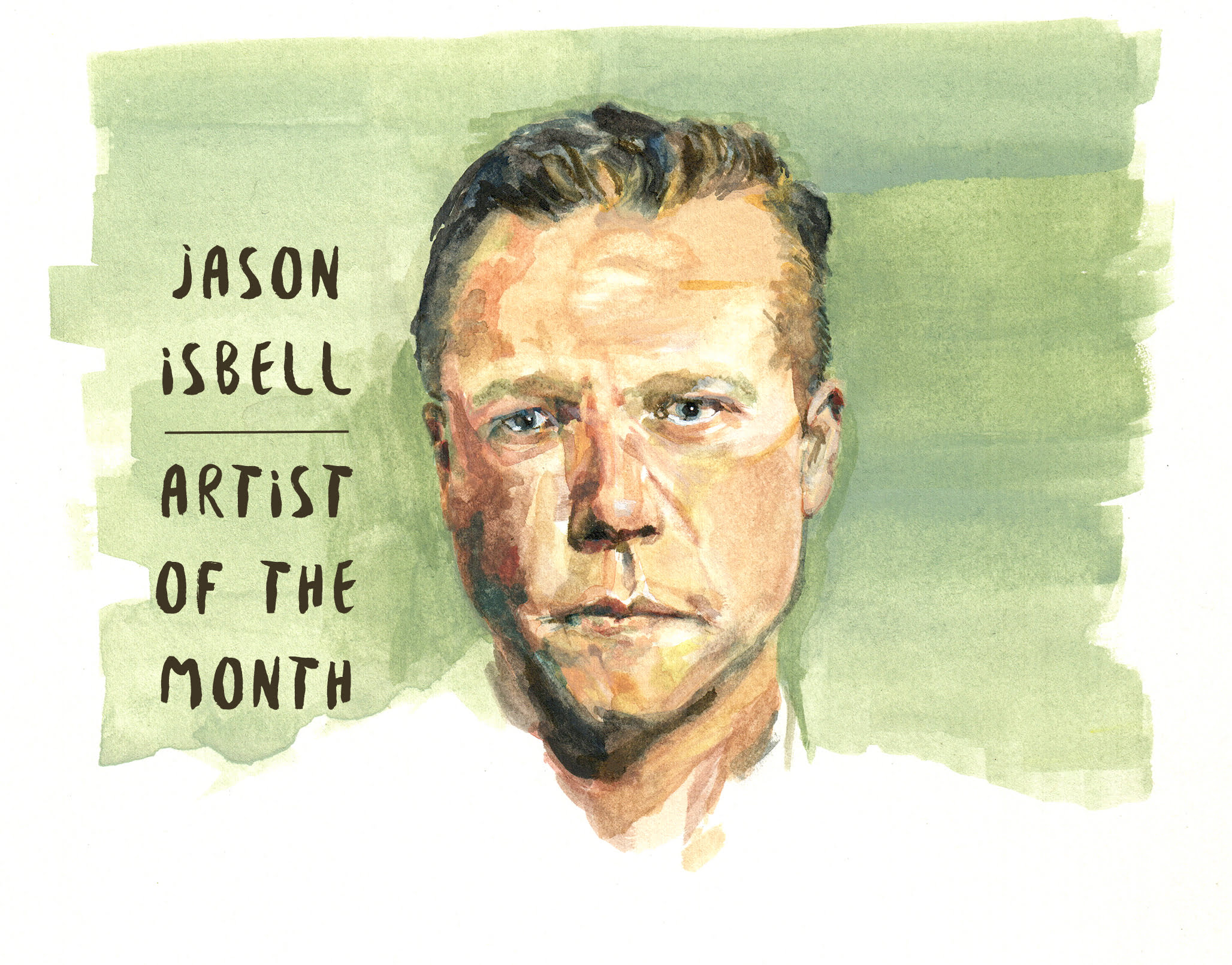
Jason Isbell: Finding the Common Ground

No one really knows who actually watches Today in Nashville, a newsmagazine show that comes on at 11 am and usually includes segments featuring local chefs making seasonal cocktails, barbeque tips, and probably a few cute and/or furry pets. It’s the kind of program that makes Nashville still feel like a small town, full of random snippets and Southern quirk — something nearly prehistoric in the post-Trump, Twitter-rage-filled America, where a quaint five minutes dedicated to, say, an ice cream truck, strikes as indulgent. Who tunes in to that sort of thing? Well, Jason Isbell, for one.

“I get a big kick out of this show,” says Isbell, calling from his home in the country right outside of Nashville, where he’s been watching: This morning, he learned about peanut-free day at the ballpark and squat techniques from Erin Oprea, Carrie Underwood’s trainer. “They just try to fill the space with local Nashville color every day, and it just cracks me up.”

It makes sense, really, that Isbell is drawn to Today in Nashville — there’s perhaps no better working student of local color, in all its permutations, than the Alabama native, who released his most recent album, The Nashville Sound, last month. It’s a collection of songs that don’t take the gifts of humanity at face value: love in the context of death, privilege amongst suffering, hope in a world on a collision course with an irreparable future. Much has been made about this being Isbell at his most “political,” but, really, it’s an LP that studies the causes and not the effects. Isbell is a listener, not a screamer, and as the Trump era has divided the country more than ever, he’s looking to understand why we got here, and not just point fingers. Isbell’s characters might be wanderers in small towns or coal miners looking for peace at the bottom of a glass, but he’s more interested in what he might have in common with them than what he doesn’t.

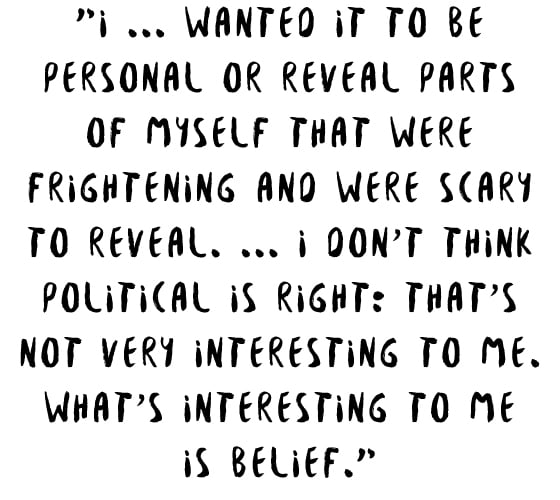
“This album, I wanted to stay away from a lot of the same type of reflection I did on Southeastern,” Isbell says about his breakthrough LP, which was followed by 2015’s Grammy-winning Something More Than Free. “But I also wanted it to be personal or reveal parts of myself that were frightening and were scary to reveal. And that came across in songs people might describe as having a political slant or agenda. I don’t think political is right: That’s not very interesting to me. What’s interesting to me is belief.”

“Belief,” after all, is a potent potion — especially since beliefs are often digested outside of a moral code. Isbell hasn’t been shy on social media about his stance on Mr. Trump’s policies (Spoiler: He is not in favor of them.), but The Nashville Sound is not the work of just an angry man; it’s the work of one who knows that human beings are complicated, confusing things who don’t always make the right choices, but not always for the reason you think. It’s a challenge to both criticize and empathize at the same time, and that’s what Isbell can do so artfully, by finding freedoms amongst flaws.

“Writing songs about race and gender, that’s a minefield,” says Isbell about tracks like “White Man’s World,” which take an honest stock of the privilege bestowed upon people simply born a certain skin color and sex. “One false move, and I am a laughing stock. One tiny little ignorance of privilege, and I am screwed. So you have to be very, very careful. And careful in a way to represent yourself correctly. You have to start out believing in the right things, and then you have to tell people that in the clearest way. That’s a great exercise, but it’s scary.”

On “White Man’s World,” Isbell doesn’t just try to offer apologies to people of color or to women — he takes it one step further. And that’s by admitting that there are layers that he doesn’t see, bias he might not even realize: “I’m a white man living in a white man’s world,” he sings. “Under our roof is a baby girl. I thought this world could be hers one day, but her mama knew better.”

That baby girl he sings about is Mercy, his daughter with wife and 400 Unit bandmate Amanda Shires. The album, produced by Dave Cobb, isn’t a “dad” record, but it is shaped by Mercy’s existence, and by the litmus test she adds to Isbell’s life. His marriage is also confronted, but, once again, in an unusual context: On “If We Were Vampires,” Isbell looks at love as something that can only exist within the sands of an hourglass. “It occurred to me that it’s a beautiful thing, death, if it happens when it’s supposed to and not a minute sooner,” Isbell says. “There is nothing else that would move us, if we didn’t know it was going to end. I wouldn’t be in a hurry to find somebody to spend my life with, to have a child, or work. I wouldn’t have any motivation to do anything — make art, get up off my ass, whatever. That’s really the point. People call it a sad song. Yeah, it’s a sad song, but sometimes people use the word sad to mean moving.”

There’s no doubt that Isbell’s a lyrical master — like the best songwriters, he blends prose and poetry in the most delicate balance — but part of what makes his work so captivating is that idea of what is “moving” over simply just sad, or any base emotion. The Nashville Sound gets this feeling across often by asking questions as much as it gives answers: Why does happiness breed so much discomfort? Is there any peace in knowing that death will come? What can we do, in this short life, to leave the world a better place than we found it? Rather than get purely political, Isbell aims to move minds, and to challenge beliefs that are held dear, through subtler storytelling and not just through enraged diatribes.

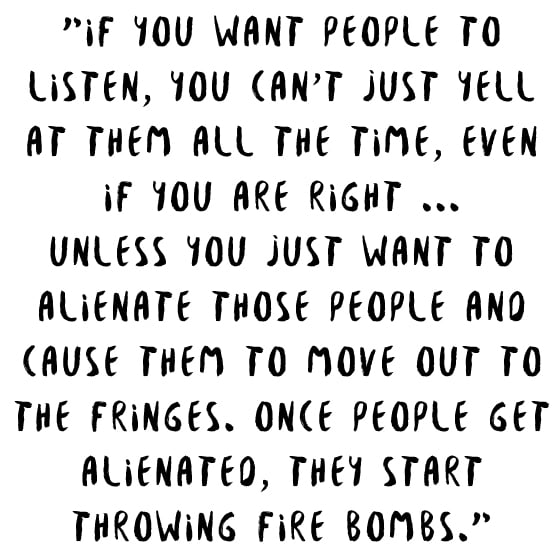
“If you want people to listen, you can’t just yell at them all the time, even if you are right,” he says. “If I am arguing with someone who is a hardcore conservative, I might think this person doesn’t realize how offensive his or her beliefs are, that they are racist or sexist, but you can’t just start screaming ‘You are a racist and you are sexist,’ unless you just want to alienate those people and cause them to move out to the fringes. Once people get alienated, they start throwing fire bombs.”

That sense of alienation is a lot of what built the Trump agenda, and, now, Isbell feels alienated, too. He’s confused by a country that could overlook “deplorable behavior” like Trump’s. “I thought I knew more about Americans that I did,” he says, talking about “White Man’s World.” “Having grown up in a small part of a Southern state and traveled for nearly 20 years, I thought I knew more than I do about American people.”

Of course, Isbell wants to know them as much as he can — it’s whyThe Nashville Sound is the number one country (and rock) record on the Billboard chart. You don’t appeal to both red and blue without reminding the audience that you’re not just preaching to them, you’re hearing them, too. And Isbell is listening to the Nashville sounds, as much as he is making them.


Lede illustration by Cat Ferraz.

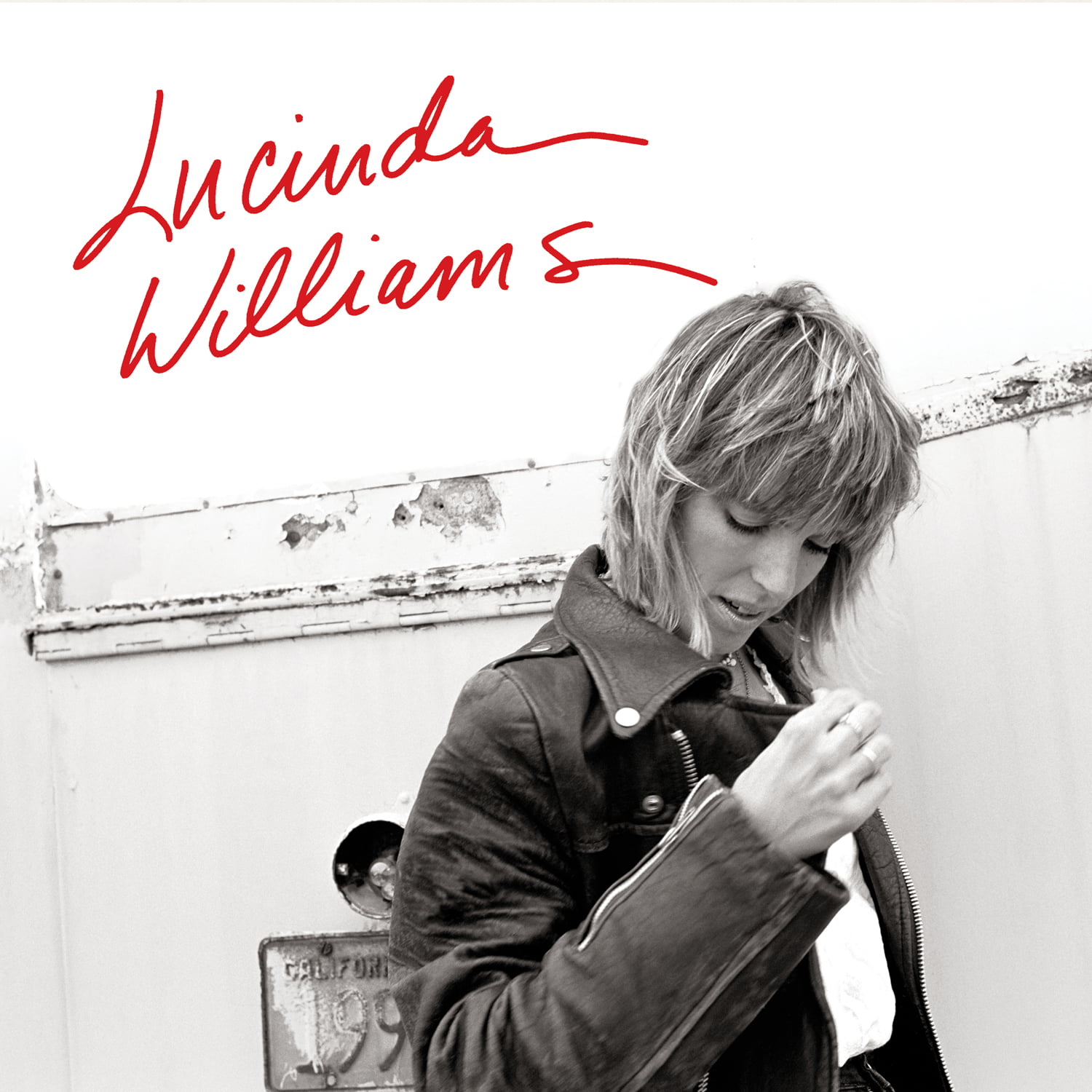
Canon Fodder: Lucinda Williams, ‘Lucinda Williams’

Because she spent so much time between albums — eight years between her second and third, six between her fourth and fifth — Lucinda Williams has been assigned a reputation as a perfectionist, as though country music must be approached with the sonic exactitude of prog-rock. But the near-decade interim separating 1980’s Happy Woman Blues and 1988’s Lucinda Williams doesn’t indicate a maniacal pursuit of a specific vision, although these songs are as close to perfect as just about any country album of that decade. Instead, the Louisiana-born, Los Angeles-based singer/songwriter spent those years redefining her sound away from acoustic blues to something closer to country-rock, moving out of Texas for Southern California, and trying like mad to sell herself to a record label. Recording Lucinda Williams took less than a month. Getting somebody to give a shit took significantly longer.

As Williams has said, in the 1980s, she was perceived as too country for rock radio and too rock for country radio. Lucinda Williams continually writes and rewrites its own rules, with each song presenting a slightly different definition of what “country” and “rock” might be. “I Just Wanted to See You So Bad” opens the album with a bouncy drum beat and a bright guitar lick, with Williams rushing through that title phrase, jumbling the words together as though mid-sprint. It’s full of hope and intense desire, both echoed on the story-song “The Night’s Too Long” and the list of demands “Passionate Kisses.” The blues still informs her songwriting, albeit in different forms: “Am I Too Blue” adheres to the country blues setting, but “Changed the Locks” is something new for Williams, a low-down urban blues tune surprisingly lascivious in its harmonica riff and humorous in its lust and self-delusion. “I changed the lock on my front door so you can’t see me anymore,” she testifies. “And you can’t come inside my house, and you can’t lie down on my couch.” Few singers — including Tom Petty, who covered the song in 1996 — could draw so much sexual promise out of the word “couch.”

Like Wilco’s Yankee Hotel Foxtrot, Lucinda Williams has become symbolic of the old art-versus-commerce debate, a manifestation of the grievous oversight of major labels and radio programmers, held up as evidence that the business of music, by default, ignores good music in favor of marketable product (as though there’s no overlap). Released in fall 1988, the album became a cause célèbre in Nashville, particularly among female musicians: Patty Loveless covered “The Night’s Too Long” in 1990, Mary Chapin Carpenter enjoyed her biggest hit with “Passionate Kisses” in 1991, and Emmylou Harris sang “Crescent City” on Cowgirl’s Prayer in 1993. You could almost reconstruct the tracklist with excellent covers.

Generally perceived as much more conservative than the audience or the artists it ostensibly serves, in the late 1980s, country radio was only just shifting away from the gauzy nostalgia of neo-traditionalists and the last sputterings of legacy artists and moving toward the hat acts who would define the genre into the next decade. In the fall of 1988, when Lucinda Williams finally made it to record store shelves, Dwight Yoakam, Rosanne Cash, Tanya Tucker, and the Oak Ridge Boys all enjoyed number one country hits. Noted country eccentric Lyle Lovett enjoyed two gold records in 1988 and 1989. Mainstream country music has become a thread-bare strawman for alt-country and roots audiences, but it wasn’t just the industry’s prudishness that kept Lucinda Williams off the charts and the playlists, despite that story’s persistence over the years.

It wasn’t something in the lyrics, either. There were rumors that radio executives objected to the prurience of the line, “His back’s all soaked with sweat,” sure to send housewives into a tizzy, but “The Night’s Too Long” was soon a single for Loveless. Williams’ voice was cited as a potentially alienating factor, one that blurred its syllables around the edges, slurring its speech after too many cold Coronas in some lost honkytonk. Williams replaces the recognizable twang with something more idiosyncratic, something more rooted in geography, something that was, at the time (and definitely still is), as foreign to country radio as ouds and zithers. Lovett’s deadpan drawl and Yoakam’s Bakersfield barb were similarly iconoclastic, but they were guys in an industry that preferred women more easily manageable and malleable (which is not to dismiss the self-possession of Williams’ female contemporaries, but more to speak to the considerable feat of their success).

Ultimately, Lucinda Williams just wasn’t designed for radio. It wasn’t meant for the mainstream. It has become exactly what it was supposed to be: a cult record, a foundational document, the wellspring of a new strain of music that would eventually be labeled alt-country. The Jayhawks might have debuted two years earlier, and Uncle Tupelo might have named the magazine, but this album — more than any other — revealed the limitations of Nashville and its neglect of very large swathes of country music listeners. Williams staked out all new territory. She had had a fairly itinerant life, born in Lake Charles, Louisiana, but raised elsewhere. She’d lived in Arkansas with her father, the poet Miller Williams, then Texas, where she made two albums of tentative country blues that even her most avid fans don’t spin much anymore. Most of her 1980s were spent in Los Angeles, which is perhaps the most significant aspect of Lucinda Williams.

That city was a mecca for country music as early as the Great Depression, when itinerant Southerners and Midwesterners moved west looking for work. Singing cowboys proliferated throughout the 1930s and 1940s before they were eventually replaced by crooners and rock stars. The term “country-rock” was coined in Southern California, thanks to Gram Parsons and the Beau Brummels (who recorded the overlooked Bradley’s Barn with Owen Bradley in 1968). Around the same time, Bakersfield became a powerful force in country music; roughly two hours north of Los Angeles, the town supported more than its fair share of roadhouses and honkytonks, where country music was played on electric guitars with strong backbeats and where Buck Owens and Merle Haggard cut their teeth.

Williams might have appreciated those artists, but at least on her self-titled album, her sound never borrowed much from those scenes. Instead, Lucinda Williams sounds bound to a city that, in 1988, would have still been viewed by those back east as a den of crime and ersatz glamour — cocaine and liberalism, yuppies and punks. The city’s punk scene had somehow made room for twang, with X spiking their punk with rockabilly (and sharing stages with Dwight Yoakam) and Lone Justice sneaking out of the underground with “Ways to Be Wicked.” As Williams told Spin in 2016, “There was an actual really cool thing going on out in L.A. in the mid-‘80s, [acts] like the Long Ryders, the Lonesome Strangers, the Blasters, Rosie Flores, and X. I was just opening for bands, and a lot of labels were noticing me and would come to my gigs, but nobody would sign me; they all passed on me, even the smaller labels like Rhino and Rounder.” It took an English label to finally sign her.

To call Rough Trade a punk label would be to minimize the breadth of its catalog, which included a remarkable mix of industrial (Cabaret Voltaire), punk (Stiff Little Fingers), post-punk (the Pop Group), pop (the Smiths), and things in between (Panther Burns). The label opened an American office in 1987, with a mission to sign more U.S. acts. Still, Williams was a departure for the label — a risky bet that paid off. Lucinda Williams peaked at 39 on the Billboard album charts and spawned two EPs in 1989. Her next album would be released by an imprint of Elektra Records, the one after that by Mercury.

The portrayal of Williams as somehow outside the industry — as an alternative to the mainstream — persists today, perpetuated by the woman herself. Williams has continually distanced herself from what she described to Billboard as the “straighter country music industry of Nashville.” In response to that interview, Chuck Klosterman calls her out in Sex, Drugs, & Cocoa Puffs and predicts “Lucinda Williams’ music won’t matter in 20 years. Oh, she’ll be remembered historically, because the brainiacs who write pop reference books will always include her name under W. She’ll be a nifty signpost for music geeks. But her songs will die like softcover books filled with post-modern poetry, endorsed by Robert Pinsky and empty to everyone else. Lucinda Williams does not matter.”

As with so many Klosterman statements, it’s provocative, entertaining, and demonstrably untrue. Fourteen years later, Lucinda Williams still matters — as a songwriter routinely covered by artists in a range of genres, as an industry cautionary tale, as an alt-country figurehead, as an artist boldly reinventing herself on her most recent albums. And Lucinda Williams matters perhaps even more — not because we’re still talking about it 30 years later, but because no one is really from Los Angeles. At its heart, this is an album about small-town transplants in big cities, about Southern ex-pats far from home, and few artists have taken up that musical sensibility as confidently or as comfortably as Williams, an LA native displaced in L.A.

“The Night’s Too Long” makes the theme literal, describing a young woman who sells her belongings to move to where things are actually happening. Williams gives her a name, a job, and a hometown in the song’s first line: “Sylvia was working as a waitress in Beaumont.” She moves away to “get what I want,” which might as well be the laundry list of demands on “Passionate Kisses.” Home and travel and loneliness and melancholy suffuse these songs. “Crescent City” recounts a trip back to Louisiana, where she — maybe Lucinda herself, or perhaps Sylvia — hangs out with her family, listens to zydeco, takes rides in open cars. “Let’s see how these blues’ll do in a town where the good times stay,” she sings, as Doug Atwell’s fiddle solo winds its way through those familiar backroads and across that “longest bridge” over Pontchartrain. It’s a poignant song for any listener who doesn’t live where they grew up. It’s the sound of rediscovering the joy and reassurance of home, a theme that ultimately transcends genre, industry, and even performer.

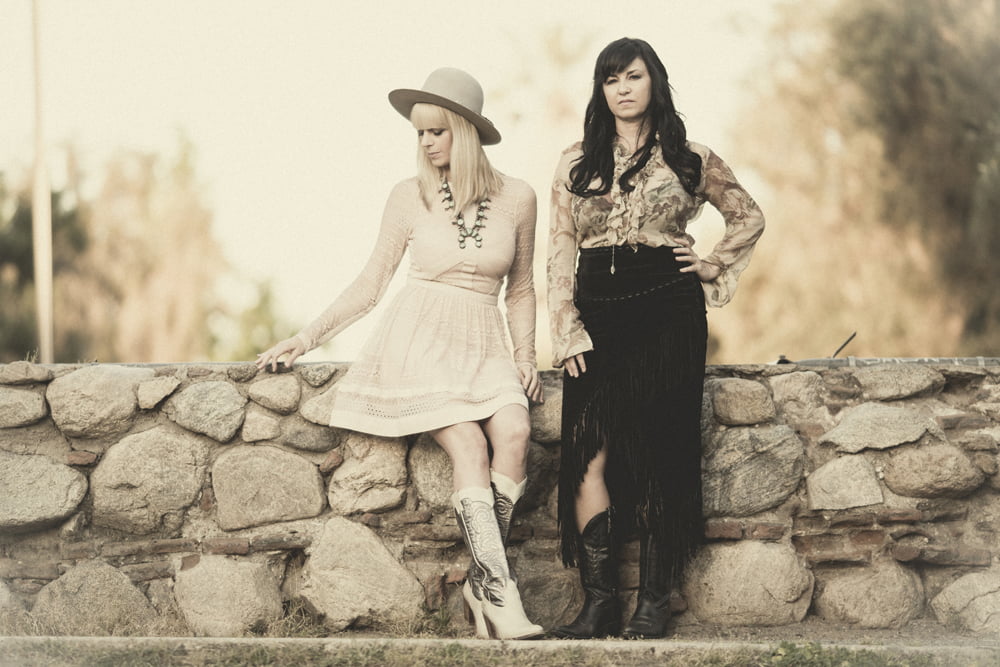
LISTEN: CALICO the band, ‘The Leaving Kind’

Artist: CALICO the band
Hometown: Los Angeles, CA
Song: “The Leaving Kind”
Album: Under Blue Skies
Release Date: September 15, 2017
Label: California Country Records
In Their Words: “‘The Leaving Kind’ is about loving a desperado who can’t sit still, a tale of a woman who can’t help caring for her wayward man and realizes she can’t tame him.” — Kirsten Proffit


Photo credit: Kelly Elaine Garthwaite


LISTEN: Kashena Sampson, ‘Greasy Spoon’

Artist: Kashena Sampson
Hometown: Las Vegas, NV
Song: “Greasy Spoon”
Album: Wild Heart
Release Date: August 18, 2017

In Their Words: “I bartended my ass off to make this record. I payed for everything with cash! I moved to Nashville without ever being here, didn’t know anyone. I just had a feeling it was where I needed to be and I went with it. I had to make this record. It’s been four years in the making. Some friends mentioned the Bomb Shelter to me, so I met up with Andrija [Tokic] and checked it out. The studio is just awesome. He put me together with Jon Estes, who worked with me on the album, producing and mixing. It was a perfect fit. Like magic! He understood what I was going for right from the start. We tracked all the songs in two days to tape with Jon Radford on drums, Jeremy Fetzer on guitar, and Jon Estes on bass, and a bunch of other instruments. The whole record was recorded in six days total. It was great. I wish I could record at that studio everyday.” — Kashena Sampson


Photo credit: Jonathan Rogers

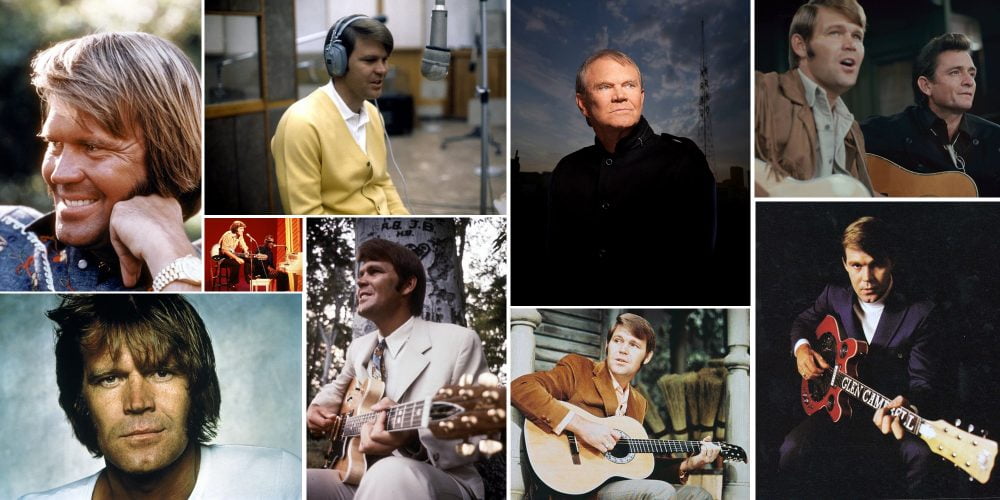
Glen Campbell’s Final Coda: An Interview with Carl Jackson

In the wake of his Alzheimer’s diagnosis in 2011, country legend Glen Campbell embarked on a Goodbye Tour, released a documentary film titled I’ll Be Me, and — in true Rhinestone Cowboy fashion — went back into the studio. The result is his final album, Adiós, out earlier this month. Produced by long-time friend and banjo player, Carl Jackson, alongside Campbell’s wife and children, Adiós is a collection of Campbell’s favorite songs and the career touchstones that he hadn’t gotten around to recording in the past. Highlights abound at every sonic turn, from Campbell’s children harmonizing on “Postcard from Paris” and his rendition of Bob Dylan’s “Don’t Think Twice, It’s All Right” to his duet with Willie Nelson on Nelson’s classic “Funny How Time Slips Away,” Vince Gill’s feature on the Roger Miller tune “Am I All Alone (Or Is It Only Me),” and Campbell and Jackson’s interplay on “Everybody’s Talkin’,” which the two performed together on the Sonny & Cher Show in 1973. The constant through line is Campbell’s signature croon.

While his memory and ability to play guitar were already deteriorating by the time these sessions began, he channeled the songs with the help of Jackson, who printed out the lyrics in large print and walked him through the process line by line. Wrought with heart and grit, Adiós is a celebration that solidifies Campbell’s legacy and serves as a testament to the essence of the Rhinestone Cowboy: his voice. “[Glen’s] in Nashville now and he’s very well taken care of at a wonderful facility and he can’t communicate, but you go see him and he still sings,” Jackson says. “He still sings. It was his life. You can’t understand what he’s saying, the lyrics, you know, because he can’t communicate, but the tone is there. It’s an amazing thing. He’ll never stop singing, I don’t believe.”

You first met Glen and joined the band when you were 18 years old. Those are formative years, your late teens and 20s. Would you say that you came into your own while on tour with Glen? What did you learn from him?

It certainly continued, the growing up process. I had been with Jim and Jesse since I was 14, so I had a lot of experience from being out on the road already. But going with Glen, gosh, it was one of the greatest things that could have ever happened to me. He was such a great entertainer, singer, guitarist — just the best. I mean, I always tell people he’s absolutely the best singer I’ve ever heard in my life, just amazing talent, and on top of that, such a good person, such a good man. Glen and I became family almost instantly. I mean, it was just a mutual respect and love for each other that carried on all through all of these years. I traveled the road with Glen for 12 years, from 1972 to 1984, but that friendship and love has continued on all these years. And to get to do this final project with him just means more to me than I know how to say, really.

But yes, it was a very formative time and a great time. We were all over the world together, playing music literally all over the world, and I tell people — and this is true also — Glen featured me on every show we ever did. I mean he would bring me out front: He actually would leave the stage and introduce me, and he would always say, “Here’s the world’s greatest banjo player.” Whether that was true or not, I did my best to live up to it at the time. He was so good to me and he put me in front of millions of people, and it just meant the world to me, and I’ll always treasure those times. I could go on and on, obviously, about those times, so I’m gonna leave it at that.

Let’s talk about “Arkansas Farmboy.” That’s one that you wrote back on one of those tours, right, that you were on with Glen?

Well, it was during that time. I wrote it some time in the mid- to late-70s while I was with Glen. I mean, we went overseas many, many, many times, but I believe it was on a flight to Australia. I know we were over the Pacific Ocean. I know that. Glen told me a story about his grandaddy teaching him how to play “In the Pines” on a $5 Sears and Roebuck guitar. And I just thought that was the coolest thing that he remembered that precisely and I just got to thinking about how that little $5 guitar led to an absolute fortune and worldwide fame and stardom — just from one little $5 guitar. And it gave me the idea for the song and the title, “Arkansas Farmboy,” that just was kind of natural. That just kind of fell out because that’s what Glen was and is, to this day. I mean, Glen never left his country roots and his down-home upbringing. He never left that. He was Glen Campbell, country boy. I mean, you met him and he was the same, always. He treated everybody the same whether it was somebody waiting on us at a restaurant or if it was the Queen of England. It didn’t matter. He treated everybody with the same respect and love. He’s just the greatest.

What was the timeline for recording this record?

It was done over a period of time. It was after the Goodbye Tour. It was pretty well after when some people thought it was pretty impossible to get anything from Glen. But he wanted to do it so much and it was, again, that love and family thing made this possible. There was so much trust and love between me and Glen. Honestly, and I don’t say it — I don’t want it to come out in any boastful manner at all ’cause that’s not what I’m saying. There was just so much love and respect in the room, and Glen trusted me so much that I believe I was able to get things out of him that probably couldn’t have been done by anybody else and it was with joy. I mean, we laughed so much in the studio and had so much fun that it was just, I don’t know, I treasure it. And I know Glen did, too, at the time and as long as he possibly could remember it. I know he would be proud right now. I know he would. And that means more to me than anything. I wanted Glen to go out absolutely on a mountain — you know, on a high.

You just hit on this a little bit, but what was the atmosphere in the studio like during recording? Was it joyful or somber, or both?

There was no somberness, and I say that honestly. I mean, he was smiling and laughing and making jokes about himself like he always did and, if he forgot something, he just laughed about it and we did it again. He had to read the lyrics, sometimes one line at a time, but it didn’t change that perfect pitch that he retained through everything and that perfect sense of timing and that beautiful tone of his voice. The thing that went first was him being able to remember lyrics. He couldn’t do that. He couldn’t sing a song straight through and remember everything. He couldn’t play guitar anymore straight through a song. But I was able to get it and because I knew him so well, I knew his phrasing. And also, the fact that he was familiar — as familiar as he could be — with the songs that we did. These were songs that he loved his whole life, so they were ingrained in his mind still, as much as anything could possibly be, if that makes any sense. So we purposefully sat together and found songs that he truly wanted to record that he had never gotten to record before.

I love the snippet of Roger [Miller] before “Am I All Alone.” Where did that recording come from? Is it from a cassette that Glen has?

Yes, that was a cassette that Kim, Glen’s wife, she had kept that all these years. Roger played that for Glen the first time he heard it at Roger’s house in Santa Fe, New Mexico, over 30 years ago. Kim had kept the tape and she gave it to me, and we thought it would be a really cool idea just to let Roger introduce the song that way, because that’s literally the first time Glen had ever heard the song and he remembered it all these years and always loved it, but just never got around to cutting it before. So it was just one of those things, “Hey, we have to do this song!” You know, he’d pick up his guitar all through the years and sing a little bit of that song. And there were others like that — “A Thing Called Love” and “She Thinks I Still Care” and “Don’t Think Twice.” He rarely picked up a guitar without playing some of those licks off of “Don’t Think Twice.”

That’s my favorite Dylan song. I like what y’all did with the beginning.

It lent from Jerry Reed’s version. Jerry showed Glen that lick on the guitar that he put on his version of it, and then Glen showed it to me and passed it on. Glen showed it to [his daughter] Ashley. It’s carried on down through the years, so we kind of leaned on Jerry’s version there a little bit because that’s the version that Glen loved so much, so I kind of did the guitar solo stuff similar to Jerry’s version.

What was it like having Willie [Nelson] in the studio?

[Laughs] Well, I’ve been blessed to work with Willie several times over the years but, as always, it was fun. It’s fun to be together with him. I mean, he keeps things light and joyful, jokingly. Willie’s one of those troopers — one of those guys that that’s all he’s ever done and he loves it so much. I mean, he really wanted to be a part of it. When he heard that I had cut the song and he heard the version that I had cut, he was happy to be a part of it, and I just thought it would be a really cool idea because Glen, again, sang that song for so many years and he never cut it. We would sing it on stage. I mean, we would do it on stage a lot, when I was with him, and he would just occasionally bring it out, just, “Hey, let’s do ‘Funny How Time Slips Away,'” and he’d just start singing it. So it was, again, kind of a natural to do. And I had played some of the early stuff I had when I cut the tracks, I played them for Buddy Cannon, who’s a friend of mine and Willie’s producer, and he said, “Man, I’ve gotta play this for Willie. He’s gonna love it!” And I said, “Well, do you reckon that Willie would wanna play on it and sing on it a little bit?” He said, “Aw, man, I’ll bet he would.” And sure enough, when Willie heard it, he loved it and so it was a joy. You asked me how it was: It was a joy.

You also had Vince Gill as a guest on the record. Did he come into the studio to record or was that done at a later time?

Well, there’s so much history there, too, with me and Vince together. That was a natural thing, too, and I’ll tell you how that happened: Vince and I have worked together so much over the years. We did the Angel Band record together with Emmylou [Harris]. Gosh, I sang on “Oh, Carolina” — a couple things on Vince’s very first EP, when he got his first deal on RCA. I mean, we go back a long way. We’ve been friends a long time and, pretty much every project I do, I always ask Vince if he wants to be a part of it. And so, I was over at his house and we actually were working on the Orthophonic Joy project that I produced — the tribute to The Bristol Sessions. We were working on that, and I told him that I was gonna do this stuff on Glen, and we got to talking and it came up that he had never, as many people as Vince had got to sing with, he had never gotten the opportunity to sing with Glen. I said, “Well, buddy, I’m gonna give you the opportunity to sing with Glen.” So I made sure that I saved a part for Vince to do, and he told me it was just one of the thrills of his life to get to sing with Glen Campbell. So I wanted to make that happen not only for Glen, but also for Vince. And plus, nobody can sing it better than Vince anyway.

It really did fulfill a dream for Vince, too, and I certainly wanted it to happen. And he’s a dear friend, so that one was easy. I took it over to Vince’s house. We didn’t do it at the same time, obviously. We overdubbed it at Vince’s house, but I am happy it happened and, once again, I know that one of these days, when Glen is listening from up above, he’ll be very proud of that, very happy that we did that.

When it came to incorporating Glen’s children, how did you land on “Postcard from Paris” and that particular line for them?

First of all, it’s another great Jimmy Webb song that Glen absolutely loved and I absolutely loved. I was familiar with the song from Jimmy’s record. He did a record produced by Linda Ronstadt years ago called Suspending Disbelief and it had that song on it and it had “Just Like Always” on it and it had “It Won’t Bring Her Back” on it. Several of those songs, I was very familiar with and, of course, Glen loved the songs, too, so again, they were natural things to do. And “Postcard from Paris” was a very special song.

When we were cutting it, I didn’t think so much about the line, “Wish you were here,” as it kind of related to Glen’s condition. I mean, we didn’t cut it because of that. We just cut it because it was a great song. But then, after I cut it, I got to thinking, “Well, gosh, this would be a great one to have Ashley and Cal and Shannon sing harmony on.” And then, specifically, that line — it just makes it so emotional to hear because we do all still wish he was here. But that didn’t even come into anybody’s mind, when we picked the song, and neither did “Adiós.”

“Adiós” is just a great Jimmy Webb song that Glen and I love. He had never cut it before, and we decided to cut it, but we didn’t even think about it being the last song on the last album. That wasn’t a thought. Things like that just kind of fell into place and it seemed a natural thing to do then. When Universal picked up the album, I mean, I have to honestly tell you, I thought the album would be called Arkansas Farmboy. But when Universal picked the album up and decided they wanted to put it out and promote it, they immediately went to Adiós. And I’m like, “Well, okay, I understand that. I understand what you’re saying.” We didn’t even think that way, at first. I know I jumped from “Postcard from Paris” to “Adiós,” but it was a similar situation where those lines in “Postcard from Paris,” we didn’t do the song on purpose to pull at people’s hearts but, after the fact, it certainly pulled at people’s hearts.

Listening back, taking into consideration the circumstances, there’s a lot of dual meaning on this record. Even “Ain’t It Funny How Time Slips Away.”

I’m just like you, honey, when I listen to it now, I’m like, “Oh my gosh, listen to what that’s saying!” “Everybody’s Talkin'” is the same thing. We didn’t think about that. That was just a song that Glen loved and we were going through songs. I’m not ashamed of it at all, but I just feel like God’s hand is on the project and on Glen. The whole thing just came together, I truly believe, in the way that it was supposed to. Glen Campbell is just the best, and I mean that with all my heart. He’s the best singer that I’ve ever heard and I mean that technically, as well as just beautiful to my ear. His voice always was — and I realize people can have different things that they like and I’m sure there are people that would argue, “Oh, he’s the best” — but I’m talking not just how pleasing his voice was, but how great he was technically. I tell people to go find me a bad note on YouTube and I’ll pay ya for it. I mean, the guy, he was amazing. We cut live shows over in England, where we did a live TV show with a full orchestra and us as the main band — we did ’em live in front of a live audience to tape and I listen to ’em now and they literally sound like they’ve been tuned. The guy was amazing as a singer. Just perfection. And I know I could go on and on, but I could never say enough about him and about just how great he was. And I wanted people to still see that and still realize that, and I hope this album does that.

It truly is a gift.

To this point, every review I’ve seen and every interview I’ve done, people are so kind about this record and so, the word “gift” has been used so many times and that means the world to me because that’s exactly what we intended and what we wanted to give the world. We wanted to give ’em Glen Campbell — here he is just like always, once again. People tell me that, “Oh, he’s singing so great,” and I’m like, “Yeah, just like always!”
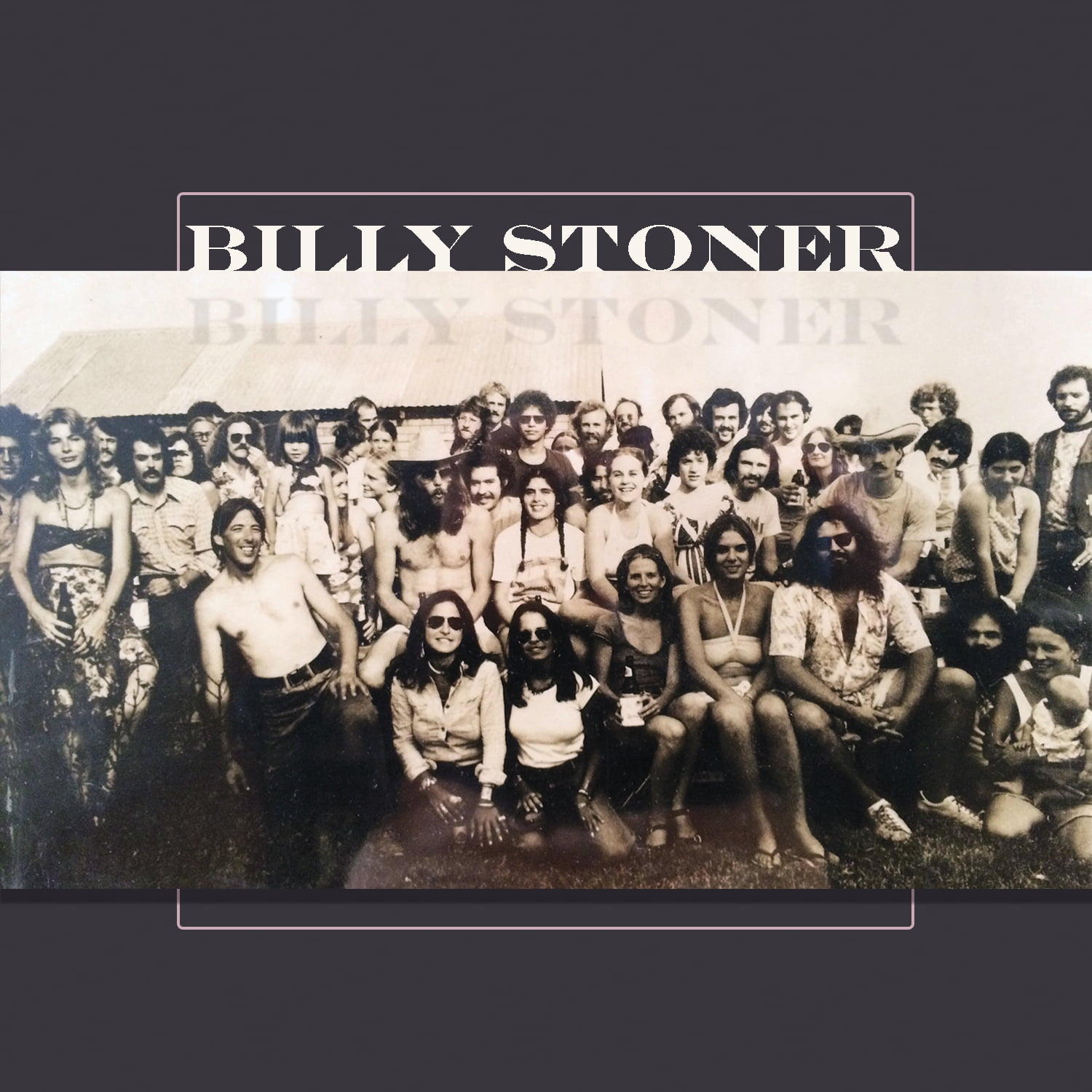
STREAM: Billy Stoner, ‘Billy Stoner’

Artist: Billy Stoner
Hometown: Lookout Mountain, TN
Album: Billy Stoner
Release Date: June 16, 2017
Label: Team Love Records

In Their Words: “I was raised as a redneck in Tennessee. But I turned hippie on my own! Being a “hippie redneck” was a good thing to be in the early Austin outlaw world, and I was described as the poster child for the movement. The album includes Texas two-step dancing music, stories about loveless relationships, being in intensive care in Houston, Austin folk heroes, and plenty of truth.” — Billy Stoner

Glen Campbell, ‘Adiós’

There are two milestones in the career of a songwriter that stand out from the rest: the first album and the last. Everything from birth on builds into that debut opus — how you have lived, how you breathe, how you have figured out your unique place in the universe thus far. But, at the end, things look different. Maybe you’re wiser, but you’re worn, too. If you’re lucky enough to make it to the point where you can declare decidedly, before letting the inevitable have its way, that a collection of songs will be your final message, it’s a moment to not only make your last mark but, also, to simply say “goodbye.” It’s what Glen Campbell, the Rhinestone Cowboy, is doing on his last LP, Adiós.

“I’ll miss the blood red sunset, but I’ll miss you the most,” sings country legend Campbell on the title track, as he succumbs to the debilitating effects of a battle with Alzheimer’s disease. His voice sounds aged but still holds gorgeous, quivering notes; and, somehow, it’s a goodbye that doesn’t wallow in the morose. Maybe Campbell knows just how special it is to have these final moments, these final albums, to look back and say goodbye. But here’s the thing: Music is never really a goodbye. Though it’s his last LP, it could very well be someone’s first — the first notes of a Campbell record they ever hear, or the first album they buy. “Adiós” could even be the song that someone listens to as they bid farewell to a first love, a first school, a first kiss, before the rest of their life unfolds. It might be Campbell’s “Adiós,” but perhaps the eternal nature of music makes bidding goodbye its own special breed of even sweeter sorrow.