From Pop Stars to Pitchforks: A Conversation with Megan Mullally

Some people cover songs and some people downright inhabit them. Megan Mullally and Stephanie Hunt (aka the duo Nancy And Beth) take songs and peel off their clothes, give them a little sweet loving, read them some Proust, show them a few Mel Brooks’ films, and send them back out the door with a smile on their face, a pat on the rear, and a whole new way of seeing the world. Just queue up their version of Gucci Mane’s “I Don’t Love Her” from their new self-titled LP to see why: It takes some wildly dirty, arguably misogynistic lyrics and turns them all into a mischievous, vaudevillian coo that owns the words instead of falling victim to them. It’s also pretty darn funny, but don’t be mistaken: These two women can also sing the heck out of some George Jones.

Mullally and Hunt, both known primarily as actresses — Mullally, most famously on Will & Grace and Hunt, on Californication — have strong performing backgrounds, and though they’re 30 years apart in age, they’re kindred musical spirits. So they formed Nancy And Beth (and no, their middle names are neither Nancy nor Beth; they just thought the combo sounded funny), started performing live together complete with choreography, and created a hit list of songs to cover that range from country classics to blues standards to, yes, Gucci Mane.

Growing up in Oklahoma, Mullally actually got her start as a singer, training herself on her parent’s collection of records, and had her first big break in a Broadway musical back in 1995, before Will & Grace. Nancy And Beth is a serious project — it’s not a novelty act — but it certainly embraces a sense of humor and an era when artists viewed a concert as a place for well-rounded entertainment and that musical theater spirit. 

Your music is both carefully crafted and entertaining. Do you think that’s an approach that has been lost these days? Music is often either very serious and well done or silly and void of meaning — not both.

When I was growing up, there was much more of a mix of music, with someone like Roger Miller being on the more critically legitimate end of the spectrum, but then there were weird “itsy-bitsy-teeny-weeny” kind of songs, too. There was this crazy novelty aspect that you don’t hear anymore. Now everything is so dire, and I’ve gone through that phase, too, and that was fun and, who knows, maybe my next record will be like Beyoncé’s Lemonade where I just fucking rake [husband and comedian] Nick [Offerman] over the coals. Well, I guess he has to do something wrong first, which hasn’t happened yet. But there’s always tomorrow. [Laughs]

[Laughs] You’ve always done both acting and singing, but you’re known more as an actress. Why do people make such a big deal out of actors starting singing careers? Doesn’t playing music on stage have an element of theatrics and character play, anyway?

Well, there is a double standard. It’s totally allowed, if you start as a musician. But if people know you first as an actor, then no way. I’m perceived as an actress and suddenly it seems I have a band and, “No, that’s forbidden!” But if you’re a pop star and you decide you want to take a swing at acting it’s like, “Yes, please. Come and collect your Oscar!” Who knows? I stopped caring about it. But I did have a horrible interview with someone nameless for a smaller town paper and the guy didn’t get anything about [the band] — he was like, “It’s called Nancy And Beth. Well, as far as I can discern, none of you are named Nancy or Beth!” I was like, “Um, yeah, you’re right …” [Laughs]

Well, not everyone knows your back-story … or knows how to use Google, apparently. What was the music that you first fell in love with as a kid?

I grew up in Oklahoma and there was only one radio game in town, and they played everything: They had to be all things to all people. I think that influenced my taste for different genres. I know bands that have a distinct sound, but that’s why I like our live show: You go hear a band and, after about five songs, you’re like, “I’m bored.” We’re all over the place, and that’s why shows are so fun and everyone has such a great time. But I loved the Monkees — Davey Jones was my first love, not going to lie. My parents had a lot of Barbra Streisand and Judy Garland because, apparently, my parents were two gay men? But when they would go out, I would put those records on and pick a song and keep playing them over and over until I knew every song on the record, and that’s how I learned to sing. I always loved anything kind of bluesy, Barbra Streisand and Judy Garland fall into that category, I guess, but I had a feel for that. Early Bonnie Raitt and Janis Joplin, they had a bit of a bluesy flavor. I loved early Willie Nelson — I still love him. There’s something a little bluesy about a lot of country music from that era.

Do you enjoy modern country music at all?

I don’t know any of it, because it all sounds like power pop to me. “I got my pickup, I got my dog!” I mean, I love Patty Griffin, does she count?

Probably not! But that’s a lot of diverse influences. How did Nancy And Beth’s sound evolve early on?

[Stephanie and I] are like two little kids playing. I know that neither of us is particularly analytical. But we never had a conversation because we never had to, since it flows really easily and we just do whatever we want. We didn’t have a big “Come to Jesus.” I will say, the most kind of poignant interesting little detail is that we used to open all of our shows — we took a three-year break because of my schedule, but before that when we were performing at Largo [in Los Angeles] — we used to open every live show off-stage with just our tambourine and do that White Stripes song “Little Room.” It kind of sums up everything that is good about the band. And it reminds me of my childhood because I spent a lot of time literally in my room, making up all these elaborate scenarios that I would perfect and show to my mother who would unfailingly tell me I was a genius. I feel like that “Little Room” song is a great description of whatever it is that we are.

Your version of “I Don’t Love Her” is a great summary of what Nancy And Beth does well, too: It’s pretty hilarious, but also smart.

[When] that song popped up and I was like, “What a beautiful song title! So interesting.” Then I heard it, and I was like, “What? No!” And we were just dying. We were sitting on my bed with the lyrics printed out and, oh my God, we were dying. Then we added it to the repertoire and eventually the recording.

It’s a nice reclaiming of some unsavory words used to describe women … by our president, of all people.

Yeah, that is good. And I never change the gender. I want to be as true to the song as I can be and the gender doesn’t matter. That’s more interesting.

Speaking of our president, you’ve met him before: You guys sang the theme song to Green Acres together at the Emmys in 2006. Trump wore overalls while you were dressed quite glam as Karen from Will & Grace, which was perfect. You were competing for something called “Emmy Idol,” and best version of a classic television theme, and we all know how much Trump loves a good competition.

It was a stupid thing to begin with and normally something I would dismiss out of hand, and I was getting ready to do that when they said, “But we want you to do the theme to Green Acres with Donald Trump,” and I was as like, “Oh, wait!” At the time, it was the height of his popularity on The Apprentice, and everyone thought he was hilarious, like someone playing a character — pompous and extremely arrogant — and I don’t think anyone thought he was actually like that. Now we know different. At the time, it seemed like a great idea. It was called “Emmy Idol” and people were calling in and voting, and there was going to be a winner. So we rehearsed, and it was fine. I talked to him a little and was like, “This guy is funny,” since I was giving him a lot of shit and he seemed to roll with the punches. And I was like, “Well, that’s good, he’s playing a character.”

And now we know otherwise …

Well, then the next day the phone rang, and he called and he said, “Listen, we really needed to win that thing and we did, and you were a part of that. And not only did we win, but I heard we crushed it. It’s a landslide.” I thought, “This guy is out of his mind. Who cares?” I just thought it was funny to make Donald Trump wear a pitchfork and overalls. I thought that was funny, and that was the only reason I did it. He really wanted to win that thing, and he got his way. Then, when he was running for president, I was like, “Oh, shit! If he wanted to win Emmy Idol that badly, how much does he want to win this?”

Well, getting Donald Trump to hold a pitchfork was kind of your own win, I think.

And I am proud of that.

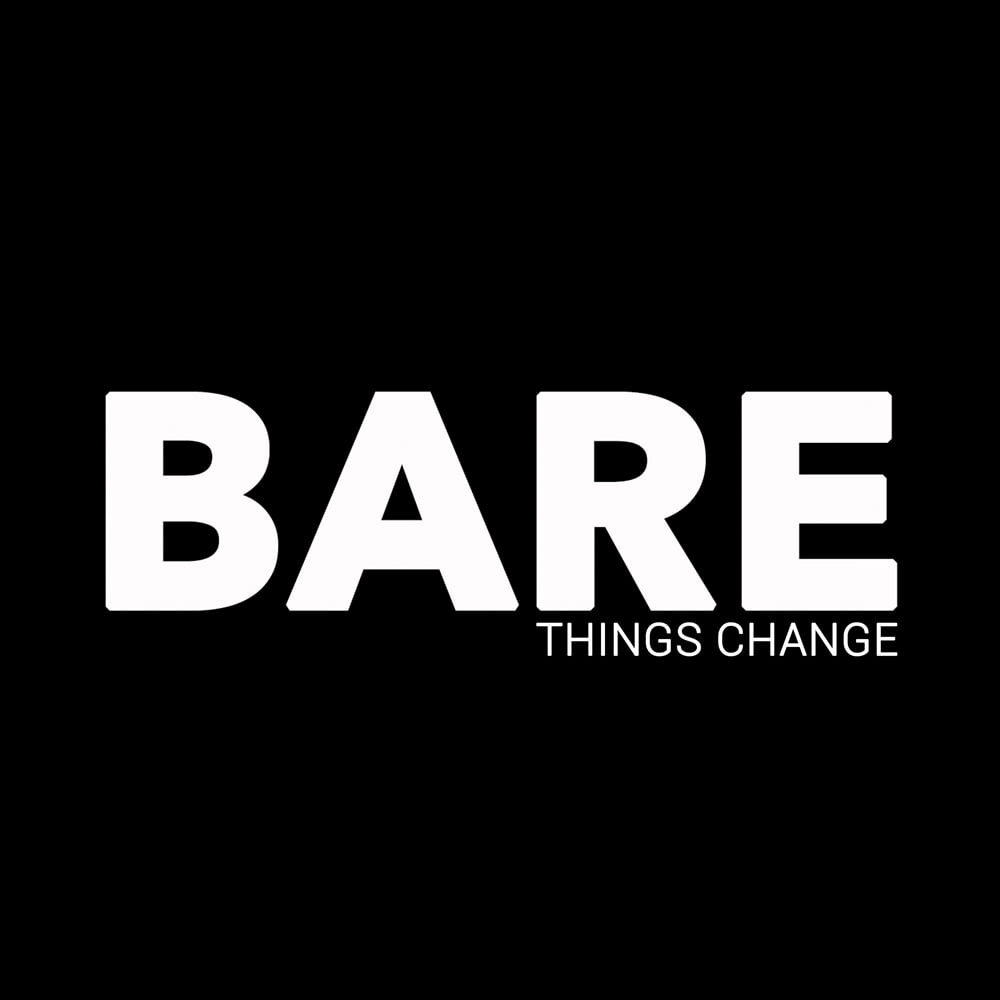
Bobby Bare, ‘Things Change’

There was an under-appreciated movie that hit theaters in 1999 called Entropy, starring Stephen Dorff and, strangely enough, the members of a teeny Irish rock band named U2. Dorff stumbles around the reality of a fleeting romance and the pressures of artistic aspirations, but the whole thing was largely lost to film lore as the millennium drew to a close. In it, though, was a quote lobbed by Dorff’s character that has long out-lasted what was otherwise a short shelf life: “There are three truths in life,” he says. “You are born, you will die, and things change.” It’s simple but profound, and true. Things change. They just do.

Bobby Bare, one of country’s greatest citizens and arguably one of its most under-appreciated, is in a unique position to mull this most certain phenomenon: At 82, he’s seen so many other legends come and go, leaving nothing but their songs and legacies behind. On “Things Change,” he explores that certainty, but it’s not all maudlin or morose. Things change to get better, things change and get worse; things change, and time ticks on. But change is also what makes life matter. “If winter bums you out, just wait for spring,” Bare sings, spiking the tune with some lyrical old-time fiddle amongst his well-aged scruff. “In the middle of a drought, just wait for rain.” Bare’s always known something about humanity’s most central truths, and he’s also always been able to see reality with enough humor to help the medicine — or the poison — go down a lot easier. Things change: for bad, for good, and forever.  

Trixie Mattel: Equal Parts Mother Maybelle and Mama Ru

To be in roots music is to be infatuated with its “good ol’ days,” with its forefathers, and with tradition. Almost any change — stylistic or cultural — is debated. The labels on album spines and headstocks are just as important as the labels given to each other. After all, any genre within roots music is not simply a genre, but a community and, if the members of these communities look, sound, act, and think like ourselves, it’s easier.

On the other hand, the art of drag is all about challenging perceptions and presuppositions. By slapping on a wig and three or four pairs of pantyhose, a queen puts gender identity, sexuality, and societal pressures all under the microscope. In drag, boundaries are meant to be pushed, shock is a commodity, and respect for the “tradition” is more often than not shrouded in biting, heartless insults. Nothing is sacred and no one is safe.

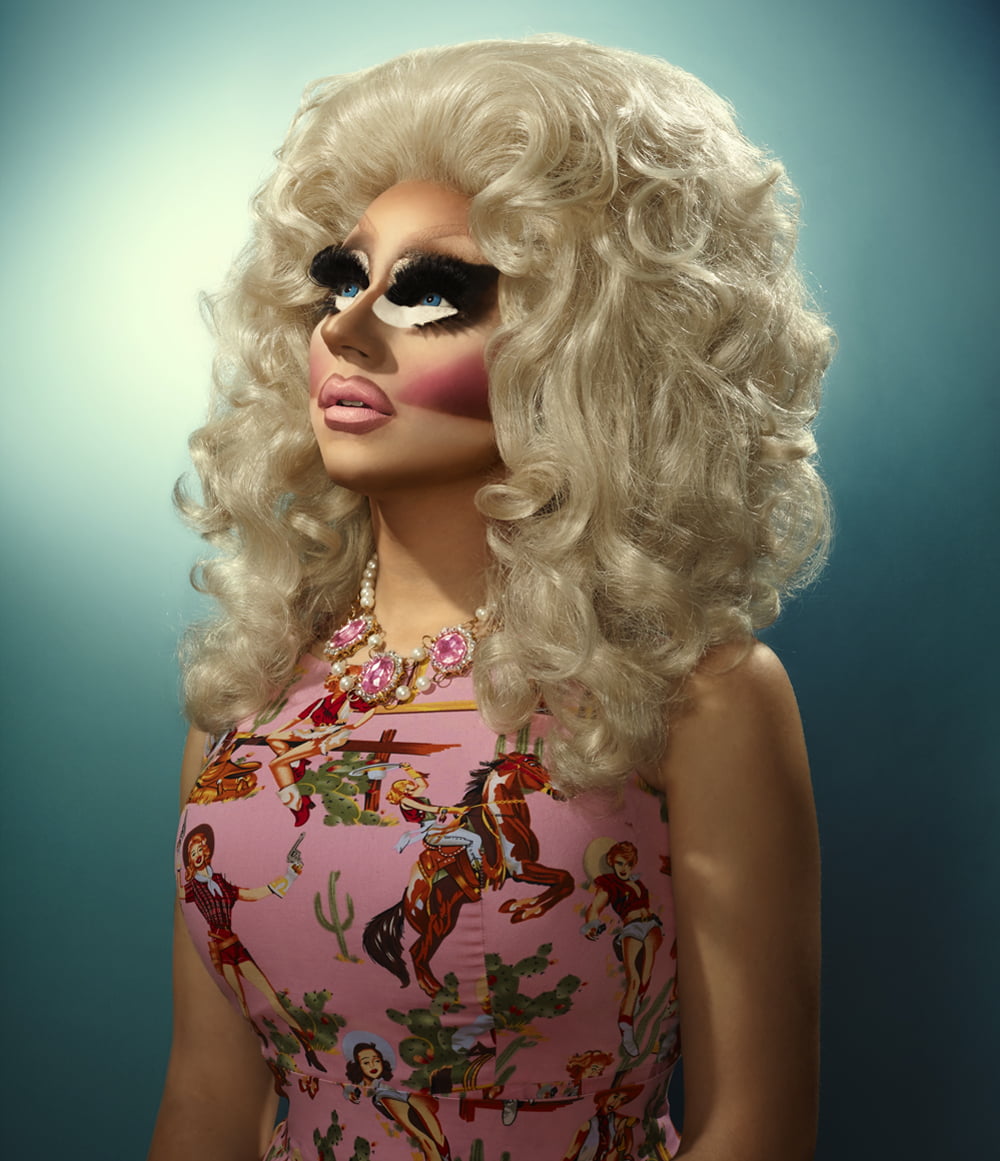
Where the two overlap, we find international drag queen superstar, contestant on season seven of RuPaul’s Drag Race, and folk musician Trixie Mattel. While many Drag Race alumni have released albums — not surprisingly all are dance/club-oriented — Trixie (aka Brian Firkus) just released Two Birds, a folk-influenced country album of original songs. Firkus grew up in rural northern Wisconsin with hardly a neighbor and a shortage of friends, so playing Carter scratch guitar and listening to his grandad’s favorites — Conway Twitty, Johnny Cash, and the like — were the most entertaining use of time. To most roots music fans, that’s an awfully familiar story, right up until you add a wig even larger than Dolly’s, makeup that rivals a clown’s, and a lacy nightgown.

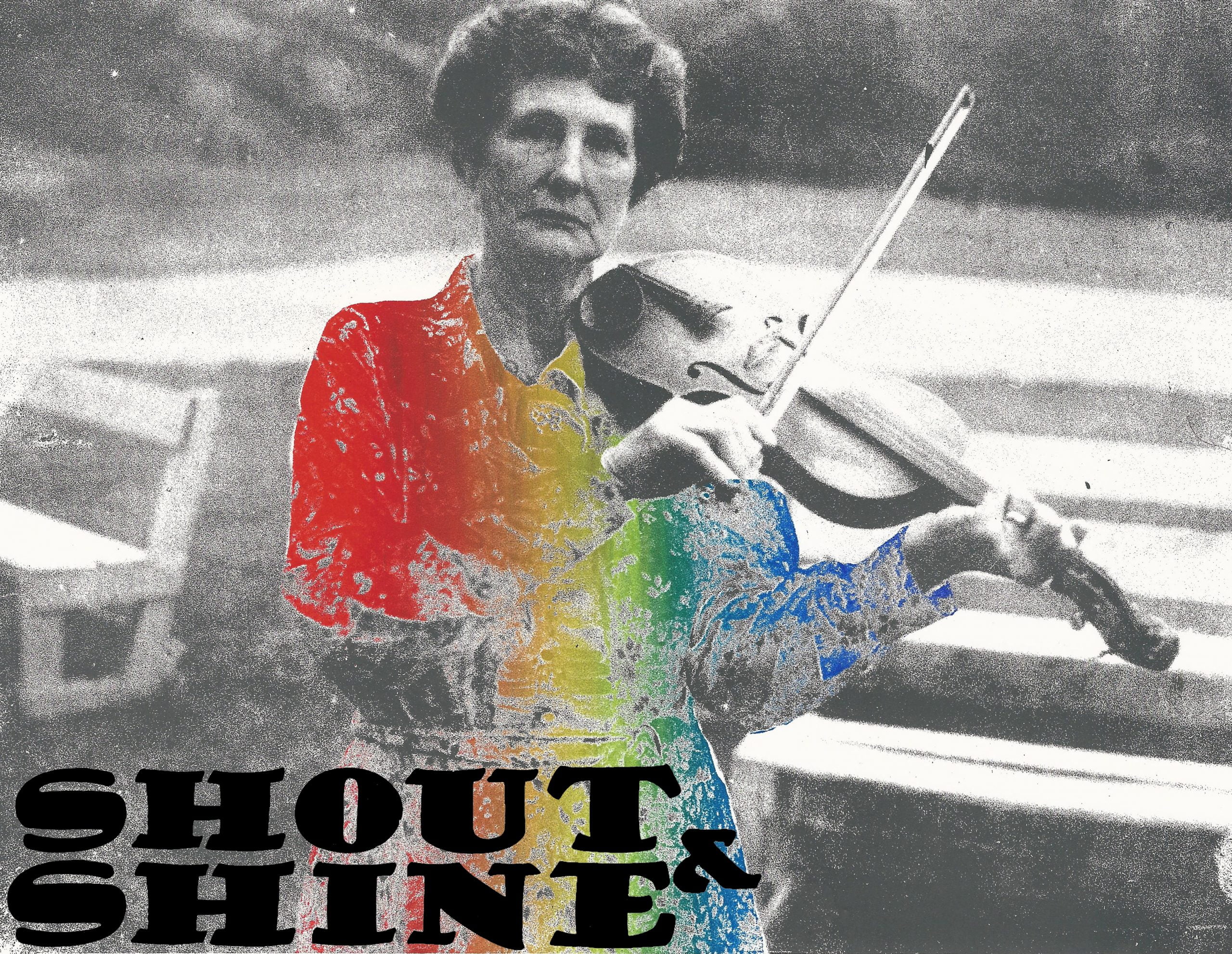
In our brand new column, Shout & Shine, we will explore diverse voices and identities in roots music. We’ll talk to musicians, artists, and creators who don’t fit the “mold.” People who are marginalized within roots music communities — not because their love and respect for the music is lacking, not because they don’t have the familial or cultural ties, and not because they did not grow up learning chords from their grandparents at the kitchen table, but because there are people out there who believe the music can only belong to those who are exactly like themselves. A man in a wig, lashes, nails, and a nightgown is surely disqualified.

When I was scrolling through Twitter and I saw a video of you playing “Storms Are on the Ocean” on autoharp, I was shocked. Where did you get those autoharp chops?

Oh my God, you are going to laugh. I’ve only been playing autoharp for like … five months? I love the instrument! Plus, it’s such a pretty-looking instrument to play in drag. It has such an angelic, feminine look to it. I learned on a chromaharp by Oscar Schmidt and I just got a D’aigle harp made for me. It’s a custom build and it’s so beautiful.

I’ve played guitar for 15 years. I play kind of “Carter scratch” style. I grew up alone in the country playing, so I learned how to play the accompaniment with the melody together on guitar. I’ve always sung and played together, so it made perfect sense. I taught myself guitar, and autoharp, to me, it’s the same business. You use the leading tones of the chords to find the melody. You just learn to play by ear. That instrument, it’s sort of like learning to sight-read or sing solfege — like do-re-mi. Once you do it enough, it becomes second nature. On the album, I got Allison Guinn to play it. She’s like the Beyoncé of autoharp — she’s been on the cover of Autoharp Quarterly and she’s a Broadway actress whose special skill on her Broadway resumé is that she’s an autoharp champion. She’s fabulous.

I saw you perform in Nashville for A Drag Queen Christmas where you sang Dolly Parton’s “Coat of Many Colors” live and accompanied yourself on guitar.

That was the only night I did “Coat of Many Colors.” I love that song and, to me, it’s almost a Christmas song. I ended up dropping it because I wanted to do what I normally do — I do a stand-up set with music woven in. I’ll make a joke about Aja [RuPaul’s Drag Race season nine contestant] looking like a burn victim, then I’ll sing “Girl on Fire” for 15 seconds. Or I’ll make a Columbine joke then sing “Dust in the Wind” for 10 seconds. That’s usually what I do — little bits of music punctuated by jokes. For Nashville, I wanted to do “Coat of Many Colors,” because I thought, if anybody is going to go on this journey with me, it’s the people in Nashville.

I play guitar. I went to school for music, but it never occurred to me to make Trixie sing. When I started, it was like a light turned on. I never really sang in drag until this year. I look like Dolly Parton, but I sing like Garth Brooks … like it doesn’t really make sense. [Laughs] It didn’t make sense to me for Trixie to have this man’s singing voice. But then the comedy became less about being a drag queen and more autobiographical. The stand-up show I’m doing now, there’s a portion where I do original music and it’s always everyone’s favorite part of the show. It occurred to me, people relate and are more responsive to Trixie being a singing drag queen than I thought they would be, so I might as well run with it.

You said you’ve been playing guitar for 15 years — how did you get started?

I’m from the Northwoods of Wisconsin, and we didn’t have any neighbors or anything. I didn’t have any friends. There wasn’t anyone else who lived around us, so I learned to play guitar at the kitchen table from my grandpa, who was a country musician his whole life. At 13, I started and he kind of taught me, but he was a little more insistent on me teaching myself. He said, “If you were a good musician, you could figure it out on your own,” which I think is sort of true.

Who did you listen to growing up? Who did your grandpa turn you on to?

He turned me on to George Jones, Roy Orbison, Johnny Cash, Conway Twitty. Obviously, I gravitated more toward the women — I liked Loretta a lot. Dolly. Loretta and Dolly, for me, are running head-to-head for my favorite. I think Dolly is a finer musician, but I do like that Loretta’s music is a little rougher and tougher. She’s a little more like a tomboy in country music. I like the rougher side of her lyrics, and it’s a little more mellow. Her songs are about being poor and stuff, but obviously, I’m a drag queen, so I like that Dolly wears full drag.

There was some crossover into pop music for a while, that stuff you listen to when you’re a teenager. With folk, I was like, “That’s old people music! My grandparents like that.” When I started to get older, I was done with it, but then only as an adult, when I entered my mid-20s, did I realize that country and folk, given how simple it is, it speaks to the most basic human needs. It’s simple music because it’s by simple people for simple people, really.

I’m the only person from my family to go to college. You can be smart, but not educated and, in folk music, that’s pretty apparent. There’s an emotional intelligence. They communicate really deep things with clean, simple structures in the music.

The people who created this music have always had marginalized identities: immigrants, impoverished people in Appalachia, African slaves, African-Americans being excluded from Western European music and turning to jazz, creating blues. Roots music has always been this vehicle for the struggle of people who are othered. It would makes sense that LGBTQ identities could be intuitively folded into that music, but within these genres, there persists this narrative that they belong to straight, white, Christian men.

Folk music feels like it’s not for us because the culture that surrounds folk music is so old school and very religious. We feel like we can’t belong in that genre of music. When is a gay [artist] ever going to win a CMT Award? Probably never. Or even like an Americana award or something smaller. It’s a challenging thing. Folk’s contemporary movement is a little more liberal.

When I wanted to do the album, I thought it was going to be a shot in the dark, because I really wanted to use gay musicians, if I could. It wasn’t as hard as I thought it would be. My producer, Brandon James Gwinn, is originally from Nashville, but he works in New York producing off-Broadway music material for musical theatre. I’m a half-musical theatre person, half-folk person, so he was perfect, because he knew the Nashville sound. He worked on Ring of Fire, the Johnny Cash musical, and he had a network of people, like the fiddle player and bass player.

I feel like a foray into the roots music market would be daunting for any LGBTQ person, let alone a behemoth character/star such as Trixie?

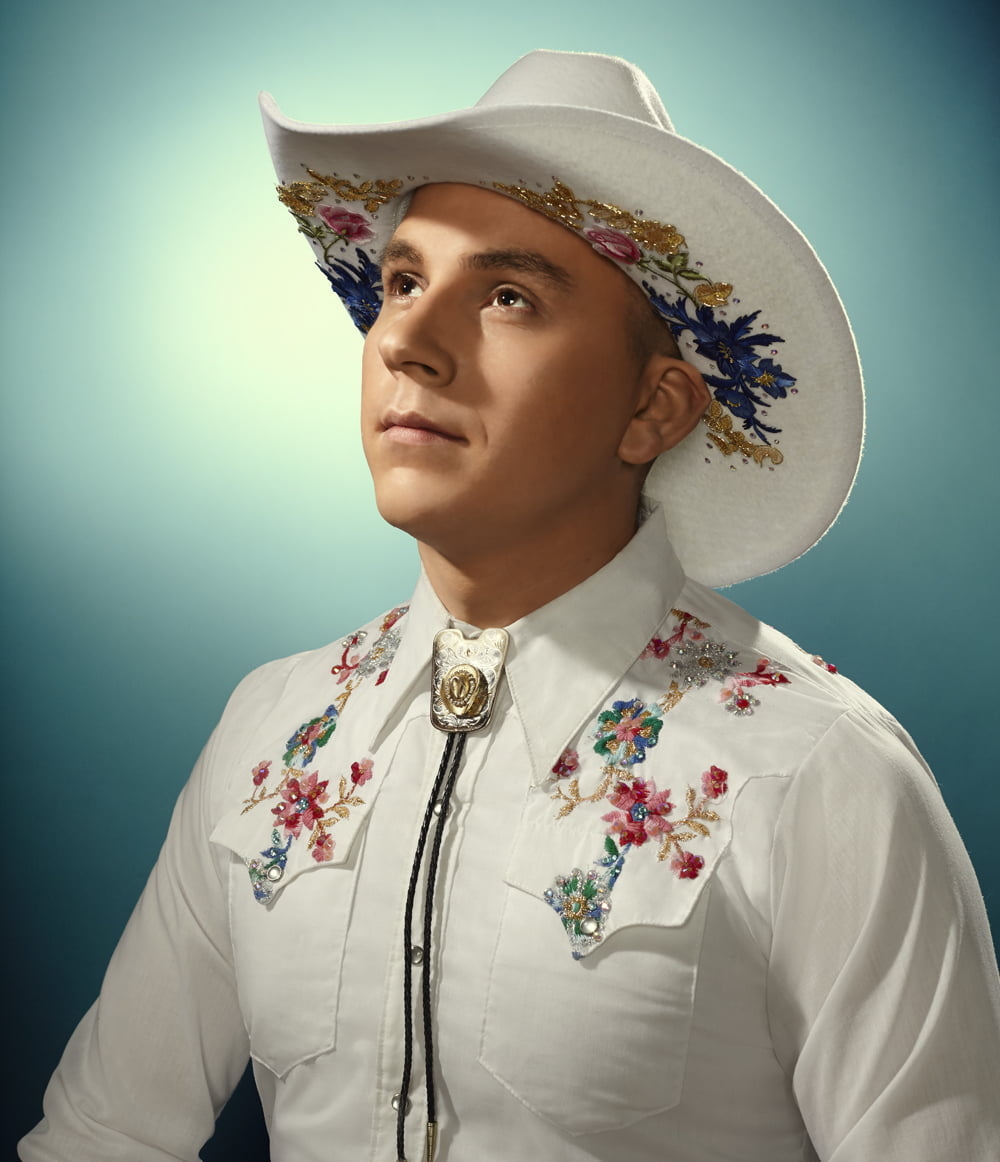
Originally, when we shot the album artwork, we did it in drag, out of drag, and we shot one together, because we weren’t sure how we were going to market it. We also thought about doing two different covers and different names to sell the album in different ways, because we wanted people who like folk music to pick it up, but not be deterred by the fact that there’s somebody who puts on a dress on the cover. My manager asked me if I wanted to release it as Trixie or as Brian. First I said Trixie, then I said Brian, then I was like, “You know what? It’s kind of irrelevant. It’s more about the story of the music. People can envision whoever they want singing it. That’s kind of irrelevant. That’s sort of the point of the album.”  I didn’t want to market it as drag, but I didn’t want to shit on what people already know about me. It would make no sense, as a business person, to market it without the name on it, because all of the followers I’ve gotten — who like me for comedy, for dressing up — it would be stupid to not try to also let them know that there are other things going on.

I think people, in general, especially in drag and with the age of drag on television, people aren’t used to drag queens having any discernible gifts whatsoever. Nowadays, dressing up is enough. When people see you do something, they’re like, “Oh my God! That person got on stage and did a thing!” I’m like, “By the way, Linda, people used to have to do that.”

How does it feel for you to go from being a former Drag Race contestant to becoming a songwriter?

I’ve always felt like a songwriter first and a live performer second. It’s exciting to have people hear it, even if they don’t hear it live. But I also prefer to play alone. I’ve always played by myself — it’s just what I’m used to. I really love to do stand-up and I love to do comedy and I think I’m actually funnier than I am a fine musician, so I like to blend the two together.

I’m hoping people will go on the journey with me. A lot of people love me for the look and for the comedy. I hope that they’ll listen to it. The music is kind of the behind-the-scenes of the lifestyle of being a comedian and drag queen. It’s not necessarily funny music; though a lot of it has a sense of humor to it, it’s not comedy music.

Would you say on your family tree, on one side you have Mother Maybelle and on the other side you have Mama Ru?

Oh yeah, totally! I’m so into that. There’s a museum somewhere that has Mother Maybelle’s autoharp on display and I’d love to go see it someday.

Last question: Do you think there oughta be a bluegrass drag queen named Shady Grove?

Oh my God. Yes. The answer is yes.
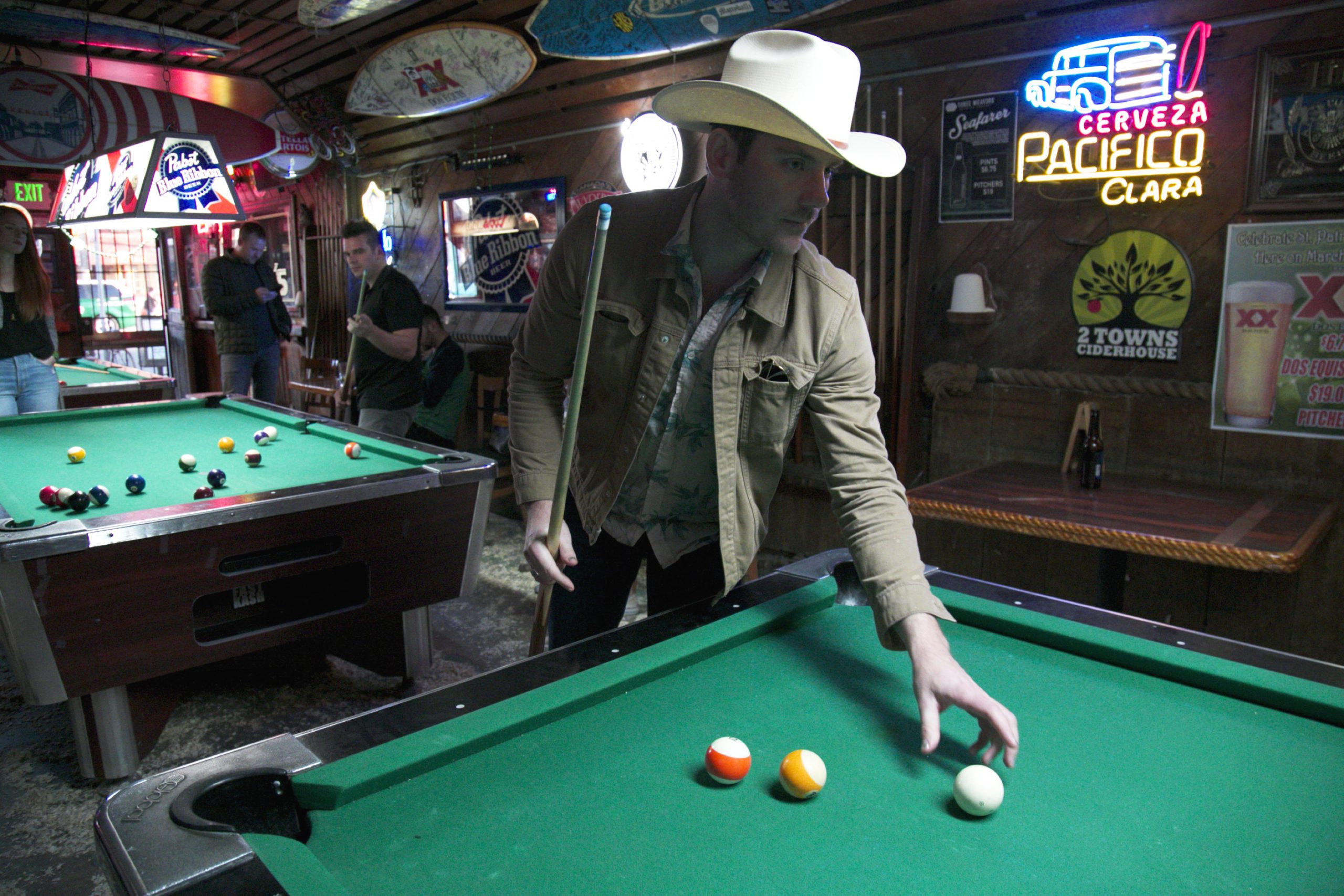
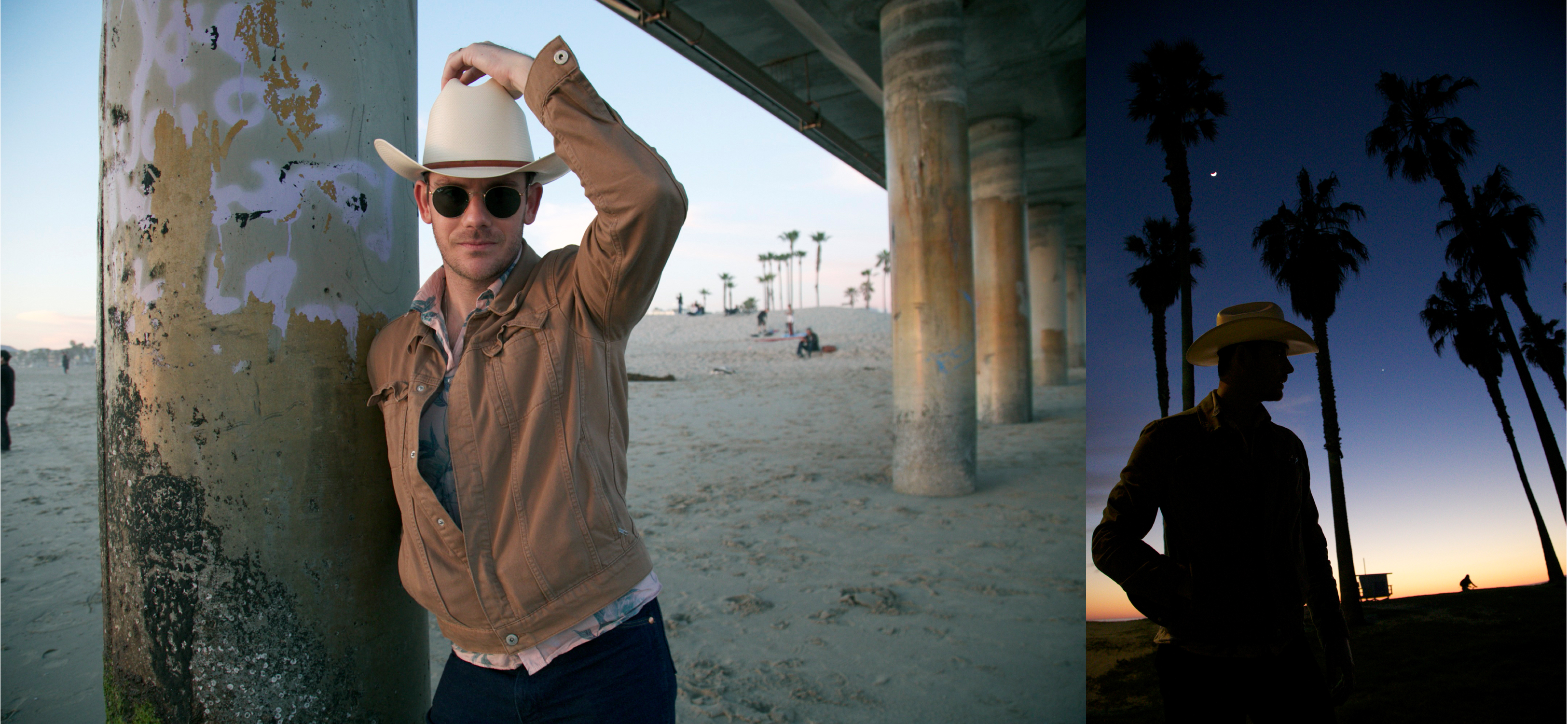
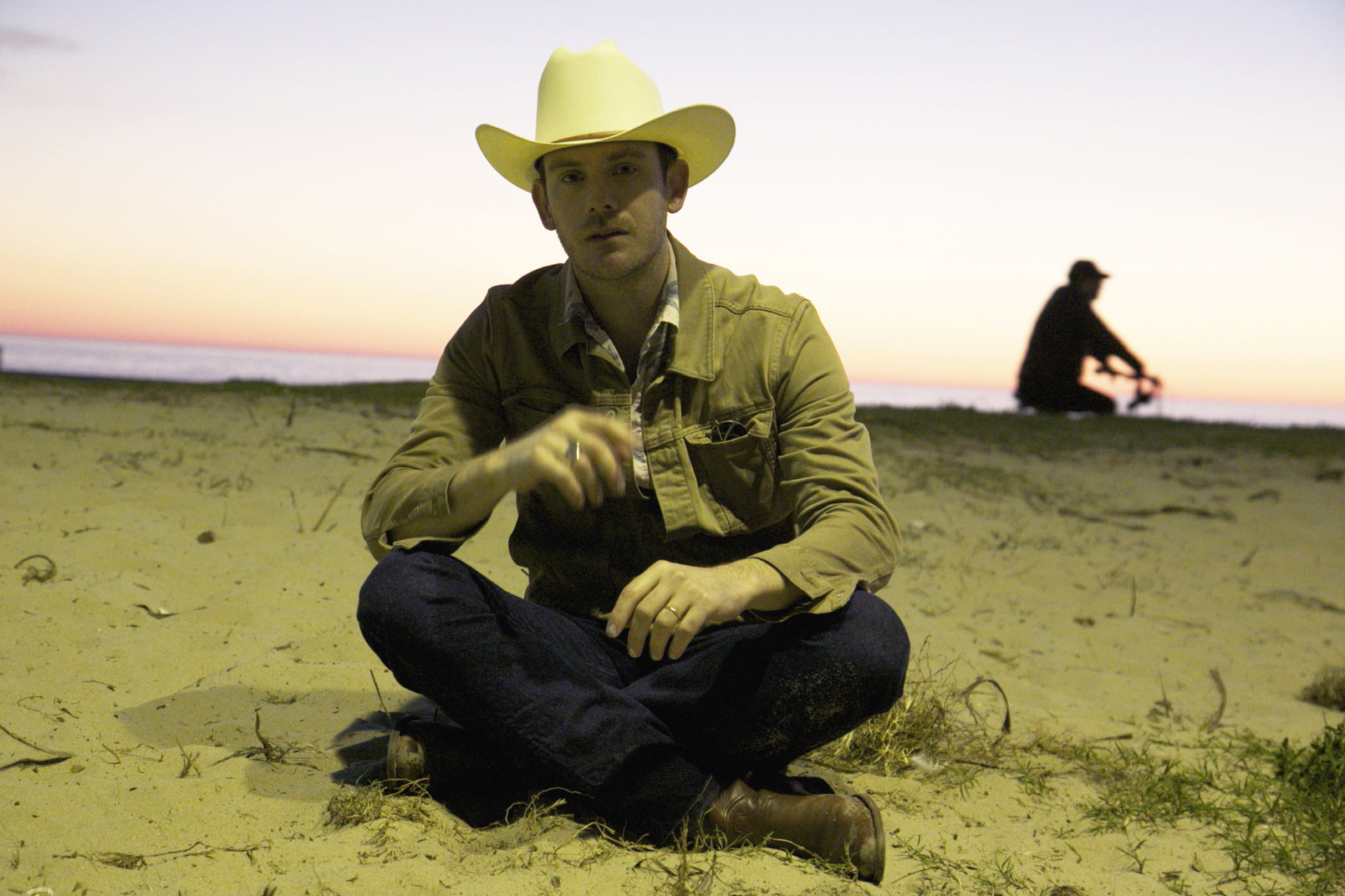
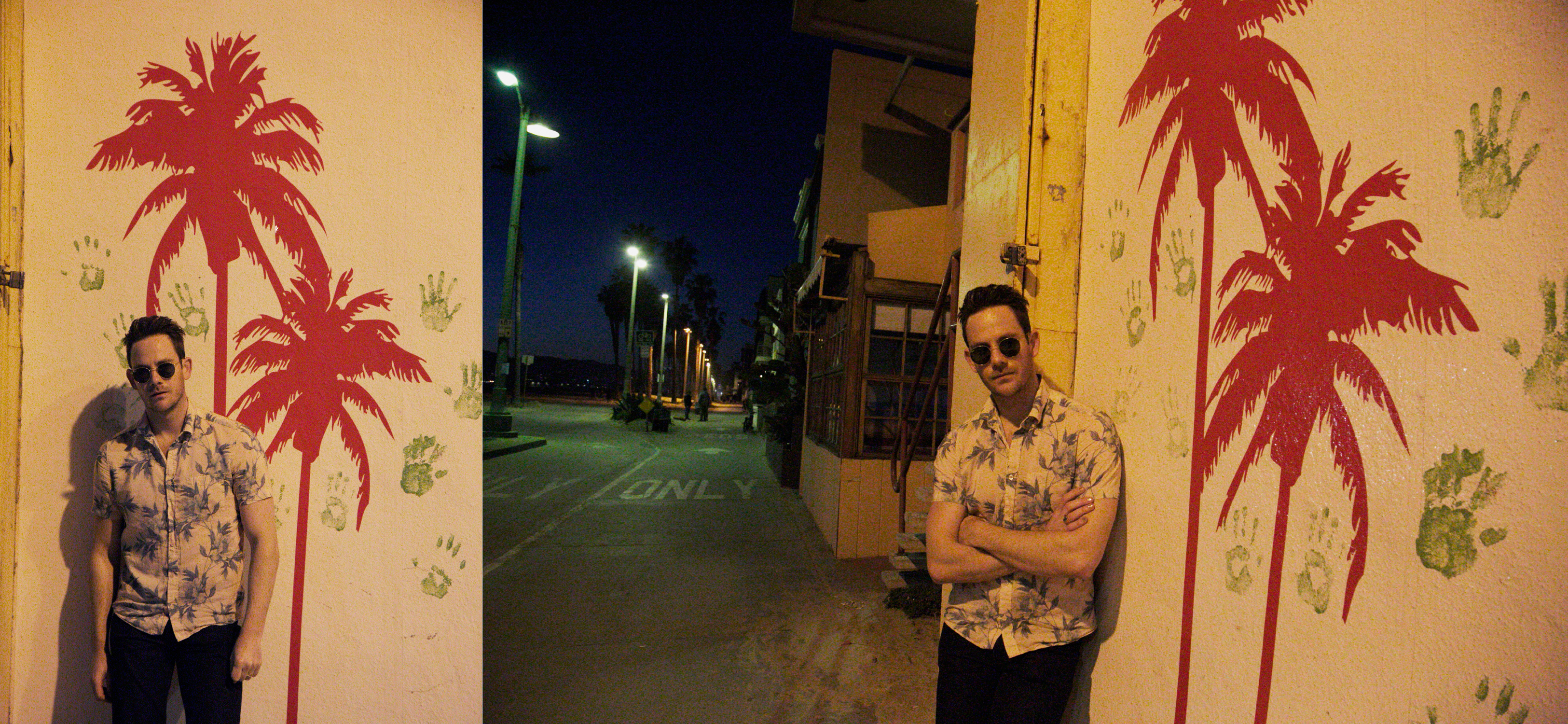
Sam Outlaw through the Lens of Henry Diltz

Henry Diltz is one of the greatest photographers alive today.

His work in rock ‘n’ roll — specifically Los Angeles rock — stands the test of time and proves how important the visual aesthetic attached to music becomes for the artist, the listener, and the culture.

I grew up listening to albums like Sweet Baby JamesCrosby, Stills, and Nash; and Desperado, and it’s impossible to imagine these albums without picturing the album art and photography. When my family moved to Southern California in the early ’90s, these images were compounded by my own real-life interaction with the California aesthetic, and those experiences created emotions that ultimately shaped my own sound.

When Henry reached out, I was immediately inspired to do something special that could incorporate my connection to L.A. with Henry’s casual approach. It dawned on me that, while I’d already done photos that point to my hometown from a variety of locales (DTLA, Elysian Park, Joshua Tree, etc.), I had yet to shoot at the beach. We chose Venice Beach for its scenic waterfront juxtaposed against the eclectic boardwalk and “locals only” culture, and I couldn’t be happier with how it turned out. I consider myself incredibly fortunate to collaborate with such a nuanced artist at the top of his game. — Sam Outlaw

Counsel of Elders: Jessi Colter on the Spiritual Journey

Jessi Colter’s musical legacy has long been a balancing act between “the outlaw” and “the lady,” but there’s another side — a third — that informed her identity in even greater measure than those two descriptors. The daughter of a Pentecostal minister mother — that’s right, mother — Colter (whose birth name is Mirriam Johnson) grew up in the church and held faith close to her heart. But as her musical ability crystallized and caught the attention of rock ‘n’ roll guitarist Duane Eddy, who would go on to become her first husband, and later Nashville musician and producer Chet Atkins, Colter found herself in a world that didn’t always make room for those beliefs. That became doubly so when she married singer Waylon Jennings and struggled with a love that was at turns exhilarating and at others tumultuous.

Colter has proved throughout her career that identity isn’t an either/or categorization. It’s a prism refracting various aspects of a person’s many parts depending on the light. She is all the things that helped her rise to fame in the country world — a member of the Outlaw movement (along with Jennings, Willie Nelson, and Tompall Glaser), a hit single writer for candid tunes like “I’m Not Lisa,” a gold record holder — and an equally devote Christian. The lesson was not about finding a world that made room her faith, but about making sure she created that space in herself. The rest would follow. And it did. She released the spiritual album Mirriam in 1977.

Colter returns this year with another spiritual album, The Psalms. Recorded with friend and collaborative partner Lenny Kaye, the project puts music to David’s Biblical words and follows her last studio album, 2006’s Out of the Ashes. She also used that creative momentum to pen a biography with David Ritz, appropriately titled An Outlaw and a Lady. In it, she chronicles her early days in the church, her wild romance with Jennings, and how music — through it all — pulled her disparate parts together. Songs, like the blessing of breath, connected it all to something greater.

In your biography, you return again and again to your mother and the spiritual foundation she laid in your life. What does that mean to you now, reflecting back?

I realize the importance of heritage; I am so appreciative and grateful for what I was raised in. I’ve come full circle, and I don’t know exactly what to say except the most important thing that I have in my life — with all the great experiences I’ve been given — is to keep my faith. I just feel like we’re eternal beings and what we do here is certainly part of our humanity, but our humanity will decrease and our spirit will increase, so people who don’t keep one foot in this world and one in the next are not playing with a full deck.

Speaking of heritage, your parents named you Mirriam after Moses and Aaron’s sister. Did you ever view the music you wrote as containing her prophetic quality?

No, I really didn’t. When I wrote Mirriam, it was because I was returning to my faith and it was very joyous and it was working in me. I expressed it in song. None of it has been pre-determined. The way The Psalms has come and the way this book has come, I have to believe is supernaturally designed. I really do think it has been guided by God. Who would think an album we started 10 years ago would come out right before Easter, and the book would come out at Passover? The High Holy Days! Who would’ve figured that out? I have no manager; I don’t have a booking agent. Lenny Kaye and I just collaborated and here it is.

In keeping with that sentiment, your book details how much more you received once you relinquished control and gave yourself over to a higher power. How do you let it all go? That’s so difficult when we, as humans, want to have control over something.

Oh, I know. Our self-will is our greatest enemy. This wasn’t deeply discussed in the book, but when I was about 28, I had ambition. I’d been driven and drawn to music, loved it. I’d written, continued to write. When I did “I’m Not Lisa,” I had two albums ahead. I was at this point where my ambition was really frustrating me, and I don’t know what clicked in my brain or my spirit to say, “You know what? I give it up. And if this something you want me to give up, I’ll give it up.” It hurt. I could feel it in my heart.

Right, for an ambitious person that would be painful.

Yeah, and it wasn’t six months that I had a gold record, and it was a large green light. God gives us desires to fulfill them, and I think all he wants us to do is to say, “I need you to help me on this, because I can’t do it.” It doesn’t make us less, it makes us more, because we get past ourselves to get what we truly need or want or what we’re destined for.

He made us. When the breath goes out of a human being … I saw it when I lost my dearest husband Waylon. When God’s breath went out of him, it wasn’t Waylon anymore, and where we get off that we’re in charge, I don’t even know. But it’s a problem. It’s going to be His way so you may as well line up, is my theory. But I had to learn it. It’s a lifetime project.

Part of that learning, for me, involves taking attention off yourself and focusing it on other people or issues, so it’s interesting that you open with Psalm 150, which you’ve stated holds significance for you for that very reason. How did you choose what to include and how to arrange it?

You know, we didn’t have any big design. There are some that I go back to more than others. Of course, the 23rd Psalm is possibly the greatest poem ever written.

Is that your favorite?

It’s inscribed in my home, and I walk by it at different times and I’ll see different things. “The Lord is my shepherd, I shall not want.” I’ve heard versions that replace it with, “The Lord is my shepherd, that’s all I want,” which is a very cool way to think. David was so universal; his perspective was so uplifting. Then I discovered in the Jerusalem museum — when Waylon took me to Israel — the most recently unearthed (what they believe to be) Psalm of David in the Dead Sea Scrolls. It’s David’s last Psalm and it’s a self-portrait of him. His brothers were tall and handsome, and yet the prophet came looking for him. What a story. He was a prophet, a warrior, they say a musician, a poet; he spoke priestly and he was a king. He’s very important to me because I love this man and I look forward to meeting him, but these Psalms are just magic because, if you get into them, they will read you. I’m stirred every day and I look to it for guidance. The spirit never dies — an eternal thing never dies. They’re very alive.

I think that’s language, too. That’s part of its power.

Yes, exactly.

But you’ve expressed how much writing means a great deal to you, so I found it curious that you would make an album using someone else’s words.

They will forever be David’s, but they’re in my heart, so I draw from them. It was challenging because, when I compose, I usually compose the lyrics and the words at the same time, and to have all that taken away and to try and figure … there’s no rhythm here, so it’s just free-flowing prose and very challenging for a musician, and challenging for those [musicians] Lenny added. We did it slowly. Sometimes it was two years before I’d get another song.

And it got stuck in every CD player I played! I thought, “What are these discs that Lenny was sending me?” I was forced to listen — most people don’t go around listening to themselves — and I found it would center me. I drive a lot, because I’m out from Phoenix, in horse ranch country. I thought, “You know, I’m going to try listening in different moods to see what it does,” and it does something! It will center you. It draws on your spirit and relieves your humanity. We’re a spirit man with a body and a soul, I believe. I love the way Dylan said it; he said, “Let’s strengthen the things that will remain.” The spiritual is the thing that will remain.

Moving back to some of your earlier recordings. You said “Don’t Let Him Go” represented a specific feeling for you at the time and wasn’t a feminist anthem. It does seem like women take on the work — as artists — of representing so much more than themselves. They become indicative of bigger causes. How have you tried to strike a balance between individuality and larger movements?

I’ve never thought about it. I go with the path I’m given. I’ll tell you the truth: I was born the daughter of a Pentecostal minister in a Mormon culture, and I think early on something caused my brain to understand — maybe I couldn’t interpret it with words — that I was not necessarily a part of the greater surrounding, beliefs, or whatever. All my friends were Mormon, my boyfriend was Mormon. They’re a wonderful culture to be raised in. It was a wonderfully innocent, sheltered life. It gave me more a sense of being a minority, but I never suffered from it. It only propelled me into what I was supposed to be. I don’t know how else to relate that.

You’re able to stand strong no matter the setting.

Right, but I never felt any kind of rebellion. Some of my friends were Apache Indians, most of them were Mormons, and there was never a breach between us. We didn’t go to church together, but that was about it.

So there was still a sense of community?

Right.

It feels like we’ve lost some part of that.

I know. All these differences … it’s almost like a spirit of division. Truly, if we experience each other and keep that open … I love learning about other cultures and being part of other cultures.

Right, but there are some who take that as a threat. By learning about something else or the existence of something else, it somehow waters down their own subjectivity.

I know.

We’ve seen this resurgence of independently honest female musicians in country, like Margo Price, Kacey Musgraves, Amanda Shires, and more. What do you think it is about the present moment that has lent itself to this wave?

I think things run their course and this “other thing” has run its course. It’s time for new flowers to bloom. The season is over, to me, of a lot of the mediocrity, of “Everybody can sing, and everybody can look good.” How boring does that get? It takes a freshness that I don’t know that you can keep doing the same thing with the same producers. We’re already seeing, as you say, coming over the horizon …

Yes, the candor that you’ve long expressed in your songs is front and center once again.

Well, thank you.

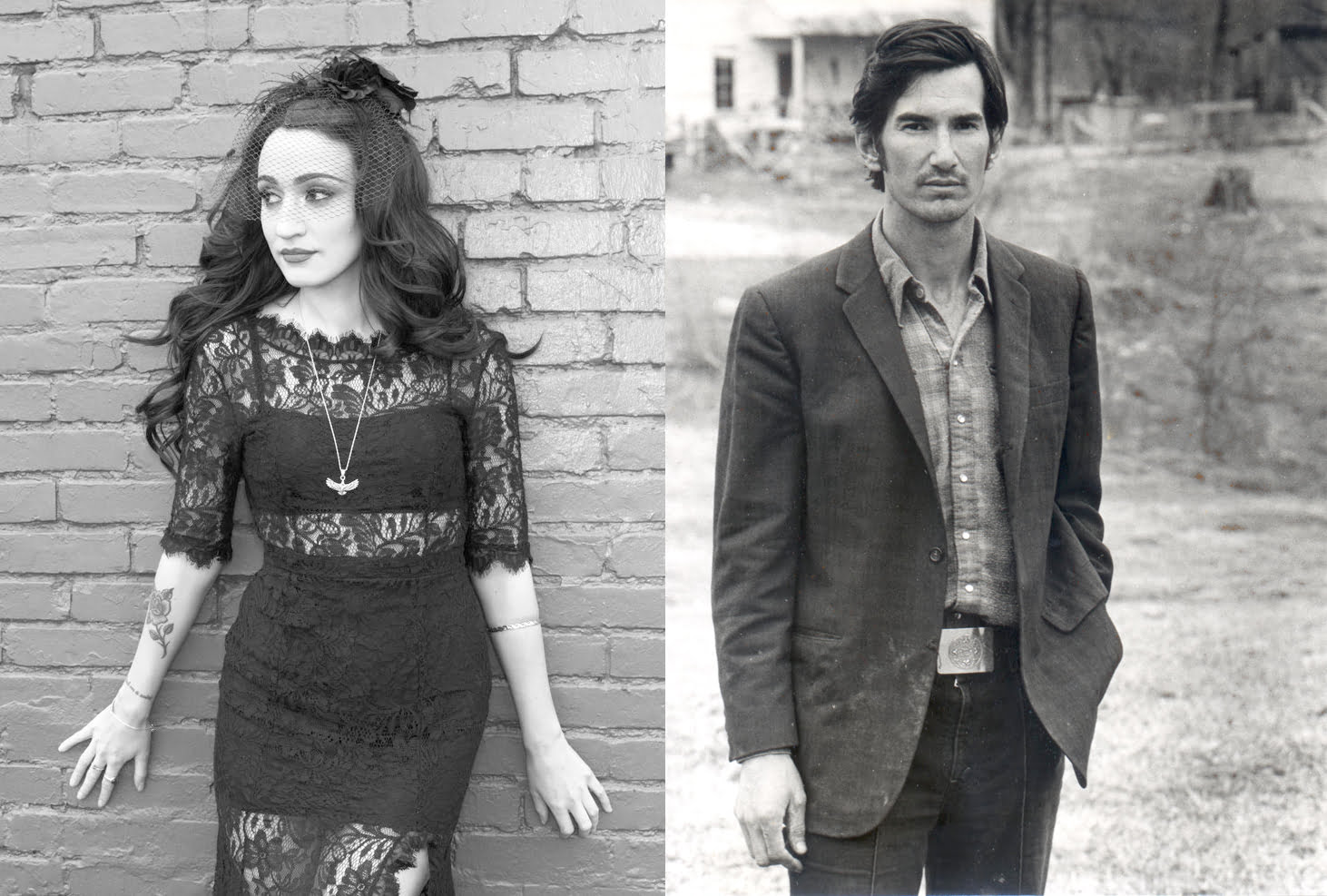
Squared Roots: Lindi Ortega on the Resonating Darkness of Townes Van Zandt

Without question, the legacy of Townes Van Zandt looms large in singer/songwriter circles. Legend has it, Van Zandt all but told Bob Dylan to shove off, when Dylan came knocking on his door wanting to write together. Townes was an immense talent who struggled with depression and substance abuse, and still managed to craft some of the most timeless songs in history. Many of those tunes became immortal while he was still around to see them do so — songs like “Pancho & Lefty,” “If I Needed You,” “Tecumseh Valley,” and more have been covered by Willie Nelson, Emmylou Harris, Lyle Lovett, Steve Earle, Nanci Griffith, Jason Isbell, and numerous others.

Another of his most-treasured and poignant compositions is “Waiting Round to Die,” which has found yet another new life in the hands of Lindi Ortega. On her latest EP, Til the Goin’ Gets Gone, Ortega folds the cover in with her originals like it was her own. She felt compelled to do so because discovering Van Zandt’s catalog broke her through a major writer’s block and reinvigorated her passion for music.   

You didn’t grow up with his music, right? So what was your entry point into his catalog?

I read a lot of biographies and I just kept hearing his name. A lot of my country music heroes had mentioned him. I always thought, “What a cool name, Townes Van Zandt.” And it just stuck in my head. I figured, since a lot of my country music heroes were fans of his, I really should check him out. So, one day when I came back from a tour, I decided to listen to his catalog and, you know how it is when you discover music that you hadn’t known about and there’s a whole well of it to listen to. It was a really incredible experience. I fell in love with his music and his songs and his guitar playing.

There’s so much in his too-short life to latch onto.

Yeah.

Were there aspects of his life that drew you in or was it all about the music for you?

It was really more about the music. That was my definitely my entry point, listening to the words of his songs. His lyrics, specifically, spoke to me. I did watch the documentary, Be Here to Love Me, which I found so sad. I’m sure a lot of that internal darkness resonates in his words and music. And I write a lot of songs that are rather dark and lonely and sad, too, so I guess I felt like I related, in some way. But I’m sure I’ll never understand the demons that he had to deal with in his mind. But, I guess the idea is that songs that come from dark places, all of us humans go through moments that are dark and test us. I think we can all relate to songs in that way. Maybe some of us choose not to go there, but I think we can all relate.

You got a gift from him, in a way, right? Because you were ready to walk away and then you thought, “Maybe I have some more in me.”

Yeah. Definitely. I was going through writer’s block and he became a huge inspiration, songwriting-wise, to challenge myself to be a better songwriter and write more story-like songs. That sort of re-invigorated my love for writing music, in some funny way.

You did “Waiting Round to Die” on your new EP. I hear that and “Til the Goin’ Gets Gone” as sibling songs, or cousins, maybe. Do you hear that?

Absolutely. That’s why I chose to do that particular song as a cover. I was grabbling between that one and “Rake,” because I really like that song, too. But I felt exactly like what you said, that it was a sister song to the song I’d written, so it made sense to put that song on the record. I knew it was going to take the little EP to a very dark space, but … [Laughs]

[Laughs] Yeah. You out-sadded Townes Van Zandt!

I mean, it’s a dark, sad song. The lyrics are very dark. There’s no denying that, so there’s no point in me trying to make it anything other than that. [Laughs] I did: I made a very dark and sad EP, but that’s what I needed to do, at the time. I feel like there are moments for that.

In this day and age, I feel a lot of music is kind of escapist. I feel like the general population in pop music and pop-country, people are trying to escape all the horrible things that are happening in the world and all the dark things that may be happening in their own lives. I get the sense that people want to get out and party, so it’s more like a party music thing that’s happening and not very many people are into this whole idea of embracing dark, sad songs.

But I feel like they are still necessary and people still need them in life because, for me, one of the first dark songs I heard was “I’m So Lonesome I Could Cry” by Hank Williams. When I heard that, it wasn’t like, “Oh, God. Here’s a depressing song!” It was, “Oh, wow. Somebody else feels that same loneliness I feel.” And I felt like I wasn’t alone in my loneliness. That’s why I continue to write songs like that. And I just went there with this EP. It was necessary. I was going through a moment when I was questioning whether I could go on, musically, and I didn’t think I would. I felt sad and disappointed and a little bit devastated, so that’s what came out.

As you just said, the artist’s life is hard enough on its own, then you tack on battles with bipolar disorder and substance abuse with Townes. Was there a lesson or something you found, going into his work, that made you feel you didn’t have it so bad?

For sure. And that’s with a number of musicians I look up to and love who battled with substance abuse problems and depression. I think I read an article once that said creative people often suffer from things like panic attacks and depression and anxiety disorders. For some reason, it seems to go hand-in-hand with people who make beautiful art. Then there’s this whole other side where a lot of people are suffering greatly, but the upside is that we get beautiful songs or beautiful paintings. They help us understand life and the human condition.

So, yeah, it’s really sad to learn about his life and of course there are lessons … I don’t want to have my life end faster than it should. It sort of, in some ways, helps me understand that I need to really appreciate what I do have. There are things I don’t have that might cause me some sadness, but there are a lot of things I do have that I need to appreciate and feel happy about. So it helps me to do that. Some people have a hard time getting to those places because their brains just won’t let them. I’m just so grateful that an artist like Townes Van Zandt, with all of his internal issues, was able to create all of the music that he did. And it’s legendary and classic and will be with us forever. If there’s a ray of light in a sad story, that’s definitely it.

The Mile Markers of Music: A Conversation with Ketch Secor

It’s not a stretch to say that Old Crow Medicine Show is intrinsically linked to Bob Dylan. The country-roots band has never shied away from voicing their admiration for the seminal singer/songwriter, and the story behind the infamous “Wagon Wheel” is common musical fodder at this point: Old Crow’s Ketch Secor filled in the verses to an incomplete track titled “Rock Me Mama” from a Bob Dylan bootleg his bandmate Critter Fuqua found during a trip to London. After Darius Rucker’s cover of “Wagon Wheel” hit number one on the Billboard chart in 2013, Dylan’s camp reached out to Old Crow. They offered another song fragment Dylan dreamed up around the same time as “Rock Me Mama,” and wanted to see what Old Crow could do with it. Old Crow cut the track and after incorporating a couple of suggestions from Dylan himself, “Sweet Amarillo” became the first single from the band’s 2014 release, Remedy.

Now, Old Crow Medicine Show is paying homage to Bob Dylan with the release of 50 Years of Blonde on Blonde, celebrating the 50th anniversary of Dylan’s first Nashville record. The live album features Old Crow’s performance of Blonde on Blonde in its entirety, recorded last May at the CMA Theater, located in the Country Music Hall of Fame.

“As somebody with such deep respect for Bob Dylan, I hope that he likes what we did with the songs,” Secor says. “We really tried to go, ‘What if the Memphis Jug Band had come up with “Leopard-Skin Pill-Box Hat?” What if the Mississippi Sheiks had figured out how to write a song like “Visions of Johanna?” And what would it sound like if they did?’”

As Secor puts it, Blonde on Blonde was “the shot heard ‘round the world” – the record that changed the landscape of country music and split Nashville’s sound wide open.

Do you remember the first time you listened to Blonde on Blonde ?

The first time I heard Blonde on Blonde, I was probably 14, 15 years old and I was headed down a sweeping Bob Dylan kick and ingesting as much Bob as I could like it was water or wine.

Dylan has such a vast catalog. What was it about Blonde on Blonde that made the band want to take this particular record on? Why did you pick this record to celebrate for the 50th anniversary?

Well, it’s true we could have picked any of Bob’s records ’cause we’re at that point in a lot of history where we’re at milestone marks for many of the seminal musical efforts of the past 50 years and more. This one made a lot of sense because it was made in Nashville and it’s the first of Bob’s Nashville records. And this was also recorded at a time when Nashville had yet to have a rock ‘n’ roll record. This was kind of the very beginning of the ever-expanding Nashville sound, so it’s a real milestone in that regard and, with it, in the wake of Bob Dylan’s trip to Nashville, everybody from Leonard Cohen to Joan Baez to Ringo Starr and Neil Young were in Nashville in the next five years making their own records.

In recording and releasing this project, what are you hoping to communicate about the Nashville sound? Are you hoping to preserve that Dylan and post-Dylan time? Or how do you see Nashville as changing or staying the same in the last 50 years?

Well, one of the sentiments that seems active here in Nashville right now is this feeling of, “Wow, everything is changing.” You look at the skyline and there’s something new going up every day; it’s full of cranes and boom shafts and towers. So much development, so many people moving to town. So I think it’s easy for Nashvillians to think, “Wow, things sure are getting different.” My argument, with this record, is that 50 years ago is really when things started getting different, and that’s the shot heard ’round the world that the Nashville music community and its spectrum of sound became so much wider beginning with the making of Blonde on Blonde and that it’s very wide today.

Now, with country music, as it’s heard on the radio and viewed upon the charts, that has actually become very, very narrow in its scope. So I think, with a record like this, we’re hoping to kind of shine a light on a time in which that very thing was happening and somebody like Bob Dylan came in and said, “Hey, I belong to country music, too! I’m from a mining town just like Loretta Lynn. I’m the fringe of America, just like Charley Pride. And I’m an outsider.” So to make an outsider record in Nashville at that time was a really powerful turning point for our state.

Can you walk me through the prep for this project? How long did you all work on learning these songs or what did you do with the arrangements to make them your own? What was your approach?

We started this project about two months before we went in and recorded it — maybe two or three months — and just started learning the songs. That was the biggest challenge — getting all the lyrics down. This is probably Bob’s most intensely lyrical album in well over 50 years of record-making. So to be able to recite it was a real challenge. It’s such a kaleidoscopic collection of lyrics, so the real challenge is being able to differentiate at every moment in live performance whether you’re supposed to sing about the “sheet metal memories of Cannery Row” or the “sheet-like metal and the belt-like lace.” You know, it’s all this impressionistic poetry or Beat poetry or whatever it is, post-modernism or something, and trying to be able to find form and meter in it when Bob so deliberately created it to be formless and without meter.

I watched a promo video for this project — it was an interview with you in the studio where Bob recorded this album and you said something I loved: “These songs, Bob wrote them, but they belong to all of us.” I was wondering if you could expand on that sentiment?

Well, I think we all know what folk music is and I think we all know the term public domain or the idea of a statute of limitations by which copyrights run out and they become part of a common vernacular. I think it’s less obvious to apply that to something that’s so clearly Bob Dylan’s. But my argument is that “Will the Circle Be Unbroken” belongs to America, no matter who wrote it. And that’s the same … like Elizabeth Cotten wrote “Freight Train,” but I didn’t learn that song from Elizabeth Cotten. I learned it from my mother. And when music becomes the property of everybody, when it’s on everybody’s tongue and when it’s streaming out of a guitar instead of out of your little pocket telephone, computer, when the folk music muscle takes hold, that’s when songs cease to become so much about their origins and rather about them existing on their own. I really think it’s all folk music, everything — Beyonce’s Lemonade.

I think a better example of how pop music can be everybody’s is, you listen to the opening lines of “Beat It” or “Billie Jean.” “Billie Jean,” I mean, that’s basically “Knoxville Girl” without the murder. It has all the same intensity. Or like on our album, or on Blonde on Blonde, “4th Time Around,” the sort of lover’s duet. These are songs that are archetypal and they belong to whoever the singer is singing ’em. So, when you think about bluegrass music … bluegrass music is always exploring between the public domain or contemporary bluegrass songwriters. You know, Blonde on Blonde makes for pretty good bluegrass music, too.

You all also released a Best Of album earlier this year and, if I’m doing my math right, next year — 2018 — will mark 20 years as a band for Old Crow Medicine Show. What does it feel like to hit that milestone?

You know, it’s been a little while. About half of my life now, I’ve been signed up playing music for the Old Crow Medicine Show. I kind of feel like … well, the Yankees wouldn’t be a good metaphor because I don’t actually like the Yankees. I’m more of a BoSox fan. I kind of feel like Carl Yastrzemski — like a guy that has come to personify the Red Sox as much as the Red Sox themselves. You’ve gotta do things to keep it fresh and that means musical exploration can never cease. You can never get too good. Fortunately, for our band, when we started out, we could barely play our instruments. I mean, I remember when I learned to play the fiddle. I had been playing for two weeks before I was playing on the street corner with the one tune I figured out how to play. And I just played for 10 minutes and then I’d take a break, and play for another 10 minutes.

So the vista for Old Crow has been sort of endless because we started out at the very beginning of the trail. We started on street corners and we weren’t trying to get that much bigger. We were just having a good time doing it, and then the trail just kept unfolding and we just kept hiking up it. So, I think the 20-year mark, it hasn’t really sunk in yet because we’re still very much in 19, but you don’t really think about. When I think about 20 years, that kind of scares me, moreso than celebrates it. I think about this: When Blonde on Blonde was 20 years old, it was 1986, and I was a kid listening to Michael Jackson and was about to discover Bob Dylan about a year later. It’s funny the way that you find yourself being a part of the very time that you would celebrate. You know, 50 years of Bob Dylan’s Blonde on Blonde … that’s about 38 years of my life, too.


Photo credit: Laura E. Partain

Willie Nelson, ‘Still Not Dead’

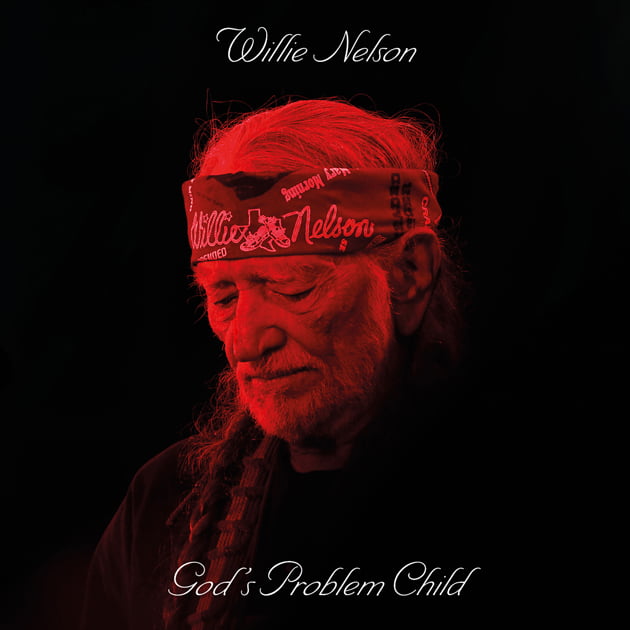
Death: it’s no laughing matter. There’s nothing really funny about staring down the end of things, and most of us spend our entire lives — as long as we’re lucky to have them — thinking of clever ways to avoid the inevitable fact that, yeah, this wild ride is all going to end somewhere. Very few of us, however, have to be confronted with news of our own mortality on a regular basis: Our own obituaries are the one piece of journalism that none of us ever really expects to read, unless you believe in heaven and that God gets your local paper. Or, you’re Willie Nelson, and the media has obsessively reported on the fact that you may or may not be currently breathing since your hair first went gray.

But Nelson is breathing — and inhaling — as boldly as ever on God’s Problem Child, his newest LP, and he’s “Still Not Dead,” as he proclaims on a song written with his producer Buddy Cannon. Sonically, it’s like a bookend to his classic “On the Road Again,” buoyant and swinging: He’s still on the road to somewhere and he’s just as surprised as anyone that he’s alive and kicking. But shouldn’t we all be? Waking up in the morning is never a given; it’s a gift, and Nelson knows it. “Don’t bury me, I’ve got a show to play,” he sings, playing licks on his beloved guitar that bloom with both youthful vitality and aged wisdom. Nelson doesn’t value life because death is now tangible. He values life because he doesn’t live like it is. Thankfully for us, he plays music like it, too.

Sam Outlaw, ‘Trouble’

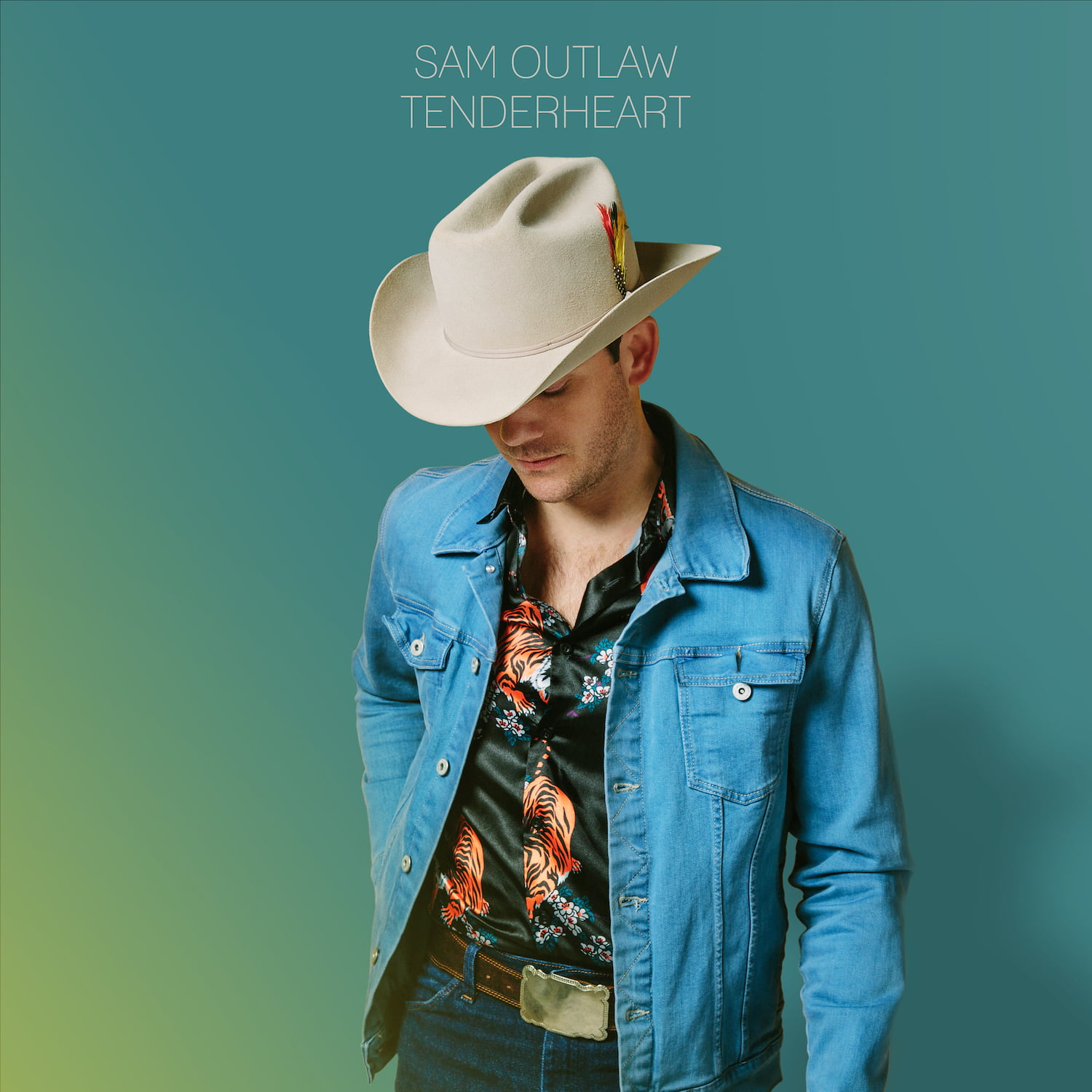
Earlier this week, a festival called Tumbleweed — billed as “America’s Outlaw Country Music Festival” — dropped their lineup. With artists like Jamey Johnson, Cody Jinks, and Billie Joe Shaver, it’s chock full of terrific acts, with one exception: women. Zero. Zilch. Nada. Though the event’s organizers claimed they extended invitations to female performers, it makes one thing clear. And that’s how the music we consider to be “outlaw” is so often synonymous with a tough, proto-male way of doing things — scruffy bar songs, big scruffier beards, jeans as untailored as the music itself. And definitely no pink.

One of the things that’s most refreshing about Sam Outlaw is how he challenges this theory to the bone. “Outlaw” wasn’t his given name, but belonged to his mother, so it’s a moniker he chose to use himself. Thus Outlaw, who, on his second album, Tenderheart, embraces the soft, the sweet, and the gorgeous over scruffy and gruff, is almost trolling country conventions: You’re literally forced to call him an outlaw while his music veers toward the relaxed and subtle, and with more of a sense of humor than any textbook “outlaw” would ever boast. On songs like “Trouble,” you picture him driving down Sunset Boulevard in a convertible with the top down, not in a pickup truck or on a motorcycle. With a touch of Tom Petty, John Mellencamp, and the carefree spirit of ’90s pop, he’s not even the bad guy. Instead, it’s someone else who is pushing him to the dark side, and he has enough wherewithal to let them go. To add insult to macho injury, some of Tenderheart’s promo art is — gasp! — pink. That’s Outlaw, but it’s not outlaw, and that’s the magic of it.

WATCH: Jason Eady, ‘Why I Left Atlanta’

Artist: Jason Eady
Hometown: Fort Worth, TX
Song: “Why I Left Atlanta”
Album: Jason Eady
Release Date: April 21, 2017
Label: Old Guitar Records / Thirty Tigers

In Their Words: “This song is about a relationship that ended through no one’s fault, but simply because two people grew in different directions and the aftermath of that. Casey Pierce (the director) came up with the idea of showing it from both sides, and I think it ended up capturing exactly what the song is about. The two people in this video are both handling the split in their own way, and the way that they are each handling it shows exactly how far apart they had become.” — Jason Eady


Photo credit: Anthony Barlich