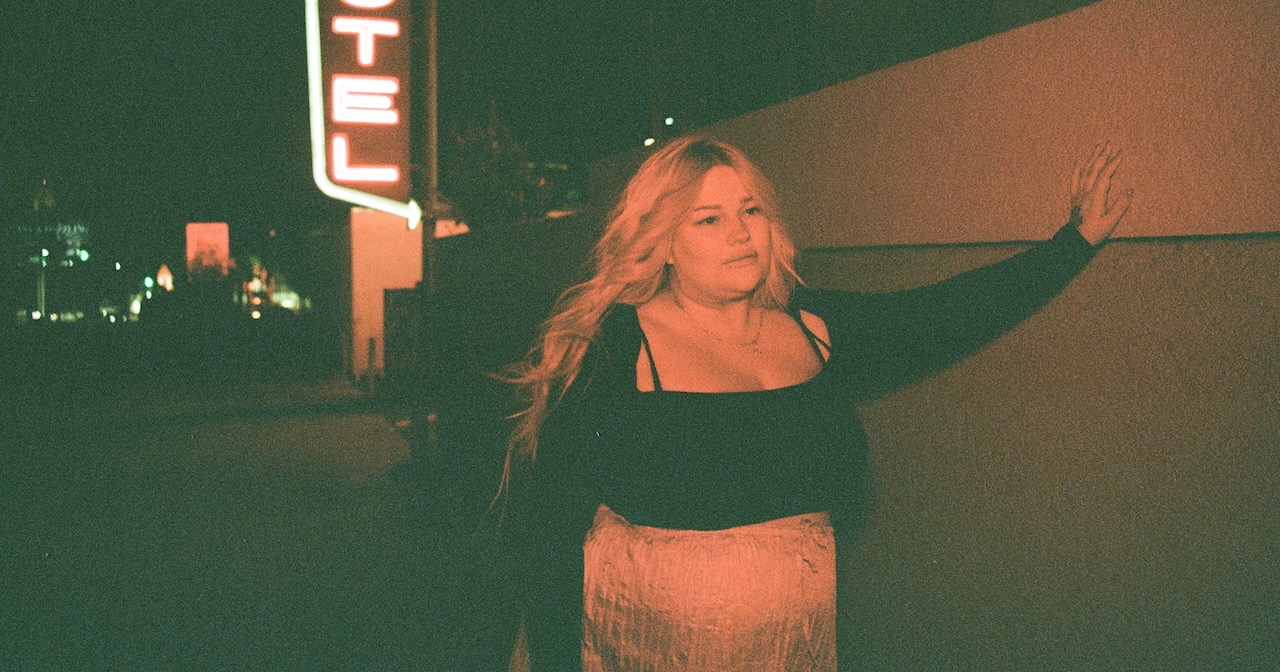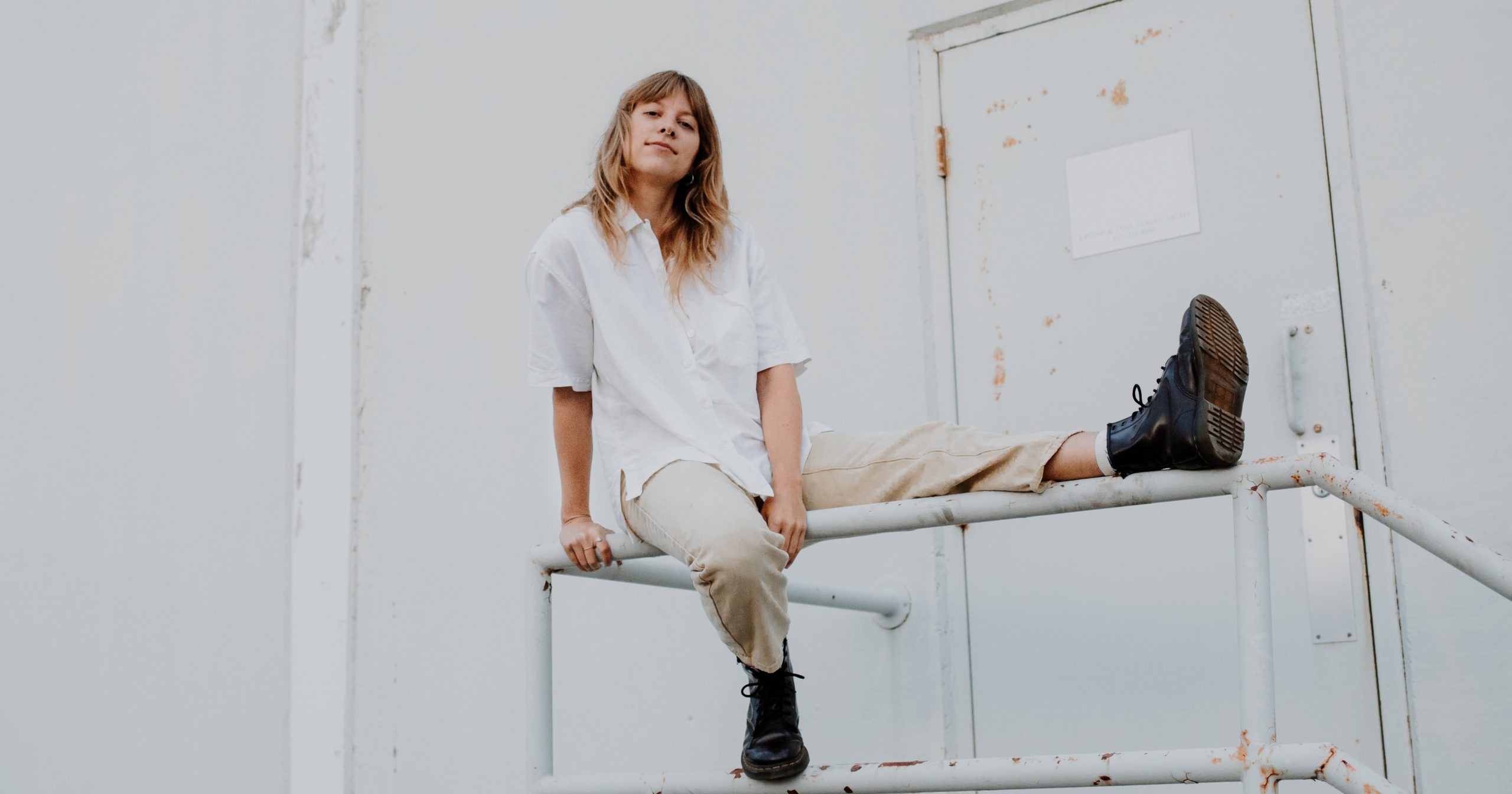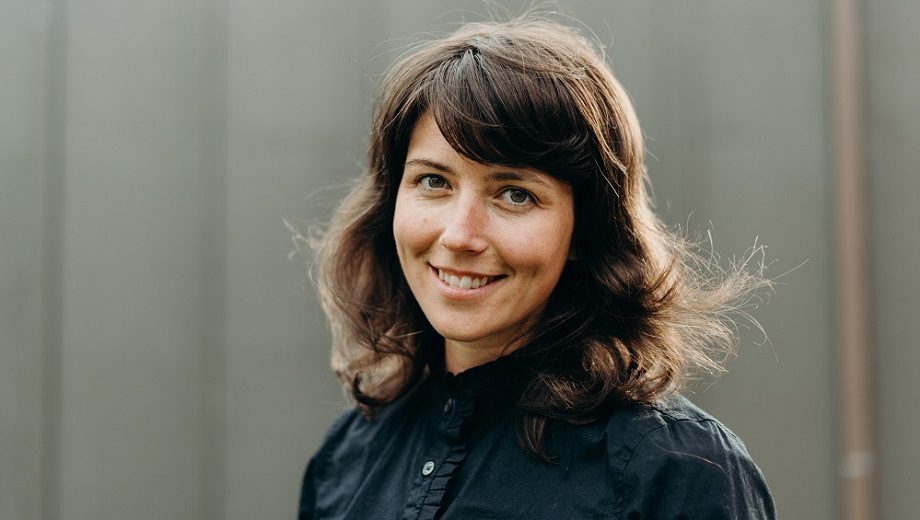
A One-of-a-Kind Conversation with Jonny Fritz

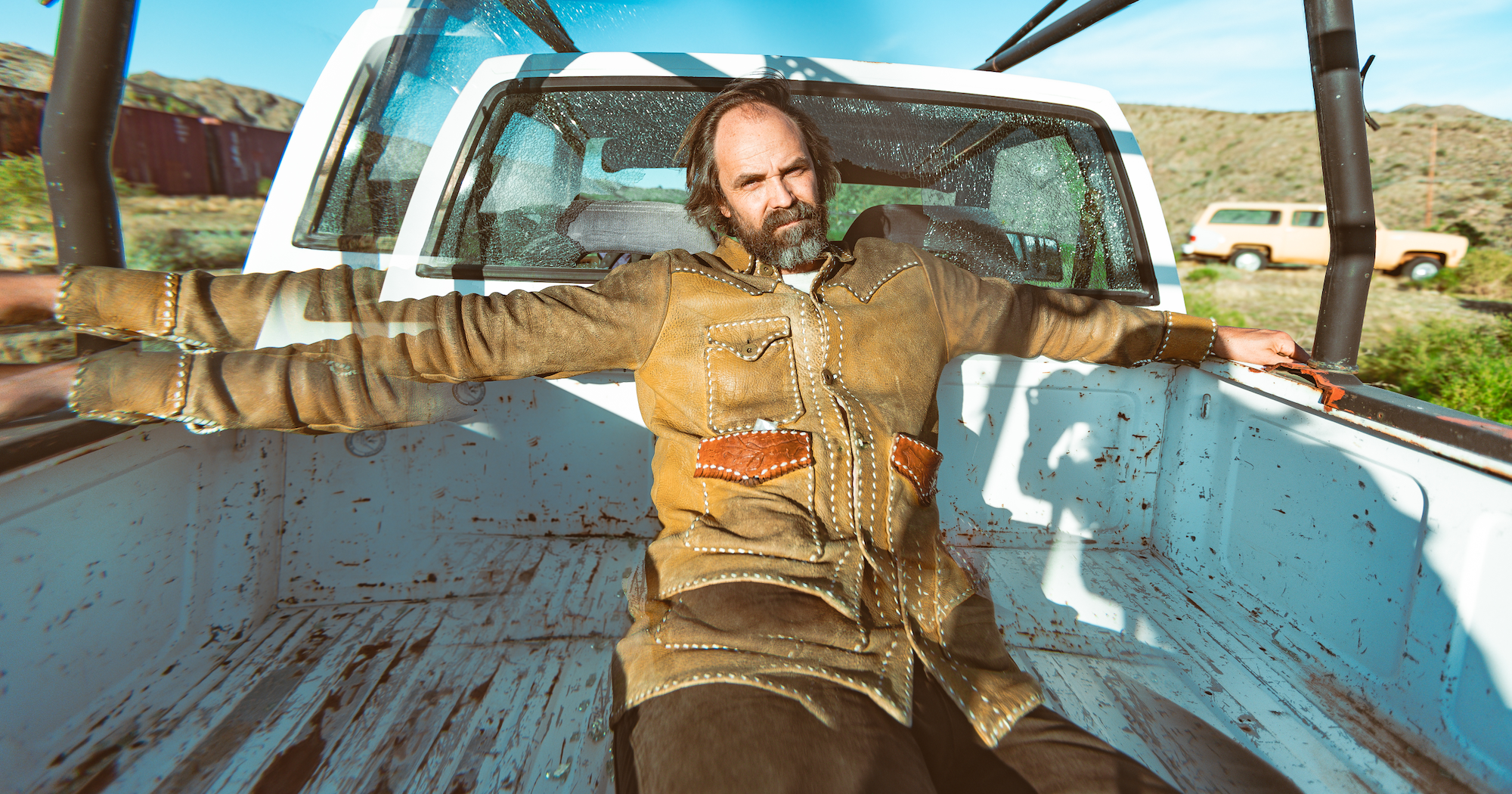
It is deeply joyful sitting with Jonny Fritz at a restaurant he suggested (Pollos Puebla #1) in an area of Los Angeles he’s an expert on (Pasadena/Altadena border) and talking about subjects he thinks about a lot, ranging from rebirthing ceremonies to alimony to how…“different” Nashville is now. He’s keenly honest about his life, his work, and his thoughts about any question thrown his way. Nothing is out of line or off limits. Nothing is filtered by a publicist or an agenda. It is off the cuff and real and wild.

We met over grilled chicken, rice, and beans to discuss his newest work, Debbie Downers (Woodwinds), a reimagining of the original 2025 album Debbie Downers. The conversation unfolded much like the album, with unexpected turns and humor that expose raw nerves about an unfriendly music industry, the beauty of PG Tips, the subtlety of serving a song, and the goal of taking a ride on the wave of a sliced open above-ground pool.

Well, let’s talk about Woodwinds. I’m a huge woodwind fan. How’d this come about?

Jonny Fritz: Oh, yeah? Me too. I love woodwinds. I’ve always loved them. I think they’re so great.

It’s so expensive making a record. It’s just stupid, you know? For example, the last record I made, Sweet Creep, I made it pretty cheap. I think it cost about 12,000 bucks. But ATO Records had an option on it so they could pick it up. They bought Dad Country, the record before that, for 5,000 bucks. It cost me five grand to make. “We’ll pay you five grand for it.” All right, fine. And then, hidden in the contract – or at least hidden to me – they got the option on the next one. Same deal. So when I made Sweet Creep they picked up the option. So for $5,000, they got this record that cost me $12k. I was like, “Jesus, man, this business is so rough.” And I just knew it was going to be something similar with the next one.

By this one, Debbie Downers, I thought, “What do I really want to do?” I might as well just do what I want, because there’s nothing worse than having something be expensive and unsatisfactory. I just decided I really wanted to make the record over and over and over again. I have a bunch of different visions for how it should go and I wouldn’t call any of them the one.

The Woodwinds one was something I’ve always just wanted to do. So I’m pretty pleased with it. I got this amazing guy in Highland Park who does film and TV stuff. There’s not a lot of work going on right now, so he was willing to do it. And the first couple of arrangements that he came up with, I was just giddy. I couldn’t believe how cool it was.

Were there any revelations for you? When you heard them in that arrangement, was there anything that shocked you about it?

Hmm… Yeah, some of the versions with the woodwinds really lent themselves to the winds better than any other version. I wrote this song called “Have You Seen Her.” I wrote it coming off of anesthesia. I was out of my mind. I got a hip replacement at UCLA 10 years ago. You know, coming off anesthesia affects people in weird ways. I’m one of them. It really got me, I wrote this song and I felt like it was the most brilliant thing.

It was so embarrassing. I wrote everybody who I knew who was high up at Rolling Stone, and all the Newport Folk Festival team, and all their PR team. I mean, I wrote everybody. And I wrote these really incoherent emails. I haven’t actually looked at them in a long time. I looked at them right after I wrote them and I was so ashamed. But I wrote all these emails being like, “You’re gonna want to get Scarlett Johansson down here. I need to perform this for her. And you need to get Joaquin [Phoenix] here, too.”

I’m not a social climber, but there was something in me that was like, “You need to make some moves. Call out a lifeline.” I was so ashamed of it for so long, because it was one of the most embarrassing moments in my life, for sure.

All of that to say, I didn’t want to play it or record it. I had to overcome it, admit it, and start talking about it. When I heard it with the woodwinds, I was blown away.

Years ago, I worked with Chris Crofton on a comedy event at Third Man Records that involved a compilation of found video footage that was submitted. There were so many submissions of people coming out of anesthesia, and I remember Chris immediately going, “No, that isn’t funny.” It really isn’t; you aren’t in your right mind.

God bless that man. He always knows exactly what the fuck is up. He is driven by pure heart and knows exactly where his morals should be. He’s incorruptible.

Do you spend a lot of time on social media? What is your relationship to it as a creator?

Pretty passive. I like social media. I feel like I’m kind of floating above social media. By like eight feet, just kind of looking down at it. Like, “What are you guys doing? That’s insane.” Then I dive into it to interact, and then just kind of get out of it. I get a little hooked on it for sure, but I hear about the addictions and the stuff that people fall for, and just like the amount of engagement. But it’s like engagement versus quality of life. I get so much fulfillment from everything else. I like playing with it. I always have fun with it, but I try not to let it get sticky.

Well, one of my favorite social media posts in the past bit is the one with your kiddo singing “Tea Man.”

Oh, wasn’t that so sweet?

So sweet.

She’s 6.5 now. She was like 2.5 then. And I just was like, I can’t post this. It felt so…I don’t know…

Personal?

It was personal, but I didn’t have a problem with that. I definitely want to protect her, you know? But that’s not her anymore. She doesn’t even look like that. She’s like doubled since that song came out. But then I was like, “Oh, fuck yeah, I’m posting this!” There was no risk of seeing her in public and recognizing that she’s the girl from the video.

Are you a tea man? In real life?

I got a PG Tips tattoo. I really like tea. I drink enough tea to float a canoe every day.

Really? All caffeinated?

Usually. Well, when I’m on tour, yeah. I get so tired. I can’t really mess with coffee. It just makes me so jittery. But I can just drink tea all day.

Are you an equal opportunist, or is it mostly black tea?

Oh, I like it all. Really like it all, but I love the black stuff, though. I think it happened when I was on tour 10 years ago with Josh Hedley. We were in England somewhere on a train, and they came down the lane with a steaming cart and it was £1 for a cup of tea. I don’t have an addictive personality. I don’t care about alcohol or anything. But I felt like, “Oh, I’m in trouble.” Just sitting on a cold, rainy train going through England with a cup of PG Tips.

It reminded me of something I heard about Andy Warhol. Although I’m not a big fan, I don’t know much about the guy. But what I do know about him is that one thing that made me really like him. I heard that he doused his whole world in a certain scent for a season. For example, in the summer of ‘63, he would just cover everything with lavender oil. And then come winter, it would be a totally different scent. And you’d put lavender away, and it’d be bergamot. So then the sense memory of whatever happened around that time would be so strongly connected to that scent that you could be completely brought back. And I really love that.

I think there’s something to it with the tea thing, because that tour was really big for me. It was a fantastic time. It was a really, really wonderful, lovely tour, and drinking PG Tips like that, I just got into English culture too. Everywhere you go, somebody’s like, “Well, you want a cup of tea?” Like, yes, I fucking do. I decided I’m never turning down a cup of tea. And I never have since.

Tell me about writing “Hot Chicken Condos” with Jordan [Lehning] and Skylar [Wilson]. I deeply connect with that song because I also left Tennessee, and for many of the reasons you list in the song.

Yeah, that was the point. Everybody who really gets this place will really understand these things, even like Pit Bull puppies in parking lots.

And humidity.

Fucking unrelenting humidity.

Were those things you were storing? How did that song come about?

God, why I love writing with Jordan and Skyler is because they don’t bring any ego to the write. They don’t fucking care. They’re just such good vibes. I’m really pretty neurotic about writing and also I’m pretty protective of my words, too. When I get into the writing space, I’m just so sensitive about what’s being said. So if somebody says or suggests the wrong thing, I can quickly be like, “This is the wrong association.” I can be a little trigger-happy.

But with Jordan and Skylar, they’re always just like, “Just play what you got.” And they usually edit everything that I have. With that song, one of the lyrics was “Mustard in the corner of his tiny little mouth.” And Jordan said, “Why don’t you say, ‘Mustard cracking in the corner of his tiny little mouth?'” And it was perfect. Mark Twain said the difference between the right word and almost the right word was the difference between lightning and the lightning bug.

It’s so true.

I got to hang out with Guy Clark once in Nashville, and it was like one of the best moments of my Nashville career. I was going through really bad writer’s block. And I asked him, “Do you ever get stuck?” And he said, “Yeah… Do you ever write with other people?” And I told him, “I don’t like the idea of giving somebody 50% of the song just because they’re sitting in the same room.” He leaned over and he goes, “Well, you never would have fucking wrote it if they weren’t sitting there.”

I was like, “Damn, old man schooled me.” Because so much of writing, I feel like, is picking up on something else that’s happening. And who’s to say you don’t owe somebody credit just because they’re sitting there?

The other thing that Jordan suggested for [“Hot Chicken Condos”], which was so right on, was that he asked me how high I could go on the Tennessee part. I told him I could go falsetto, and he told me to try it. I hit it and he said, “That’s it.” He took an idea of a song and made it a song. I just so appreciate those guys.

I just feel it is like a pedal steel player who plays about eight notes per song. That’s the best player in town, ‘cause all the other players are nonstop. Same with fiddle. Take Josh Hedley. The guy just stands there most of the time, then he pulls out something incredible, and he sets it back down. He doesn’t overplay. If you don’t overwrite and you don’t overplay, those are heavy attributes.

Those are both things to do in service of the song, not in service of self.

Absolutely. You know who I saw last night was Erin Rae. Kevin Morby and I were standing next to each other, just like, ”Oh my god, she’s so good.” One of the most amazing things about her is that she underplays the guitar. She’s playing the whole time, but if you really focus on how much she is actually playing, it is barely. It’s just enough to fill in where she’s not singing and she works the mic so well.

All those things are so important, but nobody teaches them, you know? You have to kind of know it. It’s innate, right?

Or you got to learn it trial by fire. And you have to be playing with players who know what they are doing to learn that.

Yeah. That’s right. Sometimes people are technically good, but they just don’t stop noodling, and it sucks.

You took a long hiatus from music, huh?

I did. I took nine years between records. I didn’t mean to. And I didn’t actually think that I was doing it. I was playing shows here and there. I blame it on real estate. I got into real estate because my heart got broken from music so many times from wanting to do better. Wanting to succeed more. Really, really caring what people said and thought and comparing myself. All the things you really shouldn’t do ever in any aspect of life. I mean, if you did that in a relationship, then your therapist would be like, “That’s your problem. Stop. Don’t do that.”

I couldn’t get out of it. I just felt so bad about how it was going. And I know what I’m doing is not for everybody, and it’s not gonna take off. But I love what I do. I’m not putting myself down, but I just knew my ambition was a lot faster than everybody’s interests. It was just wearing on me and I needed to do something that’s purely about money and doesn’t have anything to do with creativity, because I’m just getting my feelings hurt. And I got polyps in my vocal cords. I was touring too much. It just wasn’t going well.

So I thought, “I’m just going to pivot. I’ll still do shows and if somebody asks me to do something, I’ll do it. I love music.” I stopped prioritizing writing. I stopped prioritizing recording, and then the pandemic happened, and I had a kid, and real estate took off, and I looked up, and it was 9 years. It really was like, “Oh, crap, how did that happen?” It shocked me.

What’s your writing process like typically? Do you write everywhere?

I write everywhere. I use my voice memos a lot. I really love just making up new country songs and fake country songs – like, really bad ones. I find that if I can get them out, I can expand upon them or delete them and move on.

I was writing with Skylar [Wilson] one time and we were trying to write a song called “Remember the Alimony?” We wrote for hours and hours and it was a stupid song and it didn’t go anywhere. It went, “I’m just a poor man. All I eat is beans and write checks to my ex, one and only. I rolled the dice, but I lost my wife. But I remember the alimony.” So stupid. God. But we were writing all day and just hanging out, and neither of us thought to finish it. It just didn’t work. But then I got home and I had like 6 other song ideas that went on Sweet Creep. It’s that muscle thing that everybody talks about.

I’m also a pleasure seeker to the nth degree. If things aren’t fun, I just drop them so quick. I’m really bad about that. So I just make sure that it’s really fun and get the idea out quickly. I try to stay hovering above it, just stay light. Because as soon as I dig into it, that’s when I’m like, “Oh, my God, right. I don’t know how to do this.” Just keep it fun and it will grow. But I like to write all the time, every day.

Do you wake up and do it?

It is in the shower, on the way to school, washing dishes. You know, when you have a great idea and no way to write it down.

Soapy hands! Sometimes it happens when there’s an absence of anything else and those ideas pop up.

I have to really protect myself when I’m diving in. I wash all the dishes, do all the laundry, sweep up a bit, and make sure no one is going to ask me for anything. I’m really self-conscious about that. If nobody is home, I’m going to the basement and putting on Ken Burns’ Civil War, and I turn the radio on at low levels where it is just kind of humming. I drink a tremendous amount of caffeine. That’s my favorite.

But it is intense. I can get really emotionally rocky after diving in pretty deep.

I was thinking about Roger Miller when you were talking about the “Alimony” song. I’m drawn to that kind of writing because you can get really dark while staying very light.

People think that the meat is deep, but the nerves are on the surface. There’s meat down there, but it’s dead. I feel like the most cutting and incredible songs kind of sound like an email to an old friend. My favorite Lucinda Williams songs all sound like they were written to a buddy.

Or she’s talking to somebody over tea.

So true. And John Prine, too. Everyone’s like, “How did they do it?” They just did it. They’re just talking.

Will you play any live shows with the woodwinds?

Yes, actually, April 14, we’re doing a free show at Zebulon. It’s going to be good. I have this giant golf ball, it’s like a concession stand, and I’m bringing that to the show. The whole point of it is to give away free tea. It’s my tea ball. The tea is free, just buy a house from me!

What will the live configuration look like? How many players will you have?

Four, but they play multiple winds. It’s the players on the record. They’re such pros. They’re all symphony kids.

There’s something about stripping it down to just woodwinds; it’s so cinematic. It takes you directly to the meat and it makes you lighter when it is time, as music does for film. It helps direct your emotional experience.

I like that. I’ve always loved demos of songs. Sometimes I just want to hear someone play the songs, not the record. Or just hear someone sing it. As close to the song as I can get, I’m most happy. I love a cappella stuff. Sometimes the most powerful way to arrange a song is to remove everything.

With winds, too, it’s nice because that’s pretty much it. There’s the vocal and then there’s some wind behind it. I love that.

At the top of my notes that I took while listening to the record, I have the words “jello rebirth” scribbled down regarding the song “Polished Turd.” Can you tell me more about that concept?

For this record, it was a bit of a cynical and fatalistic career thought, but I wanted to make a record of real estate songs. The whole idea behind it was that people would hear it and would say, “This sucks.” And my reply can be, “Yes. That’s what happens when you give up on your dreams.” Music really suffers when you just write about what you’re doing. It’s like this martyrdom thing.

You know the three D’s in real estate are like death, diapers, and divorce – all the things that make people sell their homes. So I wrote one that went, “Death, diapers, and divorce. And the lottery, of course.”

During the pandemic, I had this fantasy of buying someone an above-ground pool. Have you heard of rebirthing ceremonies?

No.

Oh, rebirthing ceremonies are a thing. A fucking thing. People simulate a mother’s vagina in like a mega fucked up Christian ceremony. They make you relive your birth so you can be reborn and let go of all your childhood traumas. They have a gelatinous vagina and people push themselves through it. So anyway, I got that in my mind and thought, “What the hell is this world?” But I could see that for real estate, like a used car salesman going, “We are doing rebirthing ceremonies, come on down!”

And I have always wanted to slide through the tsunami of an above-ground pool that gets sliced open.

Yeah, that does look fun.

Right, who hasn’t wanted to do that? But then I want to turn it into jello. And then I thought maybe I should do that for my clients or have a commercial about it. I could cut a slice in the pool with a katana sword, then they’d ride in slow motion through the incision of the above-ground pool, I could hand them the keys, and they’d be reborn into home ownership. Follow me?

Yep.

That is a song very near and dear to me, but it is a hard one to explain. What was your experience with it?

Well my first thought was that wherever it was coming from and whatever it meant, you have thought a lot about it.

Fair enough, that’s true.


Photo Credit: Bobbi Rich
Despite a Sad And Beautiful World, Mavis Staples Still Transcends

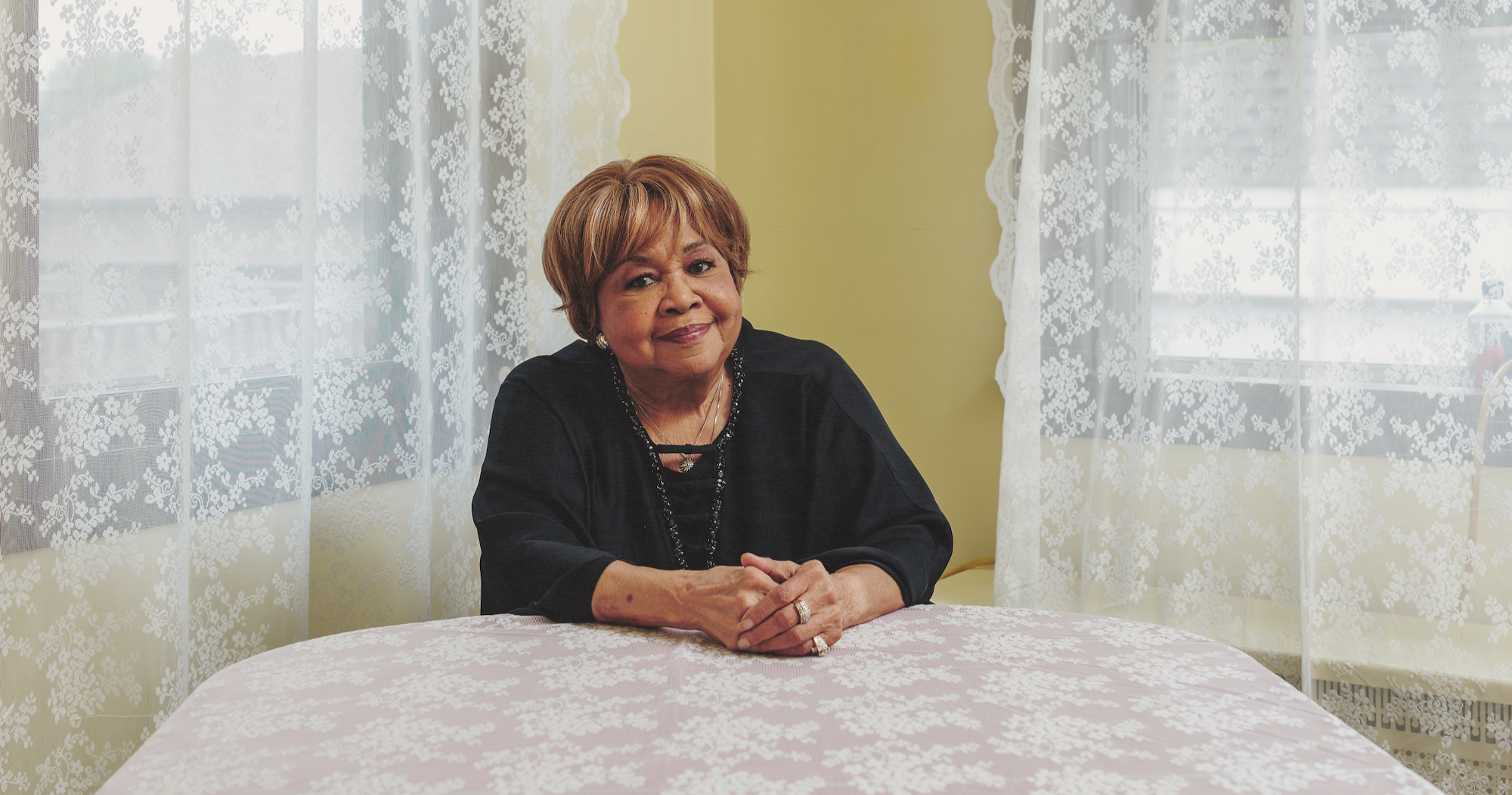
Such words as “legendary,” “transcendent,” and “magnificent,” while accurate, only skim the surface in describing the greatness of vocalist Mavis Staples. There’s no idiomatic area where she doesn’t excel and no song, regardless of origin or writer, that she can’t turn into a personal triumph. She’s also a genuine survivor, both in the familial (she’s the last living member of the Staple Singers) and socio-political sense (she’s a cultural warrior and champion of the Civil Rights era whose resonant voice has inspired generations of listeners).

For many artists, claiming they’ve gotten better with age is at best polite overstatement, and at worst woeful exaggeration. But Staples at 86 still has the authoritative edge, tonal quality, and lyrical flair that’s always marked her performances. It seems hard to believe she’s been singing since childhood, and listening to the 10 tracks on her newest release, Sad And Beautiful World (released November 7 by Anti), you hear the confident, jubilant sound of a vocal titan.

That Staples can cover with equal distinction and flair songs penned by Tom Waits, Curtis Mayfield, Gillian Welch & David Rawlings, Leonard Cohen, and Frank Ocean reaffirms her versatility. Producer Brad Cook smartly lets her voice dominate through each setting, regardless of instrumental backdrops, tempo or lyrical setting. Her spoken word narrative adds additional punch to the cover of Ocean’s “Godspeed” and underscores its recurring themes of urgency and redemption that fuel the album’s sensibility.

But the album also contains prominent message tracks, most notably “We Got To Have Peace,” a number whose tone and lyrics couldn’t be more timely in an era where it seems lunacy often runs supreme. “Anthem” and “Satisfied Mind” are just as powerful and energetic in their declarations of the importance of persistence, kindness, and goodwill. “Everybody Needs Love” provides the perfect finale, with Staples superbly punctuating its theme and completing a 38-minute epic work. Indeed, songwriter Kevin Morby has offered perhaps the best tribute to Staples’ brilliance possible, when he gave a press statement about what it meant to have her doing his song “Beautiful Strangers,” which is another memorable and passionate number.

“It isn’t easy to put into words what it feels like having one of the best, most important vocalists and cultural figures of both the 20th and 21st century sing one of my songs,” Morby said. “But hearing Mavis sing ‘Beautiful Strangers’ is hands down the greatest moment and highest honor of my career. Far beyond any kind of accolade or acclaim – having one of my biggest heroes sing something I wrote is the most validating and flattering thing that could ever happen to me as a songwriter and person. Thank you, Mavis.”

Staples has been awesome for so long, sometimes it’s easy to forget how many different periods and genres her artistry covers. The original family unit the Staple Singers were gospel and folk song giants. The unit included her sisters Cleotha and Yvonne, plus her brother Pervis, her father Pops, whose roots reached back to the seminal days of Delta blues, and Charlie Patton, who served as anchor, both vocally and on guitar. The Staple Singers began singing in Chicago churches in the late ’40s, became recording artists in the early ’50s, and earned their first hit with “Uncloudy Day” in 1952, recorded for the Black-owned label Vee-Jay. By the ’60s they were a cornerstone unit of the Civil Rights Movement, often accompanying Dr. Martin Luther King at rallies.

Mavis began really getting noticed as a solo performer during their transition in the late ’60s and early ’70s to a soul and pop unit. The decision to sign with Stax Records and the shift to secular music was one Pops often acknowledged as a controversial one, but it ultimately paid off as the group’s status elevated into crossover stars. They had eight Top hits in the early and mid-’70s; “I’ll Take You There” and “Let’s Do It Again” were chart toppers and “Who Took The Merry Out of Christmas” reached number two. Mavis also cut her first solo single in the late ’60s, then a full self-titled release for Stax in 1969. Their songs were expertly produced, featuring the crisp and outstanding backing of Booker T. & the MGs. Other essential hits included “I’ll Take You There” and “Respect Yourself.”

Slowly but surely, Mavis began to establish herself outside the Staples family trademark. Her soundtrack LP, A Piece of the Action on Curtis Mayfield’s label, helped her reach some new audiences, as did another self-titled mid-‘80s LP. But it was a pair of releases produced by Prince in the ’90s that really helped her reach the next generation of listeners. The second by the duo, The Voice, was another masterpiece. It included her magical version of Prince’s “Positivity,” as well as a cover of “Melody Cool” from the film Graffiti Bridge. Staples returned to the church in 1996 for a marvelous release, Spirituals & Gospels: Dedicated to Mahalia Jackson, that personified the close friendship that Jackson had with the entire Staples family and her influence on Mavis, personally and professionally.

Over the course of the 21st century, Mavis Staples has unquestionably become an iconic figure. The roster of artists with whom she’s worked over the course of her remarkable career is an astonishing one, both in terms of talent and musical approach. She’s recorded with jazz guitarist John Scofield, Los Lobos, Bob Dylan, Johnny Paycheck, Natalie Merchant, George Jones, Delbert McClinton, Aretha Franklin, Nona Hendryx, and Ann Peebles, to cite only a handful. Staples has also continued making emphatic message albums, among them the 2017 dynamo If All I Was Was Black. Her voice has been sampled by rappers and hip-hop and pop artists like Salt ‘N’ Pepa, Ice Cube, Ludacris, and Hozier.

Mavis also been featured in a host of television shows and films, among them The Tonight Show with Jay Leno, The Late Show With David Letterman, Conan, and “CBS Saturday Morning: Saturday Sessions,” and she was the featured performer on the very first episode of The Late Show With Stephen Colbert. Her film resume includes appearances in Martin Scorsese’s The Last Waltz and Antoine Fuqua’s documentary Lightning in a Bottle, about the Salute to the Blues concert at Radio City Music Hall in February 2003.

Mavis!, the first feature documentary about Staples and the Staple Singers, was directed by Jessica Edwards and had its world premiere at SXSW in March 2015. It was later screened in theaters and was broadcast on HBO in February 2016, eventually winning a Peabody Award. Her appearance with Mahalia Jackson at the 1969 Harlem Cultural Festival is among the many highlights in the award-winning documentary Summer of Soul, which was released in 2021. Staples has even been portrayed on film, played by Laura Kariuki in the 2024 hit film, A Complete Unknown.

Staples has rightly won numerous awards. The array includes three GRAMMYs and a GRAMMY Lifetime Achievement Award, induction into the Rock and Roll, Gospel Music, and Blues Halls of Fame, and having been a Kennedy Center Honoree. The Rock and Roll Hall of Fame honored her a second time in 2019 with the inaugural Rock Hall Honors Award for her solo work. Rolling Stone named her 56th among the “100 Greatest Singers of all Time” in 2008, though there was already no question about her inclusion in that select company.

Amazingly, there doesn’t seem to be any slowing down for Mavis Staples. She celebrated her 80th birthday at the Apollo Theater in 2019, returning to the famed venue where she first appeared as a teenager 63 years before that date. She did a series of collaborative birthday concerts that year with special guests that included David Byrne and Norah Jones. She also collaborated with Run the Jewels on the track “Pulling the Pin” from their studio album RTJ4. In 2022, Staples released Carry Me Home, a collaborative effort with the late Levon Helm that they recorded together at Helm’s Midnight Ramble in 2011.

She’s already announced upcoming tour dates for 2026 at three famous sites: Chicago’s Chicago Theatre, Nashville’s Ryman Auditorium, and New York’s Beacon Theatre. Mavis Staples also remains a voice for social justice. Way back in 2010, she performed at the Rally to Restore Sanity and/or Fear alongside singer Jeff Tweedy. In 2011, she was joined onstage at the Outside Lands Music And Arts Festival by Arcade Fire singer Win Butler. The two performed a version of “The Weight” by The Band. Shortly after the release of her 2016 LP Livin’ On A High Note, produced by M. Ward with songs written for her by Nick Cave, Justin Vernon, Neko Case, and others, Staples issued these prophetic words:

I’ve been singing my freedom songs and I wanted to stretch out and sing some songs that were new. I told the writers I was looking for some joyful songs. I want to leave something to lift people up; I’m so busy making people cry, not from sadness, but I’m always telling a part of history that brought us down and I’m trying to bring us back up.

These songwriters gave me a challenge. They gave me that feeling of, “Hey, I can hang! I can still do this!” There’s a variety, and it makes me feel refreshed and brand new. Just like Benjamin Booker wrote on the opening track, “I got friends and I got love around me, I got people, the people who love me.” I’m living on a high note, I’m above the clouds. I’m just so grateful. I must be the happiest old girl in the world. Yes, indeed.

Anyone paying attention to the songs on Sad And Beautiful World knows that’s still the case with Mavis Staples’ music.


Photo Credit: Elizabeth De La Piedra

Swedish Singer-Songwriter Sarah Klang Brings ‘Beautiful Woman’ Stateside

I meet Swedish performer and singer-songwriter Sarah Klang in the glorious maximalist backstage area at Nashville’s the Blue Room before her first-ever Music City show in mid-January. She’s cozy on the couch, a tin of pouched nicotine by her side, a hippo skull on the coffee table in front of us, and her brand new album, Beautiful Woman (out February 7) on our minds. The first thing I notice – besides her beautiful tattoos and the shimmering gemstone stud on one of her teeth – is her gaudy and gorgeous red-white-and-blue acrylic nails. Complete with rhinestones and glitter.

To Klang, the country aesthetic is the “coolest,” and in her part of the world she’s seen as something of a country queen. Her work across her discography varies greatly in genres and sonics, including folk, indie, pop, Americana, and so much more. But Beautiful Woman, which was produced by Eric D. Johnson (Fruit Bats, Bonny Light Horseman) doesn’t feel like Klang is just putting on rootsiness because it’s “cool” or “in” or trending. These are sonic spaces she knows well and strides through with ease.

Beautiful Woman boasts bold and brash moments that feel like Adele covering The SteelDrivers alongside tender story songs that could have almost been pulled from the catalogs of country queens this side of the Atlantic like Loretta Lynn and Dolly Parton. Danceable tracks, finger-picked ballads, and honest lyrics speak to impactful issues of motherhood, agency, feminism, embodiment – and so much more – but still feel light and joyful, leaning forward in the beat and finding hope in the melancholic.

Catching her debut Nashville performance at the Blue Room felt a bit momentous, though Klang seemed remarkably chill and relaxed, on and off stage. She and collaborator Theo Stocks (who also helps record and produce her projects) performed in duet, with lush reverbs and simple backing percussion tracks to a rapt audience. An audience who knew they were lucky to have Klang on this “side of the pond.”

Before the show, we dove into Beautiful Woman, speaking about the death of genre, choosing your own joy, always wanting more banjos, and so much more.

Do you see what you do as roots music? How do you place your own music within roots or folk or Americana? Your music has so many things – it’s got moments of grandeur, it’s got moments of subtlety, it’s got indie, it’s got pop, it’s got a little bit of everything. But I wonder how you identify it.

Sarah Klang: That’s sort of a really hard question. I always feel it’s a little bit like I don’t really know the genres. So, mostly when I put out my albums, afterwards people will review them and they will tell me what genre it is and I will be like, “Yeah, yeah! Mhmm, that’s what it is.” Because I don’t really think about it.

I mean, I listen to so much– random indie, folk, Americana, all those things that you mentioned. And I’m introduced to iconic classical things mainly through Theo [Stocks], my guitarist that I make albums with, and also Eric [D. Johnson]. Like a very normal thing in the studio would be that they would say, “Oh, this is very Kris Kristofferson-ish.” And I would be like, “Could you play it for me?” And then they play the song, and I’m like, “Okay!”

I don’t really have a special aim for where I’m going, because I don’t have any roots in anything. Really. I know what I like. I know the feeling [of what] I’m after. I guess the sentimental [and the] bittersweet, those always end up in some sort of Americana thing.

If it’s not the genre, or style, or the aesthetic that you’re going for – or that you’re following – it sounds to me like you’re following the songs themselves and the feeling you’re trying to evoke.

Yes. I mean, it’s just like an imprinted thing in my brain, “What sounds do I like?” It has always been like that, really. I don’t really play any instruments anymore. I used to play the guitar and the piano, but now I don’t. We’ve been here [in Nashville] for seven days and had sessions every day and Theo knows very well how to describe [the sounds]. He’s kind of like my interpreter. How do you say it? My interpreter? When it comes to melodies and shorts [takes], because someone at the session could play me a bit and I’ll be like “Hmmm?” And Theo will say, “It’s the last short. She doesn’t want that last short. Let’s go with that instead.” He understands.

I think I just have quite a small range of melodies that I like. I mean, my songs are kind of similar, how they are made. The aesthetic of country music has always felt like that’s the only way to go. That’s the only aesthetic that really looks cool, you know? When I started to dress up in country-ish things in Sweden, people were like, “Okay, well she makes country music.” That’s how far they would go. So in Sweden I’m often categorized and called the country queen of Sweden. I get a little bit nervous about that, because I know so little about country music and you know that everybody has such strong opinions about it.


What’s funny to me is even with how strong of opinions people have about country and what it is, it’s always in the eye of the beholder.

I’ve obviously been listening a lot – maybe not classic country, whatever that is – but I mean, I’ve been listening to Kurt Vile, Kevin Morby, Sharon Van Etten, you know, those very big country rock people for a long time. I think that is my biggest influence, really. Then we take that and Theo and Eric on this album, who are just very nerdy in music, they put their spin on it.

But for me, it’s not important to me. Where this album lands, in which genre – I couldn’t care less. But, I think that’s why I started having a western aesthetic. ‘Cause it’s the coolest part, I think. I was like, “Okay, I’m gonna start a solo project. Where do I want to be? What’s cool?”

That, probably. [Laughs]

You’re talking about collaborating with Theo and Eric and it sounds like having that trust and having that rapport is really important to getting the music where you wanted to get it. When I listen through and I hear the banjo moments and the really rootsy and Americana moments, trying to connect the dots, how much of that came from Eric producing?

I asked for that specifically! I mean, if it were up to me, I would say, “More banjo! Put banjo on everything!” ‘Cause that makes everything a jam.

But the boys are more tasteful when it comes to that. When [Eric] played, I think I asked him to try and play on like every song – and not because I wanted to be a “diddly doo” out there, but just because that’s my vibe. I mean, when someone plays on a banjo, there is nothing more tearjerking.

Of course, “Last Forever” jumped out at me for that quality. That was the track from Beautiful Woman that we premiered on BGS. I think it’s my favorite song on the record. But there are so many moments that feel like you’re a genre shapeshifter. And I think that that’s the time we’re in too, genre’s dead. Even while we get more and more and more genre names every year, it feels like genre’s dead.

For me, it’s probably a good thing that it is. That I’m not locked in a genre. I don’t think I’m ever gonna have to be like, “Okay guys, I’m breaking free from this [genre.]” I don’t have to do like a Miley Cyrus thing – “look at my new clothes!” – because I wear everything and that’s nice because I think I’m gonna keep on producing albums as long as I can, and I would like to not be stuck if I were to start feeling this [genre] is boring.

I mean, I’m a huge house fan. I love dance music. When I was a teenager, I mostly listened to weird party drinking music from the UK. I always wanted to make a club album. So, hopefully I could just like sneak over there. When the time’s right. [Laughs]

Another song that jumped out at me as feeling really rootsy is “Childhood.” Not only because of the aesthetic of the song, but the storytelling of it and the nostalgia in it. Something about it feels kind of theatrical to me, too, and I think country is so theatrical.

Yeah, it’s very dramatic. I think when I’m making a song, I feel like “more is more” and if you are going in a certain direction, just go all-in and don’t cringe. Because then it’s just going to end up in some halfway world.

For me, with “Childhood” I was like, “Oh, is this song too nice? Is it too sweet?” Like, no! It’s great. It’s a great song. You just have to go all the way with the feelings. Because then if you don’t, I don’t think you’re going to reach the point you wanted to reach.

Many of my melodies, when I write, I ask myself or Theo or Eric, “Is this too pop-y? Does it sound too much like yada yada yada? Is this a rip off?” And they’re, “Let’s go for it!” You just go straight into that vibe and feeling.

Our music goes all the way into the feeling without hesitating if it might be too much. If you are driving your car, you want to listen to Tom Petty. And he wasn’t like, “Oh, I’m gonna write a song that is making people feel free… but it can’t be too much!” [Laughs]

“I want a driving song, but for 35 miles an hour.”

No! [Laughs] Pedal to the metal.

The overarching concepts that the album is talking about, I think what some people, especially in the U.S., would think these are deep topics – feminism, womanhood, gender and gender roles. But I found it interesting that even with these subjects, the music still feels joyful, it feels like it’s looking forward, it feels like it leans forward – in the beat, literally and figuratively. But, it doesn’t feel like cotton candy, and it doesn’t feel like you’re minimizing anything. Can you talk a little bit about that?

I mean, that makes me so happy that you felt that way. I’ve done interviews about this album in Sweden, with women, and they’re like, “Sarah, you do know that you are a beautiful woman now, right? And I’m like, that’s not the fucking point! As if I were singing it, meaning that that was the point. Maybe I thought when I was younger that that was a goal, but it’s not now.

I just want to write whatever comes to mind, and since English is not my first language, I have to write it very straight and simple. Like, “This is what happened, period.” I don’t really have the energy or time to hide the message. That is not my thing. Some people are great with that, leaving clues. I just write words – it’s also like, I’m busy I need to write the lyrics now! [Laughs]

I always ask my friend when I’ve done an album, “What is the catchphrase for this album? What would you say now when you heard it?” So, for VIRGO she was like, “This is your sex album.” And Mercedes, “This is your pregnancy album, obviously.” But this one, she was like, “I think this is a celebration of girlhood, period.” And I was like, “Yep, that’s perfect.” I’ll just use that. Because I obviously just collect songs. Over a period of time, and then I feel, well now it’s done. And I don’t write an album after a theme.

One of the things I love about the album is that it ends on “I Have Everything.” I like that that’s the way that you’re putting a punctuation mark on the album. Right now, I’m really worn out by attention economies, consumption, consumerism, and like, “buying our happiness.” I was really struck by that song. I love having it at the end; it feels like you are not just talking to us, your listeners, but you’re also talking to yourself. So I wanted to ask you about the song and about the placement of it in the sequence.

I think I wrote it to myself. Like, “Listen! Stop being a complete asshole all the time!” It’s annoying, but I’ve learned – and it’s nice, but it’s hard to talk about it without it sounding so cringey and boring – but the only thing that makes you happy is to take walks outside, be with your family, eat right, and take care of yourself. And that is boring, but it’s the truth. I always felt that people who said, “I wake up every morning and tell myself five things that I’m grateful for–” and I’m like, “Okay… that’s weird.” [Laughs]

If you do that, you will probably feel better. If you are nice to people around you, you will probably feel better. If you’re nice to yourself. I mean, grown up people have been telling me [this] all my life. During my 20s, through periods where I was just unhinged and didn’t feel right. They were like, “Well, maybe if you took a little better care of yourself and didn’t party so much and spent time with your family, you would feel better.” And I was like, “Listen, it’s more than that.”

Yeah, like I am so deep. [Laughs] My traumas are so deep! You have no idea! I’m a fuck up. And then, turns out you’re not. That’s a nice thing about getting a little bit older, you just know, “I’m gonna be fine.” And it’s also my responsibility to make that happen.

Every time somebody had ever told me that “joy is a choice” and “happiness is a choice,” I didn’t realize at first that what they meant was joy or happiness that you construct for yourself isn’t fake.

No! And it doesn’t undermine your sad parts. Like, that is always going to be there. Don’t worry. I think so many of us are just melancholic people. I mean, people have had worse experiences than I’ve had and are so chill and so fine.

I think happiness is definitely something you can work on and give to yourself, and it’s not like a miracle.


Photo Credit: Fredrika Eriksson

Into the Squishy Middle: Humbird Celebrates Being Wrong on ‘Right On’

When I first heard Right On, the new album from Humbird, (the moniker for Minnesota-based singer-songwriter Siri Undlin), I thought immediately of Jason Molina and Magnolia Electric Co. There’s an emotional rawness in the production paired with a choral background vocal style on songs like “Fast Food” that reflects a Midwestern landscape to my ears. Imagine a million ears of corn singing to nobody in the blazing heat of summer, right beside a sprawling concrete strip mall.

“Quilted miles of iron and wheat / does it count, if it just repeats?” Undlin sings.

I had the privilege of talking to Undlin over the phone about her new album, while she was at home in Minnesota and I was in a parking lot outside of a Barnes & Noble somewhere in Maryland. The first thing I asked was if she was familiar with Molina’s work, and much to my surprise, she was not. So, I will have to assume that what I heard as historical reference is merely a shared landscape of influence and delicious, melancholy songwriting.

Throughout her new album Right On, Humbird explores the human desire to retreat into ease, safety, and ignorance, rather than put oneself at risk of being wrong. Undlin begins this exploration with the experience of heartbreak, but quickly zooms out to include topics of cultural conflict, destruction of natural ecosystems, societal priorities, and gun violence. All the while, these songs ask us not to know the answers, but to merely be willing to ask the questions.

On “Child of Violence,”she sings: “I could be a break in the chain / you could be a break in the chain / you could be a piece of the change / When you talk about it call it by it’s name…”

I have been a fan of Humbird ever since I saw her performance at the Mile of Music Festival in Appleton, Wisconsin, this past summer and I was thrilled to get to interview her about this album.

Central to this record is a kind of celebration of being wrong. Can you speak to the specific benefits of being wrong and what being wrong means to you?

Siri Undlin: I find that there is a carefulness and reservedness, a real fear of being wrong, that often gets in the way of important conversations, and prevents people from trying to learn and do better. The reality is that sometimes you’re wrong, but you still have a responsibility to show up and be a part of things.

Ah, that makes sense. So on the title track you sing, “You might be dead wrong… at least you’re trying…” This particular song seems to be about a romantic relationship, but in a broader sense, is this about avoiding apathy?

Yes, it’s a central message of the album, and honestly I need to hear it as much as anyone. There is a time for resting and rejuvenating, but I think it’s important to be really honest with yourself about whether you are in that process, or whether you are making excuses because it’s hard. You have to be able to get into the squishy middle of things and really dig in.

I’m from Minnesota and in the wake of George Floyd’s murder, which I have written about explicitly on other records, I’ve had to realize how slow change can be. You have that initial communal outrage, but then what happens a year later? What happens two years later?

Whether its a global event or personal event, I’ve done a lot of growing up and I can’t just ignore these things. It’s a kind of rugged realism that comes with this greater knowledge, which can be really beautiful, but there’s a reframing that just has to happen.

When you talk about rugged realism, it makes me think of your song “Cornfields and Road Kill,” which is one of my favorites on the album.

That is my favorite song to play live and has been for years. I just think it’s one of the more honest songs I’ve ever written. I was able to capture a lot of what I feel about the landscapes where I’m from and the complexities and subtle beauty of it.

There’s so many road songs, but there’s very few songs written about the landscapes of the Midwest; roadkill and monocrops, soy and corn, and animals that are dead is the reality of traveling and the landscape and the economy of the area. It’s this visual representation of the choices that we’ve made about culture and society.

I was just mad about that when I wrote that song. I wrote it as a connecting tool and a bridge rather than just rage… but it is also just fun to be loud and turn up the amps and be cathartic…

I feel like the Midwest is having a real artistic moment right now with Waxahatchee/Plains and Kevin Morby, how do you think the Midwest and specifically Minnesota influence your work?

It’s tricky, because it’s such a subtly nuanced place in a lot of ways. It’s home, first and foremost, which is an endless topic of analysis. But creatively, I do feel really inspired by the landscape of the prairie, because of its subtleties. It’s a landscape you really have to sit with and pay attention to in order to understand it. You have to really slow down. I also think there’s a lot of space for a creative community, which is really exciting when you take into account income inequalities and the densities of the larger cities. There’s space here to collaborate and there’s not really the infrastructure that super ambitious people are interested in, so they move away… I think it was Prince who said that “The cold keeps the shitty people away!” [Laughs]

I am blown away by the production on this record, you worked with Shane Leonard who is another artist heavily rooted in the Midwest. What was the process like working with him, and what did that collaboration bring to the project?

Shane is a dear pal who I have recorded with before, so we have an established workflow. I, along with two of my bandmates, had been playing these songs live for a couple years on tour by the time we went to record, so going into it we were aiming to capture the live feeling of these songs, very much trying for the sound of a band in a room.

In approaching the record, I thought, let’s just go and hang with Shane and record live to tape and try to capture that energy. Because we do tackle heavy and weighty topics, but at the end of the day we still have a blast playing together.

I loved recording to tape. Instead of going into it with infinite options it was like, “Here’s how we play it and just do your best.” That infused the whole process with some magic and adrenaline, and it was awesome.

Humbird is a pretty fluid project, there’s a cast and crew of folks who are always shifting based on people’s lives, but I made the record with Pete Quirsfeld (drums) and Pat Keen (bass) and the three of us have been playing together for six-ish years. So these are road worn and comfortable songs that were ready to be captured.

I read that you spent a year doing research as a Watson Fellow. I’m interested to hear about what you were studying and how that has influenced your own music?

Yeah, the Watson Fellowship is this insane opportunity you basically do research on a topic of your choosing for a year. In my case, I was comparing Celtic and Nordic traditions and their storytelling. Historically, so much happened via trade routes and conflict, particularly in the balladry tradition and saga tradition, you will find that similar motifs and melodies crop up across folklore traditions that are also so specific to certain places.

I spent a year shadowing storytellers and musicians, compiling this bank of folk tales and ballads. I was doing a lot of writing and researching and playing music already, but I didn’t actually know that making music could be a job. When I went and did this research and was shadowing all these folks who were essentially doing DIY touring, or playing or performing in community spaces, witnessing how they move through the world I realized, “Oh my god, you can do this?”

One person I spent a lot of time with is Brendan Begley, on the west coast of Ireland. The Begley family are these incredible musicians on the Dingle Peninsula. It was the first time I was exposed to a DIY arts culture… it was so mush part of the fabric of life there and when I came home I realized I want to make art this way, I don’t want to do it academically. I feel like often in the classroom you’re in the business of taking art apart and I wanted to actually create it.

Speaking of the ballad tradition, when I heard your song “Ghost on the Porch,” it sounded like a brilliant remake of an old ballad a la Sam Amidon, but in this case it is actually an original song. I find your songwriting to be more through-composed in a storytelling way than a typical commercial song might be. Do you draw on that ballad tradition in a conscious way or do you hear that influence?

That is actually a song that started as a short story, a fairy tale of sorts. I love to write fiction and non-fiction and it generally happens on a Humbird record that one or two songs per album are drawn from a short story or some other writing format. I’ll write out prose and then think, actually this could be a song.

Anytime you’re writing fiction your own life is in there, but I have not personally had the experience of a ghost of my own likeness standing on the porch telling me to run for my life, which would be terrifying.

Sometimes with writing, it’s almost like dreaming, where you don’t know where things come from!


Photo Credit: Juliet Farmer

Basic Folk – Lauren Balthrop

Lauren Balthrop’s Mobile, Alabama upbringing saw her soaking in the music of The Andrews Sisters, Steve Sondheim, R.E.M., Elliott Smith and Neil Young. As a child, she was involved in activities that varied from sports, to drama, to music and beyond. She never really settled on a passion, until she found acting and theater. She pursued that dream from fourth grade until after college, moving to New York to go after auditions and acting parts. She found a soft landing in the city by moving in with her brother, Pascal. The two would then go on to form the large band (they called it a traveling small town) of Balthrop, Alabama. From 2007 to 2012 they toured the country with as many as nine band members taking to the road. In this experience, she met Dawn Landes and Annie Nero, with whom she joined up for the harmony centered trio, The Bandana Splits.

LISTEN: APPLE • SPOTIFY • STITCHERAMAZON • MP3

In 2013, she released a solo album under the name Dear Georgiana, which referred to Georgiana Starlington, the pseudonym she used in Balthrop, Alabama (everyone went by a character name.) She called those “the songs her brother doesn’t like,” at least not for their band… After that, she wrote a bunch more songs that felt as though they were written in her own voice, which she released under her name as the album This Time Around. Her new solo album continues the sentence: Things Will Be Different. She’s exploring the themes of change, upheaval and heartbreak while looking towards the future with hope. What’s also cool for Lauren is that she’s finding new meanings in these songs that differ from their original purpose. Lauren is a curious learner who seems like she’s always got her antenna up. I love her new record: the lush sounds and humor are hitting me right. It was great to talk to Lauren in this medium! We have known each other for almost 15 years and have instigated many antics over the years. Enjoy!


Photo Credit: James Paul Mitchell

MIXTAPE: Lydia Ramsey’s Songs to Keep Your Heart Inspired

There’s so much going on in the world right now, I find myself feeling somewhat unhinged at times. For me, the best remedy for fighting that feeling is writing, playing, and listening to music. In September, I released a new album, Flames for the Heart, which was written on themes of hopefulness, resilience, and discovering how to keep yourself inspired to move through this life with joy. Here’s a selection of songs that help do that for me. — Lydia Ramsey

Chris Staples – “Walking With a Stranger”

Chris is a dear friend I met in Seattle, Washington. I’m always impressed with his simple and poignant arrangements, there’s an understated sweetness to his voice and cathartic messages in his songs. In most of his songs he’s playing all the instruments and he often also records everything himself in his garage.

Kevin Morby – “Aboard My Train”

Kevin Morby is another one for me who’s able to bring a sweet vocal tone with hopeful lyricism through fun musical ‘60s rock vibes. He’s been putting out so much great music, I like this tune in particular on a gloomy day.

Laura Veirs – “I Can See Your Tracks”

I love the fingerpicking in this one and the soft, makes-you-feel-like-floating arrangement she has worked out — with the reverb on her voice and background vocals creating lovely, layered textures. The lyrics have a theme of forgiveness I like to reflect on when I think about the difficult people in my life.

Lydia Ramsey – “Things Get Better”

I wrote this song thinking about all the good things happening around us every day. Good people helping each other out, and calling each other out when things aren’t right. I believe keeping hope in our hearts is paramount in keeping ourselves intact through the troubles we face.

Fruit Bats – “My Sweet Midwest”

I love the pace of this song, it feels like getting rocked in a hammock in the breeze. It always puts me in a good mood and it’s sweet thinking about all the beautiful parts of this vast country, and people everywhere celebrating the place they call home.

Julie Byrne – “Sleepwalker”

I fell in love with Julie through her record Not Even Happiness when I filled in for her on a show opening for Steve Gunn. The vocal stylings on this are so dreamy and that clear guitar tone is so gorgeous I could listen to this song for days.

Becca Mancari – “Golden”

I met Becca at a show she opened in Seattle when I sang backing vocals with the band Joseph. Her record Good Woman has this rad pedal steel all over it and I just love the swoony, warm tones of this song especially.

Adrianne Lenker – “symbol”

I love Adrianne’s sort of stream of consciousness lyricism, quick rhymes, and hypnotic melodies that later break free with the guitar into this little chorus. Her work with Big Thief is also great, but I often lean into these tender songs of hers a bit more.

Neko Case – “I Wish I Was the Moon”

You know how when you watch someone just shred on the guitar you think, “Oh, that’s how you play a guitar”? When I hear Neko sing I’m like, “Oh, THAT’S how you sing.” I think we all wish we could be the moon sometimes, where we can’t help but shine, high up above it all.

Lydia Ramsey – “Take My Only Heart”

A few years ago, two friends of mine sold their house and everything they owned to travel the world together. I wrote this song loving the idea that all we need is each other to face and embrace the unknown depths of the world.


Photo credit: Kendall Rock

8 Artists You Don’t Want to Miss at Bonnaroo

Summer has begun and you know what that means: It’s almost time for Bonnaroo! The BGS will be back in Manchester, Tennessee, this weekend catching a lineup of over 90 artists and trying not to get lost as we run from the Which to the What to the Who Stage. We hope to see you on Sunday, June 11 back in That Tent to wind up your weekend with the Fifth Annual BGS Superjam with Ed Helms featuring the Bryan Sutton Band, Martina McBride, Aaron Lee Tasjan, Greensky Bluegrass, Mandolin Orange, River Whyless, Gaby Moreno, Baskery, and Lillie Mae.

With so much music and so little time, we thought we’d give you a heads up for eight other roots artists you won’t want to miss.

Reuben Bidez

As you can tell from the title track off his new EP, Turning to Wine, Reuben Bidez enchants his audiences with his raw and emotional lyricism as well as a haunting falsetto. We raved about Bidez’s music — and his cool, classic style — last summer. Now’s your chance to see what the buzz is all about.

Joseph

Joseph is sure to entertain and enchant festival-goers this weekend with a chemistry and energy that cannot be beat. This trio of harmonizing sisters will have everyone singing along to unique and catchy pop-folk tunes from their album I’m Alone, No You’re Not.

Margo Price

Nashville-based country singer/songwriter Margo Price should feel right at home in the Southern heat this weekend. Price has been turning heads since the successful release of her debut album, Midwestern Farmer’s Daughter, last year. We can’t wait to see what she has in store for us.

Ethan Gruska

We loved Ethan Gruska’s work in the Belle Brigade, with sister Barbara Gruska, and have been on the edge of our seats watching his solo career take off since he released Slowmotionary this past March. While we are used to seeing him behind a guitar, we know he will not disappoint as he takes to the piano to perform his classical-based solo work.

Michael Kiwanuka

British singer/songwriter Michael Kiwanuka is sure to blow us all away with his soul-folk style and guitar licks that are reminiscent of the great Jimi Hendrix. Check him out before he jets back across the pond for his European tour.

The Head and the Heart

The Head and the Heart’s set should be full of upbeat tracks from their most recent album, Signs of Light, which showcases the band’s new pop-rock direction since signing to Warner Bros. Records. We still have a special soft spot for the band’s older indie folk tunes, though, and we are sure we will not be disappointed when they take the stage this weekend.

Preservation Hall Jazz Band

In all the hustle and bustle of the weekend, don’t forget to see the Preservation Hall Jazz Band. Pres Hall has been a staple of New Orleans jazz music since the 1960s, and the current rendition of the band has been forging its own path with the release of a second album of original music, So It Is.

Kevin Morby

We can’t help but think of folk legend Bob Dylan every time we hear Kevin Morby’s voice. Morby’s fourth solo album, City Music, will be released the week after the festival. Be sure to stop by his set for a sneak peak.

MIXTAPE: Esmé Patterson’s Summer Songs

Summer jams! What is better than driving across America listening to great tunes in the Summer time? Nothing, y'all. Here are a collection of my favorite songs right now — songs that seem to be on repeat in my tour van. A few songs by friends, a few by people I wish were my friends, and some wild cards to keep it interesting. Hope you dig!

Kevin Morby — "Singing Saw" 
A record that I loved the second I first heard it, driving solo up the West Coast from L.A. to Portland. The guitar solo in this song is so rad!

Nice as Fuck — "Guns"
From a record that we've been digging a lot in the van. It's so refreshing to hear brave, well-written political music from smart, empowered women.

Thao & the Get Down Stay Down — "Millionaire"
This song is such a brave tune. It is so personal and raw. It reminded me that real strength comes from vulnerability. And a fun fact: The bass player in this band, Adam Thompson, produced and played all the bass on my new album.

Mothers — "Too Small For Eyes"
My favorite new band and label-mates on Grand Jury Music. This song is another example of a woman telling it like it is for her, having the courage to expose her beauty and flaws to the world. Man, I love this band so much.

Twin Peaks — "Making Breakfast"
Another super-great band on Grand Jury Music with me. This is such a fun live band, and I am really digging their new album — perfect Summer rock 'n' roll jams.

Minden — "Artist Statement"
Off their album about to be released on August 5. This is a really awesome band here in Portland, Oregon — gets me dancing every time, and the musicianship — as well as the quality of the songs and recordings — is pretty mind-blowing. Really groovy Summer vibes. Stay tuned for this album release.

Broncho — "What"
I just discovered this band and their fun, catchy, sing-along, rocking pop tunes. Great Summer driving music.

Beyoncé — "Drunk in Love"
I am currently drunk in love, too. Feeling this. Surfboard!

Awful Truth — "Cold Grey Sky"
I'm so excited to have Awful Truth opening for me in the Midwest for my album release tour. Brent is a force to be reckoned with — his compositions are so dreamy and captivating.

Harry Nilsson — "Coconut"
Because we were listening to the radio while driving into L.A. to play a show recently, and the DJ was playing his favorite Summer songs, and I had to include this perfect Summer song on my list, too.


Photo credit: Daniel Topete

Squared Roots: Kevin Morby Tells a Tale of Harry Dean Stanton

Roots culture cuts a wide swath that expands far beyond music, and Kentucky native Harry Dean Stanton is a living testament to that. Any list of roots icons would have to include him, if only for his performances on screens big and small in everything from Cool Hand Luke to Gunsmoke. But what only the die-hards know is that Stanton was a musician first, playing harmonica and guitar, and doing the old-school troubadour circuit back in the day. His musicianship even creeps into his acting work, from time to time, which is exactly what he was hoping for.​

Born in Lubbock and raised in Kansas City, Kevin Morby has a good bit of the Heartland in him, as well. As a musician, Morby played a part in both Woods and the Babies before branching out on his on a few years back. He recently issued his third solo set, Singing Saw, which finds him looking to his roots in Bob Dylan and Neil Young even while he stretches his wings to reach new heights.

Bold, unexpected choice you've made here with Harry Dean Stanton. I dig it. Let's hear you defend it, though. What is it about this guy that makes you think “roots music hero”?

[Laughs] To preface it, I just have to say that he's one of those people that, for the longest time, I didn't even know who he was. I'd seen him in a lot of movies, and he kind of became one of those people who you become familiar with the face, but you don't really concern yourself with the name because you feel like you already know them. Then, one day, you finally learn his name and it's, “Oh, that's that guy's name. I had no idea he had a name even.” [Laughs]

[Laughs] He was just this leather saddlebag that was always there.

[Laughs] Yeah, exactly. He's just one of those incredible actors who can pull that off. I think the thing about someone like him is that he is just who he is. He sort of plays himself all the time, which is kind of rare.

Anyway, a long time ago, when I was in a band called the Babies, we played this Western-themed art installation in a clock tower in New York. And they wanted us to pick a movie to be projected behind us while we played, and I picked Paris, Texas, because I had seen it recently and that's maybe the only movie where he's the lead role. I just love that movie. The soundtrack is so great. The cinematography is so incredible. So, we played with the movie projected behind us and all these photos came out of it that were really cool — him walking through the desert behind us.

A couple years later, I played at a venue in Portland and I didn't even realize until we were playing that they had this big mural of him from Paris, Texas behind us. So he's just always there.

He's like your guardian angel or something. You guys have a thing.

Yeah, exactly. Okay, then a couple of years ago in L.A., I went to Cinefamily because Kris Kristofferson was doing a Q&A. They were playing Cisco Pike which he starred in and Harry Dean Stanton is also in. I went because he was doing a Q&A and was going to play a couple songs before the movie. When I got there, I had no clue that he was doing the Q&A with Harry Dean Stanton. It kind of blew my mind. It was one of those things where Kristofferson was as together as he could be, but every question, he kind of gave a standard response … like they would ask, “Kris, what was it like working with that director?” And he would say, “It was a very fun time and we all had a good experience.”

Harry Dean Stanton, who was sitting next to him the whole time, literally never didn't have a cigarette in his mouth and was drinking wine on stage. Every time Kristofferson would give a positive answer like that, Harry Dean Stanton would chime in and say, “Nothing means anything.” [Laughs] He would say these nihilistic things and tell Kris Kristofferson to shut up. Even within the Q&A, he was the way he is in movies — this wingman. It was really incredible to see.

At one point, he told a story about when they were doing Billy the Kid and he and Bob Dylan were jogging and they accidentally jogged through the scene. It was really funny imagery. So, they did the Q&A, then they played three songs … they played two songs, then the second song, which might've been “Me & Bobby McGee,” they ended up playing it twice. Totally didn't realize that they were repeating themselves. [Laughs] It was so amazing. They finished the song and, off the mic — but it's a small enough room to hear — Kristofferson leaned back and was like, “Harry, I think we just sang the same song twice.” It was an incredible moment.

Afterward, I was alone because I went by myself … I was sitting outside at the little party before the movie, sitting there by myself just thinking, “What a cool night.” And Harry Dean Stanton sat down right next to me. It was one of those mind-blowing things. He was smoking and drinking wine, and I asked if I could get a picture with him, so I have this photo of me with him. That's my Harry Dean Stanton story. [Laughs]

[Laughs] That's pretty great. It's interesting that he did the thing with Kristofferson because, listening to his music, he's not that great of a singer.

He's not.

But that's never been a prerequisite for country music … like Kristofferson.

Right. Exactly. I think, with Harry Dean Stanton, if you watch the trailer of his documentary, throughout it, he's singing the Nilsson song, “Everybody's Talkin'.” The dude is almost 90 years old and he's got the total turkey warble to his singing, but it's really beautiful. And when I saw him perform, too. I think he's just one of those cool treasures. When you finally decide to look into him, you realize he's a singer who used to sing every night at the Troubadour. He's just this artist that's all-encompassing. He's invested in the arts and he's more of a musician than an actor, in this weird way. He's kind of more interested in that and just maybe happened to be better at acting. He's just an American treasure. And I love people like that.

I think that's a great way to describe him because he did — he made the choice early on to pursue acting because he thought he'd be able to do music as a part of that. And he was right. I'll tell you, it's kind of fun to listen to his take on “Tennessee Whiskey” next to Chris Stapleton's. If you haven't done an A/B on that …

[Laughs] Oh, man. I'd love to hear that. I just watched this video of him and Art Garfunkel singing at some celebration for Jack Nicholson, and they sing “All I Have to Do Is Dream” by the Everly Brothers. It's so good. He's just one of those charismatic people, this weird all-star.

You're right. And, if you do step outside of music and just consider his roles in Cool Hand Luke, Gunsmoke, How the West Was WonDillinger … he's got some dirt road cred. In terms of roots, he was even born in Kentucky.

Right. For sure.

I get it. I dig this choice. We can work with it.

It's funny. That's cool. I remember, in Cool Hand Luke, the first time I saw that was maybe 10 years ago, there's a scene where he's playing banjo and singing, “If you're going to Houston, then you better watch out.” I've never heard that song outside of that movie, but it gets stuck in my head all the time. He's just always there and he plants little seeds in your mind. You look behind you and it's like, “Oh, there's that guy.” [Laughs]

[Laughs] And, like you said, he was jogging with Dylan and he's been in videos by Dylan, Ry Cooder, and Dwight Yoakam. So, he is. He is always there.

Have you seen The Straight Story, the David Lynch movie?

No. But it's on my list.

It's a really incredible movie, a Lynch movie that views nothing like a typical David Lynch movie. It's so good. The whole thing is that this guy goes to see his brother because his brother's about to die, but the guy can't drive anymore, so he drives a tractor. The brother is played by Harry Dean Stanton. It's a very small role that comes at the end, but it's kind of the most perfect Harry Dean Stanton role, in a way. I won't give anything away. Go watch it for yourself and you'll see what I mean.


Kevin Morby photo by Dusdin Condren. Harry Dean Stanton photo by hermitosis via Source / CC BY-ND.