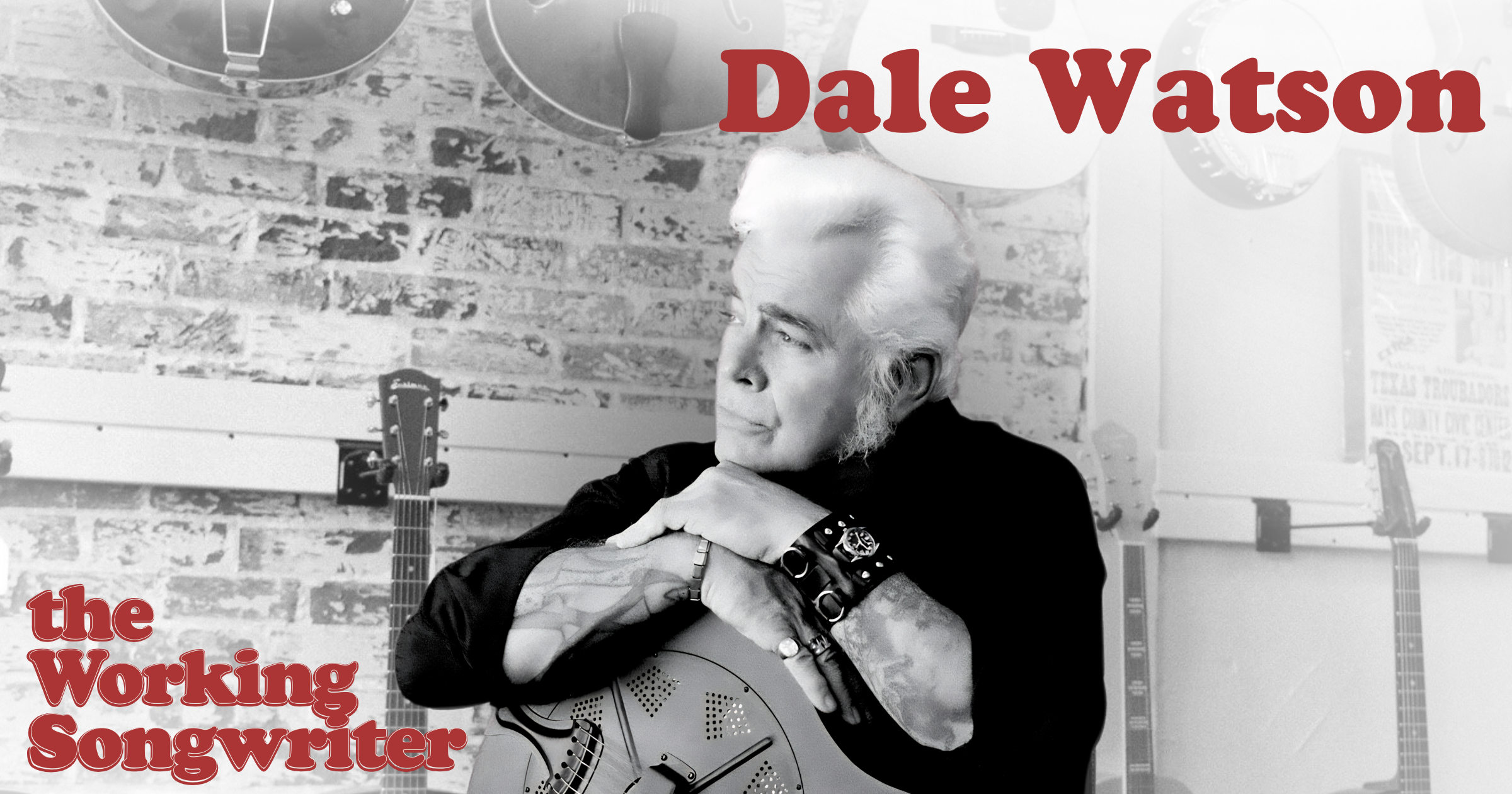
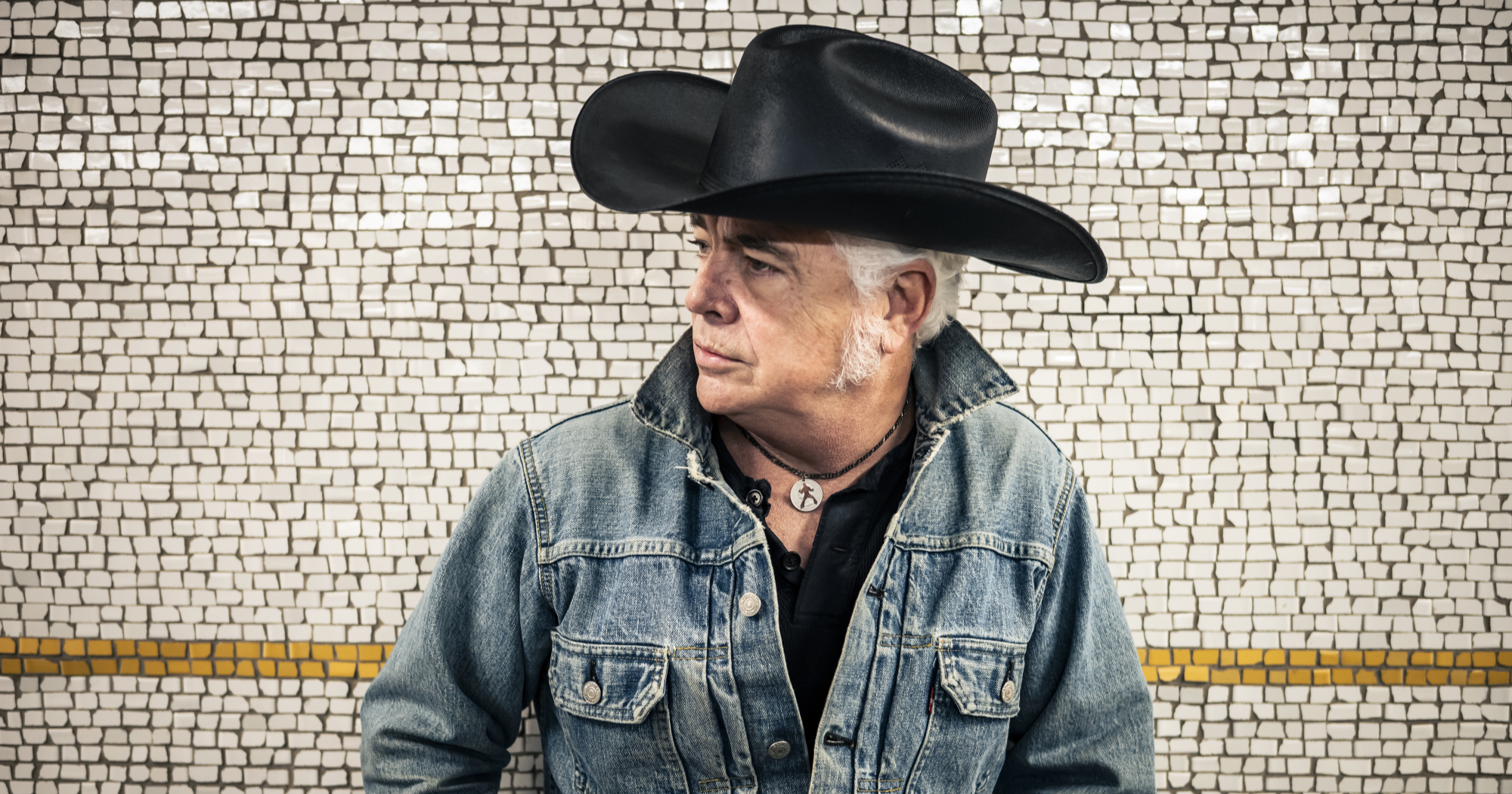
Our guest this week was born in Birmingham, Alabama, but, just like Davy Crockett, got to Texas as soon as he could. Dale Watson began his musical career playing the clubs of Houston before decamping to Austin and becoming a fixture in the live music capital of the world. The music machine in Nashville never fully embraced Watson’s traditionalist combination of Western swing, rockabilly, and country, but he’s built a devoted cult following the world over on his own. It’s a style of music that he calls “Ameripolitan.”
Watson has toured with all the greats: Merle Haggard, Johnny Cash, Willie Nelson, and Kris Kristofferson. He’s appeared on The Late Show with David Lettermen, Jimmy Kimmel Live!, and of course Austin City Limits. He’s performed at Stagecoach, Bristol Rhythm & Roots, and a host of other festivals.
He was a 2005 Austin Music Hall of Fame inductee and he was awarded the title of Texas State Musician in 2007. He founded the Ameripolitan Music Awards in 2014. The Austin Chronicle calls him their “local honky-tonk hero” and Saving Country Music says that “Dale Watson is all about keeping the honky-tonk traditions alive.”
I got a chance to catch up with Watson a few months ago to hear about his musical journey so far.
Ameripolitan music can be best defined as original music with prominent roots influence, and it has four categories: honky tonk, Western swing, rockabilly, and outlaw. My Mixtape features a song by an artist that represents the roots and then I’ll play a new artist that directly was influenced by them. You can hear the natural growth of country music when you listen to Lefty Frizzell and Merle Haggard or Kitty Wells and Loretta Lynn back to back. (Many of the roots artists had nicknames, I miss that.)
While some may hear an artist’s influence and say they are copying them, I’m of the opinion that John Lennon shared when asked about The Beatles’ influences. He said, and I paraphrase here, “One’s originality comes out in their inability to imitate their influences.” Very well said. – Dale Watson
“Who’s Gonna Take The Garbage Out” – Loretta Lynn, Ernest Tubb
Ernest Tubb had a distinctive voice as you hear on this song he sings with Loretta Lynn. Here’s the Texas Troubadour with the Coal Miner’s Daughter.
“My Wife Thinks You’re Dead” –Junior Brown
And no one is more evidently influenced by him than Junior Brown.
“Undo the Right” – Johnny Bush
Johnny Bush, otherwise known as the “Country Caruso,” was a drummer for Ray Price, the Cherokee Cowboy, before going out on his own. You would definitely hear that influence if you back-to-back Ray Price to Johnny Bush. Both are huge influences to every singer that grew up in Texas.
“Texas Honky Tonk” – Justin Trevino
This young man from Texas is carrying the Bush torch.
“D-I-V-O-R-C-E” – Tammy Wynette
The First Lady of Country Music, Tammy Wynette was married to the Possum, George Jones. She is easily at the top of women that influenced the newer singers.
“Houston Belongs To Me” – Sunny Sweeney
Singing her own divorce song, here’s Sunny Sweeney!
“Big Balls in Cowtown” – Bob Wills & His Texas Playboys
In the Western swing category this is the master, Bob Wills & His Texas Playboys.
“Riding High in Texas” – Asleep at the Wheel, Billy Strings
Though they’ve been around a while, they still burn up the road and proudly wear Bob Wills as their biggest influence. Ian Stewart sings as guest picker Billy Strings shines.
“Here in Frisco” – Merle Haggard
The Hag has influenced generations and even in death he still does. He once told me he forgot he wrote this song and was glad I brought it up so he can add it to his playlist again.
“This Highway” – Zephaniah OHora
Zephaniah OHora is now based in Nashville and he’s got a lot of great original songs. On this song you can hear the Hag in him.
“Bob Wills Is Still the King” – Waylon Jennings
In the outlaw world there is none more influential than Waylon, and in Texas we were all influenced by Bob Wills.
“Long White Line” – Sturgill Simpson
This particular song draws heavily on Waylon’s influence. And I like it.
“Ramblin’ Man” – Hank Williams
Hank Williams’ voice is one of the most recognizable in music. His songs are timeless and still inspire singers and songwriters alike.
“Thunderstorms and Neon Signs” – Wayne Hancock
You can definitely hear Hank in Wayne Hancock, but his own voice is definitely original, too – as well as his great songwriting.
“Guitars, Cadillacs” – Dwight Yoakam
Dwight Yoakam has influenced many a newcomer. Just as he was obviously influenced by Buck Owens. He came along when Nashville needed reminded of its roots.
“Lost in the City Lights” – Johnny Falstaff
Though not well known as of yet, Johnny Falstaff is picking up Dwight’s hat.
“Blue Kentucky Girl” – Loretta Lynn
The Coal Miner’s Daughter definitely left big shoes to fill, but her sassy songs inspired many women artists.
“Don’t You Ever Give Up On Love” – Brennen Leigh
That inspiration can be traced right to Brennen Leigh.
“Good Hearted Woman” – Waylon Jennings, Willie Nelson
Here’s the quintessential outlaw song by the most famously influential artists, the Red Headed Stranger, Willie Nelson, and Waymore, sometimes called Wautawsha, Waylon Jennings.
“Willie Waylon and Whiskey” – Dale Watson
The last song I’ll put in here’s is mine, because with pride I will state, yes, I am heavily influenced by Willie and Waylon. And sometimes whiskey.
To close the month of May, we have an absolutely stacked round up of premieres this week!
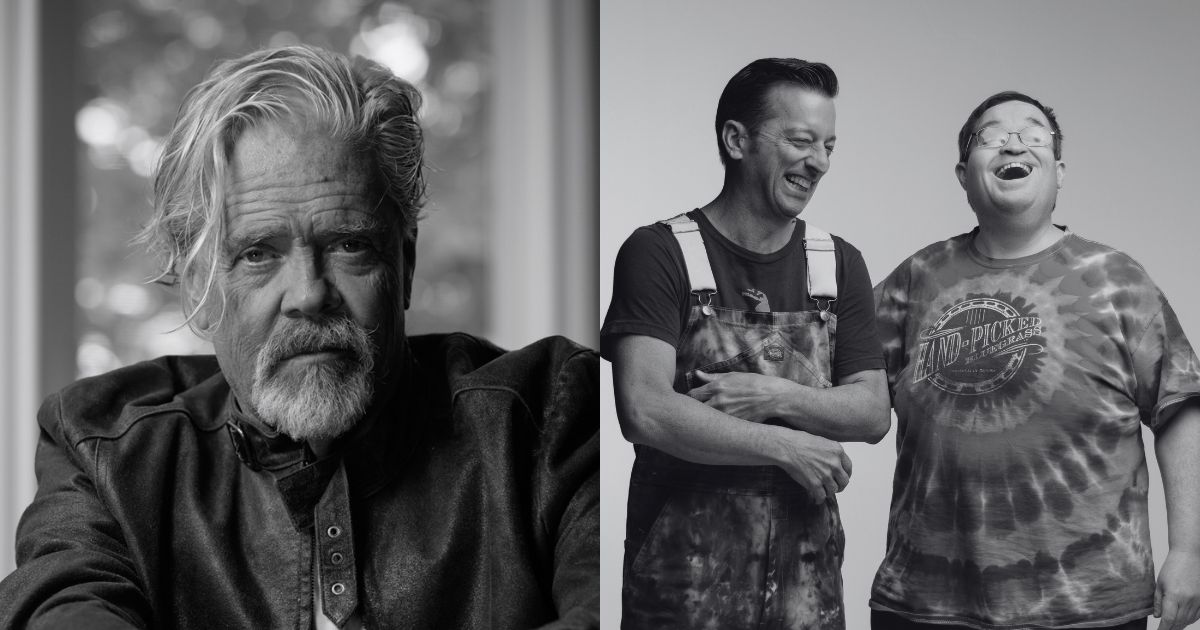
It’s lovely any time natural and organic themes twist their way through our batches of premiere. This week, it certainly seems like cutting-edge bluegrass is front and center, with new tracks and videos from John Cowan, Jason Carter & Michael Cleveland, and husband-and-wife duo, Benson.
Plus, we have a trio of songs about touring, coming and going, leaving and returning – Rob Baird asking his listeners to “Hold Tight” ’til his return, Evan Boyer longs for home and hearth in a song for his wife, “Home to You,” and Rose Gerber pays tribute to a vagabond period in her own life with “Off to See America.”
Finally, don’t miss a danceable rockabilly number, “If I Didn’t Have You,” from Matt Hillyer and roots duo Native Harrow bring us a new music video for “Borrowing Time.” It’s a packed premiere round up this week and You Gotta Hear This!
John Cowan, “Fiction”
Artist:John Cowan Hometown: Nashville, Tennessee Song: “Fiction” Album:Fiction Release Date: June 7, 2024 (single); Fall 2024 (album) Label:True Lonesome Records
In Their Words: “The genesis of the song is that Eddie [Sanders] and I had sat down to write a song for this new recording that eventually was titled ‘Fiction.’ I have been a voracious reader my whole adult life. I was discussing with Eddie the problem of living in a world at this time, which is confounding, scary, and frustrating. My expansive bookcase is loaded with non-fiction books. I had just said to him that I can hardly stand to pick up these two new books I’d bought, ’cause I didn’t feel like I needed any more affirmation about the state of our country and the world. What I needed was an escape to a place of commonality with the people I’ve encountered and my loved ones. I think we did a good job on it and that’s all I know for now except, I always believe in hope and grace.” – John Cowan
Jason Carter & Michael Cleveland, “Give It Away”
Artist:Jason Carter & Michael Cleveland Hometown: Floyd, Kentucky, now living in Hendersonville, Tennessee (Jason); Charlestown, Indiana (Michael) Song: “Give It Away” Release Date: May 8, 2024 Label: Fiddle Man Records
In Their Words: “I feel that the world we live in is a beautiful place, but it takes all of us to make that world. Every time I hear this song it brings a smile to my face, thinking of the day we recorded it. The room was filled with friends making music and the joy that was shared between us really comes through in the recording. This song was written by two of my favorite fiddlers, Tim O’Brien and Matt Combs, and that was another thing that made me feel like it was right for Michael and I to record it.
“Every time I’ve been around Sam Bush, I feel the love he puts out into the world and I thought he’d be the perfect person to sing this song with. I feel the same way about Michael, it’s always such a joyful experience to get to play or even hang out with him. With that said, ‘Give It Away’ sets the tone for the entire record, I hope you enjoy it.” – Jason Carter
“‘Give It Away’ is a hard driving bluegrass song in the key of B, except this time nobody leaves or dies. Instead, it reinforces the valuable lesson that if you want to ever find love, you have to learn to give it away. I would like to thank Bryan Sutton, Cory Walker, Alan Bartram, and Sam Bush for creating one of the most grooving tracks I’ve ever been a part of, they really made this song come to life. This song was a natural for twin fiddles, and Jason and Sam’s vocals are absolutely incredible.” – Michael Cleveland
Rob Baird, “Hold Tight”
Artist:Rob Baird Hometown: Austin, Texas Song: “Hold Tight” Album:Burning In the Stars Release Date: June 21, 2024 Label: Hard Luck Recording Company
In Their Words: “Early on in my career, I spent a lot of time in a van, touring all over God’s green earth. This song, ‘Hold Tight,’ is a reflection of those times. It’s about the chaotic feeling of driving through the night to get back home to one who’s been waiting for you. I wanted that feeling of desperation and determination to build every second of this song. Hold tight and hold on for just a few more hours.” – Rob Baird
Track Credits: Produced by Brian Douglass Phillips. Jacob Hildebrand – Electric guitar, slide guitar Z Lynch – Bass guitar Brian Douglas Phillips – Pedal steel, background vocals Fred Mandujano – Drums, percussion Sean Giddings – Organ
Benson, “Donner Pass”
Artist:Benson Hometown: Boiling Springs, South Carolina Song: “Donner Pass” Release Date: May 31, 2024 Label: Mountain Home Music Company
In Their Words:“‘Donner Pass’ is a tune I wrote while traveling with IIIrd Tyme Out. We were heading back east after a west coast string of gigs and, with a little time to kill, decided to stop in Reno, Nevada. We parked in the same general area where the Donner Party had been trapped over the winter, so this felt like a great song title for a minor-key melody. I had been working on the tune itself for a few days as we played out our gigs in California, but the original cell phone demo was recorded at Donner Pass where we parked overnight before driving into town.” – Wayne Benson
“This is one of my favorite tunes that Wayne has written. It feels dark, which is appropriate considering the title and location that it’s written about. The track moves a lot dynamically and I always enjoy that — I love taking a fairly simple melody and working with it to create different moods.” – Kristin Scott Benson
Track Credits: Wayne Benson – Mandolin Kristin Scott Benson – Banjo Cody Kilby – Acoustic Guitar Tony Creasman – Drums Kevin McKinnon – Bass
Evan Boyer, “Home to You”
Artist:Evan Boyer Hometown: Somers, Connecticut originally; Dallas, Texas since 2010 Song: “Home to You” Album:The Devil in Me Release Date: June 7, 2024 (album) Label: Medicine for Mary Records
In Their Words: “‘Home to You’ is a special song to me for a few reasons. First, the writing – it was the first song I really wrote for my wife. I’ve had others kind of about us or about our relationship, but I had never written one that focused on the fact that she’s my rock. Another is the production and the players I have on this track. Jenee on fiddle absolutely blew me away. Tim wrote that solo on the floor and then was able to perfectly replicate it two other times so that we could layer it three times. It’s stuff like that that’ll keep me making records for as long as I can.” – Evan Boyer
Track Credits: Lyrics and music by Evan Boyer. Produced by Bradley Prakope. Recorded at The Panhandle House, Denton, Texas. Evan Boyer – Vocals, acoustic guitar Timothy Allen – Electric Guitar Nate Coon – Drums Bob Parr – Bass Jenee Fleenor – Fiddle Drew Harakal – B3 organ
Native Harrow, “Borrowing Time”
Artist:Native Harrow Hometown: Philadelphia, Pennsylvania Song: “Borrowing Time” Album:Divided Kind Release Date: September 13, 2024 Label: Different Time Records
In Their Words: “This is one of those songs that was written in a few minutes, recorded in an afternoon, and came together like it was always a song. The rhythm signifies a lazy, hazy walk through the fields, lost in thoughts and daydreams. It is loose and meanders its way with pedal steel swirls (Joe Harvey-Whyte) and a single snare drum played with brushes while the bass thumps its way along the dusty trail. I go on daily walks to clear my head and to be in nature. I never want them to end and am always a little melancholy when they do and I have to return to my to-do list. I feel things very deeply and in trying times it often feels like life is a giant wheel rolling down a road and I am either being plowed over by it or chasing to keep up and it doesn’t pay any mind to my own struggles. In writing this song I realized that maybe being lost is better than having it all figured out and we’re all just borrowing time.” – Devin Tuel
“We recorded ‘Borrowing Time’ on a hot, dry day last summer (2023), setting up in the living room, with the windows wide open to take in the little bit of breeze that snuck in over the hills that afternoon. We started with Devin’s vocal and guitar and my Hofner Beatles bass (no click track, of course), sitting a foot away from each other. So close in fact, that you can hear the faint clack of my pick on the flat-wound bass strings bleeding into the vocal track. Next, we added a simple snare drum with brushes (myself) and shaker (Devin), again around the same mic. Finally, we added the electric guitar overdub, my black Gretsch hollowbody guitar through our old Fender amp, with its drippy reverb and dense tremolo, before sending the track up to our buddy Joe Harvey-Whyte in London where he added his cosmic outer space pedal steel. Sometimes we like to spend weeks working on a track, adding as many layers as it needs, and sometimes a finished song (as in the case of ‘Borrowing Time’) comes together in a single afternoon. Either way, we’ll take them as they come.” – Stephen Harms
Video Credits: Photography by Rosie Lord. Edited by Devin Tuel & Stephen Harms.
Matt Hillyer, “If I Didn’t Have You”
Artist:Matt Hillyer Hometown: Dallas, Texas Song: “If I Didn’t Have You” Album:Bright Skyline Release Date: June 7, 2024 (single); June 21, 2024 (album) Label: State Fair Records
In Their Words: “I got my start playing rockabilly music. I’ve enjoyed playing many different styles of roots music over the years, but I always seem to gravitate back to that rockabilly swing. It just feels good and puts a smile on my face. It’s even better being able to have some great players and even better friends on it: Heather Stalling on fiddle, Kevin Smith on bass, Lloyd Maines on steel guitar, and Arjuna Contreras on drums. The song itself is a love song, and in my opinion, you can’t have enough of those. I was thinking about my wife when I wrote it. I was imagining a way to tell her how lost I’d be if I didn’t have her in my life.” – Matt Hillyer
Rose Gerber, “Off to See America”
Artist:Rose Gerber Hometown: Portland Song: “Off to See America” Album:Untraveled Highway EP Release Date: July 5, 2024
In Their Words: “When I was 17, I set out on a road trip that had no planned end. I was a high school drop-out running from a broken home and thought the romance of the road would save me. You can’t run from life though and the road wears you down. After thumbing around, riding freight trains and some lean times, I finally threw in the towel; but can’t say I regret a minute of it. This song is a tribute to that time of my life.” – Rose Gerber
Video Credits: Starring Mary Krantz and Just Clark. Directed By Benjamin Olsen.
Photo Credit: John Cowan by Madison Thorne; Jason Carter & Michael Cleveland by Sam Wiseman.
Double-, triple-, quadruple-threats are not uncommon in country music, not in the least. It’s a frequent occurrence, tripping over or into a country artist that’s a songwriter, vocalist, multi-instrumentalist, writer, thinker, and so much more. In fact, until more recent decades, wearing many hats was seen as a sort of prerequisite to making hillbilly music. After all, this is “just” country music, it’s got a wide and deep DIY tradition, and the folks who make it often have to also load in the gear, sell the merch, post on social media, and produce the albums, play the demos and scratch tracks, write the lyrics, and otherwise steer the creative ship.
Some of the most successful artists and most original voices in country music are perfect examples of how multifaceted skill sets translate directly to star power. You may not need to be a Telecaster shredder to make it onto the radio or you may not need to be able to pick like Mother Maybelle to make a living, but if you can back up your songs with mighty playing, it certainly translates with audiences.
From Chet Atkins, Dolly Parton, and Wanda Jackson to Charlie Daniels, Willie Nelson, and Bonnie Raitt, here are just a few legendary examples of hugely successful country artists who are or were excellent musicians and instrumentalists, too.
Chet Atkins
A record company executive, producer, and pioneer of the “Nashville Sound,” Chet Atkins was also a one-of-a-kind guitar picker, renowned across the globe for his unique style – which was inspired by Merle Travis. Atkins certainly made “Travis picking” his own, arguably eclipsing all of his predecessors and continuing to influence guitarists today. An inductee of the Country Music, Rock and Roll, and Musicians’ Halls of Fame, Atkins’ impact is hard to understate and his resume includes work with Dolly Parton, Elvis Presley, Hank Snow, Waylon Jennings, and countless others.
DeFord Bailey
One of the first superstars of the Grand Ole Opry, DeFord Bailey was a world-class harmonica player who was also the first Black performer on WSM’s fabled stage. Some sources also credit Bailey as being the first musician to record music in Nashville. However you approach his career and music, Bailey was a seismic presence in the earliest days of country. Born in 1899, Bailey faced constant racism, bigotry, and marginalization on the Opry, in Nashville, and as he traveled and performed. He passed away in 1982 and was posthumously inducted into the Country Music Hall of Fame in 2005.
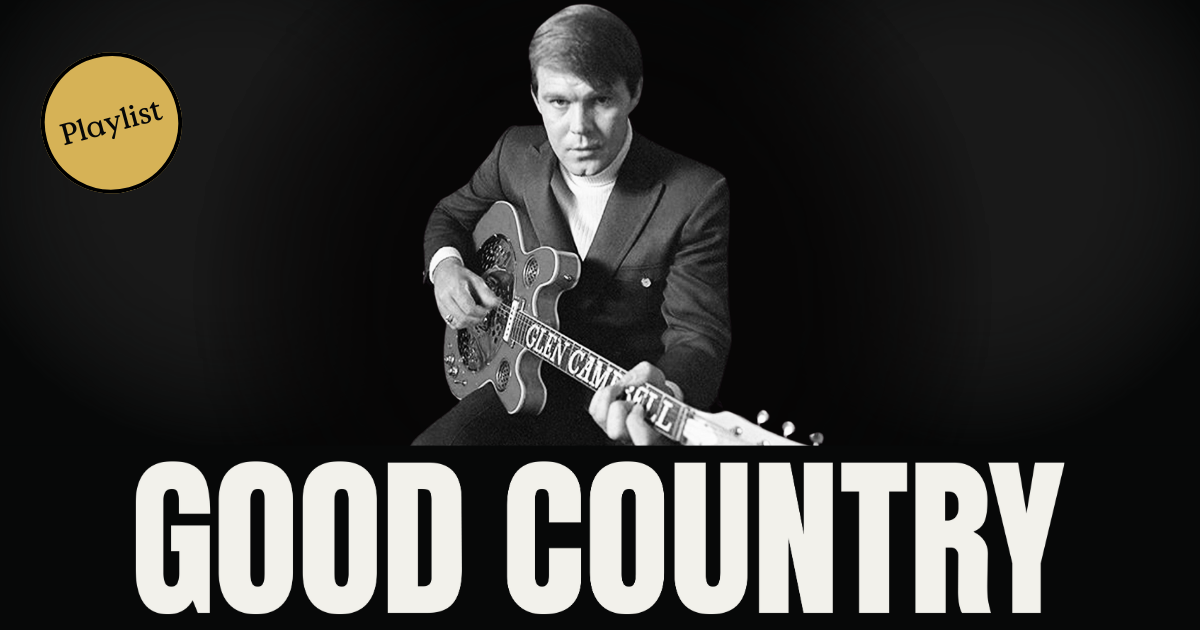
Glen Campbell
Even at the highest heights of Glen Campbell’s superstardom, he refused to let his superlative instrumental skill take a backseat to his roles as frontman, songwriter, Hollywood actor, TV star, and tabloid veteran. Campbell’s approach to country music as a true multi-hyphenate celebrity bridged generations, connecting the hardscrabble, DIY generations where multiple skills were necessary to make a living to the modern era, where he helped pave a way for famously multi-talented picker/singer/writers like Vince Gill and Brad Paisley to not be pigeonholed as one thing or the other.
Ray Charles
Any conversation around or collection of superlative country pickers and musicians would be glaringly incomplete without the inclusion of Ray Charles. His incursions and experimentations in country music are many and infamous. His 1962 album, Modern Sounds in Country and Western Music is routinely listed as one of the best country albums of all time. He’s worked with and performed with Willie Nelson, Merle Haggard, Ricky Skaggs, Travis Tritt, Johnny Cash, Glen Campbell, and many, many more. Plus, his country forays demonstrate a deep, holistic understanding of the genre. Charles is a quintessential country multi-hyphenate and country-soul in the modern era would feel especially lacking without his seminal contributions to that tradition.
Charlie Daniels
It’s hard not to wonder what young, hippie, “long-haired,” Vietnam War-opposing fiddler Charlie Daniels would have thought of his older self, and his more harebrained and often hateful beliefs later in life. But the controversial and outspoken musician, at all points of his career, was a picker’s picker. Over the course of his life he performed and recorded with Earl Scruggs, Bob Dylan, Leonard Cohen, and many more. But his chief contribution to American roots music may just be his fiery, unhinged fiddling on “The Devil Went Down to Georgia.” Just wander down Lower Broadway in Nashville on any given Saturday night to feel the impact of that particular show-stopper. In this clip, he chats and performs “Uncle Pen” with Scruggs and Del McCoury.
Vince Gill
That buttery voice, that stank-face inducing chicken pickin’, that high, lonesome sound – Vince Gill is all at once country and bluegrass, Nashville and Oklahoma, western swing and old-time fiddle. Whether with The Eagles, preeminent pedal steel guitarist Paul Franklin, the Time Jumpers, or so many other outfits, bands, and iterations, Gill is simply right at home. Because, at his core, he’s just a picker. He may play arenas, but he knows he belongs at 3rd & Lindsley or the Station Inn. Or Bluegrass Nights at the Ryman. A quintessential picker-singer-frontman, Gill continues to define the myriad ways country stars can maintain their selfhood and personality – instrumentally and otherwise – even in their wild successes.
Merle Haggard
Speaking of chicken pickin’, country’s most famous Okie was a shredder, too. A sad song, a glass of (misery and) gin, a Telecaster, and the Hag – that’s all we need, right there. Merle’s playing style, even at its most technical and impressive, was simple and down to earth. You could tell he cut his teeth playing bars, fairs, and honky tonks. You could almost hear him pulling himself up by his bootstraps as he played.
Wanda Jackson
The Queen of Rockabilly has been slaying rock and roll, hillbilly music, and the guitar for more than seventy years. In 2021 she released her final album, Encore, when she was 84 years old. It features her signature passion and fire – and performances by Elle King, Joan Jett, Angaleena Presley, and more. Jackson has been representing the vital contributions of women to rockabilly and rock and roll for her entire career, just as often commanding the stage with her growly, entrancing voice and her powerful right hand.
Willie Nelson
Who would Willie Nelson be without Trigger? Without a tasty, less-is-more, nylon-string guitar solo? For decades, Nashville, Music Row, and guitar players around the world have been emulating his particular sound as a guitarist – whether they know it or not. Sure, he’s a hit songwriter, a star and front-person, a collaborator of Snoop Dogg and Frank Sinatra, and a connoisseur of fine bud, but perhaps more than all of these accomplishments, Willie is an impeccable picker. He can hold his own with the best of the best, because he is the best of the best.
Brad Paisley
Brad Paisley’s fame crested at perhaps the perfect time for him in country music, combining a rip-roarin’ guitar playing style with a sound that was entirely trad while carrying touches of the bro country wave that was about to inundate the genre. As such, he was able to build a career on the diversity of his skill set, before Music Row and the power behind it began prioritizing music that didn’t need to be musical and voices that didn’t need to be singular. Luckily, Paisley is both those things and more, and despite the many eyebrow raising moments across his career, our faces more often show shock at his mind-bending skill as a guitarist than anything else.
Dolly Parton
How is it that Dolly Parton can play so many instruments so impeccably with those iconic acrylic nails!? Nowadays, you are just as likely to hear Dolly performing to a track – yes, she does lip sync and pantomime playing along with recordings – but don’t get it twisted, she absolutely can play a passel of instruments from her beloved “mountain music” traditions. She plays guitar, banjo, auto-harp, dulcimer, and has even been known to pick up a bedazzled saxophone from time to time – though we can’t guarantee she actually knows how to play that one, we’re still blown away.
And what about thatone viral video with Patti LaBellewhere they play their acrylics like washboards? Dolly can make music with just about any instrument.
Bonnie Raitt
How many people do you think enjoy Bonnie Raitt’s soulful blues and Southern rock sounds without knowing she’s also often the one playing the guitar solos and making that bottleneck slide weep? Raitt is a Grammy winning songwriter, a fantastic vocalist and song interpreter/collector, and – above all, in this writer’s opinion – a superb guitar picker, especially playing slide. She can hold her own with just about anyone, and she has. Her phrasing and use of melodic space demonstrates that she’s been honing her craft for her entire life. That taste can’t be taught, it has to be found. Boy, has she found it.
Marty Stuart
Marty Stuart’s long, fabulous, superlative career began with him filling the role of sideman for such luminaries as Lester Flatt, Johnny Cash, Vassar Clements, and Doc Watson. He plays guitar and mandolin, working up his chops as a youngster with pickers like Roland White as his mentors. When his solo career took off after his Columbia debut in the mid-eighties, his ear for fine picking remained present throughout his music – however far afield from those early bluegrass and country days he may have traveled, stylistically. Whether bringing in psychedelic surf sounds or Indigenous flavors of the American West, Stuart’s catalog of music centers virtuosity that’s never gratuitous. And his band, the Fabulous Superlatives, featuring crack guitarist Kenny Vaughan and multi-instrumentalist Chris Scruggs, represent a high level of picking prowess, too.
Tedeschi Trucks Band
By many measures, Derek Trucks is the world’s foremost living slide guitarist, but don’t overlook powerhouse vocalist and co-band leader, Susan Tedeschi in order to venerate Trucks! Both started playing as youngsters – Trucks when he was a kid and Tedeschi when she attended Berklee College of Music. These two are guitar and blues royalty, helming one of the most impactful modern blues and Southern rock orchestras on the planet. They’re consummate musicians, knowing just how to surround themselves by players who support and challenge, both. Even with their laundry list of personal accomplishments, together, Tedeschi & Trucks – who are also married – are so much greater than the sum of their parts.
Keith Urban
Keith Urban brings a scruffy, down to earth guitar playing style to his polished and glam mainstream country sound. Yes, even as far away as Australia, having instrumental chops means having country currency. When he moved to Nashville in the early ‘90s, with a few Australian radio hits and awards under his belt, he immediately found work as a side musician and co-writer in Music City. It wasn’t long until his star ascended stateside, too – and then, as quickly, around the world – bolstered by arena-ready guitar. Now readying his first album since 2020, Urban shows no signs of slowing down, with the music or the picking!
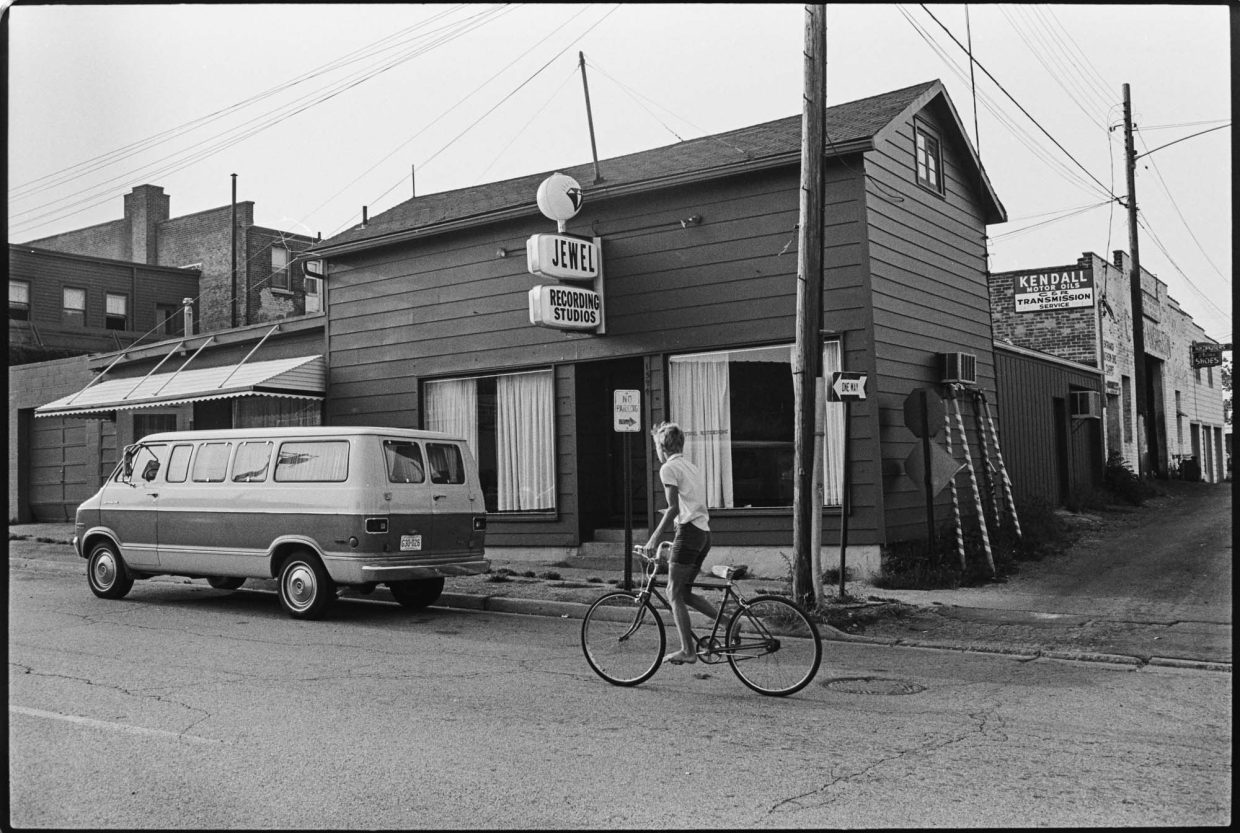
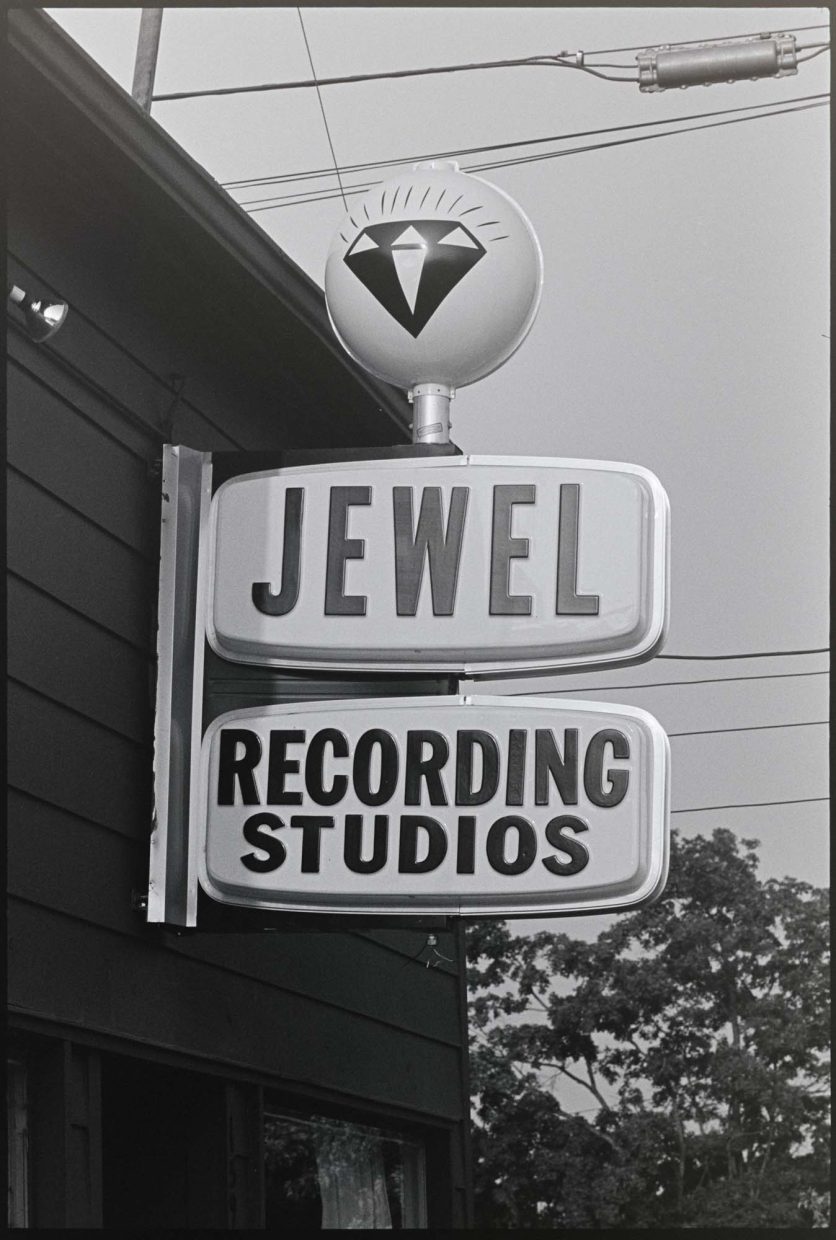
The Jewel Recording Studios in the Mt. Healthy suburb of Cincinnati, Ohio, August 15, 1972. Photo by Carl Fleischhauer.
I first heard York in the fall of 1959 when Tom Barton, a new friend from Bloomington, Indiana, visited me in Oberlin and brought as a house gift a new LP by a company I’d never heard of, Starday. Banjo In The Hills (“16 Great Mountain Songs by All Star Artists 16”) included excellent numbers by bands I (a bluegrass fan since ’57) knew and liked: The Stanley Brothers, Carl Story, Bill Clifton, Jim Eanes, Jim & Jesse. It also included two tracks by a group new to me, Rusty York and Willard Hale: an instrumental, “Banjo Breakdown,” and a great cheating song, “Don’t Do It.”
I really took to that song! Our band Crooked Stovepipe put it on our first CD in 1993. We still do it at almost every show.
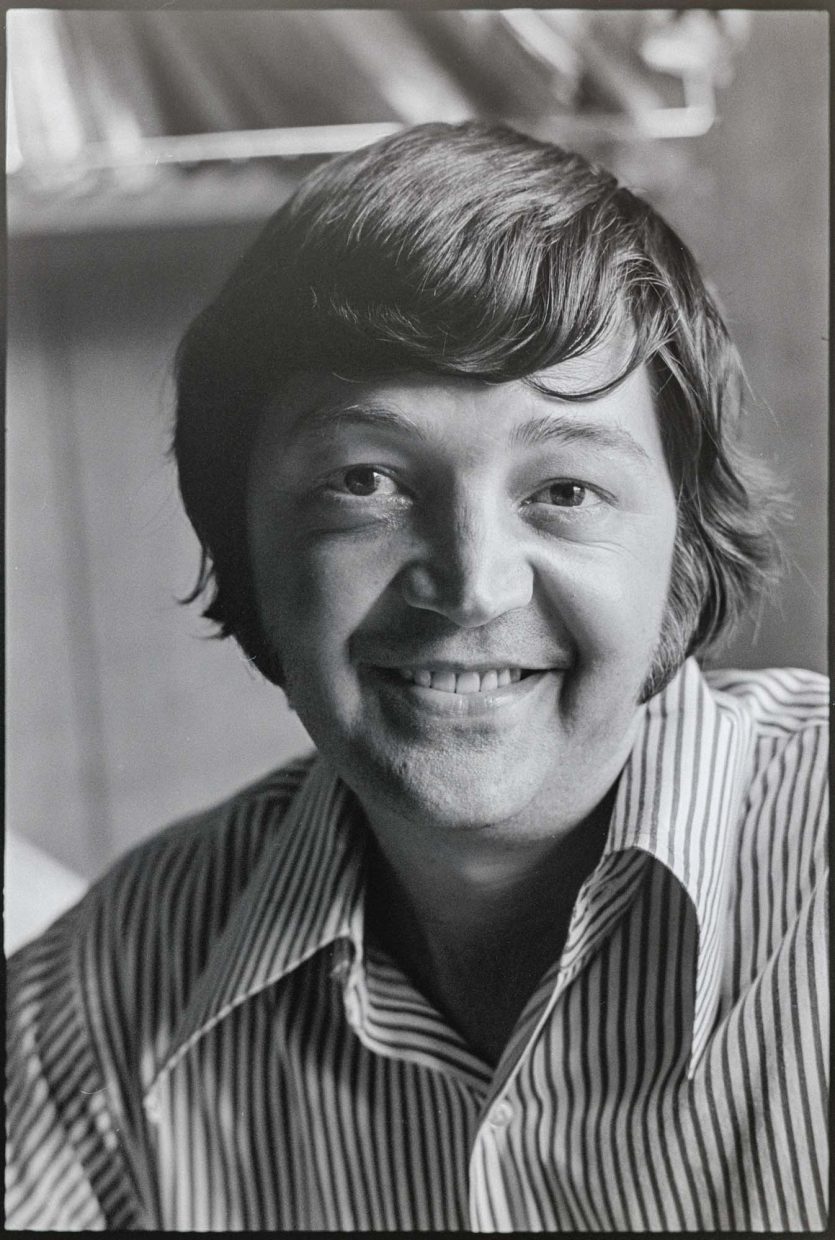
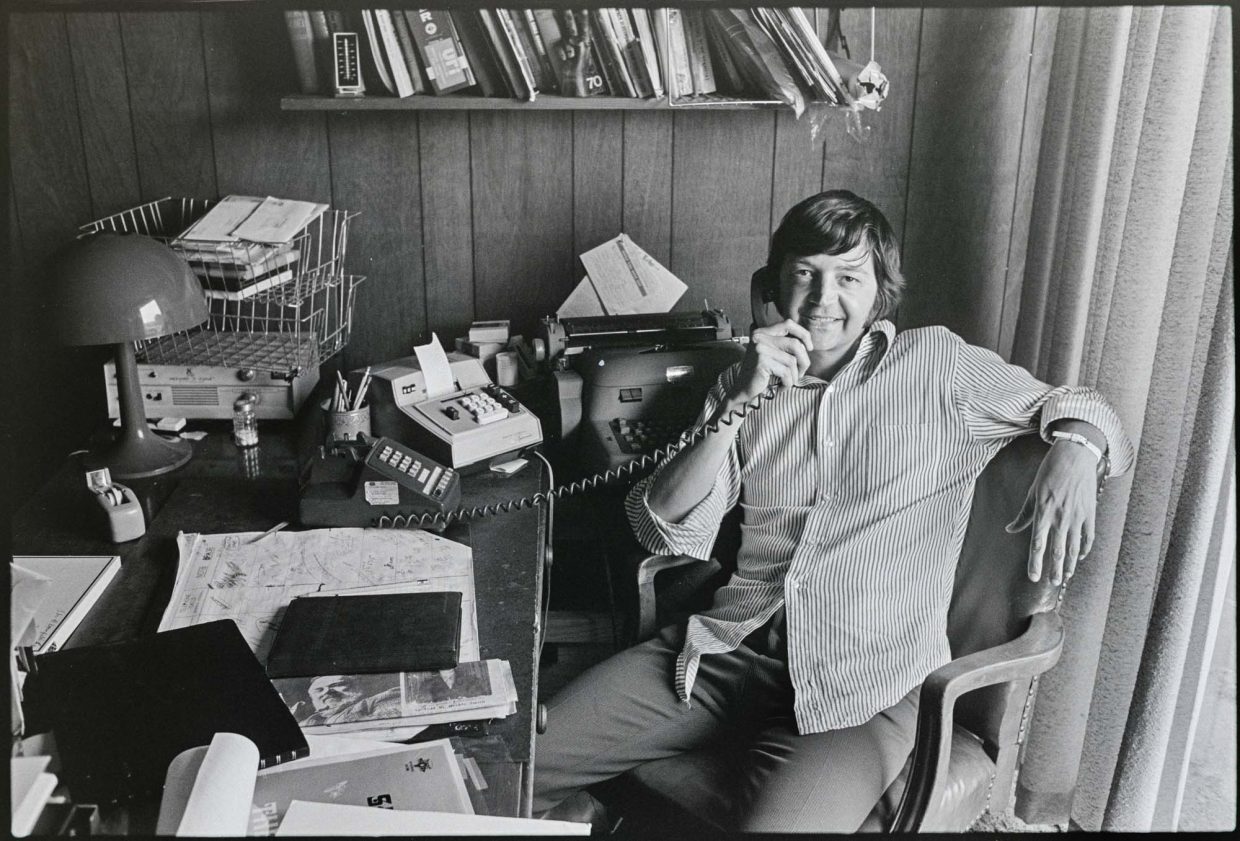
Owner and recording engineer Rusty York in the office at the Jewel Recording Studios in the Mt. Healthy suburb of Cincinnati, Ohio, August 15, 1972. Photo by Carl Fleischhauer.
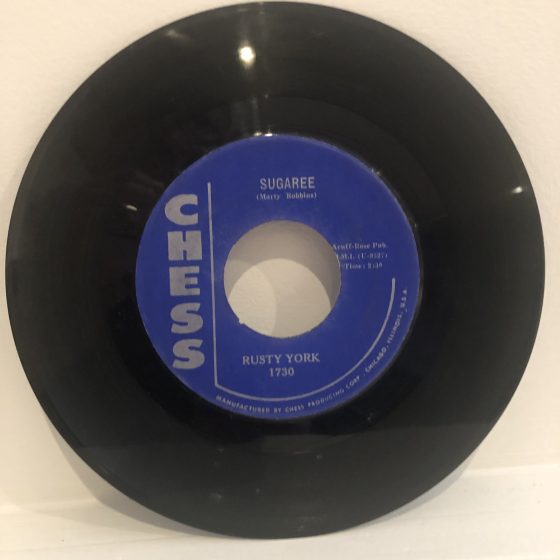
Keen to hear more of York and Hale, I added them to my mental checklist when shopping for recordings. At Oberlin, students couldn’t have cars, so we confined our shopping to a local shoe store’s sales bin of used jukebox 45s. Every once in a while, I’d snag recent singles by favorites like Monroe, Reno & Smiley, or Jimmy Reed. In 1960, not long after hearing “Don’t Do It,” I found “Sugaree,” a Chess Records single by Rusty York, in the bin. I hadn’t heard it, bought it on spec — the shoe store didn’t have a record player.
Chess Records’ 45rpm of “Sugaree,” a Marty Robbins track cut by Rusty York. Photo by Neil V. Rosenberg.
Man, was I disappointed when I got home and listened! It wasn’t bluegrass at all, it was a Marty Robbins rockabilly song, with York singing in a band fronted by sax and his electric guitar with piano, bass and drums behind:
The other side was “Red Rooster,” a rock version of “She’ll Be Comin’ Round the Mountain.” Not bad, some hot guitar licks, but pretty ho-hum, I thought. Must be a different Rusty York I figured; after all, Chess was a Chicago label, while Starday was from Nashville.
A couple years later in Bloomington, Indiana, I came across four EPs (45 rpm, big hole, six tracks each) by Rusty York and the Kentucky Mountain Boys on the Bluegrass Special label, distributed by Jimmie Skinner music in Cincinnati. What a contrast — bluegrass standards done up in proper style! The songs were all familiar bluegrass standards, like this version of the mountain folk song “Cindy”:
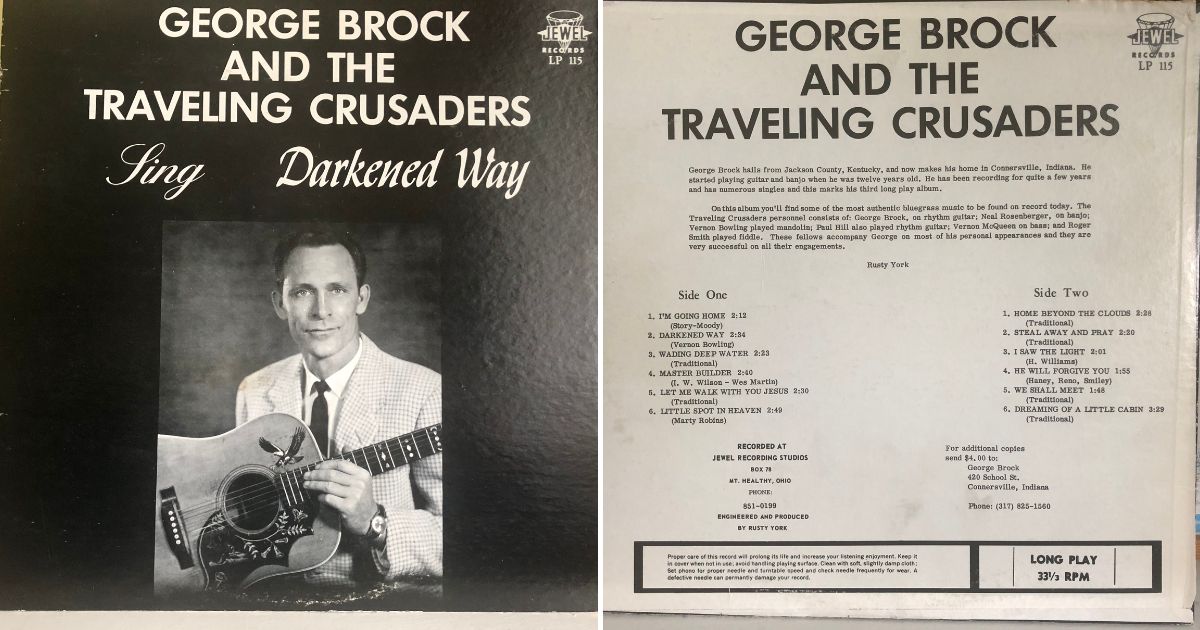
I didn’t hear of him again until the summer of 1967, when I was working in a southern Indiana band, the Stoney Lonesome Boys, led by fiddler Roger Smith. He was helping his friend George Brock, a Connersville-based gospel singer, put together an album and asked me if I would play banjo that fall on their recording at Rusty York’s studio in Ohio. Surprised to learn York had a studio, I accepted Roger’s invitation. We — Roger, Vernon McQueen, Vernon Bowling, Paul Hill, and I — rehearsed with Brock at Roger’s home in Columbus, Indiana, in September. On Sunday, October 1 we headed to the Cincinnati suburb of Mt. Healthy, Ohio. Accompanying us was bluegrass DJ Ervin Barrett.
Rusty’s Jewel Recording Studio was a converted two-car garage attached to his suburban home. It was a big open room. Along the back wall was a raised glassed-in platform on which the recorder and mixing board sat. The recorder was a series 300 Ampex deck, an open reel machine just like the two in the studio of Indiana University’s Archives of Traditional Music where I was then employed. This state-of-the-art monaural unit recorded everything onto a single track.
Lines from 10 microphones fed into York’s mixing board. From them, through the board, emerged a single track that was fed onto the tape. We had six instruments and four voices. Each of us stood before one or two microphones. We could see and talk to each other over low baffles. Rusty had recorded bluegrass before. He had selected specific locations in the room for instruments and voices.
George Brock had chosen 12 songs. We were to record them in the sequence on which they would appear on the LP — beginning with side one, band one, and finishing with side two, band six. We tuned up, took our places in front of the mics, and started on the first song.
While we played, Rusty was at the mixing board setting levels. By the end of several run-throughs, he knew when the vocal trio came in or the mandolin took a break, how the song kicked off and ended, and other sonic arrangement features. Where the focus of the song moved from instruments to voices, he made mental notes to adjust the microphones at the right time. Each song had its moves, like running a football play or driving a race car for a lap.
He would tape each trial run through and play it back through big speakers. It soon became clear to me that York was very adept at mixing on the fly. We were there about three hours. About a month later George sent me a copy of the album, George Brock and The Traveling Crusaders, Jewel LP 115.
George Brock and The Traveling Crusaders, ‘Sing Darkened Way’ LP cover.
York’s brief notes give George’s bio, describe the album as “some of the most authentic bluegrass music to be found on record today,” identify The Traveling Crusaders personnel (I was “Neal Rosenberger”), and close by saying: “These fellows accompany George on most of his personal appearances and they are very successful on all their engagements.” I suppose we were successful at this, our only engagement! It’s one of my favorite recordings, reminding me of both Roger Smith‘s coaching and York’s skill and vision as a producer.
When Carl and I began to plan our 1972 trip I pulled out that five-year old George Brock album and found Jewel’s PO Box and phone numbers. Before I left St. John’s, Newfoundland, I wrote Rusty at that address, told him I was planning research in Ohio and asked for an interview.
We hit the road that Tuesday in August 1972 after lunch in Louisville, and headed for Cincinnati, about 100 miles northeast along the Ohio River. My notes:
Arrived in Mt. Healthy about 3:30 as I remember. Parked across the street from a phone booth, went to call Rusty York and as it turned out the number I had was out of date.
Jewel Recording Studios in the Mt. Healthy suburb of Cincinnati, Ohio, August 15, 1972. Photo by Carl Fleischhauer.
I looked up Jewel in the phone book and found the address was just around the corner from us.
We walked over, went in. A number of people milling around, not looking surprised or impressed to see us — a secretary said Rusty was out to lunch and so I explained who we were and that I’d written, etc. She called him at home and then said he’d be back soon. When he returned, he was quite cordial, said he hadn’t had time to answer (I hadn’t expected him to), and he was booked solid with sessions and didn’t have time for an interview but if we wanted to stick around, we were welcome.
He immediately engaged Carl in conversation vis-à-vis cameras and such, pulled his cameras out of his safe, told of recording a gospel rock festival the previous weekend (a 4-track [recorder] along with other equipment, sat in a Dodge van outside the studio) at which there was a big movie outfit a la Woodstock — they used his sound. He takes all the cover photos, hence the interest in cameras.
Owner and recording engineer Rusty York in the office at the Jewel Recording Studios in the Mt. Healthy suburb of Cincinnati, Ohio, August 15, 1972. Photo by Carl Fleischhauer.
Though I’d known some of the high points of Rusty’s career (the early bluegrass, the rockabilly hit, The Bluegrass Special EPs) and had worked in his studio, I really didn’t know much about him beyond that. Born in 1935, raised in Eastern Kentucky, he’d moved to Cincinnati when he was 17. By the 1972 he’d had a long career there as a performer and a worker in the music industry. His story is told online at Hillbilly-Music.com. A more detailed account was published by the late bluegrass and county historian Ivan Tribe’s July 1998 article in Bluegrass Unlimited.
By that August 1972 afternoon, Rusty had pretty much left behind the life of performing that developed during his 20 years in Cincinnati.
He moved into Cincinnati’s “Over The Rhine” Appalachian immigrant neighborhood in 1952. He was seventeen. He didn’t finish high school, going to work right away in a restaurant. He moved next to a job as an office boy in a stockbroker’s office. In the evenings he started going to the local music clubs. He was already playing guitar and banjo. Meeting other “briars” like Willard Hale, he played in local clubs and, as he would describe to us that afternoon, mixing rock and roll beside the bluegrass. He also began working in radio. He became a familiar figure in the regional country music business.
York soon became acquainted with another Kentuckian, the leading figure in the Cincinnati country scene, Jimmie Skinner, a hillbilly singer whose recording career began in the 1930s. By the mid-’50s his Jimmie Skinner Music Center was the leading mail-order country music business in the U.S. Rusty worked on Skinner’s weekly broadcasts from the Center as engineer, DJ, and musician; and he also played in Skinner’s band. Here’s what Rusty and Jimmie sounded like, later, in 1961, on Skinner’s most famous composition, “Doin’ My Time.”
York next ventured into recording. His first sides were covers of new rock and roll hits, including a Buddy Holly tune released in 1957 on Syd Nathan’s King records. His next recordings were made the following year accompanying Kentucky-born country singer, also a Skinner employee, Connie Hall, on Mercury-Starday, and it was at this time he cut his first bluegrass sides with Hale, including “Don’t Do It.”
By 1959 York was again recording rockabilly covers, and it was in this context that “Sugaree” came about. This was his only hit, and it led to a tour sponsored by Dick Clark that began at the Hollywood Bowl where Rusty opened for a show that included Annette Funicello, Duane Eddy, and Frankie Avalon.
Rusty made further rock singles and was later inducted into the Rockabilly Hall of Fame. Although he made a few appearances with this music in rockabilly nostalgia tours, his musical career after “Sugaree” moved in the direction of country and folk.
In 1961 he returned to bluegrass, producing the Bluegrass Special EP series mentioned earlier. At this point he started his own studio. Then, in 1964 and 1965, he began a stint as the opening act for Bobby Bare.
Bare – who grew up in Ironton, Ohio, southeast of Cincinnati, just across the river from Kentucky and West Virginia – began his career in Southern Ohio, but by the time Rusty joined his operation he was a national country star, a Grammy winner with hits like “Detroit City.” Here’s what Bare’s show looked like around time Rusty joined him:
Rusty made some country recordings during his tours with Bare, which included numerous stints in Las Vegas. By 1970 he’d scaled back his performing and focused more on the studio, and in fact now owned two studios.
Artist:Tobacco City Hometown: Chicago, Illinois Song: “AA Blues” Album:Tobacco City, USA Release Date: July 30, 2021 Label: Scissor Tail Records
In Their Words: “‘AA Blues’ is one of those songs that writes itself. My ex was having to go to AA meetings because of a brush with the law. It was cutting into our plans and I wrote her this ditty to make her feel better. The character in the song is trapped between working in a brewery and staring at beers all day and trying to walk a sober line. I think regardless of your sobriety status we can all relate to those kind of blues.” — Chris Coleslaw, Tobacco City
Artist:Lara Hope & The Ark-Tones Hometown: Kingston, New York Song: “Stop, Drop & Roll” Album:Here to Tell the Tale Release Date: June 25, 2021 Label: Sower Records
In Their Words: “‘Stop, Drop & Roll’ tells the tale of two folks who are living their best lives. Everyone wants to hang out with them, folks line up to hear them play music, their style is impeccable, and they just can’t lose. They are doing so well, in fact, that they are “on fire!” I wish this song was written from personal experience, but hey… a girl can dream! It’s about the people we aspire to be! Musically, I was listening to a lot of ’60s girl group music at the time I wrote this, and was trying to channel some of the sass and killer vocal harmonies of groups like The Orlons. Songs are supposed to evoke a certain feeling, this one is supposed to make you dance!” — Lara Hope
This week on The Show On The Road, we jump in our podcast time machine for a face-to-face interview (remember those?) with acclaimed blues and roots guitarist and singer-songwriter Samantha Fish.
Now based in New Orleans, the SOTR caught up with Samantha Fish at the Sugar Magnolia Music Fest in Mississippi before the world shut down — and to be real, until recently, the very idea of airing this interview seemed inappropriate. Two songwriters speaking into one mic at close range? With everyone crammed into a little trailer? No sanitizer in sight? Indeed.
And yet, as in-person interviews are set to recommence and venues are reopening at last, it felt good to remind ourselves what a real Show On The Road conversation feels like. There are no Zoom glitches or quick edits needed here. We talk about favorite restaurants in New Orleans, dream festival lineups, and guitar solo self-esteem pep talks. We question if Elvis’s ghost is watching over us as we record — and you’ll notice the sound is not pristine, but maybe that’s the best part. You can hear the squeak of the seats, the grit in the voices before they are warmed up for an upcoming set. There’s a band warming up in the background and you can hear Samantha tuning her acoustic guitar just off mic before playing her favorite forlorn love-song, “I Need You More,” near the end.
For folks who are not familiar with Fish’s work, she’s been one of the hardest touring bandleaders on the blues and Americana circuit since she started recording out of her hometown of Kansas City a decade ago. She was still slinging and delivering pizzas then, but now she’s an award-winning veteran of various music scenes and a headliner at music fests from the Crescent City (where she played her first Jazz Fest) to jazz and blues gatherings across Europe and beyond. With seven albums and counting under her belt, including her Memphis brass-embellished latest, Kill Or Be Kind, and her standout rocker, Belle Of The West, (created with Luther Luther Dickinson, which we discuss at length here) Fish is proving again and again that she is in it for the long haul.
One of the more moving moments of the episode centers on Fish’s memories of growing up playing the drums and jamming with her musical family. Even then she didn’t see many girls like her taking the lead guitar as their destiny. She had to believe in herself before anyone else would, and here she is. Representation matters and Fish is showing a whole generation of young players that despite Rolling Stone barely mentioning women in their ongoing “greatest guitarists of all time” lists there are new people who walk and talk and look a little different taking up the mantle of guitar god (or goddess).
Artist:The Shootouts Hometown: Northeast Ohio Song: “Saturday Night Town” Album:Bullseye Release Date: April 30, 2021 Label: Soundly Music
In Their Words: “It was inspired by a book I read about a historic small town in Ohio. Throughout the book there were stories of fun-loving locals who would cut loose at the end of a long week, referring to it as a ‘Saturday Night Town.’ I instantly knew that was meant to be a song title. We all come from, or know someone who comes from, a small town like this. Even if they end up leaving, it’s hard to get that out of your blood. I think we can all relate to a much-needed break at the end of a long week, no matter what town you call home.
“That same book inspired another track called ‘Rattlesnake Whiskey,’ which is also on Bullseye. Both of those songs were written in 2015, before The Shootouts began. They were some of the first original songs we performed live, and they quickly became fan favorites. They didn’t quite fit with the batch of tunes that became our debut album, Quick Draw, but they definitely felt like a perfect fit for Bullseye. Luckily, Chuck [Mead, producer] thought so too. I think we got the definitive versions, and I’m glad we finally got to record them both.
“Fun fact: We end almost every show with ‘Saturday Night Town’ and have almost since the inception of the band. It really allows the band to stretch out a bit and trade some tasty licks.” — Ryan Humbert, The Shootouts
Artist:Karen Jonas Hometown: Fredericksburg, Virginia Song: “Pink Leather Boots” Album:The Southwest Sky and Other Dreams Release Date: Aug 28, 2020 Label: Yellow Brick Records
In Their Words: “Guitarist Tim Bray and I were driving from Austin to Santa Fe when I first scribbled some notes for ‘Pink Leather Boots.’ I had my boots up on the dash and was marveling at the space — the sheer acreage of Texas leaves room for all kinds of ghosts to hang around. There are old cars in the side yard, old houses crumbling beside new ones. We don’t have that kind of space on the East Coast, we have to build up instead of out. I thought out loud, ‘Who lives here with all these ghosts? What do they do? Are they happy?’ (I’m a hoot on long drives).
“We passed a neon sign that proudly announced ‘Dancing Girls!’ I pictured the scene there — an ambitious trucker falls in love and daydreams a future with this Dancing Girl, only to drive off into the sunset empty-handed. He drops that dream like the rusted car in the side yard, driving on to newer, shinier, perhaps more accessible dreams. On to whatever comes next. Sometimes, just dreaming is enough to fill the time.
“All of this contemplation simmered into a colorful story on top of a dusty shuffle, with Tim’s rockabilly-inspired Gretsch licks and Seth Morrissey’s thumping upright bass. Somehow strawberry milk got involved, and this feverishly fast-paced love-story-that-never-was unfolds like a big rig rolling down the unforgiving highway. Animator Matt Rasch captured the scene vividly in this fun, quirky video, complete with our starry-eyed hero and a herd of pink cows.” — Karen Jonas
Photo by Amber Renée Photography with art by Print Jazz
This website uses cookies to improve your experience. We'll assume you're ok with this, but you can opt-out if you wish.AcceptRejectRead More
Privacy & Cookies Policy
Privacy Overview
This website uses cookies to improve your experience while you navigate through the website. Out of these, the cookies that are categorized as necessary are stored on your browser as they are essential for the working of basic functionalities of the website. We also use third-party cookies that help us analyze and understand how you use this website. These cookies will be stored in your browser only with your consent. You also have the option to opt-out of these cookies. But opting out of some of these cookies may affect your browsing experience.
Necessary cookies are absolutely essential for the website to function properly. This category only includes cookies that ensures basic functionalities and security features of the website. These cookies do not store any personal information.
Any cookies that may not be particularly necessary for the website to function and is used specifically to collect user personal data via analytics, ads, other embedded contents are termed as non-necessary cookies. It is mandatory to procure user consent prior to running these cookies on your website.