Kronos Quartet Wants You To Know Mahalia Jackson’s Impact

“If Mahalia Jackson were singing right now, I would have figured out a way that we would be able to perform with her,” says David Harrington, co-founder and violinist of Kronos Quartet, an ensemble that in its more than 50 years has consistently set new standards for what a string quartet can be.

He laughs as he leans into the camera on a Zoom from his San Francisco home, his white hair sticking straight up.

“You can count on that.”

Of course, that’s impossible. Mahalia Jackson, the New Orleans-born gospel singer, voice of the Civil Rights Movement, mentor to Aretha Franklin, confidant of and advisor to Martin Luther King Jr., died in 1972 at age 60. But Harrington got close. A little while back he commissioned composer Stacy Garrop to craft musical settings for excerpts from a 1963 interview conversation Jackson did with Chicago radio host Studs Terkel, a longtime friend of hers, and from performances broadcast in 1957.

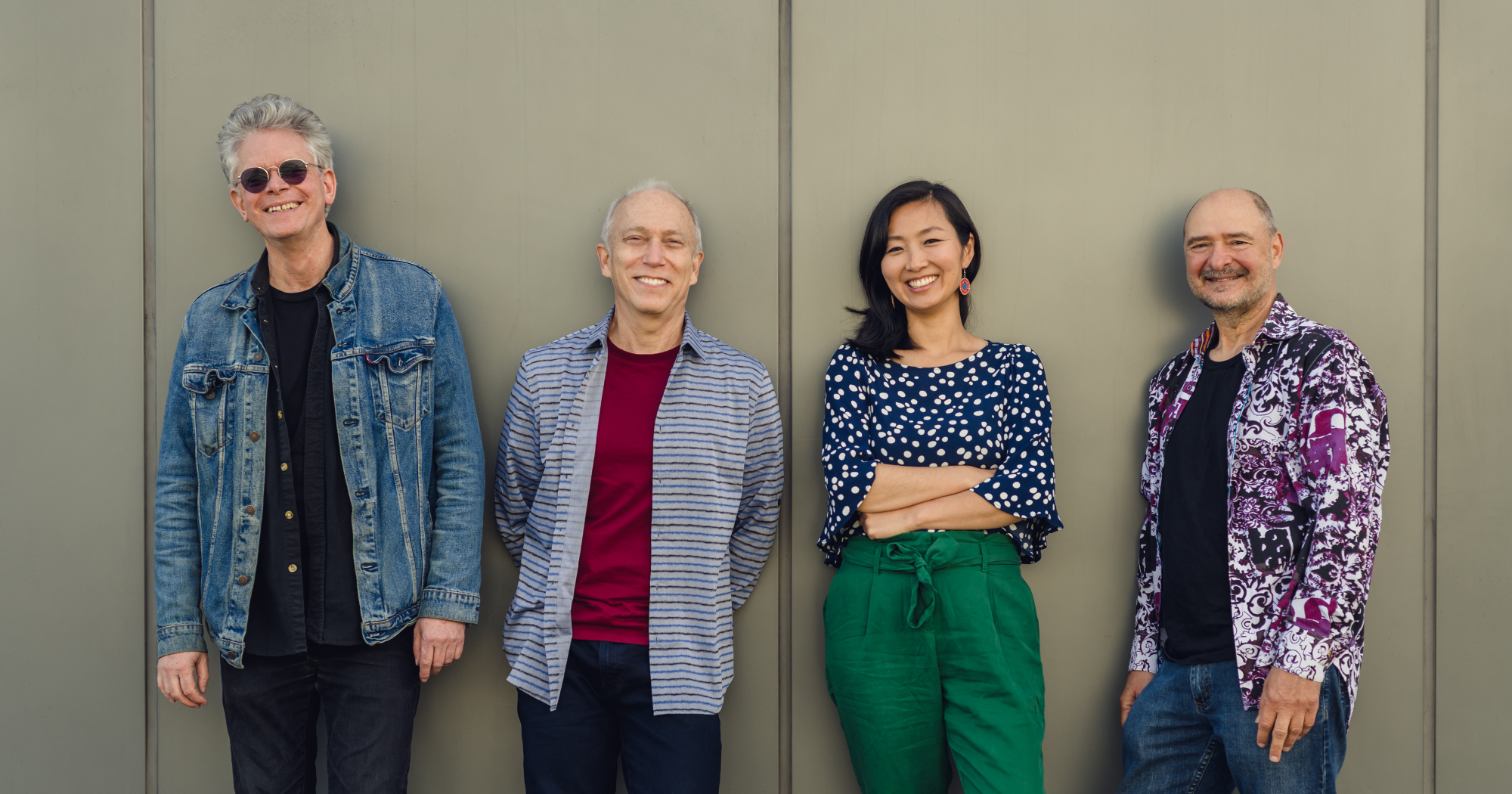
The result is Glorious Mahalia, a five-part suite and the title piece of a new Kronos Quartet album featuring the ensemble’s recent lineup of Harrington, John Sherba (violin), Hank Dutt (viola) and Sunny Yang (cellos). It’s insightful and bold, the music echoing and enhancing the conversations, at times cordial, but also at times testy between these two friends as Jackson tells Terkel that he can never understand the experience of Black people in America.

And in one segment, Harrington gets right up next to his wish, as Kronos performs to a recording of Jackson singing “Sometimes I Feel Like a Motherless Child.” It is, indeed, glorious.
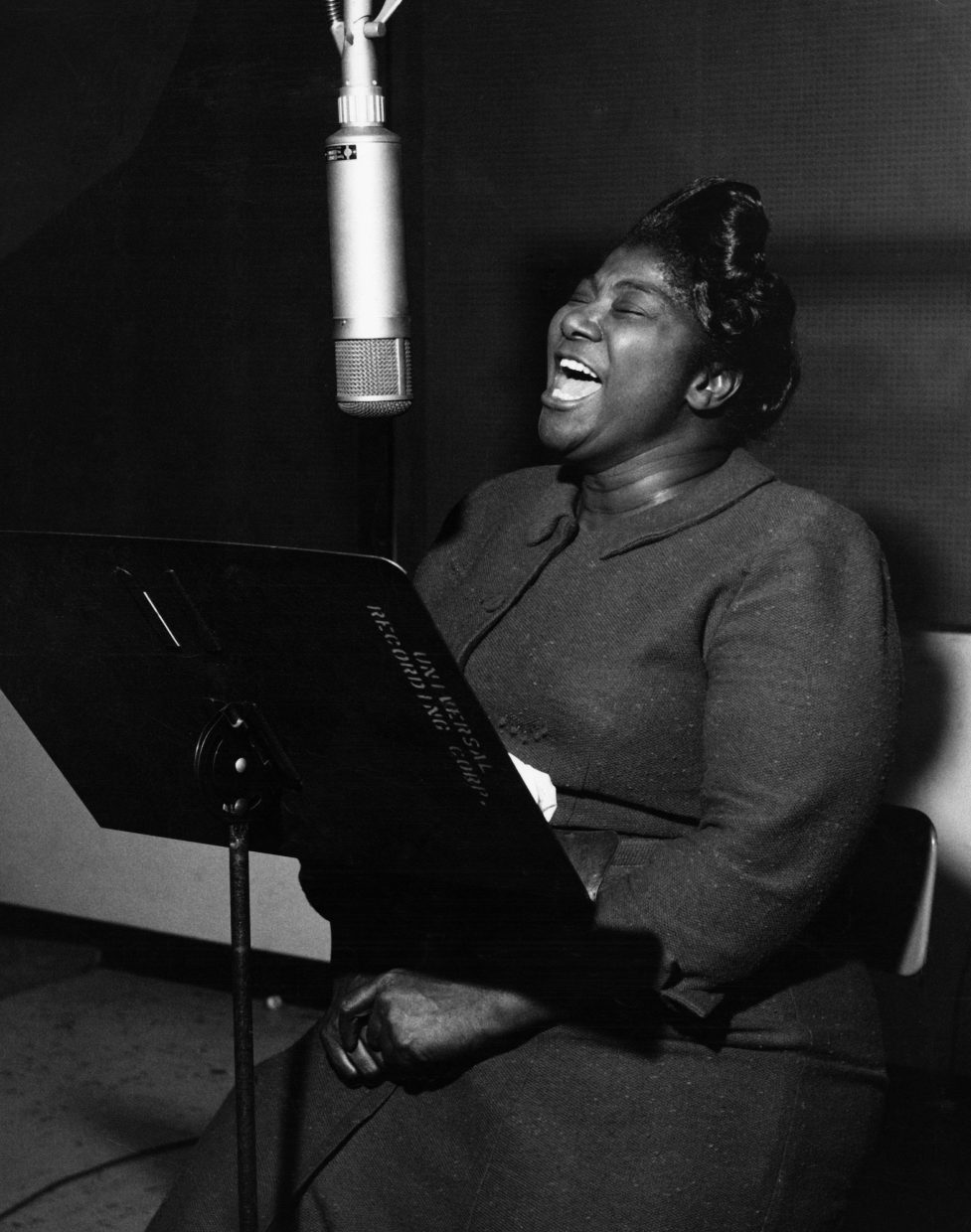
Mahalia Jackson photo by Lacey Crawford (courtesy of the National Museum of African American History & Culture.)

This is complemented by another suite, “Peace Be Till,” commissioned by Kronos from composer Zachary Watkins, incorporating reminiscences by King lawyer and speechwriter Clarence Jones as recorded by Harrington about the friendship between King and Jackson. At its core is the moment in a 1963 rally as he watched Jackson interrupt the written speech King was giving, shouting to him, “Tell them about the dream, Martin,” spurring one of the most impactful orations of modern times, the extemporaneous “I Have a Dream.”

An instrumental arrangement by composer Jacob Garchik of Antonio Haskell’s hymn “God Shall Wipe All Tears Away,” based on a 1937 Jackson recording, serves as a perfect interlude between the suites. Kronos has performed the song for years, including a stunning version with Mali’s Trio Da Kali on the 2017 album Ladilikan.

Kronos has long used spoken oral histories in its vast, wildly eclectic career. There is 1988’s landmark Different Trains, composed for the quartet by Steve Reich, juxtaposing audio accounts from a former Pullman porter and survivors of Holocaust transports, and last year’s Witness, by composer Mary Kouyoumdjian, with audio from survivors of the Lebanese civil war and the Armenian genocide. Glorious Mahalia’s themes of social justice also connect to, among many others, 2020’s Long Time Passing, a celebration of Pete Seeger, and 2022’s My Lai, the Jonathan Berger/Scott Chessman opera about the 1968 U.S. Army massacre of a Vietnam village. The new album follows those latter two as the third Kronos release from Smithsonian Folkways.

Harrington discusses all of this in a generous, wide-ranging chat for BGS, edited for length and clarity.

What were your first experiences with Mahalia Jackson’s music?

David Harrington: I think I heard her on television as a kid. But it was Hank Dutt, our longtime violist, who gave me an LP of hers in the late ‘70s. It just blew me away. Have you seen Summer of Soul, that film [Questlove’s 2021 documentary about the 1969 Harlem Music Festival]? Then you’ve seen Mahalia on that. Our family watched it, my daughter, son-in-law, grandkids, wife, and I watched together. And wow, when Mahalia got on, I said to everyone, “I have never seen a singer with a full-body vibrato before!” [Laughs] That was one of the most amazing performances I’ve seen in my life.

Glorious Mahalia springs from the conversations between Mahalia and Studs Terkel, and then it feels like Stacy Garrop joins the conversations with her music, and then Kronos join in too, all of you in a four-way exchange.

That’s a beautiful expression of it. I’ve never thought of it that way. What I wanted to do was hear all the interviews [Terkel] ever did with Mahalia. And that’s where my conversation started with Stacy Garrop. I think she knew a lot about his work, so it started there, really. We wanted a piece that celebrates their friendship and relationship, and what they brought to our society and our country.

It’s not always an easy conversation between Terkel and Jackson. She pushes back on him, even snaps at him that he can never know what it’s like to be her, to be Black in America. Was that part of your process with this, to consider, culturally and experientially what your place is in terms of presenting her views and experiences?

It gets back to wanting to perform with Mahalia Jackson. [Laughs] It’s like, every once in a while I hear a musician – I’m lucky as an explorer of music – I’ll hear something that is just so amazingly powerful. I want to find a way of bringing it into my own experience and that of the other members of Kronos and of our audience. And so I think I’ve been really consistent about that through the years.

The question is, what gives me the right to do that? I guess I’ve never really asked that question too often, because this is what musicians do. I’m absolutely convinced that if Beethoven would have heard some of the amazing musicians in India or various places around the world in his time, he would have wanted to bring elements of that music into his work in some way or another. Beethoven did a lot of transcriptions of Scottish music!

The first thing we hear on the album is Jackson’s voice, alone, singing the words “hold on.” It’s gripping and powerful, and must be even more so in a darkened theater for both you and the audience, hearing that before you even start playing.

Yeah, it’s about as good as it gets!

And then, from there, your task is to enhance and echo and illustrate the tone of her voice.

We’re also commenting, and our role takes on different kinds of complexities, being there as a platform for [Jackson’s and Jones’s] thoughts and voices to exist.

You have a history of projects that let others tell their cultural stories and experiences, from the oral histories of Different Trains and Witness to working with composers and musicians from many different places and traditions around the globe. This one is more centered on one person, though.

It goes back a long way, and thinking how to present this on a Kronos album – not only the voice, but the personality, the force, just the being of Mahalia Jackson. [That] was what I felt would be a good thing to do. That really came into focus when right around the 50th anniversary of the “I Have a Dream” speech, Clarence Jones was on television and he recounted how the speech became the speech as we know it.

When he described that moment of hearing Mahalia Jackson, someone King relied on in moments of need, Clarence spoke of when she would sing to him on the phone. I mean, when you think of anybody in the universe, a leader like Martin Luther King Jr., a civil rights leader, a spiritual leader, and he’s getting sustenance from a musician!

So then the speech is happening and, from what I can gather, she wasn’t quite hearing what she needed to hear from her friend. And so she called out to him: “Tell them about the dream.” When I heard that story I thought, “Okay, I get it. Mahalia Jackson has defined to me the role of musicians, the musical community in our world.” It was so clear. And what we get to do as musicians is listen. We listen to our inner selves, we listen to our families and our friends and our society.

In this case, Mahalia Jackson used her musical ability and listened to Martin Luther King and then gave him feedback. “Come on. I’ve heard you do better.” Now, am I imagining this? I don’t know if I am. I don’t even care, because it kind of defined something for me about my own role and the role of Kronos and musicians. So at that moment I thought, “I need to get in touch with Clarence Jones.”

This project started a few years back, but it’s coming out as the U.S. celebrates its 250th birthday. How does that timing feel, especially with the current political and cultural climate?

We’re doing a triptych, “Three Bones,” that’s premiering at Carnegie Hall [on April 25]. Part one will [draw on] Indigenous cultures. Part two will be African American, particularly Gullah Geechee [of the Southeastern U.S.]. Part three will be Chinese and Chinese American.

I’d like to make an experience that brings these three essential elements of American society to the stage at Carnegie Hall as our contribution to the 250 years. It’s about listening. It is just growing from listening. That kind of gets back to Mahalia.

Back to the idea of a conversation, it seems like it’s not just with Jackson and Terkel, but with the nation, with the cultures and the experiences, and not a static situation from 60 years ago. Does it feel like your relationship with Mahalia, her music, and her mission is something living and evolving?

I am very happy when Kronos gets to play this music on a college campus and for audiences that maybe never heard Mahalia Jackson, never heard about her, [or heard] that an artist can have very powerful ideas about life and our society. [About] what’s good and what’s right, and can express them as beautifully as Mahalia Jackson and Studs Terkel and Clarence Jones. You put these leaders together and it’s very impressive. And I don’t think there’s an expiration date there.


Photo Credit: Lead image of Kronos Quartet by Lenny Gonzalez. Inset image of Mahalia Jackson by Lacey Crawford courtesy of the National Museum of African American History & Culture.
These Berklee Students Helped Create Ensembles for Women and Non-Binary Folks

“Bluegrass music is a truly American artform. It reflects the culture and the time in which it’s created, and as with many traditional artforms, a preservationist stance is held on a pedestal. Bluegrass music’s history is very gendered, and when this happens, the music can’t reach its full potential.”

My teacher Laura Orshaw told me this.

There has been no shortage of amazing women bluegrass musicians to come out of the roots department at Berklee College of Music. Gillian Welch, Sierra Hull, Molly Tuttle, Bronwyn Keith-Hynes, and on and on. I’m going into my senior year at Berklee this fall as a mandolin principle, and one of the reasons I went to Berklee was how inspired I was by these women and their music.

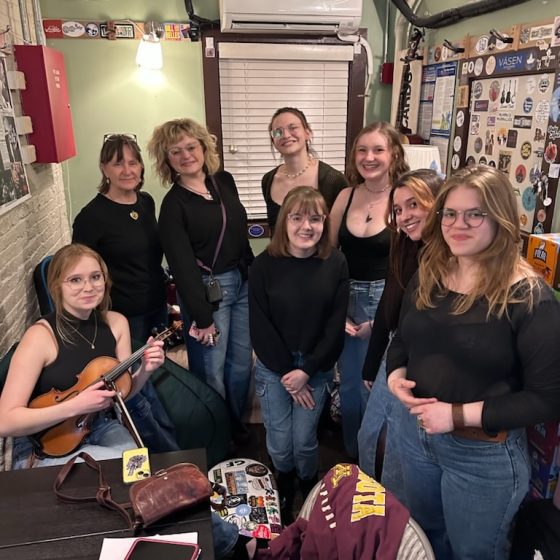
Towards the end of my sophomore year, my friend Katelynn Casper – a brilliant bluegrass fiddler – came up with an idea. She wanted to start a bluegrass ensemble of all women and non-binary folks. Katelynn approached Matt Glaser, the artistic director of the American Roots Music Program, about helping us create a class in which we would study and perform in a group. Excited by the prospect, he brought in Laura Orshaw (the Po’ Ramblin’ Boys) to be our mentor. In the past few years, there had been a strong influx of women who came to Berklee and wanted to play roots music, so it didn’t take us long to find people who wanted to join the project.

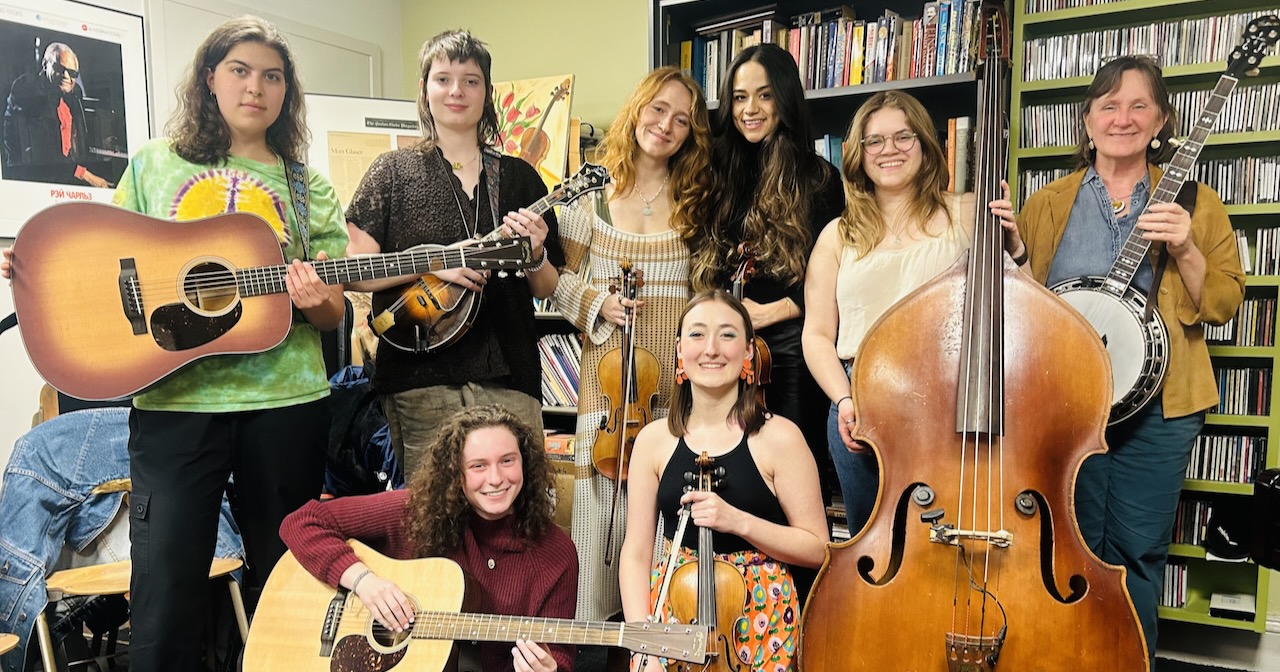
The ensemble started in October of 2023 with about 12 members, enough for us to break into two ensembles. I got to be in both groups, in one as mandolinist and the other as bassist. Our focus between both groups was to play music mostly written by women who we looked up to and were maybe overlooked.

Through the course of our year together, we moved through a catalog of songs and tunes written by our heroes and then delved into original material. We wrote songs and tunes together and on our own and fleshed them out as a band. It was an empowering experience to be a part of and it was beautiful to watch my friends explore a new kind of confidence in their music.

This past April, the American Roots Music Program sent all of us down to Washington, D.C. In June of 2022, the Smithsonian Center for Folklife and Cultural Heritage opened up an exhibit entitled Music HerStory: Women and Music of Social Change. Laura had caught wind of the exhibit and wanted us to visit, so we could witness its content and impact. The exhibit explored many women who were significantly overlooked in music, but yet the world would have been drastically different had their music not been a part of it.

We heard and read stories of when Loretta Lynn put out “The Pill” and how much of an uproar it caused; stories of how Elizabeth Cotten had to put her music on hold to raise her children and didn’t come back to it until she was in her 60s, putting out “Freight Train” and “Oh Babe It Ain’t No Lie” and still was not given much credit.

Walking through the exhibit, I couldn’t help but think about all the different musical influences I have and how so many of those influences were inspired by these women, but how that was never really talked about.

On the same trip, we also got the privilege of going to Smithsonian Folkways Recordings and learning about some of the history of their record label and how it came to be. When we were checking it out, both ensemble bands did a little recording in the archives to commemorate the trip. Playing our originals and covers written by powerful women was an incredible experience. We were surrounded by original recordings and records that made bluegrass and old-time what it is now and some of the music that brought each of us to the genres to begin with.

While we were down in D.C., we also got the chance to hang out with Kimber Ludiker (fiddle) and Avril Smith (guitar), two members of Della Mae. In both groups, the inspiration from Della Mae was so apparent – we all learned many of their songs. Getting to stand up and play their songs with them was a mind-blowing experience.

Taking part in this project has been such an inspiring experience. As a kid who grew up in the bluegrass and old-time world, there weren’t always a lot of women to play music with, so to get the opportunity to dedicate time each week to just sit down with a group of deeply passionate women and non-binary folks who are also such remarkable roots musicians was an indescribably moving experience.

A common conversation amongst us during that time was how freeing and comfortable it felt to play music in a setting like this. Whether or not you think about it, music as a whole is an intensely male dominated world – and bluegrass isn’t any different.

“Here’s a question that crossed our minds every week,” Laura said. “‘What would bluegrass be like without patriarchy or bias?’ The answer comes through music, not essays, and this project certainly chipped away at our goal.”

Being in this ensemble, I learned a lot about myself. Being surrounded by a community of women and non-binary folks playing music taught me a lot about my confidence as both a person and a musician. Being in that environment gave me an amazing place to explore.

“When Matt [Glaser] asked me to be the curator of this project, I couldn’t have guessed how impactful and enlightening it would be for me. Working in an all-women and non-binary band filled a void for all of us – creatively, academically, and socially,” Laura continued. “Students shared experiences of the not-so-glamorous parts of working in a male-dominated field. They studied the music and songs of their heroes, who sometimes got overlooked in other classes and ensembles. They wrote songs, arranged music, and tried on different leadership roles in the band.

“But most of all, they encouraged and inspired each other to be better musicians. The mutual dedication and enthusiasm were palpable in every rehearsal.”

It’s been an experience of a lifetime to learn the music I love with a group of women who want to push the boundaries of the genre. To sit with a group of people who understand the intricacies of being a woman or gender non-confirming person playing bluegrass – or even music in general – was a very comforting experience. We all grew so much as people and musicians.


Photos courtesy of Emma Turoff. Lead image: Ensemble, No Man’s Land. Inset image: Ensemble, Ain’t That Just Like A Man.

On ‘About the Winter,’ Barbaro Find an Emotive Sound All Their Own

Barbaro, who take their name from the famous Kentucky racehorse whose life was tragically short, have recently released About the Winter, their second full-length album.

The band was founded as a duo by Kyle Shelstad and Isaac Sammis in 2017, later welcoming Rachel Calvert and Jason Wells into the fold. They released Dressed in Roses in 2020, and while Sammis departed the band after the birth of his second child, he contributed heavily to the new album and left a great deal of inspiration with the rest of his bandmates.

About the Winter, which was co-produced by Shelstad and Brian Joseph (Bon Iver, Sufjan Stevens), features nine original tracks that seamlessly weave in and out of one another, gently guiding the listener through vulnerable lyrics, intimate soundscapes, and technical prowess.

BGS caught up with Barbaro following their month-long album release tour to chat about the new record, their musical process, and recent world travels.

The textures on this album – while ranging from synths and samples to pizzicato bass and fiddle – maintain a familiar sonic foundation for each of these songs to sink into. How did you go about selecting and arranging the material for this record?

Kyle Shelstad: As a group, I think we tend to gravitate towards tunes that we can connect with on some sort of deeper level, tunes that we can internalize in some way that provokes an emotional reaction in ourselves and hopefully those listening. This is the basis for all our song choices in this group, finding tunes that allow our whole selves to buy into the intimate, distant, delicate, and coarse moments that help create the dynamic range found in many of these tunes.

Regarding the arrangements, some of this was pre-planned going into the recording, but many of these songs were somewhat unfinished going in. Our goal was to explore in the studio and Brian allowed us a space to be creative and experimental with these songs. For example, there is a moment in “Subpoena Colada” where Jason is crunching a plastic water bottle full of leaves into the microphone… it’s a sick solo, check it out. Brian took all these experiments and helped us make them musical.

There’s a line in the album’s press release that caught me: “Barbaro’s compositions prioritize texture and expression over technical virtuosity.” I really like that, considering that two of you – Calvert (fiddle) and Wells (bass) – come from the classical world, whereas Shelstad has a stringband background. That said, this music is thoughtfully orchestrated, which I know must require a fair amount of calculation and precision. When putting this music together, where do you find the balance between those two worlds?

Jason Wells: I’d say the balance comes more from each of our instincts than from traditional orchestration. Since Kyle writes the material and brings the songs to the rest of us, I’d say the base of the music is in the string band tradition, but the way Kyle writes and how he uses space and texture is really unique and lends itself to a more classical approach to filling out the other parts.

What makes the songs work is each member’s commitment to really listening for what each song needs and not adding any more than that. As we workshop new material, each of us will try different things and only keep what seems essential to the song, and through that process the form of the song takes shape. It’s a really natural process.

I love the Bruegel piece, “The Hunters in the Snow,” that you chose for the album cover, and the way that it pairs with this music. Can you tell me more about how you came to feature the famous painting alongside this music?

Rachel Calvert: I was researching how winter shows up across art history when I came across the Bruegel painting. I was surprised that it was a 16th century painting, it looked more modern to me. I was seeking something that evoked emotional ambiguity, nostalgia, and the collision of the natural and manmade – and it hit all the marks! I also noticed that the colors matched up with the Barbaro “uniform.” We typically show up to gigs wearing denim, black, and earth tones. “Hunters in the Snow” was already one of us!

The farewell track, “Ike’s Farewell,” is obviously much more than a lone instrumental to close out the album – it’s clear that Isaac Sammis had a big impact on this music, both through his co-founding of the band, and expressive banjo playing. While I know that someone leaving the band can be difficult to navigate musically, I like that Sammis’ contributions are celebrated on this album. I was curious if you could attest to the influence, musically or otherwise, that he’s left with you.

JW: Man, Isaac’s influence on the band’s sound can’t be overstated. He has this unique ability to really push the boundaries of sound and tonality, and I attribute his instinct for tension and release to be one of the primary reasons our songs flow compositionally the way that they do. In addition to his stellar banjo playing, Isaac’s also a hell of a guitar player and you can hear him adding electric guitar effects and note bends on several of the tracks. Those lines and sounds he laid down ended up being foundational to the new sound direction for the album, so his influence is everywhere!

This is unrelated to the record, but I wanted to ask about your 2023 American Music Abroad tour. That seems like a pretty special thing to do – to get to journey to Qatar, Turkey, and Bulgaria to share this music. I know it was after the recording of this album, but how do you think that tour influenced the band?

RC: Our travels abroad reaffirmed our overall mission – to form pathways for all sorts of folks to connect to both their interior emotional world, and to the people and place that form communities around them. Bringing audiences to tears, even through cultural and language barriers, was a powerful reminder that music and art are indeed universal languages that allow us to see the sparks of life and love within ourselves and others.

With your album release tour wrapped up, what’s on Barbaro’s horizon for 2024?

KS: Barb is excited to keep working on and recording new music. We really enjoy the process of writing together and look forward to working on a fresh batch of tunes. I think we found a voice on this record that is uniquely ours, and we intend to keep exploring that.


Photo Credit: Wolfskull Creative