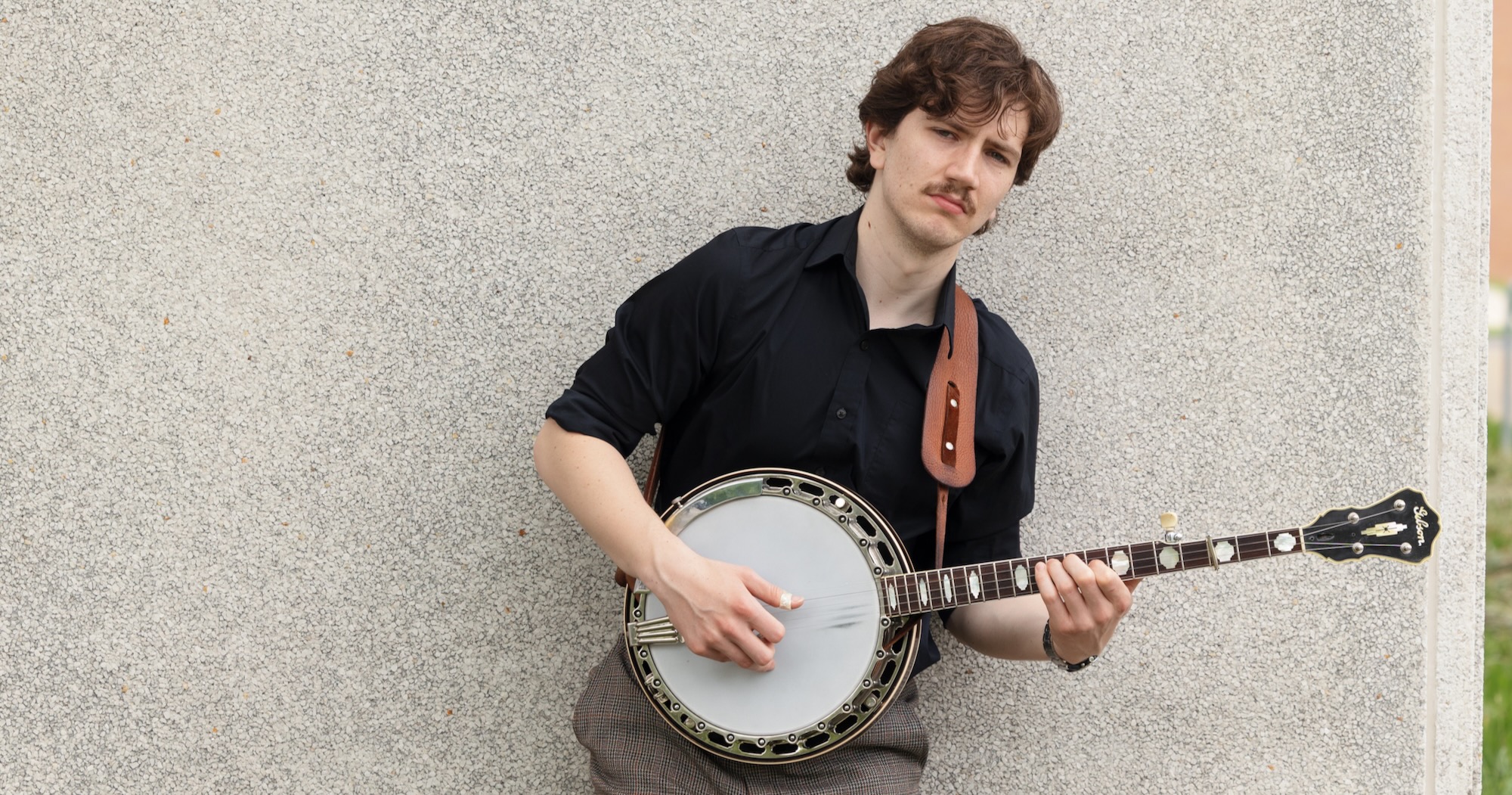
Max Allard Wrote a Banjo Concerto

The banjo, a sonic staple of folk and bluegrass, has often been left to its established devices in traditional circles or, more optimistically, among contemporary newgrass like Punch Brothers, the Infamous Stringdusters, and New Grass Revival, which included the genre-bending banjoist himself, Béla Fleck. Still, some musical spaces, like classical performance and composition, remain largely devoid of the banjo despite its lengthy and socially complex history, global presence, and tonal variety. Thankfully, between artists like Fleck, Noam Pikelny, John Bullard, and others, classical compositions have had a chance to shine on the instrument, paving the way for next-generation players to embrace and mix the traditions of classical writing with the distinct sound and musical capabilities of the banjo.

One such figure rising to the occasion is composer and artist Max Allard. A recent graduate of Oberlin College’s Conservatory of Music, the Chicago native is a champion of many cultures and genres in his work, which Allard describes as “an unclassifiable mix of bluegrass, jazz, new acoustic, classical, and pop.”

Allard has brought his stylistic openness to every facet of his artistry, including a duo with his brother Otto Allard; a bluegrass ensemble he co-founded, EZRA, that includes mandolinist Jacob Jolliff, guitarist and composer Jesse Jones, and bassist Craig Butterfield; and his touring support of Michigan-based bands Full Cord and Westbound Situation and Virginia-based band the Hackensaw Boys. Another instance finding him pushing banjo boundaries was his collaborative performance with fellow banjoists Bill Evans, BB Bowness, Cassidy Beentjes, and Matt Flinner in an adventurous arrangement of “In C,” the iconic composition by American minimalist composer Terry Riley, as part of a commissioned work series at the 2025 FreshGrass Festival.

Many of these ambitions grew alongside or after Allard’s studies, giving him several creative contexts in which to nurture his knowledge of classical forms and styles. One of the most impactful of these opportunities was part of Allard’s collegiate work itself: A Concerto for banjo and mixed ensemble. Encouraged by his EZRA bandmate and Oberlin professor Jesse Jones, Allard wrote his single movement work in 2023, giving the world premiere with the Oberlin Contemporary Music Ensemble under conductor Tim Weiss in December 2024. Though the piece has long since debuted, Allard’s vision for what the concerto would accomplish and what the experience of writing it revealed to him along the way remain ongoing sources of inspiration and guidance as Allard continues to write and perform for anyone who wants to listen. (Watch a video of Allard’s Concerto below.)

BGS recently spoke with Allard over the phone, discussing the many branches of his work as an artist and composer. We dive into how each stylistic space blends with his classical training, where he sees the banjo’s place in classical performance, his thoughts on cross-genre efforts by other artists, and more.

How would you describe the journey around your Banjo Concerto and its compositional process?

Max Allard: I had anticipated [the piece] for a while. I had gotten into Oberlin College as a composition major and part of the reason I chose Oberlin is because composition faculty member [Jesse Jones] comes from a background of playing bluegrass. He plays mandolin, some banjo, and guitar so I knew that I would have someone in the faculty on my side to help me, to know where I was coming from and to help guide the path forward in terms of a study and a pedagogy that I had not been taught before. So Jesse told me, “I think it would be great for your work here at Oberlin to culminate into a banjo concerto.”

I had the plan of approaching the banjo as a concert instrument – and as a concert instrument with the supporting ensemble. To do that, I had to get away a little bit from the folk aspects of the banjo in terms of a composition process, while still embracing those same aspects in terms of style.

[The concerto] sort of started as a banjo draft. And something I think is interesting to mention is that people have compared my banjo playing before to piano players and it’s a very valid comparison, because I take a lot of inspiration from piano players like Keith Jarrett, Chilly Gonzales, and many European classical composers like Sergei Rachmaninoff and Frédéric Chopin. I have long thought of the banjo as a very capable instrument to take solo composition very seriously on. I had to find ways to creatively think about which instruments to give various roles to. The nice thing was that I got to pick the makeup of the ensemble. I knew I wanted to have celesta. I wanted to have clarinet, flute with piccolo – there were certain sounds I knew I wanted to include.

I had very specific ideas about which instrument fulfills which role. It’s definitely a string-heavy piece and I’m a huge fan of writing for strings. So I had known that this piece would provide me the depths that the banjo doesn’t always have. I thought, “I can fill out these luscious piano-like chords that I usually like to write on the banjo, with the help of the supporting string section that has a much broader range than the banjo has by itself.” It was actually really liberating for me, because having an ensemble with a very diverse range – not just timbre-ly, but sonically and in terms of highs and lows – I had many options. It was a really great blank canvas for me to further explore creativity without some of the limitations of the banjo, be it physical or range related, or what have-you. I was able to basically apply my banjo knowledge and compositional tendencies to a blank slate, which presented a lot more opportunities.

What are your thoughts on the banjo’s “place” in classical music?

The banjo has a very checkered, problematic history and there’s a lot of moral debate that I’ve witnessed amongst people about what the banjo’s role is. It has had many different roles – a lot of it actually being erased. We talk about the problematic history of the banjo being used for minstrelsy but we actually forget about the banjo’s history of being used in parlor music. For a long time, the banjo actually had a role being played in parlors and social events, and even playing classical music.

I find it funny when people sort of criticize the banjo these days because the reputation has been ruined so much. People tend to think of the banjo with the film Deliverance. That film sort of ruined the reputation of the banjo as being this hillbilly folk instrument that’s not taken seriously. Unfortunately, that stereotype still exists, so people sort of scoff at banjo players who want to elevate the instrument into a certain concert environment.

I think all instruments can be used however people want. It’s like the artist has a final say in how they want to showcase their instrument. But for me, I think I’ll always still want to pay my respects to the traditions of the banjo. And as I said, the banjo has, throughout history, been used in a variety of different contexts. What I try to do is bridge the gap of pedagogic composition and folk music. If we’re talking about my banjo concerto, I want to write well-written concert music but [avoid creating] a totally contrived piece of music that just tries its best to fit the banjo in with an ensemble. I want to at least take my understanding of bluegrass, folk music, and old time music and still amalgamate it with concert music.

What do you find you learn most from other banjo players who have thrived in the classical space like Noam Pikelny, Béla Fleck, John Bullard, and others?

Broadly speaking, if [banjo players] want to put our instruments in the classical space, we need to do our best to understand the way the classic musicians think – really get in the minds of classical musicians. If one, as a banjo player, wants to pursue classical music, it behooves them to get at least a decent understanding of concert music. And I think most banjo players [like Fleck, Pikelny, Bullard] who have attempted that absolutely do have a different understanding. I just think the understanding of how deep it actually goes, what details go into really good concert music – it just takes a long, long time to master. And I am nowhere close to mastering it. But I at least have an understanding of how little I knew before attending [Oberlin].

Are there any aspects of Terry Riley’s “In C” that were especially challenging to capture with this banjo-centric arrangement?

I should give a shout out to Cassidy Beentjes, who did all this arranging – a really good pedagogue of the banjo. In terms of limitations though, the key [was one]. With the banjo’s natural key being G major, we took the piece down to a G-major tuning, so it makes much more sense to play the piece in G, especially since we want to achieve certain overtones. We could have played in C with a C tuning, but a lot of complexity would have arisen from playing in a foreign tuning. We were already uncomfortable in the first place, you know, with a piece of music like this, because banjo players don’t get the opportunity to do something like this very often, so we were careful.

What aspect of your musical identity does EZRA help you to fulfill that you don’t necessarily achieve in the same way with other pursuits?

I’d say it’s a good opportunity to write for a smaller acoustic ensemble where there’s a good understanding of not only folk and bluegrass, but also classical and jazz music.

It makes a big difference when you’re writing for people who you’re friends with – writing for people you know. You want to give people roles that you know they’re going to enjoy doing and that they do well. When I write for EZRA, it’s definitely much more stripped down and basic than if I were writing something like the banjo concerto. Because with the banjo concerto, I give very specific instructions, I supply a whole score with those specific instructions for everyone to read from. And when I’m writing for EZRA, usually I’m just writing lead sheets, just chords with the melody. In terms of arrangements, that can be discussed in the studio.

It’s funny though, because anytime we’ve recorded a record, we’ve had such limited studio time that we have to get our act together in just 72 hours or so and make our arrangements studio-ready. But again, that’s freeing for me, because I can write more vague ideas, stuff that I would not feel as intrepid writing with a big ensemble. When I’m with EZRA, I can just do whatever the heck I want and know that we can get away with it in some way. It’s also definitely a great opportunity for me to write contemporary folk music that is absolutely rooted in folk and bluegrass but also has all these other influences. A lot of Béla Fleck influence, a lot of classical music as influence – all kinds of stuff. It’s definitely a very special opportunity for me.

What’s the most unique aspect about the duo you perform in with your brother? How do you both approach playing together?

I guess the main thing that stands out is just the brotherly synergy. My brother is the easiest musician to play with because we know each other so darn well. Not much has to be planned – there’s almost never any stress. We’ve played plenty of gigs where we haven’t rehearsed at all beforehand and it goes pretty well just because we can glance at each other a certain way and know exactly what we mean musically. We’ve also played gigs where like a half hour has gone by and the whole thing is improvised. We just weave sounds together and it’s great.

It’s great to have a brother who plays music because it’s just that very intense, personal connection that one has with their sibling. You know each other so well that no communication really has to be done verbally. In general, playing with my brother is just very fun because we make crazy, spontaneous decisions and do ridiculous things that we would not do in any other setting.

Do you think the folk and bluegrass communities could better embrace the banjo being a genre-versatile instrument? And do you think that schools or community spaces are the best starting place to initiate that shift?

If I were talking to a banjo player who wants to get into classical music, I would say you can learn just as much by surrounding yourself with the right people. I think the most viable option is to try to meet some people who come from that background. And it can be any background. Like, say you want to get into a certain style – find musicians who can do that and try your best to talk to them, befriend them, whatever you can, and surround yourself with that. I think community is always important in the arts. Definitely, it’s very important to surround yourself with people – not even not necessarily like-minded people – but people who have very different experiences and very different backgrounds. Personally and musically in any way.

I think the bluegrass culture and scene could definitely benefit from opening themselves up a little bit. I think sometimes we forget that bluegrass has a very progressive foundation to it. Even Bill Monroe valued when he heard New Grass Revival. He was supportive of it, supportive of all those people who were taking bluegrass in a different direction. So I think it’s very progressive by nature. And music has always evolved and always will evolve and it has to sort of be accepted.

I think the banjo is actually in a very good place right now, because we’ve never had so many banjo players. It’s very good because the banjo is becoming popular for the right reasons – not necessarily gimmicky reasons, with banjos being used in pop music – but it’s being taken seriously amongst musicians from all different types of backgrounds. Broadly speaking, I don’t have too many complaints. I think it’s in good hands.


Photo Credit: Tanya Rosen-Jones
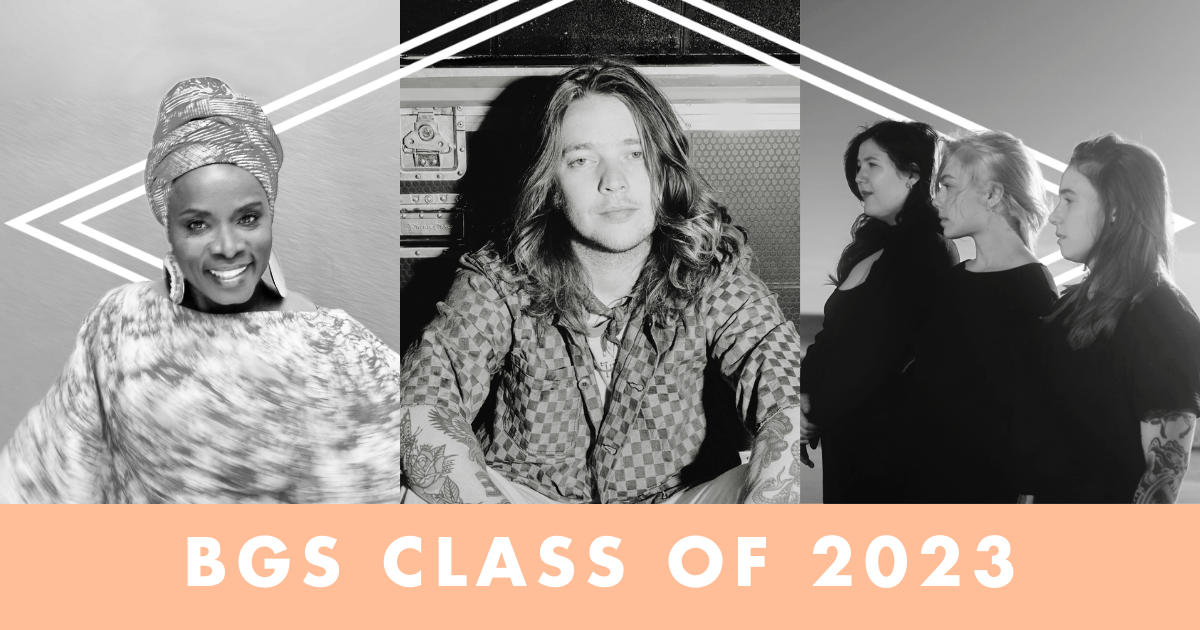
BGS Class of 2023: Our Year-End Favorites

Year-end lists can be so problematic – pitting distinct sounds and music against each other, peddling absolutes, attempting objectivity in a demonstrably subjective field. Each year, as we consider the music that impacted us over the course of twelve months, we try to challenge ourselves and each other, as BGS contributors, to think outside the year-end round up “box.” 

For the BGS Class of 2023, our intention is to highlight music, songs, albums, and performances that have stuck with us, or that we know will continue to stick with us into the future. We wanted to deliberately look beyond the music and creators that merely have the resources, networks, and access to reach us; we wanted to utilize genre as a checkpoint or touchstone, but never as a blanket criterion; we wanted to broaden what forms of media or formats are included; and overall, we wanted to attempt a holistic look at what a year of listening, learning, watching, and hearing can look like to this particular group of people. 

You’ll find ravishing and large indie folk, earnest and literary – and raucous and silly – bluegrass, legendary legacy artists and brand new lineups, soundtracks and live shows, and more. Ultimately, whatever the year, we always want our retrospective lists to be a starting point, a springboard, for our readers, followers, and for roots music fans. This is not the end-all, be-all “Best of 2023” list. Instead, it’s a reminder of the music that scored a year absolutely filled to bursting with excellent, exemplary, ecstatic roots songs, albums, and shows. 

boygenius in Pittsburgh, June 2023

When I saw boygenius this summer, I was milktoast about the whole thing going into it. As soon as I arrived, I realized I was surrounded by young people – and not just any young people: All the beautiful freaks were out for Lucy, Julien, and Phoebe. The energy was palpable and something that I have not experienced in over 20 years. Everyone knew every word. They were FaceTiming friends who cried and sang along remotely with these heroes on stage. It was inspiring!

boygenius feels like an important band. I so wish they had been around when I was an outcast teenager feeling such confusing, wild emotions. Music has a way of helping the world make sense. boygenius radiates communion and it felt like an honor to be a part of their world. – Cindy Howes

Caitlin Canty, Quiet Flame

My favorite bluegrass album of the year is often an album that, through no fault of its own, ends up receiving little to no bluegrass radio airplay or IBMA Awards recognition, and as I listened to Caitlin Canty’s Quiet Flame over and over this year, I couldn’t help but expect it would end up criminally underrated by the general bluegrass community. It’s made by bluegrass pickers – Canty assembled Chris Eldridge (who also was the project’s producer), her husband Noam Pikelny, Brittany Haas, Paul Kowert, Sarah Jarosz, and Andrew Marlin for her band – and as a result Quiet Flame, more often than not, is just an unencumbered string band album that’s as much bluegrass as it is Americana and singer-songwriter folk. But while Mighty Poplar, with a similar lineup of folks, takes off in bluegrass circles, it raises an eyebrow that this impeccable, heartfelt, and complicated set of songs hasn’t seen the same trajectory. Not that that was Canty’s goal – it’s obvious her priorities in music making are grounded and community-minded, part of why this album is such a stunner. “Odds of Getting Even,” co-written with another BGS favorite, Maya de Vitry, is one of the year’s best songs, bar none. – Justin Hiltner

A Homeplace Pilgrimage to Earl Scruggs Music Festival, August 2023

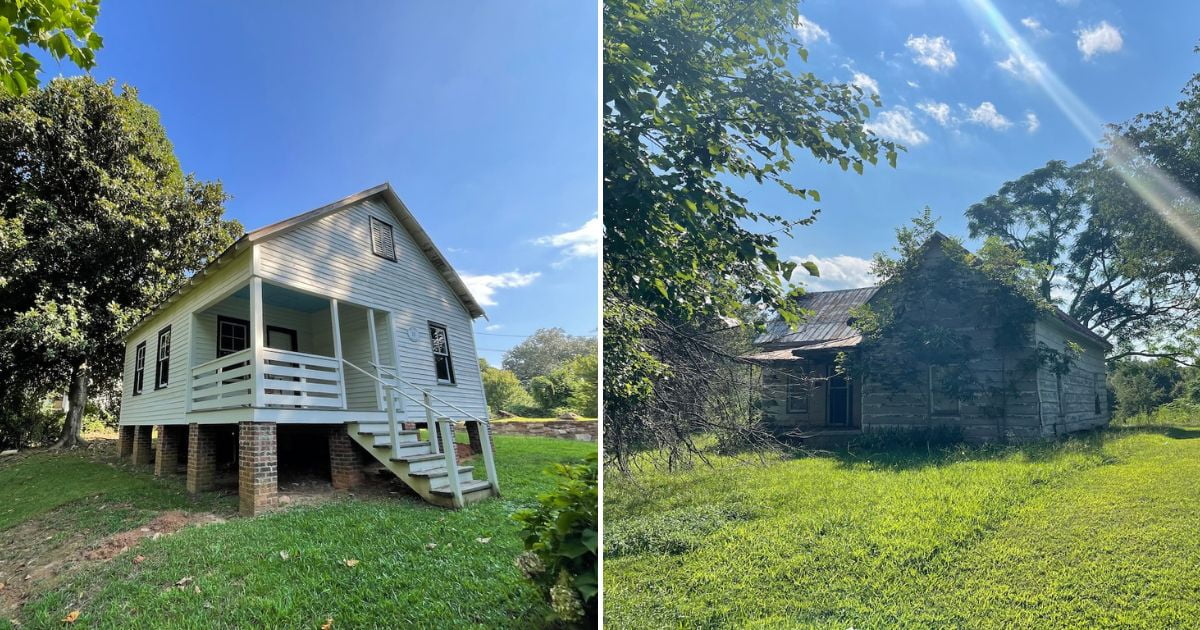
L: Nina Simone’s homeplace in Tryon, NC. R: Earl Scruggs’ homeplace in Boiling Springs, NC. Both photos by Justin Hiltner.

BGS once again co-presented the Earl Scruggs Revue tribute set hosted by Tony Trischka at Earl Scruggs Music Festival, held just outside of Shelby, North Carolina at the Tryon International Equestrian Center in August. On my drive to the festival grounds, I made stops in Tryon proper, to visit Nina Simone’s childhood home, and also in Shelby, to visit the Earl Scruggs Center and to drive by both of the Scruggs homeplaces just outside of Boiling Springs, North Carolina. It was stunning to visit both homes on the same day, to realize the interconnectedness of so much of American popular music. Simone grew up with a view of the Blue Ridge Mountains from her front porch nestled in one of their hollers, yet we place Scruggs as an Appalachian musician and not Simone? 

The festival and Scruggs Center, for their parts, did an excellent job of demonstrating how broad, varied, and intricate American roots music is, even while focusing closely on bluegrass, string band, and Americana music. Listeners of our podcast, Carolina Calling, will know how much BGS loves North Carolina music history – the show features episodes on both Scruggs and Simone. Seeing that history in person, while heading to a first-class, banjo-heavy festival was a favorite musical moment of this year, for sure. – Justin Hiltner

East Nash Grass, Last Chance to Win

East Nash Grass seems to be all the buzz on the bluegrass circuit these days and those who have ventured to Dee’s Country Cocktail Lounge on any Monday night since 2017 can certainly understand why. The band’s long-standing residency at the Madison, Tennessee dive bar has taken them from a weekly pick-up band to performing at the Grand Ole Opry, the Ryman Auditorium, and at bluegrass festivals across the U.S. Their sophomore album, Last Chance to Win, captures the band at their very best (albeit, without their lovable stage antics). Following a 2023 IBMA nomination for Best New Artist, it won’t be a surprise if we see this record, and these musicians, sweeping awards in 2024 and beyond. – Thomas Cassell

Alejandro Escovedo at Cat’s Cradle Backroom, Carrboro, NC, November 2023

There are countless good reasons why you should make a point of seeing the Texas punk/soul godfather if he’s ever playing anywhere near you. But what might be the best reason of all is it’s a lead-pipe cinch that everyone in your town worth hanging out with will be there, too – onstage as well as in the crowd. Escovedo was among a dozen stars drawn to the North Carolina Triangle for an all-star “Nuggets” tribute show overseen by Lenny Kaye in November. So, he came a night early and played a solo show, too, ably supported by local luminaries Lynn Blakey and Pinetops/The Right Profile guitarist Jeffrey Dean Foster. The love in the room was palpable on deeply moving originals like “Sister Lost Soul” and “Wave Goodbye.” And when Kaye and R.E.M.’s Peter Buck came on for a closing Velvet Underground cameo of “Pale Blue Eyes” and “Sweet Jane,” the circle was complete. – David Menconi

Ben Garnett, “Open Your Books” (featuring Brittany Haas and Paul Kowert)

Before I’d listened to the complete #BGSClassof2023 Spotify playlist and realized this track was one of our first additions, the app kept recommending “Open Your Books” to me – and it’s not hard to see why. From guitarist and composer Ben Garnett’s debut album, Imitation Fields, the track features bassist Paul Kowert and fiddler Brittnay Haas and is an example of what bluegrass music can be, and what traditionally bluegrass instruments can do.

The tune opens slowly, with guitar and mandola – provided by Molly Tuttle & Golden Highway’s own Dominick Leslie. Fiddle swells, orchestral arrangements, and dreamy acoustic production make for a piece that feels distinctly intellectual. It’s chambergrass, but it’s also highly listen-able. While there’s a strong melodic thread throughout, the surrounding instruments and their players are allowed to wander off up the guitar neck, throwing in trill-y banjo licks, and detouring outside traditional fills and solo styles. The record was produced by Chris Eldridge and also features Matthew Davis on banjo and additional guitar from Billy Contreras. I’d recommend this tune to low-fi lovers, roots music fans, and anyone looking for a chilled out moment. It’s perfect for an introspective drive or a rainy winter day spent drinking hot tea at the window. – Lonnie Lee Hood

Alice Gerrard, Sun to Sun

Never, over the course of her lifelong career in music, has Alice Gerrard stopped, having reached her musical destination. She has challenged herself, time and time again, not simply for reinvention’s sake, but because she is a consummate old-time and bluegrass musician, someone so solidly bitten by the string band bug that making music requires that constant movement, that aspirational looking into the future, girded by songs of the past. But Sun to Sun, her latest – and perhaps final – album, features songs decidedly of the present. A synthesizer of traditional art forms, Gerrard takes textures and colors we relate to “authenticity” and leverages them to serve the messages in these tracks. Aging, mortality, justice, apartheid, gun violence, community are all woven into this collection. Alice is their nexus point, around which the entire project revolves and reflects the cosmic light she continues to shine on all of us – and on roots music subjects too often hidden in the shadows. – Justin Hiltner

A Good Year for Soundtracks – Asteroid City, The Holdovers, and More

Between the Writers Guild and Screen Actors’ strikes, 2023 was a weird year for the entertainment industry. But for those releases that did make it to the screen, it was a great year for movie soundtracks, especially for roots music fans.

First up, Wes Anderson’s western sci-fi Asteroid City. In addition to the usual cadre of Anderson’s cast, the film was peppered with classic country and bluegrass recordings from the likes of Tex Ritter, Slim Whitman, Bill Monroe, and Johnny Duncan & the Blue Grass Boys (you read that right). That’s to say nothing of the incredibly catchy original ear worm, “Dear Alien (Who Art In Heaven)” which felt as classic as those twentieth century tunes of the frontier written decades ago.

Capping off the year was Alexander Payne’s The Holdovers, a beautiful ode to a particular style of 1970s filmmaking that stars Paul Giamatti. Set in snowy western Massachusetts over a lonely winter break in 1970, the soundtrack plays like an old, soft blanket – familiar and warming.  Newer tracks from Damian Jurado and Khruangbin weave seamlessly alongside ‘70s AM gold and Mark Orton’s pensive, folksy score. But the real standout of this soundtrack is a rediscovery of British folk artist Labi Siffre. His music has been shamefully overlooked in U.S. folk canon. Hopefully this movie can help start to rectify that.

Finally, it would be criminal if I didn’t mention the key placement of Indigo Girls’ “Closer to Fine” in the biggest hit of the year, Barbie. Here’s to another generation of young women finding themselves in Amy and Emily’s music. Thanks, Greta Gerwig. – Amy Reitnouer Jacobs

Kristen Grainger & True North, “Extraordinary Grace”

Take the anvil from my chest…

I am gasping for breath at this opening line. In her extraordinary, intimate voice, Kristen Grainger is pleading, letting us know she has lost hope. And we are right there with her. Whether we believed salvation came from the church or the Voting Rights Act, we believe no more. We are a fractured world, and it seems there is no bringing us together. Kristen’s melodies pull you in as much as her words, and I sometimes wake with this haunting song emerging from my dreams. Her bandmates’ graceful harmonies and instrumental accompaniment support the stunning words. 

I once believed in extraordinary grace
I put my faith in saints and saviors
In the mirror, I can’t bear to see my heroine
Killing time until time returns the favor.

Still, there is cause for hope: the promise of more music from True North. – Claire Levine

Angélique Kidjo at New Orleans Jazz & Heritage Festival, April 2023

“We can’t hear! We can’t hear!” Not what a performer wants to hear an audience chanting – though Angélique Kidjo didn’t hear it for a couple of songs at the New Orleans Jazz & Heritage Festival in April. She was giving it all, singing and dancing with vigor and verve, as she does. But the Benin-born star’s voice and all but the drums and percussion from her band were not reaching the crowd, that had already waited out a 45-minute rain delay. Finally, the stage crew got the message, but it still took some time to get things working. When they did, Kidjo betrayed no frustration – just pure, joyful release as she packed a full set’s worth of spirit into the handful of songs she could squeeze in the remaining time slot, including a few highlights from her re-infusion of Talking Heads’ Remain in Light album. Closing with her idol/mentor Mariam Makeba’s signature “Pata Pata,” she was radiant, as was everyone who stuck around to see and hear her. – Steve Hochman

The Lemon Twigs, Everything Harmony

This album is, without reservation or exaggeration, one of the most beautiful records I have heard in my entire life. Building on inspiration from ‘60s/’70s pop-rock (think the Byrds,Todd Rundgren, the Beach Boys, the Flamin’ Groovies), the Lemon Twigs achieve a layered delicacy of nostalgia and innovation. Their creative impulses are so detailed, articulate, and inspired that the entire album feels unfathomable; how could music reach such timelessness that it tickles at the preterhuman? Brothers Michael and Brian D’addario share the songwriting credits for pieces that feel distinctly matured from much of their earlier work. They’ve pared down the theatrics, tightened the sprawling lyrics, and created from a place that strikes a quintessential balance of self and influence. Their result is something oceanic – music that calls upon its ancestry in a way that is pervasive, striking, and sublimates the query of eternity. – Oriana Mack

Ronnie Milsap’s Final Nashville Concert, October 2023

Ronnie Milsap’s final Nashville concert will resonate with me for many years to come, both because of the multiple memorable performances and because it represented the best of country music from the standpoint of diversity and inclusion. Various performers from across the musical spectrum covered Milsap hits, with songs from every arena – honky-tonk and straight country tearjerkers, reworked doo-wop, R&B, and pop classics, love songs, and slice of life retrospectives. The roster of artists who displayed their love and affection for Milsap’s music crossed racial, gender, and sexual orientation lines, and it was also great to see the legend himself conclude the proceedings. While the Nashville audience and community will miss Milsap’s performances, this last outing provided plenty of wonderful moments and lots of great music that will never be forgotten. – Ron Wynn

New Dangerfield’s Debut at IBMA Bluegrass Live!, September 2023

For years a growing number of Black musicians have entered the trad scene and reclaimed Black traditions key to its development and evolution. Their work has run the gamut from preservation to experimentation. Audiences at this year’s IBMA Bluegrass Live! were introduced to a new Black string band that does it all: New Dangerfield. Made up of powerhouses Tray Wellington, Kaïa Kater, Jake Blount, and Nelson Williams, New Dangerfield has, in their own words, “risen to carry the torch.” In their premiere performance the band delivered an eclectic set of early jazz, early blues — and even a cover of R&B musician H.E.R’s “Hard Place,” led by Kater’s deliciously lush vocals. Each member, proficient instrumentalists in their own right, also showed off their technical chops and drew whoops from the crowd. Their set was something historic, and I’m excited to see what comes next from New Dangerfield. – Brandi Waller-Pace

Railbird Festival, June 2023

Set in the heart of Lexington, Kentucky, under a deep-red Strawberry Moon, the 2023 Railbird Festival was an under-the-radar masterstroke, highlighting the confluence of roots music and the mainstream. Held June 3 and 4 on the spacious lawn of The Infield at Red Mile, a sold-out crowd of 40,000+ enjoyed a non-stop lineup of performers from across the “Americana” pantheon, expertly curated and spread out over three stages. With 32 acts in total, country, rock, folk, bluegrass and more were all represented, as headliners Tyler Childers and Zach Bryan topped a bill including Charley Crockett, Whiskey Myers, Morgan Wade, Nickel Creek, Molly Tuttle & Golden Highway – even Weezer and Sheryl Crow. Combine all that with a well-thought out fan experience and an off-the-beaten path vibe, and the weekend was an ideal kickoff to festival season. – Chris Parton

Sam Shackleton at the Horseshoe Tavern, October 2023

Country fandom has always been ideological, but in the last few years the genre’s politics have felt plainer – clear villains and clear heroes, but also messy interior politics. Through this time, I’ve mostly been listening to folk music far away from the fighting at home, from musicians like Sam Shackleton, a genius singer and banjo player from Scotland. He was supporting the Mary Wallopers, the radical Irish party band, in Toronto in October. Shackleton was great, working the audience, singing his songs, and classic folk tracks. The crowd was restless, the beer he was offered on stage seemed pro forma, but he tried. There was a version of “All You Fascists (Are Bound To Lose)” that gave me hope for a few minutes. We step out for a smoke, and Shackelton is on the patio, nursing a lager. I tell him I loved the show and that I wanted vinyl. He hugs me and thanks me. Walking back in, the room is filled with Irish expats who are singing along to the Wallopers in ways that feel a little hostile. I leave early, going for Chinese food. These couple of hours were country/folk in 2023 for me – inclusive, exclusive, hand shakes, hugs, and isolation – plus enough physical/emotional distance from the world that I didn’t ask exactly how the fascists would lose. – Steacy Easton

Sleeping in the Woods Festival, May 2023

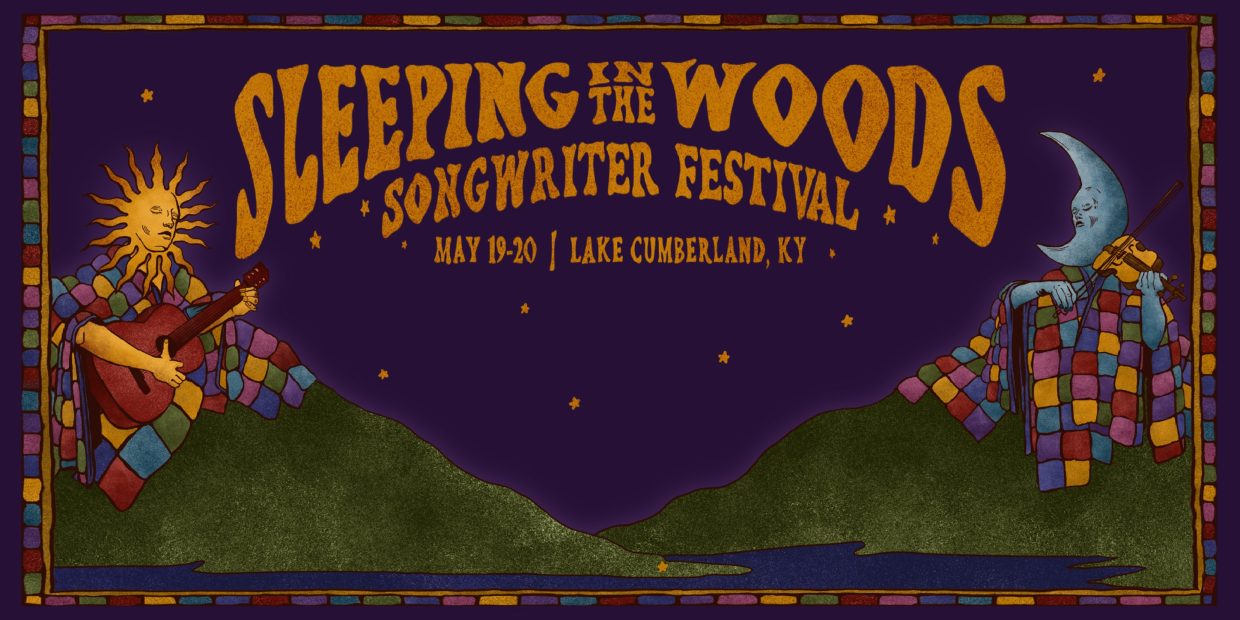
At a time when money in the music industry is at an all time low, and expenses are at an all time high, I have immense gratitude for anyone starting new community projects to showcase and uplift musicians and songwriters. I was lucky enough to get to be a part of Nicholas Jamerson’s Sleeping in the Woods Festival in Cumberland, Kentucky in May of 2023, and this event makes my best-of list. The festival bills itself as songwriter specific and showcases many lesser known Kentucky songwriters and bands. The strategy is to create a listening environment and bring together a Southern audience hungry for more straight-shooting roots music and hard hitting lyrics after becoming fans of Tyler Childers, Sturgill Simpson, and of course, Jamerson himself. After a successful first year, the festival is poised to grow exponentially and become a beloved annual event for all of those involved. – Rachel Baiman

Billy Strings at Bourbon and Beyond, September 2023

After five years of programming the BGS stage at Bourbon & Beyond, the Louisville-based festival has become something of a homecoming for our whole team. But nothing was more special than this year, when we got to see Billy Strings headline the main stage in front of over 50,000 people. It seems like just yesterday (in reality it was more like 2018) that Billy played our own stage inside the Bourbon Tent, a memory made all the sweeter by his surprise appearance this year on our stage during Michael Cleveland’s set. Hopefully it’s one of many happy returns to B&B for Billy, his fans, and BGS for years to come. – Amy Reitnouer Jacobs

Sunny War, Anarchist Gospel

Nobody sounds like Sunny War. As her profile has risen over the past decade, Sunny has held onto her punk rock politics and direct lyricism, grounding her artistry in the blues. Listening to one of her songs is like looking at a diorama of a nearby planet, similar to our own, but with none of human society’s bullshit. 2023’s Anarchist Gospel features Americana heavyweights David Rawlings, Jim James, Allison Russell, and Chris Pierce, but always sounds exactly like Sunny. Her hypnotic guitar work and precise songcraft shine. Her vocals walk a fine line between eerie and inviting. And at the end of a year when riot grrl aesthetics have gone mainstream, Sunny War is a rare reminder of what the real thing sounds like.  – Lizzie No


Photo Credit: Angélique Kidjo by Fabrice Mabillot; Billy Strings by Christopher Morley; boygenius by Matt Grubb.


On ‘About the Winter,’ Barbaro Find an Emotive Sound All Their Own

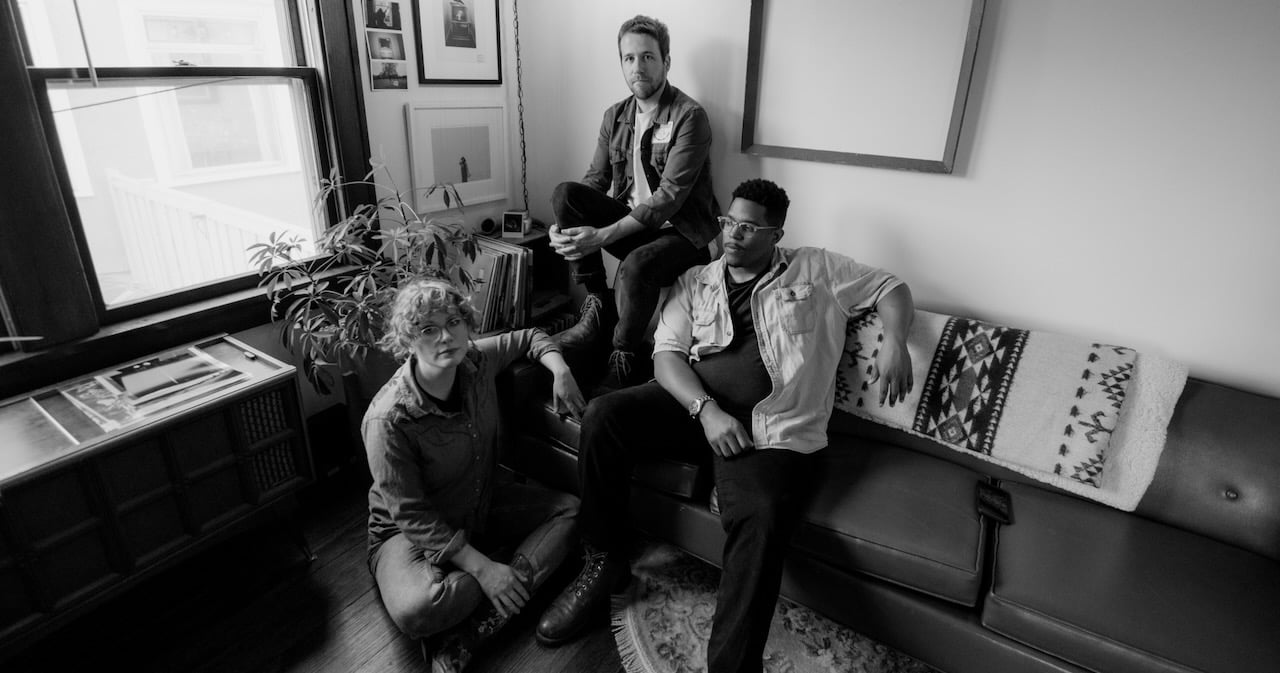
Barbaro, who take their name from the famous Kentucky racehorse whose life was tragically short, have recently released About the Winter, their second full-length album.

The band was founded as a duo by Kyle Shelstad and Isaac Sammis in 2017, later welcoming Rachel Calvert and Jason Wells into the fold. They released Dressed in Roses in 2020, and while Sammis departed the band after the birth of his second child, he contributed heavily to the new album and left a great deal of inspiration with the rest of his bandmates.

About the Winter, which was co-produced by Shelstad and Brian Joseph (Bon Iver, Sufjan Stevens), features nine original tracks that seamlessly weave in and out of one another, gently guiding the listener through vulnerable lyrics, intimate soundscapes, and technical prowess.

BGS caught up with Barbaro following their month-long album release tour to chat about the new record, their musical process, and recent world travels.

The textures on this album – while ranging from synths and samples to pizzicato bass and fiddle – maintain a familiar sonic foundation for each of these songs to sink into. How did you go about selecting and arranging the material for this record?

Kyle Shelstad: As a group, I think we tend to gravitate towards tunes that we can connect with on some sort of deeper level, tunes that we can internalize in some way that provokes an emotional reaction in ourselves and hopefully those listening. This is the basis for all our song choices in this group, finding tunes that allow our whole selves to buy into the intimate, distant, delicate, and coarse moments that help create the dynamic range found in many of these tunes.

Regarding the arrangements, some of this was pre-planned going into the recording, but many of these songs were somewhat unfinished going in. Our goal was to explore in the studio and Brian allowed us a space to be creative and experimental with these songs. For example, there is a moment in “Subpoena Colada” where Jason is crunching a plastic water bottle full of leaves into the microphone… it’s a sick solo, check it out. Brian took all these experiments and helped us make them musical.

There’s a line in the album’s press release that caught me: “Barbaro’s compositions prioritize texture and expression over technical virtuosity.” I really like that, considering that two of you – Calvert (fiddle) and Wells (bass) – come from the classical world, whereas Shelstad has a stringband background. That said, this music is thoughtfully orchestrated, which I know must require a fair amount of calculation and precision. When putting this music together, where do you find the balance between those two worlds?

Jason Wells: I’d say the balance comes more from each of our instincts than from traditional orchestration. Since Kyle writes the material and brings the songs to the rest of us, I’d say the base of the music is in the string band tradition, but the way Kyle writes and how he uses space and texture is really unique and lends itself to a more classical approach to filling out the other parts.

What makes the songs work is each member’s commitment to really listening for what each song needs and not adding any more than that. As we workshop new material, each of us will try different things and only keep what seems essential to the song, and through that process the form of the song takes shape. It’s a really natural process.

I love the Bruegel piece, “The Hunters in the Snow,” that you chose for the album cover, and the way that it pairs with this music. Can you tell me more about how you came to feature the famous painting alongside this music?

Rachel Calvert: I was researching how winter shows up across art history when I came across the Bruegel painting. I was surprised that it was a 16th century painting, it looked more modern to me. I was seeking something that evoked emotional ambiguity, nostalgia, and the collision of the natural and manmade – and it hit all the marks! I also noticed that the colors matched up with the Barbaro “uniform.” We typically show up to gigs wearing denim, black, and earth tones. “Hunters in the Snow” was already one of us!

The farewell track, “Ike’s Farewell,” is obviously much more than a lone instrumental to close out the album – it’s clear that Isaac Sammis had a big impact on this music, both through his co-founding of the band, and expressive banjo playing. While I know that someone leaving the band can be difficult to navigate musically, I like that Sammis’ contributions are celebrated on this album. I was curious if you could attest to the influence, musically or otherwise, that he’s left with you.

JW: Man, Isaac’s influence on the band’s sound can’t be overstated. He has this unique ability to really push the boundaries of sound and tonality, and I attribute his instinct for tension and release to be one of the primary reasons our songs flow compositionally the way that they do. In addition to his stellar banjo playing, Isaac’s also a hell of a guitar player and you can hear him adding electric guitar effects and note bends on several of the tracks. Those lines and sounds he laid down ended up being foundational to the new sound direction for the album, so his influence is everywhere!

This is unrelated to the record, but I wanted to ask about your 2023 American Music Abroad tour. That seems like a pretty special thing to do – to get to journey to Qatar, Turkey, and Bulgaria to share this music. I know it was after the recording of this album, but how do you think that tour influenced the band?

RC: Our travels abroad reaffirmed our overall mission – to form pathways for all sorts of folks to connect to both their interior emotional world, and to the people and place that form communities around them. Bringing audiences to tears, even through cultural and language barriers, was a powerful reminder that music and art are indeed universal languages that allow us to see the sparks of life and love within ourselves and others.

With your album release tour wrapped up, what’s on Barbaro’s horizon for 2024?

KS: Barb is excited to keep working on and recording new music. We really enjoy the process of writing together and look forward to working on a fresh batch of tunes. I think we found a voice on this record that is uniquely ours, and we intend to keep exploring that.


Photo Credit: Wolfskull Creative

WATCH: Hildaland, “The Selkie of Sule Skerry”

Artist: Hildaland
Hometown: Portland, Maine
Song: “The Selkie of Sule Skerry”
Album: Sule Skerry
Release Date: October 25, 2023 (single); November 3, 2023 (album)
Label: Adhyâropa Records

In Their Words: “‘The Selkie of Sule Skerry’ is an old folk tale of which there are many versions. We love a rendition sung by Kris Drever in the band Fine Friday on their 2002 record, Gone Dancing. We took inspiration from this, wrote our own melody, and had a lot of fun with the arrangement. Ethan played both mandola and the electric mandocello on this one, we worked up a string arrangement together, and had Dan Klingsberg record some double bass for us, and Sam Kassirer laid down some synth.” – Louise Bichan


Photo Credit: Louise Bichan

Cover Story: Brittany and Natalie Haas on Sharing Melody, Rhythm, and Space

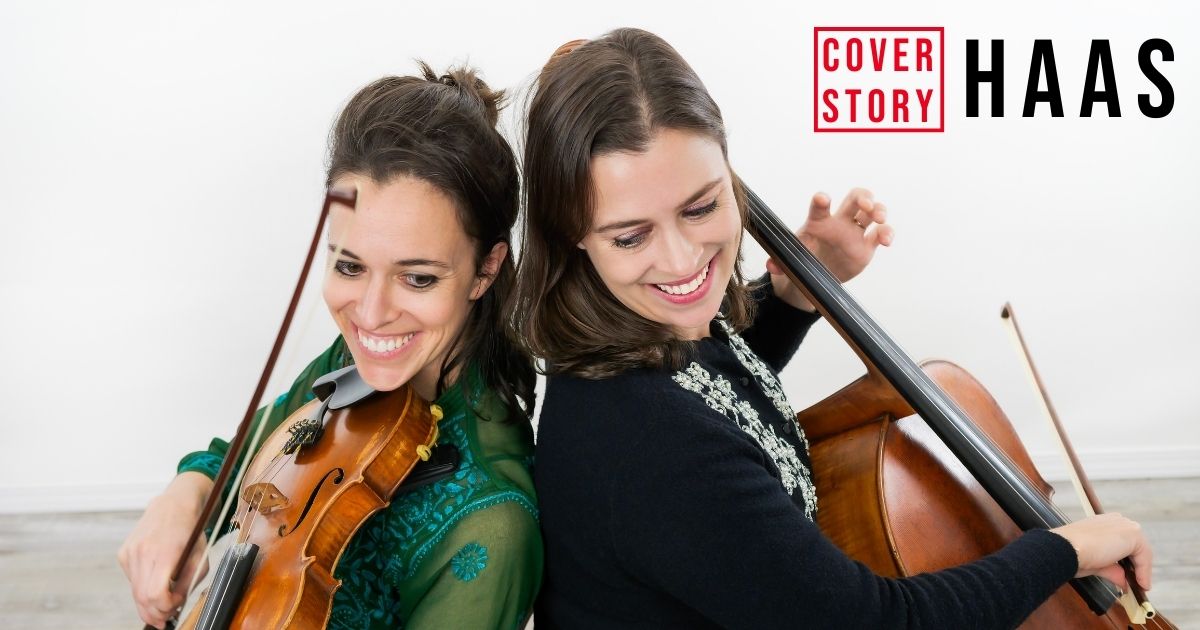
What changes about the oft championed phenomenon of “family harmonies” when the voices entwined together are not voices at all, but strings, plucked and bowed and fingered? It’s a question that immediately comes to mind as you hear the first notes of Haas, the recent duo album released by sisters, fiddler Brittany Haas and cellist Natalie Haas. It’s also a question that immediately came to mind as we chatted via Zoom last month.

“I feel like I connect more deeply with Brittany than anyone else from a rhythmic standpoint,” Natalie responds after a thoughtful pause. “That’s not so much the family harmony thing, but it does play into everything.”

The familial blend they’ve established as adults – in many ways, Haas is their first deliberate and intentional music making as a pair since their teen years – defies any and all boundaries and language, as they swap melodic hooks and call and respond and toggle between accompanying and leading, adding texture and tenderness or vigor and enthusiasm. Their interplay is as comfortable and cozy as you would expect these two sibling virtuosos to be together, their reunion the not-so-subtle underpinning that makes the entire collection of tunes and sets sparkle.

This is family harmony – and family rhythm – but unspooled, complicated, and set to a new acoustic, Celtic, chambergrass sound that defies categorization. Haas also gently and kindly stands in implied opposition to more masculine, performative, and competitive musicians and groups in similar spaces. It’s a brilliant, crave-able album that showcases how much can be accomplished musically when one’s goal isn’t just the cooperative music one creates, but the space one opens up with another in which you cultivate that cooperative music.

I wanted to start by just asking y’all how long it’s been since you put out music together, or since you’ve been in like a creative space together? How does it feel to be “reunited” in this way?

Natalie Haas: We sort of played together as kids in chamber music groups and youth symphony together. And we went to fiddle camps together – that was how we got excited about maybe doing music as a career. That would sort of continue throughout the year, because the way for us to continue all that excitement and motivation that we got at fiddle camps was for us to play together.

We did the odd gig together as teenagers, like farmers markets, school performances, and that kind of thing. Then we sort of went our separate ways and we’re both very busy doing our own thing, but we took every chance we got when other people would hire both of us to be on their gigs. We always said yes because we just wanted to hang out with each other. So this is like the first time that we’ve done anything like this and it’s pretty exciting.

The way that your musical paths have diverged, they don’t feel like they’re that separate from each other. It feels like the vocabulary that you both draw from is very similar. When you started sitting down to think about doing an album together, what changed about the way that you thought about music separately or together? 

Brittany Haas: That’s a cool question. I think, it all felt kind of new in a way, but also so familiar, you know? Because it’s us. We have made a lot of music together. I think on my side, it was really cool because Nat already had a bunch of tunes. So some of [our collaboration] was just like, schedule based, it was like, “Okay, we know we want to do this thing, because we’ve been getting odd gigs.” It was really like motivated by the fact that we had shows coming up, and that was a reason to be like, “Let’s have new material for that.”

Then we were like, “Here’s our days when we can put together material.” Nat had just done a writing session where she had all this new stuff ready to go. These are the tunes that she’s cranking out and they feel very much like they come from something or some place that is like so near and dear to me, because it’s from our shared fiddle-camp upbringing. That’s like the source, the well, where the tunes come from, even though they’re new and different. It feels like very homey, I guess? The kind of tunes. And then I think we’ve just both grown a lot over the decades as musicians and as arrangers. We like bring more stuff to the table than when we were teenagers.

NH: I should certainly hope so! [Laughs]

That is the goal. [Laughs] That leads really naturally to my next question, which was going to be about material curation, especially because you both have demanding schedules that kept you apart, I’m sure, during the album creation to some degree. What was it actually like when you were like setting aside that time, like you’re talking about, to get together to make the music? What was the curation process like? It’s all originals, but one, yes?

NH: Yes. And yeah, that’s the nice thing about us both being busy is when you set aside a block of time, that’s all you are focused on. Brittany had all these amazing musical ideas and made all of my tunes better the minute she got her hands on them. The arranging process, it was pretty easy, because we’re both, comfortable switching back and forth between roles. I was just amazed at how much we got done in such a short amount of time, both in the arranging process and in the recording process. It all felt very easy. [Laughs]

BH: We did the bulk of it together, I think we had like a week or maybe slightly under a week when we first met to gather the material. And wasn’t that before we even knew we were making a record then?

NH: Oh yeah, that was preparing for a tour. Our first adult sister tour.

BH: No, no, no – second.

NH: Oh, second. Yeah! Because we toured Ireland. Right. We were playing all of these trad tunes, our shared repertoire from our of teenage years. And then for [Haas], we decided to make it all original. For the most part.

BH: Do you remember the moment when we actually said, “Let’s record this”?

NH: Uh… well, I think we toured it first. Then Brittany brings her handheld recorder to all of those gigs and recorded everything. We listened back to it and decided that it was actually pretty good and that we should make something of it. I think we had another tour coming up, of Australia, and we decided it would be fun to have something for people to take away with them.

BH: At that point, we didn’t meet again until a few days before the studio. We had arranged the material and toured it, so we kind of had it under our hands pretty good. And then a long amount of time passed, but during that time it was good to listen back to stuff and decide what we wanted to change.

We had like a couple days of rehearsals and revisions. That was from listening and emailing and saying like, “I have this idea about this. What do you think of that?” Then we had like three days in the studio before it went back to email, because Natalie lives in Spain and we’re also both busy doing stuff. So it was emailing like, “Do you like this take?” and, “Is it okay if I edit out the second B part on this?”

Did you trip into or over any sort of feeling like, “This reminds me of when we were playing together as kids” or did it feel like you were getting back on the bicycle in a way?

BH: I’d say mostly yes. It’s just really easy. I think in other collaborations, people aren’t always so willing to just try anything. We have this basis of, “I love you no matter what, and even though you’re being really annoying and you’re asking me to do something I don’t want to do, I’m still going to do it, because might as well.” It’s an ease of communication, which I think mostly comes from family. [Laughs]

NH: We were never really a band as kids. We did the odd gig, but it was always just for fun. Our parents weren’t pushing us into performing together. So yeah, no bad memories, really, associated with playing together as kids. But we do have the ease of having this shared history of fiddle camps and learning from the same kind of mentors.

BH: Since we’re both like primarily collaborators, this project was like running our own band. As adults we’ve both come into our own and we’ve probably become more opinionated about musical things as a result of that. So it’s fun to meet again where there’s a lot of give and take.

What do you think of the term, “chambergrass?” Is this album chambergrass? Is that even a thing?

BH: I like the term, but I’m not sure it applies here. I also don’t mind it applying here. I guess maybe that wouldn’t have been what I would have gone to, because from my perspective, it just feels so much more Celtic. It’s still in that sort of “past of American music,” that’s more over there in the Celtic Isles. It doesn’t feel very grassy, but I mean, that’s a part of me as a musician. So, it’s not like it’s not in there.

NH: It does feel like chamber music to me. Yeah… I’m not familiar with all of the myriad grass terms. [Laughs]

BH: We grew up going to Valley of the Moon Fiddle Camp, where there were a lot of genres meeting. So the boundaries were very blurred, and both of us having worked with Darol [Anger] from a young age, he’s all about blurring and negating the idea of boundaries. It’s everything, it’s all of that, it’s all the influences and where they’re going. I know the current Celtic world less than Nat does, but it seems like a lot of the forward-thinking, new tunes on stringed instruments are happening in chambergrass, the new acoustic realm, so it’s definitely an influence on both of us.

NH: It does have a Celtic bent, but it is Celtic from an American perspective – because we’re American. I’ve listened to a lot of stuff in the new acoustic realm – like Brittany said, all of our influences are coming out, and it’s hard to define a genre.

BH: I think Nat, for all of her “I don’t totally play bluegrass” sense of self, she can and she does sometimes. Some of the bluesier tunes that she writes lend themselves to that area.

You make very in-the-moment music, there’s a lot of improvisation, there’s a lot of dialogue, and this kind of music can often feel very – it’s silly to say this cause you’re literally performers – but it can often feel very performative and like there’s a lot of hubris in it. I also feel like new acoustic music, newgrass, jamgrass, and that sort of “Let’s jam out together, let’s be in the moment together!” music, it can often feel really masculine and toxic. How do you go about creating this space you’ve made together, to have those moments, to be together and present and making music, but it doesn’t feel like you’re being self-absorbed or self important?

BH: That is something I think about when I’m listening to music – and sometimes when I’m playing it. Sometimes I do feel like I’m uncomfortable, like that’s not something that I want to do. Even though you think that that’s what the music calls for in this moment, it can feel a little bit too masculine.

It’s like, “No, I don’t want to take a really long solo there.” I think I’m embracing that it’s okay to say, “No, I’m not gonna do that.” It’s a tricky one, because a lot of our heroes in that realm of creating this newer music, they’re men, and that nature is informing the music that they’re making and the way that they’re arranging it. It does have that hubris thing built into it. On some level, that is important and it does work well, for stepping into the moment and taking a great solo. You kind of have to have that attitude. But, it’s not necessarily masculine or feminine. Like it doesn’t have to be either one. It could be both.

What we’re trying to do, it’s a little more tune- or melody-based than based on soloing, so it lends itself well to a tight arrangement. That may not be the right term, because it still is loose, there still is a conversation going on. But, if there is a solo it’s pretty short, it’s this little thing we’re going to do to give a breath of fresh air here. It’s not like, “And now, we will rip for 50 more bars!”

“And now everybody look at me!”

BH: Yeah! I think in a duo especially, because we’re very equal and we like sharing, that’s just kind of part of the vibe. Even when Natalie’s filling more of an accompanist role, it’s still such a powerful, interesting sound. It’s so varied that it doesn’t fade into the background. It’s super interesting all the time. It’s like both voices are very equal, even if mine is higher.

NH: It’s interesting because, like Brittany said, a lot of our heroes are men. That’s definitely a generational thing in the Celtic music world, because like, the people that we grew up sort of – I don’t want to use a phrase like “hero worshipping” – that we admired and wanted to copy were mostly men, with a couple very key exceptions. But then, my generation in the Celtic music world is almost exclusively women. There are some men doing it, but it’s very different than the bluegrass thing.

Also like Brittany said, soloing is not as much a part of it. That changes the dynamic a little bit. But it is kind of a melody>accompaniment hierarchy going on. But I wouldn’t say that that’s necessarily a male thing, I don’t know.

As Brittany said before – and I hate to associate this with just feminine energy – but both of us coming from being collaborators in our other projects rather than soloists, per se, you could say that that is the more feminine approach, maybe, to music making. It does feel very equal because the melody playing is getting passed back and forth all the time. And it does feel very conversational, even though the soloing thing is not as prominent as it might be in some other genres.


I think that’s part of why you can listen through y’all’s entire album and it doesn’t feel stale, it doesn’t feel boring, while it also doesn’t feel like it’s trying too hard. It doesn’t feel like you guys have something to prove.

NH: That’s part of the thing with having done it at this point in our lives, it doesn’t feel like we have anything to prove anymore. We’re doing it because we want to, not because we’re trying to prove anything to the world.


Photo Credit: Irene Young

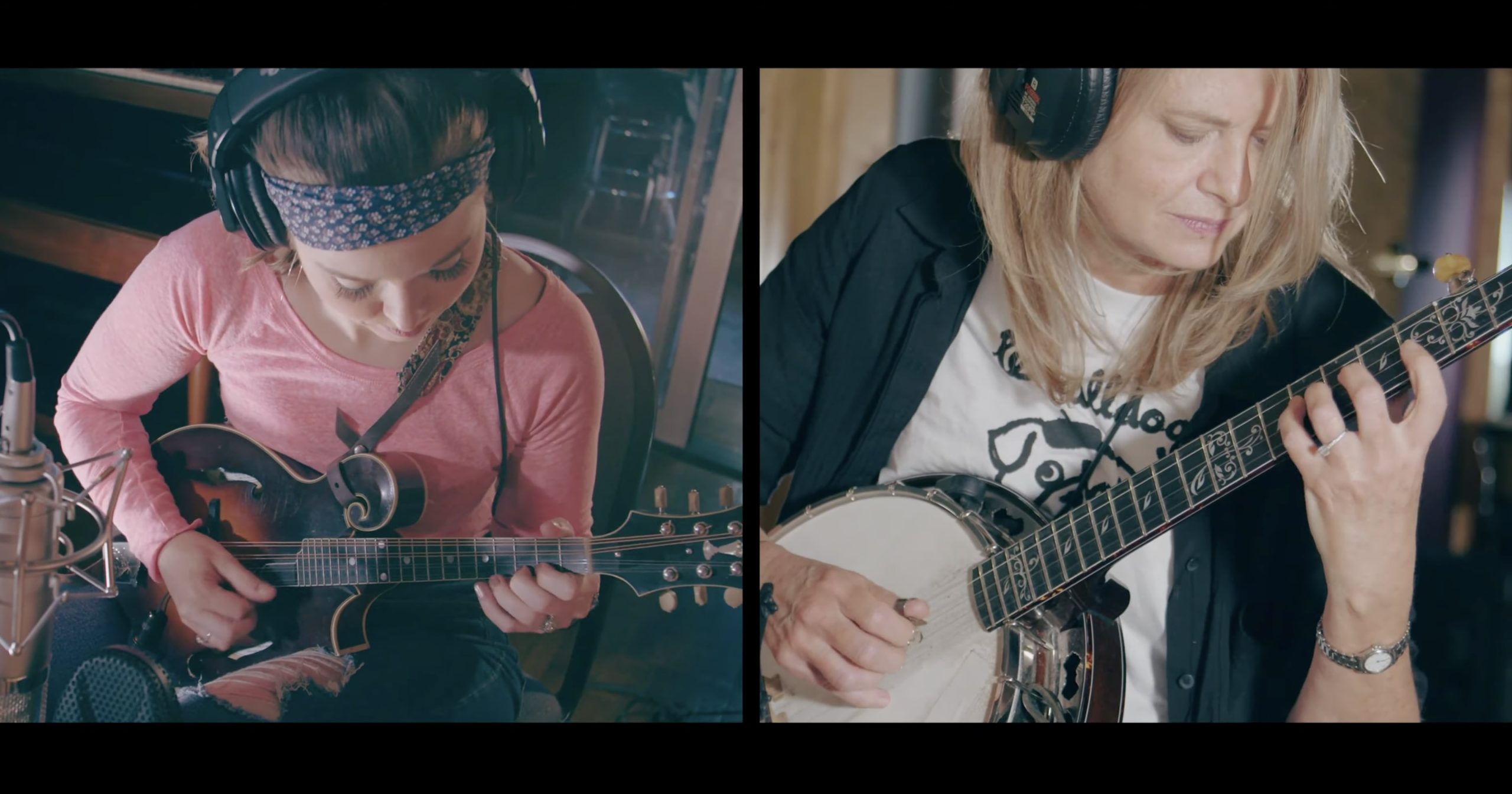
Alison Brown and Sierra Hull Swap Licks on Classical-Flavored Tune

Two of the most accomplished musicians in bluegrass – certainly two of the most notable women players in the history of the music – have joined together on a mind-blowing chamber-grass duet. Alison Brown, the first woman to win the Banjo Player of the Year Award from the IBMA, and Sierra Hull, the first woman to win Mandolin Player of the Year, joined forces on Brown’s recent album, On Banjo, and a classical-influenced original tune, “Sweet Sixteenths.”

Both Brown and Hull are virtuosic players adept in many styles and “Sweet Sixteenths” shows just how effortlessly they bring bluegrass improvisation and energy into what’s regarded as a more stoic format, creating an exciting, jaw-dropping, impossibly complicated – yet, totally down to earth – sound. Their synchronicity is just as impressive, inspiring a sort of wonder that chamber-grass is well known for: How much of this is planned out, and totally written-through, and how much is off-the-cuff and in the moment?

Bluegrass pickers are so well equipped to confound and delight us with these sorts of questions and that fact is no more apparent than in this live, studio performance video by Brown and Hull. We hope you also enjoy “Sweet Sixteenths.”