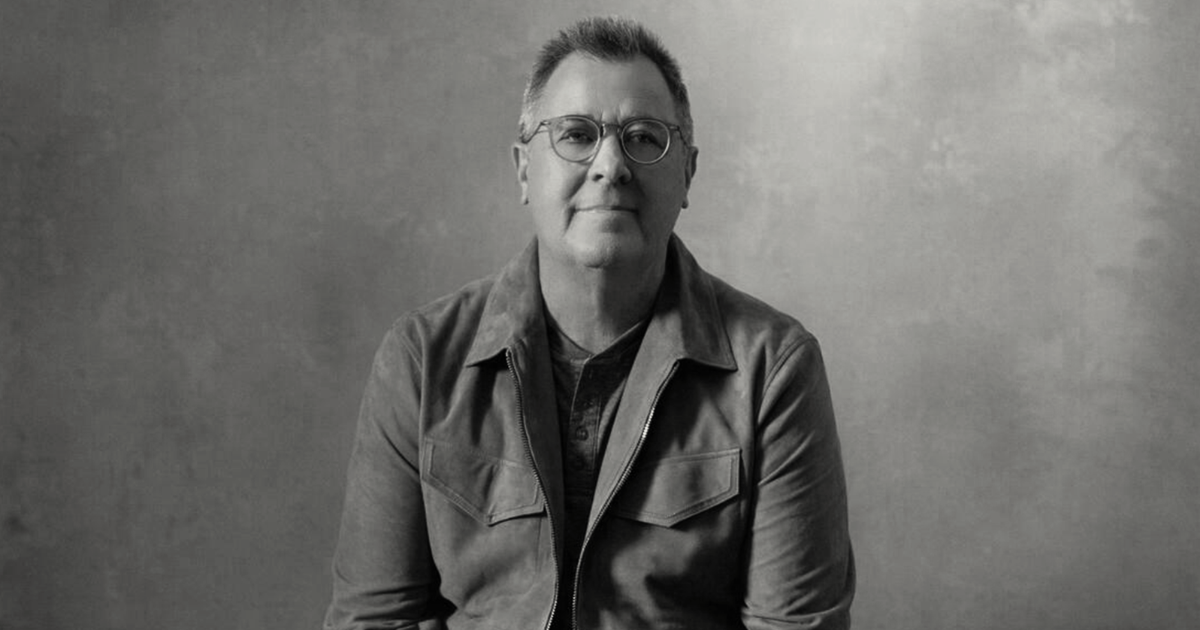
Vince Gill Has Done It All (Part 2)

Poaching from Elvis, well over 50,000,000 Vince Gill fans can’t be wrong.

The longevity Gill discussed in Part 1 of this interview has taken him from bluegrass beginnings to a genre-inclusive 50 years as one of country’s most beloved and sought-after artists.

It’s not always been easy, however. No one, regardless of talent or fan loyalty, is immune from freedom of the keyboard and Gill is no stranger to the highs and lows of public opinion. Mostly it’s outpourings of gratitude from the millions whose lives his music touches. Sometimes it’s claptrap about his now decade-long tenure in the Eagles, or venomous spewing over songs like “March On, March On,” from Secondhand Smoke, the second in his series of retrospective EPs being released monthly.

In Part 2 of his conversation with Good Country, Gill discusses, among other things, the aforementioned decade-long tenure with the Eagles, bullying – with a few choice words for those who inflict it – his scrolling habits, and he indulges us in a rapid-fire round of closing questions.

In the arc of this 50-year project, it is not unnoticed that Hotel California turns 50 this year. Do you have memories of listening to that album as a young man, as you now find yourself onstage playing those songs?

Vince Gill: I had all the Eagles records. We did a lot of their songs in my bluegrass days, and it’s completely surreal. I’m starting my tenth year of being in that band and continuing that legacy of songs. What I value most about getting to play with these guys, what I’ve learned most, is how important songs are – all the notes, all the licks, all the riffs, all that stuff. Getting to relearn that at this stage of life has been pretty profound in the way that I’m trying to write songs. I’m patient in the way I write. I’m patient to wait for it to come – the right words, to not settle on anything, and really edit and work and edit and work and continue to try to be mindful of how important the song is.

What I’m mindful of with the Eagles is the tragedy. More important than the fact that I get to do it is that if Glenn had not passed away, I would not have gotten to do this and I’m grateful I’m the one they called. I met all those guys in, I think, 1980, when I was living [in California]. In a million years, would I have ever thought this would have happened? No. But I am careful of how I couch everything, because it came from something tragic and I am respectful of that.

Glenn was a really good friend of mine, actually, and his son Deacon is doing a great job up there of carrying on his dad’s tradition. I think I’m a great fit for them in the way I play guitar and sing, and sing harmony, and play all the instruments I do. I’m not saying I’m better than anybody else they could have gotten. I’m just saying what I do suits them really well.

Jedd Hughes described you as “one of the greatest band leaders I’ve ever worked with. He’s listening to everything and everyone, always, so you can read his cues pretty easily.” First part of the question: Where did you learn to lead?

Because I’m a musician, I think I come at it different and I operate under the mindset that every note is equal. You’re not more important because you’re the lead singer. You’re not more important because you play the lead solo in the song. I value every note the same. Spending my life in the studio like I have, knowing what you play and do has to sit well and play well with others, you have to listen to everybody else.

It’s amazing what you can accomplish if you don’t care who gets the credit. Sometimes people play only to be noticed and that doesn’t necessarily constitute the right thing for the song. They say in Nashville all the time, “Just serve the song.” That’s all I’ve ever tried to do. If someone’s playing something and doing something, don’t do something to distract it. Do something to enhance it, to support it.

Second part: How does that translate to arrangements and contributions from the musicians you work with?

Great players all listen to each other and you’re dealing with a caliber of musicians that already know what not to do, so you don’t have to waste time going, “Hey, don’t play that, that’s too much, that’s not necessary.” Every time I’m in there playing, I take every note, examine it, and make it move me, make it sit just right.

Once again, if you’re playing with that caliber of people, which I fortunately am – my band is usually made up of a lot of studio musicians and amazing players – they like playing with me because I’m a player, too. I’m not just someone up there singing the songs. So I think I have their respect, and that points you once again towards, “What’s the best thing for the song? What’s the best arrangement idea? What’s the best part to play? What’s the best part not to play?” That’s it in a nutshell.

I’m surrounded by musicians that can all play me under the table, straight up. That’s the truth. I’m grateful to have them, grateful to get to play with them, and it makes for a very democratic spirit. Even in the way we record, I’m not heavy-handed. I’m not telling people what to play. Oftentimes we’ll be in there and they’ll say, “Do you like this?” I go, “I don’t have any idea. I’ve never even heard this song before. I know I wrote it, but we’re in here trying to figure it out, so we’re just going to figure it out all together.”

It creates a great spirit in there if everybody feels like they’re all walking on equal ground, everybody has a right to an opinion, everybody has a right to try something, nobody gets shut down, nobody gets put off. It’s an amazing experience. I don’t ever do demos with my songs. I just write them and then I show them to the guys on the floor. I go, “This is how it goes. Let’s figure it out.” They naturally gravitate towards something great and you just follow them off the cliff! It’s wonderful to watch other people’s gifts.

Earlier you described yourself as “the happiest son of a bitch in the world” who just loves sad songs. In that happiness, however, you have experienced much grief. Your faith is strong. Have you ever lost or questioned it during times of loss?

When I think about faith, I don’t think of it so much [from] the religious point of view. I think faith in humanity – more than Baptist or Methodist, or heaven or hell, or any of that stuff. None of these questions have ever been answered, so to pretend you know the answers seems a little, I don’t know, pretentious almost. That might not be a good word. But, no. It all comes from loving deep. The people I love, I love them deeply. They matter to me.

Music is where I go to grieve. It’s where I go to get through loss. It’s where all those things are. I tell everybody it’s cheaper than therapy. I just write about it.

I never feel the need to fix everything in my life. My relationship with my dad, if it was funky or whatever, I said, “It’s not my place to change him. It’s my job to accept him.” Once I could do that, we had a great relationship. You don’t have to be like me for me to like you. You don’t have to think like I do for me to like you.

I’ve been told more often than not, “Why I like your songs is you are able to say what I wish I could say. You are able to express feelings I have that I don’t know how to.” Maya Angelou sought me out and asked me to come and meet her when she was in Nashville years ago. She told me, “‘Go Rest High’ was a lifesaver to me. It helped me get through the loss of my brother.” Those kinds of things make you go, “I’m going to try to find a way to be emotional about things and not only help myself, but help other people too.” I think if you can portray in a story what someone’s going through, you have a chance to make people feel better.

You can’t name-drop Maya Angelou and just go on to the next question! We need to back up a little bit.

She was speaking at Vanderbilt and wanted to meet. [My wife] Amy [Grant] and I went and afterward we got to go back and say hi. She said, “You mean a lot to me, because your song helped me get through one of the hardest times of my life.” It was a great visit.

You’ve released the fourth EP in your series. Which chapter is this and do you know what’s to follow?

It’s uptempo-y and groove-y, kind of like “Liza Jane” and “One More Last Chance” and some of those fun songs. Each record is, on purpose, similar-driven. The record after this fourth one will be a lot of real country-country stuff, real traditional stuff. The one after that is going to be more like “I Still Believe In You” and “Don’t Let Our Love Start Slippin’ Away,” from a more rocking side. I don’t want to say the word “pop,” but it is. It feels like an Eagles record or a Fleetwood Mac record at times. The inspirations are all in there.

The one after that is real bluesy R&B-ish. Are you hip to Lamont Landers? He’s a soul singer from Alabama. You look at him and go, “There’s no way this voice is coming out of that dude.” He does all these really cool things. I found him and I got him to come and sing on one of my songs that’s coming out later in the year. He’s just such a cool dude. I’ve been trying to turn people on to him.

How did you find him?

Scrolling.

You’re a scroller!

Oh, heavily guilty. I tell Amy it’s my TV now instead of channel surfing. Once in a while you’ll come upon a great young musician, or a great young singer, or a great comedian. There’s so many options, and if you stop on something, it’ll start giving you hundreds of things just like that.

The algorithm gets you.

Yeah, exactly. But it’s entertaining, and I found a couple of people to track down and
have them sing on my record because I like what they do.

What do you scroll?

YouTube, Facebook, Instagram. Most of the stuff is pointless, but there’s a nugget once in a while.

How do you handle the cruelty of social media? It can get to anyone, especially when it’s directed toward you.

It can, if you let it. That’s the life we live in now. You can’t go perform and not have everybody have a camera out and put it up and showing it and seeing it. You have a bad night and everybody’s going to rip you for it. It’s like, “How much negativity can you continue putting out there, saying negative things?” It’s never going to stop, you know that, but it’s still entertaining to read.

I read it to be informed and I don’t mind taking it. I’ve lived with critics being critical of everything I’ve ever done. It comes with the territory. If you’re brave enough to stand up there and speak through a microphone, you know you’re going to get judged to some degree. Once in a while, somebody will say something and I say, “That’s fair. That’s truthful.” Other people will say things and I go, “You don’t even know what the hell you’re talking about, but you have an opinion that’s inflammatory towards me, and you couldn’t be more wrong.” I know that, so it doesn’t have an impact.

Sadly, people have to get on there, the keyboard warriors. They think they finally have a voice. Being able to post and have an opinion, they think that gives them a voice. But in the grand scheme of things, it doesn’t. I know that, so I just take it with a grain of salt and move on.

Perhaps being 68 years old with experience and success makes that easier than for a young person just starting out.

People are still critical of me being in the Eagles. They say, “Now it’s a cover band and you shouldn’t be there,” blah, blah, blah. You know it’s coming, so press on. Say whatever you want. Say it to my face and see what happens to you!

I can’t control any of it. I can control me. I can control my heart, what my heart thinks, what my heart feels. If you hate what I do, that’s okay. A lot of people don’t like what I do. I’m used to that. You’re not going to stop me.

Earlier we talked about hope. I just hope people respond. I don’t mind if they respond negatively. You don’t want that, you’d rather not, but it’s funny how you can get a hundred good reviews on a record and one bad and you only remember the bad one. That’s human nature. It’s not a weakness. It just goes to show how being cruel and negative towards someone has an impact.

I think about the times I was in school and was talked to in a negative way, and how it lasted. I remembered it forever. There was a girl I was in a band with for a little bit. She sang in this choir at the school that was really well thought of, and the choir director told her, “You are wasting your time with that guy and his banjo and bluegrass. He’s a fool.” And I just want to go, “Na-na-na-na-na!” But you remember it. And an English teacher that kicked me out of the class for saying something she didn’t like and painted me a certain way. You remember it.

My own kids, one teacher said to my youngest daughter, “My dog has more manners than you.” Things like that … my hundred-year-old mother is still pissed off about that! She’s still, “I’d like to get my hands on that teacher!” We’ve got a good bit of redneck in us!

I watch my sweet wife take slings and arrows all the time and the way she handles it is so beautiful to watch and so inspiring. It’s helped me do the same thing.

Can you play everything you hear in your head?

Probably. I hope so! It’s funny you brought that up, because being a musician and a singer, people say, “How do you get inspired to sing?” or “How do you get inspired to play?” Well, before I play something, in my head, I’m saying, “How would you sing this?” And when I’m getting ready to sing something, I ask myself, “How would you play this? What kind of rhythm? What kind of phrasing?” All those things.

I think the real difference [between] a good singer and a great singer is the way they phrase. Ray Charles could phrase like nobody’s business. Jerry Lee Lewis, when he sang country songs, could phrase like nobody else. George Jones could phrase like nobody else. You go on and on and look at all the greatest singers, and they’re unique because more so the way they phrased than how many notes they sang.

What is the difference between playing guitar and being a guitarist?

Oh, man. I don’t know if there is. I think it’s the same thing. It all comes from the same heart. It all comes from the same ears. I just play what I think fits. I think that’s what being a great guitarist is – playing what fits.

I saw something the other day that said, “I refuse to name who I think the greatest guitar player is,” and it makes sense to me because there’s no such thing. Everybody goes at it in a different way and has a different spirit about it, has a different way they want to play and statement they want to make. Then it becomes a matter of your preference, of what you like best, that defines what the best guitar player is.

I just like people that are gifted, and people that are musical, and they play what’s in their hearts and what they feel. If you feel it like they do, game over. If you don’t, you move on. Not every great guitar player moves me. It might move you. I think we’re lucky that we can be subjective and not have to all feel the same way about the same things.

Let’s close with a lightning round. Anything goes, whatever comes to mind. An album you wish you had played on.

Hotel California.

A song you wish you had written.

’Till I Gain Control Again” by Rodney Crowell.

A session in which you wish you could have been a fly on the wall.

Together Again” by Buck Owens.

A concert you attended that made your head spin.

Paul McCartney.

A guitar solo you wish you could claim as your own.

Oh, gosh. I might have to go with a Chet Atkins solo, because he’s the first person I ever saw play live when I was a little boy.


Editor’s Note: Check out part one of our Good Country conversation with Vince Gill here.

Want more Good Country? Sign up to receive our monthly email newsletter – and much more music! – direct to your inbox.

Photo Credit: David McClister
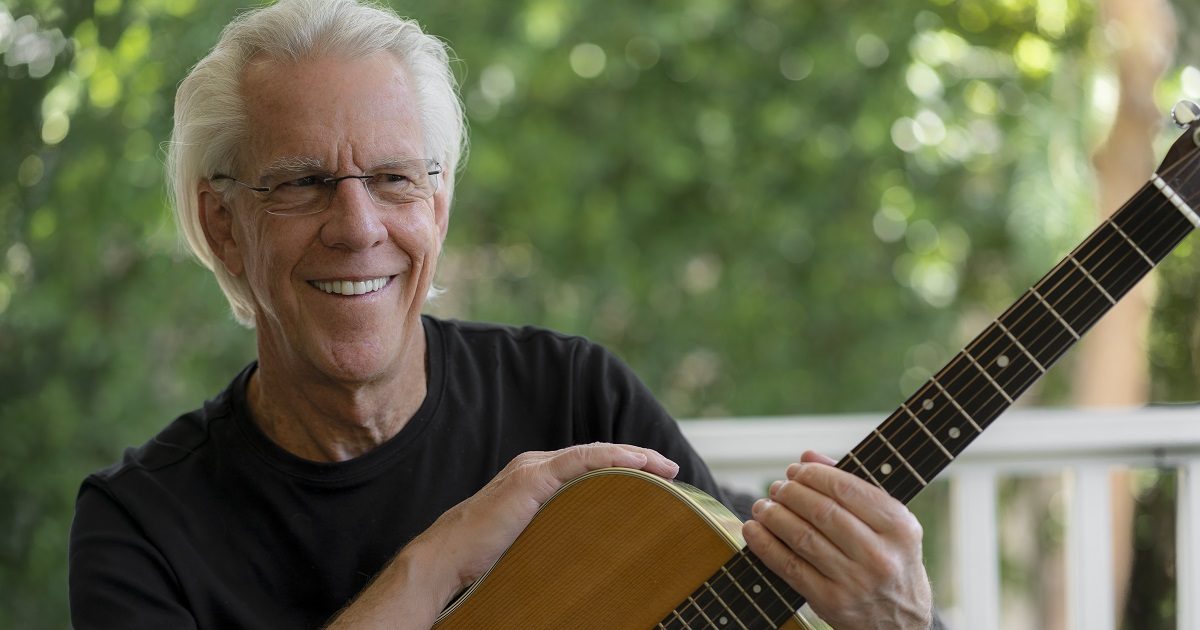
Jim Ed Norman Resumes His Orchestral Role on Eagles’ Hotel California Tour

Jim Ed Norman has juggled all kinds of jobs over five decades in the music business, but he decided to get back to his roots after receiving a phone call from Don Henley. The two musicians met as college students in Texas, then briefly played together in a band called Shiloh. But it was their creative collaborations on a couple of Eagles records that stuck with Henley for all these years. When the offer was extended for Norman to lead the orchestra on tour as the Eagles played the entirety of their 1976 album, Hotel California, it proved irresistible.

By accepting the gig, Norman switched gears yet again — which is something he’s done throughout his career. Over the last 50 years or so, Norman has developed an impressive profile in the music industry, but not always as a musician. Along with his conducting and arranging work, he produced multiple albums for Anne Murray, served as president at the country division of Warner Bros. Records, and even started a “Progressive” division at the label, taking a chance on artists like Béla Fleck and Mark O’Connor. As a producer, he shared a Grammy win in 2021 with the Fisk Jubilee Singers.

Now he’s in the spotlight himself, particularly when the orchestra is revealed to the audience after just a few songs. To make the return even more poignant, the tour heads to Texas in May, where the long-standing relationship began. While off the road and working on his home in Franklin, Tennessee, Norman told BGS about how it all started.

BGS: This feels like a full-circle moment now that you’re on the road with the Eagles. What is your role out there?

Norman: Well, first I want to say it’s great to hear you use that phrase “full circle” because that’s exactly the way I’ve looked at it and thought of it myself. I did all of the original orchestral arranging and conducting for the records for the Eagles, beginning with Desperado through Hotel California. Then I also played piano on some of the records through the years. I got a communication from Don Henley, whom I’ve known a long time, saying the band wanted to mount a Hotel California tour. They do the album top to bottom — and they don’t say a word in between.

When the album came out, it was on vinyl, and the A-Side ended with a song I was moved by emotionally, and what was going on with it artistically, and the quality of the songwriting. Don and Glenn were just amazing writers. So, I wrote an orchestral-only piece. Not per their direction; I was just simply moved by it. It happened that the day we were in the studio, we got finished and had some time left over. I said, “Hey, guys, I wrote this orchestral piece. Would you be interested in me sharing it?” And they said, “Yes, that sounds great.” So, we ran it down and recorded it.

Then they called me sometime later – or I don’t know if they even called me. I might have found out when the album came out, but Side A ended with a song called “Wasted Time” and Side B opened with “Wasted Time (Reprise),” the orchestral-only piece. So, when Don called and said they were going to mount this tour, he said, “Jim Ed, you can do whatever you want [on the tour] because we’re going to be doing your charts.” The more I thought about it, I decided to quit the day-to-day to reconnect with the creative process, if you will.

This was an opportunity, as you have outlined, for the full-circle aspect. It was how I started — as an orchestral arranger and conductor. The work with the Eagles led to doing it with Ronstadt, Seger, Kim Carnes, and America, and other people. On Hotel California, the orchestra comes and goes, and I do get an opportunity now to hear things I wrote so many years ago, lived out in that kind of environment. … The encore section includes “Desperado,” and “Desperado” was the first orchestral thing I ever wrote. I was fortunate that it ended up on such a great song and connecting with such a great group of guys. Every night on tour, I get to hear the arrangement that started it all for me.

Do you remember your response to first hearing the lyrics to “Desperado” and what it meant to you at the time?

It was around 1972 or 1973, when the music was being formed and “Desperado” was being written. So, the guys put together a demo for me. It had a lyric that went something like, “Desperado, da-da-da, da-da your fences, da-da-da-da… for so long….” The lyrics weren’t quite formed but it had a wonderful melody and structure. So, I first heard it in that form. The guys then went to London, where they were working with Glyn Johns producing. They sent me the track that they had recorded on reel-to-reel tape. I then got to hear the finished song, and I remember thinking this is wonderful because it’s also somewhat the linchpin conceptually of the record. The conversations that I heard at the time from Don, Glenn, and maybe Jackson [Browne], I knew there was a connection between life on the road and the life of an outlaw.

It’s easy to look back on it and conjecture, but I know Don well enough to know that little was left to chance. Don and Glenn were very thoughtful and insightful artists and songwriters. The other thing that was great about the experience is that was the first song Don and Glenn wrote together. And to think of that kind of eloquence, and what it says… It became a touchstone for me in my life as an arranger, because in all of my work subsequently, it was about putting emphasis on the lyric. It’s not a matter of showing how many notes you can write. (laugh) But rather frame what was going on, so that you listen to the vocalist intently. Then you have a melodic fill to keep your ear in tune with what the singer is singing.

All of the lyric content of the song was a very strong motivating factor in the notes that got written. There’s one lyric – “There’s a rainbow above you” – where I had specifically done this soaring thing. Whether anybody else ever thought of that as a rainbow, I’ll never know. I bet I listened to that version they sent me probably two to three weeks, or a month. I did nothing but listen to that song over and over, for weeks! At a certain point, I would even dream it, and imagine the orchestral things that would be going on around this song. One day I got the paper out and I ended up trying different things with a complement of instruments. In an orchestra, you have first and second violins, violas, cellos, and double basses. And I actually had no violas in this section that was used on “Desperado.” It was nothing but violins, cellos, and double basses. And it was with the idea of having a depth and “guts” with what was going on with the orchestra.

You mentioned that when you were arranging “Desperado,” you were listening closely to the lyrics. Did that come in handy as you started as a producer in Nashville? So much of the work you had to do was centered around lyrics.

Yes, I think so. I grew up with instrumental music as a young child. The first thing that I played, in the fifth grade, was trumpet. Then I moved to piano lessons for six months, and moved on to another instrument, and another, and another. Most of my early life was as an instrumentalist. A lot of the music I heard in the landscape of the ‘60s, you had the orchestra happening. … Even on the Beatles records, right off the bat, you’ve got a producer like George Martin, and I was swept along and magically transported by what I was hearing musically and orchestrally. When I say “orchestral,” in many cases I’m talking about how the Memphis Horns were just as cool as the London Symphony Orchestra.

It was in the mid to late ‘60s when I began to realize, well, there are lyrics here too. And how, at times, those things meld so perfectly that your emotional response to what was being said was because of the support that was happening from the complement pieces other than just the band. To me, I thought the Beatles were a good four-piece band. Those guys sat down and rehearsed and practiced and they were really good, but occasionally the songs had this additional complement that made the song special. There was a recognition that was beginning to happen for me about the power of lyric, and that grew and grew and grew through that period. I would say, without a doubt, it began to crystallize in my exposure to the work of Don and Glenn and Jackson and J.D. (Souther). It changed my perspective on what lyric was, and the importance of the lyric and the music combined.


Photo Credit: Paris Cronin

BGS 5+5: Sam Outlaw

Artist: Sam Outlaw
Hometown: Nashville, Tennessee
Newest Album: Popular Mechanics

What’s your favorite memory from being on stage?

I had the privilege of performing at Glenn Frey’s tribute show at the Troubadour in 2016, shortly after he passed away. Before the show, all the performers were rehearsing the finale on stage — an ensemble performance of the Eagles’ hit, “Lyin’ Eyes.” There were a bunch of incredible artists singing the song, including Bonnie Raitt, who is one of my musical idols. At some point during the rehearsal, Bonnie leaned over to me and said, “You have a really nice voice.” I was totally stunned by the compliment and will never forget it.

What other art forms — literature, film, dance, painting, etc. — inform your music?

Books and movies. The song “Polyamorous” was inspired by a book called The Secret History of Wonder Woman, about the true story love triangle that created the Wonder Woman comics. I also think a lot of my love of ’80s pop music is from watching ’80s movies as a kid: Top Gun, Back to the Future, Robin Hood: Prince of Thieves, etc.

What’s the toughest time you ever had writing a song?

“Polyamorous” was a real challenge because I wanted to be accurate to the story that inspired the song and empathetic to the challenges those three people faced. The song also has a built-in technical hurdle: There are not a lot of words that rhyme with ‘polyamorous,’ haha.

If you had to write a mission statement for your career, what would it be?

“Be yourself and make art for yourself.” It’s always nice when people like what you do, but if you chase approval from others you’ll lose the joy of creation, even if you’re making a bunch of money.

Since food and music go so well together, what is your dream pairing of a meal and a musician?

I’m not entirely sure if you’re referring to an actual meal with a soundtrack playing in the background or having a meal with a musician, so I’ll just answer both — I’m a huge fan of the Irish singer, Enya. Her music is so distinct from anything else and her voice is unmistakable. I’d love to have a proper Celtic meal (maybe smoked salmon?) with some good wine and Enya’s 1995 masterpiece, The Memory of Trees, playing in the background. If this question is about who I’d like to have a meal with, then the answer is, of course, Enya. She’s famously reclusive, and I’d be fine just sitting in silence in her castle, hanging out with her and her cats.


Photo Credit: Robby Klein

MIXTAPE: David Starr’s Road Trip Touchstones

“The idea of a road trip Mixtape really appealed to me after so many months off the road. While I truly enjoy playing in front of an audience, there is easily as much anticipation around just ‘getting on the road’ in this business. Most of my travels have been in a small motorhome over the past five years. The whole process of loading the gear, packing up merch, and stocking the fridge is something I really miss during this prolonged pandemic pause. Music is always an integral part of that process. One of my favorite memories from a road trip into Utah was listening to Bruce Springsteen’s Western Stars album as the desert road stretched out before us. Something truly American about the whole experience.” — David Starr

Jackson Browne – “These Days

This Jackson Browne classic has always been a favorite of mine. He wrote it when he was only 16 years old and it shows a maturity and depth rarely expressed so well by a young songwriter. It speaks of self-reflection, looking back and moving forward all at the same time.

Bruce Springsteen – “Western Stars

The title cut from Bruce Springsteen’s recent record is an epic road trip song. I loved the song when I first heard it. But when I listened to it while cruising across the Utah desert in our motorhome, the song really moved me. The whole album passes that same test, by the way.

Don Henley – “Boys of Summer

Don Henley and Mike Campbell really captured the essence of lost romance and the change of seasons in this one. I can’t help turning the radio way up when this one comes on!

The Cars – “Drive

My favorite Cars song. Ben Orr’s vocal is so moving here. And the music video released for it at the time, directed by Timothy Hutton, added context to the meaning of the song.

Joni Mitchell – “Coyote

Joni Mitchell is always road trip favorite. Plenty of time to absorb the intricacies of the songs. “Coyote” physically moves us down the road with a cast of characters. This song from her 1976 album Hejira rocks along with a killer Jaco Pastorius bass line fueling the ride.

The Rolling Stones – “Brown Sugar

Stones? Of course! I played this song a couple hundred times as a singing cover band drummer in my youth. Always fun to watch the dance floor fill up immediately upon kicking it off. Something about that intro and the feel just propels a road trip playlist!

The Tubes – “Talk To Ya Later

This classic Tubes song is another one with a power intro that just cannot be denied. Fee Waybill wails and Toto’s Steve Lukather kills it on guitar. Watch your right foot on this one; you might just pick up speed!

Melissa Etheridge – “You Can Sleep While I Drive

Melissa Etheridge sings of true love and tenderness on a true road trip. This one works especially well as the sun sets on a long Texas straightaway at about 55 mile per hour. Slow down and soak it in.

Daryl Hall and John Oates – “You Make My Dreams (Come True)”

This Daryl Hall and John Oates classic hit is good for the star of any road trip! Full of energy and another intro that simply cannot be denied. Great background vocal parts for that front seat sing-along, too!

Little Feat – “Dixie Chicken/Tripe Face Boogie”

It’s gotta be Little Feat’s live Waiting for Columbus version with this one. It literally chugs along in the funky slow lane until the pace picks up and takes off into the second tune. Good for getting you through Waco traffic and back out onto the four-lane!

Toto – “Running Out of Time”

The opening track from Toto XIV will put the pedal to the metal without fail. I put this song on coming out of LA into the desert headed for Vegas and was stunned at my speedometer reading. A slamming good road song!

Jackson Browne – “Running on Empty”

Another Jackson Browne classic that simply has to be on a road trip playlist. The whole record was recorded on the road and the immediacy can be felt on the song. David Lindley’s lap steel soars on this one. Highly recommended!

Eagles – “Take It Easy

The Eagles version of the Glenn Frey/Jackson Browne hit is a must. This one has launched a thousand road trips. And the chorus and outro are top-down, Ray-Ban naturals for a summer sing-along!

Joni Mitchell – “Help Me”

Joni Mitchell nostalgia pick here. This song was on the radio every morning when I worked a grueling summer construction job back in the day. We’d rise up after a long night gigging in the bars and this song would set us on our way for the 30-minute drive to the site. Help me indeed!

The Band – “The Weight”

No playlist is complete without a Band song on it. Having known Levon personally, it’s always bittersweet to hear “The Weight.” This song is all about a pilgrim’s journey and seeking something; isn’t that what all road trips are about in some way? Enjoy the ride.


Photo credit: Jeff Fasano