Vince Gill Has Done It All (Part 2)

Poaching from Elvis, well over 50,000,000 Vince Gill fans can’t be wrong.

The longevity Gill discussed in Part 1 of this interview has taken him from bluegrass beginnings to a genre-inclusive 50 years as one of country’s most beloved and sought-after artists.

It’s not always been easy, however. No one, regardless of talent or fan loyalty, is immune from freedom of the keyboard and Gill is no stranger to the highs and lows of public opinion. Mostly it’s outpourings of gratitude from the millions whose lives his music touches. Sometimes it’s claptrap about his now decade-long tenure in the Eagles, or venomous spewing over songs like “March On, March On,” from Secondhand Smoke, the second in his series of retrospective EPs being released monthly.

In Part 2 of his conversation with Good Country, Gill discusses, among other things, the aforementioned decade-long tenure with the Eagles, bullying – with a few choice words for those who inflict it – his scrolling habits, and he indulges us in a rapid-fire round of closing questions.

In the arc of this 50-year project, it is not unnoticed that Hotel California turns 50 this year. Do you have memories of listening to that album as a young man, as you now find yourself onstage playing those songs?

Vince Gill: I had all the Eagles records. We did a lot of their songs in my bluegrass days, and it’s completely surreal. I’m starting my tenth year of being in that band and continuing that legacy of songs. What I value most about getting to play with these guys, what I’ve learned most, is how important songs are – all the notes, all the licks, all the riffs, all that stuff. Getting to relearn that at this stage of life has been pretty profound in the way that I’m trying to write songs. I’m patient in the way I write. I’m patient to wait for it to come – the right words, to not settle on anything, and really edit and work and edit and work and continue to try to be mindful of how important the song is.

What I’m mindful of with the Eagles is the tragedy. More important than the fact that I get to do it is that if Glenn had not passed away, I would not have gotten to do this and I’m grateful I’m the one they called. I met all those guys in, I think, 1980, when I was living [in California]. In a million years, would I have ever thought this would have happened? No. But I am careful of how I couch everything, because it came from something tragic and I am respectful of that.

Glenn was a really good friend of mine, actually, and his son Deacon is doing a great job up there of carrying on his dad’s tradition. I think I’m a great fit for them in the way I play guitar and sing, and sing harmony, and play all the instruments I do. I’m not saying I’m better than anybody else they could have gotten. I’m just saying what I do suits them really well.

Jedd Hughes described you as “one of the greatest band leaders I’ve ever worked with. He’s listening to everything and everyone, always, so you can read his cues pretty easily.” First part of the question: Where did you learn to lead?

Because I’m a musician, I think I come at it different and I operate under the mindset that every note is equal. You’re not more important because you’re the lead singer. You’re not more important because you play the lead solo in the song. I value every note the same. Spending my life in the studio like I have, knowing what you play and do has to sit well and play well with others, you have to listen to everybody else.

It’s amazing what you can accomplish if you don’t care who gets the credit. Sometimes people play only to be noticed and that doesn’t necessarily constitute the right thing for the song. They say in Nashville all the time, “Just serve the song.” That’s all I’ve ever tried to do. If someone’s playing something and doing something, don’t do something to distract it. Do something to enhance it, to support it.

Second part: How does that translate to arrangements and contributions from the musicians you work with?

Great players all listen to each other and you’re dealing with a caliber of musicians that already know what not to do, so you don’t have to waste time going, “Hey, don’t play that, that’s too much, that’s not necessary.” Every time I’m in there playing, I take every note, examine it, and make it move me, make it sit just right.

Once again, if you’re playing with that caliber of people, which I fortunately am – my band is usually made up of a lot of studio musicians and amazing players – they like playing with me because I’m a player, too. I’m not just someone up there singing the songs. So I think I have their respect, and that points you once again towards, “What’s the best thing for the song? What’s the best arrangement idea? What’s the best part to play? What’s the best part not to play?” That’s it in a nutshell.

I’m surrounded by musicians that can all play me under the table, straight up. That’s the truth. I’m grateful to have them, grateful to get to play with them, and it makes for a very democratic spirit. Even in the way we record, I’m not heavy-handed. I’m not telling people what to play. Oftentimes we’ll be in there and they’ll say, “Do you like this?” I go, “I don’t have any idea. I’ve never even heard this song before. I know I wrote it, but we’re in here trying to figure it out, so we’re just going to figure it out all together.”

It creates a great spirit in there if everybody feels like they’re all walking on equal ground, everybody has a right to an opinion, everybody has a right to try something, nobody gets shut down, nobody gets put off. It’s an amazing experience. I don’t ever do demos with my songs. I just write them and then I show them to the guys on the floor. I go, “This is how it goes. Let’s figure it out.” They naturally gravitate towards something great and you just follow them off the cliff! It’s wonderful to watch other people’s gifts.

Earlier you described yourself as “the happiest son of a bitch in the world” who just loves sad songs. In that happiness, however, you have experienced much grief. Your faith is strong. Have you ever lost or questioned it during times of loss?

When I think about faith, I don’t think of it so much [from] the religious point of view. I think faith in humanity – more than Baptist or Methodist, or heaven or hell, or any of that stuff. None of these questions have ever been answered, so to pretend you know the answers seems a little, I don’t know, pretentious almost. That might not be a good word. But, no. It all comes from loving deep. The people I love, I love them deeply. They matter to me.

Music is where I go to grieve. It’s where I go to get through loss. It’s where all those things are. I tell everybody it’s cheaper than therapy. I just write about it.

I never feel the need to fix everything in my life. My relationship with my dad, if it was funky or whatever, I said, “It’s not my place to change him. It’s my job to accept him.” Once I could do that, we had a great relationship. You don’t have to be like me for me to like you. You don’t have to think like I do for me to like you.

I’ve been told more often than not, “Why I like your songs is you are able to say what I wish I could say. You are able to express feelings I have that I don’t know how to.” Maya Angelou sought me out and asked me to come and meet her when she was in Nashville years ago. She told me, “‘Go Rest High’ was a lifesaver to me. It helped me get through the loss of my brother.” Those kinds of things make you go, “I’m going to try to find a way to be emotional about things and not only help myself, but help other people too.” I think if you can portray in a story what someone’s going through, you have a chance to make people feel better.

You can’t name-drop Maya Angelou and just go on to the next question! We need to back up a little bit.

She was speaking at Vanderbilt and wanted to meet. [My wife] Amy [Grant] and I went and afterward we got to go back and say hi. She said, “You mean a lot to me, because your song helped me get through one of the hardest times of my life.” It was a great visit.

You’ve released the fourth EP in your series. Which chapter is this and do you know what’s to follow?

It’s uptempo-y and groove-y, kind of like “Liza Jane” and “One More Last Chance” and some of those fun songs. Each record is, on purpose, similar-driven. The record after this fourth one will be a lot of real country-country stuff, real traditional stuff. The one after that is going to be more like “I Still Believe In You” and “Don’t Let Our Love Start Slippin’ Away,” from a more rocking side. I don’t want to say the word “pop,” but it is. It feels like an Eagles record or a Fleetwood Mac record at times. The inspirations are all in there.

The one after that is real bluesy R&B-ish. Are you hip to Lamont Landers? He’s a soul singer from Alabama. You look at him and go, “There’s no way this voice is coming out of that dude.” He does all these really cool things. I found him and I got him to come and sing on one of my songs that’s coming out later in the year. He’s just such a cool dude. I’ve been trying to turn people on to him.

How did you find him?

Scrolling.

You’re a scroller!

Oh, heavily guilty. I tell Amy it’s my TV now instead of channel surfing. Once in a while you’ll come upon a great young musician, or a great young singer, or a great comedian. There’s so many options, and if you stop on something, it’ll start giving you hundreds of things just like that.

The algorithm gets you.

Yeah, exactly. But it’s entertaining, and I found a couple of people to track down and
have them sing on my record because I like what they do.

What do you scroll?

YouTube, Facebook, Instagram. Most of the stuff is pointless, but there’s a nugget once in a while.

How do you handle the cruelty of social media? It can get to anyone, especially when it’s directed toward you.

It can, if you let it. That’s the life we live in now. You can’t go perform and not have everybody have a camera out and put it up and showing it and seeing it. You have a bad night and everybody’s going to rip you for it. It’s like, “How much negativity can you continue putting out there, saying negative things?” It’s never going to stop, you know that, but it’s still entertaining to read.

I read it to be informed and I don’t mind taking it. I’ve lived with critics being critical of everything I’ve ever done. It comes with the territory. If you’re brave enough to stand up there and speak through a microphone, you know you’re going to get judged to some degree. Once in a while, somebody will say something and I say, “That’s fair. That’s truthful.” Other people will say things and I go, “You don’t even know what the hell you’re talking about, but you have an opinion that’s inflammatory towards me, and you couldn’t be more wrong.” I know that, so it doesn’t have an impact.

Sadly, people have to get on there, the keyboard warriors. They think they finally have a voice. Being able to post and have an opinion, they think that gives them a voice. But in the grand scheme of things, it doesn’t. I know that, so I just take it with a grain of salt and move on.

Perhaps being 68 years old with experience and success makes that easier than for a young person just starting out.

People are still critical of me being in the Eagles. They say, “Now it’s a cover band and you shouldn’t be there,” blah, blah, blah. You know it’s coming, so press on. Say whatever you want. Say it to my face and see what happens to you!

I can’t control any of it. I can control me. I can control my heart, what my heart thinks, what my heart feels. If you hate what I do, that’s okay. A lot of people don’t like what I do. I’m used to that. You’re not going to stop me.

Earlier we talked about hope. I just hope people respond. I don’t mind if they respond negatively. You don’t want that, you’d rather not, but it’s funny how you can get a hundred good reviews on a record and one bad and you only remember the bad one. That’s human nature. It’s not a weakness. It just goes to show how being cruel and negative towards someone has an impact.

I think about the times I was in school and was talked to in a negative way, and how it lasted. I remembered it forever. There was a girl I was in a band with for a little bit. She sang in this choir at the school that was really well thought of, and the choir director told her, “You are wasting your time with that guy and his banjo and bluegrass. He’s a fool.” And I just want to go, “Na-na-na-na-na!” But you remember it. And an English teacher that kicked me out of the class for saying something she didn’t like and painted me a certain way. You remember it.

My own kids, one teacher said to my youngest daughter, “My dog has more manners than you.” Things like that … my hundred-year-old mother is still pissed off about that! She’s still, “I’d like to get my hands on that teacher!” We’ve got a good bit of redneck in us!

I watch my sweet wife take slings and arrows all the time and the way she handles it is so beautiful to watch and so inspiring. It’s helped me do the same thing.

Can you play everything you hear in your head?

Probably. I hope so! It’s funny you brought that up, because being a musician and a singer, people say, “How do you get inspired to sing?” or “How do you get inspired to play?” Well, before I play something, in my head, I’m saying, “How would you sing this?” And when I’m getting ready to sing something, I ask myself, “How would you play this? What kind of rhythm? What kind of phrasing?” All those things.

I think the real difference [between] a good singer and a great singer is the way they phrase. Ray Charles could phrase like nobody’s business. Jerry Lee Lewis, when he sang country songs, could phrase like nobody else. George Jones could phrase like nobody else. You go on and on and look at all the greatest singers, and they’re unique because more so the way they phrased than how many notes they sang.

What is the difference between playing guitar and being a guitarist?

Oh, man. I don’t know if there is. I think it’s the same thing. It all comes from the same heart. It all comes from the same ears. I just play what I think fits. I think that’s what being a great guitarist is – playing what fits.

I saw something the other day that said, “I refuse to name who I think the greatest guitar player is,” and it makes sense to me because there’s no such thing. Everybody goes at it in a different way and has a different spirit about it, has a different way they want to play and statement they want to make. Then it becomes a matter of your preference, of what you like best, that defines what the best guitar player is.

I just like people that are gifted, and people that are musical, and they play what’s in their hearts and what they feel. If you feel it like they do, game over. If you don’t, you move on. Not every great guitar player moves me. It might move you. I think we’re lucky that we can be subjective and not have to all feel the same way about the same things.

Let’s close with a lightning round. Anything goes, whatever comes to mind. An album you wish you had played on.

Hotel California.

A song you wish you had written.

’Till I Gain Control Again” by Rodney Crowell.

A session in which you wish you could have been a fly on the wall.

Together Again” by Buck Owens.

A concert you attended that made your head spin.

Paul McCartney.

A guitar solo you wish you could claim as your own.

Oh, gosh. I might have to go with a Chet Atkins solo, because he’s the first person I ever saw play live when I was a little boy.


Editor’s Note: Check out part one of our Good Country conversation with Vince Gill here.

Want more Good Country? Sign up to receive our monthly email newsletter – and much more music! – direct to your inbox.

Photo Credit: David McClister

Vince Gill Has Done It All (Part 1)

Vince Gill doesn’t give interviews; he gives conversations – lengthy, engaging conversations filled with the same reflection and storytelling that make his songwriting so relatable and successful. Factor in his enviable mastery of guitar and other instruments and the result is a well-rounded artist who has won 18 CMA awards, 22 GRAMMY awards, and eight Academy of Country Music Awards.

In 2025, he was presented with the CMA Willie Nelson Lifetime Achievement Award, and this year, on May 6, he will receive the Ken Burns American Heritage Prize. He’s been a member of the Grand Ole Opry since 1991 and in 2005 was entered into the Nashville Songwriters Hall of Fame. Two years later, he was inducted into the Country Music Hall of Fame.

Over the course of 21 albums his sales exceed thirty million with 45 chart singles. Coming up is a summer tour, which will wrap with a six-night residency at the Ryman Auditorium, while continuing his ongoing schedule with the Eagles. All of this is only a cursory glance at his many accolades.

Gill’s accomplishments, and the experiences that accompany them, are at the core of his latest project, 50 Years From Home, a yearlong series of monthly EPs marking the fiftieth anniversary of his leaving home to pursue a music career. Each collection features themed new songs and revisited classics, with photos of select guitars on the covers. The EPs are introduced via detailed conversations with friend and colleague Charlie Worsham – watch all episodes on Gill’s YouTube channel.

Down At The Borderline, released February 13, is the fourth and latest EP in the series, while the next installment, Lonely’s What I Do, already arrives this Friday, March 13. A few weeks prior to the release of Down At The Borderline, Gill made himself available for more interviews and conversations, including a talk with Good Country.

At this point, it’s difficult to imagine anything Vince Gill hasn’t done. In fact, there are two key things, neither of which he cares to pursue:

“I’ve never sent a text,” he says, “because I prefer talking to people. What you find out [with texts] is how many people really don’t want to talk to you!” And, “I’ve never posted anything on the internet,” although he does have a scrolling habit, which he gladly admitted to during this discussion.

As you move through endless interviews around these EPs, is there something you’ve always wanted to talk about but have never been asked? Now’s your chance to tell the world!

Vince Gill: I wouldn’t have a clue! I never was much of a planner. I think it’s a blessing that I just live in the moment. I don’t look ahead, I don’t look back much, and there’s not a lot of regrets in my life. I figure the mistakes I made were valuable to learn something. I never planned any of this. I didn’t sit down and have a diary that I’d go, “When I’m this age, I want to have done this and this.” I just answered the phone.

You should probably give classes on that, because this is an industry of nonstop worry: What’s going to happen? Will this work? Will this not work? To move from project to project, stage to stage of your career with that mindset is impressive.

I started out with absolutely not one dollar, so money has never been the reason for any of it. I bought a guitar when I was 18 years old and I moved away from home. It was an old pre-war Martin that was perfect for bluegrass. I spent every dime I had on it and I didn’t worry. I said, “My rent’s $15 a month, I’ll make a couple hundred bucks a week when we work, so I’ll be fine.”

Amazing.

Speaking of going from stage to stage of your career, the EPs are each a chapter told with collections of songs. Tell us more.

The majority of it is fairly new. From the time I started in 1975, there was no reason to have a publishing deal for a long time. Even after I had a record deal, I didn’t see the need because I had a place for my songs to land on my own records. I never partnered up with a publisher, to give away half the money, to give a monthly draw to help pay my rent or whatever. I was able to always pay the rent somehow – my house note, whatever it was – with playing and singing.

Three or four years ago, Jody Williams, who’s a lifelong publisher in Nashville and a friend of mine for 40-something years now, called me and said, “You’ve never had a publisher. Would you consider letting me manage your songwriting for a while? I think you still have a lot to say as a songwriter.” I said, “Yeah, I’ll try that out.”

He would call great songwriters and say, “Would you like to write a song with Vince?” I was never a very good self-promoter, so I would never do that on my own. I just let it unfold with people I would meet. So it started me down this path of writing a lot of music, and over the last three or four years I’ve written twice as many songs as I’ve recorded on this new 50 Years From Home project. I think I’m writing the best songs I’ve ever written. With time you should get better, and I think I have.

I don’t want to check out someday and have all these songs lost in a desk drawer somewhere, so I’ve started recording them all. It’s a different world now, a different way. If you want to release 75 songs, you can do it. You don’t have to have one album with 10 songs on it anymore. So I started thinking about what it would be. My first conception was to release two songs a week, like an A-side and B-side of a 45. “It’s Monday, it’s time for a couple new Vince songs.” The record company came up with the idea of, “Why don’t you do a series of EPs and have six or seven songs on each one?” I said, “That sounds cool. We’ll put one out a month.”

That’s where the whole thing started. I was trying to find a way to put all this out. I realize at this point in my life, I’m almost 69, I don’t have as much time left to be creative as I’ve had to this point, obviously. How much more it matters now is palpable. It really means something to me to be creative, and if I see myself improving, I want to nurture and foster that and continue, because it’s so dear to me, being musical, being creative, coming up with an idea, coming up with a story that could potentially move somebody, touch somebody. It’s unbelievable to be able to have that gift, to be able to do that. So I’m trying to take full advantage of it.

But 68 or 69 today is not the 68 or 69 of our parents’ years. When you’re a kid, your parents turn 50 and it seems ancient.

That’s true. My mom’s a hundred years old.

See? You have many more years to go, especially if you’re still 17 in your head, which happens in this business.

Yeah, and I am. I don’t feel any different than when I pulled out of the driveway and took off. I still have the same love and I’m so drawn to playing music. It’s such a huge part of me. I tell everybody, “My mom’s a hundred and I hope I’m really her son, so I have those genes! For all I know, she might have rented me out of a yard in southern Oklahoma somewhere!” But my dad checked out early. He died at 65 – and I was afraid of being 65. There’s so many instances of people passing at the same age as their parents and whatnot.

I’ve heard from others that it’s a strange feeling when you reach the age when a parent passed.

Absolutely. But my dad drank a lot, he smoked two packs a day, and he didn’t take very good care of himself. I don’t think I have too many of those qualities. I don’t smoke and I don’t drink. I eat bad, but that’s about it.

You’ve stated many times that your goal was always to be a recording musician. With reality shows and social media, do young players have that same goal, or is a lot of it about chasing clicks and stardom? Are you concerned about the future of musicianship?

No, because there are plenty of young kids out there that can play their brains out. There’s so many of them that you don’t worry about it. I tell people all the time, “If American Idol was on in 1948, Little Jimmy Dickens would’ve been on it.” I don’t really care for those shows – and not in a bad way, because a lot of talented people go on them – but sadly, you don’t see that really bear out with a lot of artists coming from those shows that have longevity. They have that moment, but we’re so ready to slide our thumb and move on to the next scrolling thing. It’s the same way with those shows: “The season’s over. Okay, who are the new ones?” And I never like seeing creativity be a contest.

But I don’t worry too much. You see someone like Sierra Hull, who can play better than anybody in the whole world, and Michael Cleveland, and so many that come along that can completely annihilate their instruments. It’s beautiful to watch. I don’t think that’ll ever go away.

Does AI-created “music” concern you?

Of course, but when I’m asked about it, I say, “The people who create it, deep down, they know they haven’t done anything. They know they’ve done nothing.”

As a recording and performing guitarist, singer, and songwriter over a lot of years, how has your approach changed? Your technique, your picking style, your ear, your tone?

It’s a combination of all of those things. I’ve spent the latter years realizing what I don’t need, what I don’t need to do, what I don’t need to play, what I don’t need to sing, what I don’t need to say in the lyrics. To me, the beauty of it is your willingness to try to say the most with the least.

I like my singing better now than I did when I had hits. I much prefer the way I sing and play my songs today. That’s motivation enough, that I feel like I’m better now than I ever was. My ears have never lied to me, and with that, if I feel like I’m making progress, that’s all the reason in the world to keep doing it. If I start wheezing like an old woman, I probably won’t wanna go out there and sing. But, thank God, that hasn’t happened yet,

With music, the more you do it, the more you learn. The point of it is not to impress, but to move people. If you can move people with what you play and sing and write, that’s the real gift. That’s when you really get something that matters out of it, rather than a big “Woo, that was incredible! That was impressive.” That’s fleeting in a way. I like the long haul.

I could have very easily stopped working on other people’s records and being a sideman and a harmony singer and guitar player and what have you. But I love doing that so much, because I always thought it was a harder job to complement somebody and what they’re doing, more so than doing what you want and having everybody follow you. It took more talent to do that – better ears, bigger ears, that kind of stuff. So I continue to do that. I’ve worked on over a thousand artists’ records in the last 50 years. The diversity of that, the willingness to go into any kind of world of music and try, and not just be shortsighted and only do this and only do that – I love all of it. I’ll find something good in any of it. If I can play a part in making something better that’s being done, then that’s a good feeling.

Can you draw a through line from your bluegrass roots to what you’ve done and what you do now?

“When I Call Your Name” wouldn’t have sounded like it did had I not played bluegrass. That high lonesome sound was totally taken out of my love and life of bluegrass. A song on one of my new records [Secondhand Smoke, EP 2] is called “Hill People,” with [harmony vocalist] John Meador – great singer, great player, it just blows my mind how good he is. That sounds the way it does, it was written the way it was, because of my history of bluegrass.

I was never one of those guys that [would say], “I can only play bluegrass and it has to be traditional.” I loved New Grass Revival. They were different than Bill Monroe and I loved it all. If you take whatever’s great about something and cast the rest aside, then you’ve done your job. I’m not critical of young people that don’t do it the way I did it, or the way my heroes did it. That doesn’t serve anybody any good, to be critical of stuff. I remember hearing Billy Strings talk about how he would go to jam sessions and felt unwelcomed, and that killed me. I felt so bad for him.

I experienced that once when I was 17. We were playing some bluegrass festival, a hardcore traditional-minded festival. We were up there playing “Rocky Road Blues,” which is a Bill Monroe song, but we were doing it real bluesy. The promoters kicked us out of the festival and said, “You can’t be playing that kind of music!”

As they were kicking us out, Jim & Jesse were playing Chuck Berry’s “Johnny B. Goode.” I said, “Now wait a minute. We’re playing a Bill Monroe song and we’re going to get kicked out, and they’re playing ‘Johnny B. Goode’ by Chuck Berry? What’s cool about that?” They go, “Their suits match. Get outta here!”

I’ve known Sam Bush for 50-something years. The story he tells about Monroe is that he said, “What is it you call that music you play?” Sam said, “We call it New Grass.” He goes, “Yeah, I hate that.” That kills me, but it didn’t impact Sam one bit. But that hardline thing – I don’t go for it.

You’ve said that the role of the artist is to speak for others. Are there songs that speak for you, or to you, in those moments?

I like the things that are the most honest, that are not trying to be something they’re not. I’m not a fan of singers that alter the sound of their voice to make it do something it doesn’t naturally do. I heard Merle Haggard say, “Man, just tell the truth.” That’s where I’m finding the biggest inspiration in songs is being truthful. I think the truth has always been the greatest thing you can lean on.

People talk about country music, and if you could point somebody to what you think country music is, I’d say Merle Haggard’s “Mama Tried.” How it starts– “I turned 21 in prison doing life without parole.” That’s pretty dark. That’s pretty sad. And then, “No one could steer me right, but Mama tried.” There’s your hope.

One thing they’ve never taken away from me is hope. Even though they quit playing my records on radio stations and I don’t have hits anymore, I’m always hopeful that something will slide through and move people. I had hope when I made my first record at 16 or 17 years old, and lo and behold, some radio station played it and I heard it in my pickup truck. That instilled a hope in me that’s never faded. They can pass on songs, they can not play them, they can do all that, but they have never dinged my hope in my heart for what it is that I want to try to do.

Where were you in your truck when you heard yourself on the radio for the first time?

I-40, Oklahoma City. I was driving and all of a sudden they started playing “July You’re a Woman.” It’s a John Stewart song and we’d done a bluegrass version of it. I was singing lead. I think some other bluegrassers had done that same song. I’m driving and all of a sudden they started playing it on the radio station and I get on the CB radio and start screaming, “You’re not going to believe it! They’re playing our record on the radio!” Truckers were coming back saying, “Hey, you sound good, kid! Hang in there.” Wow.

The first record I ever made, I heard on the radio. It put that dose of hope in me that has never faded.


Editor’s Note: Read part two of our Good Country conversation with Vince Gill here.

Want more Good Country? Sign up to receive our monthly email newsletter – and much more music! – direct to your inbox.

Photo Credit: David McClister
Wanted! The Outlaws
Turns 50

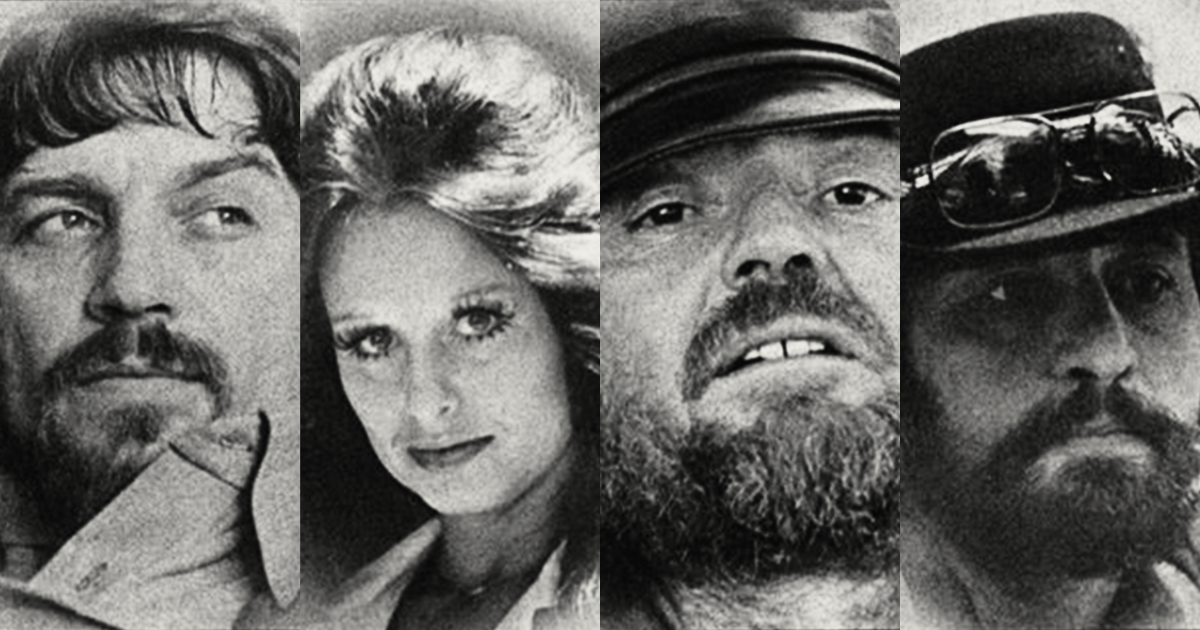
It’s strange to say about an album widely regarded as one of the 20th century’s most iconic, but maybe the most notable element of 1976’s Wanted! The Outlaws was its highly stylized cover. An old “wanted” poster associated with the wild, wild west of the American frontier (or at least movie depictions of the same), it depicted sepia-toned parchment with a trio of bullet holes. And it pictured the album’s four artists in mugshot form with Waylon Jennings as top headliner over Willie Nelson, Jessi Colter, and Tompall Glaser.

That appeared to be an unlikely quartet for a supergroup. But Wanted! The Outlaws turned out to be one for the ages, topping the country album charts and spinning off hit singles the artists performed for the rest of their careers. Wanted! even reached the crossover promised land in reaching No. 10 on the Billboard 200, a pop-chart peak for everyone involved except Nelson. When all the dust settled, it was the first country album to earn the then-newly introduced platinum certification for sales of over 1 million copies.

Despite the album’s thematic packaging, its 11 songs play less like a cohesive, organically conceived new work than the compilation it actually was. Each of the four headliners got a couple of songs, together as well as separately, and whatever unity it had came in the form of a musical vibe much closer to the progressive country coming out of Texas roadhouses than the traditional Nashville sound.

Considered as a collection of songs, Wanted! The Outlaws is a great record. And yet it emerged from a peculiar set of circumstances because it really, truly is a music-industry version of a breakfast sausage – appealing and tasty in spite of rather than because of how it was made. It’s fair to describe the feelings of many observers as mixed.

“More than anything else, it really was a triumph of Nashville marketing,” says Joe Nick Patoski speaking to Good Country. He’s the author of the 2008 biography, Willie Nelson: An Epic Life, and many other key writings about Texas music over the past half-century. “And it kind of crystalized everything Waylon, Willie and others had been doing. It almost seemed like a joke, but it worked and it sold. So who am I to kvetch?”

If Wanted! The Outlaws was a culmination that added up to more than the sum of its parts, it would not be such a key milestone without all the individual breakthroughs of its principals, starting with Waylon Jennings. A longtime journeyman who became a star, native Texan Jennings was only still alive in the 1970s because he’d given up his seat on Buddy Holly’s plane to Jiles Perry “The Big Bopper” Richardson Jr. on that fateful night in Iowa in February 1959. He’d been working the honky-tonks ever since, and by the mid-’70s his brand of too-rock-for-country-but-too-country-for-rock was landing commercially. On the strength of the statement-of-purpose hit “Are You Sure Hank Done It This Way,” Jennings’ 1975 album Dreaming My Dreams was his first to go gold.

And yet Jennings wasn’t even the biggest pop star in his own home. That was his wife, singer Jessi Colter, who had a massive No. 4 pop single in 1975 with “I’m Not Lisa.” That would remain her mainstream peak.

By 1975, however, Willie Nelson was breaking through at an even bigger level than Jennings and Colter put together. Long revered as one of the 20th century’s great songwriters, Nelson penned for-the-ages hits for the likes of Patsy Cline and Faron Young – “Crazy,” “Hello Walls,” “Night Life,” and many more. Yet success under his own name eluded Nelson, though not for lack of trying. He made album after album for RCA Records’ Nashville division, but the city’s prevailing sound just wasn’t a good fit for him. Nelson seemed doomed to be remembered as songwriter first, performer a distant second.

It took parting ways with Nashville and its assembly line – going home to his native Texas and leaving RCA to sign with Atlantic and then Columbia Records – for Nelson to finally establish himself as a viable recording artist. What finally put him over the top was 1975’s Red Headed Stranger, his 18th studio album but first for Columbia, and also the first where Nelson had complete artistic control. Spare, downcast, and terse as a Hemingway short story, the album’s sound and feel was miles removed from the Nashville sound. It was his first to crack the pop charts, selling millions, and “Blue Eyes Crying in the Rain” remains a beloved classic five decades later.

As he watched Nelson’s Red Headed Stranger success, RCA executive Jerry Bradley wanted in on it. Bradley had taken over as head of RCA Nashville from Chet Atkins several years earlier, and chief among his label’s assets was having Jennings under contract. While Nelson was long gone, RCA still had a voluminous catalog of recordings he’d left behind. RCA was already reissuing Nelson’s recordings as best-of compilations and doing some business, but taking them to the next commercial level was going to require an angle. It started with Waylon and Willie’s relationship as kindred-spirit friends and collaborators.

By the mid-1970s, Waylon and Willie had known each other for a decade. Both had artistic identities in contrast to staid Nashville, fitting in alongside other Texas-based acts like Michael Martin Murphey and Jerry Jeff Walker in an upstart wave dubbed “progressive country.” The music came out of that era’s back-to-basics ethos and was scruffier than Nashville’s assembly line. Author Jan Reid captured this particular moment with a landmark book, The Improbable Rise of Redneck Rock, first published in 1974.

Bradley’s idea was to put out an album where Jennings and Nelson joined forces, with songs both solo and in tandem. But if it was really going to take off, it needed fresh branding and a new descriptor beyond progressive country or redneck rock. That’s where old-fashioned marketing necessity entered into the equation.

Nashville writer Hazel Smith, who was working as Jennings’ publicist at that time, is widely credited with coining the phrase “outlaw country.” With that image in mind, Bradley came across a vintage “wanted” outlaw poster in a Time-Life illustrated encyclopedia about America’s 19th century western frontier. He took it to designer Herb Burnette with instructions to model a cover based on that, and then it was time to present the concept to the artists.

“He showed that to Waylon, who told him, ‘This is your idea, do whatever the hell you want,'” Patoski said. “And Jerry said, ‘Thank you’ and walked out the door. That poster on the cover really gave people something to grab onto, and ‘outlaw country’ is easier to say than ‘progressive country’ or ‘alternative country.'”

In Patoski’s telling, Nelson’s manager Neil Reshen was initially less than enthusiastic about the concept. But Bradley made it clear that RCA still had ownership and control of Nelson’s old catalog and an Outlaws album would come out with or without their blessings. It turned out that Nelson was more amenable to the idea, having just bought the Texas Opry House in Austin. He was happy to have an advance payment from his former label to fund its refurbishment.

Jennings regularly produced Colter’s music (including “I’m Not Lisa”), so she was an obvious addition to the lineup. The fourth piece of the puzzle, Tompall Glaser, also came from Jennings’ camp and was added at his insistence. Formerly of the Glaser Brothers, he too was peaking in 1975 with his cover of Shel Silverstein’s “Put Another Log on the Fire (The Male Chauvinist Anthem),” his highest-charting single on the country charts.

And thus The Outlaws were born, with success that was both immediate and long-lasting. The Academy of Country Music Awards named it album of the year for 1976, with “A Good Hearted Woman” winning the Country Music Association’s single of the year, and the album was added to the GRAMMY Hall of Fame in 2007. It also created another niche for country artists.

“My joke when people started telling me we were part of the ‘outlaw movement’ was to say, ‘No, we’re part of the in-law movement,’” said Ray Benson of the long-running Texas swing band Asleep at the Wheel in a conversation with GC. “We all thought it was kind of stupid, because everybody’s music was completely different. It was a style of marketing, not music, but it did create a shorthand to label and sell something. Honestly, the only ‘outlaw’ thing about it was the dope. What did we all have in common? We did drugs. Everybody liked something different, pot or coke or speed. But they were all illegal.”

Released in January 1976, Wanted! The Outlaws was accompanied by all the fanfare and major-label marketing of a new-music release. But the album mostly consisted of previously available material. As selected by RCA’s Bradley, seven of the original album’s 11 songs had been released in different versions as far back as 1970. But it did have a big ace in the hole, the dynamic of the Waylon and Willie show – “a juggernaut that was big and getting bigger,” said Patoski.

The duo’s live version of “A Good Hearted Woman” was one of the album’s four new tracks, and it would be its highest-charting pop single at No. 25 on Billboard’s hot hundred. It also launched Waylon and Willie’s ongoing partnership, which blew up even bigger the following year with “Luckenbach, Texas (Back to the Basics of Love).” They went on to make a series of hugely popular Waylon and Willie albums, plus their Highwayman supergroup with Kris Kristofferson and Johnny Cash.

Jennings opened Wanted! The Outlaws on a somber, solo note with “My Heroes Have Always Been Cowboys.” And yet that song is associated with Nelson, too. Four years later, he’d have a solo hit version of his own in the soundtrack to the 1980 Robert Redford/Jane Fonda movie The Electric Horseman.

Along with serving as foil to Jennings, Nelson’s key contribution to Wanted! was to give the album its main outlaw artifact in “Me and Paul,” a 1971 song chronicling some of his misadventures over the years with his drummer and partner in crime Paul English. That song’s good-natured sense of never-do-well scruff is in the DNA of some of Nelson’s singer-songwriter descendants like Robert Earl Keen and the late Todd Snider.

Colter’s most notable contribution to Wanted! was as Jennings’ duet partner on a cover of the 1969 Elvis Presley hit “Suspicious Minds,” foreshadowing their 1981 duet album Leather and Lace. Glaser’s contributions fall at the very end, with his take on Jimmie Rodgers’ “T For Texas” and “Put Another Log on the Fire” as the final two tracks. They’re classic songs rendered well, but they do feel kind of tacked on.

Wanted! would be enough of a success that the niche it created was soon viewed as problematic. Just two years later, in 1978, Jennings asked in song, “Don’t You Think This Outlaw Bit’s Done Got Out of Hand?” By then, outlaw country was bumping up against disco, and the 1980 movie Urban Cowboy was the result. Mainstream country descended into a not-great state in the early ’80s until the next wave of insurgents came along mid-decade – Steve Earle, Dwight Yoakam, Lyle Lovett, k.d. lang, and other artists who didn’t quite fit in with Nashville’s ways.

Through all of that, Waylon and Willie both kept on keeping on, separately as well as together. Jennings would remain a beloved elder statesman of country music (as well as Colter’s husband) until his 2002 death at age 64. He is still well-remembered. Glaser passed on in 2013 at age 79, but Colter is still around, making music, and released her most recent studio LP in 2023. And Nelson is, at the time of this writing, still kicking at age 92 – The Last Leaf on the Tree, as he put it on the title of his 2024 album.


Although he lives in North Carolina nowadays, San Antonio native David Menconi’s Texas bona fides include co-writing 2011 “Texan of the Year” Ray Benson’s memoir, Comin’ Right At Ya: How a Jewish Yankee Hippie Went Country or, The Often Outrageous History of Asleep at the Wheel (University of Texas Press, 2015); and his University of Texas journalism Master’s thesis, Music, Media and the Metropolis: The Case of Austin’s Armadillo World Headquarters (1985). His most recent book is Oh, Didn’t They Ramble: Rounder Records and the Transformation of American Roots Music (University of North Carolina Press, 2023).

Lead Image: Wanted! The Outlaws via Sony Music Entertainment

Want more Good Country? Sign up to receive our monthly email newsletter – and much more music! – direct to your inbox.

50 Years of the Paisley Family Business

Danny Paisley is a quintessential bluegrass tradesman. He began playing music around the age of 10 and soon after was sneaking into bars and clubs with his dad Bob Paisley, Ted Lundy, and their band, the Southern Grass. Danny was already gigging and touring at the age of 13, and now, five decades later, he’s enjoyed 21 years at the helm of the Southern Grass – with the next generation of Lundys, T.J. and Bobby, and the next generation of Paisleys, his son Ryan, in tow.

Danny learned the bluegrass ropes from his father, crafting and carrying on a traditional sound that draws directly from Bob’s musical foundation but also sounds distinct and personal. When Bob passed away in 2004, Danny had already taken over some of the leadership roles in the band while the elder Paisley had been battling cancer. Danny was determined to continue the group’s legacy, and over the last two decades he’s honored that legacy while consciously expanding it. Along the way, he’s earned four IBMA Awards for Male Vocalist of the Year, while he and the Southern Grass were awarded Song of the Year in 2009 for “Don’t Throw Mama’s Flowers Away.”

His 2025 album, released in May on Pinecastle Records, finds Paisley continuing that expansion, looking for new challenges and focusing in on a fresh sonic sparkle. Bluegrass State of Mind would sound like a straight-ahead traditional bluegrass album to a layperson, but to devoted fans of the Southern Grass, it’s a much more Americana-steeped and forward-looking endeavor. The usual five-piece lineup is augmented by Dobro, snare drum (gasp!), and a healthy dose of “what if we tried… this?” all across the project.

The result is charming, engaging, and downright excellent – it’s one of the finest bluegrass albums of the year, to be sure – showcasing how Paisley’s longevity is built upon a keystone of innovation and looking to the future, rather than being entrenched in the past. For someone who sounds entirely dyed in the wool and is held up by chair-snapping traditionalists as well as jamgrassy rebels, any level of “coloring outside the lines” of the genre would be remarkable. But Paisley isn’t stopping at new challenges and fresh sparkles; he wants to take his Bluegrass State of Mind to as many brand new audiences as he can find.

Fifty years into his career, Paisley is not resting on the assumption that he can keep performing and plying his trade by doing the same ol’ same ol’. No, Danny Paisley & the Southern Grass are still committed to bringing the bluegrass they love and hold dear to anyone and everyone who may enjoy it, by showing folks this kind of music can be for everyone. All the while, he’ll be turning over plenty of new leaves and passing along the family business in real time, too.

We caught up with Paisley at the Industrial Strength Bluegrass Festival in Wilmington, Ohio, between sets, when he and his son Ryan sat down with BGS to chat about his most recent album, what he wants to accomplish next, and the absolute unforgivable sacrilege of including drums on Bluegrass State of Mind.

Right on the album cover for your latest project it says, “Celebrating 50 years of bluegrass music.” To me, you’re a bluegrass tradesman. It’s very clearly your trade, it’s what you’ve done your whole life, and it runs in the family. It began with your father, Bob, and is continuing in the next generation with your son, Ryan. Can you talk a little bit about the meaning that you’re holding right now at 50 years, as you put together this record and were thinking about that anniversary, and that longevity?

Danny Paisley: I didn’t want to do a record rehashing old favorites. I kept hearing different songs and I kept saying, “I want to try this,” just for me to try this new approach. A “new challenge.” We recorded it and some of ’em were not standard Danny Paisley-type songs, but I felt they were awful good songs and I wanted to try it.

So Ryan and I worked it out, and he come up with a different approach for some of the tenor lines I would’ve sang previously. Now Ryan is singing them, so that added a different flavor. We just tried to sparkle the music, just to tweak it.

We added a Dobro for the first time, only ’cause I kept hearing it through so many of the songs. I’m more of a fan of the newer approach to Dobro than the older school. Mike Auldridge was the one that turned me [onto it], the way he was getting tones out of a Dobro.

You’re 50 years into doing this and have such an established sound as your own frontman, your own bandleader. People see you as so solidly traditional, but for you, five decades in, it’s clearly still important for you to turn over new leaves, to find that sparkle you’re describing.

Because I was feeling… maybe I was [feeling] stale, and after my health issues, I felt I really need to do this – for maybe a couple years, now. I regret that I didn’t try it [sooner]. So I tried it and I loved it. Had a great time, had a great producer [Greg Cole] and great help with Ryan and his influence and I think it’s a great CD. Different approach.

You’re still looking for new challenges and you’re looking forward. Obviously, with this record, with the way that you operate as a musician and a creative, you aren’t just somebody that’s like a lot of bluegrass people, with one foot in the past, one foot in the future.

Right.

Looking ahead – ’cause it seems like you’re looking ahead right now – what are the goals you haven’t done yet? Or the bucket list items you haven’t checked off yet?

I want to take our band – and this is a real goal – to reach other audiences. I think there’s a real audience and a real needing, almost, at some of the more jammy festivals. And we’ve done ’em and I’ve realized it really works well, presenting a straight-out, hardcore bluegrass band. We pick out songs that sort of go to that crowd, but we just play ’em in our style and we try to keep it upbeat, just to draw people in for a new audience.

I know the music has gotta move on. I’m a firm believer of it. We revere the past, but we look to the future – and I’m in that category. I look to the future, but I love the past. I don’t want to dishonor it, ’cause it’s the music I love and feel. It’s what’s inside of me. That’s the music I love.

So that’s my goal. I want to bring it out [to new audiences], and I really feel in today’s world, you’ll have to adapt things, but I really wanna make it traditional bluegrass. There’s a real audience for sincere, true bluegrass.

It makes me think of how we have Molly Tuttle, Billy Strings, and Sierra Ferrell–

Exactly.

All who are, at their core, traditionalists. So they’re shining a light on the folks who sound like you. I definitely think there’s space for a band like you in that constellation.

And Billy loves hardcore bluegrass! But he made it an event. People will pay money for an event. He puts it right down in their faces with some straight-out bluegrass, and it’s great.

Our mutual friend Jon Weisberger always talks about how one of the most valuable things you can do as a bluegrass band is to be the most traditional bluegrass band in a non-traditional space. The music can stand out for what it really is and doesn’t fade into the grayness of it all being the same.

There’s so many traditionalists who don’t want any variation, which I respect. We all do. I wanna revere that. But we also gotta realize these people, young folks today, are not coming into the music. With all the outside influences and modern day [stuff], Facebook and all the different Instagrams. [Laughs] They’re not coming into the music the same way. We need to respect that and bring it to them and bring them in.

We can’t expect some young person that’s just getting into music, that’s 18 or 19, to be really drawn in by singing another cabin song. We sing cabin songs, but we can’t [only do that]. And we’ve all had heartbroke and there’s a world of songs about heartbroke. Your lover has passed or left you, boohoo! We have to present it in a fresh way. And meet people where they’re at, for sure. That’s the best line, that’s truly it. And I’m a firm believer in that.

I fully believe in the intrinsic charm of bluegrass. I think everybody’s a fan, they just don’t know it yet. So if you can reach them with music that doesn’t show them or tell them that they’re not allowed to like bluegrass, it happens. Bluegrass can feel exclusive. Or it can feel like, “Oh, that’s music for other people, not for me.”

“Not me,” yeah! Or, “I’m afraid.” “I’m not sure that’s good enough, or that I would be accepted.” Or, “I hear it, but I don’t really want people to know I like it.” Because that stereotype has to go! It has to move on. It’s music for everyone. I don’t care what kind of music you’re in, music is for everyone. And you have to accept that or live in your little corner of the world and think everybody else is wrong.

I’ll probably get in trouble for that. [Laughs]

No, no! But speaking of traditionalism and traditionalists… so, bluegrass drums, huh? [Laughs]

Uh huh! [Laughs]

You’ve got bluegrass drums on the album. And what a lot of people don’t know – maybe our audience on BGS will know – but a lot of people don’t know that bluegrass drums are a traditional bluegrass instrument. I hear the “sparkle” and the difference in these songs, but I also still hear you. It sounds like your personality.

What my approach and my thought is, is I want it to still be me. I’ve had some people criticize it and say they didn’t appreciate that drum. Why? ‘Cause it was listed? [Laughs] It’s there to add some rhythm. And it was only there for a little sparkle, a little snap. And a little rhythm. If you didn’t really know it was there and we didn’t tell you, you probably wouldn’t know it. There’s nothing wrong with that, no. Drums are in a lot of bluegrass.

Exactly. We could list the folks who’ve had drums: Bill Monroe, Jimmy Martin, the Osborne Brothers, J.D. Crowe – the list goes on and on and on.

For you, as a traditionalist, straight-down-the-middle bluegrasser, this album is a few clicks towards Americana. But if you played this album for an Americana audience, it would just sound like traditional bluegrass.

It would be traditional bluegrass, yeah. I’m gonna draw those people in. That’s my goal.

The album sounds so warm and live. You know how bluegrass records nowadays, especially the ones made especially for satellite radio, all sound really compressed. They sound canned and sometimes stale. This album feels really warm and live and fresh.

I think ’cause they all want radio airplay. They have a certain– I don’t know the technical way [to describe it], but sometimes you start compressing the music too tightly. You miss guys like Jimmy Martin who threw his voice real up there and really stood out on a certain line. He popped –I call it popping – he’d pop his voice and stuff. It might have been there, but then they compress it with the recording or the engineering. I try to not let that get too overtaken in the music, even in straight bluegrass, ’cause that adds energy and life.

I do wanna talk about some of the songs on the album. I love these three in the middle: “Diagnosis Broken Heart,” “Two Old Church Pews,” and “Cream in My Coffee.” Let’s start with “Diagnosis Broken Heart,” ’cause that one, I think the sparkle and the challenge you’ve been talking about is there.

We had it recorded and I didn’t really like it. I felt it didn’t really work. So we redid it after we had it all done and mastered, we redid it. That’s a different approach for me. I said, “Let that sink in.” And after it sunk into me, I go, “No, I don’t wanna do it that way. I’m gonna go back and just sing it my way.” And that’s what I did. Then that one, we added the snare. I wanted a little pop – and the groove on that one is great. We brought the tempo up and that one worked.

The most challenging song was “Cream in My Coffee.” David Stewart wrote it along with some other gentlemen and David kept saying, “I want you to do this. I hear this.” And I kept saying, “I do too, but I don’t know if I can.” And so there’s your challenge!

So I did it and it wasn’t right. We’re in the studio and David Stewart’s there and he’s telling me how to do it and I’m not doing it the way I hear it. I’m listening to the way he’s singing it and I go, “I can’t really do it that way.” I’m listening back and forth. Finally, David comes in the studio and he says, “Think of a marching band.” We did a take and next thing I know he’s standing in the [control] room while I’m doing the vocal and he’s in there marching. [Laughs]

More people come and say, “I never thought you would record the song like that,” but I love it. I said that was a challenge, but it was a good challenge.

I also wanted to talk about “Two Old Church Pews.” Can you tell me about where that song came from? That line about how a church is wherever you are, that really resonated.

That was the major part of that song that grabbed me! That song was pitched to me by Brink Brinkman and Daryl Mosley. They sent it and I immediately said, “This is beautiful.” I said, “This wraps up basically how I feel.” You can talk to your deity wherever you are. Some people need to go to church. Some people just go out, have a quiet moment, and sit in the yard or a quiet spot in the house. That’s how I believe. And the two old church pews were [the singer’s] church. He took ’em home and he sat there and he would talk to the Lord in that way.

That’s how I feel and it’s a beautiful song. It rings thanks to Ryan and Greg. It come out excellent. And that’s probably the most traditional feeling, one of the new songs on that CD.

I love the text painting of it. It really feels like you’re seeing the imagery.

That’s what I tried with my singing. Tried to present that way. And the wording of it was excellent. That’s a once in a lifetime song.


Photo Credit: Shot by Rob Wasilewski, courtesy of the artist.

50 Years of Special Consensus

It is positively astounding to me that Special Consensus has been running the road for 50 years. When bass player Marc Edelstein and I decided to make the band a full-time entity, we thought it would be for two or three years and then we would return to “normal life.” Instead of getting the music bug out of my system over the years, traveling throughout our country and around the world only intensified my love of playing bluegrass music.

Been All Around This World is Special C’s 20th band record and our eighth on the Compass Records label. Our wonderful producer Alison Brown has helped raise the bar for the band – resulting in the band receiving eight IBMA Awards and two GRAMMY nominations.

Reflecting on the band’s golden anniversary, I looked back over our body of recordings and selected 15 songs that we are especially proud of – songs that received awards, that did very well on bluegrass music airplay charts, or consistently received (and continue to receive) requests at our live shows.

I appreciate this opportunity to present these songs from every era of the Special Consensus. It has been an honor to play banjo alongside such phenomenal musicians on these songs. I hope you will enjoy! – Greg Cahill, banjo player and founder

“Dream of Me” (1983; not on Spotify)

“Dream of Me” appeared on our Blue Northerns recording, released in 1983, and featured Chris Jones on guitar/lead vocal, Paul Kramer on mandolin/vocals, John Rice on electric bass/vocals and fiddle, and yours truly on banjo. Yes, electric bass! We were quite happy with the band sound for this second band recording – and who would not be happy when hearing Chris Jones sing every time we performed.

“Freight Train Boogie” (originally released 1986, re-recorded for 2000’s 25th Anniversary)

Released in 1986, this title song featured Dennis White on guitar, harmonica, and lead vocals, our honorary band member Ollie O’Shea on fiddle, Tim Wilson on mandolin/vocals, Scott Salak on acoustic bass, and yours truly on banjo/vocals. This song was requested for years, and we were very honored that our friend, the great Jethro Burns, wrote the liner notes for the album.

“Fourteen Carat Mind” (1991, re-recorded for 2010’s 35)

From our Hey, Y’all release, this track featured the fabulous singing of Dallas Wayne and always received a strong response. The song also featured Dallas on bass, Marty Marrone on guitar/vocals, Al Murphy on fiddle, Don Stiernberg on mandolin, and yours truly on banjo/vocals. The folks in Finland admired his voice as much as we did and lured him to their country to record and perform after hearing him on tour there with Special C. He and his wife lived there for seven years.

“Ten Mile Tennessee” (1996)

From our Strong Enough To Bend release in 1996, this featured the smooth lead vocals of guitarist Bobby Burns with Diana Phillips on bass, Colby Maddox on mandolin, and yours truly on banjo. This beautifully written song continues to be requested at our shows to this day and we are always happy to sing it.

“Another Day With The Blues” (1998)

“Another Day With The Blues” was brought to the band by Andrea Roberts, our bass player at the time, and she sang lead on the song that appeared on the 1998 Our Little Town recording. Chris Walz played guitar/vocals, Colby Maddox played mandolin, and I played banjo/vocals. We recorded the song in the key of C and Andrea wanted me to use the capo at 5th fret, but I did not want to do that. She felt it would sound much grassier, given the melody and flow of the song, so I relented, put the capo on the 5th fret, and it was the first Special C song to ever chart on the Bluegrass Unlimited Top 30 songs chart.

“Carolina in the Pines” (2010)

This was a massive “hit” song for Special C, from our 2010 Pinecastle Records release, Route 10. Josh Williams sang lead and played mandolin, Jamie Clifton played guitar/vocals, Tim Dishman played bass/vocals, and I played banjo. This song received so much attention that we are still referred to as the “Route 10 Band” – and we not only keep the song in the band stage repertoire, we recorded it again for the new Been All Around This World release.

“Today Has Been A Lonesome Day” (2005)

This song was always a show-stopper when Ron Spears sang it at the top of his lungs, usually at the end of a set. Although there were several songs on this 2005 Everything’s Alright recording that consistently received requests, Ron’s amazing singing on this song made it an event! Justin Carbone is on guitar, Tres Nugent is on bass, and I played banjo.

“Wild Montana Skies” (2014)

Included on the 2014 Compass Records Country Boy, A Bluegrass Tribute To John Denver recording, this track features mandolin player Rick Faris singing with Claire Lynch. Dustin Benson played guitar/vocals, Dan Eubanks played bass, Rock Ickes played Dobro, and I played banjo. This song became a favorite of our fans and received a lot of airplay. It also won the International Bluegrass Music Association’s Recorded Event of the Year award.

“She Took The Tennessee River” (2018)

This track comes from the 2018 Compass Records recording Rivers and Roads, which won the IBMA Award for Album of the Year and was GRAMMY-nominated for Best Bluegrass Album. Becky Buller and Jon Weisberger wrote the song and Becky played fiddle on the track along with Nick Dumas on mandolin/vocals, Rick Faris on guitar/vocals, Dan Eubanks on bass, and I played banjo. We were honored to have Bobby Osborne join us for a verse on this one.

“Squirrel Hunters” (2018)

Also from our Rivers and Roads album, “Squirrel Hunters” was one of John Hartford’s favorite tunes to play and, with the help of his daughter Katie, our producer Alison Brown, and some technology, John introduces the tune and plays the first fiddle solo on the recording. Rick Faris is featured on guitar, Nick Dumas on mandolin, and Dan Eubanks on bass along with Alison Brown on twin banjo and 10 String Symphony (Christian Sedelmyer and Rachel Baiman) on fiddles. This recording won the IBMA Collaborative Recording of the Year Award.

“Alberta Bound” (2023)

From our Great Blue North Compass Records release, this song spent a few months in the number 1 position on the Bluegrass Unlimited Top 30 Bluegrass Songs chart and shared the very first IBMA Video of the Year Award with Authentic Unlimited. We consistently receive requests for this song that features mandolin player Michael Prewitt on lead vocal with Greg Blake on guitar/ vocals, Dan Eubanks on bass/vocals, me on banjo along with our Canadian friends Ray Legere on fiddle and Pharis and Jason Romero, John Reischman, Patrick Sauber, and Trisha Gagnon on vocals. The song also won the IBMA Collaborative Event of the Year Award.

“Snowbird” (2023)

Also from the Great Blue North, this recording is one of our most requested songs and also appeared on the Bluegrass Unlimited Top 30 Bluegrass Songs chart. The recording features IBMA 2023 Male Vocalist of the Year Greg Blake on lead vocals and guitar, Michael Prewitt on mandolin/vocals, Dan Eubanks on bass/vocals, Claire Lynch on harmony vocals, and me on banjo. Beautiful song!

“What Am I Doin’ Hangin’ ‘Round” (2025)

Alison thought this Michael Martin Murphey song made popular by The Monkees would be a great showcase for Chris Jones’ smooth vocals. All of us loved the idea and we had a blast in the studio recording this one with Greg Blake trading lead vocals with Chris, and Rick Faris and Dallas Wayne joining Dan and Brian on harmony vocals.

“I’m Always On A Mountain When I Fall” (2025)

We really wanted to showcase Dallas Wayne’s fabulous vocals on the new project and what better way to do that than by featuring him on a song made popular by Merle Haggard. Dallas sang in country music clubs in Chicago for years before joining Special C and he left the band to lead a country band in Finland. When he stepped up to the mic and launched into the first verse, we all were literally spellbound. It was truly amazing to watch and hear him so effortlessly deliver such an incredible performance.

“Wish We Had Our Time Again” (2025) 

This was the grand finale of sorts for our 50th anniversary album. Even though it’s about a past relationship, the sentiment in this John Hartford-penned song somehow seemed perfect for us. Standing next to former bandmates Chris, Dallas, Robbie, Rick, Josh and Ashby in the studio – people who have remained best friends over so many years – along with my more recent best friends Dan, Greg, and Brian, literally brought tears to my eyes. Made me realize how fortunate I have been to have these phenomenal musicians and producer Alison as best friends forever in my 50 years of making music “all around this world.”


Photo Credit: Karen Murphy