John Reischman: Between the Salish Sea and Salt Spring

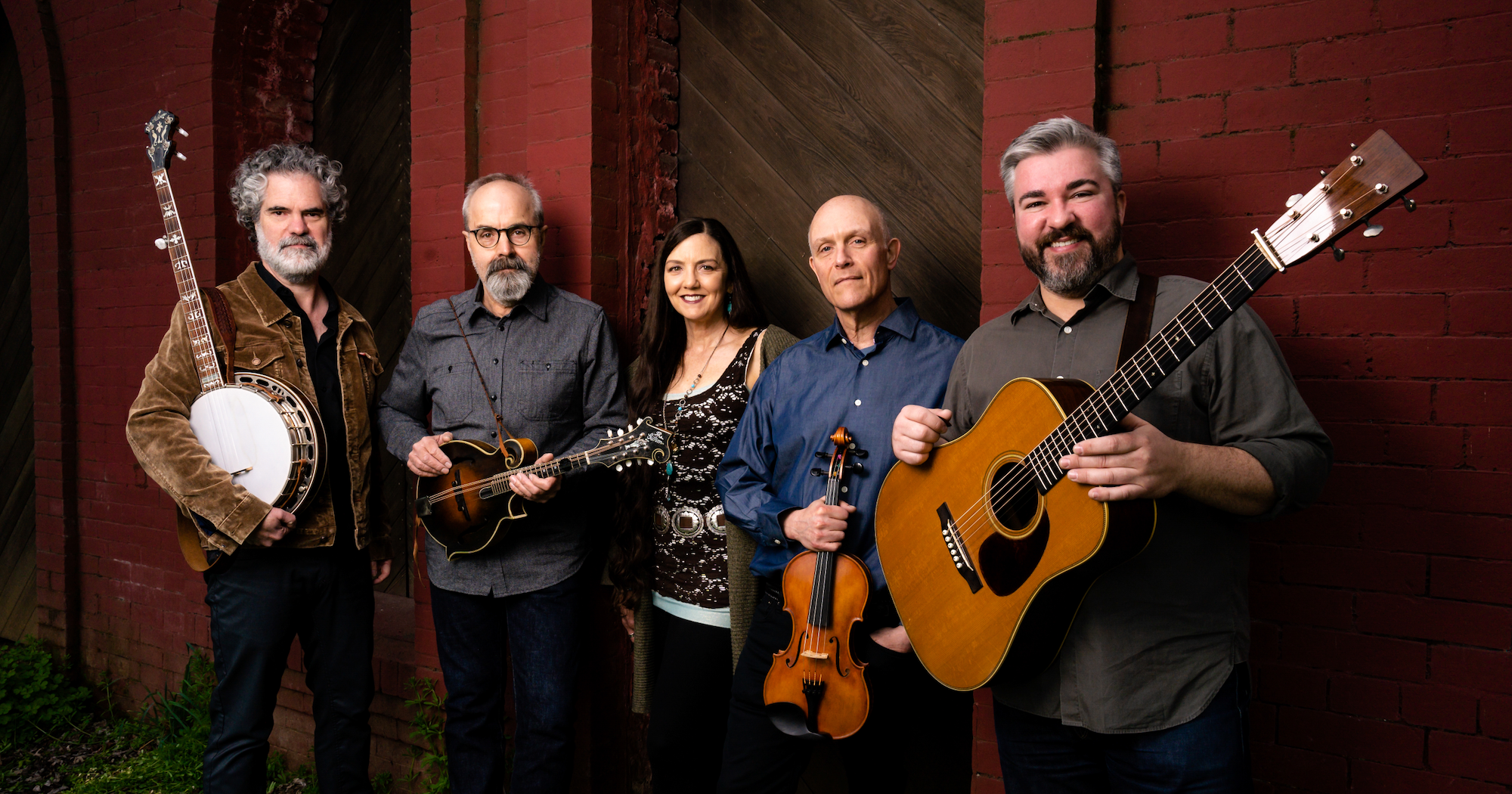
There are no U.S./Canada border wars when it comes to John Reischman. The revered mandolin master was born in Northern California but has lived in British Columbia since the early 1990s. His longtime band, the Jaybirds, are a quartet that includes two members who are also based in British Columbia (bassist/vocalist Trisha Gagnon and banjoist Nick Hornbuckle) and two who reside in America (fiddler Greg Spatz lives in Eastern Washington and guitarist/vocalist Patrick Sauber is from Southern California).

Their latest album, The Salish Sea, refers to the body of water between Vancouver Island and the British Columbia mainland. The record is their first since 2017’s On That Other Green Shore along with being the first to feature “new” guitarist Sauber on the entire album. The song “The Salish Sea” not only serves as the album’s title, but also is part of an original “Bluegrass Concerto” that Reischman was commissioned to create for FreshGrass in 2024. The honor is just one example in a long line of accolades for Reischman, who began his career in the Bay Area bluegrass/folk scene of the 1970s (including a stretch with the Tony Rice Unit) before moving to Canada, where he started the Jaybirds as well as performing solo and in other groupings.

In recent years, Reischman has seen his song “Salt Spring” become something of a modern bluegrass classic. He spoke with the BGS from his home in Vancouver about “Salt Spring” as well as The Salish Sea, his famous Lloyd Loar mandolin, and how he got into bluegrass music.

What was the process of putting the new album together?

John Reischman: There was one venue in Washington State where we had a residency. It was in the fall, in a beautiful spot. It was just ideal. So we took the extra day, worked up like six new tunes, and then started performing them right away. I guess this was October of ‘23.

And then you recorded the album in Vancouver?

In December of ‘23, I wanted the band to check out the studio here in Vancouver, where we ended up ultimately recording. I just want to make sure everybody was cool with it. I knew I liked it, because I had used it for my solo record, New Time & Old Acoustic. They all liked it. At the end of any tour we had that was close to Vancouver in 2024, I’d book a day or two in the studio, and we’d go record two or three or four songs. We were able to perform all this material mostly before we recorded it. … And it was great, because we’d be warmed up from the tour and we’d go in and track some tunes.

This album was the first in a while, and also the first that Patrick Sauber was fully on it.

Right, On That Other Green Shore came out in 2017. That was kind of the tail end of our time with [guitarist] Jim Nunally being a band member. He was exploring other things and decided he’d leave the band. We had a few more tracks to do… and we had some dates on the calendar.

I thought of Patrick immediately, because I’d known him for many years and I thought he’d be good. So he signed on for a tour and then another tour and it was just like, “This works great.” We asked him to join and he immediately said yes. He was a great fit.

How did the Jaybirds come together in the first place?

I didn’t really set out to have a band, except for the fact that I had a solo record called Up in the Woods. There was a local festival, so I put the band together to help promote the record. Seemed like a good idea. And I liked playing with all those people and it just continued on.

It’s called John Reischman and the Jaybirds, because I conceived of it. My name was probably the most well known at the time, but I wanted to be integrated into a bluegrass band. People present stuff, and I almost always accept it. Mostly it’s a pretty democratic presentation, I think. That’s what I like. It’s not Gladys Knight & the Pips.

Can you talk about the title track and how it’s also part of a larger project?

I had been asked to write what they call a “Bluegrass Concerto” by the East Coast festival FreshGrass, and I came up with these three tunes that work together. The first tune was the first movement, which ultimately was called “The Salish Sea.” I thought this will be my contribution to the new Jaybirds record, because they were involved with the performance of the Concerto.

We performed it [at FreshGrass in 2024] and I really liked the idea of having two mandolins and I’ve always loved two fiddles. I knew Darol Anger was going to there, so I asked him if he’d play twin fiddles on it. And then Sharon Gilchrist is a good friend and great mandolinist; we’ve played a lot together, and I asked her to play a mandolin on two of the three pieces.

I’ve got to acknowledge David Grisman, because the music is influenced by his “Dawg Music.” It’s also the sound that I initially heard on his first solo record, The David Grisman Rounder Record. He incorporated harmony mandolin on a lot of it.

It must have been very inspiring and gratifying to receive this commission.

You know, I’ve written a lot of tunes and a lot of folks have learned my tunes, which is really gratifying. But to have been commissioned to write this and have the confidence of this great festival and organization, yeah it was.

I had plenty of time to work on it and the time that it mostly came together was when I think my wife was visiting family. I had the house to myself. That first piece, in particular, really developed over a period of time. The second one [“The Family’s Farewell”], I came up with the A part pretty quickly and it took a while to get a bridge for it.

The third part [“The Little River Ramble”] was similar. … The thing about the concerto format is the third movement typically has an extended solo section and it’s often a bender where it’s just the featured soloist playing solo without any accompaniment. But I wasn’t really comfortable so much with that. I thought, I’ll just have it break down and I’ll solo all through there but have it build back up.

I’m really happy with the response it has gotten. Even playing it just as the five-piece band, I think the band sounds great on it. It’s only like icing on the cake when the twin fiddles and the twin mandolins are there.

And this spring, you’re going to record the entire concerto?

At the end of March, we’re going to be on tour on the East Coast and the FreshGrass Festival has a recording studio. They offered to make the studio available, so we’re going to record that just as we performed it, with Darol and Sharon joining in. That will be part of a solo record, even though I’m using those musicians. And I have other sessions planned. I’ve done one session that will add to the whole thing. Those three tunes of the concerto will just be one component of the new recording.

“Salt Spring,” one of your older songs, has become a highly popular instrumental now in the bluegrass world. How much of a pleasant surprise has that been?

It’s kind of remarkable to me that it’s as popular as it is. I mean, I’m not complaining. It’s great. … But it’s interesting how it’s just traveled all over and people think it’s just a traditional tune in some circles. They have no idea that it was composed by me. That’s cool, too.

The Jaybirds recorded it and it came out on a CD in 2001. We were at a music camp with some folks from Colorado and they learned it. I think that’s largely the beginning of it getting circulated among other people – where they took it back to Colorado. They’re the “patient zero,” I guess.

I know that a certain generation of Berklee students were playing it a lot, and maybe a bit later – maybe 10 years later. It’s pretty cool having people play your tune when you’re not there. That CD was never available digitally until recently, but we made a video of it around 2011… and that was the source, I think, for a lot of people learning it.

And then you recorded it again with Molly Tuttle, Alex Hargreaves, Max Schwartz, and Allison de Groot on your 2021 solo album New Time & Old Acoustic.

I didn’t have all the material when I started that whole project, but I knew I wanted to re-record “Salt Spring” with some of these younger musicians who had grown up playing it.

What do you remember about writing it? And why do you think so many musicians have gravitated to playing it?

I was on Salt Spring Island [in British Columbia] staying with some friends and they had a little old turn-of-the-century Martin small-body guitar. I was just playing the guitar and I was playing out of a D chord shape, and the A part of the tune just kind of took shape under my fingers. It was memorable enough that I don’t think I had to record it to remember it. The B part was just this little phrase I would play on the mandolin, just noodling around … so I just kind of stuck it on there and it worked pretty well.

I think the thing about the tune is the basic melody is very simple, but the way I played on the mandolin, the technique I use, is not quite cross-picking. But it falls into a right-hand pattern that sort of mimics the way the frailing banjo is played with that “bum-ditty, bum-ditty, down-down up, down-down up” pick stroke. So, these extra “down ups” are drone notes and that just kind of enhance the whole overall effect. Because of that, it lays out really nicely on the banjo. Then on the fiddle, you can add drones and add to it that way. And on the guitar also, you can fall into that kind of “bum-ditty” pattern as well.

I think you can learn the tune pretty easily. It’s not super challenging like some fiddle tunes where they’re very detailed in the melody. It’s pretty straight and so I think that’s partly why people gravitate towards it.

You grew up in Northern California. How did you get interested and involved in music, specifically bluegrass music?

Have you heard of a guitar player named Robben Ford? He grew up in the same town where I did in Northern California. He was in a high school band with my neighbors. I must have been 12 or 13. They were rehearsing on a patio and I went over to listen. I was interested in music and I heard them play the Freddie King tune “Hideaway,” which Eric Clapton recorded on the John Mayall & the Blues Breakers record. My brother Steve had that record. I recognized the tune and I thought, “What? This is impossible. This sounds as good as the record!”

From then on, I was just focused on trying to play the guitar. I had taken guitar lessons prior to that, but it didn’t really work. But there were guitars around the house. So that was the thing that really sparked my interest in learning to play. But I was open to all kinds of music. I’d have access to the PBS station KQED and they’d often air Pete Seeger’s Rainbow Quest, where he’d have different folk musicians, bluegrass musicians, old-time musicians. I thought, “Oh, this is cool!” And then the mainstream presentation of bluegrass with The Beverly Hillbillies, having Flatt & Scruggs on it, and the Dillards and the Country Boys playing on The Andy Griffith Show.

At some point, I had access to a mandolin, which I associated [with] bluegrass music, and taught myself to play it. I tuned it to an open chord for a long time, like a banjo, which was incorrect. And I didn’t use a pick. But eventually I got things squared away.

I discovered the John Hartford Aereo-Plain record. I saw them on TV as well. That was very inspiring. Then I discovered Norman Blake and Vassar Clements. I come to find out they had their own records. … That first Norman Blake record, I couldn’t believe it. I just flipped over that, and I thought, “This is so great!” And I’d heard Doc Watson at that point, so I just got really interested in it, and focused on that music, primarily.

So, was the Good Ol’ Persons your first significant band?

Yeah, it was the first real pro band I was ever in, and I was a fan of theirs before that. I [had] lived in San Francisco for a short while and saw their original lineup, which included all women. And it was exciting to get the opportunity to play with these folks. Because I was living near Eugene, Oregon, and I was just playing the mandolin all the time – a lot with my brother, Steve – but I wasn’t in a band, and I was working on a farm, just part-time. And a friend from the Oregon bluegrass scene had joined them and they needed a mandolin player. He said, “I know a guy.”

That placed me in the Bay Area, which was a great scene. There were lots of good bluegrass bands. And the Grisman Quintet was there. … But the thing that set Good Ol’ Persons apart was their original material, because Kathy [Kallick] is a fantastic songwriter. And Paul Shelasky, who was in the band, also wrote great songs. That opened the door for me to try and write tunes – because, “Oh, these guys write tunes. I’ll try it.” I wrote a few and people liked them. That just gave me encouragement to keep at it, which I have done.

So consequently, when Grisman and Tony Rice parted ways, Tony was aware of me. He’d heard me play at the local bar. He wanted to put a band together and needed a mandolin player. So, I went to the audition and he hired me.

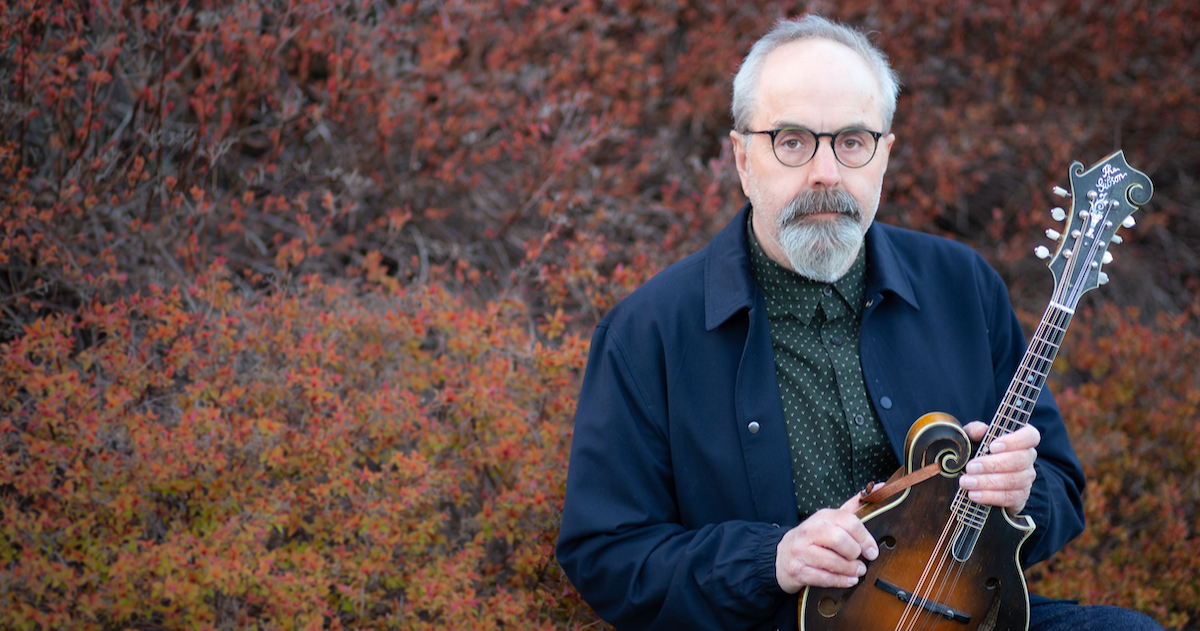
You are well known for having an antique Gibson Lloyd Loar mandolin. What do you think makes those mandolins so special?

I guess that [mandolin] was kind of the ultimate expression of Gibson mandolins. But there’s plenty of new makers and a lot of them are using that basic design. So, aesthetically and as far as the craft of the instruments, some of these builders are way better than the Gibson mandolins were to look at, but the Gibsons have 100 years of aging and playing.

I think the playing of the instrument contributes hugely to its sound. Because, if there’s a Lloyd Loar that left the factory and went into someone’s closet and never came out for 50 years, I don’t think it’s going to sound like one like mine that has been played consistently over time.

I feel fortunate to be the caretaker for this great instrument. I think for most bluegrass musicians, it’s not only the music, but it’s the tools. These vintage instruments, like the Martins from the ‘30s and ‘40s, and Gibson mandolins from the ‘20s, and old banjos, it’s just a vibe that goes along with the music and aesthetic.


Photo courtesy of John Reischman.
Kathy Kallick Honors Her Mother’s Legacy While Establishing Her Own

Kathy Kallick’s first musical influence was her mother, Dodi.

Music historian Larry Ehrlich wrote, “Dodi Kallick’s voice could be as tender as Carter Stanley, as plaintive as Piaf, or as cutting as a straight razor. It could bring sorrow to your heart or a smile to your lips.”

Although central to Chicago’s folk scene, Dodi never recorded in a studio. But an uncovered reel-to-reel of radio broadcasts inspired Kathy Kallick to follow her 2002 project, My Mother’s Voice, with an 18-track sequel. On Disc 1, Kathy invited friends to perform the songs she learned from her mother, and Dodi’s voice is heard on Disc 2. The collection’s title track, “What Are They Doing in Heaven Today,” appears on both.

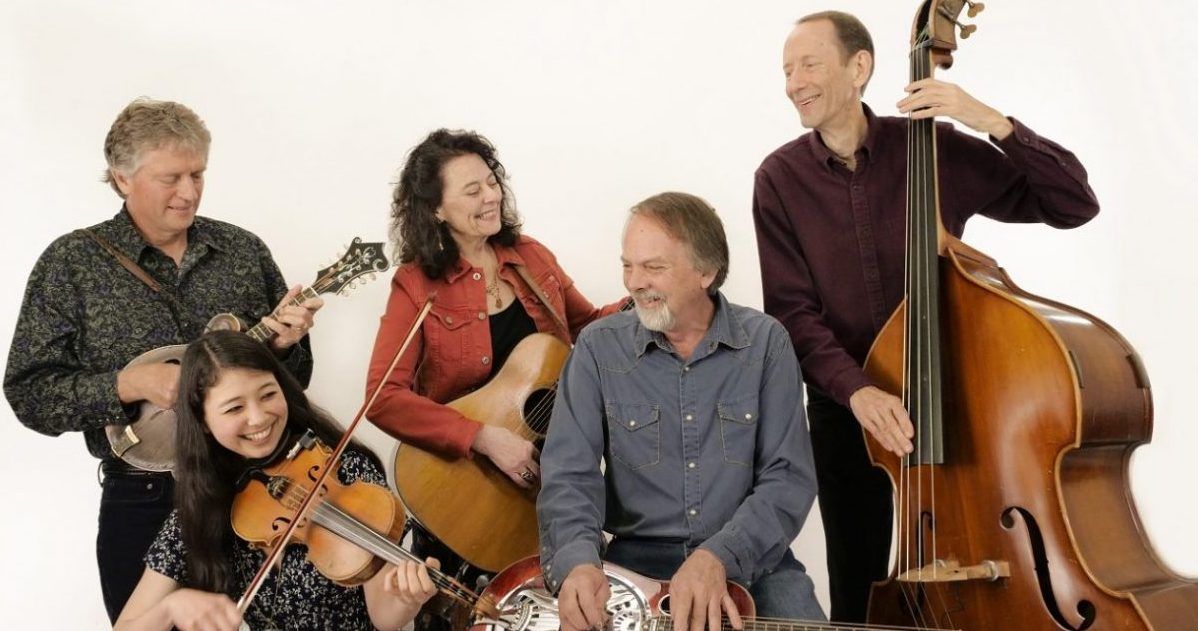
Since 1975, when Kallick began performing with Good Ol’ Persons, her voice and songwriting have been central to the Bay Area’s bluegrass and folk scene. That group not only launched a highly talented group of women into bluegrass, but it added new concepts, melodic lines and interpretations to the genre. Since that time, Kathy has released more than 20 albums, many of them filled with her original songs, and she has won awards for her children’s albums.

With the exception of a bass-player change, The Kathy Kallick Band’s current configuration has been together since 2009. They continue to record and tour, and as individuals and a band, they contributed to her new tribute to her mother.


BGS: Why have you made another tribute album to your mom after 20 years?

Kallick: My Mother’s Voice was a project that my mother was very involved in, choosing the songs, giving me the lyrics, talking about where she learned the songs. And when I got to the end of that project, she said, “but there’s still so many more songs.” And I said, “Well, Mom, maybe we’ll have volume two.”

Then these recordings were discovered a few weeks before she passed away. I couldn’t listen to them for a long time because it just made me too sad. After about three years, I started being able to listen, and they were so beautiful. And I remembered our conversation about volume two. She passed away 13 years ago. After thinking about it for years, there finally came a time when I wasn’t in the middle of a band recording or a solo recording or duet record. That was about four years ago.

How did you choose the other musicians who accompanied you?

The musicians were chosen for different reasons. I loved recording “Footprints In the Snow” with the Kathy Kallick Band, because this current band can really chomp on a bluegrass classic and do it justice. And “Footprints In the Snow” is one of the most iconic bluegrass songs to me. I definitely hear Bill Monroe’s version in my mind.

When I had the opportunity to record with Molly Tuttle, who I’ve known since she was a tiny child, I picked “Put My Little Shoes Away.” Having Molly play the clawhammer guitar gave it this oomph that was so spectacular to me. We had been at the Grass Valley Bluegrass Festival, and Molly came straight from the festival, a little frazzled, hot and sweaty and sunburned. She ran across the street, got a coffee, and came back, and we started in and came up with the way we wanted to do it. It was just so pleasing and spontaneous.


“Little Moses” is a song I loved hearing my mother sing, and I sang it with her. Inviting Cliff Perry and Laurel Bliss was a clear choice, because they’re such Carter Family specialists. Their knowledge is deep, and they really have a spectacular way of presenting the Carter Family [material]. And for the title song, “What Are They Doing in Heaven Today,” I thought about who I was going to get on that track from the first second of thinking of this album. And I would come up with different ideas – flying to Nashville, maybe somebody’s coming through town, like that. Then the pandemic happened. And the whole project was put on hold for two years.

Last year, I got together with Laurie Lewis and Suzy Thompson for our birthday lunch. And in the car on the way home, I started thinking about playing the song with those two, and it felt perfect. It was the first time the three of us ever sang together. We got together in Suzy’s backyard, all of us wearing masks, and we started playing this song. And we all started crying. It was so poignant to be together and play music with other people. And of course, that song is so moving.

I met Tristan Scroggins when he was in high school, and I just loved his playing. I loved his rhythm chop, which was so reminiscent to me of John Reischman’s rhythm chop, which to me was the heartbeat of bluegrass. “Sitting on Top of the World” is such an iconic bluegrass song, and there are so many ways to play it, and Tristan has such a wide vocabulary of styles on the mandolin.


When you were growing up, did your mother teach you about music and singing, or did you just pick it up by osmosis?

I would say it was osmosis with a couple of succinct suggestions. She did show me some things on the guitar. And my father did too. He was a classical guitar player who also played a little bit of folky stuff. My mom said to me, “If you care about the words you’re singing, then sing them so people can understand what you’re saying.” That was a big piece of advice that I have followed for my entire time of playing music. And then singing with her. I learned things by trying to match her phrasing, of course, and come up with notes that sounded nice with her notes. I only sang with her a little bit, but I started singing with her when I was about 6.

Your daughters (Juniper Waller and Riley Thompson) sing with you on this project. Have you always sung together?

Much in the way my mom never consciously groomed me to sing with her, I never did that with my kids either. Every once in a while, we would take out all the guitars and everybody would get to hold one, and Peter or I would show them a chord. But they weren’t particularly interested in it. It was kind of fun to do one time for an hour or a minute.

My older daughter has become a professional musician. She plays in a funk, R&B blues band. She is a dynamite diva on stage with her own style that is very different from mine. And after middle school rock band, our younger kid has never demonstrated any interest in playing or singing. But she definitely was up for singing “Wild Side of Life” with me, which is one that I sang with my mom. It was just delightful and surprising that it happened so easily and worked so well. They jumped right in and just nailed it. Neither of them sounds like me, they don’t sound like each other. But when the three of us blended our voices to sing in harmony on the last chorus, it was so satisfying. And so out of the blue. We’d never done anything like it before, but we may do it again.


You grew up in the folk world, where women’s voices were an integral part of the genre. In that respect, how was your transition to the national bluegrass scene?

How did I move from the urban Chicago, more egalitarian, folk world, to this southern rural white man’s world? I think the answer is, I didn’t realize what was happening quite at first.

The core of the all-women Good Ol’ Persons group had already been getting together when I was invited to join them. The Bay Area was already inclusive to women when I got here. The men were welcoming. There were other women role models. Then Good Ol’ Persons decided to go into Paul’s Saloon and play three songs and knock their eyes out, with our all-woman band – and that was a new thing. There had been one woman in this band and one woman in that band, but we had this “we’re gonna show them” kind of feeling at the time.

I loved the music, I loved the scene. At the time, I didn’t realize how uphill the path was going to be, and I didn’t realize how entrenched the misogyny was in this style of music. When we started traveling outside of the Bay Area and encountering the actual good old boys’ network, it was surprising and uncomfortable. And I realized at some point that I was a trailblazer. I hadn’t set out necessarily to be the trailblazer, but I was, because I was leading a band. That was often awkward and uncomfortable for people who ran festivals. They began to say, “Okay, there are going to be women performing. Let’s have one female-fronted band.” Festivals would balk at having Laurie Lewis’ band or Claire Lynch and my band, even though the bands are very different. “But we already have a woman.” There is still so much resistance to women having an equal role in teaching, in performing, in what gets played on the radio. These days I like to play in a mixed-gender band. It feels more like a family.

How did you your music fare during the pandemic?

The pandemic hit me hard. I stopped playing music for the most part and learned that I’m not a person who sits in a room by themselves and plays music. I tried to make myself do it, and it began to feel like having to do sit-ups. I stopped because I was afraid it was going to ruin my love of music. So, I wrote a novel instead.

How did you get started on that?

Partway through the pandemic, I’d darned all the holes in my socks and sweaters, and I thought I really needed to do something. So, I finished a novel I had started years earlier. Then I started a second novel. And that one really took hold of me. Partway through that novel. I had to stop and write a short story, which I thought would take me about till lunch, but actually took me a month. Then I went back and finished the second novel, which I feel really good about. The thing that is similar to writing songs is the way the novel began to just take over. I let the novel say where it was going, instead of feeling like I had to adhere to my original idea. That’s the same way I write songs. I let the song take the lead and tell me how it’s going to go. This is what my muse does. It lets song or story take over, and I’m not in charge anymore. I love that.


You’ve been in the bluegrass arena since 1975. What are you most proud of?

Well, there have been a number of musicians who had big starts and made a bigger splash than I did ever, and then sort of wafted away for one reason or another. You know, it’s hard to sustain a music career. It’s extra challenging for women who have children. And I weathered that. I took my first child with me everywhere, with a series of optimistic volunteers who thought going on tour with the Good Ol’ Persons would be such fun. We wore them out pretty quickly, but it worked. I feel really lucky. And also tenacious, because I have longevity, I have managed to continue to play music, to perform, to create, to be inspired. I’m not hugely successful. I’m not a household name. But I’m very proud of the place that I’ve carved out in this music. Nobody else sounds like me, and nobody else does what I do, and I feel good about it.

Do other women tell you that you have been a role model for them?

Yes! And I love that. I think about the women who were role models for me: Of course, my mom is the first one, as moms are for almost every woman. But I am just tickled to be a role model for younger women in the music world and for women my age who were trying to get to play music when people were closing them out. They saw me doing it and thought, “Okay, maybe it can be done. I’m going to hang in there and do it.”


Photo Credit: Irene Young

John Reischman’s “Salt Spring,” Tune of a New Old-Time Generation

The “bluegrass songbook,” a suitably vague though well-known concept in bluegrass and old-time circles today, is a phrase that references the collective of songs and tunes most popular and most played by the community that makes up bluegrass and old-time music. Most of the melodies included in this informal — though often gatekept and debated — canon have well established origins, from source recordings, legendary writers and composers, famous performances, and so on. Even so, it’s difficult to trace each and every Bluegrass Album Band hit or Del McCoury favorite back to the beginning, when it was first being adopted and popularized among jam circles, as fiddle tunes, by and for laypeople as much as the performing professionals. 

With material by forebears like Flatt & Scruggs (“Foggy Mountain Breakdown” to “It Ain’t Me Babe”) or Bill Monroe (“Muleskinner Blues” to “Monroe’s Hornpipe”) or the Stanley Brothers (“Ridin’ that Midnight Train” to “Little Maggie”), the Osborne Brothers, Hazel & Alice, Reno & Smiley, and on down the line, it’s not so much a question of why or how their charming, archetypical songs made it to open mics and festival parking lot jams. But in modern times, as in bluegrass days of yore, just as many new, contemporary tunes, songs, lyrics, and melodies are being translated from professional studio recordings, radio singles, and on-stage hits to sing-alongs, play-alongs, and day-to-day jam fodder. And the process by which this happens is, part and parcel, what bluegrass and old-time are all about.

How did “Rebecca” become an almost meme-level instrumental in the past fifteen years? How did Frank Wakefield know that we needed a “New Camptown Races?” How many millennial and Gen Z pickers learned “Ode to a Butterfly” or “Jessamyn’s Reel” note for note? Each modern adoption into the bluegrass songbook, into that unflappable canon, is an idiosyncratic marvel unto itself — and perhaps no modern, original instrumental tune encapsulates this phenomenon better than John Reischman’s “Salt Spring.”

Being a picker myself, I first learned “Salt Spring” in Nashville in perhaps 2012 or 2013, taught to me by fiddlers who encountered the melody from John himself — and through the bluegrass and old-time camp scene in which he’s pretty much a ubiquitous figure, especially on the West Coast, where he lives and grew up. At that point, the song was regarded as a Colorado-grass staple, transplanted east by a regional genre phenotype that celebrates and capitalizes on timeless, sometimes ancient-sounding aesthetics played with chamber music-level intricacies and techniques. The forlorn, winsome — though simple — chord progression in the A part give way to a longing, pensive, and momentum-building B part — and no matter how “Salt Spring” is rendered, as an “everyone play at once” old-time jam song, or a thoughtful chamber-grass slow burn built to a raucous, defiant end, or as a no-holds-barred SPBGMA style MASH number, it’s a chameleonic composition, allowing itself to fit into every single context in which it’s applied. 

“Salt Spring” is truly the instrumental song of the post-Nickel Creek, post-Crooked Still, post-grass generation. As string band genre aesthetics dissolve in the global music marketplace, songs like “Salt Spring” typify this generation’s longing for music that feels honest, true, and real as much as it’s approachable, whimsical, and joyful; songs that celebrate the traditions that became the bedrock of these musics, without being predicated upon militaristic and arbitrary rules to “protect” or propagate those traditions. 

And, though modest to a fault, unassuming, and generally pretty subdued as a person and performer, Reischman has felt this phenomena metamorphosing his composition all along. With his first recording of “Salt Spring” available digitally and writ large, he’s communicating to everyone who loves the song that yes, he knows what it means to us, what it’s become, and what it could grow into still. It’s no wonder then, that when putting together the roster for this new recording and iteration of the track, that he didn’t simply call on his band, the Jaybirds, but he looked to the very generation that’s chosen “Salt Spring” as its own with Molly Tuttle on guitar, Alex Hargreaves on fiddle, Allison de Groot on clawhammer banjo, and Max Schwartz on bass.

A veteran of The Good Ol’ Persons, the Tony Rice Unit, and many other seminal acts of his own generation and time, Reischman knows firsthand the value of cross-generational knowledge sharing and his new album, New Time & Old Acoustic demonstrates this ethos in both conscious and subliminal ways. “Salt Spring” is a perfect distillation of these values and it’s truly fitting, as the tune will forever be enshrined and ensconced in the indelible, if not somewhat squirrelly and subjective, bluegrass and old-time songbook and canon.

(Editor’s note: New Time & Old Acoustic is available for pre-order now.)


Photo courtesy of the artist.