John Reischman: Between the Salish Sea and Salt Spring

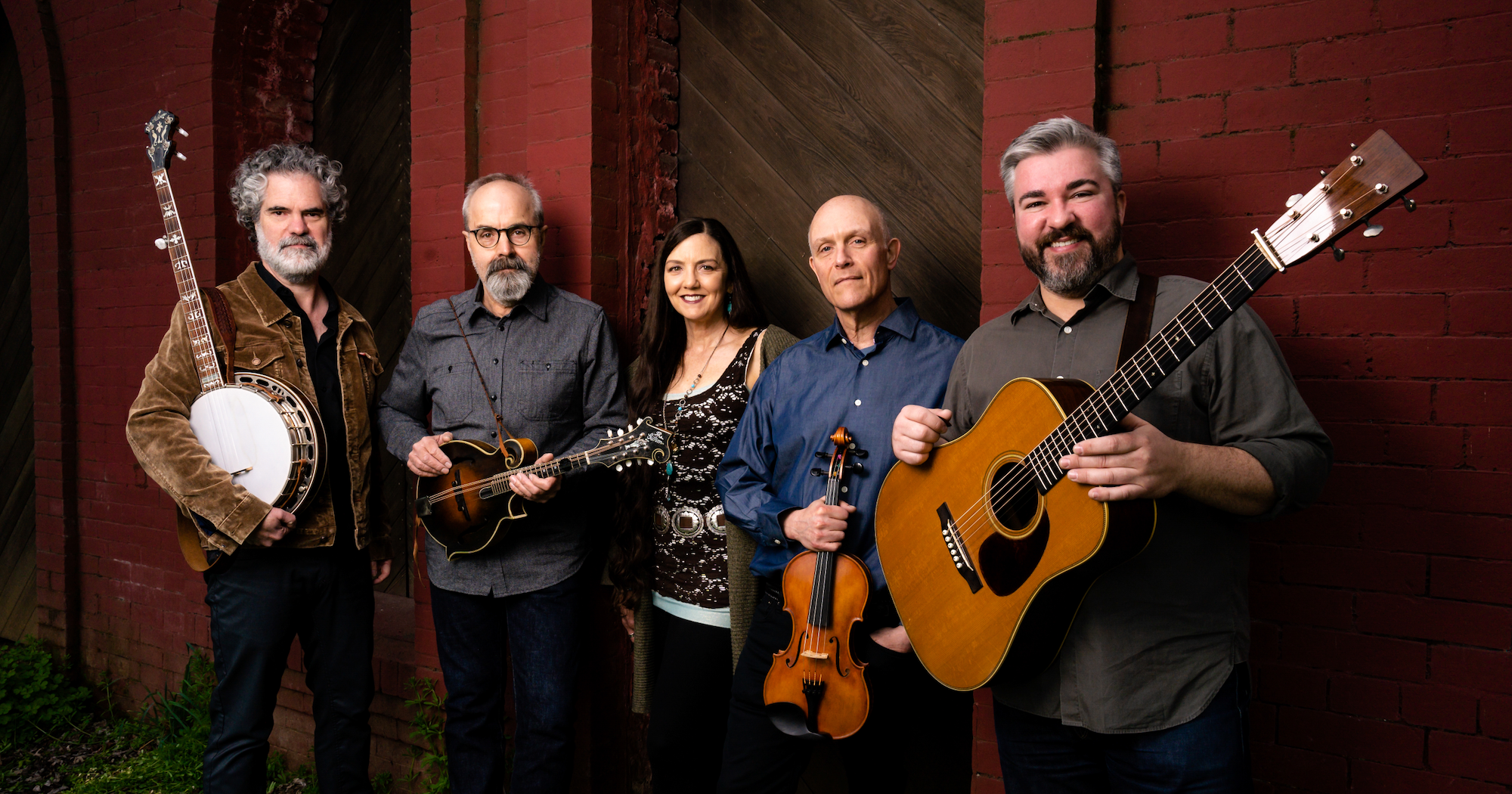
There are no U.S./Canada border wars when it comes to John Reischman. The revered mandolin master was born in Northern California but has lived in British Columbia since the early 1990s. His longtime band, the Jaybirds, are a quartet that includes two members who are also based in British Columbia (bassist/vocalist Trisha Gagnon and banjoist Nick Hornbuckle) and two who reside in America (fiddler Greg Spatz lives in Eastern Washington and guitarist/vocalist Patrick Sauber is from Southern California).

Their latest album, The Salish Sea, refers to the body of water between Vancouver Island and the British Columbia mainland. The record is their first since 2017’s On That Other Green Shore along with being the first to feature “new” guitarist Sauber on the entire album. The song “The Salish Sea” not only serves as the album’s title, but also is part of an original “Bluegrass Concerto” that Reischman was commissioned to create for FreshGrass in 2024. The honor is just one example in a long line of accolades for Reischman, who began his career in the Bay Area bluegrass/folk scene of the 1970s (including a stretch with the Tony Rice Unit) before moving to Canada, where he started the Jaybirds as well as performing solo and in other groupings.

In recent years, Reischman has seen his song “Salt Spring” become something of a modern bluegrass classic. He spoke with the BGS from his home in Vancouver about “Salt Spring” as well as The Salish Sea, his famous Lloyd Loar mandolin, and how he got into bluegrass music.

What was the process of putting the new album together?

John Reischman: There was one venue in Washington State where we had a residency. It was in the fall, in a beautiful spot. It was just ideal. So we took the extra day, worked up like six new tunes, and then started performing them right away. I guess this was October of ‘23.

And then you recorded the album in Vancouver?

In December of ‘23, I wanted the band to check out the studio here in Vancouver, where we ended up ultimately recording. I just want to make sure everybody was cool with it. I knew I liked it, because I had used it for my solo record, New Time & Old Acoustic. They all liked it. At the end of any tour we had that was close to Vancouver in 2024, I’d book a day or two in the studio, and we’d go record two or three or four songs. We were able to perform all this material mostly before we recorded it. … And it was great, because we’d be warmed up from the tour and we’d go in and track some tunes.

This album was the first in a while, and also the first that Patrick Sauber was fully on it.

Right, On That Other Green Shore came out in 2017. That was kind of the tail end of our time with [guitarist] Jim Nunally being a band member. He was exploring other things and decided he’d leave the band. We had a few more tracks to do… and we had some dates on the calendar.

I thought of Patrick immediately, because I’d known him for many years and I thought he’d be good. So he signed on for a tour and then another tour and it was just like, “This works great.” We asked him to join and he immediately said yes. He was a great fit.

How did the Jaybirds come together in the first place?

I didn’t really set out to have a band, except for the fact that I had a solo record called Up in the Woods. There was a local festival, so I put the band together to help promote the record. Seemed like a good idea. And I liked playing with all those people and it just continued on.

It’s called John Reischman and the Jaybirds, because I conceived of it. My name was probably the most well known at the time, but I wanted to be integrated into a bluegrass band. People present stuff, and I almost always accept it. Mostly it’s a pretty democratic presentation, I think. That’s what I like. It’s not Gladys Knight & the Pips.

Can you talk about the title track and how it’s also part of a larger project?

I had been asked to write what they call a “Bluegrass Concerto” by the East Coast festival FreshGrass, and I came up with these three tunes that work together. The first tune was the first movement, which ultimately was called “The Salish Sea.” I thought this will be my contribution to the new Jaybirds record, because they were involved with the performance of the Concerto.

We performed it [at FreshGrass in 2024] and I really liked the idea of having two mandolins and I’ve always loved two fiddles. I knew Darol Anger was going to there, so I asked him if he’d play twin fiddles on it. And then Sharon Gilchrist is a good friend and great mandolinist; we’ve played a lot together, and I asked her to play a mandolin on two of the three pieces.

I’ve got to acknowledge David Grisman, because the music is influenced by his “Dawg Music.” It’s also the sound that I initially heard on his first solo record, The David Grisman Rounder Record. He incorporated harmony mandolin on a lot of it.

It must have been very inspiring and gratifying to receive this commission.

You know, I’ve written a lot of tunes and a lot of folks have learned my tunes, which is really gratifying. But to have been commissioned to write this and have the confidence of this great festival and organization, yeah it was.

I had plenty of time to work on it and the time that it mostly came together was when I think my wife was visiting family. I had the house to myself. That first piece, in particular, really developed over a period of time. The second one [“The Family’s Farewell”], I came up with the A part pretty quickly and it took a while to get a bridge for it.

The third part [“The Little River Ramble”] was similar. … The thing about the concerto format is the third movement typically has an extended solo section and it’s often a bender where it’s just the featured soloist playing solo without any accompaniment. But I wasn’t really comfortable so much with that. I thought, I’ll just have it break down and I’ll solo all through there but have it build back up.

I’m really happy with the response it has gotten. Even playing it just as the five-piece band, I think the band sounds great on it. It’s only like icing on the cake when the twin fiddles and the twin mandolins are there.

And this spring, you’re going to record the entire concerto?

At the end of March, we’re going to be on tour on the East Coast and the FreshGrass Festival has a recording studio. They offered to make the studio available, so we’re going to record that just as we performed it, with Darol and Sharon joining in. That will be part of a solo record, even though I’m using those musicians. And I have other sessions planned. I’ve done one session that will add to the whole thing. Those three tunes of the concerto will just be one component of the new recording.

“Salt Spring,” one of your older songs, has become a highly popular instrumental now in the bluegrass world. How much of a pleasant surprise has that been?

It’s kind of remarkable to me that it’s as popular as it is. I mean, I’m not complaining. It’s great. … But it’s interesting how it’s just traveled all over and people think it’s just a traditional tune in some circles. They have no idea that it was composed by me. That’s cool, too.

The Jaybirds recorded it and it came out on a CD in 2001. We were at a music camp with some folks from Colorado and they learned it. I think that’s largely the beginning of it getting circulated among other people – where they took it back to Colorado. They’re the “patient zero,” I guess.

I know that a certain generation of Berklee students were playing it a lot, and maybe a bit later – maybe 10 years later. It’s pretty cool having people play your tune when you’re not there. That CD was never available digitally until recently, but we made a video of it around 2011… and that was the source, I think, for a lot of people learning it.

And then you recorded it again with Molly Tuttle, Alex Hargreaves, Max Schwartz, and Allison de Groot on your 2021 solo album New Time & Old Acoustic.

I didn’t have all the material when I started that whole project, but I knew I wanted to re-record “Salt Spring” with some of these younger musicians who had grown up playing it.

What do you remember about writing it? And why do you think so many musicians have gravitated to playing it?

I was on Salt Spring Island [in British Columbia] staying with some friends and they had a little old turn-of-the-century Martin small-body guitar. I was just playing the guitar and I was playing out of a D chord shape, and the A part of the tune just kind of took shape under my fingers. It was memorable enough that I don’t think I had to record it to remember it. The B part was just this little phrase I would play on the mandolin, just noodling around … so I just kind of stuck it on there and it worked pretty well.

I think the thing about the tune is the basic melody is very simple, but the way I played on the mandolin, the technique I use, is not quite cross-picking. But it falls into a right-hand pattern that sort of mimics the way the frailing banjo is played with that “bum-ditty, bum-ditty, down-down up, down-down up” pick stroke. So, these extra “down ups” are drone notes and that just kind of enhance the whole overall effect. Because of that, it lays out really nicely on the banjo. Then on the fiddle, you can add drones and add to it that way. And on the guitar also, you can fall into that kind of “bum-ditty” pattern as well.

I think you can learn the tune pretty easily. It’s not super challenging like some fiddle tunes where they’re very detailed in the melody. It’s pretty straight and so I think that’s partly why people gravitate towards it.

You grew up in Northern California. How did you get interested and involved in music, specifically bluegrass music?

Have you heard of a guitar player named Robben Ford? He grew up in the same town where I did in Northern California. He was in a high school band with my neighbors. I must have been 12 or 13. They were rehearsing on a patio and I went over to listen. I was interested in music and I heard them play the Freddie King tune “Hideaway,” which Eric Clapton recorded on the John Mayall & the Blues Breakers record. My brother Steve had that record. I recognized the tune and I thought, “What? This is impossible. This sounds as good as the record!”

From then on, I was just focused on trying to play the guitar. I had taken guitar lessons prior to that, but it didn’t really work. But there were guitars around the house. So that was the thing that really sparked my interest in learning to play. But I was open to all kinds of music. I’d have access to the PBS station KQED and they’d often air Pete Seeger’s Rainbow Quest, where he’d have different folk musicians, bluegrass musicians, old-time musicians. I thought, “Oh, this is cool!” And then the mainstream presentation of bluegrass with The Beverly Hillbillies, having Flatt & Scruggs on it, and the Dillards and the Country Boys playing on The Andy Griffith Show.

At some point, I had access to a mandolin, which I associated [with] bluegrass music, and taught myself to play it. I tuned it to an open chord for a long time, like a banjo, which was incorrect. And I didn’t use a pick. But eventually I got things squared away.

I discovered the John Hartford Aereo-Plain record. I saw them on TV as well. That was very inspiring. Then I discovered Norman Blake and Vassar Clements. I come to find out they had their own records. … That first Norman Blake record, I couldn’t believe it. I just flipped over that, and I thought, “This is so great!” And I’d heard Doc Watson at that point, so I just got really interested in it, and focused on that music, primarily.

So, was the Good Ol’ Persons your first significant band?

Yeah, it was the first real pro band I was ever in, and I was a fan of theirs before that. I [had] lived in San Francisco for a short while and saw their original lineup, which included all women. And it was exciting to get the opportunity to play with these folks. Because I was living near Eugene, Oregon, and I was just playing the mandolin all the time – a lot with my brother, Steve – but I wasn’t in a band, and I was working on a farm, just part-time. And a friend from the Oregon bluegrass scene had joined them and they needed a mandolin player. He said, “I know a guy.”

That placed me in the Bay Area, which was a great scene. There were lots of good bluegrass bands. And the Grisman Quintet was there. … But the thing that set Good Ol’ Persons apart was their original material, because Kathy [Kallick] is a fantastic songwriter. And Paul Shelasky, who was in the band, also wrote great songs. That opened the door for me to try and write tunes – because, “Oh, these guys write tunes. I’ll try it.” I wrote a few and people liked them. That just gave me encouragement to keep at it, which I have done.

So consequently, when Grisman and Tony Rice parted ways, Tony was aware of me. He’d heard me play at the local bar. He wanted to put a band together and needed a mandolin player. So, I went to the audition and he hired me.

You are well known for having an antique Gibson Lloyd Loar mandolin. What do you think makes those mandolins so special?

I guess that [mandolin] was kind of the ultimate expression of Gibson mandolins. But there’s plenty of new makers and a lot of them are using that basic design. So, aesthetically and as far as the craft of the instruments, some of these builders are way better than the Gibson mandolins were to look at, but the Gibsons have 100 years of aging and playing.

I think the playing of the instrument contributes hugely to its sound. Because, if there’s a Lloyd Loar that left the factory and went into someone’s closet and never came out for 50 years, I don’t think it’s going to sound like one like mine that has been played consistently over time.

I feel fortunate to be the caretaker for this great instrument. I think for most bluegrass musicians, it’s not only the music, but it’s the tools. These vintage instruments, like the Martins from the ‘30s and ‘40s, and Gibson mandolins from the ‘20s, and old banjos, it’s just a vibe that goes along with the music and aesthetic.


Photo courtesy of John Reischman.
Laurie Lewis Chooses Tenacity Over Hope on New Album, ‘Trees’

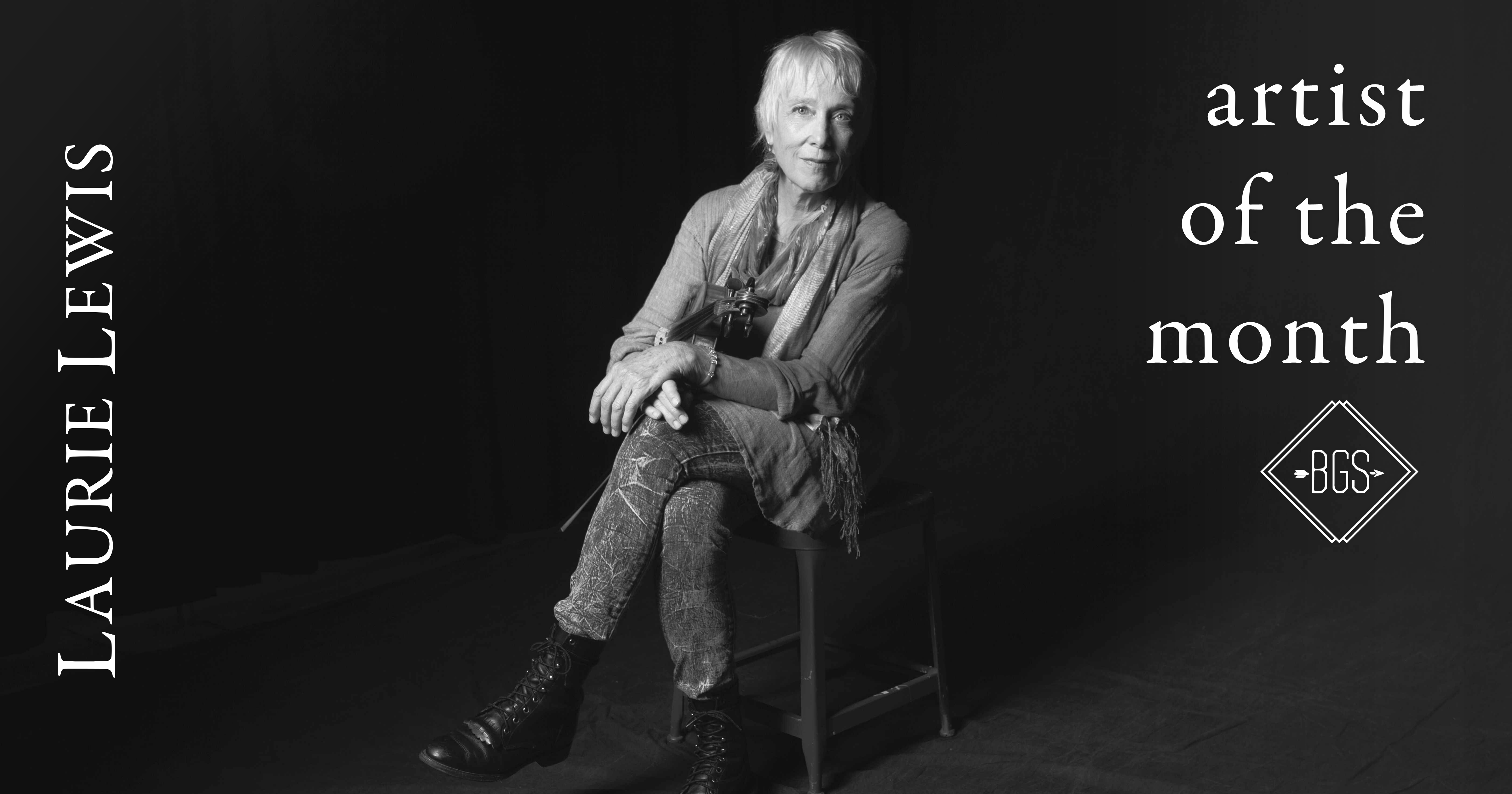
Counting John Prine, Linda Ronstadt, and Wendell Berry among her fans, Laurie Lewis is arguably one of the most diversely influential figures in American roots music culture. She’s a songwriter, fiddler, frontwoman, performer, producer, teacher, and mentor. She’s been nominated for multiple Grammy awards and graced the stage at the Grand Ole Opry. The International Bluegrass Music Association has twice named Lewis Female Vocalist of the Year, and the association’s former executive director, Dan Hays, once called her “one of the preeminent bluegrass and Americana artists of our time and one of the top five female artists of the last 30 years.”

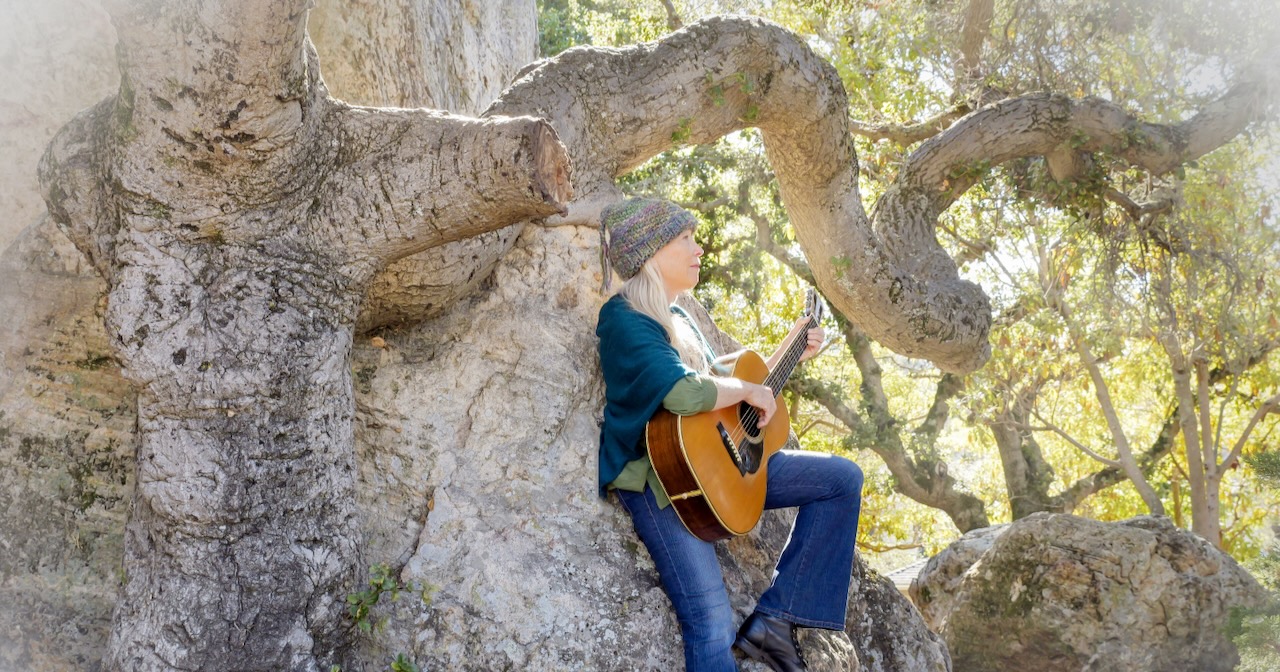
Lewis’s latest release — her 24th full-length record — pairs the artist’s musical mastery with her willingness and courage to face the full spectrum of life’s experiences. From personal grief to environmental despair, Lewis does not shield her eyes from difficult truths. In many ways, the album pays homage to its namesake, trees. When asked why, Lewis notes their tenacity. When something is tenacious, it grips firmly, with determination and persistence. Even in the face of immense challenge and uncertainty, trees abide in their purpose and work — and so does Laurie Lewis.

TREES is a long-play collection of songs that tenderly, earnestly, and sometimes joyfully explore what it means to exist on a vulnerable planet through times of loss and love. Supported by a band of masterful collaborators — Haselden Ciaccio (bass, vocals), Brandon Godman (fiddle, vocals), Patrick Sauber (banjo, vocals), George Guthrie (banjo, vocals, guitar), Tom Rozum (vocals, cover art), Andrew Marlin (mandolin), Sam Reider (accordion), and Nina Gerber (guitar) — Lewis dives into the deep end of sorrow and change with tenderness, authenticity, and Americana storytelling prowess.

In the album’s liner notes, Lewis shares that TREES is the first project she’s made in nearly 30 years without the mandolin accompaniment of her partner Tom Rozum, who recently developed Parkinson’s disease. “This collection represents a difficult transition in my musical life,” Lewis shares. “Think of it as ‘Music Minus One.’”

From bright bluegrass tracks like “Just a Little Ways Down the Road” to the somber invocations of “Enough” and “The Banks Are Covered in Blue,” this album is intricate and complex, much like a healthy forest. The album brings us “Quaking Aspen,” showcasing Lewis’s characteristic lyrical fiddle style, and title track “Trees,” an a cappella bluegrass-gospel ballad that gently yet hauntingly denounces the violence of industrial civilization.

Always looking to the natural world for strength and guidance, TREES is about love — for life, for land, and for people. But love isn’t a purely hopeful or romantic thing; it encompasses both loss and pain, and Lewis gracefully and vulnerably reckons with both on this album.

You just returned from a string of shows playing songs from the new album. Where did you go?

Laurie Lewis: My string of shows was actually mostly a river trip. So I did play every night, but I was mostly spending the days in the canyons… On the Yampa River, which starts in Colorado and goes into Utah and flows into the Green River. It’s a really, really beautiful canyon.

I love that. When you were playing shows, how did it feel to share these new songs with the world?

I’ve been doing a lot of songs from the new album, yeah, and I’m really enjoying that. But also, in any of our sets with my band, we pull out the old ones, too.

Speaking of the older stuff, I listened to your first solo record, Restless Rambling Heart, directly after listening to your newest record from start to finish. The first thing I noticed was that the tempo has downshifted quite a bit from that first release. Does TREES feel more introspective to you than other records you’ve made?

Oh yeah, it definitely does — especially compared to Restless Rambling Heart.

You’ve collaborated with the great poet, writer, and activist Wendell Berry — he asked you to set some of his poems to music. What was that experience like?

It was really fantastic. I’m such a fan of Wendell Berry’s writing. It came about because I was putting out a songbook and the publisher said, “Well, you need to get some blurbs for the back.” I happened to be at a writing workshop and one of the writers there said, “Hey, do you know Wendell Berry?” And I said no, and he said, “Well, he’s a big fan of yours.” [He had been] at a writing conference with Wendell and Wendell asked if he knew me and, you know, small world sort of thing.

So I thought, Well, how do I get in touch with him? Maybe he could write me a blurb, who knows? But [Wendell] famously doesn’t do e-mail or anything like that, so I got his mailing address and wrote him a long-hand letter on one of those yellow legal pads, you know, and I sent it off to him. And lo and behold, he wrote back. He said, “Well, I really don’t know anything about music, and my wife says I can’t carry a tune in a bucket, so hadn’t I better say no to writing a blurb?” And I thought, Well… that’s a question, so it deserves to be answered. So I wrote back and said, “Of course you should say yes, because really, the only prerequisite for saying you like something is that you actually like it. It doesn’t matter that you don’t have a background in music. It’s a personal response.”

And he said, “Well yeah, okay. I’ve been telling people I’m not writing blurbs anymore because too many people ask me, but didn’t I write something in that first letter that you could take out [and use]?” And there was this really nice thing…

So we just ended up having this back-and-forth conversation. He sent me some books. I sent him some CDs. I finally got a chance to meet him, but eventually I just felt like this is a person who is so conscientious, he’s going to respond to whatever I write. And he’s so busy, and he’s got so much stuff to do, I don’t want to bother him anymore. So I kind of dropped the correspondence. I wish I hadn’t, but it felt like the right thing to do. I just didn’t want to be that pestering voice that he felt he had to write back to.

Did he get back in touch with you at some point? Is that how his request came to light?

In the midst of all our back and forth, he sent me a poem in the mail and asked if I wouldn’t mind terribly trying to put it to music. So I did. That was “Burley Coulter’s Song for Kate Helen Branch.” It was quite a puzzle, because it’s not a standard rhyme scheme or anything. I had to make it loop around like a little crooked fiddle tune to make it really work.

Trees aren’t just the theme of this album — they’re growing all over your creative imprint. Your label is called Spruce and Maple Music, for example. What is it about trees specifically that inspires you?

I love the tenacity of trees — the way they just wait ‘til you get out of the way and then come back. … There are too many humans on the earth. We take up way too much space and way too many resources and we’re crowding everybody else out. And by “everybody else” I mean all the animals and plants and everything that also shares our earth. I just feel that, you know, trees are these beneficent beings that just wait and take their time and come back whenever they’re given a chance. They’re responsible for the oxygen we breathe and for taking in the CO2 we release. They’re sort of purifying everything. So it makes me feel very hopeful… If we just get out of the way a little bit, trees can come in and help set the planet right again.

Speaking of trees, the title track on this album is written from such a unique perspective. You literally embody the voice of the trees. How did this idea come about? Had you written from the perspective of the natural world before?

Well actually, “The Maple’s Lament” … I think that was the first time I tried to embody a tree. But I’ve done a few songs like that since. “American Chestnuts,” from my Skippin’ and Flyin’ album is from the voice of the American chestnut trees, which were the main tree along the Appalachian Mountains before the Chinese chestnut blight.

Have you read The Overstory by Richard Powers?

You know, I have, and I thought, Well, this is my song! [Laughs] But I wasn’t inspired by the book.

I personally take comfort in the knowledge that the world will go on spinning without us, despite how powerful we imagine ourselves to be. What sustains you as a sensitive person who feels the weight of what’s happening in and to the world? What carries you through?

Well, that’s that hope – [in] the other beings on the earth, their ability to repair the damage we’re doing. But I don’t hold out a lot of hope for human beings to rein in our excesses. I just don’t. I unfortunately do not see that happening in a timely enough manner to prevent, for instance, desertification of much of the earth’s crust. I’ve never said this stuff in an interview before, but yeah– I do not hold out a lot of hope.

I really appreciate you saying that. I feel like we’re often pressured to feel hopeful, but sometimes it feels more important to just be present with our grief about what’s happening to the world. Where did your deep relationship with and love for the natural world begin?

Oh boy, well, lots and lots of places. From ages three to eight, I lived in Ann Arbor, Michigan, in this new subdivision a block from the country. I loved to ramble in the woods and just see the farms and stuff like that. When my family [moved to] Berkeley, California, it was really a shock for me, and I have to say, Tilden Park probably saved my life. It’s a big regional park that’s up over at the top of the Berkeley Hills. It’s a huge park — you could get lost in it for days. Being able to take the bus to the top of the hill and disappear into Tilden Park when I was a kid was the best thing ever, and it really helped me through a lot. So I would say Tilden was maybe the first place where I really sought refuge in the natural world.

In addition to environmental grief, you’ve spoken about the role personal grief played in the creation of this album, and the presence of these feelings is very tangible throughout. Has some part of you had to practice becoming more vulnerable as an artist over time, or did the process of sharing your pain through your songwriting come naturally?

I have been accused throughout my career of writing songs that are a little bit too easy to figure out, you know, where they’re from. They’re personal songs — people have noted that. [But] maybe they’re putting stuff in them that’s not actually there, and I believe that to be the case on some of the stuff. Writing has always been my best source of communication with the world and I think I’ve always just written from an emotional place. If my songs are deeper now, it’s because events in life are a lot harder when you’re 73 than when you’re 23 or 33 or 43.

One of the more uncommon forms of grief is the grief over the loss of one’s own voice. A few years ago, you lost your singing voice for six months. What was that experience like for you, as someone who’s spent so much of your life using your voice to connect with the world?

It was terrible. It was paresis, [so] the right side of my neck muscles were paralyzed, and I couldn’t move my larynx on the right side. It made singing very, very difficult, until it got to a point where my voice just quit. And I thought, I’m not gonna sing anymore. It took about six months to recover, and it hasn’t completely recovered. My voice is different now.

It was a very difficult time. I went to many doctors, and one said, “Well, you have about a 50/50 chance of getting your voice back.” And I’m going, “Those odds are just not good, you know? It could happen or not — it’s a coin toss.” That freaked me out.

But some amazing things happened in that time. I have an annual gig, the concert I do at the Freight & Salvage here in Berkeley, my hometown, over Thanksgiving weekend. When I had no voice, I didn’t want to give up my night, so I asked my friends to come and sing my songs. I put together a folder of tons of songs and nobody picked the same song. It was amazing. It was the most incredible healing night of music for me. I mean, it was really the best Laurie Lewis show ever and I never opened my mouth except to speak a little bit. It was really lovely. Out of anything, I think that helped me get my voice back.

I’m honestly tearing up a little hearing you talk about that. It really speaks to the power of community. Speaking of community and audiences, who do you write music for? When you’re writing a song or recording an album, do you have a particular listener or audience in mind?

Just myself, really. It’s very selfish. [Laughs] I mean, I just write for myself, what I’m feeling or what I’m observing. … That’s always the starting point. If I think up a story, it’s because I want to tell the story, you know? I want to hear the story. If it’s an emotional thing, it’s because it’s something I’m dealing with or going through. But after the initial thought, I try and use my craft to make the songs better so that somebody can actually understand what I’m singing about and talking about in my music. And that’s really the most gratifying thing, when a listener really responds. It’s just great.

You’ve described your music, particularly on this album, as a way of interpreting the voices of the landscapes you adore. How do you experience or receive the voices of the natural world? How did you learn to listen for these much-needed voices?

I’ve always been a fairly quiet person. I listen more than I speak. I’ve had to actually learn to speak, you know, out loud. But I think I just have an observational approach to the world. I would rather listen and observe people talking to me than jump in and add my own spin or make a lot of noise myself. The same thing is true in my relationship with the natural world. I’m an avid walker and I find that walking and listening and looking in the natural world is my favorite thing to do.

Do you have a favorite song on the album?

I like a lot of them actually. You know, they’re different moods. Speaking of walking, “Just a Little Ways Down the Road” I find to be just so fun to sing and play. And of course, “Enough.” It’s heart-wrenching for me. It’s still hard for me to play that song in public. It requires a really different audience. It’s not a festival song. It’s much quieter, so I hold it back a lot. I just love the sound of the instruments on that cut. But I really like them all, from “Just a Little Ways Down the Road” to “Rock the Pain Away.”

It depends on the mood too. If I talk about John Prine and I sing that song [“Why’d You Have to Break My Heart?”], that really goes over well with audiences. I truly appreciate that people connect with that song.

Do you have a favorite tree?

[Laughs] No. I do not have a favorite tree.

Fair enough. [Laughs]

The California buckeye – I think it’s the prettiest little tree ever. But then I see another, you know? I was just out in Colorado among the junipers. That was the main tree alongside the river, junipers and cottonwoods. Every one of those trees was astoundingly beautiful – and so tenacious.

Is there somewhere special close to home where you’ve been going recently to be with the trees?

Well, yes. I stick around home quite a bit, because I have a lot of caregiving to do with my partner. We had to cut down a tree in our yard a couple of years ago and I was very, very sad about cutting down this great big old blackwood acacia. But we had to do it – it was gonna fall over and wreak havoc. But it cleared the way for me to view these two enormous birch trees that are like four-stories high in the neighbors’ yard. Those two trees are just remarkable, through all the seasons. They’re so graceful, and they change so much. I’ve been enjoying those trees a lot from the kitchen.

And Tilden Park is still my go-to. It’s five minutes up the road, so I can get out and walk amongst the oaks and the laurels and, unfortunately, eucalyptus, which is an invasive fire-hazard tree around here, but they’re still beautiful.

It’s so special that you still get to spend time in the same place that meant so much to you as a kid. There’s really so much we could talk about, but is there anything else you’d like to share about the album?

I did it mostly with a very small group of fantastic musicians – my bandmates Hasee Ciaccio on bass, Brandon Godman on fiddle, Patrick Sauber on banjo, and then George Guthrie also on banjo and some guitar. It’s just been really great working with these wonderful people. What they bring to the songs and how they help shape the music, they really are part of the fabric of what makes this album what it is, and it feels important to me to share that.


Photo Credit: Irene Young

A Role Model and Mentor, Laurie Lewis Still Seeks Out Bluegrass Masters (Part 2 of 2)

Laurie Lewis’ new album, and Laurie Lewis, is as much a tribute to her strong relationships as it is to her musical talents. Featuring old friends like Kathy Kallick, Todd Phillips, and Tom Rozum, and younger collaborators like Tatiana Hargreaves, Molly Tuttle, and Leah Wollenberg, her embrace of great friends and great music is on full display. In the second half of our conversation, the IBMA Award-winning artist talks about her history in the Bay Area, her aspirations and challenges, and the things that give her joy.

Editor’s Note: Read part one of our BGS Artist of the Month interview with Laurie Lewis.

BGS: Years ago, you and Kathy Kallick gave bluegrass a female voice. Were you conscious of breaking barriers at the time? And are you aware of what a model you are to women our age?

I appreciate that in hindsight. In the moment, we were just trying to make the best music we could make together, and we were both in a musical community in the Bay Area that didn’t have the barriers that the outside world had for women in bluegrass. We were doing what we wanted to do, what was fun for us. And not thinking that it was the most special thing or groundbreaking or ceiling-shattering stuff.

It was when I started performing more outside the Bay Area that I began to realize that what we had been doing was unusual. But at that point, I was just headstrong and I was just going to do what I wanted to do and not be stopped. I had disdain for festivals that would only book one girl bandleader at a festival, while they would book 12 male bandleaders at a festival. It pissed me off, but it didn’t stop me. And things are still a little bit like that — it’s amazing how slowly things change.

Did you set out to mentor young women?

Life for me just sort of unfolds, and I have to say I don’t set out to do these things in advance. I didn’t decide, “Now that I’m a wise older woman…” to mentor younger people. What actually started it was when younger people started showing up at music camps. I was a little afraid of that, because most music camps I had been doing were with adults. And I was a little afraid of my ability to relate to and coach young people.

When I was first asked to teach at a fiddle camp specifically for young people, I was sort of daunted by it. But the relationships that grew out of that camp have been incredibly important to me. Tatiana was there — she also went to Bluegrass at the Beach when she was like seven, that’s when we met. And Emily Mann, who wrote one of the songs I sang with Molly, was a preteen at that camp.

It has been a thrill to watch them blossom. It has been so gratifying to me. I don’t have children, and that’s a choice on my part, but I really appreciate them. I really enjoy hanging out with them and being able to have them in my life. I didn’t decide to focus on young women, but I suppose just because I am a woman, that has happened. People want role models – to see someone who’s like them. I am more like a young woman than I am like a teenage boy!

Any comments about being a role model?

Well, I feel very, very grateful that that’s happened. I’m really just trying to do the best I can do and play what’s in my heart and express myself in the best way I can, which seems to be through music. I am very gratified that people see me as a role model. I have a feeling of responsibility about that — so I better not fuck up.

Why is teaching important to you?

I get very excited teaching about things that excite me. Music excites me, and I want to spread the gospel. I am evangelistic about things like Chubby Wise’s fiddle playing, and how his solos are the bedrock of bluegrass fiddling. Singing harmonies, and how to work on making a vocal blend, are is endlessly fascinating to me, so I like a chance to talk about it and explore it with other people.

It also helps me, because when I am teaching I go back to the masters and I listen again to things maybe I haven’t listened to in 10 years. I always hear new things and I always learn myself. It keeps the music fresh for me in that way. It’s not just a one-way street. Teaching’s definitely a two-way street.

Do you want to talk about your shyness? You’ve said you are incredibly shy, and yet when you are on stage you fill auditoriums with your presence and your energy. How does that work?

I’ve certainly conquered a lot of my shyness. Shyness is really fear-based. You have to learn to face your fears. And in many, many instances, by facing them they just melt away. They are like a wraith. They just go away. I have learned that over the years. I used to be afraid to talk on the phone. It was so hard for me to call people up and just be a regular person on the phone and have a one-on-one conversation. I made myself do it. I made myself get on stage. I made myself open up to an audience. Sometimes it’s easier to open up to an audience than it is to open up to three people in the room with you. Strength in numbers when it comes to shyness.

I was really shy — and I’m not so shy any more. I still very seldom will talk to strangers. I told Tom yesterday that I was on a hike, and I met this young man and we talked a whole lot (this guy was named after Superman’s father, Jor-El). Tom said, “How did you start talking to him?” And I said, “I don’t know, it was a beautiful day….” and Tom said, “This is so unlike you.” It is unlike me that I would talk to a stranger, but we had a very great conversation. It turns out we were both born in Long Beach, we have a lot in common. … I’m still breaking down my barriers. By the time I’m 90 I’ll be talking to anybody and everybody. You won’t be able to shut me up.

How is today feeling for you? You have this great new album – and the world is upside down.

It’s frustrating, but — it’s just my own little personal problem. It’s really too bad, but so many people are suffering so much right now. I don’t have it in me to be all upset about it being a bad time for me. The album will still be here, the music will still be here when the virus has run its course. The virus is not going to kill my music.

How are you keeping your spirits up?

I go up into the hills and I walk. And right now it’s springtime, it is so beautiful. The world is just so gorgeous. There are wildflowers everywhere. If you can get out into nature, it is the most healing balm that I know of, and that’s what works for me. It makes the human problems seem so small, and it connects me to the universe. It takes me outside of myself.

What’s next for you?

I’m loving playing with the current Right Hands configuration: Brandon Godman on fiddle, Patrick Sauber on banjo and Haselden Ciaccio on bass (along with Tom). We’ve been planning a new album. We’ve got so many things we’re cooking up: new songs and old stuff that we’ve been doing. I feel like we need to have a record of how we sound together.

Do you have a special goal, something that you want to achieve that you haven’t done before? 

I would really love it if other people would sing some of my songs and make them part of the folk tradition. That would thrill me more than anything. I would like to get interviewed by Terry Gross. That would be pretty great! Of course, because I’ve been doing this for so long I would like to get broader recognition, but I’m fine with things the way they are. But mostly I’m just very, very grateful that I get to do what I want to do. I can put together a life out of it and I can keep playing. I’m in my 70th year. I just feel lucky.


Photo credit: Jeff Fasano

Tim O’Brien, “La Gringa Renee”

It’s February. It’s that time of the year when everyone is contemplating migrating closer and closer to the equator. Whether by plane or by car or by cruise, these dull gray winter months chase us to sunnier climes and happier times. “La Gringa Renee,” a meditative instrumental that’s equal parts Bolero and Klezmer, is the perfect soundtrack for such climes and times, especially given that it was inspired by the Yucatán peninsula, Soliman Bay, the wind through the palm fronds, and a lovely lady.

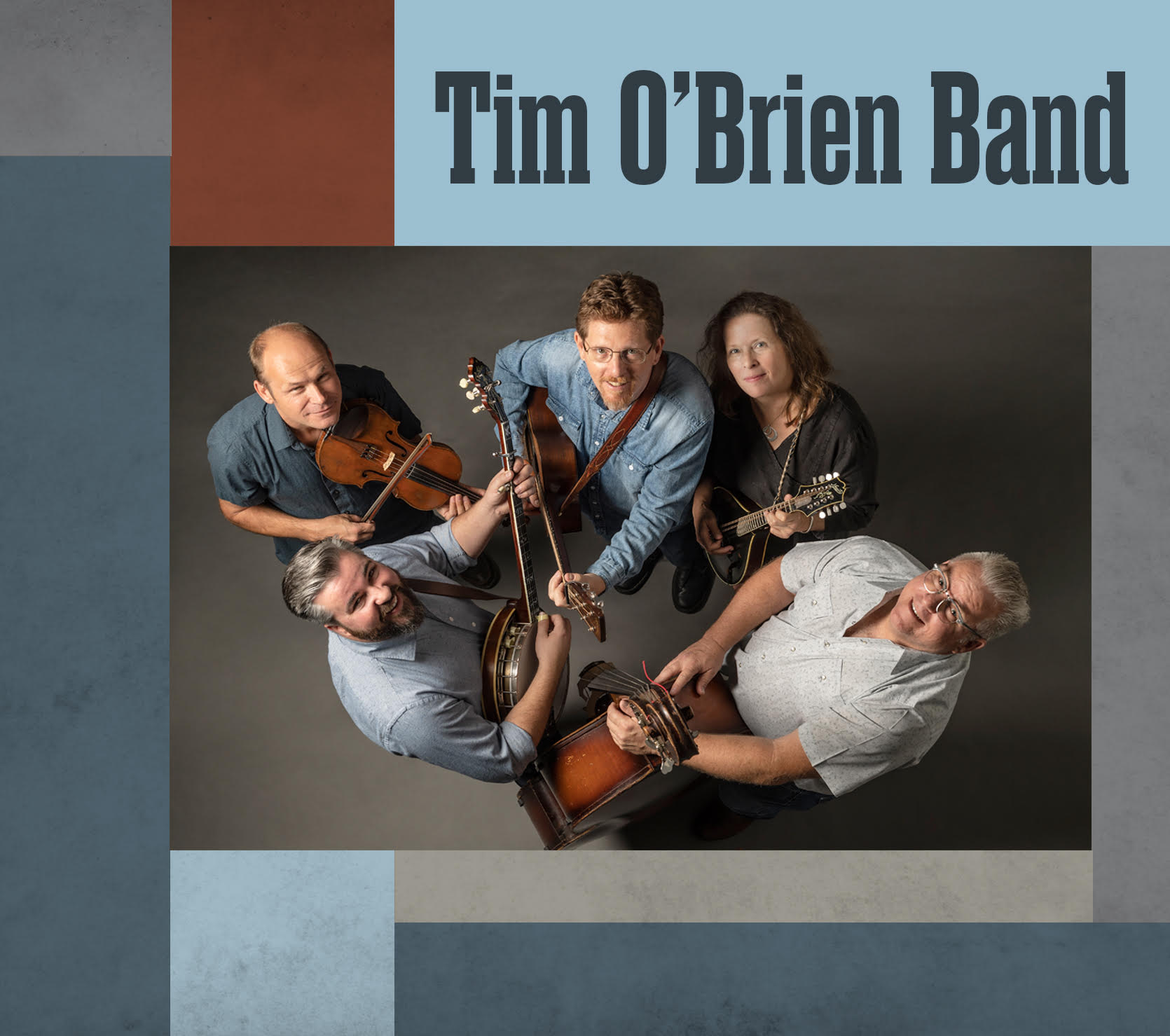
Tim O’Brien’s upcoming album, released as the Tim O’Brien Band and self-titled, is touted as landing “with two feet squarely back in bluegrass,” but this original is already a slight departure, toying with tropical, south of the border themes and languid melodies that rest and relax and dart and play just like children kicking up sand on the beach. O’Brien’s human inspiration, Jan Fabricius (whose middle name is Renee), appears on the album singing harmony vocals and playing some mandolin, but the band following the wistful, wavy palm fronds of O’Brien’s mandolin on this tune are Shad Cobb (fiddle), Patrick Sauber (banjo), and Mike Bub (bass) with special guest Bryan Sutton lending his unfalteringly tasteful guitar pickin’ as well.

We recommend pouring a drink with a summery, Caribbean flair, lounging back, and letting the tune wash over you like the incoming tide. It’s warm, inviting, and relaxing — with just a touch of O’Brien’s familiar voice cooing at us like a lullaby to sweetly bookend “La Gringa Renee.”