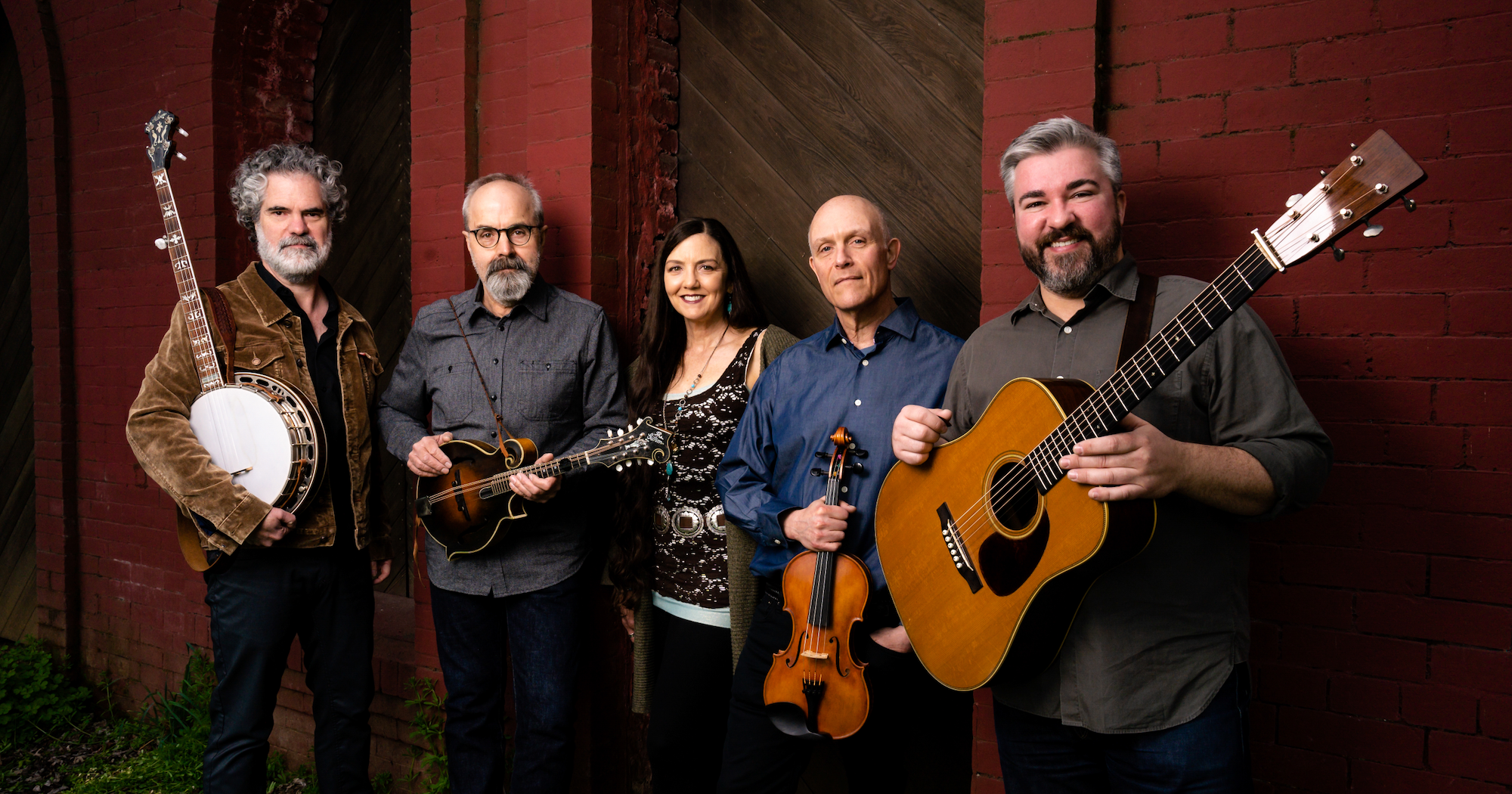
John Reischman: Between the Salish Sea and Salt Spring

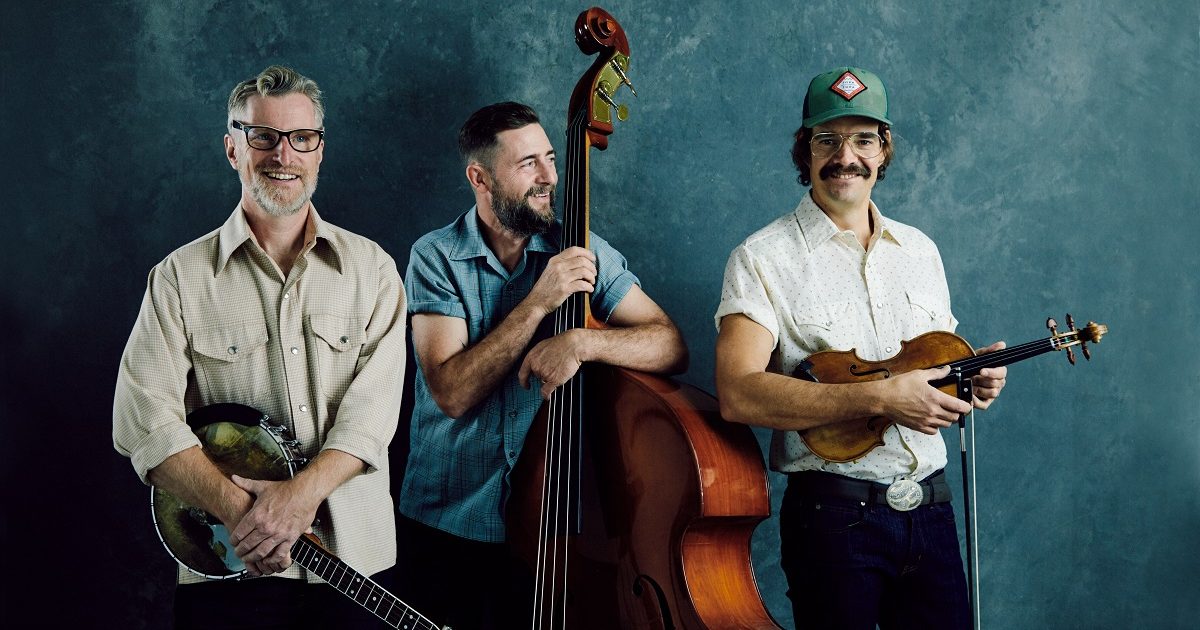
There are no U.S./Canada border wars when it comes to John Reischman. The revered mandolin master was born in Northern California but has lived in British Columbia since the early 1990s. His longtime band, the Jaybirds, are a quartet that includes two members who are also based in British Columbia (bassist/vocalist Trisha Gagnon and banjoist Nick Hornbuckle) and two who reside in America (fiddler Greg Spatz lives in Eastern Washington and guitarist/vocalist Patrick Sauber is from Southern California).

Their latest album, The Salish Sea, refers to the body of water between Vancouver Island and the British Columbia mainland. The record is their first since 2017’s On That Other Green Shore along with being the first to feature “new” guitarist Sauber on the entire album. The song “The Salish Sea” not only serves as the album’s title, but also is part of an original “Bluegrass Concerto” that Reischman was commissioned to create for FreshGrass in 2024. The honor is just one example in a long line of accolades for Reischman, who began his career in the Bay Area bluegrass/folk scene of the 1970s (including a stretch with the Tony Rice Unit) before moving to Canada, where he started the Jaybirds as well as performing solo and in other groupings.

In recent years, Reischman has seen his song “Salt Spring” become something of a modern bluegrass classic. He spoke with the BGS from his home in Vancouver about “Salt Spring” as well as The Salish Sea, his famous Lloyd Loar mandolin, and how he got into bluegrass music.

What was the process of putting the new album together?

John Reischman: There was one venue in Washington State where we had a residency. It was in the fall, in a beautiful spot. It was just ideal. So we took the extra day, worked up like six new tunes, and then started performing them right away. I guess this was October of ‘23.

And then you recorded the album in Vancouver?

In December of ‘23, I wanted the band to check out the studio here in Vancouver, where we ended up ultimately recording. I just want to make sure everybody was cool with it. I knew I liked it, because I had used it for my solo record, New Time & Old Acoustic. They all liked it. At the end of any tour we had that was close to Vancouver in 2024, I’d book a day or two in the studio, and we’d go record two or three or four songs. We were able to perform all this material mostly before we recorded it. … And it was great, because we’d be warmed up from the tour and we’d go in and track some tunes.

This album was the first in a while, and also the first that Patrick Sauber was fully on it.

Right, On That Other Green Shore came out in 2017. That was kind of the tail end of our time with [guitarist] Jim Nunally being a band member. He was exploring other things and decided he’d leave the band. We had a few more tracks to do… and we had some dates on the calendar.

I thought of Patrick immediately, because I’d known him for many years and I thought he’d be good. So he signed on for a tour and then another tour and it was just like, “This works great.” We asked him to join and he immediately said yes. He was a great fit.

How did the Jaybirds come together in the first place?

I didn’t really set out to have a band, except for the fact that I had a solo record called Up in the Woods. There was a local festival, so I put the band together to help promote the record. Seemed like a good idea. And I liked playing with all those people and it just continued on.

It’s called John Reischman and the Jaybirds, because I conceived of it. My name was probably the most well known at the time, but I wanted to be integrated into a bluegrass band. People present stuff, and I almost always accept it. Mostly it’s a pretty democratic presentation, I think. That’s what I like. It’s not Gladys Knight & the Pips.

Can you talk about the title track and how it’s also part of a larger project?

I had been asked to write what they call a “Bluegrass Concerto” by the East Coast festival FreshGrass, and I came up with these three tunes that work together. The first tune was the first movement, which ultimately was called “The Salish Sea.” I thought this will be my contribution to the new Jaybirds record, because they were involved with the performance of the Concerto.

We performed it [at FreshGrass in 2024] and I really liked the idea of having two mandolins and I’ve always loved two fiddles. I knew Darol Anger was going to there, so I asked him if he’d play twin fiddles on it. And then Sharon Gilchrist is a good friend and great mandolinist; we’ve played a lot together, and I asked her to play a mandolin on two of the three pieces.

I’ve got to acknowledge David Grisman, because the music is influenced by his “Dawg Music.” It’s also the sound that I initially heard on his first solo record, The David Grisman Rounder Record. He incorporated harmony mandolin on a lot of it.

It must have been very inspiring and gratifying to receive this commission.

You know, I’ve written a lot of tunes and a lot of folks have learned my tunes, which is really gratifying. But to have been commissioned to write this and have the confidence of this great festival and organization, yeah it was.

I had plenty of time to work on it and the time that it mostly came together was when I think my wife was visiting family. I had the house to myself. That first piece, in particular, really developed over a period of time. The second one [“The Family’s Farewell”], I came up with the A part pretty quickly and it took a while to get a bridge for it.

The third part [“The Little River Ramble”] was similar. … The thing about the concerto format is the third movement typically has an extended solo section and it’s often a bender where it’s just the featured soloist playing solo without any accompaniment. But I wasn’t really comfortable so much with that. I thought, I’ll just have it break down and I’ll solo all through there but have it build back up.

I’m really happy with the response it has gotten. Even playing it just as the five-piece band, I think the band sounds great on it. It’s only like icing on the cake when the twin fiddles and the twin mandolins are there.

And this spring, you’re going to record the entire concerto?

At the end of March, we’re going to be on tour on the East Coast and the FreshGrass Festival has a recording studio. They offered to make the studio available, so we’re going to record that just as we performed it, with Darol and Sharon joining in. That will be part of a solo record, even though I’m using those musicians. And I have other sessions planned. I’ve done one session that will add to the whole thing. Those three tunes of the concerto will just be one component of the new recording.

“Salt Spring,” one of your older songs, has become a highly popular instrumental now in the bluegrass world. How much of a pleasant surprise has that been?

It’s kind of remarkable to me that it’s as popular as it is. I mean, I’m not complaining. It’s great. … But it’s interesting how it’s just traveled all over and people think it’s just a traditional tune in some circles. They have no idea that it was composed by me. That’s cool, too.

The Jaybirds recorded it and it came out on a CD in 2001. We were at a music camp with some folks from Colorado and they learned it. I think that’s largely the beginning of it getting circulated among other people – where they took it back to Colorado. They’re the “patient zero,” I guess.

I know that a certain generation of Berklee students were playing it a lot, and maybe a bit later – maybe 10 years later. It’s pretty cool having people play your tune when you’re not there. That CD was never available digitally until recently, but we made a video of it around 2011… and that was the source, I think, for a lot of people learning it.

And then you recorded it again with Molly Tuttle, Alex Hargreaves, Max Schwartz, and Allison de Groot on your 2021 solo album New Time & Old Acoustic.

I didn’t have all the material when I started that whole project, but I knew I wanted to re-record “Salt Spring” with some of these younger musicians who had grown up playing it.

What do you remember about writing it? And why do you think so many musicians have gravitated to playing it?

I was on Salt Spring Island [in British Columbia] staying with some friends and they had a little old turn-of-the-century Martin small-body guitar. I was just playing the guitar and I was playing out of a D chord shape, and the A part of the tune just kind of took shape under my fingers. It was memorable enough that I don’t think I had to record it to remember it. The B part was just this little phrase I would play on the mandolin, just noodling around … so I just kind of stuck it on there and it worked pretty well.

I think the thing about the tune is the basic melody is very simple, but the way I played on the mandolin, the technique I use, is not quite cross-picking. But it falls into a right-hand pattern that sort of mimics the way the frailing banjo is played with that “bum-ditty, bum-ditty, down-down up, down-down up” pick stroke. So, these extra “down ups” are drone notes and that just kind of enhance the whole overall effect. Because of that, it lays out really nicely on the banjo. Then on the fiddle, you can add drones and add to it that way. And on the guitar also, you can fall into that kind of “bum-ditty” pattern as well.

I think you can learn the tune pretty easily. It’s not super challenging like some fiddle tunes where they’re very detailed in the melody. It’s pretty straight and so I think that’s partly why people gravitate towards it.

You grew up in Northern California. How did you get interested and involved in music, specifically bluegrass music?

Have you heard of a guitar player named Robben Ford? He grew up in the same town where I did in Northern California. He was in a high school band with my neighbors. I must have been 12 or 13. They were rehearsing on a patio and I went over to listen. I was interested in music and I heard them play the Freddie King tune “Hideaway,” which Eric Clapton recorded on the John Mayall & the Blues Breakers record. My brother Steve had that record. I recognized the tune and I thought, “What? This is impossible. This sounds as good as the record!”

From then on, I was just focused on trying to play the guitar. I had taken guitar lessons prior to that, but it didn’t really work. But there were guitars around the house. So that was the thing that really sparked my interest in learning to play. But I was open to all kinds of music. I’d have access to the PBS station KQED and they’d often air Pete Seeger’s Rainbow Quest, where he’d have different folk musicians, bluegrass musicians, old-time musicians. I thought, “Oh, this is cool!” And then the mainstream presentation of bluegrass with The Beverly Hillbillies, having Flatt & Scruggs on it, and the Dillards and the Country Boys playing on The Andy Griffith Show.

At some point, I had access to a mandolin, which I associated [with] bluegrass music, and taught myself to play it. I tuned it to an open chord for a long time, like a banjo, which was incorrect. And I didn’t use a pick. But eventually I got things squared away.

I discovered the John Hartford Aereo-Plain record. I saw them on TV as well. That was very inspiring. Then I discovered Norman Blake and Vassar Clements. I come to find out they had their own records. … That first Norman Blake record, I couldn’t believe it. I just flipped over that, and I thought, “This is so great!” And I’d heard Doc Watson at that point, so I just got really interested in it, and focused on that music, primarily.

So, was the Good Ol’ Persons your first significant band?

Yeah, it was the first real pro band I was ever in, and I was a fan of theirs before that. I [had] lived in San Francisco for a short while and saw their original lineup, which included all women. And it was exciting to get the opportunity to play with these folks. Because I was living near Eugene, Oregon, and I was just playing the mandolin all the time – a lot with my brother, Steve – but I wasn’t in a band, and I was working on a farm, just part-time. And a friend from the Oregon bluegrass scene had joined them and they needed a mandolin player. He said, “I know a guy.”

That placed me in the Bay Area, which was a great scene. There were lots of good bluegrass bands. And the Grisman Quintet was there. … But the thing that set Good Ol’ Persons apart was their original material, because Kathy [Kallick] is a fantastic songwriter. And Paul Shelasky, who was in the band, also wrote great songs. That opened the door for me to try and write tunes – because, “Oh, these guys write tunes. I’ll try it.” I wrote a few and people liked them. That just gave me encouragement to keep at it, which I have done.

So consequently, when Grisman and Tony Rice parted ways, Tony was aware of me. He’d heard me play at the local bar. He wanted to put a band together and needed a mandolin player. So, I went to the audition and he hired me.

You are well known for having an antique Gibson Lloyd Loar mandolin. What do you think makes those mandolins so special?

I guess that [mandolin] was kind of the ultimate expression of Gibson mandolins. But there’s plenty of new makers and a lot of them are using that basic design. So, aesthetically and as far as the craft of the instruments, some of these builders are way better than the Gibson mandolins were to look at, but the Gibsons have 100 years of aging and playing.

I think the playing of the instrument contributes hugely to its sound. Because, if there’s a Lloyd Loar that left the factory and went into someone’s closet and never came out for 50 years, I don’t think it’s going to sound like one like mine that has been played consistently over time.

I feel fortunate to be the caretaker for this great instrument. I think for most bluegrass musicians, it’s not only the music, but it’s the tools. These vintage instruments, like the Martins from the ‘30s and ‘40s, and Gibson mandolins from the ‘20s, and old banjos, it’s just a vibe that goes along with the music and aesthetic.


Photo courtesy of John Reischman.

BGS 5+5: Ocie Elliott

Artist: Ocie Elliott
Hometown: Victoria, British Columbia, Canada
Latest Album: Bungalow (released October 24, 2025)
Personal Nicknames (or rejected band names): Jon and Ra

What has been the best advice you’ve received in your career so far?

Keep playing, keep writing. Don’t be precious with songs. There isn’t one right way, be yourself goddamnit!

What’s your favorite memory from being on stage?

Somewhat unexpectedly being invited to join Zach Bryan for his song “28” when we opened for him at Red Rocks this summer. We were handed wireless mics backstage and, not knowing when to sing or where to stand, were instructed to “just go for it!” – in front of thousands of people wrapped in towers of sandstone formations enveloping the sound. It felt like my sense of self dipped and pure elation took its place… like there was nothing I could do to stop my entire body from singing.

Another experience that comes to mind was one of our earlier shows, playing for 10 to 20 people in a secret locker room during a local festival in Victoria, BC. – Sierra

What other art forms – literature, film, dance, painting, etc. – influence your music?

For me, it’s mainly literature and films that influence my music and I suppose they do so more in a lyrical sense, by informing how I see the world and interact within it. I know for me, the times I feel most inspired in life is when I have been reading a great book or have just finished watching a really inspiring film. I love foreign films, especially, because they can often give such unique and also universal perspectives and open your frame of mind. – Jon

What musician has influenced you the most – and how?

Kurt Cobain. When I first heard and saw Kurt Cobain in the “Smells Like Teen Spirit” video my life changed forever. I can still recall the weird feeling of hearing his voice and almost not understanding it, in a way, and being so pulled in that I was dumbfounded. Kurt Cobain and his songs and voice made me really fall in love with music in an intense way. The fact that sound could have such an effect and inspire such feelings of pleasure and energy was life-changing and life-affirming.

What is a genre, artist, song you adore that may surprise people?

I love hip-hop/rap music, not that that should really surprise anyone, since the vast majority of musicians listen to every style of music, I think. But there was definitely a long period of my life (four to five years, at least) where I mostly listened to hip-hop. A Tribe Called Quest, Wu-Tang Clan, De La Soul, People Under the Stairs, and Outkast being my favorite artists overall.


Photo Credit: Jordie Hennigar

Ruth Moody on Canadian Roots Music, Parenthood, and Being a ‘Wanderer’

Ruth Moody has a singular voice, whether she’s joining the soaring three-part harmonies of the Wailin’ Jennys, or carving her own path on her new solo album, Wanderer (released May 17.) The project was almost a decade in the making and finds Moody betting on herself as a songwriter, co-producer, and now-label head for her own Blue Muse Records. The album is parallel to Moody’s own journey at continuing to define herself, with its emphasis on confronting the past and carving away detritus that is no longer needed.

Moody splits her time between Nashville and Vancouver Island. The pull between her sense of place, as well as her identities as artist, wife, and mother, characterize Wanderer. The album was recorded at the legendary Sound Emporium in Nashville and was co-produced with Dan Knobler (Allison Russell, Lake Street Dive) and mixed by Tucker Martine (My Morning Jacket, First Aid Kit, The Decemberists).

As discussed below, Moody waited until the time was right to bring her favorite musicians together for the record: her partner Sam Howard, who plays upright bass and provides backing vocals; her older brother Richard Moody; The Wailin’ Jennys’ touring band member Anthony da Costa (guitars); Jason Burger (drums); Kai Welch (keyboards); Russ Pahl (pedal steel); Adrian Dolan (string arrangements); and duet partner Joey Landreth (on “The Spell of the Lilac Bloom”). Moody’s patient commitment to executing Wanderer the way she wanted to shows in its transcendent arrangements.

In our BGS interview, Moody discusses how she establishes her sense of self amidst the competing demands in her life, the factors that give Canadian roots music their own special quality, and the lessons she’s learned from doing Wanderer exactly the way she intended to.

What do you think it is about Canadian roots music in particular? It does have a different feel than roots music in the States.

Ruth Moody: You know, I’ve been asked this question for so long. It’s a very valid question, because I think there is something, but it’s really hard to have a clear answer. In Canada there’s such a range of geography and music culture. You can’t really pin it to one thing.

I grew up in Winnipeg and the winters are so harsh that I think music and art are one of the things that get people through. It’s something you can do in the winter. I also think that there’s something about the landscape and the winter that creates a certain work ethic because you’re so small against the elements, really. So consciously or subconsciously, that enters into the picture for people. And so I think people tend to work hard and really apply themselves. And when it comes to touring, especially if you’re from Winnipeg, it takes some effort to get to the next town. It’s a six-hour drive before you get to the next major town. So I think right from the start, young musicians know they have to go out in the world to tour and get their music out.

We’re pretty diverse and we’re also influenced by so many different cultures and types of music. So I think there is a very exploratory aspect to Canadian music. And a lot of cross-pollination between genres and scenes. We are very lucky to have government support for the arts and I think that helps artists thrive, obviously, but it also helps to create music communities and bring artists together in collaborative situations.

Well, it’s always good to start an interview out by asking you to speak for your entire country! But Wanderer focuses on the idea of home, and I know you’ve lived many different places. Did I read that you grew up in Australia?

I was born in Australia, and my parents are Australian, but they came back to Canada when I was only a year old. I grew up in Winnipeg, but, as an adult, I’ve moved around a ton and that was what inspired the title track. I’ve been touring for over 25 years at this point. “Wanderer” is a love song that I wrote for my partner, because he helped me have that feeling of home for the first time in my adult life.

There are a number of songs about young love and new love on the album. Was there something that was making you reminisce about those times in your life?

These songs were all written across a long time-span – over 10 years really – since my last record. So the songs come from different stages and sides of love, right into motherhood. Some songs deal with heartbreak too and some are more reflective about the past. During the pandemic, I was reflecting a lot about how we internalize the messages we receive from society, how as a woman I took on the expectations of others and how that has affected my life. I was looking back, looking for clues, curious about where fear comes from, where strength and resilience come from. How we learn how to be our authentic selves when there are so many outside pressures and confusing messages. “Seventeen” isn’t about that, at all, but it ended up coming out of that period of reminiscing. It’s a song that came from my own experiences but that is essentially about being in love and not being ready or able to face it or express it, which I think is probably a pretty common experience.

These are all things I’m thinking about a lot now that I have a child, too, because they become very relevant. You’re trying to model behaviors for a young person and it really makes you face yourself. You have to look at why you do and say certain things and what you want to teach and how you want to be.

Speaking of wandering, I read that you split your time between Nashville and Vancouver Island.

I just got back from British Columbia, and I’ll be back in BC in the summer, so yes, I’m back and forth. I tour a lot, so I try to get home to BC when I’m already out traveling. But I work a lot in Nashville and so does my partner, so we’re still figuring that out.

Do you feel you are different when you are in these two different places?

Definitely. That’s been a real theme becoming a mother, really. Suddenly, you’re responsible for another human life. You have to let go of a lot of ways that you used to do things and prioritize what matters. I’m always shifting modes.

When I’m on tour, I operate in a certain way. When I’m in BC, I’m close to my parents and that brings out certain things. When I’m on my own, I have a bit more freedom to maybe be my creative self and when I’m in parenting mode, that goes out the window. Additionally, a partnership requires a lot of work and time, too. There are a lot of different parts of life that I’m juggling. But it keeps it interesting.

This isn’t meant to be a conversation about being a musician and motherhood and “having it all,” but it is a big theme of the record!

It has been a big theme of my life of late. Actually, I wanted to make this record about eight years ago and then I put it on hold, because I wasn’t able to line up all the musicians I wanted involved. I thought, “I’ll do it next year.” And then I had my son and I just didn’t know that motherhood would be such an all-consuming thing. It doesn’t have to be – and everyone’s different!

I really want to do a good job at everything that I do, and so I found it hard [to balance everything.] I felt like I wasn’t doing a good enough job at being a parent and I wasn’t doing a good enough job at performing. That was really hard on me. And I think now, with this new way of looking at things, I’m just being easier on myself and thinking to myself, “Maybe I was enough. Maybe we can’t be perfect at every single thing.” Maybe we don’t have to attempt to be perfect at everything.

First and foremost I think that any woman should have the choice to [balance motherhood and work] in the way she wants to do it. I am still figuring out how to juggle everything – especially since for this record, I decided to put it out on my own label. It’s really exciting and I think will be really rewarding, but it is a ton of work and the learning curve is quite steep.

Wanderer is your fourth solo album. Do you feel this process is different than when you’re working with another artist or with The Wailin’ Jennys?

It is different. The Jennys – I mean, we’ve been together for so long and we have a certain way of working. We’re talking about making a new record, which is really exciting. It’ll be different, because it’s been a while and we’re all changing all the time, you know? That feels like it will be an exciting new experience.

But it is of course different working on my own, especially in this case, because I co-produced this record. When you’re on your own, you draw on a different part of your brain and even your heart. Wanderer is a really personal collection of songs. With the Jennys, we tend to maybe gravitate towards songs that call for three part harmony, so they end up being a bit more anthemic. With these really personal, intimate songs, I connect to them in a different way.

What lessons do you feel like you can take away now that you’ve finished making Wanderer that you want to take with you on your next project?

I’ve learned so much in doing this. Because it took so long to make it and these songs were waiting in the wings for so long, it felt really important for me to make it. The stakes felt high, because it had been so long in the making.

Now that it’s done and I’m putting it out, I am really excited and proud of it. I want to just keep releasing expectations and I’m very excited to dig into creative work again.


Photo Credit: Jacqueline Justice

WATCH: Never Come Down, “Better Late Than Never” (Live)

Artist: Never Come Down
Hometown: Portland, Oregon
Song: “Better Late Than Never” (Live)
Album: Better Late Than Never (Live)
Release Date: December 15, 2023

In Their Words: “This past summer we found ourselves performing, teaching, and camping at a racetrack – Agassiz Speedway in British Columbia. Why? We were scheduled to play NimbleFingers Music Festival, but it had to be relocated due to wildfires raging in the vicinity of Sorrento, BC, where the festival usually takes place.

“Salvaging the event was an exercise in adaptability – making proverbial lemonade from lemons with a great group of fellow human beings. There was also no way we were gonna pass up pickin’ on a racetrack. The re-imagined version of the festival was unique and exciting in its own special way. We hope the same can be said of this new take on an old song of ours.” – Brian Alley, banjo


Photo Credit: Julia Varga
Video Credit: Trent Freeman

WATCH: Ethan Lyric, “I Love You More”

Artist: Ethan Lyric
Hometown: Winnipeg, Manitoba, Canada
Song: “I Love You More”
Album: Saskatoon Berries EP
Release Date: October 13, 2023 (single); December 1, 2023 (EP)

In Their Words: “The music video was shot in Vancouver, British Columbia, throughout the beautiful area of North Van alongside my cinematographer and long-time collaborator, Carter Heintz. Showing the journey and navigation of love through the simple and fun lens my music always tries to provide.

“The inspiration for this project as a whole came from a lot of artists and things in my life at the time. This single and my upcoming EP, Saskatoon Berries, take a lot of inspiration from the musicians I grew up hearing on YouTube – like Conan Gray, Cavetown, and Chloe Moriondo. All these people create music that just makes you feel at ease and want to smile, and that’s how I would love my music to be received as well. I feel this project was also deeply influenced by the process of finding myself and my identity. I always like to say that being an Indigenous artist, whether you write explicitly about Indigenous culture or not, your culture is one of the biggest inspirations to your art so I feel obviously that was a large inspiration as well.” – Ethan Lyric

Track Credits: Songwriter – Ethan Lyric

Musicians: Ethan Lyric – vocals, guitar
Jeremy Haywood Smith (JayWood) – bass
Brett Tizcon – keys
Anil Ramgotra – drums

Producer – Jeremy Haywood Smith (JayWood)
Recording engineer – Jeremy Haywood Smith (JayWood)
Mixing – Art Antony
Mastering – J. LaPointe (Archive Mastering)


Photo Credit: Julio Assis (BNB Studios)
Video Credits: Cinematographer – Carter Heintz

Edited by Ethan Lyric, Carter Heintz
Featuring – Matilda Shanks, Victoria McNeil

LISTEN: Ocie Elliott, “What Remains”

Artist: Ocie Elliott
Hometown: Victoria, BC
Song: “What Remains”
Album: What Remains EP
Release Date: September 23, 2022
Label: Nettwerk

In Their Words: “This song came to life in a daydream haze whilst we were staying in a hotel room for one of our only gigs of 2021. The melody and chords came into Jon’s head in the beginnings of a short nap before showtime. We wrote the lyrics and chorus during the months that followed and at first it was written as a kind of ode to a lover lost. After living with the song for a time, it took on new meaning however, especially after Sierra’s father was diagnosed with cancer and passed away in short time. Now the song sits with a multitude of meanings for us and it’s definitely turned into one of our favourites on the EP.” — Jon Middleton and Sierra Lundy, Ocie Elliott


Photo Credit: Sara Spectrum

WATCH: Sam Weber, “Here’s to the Future”

Artist: Sam Weber
Hometown: North Saanich, BC, Canada
Song: “Here’s to The Future”
Album: Get Free
Release Date: February 4, 2022
Label: Sonic Unyon

In Their Words: “Every album cycle brings one song that cuts me right to the core. Like a three-year cross-section of every complex life moment laid bare in the simplest words. Through confronting my deepest, heaviest truths through these songs I am able to see the world in a new way. ‘Here’s to the Future’ was that song for me, but also a toast and a prayer to the better and brighter days ahead. The first verse is sort of about leaving home and running from pain. The video is a compilation of Super 8 footage we took on some of my many drives from British Columbia, where I’m from, to LA where I am now.” — Sam Weber


Photo Credit: Jacob Boll

WATCH: The Lonesome Ace Stringband, “The Hills of Mexico” (Live)

Artist: The Lonesome Ace Stringband
Hometown: Toronto, Ontario / Horsefly, British Columbia
Song: “The Hills of Mexico”
Album: Lively Times – Live at the Anza Club
Release Date: November 26, 2021

In Their Words: “We recorded ‘The Hills of Mexico’ on our first album, Old Time. Since then it’s become our most requested piece. Although the original version of this song comes from Roscoe Holcomb, our version owes more to the band The Renegades, which featured the singing of Carol Elizabeth Jones. Our interpretation has evolved in the ten years since we recorded it, so it was great to capture it in this live performance from back in 2019. The new album, which will be streaming on November 26, was recorded at a live show in Vancouver, BC. It features some of our favorite songs by artists such as John Hartford, Gus Cannon, Bill Monroe, Marty Robbins, and The Stanley Brothers.” — Chris Coole, The Lonesome Ace Stringband


Photo Credit: Jen Squires

BGS 5+5: Twin Kennedy

Artist: Twin Kennedy
Hometown: Powell River, British Columbia, Canada
Latest Album: Homebound
Personal nicknames: Carli guitar-ly, Julie fidd-ooly

What was the first moment that you knew you wanted to be a musician?

Looking through old family videos, we have footage of us singing together as young as 3! We put on living room concerts for our mom and dad and their friends, so we knew from a young age that performing was something we loved to do. We started playing as a family band with our dad and our younger sister, Katelyn, when we were 7 years old, and we were really excited and serious about rehearsing and preparing for shows even at that age. We have always been passionate about music — from creating and writing to arranging and harmonizing. We feel so lucky that we were introduced to all of this in our early days with our family because it’s what made us fall in love with performing, and we knew that we wanted to make music our career!

What rituals do you have, either in the studio or before a show?

Live performance has always been our true love as musicians. We fell in love with being on stage when we were kids, and we have spent many years building practice routines and rehearsal rituals together. As twin sisters, we do have that stereotypical connection of “reading each other’s minds.” We call it “twin-tuition” — we can sense how each other is feeling — and so we make it a priority to focus on creating positive energy before every show. When all of our tour dates were cancelled due to the pandemic, we missed live music so much, and we spent a lot of time talking about what we wanted touring and performing to look like when we could return to that part of our career. For our Homebound Tour dates, our pre-show ritual includes a moment of gratitude. We hug each other and wish each other a great show like we’ve always done, but then we take time to give thanks that we are able to walk on stage again and share music, feel that connection with the audience, and do what we love to do.

What other art forms — literature, film, dance, painting, etc. — inform your music?

We love every step of the creative process of building a new musical project — and that comes with many different art forms, from video creation to styling to graphic design to merchandise design. We are so inspired by the artists that we get to work with, from our incredible co-writers, to the photographers and directors! We love when music can be reflected in the artwork on the page, say of an album cover, or in a grand sense, like a music video on a mountaintop. When we’re writing a song, we always love it when we can envision the music video or the single artwork as the song is being written.

If you had to write a mission statement for your career, what would it be?

We wrote our mission statement as Twin Kennedy in the first year that we started touring full time, and although it has evolved over the years, the foundation has always remained the same: To spread joy through music. We aim to create genuine connection through songs and performance, and create a legacy of love and positivity both on and off the stage.

How often do you hide behind a character in a song or use “you” when it’s actually “me”?

With this new album, we have been the most open we have ever been as songwriters and artists, and all of the songs come from a “me” perspective. All of the co-writers on Homebound are people that we have worked with for years — friends who we have built a trust and connection with that allows us to open up in the writing room. For us, this kind of “safe space” creates our best music. We are really proud of the diversity of emotion and messages that we share on Homebound, and they all come from a personal place. We hope that people can relate to our lyrics and hear their own stories in our songs!


Photo Credit: Suzanne Sagmeister Photography

WATCH: Suzie Ungerleider, “Baby Blues”

Artist: Suzie Ungerleider
Hometown: Vancouver, BC
Song: “Baby Blues”
Album: My Name is Suzie Ungerleider
Release Date: August 13, 2021
Label: MVKA

In Their Words: “‘Baby Blues’ is inspired by the idea that we all carry little movies in our minds about things that have scarred us in our childhoods. They replay in our heads and whisper in our ears and affect how we see the world so profoundly for the rest of our lives. They make maps in our brains that tie us forever to that geography of the past. The song is set on the country roads in Ontario, Canada, where there literally is a place called Fallowfield. Rolling hills and farmland and falling down barns dot the landscape. It’s beautiful and haunting all at once.” — Suzie Ungerleider


Photo credit: Stephen Drover