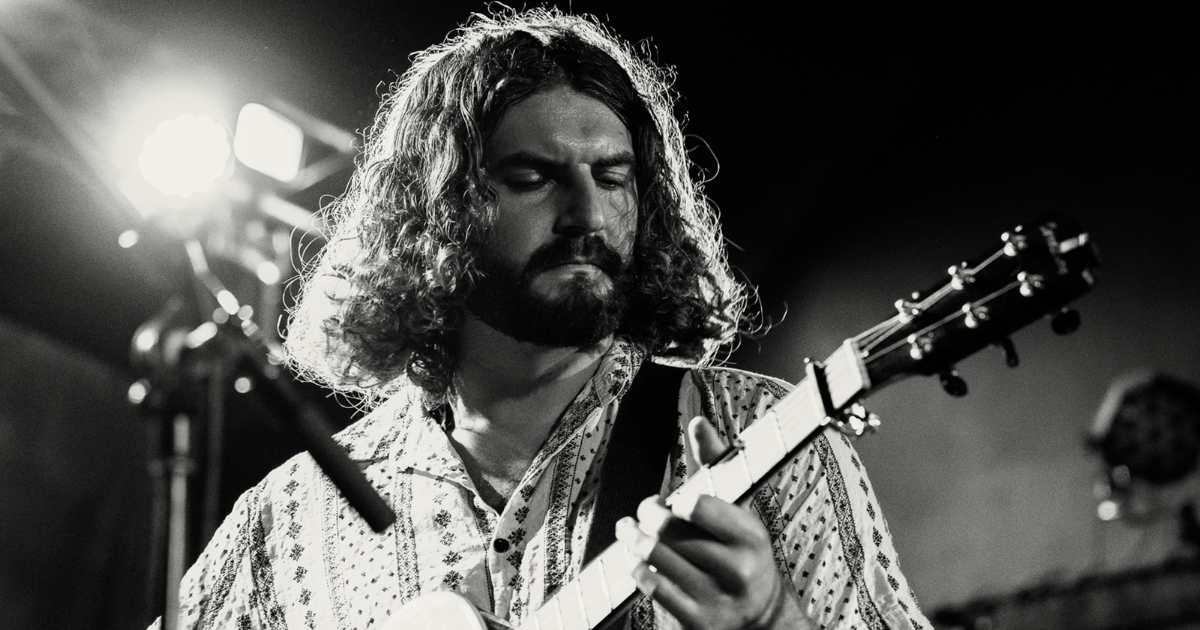
Cole Chaney is
“Anti-Machine”

While many young talents, willingly or hesitantly, bow down to music industry boardroom suits who promise stardom if they’ll follow a professionally curated path, Cole Chaney takes a hard pass. He knows exactly who he is, what he does, and how he wants to get there. He creates songs, not content. He’s a career musician, not a brand. And the only thing he hopes to influence, maybe, is someone, somewhere, who wants to make music for all the right reasons.

Chaney grew up in Catlettsburg, Kentucky, surrounded by the legacies and storytelling of his elders. After graduating high school he worked as a welder, uncertain of his career path, but already fueled by his passion for music. Today, he keeps one musical foot in the bluegrass traditions of his Appalachian roots and the other in guitar-centric, amplified bands like Soundgarden, Nirvana, Alice In Chains, and Stone Temple Pilots.

His debut album Mercy and subsequent OurVinyl Sessions reflect his love of acoustic music and showcase his leanings toward introspection and melancholy. In the Shadow of the Mountain, released last fall, takes that darkness to a new place, balances it with moments of light and leans into the aforementioned rock influences, while never losing the origins of his sound. All of this shines at peak level onstage, captured by Western AF on a Live AF Session.

Sitting outside at home on an April morning, drinking coffee and surrounded by the sounds of birds and a breeze, Chaney spent a couple of hours on the phone with Good Country. He spoke candidly about his music, faith, values, mental health, and the intertwining of inner peace and inner turbulence that make all these things uniquely him.

When you were ready to do this professionally, you went to Lexington. Most songwriters would have chosen Nashville. Was yours a deliberate decision or a natural one?

Cole Chaney: To understand that decision, you have to look at who I was looking up to at the time – and still do – and what drove that decision. When I was in high school, probably around my freshman or sophomore year, 2014 or 2015, I started getting into this band called Sundy Best. They’re from Prestonsburg, Kentucky, which is just down the road from me. This was pre-Tyler Childers. At the time, in Eastern Kentucky, these guys were the biggest thing coming and going. They leaned heavily on being from Kentucky, the same way I do, and they moved to Lexington to get a foothold.

That was my early example, watching those guys. I knew they weren’t going about it the traditional way, which was to go to Nashville and pray somebody picks you up. They did it in Lexington. A couple years later, Tyler Childers comes along – another super-influential figure in my musical upbringing. Of course, he’s anti-Nashville – not the city, but the machine, if you will. I’m pretty sure he lived in Lexington, or at least around the area in the scene, for a while. So did Sturgill Simpson. The list goes on.

I was like, “What business model makes more sense to me? Do I go to the place where there’s more songwriters than the rest of the entire planet or somewhere where people will actually understand what I’m saying and I can maybe build myself a little bit of a foundation?”

The way I saw it is if I started building a sort of fan base or if I had enough ticket buyers, places like Nashville or Denver, these big music scene cities, what choice would they have other than to book us? That’s the way I looked at it.

And it worked.

It did work. It’s a simple business model, but the difference between that model and the other is you’re not sitting around waiting for something to happen. It’s on you to go out and make your own connections. It’s a very grassroots and organic way of doing it and that’s the way I like to do things. I’m anti-machine. Even though I work with some bigger companies, I keep it as limited as possible. That’s so I can play pretty much wherever I want, whenever I want, and they understand that.

On the Whiskey Riff Raff Podcast you said, “Music found me.” Would you mind expanding on that just a bit?

It did. I never would have dreamed at 16 years old that I would be doing this as my full-time job at 25. That was never on the horizon for me. I didn’t know what I was going to do. I knew I was going to weld for a little bit, see what happened, and maybe try to start my own business. And I did. But I really didn’t think it was going to end up like this.

I started realizing that people liked to hear me play and sing around the same time that COVID hit really hard. That gave me an opportunity to sit down, write some songs, and think about what I wanted to do with the rest of my life.

I’m very much a subscriber to the Bible, and I think the Lord has a mysterious way of working. He put me on a path without me even realizing it way back then and I do my best to stay on it now. I think my job while I’m here is to create as much good stuff as I can, stuff that means something, get it out to the people, and get out in front of them and play it for them. As somebody who enjoys going to shows in their free time and watching my favorite bands perform live, I know how that feels, and it’s truly a privilege to be able to offer that same service to other people.

There is music in your bloodlines, not professionally, but family members who played in church and at home. You obviously assimilated the sound of the area, and also this wider scope with bands like Alice In Chains and Stone Temple Pilots. When did all of that begin seeping into your songwriting?

We listened to the radio when I was growing up. I didn’t get educated on music or how to play until I started really getting into it. To this day, I’m still being educated and learning how to play on a daily basis. Part of what keeps it so fun to me is how much I don’t know and constantly learning about things.

Mercy was my first album, and I had access to what was around me. I had just moved to Lexington and I was really into bluegrass. There’s a band called the Wooks that, to this day, Glory Bound is one of my top three favorite records of all time. I was infatuated with that sound and that was what I wanted Mercy to sound like, or at least as close to it as I could get. A lot of the Wooks ended up playing on that album, plus Michael Cleveland. It was crazy.

Alice In Chains has been a mainstay in my musical taste since I was probably 15 or 16 years old. Since I first found them, I was very drawn in by the tone of Layne Staley’s voice and the weight of Jerry Cantrell’s guitar. It feels like you could bite it and chew on it. I don’t know how to describe it.

I’ve also always loved bluegrass, so it was [figuring out] how to bridge the gap of what I listen to and where I want to go with my writing without completely abandoning that sound. And bringing the alternative rock sound into the folk realm, where you have mandolin, upright bass, fiddle, acoustic guitars, and drums. The biggest change in the sound has been the addition of drums over the past two years, navigating that and seeing how it fits into the whole equation. It opened up a lot of avenues for me as a songwriter.

You began playing guitar at 13 or 14. Did you always play acoustic?

The thing about electric guitar, for me, is that it’s such a deep realm of gear and a deep dive. I’ve always been attracted to good-sounding acoustic guitars and players like Tony Rice, so I felt my effort was best spent getting really good at playing the acoustic guitar.

That will carry over whenever I decide to pick up an electric guitar, more so than if I only played electric guitar and tried to write some bluegrass-style acoustic lines. It would be a tougher transition to come over from light gauge strings on an electric guitar to .013s on a dreadnought and trying to play “Blue Railroad Train” or something like that.

Do you have an electric guitar?

I have several electric guitars. I’ve got a ’57 reboot Stratocaster, an American Professional Telecaster, my old Paul Reed Smith that I learned how to play electric on, and a nice Vox amp. I don’t know all that much about electric guitars. I still have a lot to learn.

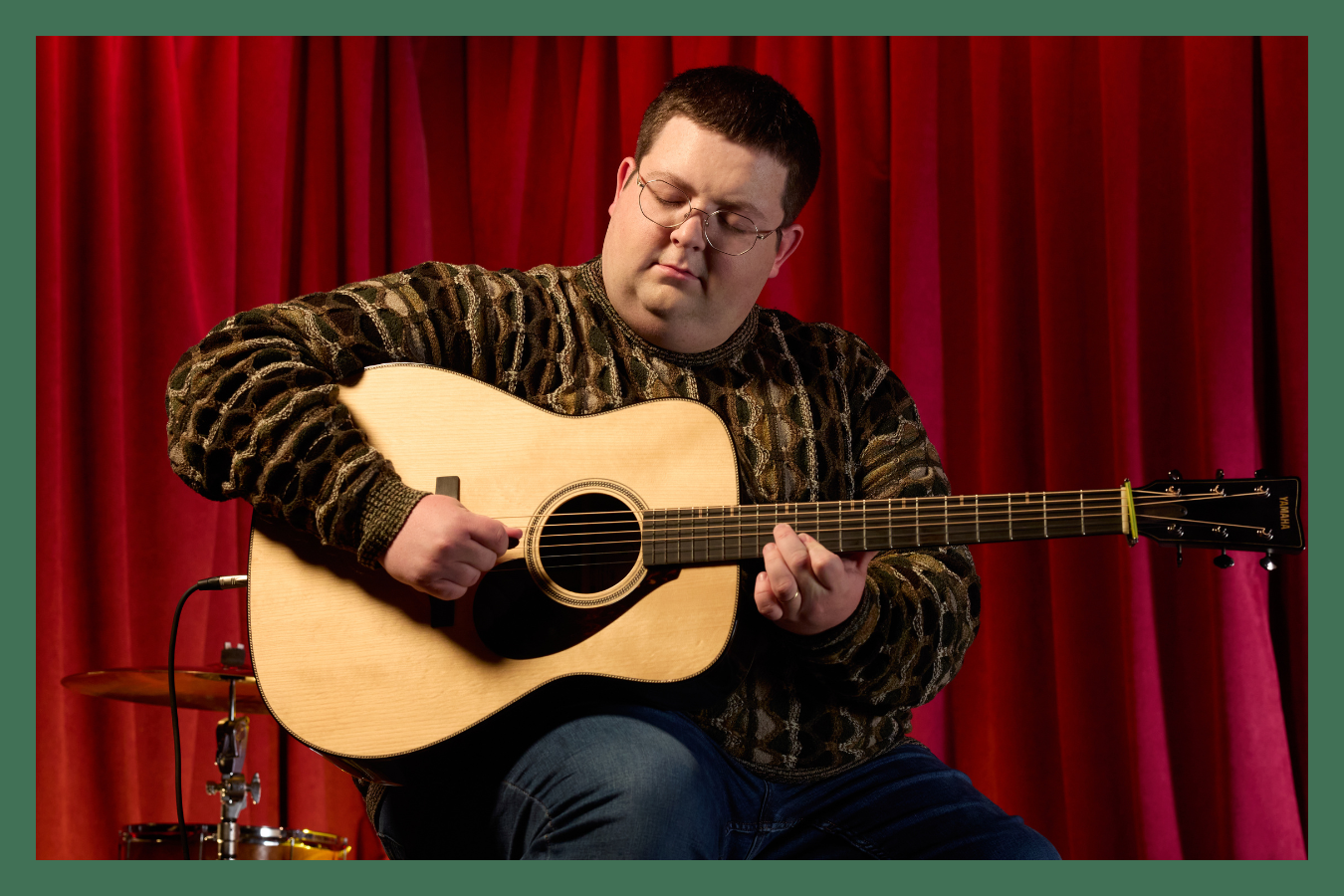
Prior to this interview, you sent over your touring rig: a Gibson J-45 Banner in standard tuning with a K&K Pure Mini pickup, and a Breedlove sitka/rosewood Custom Dreadnought in drop D/double drop D, with an LR Baggs Element VTC pickup. Also two Grace BiX DI’s and a Lampifier Model 711 cardioid mic for lead vocals.

Those are my road guitars. They aren’t the ones I recorded everything with, but those are what you see at the shows.

In addition to the Gibson and Breedlove, do you have other acoustics?

I have two Gary Cotten guitars. [On] OurVinyl [Sessions, that] was my first Cotten I recorded with. On In the Shadow of the Mountain, many of those songs are my newer Cotten, which is sinker mahogany and an Adirondack top. “Alone?,” “In the Shadow of the Mountain,” “Into,” “Feels Like Rain,” and “Spirit” [were all recorded] on the Cotten.

That guitar sounds huge. It’s an outstanding guitar. I don’t tour with it because I’m scared something would happen to it and it’s too special to me. And Gary’s a great dude. He’s always taken really good care of me, and I want that guitar to stick around for a long time.

I don’t have any electronics in it, either. It’s a very traditional style, it’s a dovetail, and I want to keep it as traditional as I can and keep as much weight out of it as I can, because the more weight you add, sometimes it makes them sound worse.

What makes the Gibson and Breedlove right for touring?

They’re super-versatile and they both sound fantastic plugged in. That Breedlove is the longest-standing guitar I have that I’ve consistently played shows with. I got it in 2019 from 4 o’clock Rock Guitar Shop in Ashland [Kentucky]. It’s a custom dreadnought that they shop-ordered and it’s got the LR Baggs VTC Element in it. It has always sounded so good plugged in. I mean, all guitars sound bad plugged in, but it’s a matter of how much of the original sound can you actually preserve when you plug it in.

I’ve gotten to the point where I am almost starting to desire a little bit of that direct input texture. Maybe it’s because I’m listening to too much MTV Unplugged, but I’m starting to desire that kind of cardboard bad sound.

The Gibson, I put a K&K Pure Mini in and it sounds really close to what it sounds like not plugged in. Man, that Gibson is a beast. I love that guitar. It’s been to every show with me since I bought it last year.

I still have a Paul Reed Smith acoustic guitar and it’s a damned good little guitar. I’ll probably end up using it again on some stuff. It’s one of those that you plug in and it sounds great, too. But when I got into the whole bluegrass thing, I knew I needed something with a little more body.

Sometimes you use a pick, sometimes fingers. Either way, your attack is strong. How did your technique develop?

It’s one hundred percent out of necessity. I had a really bad injury in 2015 and I damn near cut my index finger completely off at the knuckle. I can’t wholly bend my index finger and I can’t feel the picking side of that finger. If you watch some of my older videos, my index finger is flailing around all the time. It’s because I’m picking with my thumb and middle finger, and that’s where I’m holding the pick. That took me long enough to learn how to do.

In recent years I’ve learned how to use my middle finger to lock my index in place and be able to hold a pick. It looks normal, but if you could see how the sausage is made, it’s not that pretty. I wish I had that dexterity in my finger. The takeaway message from that is, “Take care of your hands, y’all.”

Let’s talk about the through line from bluegrass to bands like Stone Temple Pilots and Alice In Chains. You blend the genres seamlessly and it all makes sense. Did you always feel that connection?

If you listen to any playlist I’ve had, I’ll go from Ralph Stanley to Chris Cornell in a heartbeat. Obviously the music is different, but there are common themes between the two. Mountain folk music, hard rock, and that era are very dark and brooding, and they can be heavy in their own ways too.

What is heavy? What makes a song heavy? You’ve got people drop-tuning their guitars, but it’s still not as heavy as Pantera or Black Sabbath or something like that. So it’s not necessarily the sound that makes it heavy. It’s the vibe of the song.

I feel like a salesman a little bit, trying to sell this idea that this stuff can be brought together and related in an authentic capacity. Let’s take [Stone Temple Pilots’] “Big Empty,” for example. To do a cover of that and be looked at as a folk artist or an Appalachian artist, or some people will even say country – which I disagree with, but whatever – it always seems like somebody will start into a cover of this great song, but then they’ll get hokey with it and it loses all its purity.

That’s not at all the intended purpose for me. It’s to say, “This is a fantastic song and it fits the vibe that we’re all going for in this realm.” A lot of people probably didn’t know that a mandolin or fiddle sounds great on “Big Empty,” but now they do, because it fits. That’s the way I listen to that kind of stuff. It’s just how to pull that off without being cheesy or coming off in a capitalistic way. More so in a way of, “I love this song and you guys should listen to it.”

Was it challenging to find musicians who understand going from bluegrass to Stone Temple Pilots and back again?

The band, I think through a lot of prayer/manifestation, has come together and, as you hear, they’re fantastic. They can play anything in any style. Ella [Webster] and Kyle [Kleinman] come from a more traditional folk music side of things. Kyle is a bluegrasser and Ella is an old-time fiddle player. Lars [Swanson] and James [Gooding] are jazz cats, so they have infinite vocabulary when it comes to music. If you can play jazz, then you’re going to be all right. If you can pull off that stuff, you don’t have anything to worry about when it comes to my type of music. Stone Temple Pilots is a walk in the park for you.

In our van, the most listened-to bands between us are Soundgarden, Pantera, whatever James’s choice of jazz is, and Alice In Chains MTV Unplugged. That’s a really good piece of music. But yeah, they’re a great band and they can play anything.

Did Lars and James know each other before they joined your band? To lock in a rhythm section…

No, they didn’t. Once you start playing with a jazz drummer, you need somebody who can comprehend the stuff he’s laying out and answer that on the bass. To have those two sit in a room and jam is really something to witness and listen to, because they speak a language to each other that I don’t understand. But I love when they do it, and it’s great to hear.

I’ll be playing onstage, singing and doing my thing, those guys are behind me and I’ll hear them back there, talking to each other while we’re doing this thing, and it’s awesome. They’re special. Those two dudes – they’re incredible. They’re the unsung heroes of music in general. That’s your metaphorical offensive line right there. If you don’t have a Lars and a James, then your quarterback’s getting sacked all the time.

This is you in 2025 on The Western Side, talking about Shadow: “a lot of darkness and an equal amount of joy in other songs. It’s a good depiction of where I’ve been for the past two years. A tumultuous and chaotic time period, but also great. And I’m still here.”

Then, In 2021, on With A View: “I load the pressure on. It’s how I operate. My brain lives in constant turmoil.” In 2020, talking about “Fever Dream,” “a song about trying to keep it all together. … the way I deal with this is isolation. And when you isolate yourself, you don’t have much of a choice but to hash some things out in your head.”

You are no stranger to the dark place.

Hearing those things, I look at that younger version of myself almost as I would look at a younger brother. Part of me wishes I could put an arm around that kid’s shoulders and be like, “You’re going to be all right, buddy.” Times got a little tough, as they probably should for anybody at points in their life. You can’t really enjoy the great parts of your life without having a little bit of adversity to overcome or deal with. The darkest part, for me, was maybe just growing up and gaining a new understanding of the way the world actually operates and how hopeless that can be at times, but also how beautiful it can be in the same stroke.

What I’ve realized is you get out of this world what you pay attention to, because whatever you want to find, you can find it. It’s there and it’s aplenty, whether you want to find the negativity and suffering, or whether you want to find the positive and the good. I don’t have the answer to where folks are supposed to operate and live, but I think it’s good to help people who are in that suffering side of things. But you can’t let that dominate your existence, and for a little while, I was maybe dominated by the darker side of life.

I try to be as empathetic as I can, but with that comes feeling a lot and also accidentally hurting people sometimes. That’s really tough, because then you have this cycle of guilt that you deal with trying to make it right in your head. As I’ve gotten a little older and maybe figured a couple things out, I try to have a lot more grace for myself. What I’ve learned about the pressure is that it’s really just perceived pressure and none of that exists, and you should just care less what people think.

Obviously, music is where you go during those times.

Absolutely. If something is eating at me that I’m having a hard time getting out in a linear fashion, a lot of times I find myself writing about it without even realizing it. My mom is an abstract painter, so I grew up with an understanding of what “abstract” means and abstract concepts. That’s how I materialize a lot of that stuff, because some of it is things I would never come right out and literally write down, for multitudes of reasons, but things you want to indirectly address. That’s when [abstraction] becomes a great tool for addressing those kinds of things. Metaphors.

It seems, when it comes to expressing those things, you’re in the balance between the emotionally open world of Cornell, Cobain, and others and the world of bluegrass, country, hunting, fishing, and those stereotypes of “manly men” – and not so much emotional transparency.

Not necessarily. I don’t know about the whole “alpha male” personality type. It’s always seemed to me that a lot of times the guys who are trying to be perceived as macho are probably the ones who need a hug the most. Now it’s everybody else’s problem because their dad didn’t do it, and that sucks.

As I’ve emotionally developed a little bit, I’ve really started to respect individuals like Chris Cornell. If you look into him as a person and watch some of his interviews, he’s intelligent and seemingly self-aware. I respect the way he conducted himself, especially in interviews, and the way he made sure to pay attention to people and make them feel seen. The only way you can empathize with people like that and make sure of those types of things is if you’ve been on the other end of that stuff and you’ve felt looked over and brushed off.

I may not be the best at answering Instagram DMs, and I definitely don’t stay on the internet because I think it sucks, but if I talk to somebody in person, I always try my best to give them that and be present in the moment. Somebody else that does a fantastic job of that is Nicholas Jamerson, the frontman of Sundy Best, who’s a mentor, friend, and hero of mine.

Have you ever felt any hesitation about publicly ripping off the mental health Band-Aids? Or, conversely, is there a feeling of opening the door to people having these conversations?

Sure, there’s hesitation about a lot of things. There’s a lot of decisions about, “How do you want to portray yourself in a public light?” But my main goal is and has been to just be as authentic as I can, as representative of how I feel about things as I can, and to be accepting of people and understand that they come from different places and have different perspectives.

With that hesitancy, there’s also much more in the way that when we were talking about 20-year-old Cole, the way I want to put my arm around that kid and comfort him, that’s what I want my music to do for people that feel the way I was feeling at that time.

Listening to you, I’m reminded of something Charlie Daniels said to me during an interview years ago: “Music is too precious for me to prostitute it.”

Oh, yeah. Absolutely. And, too, Charlie Daniels is one of the greatest country musicians ever. I want to go on record saying that.

The way I look at it is, could I see my heroes, people I look up to, going online and being like, “Comment what song you think I should release next”? No, I don’t think I could. When I see someone who has musical and artistic integrity, that’s how I’m going to operate. I’m going to try my hardest to uphold my integrity and not do the TikToks and the really cheap stuff.

You absolutely will suffer financially for not playing the game and if you don’t kiss the right ass, but, to me, that suffering is not negative suffering. I’m honored to be able to suffer like this, because if my options are suffer or have to watch Country Central’s “Hot Take Tuesday,” then give me suffering all day long, because I’m not paying attention to that bullshit. It’s ridiculous. I don’t care who’s beefing and I don’t care what dude is playing cowboy this week.

That’s why I’m trying to get out of the country scene. It’s becoming so fake and there’s so many people trying to be carbon copies of other people. There’s no authenticity. Everybody’s full of shit. We went through this period where people like Tyler [Childers] drove the spear through the heart of this mainstream country thing and it was akin to when Nirvana came on the scene and effectively killed hair bands for a while. But then the Nirvana copycats came along and garnered a lot of the same attention.

I’m not saying that just Tyler Childers is responsible for this. People like Sturgill, and a lot of smaller artists in their own scenes, are responsible for the turning over of the dirt, if you will. But it’s getting stale. It’s past getting stale. It is stale and it’s bad. There’s a lot of really shitty music being put out right now and I don’t want any part of that.

If I’ve got to step away and back off and be out of the internet eye, then fantastic. That doesn’t bother me one bit. If it means a few less people know who I am, then so be it. But I hold out hope that people will eventually realize how cheap and bad a lot of the music is that is being promoted right now, and there’ll be another turning of the dirt soon.

Yes, art is subjective, but art is subjective. Not this corporate bullshit that they’re trying to push. That’s not art. That’s six dudes in a room trying to come up with a song that’s going to sell on the radio or sell on the internet, or “We’re going to put thirty tracks on this album” so they can set streaming records. It’s like, “Man, y’all have lost the complete plot of the whole thing.” There’s nothing interesting about that to me. I’m all about authenticity. I want to believe the person on the other side of the microphone from me, and if I don’t believe you, then I’m out.


Photo Credit: David McClister
John Reischman: Between the Salish Sea and Salt Spring

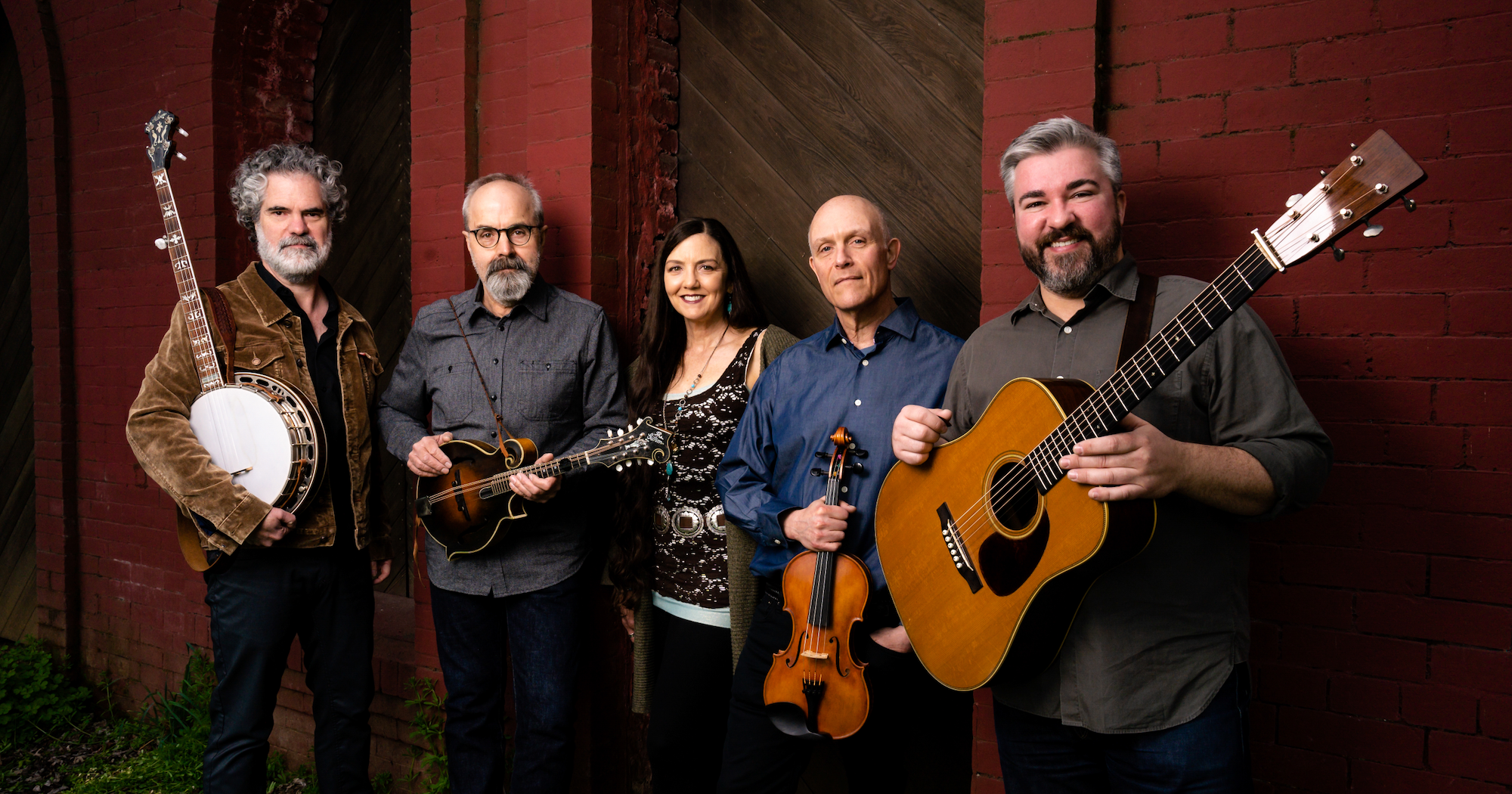
There are no U.S./Canada border wars when it comes to John Reischman. The revered mandolin master was born in Northern California but has lived in British Columbia since the early 1990s. His longtime band, the Jaybirds, are a quartet that includes two members who are also based in British Columbia (bassist/vocalist Trisha Gagnon and banjoist Nick Hornbuckle) and two who reside in America (fiddler Greg Spatz lives in Eastern Washington and guitarist/vocalist Patrick Sauber is from Southern California).

Their latest album, The Salish Sea, refers to the body of water between Vancouver Island and the British Columbia mainland. The record is their first since 2017’s On That Other Green Shore along with being the first to feature “new” guitarist Sauber on the entire album. The song “The Salish Sea” not only serves as the album’s title, but also is part of an original “Bluegrass Concerto” that Reischman was commissioned to create for FreshGrass in 2024. The honor is just one example in a long line of accolades for Reischman, who began his career in the Bay Area bluegrass/folk scene of the 1970s (including a stretch with the Tony Rice Unit) before moving to Canada, where he started the Jaybirds as well as performing solo and in other groupings.

In recent years, Reischman has seen his song “Salt Spring” become something of a modern bluegrass classic. He spoke with the BGS from his home in Vancouver about “Salt Spring” as well as The Salish Sea, his famous Lloyd Loar mandolin, and how he got into bluegrass music.

What was the process of putting the new album together?

John Reischman: There was one venue in Washington State where we had a residency. It was in the fall, in a beautiful spot. It was just ideal. So we took the extra day, worked up like six new tunes, and then started performing them right away. I guess this was October of ‘23.

And then you recorded the album in Vancouver?

In December of ‘23, I wanted the band to check out the studio here in Vancouver, where we ended up ultimately recording. I just want to make sure everybody was cool with it. I knew I liked it, because I had used it for my solo record, New Time & Old Acoustic. They all liked it. At the end of any tour we had that was close to Vancouver in 2024, I’d book a day or two in the studio, and we’d go record two or three or four songs. We were able to perform all this material mostly before we recorded it. … And it was great, because we’d be warmed up from the tour and we’d go in and track some tunes.

This album was the first in a while, and also the first that Patrick Sauber was fully on it.

Right, On That Other Green Shore came out in 2017. That was kind of the tail end of our time with [guitarist] Jim Nunally being a band member. He was exploring other things and decided he’d leave the band. We had a few more tracks to do… and we had some dates on the calendar.

I thought of Patrick immediately, because I’d known him for many years and I thought he’d be good. So he signed on for a tour and then another tour and it was just like, “This works great.” We asked him to join and he immediately said yes. He was a great fit.

How did the Jaybirds come together in the first place?

I didn’t really set out to have a band, except for the fact that I had a solo record called Up in the Woods. There was a local festival, so I put the band together to help promote the record. Seemed like a good idea. And I liked playing with all those people and it just continued on.

It’s called John Reischman and the Jaybirds, because I conceived of it. My name was probably the most well known at the time, but I wanted to be integrated into a bluegrass band. People present stuff, and I almost always accept it. Mostly it’s a pretty democratic presentation, I think. That’s what I like. It’s not Gladys Knight & the Pips.

Can you talk about the title track and how it’s also part of a larger project?

I had been asked to write what they call a “Bluegrass Concerto” by the East Coast festival FreshGrass, and I came up with these three tunes that work together. The first tune was the first movement, which ultimately was called “The Salish Sea.” I thought this will be my contribution to the new Jaybirds record, because they were involved with the performance of the Concerto.

We performed it [at FreshGrass in 2024] and I really liked the idea of having two mandolins and I’ve always loved two fiddles. I knew Darol Anger was going to there, so I asked him if he’d play twin fiddles on it. And then Sharon Gilchrist is a good friend and great mandolinist; we’ve played a lot together, and I asked her to play a mandolin on two of the three pieces.

I’ve got to acknowledge David Grisman, because the music is influenced by his “Dawg Music.” It’s also the sound that I initially heard on his first solo record, The David Grisman Rounder Record. He incorporated harmony mandolin on a lot of it.

It must have been very inspiring and gratifying to receive this commission.

You know, I’ve written a lot of tunes and a lot of folks have learned my tunes, which is really gratifying. But to have been commissioned to write this and have the confidence of this great festival and organization, yeah it was.

I had plenty of time to work on it and the time that it mostly came together was when I think my wife was visiting family. I had the house to myself. That first piece, in particular, really developed over a period of time. The second one [“The Family’s Farewell”], I came up with the A part pretty quickly and it took a while to get a bridge for it.

The third part [“The Little River Ramble”] was similar. … The thing about the concerto format is the third movement typically has an extended solo section and it’s often a bender where it’s just the featured soloist playing solo without any accompaniment. But I wasn’t really comfortable so much with that. I thought, I’ll just have it break down and I’ll solo all through there but have it build back up.

I’m really happy with the response it has gotten. Even playing it just as the five-piece band, I think the band sounds great on it. It’s only like icing on the cake when the twin fiddles and the twin mandolins are there.

And this spring, you’re going to record the entire concerto?

At the end of March, we’re going to be on tour on the East Coast and the FreshGrass Festival has a recording studio. They offered to make the studio available, so we’re going to record that just as we performed it, with Darol and Sharon joining in. That will be part of a solo record, even though I’m using those musicians. And I have other sessions planned. I’ve done one session that will add to the whole thing. Those three tunes of the concerto will just be one component of the new recording.

“Salt Spring,” one of your older songs, has become a highly popular instrumental now in the bluegrass world. How much of a pleasant surprise has that been?

It’s kind of remarkable to me that it’s as popular as it is. I mean, I’m not complaining. It’s great. … But it’s interesting how it’s just traveled all over and people think it’s just a traditional tune in some circles. They have no idea that it was composed by me. That’s cool, too.

The Jaybirds recorded it and it came out on a CD in 2001. We were at a music camp with some folks from Colorado and they learned it. I think that’s largely the beginning of it getting circulated among other people – where they took it back to Colorado. They’re the “patient zero,” I guess.

I know that a certain generation of Berklee students were playing it a lot, and maybe a bit later – maybe 10 years later. It’s pretty cool having people play your tune when you’re not there. That CD was never available digitally until recently, but we made a video of it around 2011… and that was the source, I think, for a lot of people learning it.

And then you recorded it again with Molly Tuttle, Alex Hargreaves, Max Schwartz, and Allison de Groot on your 2021 solo album New Time & Old Acoustic.

I didn’t have all the material when I started that whole project, but I knew I wanted to re-record “Salt Spring” with some of these younger musicians who had grown up playing it.

What do you remember about writing it? And why do you think so many musicians have gravitated to playing it?

I was on Salt Spring Island [in British Columbia] staying with some friends and they had a little old turn-of-the-century Martin small-body guitar. I was just playing the guitar and I was playing out of a D chord shape, and the A part of the tune just kind of took shape under my fingers. It was memorable enough that I don’t think I had to record it to remember it. The B part was just this little phrase I would play on the mandolin, just noodling around … so I just kind of stuck it on there and it worked pretty well.

I think the thing about the tune is the basic melody is very simple, but the way I played on the mandolin, the technique I use, is not quite cross-picking. But it falls into a right-hand pattern that sort of mimics the way the frailing banjo is played with that “bum-ditty, bum-ditty, down-down up, down-down up” pick stroke. So, these extra “down ups” are drone notes and that just kind of enhance the whole overall effect. Because of that, it lays out really nicely on the banjo. Then on the fiddle, you can add drones and add to it that way. And on the guitar also, you can fall into that kind of “bum-ditty” pattern as well.

I think you can learn the tune pretty easily. It’s not super challenging like some fiddle tunes where they’re very detailed in the melody. It’s pretty straight and so I think that’s partly why people gravitate towards it.

You grew up in Northern California. How did you get interested and involved in music, specifically bluegrass music?

Have you heard of a guitar player named Robben Ford? He grew up in the same town where I did in Northern California. He was in a high school band with my neighbors. I must have been 12 or 13. They were rehearsing on a patio and I went over to listen. I was interested in music and I heard them play the Freddie King tune “Hideaway,” which Eric Clapton recorded on the John Mayall & the Blues Breakers record. My brother Steve had that record. I recognized the tune and I thought, “What? This is impossible. This sounds as good as the record!”

From then on, I was just focused on trying to play the guitar. I had taken guitar lessons prior to that, but it didn’t really work. But there were guitars around the house. So that was the thing that really sparked my interest in learning to play. But I was open to all kinds of music. I’d have access to the PBS station KQED and they’d often air Pete Seeger’s Rainbow Quest, where he’d have different folk musicians, bluegrass musicians, old-time musicians. I thought, “Oh, this is cool!” And then the mainstream presentation of bluegrass with The Beverly Hillbillies, having Flatt & Scruggs on it, and the Dillards and the Country Boys playing on The Andy Griffith Show.

At some point, I had access to a mandolin, which I associated [with] bluegrass music, and taught myself to play it. I tuned it to an open chord for a long time, like a banjo, which was incorrect. And I didn’t use a pick. But eventually I got things squared away.

I discovered the John Hartford Aereo-Plain record. I saw them on TV as well. That was very inspiring. Then I discovered Norman Blake and Vassar Clements. I come to find out they had their own records. … That first Norman Blake record, I couldn’t believe it. I just flipped over that, and I thought, “This is so great!” And I’d heard Doc Watson at that point, so I just got really interested in it, and focused on that music, primarily.

So, was the Good Ol’ Persons your first significant band?

Yeah, it was the first real pro band I was ever in, and I was a fan of theirs before that. I [had] lived in San Francisco for a short while and saw their original lineup, which included all women. And it was exciting to get the opportunity to play with these folks. Because I was living near Eugene, Oregon, and I was just playing the mandolin all the time – a lot with my brother, Steve – but I wasn’t in a band, and I was working on a farm, just part-time. And a friend from the Oregon bluegrass scene had joined them and they needed a mandolin player. He said, “I know a guy.”

That placed me in the Bay Area, which was a great scene. There were lots of good bluegrass bands. And the Grisman Quintet was there. … But the thing that set Good Ol’ Persons apart was their original material, because Kathy [Kallick] is a fantastic songwriter. And Paul Shelasky, who was in the band, also wrote great songs. That opened the door for me to try and write tunes – because, “Oh, these guys write tunes. I’ll try it.” I wrote a few and people liked them. That just gave me encouragement to keep at it, which I have done.

So consequently, when Grisman and Tony Rice parted ways, Tony was aware of me. He’d heard me play at the local bar. He wanted to put a band together and needed a mandolin player. So, I went to the audition and he hired me.

You are well known for having an antique Gibson Lloyd Loar mandolin. What do you think makes those mandolins so special?

I guess that [mandolin] was kind of the ultimate expression of Gibson mandolins. But there’s plenty of new makers and a lot of them are using that basic design. So, aesthetically and as far as the craft of the instruments, some of these builders are way better than the Gibson mandolins were to look at, but the Gibsons have 100 years of aging and playing.

I think the playing of the instrument contributes hugely to its sound. Because, if there’s a Lloyd Loar that left the factory and went into someone’s closet and never came out for 50 years, I don’t think it’s going to sound like one like mine that has been played consistently over time.

I feel fortunate to be the caretaker for this great instrument. I think for most bluegrass musicians, it’s not only the music, but it’s the tools. These vintage instruments, like the Martins from the ‘30s and ‘40s, and Gibson mandolins from the ‘20s, and old banjos, it’s just a vibe that goes along with the music and aesthetic.


Photo courtesy of John Reischman.

The Festival-Lover’s Ultimate Holiday Shopping Guide

2025 has flown by and as we enter December we once again find ourselves preparing for the holiday season. We think it’s important to focus on slowing down, being together, and being more intentional in our gift-giving. Which is why we’re thrilled to bring you the second year of the BGS holiday gift guide.

This installment of our guide, featured below, is specifically tailored to the avid outdoor festival-goer. Maybe they’re already planning out their next festival season a year in advance. Or maybe they’re the type who always has a bag ready, so they can pack up and pitch a tent when the music calls. Whatever their style, these gift recommendations from our friends, partners, and staff will be well-loved by those who like to take their musical experiences outside.


BGS Bluegrass Metal and Banjo Beanies

Warm noggins are all the rage this winter, and you can keep yours cozy with our two new original beanie designs. Freshly added to the BGS Mercantile, choose between two styles that are both sure to turn heads and start great conversations wherever you wear them.

Purchase Metal Beanie | Purchase Banjo Beanie


Green Goo Ultimate First Aid Care Bundle

Festivals can be unpredictable. This is why we love them, of course, but it’s also why we always arrive prepared. Green Goo’s Ultimate First Aid Care Bundle is the perfect prep kit for festival season, with four handmade herbal salves meant to soothe bug bites, bruises, scrapes, sore muscles, dry skin, and much more. Best of all, BGS readers can get 25% off their order with code HOLIDAY25.

Purchase


Guest Gifter: Chris Pandolfi
(GRAMMY-Winning Musician with The Infamous Stringdusters & Avid Fly Fisherman)

“If you know someone who travels to fish, they need the Orvis Carry-It-All Bag! It’s ideal for carrying a bunch of gear without all the rod tubes/bulk and you can carry it on to any plane, so you’ll never be without your essentials. I used to make the rounds just stuffing everything into my suitcase, but this Orvis gear bag is a total game changer and I never leave home without it if I’m heading out to explore.

The Flylow Micah Fleece is a really quality, stylish midlayer from one of my favorite apparel brands out there, Flylow. They make gear that lasts but also looks great, from the mountain to the stream to the stage. You can never have too many midlayers!” – Chris Pandolfi

Purchase Orvis Carry-It-All Bag | Purchase Flylow Micah Fleece

Chris Pandolfi is a founding member of The Infamous Stringdusters. He is also the host of the Inside the Musician’s Brain podcast and an avid fly fisherman and guide.


Eagle Nest Outfitters Lounger DL Chair

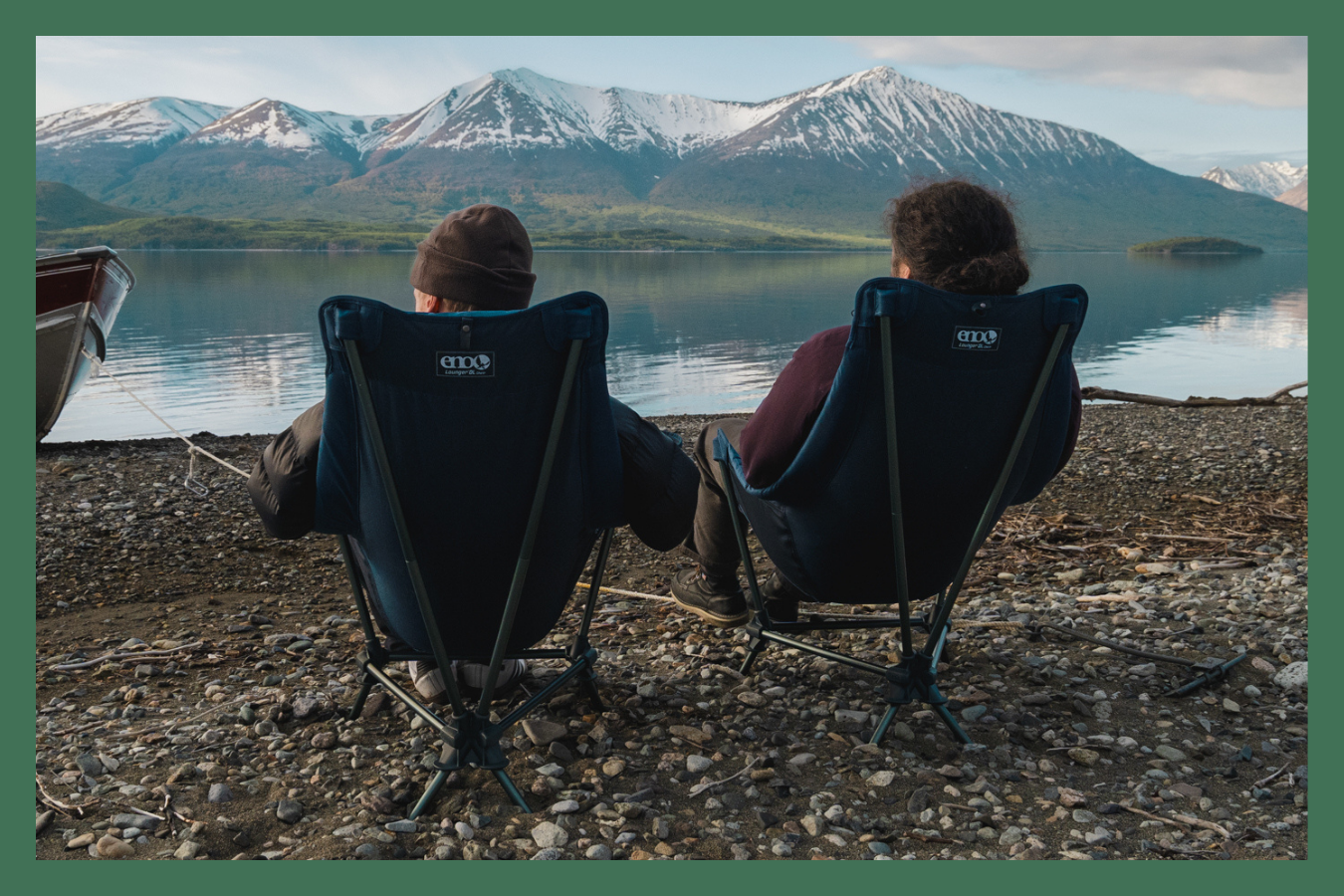
Please, for the love of god, replace your rickety old camping chair. At every festival campsite, the good chair is always obvious… and that one you “borrowed” from your parents’ garage ten years ago might just collapse at any moment. Upgrade your festival seating experience with Eagle Nest Outfitters’ Lounger DL Chair. This lightweight, portable hammock chair sets up quickly, is fully adjustable, and has a cushioned pillow and armrests — just trust us, it’s the good chair.

Purchase


Natural Life Cozies

After a long day at an outdoor music festival, there’s nothing like getting cozy back at your campsite. Natural Life has you covered on cozy essentials, with warm socks, sherpa-lined slippers, the super soft (and versatile) boho bandeau, and your new favorite mug for hot toddy night caps or coffee on a chilly morning. And the best part about gifting these around the holidays? Break them out early and stay warm all winter long.

Purchase


Guest Gifter: Amy Reitnouer Jacobs
(BGS Co-Founder & Executive Director)

“I spend enough time at music festivals to know that these days a sturdy clear bag is an absolute essential. But finding something that is efficient and cute is easier said than done. That’s why the Away Stadium Bag is on my wish list this year. It’s a hard shell clear bag that’s big enough to hold your phone, keys, glasses, lip balm, Loop earplugs, etc., getting you through security without skipping a beat. Added bonus: you can even get it monogrammed!” – Amy Reitnouer Jacobs

Purchase

Amy Reitnouer Jacobs is the co-founder of BGS and Good Country, as well as producer for concerts, stages, and experiential events throughout the country. She also collects and sells vintage homewares with her company Fernweh Flea.


WinterWonderGrass Tickets

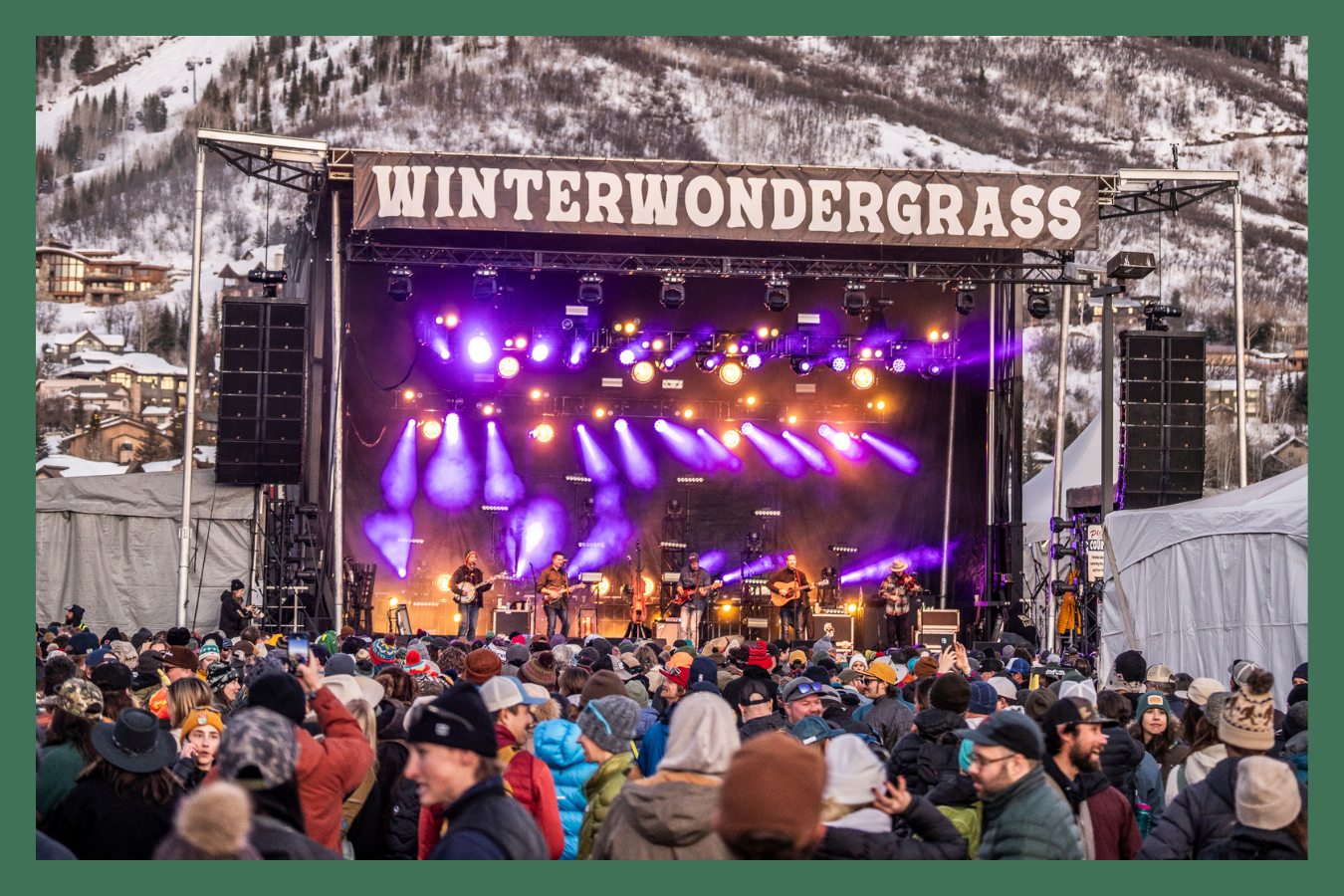
One of the most unique and anticipated festivals of the year is always WinterWonderGrass. This year’s lineup is one of their most fun yet with The Infamous Stringdusters, Leftover Salmon, The Devil Makes Three, Daniel Donato’s Cosmic Country, and so many other BGS faves jamming out over three days alongside the perfect powder of Steamboat Resort in Colorado. Tickets, packages, and more info here.

Purchase


Zeal Optics

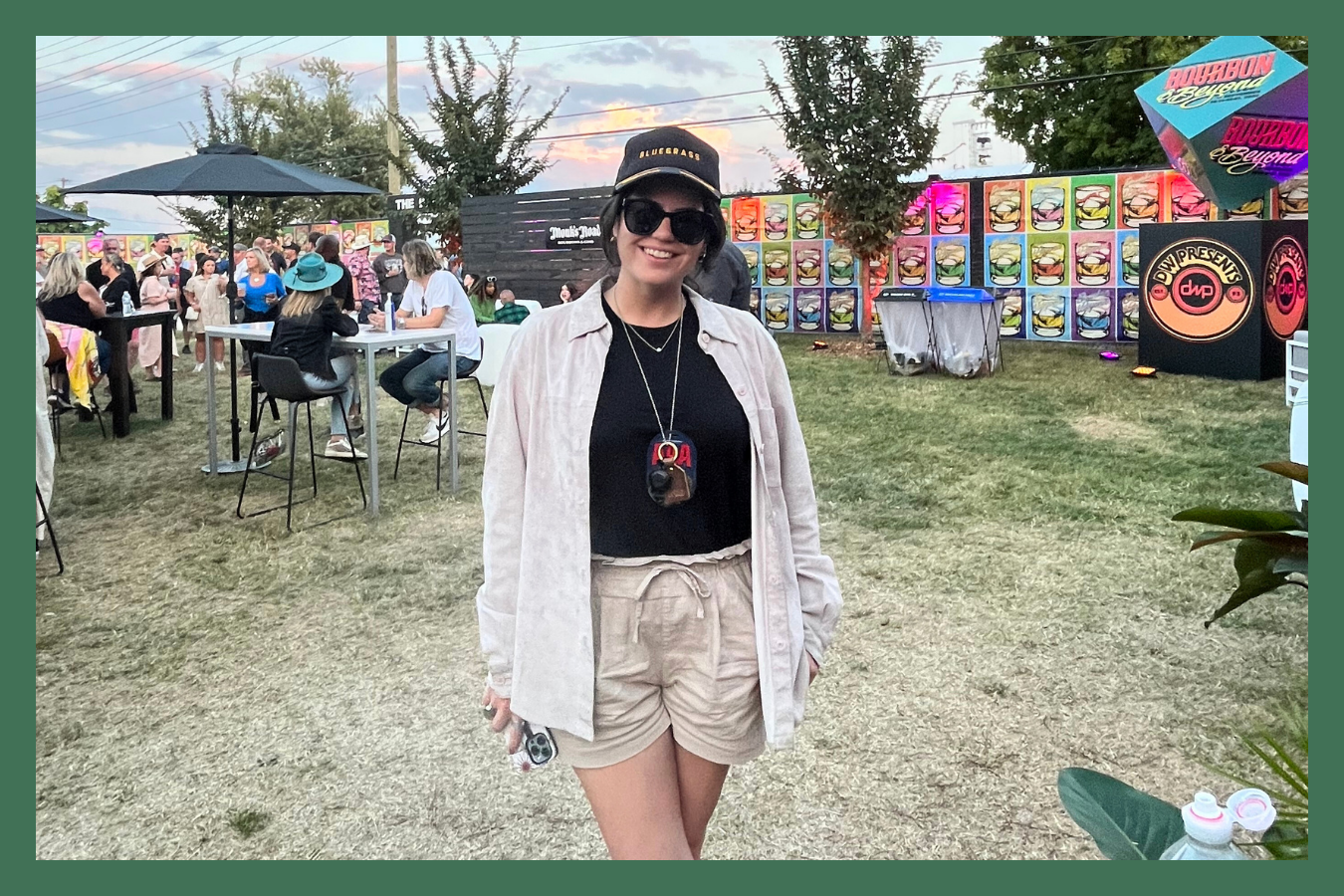
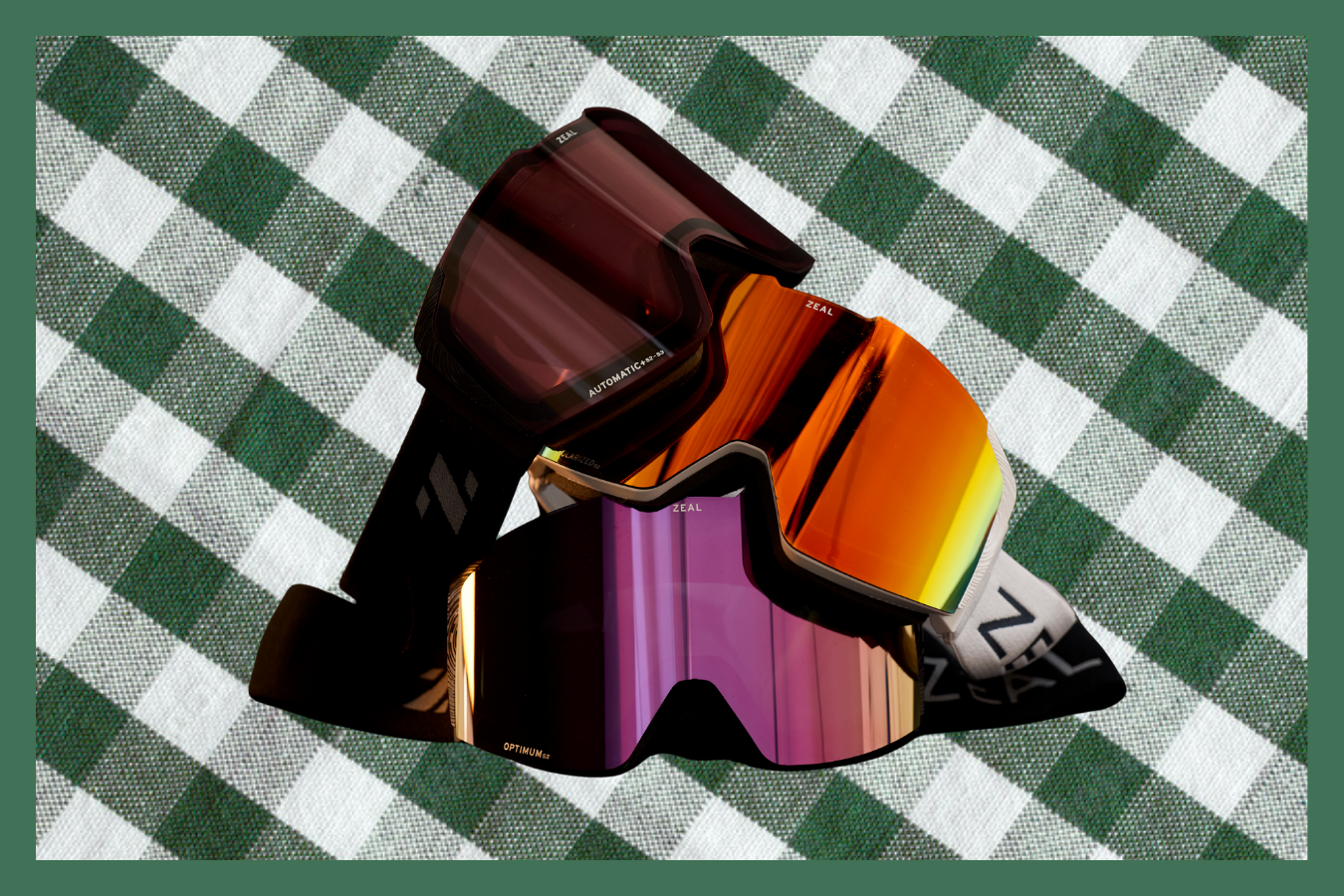
The right eyewear is essential for a good festival weekend, and from the desert landscapes of Stagecoach to the mountains of Telluride Bluegrass, Zeal Optics has your eyes covered. Their polarized Rangely sunglasses will keep you glare-free at Bourbon & Beyond, while their Meridian Goggles are perfect when you hit the slopes between sets at WinterWondergrass.

Purchase


_


This content brought to you in partnership with Green Goo and WinterWonderGrass.

The Musician’s Holiday Gift Guide

2025 has flown by and as we enter December we once again find ourselves preparing for the holiday season. We think it’s important to focus on slowing down, being together, and being more intentional in our gift giving. Which is why we’re thrilled to bring you the second year of the BGS holiday gift guide.

Below is the first of our guides – this one specifically geared towards avid musicians, be they recreational or professional players. Check out personal product selections from our friends, partners, and staff.


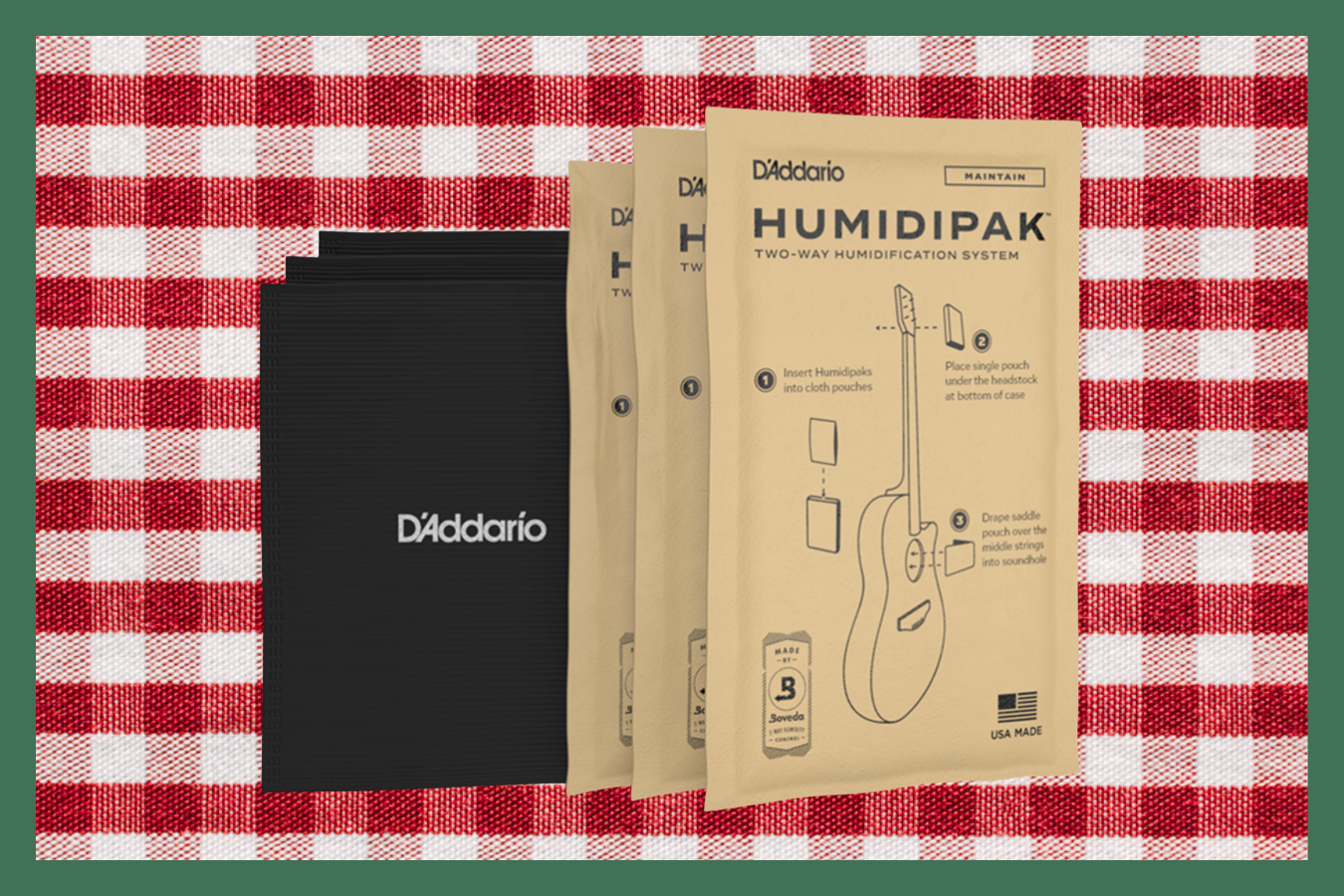
D’Addario Humidipak

Most beginner or hobby-level acoustic players don’t consider the proper storage environment for their instrument, but did you know that maintaining humidity and temperature can be just as important as buying a sturdy case? D’Addario’s Humidipak is a two-way humidification system automatically maintaining the ideal humidity level to preserve tone and protect damage. They even have three different variants to accommodate your specific humidification needs.

Purchase


Guest Gifter: Hannah Connolly
(Singer-Songwriter & BGS Social Media Director)

“Traveling as a guitarist you can never have too many capos. This Shubb C1 capo is my usual go-to, but I have friends who swear by the F1. It’s on my wishlist because although it’s a little more of an investment, it can be stored on the guitar itself (behind the nut of the headstock) when it’s not in use… making it nearly impossible to misplace on tour!” – Hannah Connolly

Purchase Hannah’s Pick | Purchase Budget Option

Hannah Connolly is a singer-songwriter based between Nashville and Los Angeles. Her latest release is Shadowboxing, and her third album is set for release in 2026. When she’s not writing or performing, Hannah also serves as the Social Media Director for BGS and Good Country.


nugs Annual Subscription

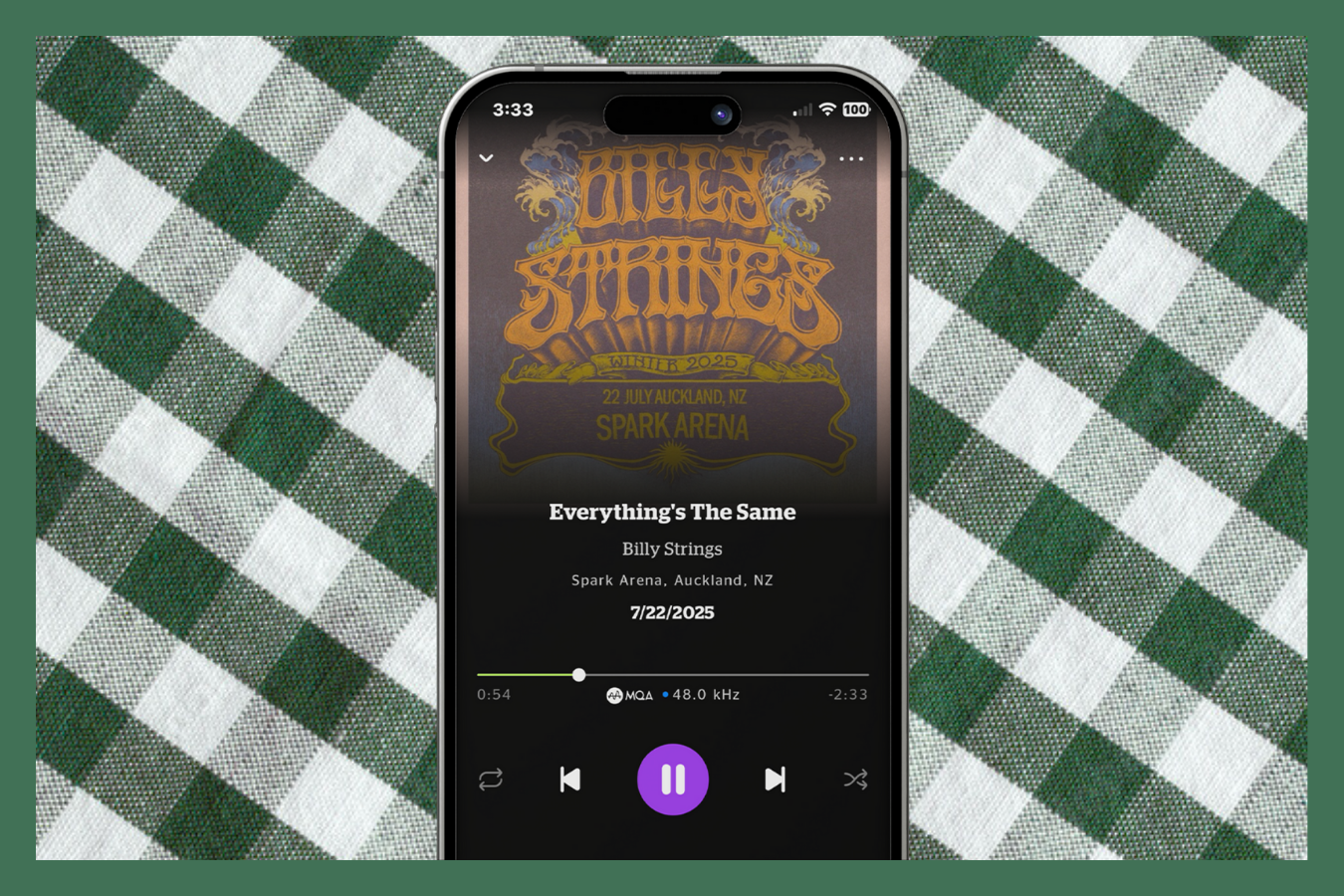
If you’re a regular reader of BGS, chances are you know that one person in your life who worships bootleg Grateful Dead recordings or would drive thirteen hours just to catch one more Billy Strings show. (If you don’t know that person, perhaps it’s you…?) Why not gift them All Access to a one-stop destination for concert livestreams, on-demand videos, and high-quality audio recordings with a nugs annual subscription? nugs partners with legendary artists such as Bruce Springsteen, Dead & Company, Pearl Jam, Goose, Greensky Bluegrass, Johnny Blue Skies – and of course Billy Strings – to ensure you always have a concert on the calendar.

For a limited time, BGS readers can get a nugs 1-year All Access subscription for 50% off the regular price using the link below. Offer valid through January 5, 2026.

Purchase


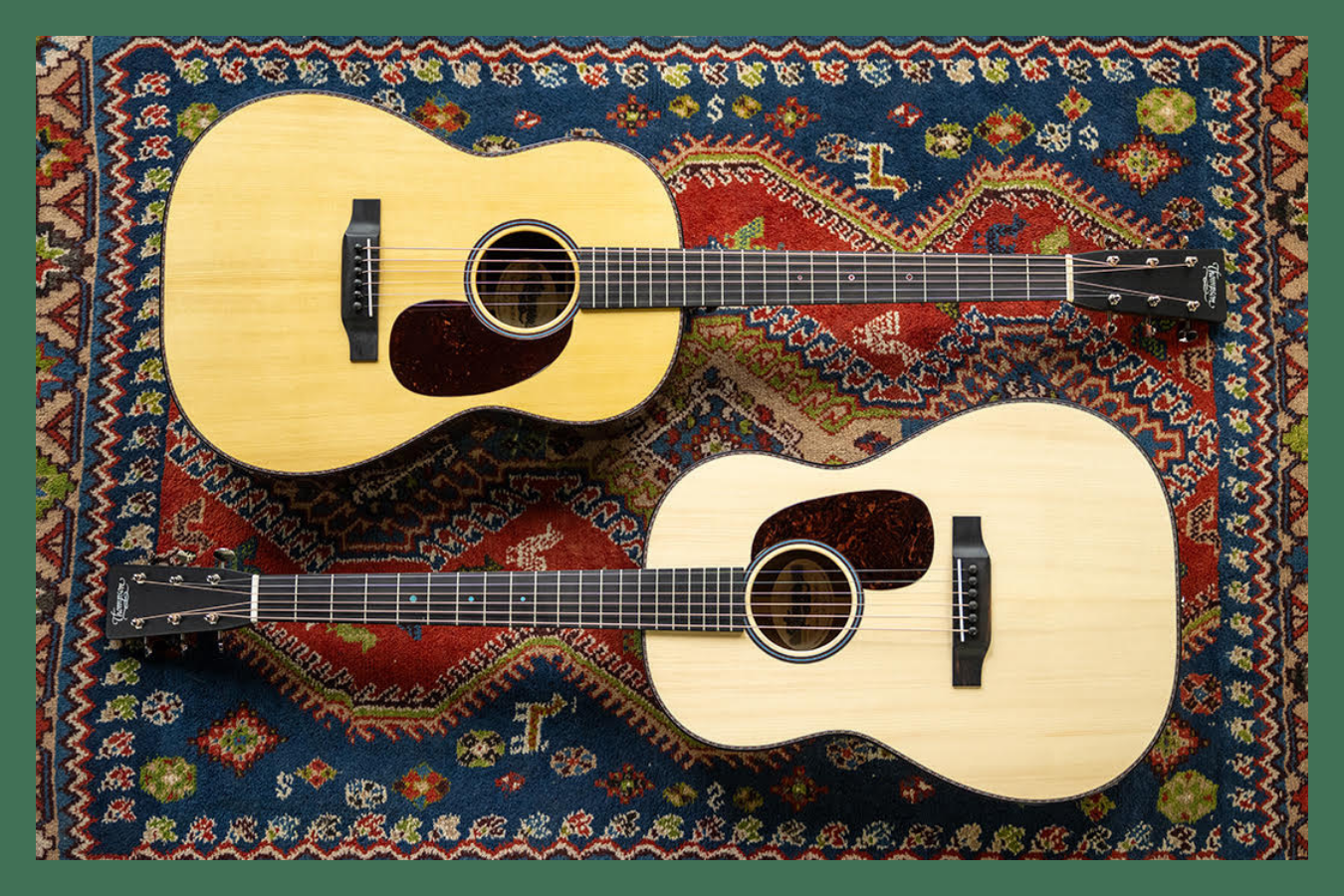
Preston Thompson Guitars – DMC Model

At a studio deep in the heart of Oregon, Preston Thompson Guitars has long been making some of our favorite high-end custom instruments. Their new model, DMC, is a smaller, deep bodied guitar which is fashioned after Willie Nelson’s famous “Trigger,” a N-20 Hybrid Classical. Between now and January 31, you can get one of these Spruce-top beauties for 15% off. After all, we could all stand to be a little more like Willie.

Direct orders only. Contact [email protected] for more info.


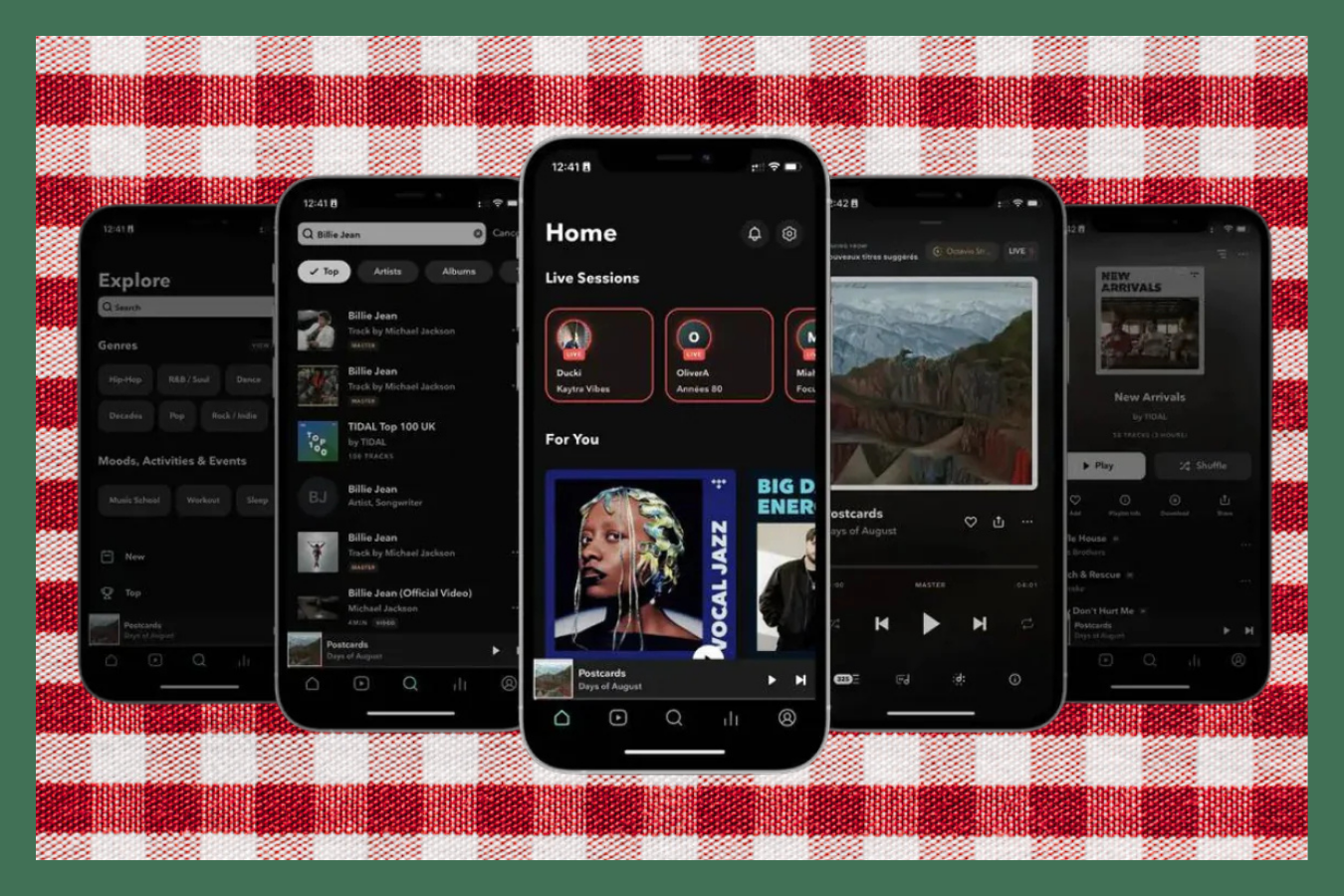
Qobuz or TIDAL Streaming Subscription

Suffice to say, we really hate that streaming services are paying out less than ever to musicians and songwriters in royalties (and don’t get us started on the lack of regulation over AI-generated music). But with that said, it’s more important than ever to make purchasing decisions that actually make an impact and help support your favorite artists. Consider gifting a subscription to an alternative streaming service like Qobuz or TIDAL — both platforms pay some of the highest streaming royalties to artists, and streaming at a higher audio quality audio than their major competitors. It’s the gift that keeps on giving.

Qobuz | TIDAL

And on a similar note, we all know a live music lover that has been shut out of a recent ticket on-sale that may be feeling frustrated about inflated prices on the secondary ticket market. A CashorTrade Gold Membership is a great way to support the face value ticketing movement. All transactions are insured so you can feel confident you’re not getting scammed.


Guest Gifter: Sierra Hull
(GRAMMY-Winning Musician)

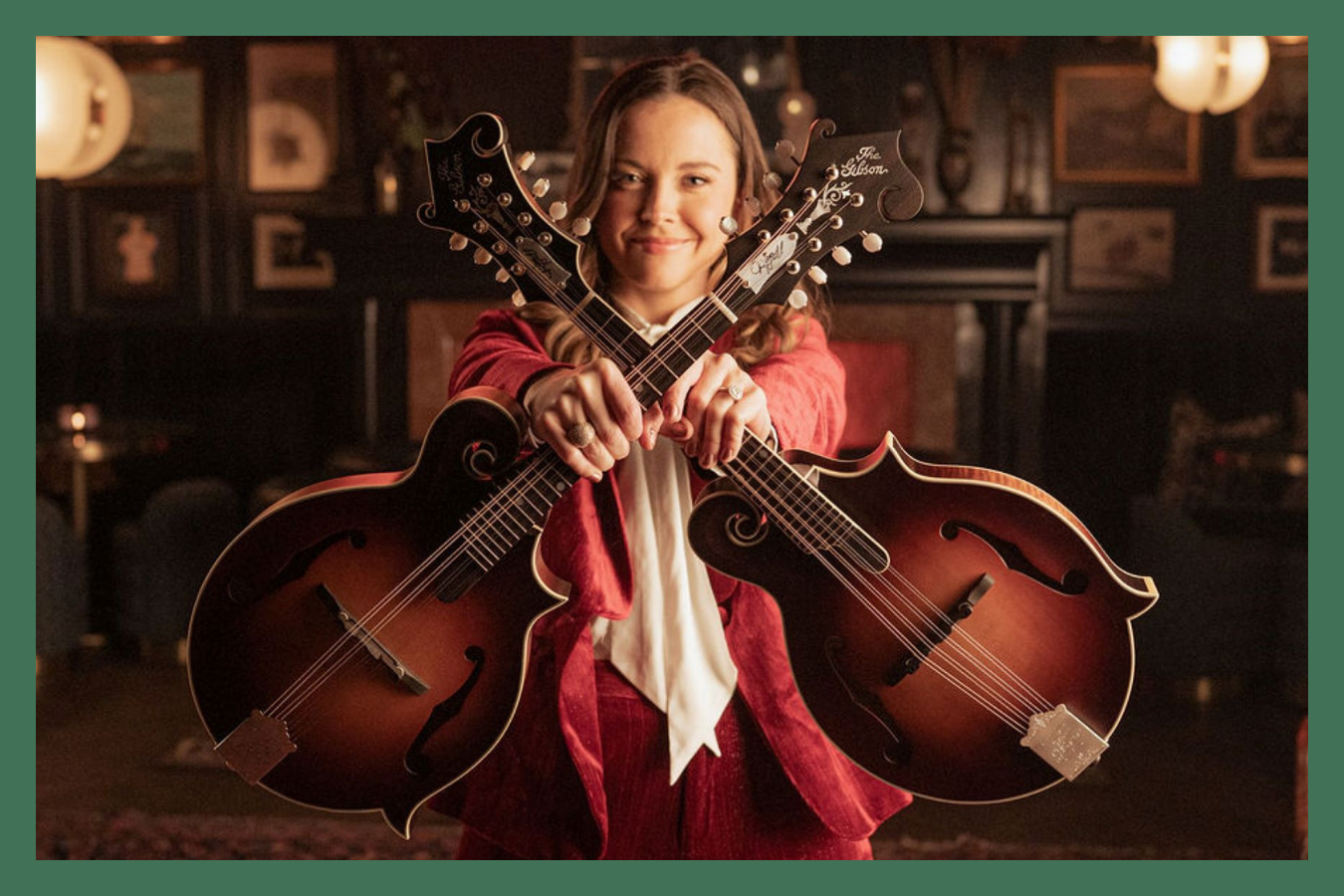
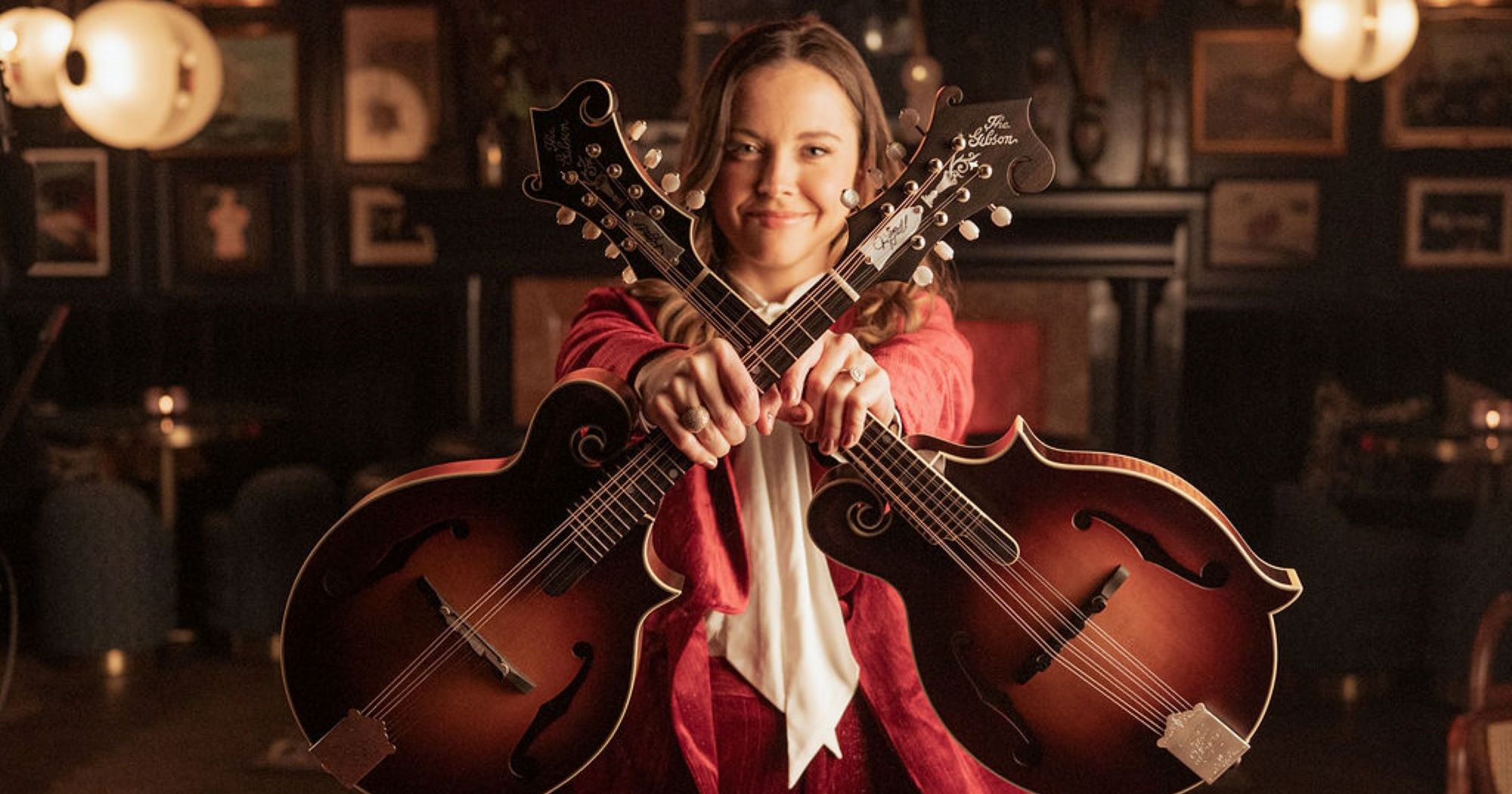
“I’ve had my eye on getting one of these Crossrock double mandolin cases so I can more easily bring along both of my new signature model Gibson mandolins (both the master model and the F5G) on tour! The last few months I’ve been carrying around three different mandolin cases, so I think it would be awesome to consolidate a couple of them into a single case. I currently have one of the smaller fitted Crossrock cases and they are really solid [and] such affordable little cases!” – Sierra Hull

Purchase

Sierra Hull’s latest record, A Tip Toe High Wire, recently garnered four GRAMMY nominations. Discover more and find out how to catch her on tour with the Milk Carton Kids in 2026 at SierraHull.com.


Yamaha Acoustic Guitars – FG/FS9 Series

For over fifty years, Yamaha has been handcrafting their acoustic artistry, incorporating traditional Japanese woodworking with innovative Japanese technology. Their flagship model, the FG/FS9 steel-string acoustic guitar, is ideal for singer-songwriters.

Check out bluegrass guitarist Jake Eddy playing his FG9 RX below.

Purchase


This content brought to you in partnership with D’Addario, nugs, Preston Thompson Guitars, and Yamaha Guitars.

Technology and Tradition Combine on Sierra Hull’s Signature Gibson Mandolins

Eyes on the future, heart in the past – it’s the cornerstone of how award-winning mandolin player, guitarist, singer, and songwriter Sierra Hull crafts her music, and how Gibson Master Luthier David Harvey and the Gibson Custom Shop crafted her new signature mandolins: the F-5 Master Model and F-5G.

The F-5 Master Model boasts a red spruce top, eastern curly maple back and custom narrow neck, and ebony fretboard, while the F-5G offers a red maple neck and body, Sitka spruce top, and ebony fretboard. Both models feature the Sierra Burst VOS Varnish finish and come with certificates of authenticity, Sierra Hull/Gibson BlueChip pick, and mandolin cases – vintage replica for the Master Model and hardshell case for the F-5G.

The instruments are the result of Hull’s many years of dedication, hard work, and talent, alongside a working relationship with Gibson that began when she was 12 years old and already a four-year veteran on her instrument. Growing up in Byrdstown, Tennessee, with few if any resources for musicians, the slightest instrument repairs required a two-hour drive to Nashville, where, at the time, Gibson had a shop in the Opry Mills Mall.

Hull had graduated from her first F-style mandolin, “a starter-model Epiphone that was so cool because it said ‘Gibson’ on the truss rod cover,” she says, to a flatiron mandolin she bought used from a local player and still has in her collection. In need of new frets, and in Nashville with family, they went to the mall in hopes of a walk-in or referral. Hull had recently played the Opry with Alison Krauss and upon entering the Gibson Showcase shop, Grascals mandolin player and Gibson staffer Danny Roberts recognized her and put a new, limited edition Adam Steffey signature model in her hands.

“My dad remembers them saying, ‘How would you like to have one of these?’ He’s thinking, ‘Yeah, buddy, I bet she would, but we ain’t got that kind of money to spend on a mandolin,’” Hull recalls. “They gave me that mandolin and it was such an unbelievable moment, as a 12-year-old, to be given this incredible instrument. That was the beginning of my relationship with Gibson. I’ve mostly played a Gibson mandolin ever since.”

Fast-forward to 2009 and Sierra Hull’s main instrument: her Gibson Master Model, built by Gibson Master Luthier David Harvey. “The 2009 was brand new at the time,” she says. “Dave made some modifications to it to suit what I was looking for and it has become my voice.”

That mandolin eventually became the springboard for her signature Master Model and F-5G, in line with her original specifications for the 2009. “I have small hands, so Dave took the neck down a little bit for me,” she says. “We put an aged varnish on it instead of the normal gloss, which makes it a little more unique than one right off the line.

“I’ve always preferred that thin, matte varnish type finish, so we decided to recreate that with the signature line. So many people often ask me about my mandolin; they think I’m playing a Lloyd Loar most of the time. I’ve put a lot of miles on this mandolin since 2009. I’ve played it as my primary instrument since then. When I got it, it didn’t look anything like it does now in terms of being so worn, but it didn’t look brand new and shiny, either. I always loved that about it, that there was a certain aged vibe to it already because of the finish.”

In addition to the aesthetics, the Master Model parallels Hull’s unique sense of blending her deep bluegrass roots with contemporary sounds. It is, she says, the perfect instrument for that mix of past and present. “When I think about the kind of music I play, both these days and throughout my career, I’m so rooted in traditional bluegrass,” she says. “I grew up going to bluegrass jams on the weekends, sitting in a circle – you need a mandolin with volume, something you can dig into, like the Master Model.”

“Part of the reason we all want to play F-5 mandolins is because Bill Monroe, the Father of Bluegrass, played an F-5,” she continues. “I love an A-style mandolin as well, but there’s something that makes you feel legit about playing bluegrass on an F-5 mandolin, because it just feels right – the feel, the look, the sound, the pointedness that those F-style mandolins have. The idea of having a mandolin that you can really channel that traditional thing that as mandolin players we’re born to love in bluegrass music – Gibson is the gold standard for what we think of in terms of every F-style mandolin that you see.

“There’s a lot of great builders out there, so many talented luthiers building beautiful mandolins, so it’s no slight to any of them. But nobody would be doing that if Gibson didn’t exist and build these F-5 mandolins with Lloyd Loar’s stamp of approval on them. When I pick up my Master Model, it feels like the connection to that legacy.

“Even though I tend to think my sound is more progressive and modern – way more so than what you think of when you think of Bill Monroe – that’s the world I come from, so I want a mandolin that feels connected to those roots. But the clarity, the top end, the sparkle that these mandolins have, too – they have a large span on what they can bring to the table. No matter what musical direction I go in, I never find myself lacking from the side of what the instrument can do. It really shows up in all those situations.”

Bringing the Sierra Hull Master Model and F-5G from concept to showroom was a two-year process. Hull, David Harvey, and Gibson worked closely, taking time and care to not rush the work, but instead building the mandolins to her exact specifications.

“As a youngster I couldn’t have dreamed of having my own signature line with Gibson, so it was wild to get the call,” she says. “I’ve learned so much in this process over the past couple of years. Getting to go up-close, help pick out the wood, and see it go from a chunk of wood to mandolins that have my name on them is such an experience. To see it all come to life is a full-circle moment that takes me back to sitting in the Gibson Showcase at 12 years old and playing one of my heroes’ signature lines. To see these mandolins with my name on them is overwhelming. It’s such an honor.”

Mat Koehler, Vice President of Product at Gibson, joined the company almost ten years ago. He says bringing the vision of Sierra Hull signature mandolins to fruition was, in fact, over a decade in the making, beginning with conversations and leading up to the present.

“Even ten years ago, Sierra was one of the best, if not the best, mandolin players in the world,” he says. “When I got here, I was like, ‘Why don’t we have a Sierra signature model?’ The answer, of course, is very complicated. I think everybody’s intention was to make that happen, but we had a restructuring of the company, change of leadership, change of management, a lot of things, a lot of obstacles. So this is really the culmination of a long time spent both ideating what a Sierra signature model would be and then executing it, finally. I am very happy and proud to be involved in some small way. But this is all Sierra and speaks to her incredible talents.

“Her impact [on the instrument] has been huge,” says Koehler. “She represents the next generation of players. She really refreshed the mandolin and offered a completely fresh take. Mandolins are a little bit similar to banjos in that with bluegrass music in the mainstream, if it’s not Mumford & Sons or Nickel Creek, it’s almost ‘out of sight, out of mind.’ Sierra has done an amazing job of taking mandolins into the mainstream in both her music and her collaborations with other amazing musicians. I see a recharging of the bluegrass world right now and Sierra is one of the many leading the charge.”

At the intersection of tradition meets technology, precise replication of Hull’s Master Model in order to build her signature mandolins was done by 3D scanning of the 2009 Master Model, a process Hull describes as “kind of like an ultrasound of your instrument. They run it over the whole instrument, you see it on the screen, and they capture all the specs in a detailed way.

“It gave us a good, strong starting point to mimic the Master Model that I love so much. From there, I got to pick out the wood and watch the process in real time. Essentially they made a replica of my mandolin that Dave Harvey, for fun, distressed to look like my mandolin, and they nailed it on the first try. We used those scans to build the signature line.”

True to her preferences, she selected a thin matte varnish finish on the models, a custom look that Gibson titled “Sierra Burst.” She also opted for the traditional Loar nut width and flat, scalloped fingerboards. “It’s much like I feel my career tries to do – lean into traditional while having some progressive new things as well,” she says.

“We did a custom tailpiece design. I didn’t want a lot of flair on the instrument. I didn’t want crazy inlays or my name spread across the fretboard. But I’m so honored to be the first woman to do a signature mandolin line with Gibson, so part of me did want a little touch of feminine something on there. If you look closely, there’s a little heart dotting the i on my signature on the truss rod. On the tailpiece, the traditional script says ‘The Gibson,’ but where the tailpiece has a curve up top, you’ll see a little heart built into the design, and a little bit of a heart at the bottom and my initials.”

“Sierra has played dozens of original Lloyd Loar 1923 F-5s, so we couldn’t cut any corners with her,” says Koehler. “We wanted to make sure her instrument was on par with any of the amazing mandolins she has played, because she would know right away what looks right, feels right, and sounds right. There are lots of different ways you can spec mandolins, but hers is true to the 2009, which would have been, at the time, a core Master Model F-5.

“That mandolin is her number one instrument to this day, so obviously we had the recipe. … Sierra’s took the very same path as our historic reissue 1923 F-5, which was we scanned her mandolin, we detailed it down to every tiny little nick and ding on it, just so we had a record of the current state of that mandolin, how it looked. The feel of the neck is really unique on hers because it was handmade by Dave Harvey at Custom.

“[3D] scanning has been a complete game-changer for us. Not only has it opened the door to be able to recreate instruments more accurately, it’s rekindled relationships with artists. Customers and fans of Gibson who want the most accurate now can finally have it, knowing it’s mapped identically from the original instrument. … Now, in a matter of maybe twenty minutes, you can do an entire mandolin, just waving a wand over it. That wand is capturing thousands and thousands of points…”

When the mandolins were ready, Hull – still a bit incredulous about having her own signature line – made a special trip to the Gibson shop to test each Master Model. “I guess it’s rare for someone to ask to do that, but I was like, ‘Can I come in and play all these?’” she says. “So we just made a fun day of it. The consistency of the sound, the build, and the playability is all at an insanely high level. All this stuff is done by hand and it’s no small feat to accomplish that. Dave sets them all up. He is the only one to set up my Master Model since 2009, so he knows what I want. Not that I expected anything less, but it was comforting and confirming that this is something I could be proud of.”

“We were overjoyed that she wanted to do it,” says Koehler. “That’s going over and above. She wanted to support this every way she could and obviously she was really excited about it, which makes us really excited. … For her to go the extra mile with us – we were very appreciative. … The fact that the endorsing artist would go to that length of playing it to test it out is amazing.”

It’s been a long, remarkable journey from Opry Mills Mall to seven-time IBMA Mandolin Player of the Year and two GRAMMY nominations, but Sierra Hull hasn’t forgotten the early days. Cognizant that signature edition mandolins are beyond the financial grasp of most players, her next collaboration with Gibson is an Epiphone model, bringing her back to her first instrument.

“I want this to be something that doesn’t price everybody out,” she says. “We’re going to work on an Epiphone model that will be a little bit more affordable for young players and people who are just starting on mandolin, the same way I was when I was a kid. It’s important to me not to have those people feel forgotten. I’m excited to work on it with Gibson as the next part of this story.”


Photo Credit: Courtesy of Gibson Custom Shop.

Ethan Setiawan’s Personal Encyclopedia Mandolinnica

A short history of the mandolin in America: The mandolin is essentially a small lute which has been around since the 1300s. Italian immigrants brought bowl-back mandolins to the States in the 1800s. Mandolin orchestras were big in the 19th and 20th centuries, believe it or not. In fact, a whole mandolin family exists with mandolas, mandocellos, and mandobasses out there.

Around the turn of the 20th century, Orville Gibson started to develop flat-backed mandolins constructed more similarly to guitars. Finally, in the 1920s, Lloyd Loar created the F5 mandolin, with its longer neck and F holes. These new instruments were built to project and fill a concert hall, though they were ill-timed – the mandolin orchestra craze was fading and not ’til Bill Monroe picked up one of those instruments from a barbershop in Florida in the ’30s did they come back into their own. Since then, bluegrass mandolinists the world over have played these instruments or copies thereof. I play an instrument by John Monteleone, who started innovating on Lloyd Loar’s design in the 1980s – and so the tradition continues.

My new album, Encyclopedia Mandolinnica, turned into a survey of Western and Northern mandolin styles quite quickly. It’s very much been shaped by these inspiring musicians who were very kindly up for playing a duet with me. We go on a real journey through bluegrass both progressive and traditional, old-time, jazz, classical, and Scottish trad. The chance to get to work with these heroes of mine has been such a pleasure and invoked several “pinch me” moments. One of the most beautiful things was getting to see how everyone approached our little 8-stringed instrument so uniquely. I learned something from playing with and working alongside each of the mandolinists that agreed to be a part of the project!

In putting together this playlist I thought about my personal inspirations as well as the mandolin’s place in musical cultures across the world. It ranges from hardcore bluegrass, to Brazilian choro, over to Scottish trad – with lots of things in the middle. It mostly features folks you can hear on Encyclopedia Mandolinnica. I hope you enjoy my guided tour of the mandolin! – Ethan Setiawan

“Victoria” – Ethan Setiawan & Mike Marshall

Mike is a legend of the mandolin. He was an early member of the David Grisman Quintet and went on to collaborate with Darol Anger, among others. He helped write the book on progressive acoustic music and mandolin styles therein. This tune of mine falls within that realm and Mike was the perfect person to play it with.

“Shoulda Seen It Comin’” – Mike Marshall & Chris Thile

Mike also duetted with this young guy Chris Thile, whom you may have heard of. The live record that this cut is from is one of my very favorite recorded mandolin performances. Both mandolinists are at the top of their game. This tune was in my ear quite a bit when writing the previous tune, which maybe you can hear?

“There Will Never Be Another You” – Don Stiernberg

Don is one of the world’s foremost practitioners of jazz mandolin – a combination of words you might have never thought you’d hear. He studied with the great Jethro Burns of Homer & Jethro before forging his own path forward into a style where few mandolinists have ventured. Don was a teacher of mine during high school and it was great fun to get to be in the studio together for Encyclopedia Mandolinnica.

“Jiguaraña” – Ethan Setiawan & Maurizio Fiore Salas

Venezuela has a rich and beautiful mandolin tradition that not many folks are aware of. This tune is a co-write between myself and Maurizio. We took a jig (a Celtic form in 6/8) that I came up with and Maurizio had the bright idea of putting it over a Venezuelan rhythm called guarana (also in 6/8). It’s always a joy to play with Maurizio, he challenges me in the right ways.

“Wonderful” – Kinnaris Q (Laura-Beth Salter)

Laura-Beth is at the forefront of the Scottish trad revolution in Glasgow, Scotland. This track by her band Kinnaris Q puts the mandolin front and center – when she takes the tune at 1:52 check out the facile right hand triplets! We co-direct the Glasgow Mandolin Retreat as well and it’s always great to get a tune with LB.

“Blue Grass Stomp” – Bill Monroe

This is where it all started for a lot of us. Bill Monroe, along with Earl Scruggs and Lester Flatt, in the ’40s had something electric and powerful, so much so that in large part bluegrass has been unchanged since then.

“New Cimarron” – Matt Flinner

Matt Flinner is one of my favorite mandolinists out there. One of the many things that strikes me about his playing is how good it feels. Everything is placed so precisely and beautifully. He also writes great tunes that beautifully synthesize lots of things we love about bluegrass, old-time, and jazz. This is one of my favorite tunes of his.

“Golden” – Ethan Setiawan

In a similar tradition to the last tune, this is my take on a progressive “new acoustic” tune. Darol Anger on the fiddle here, he produced this album and it was such a joy to work with him on it.

“O Voo Da Mosca” – Jacob Do Bandolim

While bluegrass was developing up north, another mandolinist was fusing styles down south. Way down south. In short, choro is a fusion of classical forms with jazz harmony and Afro-Brazilian rhythms – similar on the page to ragtime. Jacob Do Bandolim (which translates to Jacob the mandolin, amazing) wrote many tunes that became staples of the style and was a virtuosic mandolinist to boot.

“Saint Cecilia Caprice” – Hamilton De Holanda

Hamilton De Holanda is the Chris Thile of Brazil. Amazing technically and a great musical mind. He wrote a double album of caprices and made the music public on his website, as well. Every mandolinist reading this: go download them, now!

“Salt Spring” – John Reischman

The greatest modern jam standard of our time! John is another great tune writer. He also gets the most beautiful sound out of the mandolin.

“Shetland Jigs” – Hildaland (Ethan Setiawan)

My own contribution to the Scottish trad lexicon from my duo with fiddler Louise Bichan, Hildaland. These are a couple nice jigs from Shetland. I’m playing mandola here, but I’ve tuned the highest string down a step and put on a capo so that the strings are tuned DAEA. This is inspired by the fiddle, which is crosstuned – common in old-time but not so common in Great Britain. We thought it was a cool connection to draw for our duo which goes between those styles at will.

“Canon at the Twelfth in Counterpoint at the Fifth” – Caterina Lichtenberg & Mike Marshall

Caterina is one of the greatest classical mandolinists to ever live. There have been vital classical mandolin traditions going on this whole time in Italy and Germany, which is so cool to see. Classical music is being made on the mandolin at very high levels and being taught as well.

“Queen of the Earth, Child of the Stars” – Sharon Gilchrist & John Reischman

A beautiful old-time tune, played so beautifully by Sharon on mandolin, John on mandola, and backed up by Scott Nygaard on guitar. I first heard this tune played late at night by Darol Anger and Bruce Molsky at Freshgrass a bunch of years ago now and it’s stuck with me ever since.

“Big Hill” – Ethan Setiawan & Andrew Marlin

Andrew has taken the mandolin scene by storm over the past several years with beautiful tunes and great trad bluegrass playing. Part of the thing that developed with this project was to write something that I thought might work well for each guest – not to explicitly write something that sounded like theirs, but to draw a little inspiration. I think this tune captured something there and I love the way Andrew accompanies the tune.


Photo Credit: Louise Bichan

Jim Mills: A Remembrance – By Tim Stafford

(Editor’s Note: Below, Grammy award and IBMA award winner, guitarist, songwriter, and author Tim Stafford pays tribute to his friend, collaborator, and one-of-a-kind banjo picker and historian, Jim Mills, who passed away at the age of 57 on May 3.)

I started out as a banjo player, but switched to guitar early on; our little group got a better banjo player. But I’ve always loved the banjo, especially pile-driving, inventive players like Earl Scruggs, J.D. Crowe, Paul Silvius, Ron Stewart, Ron Block, Sammy Shelor, Jason Burleson, so many others. I especially like playing rhythm guitar with a great banjo player – it’s like a bluegrass drum track. I’ve not enjoyed that feeling any more than when I got to play with Jim Mills.

Jim was a force of nature on the banjo. He was such a fluid, powerful player and he could be very aggressive on the instrument, which stood in strict opposition to his demeanor – they didn’t call him “Smiling Jimmy Mills” by accident. He played things on record that I had to continually rewind. How did the banjo survive that?

(L-R:) Barry Bales, Stuart Duncan, Jim Mills, Adam Steffey, Tim Stafford, and Brent Truitt, Nashville, TN 1998. Photo by Mike Kelly.

Once in the studio, I remember Jim breaking a string on the intro to “Bear Tracks,” a pretty hilarious outtake. It sounded like the world had exploded in the headphones. Jim just said, “What the ?!??!?” and Barry Bales let out a huge laugh – we had never heard anything like it.

It amazed me how eloquently Jim could talk in quiet rapid stretches and at length about everything related to old, Gibson flathead banjos. Like most vintage instrument topics, it’s a field of deep arcana, and the club sometimes seems too exclusive even if you truly love the sound of the things. But Jim never made it seem like anything but pure joy when he spoke, always returning to that million dollar smile. He was sharp, his collection of instruments was unrivaled, and he turned the basement of his house into a showroom.

And boy, did he know Earl Scruggs and his playing – inside out, all his instruments, all the bootleg recordings, even ephemera related to Flatt & Scruggs. He collected it and treasured it all, because it had never really gotten any better than Earl as far as Jim was concerned. The fact that Jim’s “desert island banjo” was Mack Crowe’s 1940 gold-plated RB-75 was validated for him by the fact that Scruggs himself mentioned Crowe as an influence on his playing in his 1968 book Earl Scruggs and the Five-String Banjo. Of course, Jim wrote his own definitive book, Gibson Mastertone: Flathead Five-String Banjos of the 1930s and 1940s.

Extremely intelligent, driven people are usually good at whatever they put their minds to. Tony Rice’s passion was restoring and repairing Bulova Accutron watches, and he was considered an authority in that area of expertise by people who had no idea he even played guitar. Ricky Skaggs told me that Mills was very involved in buying and trading antique shotguns as well as banjos and was just as well known in that arena.

It was all part of one cloth for Jim, though. A third-generation banjoist, a native son of North Carolina – the homeplace of the bluegrass banjo and a place so many great players still call home. When he joined Ricky Skaggs’s Kentucky Thunder, it was on one condition — he was staying in North Carolina.

We first met in the early ’90s when he was playing with Doyle Lawson and I was part of Alison Krauss and Union Station. He, Barry Bales, Adam Steffey, and I jammed for hours one day in Tulsa, Oklahoma as I recall. One of the songs he wanted to do repeatedly was “John Henry Blues.”

A few years later, the three of us played on Jim’s first solo record, Bound to Ride, for Barry Poss and Sugar Hill records. We tracked it at Brent Truitt’s Le Garage studio along with Stuart Duncan. Later Jerry Douglas overdubbed and Ricky Skaggs, Alan O’Bryant and Don Rigsby came in for guest vocals. And I sang “John Henry Blues.” It was such an honor to be on this record. Later on he did an instructional DVD for John Lawless and Acutab and I ended up backing him up on some tunes there.

I also played on a few records with Jim during this time, including Alan Bibey’s In the Blue Room. Near the end of a Patrick McDougal song called “County Fool,” after the last chorus, I knew Jim was going to come roaring in, taking us out to the end of the song. In anticipation, I hit a G-run that ended on the downbeat, on the bottom root note, a very unusual place for a G-run. I was sure engineer Tim Austin and producer Ronnie Bowman would want me to do it over, but they liked it so it stayed. Today I listen to that track and I’m the one who’s smiling – Jim could make you do things like that.

Jim wasn’t just a banjo player – he was a fine all-around musician and singer. His lead, fingerpicked guitar playing was superb and he was a fine songwriter. One year he came up to me at IBMA and said he had a demo of a song he’d written that he was sure Blue Highway could do. The demo was just him playing all the instruments and singing and it knocked my socks off. He had pitched it to Skaggs, but the boss man passed. The tune was based on a documentary Jim had seen and was called “Pikeville Flood.” We cut it on the Midnight Storm record and it remains one of our most popular live songs.

It was always a pleasure to see Jim and just get to hang out with him. Can’t believe I won’t get the chance to do that again. RIP buddy.


Photo Credit: Richie Dotson

WATCH: Billy Raffoul, “In My Arms”

Artist: Billy Raffoul
Hometown: Leamington, Ontario, Canada
Song: “In My Arms”
Album: For All These Years 
Release Date: July 28, 2023 (single); October 20, 2023 (album)
Label: Nettwerk Music Group

In Their Words: “‘In My Arms’ is a special one for me, because it’s something I wrote with my brother. For the first half of 2022 I was writing nearly a song every other day getting ready for this album, and there were about two weeks that Peter and I wrote at our place in Nashville. We would get six songs, and ‘In My Arms’ was one of them.

“I wrote it on my ’59 Gibson 335. I’m a lefty who plays right-handed guitars upside down and this song requires me to get pretty high up the neck for some of these chord shapes. Needed something with a double cutaway and the 335 did the trick. There’s no real picking pattern to this one. Just kind of raking into the chords and quite a bit of palm muting. This one was more about the tone, a ’40s tweed deluxe right at its breaking point.

“Playing the guitar upside down can be super inspiring when I’m writing. Having the bass strings on the bottom allows me to use my index, middle, and ring fingers to make some different bass patterns while my thumb plays the melody on the higher strings. These patterns are found all over this new album, particularly in songs like ‘Jim Carrey’ and ‘I Can’t Love You Anymore.’ I’m thrilled about this new album, because it’s the first time all of my influences are rolled into one record. Recording songs has always just been a vehicle to get people in a room together to hear them live, and the dynamic of this album is a good representation of what you’d hear from me in a live setting. I can’t wait to bring these songs to life on stage.” – Billy Raffoul


Photo Credit: Vanessa Heins

Bluegrass Memoirs: Lexington, Kentucky and J.D. Crowe, 1972

[Editor’s note: All photos by Carl Fleischhauer, except publicity shot of Esco Hankins]

On the afternoon of Sunday, August 13, 1972, Carl Fleischhauer and I were in Jackson, Kentucky, at the finale of Bill Monroe’s Kentucky Bluegrass festival where we’d been since Friday. In my notes, I wrote:

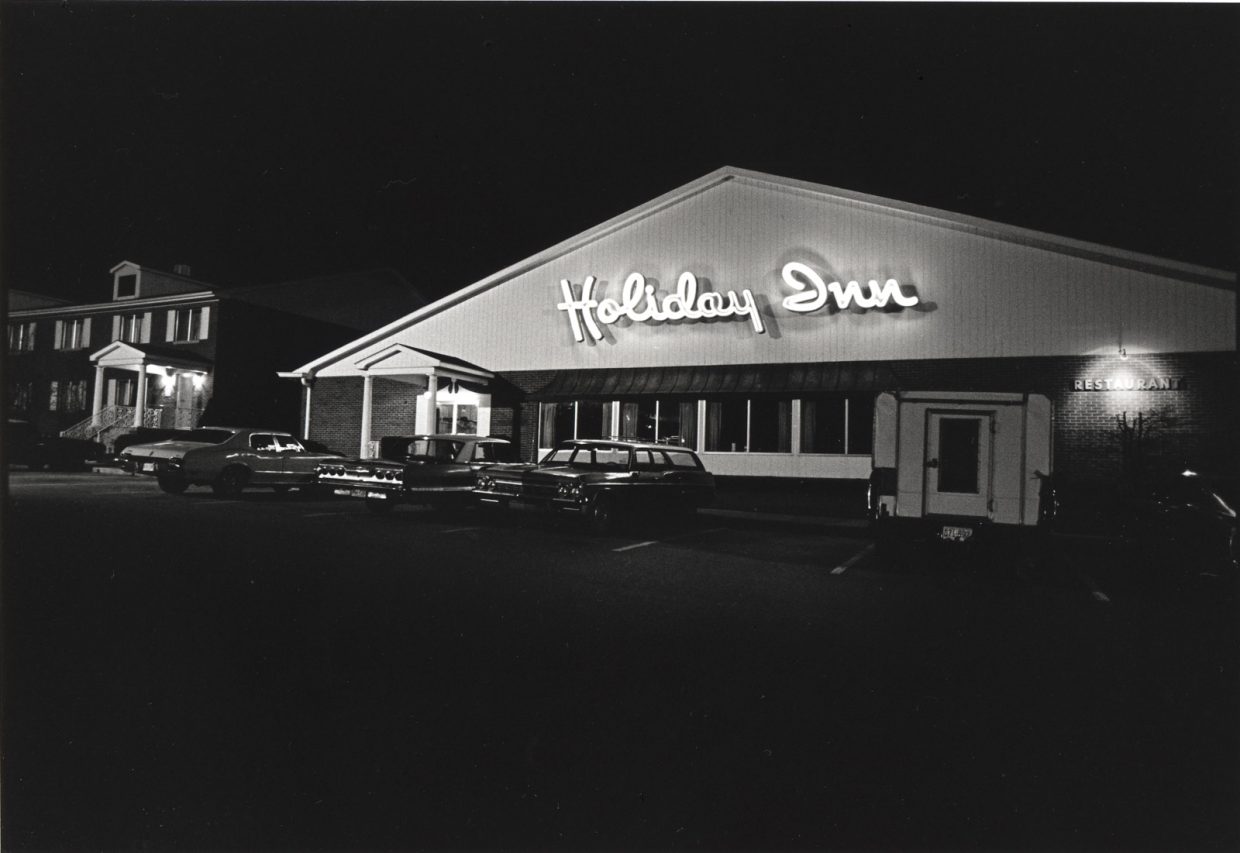
We left after talking briefly with Monroe (I bought his new LP [Bill Monroe’s Uncle Pen] and latest single [“My Old Kentucky and You”] from him) and drove [85 miles northwest] to Lexington where we got a motel — the Flora — run by an 85-year-old lady who liked Bill Monroe and told us that Uncle Dave Macon stayed in the Flora whenever he visited Lexington. Dinner late on the [U of KY] campus or near at an Italian restaurant — snuck in leftover wine and had ravioli. Sure was good to bathe and sleep in an air-conditioned room.

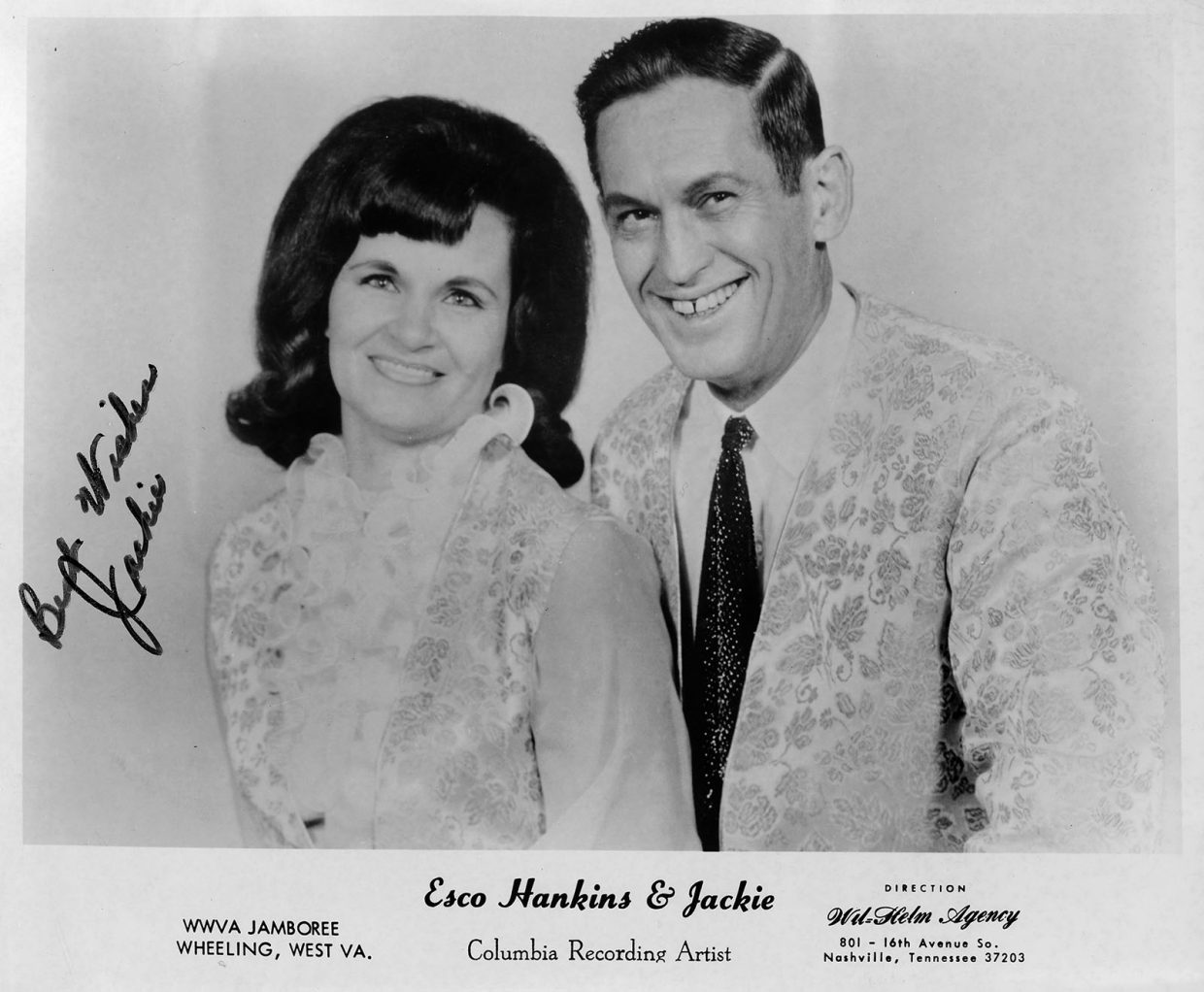
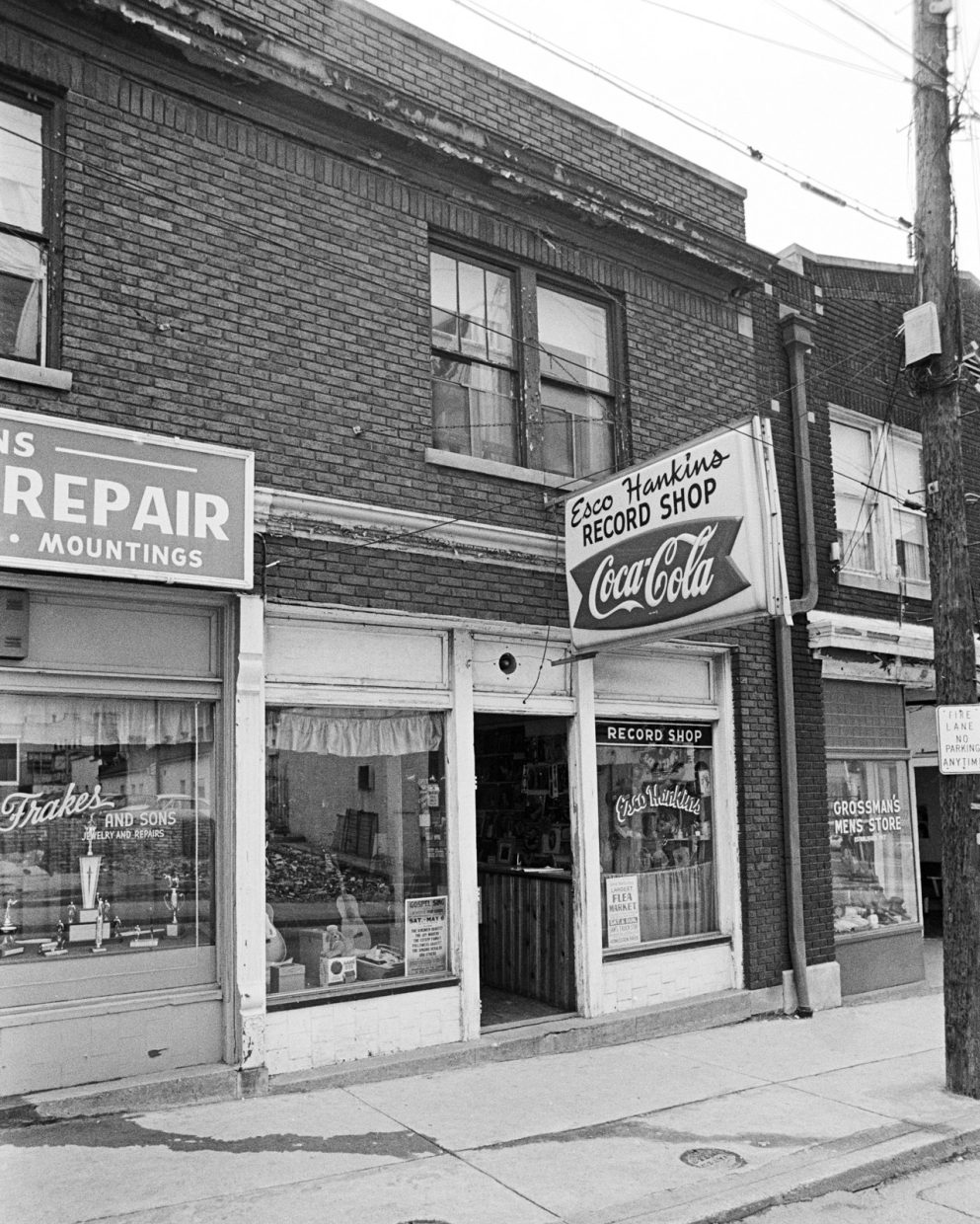
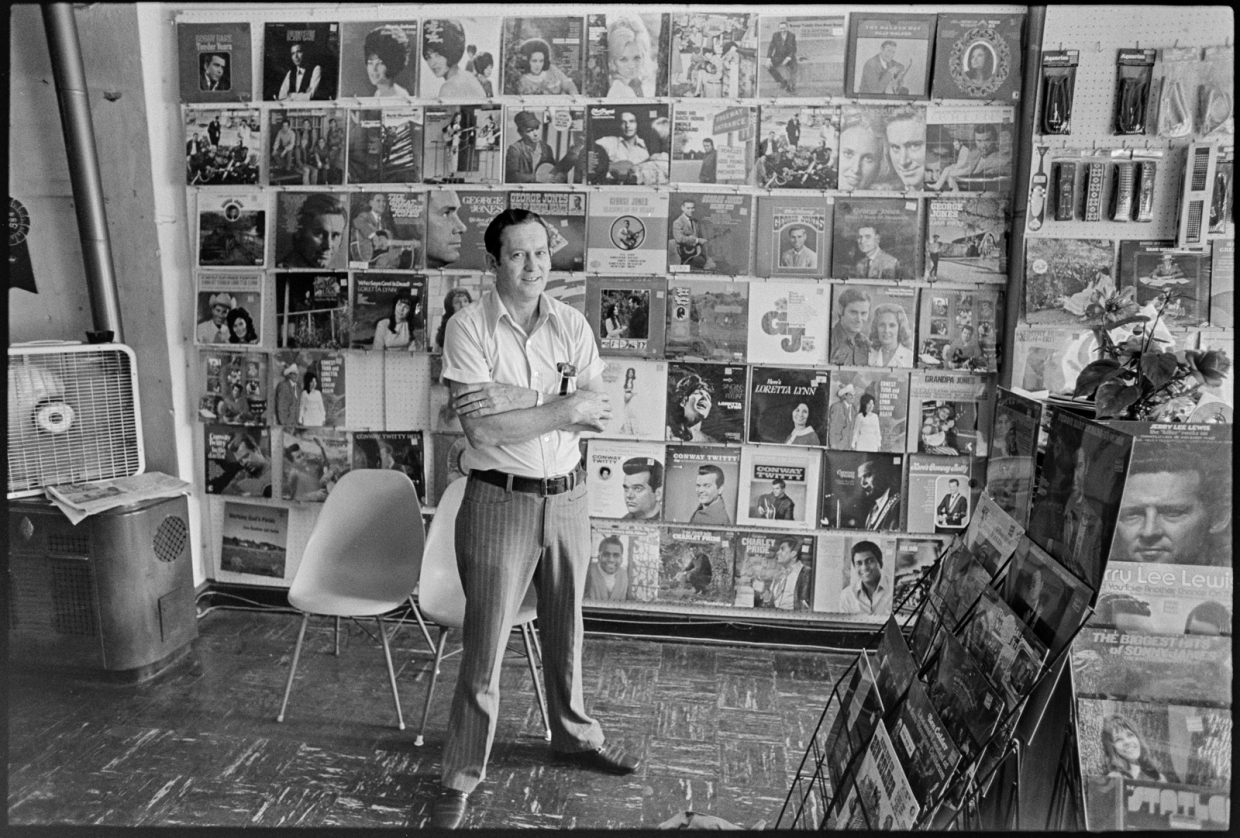
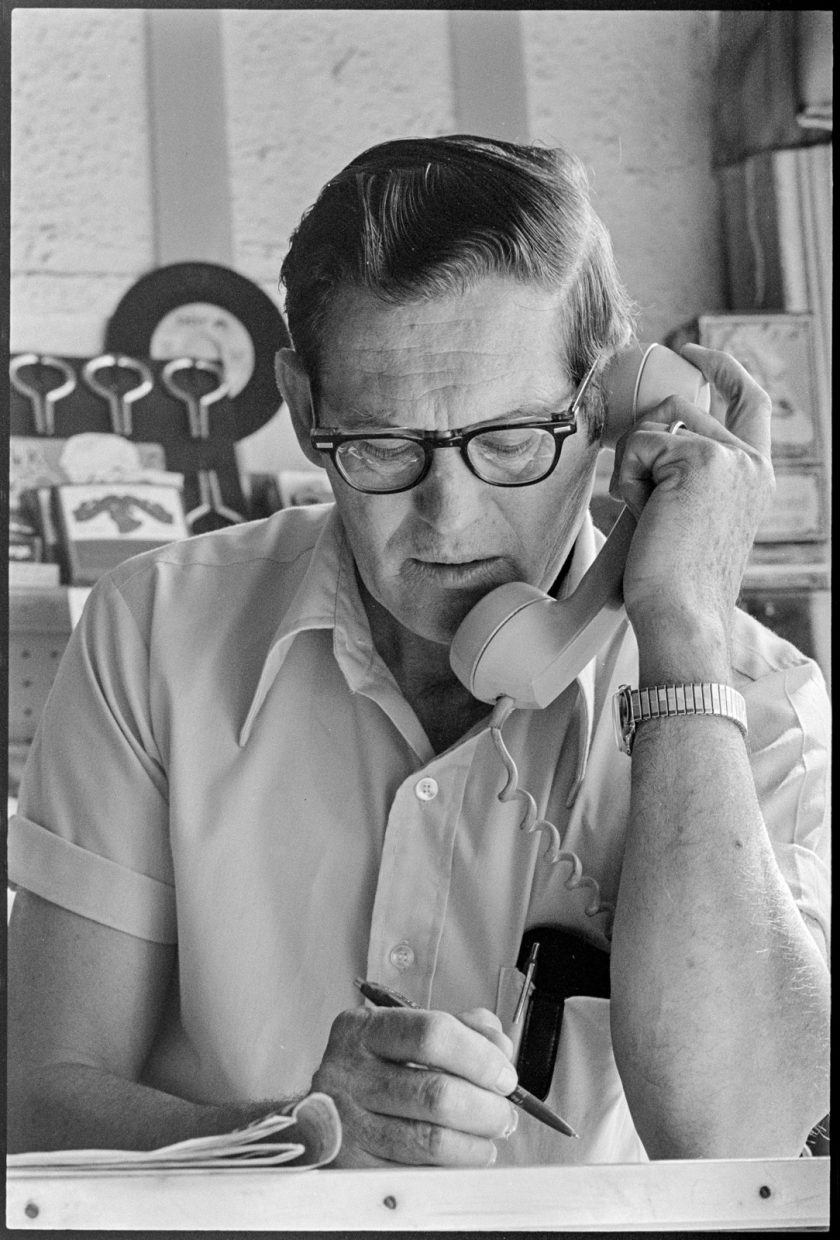
Monday morning after breakfast downtown and some cursory hunting in record cut-out bins, we headed to the Esco Hankins Record Shop. Tennessean Hankins, a Roy Acuff-style singer, began his recording career in 1947. He settled in Lexington in 1949 and performed for years on WLAP with his wife Jackie and his band, which included Dobro player Buck Graves. He also performed weekly on The Kentucky Mountain Barn Dance, which started in Lexington in 1949 and was broadcast on WVLK. 

Jackie and Esco Hankins publicity photo, original date unknown.

Flatt & Scruggs joined the Kentucky Mountain Barn Dance cast that year, influencing both Graves – to whom Earl taught his right hand, three-finger roll – and young J.D. Crowe, who was a regular in the audience and often went with his dad to observe Scruggs rehearsing with Flatt for their radio shows at WVLK. In 1950, at age 13, inspired and informally tutored by Earl, J.D. got his first banjo and began practicing what he’d seen watching Earl in action.

Esco Hankins Record Shop, Lexington, KY, April 1972.

Hankins held amateur country music contests, and at one he discovered teenager Crowe, who soon became part of his band. Marty Godbey’s Crowe On The Banjo: The Music Life of J.D. Crowe (2011) is a fascinating biography that narrates in great detail much of the story I would hear in my interview with Crowe that day in 1972. Early on, Godbey quotes from one of her interviews with J.D.: “I played for him quite a bit, it was my first paying job.” 

Esco Hankins in his record shop in Lexington, KY, August 1972.

I knew nothing of Crowe’s connection with Hankins on that morning when we walked into Esco’s shop. We browsed, bought some records, and then got into a conversation with him about country music history. He generously gave me a number of old songbooks and then, when we mentioned our interest in interviewing Crowe, he phoned Lemco, the Lexington record company with whom Crowe had recently made three albums and several singles, to get J.D.’s number. My notes:

…he ended up calling first Lemco and then J.D. Crowe and then handing the phone over to me to talk with J.D. — I thought it was still Lemco and went into a long rap about my project and what I was doing and how I would appreciate if they could put me in touch with J.D. — and the voice said, “This is J.D.” and I was embarrassed but maybe it was a good thing…anyhow we made an appt. for 3:00…

Esco Hankins in his record shop in Lexington, KY, August 1972.

Today, Crowe is best remembered as the banjo picking leader of the progressive New South, whose 1975 Rounder 0044 album with Skaggs, Rice, Douglas and Slone has become a modern bluegrass icon. He also was, in 1980, a founding member of the bluegrass supergroup The Bluegrass Album band, playing solid, perfectly timed, and driving banjo based on the style of Earl Scruggs and singing the harmony parts he’d learned with Jimmy Martin. He died on Christmas Eve, 2021. 

When I interviewed him in 1972, he’d been living in Lexington, his birthplace, since returning in 1961 after a five-year stint with Jimmy Martin and the Sunny Mountain Boys. For the next seven years he’d worked day jobs (with a couple of brief stints back with Martin) while playing in local taverns with his group, The Kentucky Mountain Boys. 

In 1968 they began appearing six nights a week at the Red Slipper Lounge in the Lexington Holiday Inn. It was a change from his former blue-collar tavern milieu – lots of young college students in the crowds. This gig was going strong when Carl and I visited him.

The Holiday Inn, Lexington, KY, April 1972. Featured at the Red Slipper Lounge at the motel that night was J.D. Crowe and Kentucky Mountain Boys.
The Holiday Inn, Lexington, KY, April 1972. Featured at the Red Slipper Lounge at the hotel that night was J.D. Crowe and the Kentucky Mountain Boys. Left to right: Larry Rice, Bobby Slone, Tony Rice, J.D. Crowe, and Donnie Combs.

J.D. was now working full-time at his music. A number of notable musicians had worked for him in The Kentucky Mountain Boys, like Doyle Lawson and Red Allen. At this point, in 1972, his band consisted of Larry Rice, mandolin, Tony Rice, guitar, Donnie combs, drums, and Bobby Slone, bass. He had just changed the name of the group to the New South

I had first seen Crowe in April 1960 when I went to Wheeling, West Virginia, with a couple of college friends. A month earlier we had opened for the Osborne Brothers at Antioch College. Bobby Osborne had urged the audience to come see them at the Wheeling Jamboree at WWVA. We took him up on it at spring vacation.

We drove down from Ohio and took a cheap room in a hotel close to the Virginia theater where the Jamboree was held. That evening we saw the Osborne Brothers as expected, but just the two of them were there. Bobby played guitar and sang “Down The Road” while Sonny picked the five. Good music, but no band! We enjoyed some of the country acts like Rusty and Doug and the fiddling of Buddy Durham. But we weren’t expecting any more bluegrass when Jimmy Martin and the Sunny Mountain Boys were introduced. It was the most memorable moment of the evening for us.

The four-piece band – Jimmy Martin, Crowe, mandolinist Paul Williams, and fiddler Johnny Dacus – bounded up to the mic from backstage and opened with Crowe’s the up-the-neck single-string banjo intro to “Hold Whatcha Got,” Martin’s latest single. 

The audience, which included a bunch of young women seated up front who had cowbells and knew how to use them, went bananas. It was a tight band, thought by many to be Martin’s best, and we were very impressed. Crowe’s banjo break was amazing. It marked him as a unique stylist.

Thereafter, when talking with fellow banjo pickers, I identified this single-string work as “J.D. Crowe style.” The success of “Hold Whatcha Got” led Martin to record several more using the same rhythm and banjo break style. 

Following our experience in Wheeling, we began listening to Martin’s late Saturday night show, after the Jamboree, on WWVA. The live sound of new songs like “My Walking Shoes” – driving, up-tempo stuff with Crowe’s banjo out front – caught our ear. 

J.D. told Marty Godbey about watching Earl rehearse: “I was more interested in trying to learn the breaks to songs and backup than instrumentals.” His work on Martin’s Decca recordings was definitive; Martin’s banjoists were told to play it like J.D. 

He began to record on Lemco with the Kentucky Mountain Boys in 1969 when the band included Doyle Lawson and Red Allen. This was the most recent Crowe recording I’d heard at the time of our August 1972 interview. 

That afternoon Carl and I drove to his trailer park home. We set up my cassette recorder and mic, and I began the interview with a few ethnographic questions: “Let me ask you just some of the basic things, like how old you are and where you were born and so on.”

J.D. Crowe home, Lexington, KY, April 1972.

He was 34 and told of childhood with country music on a farm six miles outside of Lexington. Then he described how his musical calling emerged in the fall of 1949 after Lester Flatt and Earl Scruggs came to town. 

I saw them in person before I ever heard their records. Cause, the first record I heard of them was one called “Down The Road.”

“Down The Road” was Lester and Earl’s newest record release in October 1949.

His family were regulars in the audience at the Kentucky Mountain Barn Dance. 

And I saw, they came here — fact, I never heard of ‘em!

They was there one night, and they was so well received that they was hired.

His first banjo was a 39-dollar Kay, but within a year he’d moved up to a Gibson. Scruggs was his informal mentor. At fifteen he was playing dances and at sixteen Jimmy Martin hired him after hearing him playing on the radio with Hankins. “Hankins?” I asked.

Yeah, I guess that was the first person I worked with professionally.

J.D. Crowe at home in Lexington, KY, August 1972, during a visit and interview with Neil V. Rosenberg (left).

After five years working full-time in Martin’s band – in Detroit, Shreveport, and Wheeling – J.D. quit. It was 1961, he was twenty-four.

I think I just, a, kindly got tired, I mean, you know, wanted to try something different. 

This was a phrase he used several times in the interview: I just wanted to try something a little different, he said later, speaking of the band he started. Moving back to Lexington, he got a day job, and formed The Kentucky Mountain Boys, who played five nights a week in local clubs until 1968. Then the Holiday Inn gig came along:

I give up my job and I’ve been doing it full-time ever since.

As a bandleader, he stressed the hard work involved in building a career:

…you know how the music goes, unsure, you know. Which anything is, really when you get down to it. It’s just what you want to make out of it, and how hard you want to work… And a, believe me, it’s, it’s rough. A lot of people, you know, think it’s a lot of, a bowl of cherries, you know, just have a good time, but it’s not like that.

I suppose the picking is only the small part,” I said.

That’s just the smallest part of it, really.

J.D. explained how his full-time band operated – fall, winter, and spring they played six nights a week at the Holiday Inn. Then they took the summers off: 

Work road shows

He told me about his band members — mandolinist Larry Rice, his brother Tony, and Bobby Slone — and explained about the Rices’ California connection:

They were born in Danville, Virginia, but … they went to California when they were just little shavers and they lived out there I guess ten or twelve years in Los Angeles. And that’s where Larry came from, he was living there at the time… Bobby Slone, our bass player, he’s been with me I guess about six years. Well, he used to live in California also, and he had worked with them when they was growing up and so he told me about them. And of course, Tony I met after Larry joined me. He moved back to North Carolina and he came up. 

His band were all veterans of the late ’60s LA scene where folk-rock and country-rock had blended with bluegrass. That musical mindset had a kind of creative vision that Crowe could empathize with. 

I used to be, if it didn’t have a banjo in it, then I’d cut it off. But now, with the exception of rock and roll and blues. I’ve always liked it. I used to listen to blues, just all the time. I like the style of B.B. King, of course he’s still going, you know, and, a Fats Domino, Little Richard, you know … they was in the fifties. And there’s just a lot of ‘em, and of course the rock changed you know, course what they call country rock, which is good, I like that. In fact, we do quite a few numbers of that ourself.

I asked: “When you were leaving Jimmy Martin, were you thinking of putting some of that into your music?” He explained:

That wasn’t out yet … I didn’t have too much choice. You (could) only do country, do bluegrass, or you just do hard rock. But now there’s so much new stuff’s out that it’s just endless, to what you can do, and take over songs and adapt them over, your own little thing, in style.

You can take with what you had and combine it with a couple other forms of music and come up with a little different gimmick, a little different style. That’s the whole thing, that’s what you got to have. 

Perhaps the most novel aspect of the New South sound at this time was the fact that since the prior September – almost a year before – they had been playing electrified instruments.

I had the idea, you know a, maybe that might be the answer, because, like I say, like we couldn’t get any records played on country stations. 

The Osborne Brothers had gone electric in 1969; J.D. said their example had influenced him “a little bit.” Also in 1969, Earl Scruggs had begun playing an electrified banjo with his sons in the Earl Scruggs Revue. Jim & Jesse had done an electric album in 1971. I asked J.D. if he’d recorded with his electric group.

The latest single is. Course I use a steel and a piano and a drummer, the whole works on that. In fact I didn’t play too much banjo, on account, if there’s a lot of banjo, some things, they won’t even, some stations won’t play it.

At J.D. Crowe’s home in Lexington KY, August 1972, during a visit and interview with Neil V. Rosenberg (right) as reflected in a mirror that also caught photographer Carl Fleischhauer.

We’d just been at a festival; I wanted to know what he thought about festivals. Had they helped his music?

The festivals have helped to a certain extent. You know. Right now, they’re trying, they’re getting too many of them, in my opinion. Cause you can over do a good thing, you know and, which I know we worked some of ‘em that didn’t turn out so good … most of ‘em, though, we’ve worked this year have all been great big ones, I mean a lot of people. And I figure they will probably continue having that kind of a crowd. And I think that it’s, it’s helped.

“Is it a different kind of crowd than the country music crowd?” I asked.

A, not really, I’d say a people that go to bluegrass festivals would also go to see Porter Wagoner and Conway Twitty and Merle Haggard — Nashville, you know. They like it, course they like bluegrass too. A lot of your country people, you know, like other types. There’s — they like it, but they won’t come out to see it, you know, they don’t like it that good. They can take it or leave it, in other words. That’s what you got to get to, those people, the general public. You know, cause there’s a lot of people come to the festivals and — but you know if you figure, the population of the world and you know, don’t look, it’s not too good a’ odds, so…

An experienced observer of the ongoing bluegrass scene, J.D. was keenly involved in his music business. He spoke of recording studio dynamics, record company practices, broadcasting politics, fan magazine reviews, and other factors in running a band. 

At that point I turned off the recorder and asked if he would show me his electrified banjo. When I turned the recorder on again, he was giving me the history of his banjo, starting with the neck:

This, this is original here, this part as you can see was pieced from a tenor, you turn it over and it’s a great job — see, that’s been pieced.

(N:) Oh, yeah.

(J.D.:) From there up. They matched it perfect, see, you can tell, right there, it starts up on the neck, go right in there, or right here, you can see its smaller up the neck.

(N:) It’s a splendid job.

J.D. Crowe at home in Lexington KY, August 1972.

J.D. had seen a lot of old Gibson Mastertones over the years. He knew chapter and verse about wood types and design details. But I wanted to know about his electric setup. I knew nothing about electric instruments, which were anathema to the ’50s folk revival I’d grown up in. He spent some time showing and explaining the details of his still-experimental pickup system (Godbey describes it well, p. 110). Carl asked if he could take a picture, J.D. politely told him no.

He told me what it was like to be playing electric, with the strings closer to the fretboard (“low action”) than on an acoustic:

(N:) Can you do licks that you wouldn’t otherwise do?

(J.D.:) Yeah. You can do a lot of stuff that holds, you know, you can get a sustain. That’s what nice about it. 

Then he announced what he was hoping on for the future:

I’ve got a six-string ordered.

In 1970 Sonny Osborne had added a sixth bass string to his five-string; it was part of a lush sound – string sections, twin steels, etc. – on their latest recordings. J.D. liked the possibilities the added string would enable, especially because he, like Sonny, was playing an electrified instrument. He’d even had to cancel a contract for a bluegrass festival that didn’t allow electric instruments. He told them:

Hell no! We’re gonna play electric…. We played up here electric for nine month and [then] we played acoustical; I sounded like I was playing a two-dollar Kay. Cause your hearing gets accustomed to that volume. And it’d take me three or four months to get back on the acoustical route.

Our interview ended there. Afterward I evaluated it in my notes:

Interview with J.D. Crowe — nothing spectacular, your hr.’s worth of history, but attitudes and early learning gone into pretty carefully. Very friendly but reserved in a reassuring way. Carl busy snapping away.

J.D. Crowe at home in Lexington, KY, August 1972.

We left Lexington immediately, heading for Louisville, where we were to stay with friends of Carl’s. Consequently, I didn’t get a chance to see J.D. and his New South in action at the Red Slipper Lounge. 

In 1973, the electric edition of the New South recorded an album in Nashville for Starday. Titled J.D. Crowe and the New South, it was issued on CD in 1997 under the title Bluegrass Evolution. Crowe played his 6-string on two of its ten cuts. Here’s one, “You Can Have Her.

The album wasn’t released until 1977, two years after they stopped playing electric. In 1975 when Larry Rice left the group, J.D’s new mandolin player, Ricky Skaggs, had insisted on “acoustical.” By then J.D.’s vision of “something a little different” was working just fine without the extra electricity; Rounder 0044 came soon after. 

The Holiday Inn, Lexington, KY, April 1972. The Red Slipper Lounge featured J.D. Crowe and Kentucky Mountain Boys; including Tony Rice (back to camera), Larry Rice (barely visible behind Tony Rice), J.D. Crowe, Bobby Slone (hidden), and Donnie Combs, drums.
The Holiday Inn, Lexington, KY, April 1972. J.D. Crowe and the Kentucky Mountain Boys; Tony Rice (back to camera), Larry Rice, J.D. Crowe, Bobby Slone (partly hidden), and Donnie Combs, drums.

That day I wished we’d taken the time to catch the band in action, but we had only five more days for our bluegrass field trip. Kentucky was just the start; our next planned stops would take us to Ohio, Indiana, and Illinois. Recently, a recording of an evening at the Red Slipper was uploaded to YouTube. Here’s the 1972 sound of the electrified New South (with drums): 


Thanks to Tim Stafford and Carl Fleischhauer.

Neil V. Rosenberg is an author, scholar, historian, banjo player, Bluegrass Music Hall of Fame inductee, and co-chair of the IBMA Foundation’s Arnold Shultz Fund.

Photo of Rosenberg by Terri Thomson Rosenberg.

Edited by Justin Hiltner

Bluegrass Memoirs: ‘Industrial Strength Bluegrass’ and the Dayton Bluegrass Reunion (Part 4)

(Editor’s Note: Read part one of our series on the Dayton Bluegrass Reunion hereRead part two here. Read part three here.)

My series of memoirs on the Dayton Bluegrass Reunion closes with a gallery of snapshots taken during the day’s proceedings. I had a new Japanese automatic camera of the type then described as “point and shoot,” an Olympus Quick Shooter Zoom. 

I returned home with a 25-shot 35mm film roll and immediately sent it to a budget speed processing outfit in Seattle. The prints returned (along with a new roll of film and a mailer) a few weeks later. 

Unlike today, when you can monitor photos on your digital camera after every snap, in 1989 you had to wait for the prints to arrive to see what came out and what didn’t. Here’s what came out. 

I started outside the concert site, Memorial Hall, in the afternoon before the concert — sound checks were going on inside — taking care to get a close shot of the Hall’s sign on one of Dayton’s busiest streets. 

Inside the hall that day, the stage was being set. Working as a stagehand, I helped handle communications between director Don Baker and the evening’s performers. Moon Mullins and The Traditional Grass and the Osborne Brothers were parked outside in their own vehicles. I first visited Moon and the band in an RV with the name, “The Cabin,” on the door. He introduced me to the band members, including his son Joe. Then I visited the Osbornes. 

I hadn’t seen the Osborne Brothers since a Saturday night three years before when I was in Nashville to promote my new book, Bluegrass: A History. They’d invited me to be their guest backstage at the Grand Ole Opry, where Sonny brought me onstage, introduced me and spoke about the book — a very generous act. During the concert I asked a fellow backstage bystander to take our photo. Born in 1937, Sonny passed away last fall; he is sadly missed.

At about the same time I noticed Fred Bartenstein and Tom Teepen nearby and asked them to pose for me. They were important figures in the discovery and revival of Dayton’s bluegrass scene. Recently, I sent this photo to Fred (original editor of Muleskinner News) and asked him for a caption: 

National editorial correspondent Tom Teepen (1935-2017, left) wrote an evocative memoir in the concert program about his days as a Dayton bluegrass fan. Here he meets backstage with Fred Bartenstein, who helped plan and organize the event.

The rest of my photos were taken at the Canal Street Tavern after the concert.

The executive producer of the event, Phyllis Brzozowska ran CityFolk from the start until its end about ten years ago. Behind her on the left is Greg Allen of the Allen Brothers. The individual on the right was one of the crew that director Don Baker enlisted from his Lime Kiln Theater troupe to help backstage.

Doug Smith and his wife, Dayton Bluegrass Reunion researcher and writer Barb Kuhns (both members of The Corndrinkers, an old-time band still active today) posed with Don Baker, concert director and emcee. 

Harley Allen, a veteran star of several bands, had performed in the concert with his brothers. At the center of Canal Street’s evening’s activities, he’s seen here surrounded by friends. 

The peripatetic mandolin virtuoso, Frank Wakefield, then living in Saratoga Springs, New York, and working with a Cleveland-based bluegrass/swing outfit, was bouncing around the room. I’d first seen him in action onstage in 1962 (Bluegrass Generation, 124-25); he was still up to his onstage hijinks. 

Meeting Noah Crase was a special treat. I’d first heard his music in the late ’50s on an obscure 45 record by Dave Woolum. The evening’s program included a picture of him playing with Bill Monroe along with two men I’d played with in Indiana myself, Roger Smith and Vernon McQueen. We swapped Blue Grass Boys stories.

Another special treat. I first ran across Porter Church’s recordings on Red Allen’s County LPs from the mid-’60s. He was well-known in the D.C./Baltimore area, but I didn’t get a chance to see him in action until the Reunion.

The Sacred Sounds of Grass (Norbert Dengler, guitar; Sam Hain, mandolin; Thilo Hain, banjo; Alfred Bonk, bass)

I didn’t take notes about my snapshots — all that remained in my memory of this group was that these young men were from Germany, played bluegrass gospel, and were on their first American tour. I sent a copy to Mark Stoffel, mandolin player with Chris Jones and the Night Drivers, who’s from Germany. He told me he “knew them well,” and sent the band’s name and contact information.

I wrote to banjoist Thilo Hain and asked him to describe the circumstances that brought the band to Dayton that evening, and their experiences at the concert and the reception. He explained:

In 1988 his brother Sam Hain saw an ad in New York instrument dealer Harry West‘s sales list for a 1922 Gibson Lloyd Loar once owned by Pee Wee Lambert and now owned by Frank Wakefield. Sam, interested, “rang Frank Wakefield up to ask him more details about this instrument.” Wakefield told Sam, “Better get that mandolin, before anybody else gets it.” 

Sam then asked Frank if he was planning a reunion with Red Allen and his band. Wakefield told him about the Dayton Bluegrass Reunion scheduled for April 1989. Thilo remembered, “Frank finished with the words, ‘You better be there!'”

Sam missed out on getting the mandolin, but the band was there in Dayton for the concert. Red Allen arranged for their free admittance and took them backstage to “a meet and greet with all the musicians,” and suggested they perform at Canal Street. “Dee Sparks,” said Thilo, “was so kind to let Alfred play his bass for the show. Throughout our first U.S. tour we earned so many friendly comments, felt heartwarming hospitality from all the great musicians we visited at their homes and went back to Germany with a huge bag full of new impressions and experiences.”

A Google translation of the band’s history on their Facebook page reads: “Sacred Sounds Of Grass is the oldest active Bluegrass Band in Germany, founded in 1979. With their classic Bluegrass Sound the group is also considered the most authentic bluegrass band outside of the USA.”

Thirty-two years after their Canal Street Tavern performance, the same band lineup appears in a photo, also posted at their Facebook page, of them performing in a church in Adelberg, Germany this past August. Here’s a recording from a 2019 festival. 

Wild & Blue (below) was mandolinist and fiddler David Harvey’s new band, formed November 1988. On this night, when they came onto the Canal Street stage, David had already played with the Allen Brothers. Born 1958 in Dayton and son of famous mandolin player Dorsey Harvey (1935-1988; see Industrial Strength Bluegrass pp. 150, 183), he’d grown up in Parkside, a postwar housing development, together with Red Allen‘s four sons as neighbors. Their fathers both played in bluegrass bands — they all learned at home, jamming together after school as teens. By summer 1972 David was playing festivals with Red Allen.

In 1974, at 17, Harvey dropped out of high school to help support the family as a professional musician, joining the Falls City Ramblers. Parkside was a decaying, crime-ridden, rustbelt housing project; David saw music as a way to a better life. 

A Louisville-based band that played a lot in Southwest Ohio, the Ramblers were local favorites with the same crowds who listened to the Hotmud Family’s eclectic blend of bluegrass, old-time, blues and early county. The chapter “Beck Gentry” in Murphy Hicks Henry’s Pretty Good for a Girl: Women In Bluegrass (pp. 186-191) gives a good history of the band. David was with them, playing fiddle and mandolin, for five years. In 1977 Kentucky Educational Television aired one of their shows:

In 1979 Harvey moved to Colorado Springs, where his musical career continued in a group called The Reasonable Band. He entered and won several mandolin contests, establishing an enduring reputation for his skill and creativity. He also began working as a luthier.

He moved to Indianapolis in 1983 and for the next four and a half years he played on the road and recorded with Larry Sparks. His career as a luthier grew. In 1986 he met Jan Snider, who, with her younger sister Jill, had been playing bluegrass. Jan and David soon wed. 
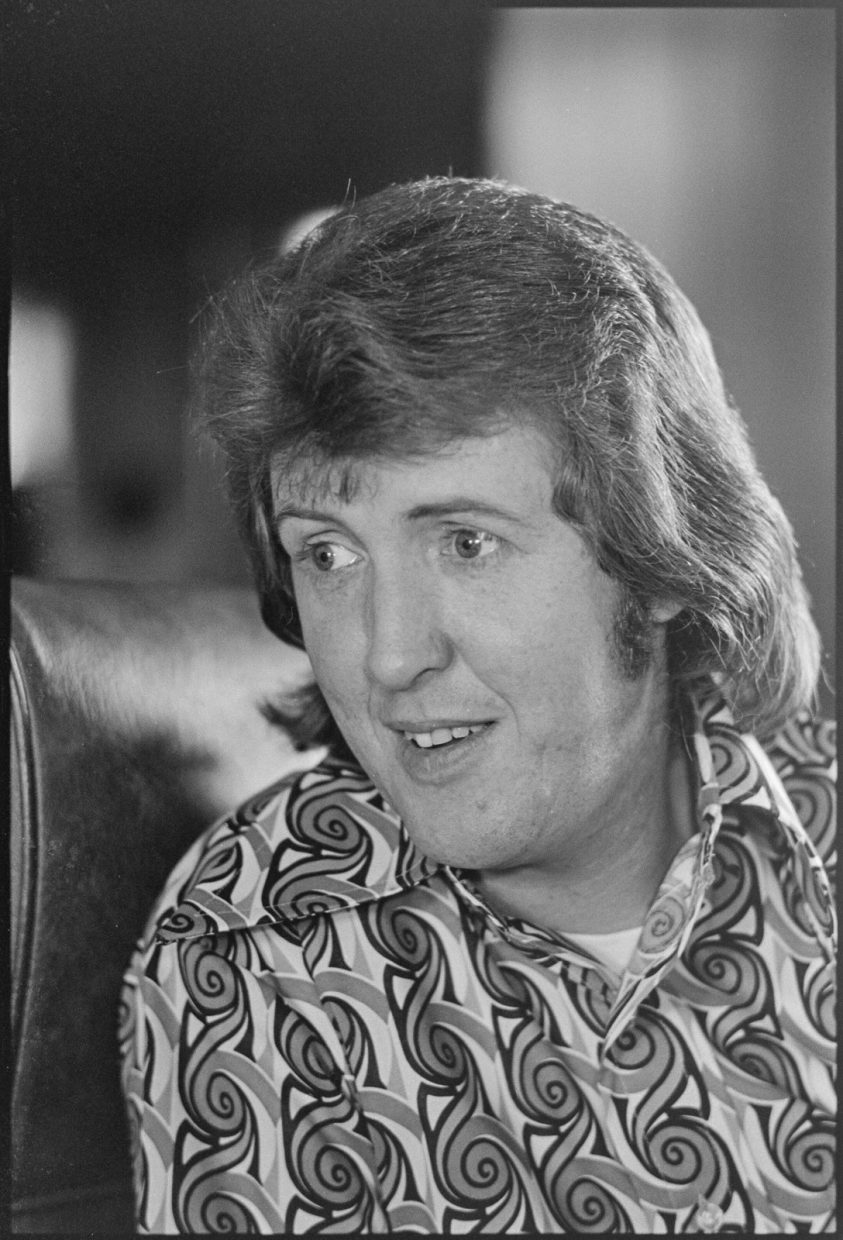
Wild & Blue brought lead singer Jan’s voice to the forefront, solo and in duets with Jill’s high harmonies. They began around the same time as a number of other bluegrass bands with female lead singers were coming on the scene like Alison Krauss, Lynn Morris, and Laurie Lewis. The band had a lot of energy, with David’s suave mandolin work and its female-dominated trios. They won the band contest at SPBGMA 1992 and moved to Nashville in 1995. By then they’d recorded albums for Vetco and Pinecastle. Wild & Blue lasted until 1999.

Harvey then worked with Larry Cordle (1999-2001), Claire Lynch (2002-07), and Harley Allen (2008-11). Meanwhile his luthier work in Nashville blossomed. He joined Gibson in 2004 and today as Master Luthier heads Gibson’s Original Acoustic Instruments division. Here’s a video (above) in which Dave introduces one of the mandolins he’s building and illustrates it with a tune he co-wrote with his dad, “Cruising Timber.”
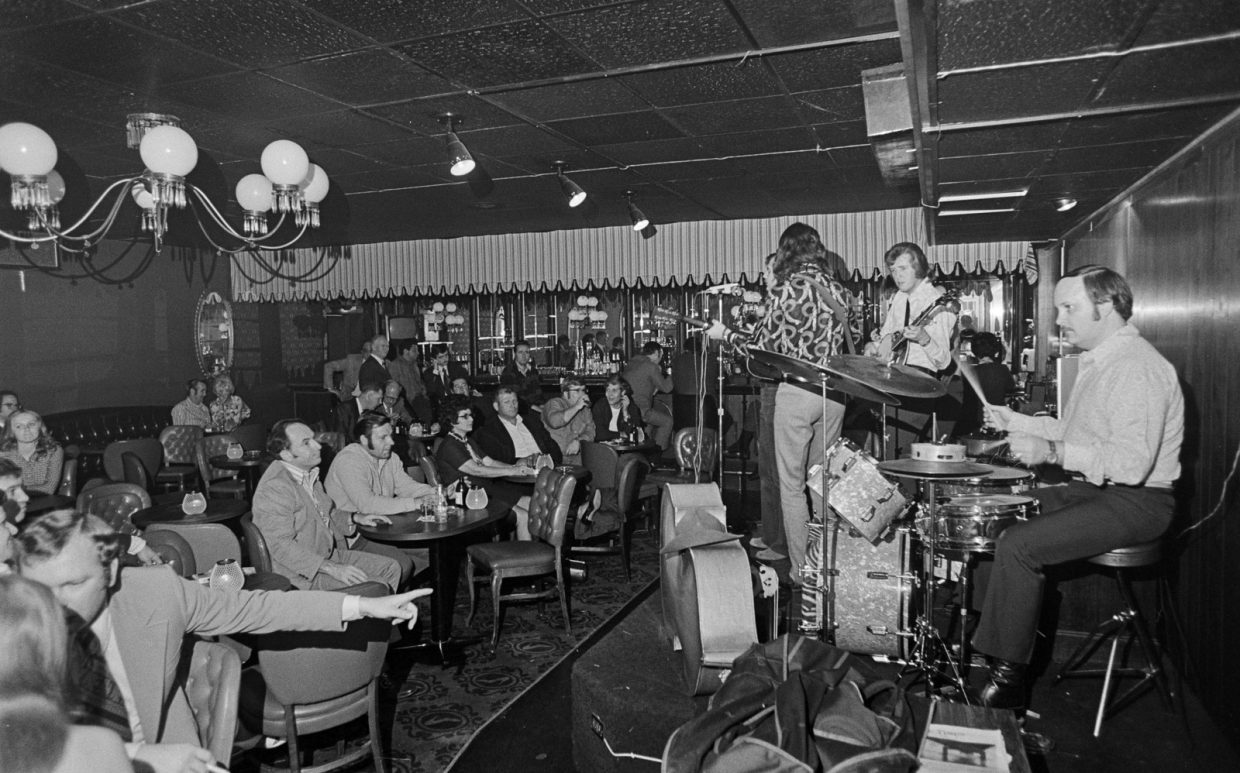
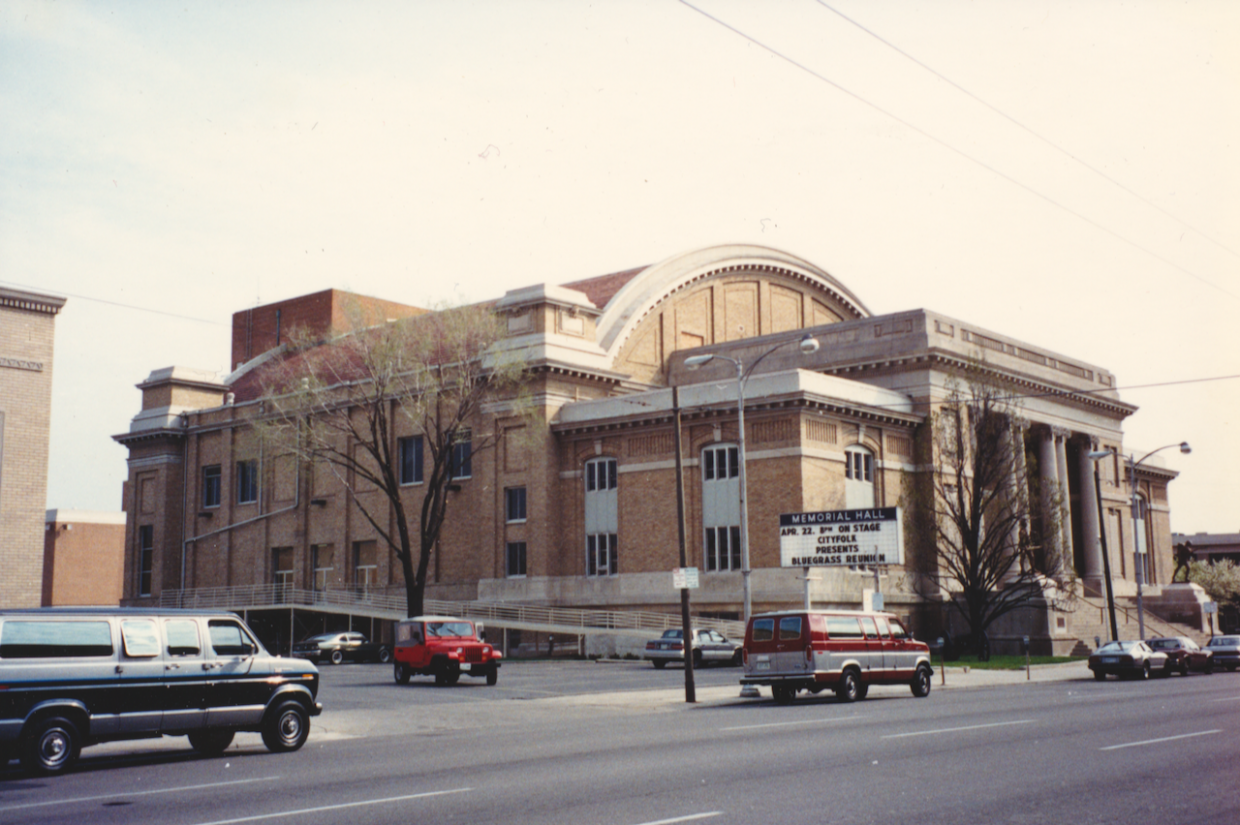
As a small boy Harvey had watched and listened to his father and Frank Wakefield as they wrung out mandolin ideas at his home. He clearly enjoyed himself with Frank this evening.
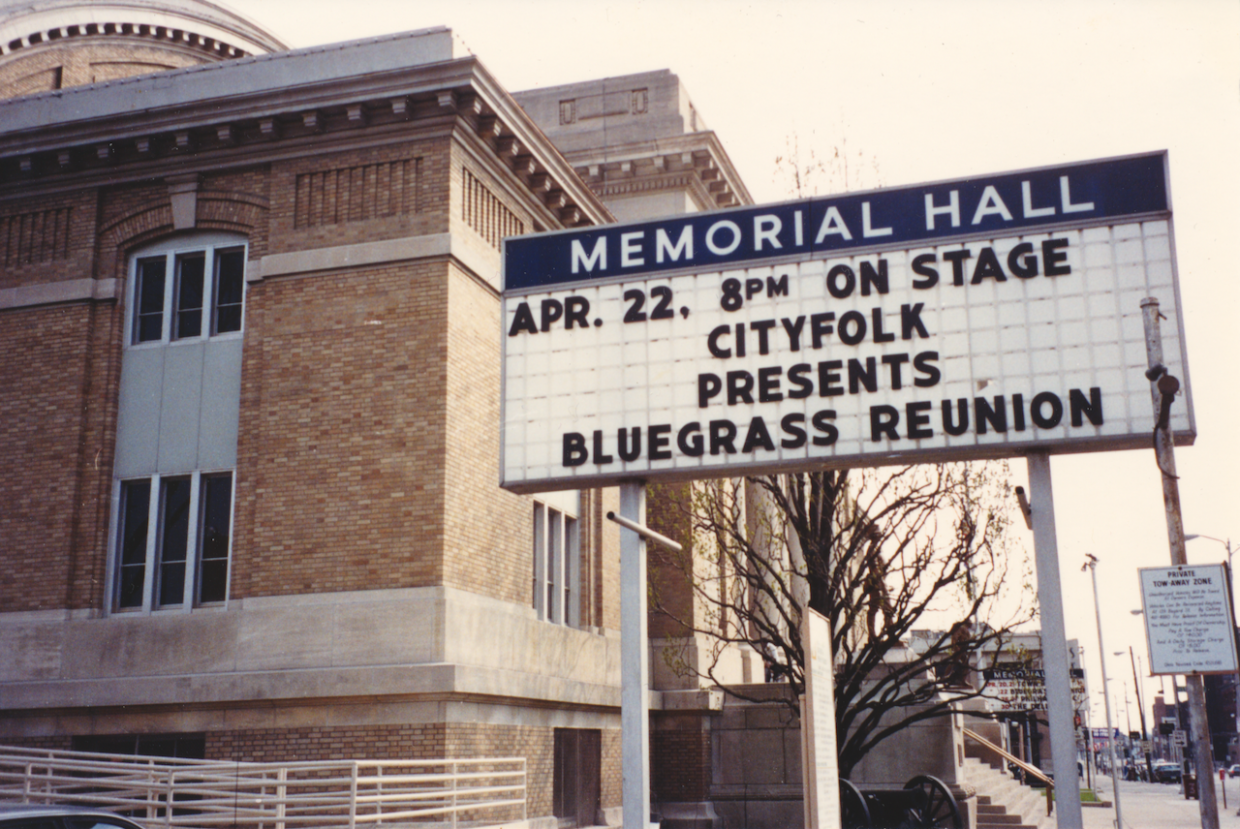
I had watched the evening’s afterparty at Canal Street with old friends from Lexington, Kentucky: the late Marty Godbey, author of Crowe On The Banjo: The Musical Life of J.D. Crowe. Next to her, husband, writer, photographer and musician Frank Godbey, creator of two influential bluegrass digital lists, BGRASS-L and IBMA-L. Next to Frank is Tom Adler, folklorist, banjoist and author of Bean Blossom: The Brown County Jamboree and Bill Monroe’s Bluegrass Festivals. And that’s my hat on the table.

(Editor’s Note: Read part one of our series on the Dayton Bluegrass Reunion hereRead part two here. Read part three here.)


Neil V. Rosenberg would like to thank: Fred Bartenstein, Phyllis Brzozowska, Nancy Cardwell, Frank Godbey, Thilo Hain, David Hedrick, and Mark Stoffel.

Rosenberg is an author, scholar, historian, banjo player, Bluegrass Music Hall of Fame inductee, and co-chair of the IBMA Foundation’s Arnold Shultz Fund.

Photo of Neil V. Rosenberg by Terri Thomson Rosenberg, all other photos by Neil V. Rosenberg. 

Edited by Justin Hiltner