John Reischman: Between the Salish Sea and Salt Spring

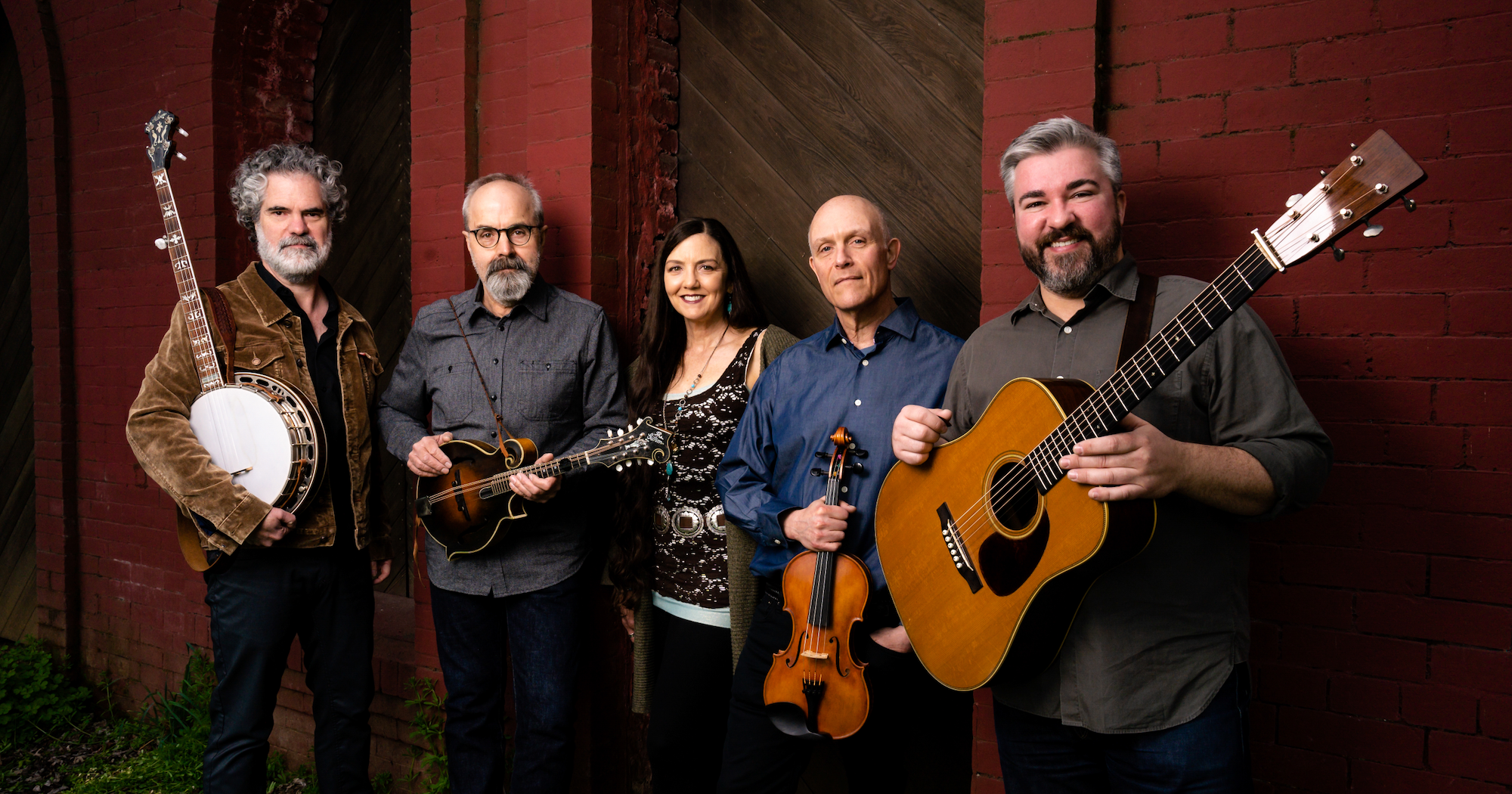
There are no U.S./Canada border wars when it comes to John Reischman. The revered mandolin master was born in Northern California but has lived in British Columbia since the early 1990s. His longtime band, the Jaybirds, are a quartet that includes two members who are also based in British Columbia (bassist/vocalist Trisha Gagnon and banjoist Nick Hornbuckle) and two who reside in America (fiddler Greg Spatz lives in Eastern Washington and guitarist/vocalist Patrick Sauber is from Southern California).

Their latest album, The Salish Sea, refers to the body of water between Vancouver Island and the British Columbia mainland. The record is their first since 2017’s On That Other Green Shore along with being the first to feature “new” guitarist Sauber on the entire album. The song “The Salish Sea” not only serves as the album’s title, but also is part of an original “Bluegrass Concerto” that Reischman was commissioned to create for FreshGrass in 2024. The honor is just one example in a long line of accolades for Reischman, who began his career in the Bay Area bluegrass/folk scene of the 1970s (including a stretch with the Tony Rice Unit) before moving to Canada, where he started the Jaybirds as well as performing solo and in other groupings.

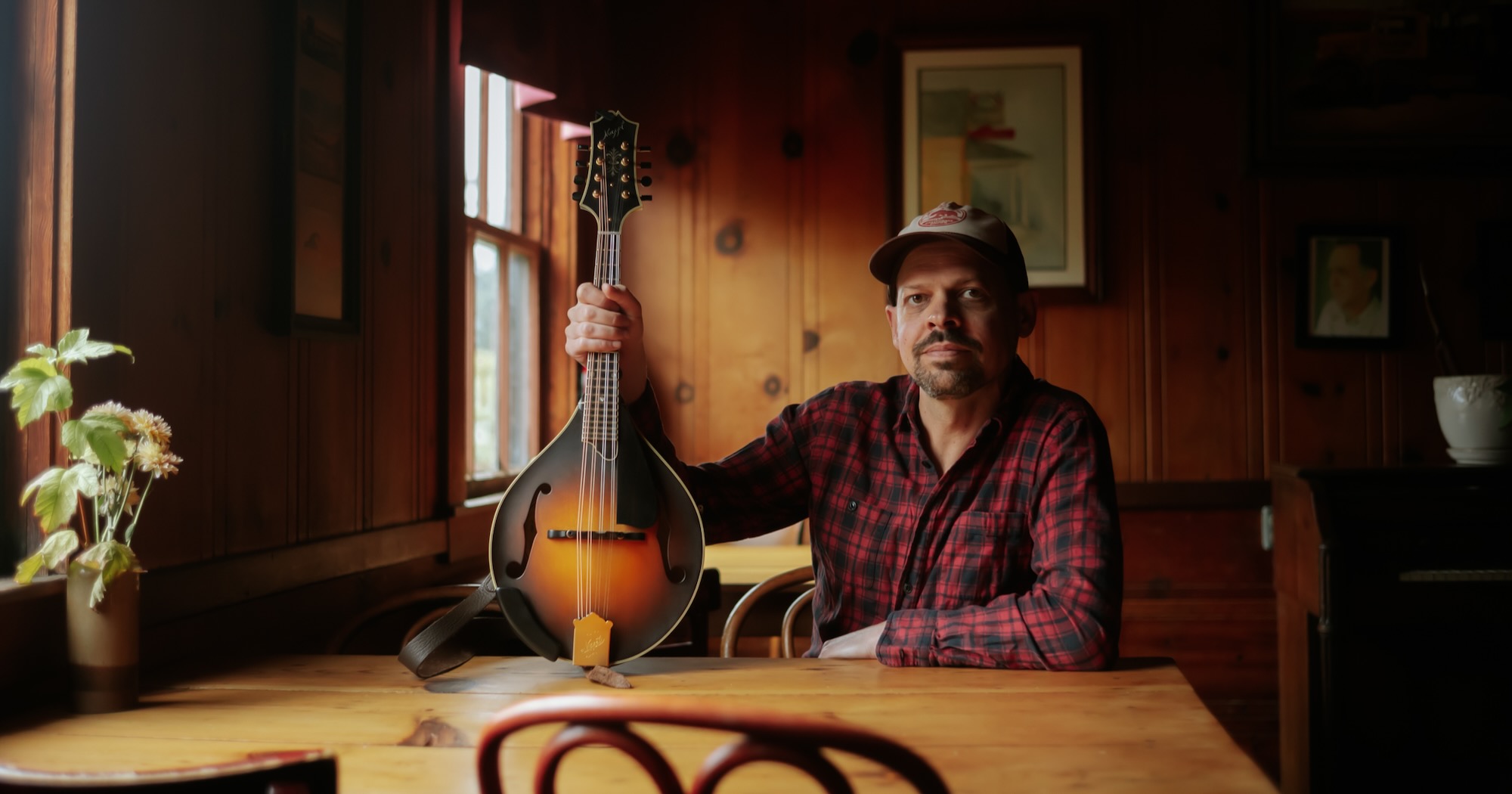
In recent years, Reischman has seen his song “Salt Spring” become something of a modern bluegrass classic. He spoke with the BGS from his home in Vancouver about “Salt Spring” as well as The Salish Sea, his famous Lloyd Loar mandolin, and how he got into bluegrass music.

What was the process of putting the new album together?

John Reischman: There was one venue in Washington State where we had a residency. It was in the fall, in a beautiful spot. It was just ideal. So we took the extra day, worked up like six new tunes, and then started performing them right away. I guess this was October of ‘23.

And then you recorded the album in Vancouver?

In December of ‘23, I wanted the band to check out the studio here in Vancouver, where we ended up ultimately recording. I just want to make sure everybody was cool with it. I knew I liked it, because I had used it for my solo record, New Time & Old Acoustic. They all liked it. At the end of any tour we had that was close to Vancouver in 2024, I’d book a day or two in the studio, and we’d go record two or three or four songs. We were able to perform all this material mostly before we recorded it. … And it was great, because we’d be warmed up from the tour and we’d go in and track some tunes.

This album was the first in a while, and also the first that Patrick Sauber was fully on it.

Right, On That Other Green Shore came out in 2017. That was kind of the tail end of our time with [guitarist] Jim Nunally being a band member. He was exploring other things and decided he’d leave the band. We had a few more tracks to do… and we had some dates on the calendar.

I thought of Patrick immediately, because I’d known him for many years and I thought he’d be good. So he signed on for a tour and then another tour and it was just like, “This works great.” We asked him to join and he immediately said yes. He was a great fit.

How did the Jaybirds come together in the first place?

I didn’t really set out to have a band, except for the fact that I had a solo record called Up in the Woods. There was a local festival, so I put the band together to help promote the record. Seemed like a good idea. And I liked playing with all those people and it just continued on.

It’s called John Reischman and the Jaybirds, because I conceived of it. My name was probably the most well known at the time, but I wanted to be integrated into a bluegrass band. People present stuff, and I almost always accept it. Mostly it’s a pretty democratic presentation, I think. That’s what I like. It’s not Gladys Knight & the Pips.

Can you talk about the title track and how it’s also part of a larger project?

I had been asked to write what they call a “Bluegrass Concerto” by the East Coast festival FreshGrass, and I came up with these three tunes that work together. The first tune was the first movement, which ultimately was called “The Salish Sea.” I thought this will be my contribution to the new Jaybirds record, because they were involved with the performance of the Concerto.

We performed it [at FreshGrass in 2024] and I really liked the idea of having two mandolins and I’ve always loved two fiddles. I knew Darol Anger was going to there, so I asked him if he’d play twin fiddles on it. And then Sharon Gilchrist is a good friend and great mandolinist; we’ve played a lot together, and I asked her to play a mandolin on two of the three pieces.

I’ve got to acknowledge David Grisman, because the music is influenced by his “Dawg Music.” It’s also the sound that I initially heard on his first solo record, The David Grisman Rounder Record. He incorporated harmony mandolin on a lot of it.

It must have been very inspiring and gratifying to receive this commission.

You know, I’ve written a lot of tunes and a lot of folks have learned my tunes, which is really gratifying. But to have been commissioned to write this and have the confidence of this great festival and organization, yeah it was.

I had plenty of time to work on it and the time that it mostly came together was when I think my wife was visiting family. I had the house to myself. That first piece, in particular, really developed over a period of time. The second one [“The Family’s Farewell”], I came up with the A part pretty quickly and it took a while to get a bridge for it.

The third part [“The Little River Ramble”] was similar. … The thing about the concerto format is the third movement typically has an extended solo section and it’s often a bender where it’s just the featured soloist playing solo without any accompaniment. But I wasn’t really comfortable so much with that. I thought, I’ll just have it break down and I’ll solo all through there but have it build back up.

I’m really happy with the response it has gotten. Even playing it just as the five-piece band, I think the band sounds great on it. It’s only like icing on the cake when the twin fiddles and the twin mandolins are there.

And this spring, you’re going to record the entire concerto?

At the end of March, we’re going to be on tour on the East Coast and the FreshGrass Festival has a recording studio. They offered to make the studio available, so we’re going to record that just as we performed it, with Darol and Sharon joining in. That will be part of a solo record, even though I’m using those musicians. And I have other sessions planned. I’ve done one session that will add to the whole thing. Those three tunes of the concerto will just be one component of the new recording.

“Salt Spring,” one of your older songs, has become a highly popular instrumental now in the bluegrass world. How much of a pleasant surprise has that been?

It’s kind of remarkable to me that it’s as popular as it is. I mean, I’m not complaining. It’s great. … But it’s interesting how it’s just traveled all over and people think it’s just a traditional tune in some circles. They have no idea that it was composed by me. That’s cool, too.

The Jaybirds recorded it and it came out on a CD in 2001. We were at a music camp with some folks from Colorado and they learned it. I think that’s largely the beginning of it getting circulated among other people – where they took it back to Colorado. They’re the “patient zero,” I guess.

I know that a certain generation of Berklee students were playing it a lot, and maybe a bit later – maybe 10 years later. It’s pretty cool having people play your tune when you’re not there. That CD was never available digitally until recently, but we made a video of it around 2011… and that was the source, I think, for a lot of people learning it.

And then you recorded it again with Molly Tuttle, Alex Hargreaves, Max Schwartz, and Allison de Groot on your 2021 solo album New Time & Old Acoustic.

I didn’t have all the material when I started that whole project, but I knew I wanted to re-record “Salt Spring” with some of these younger musicians who had grown up playing it.

What do you remember about writing it? And why do you think so many musicians have gravitated to playing it?

I was on Salt Spring Island [in British Columbia] staying with some friends and they had a little old turn-of-the-century Martin small-body guitar. I was just playing the guitar and I was playing out of a D chord shape, and the A part of the tune just kind of took shape under my fingers. It was memorable enough that I don’t think I had to record it to remember it. The B part was just this little phrase I would play on the mandolin, just noodling around … so I just kind of stuck it on there and it worked pretty well.

I think the thing about the tune is the basic melody is very simple, but the way I played on the mandolin, the technique I use, is not quite cross-picking. But it falls into a right-hand pattern that sort of mimics the way the frailing banjo is played with that “bum-ditty, bum-ditty, down-down up, down-down up” pick stroke. So, these extra “down ups” are drone notes and that just kind of enhance the whole overall effect. Because of that, it lays out really nicely on the banjo. Then on the fiddle, you can add drones and add to it that way. And on the guitar also, you can fall into that kind of “bum-ditty” pattern as well.

I think you can learn the tune pretty easily. It’s not super challenging like some fiddle tunes where they’re very detailed in the melody. It’s pretty straight and so I think that’s partly why people gravitate towards it.

You grew up in Northern California. How did you get interested and involved in music, specifically bluegrass music?

Have you heard of a guitar player named Robben Ford? He grew up in the same town where I did in Northern California. He was in a high school band with my neighbors. I must have been 12 or 13. They were rehearsing on a patio and I went over to listen. I was interested in music and I heard them play the Freddie King tune “Hideaway,” which Eric Clapton recorded on the John Mayall & the Blues Breakers record. My brother Steve had that record. I recognized the tune and I thought, “What? This is impossible. This sounds as good as the record!”

From then on, I was just focused on trying to play the guitar. I had taken guitar lessons prior to that, but it didn’t really work. But there were guitars around the house. So that was the thing that really sparked my interest in learning to play. But I was open to all kinds of music. I’d have access to the PBS station KQED and they’d often air Pete Seeger’s Rainbow Quest, where he’d have different folk musicians, bluegrass musicians, old-time musicians. I thought, “Oh, this is cool!” And then the mainstream presentation of bluegrass with The Beverly Hillbillies, having Flatt & Scruggs on it, and the Dillards and the Country Boys playing on The Andy Griffith Show.

At some point, I had access to a mandolin, which I associated [with] bluegrass music, and taught myself to play it. I tuned it to an open chord for a long time, like a banjo, which was incorrect. And I didn’t use a pick. But eventually I got things squared away.

I discovered the John Hartford Aereo-Plain record. I saw them on TV as well. That was very inspiring. Then I discovered Norman Blake and Vassar Clements. I come to find out they had their own records. … That first Norman Blake record, I couldn’t believe it. I just flipped over that, and I thought, “This is so great!” And I’d heard Doc Watson at that point, so I just got really interested in it, and focused on that music, primarily.

So, was the Good Ol’ Persons your first significant band?

Yeah, it was the first real pro band I was ever in, and I was a fan of theirs before that. I [had] lived in San Francisco for a short while and saw their original lineup, which included all women. And it was exciting to get the opportunity to play with these folks. Because I was living near Eugene, Oregon, and I was just playing the mandolin all the time – a lot with my brother, Steve – but I wasn’t in a band, and I was working on a farm, just part-time. And a friend from the Oregon bluegrass scene had joined them and they needed a mandolin player. He said, “I know a guy.”

That placed me in the Bay Area, which was a great scene. There were lots of good bluegrass bands. And the Grisman Quintet was there. … But the thing that set Good Ol’ Persons apart was their original material, because Kathy [Kallick] is a fantastic songwriter. And Paul Shelasky, who was in the band, also wrote great songs. That opened the door for me to try and write tunes – because, “Oh, these guys write tunes. I’ll try it.” I wrote a few and people liked them. That just gave me encouragement to keep at it, which I have done.

So consequently, when Grisman and Tony Rice parted ways, Tony was aware of me. He’d heard me play at the local bar. He wanted to put a band together and needed a mandolin player. So, I went to the audition and he hired me.

You are well known for having an antique Gibson Lloyd Loar mandolin. What do you think makes those mandolins so special?

I guess that [mandolin] was kind of the ultimate expression of Gibson mandolins. But there’s plenty of new makers and a lot of them are using that basic design. So, aesthetically and as far as the craft of the instruments, some of these builders are way better than the Gibson mandolins were to look at, but the Gibsons have 100 years of aging and playing.

I think the playing of the instrument contributes hugely to its sound. Because, if there’s a Lloyd Loar that left the factory and went into someone’s closet and never came out for 50 years, I don’t think it’s going to sound like one like mine that has been played consistently over time.

I feel fortunate to be the caretaker for this great instrument. I think for most bluegrass musicians, it’s not only the music, but it’s the tools. These vintage instruments, like the Martins from the ‘30s and ‘40s, and Gibson mandolins from the ‘20s, and old banjos, it’s just a vibe that goes along with the music and aesthetic.


Photo courtesy of John Reischman.

BGS 5+5: Jesse Appelman

Artist: Jesse Appelman
Hometown: Oakland, California
Latest Album: Where We Go (released February 20, 2026)

If you had to write a mission statement for your career, what would it be?

For me, music is about community, connection, and collaborative creation.

It’s about the intimacy of singing harmony with someone, or finding musical ideas that only occur to me because of what someone else just played. I’m in awe of people like Keith Jarrett who can carry a full solo show, but my musical voice only feels complete in collaboration. I play best when I have things to respond to.

I leave most festivals with at least one new real friendship, forged through a shared language and the vulnerability of playing music together. There are not a lot of spaces where this can happen so easily, especially once you’re past your 20s, and they only exist because people keep showing up and participating.

I’m most interested in the music that results when musicians prioritize the collective sound while still bringing their full and unique personality to the table. When everyone listens and tries to make everyone else sound better rather than demonstrating their own ability. It’s easy to take for granted the ability to sit down with strangers and create music in real time but we are so lucky to get to do it.

Genre is dead (long live genre!), but how would you describe the genres and styles your music inhabits?

I don’t think anyone involved in this record ever discussed what genre of music we were making. Not John Mailander, who produced the album, and not the band (Eli West, Sami Braman, and Emily Mann). We talked a lot about the how and the why. We talked about density and space, groove, melody, interaction, texture, and flow. Nobody asked if they should be playing these tunes like bluegrass, old-time, Americana, or anything else.

So what kind of music is it? It’s the sound of these particular musicians playing these tunes, trusting their ears and instincts, and adding their unique personalities to the stew. Bluegrass is certainly in there, and old-time, and probably some jazz and classical, but it’s not a conscious “little bit of this and little bit of that,” it’s just what comes out when we play without thinking too hard.

I remember listening back to the tunes at the end of the first day in the studio and John said something like, “Isn’t it cool how you can do all this planning and arranging and preparing, but you have no idea what the album will sound like until you start making it?”

Some musicians immerse themselves in a single tradition or lineage and spend a lifetime going deep inside it. I listen to a lot of stuff like that, and it’s some of my most beloved music, but when I play I’m most interested in what happens when you agree on priorities and principles, and let musical identity emerge. My priorities come from lessons learned from musicians in my West Coast string band community. Some get called innovators, some traditionalists, but all share a commitment to deeply-felt, collaborative, and highly personal music-making.

Music is an activity and genre is a labeling system; the best I can do is focus on the activity and get the right people together and trust that the result will sound like us.

If it needs a label, maybe string band music that breathes?

What rituals do you have, either in the studio or before a show?

I have a loose mental checklist that I try to review before I go on stage or into the studio or even to a jam. I don’t succeed at all of them all the time but it’s a north star to aim for.

The first is from Chick Corea:

1. Play only what you hear.
2. If you don’t hear anything, don’t play anything.

This is simple and sometimes really hard. To me it means that every note should exist in my mind before it comes out of my hands – whether it’s a particular texture when playing backup or a phrase in a solo. Even down to the tonal color, dynamics, and articulation. This takes deep focus and deep listening both outward to the band and internally to your own ideas. When I listen to my favorite improvisers – Jim Hall, Stuart Duncan, Keith Jarrett, David Rawlings – I hear this level of intentionality.

The second is from John Hartford: “Style is based on limitations.” This means giving myself permission to play within my actual capabilities rather than the ones I wish I had. If I have to take solo over something that is outside of my comfort zone in terms of tempo, harmony, or whatever, I search for the most musical solution available within the boundaries of my own technical and conceptual limitations. This might be something simpler and more spacious than what I might feel like I’m supposed to play, and consequently truer to my own voice.

The rest of the checklist: Stay relaxed in mind and body. Listen deeply at all times. Never sacrifice groove or tone to execute an idea. Never go on autopilot when playing behind someone else’s vocal or solo. Search for the most beautiful idea, not the cleverest.

Which elements of nature do you spend the most time with and how do they impact your work?

My happiest place outside of music and family is underwater. I scuba dive and snorkel for the same reasons I play music. It feels like a portal into another universe. Diving requires an intentionality of every movement that I try to apply to making music. Your time underwater is limited by the air in your tank, and the more you exert, the faster you breathe. Every muscle movement costs you air and time, and the best divers carry themselves in the water with a calm and economy of movement that is almost meditative. It’s a flow state that slows your breathing and lets you focus your attention fully on the environment around you. I make my best music when I find that same state and put most of my awareness on what’s happening around me.

I find a lot of inspiration in California’s landscapes and colors. Kelp forests, rocky coasts and windswept coastal meadows with washed-out browns and green, golden hills dotted with green oaks, the pale gray granite of the High Sierra. There’s an aesthetic minimalism to these environments that I think shows up in some of my music, like “Lyell Fork,” a stream that flows from a glacier on a high peak in Yosemite and flows through alpine meadows and over granite slabs before joining the Tuolumne River. Or “Montaran” which is a stretch of coast south of San Francisco. In both cases I thought those tunes sounded like how those places feel.

What would a perfect day as an artist and creator look like to you?

Waking up to my kiddo climbing in bed for a cuddle. Breakfast, immediately followed by some quiet unstructured time with an instrument in my hands with an extremely good cup of coffee, before all the details of life fill my brain. A hike or bike ride with my wife. Some silly afternoon play time with my kid. Cooking mapo tofu for family dinner. Tunes and songs in the evening with a few dear friends. Someone else sends all my emails for the day.


Photo Credit: Giant Eye Photography

Basic Folk: Laurie Lewis

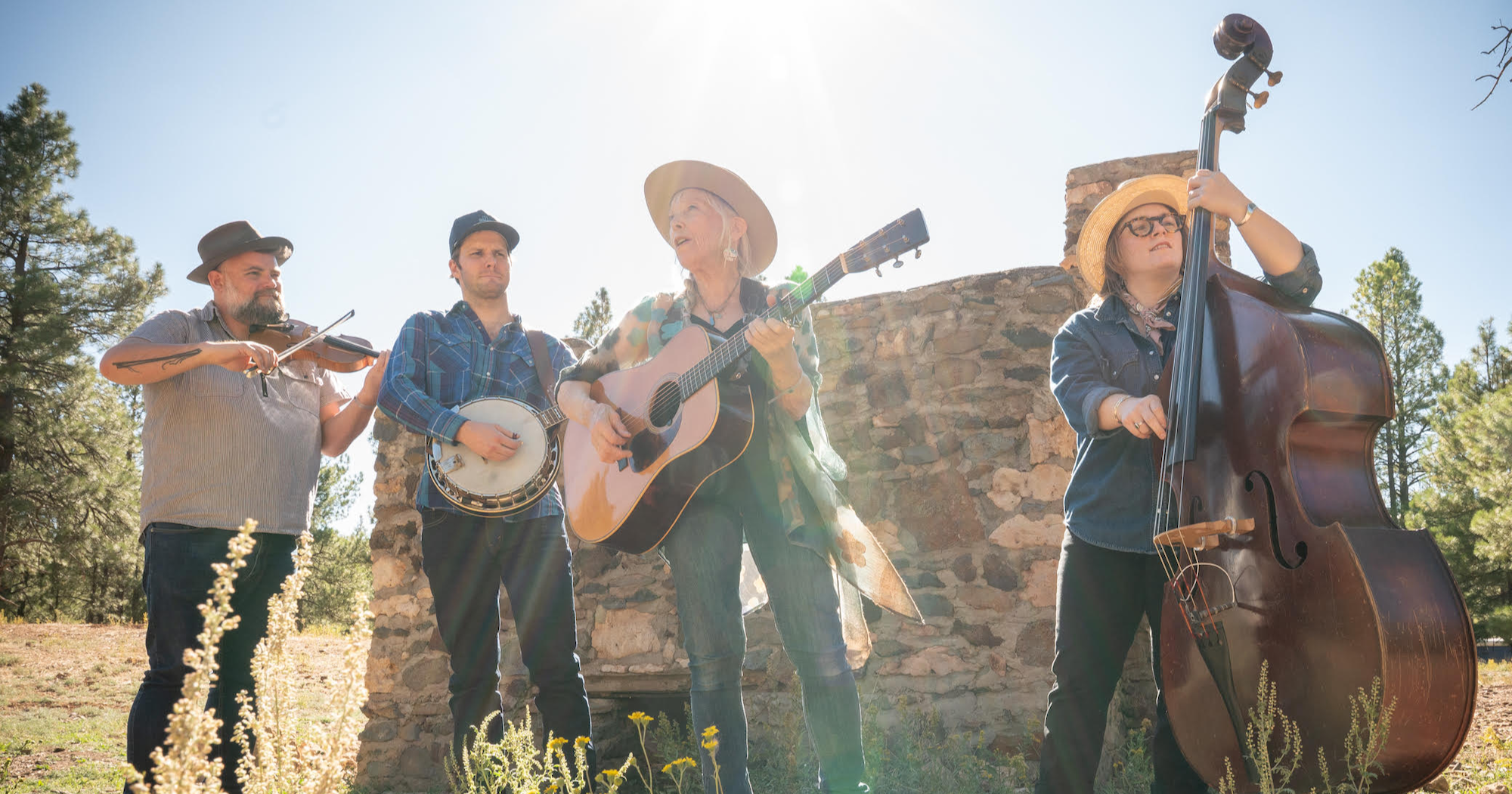
A foundational participant in the ’70s Bay Area bluegrass scene, Laurie Lewis knows the power of collaboration. She’s been a part of an ensemble in recent years that’s called Laurie Lewis & the Right Hands, with Laurie on fiddle, guitar, and vocals, Brandon Godman on fiddle, George Guthrie on banjo, and Hasee Ciaccio on bass. That group plays a huge part in her new album, O California!, a collection of songs that explore our own places in the natural world and in each other’s hearts. It also serves as a love letter to her home state. One standout track, the traditional “Fair and Tender Ladies,” is a duet with Ciaccio, which brings the song’s cautionary tale to life. In our Basic Folk conversation, Laurie talks about what it’s been like to learn traditional songs before actually catching their meaning, long after figuring out the tune.

LISTEN: APPLE • SPOTIFY • AMAZON • MP3

Lewis emphasizes the communal and collaborative nature that defines her musicianship. She recounts her early exposure to music played socially when her father and his friends gathered at their home to play classical music when she was young. She credits that experience with solidifying her decision to learn to play, so she could have as much fun as they did. Laurie also opens up about her path to finding independence from her father’s expectations and her eventual return to music through modern dance and folk tradition. She touches on her passion for nature, recounting transformative hiking experiences, and reveals her thoughts on collaboration and mentorship within the music community.

Additionally, Lewis reflects on the profound impact of losing her voice in 2021 and the emotional journey of rediscovering her musical identity. We wrap up our conversation talking about her friend Alice Gerrard, whom she covers on the new album. After we hung up, Laurie emailed me an addendum about Alice that I wanted to share: “I forgot to say, when you asked me about Alice Gerrard, that I also greatly admire her community involvement in the music she loves, as evidenced by her starting and running the Old Time Herald for so many years. She’s a remarkable person. Plus, she trained her dog to fetch a beer out of the fridge for her and then put the empty can in the recycling!” Incredible.


Want more? Check out our recent Cover Story interview with Laurie Lewis.

Photo Credit: Dawn Kish

Laurie Lewis’ O California!
Was Made With Open Ears
and Open Minds

It’s noon in the Bay Area, and singer-songwriter/multi-instrumentalist/producer Laurie Lewis is sitting in her backyard on what she describes as “a beautiful sunny day.” She spent her morning pulling up oxalis, and now she’s painting a railing she purchased at Urban Ore.

“It’s a good handrail for our front steps and along the walkway for my partner, Tom,” she says, “so I’ve been sanding it, wiping it down, and painting it.” Later during this interview, she’ll continue pulling up weeds, noting, “It’s very liberating for me, getting my hands in the dirt. It feels really good.”

The reason for today’s call is Lewis’s new album, O California! Like its predecessors, it’s an emotional palette of songs – five originals, five traditionals, and a cover of close friend Alice Gerrard’s “Sweet South Anna River” – that blend the many genres influencing her work, from bluegrass to country, jazz, and even a hint of rock. O California! features the stellar musicianship and vocals that define Laurie Lewis and her band, The Right Hands: Brandon Godman (fiddle), Hasee Ciaccio (bass), and George Guthrie (banjo, guitar).

A two-time IBMA Female Vocalist of the Year and a two-time GRAMMY nominee, Lewis is no stranger to BGS readers, as she’s been featured many times. Dedicated fans are also deeply familiar with her longtime partner, mandolinist Tom Rozum, and his Parkinson’s disease diagnosis. “He’s doing pretty well,” Lewis says. “He had spine surgery in November and he’s recovering very well from that. He had been living with intense sciatica pain for a year and a half, and the pain is gone, so that’s great.”

What would you like readers to know about O California!?

Laurie Lewis: Let’s see… all kinds of things. I wrote five of the songs on the album and they’re all over the map, so they’ll say, “She’s got a lot of different musical influences.” We’ve also drawn from the folk tradition and some great traditional songs and thrown that in the mix. It’s all done with the same four people and same four voices on beautiful acoustic instruments. Sonically, it’s really nice. You really hear the personalities of these particular four people working together. It’s what made me want to make the album.

This is album number 25 in your catalog. Artists often speak of albums as chapters in their lives. Which chapter is O California!?

This chapter is this band at this moment in time, these particular four people. I wanted to celebrate our working relationships together. It’s something that wouldn’t have happened at another time in my career, because I wasn’t working with these particular people for as long as I have been on this album. They are all on the previous album, but that was me calling all the shots. This is me settling in, listening to everybody, and trying to make a whole out of the four parts.

How did this approach make the creative process different?

Usually I come into a recording situation with more of an idea of what I want a song to sound like. This one, I came in with snippets and vague ideas for [the band] to have their way with it. We collaborated on arrangements and we listened to every idea. It’s not that I don’t listen to other people’s ideas at other times, but generally there might be more input than just three other people if I’m doing that.

I’m a collaborative artist. One of the reasons I play music is because it’s my best way of communicating in the world. And that is, for me, to an audience. But it’s also true for me to my bandmates and other musicians. It was fun to say, “We’re making a band album. This is what it’s going to be. We’re going to let people toss out songs.” “How does this sound?” “Oh yeah, great. Let’s do that.” It was, “How shall we do it?” “I’ve got an idea.” “How about if we do this?” It’s a very free and open feeling.

[The band are] all very open-eared and open-minded about the music. It doesn’t have to be the way Earl Scruggs did it, or the way Bill Monroe did it, or anything. It doesn’t have to fit into a neat bluegrass category. I’ve played with musicians in the past who have been more or less open, and all it takes is one more closed-off person to direct the band in a particular direction.

You’ve stated in the past, paraphrasing here, that writing is sometimes specific and sometimes spontaneous, sometimes it’s almost random, sometimes it’s unfinished. What was it this time, or was it some of each?

I’d say it was some of each. With the song “O California,” I was writing lyrics in the studio. I did a scratch vocal and changed the lyrics three times before I came home and overdubbed an actual vocal. That’s unusual for me, that it was in such an unformed state when I got into the studio, but it’s when we had the time and I knew the bones of it were good. Some vocal lines, some lyrics, just were not right yet, but I knew what it was about.

When did the songs start coming together as an obvious collection? Was there an intention in mind, a theme, when you all got together?

We started this project in a different way than I have other projects. We had little tours booked, so we would get together a day early before every tour, because we all live in different parts of the country. They would fly out here, we’d rehearse a song, get what we wanted down, figure it out, and then go on our tour and play it every night. We’d have a studio day booked on the day we got back from the tour, so we’d go in and record whatever we had worked out the week before and played on the tour. It was a fun way to approach a project and it spaced it out over a long period of time. It took close to a year.

When it’s spaced apart that way, how do you make it feel like a collection, rather than recording individual pieces of music?

Because it’s all us. It’s like an old friend – you can pick up the conversation right where it was. You haven’t changed your tone or your relationship with each other so drastically that it doesn’t fit together. It would be different if I were doing something like that over a year and just getting together with whoever I thought was the right person to play on a particular song. Then, the only thing that would hold it together would be my production values.

Do you still write ideas on notes, or have you tech-ed your way up to phone apps?

Oh, no. I write. I like to write with a good pen or a pencil on a piece of paper. I will make notes sometimes on voice memos, but mostly that’s it. I’m old-fashioned. I feel like there’s something that happens, the tactile feel of a writing utensil on the paper, that is easier for me to get a thought out than to sit at a keyboard. I’ve been known to still write letters, in fact.

We live in a world of texts, emojis, phone scrolling, and what’s being called “an epidemic of isolation.” Bluegrass is associated with festivals, musicians getting together and jamming, and community. Is this still true?

Oh, definitely. In fact, here in the Bay Area it’s having a real resurgence of community jamming culture. That’s always been at the basis of bluegrass. It’s what everybody wants to do – get together and let their instruments do the talking, let the songs do the talking. It’s a wonderful thing. I love it so much.

You mentor and teach at workshops and music camps, where you connect with younger and up-and-coming musicians. What do they want to know? What do they need to know?

One of the things that I try and impart to people is the importance of finding your own voice, because many young musicians have heroes they want to emulate. That’s how you learn, but at some point you have to find what you want to say with your voice and your instrument. That’s one of the things I try to emphasize and help people feel confident that they have something to say and their own way of saying it.

There is intergenerational connection at these camps and workshops, contrary to the ageism on both sides, that society seems to push: “What do those kids know?” or “What do those old people know?” What is your perspective?

There’s still a lot of that, but luckily there are enough people, young and old, paying attention and willing to listen to each other. It’s especially helpful when there are youth music camps and stuff like that, because then the kids have each other, but they also have their mentors there. They’re there because they want to learn, and it’s usually the older people who are teaching them, but then they get to be with their cohorts, their age group, and that helps a lot.

I certainly learned a lot from teaching at kids’ camps. When I first was asked to teach at a youth-oriented fiddle camp, I thought, “I can’t do that. I don’t know how to talk to kids. I don’t know anything about that stuff.” I said yes because I tend to say yes to things, and I found it to be so enlightening and so important in my life. It’s very enriching.

On a 2021 FolkWorks podcast, you talked about The Good Ol’ Persons playing a trade show luncheon years ago in front of a room full of drunk men. You described it as being “thrown to the wolves.” Many years later, how are we doing?

In terms of women musicians out in the world, there are so many more, and it is so great to see. And the technical abilities – you can’t fault it. You can put Molly Tuttle up against any guy. It’s been some huge steps forward in the time I have been in the music business, but it’s still very male-dominated from the top. It takes generations to change things like this, these ways of thinking, and now there’s a real cultural backlash happening and I don’t know how that’s going to play out. Women have made huge strides and maybe that’s just going to be taken away. Every generation has to fight the same fights, apparently.

Overall, how is bluegrass doing, to your eyes and ears?

That’s a really hard question for me to answer. Honestly, there’s a part of it that has gotten very entrenched in staying within a particular genre. I hear a lot of songs by people singing in a bluegrass style about bluegrass music, or their cabin home and I think it’s in danger of becoming a trope instead of a living, breathing art form.

Luckily, there are enough people out there creating in the art form and doing great stuff. There’s so much of everything happening all the time now that it’s going in all different directions at once. There’s good stuff and bad stuff, and it all depends on your point of view.

Who is making an important contribution, in your opinion?

I hear a few things now and again that I respond to and like a lot. I’m not very impressed with a lot of technical brilliance. I want to be made to laugh and cry, and if it doesn’t do one or the other or both, I’m not all that interested in it.

In terms of bands, Mighty Poplar can do it, and the duo Paper Wings, two young women, Emily Mann and Wila Frank, who I actually met at a fiddle camp when they were teenagers. They’re pretty wonderful. And I always like hearing what my old friends are coming up with in terms of songs and writing. I love hearing whatever 92-year-old Alice Gerrard is coming up with. She has a way of putting her finger on the pulse of what’s happening in the world and is pretty great.

In 1998, you recorded a song called “The Refugee.” Twenty-eight years later, here we are …

Oh, I know. I find it unfortunate that [that] song is still so incredibly relevant – or more relevant. I find it very unfortunate that song has not outlived its message. It’s terrible. I wrote it when Guatemala was in such bad shape, people were fleeing, and there was all this backlash. It’s an empathetic song. These days, empathy – there’s a whole movement, “empathy’s a bad thing.” It’s so crazy.

In a 2020 interview with BGS you said, “Music has a real way of being able to soothe and heal grief.” Could you talk about that healing power, not only as a songwriter, but also as a lover of music, a listener?

Oh, yeah, it’s true. I stand by that. There’s nothing like it. It’s such a direct conduit to the heart. A song can sneak in and express something for you that you had no words for. It can help you, as a songwriter, to figure out a way to express what you might be going through in a way that makes it universal. You put it out there in the world, everybody can feel it and relate to it, and it makes you feel a part of something greater than just your little dark cell that you might be stuck in, or your own personal grief.

It has helped me deal with things, with grief in my life, to be able to learn a song that makes me cry. Every time I hear it, I learn it, and it becomes part of me. It becomes part of my way of being able to express myself, or to write a song that every time I start trying to sing it, I’m in tears or something. You learn to work through your grief by embracing it musically. It’s an incremental way of dealing with things, and it’s really healing.

It’s a sense of support through the company of songs that speak to us.

Yeah. You are not alone. Especially with all the internet stuff, people spend a lot more time not with actual other humans, having conversations or whatever. To hear something, to listen and understand that other people are going through the same alienation or grief or loss, or whatever it is that you are experiencing, makes it easier to bear.

The French author Jean Giono, who wrote The Man Who Planted Trees – I wish I could find this quote – said in an essay that an artist’s duty is to express yourself for all the people who don’t have the words or the art to express themselves. It’s your duty in society, your job, to put it out there for everybody who can’t.


Photo Credit: Dawn Kish

The Glittering Golden Grass of The Brothers Comatose

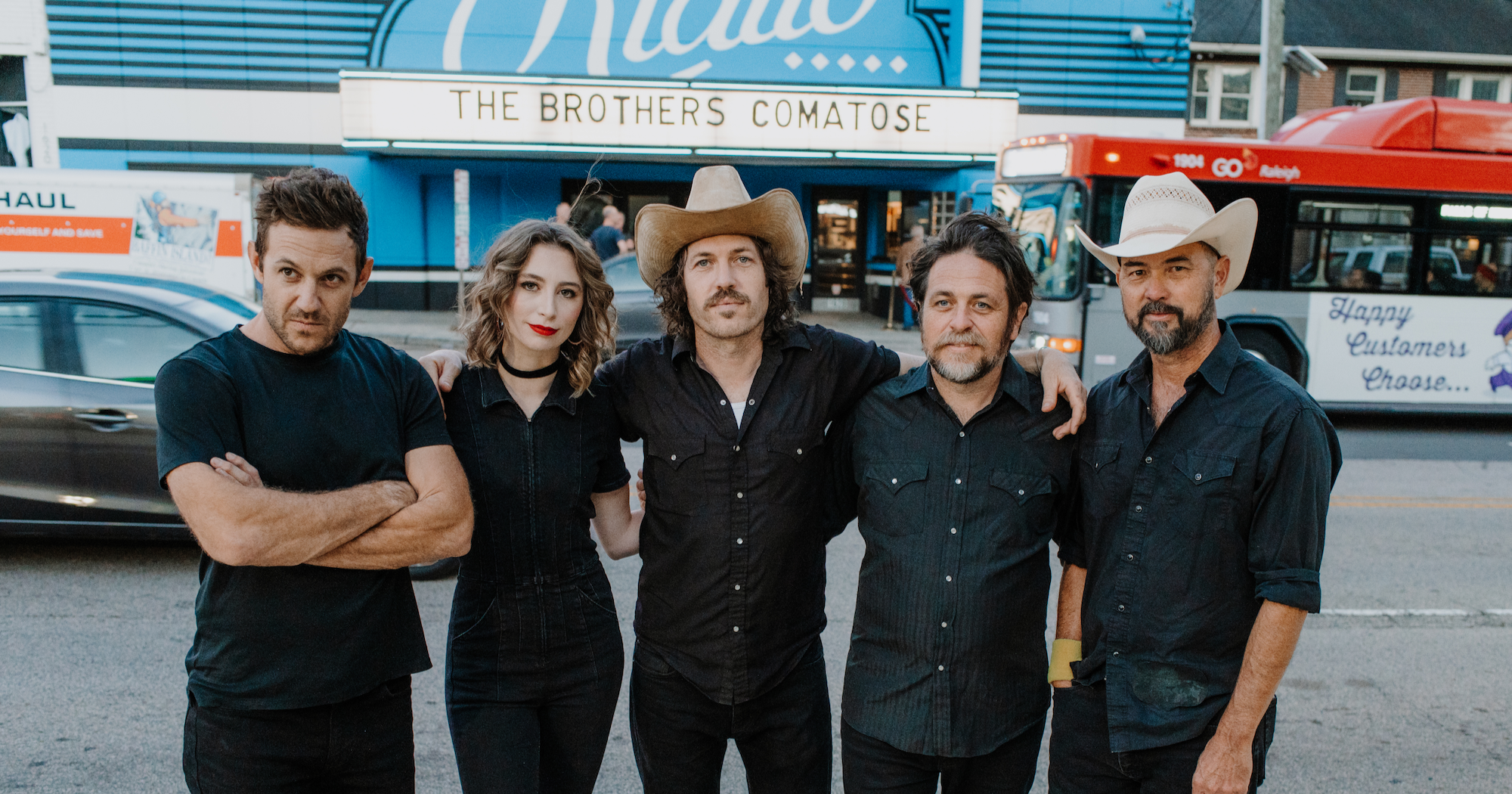
Bay Area five-piece The Brothers Comatose were actually founded by the brothers Morrison: that would be Ben on guitar and lead vocals and his brother Alex on banjo. The Morrisons came from a musical family and were influenced as much by classic rock as they were by country and bluegrass – their first album, Songs from the Stoop (2010), even contains a cover of The Rolling Stones’ “Dead Flowers.” Initially, the band’s lineup included bassist Steve Height, fiddler Phil Brezina, and mandolin player Greg Fleischut.

In the 15 years since, they have stayed busy both in the studio and on the road. As anyone who has seen the band’s concerts can attest, The Brothers Comatose are anything but… comatose. Their live performances are known to be high energy and often include audience participation. They have supported everyone from Gillian Welch & David Rawlings to Yonder Mountain String Band to Trampled By Turtles. In addition, the group has played festivals like Hardly Strictly Bluegrass and Outside Lands.

The Brothers Comatose returned at the end of July with their fifth studio outing, Golden Grass. The title track, which also opens the album, came from an unlikely source. “A fan started calling our sound ‘golden grass,’” explains Ben Morrison. “And the phrase just felt right.”

Golden Grass arrives three years after the band’s prior album and continues their mix of traditional bluegrass and rock. But behind the scenes, there have been some changes. The Brothers recorded Golden Grass in two separate installments with two different producers, Greg Holden and Tim Bluhm. While they were making the disc, mandolin player Greg Fleischut decided to leave the group. His replacement, Addie Levy, is the first woman in the band and, at just 23, significantly younger than her fellow members. “We always thought it would be cool to have a female voice to hit those high harmonies,” says Morrison. “Addie’s such an incredible mandolin and fiddle player, but she’s also a great singer and songwriter in her own right.”

Golden Grass is probably a bit more diverse than the band’s previous albums. Beyond being their first release to include a woman singer and mandolin player, it’s more collaborative in general. Ben wrote several songs, of course, but other tracks were penned by Levy, Brezina, and Alex Morrison. Still, Golden Grass maintains a pretty consistent sound over its 10 songs. The title track sounds like a lost Allman Brothers tune from back in the day and other highlights include lovely ballads like “Home Again” (featuring Lindsay Lou on guest vocals) and “My Friend” as well as the funny, rollicking “The IPA Song.”

I recently had the pleasure of catching up with Ben Morrison and Addie Levy for BGS.

To start with, tell me a little about the making of Golden Grass. I understand there were some changes between your last album and this one. Addie obviously is the new addition. And I guess Greg was the guy who left?

Ben Morrison: Yeah, Greg was in the band before. He left like halfway through the album. We recorded it in chunks. So we recorded half the album, we were working through the rest of the songs, and in that process, he left the band. Addie joined and recorded the second half of the album with us. But it’s funny. There are four mandolin players on [Golden Grass]. We had a couple of guest mandolin players on the album before Addie joined. Ronnie McCoury’s on there. It’s a good variety, I guess. [Laughs]

Tell me about the title track, which is also the first song on the album.

BM: That’s a good question. It started out with us trying to identify ourselves – that age-old question when you ask a musician what kind of music they play. “Well, it’s kind of hard to define. We’re jazz and pop and metal and boy band!” [Laughs] You know, it’s definitely pulling a lot from the bluegrass world. But also from a bunch of other influences.

We kept posting these things on Facebook and there’s this guy, Cyrus Clark, I believe his name is. He kept commenting about a lot of music coming from California – string band music specifically – going back to Old & In the Way. He kept saying, “Golden Grass! Brothers Comatose, Molly Tuttle, and AJ Lee.” We thought that was really cool.

I think I had just written it down in a notebook one day. And we did a cowrite – myself, our fiddle player Phil, and the guy that produced the second half of the record, Tim Bluhm. I was like, “What if we called it Golden Grass?” We started name-dropping different bands in the lyrics and kind of giving them a little shout out. We had fun with that and went with it.

“Home Again” – reading the press release, I know what inspired it. But just listening to the lyrics, I [probably] would have known anyway. For those of us on the East Coast, tell me a bit more about what [the wildfires] were like and how it affected the song.

BM: That wasn’t a personal story; it was about good friends of ours who lost their house in the Santa Cruz Mountains fires a few years back. For those of you not in California, there’s a fire season [here] where fires can just rip through and destroy communities. It’s pretty messed up and now it’s literally close to home. Some good friends of ours – all their property and their house got destroyed. I think it was during the pandemic and it hit me pretty hard. I was just really feeling for them and that song kinda came pretty quickly.

We had the song and thought about getting somebody to help sing it with us. Lindsay Lou’s been a friend for a long, long time and she’s such a great singer. We sent it to her and she was on it. It’s about a couple losing their house and building back together. So it made more sense to me as a duet.

I like the ballads on the album. Addie, I think you were the one who wrote “Blue Mountain?”

Addie Levy: I am.

Tell me a bit about the inspiration for that song.

AL: I’m from the Blue Ridge Mountains of Virginia. I grew up in Appalachia my whole life. [The mountains] have always been a very big inspiration for my writing and who I am as a person.

I was driving to work one day and was listening to the Infamous Stringdusters’ [version of the Cure’s] “Just Like Heaven” and got really inspired by having a keen lick throughout the whole song. I was like, “I need to write a song like that.” It all came to me within the drive to work. I showed it to my mom when I got home and she kind of looked at me with concern. She was like “Are you and your boyfriend okay?” I was like, “What does that have to do with the song I just played you?” I accidentally wrote the entire thing about him – which is bad ‘cause he cheats on me in the song! But he doesn’t in real life! [Laughs]

There were all these little pieces. Like, I pass his exit to work every day. He knows my Starbucks order. I painted the walls blue in his bedroom in one of our first months of dating. I pulled all these little things I didn’t mean to. Then I had to show it to him. I was like, “I am so sorry I wrote this song about you!” But when you’re in a nice, healthy relationship – I don’t have that much stuff to complain about so I can’t really write about it!

“The IPA Song” is a fun track. Anything either of you want to share with me about that?

BM: When we play shows, we like to get people onstage to help us out – you know, for sing-alongs or whatever it might be. I think we’ve had more children onstage for “The IPA Song” than any other song, which is ridiculous. But they make signs and stuff – like the IPA circled with a line through it. We had a 15-year-old last night playing mandolin with us for that song! I mean, the lyrics are goofy, but I guess it’s a catchy one. It’s been a fun song to play live.

Going back to the Bay Area music scene. In the late ‘60s, it was known for bands like The Grateful Dead, Jefferson Airplane, and the whole psychedelic thing. And in the late ‘70s, there was something of a punk scene. Even in the ‘90s, there were bands like Counting Crows that recorded in San Francisco.

What is the scene like now? And with all these different musical sounds that have come from the city, how did you settle on more of an Americana/bluegrass sound?

BM: The band got its start in 2008 in San Francisco. My brother and I were living in a house on Haight Street – right in the thick of it. Phil lived a few blocks down, so he would come over. We continued to live in the city for a long time and there was a bustling scene. With bluegrass too – like this [past] weekend was the Hardly Strictly Bluegrass Festival. I kind of credit that festival with my direct interest with this kind of music. It’s massive, three-quarters of a million people throughout the weekend. It’s all free. Huge headliners. It’s not all bluegrass but it definitely leans in that direction.

It was so cool being exposed to different kinds of music that I hadn’t really listened to before. What was also cool was watching artists play – Del McCoury, John Prine, Emmylou Harris – all these players that were older. It seemed like the older you get, the more respect you get in this world. [That] was interesting, because I felt like in the rock world there was sort of a shelf life. Like “Oh, you’re in your late 20s in a rock band? Give it up, kid.” That kind of thing. But in this world, when you’re 70, you’re doing it! That was always so cool to me.

So San Francisco does have a pretty cool scene. Probably 10 years ago, a lot of people started moving out because tech started moving in [and it became] more expensive. But I’ve heard that it’s getting cool again. I don’t hang out there as much anymore ‘cause we’re on the road a lot and I’ve got two kids. I mean, Addie probably hangs out there more than I do.

AL: Anytime I’m in town, I try to find a bluegrass gang. There’s a couple of bars [where] I’ve made some good friends. Sometimes there are jams, sometimes they’re just drinking. But there are some really cool musicians in town.

Ben, I know your brother is also in the band. Tell me what Alex brings to The Brothers Comatose that is unique.

BM: Alex has swagger beyond belief. [Laughs] Is that what you would call it?

AL: Yeah. [He’s] the most photogenic, most in the vibe of every situation.

BM: And the way he plays, too. To me, he plays banjo like Keith Richards plays guitar. You know, he’s not trying to be the Yngwie Malmsteen of the banjo or anything. He’s just trying to make it groovy, stanky, in the pocket. It’s just got such good feel to it. And also, he’s a great songwriter and singer. But a lot of his influences come from [bands like] The Rolling Stones, Led Zeppelin. We used to listen to a lot of classic rock when we were kids.

Addie, I guess I wanted to ask you what it’s like so far as the new member of the band and also the first woman. Crashing the boys’ club, as it were.

AL: My very first show with them was in Idaho. I had never met any of them, I had one phone call with them and I had never been west of Nashville! You know, I grew up traveling up and down the East Coast and never really left. I remember touching down in Sun Valley and the realization hit that I knew two people there and they were leaving the next day. And I was like, “I’m gonna get murdered. I am gonna die out here!” [Laughs] I never heard of the festival, it was in the mountains somewhere… I was like, “This is the end.”

[I was] super anxious to start. I mean, our first show was a headlining slot that Sunday. That was terrifying. But [the Brothers Comatose are] just the greatest people. They’re so welcoming. And I’m an only child. So they’re really the siblings [I never had]… They’re the best.


Photo Credits: Lead image courtesy of Burning House Management. Alternate image by Jessie McCall.

Peter Rowan and Sam Grisman Project Will Bring Old & In the Way to the Ryman

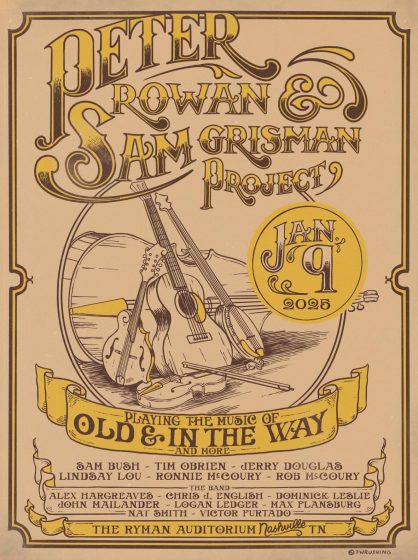
On January 9, 2025, there will be a special performance – more so a once-in-a-lifetime celebration – of the groundbreaking music of Old & In the Way at Nashville’s famed Ryman Auditorium.

Led by the “Bluegrass Buddha” himself, Peter Rowan, the legendary singer-songwriter and founding member of the group will be backed by the Sam Grisman Project. The gathering will also feature a murderers’ row of talent: Sam Bush, Tim O’Brien, Lindsay Lou, Ronnie & Rob McCoury, and more.

“In bluegrass, you just do the beautiful grace of presenting the music, being good neighbors and all that stuff,” Rowan told BGS in an exclusive 2022 interview. “But you could hear us in the band going, ‘go, man, go.’ Go for it, that’s where we came from. That’s what Old & In the Way was – the ‘go for it’ signal to everybody.”

To preface, Old & In the Way started as impromptu pickin’-n-grinnin’ sessions in the early 1970s between Rowan, his longtime friend, mandolin guru David Grisman, and Jerry Garcia, iconic guitarist for the Grateful Dead, who reached for his trusty banjo during the gatherings at Garcia’s home in Stinson Beach, California.

“We started picking every night after supper [at Jerry’s],” Rowan remembers. “We went through old song books and learned a bunch of material.”

At the time, Garcia was searching for new avenues of creative exploration, seeing as the Dead were in the midst of taking a much-needed hiatus after years of relentless touring and recording. He was also, perhaps subconsciously, trying to tap back into his roots before the Dead, this landscape of the late 1950s/early 1960s where Garcia was heavily involved in the San Francisco Bay Area folk scene.

“And you realized that Jerry was an intergalactic traveler, just dropping in on the Earth scene for a little while, but he was totally at home,” Rowan says of Garcia’s restless penchant and lifelong thirst for acoustic music.

When Old & In the Way formed in 1973, the trio recruited bassist John Kahn, as well as a revolving cast of fiddlers (Richard Greene, John Hartford, Vassar Clements). Sporadic gigs were booked around the Bay Area, with the vibe of the whole affair casual in nature – the ethos one of camaraderie and collaboration, but without expectations or boundaries.

“I remember singing the ending of ‘Land of the Navajo’ at the first rehearsal and I looked over at Jerry,” Rowan recalls. “He kept nodding his head like, ‘go.’ It was like Jack Kerouac at Allen Ginsberg’s poetry reading at City Lights Bookstore – ‘go, man, go.’ Encouragement, encouragement.”

By 1974, Old & In the Way simply vanished into the cosmic ether, but not before capturing a handful of live performances that have become melodic sacred texts of a crucial crossroads for acoustic music. To note, Old & In the Way’s 1975 self-titled debut album went on to become the bestselling bluegrass album of all-time – until it was dethroned by the O Brother, Where Art Thou? soundtrack released in 2000.

As it stands today, Rowan, now 82 years old, is the only remaining member of Old & In the Way still actively performing. Garcia, Clements, Kahn, and Hartford have all sadly passed on, with the elder Grisman and Greene retired from touring. Grisman’s son, standup bassist Sam Grisman, is now carrying his father’s bright torch.

And although the tenure of the Old & In the Way was short-lived, the ripple effects of the band’s ongoing influence and enduring legacy remains as vibrant and vital as it was those many years ago, when a handful of shaggy music freaks kicked off a jam that will perpetuate for eternity.

In preparation for the upcoming Old & In the Way showcase at the Ryman on January 9, BGS recently spoke with Sam Grisman, who talked at-length not only about his continued work with Peter Rowan and the intricacies of Jerry Garcia, but also why a band Grisman’s father started over a half-century ago still captivates the hearts and minds of music lovers the world over.

You were five years old when Jerry Garcia passed away. You were really young, but do you remember anything that you hold onto?

Sam Grisman: Yeah, I have a very vivid memory of what our house felt like, smelled like, and just what the energy was like when Jerry was around. And I remember that sort of ease, just the way that he made people feel. It seemed like my parents were at ease when he was around.

And he probably felt at ease being around them. It was probably a safe haven at that house.

Definitely. And, you know, my parents smoked weed in the house. But, my mom was pretty strict about cigarettes. [She] wouldn’t let anybody smoke cigarettes in the house. But, when Jerry was around, he smoked cigarettes in the house. So, part of this smell in my blurry five-year-old memory is the smell of cigarettes. And Jerry would sometimes wear a leather jacket, maybe the smell of leather.

I remember the sound of his laugh. I remember all that music, and some of it I remember so vividly that I just know that part of that memory is reinforced by being there as a little toddler when they were working up [music]. Because they would often work on tunes upstairs in the living room and then take them down to the studio, put them on the mics and pull them.

You just wanted to be around it all and soak it all in.

I was a really curious kid.

With the Ryman show coming up, there’s been a lot of celebration of Old & In the Way as of late, especially with you touring with Peter Rowan and the current Jerry Garcia exhibit at the Bluegrass Hall of Fame & Museum. You’ve been around those songs your whole life. But, when you think about the context of Old & In the Way, and what you’re doing at the Ryman, what really sticks out with why that was such a special time in not only bluegrass, but in the lives of those people?

I mean, what a lightning-in-the-bottle chapter of all those people’s lives, you know? I think 1973, ’73/’74, was a particularly fertile time for Jerry. He was playing a full schedule with the Dead. He had Jerry Garcia Band stuff. He was playing in Old & In the Way. He was playing pedal steel with the New Riders of the Purple Sage. It seemed like he really had an itch to go back to where his roots were, especially when you look at [the Grateful Dead album] Workingman’s Dead [that was released a] couple years prior.

For all of us, who are looking back on it 50 years in the future, it seems like this momentous, heady time that was just meant to be. But, for those guys in the moment, it was just total serendipity. And the quintessence of just going with the flow – Stinson Beach, California, vibes. They just kind of stumbled into this reality.

“Y’all wanna play?” “Sure, why not.”

Yeah, where it would just be really fun to have this bluegrass band that they didn’t take super seriously, which I think really comes across in the recordings, you know? Because there’s all this joy in that music that might not necessarily have been there if those guys were taking it super seriously or if they needed it to pay their bills. It was a very interesting circumstance.

And for them to call their hero Vassar Clements into the mix, on a sort of whim because Peter found his number on a card in his wallet. It was sort of like a fantasy camp for these guys. Like a bunch of hippies sitting around on the beach, smoking a joint, thinking: “Wouldn’t it be great if we had the world’s greatest fiddle player just show up?” “I bet you we could book a gig.” “Hey Jerry, you got these legions of people following you around, you could probably get us a gig, right?”

And that’s kind of how it happened. Those gigs were so magical, because they happened mostly for all of these Deadheads in Marin [County, California], for like 16 months or something.

So, if you really had your finger on the pulse of it and you were going to the Keystone [music club in Berkeley, California], to see [the Jerry Garcia Band] and you loved what the Dead were doing, you knew that they were going to take this time off, but you just saw Jerry the week before and he never took his guitar off. He just finished the [Jerry Garcia Band] set and walked backstage with his guitar on and was smoking a cigarette, and then you saw him 30 minutes later talking to somebody off the side of stage, still had his guitar on — you’re thinking, “Gee, this guy’s not going to stop playing music this year, so I better keep my eyes peeled for what’s next.” And they played all these little gigs mostly around the Bay Area — they kind of captured some lightning in a bottle.

With playing these Old & In the Way melodies not only throughout your life, but also extensively nowadays with Peter Rowan, what’s been your biggest takeaway on what makes those songs and the ethos/history behind them so special to you? What about in terms of musicality, technique, and approach?

It’s hard to articulate how special it is to be exploring these beloved songs that mean so much to so many folks, myself included, with Peter and a cast of some of my best friends and favorite musicians. It’s a catalog that’s got a lot of depth.

Old & In the Way would play anything from songs by bluegrass heroes like Bill Monroe, The Stanley Brothers, Reno & Smiley, and Jim & Jesse to Vassar [Clements], Jerry [Garcia], and my pop’s instrumentals, to the tunes that Peter was writing at the time, which are some of my absolute favorite songs ever written.

Songs like “Midnight Moonlight,” “High Lonesome Sound,” and “Panama Red.” Playing these tunes with Uncle Peter makes me feel connected to the times he spent with David and Jerry in Stinson Beach in the early ’70s.

I grew up in Mill Valley and loved going to Stinson Beach with my friends, so I have a pretty vivid image in my mind’s eye. They played tunes, hung out, relaxed, took in the sea breeze, smoked a bunch of great weed, and developed a highly individuated “West Coast” approach to playing and singing this bluegrass music that they all loved and respected so much.

And then, they called one of my bass heroes, John Kahn, and their fiddle hero, the inimitable Vassar Clements and gave the world about one glorious year – I think around 50 shows – of a rare and lovable breed of bluegrass.

So much of everyone’s personality comes through in the music, and you can hear their camaraderie in the recordings. I guess my biggest take away from getting to play this music with Peter is how important it is to bring your own approach to these timeless songs that we love, while still honoring what it is that makes us love them in the first place.

You’ve known Peter Rowan since you were born. But, what has this latest endeavor together meant to you, to play the Old & In the Way catalog to not only lifelong fans, but also a whole new generation of acoustic music fans and bluegrass freaks?

It means the world to me to get to spend some time out on the road sharing space and time in service of this music with Uncle Peter. Getting to meet all of these folks who care so much about this music and feeling their appreciation and gratitude for Pete has been truly special.

There are so many people from so many different ages and different walks of life for whom this music has been the soundtrack to many fond memories, and I’m honored to be one of them. It’s also been a joy to see fresh faces in the audience and some folks taking in this music with a new perspective.

In your honest opinion, what is the legacy of Old & In the Way when you place it through the prism of the history of bluegrass and the road to the here and now, especially this current juncture where the torchbearers are selling out arenas and creating this high-water mark for acoustic, traditional and bluegrass music?

For many folks who know and love the music of Jerry Garcia and the Grateful Dead, Old & In the Way has been their first exposure to bluegrass. So many people over the years have told me how listening to Old & In the Way led them to further explore bluegrass music and its roots and branches. And others have told me how it inspired them to become pickers and start bands of their own.

I think Old & In the Way has been pivotal in bringing a wider audience with a more adventurous musical palette into the bluegrass universe. The legacy of Old & In the Way is one of exploration and preservation, and they certainly paved the way for many of us to walk a similar path — honoring the music that we love, while exploring its boundaries and finding our own voices and approaches.

It’s wonderful to see my friend Billy Strings out there playing for so many folks on such a big scale simply being himself, playing his own songs with a great group of friends, and also honoring the material that made him the musician that he is — maybe that’s a part of the legacy of Old & In the Way.


Photo Credit: Elliot Siff
Poster Credit: Taylor Rushing

Artist of the Month: Dead in December

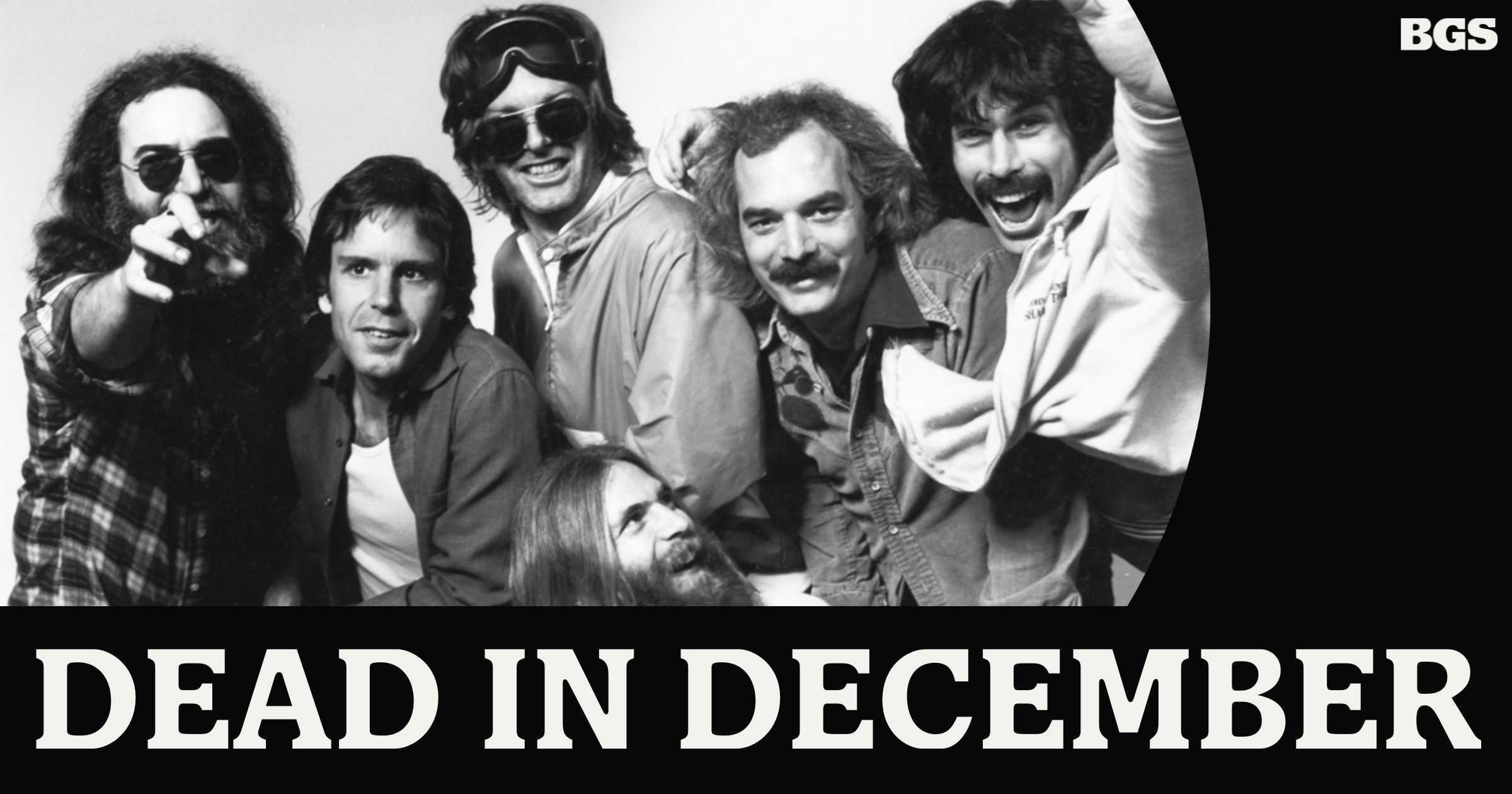
(Editor’s Note: This December, we continue our annual series – see also: Dolly in December, Dawg in December, Dylan in December, and Del in December – by celebrating the iconic, trailblazing jam band, the Grateful Dead, all month long! We’ll be featuring the Grateful Dead as our Artist of the Month, celebrating their enormous impact on bluegrass and roots music over the next few weeks.

To kick off our coverage, BGS contributor Garret Woodward pens a heartfelt and personal AOTM reveal. Plus, don’t miss our exhaustive Essential Grateful Dead Playlist below.)

The single most profound moment within my 39 years of existence (thus far) is the first time I heard the Grateful Dead. Not far behind that life-altering experience were my initial encounter with LSD (in high school) and finally cracking open Jack Kerouac’s seminal 1957 novel, On the Road (in college).

Summer 1994. I was nine years old and living a simple, yet happily mischievous childhood in the small North Country community of Rouses Point, New York. One mile from the Canadian Border. One mile from the state line of Vermont. Solitude. Desolation. Rural America. Mornings spent building tree forts and wandering vast cornfields surrounding my childhood home. Afternoons jumping off the dock into nearby Lake Champlain.

Even at that time, I was a bona fide music freak. Whether it was Top 40 radio (Gin Blossoms, Melissa Etheridge, Collective Soul, Sheryl Crow) blasting out of the small boom box in my bedroom or whatever my parents shoved into the cassette deck in the family minivan (Willie Nelson, Beatles, Rolling Stones, Nat King Cole, George Jones), I was in search of “the sound.”

But, everything in my existence changed one evening that summer at a family cookout at our camp on the lake. Sitting at the picnic table — chowing down on some burgers, beans and potato salad — I noticed a hat my aunt’s boyfriend was wearing. The logo on the front was of a dancing bear, with the back featuring a skull with a lightning bolt. I inquired.

“It’s the Grateful Dead,” he replied with a Cheshire Cat grin emerging from a bushy beard. “Have you ever listened to the Dead, man?” No, I replied. After dinner, he walked me over to his early 1990s Volkswagen Jetta. He hopped in, rolled the windows down and turned on the stereo. Again, with a grin, as if he knew what was going to happen once he pressed play and cranked the volume.

It was the Skeletons from the Closet album. The opening tune, “The Golden Road (To Unlimited Devotion),” hit me like an undulating series of waves in some endless ocean of melodic tones and lyrical truths. It was just like when Dorothy Gale entered the world of color in The Wizard of Oz.

Nothing really was ever the same after that moment. It was not only the first music I’d discovered on my own – without the radio or my parents’ influence – the Dead, for some unexplained reason at the time, immediately became “my band.” Something clicked deeply inside of me. I awoke. And I had arrived.

Soon, a seismic shift occurred in my adolescent life. I wore Dead shirts to my Catholic elementary school to the dismay of the nuns. Tacked up Jerry Garcia posters on my bedroom wall. The swirling sensation of “Sugar Magnolia” or “St. Stephen” echoing from the boom-box. Incense burning on the windowsill overlooking the cornfields and unknown horizon of my intent. I even had a small shrine to Jerry on my bookshelf for several years after he died. I was all-in.

Musically, the Dead were a bunch of incredibly talented bluegrass, folk, and jazz freaks, who were inspired by the onslaught of the Beatles to plug in and go electric. The band itself was this massive sponge, one which soaked in any and all influences it crossed paths with — either onstage or merely wandering down the road of life. That authentic sense of curiosity and discovery is key to the Dead’s magic throughout its decades of improvisational splendor.

At its core, the Dead’s message resonated within my often-bullied and ignored self as a kid. If you like the Dead, you’ll always find a friend out there in the universe to connect with. The band’s symbols are beacons of love, compassion, and acceptance once you walk out the front door. In essence, I’d found my tribe, this wild-‘n’-wondrous ensemble of loving oddballs, eccentric weirdos, and all-around jovial folk. My kind of people, who remain so to this day.

The Dead is about personal freedom. To not only be yourself, but to also seek out the intrinsic beauty of people, places and things in this big ol’ world of ours. Have adventures. Pursue wisdom. Radiate love. Be kind. Damnit, be kind. All of these things offered from the music and its followers were placed in my emotional and spiritual toolbox as I began to wander the planet on my own following high school, college and impending adulthood.

And here I stand. Age 39. That nine-year-old discovering the Dead is still inside of me somewhere, still burning incense and blasting “St. Stephen.” That youngster’s excitement for all things music (especially live), endless curiosity for what lies just around the corner, and running with a reckless abandon towards the unknowns of tomorrow are as strong and vibrant as ever — especially through this ongoing catalyst that is my career in the written word.

Case in point, I recently headed to the Bluegrass Music Hall of Fame & Museum in Owensboro, Kentucky, for another celebratory weekend for its current exhibit: “Jerry Garcia: A Bluegrass Journey,” on assignment and on the ground covering the festivities. An incredibly curated collection of rare Garcia artifacts and wisdom, the showcase will run onsite until next spring.

Before the inception of the Grateful Dead, Garcia was completely immersed in the bluegrass and folk scenes in the San Francisco Bay area in the late 1950s and early 1960s. He was part of numerous acoustic acts and ensembles throughout the bountiful period — the culmination of that vast knowledge and in-depth experience being poured into the Dead’s formation in 1965.

To note, there’s a lot to be said about Garcia’s talents on the banjo being applied to what would become his signature tone on the electric guitar. And to that notion, add in the sheer lyrical aptitude of Robert Hunter, who not only penned many of the Dead’s iconic melodies, but was also on a parallel journey to Garcia’s early on and throughout the band’s 30-year trajectory.

And there I was in Owensboro, some 400 miles from my current home in Western North Carolina. Traveling for hours just to arrive on the mighty Ohio River – the state line of Kentucky and Indiana, this crossroads of the Southeast and Midwest. And for what? To push further and farther down the cosmic rabbit hole that is Jerry Garcia, the Grateful Dead, and those who follow.

The next 48 hours were a whirlwind of sound and scope. Seemingly endless tribute sets to Garcia and the Dead at the Woodward Theater inside the museum from the Kitchen Dwellers, Lindsay Lou, Fireside Collective, and members of the Infamous Stringdusters to late-night jam sessions in hotel rooms next door.

The Grateful Dead are arguably the only musical entity to exist that – regardless of who or what genre is being represented – once one of their tunes is placed into a performance, folks either show up in droves or are already present with ears perked up to what’s radiating out from the stage. It’s a fact that no matter what style of music you play, if it involves the Dead in some form or fashion, Deadheads are game to check it out. You could be a polka group and we’ll be right there, standing front row, the second you roll into “Althea” or “Shakedown Street.” The music provides, always and forever.

Before I left Owensboro and the Garcia celebration at the museum, I found myself on a bourbon distillery tour on Saturday afternoon. I walked into the enormous facility and checked in with the host. All by myself and waiting for the tour to start, the host tapped me on the shoulder.

“You like the Dead?” his face lit up, pointing to the Dead stealie tattoo on the back of my right leg. “Sure do, my brother,” I shot back with a smile of solidarity. We talked about our favorite live Dead recordings and where we’ve caught Dead & Company in concert recently, kindred spirits now eternally connected by this band of roving musical pirates. It’s a genuine interaction that happens often to Deadheads and something I don’t ever take for granted.

Even as we stand in this uncertain time in American history – where nothing is the same, everything is the same – the Grateful Dead remain this portal to escape, to purposely choose compassion, camaraderie, and community. It’s about cultivation of one’s self and of the sheer magnitude and gratitude of daily life, so long as you stroll this earth with the pure and honest intent to connect, to listen, and to understand.

“I will get by, I will survive.”


MIXTAPE: Rainbow Girls’ ‘HAUNTING’ Inspirations

Hey BGS! Erin from Rainbow Girls here. Our new record, HAUNTING, just came out October 13th and we put together this Mixtape of reference tracks that inspired the writing or making of the songs on our record. We ended up choosing one reference track per song. Got some help from Caitlin and Vanessa for a couple of these and we ended up creating an awesome playlist. Hope you enjoy! – Erin Chapin, Rainbow Girls

“Sadness as a Gift” – Adrianne Lenker (for “sixth grade girlfriend”)

I’ve always been so inspired by Adrianne Lenker’s style of guitar playing. There’s an intricacy and an intimacy that lends itself so perfectly to the lyrics; the guitar and the poetry of the words stand like a power couple, instead of one falling into the background as support. “Sadness as a Gift” is this beautifully poignant song about losing a relationship, but still wanting to hold the memory in your hand like a moth – it just breaks me. – Caitlin

“Let It Be Me” – The Sweet Inspirations (for “paying my tab”)

The Sweet Inspirations’ 1967 version of “Let It Be Me” inspired me to write a song with a similar groove. I heard that simple intro and it immediately grounded me. Griffin Goldsmith from Dawes played drums on our song, “paying my tab,” and he took this reference track and ran with it to the moon and back.

“Cold Little Heart” by Michael Kiwanuka (for “you must not feel the way i do”)

“you must not feel the way i do” was written after we had already started recording for HAUNTING, but we knew it was the single. We had all the vocals and main instruments recorded, but it needed a hook to open the song. I kept demo-ing this weird sound with my voice we were calling the “vocal theremin” – this ghostly, half-human/half-instrument sound. I knew it would sound too crazy for anyone else in the band to get excited about, so I sent them Michael Kiwanuka’s hit, “Cold Little Heart,” to exorcise any doubts. Thanks, Michael.

“Running Down a Dream” – Tom Petty (for “loser”)

Nirvana loomed large when writing the chord progression for “loser,” but it was a Petty classic that kept rearing its head and ultimately snuck its way into the lyrics. “Running Down a Dream” takes us on a journey that winds towards aspiration. The road is wet and laden with obstacles, but it’s the act of surmounting those blocks that makes accessing the dream so much sweeter. – Vanessa

“Song for Prine” – Jordan Smart (for “how to deal”)

Caitlin wrote “how to deal” the day John Prine died. Part of it is a response to our friend Jordan Smart’s “Song for Prine,” which is about all his attempts to see John Prine perform live, which ultimately he never got to do. But life goes on.

“The Boy Who Blocked His Own Shot” – Brand New (for “if i saw you now”)

The progression and mood of “if i saw you now” was inspired by Brand New’s “The Boy Who Blocked His Own Shot.” Brand New has a way of holding the morose and appalling within their songs that few other artists can capture.

“Ageless Beauty” – Stars (for “ageless beauty, pt ii”)

When we first met and started playing music together in college, “Ageless Beauty” by Stars was on repeat. It was one of the first songs we ever sang together. Our song “ageless beauty, pt ii” reflects on our experience at that time and the beginning of Rainbow Girls.

“Fake As A Dream” – Rainbow Girls (for “sms to the void”)

“Fake as a Dream” is one of our songs, off our record Rolling Dumpster Fire. We had asked our friend Chris Lynch to arrange a string part for it, but what he sent back was so much more. It took the song to another dimension. When we decided that “sms to the void” should be more than an a cappella song, we knew Chris was the person to take the reins. And he did it again – the string arrangements, the piano. It’s both subtle and heartbreakingly gorgeous.

“Last Night” – The Lostines (for “a subtle f u”)

I heard the song “Last Night” by The Lostines and realized there was an entire element of “haunting” missing from our record. Their song opens up with this sweet-yet-spooky melody on an ambiguous keyed instrument and the sound conjures memories of classic ’90s Halloween-esque movies and tv shows like Hocus Pocus, Nightmare Before Christmas, Goosebumps, and Are You Afraid of the Dark. I knew we needed to have a layer like that somewhere on HAUNTING and our song “a subtle f u” won the draw.

“Subterranean Homesick Alien” – Radiohead (for our cover of it)

A cover of one of our favorite Radiohead songs. Alien contact, abduction, insanity. Everything you could ever need from a spooky social commentary.

“motel” – Hot Brother (for “spread me thin”)

We were in the studio recording our song “spread me thin” when we realized that we had 3/4ths of the band Hot Brother recording on the track with us (Nick Cobbett – drums, Ben Berry – bass, Jeremy Lyon – guitar). We decided to ask the 4th (and really first) member, Brittany Powers, to sing on it and that ended up transforming the song into a duet between two women singing about their community. Brittany performs with several other artists in the Bay Area and her voice is an iconic part of the music scene in Northern California. “motel” is the first song off her/Hot Brother’s upcoming record and it is a sheer banger.

“I Want Jesus to Walk With Me” – Mississippi Fred McDowell (for “dead ringer”)

Our song, “dead ringer” is a slide-heavy, minor blues song about being buried alive. It is musically inspired by Mississippi Fred McDowell’s 1959 version of “I Want Jesus to Walk With Me.” The vocal melody parallels the slide guitar’s melody interchangeably throughout the song, creating an eerie, almost trance-like soundscape.

“Cinnamon Tree” – Marty O’Reilly & the Old Soul Orchestra (for “goodnight angel”)

The last track on HAUNTING functions as a sort of secret track, though not-so-secret in the age of streaming platforms. “goodnight angel” is a lullaby we often sing to our friends at the end of long, inebriated nights that was actually a drunken, collective-consciousness co-write with our friend Marty O’Reilly while on tour together in the UK in 2013. We used to play shows together all the time when we first started out and “Cinnamon Tree” was one of our band favs from his first release.


Photo Credit: Kory Thibeault

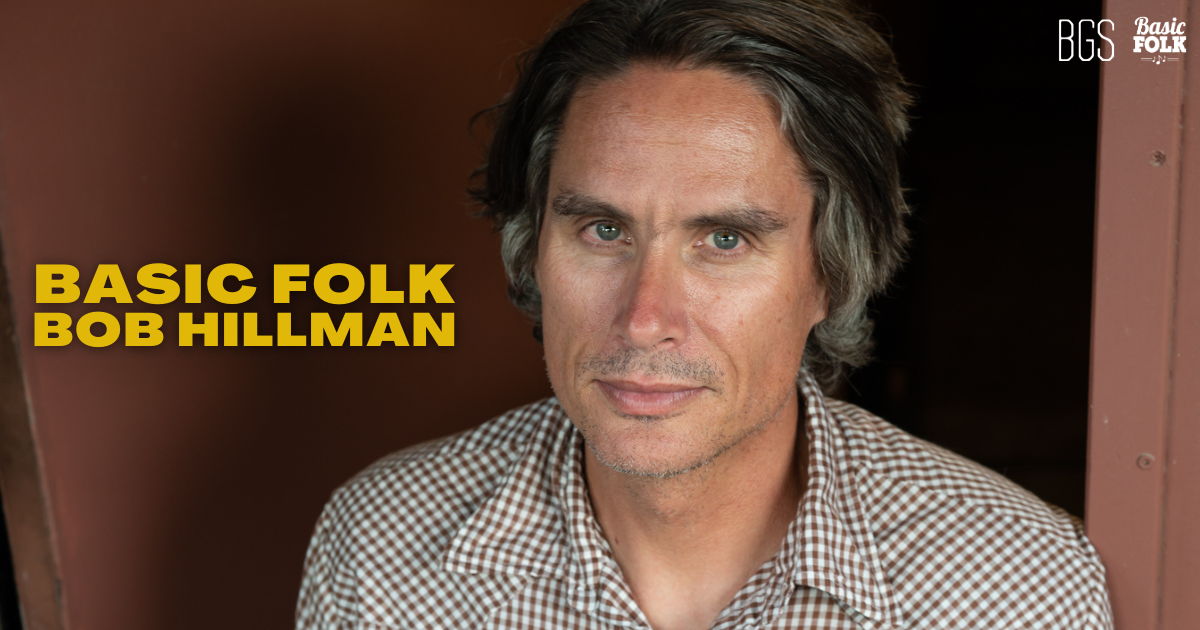
Bob Hillman’s Rock and Roll Return: From Beach Volleyball to Marketing to Musician

Bob Hillman had a real thing going on in the early 2000s. He had made waves in New York City, rubbing shoulders with some of the finest songwriters of the era at places like Fast Folk and The Living Room. The singer-songwriter was creatively fulfilled, but not gaining the momentum needed to experience strategic growth in folk music. After opening a long list of dates for Suzanne Vega, Hillman decided it was time to step away and get back to business… school that is. He got his MBA in marketing and went on to hold a decent paying job for the next decade and a half, raising his family in the Bay Area.

LISTEN: APPLE • SPOTIFY • STITCHERAMAZON • MP3

After a layoff, Bob thought it was time to dig in again and started writing, recording, and performing. Since 2016, he’s released a couple of albums and an EP or two. The most recent is the mostly acoustic Downtown in the Rain. In our conversation, we talk about what it’s like to reignite his creative entrepreneurial musical spirit, how he used that energy in his corporate jobs, and also how he hopes to one day meet his singing partner on the EP, Maria Taylor.


Photo Credit: Brian Joseph

Laurie Lewis – Toy Heart: A Podcast About Bluegrass

In the latest episode of Toy Heart, we explore the roots and evolution of bluegrass in the modern era by examining the story of legendary bluegrasser, singer-songwriter, and recording artist, Laurie Lewis.

From her tales of growing up in Berkeley during what Lewis jokingly calls the “folk scare” of the ’60s to finding the joy of music through her father’s classical background and eventually becoming a pioneer for women in the genre, her lifelong career in American roots music is a perfect example of how the innovation and tradition-bending tendencies of bluegrass’s first generation continue full force today. Lewis’s musical transformation over the course of her life shows the entrancing power of bluegrass to steer and alter the course of hers and so many others’ lives.

LISTEN: APPLE PODCASTSSPOTIFYMP3

In our Toy Heart interview, Lewis chats with host Tom Power about the magnetic pulls of Chubby Wise’s fiddle tunes, of albums by the Greenbriar Boys, and of a formative live show by the Byrds. She talks about studying modern dance, “disappointing” her father by “rebelling” and choosing folk music forms over classical, and what eventually led to late-night jams, fiddle contests, and navigating the Bay Area’s bustling bluegrass, folk, and women’s music scenes.

Their conversation closes with a reflection on the ways bluegrass has affected Lewis the most, and, how it continues to shape the identities of its artists and listeners with an intractable, ineffable pull. Power and Lewis point out how current generations – from Molly Tuttle to Tatiana Hargreaves, both mentees and collaborators of Lewis – continue in these same traditions. Plus, Lewis shares what it was like to tour and sing with Dr. Ralph Stanley, himself.

This Toy Heart episode dives deep into the many layers of the genre, helping to demonstrate just some of the many ways bluegrass interweaves itself into musicians’ and fans’ personal and musical identities. Lewis shows there are countless joys in staying true to one’s artistic vision amidst an industry that is always in flux; her insights offer a soulful perspective on continuity and change within the genre, echoing the sentiments of a community that, much like a family, supports and evolves with its members – and that continues to rightly hold Lewis up as a trail-breaker and standard-bearer for the entire genre.


Photo Credit: Irene Young