Darren Nicholson Wants His Style of Bluegrass to Sound Different

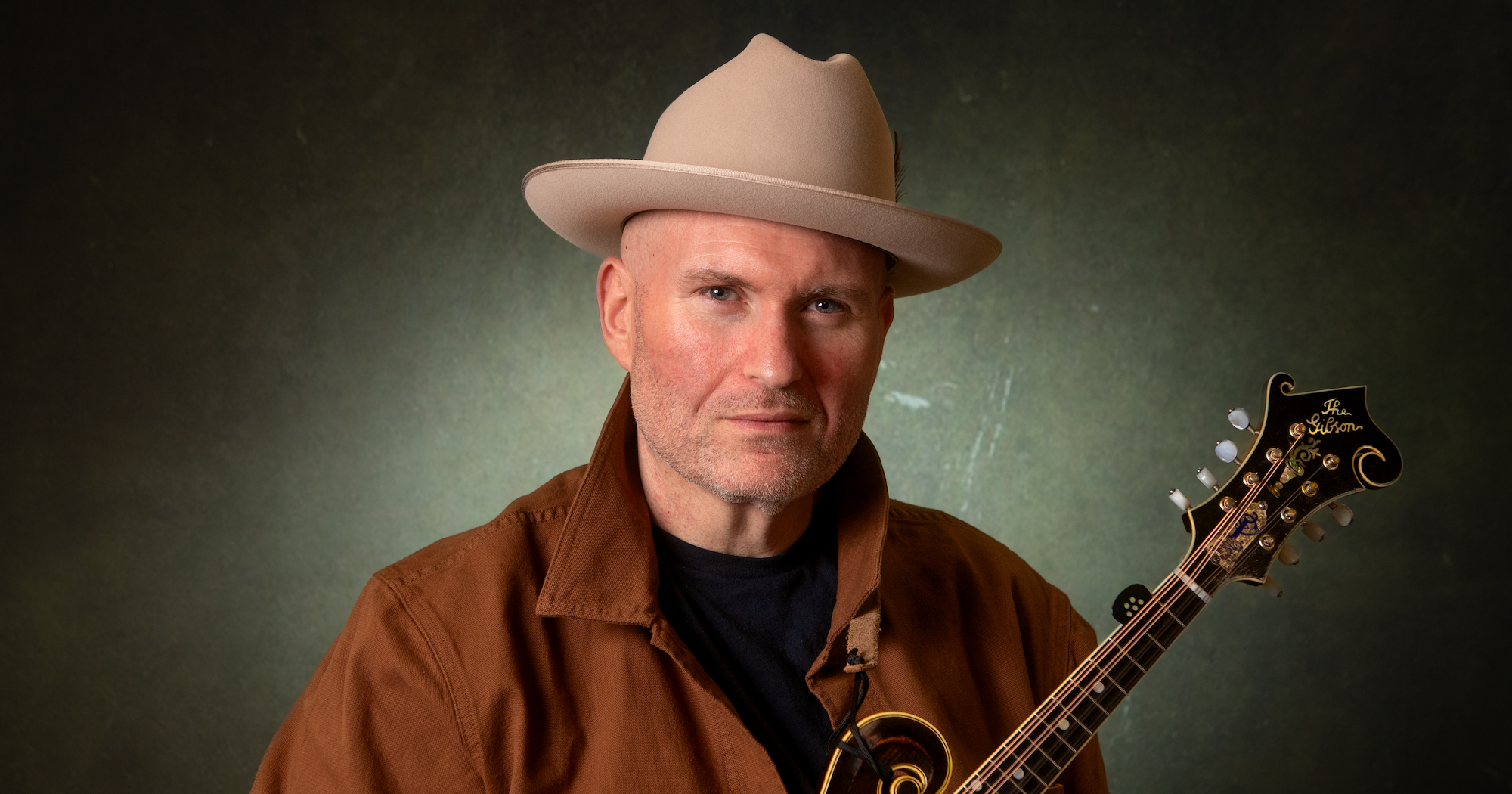
Over the past twenty-some years, Darren Nicholson has played mandolin all over the world – whether with Alecia Nugent, as a member of Balsam Range (a group he co-founded), or on his own (with or without a band). No matter where he traveled, you can be sure that Nicholson was bringing Western North Carolina with him. Nicholson was born, raised, and still lives in the area.

When BGS caught up with Nicholson, he was home in Canton, N.C., a town about 20 miles west of Asheville. It’s a region that he feels has been a bit overlooked in music history. “The oldest folk festival in the country [Mountain Dance and Folk Festival] is held in Asheville,” he shares. “There were recordings that happened in Asheville before the Bristol Sessions.”

The area he pointed out, despite its remoteness, also has been home to many significant musicians – as well as developing a dance-friendly style of bluegrass that drew from many different styles.

Nicholson’s love for the area has led to a rather unique sponsorship for his tour van and trailer. Through a friend he met with representatives of the Avalon Mountain Community, a private mountaintop neighborhood and development in the hills of Western Carolina. Nicholson calls it a “win-win” situation as he receives some financial support for touring expenses while Avalon now has a “rolling billboard.” “I even wrote a jingle for them,” he states.

Nicholson will be traveling around this year touring a fine new album, Lonesome Trails and Tall Tales. He counts it as either his fourth or sixth solo effort, depending on whether you factor in two EPs. Lonesome Trails and Tall Tales arrives after several particularly eventful years for Nicholson, including leaving his longtime band Balsam Range, getting sober, and acquiring a prized 1923 Lloyd Loar mandolin – all among the topics that he was more than willing to talk about with BGS.

How does your new album Lonesome Trails and Tall Tales tie in with your earlier albums?

Darren Nicholson: My records have a sound, you know. I’ve always been pretty much consistent – besides an electric country EP – doing the music that I consider my style of bluegrass or the bluegrass that I grew up on, which is to me the traditional bluegrass of the ’60s. Having a producer like Carl Jackson in the early days influenced how I made records, because Carl had played with Jim & Jesse and he came out of [when] an entire bluegrass movement had almost a country kind of feel to it. I love the sound of those records. And it was partly because I grew up in Western North Carolina and there’s a huge dance element here – the square dance music.

The old-timey driving style of rhythm with that light percussion – like Jimmy Martin, Flatt & Scruggs, the Osbornes – that really fits in with people who danced. And the modern kind of bluegrass – like the Alison Krauss style of bluegrass, which is amazing – does not lend itself to dancing. The modern style of bluegrass that was really kind of heavy on the one and three beat, and then the older style of bluegrass, which was very much more even, rhythmically.

And how does the new album differ from your prior ones?

What separated this particular recording from the others is just my growth as a songwriter… I was picking what I thought were the best songs I had or songs that were different from each other. A lot of times… [with] the way things are being mass produced now, if Nashville finds one song that’s a hit, they’ll write 10 more just like it for all the other artists. So they all start sounding the same.

To me, all the great artists of yesteryear, all their material was different. Their sound was different. Instead of just finding something you could mass produce, make a buck on, and then hop on to the next thing, they were actually creating art and trying to artistically be different. That was what was good about it.

So [in] the same way, I try to pick songs in my set. I don’t want to play five songs in a row that sound the same. Otherwise, it’s boring – I see bands do it all the time. They kick off in [the key of] B and they play five songs that could basically be the same song, you know? I understand why people who are non-bluegrass fans will go, “You know, all bluegrass sounds the same.”

I tried to pick six songs that were completely opposite from each other, so when you go down track by track, it’s a different journey and it doesn’t bore the listener. Every song is a different tempo, it’s a different groove, it’s a different key, it’s a different vibe, and so that’s how I put records together.

Were these songs ones that you’ve accumulated over the last couple years or are they all a recent crop of songs?

A few of them were really old and a few of them were really new. “Big Sky” has been around for a few years and I wrote it with Charles Humphrey. I thought it was “okay,” and this shows you how off-base I can be sometimes.

I’m driving to a gig one day with my buddy Kevin [Sluder]. He plays bass with us. It was a solo gig, but he was just riding with me. We’re listening to songs and Kevin goes, “That song is amazing. You’re an idiot if you don’t cut that song.” I was like, “That song? It’s okay.” He goes, “No, that song’s more than okay. That song is special. You need to cut that.” I took this batch of songs to Jeff Collins, who produced the record, and that was one of the first ones he picked. And sure enough, radio played it. Banjo Radio wore that song out. If it were up to me, I would have probably left that one on the pile of demos.

One of the newer ones was “Eager Overachiever.” I’d just written that song with Andrew Blythe. It was so fun. Every time I would sing it for somebody, they loved it. It’s a funny song about addiction.

It made me laugh, and the song also shows a lot of personality.

That’s the point, you know. That song has personality. One of my favorite artists [growing up] was Roger Miller and he would sometimes do these spoken pieces. Especially in country music, sometimes there would be recitations or things would set up songs. It was interesting and just funny, you know.

Can you talk a little about the music traditions of Western North Carolina where you grew up?

There’s a definite style. If you go across the country, there’s little pockets of bluegrass that have their own sound, for sure. But Western North Carolina and this region was so rural and cut off… If it’s 120 years ago and you’re in the mountains of Western North Carolina, people would walk for 10 miles to get to a barn dance or some place on Saturday night. And the band would be whoever showed up. It might be a banjo and guitar. It might be fiddle and banjo. But it changed the way you played. When Doc Watson plays his leads, he also plays his rhythm; he’s playing lead and rhythm at the same time. Where modern players who have a whole band behind them, they’re like playing rhythm and then when it comes time to take their solo, it’s a whole different mindset.

As [the area] grew and people got together more and more, they still played the same way. They passed it down from generation to generation, that strong sense of rhythm and timing that is a trademark for Western North Carolina. Look at Marc Pruitt and Steve Sutton; you know, Jason Burleson is from Western North Carolina. Doc Watson, Earl Scruggs, Mark Kuykendall, Tom McKinney, Mike Hunter – all of these amazing players are from Western North Carolina. Randy Davis – Bill Monroe introduced him every night for five years: “He’s the man from Asheville, North Carolina; he’s the man with perfect timing.”

At these musical gatherings in Western North Carolina, you’re describing how people frequently would bring whatever instruments they had – acoustic or electric. And it wasn’t doctrinaire about what a bluegrass instrument had to be.

Yeah, it was community. And I’m going to say this, and I don’t care to say this because I’m from here and I’m from generations and generations of people who play this music. It’s always somebody who got into bluegrass in college or they got into it older, and they’re not even from this area. It’s somebody that’s from New York or from California or from Oregon. They write articles, and they become self-proclaimed experts of bluegrass. And they say, “Well, this is bluegrass and this isn’t bluegrass.”

They didn’t come from generations of this music. They don’t know. They’re not at the epicenter of where it came from and how it started, but they’re always the ones who try to dictate. And then most of the time, they don’t even play. But that’s their way of being involved in the music somehow. It really hurts the music because any time you start segregating something, you’re just keeping somebody [out]. That’s not how this music started.

Do you think Earl Scruggs said, “I’m not going to play if there’s an electric bass here”? You know what I mean? Look at the people who created the music: Earl Scruggs, the Osborne Brothers – they had electric bass. They had drums. But there’s somebody, who’s basically a yuppie, who is trying to tell us what the music is. I do take offense to that.

That’s why the Gibson Brothers have that song called “They Called It Music.” That’s great. I love that because that’s what it was. It’s like, they just called it music. We got together and made music and everybody was welcome. And it sounded like bluegrass. It sounded like country. It sounded like old-time. And it’s just sad. It’s like bluegrass has almost tried to put too fine a point on itself. And it’s almost made itself smaller because of that.

To me, sometimes it feels like the more I write or listen to music, the less I know, in a sense – or, the more I learn, to say it another way.

That’s how we all should be. We should remain a green tomato. If we’re red, we’re done, right?

If I moved out to Seattle – I really enjoy grunge. And if after five years, I read about grunge as much as I could, all of a sudden I know more than the people who created it? But I see that happen [with bluegrass], you know. It’s almost like someone is such a fan or likes this so much that they take ownership to a point where they’re hurting it. It’s like a pet. They’re holding it and petting it so much that they’re actually hurting it.

Bluegrass can look like a lot of different things and so there’s different styles depending on the regions, too.

I was wondering who are the main musicians that have influenced your mandolin playing?

Basically, there are four guys who are on my Mount Rushmore of mandolin. Country music or bluegrass or whatever in roots music – and that’s Bill Monroe, Jesse McReynolds, Bobby Osborne, and Jethro Burns.

Every modern style has come out of those four guys or a combination of those guys. That’s where David Grisman, Ricky Skaggs, Doyle Lawson, Sam Bush, [were all] influenced by those. So, there are some songs that I try to sound like Bill Monroe and there’s some songs I cross-pick like Jesse. Then there’re some songs I play more fiddle-note stuff like Bobby and then there’re some songs that get a little swingy and jazzy and I’m channeling my Jethro, you know?

Those guys kind of set the landscape. My big influence, as far as players that I got to see and got close to, is Mike Hunter in Western North Carolina. He was a huge, huge influence. He was an incredible mandolinist.

You have said you tend to let the song guide you and not to impose a style on it. Did this approach come from someone’s advice or was it something you learned along the way?

I had a mentor named Steve Sutton. I started playing with Alecia Nugent in 2004 and Steve was the bandleader. He got me that job. During that time, musicians would come through in little waves, like in five-year clusters. A lot of my peers were Aaron Ramsey, Ashby Frank, Andy Ball, Jesse Cobb, and so there were a bunch of guys during that time. Not all of them are Adam Steffey clones, but a lot of my peers were influenced heavily by Adam Steffey.

It’s like, who can play like Adam Steffey? You can get close, but you’re not going to beat the guy. So, my mentor told me, “All of these other people are in that vein. You would be way ahead to do your own thing and just sound like yourself. You won’t mess up as much either, because instead of thinking about what somebody else did, you’re actually thinking about what you’re doing. So, your brain is actually in the moment with your hands.… Try to play what fits the song and instead of trying to settle into a style – just play what the song or the band needs.”

And, you know, I just never turned back from that. He really helped me with that. Then, all of the sudden, too, if you sound like yourself and everybody else is going after this other thing, then you’re a peacock in a room full of chickens.

A couple years back, you acquired a rare 1923 Lloyd Loar mandolin. How are you enjoying it?

Oh, it sounds incredible. It’s a hundred-year-old wood. You can’t replicate that. Ferdinand [named after the mandolin’s original owner] hadn’t really been played until I got it, but I’ve played it quite a bit. You can play that thing for just a few minutes and it’s just singing. It’s just unreal.

It gets better and better every minute that you play it. It’s balanced. It’s loud, but it’s also got these real pretty, sweet tones in it. It’s just a pretty magical instrument. It’s a life-changing instrument, for sure. It’s a rare bird amongst rare birds.

Early in the pandemic you got sober, which you’ve been quite open about. How has this changed your life?

Getting sober, I had all this time on my hands and I started getting productive. I started recording, writing songs, and all of a sudden, after all these years, I felt my creativity. I started throwing all my time into healthy things… I had my life back. I had my time. I had my energy. I had my mind, my spirit – all that came back because of sobriety.

So, I talk about it because I think talking about it is a great way to maybe touch someone who’s maybe struggling with it out there, you know? Give them a little shot in the arm and say, “You know what? If that poor bastard can do it, I can do it too.”

That was around the time you left Balsam Range too?

When I left that band, people were like, “Why would you leave a high-profile band?” And it’s like, there’s more growth over here [going solo]. The last year I was with them, we went on about 20 dates and I did about 160 dates on my own. I wasn’t stagnant anymore. A band has been together for a long time, people request the same songs and you’re playing the same songs all the time.

The pandemic also resulted in you having something of a revelation about performing music, right?

I found myself doing house concerts for 20 people, and they’re people who saw me on huge stages with Balsam Range. They would cry because they’d never experienced bluegrass like this. I’m like, “Well, this was how it was intended.” This was how it was created in these houses a hundred years ago in the mountains of Western North Carolina — community people entertaining each other.

So, there’s that. Then there’s sobriety. And then there’s like, “Wait a minute, am I doing this for my ego to get famous or am I doing this to be healthy and be part of a community?” It all goes together. Like, I talk about my sobriety to help others. I want to use my music to impact others.

If we do it with a good heart and the right intentions, all that other stuff will fall into place. We want to play anywhere. We’ll go and we’re ready. We’re road ready. We’ve got original music; we can do covers; square dances… I want to be the Bob Wills of Bluegrass.


Photo courtesy of the artist.
John Reischman: Between the Salish Sea and Salt Spring

There are no U.S./Canada border wars when it comes to John Reischman. The revered mandolin master was born in Northern California but has lived in British Columbia since the early 1990s. His longtime band, the Jaybirds, are a quartet that includes two members who are also based in British Columbia (bassist/vocalist Trisha Gagnon and banjoist Nick Hornbuckle) and two who reside in America (fiddler Greg Spatz lives in Eastern Washington and guitarist/vocalist Patrick Sauber is from Southern California).

Their latest album, The Salish Sea, refers to the body of water between Vancouver Island and the British Columbia mainland. The record is their first since 2017’s On That Other Green Shore along with being the first to feature “new” guitarist Sauber on the entire album. The song “The Salish Sea” not only serves as the album’s title, but also is part of an original “Bluegrass Concerto” that Reischman was commissioned to create for FreshGrass in 2024. The honor is just one example in a long line of accolades for Reischman, who began his career in the Bay Area bluegrass/folk scene of the 1970s (including a stretch with the Tony Rice Unit) before moving to Canada, where he started the Jaybirds as well as performing solo and in other groupings.

In recent years, Reischman has seen his song “Salt Spring” become something of a modern bluegrass classic. He spoke with the BGS from his home in Vancouver about “Salt Spring” as well as The Salish Sea, his famous Lloyd Loar mandolin, and how he got into bluegrass music.

What was the process of putting the new album together?

John Reischman: There was one venue in Washington State where we had a residency. It was in the fall, in a beautiful spot. It was just ideal. So we took the extra day, worked up like six new tunes, and then started performing them right away. I guess this was October of ‘23.

And then you recorded the album in Vancouver?

In December of ‘23, I wanted the band to check out the studio here in Vancouver, where we ended up ultimately recording. I just want to make sure everybody was cool with it. I knew I liked it, because I had used it for my solo record, New Time & Old Acoustic. They all liked it. At the end of any tour we had that was close to Vancouver in 2024, I’d book a day or two in the studio, and we’d go record two or three or four songs. We were able to perform all this material mostly before we recorded it. … And it was great, because we’d be warmed up from the tour and we’d go in and track some tunes.

This album was the first in a while, and also the first that Patrick Sauber was fully on it.

Right, On That Other Green Shore came out in 2017. That was kind of the tail end of our time with [guitarist] Jim Nunally being a band member. He was exploring other things and decided he’d leave the band. We had a few more tracks to do… and we had some dates on the calendar.

I thought of Patrick immediately, because I’d known him for many years and I thought he’d be good. So he signed on for a tour and then another tour and it was just like, “This works great.” We asked him to join and he immediately said yes. He was a great fit.

How did the Jaybirds come together in the first place?

I didn’t really set out to have a band, except for the fact that I had a solo record called Up in the Woods. There was a local festival, so I put the band together to help promote the record. Seemed like a good idea. And I liked playing with all those people and it just continued on.

It’s called John Reischman and the Jaybirds, because I conceived of it. My name was probably the most well known at the time, but I wanted to be integrated into a bluegrass band. People present stuff, and I almost always accept it. Mostly it’s a pretty democratic presentation, I think. That’s what I like. It’s not Gladys Knight & the Pips.

Can you talk about the title track and how it’s also part of a larger project?

I had been asked to write what they call a “Bluegrass Concerto” by the East Coast festival FreshGrass, and I came up with these three tunes that work together. The first tune was the first movement, which ultimately was called “The Salish Sea.” I thought this will be my contribution to the new Jaybirds record, because they were involved with the performance of the Concerto.

We performed it [at FreshGrass in 2024] and I really liked the idea of having two mandolins and I’ve always loved two fiddles. I knew Darol Anger was going to there, so I asked him if he’d play twin fiddles on it. And then Sharon Gilchrist is a good friend and great mandolinist; we’ve played a lot together, and I asked her to play a mandolin on two of the three pieces.

I’ve got to acknowledge David Grisman, because the music is influenced by his “Dawg Music.” It’s also the sound that I initially heard on his first solo record, The David Grisman Rounder Record. He incorporated harmony mandolin on a lot of it.

It must have been very inspiring and gratifying to receive this commission.

You know, I’ve written a lot of tunes and a lot of folks have learned my tunes, which is really gratifying. But to have been commissioned to write this and have the confidence of this great festival and organization, yeah it was.

I had plenty of time to work on it and the time that it mostly came together was when I think my wife was visiting family. I had the house to myself. That first piece, in particular, really developed over a period of time. The second one [“The Family’s Farewell”], I came up with the A part pretty quickly and it took a while to get a bridge for it.

The third part [“The Little River Ramble”] was similar. … The thing about the concerto format is the third movement typically has an extended solo section and it’s often a bender where it’s just the featured soloist playing solo without any accompaniment. But I wasn’t really comfortable so much with that. I thought, I’ll just have it break down and I’ll solo all through there but have it build back up.

I’m really happy with the response it has gotten. Even playing it just as the five-piece band, I think the band sounds great on it. It’s only like icing on the cake when the twin fiddles and the twin mandolins are there.

And this spring, you’re going to record the entire concerto?

At the end of March, we’re going to be on tour on the East Coast and the FreshGrass Festival has a recording studio. They offered to make the studio available, so we’re going to record that just as we performed it, with Darol and Sharon joining in. That will be part of a solo record, even though I’m using those musicians. And I have other sessions planned. I’ve done one session that will add to the whole thing. Those three tunes of the concerto will just be one component of the new recording.

“Salt Spring,” one of your older songs, has become a highly popular instrumental now in the bluegrass world. How much of a pleasant surprise has that been?

It’s kind of remarkable to me that it’s as popular as it is. I mean, I’m not complaining. It’s great. … But it’s interesting how it’s just traveled all over and people think it’s just a traditional tune in some circles. They have no idea that it was composed by me. That’s cool, too.

The Jaybirds recorded it and it came out on a CD in 2001. We were at a music camp with some folks from Colorado and they learned it. I think that’s largely the beginning of it getting circulated among other people – where they took it back to Colorado. They’re the “patient zero,” I guess.

I know that a certain generation of Berklee students were playing it a lot, and maybe a bit later – maybe 10 years later. It’s pretty cool having people play your tune when you’re not there. That CD was never available digitally until recently, but we made a video of it around 2011… and that was the source, I think, for a lot of people learning it.

And then you recorded it again with Molly Tuttle, Alex Hargreaves, Max Schwartz, and Allison de Groot on your 2021 solo album New Time & Old Acoustic.

I didn’t have all the material when I started that whole project, but I knew I wanted to re-record “Salt Spring” with some of these younger musicians who had grown up playing it.

What do you remember about writing it? And why do you think so many musicians have gravitated to playing it?

I was on Salt Spring Island [in British Columbia] staying with some friends and they had a little old turn-of-the-century Martin small-body guitar. I was just playing the guitar and I was playing out of a D chord shape, and the A part of the tune just kind of took shape under my fingers. It was memorable enough that I don’t think I had to record it to remember it. The B part was just this little phrase I would play on the mandolin, just noodling around … so I just kind of stuck it on there and it worked pretty well.

I think the thing about the tune is the basic melody is very simple, but the way I played on the mandolin, the technique I use, is not quite cross-picking. But it falls into a right-hand pattern that sort of mimics the way the frailing banjo is played with that “bum-ditty, bum-ditty, down-down up, down-down up” pick stroke. So, these extra “down ups” are drone notes and that just kind of enhance the whole overall effect. Because of that, it lays out really nicely on the banjo. Then on the fiddle, you can add drones and add to it that way. And on the guitar also, you can fall into that kind of “bum-ditty” pattern as well.

I think you can learn the tune pretty easily. It’s not super challenging like some fiddle tunes where they’re very detailed in the melody. It’s pretty straight and so I think that’s partly why people gravitate towards it.

You grew up in Northern California. How did you get interested and involved in music, specifically bluegrass music?

Have you heard of a guitar player named Robben Ford? He grew up in the same town where I did in Northern California. He was in a high school band with my neighbors. I must have been 12 or 13. They were rehearsing on a patio and I went over to listen. I was interested in music and I heard them play the Freddie King tune “Hideaway,” which Eric Clapton recorded on the John Mayall & the Blues Breakers record. My brother Steve had that record. I recognized the tune and I thought, “What? This is impossible. This sounds as good as the record!”

From then on, I was just focused on trying to play the guitar. I had taken guitar lessons prior to that, but it didn’t really work. But there were guitars around the house. So that was the thing that really sparked my interest in learning to play. But I was open to all kinds of music. I’d have access to the PBS station KQED and they’d often air Pete Seeger’s Rainbow Quest, where he’d have different folk musicians, bluegrass musicians, old-time musicians. I thought, “Oh, this is cool!” And then the mainstream presentation of bluegrass with The Beverly Hillbillies, having Flatt & Scruggs on it, and the Dillards and the Country Boys playing on The Andy Griffith Show.

At some point, I had access to a mandolin, which I associated [with] bluegrass music, and taught myself to play it. I tuned it to an open chord for a long time, like a banjo, which was incorrect. And I didn’t use a pick. But eventually I got things squared away.

I discovered the John Hartford Aereo-Plain record. I saw them on TV as well. That was very inspiring. Then I discovered Norman Blake and Vassar Clements. I come to find out they had their own records. … That first Norman Blake record, I couldn’t believe it. I just flipped over that, and I thought, “This is so great!” And I’d heard Doc Watson at that point, so I just got really interested in it, and focused on that music, primarily.

So, was the Good Ol’ Persons your first significant band?

Yeah, it was the first real pro band I was ever in, and I was a fan of theirs before that. I [had] lived in San Francisco for a short while and saw their original lineup, which included all women. And it was exciting to get the opportunity to play with these folks. Because I was living near Eugene, Oregon, and I was just playing the mandolin all the time – a lot with my brother, Steve – but I wasn’t in a band, and I was working on a farm, just part-time. And a friend from the Oregon bluegrass scene had joined them and they needed a mandolin player. He said, “I know a guy.”

That placed me in the Bay Area, which was a great scene. There were lots of good bluegrass bands. And the Grisman Quintet was there. … But the thing that set Good Ol’ Persons apart was their original material, because Kathy [Kallick] is a fantastic songwriter. And Paul Shelasky, who was in the band, also wrote great songs. That opened the door for me to try and write tunes – because, “Oh, these guys write tunes. I’ll try it.” I wrote a few and people liked them. That just gave me encouragement to keep at it, which I have done.

So consequently, when Grisman and Tony Rice parted ways, Tony was aware of me. He’d heard me play at the local bar. He wanted to put a band together and needed a mandolin player. So, I went to the audition and he hired me.

You are well known for having an antique Gibson Lloyd Loar mandolin. What do you think makes those mandolins so special?

I guess that [mandolin] was kind of the ultimate expression of Gibson mandolins. But there’s plenty of new makers and a lot of them are using that basic design. So, aesthetically and as far as the craft of the instruments, some of these builders are way better than the Gibson mandolins were to look at, but the Gibsons have 100 years of aging and playing.

I think the playing of the instrument contributes hugely to its sound. Because, if there’s a Lloyd Loar that left the factory and went into someone’s closet and never came out for 50 years, I don’t think it’s going to sound like one like mine that has been played consistently over time.

I feel fortunate to be the caretaker for this great instrument. I think for most bluegrass musicians, it’s not only the music, but it’s the tools. These vintage instruments, like the Martins from the ‘30s and ‘40s, and Gibson mandolins from the ‘20s, and old banjos, it’s just a vibe that goes along with the music and aesthetic.


Photo courtesy of John Reischman.

Technology and Tradition Combine on Sierra Hull’s Signature Gibson Mandolins

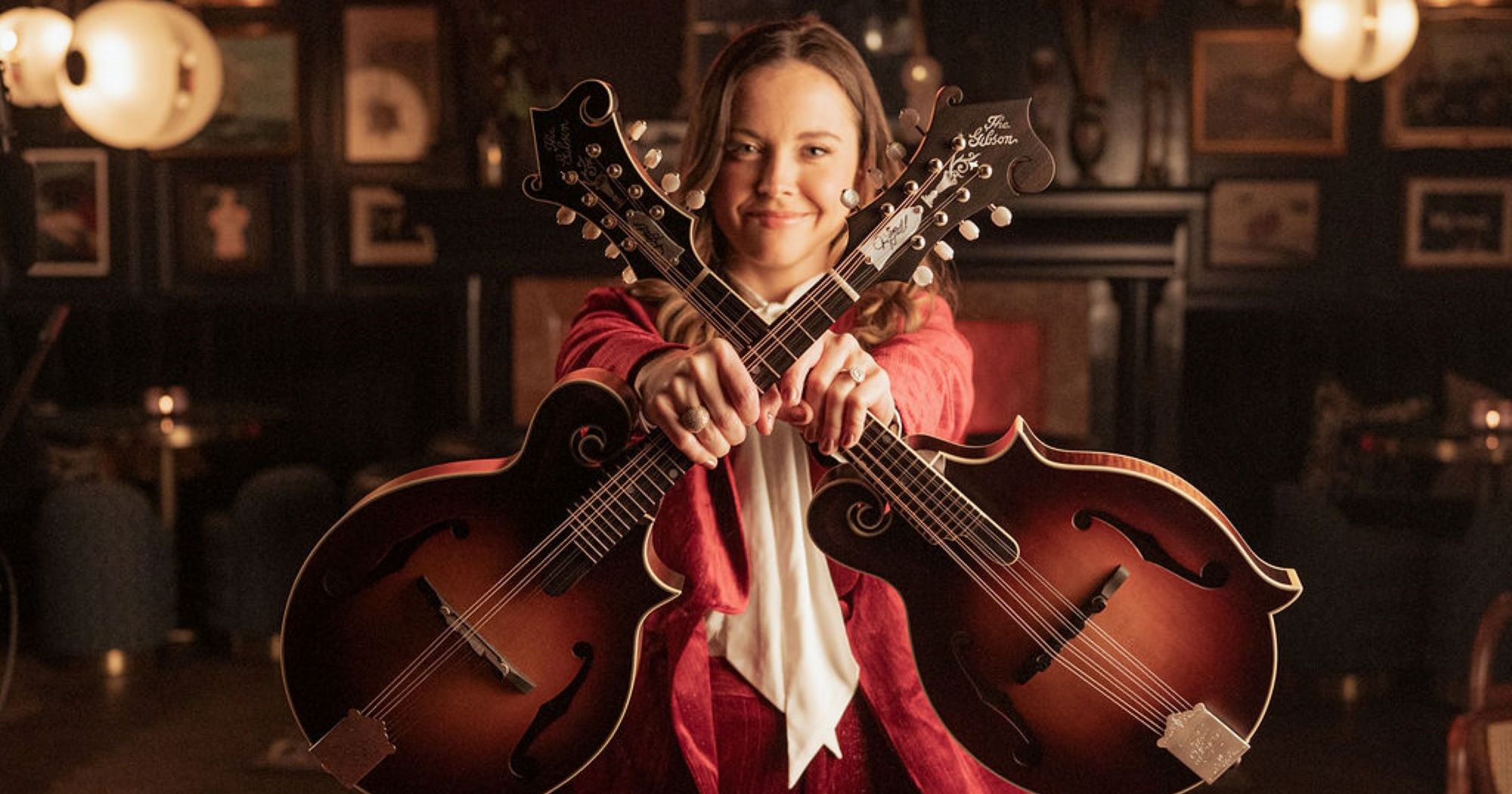
Eyes on the future, heart in the past – it’s the cornerstone of how award-winning mandolin player, guitarist, singer, and songwriter Sierra Hull crafts her music, and how Gibson Master Luthier David Harvey and the Gibson Custom Shop crafted her new signature mandolins: the F-5 Master Model and F-5G.

The F-5 Master Model boasts a red spruce top, eastern curly maple back and custom narrow neck, and ebony fretboard, while the F-5G offers a red maple neck and body, Sitka spruce top, and ebony fretboard. Both models feature the Sierra Burst VOS Varnish finish and come with certificates of authenticity, Sierra Hull/Gibson BlueChip pick, and mandolin cases – vintage replica for the Master Model and hardshell case for the F-5G.

The instruments are the result of Hull’s many years of dedication, hard work, and talent, alongside a working relationship with Gibson that began when she was 12 years old and already a four-year veteran on her instrument. Growing up in Byrdstown, Tennessee, with few if any resources for musicians, the slightest instrument repairs required a two-hour drive to Nashville, where, at the time, Gibson had a shop in the Opry Mills Mall.

Hull had graduated from her first F-style mandolin, “a starter-model Epiphone that was so cool because it said ‘Gibson’ on the truss rod cover,” she says, to a flatiron mandolin she bought used from a local player and still has in her collection. In need of new frets, and in Nashville with family, they went to the mall in hopes of a walk-in or referral. Hull had recently played the Opry with Alison Krauss and upon entering the Gibson Showcase shop, Grascals mandolin player and Gibson staffer Danny Roberts recognized her and put a new, limited edition Adam Steffey signature model in her hands.

“My dad remembers them saying, ‘How would you like to have one of these?’ He’s thinking, ‘Yeah, buddy, I bet she would, but we ain’t got that kind of money to spend on a mandolin,’” Hull recalls. “They gave me that mandolin and it was such an unbelievable moment, as a 12-year-old, to be given this incredible instrument. That was the beginning of my relationship with Gibson. I’ve mostly played a Gibson mandolin ever since.”

Fast-forward to 2009 and Sierra Hull’s main instrument: her Gibson Master Model, built by Gibson Master Luthier David Harvey. “The 2009 was brand new at the time,” she says. “Dave made some modifications to it to suit what I was looking for and it has become my voice.”

That mandolin eventually became the springboard for her signature Master Model and F-5G, in line with her original specifications for the 2009. “I have small hands, so Dave took the neck down a little bit for me,” she says. “We put an aged varnish on it instead of the normal gloss, which makes it a little more unique than one right off the line.

“I’ve always preferred that thin, matte varnish type finish, so we decided to recreate that with the signature line. So many people often ask me about my mandolin; they think I’m playing a Lloyd Loar most of the time. I’ve put a lot of miles on this mandolin since 2009. I’ve played it as my primary instrument since then. When I got it, it didn’t look anything like it does now in terms of being so worn, but it didn’t look brand new and shiny, either. I always loved that about it, that there was a certain aged vibe to it already because of the finish.”

In addition to the aesthetics, the Master Model parallels Hull’s unique sense of blending her deep bluegrass roots with contemporary sounds. It is, she says, the perfect instrument for that mix of past and present. “When I think about the kind of music I play, both these days and throughout my career, I’m so rooted in traditional bluegrass,” she says. “I grew up going to bluegrass jams on the weekends, sitting in a circle – you need a mandolin with volume, something you can dig into, like the Master Model.”

“Part of the reason we all want to play F-5 mandolins is because Bill Monroe, the Father of Bluegrass, played an F-5,” she continues. “I love an A-style mandolin as well, but there’s something that makes you feel legit about playing bluegrass on an F-5 mandolin, because it just feels right – the feel, the look, the sound, the pointedness that those F-style mandolins have. The idea of having a mandolin that you can really channel that traditional thing that as mandolin players we’re born to love in bluegrass music – Gibson is the gold standard for what we think of in terms of every F-style mandolin that you see.

“There’s a lot of great builders out there, so many talented luthiers building beautiful mandolins, so it’s no slight to any of them. But nobody would be doing that if Gibson didn’t exist and build these F-5 mandolins with Lloyd Loar’s stamp of approval on them. When I pick up my Master Model, it feels like the connection to that legacy.

“Even though I tend to think my sound is more progressive and modern – way more so than what you think of when you think of Bill Monroe – that’s the world I come from, so I want a mandolin that feels connected to those roots. But the clarity, the top end, the sparkle that these mandolins have, too – they have a large span on what they can bring to the table. No matter what musical direction I go in, I never find myself lacking from the side of what the instrument can do. It really shows up in all those situations.”

Bringing the Sierra Hull Master Model and F-5G from concept to showroom was a two-year process. Hull, David Harvey, and Gibson worked closely, taking time and care to not rush the work, but instead building the mandolins to her exact specifications.

“As a youngster I couldn’t have dreamed of having my own signature line with Gibson, so it was wild to get the call,” she says. “I’ve learned so much in this process over the past couple of years. Getting to go up-close, help pick out the wood, and see it go from a chunk of wood to mandolins that have my name on them is such an experience. To see it all come to life is a full-circle moment that takes me back to sitting in the Gibson Showcase at 12 years old and playing one of my heroes’ signature lines. To see these mandolins with my name on them is overwhelming. It’s such an honor.”

Mat Koehler, Vice President of Product at Gibson, joined the company almost ten years ago. He says bringing the vision of Sierra Hull signature mandolins to fruition was, in fact, over a decade in the making, beginning with conversations and leading up to the present.

“Even ten years ago, Sierra was one of the best, if not the best, mandolin players in the world,” he says. “When I got here, I was like, ‘Why don’t we have a Sierra signature model?’ The answer, of course, is very complicated. I think everybody’s intention was to make that happen, but we had a restructuring of the company, change of leadership, change of management, a lot of things, a lot of obstacles. So this is really the culmination of a long time spent both ideating what a Sierra signature model would be and then executing it, finally. I am very happy and proud to be involved in some small way. But this is all Sierra and speaks to her incredible talents.

“Her impact [on the instrument] has been huge,” says Koehler. “She represents the next generation of players. She really refreshed the mandolin and offered a completely fresh take. Mandolins are a little bit similar to banjos in that with bluegrass music in the mainstream, if it’s not Mumford & Sons or Nickel Creek, it’s almost ‘out of sight, out of mind.’ Sierra has done an amazing job of taking mandolins into the mainstream in both her music and her collaborations with other amazing musicians. I see a recharging of the bluegrass world right now and Sierra is one of the many leading the charge.”

At the intersection of tradition meets technology, precise replication of Hull’s Master Model in order to build her signature mandolins was done by 3D scanning of the 2009 Master Model, a process Hull describes as “kind of like an ultrasound of your instrument. They run it over the whole instrument, you see it on the screen, and they capture all the specs in a detailed way.

“It gave us a good, strong starting point to mimic the Master Model that I love so much. From there, I got to pick out the wood and watch the process in real time. Essentially they made a replica of my mandolin that Dave Harvey, for fun, distressed to look like my mandolin, and they nailed it on the first try. We used those scans to build the signature line.”

True to her preferences, she selected a thin matte varnish finish on the models, a custom look that Gibson titled “Sierra Burst.” She also opted for the traditional Loar nut width and flat, scalloped fingerboards. “It’s much like I feel my career tries to do – lean into traditional while having some progressive new things as well,” she says.

“We did a custom tailpiece design. I didn’t want a lot of flair on the instrument. I didn’t want crazy inlays or my name spread across the fretboard. But I’m so honored to be the first woman to do a signature mandolin line with Gibson, so part of me did want a little touch of feminine something on there. If you look closely, there’s a little heart dotting the i on my signature on the truss rod. On the tailpiece, the traditional script says ‘The Gibson,’ but where the tailpiece has a curve up top, you’ll see a little heart built into the design, and a little bit of a heart at the bottom and my initials.”

“Sierra has played dozens of original Lloyd Loar 1923 F-5s, so we couldn’t cut any corners with her,” says Koehler. “We wanted to make sure her instrument was on par with any of the amazing mandolins she has played, because she would know right away what looks right, feels right, and sounds right. There are lots of different ways you can spec mandolins, but hers is true to the 2009, which would have been, at the time, a core Master Model F-5.

“That mandolin is her number one instrument to this day, so obviously we had the recipe. … Sierra’s took the very same path as our historic reissue 1923 F-5, which was we scanned her mandolin, we detailed it down to every tiny little nick and ding on it, just so we had a record of the current state of that mandolin, how it looked. The feel of the neck is really unique on hers because it was handmade by Dave Harvey at Custom.

“[3D] scanning has been a complete game-changer for us. Not only has it opened the door to be able to recreate instruments more accurately, it’s rekindled relationships with artists. Customers and fans of Gibson who want the most accurate now can finally have it, knowing it’s mapped identically from the original instrument. … Now, in a matter of maybe twenty minutes, you can do an entire mandolin, just waving a wand over it. That wand is capturing thousands and thousands of points…”

When the mandolins were ready, Hull – still a bit incredulous about having her own signature line – made a special trip to the Gibson shop to test each Master Model. “I guess it’s rare for someone to ask to do that, but I was like, ‘Can I come in and play all these?’” she says. “So we just made a fun day of it. The consistency of the sound, the build, and the playability is all at an insanely high level. All this stuff is done by hand and it’s no small feat to accomplish that. Dave sets them all up. He is the only one to set up my Master Model since 2009, so he knows what I want. Not that I expected anything less, but it was comforting and confirming that this is something I could be proud of.”

“We were overjoyed that she wanted to do it,” says Koehler. “That’s going over and above. She wanted to support this every way she could and obviously she was really excited about it, which makes us really excited. … For her to go the extra mile with us – we were very appreciative. … The fact that the endorsing artist would go to that length of playing it to test it out is amazing.”

It’s been a long, remarkable journey from Opry Mills Mall to seven-time IBMA Mandolin Player of the Year and two GRAMMY nominations, but Sierra Hull hasn’t forgotten the early days. Cognizant that signature edition mandolins are beyond the financial grasp of most players, her next collaboration with Gibson is an Epiphone model, bringing her back to her first instrument.

“I want this to be something that doesn’t price everybody out,” she says. “We’re going to work on an Epiphone model that will be a little bit more affordable for young players and people who are just starting on mandolin, the same way I was when I was a kid. It’s important to me not to have those people feel forgotten. I’m excited to work on it with Gibson as the next part of this story.”


Photo Credit: Courtesy of Gibson Custom Shop.

Ethan Setiawan’s Personal Encyclopedia Mandolinnica

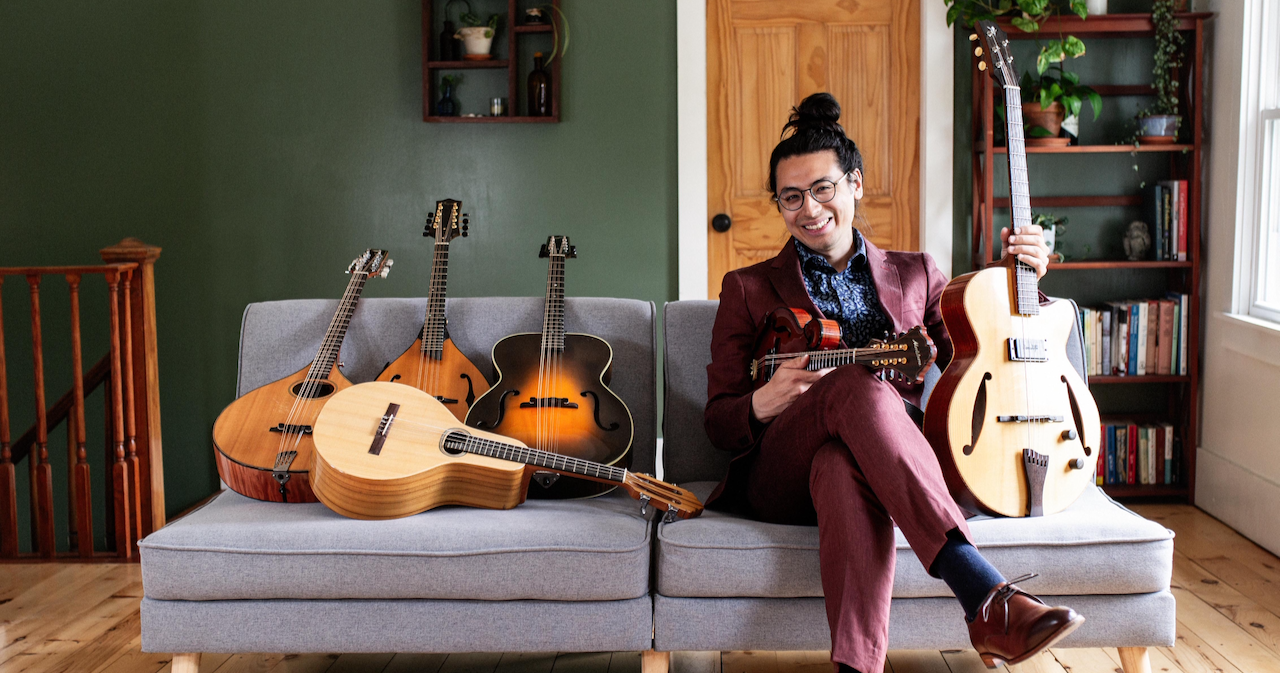
A short history of the mandolin in America: The mandolin is essentially a small lute which has been around since the 1300s. Italian immigrants brought bowl-back mandolins to the States in the 1800s. Mandolin orchestras were big in the 19th and 20th centuries, believe it or not. In fact, a whole mandolin family exists with mandolas, mandocellos, and mandobasses out there.

Around the turn of the 20th century, Orville Gibson started to develop flat-backed mandolins constructed more similarly to guitars. Finally, in the 1920s, Lloyd Loar created the F5 mandolin, with its longer neck and F holes. These new instruments were built to project and fill a concert hall, though they were ill-timed – the mandolin orchestra craze was fading and not ’til Bill Monroe picked up one of those instruments from a barbershop in Florida in the ’30s did they come back into their own. Since then, bluegrass mandolinists the world over have played these instruments or copies thereof. I play an instrument by John Monteleone, who started innovating on Lloyd Loar’s design in the 1980s – and so the tradition continues.

My new album, Encyclopedia Mandolinnica, turned into a survey of Western and Northern mandolin styles quite quickly. It’s very much been shaped by these inspiring musicians who were very kindly up for playing a duet with me. We go on a real journey through bluegrass both progressive and traditional, old-time, jazz, classical, and Scottish trad. The chance to get to work with these heroes of mine has been such a pleasure and invoked several “pinch me” moments. One of the most beautiful things was getting to see how everyone approached our little 8-stringed instrument so uniquely. I learned something from playing with and working alongside each of the mandolinists that agreed to be a part of the project!

In putting together this playlist I thought about my personal inspirations as well as the mandolin’s place in musical cultures across the world. It ranges from hardcore bluegrass, to Brazilian choro, over to Scottish trad – with lots of things in the middle. It mostly features folks you can hear on Encyclopedia Mandolinnica. I hope you enjoy my guided tour of the mandolin! – Ethan Setiawan

“Victoria” – Ethan Setiawan & Mike Marshall

Mike is a legend of the mandolin. He was an early member of the David Grisman Quintet and went on to collaborate with Darol Anger, among others. He helped write the book on progressive acoustic music and mandolin styles therein. This tune of mine falls within that realm and Mike was the perfect person to play it with.

“Shoulda Seen It Comin’” – Mike Marshall & Chris Thile

Mike also duetted with this young guy Chris Thile, whom you may have heard of. The live record that this cut is from is one of my very favorite recorded mandolin performances. Both mandolinists are at the top of their game. This tune was in my ear quite a bit when writing the previous tune, which maybe you can hear?

“There Will Never Be Another You” – Don Stiernberg

Don is one of the world’s foremost practitioners of jazz mandolin – a combination of words you might have never thought you’d hear. He studied with the great Jethro Burns of Homer & Jethro before forging his own path forward into a style where few mandolinists have ventured. Don was a teacher of mine during high school and it was great fun to get to be in the studio together for Encyclopedia Mandolinnica.

“Jiguaraña” – Ethan Setiawan & Maurizio Fiore Salas

Venezuela has a rich and beautiful mandolin tradition that not many folks are aware of. This tune is a co-write between myself and Maurizio. We took a jig (a Celtic form in 6/8) that I came up with and Maurizio had the bright idea of putting it over a Venezuelan rhythm called guarana (also in 6/8). It’s always a joy to play with Maurizio, he challenges me in the right ways.

“Wonderful” – Kinnaris Q (Laura-Beth Salter)

Laura-Beth is at the forefront of the Scottish trad revolution in Glasgow, Scotland. This track by her band Kinnaris Q puts the mandolin front and center – when she takes the tune at 1:52 check out the facile right hand triplets! We co-direct the Glasgow Mandolin Retreat as well and it’s always great to get a tune with LB.

“Blue Grass Stomp” – Bill Monroe

This is where it all started for a lot of us. Bill Monroe, along with Earl Scruggs and Lester Flatt, in the ’40s had something electric and powerful, so much so that in large part bluegrass has been unchanged since then.

“New Cimarron” – Matt Flinner

Matt Flinner is one of my favorite mandolinists out there. One of the many things that strikes me about his playing is how good it feels. Everything is placed so precisely and beautifully. He also writes great tunes that beautifully synthesize lots of things we love about bluegrass, old-time, and jazz. This is one of my favorite tunes of his.

“Golden” – Ethan Setiawan

In a similar tradition to the last tune, this is my take on a progressive “new acoustic” tune. Darol Anger on the fiddle here, he produced this album and it was such a joy to work with him on it.

“O Voo Da Mosca” – Jacob Do Bandolim

While bluegrass was developing up north, another mandolinist was fusing styles down south. Way down south. In short, choro is a fusion of classical forms with jazz harmony and Afro-Brazilian rhythms – similar on the page to ragtime. Jacob Do Bandolim (which translates to Jacob the mandolin, amazing) wrote many tunes that became staples of the style and was a virtuosic mandolinist to boot.

“Saint Cecilia Caprice” – Hamilton De Holanda

Hamilton De Holanda is the Chris Thile of Brazil. Amazing technically and a great musical mind. He wrote a double album of caprices and made the music public on his website, as well. Every mandolinist reading this: go download them, now!

“Salt Spring” – John Reischman

The greatest modern jam standard of our time! John is another great tune writer. He also gets the most beautiful sound out of the mandolin.

“Shetland Jigs” – Hildaland (Ethan Setiawan)

My own contribution to the Scottish trad lexicon from my duo with fiddler Louise Bichan, Hildaland. These are a couple nice jigs from Shetland. I’m playing mandola here, but I’ve tuned the highest string down a step and put on a capo so that the strings are tuned DAEA. This is inspired by the fiddle, which is crosstuned – common in old-time but not so common in Great Britain. We thought it was a cool connection to draw for our duo which goes between those styles at will.

“Canon at the Twelfth in Counterpoint at the Fifth” – Caterina Lichtenberg & Mike Marshall

Caterina is one of the greatest classical mandolinists to ever live. There have been vital classical mandolin traditions going on this whole time in Italy and Germany, which is so cool to see. Classical music is being made on the mandolin at very high levels and being taught as well.

“Queen of the Earth, Child of the Stars” – Sharon Gilchrist & John Reischman

A beautiful old-time tune, played so beautifully by Sharon on mandolin, John on mandola, and backed up by Scott Nygaard on guitar. I first heard this tune played late at night by Darol Anger and Bruce Molsky at Freshgrass a bunch of years ago now and it’s stuck with me ever since.

“Big Hill” – Ethan Setiawan & Andrew Marlin

Andrew has taken the mandolin scene by storm over the past several years with beautiful tunes and great trad bluegrass playing. Part of the thing that developed with this project was to write something that I thought might work well for each guest – not to explicitly write something that sounded like theirs, but to draw a little inspiration. I think this tune captured something there and I love the way Andrew accompanies the tune.


Photo Credit: Louise Bichan

Acoustic America: Musical Instrument Museum’s Exhibit Gathers Iconic Instruments

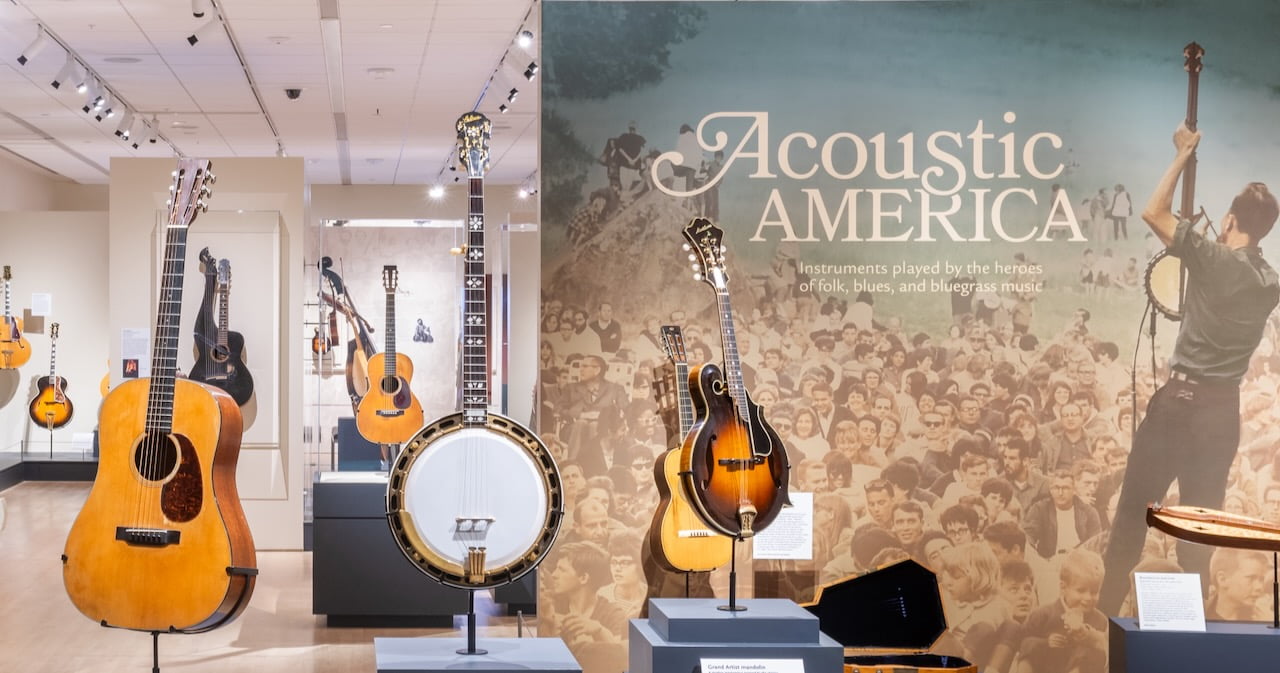
In early November, the Musical Instrument Museum in Phoenix, Arizona unveiled a brand new exhibition, Acoustic America, which celebrates iconic instruments of many heroes of folk, blues, bluegrass, and more. The exhibit is presented in partnership with our Dawg in December Artist of the Month, David Grisman and his record label Acoustic Disc, and showcases a remarkable collection of instruments that the museum states, “Have redefined music not only in the United States, but around the world.” This includes more than thirty instruments on loan from the Dawg himself.

“MIM is honored for this opportunity to collaborate with David Grisman and feature so many prized instruments from his collection,” says MIM senior curator Rich Walter, via email. “And after many years of loving his music, it has been a joy on a personal level for me, too. His influence as a mandolinist, composer, and bandleader is huge, and he absolutely changed the course of acoustic music as we know it today.”

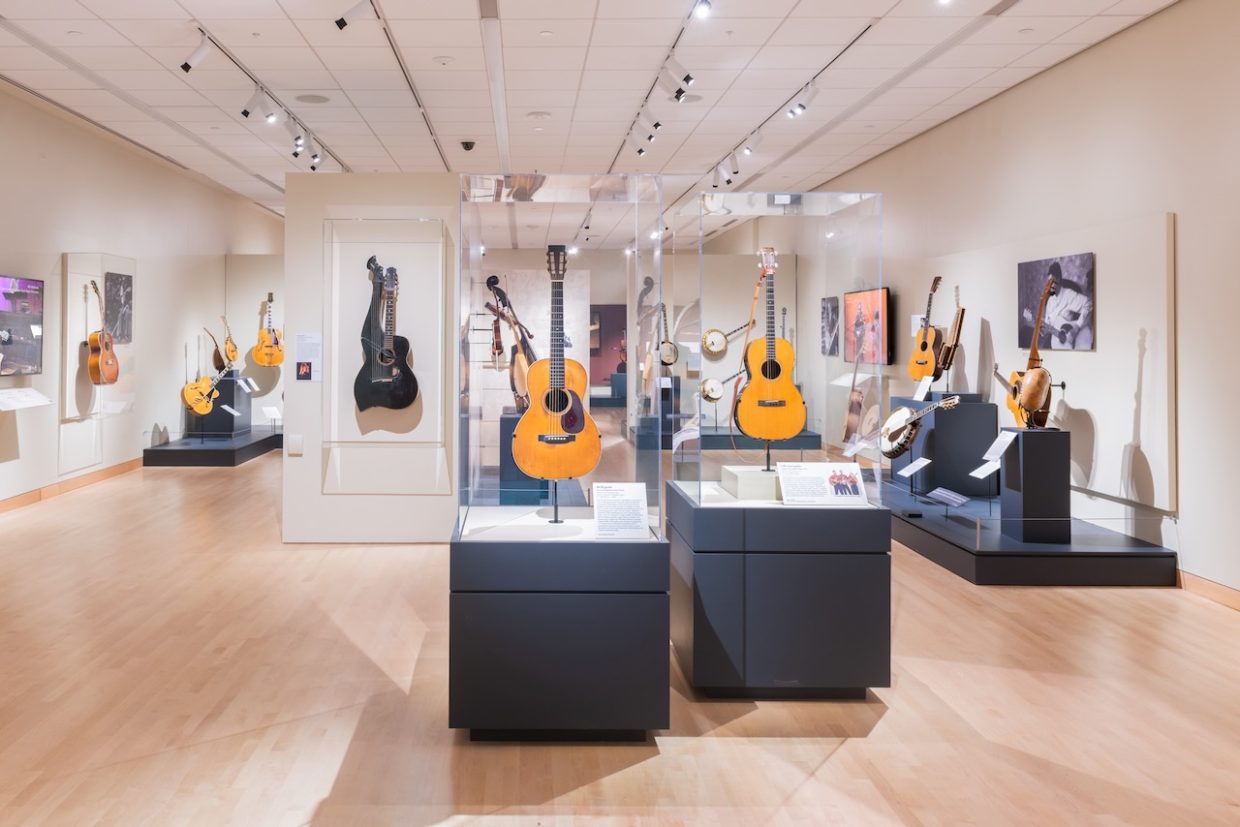
The Acoustic America Gallery at the Musical Instrument Museum in Phoenix, AZ.

Guests of the museum will be able to view storied and legendary instruments formerly owned and played by such luminaries as Earl Scruggs, Elizabeth Cotten, Mississippi John Hurt, John Hartford, Lloyd Loar, and many more. “Beyond the legacies of the individual artists and the beauty of these historic instruments,” Walter continues, “Seeing this collection together in one space is really striking because it reflects a broader American narrative. Exceptional individuals from diverse backgrounds crossed paths and connected their talents in ways that gave us distinctive new traditions that continue to inspire people around the world.”

To celebrate the new exhibition and Dawg in December, we’ve partnered with MIM to bring you these photos of select instruments from Acoustic America. Make plans to visit the Musical Instrument Museum in Arizona now! Tickets are available at MIM.org.

(Editor’s Note: Instrument information provided from the Acoustic America catalog.)

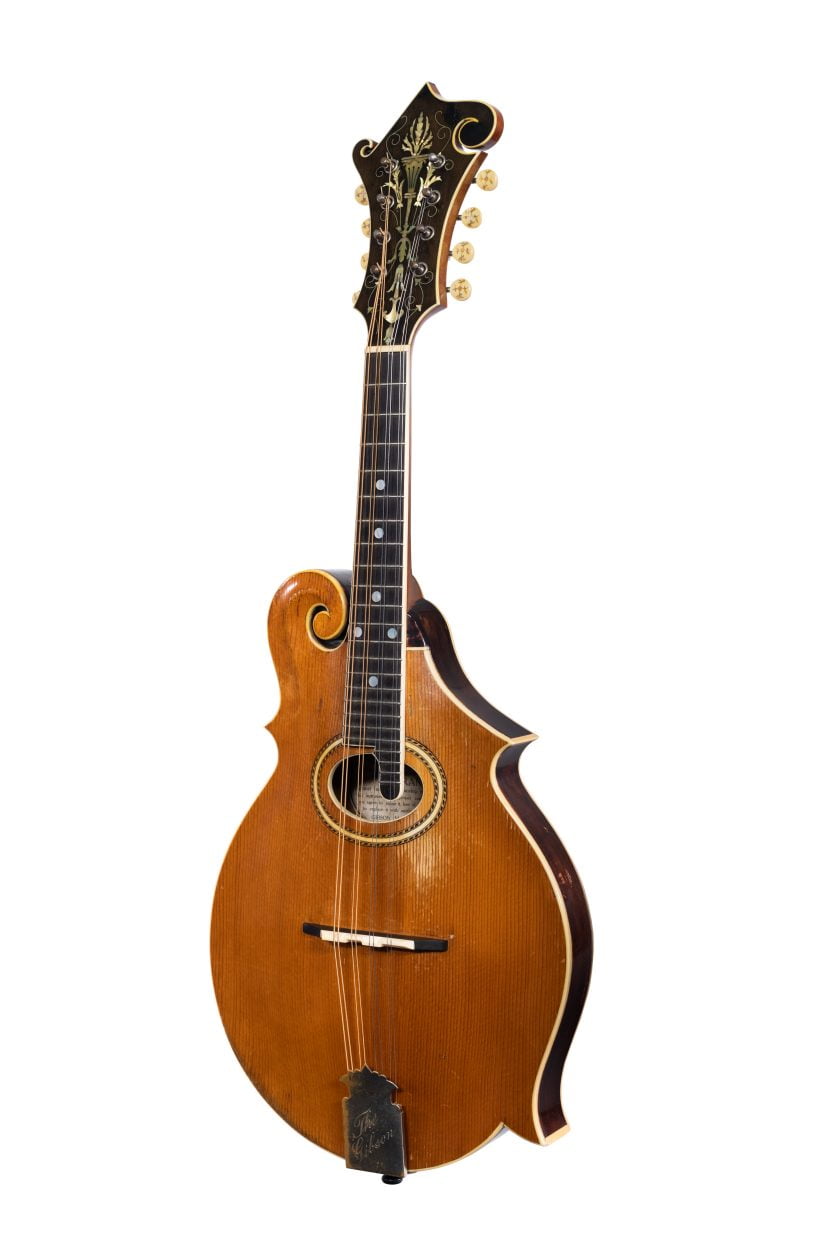
1910 Gibson F-4 Mandolin: Owned and played by David Grisman. Loan courtesy of David Grisman.

The F-4 model was Gibson’s premier mandolin until late 1922, when the F-5 was introduced. In addition to the characteristic oval sound hole and carved scroll, this early example features a three-point body style (note the points protruding from the body), elaborate torch and wire peghead inlay pattern, and special Handel tuning buttons with colorful inlays. David Grisman featured this mandolin on the cover of his first solo album, The David Grisman Rounder Album, and has recorded with it on other projects, including Tone Poems with Tony Rice and Not for Kids Only with Jerry Garcia.

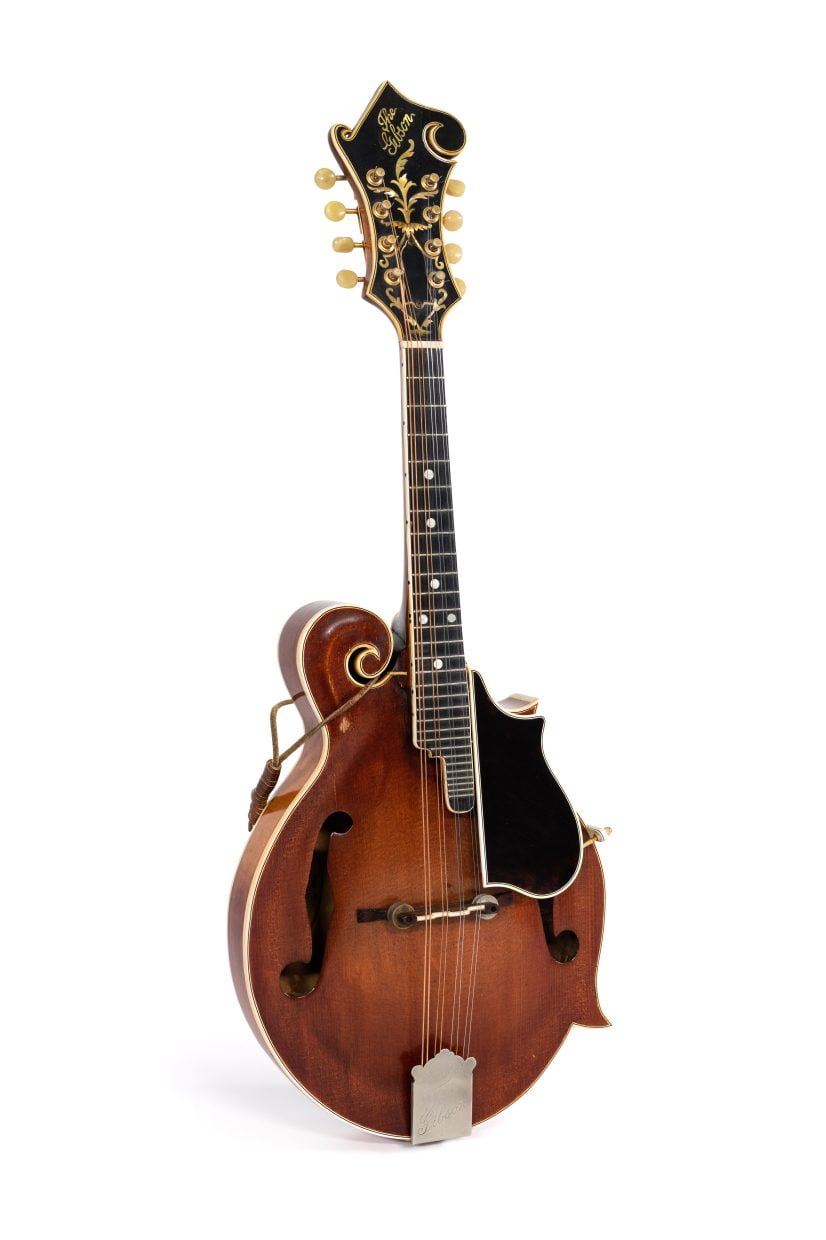
1954 Gibson F-5 Mandolin: Owned and played by Ralph Rinzler. Loan courtesy of David Grisman.

Manager, talented musician, and legendary folklorist Ralph Rinzler (1934–1994) was one of David Grisman’s earliest and most influential mentors. Sharing a hometown of Passaic, New Jersey, Rinzler introduced Grisman to important recordings of folk music and inspired him to play the mandolin. Rinzler played this F-5 mandolin with the Greenbriar Boys, who were the first non-Southern bluegrass band to win at the Union Grove Old Time Fiddler’s Convention in North Carolina. He also managed the careers of Doc Watson and Bill Monroe and was instrumental in creating the first dedicated bluegrass festival in Fincastle, Virginia, in 1965. Two years later, Rinzler founded the Smithsonian Folklife Festival to celebrate and support living cultural heritage from around the world.

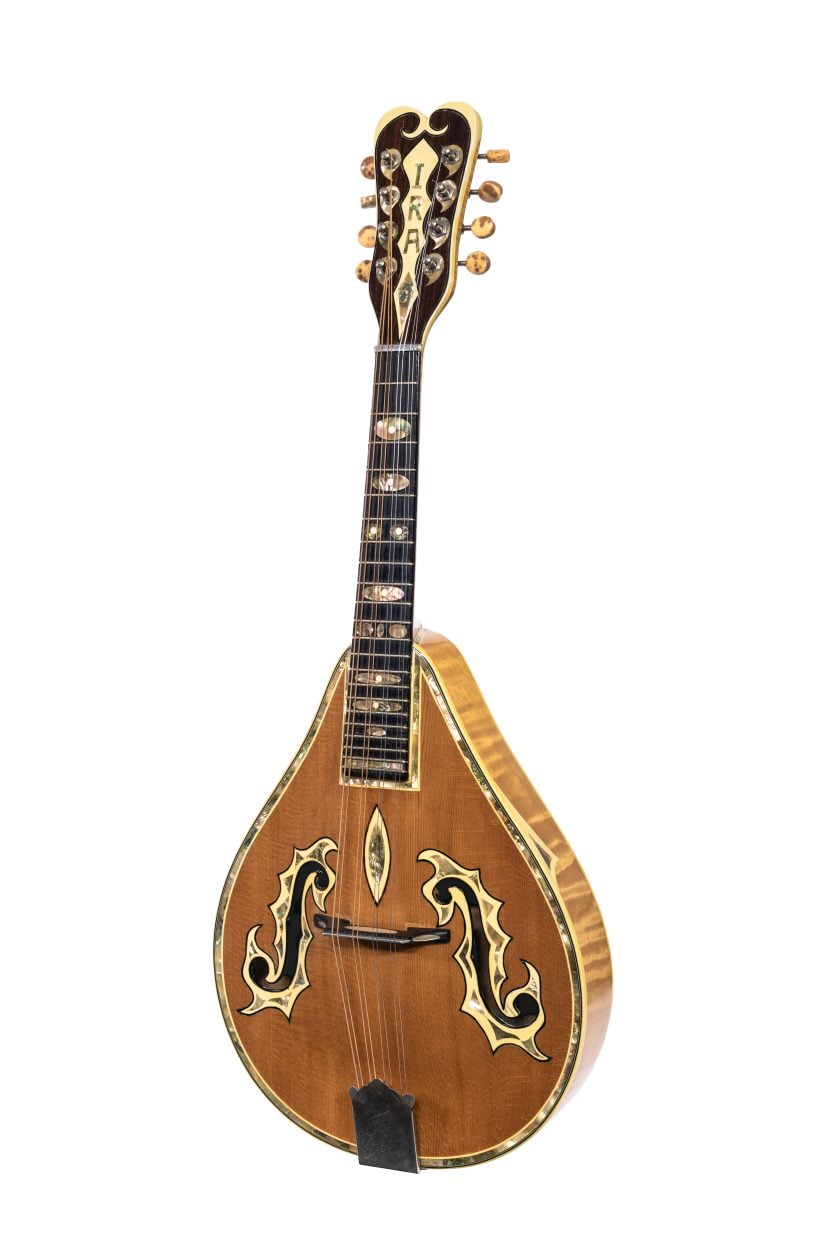
1947 Martin 2-15 Mandolin: Owned and played by Ira Louvin. MIM Collection.

Few brother duet acts in country music were as influential as the Louvin Brothers. Ira and Charlie Louvin were born in Alabama in the 1920s, and their high harmony singing and Ira’s tasteful mandolin playing helped them define a sound popularized through radio broadcasts, commercial recordings, and appearances on the Grand Ole Opry – where they debuted in 1955. Ira customized this one-of-a-kind mandolin in the flashy style of professional country artists and played it extensively, including on the Grand Ole Opry stage. This special piece of mandolin history was also owned by David Grisman for many years.

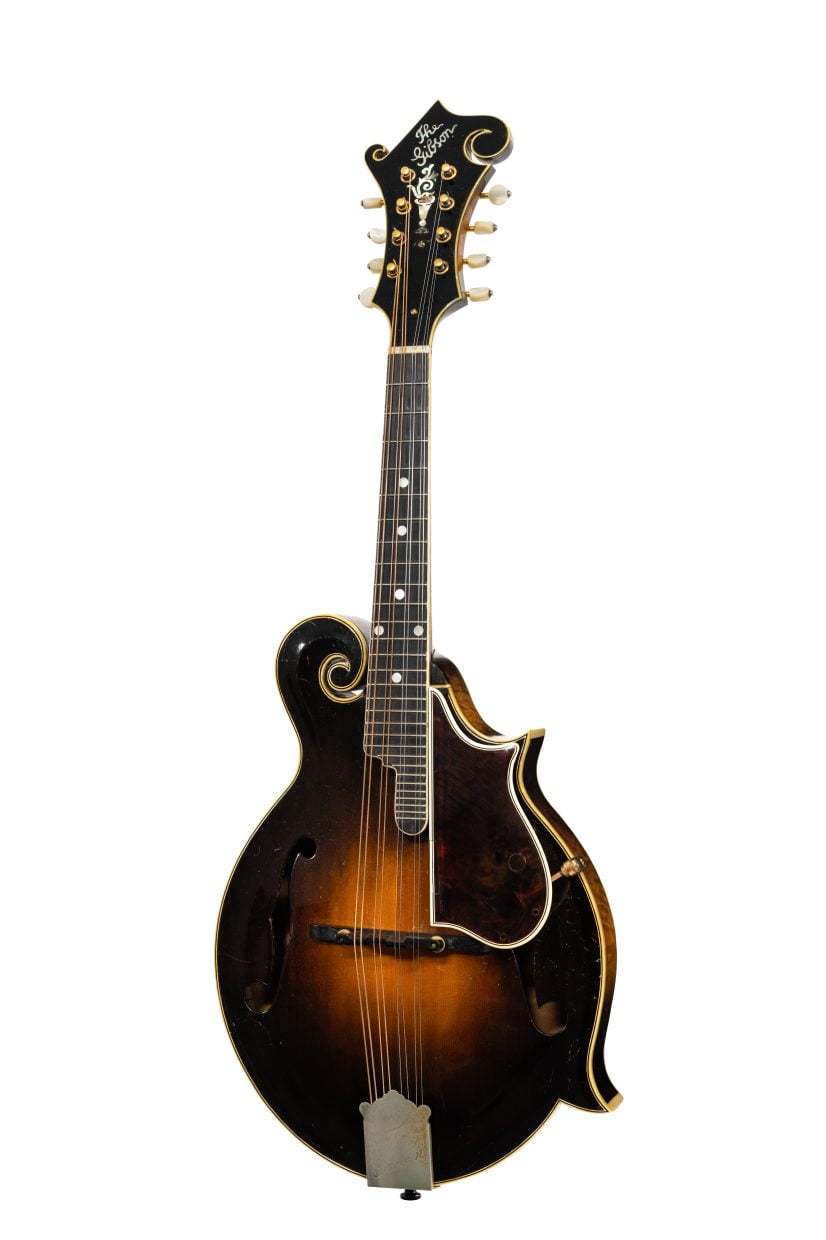
1924 Gibson F-5 Mandolin: Lloyd Loar’s personal F-5 mandolin. MIM collection.

This mandolin — serial number 75315; label dated February 18, 1924 — was the personal instrument of famed Gibson acoustic engineer Lloyd Loar. Loar was impressively inventive and patented designs for keyboard actions and electric instruments, among many others, but the F-5 Master Model mandolin is arguably his most iconic and enduring success. The interior of this mandolin is fitted with an original Virzi Tone Producer. F-5 mandolins with Loar’s signature on the label are the most valuable and sought-after in the world, and Loar F-5s from the batch signed on this date are known to be among the best-sounding. Perhaps it is not surprising that Loar kept this remarkable mandolin for himself!

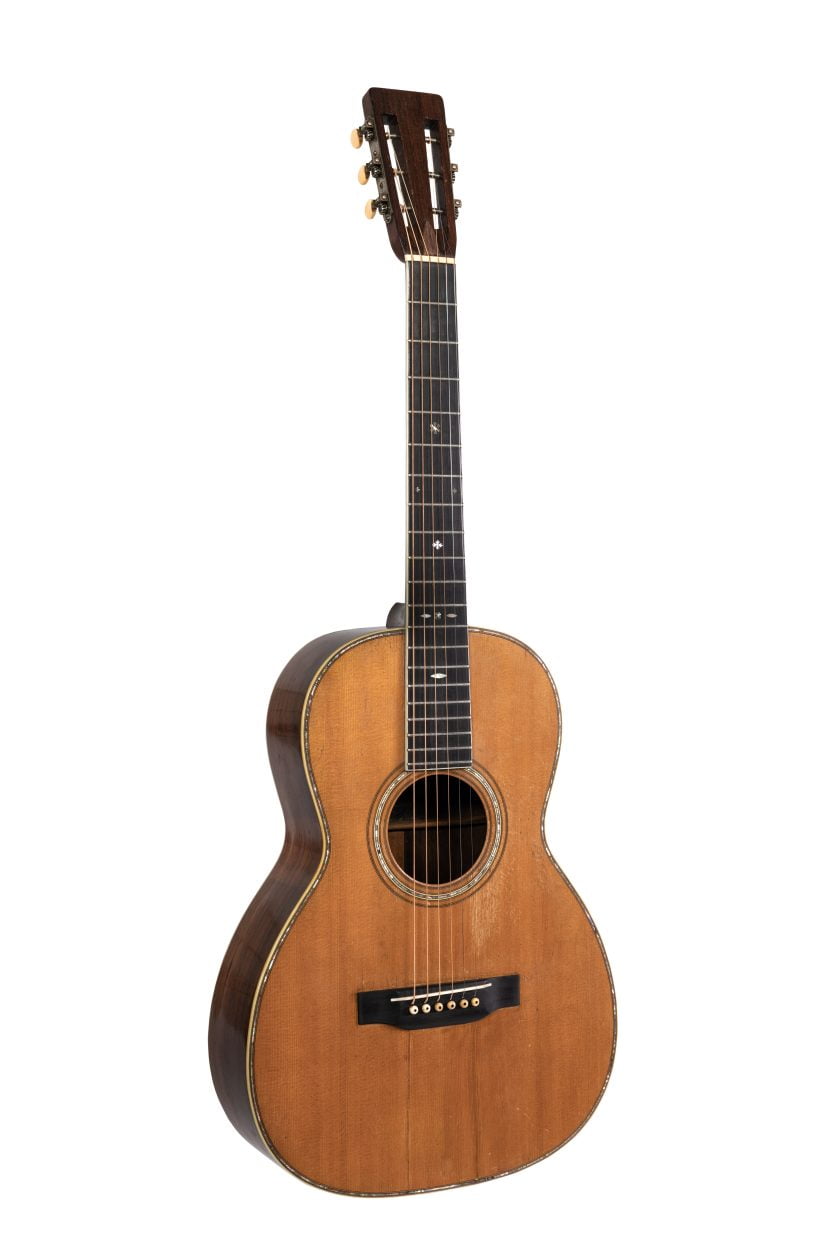
1928 Martin 00-40H Guitar: Played by the New Lost City Ramblers. Loan courtesy of Darrell Scott.

This guitar was played extensively by the New Lost City Ramblers, who were pivotal to the national revival of Southern folk music in the 1950s and 1960s. Founding members John Cohen, Tom Paley, and Mike Seeger were dedicated to authentically reproducing folk traditions for new audiences. The group recorded several albums for Smithsonian Folkways and helped discover, document, and showcase talented artists such as Elizabeth Cotten, Dock Boggs, and Snuffy Jenkins. Prewar pearl-trimmed Martin guitars are among the most desirable acoustic instruments in the world.

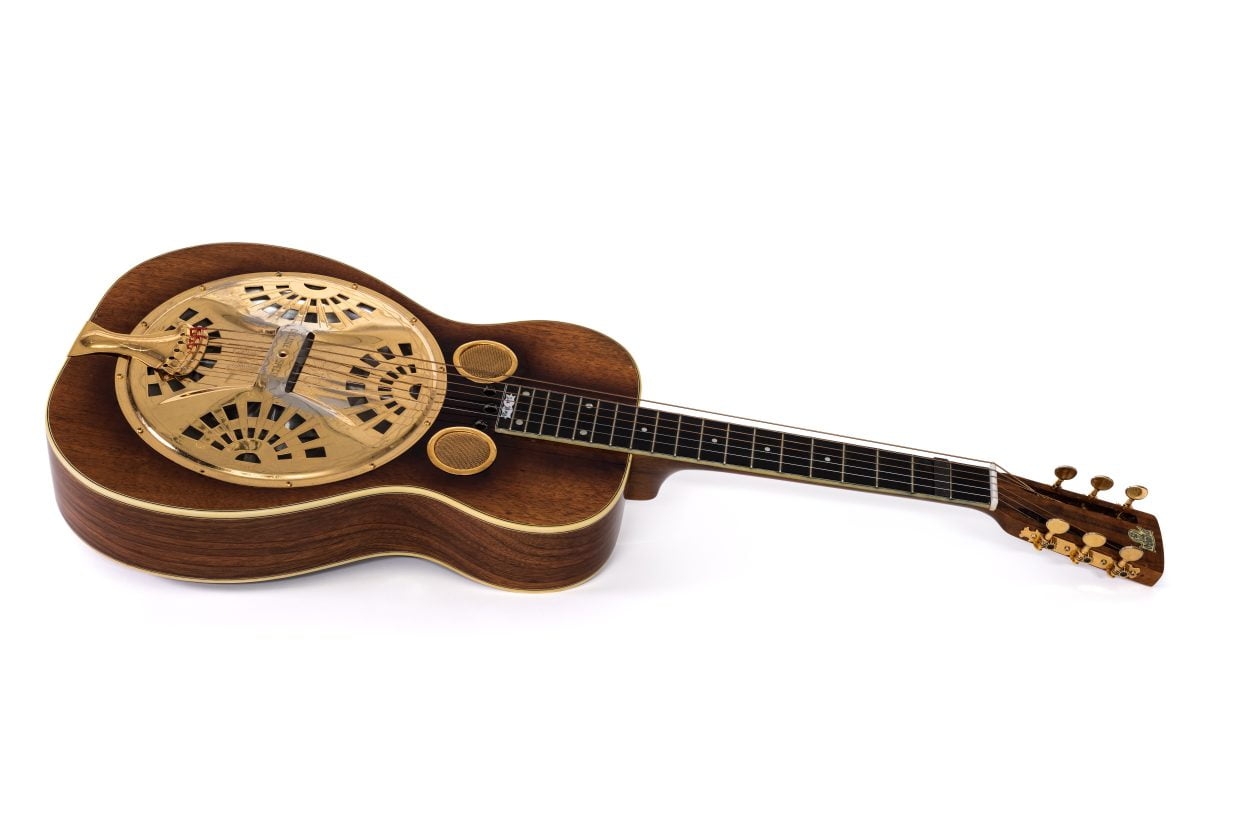
1929 Dobro Model 125 Resophonic Guitar: Owned and played by LeRoy Mack. Loan courtesy of LeRoy McNees.

In 1961, the Kentucky Colonels, led by brothers Clarence and Roland White, performed on The Andy Griffith Show, under the alias “the Country Boys.” The Kentucky Colonels were one of the most exciting and influential bluegrass bands of their era, and their national television appearance would have been much of the United States’ first memorable exposure to bluegrass. Dobro player LeRoy McNees (AKA LeRoy Mack) played this Model 125 resophonic guitar during the show and for many years afterward. After the guitar was damaged at an airport, McNees restored and outfitted it with gold-plated metal hardware.

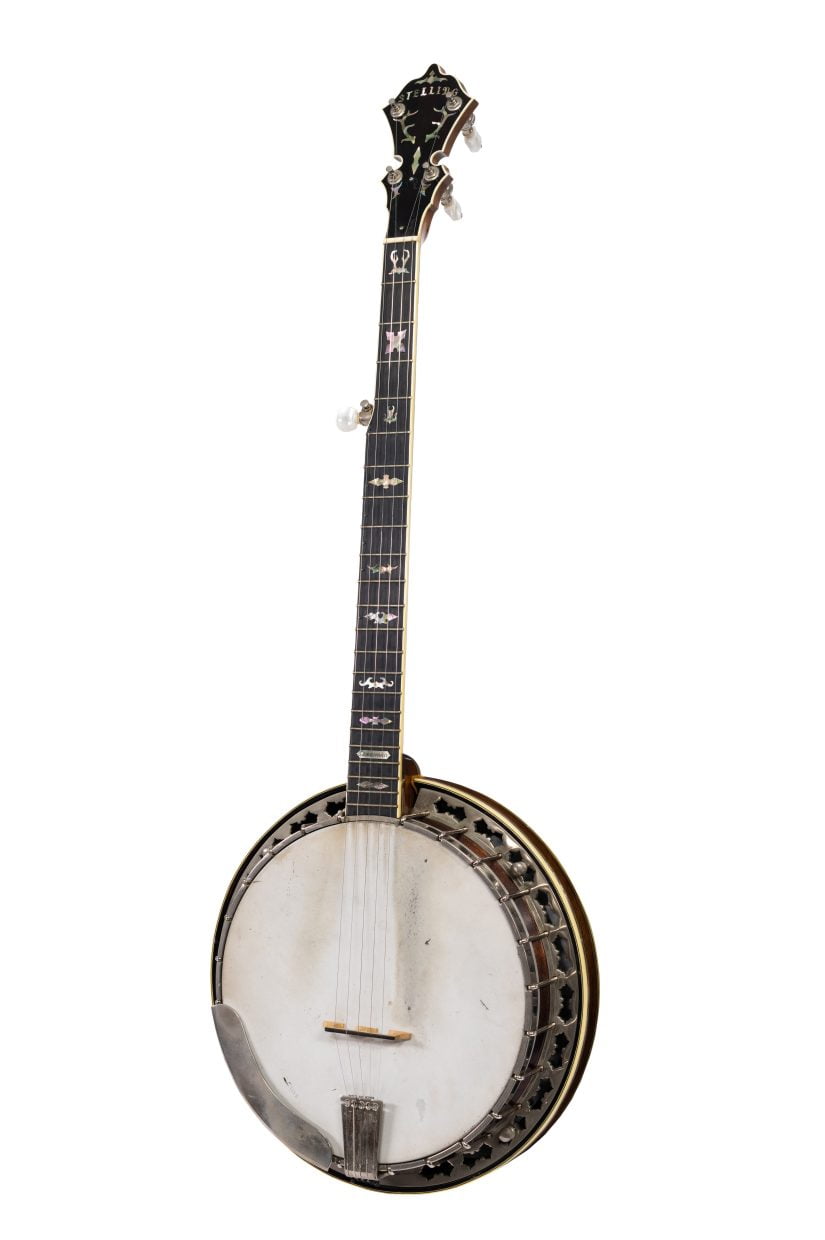
1975 Stelling Staghorn Banjo: Owned and played by Alison Brown. Loan courtesy of Alison Brown.

A young Alison Brown spent her entire savings on this then-new banjo built by Geoff Stelling, hoping to emulate the crisp, solid tone of Alan Munde, an influential older banjoist who played a similar Staghorn model. Brown played this banjo on her first album, 1981’s Pre-Sequel, and she later played it with Alison Krauss’s successful band Union Station. One of the most gifted banjoists in the world, Brown was the first woman voted Banjo Player of the Year by the International Bluegrass Music Association (in 1991). She has also won multiple Grammy awards, founded her own record label, Compass Records, and was inducted into the Banjo Hall of Fame in 2019.

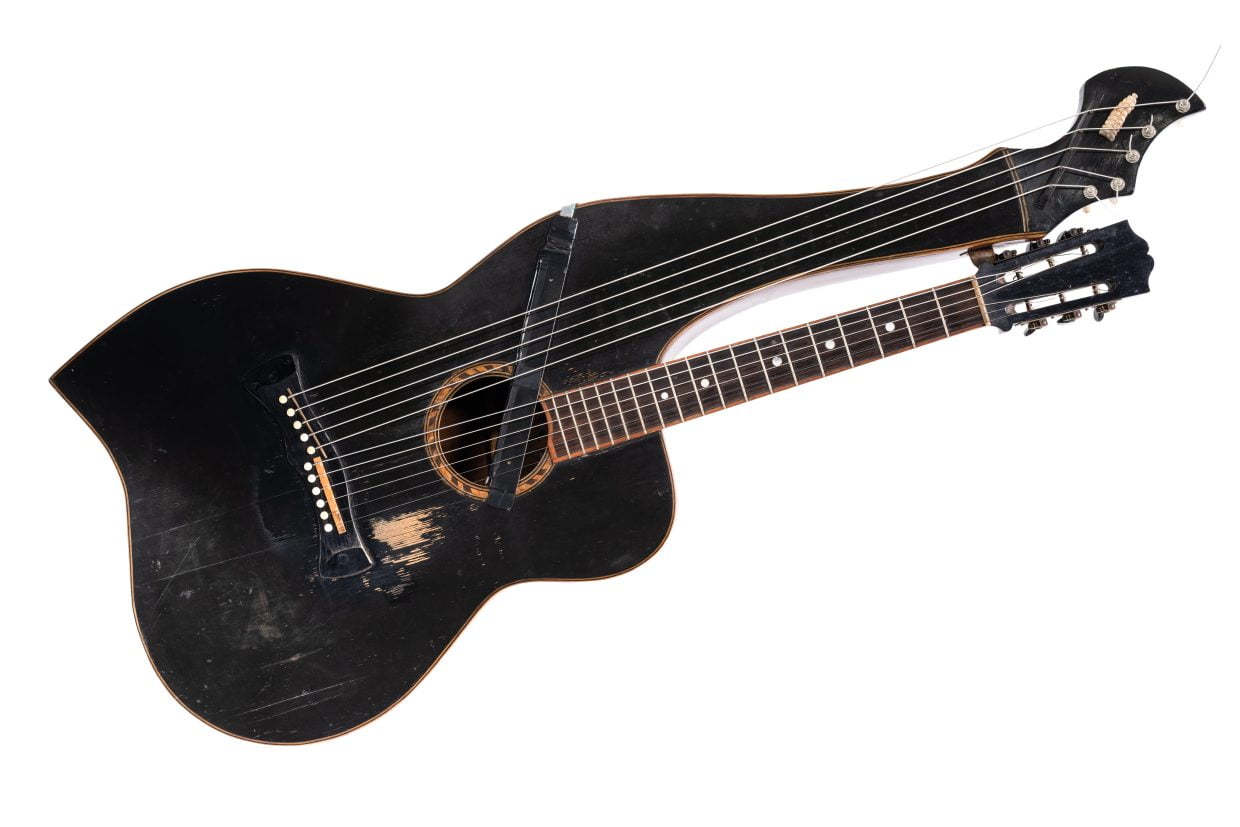
1913 Knutsen harp guitar: Owned and played by Michael Hedges. Loan courtesy of Taproot, LLC.

Guitarist and composer Michael Hedges (1953–1997) used a range of innovative and unconventional playing techniques — such as alternate tunings and percussive tapping on the strings and soundboard — to expand the possibilities of what a solo artist could do. In rediscovering the sound of vintage harp guitars with dedicated sub-bass strings, Hedges reimagined the guitar as a full-spectrum compositional tool. His 1984 album Aerial Boundaries illustrated his astonishing talent and helped define the contemporary new age acoustic music of Windham Hill Records. Hedges nicknamed this favored harp guitar “Darth Vader,” and his use of harp guitars revived interest in these long-obscure instruments.


All photos courtesy of the Musical Instrument Museum, Phoenix, Arizona.

Bluegrass Memoirs: ‘Industrial Strength Bluegrass’ and the Dayton Bluegrass Reunion (Part 4)

(Editor’s Note: Read part one of our series on the Dayton Bluegrass Reunion hereRead part two here. Read part three here.)

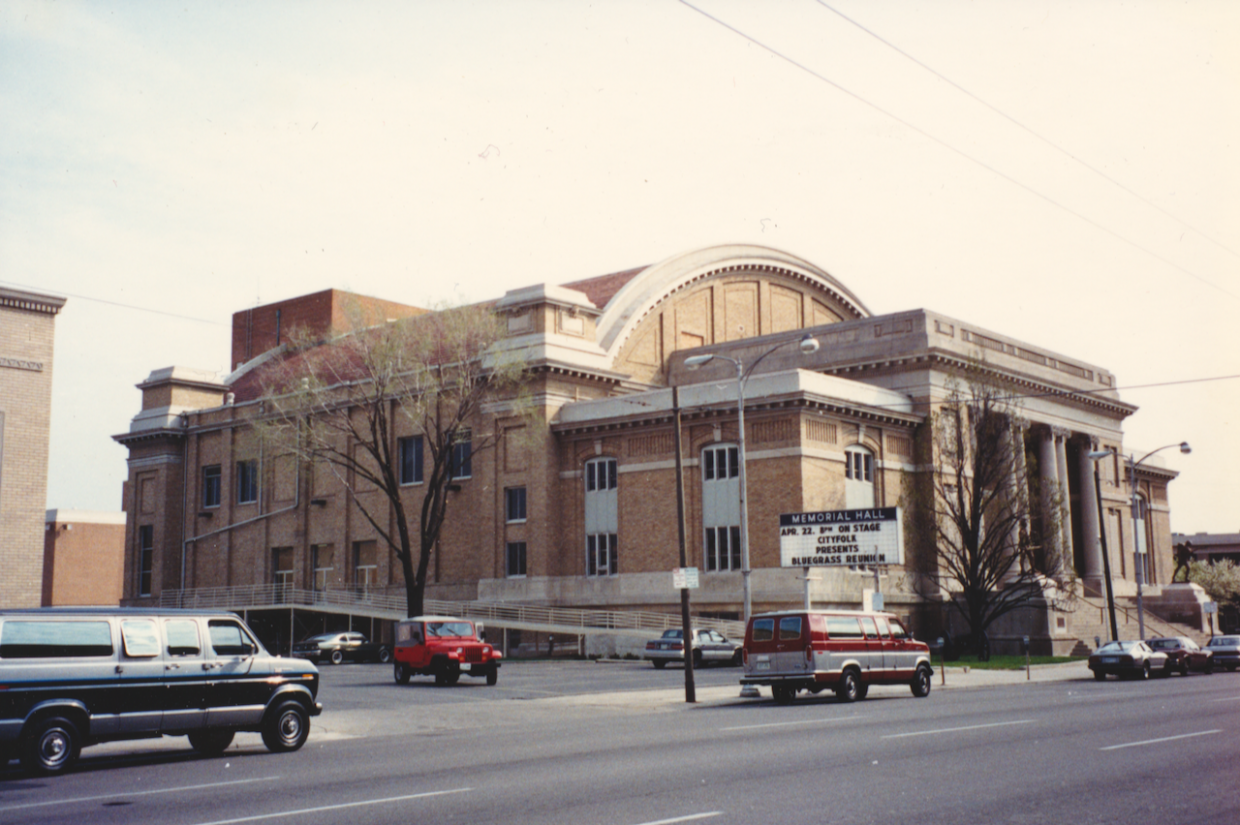
My series of memoirs on the Dayton Bluegrass Reunion closes with a gallery of snapshots taken during the day’s proceedings. I had a new Japanese automatic camera of the type then described as “point and shoot,” an Olympus Quick Shooter Zoom. 

I returned home with a 25-shot 35mm film roll and immediately sent it to a budget speed processing outfit in Seattle. The prints returned (along with a new roll of film and a mailer) a few weeks later. 

Unlike today, when you can monitor photos on your digital camera after every snap, in 1989 you had to wait for the prints to arrive to see what came out and what didn’t. Here’s what came out. 

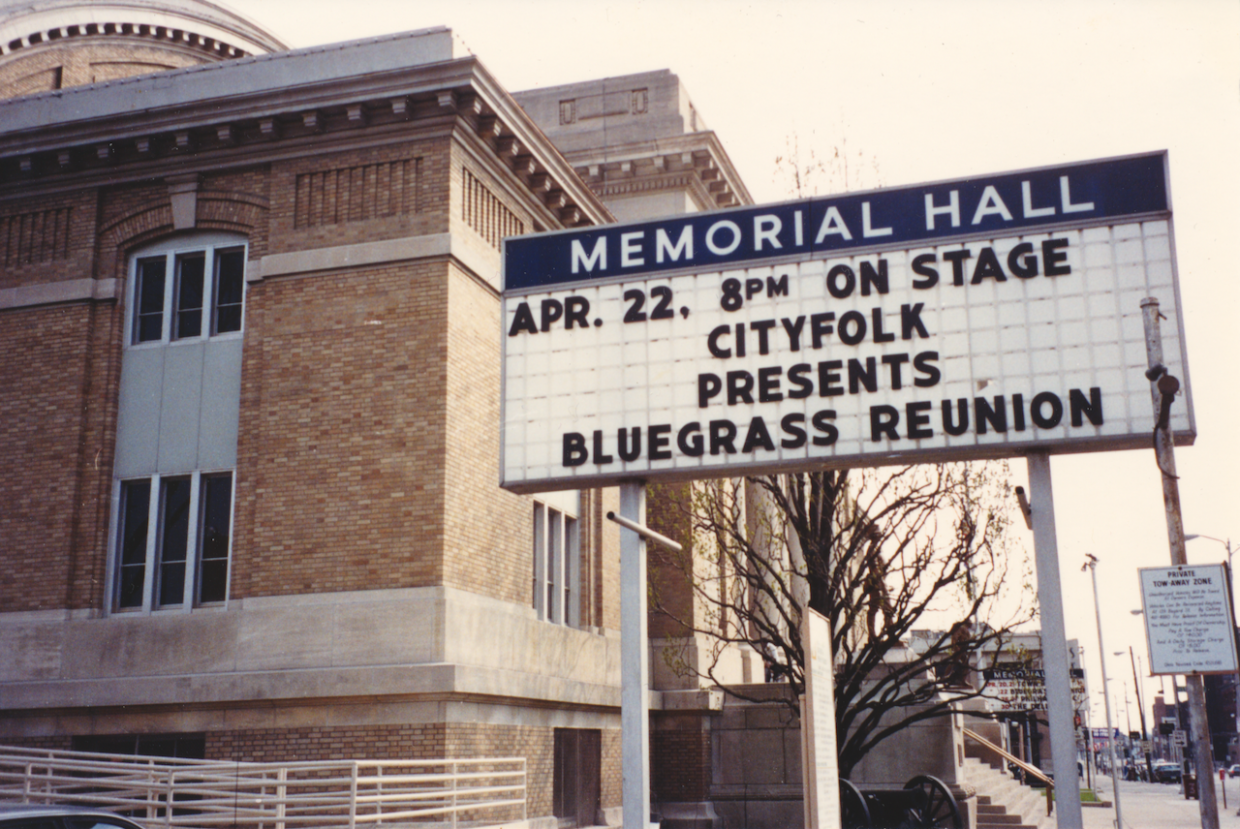
I started outside the concert site, Memorial Hall, in the afternoon before the concert — sound checks were going on inside — taking care to get a close shot of the Hall’s sign on one of Dayton’s busiest streets. 

Inside the hall that day, the stage was being set. Working as a stagehand, I helped handle communications between director Don Baker and the evening’s performers. Moon Mullins and The Traditional Grass and the Osborne Brothers were parked outside in their own vehicles. I first visited Moon and the band in an RV with the name, “The Cabin,” on the door. He introduced me to the band members, including his son Joe. Then I visited the Osbornes. 

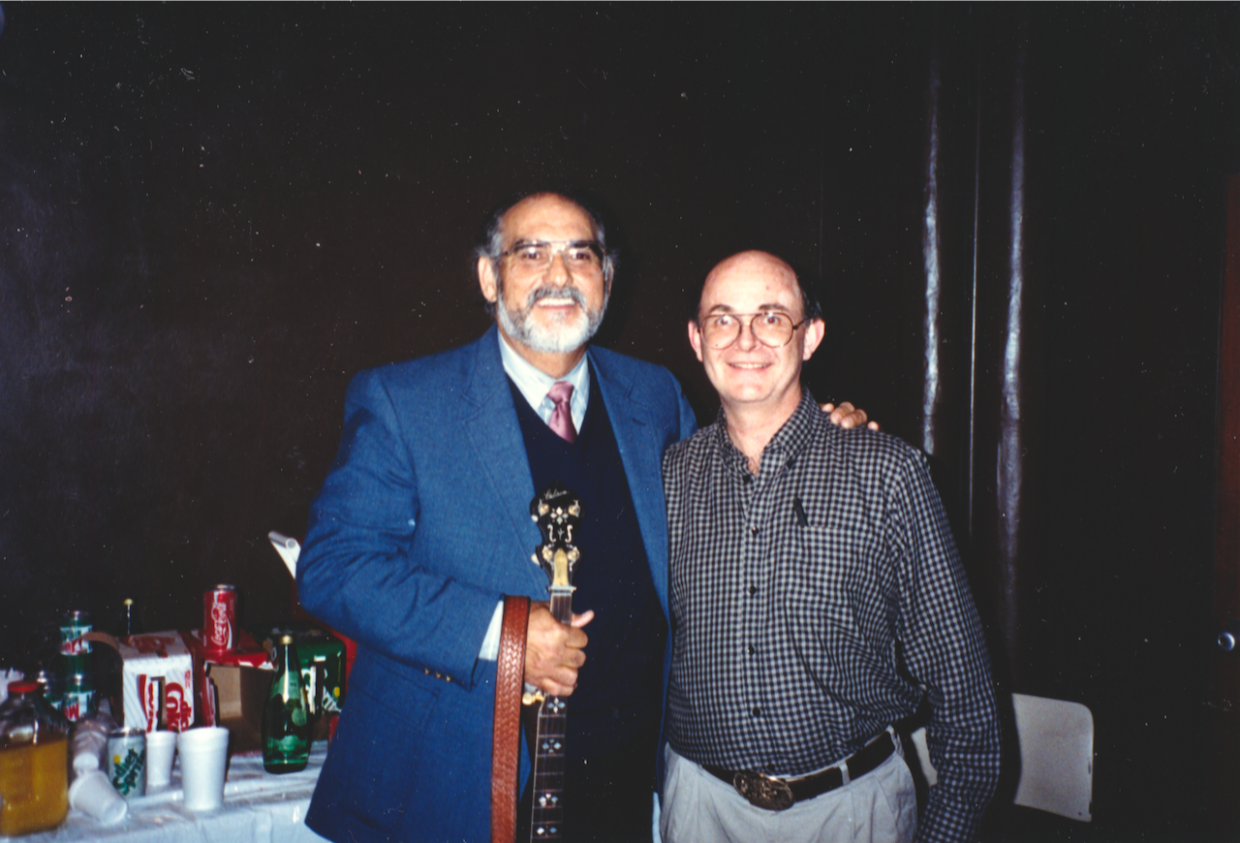
I hadn’t seen the Osborne Brothers since a Saturday night three years before when I was in Nashville to promote my new book, Bluegrass: A History. They’d invited me to be their guest backstage at the Grand Ole Opry, where Sonny brought me onstage, introduced me and spoke about the book — a very generous act. During the concert I asked a fellow backstage bystander to take our photo. Born in 1937, Sonny passed away last fall; he is sadly missed.

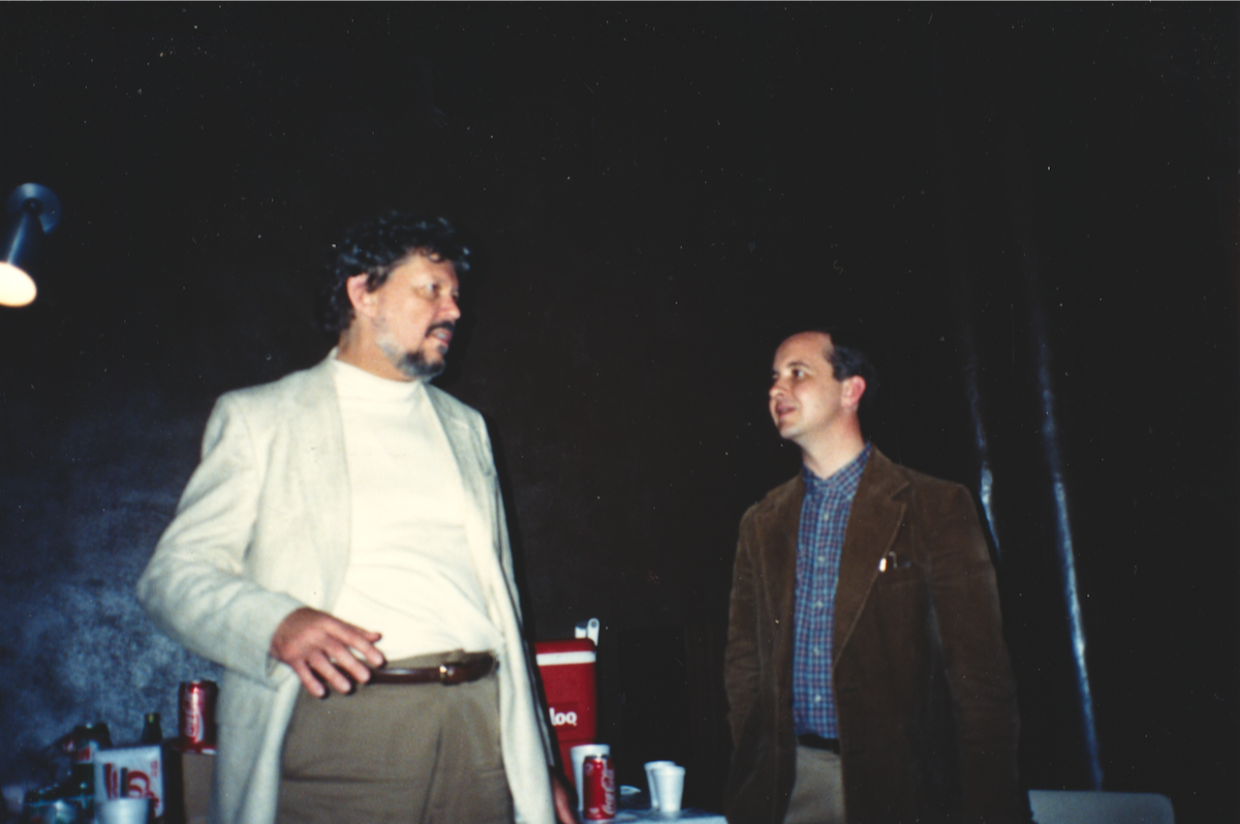
At about the same time I noticed Fred Bartenstein and Tom Teepen nearby and asked them to pose for me. They were important figures in the discovery and revival of Dayton’s bluegrass scene. Recently, I sent this photo to Fred (original editor of Muleskinner News) and asked him for a caption: 

National editorial correspondent Tom Teepen (1935-2017, left) wrote an evocative memoir in the concert program about his days as a Dayton bluegrass fan. Here he meets backstage with Fred Bartenstein, who helped plan and organize the event.

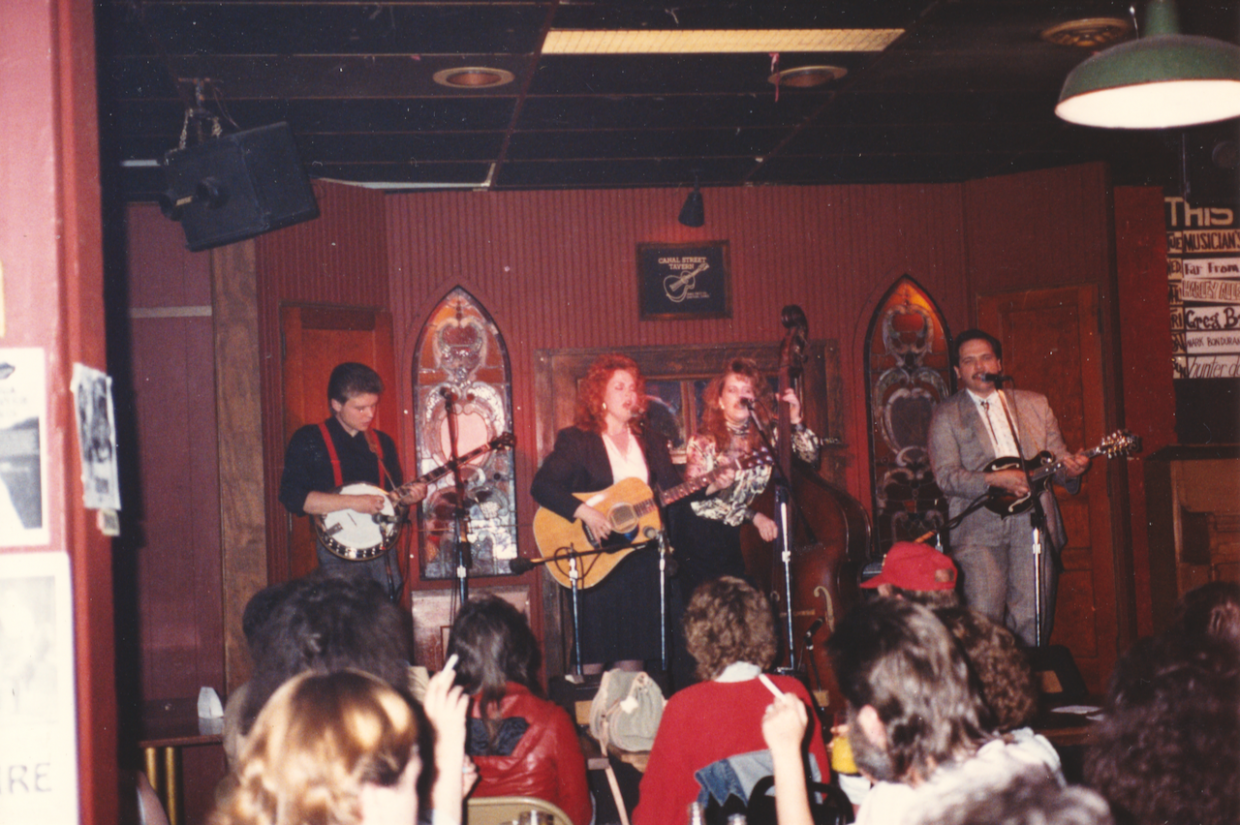
The rest of my photos were taken at the Canal Street Tavern after the concert.

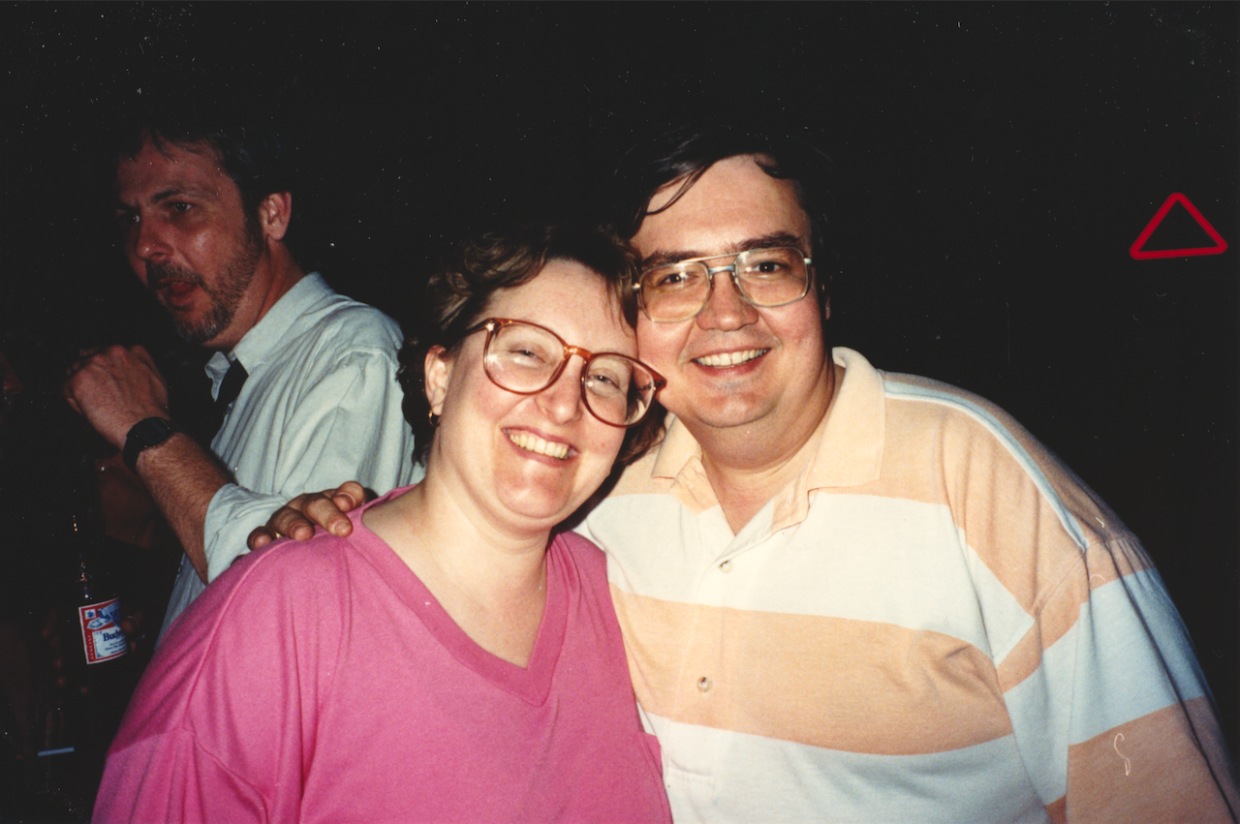
The executive producer of the event, Phyllis Brzozowska ran CityFolk from the start until its end about ten years ago. Behind her on the left is Greg Allen of the Allen Brothers. The individual on the right was one of the crew that director Don Baker enlisted from his Lime Kiln Theater troupe to help backstage.

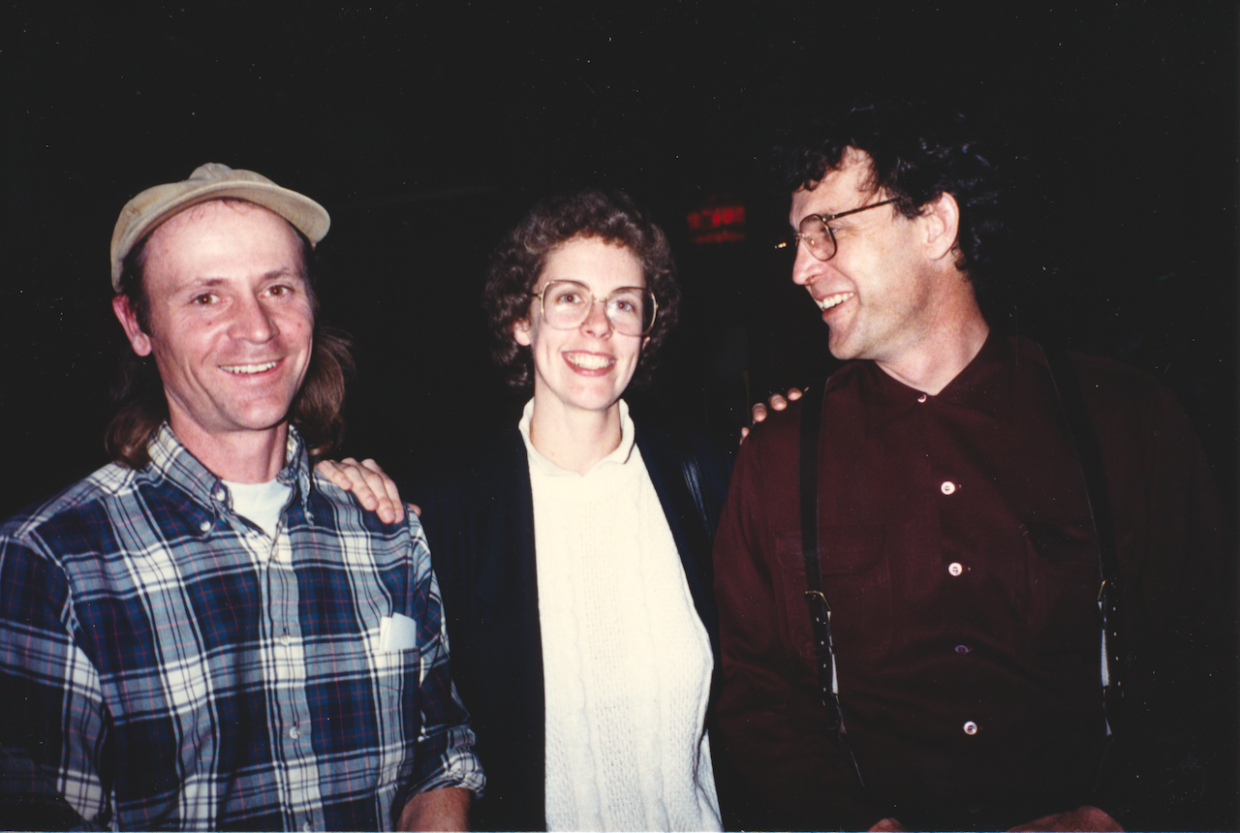
Doug Smith and his wife, Dayton Bluegrass Reunion researcher and writer Barb Kuhns (both members of The Corndrinkers, an old-time band still active today) posed with Don Baker, concert director and emcee. 

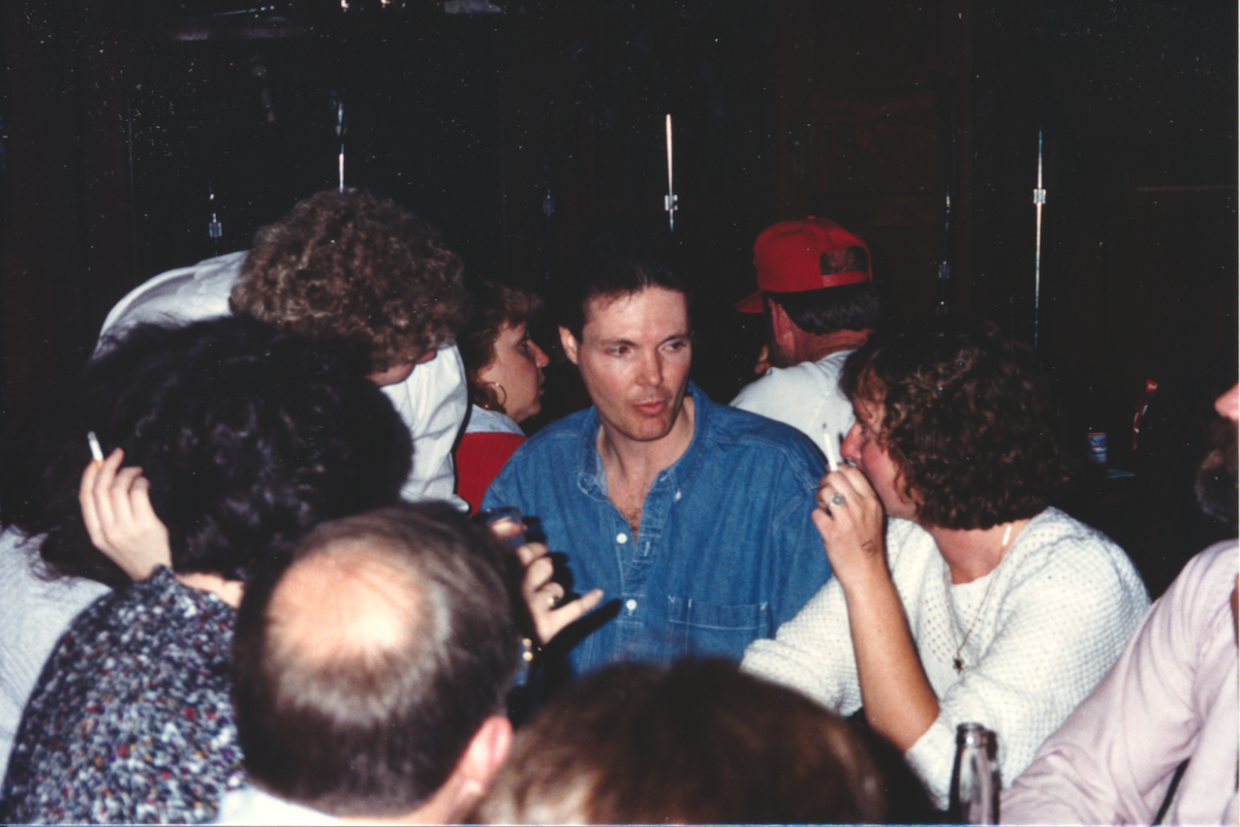
Harley Allen, a veteran star of several bands, had performed in the concert with his brothers. At the center of Canal Street’s evening’s activities, he’s seen here surrounded by friends. 

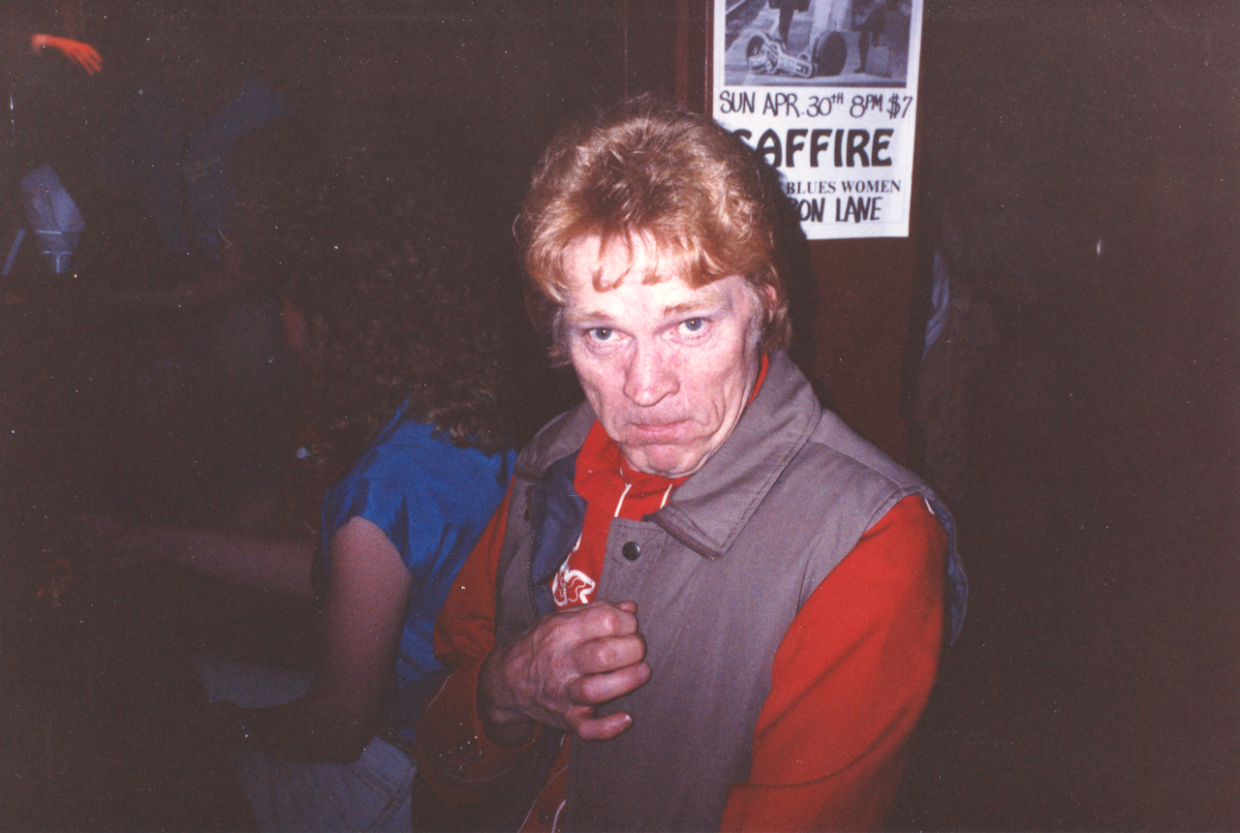
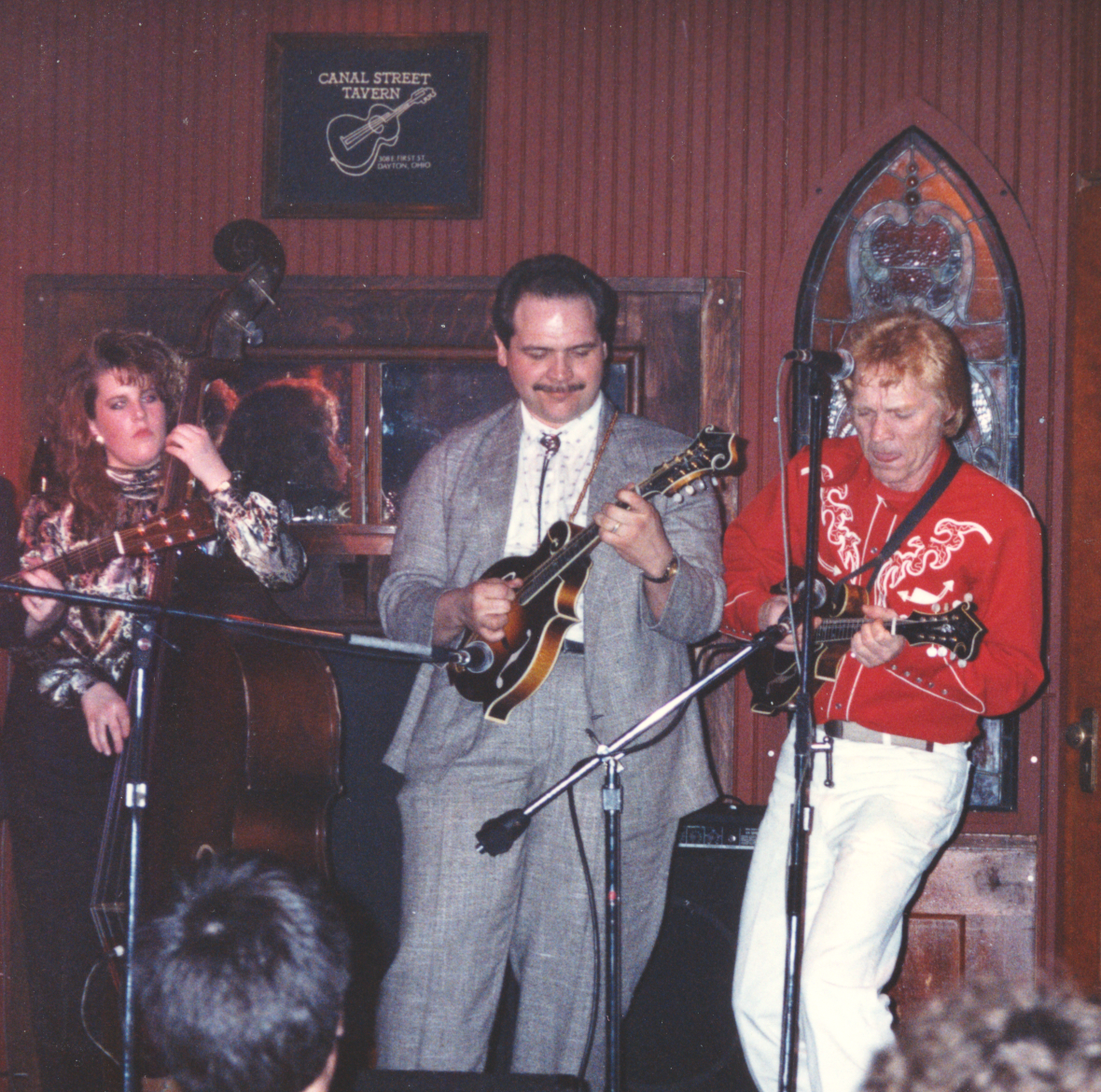
The peripatetic mandolin virtuoso, Frank Wakefield, then living in Saratoga Springs, New York, and working with a Cleveland-based bluegrass/swing outfit, was bouncing around the room. I’d first seen him in action onstage in 1962 (Bluegrass Generation, 124-25); he was still up to his onstage hijinks. 

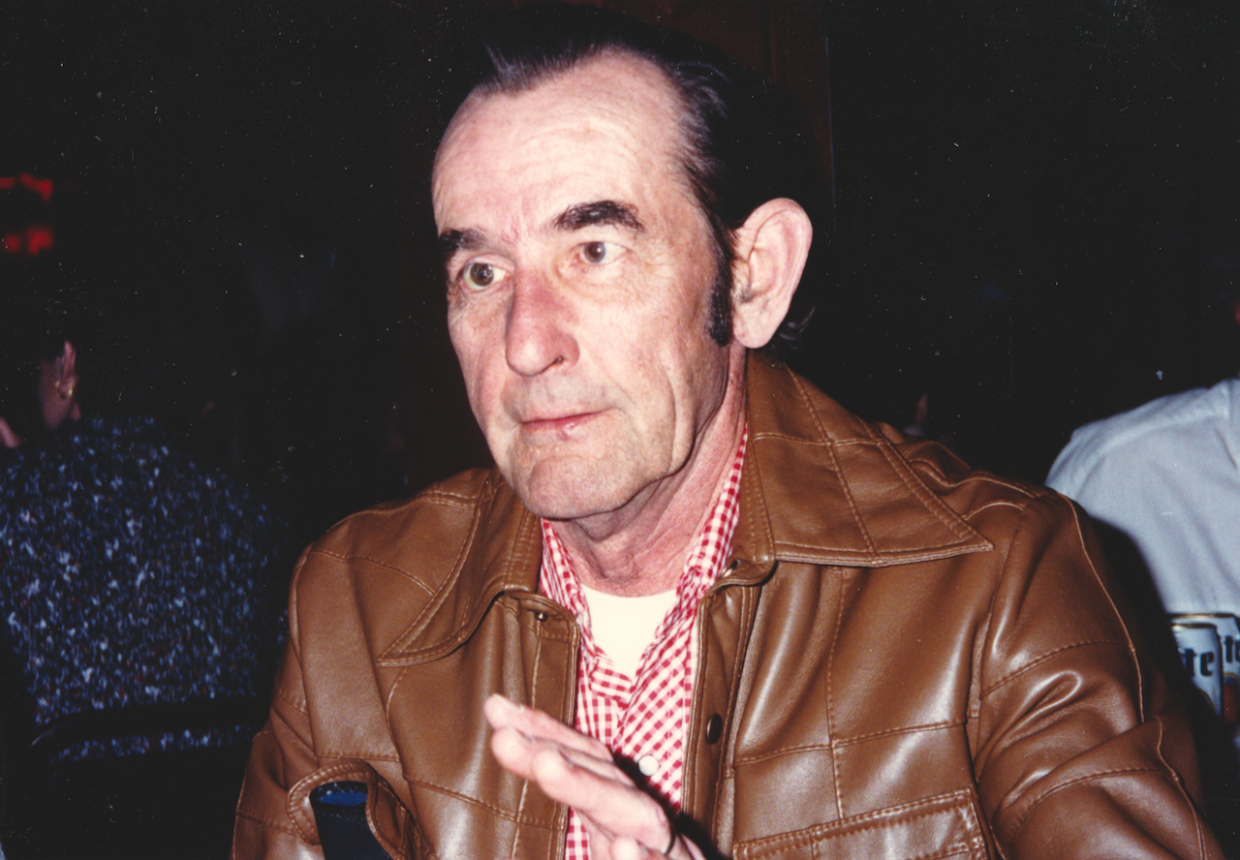
Meeting Noah Crase was a special treat. I’d first heard his music in the late ’50s on an obscure 45 record by Dave Woolum. The evening’s program included a picture of him playing with Bill Monroe along with two men I’d played with in Indiana myself, Roger Smith and Vernon McQueen. We swapped Blue Grass Boys stories.

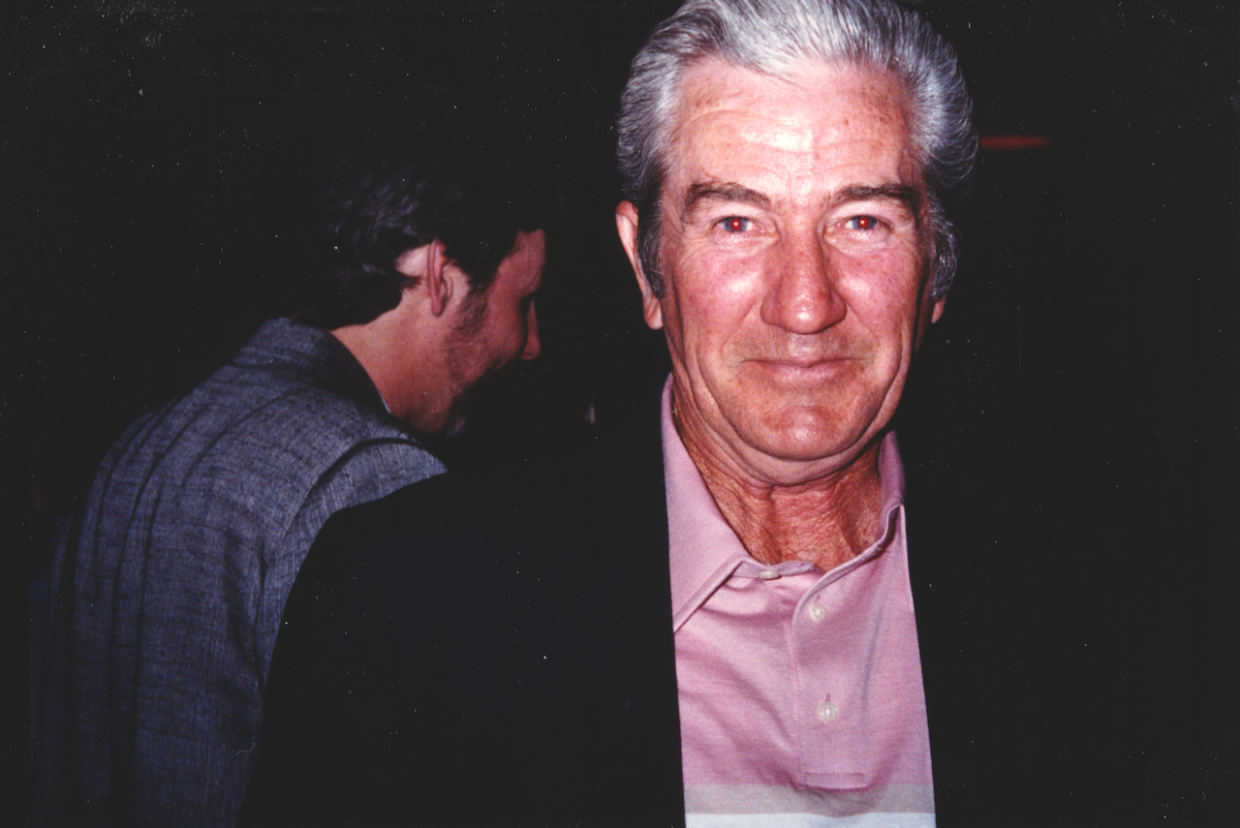
Another special treat. I first ran across Porter Church’s recordings on Red Allen’s County LPs from the mid-’60s. He was well-known in the D.C./Baltimore area, but I didn’t get a chance to see him in action until the Reunion.

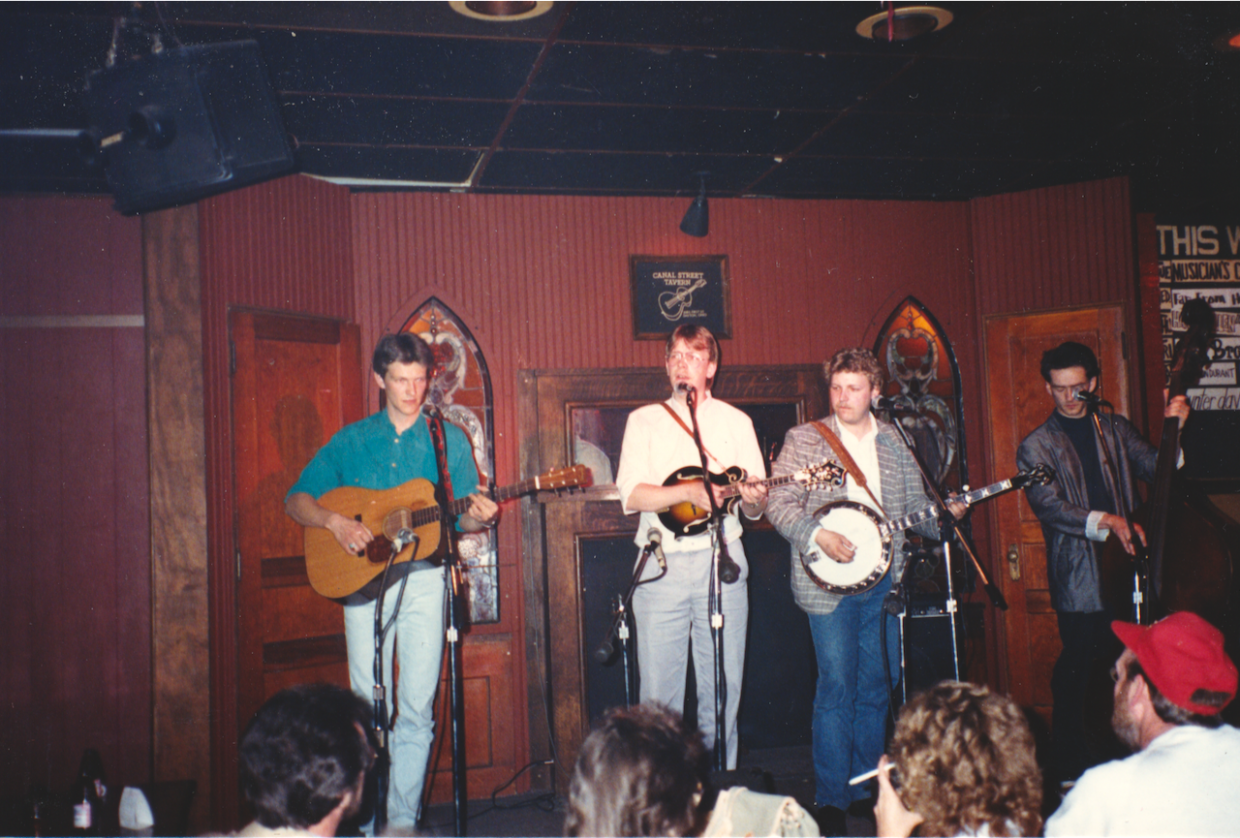
The Sacred Sounds of Grass (Norbert Dengler, guitar; Sam Hain, mandolin; Thilo Hain, banjo; Alfred Bonk, bass)

I didn’t take notes about my snapshots — all that remained in my memory of this group was that these young men were from Germany, played bluegrass gospel, and were on their first American tour. I sent a copy to Mark Stoffel, mandolin player with Chris Jones and the Night Drivers, who’s from Germany. He told me he “knew them well,” and sent the band’s name and contact information.

I wrote to banjoist Thilo Hain and asked him to describe the circumstances that brought the band to Dayton that evening, and their experiences at the concert and the reception. He explained:

In 1988 his brother Sam Hain saw an ad in New York instrument dealer Harry West‘s sales list for a 1922 Gibson Lloyd Loar once owned by Pee Wee Lambert and now owned by Frank Wakefield. Sam, interested, “rang Frank Wakefield up to ask him more details about this instrument.” Wakefield told Sam, “Better get that mandolin, before anybody else gets it.” 

Sam then asked Frank if he was planning a reunion with Red Allen and his band. Wakefield told him about the Dayton Bluegrass Reunion scheduled for April 1989. Thilo remembered, “Frank finished with the words, ‘You better be there!'”

Sam missed out on getting the mandolin, but the band was there in Dayton for the concert. Red Allen arranged for their free admittance and took them backstage to “a meet and greet with all the musicians,” and suggested they perform at Canal Street. “Dee Sparks,” said Thilo, “was so kind to let Alfred play his bass for the show. Throughout our first U.S. tour we earned so many friendly comments, felt heartwarming hospitality from all the great musicians we visited at their homes and went back to Germany with a huge bag full of new impressions and experiences.”

A Google translation of the band’s history on their Facebook page reads: “Sacred Sounds Of Grass is the oldest active Bluegrass Band in Germany, founded in 1979. With their classic Bluegrass Sound the group is also considered the most authentic bluegrass band outside of the USA.”

Thirty-two years after their Canal Street Tavern performance, the same band lineup appears in a photo, also posted at their Facebook page, of them performing in a church in Adelberg, Germany this past August. Here’s a recording from a 2019 festival. 

Wild & Blue (below) was mandolinist and fiddler David Harvey’s new band, formed November 1988. On this night, when they came onto the Canal Street stage, David had already played with the Allen Brothers. Born 1958 in Dayton and son of famous mandolin player Dorsey Harvey (1935-1988; see Industrial Strength Bluegrass pp. 150, 183), he’d grown up in Parkside, a postwar housing development, together with Red Allen‘s four sons as neighbors. Their fathers both played in bluegrass bands — they all learned at home, jamming together after school as teens. By summer 1972 David was playing festivals with Red Allen.

In 1974, at 17, Harvey dropped out of high school to help support the family as a professional musician, joining the Falls City Ramblers. Parkside was a decaying, crime-ridden, rustbelt housing project; David saw music as a way to a better life. 

A Louisville-based band that played a lot in Southwest Ohio, the Ramblers were local favorites with the same crowds who listened to the Hotmud Family’s eclectic blend of bluegrass, old-time, blues and early county. The chapter “Beck Gentry” in Murphy Hicks Henry’s Pretty Good for a Girl: Women In Bluegrass (pp. 186-191) gives a good history of the band. David was with them, playing fiddle and mandolin, for five years. In 1977 Kentucky Educational Television aired one of their shows:

In 1979 Harvey moved to Colorado Springs, where his musical career continued in a group called The Reasonable Band. He entered and won several mandolin contests, establishing an enduring reputation for his skill and creativity. He also began working as a luthier.

He moved to Indianapolis in 1983 and for the next four and a half years he played on the road and recorded with Larry Sparks. His career as a luthier grew. In 1986 he met Jan Snider, who, with her younger sister Jill, had been playing bluegrass. Jan and David soon wed. 

Wild & Blue brought lead singer Jan’s voice to the forefront, solo and in duets with Jill’s high harmonies. They began around the same time as a number of other bluegrass bands with female lead singers were coming on the scene like Alison Krauss, Lynn Morris, and Laurie Lewis. The band had a lot of energy, with David’s suave mandolin work and its female-dominated trios. They won the band contest at SPBGMA 1992 and moved to Nashville in 1995. By then they’d recorded albums for Vetco and Pinecastle. Wild & Blue lasted until 1999.

Harvey then worked with Larry Cordle (1999-2001), Claire Lynch (2002-07), and Harley Allen (2008-11). Meanwhile his luthier work in Nashville blossomed. He joined Gibson in 2004 and today as Master Luthier heads Gibson’s Original Acoustic Instruments division. Here’s a video (above) in which Dave introduces one of the mandolins he’s building and illustrates it with a tune he co-wrote with his dad, “Cruising Timber.”

As a small boy Harvey had watched and listened to his father and Frank Wakefield as they wrung out mandolin ideas at his home. He clearly enjoyed himself with Frank this evening.

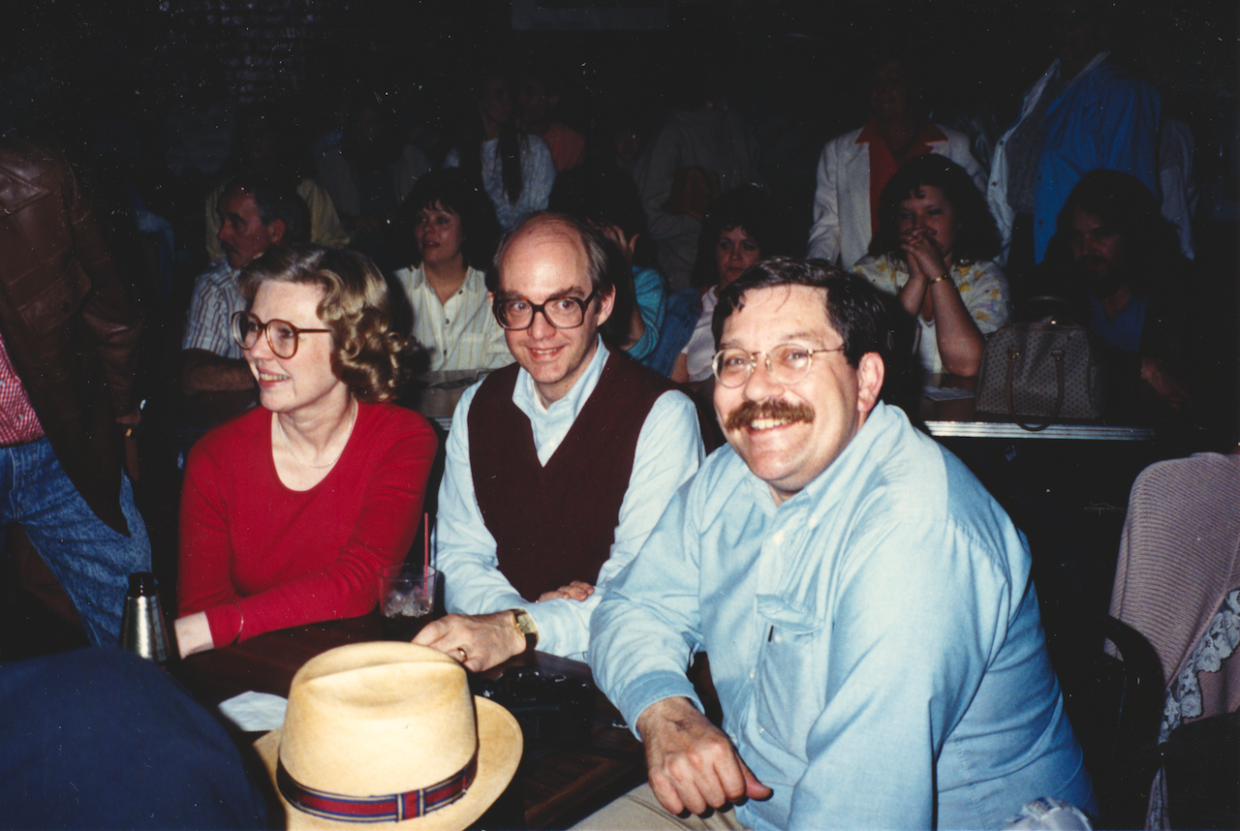
I had watched the evening’s afterparty at Canal Street with old friends from Lexington, Kentucky: the late Marty Godbey, author of Crowe On The Banjo: The Musical Life of J.D. Crowe. Next to her, husband, writer, photographer and musician Frank Godbey, creator of two influential bluegrass digital lists, BGRASS-L and IBMA-L. Next to Frank is Tom Adler, folklorist, banjoist and author of Bean Blossom: The Brown County Jamboree and Bill Monroe’s Bluegrass Festivals. And that’s my hat on the table.

(Editor’s Note: Read part one of our series on the Dayton Bluegrass Reunion hereRead part two here. Read part three here.)


Neil V. Rosenberg would like to thank: Fred Bartenstein, Phyllis Brzozowska, Nancy Cardwell, Frank Godbey, Thilo Hain, David Hedrick, and Mark Stoffel.

Rosenberg is an author, scholar, historian, banjo player, Bluegrass Music Hall of Fame inductee, and co-chair of the IBMA Foundation’s Arnold Shultz Fund.

Photo of Neil V. Rosenberg by Terri Thomson Rosenberg, all other photos by Neil V. Rosenberg. 

Edited by Justin Hiltner