MIXTAPE: Lee Ann Womack’s Country Primer

When we needed an artist to make us a Mixtape of classic country tunes, we turned immediately to Lee Ann Womack … and not just because we love her very, very much, but also because she grew up hanging out in an East Texas radio station while her father played some of the greatest country music ever made. LAW noted that these aren’t, necessarily, her favorite country songs and they don’t go all the way back, but they are certainly a solid representation of the genre’s great past which has absolutely informed its wonderful present.

Johnny Cash — “I Walk the Line”
The ultimate crossover artist, he took country beyond all boundaries. He’s not just one of the greatest country artists, but one of the greatest American artists of all time.

Bill Monroe — “Blue Moon of Kentucky”
He might have been known as the Father of Bluegrass, but music in the country genre was heavily influenced by Bill Monroe. I love — and have borrowed from — the mournful sound of his vocals, the electricity of the harmony vocals, and the drive of the instruments in his music.

The Carter Family — “Wildwood Flower”
Nicknamed the First Family of Country Music, the Carter Family were pioneers of mountain gospel and country music, utilizing harmony vocals in a way that would influence the country genre for many years to come.

Waylon Jennings — “Lonesome, On’ry and Mean”
He had a career as a sideman for Buddy Holly and as a disc jockey in radio before he ever came to Nashvillle to make country records. He was part of the first platinum country album, Wanted: The Outlaws, along with Willie Nelson, Tompall Glaser, and Jessi Colter. To me, Waylon was the epitome of the marriage of rock and country, bringing all of his West Texas vibes to ’70s country.

Tammy Wynette — “Stand by Your Man”
You’d be hard pressed to find someone who isn’t familiar with Tammy and her song “Stand by Your Man.” It’s been a controversy several times over! Her voice is like a broken heart poured directly through stereo speakers and her life seemed like a living, breathing country song.

Loretta Lynn — “Coal Miner’s Daughter”
The ultimate country female singer, she wrote and sang about her life, which reflected so many of the people in rural America and the things they were going through. Listening to her music, one could learn a lot about the times she grew up in, and that’s country music: real life.

Dolly Parton — “Coat of Many Colors”
Her Appalachian roots, so present in her voice and music and, obviously, in the lyrics she wrote. The perfect example of a country girl with bluegrass/mountain influences.

Buck Owens — “Together Again”
From Sherman, Texas, and, along with Merle, created the Bakersfield sound. As is often told, Buck influenced countless other artists in and outside the country genre, not the least of which was the Beatles. I always loved his use of the telecaster and harmonies via Don Rich, and could hear their influences in so many of the country acts that followed.

Merle Haggard — “Okie from Muskogee”
The smoothest and prettiest voice of the male country singers, I always loved Merle for his music and his appreciation of music. I love his playing and especially love his studious approach, pouring over the catalogs of masters like Bob Wills and Jimmie Rodgers — not to mention the blues and jazz music influences you can hear in him. He fascinates me. Along with Buck, they created a whole new country music scene in Bakersfield and refused to play by the rules. I love it.

George Jones — “He Stopped Loving Her Today”
I could do a whole list of just George Jones songs. To me, he surpasses all others because he actually created a new style of singing. Often imitated but never, ever has anyone come close to duplicating. As Gram said, “He’s the king of broken hearts.”

Hank Williams — “I’m So Lonesome I Could Cry”
A country boy with so much soul, he transcends any genre and is one of the greatest songwriters in all of music.

Willie Nelson — “Crazy”
An American treasure, Willie is another artist who really transcends all genres, but there’s no mistaking his country upbringing. He puts music first, before any kind of labels or boxes, and he definitely influenced Nashville and Texas music in a huge way and showed that, when it’s honest, country music and country artists can have mass appeal.

Sugar + the Hi-Lows Join Nashville Ballet for Johnny Cash-Inspired Shows

In 2014, the Nashville Ballet performed “Under the Lights,” an original ballet about the life of legendary country artist Johnny Cash. This year, the Ballet will reprise the show’s performance as part of Attitude, an annual series celebrating contemporary dance. 

Nashville’s Sugar + the Hi-Lows reimagined a number of Cash songs for that 2014 debut and will return for this year’s series of performances, which run February 9 – 12. The duo, comprised of songwriters Trent Dabbs and Amy Stroup, were recruited by Nashville Ballet dancer and “Under the Lights” choreographer/creator Christopher Stuart.

“We watched Matthew Perryman Jones perform with Attitude four years ago,” Dabbs explains. “He’s a dear friend of ours, and we thought the idea of having these two art forms come together is really something else. Chris Stuart had reached out to Lightning 100 to ask Mary Brace, who’s a DJ there, if she had any picks for who would make a good match for this concept, and she said us and Chris called us. That’s how it started.”

Stuart was initially inspired to develop “Under the Lights” after he saw the music video for “Hurt,” Cash’s 2002 cover of a Nine Inch Nails song that the artist released not long before his death at the age of 71 in 2003. For the most part, the 2017 performances will stay true to the show that Stuart and the rest of the Nashville Ballet debuted in 2014, one that Stuart worked carefully alongside members of Cash’s own family to curate. “I think we’re switching out one or two songs but as a format, it will be pretty much on par,” Stroup explains. “Last Summer, we got to go with Chris and some of the Nashville company to Little Rock and perform it, as well. It’s just been an incredible experience to see the ballet and see it in full. It’s pretty much the same story, with Johnny Cash and some of his best-known work and some of the duets with Johnny and June brought to life.”

“Chris pretty much chose [the songs] himself,” Dabbs adds. “I think he spoke to some members of the Cash family to get permission and to get ideas. It was a mix of Chris and some of the Cash family.”

Songs included in the ballet include “Ring of Fire,” “I Walk the Line,” and “God’s Gonna Cut You Down” — the last of which is a personal favorite of Dabbs’ — as well as a handful of Sugar + the Hi-Lows originals. Though honoring Cash is at the heart of the project, Dabbs and Stroup work a bit of their soulful blend of rockabilly-tinged pop into the mix, too, as well as a healthy dose of historical context. 

“When we were first asked to approach this, first of all, Trent and I were like, ‘How do you approach such a legend’s work?’” Stroup says. “Trent and I are both songwriters, even outside of being Sugar + the Hi-Lows, so we found it interesting to go back and research and find out how and why these songs were written. For example, a song like ‘Ring of Fire,’ we think of Johnny Cash’s version of that song and the horns that we hear and it’s really upbeat, but the song was actually written by June and two other people, and she wrote it more as a ballad and she played it for Johnny and he had a dream and heard the horns in the song. Then he said, ‘Hey, can I cut this version?’ So, on that song, we kind of perform it more as June wrote it.”

As passionate fans of both Cash and of dance — if you’ve heard their latest album High Roller, you already know it’s tailor-made for the dance floor — both Dabbs and Stroup have found “Under the Lights” to be one of the most artistically and emotionally fulfilling experiences of their musical careers. 

“I think being such fans of dance that it’s kind of like going to a show while you’re playing it,” Dabbs says. “In fact it is. [Laughs] But it’s much more experiential than anything else live. We both try not to watch the dancers too much, but when you look up and get a glimpse of what’s happening, it affects you in a lot of emotional ways and, to me, the experience of the whole thing is much more powerful than just us and a band playing in front of people.”

When the final curtain closes on this particular Attitude performance, it won’t be the duo’s last rodeo with the Nashville Ballet. They already have plans to take part in Seven Deadly Sins, which will feature music from the current roster of Ten Out of Tenn. That show debuts in May.


Photo credit: Karyn Photography

Peter Cooper Offers Behind-the-Scenes Look at Nashville in Forthcoming Book

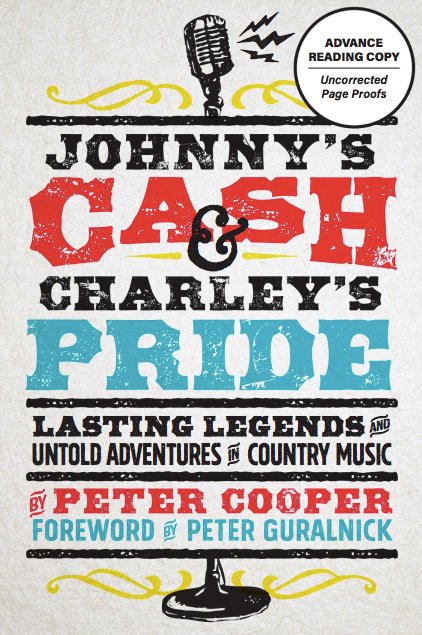
Peter Cooper knows a thing or two about country music. A songwriter, journalist, and current Country Music Hall of Fame writer/editor (among other things), Cooper has spent decades studying country music and picking the brains of the genre’s biggest luminaries. In April, he’ll release a new book — Johnny’s Cash and Charley’s Pride: Lasting Legends and Untold Adventures in Country Music — via Spring House Press. Complete with a foreward from legendary music writer Peter Guralnick, the book is a collection of essays detailing some of Cooper’s most storied encounters, from his time spent with the late Cowboy Jack Clement to trading thoughts on songwriting with Taylor Swift.

“Part of it was inspired by all of these people streaming into Nashville anew who don’t really have an understanding of the people who built this Music City,” Cooper says of his impetus to write Johnny’s Cash. “The book begins with Cowboy Jack Clement, because I think he’s the guy that everybody would be better off having met and been around. He’s just one of the most purely creative souls I’ve ever been around.”

Unlike many books about country music, Cooper’s doesn’t seek to serve as a definitive history of the genre. Instead, he lets his stories do the talking, offering color commentary on some of country’s most colorful characters. He wrote the bulk of the collection in the order it appears in its final published version, with one anecdote or interview lending itself to the telling of another in a conversational, almost stream-of-consciousness style of writing. There are also personal moments, where readers are treated to passages that read more like memoir than encyclopedia entry.

“A lot of things in the book are similar to stories I might tell somebody if I’m sitting next to them on an airplane or at a bar,” he explains. “They ask about Nashville characters like Cowboy Jack, Bobby Bare, Tom T. Hall. Rather than present any sort of linear history — and rather than have straight profiles of people — I just wanted to tell stories about storytellers and offer up what some of my interactions have been with them. A lot of times, when you get to know these people, they’ll trickle out some good hillbilly wisdom, and I was trying to remember those moments. I really want to tell [readers] it’s a self-help book. It’s really good advice from some really smart people, with some funny stories thrown in there.”

He did add one chapter, though — “Don Light and the Impossibility of Unscrambling Eggs” (“Don Light was fond of saying, ‘You can’t unscramble eggs,'” Cooper laughs, when asked about Nashville’s explosive growth in recent years.) — at the behest of Guralnick himself. “[Guralnick] had known Don Light very well and he knew that I had spent some time around him typing down the things that Don Light said,” he explains. “Don Light was this fascinating, kind of creative pragmatist who found a way to get Jimmy Buffett a record deal. He was the first independent talent agent in town. He brought Keith Whitley to Nashville and got him a record deal. He helped found the Gospel Music Association. He started the Jesus business and the ‘my head hurts, my feet stink, and I don’t love Jesus’ business.”

While readers will be hard-pressed to find a selection in Cooper’s book that lacks humor and humanity, one story about beloved country artist Lee Ann Womack has a special place in his heart. “There’s a story about Lee Ann Womack threatening bodily harm upon me that I thought was cute,” he laughs. “Heck of a singer and a wonderful person, as well, but she was dissatisfied with a largely positive review I’d written about her and threatened me late at night on a cell phone. She’s one of the best singers I’ve ever heard. In a room with her without a microphone, when there’s nothing between her voice and your ears, it’s just staggering.”

If there is a theme running throughout Cooper’s book, it’s that storytelling is at the heart of good songwriting, and that sharing stories about songs can’t be done without putting at least some of one’s heart on the page. “If you’re unbiased about music, or objective about music, then you’re not going to write anything good about music,” he says. “If you can’t listen to Emmylou Harris and be moved by it on some level and you stay cold and calculating at a distance, then you aren’t going to write anything of value.”

Greg Blake, ‘Hey Porter’

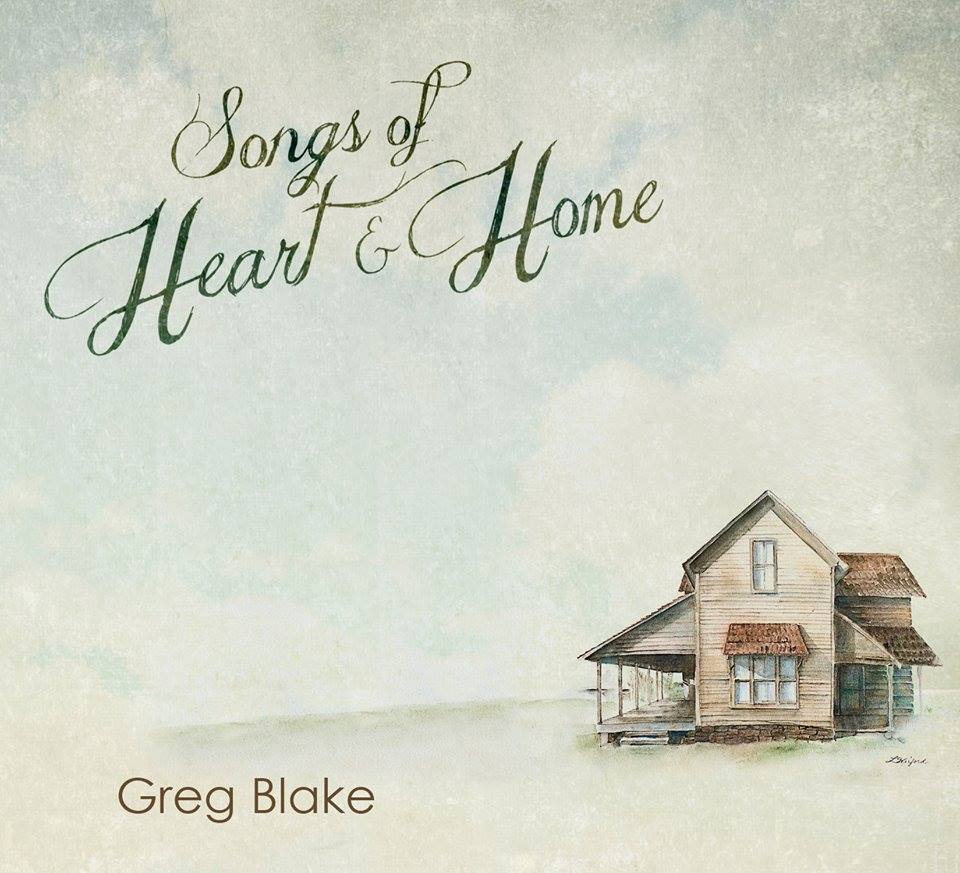
Johnny Cash is, of course, a titan in the canon of American music. Bands of all styles have covered his tunes for as long as they've been around — ranging from noodly jam outfit Phish doing "I Walk the Line" to pop-punkers New Found Glory tackling "It Ain't Me Babe" in 2007. Here's another to add to that collection: Greg Blake's "Hey Porter." The Colorado picker opens up with a flourishing, fantastic bassline provided by bluegrass badass Mark Schatz, before diving into a classic bluegrass clip.

"I finish the first two verses and then Blaine Sprouse, Jeff Scroggins, and John Reischman trade off solos over the melody line of the verse, with Schatz interjecting that funky bass theme in the spaces between hand-offs," Blake says.

The crisp clarity of the recording make it seem like Blake's take could've been the original. The team power behind the track is as driving as the mighty train Cash first wrote about. You can learn more about Blake and his new record Songs of Heart and Home here.

A Conversation with Filmmaker Beth Harrington on Her Carter Family Documentary

For those who appreciate a good movie about music, the name Beth Harrington stands at the top of many lists of excellent filmmakers. The Boston native’s 2003 documentary, Welcome to the Club: The Women of Rockabilly, was nominated for a Grammy Award and applauded at numerous film festivals around the world. The last dozen or more years have been dedicated to completing her latest film, The Winding Stream: The Carters, the Cashes, and the Course of Country Music. Now living in Vancouver, WA, the one-time member of Jonathan Richman and the Modern Lovers talks about how her passion project is progressing.

So, how long has been since we've had coffee? Two years?

I bet it's been more than that. I don't think I had any hope of finishing the film the last time I talked to you.

Really?

Well, I didn't think there was any real clear-cut path to the end. There was so much money to raise. I had enough money to make a film, but if I finished it and didn't have the music licensed and the archival footage licensed and the photos licensed, I couldn't show it to anyone.

It's been a long and arduos road, it sounds.

Yeah, it has.

The soundtrack has an interesting mix of music, both old and new. Were the new songs commissioned for the film?

Some of them were. While we were making the film, there was an album being recorded that was a tribute album to the Carter family. So we filmed some of that. And we were allowed to use the stuff we filmed. So when we made the soundtrack album, that stuff got released again.

Which ones specifically?

The John Prine one (“Bear Creek Blues”).

… which is one of the ones I like.

Absolutely, I love that one. The George Jones one (“Worried Man Blues”), the Sheryl Crow song — which is in the film but not on the CD. Rosanne [Cash] did the title track.

So, the challenge you were facing from the music licensing standpoint had to do with the original Carter Family material?

Yeah. [The CD] just scratches the surface of what we used in the film. We had lots and lots of Carter Family songs — 30 or more tracks that were mostly original recordings, or radio recordings, from when the Carters were on Border Radio. That stuff largely belonged to Sony, so Sony had to be paid.

Gotcha. They weren't up to negotiating, were they? [Laughs]

We're glad that they let us license the music … let's put it that way. [Laughs]

That's terribly cynical of me. We'll just make sure that, in the interview, that comment is clearly attributed to me and not to you. [Laughs] There’s one tune on the CD with an introduction of the family and then there’s a little snippet … they only sang a few bars.

That’s their theme song, that’s why. “Keep on the Sunny Side” was their theme song, so they sang it on every show. And then they went into another song.

You know what I found striking? I’ve heard the Carter Family’s song countless times, as we all have. Maybe not these exact recordings, but we’ve all heard them to some degree. What was most striking to me is how youthful they sound in these songs.

I never thought about it that way! It’s funny, because I always think of Sara as having this very gothic sound. Even as a young woman, she was very authoritative sounding. It was really a strong voice. To me, that’s an older person’s authority. But even then, she was probably only in her 30s. I think they were kind of youthful. And Maybelle was younger than them, so she was energetic and inventive, and she found all these new things to play. That’s fresh and youthful sounding, I think.

It becomes even more interesting when you have what sounds fresh and youthful in its delivery but sounds old from a stylistic and technological standpoint. What inspired you to do this film?

I had made another music documentary called Welcome to the Club: The Women of Rockabilly and, in making that film, I had met a whole bunch of women who were contemporaries of Elvis Presley.

Like Wanda [Jackson].

Wanda, Janice Martin, the Collins Kids, Brenda Lee, a bunch of others who didn’t make the cut but are mentioned in the film. A lot of them talked about what they grew up with and, of course, a lot of them grew up with the Carter Family. The ones who were in the film toured with Johnny Cash and Maybelle and the sisters. There were very strong connections there. Plus, Rosanne Cash narrated that film, so the whole time I was working on it, I was connecting these dots in my head. I knew who the Carters were. I knew Johnny Cash, of course. I was growing up when the Nitty Gritty Dirt Band album came out with Maybelle and Doc Watson and all those people on it.

I don’t know that there are many people who fully grasp what the relationships were between all these names. Everyone knows the name June Carter Cash — if you know Johnny Cash you know that name — but I don’t think people fully appreciate who she is and where comes from and what that’s connected to … unless you’re deeply into roots music, like BGS readers are. But a lot of people don’t know. I thought it might be useful to connect those dots for people and tell that story because it’s a big saga and a really interesting family. They influenced people, not just in country music, but in folk music and country-rock or whatever you want to call it in the '70s. And they still continue to influence people in Americana today.

I thought it would be cool to do that. I never imagined it would take as long as it took, but I certainly thought it would be interesting to people. The cool thing is, one of the best compliments I get for the film is when people say, "I don’t even like this kind of music and I like your film."

Nice.

So I think, "Cool, my work here is done." Because I just want people to know there’s this underpinning in American music. It’s a thread of the bigger fabric of American music that I think people should know. As was said in the film, "People should know who they are like they know who the first president of the United States was." Maybe a slight overstatement, but I think there’s something to that.

Well, it’s a statement from someone who’s in the front row, the front pew. There’s no need to preach to him. He’s basically standing up and turning around to the rest of the church and saying, "Listen, they’re up here." So I totally get that. How long has it taken up to this point?

Twelve years.

Twelve years!

Well, we’re into the distribution part now, so I’ll have been working on this for probably about 14 years by the time I finish. I never expected it would take this much of my life. 

That’s a lot of patience.

It’s a lot of something. I don’t know. [Laughs] Stubbornness, maybe. I don’t know if it’s patience. It’s definitely stubbornness.

So tell me briefly: Where am I going so see it and how’s it being distributed?

It’s being distributed all over the country right now. If people go to Argot Pictures, there’s a huge list of places it’s showing. It opened in L.A. last week. It’s going to be playing in New York in December for a week. It will be in Boston, at some point. It’s booked in over 40 places right now.

Is there hope for distribution via a streaming service of some kind?

Yes, we have a deal for that, but we have to wait until the theatrical release runs its course.

So, while you’ve been doing this for the past 14 years, what’s been in the back of your head to do next?

Honestly, this was so trying that I thought some days this might be the last film I do. The landscape of documentary filmmaking is so difficult right now … especially if you’re doing a music documentary.

Because of licensing.

Half of my budget was licensing. I could have made two films for the price of this one film. And, whereas I’m happy to pay musicians, I’m less interested in all the other business parts of it. I’m one little person who lives in Vancouver, WA, making a film. I’m not Steven Spielberg.

I think that when people hear that you’re making a documentary with Johnny Cash in it, somehow they think that you’re rolling in the dough. That’s just not the reality. So, I haven’t made plans to do anything yet. I have thoughts.

Oh, do tell! We’re not going to hold you to it. But if it’s in print on the Internet …

I know! This is the problem. You’re going to dog me no matter what I do. [Laughs] I think there are other music docs I’d like to do. I think there are some great stories out there. There are certainly stories from my own life that have to do with bands that I was in.

Like Jonathan Richman …

I would have to explore it with Jonathan, and he may or may not be interested. But I think it’s a really great story about the pre-punk era, with some great people in it — including people who launched some of the new-wave and punk stuff. Jerry Harrison from the Talking Heads, David Robinson from the Cars … these are people who were in the original Modern Lovers. That was a very influential band even though it’s not very well-known. I think there are a lot of cool stories there.

It’s really about the story, right?

It’s gotta be about the story. I’ve seen lots of music documentaries where I think, "Well, that’s great footage … but is there a story?" So, I think about that. There are some other things I’d love to do. I might do something narrative with music in it because I need, like, a mental palate cleanser after doing documentaries. Being a journalist — as you know — being accurate and being faithful to the facts, which I strive to be, is very difficult when you’re trying to make something that’s entertaining. That’s why most biopics that you see have no relationship at all to reality! [Laughs]

Exactly! [Laughs] Right, because reality is boring, and we need a story!

Of course!

He didn’t have a mistress, but we put one in just to make it more interesting!

I think that some of that stuff seems really liberating. Like, you could just make something fictitious and fun.

Semi-fictitious? Or completely fictitious?

Well, completely fictitious. If I was going to do it, I would make it completely fictitious. But then you’re right back into the rights issues and the image and likeness of the person. I just think it would be fun to do a music film with musicians that reflected the life of a musicians but wasn’t steeped in the particulars of one musician. I’ve certainly got a lot of content, from doing all the research I did for this film. It goes back to the 1920s and all the way up to the present. I’ve had a lot of time to think about that trajectory and the many influences that this one family had. I think there’s some spin-off of that that might be interesting as a fictional piece.

In the back of my mind, I’m thinking Spinal Tap Goes Americana! [Laughs]

[Laughs] Totally, totally. Spinal Tap and The Godfather — still my two favorite films of all time.

3×3: Shane Parish on John Coltrane, Johnny Cash, and a Moment in the Sun

Artist: Shane Parish
Hometown: Asheville, NC
Latest Album: Undertaker Please Drive Slow (Tzadik)


Time to reconnect with my roots… "Never mind what's been sellin, it's what you're buyin…" #fugazi

A photo posted by Shane Parish (@birdonsixwires) on

What was the first record you ever bought with your own money?
RUN DMC, Raising Hell

How many unread emails or texts currently fill your inbox?
86

If your life were a movie, which songs would be on the soundtrack?
"The Man Comes Around" by Johnny Cash, "Staying Alive" by the BeeGees, "The Boxer" by Simon and Garfunkel, "A Love Supreme" by John Coltrane


My new solo album, Undertaker Please Drive Slow, is released today on Tzadik Records! Here's the track listing.

A photo posted by Shane Parish (@birdonsixwires) on

What's your favorite word?
Tchotchke

Which sisters are your favorite — Andrews, Secret, McCrary, or Mandrell?
McCrary

If you were a liquor, what would you be?
Tequila


Loitering

A photo posted by Shane Parish (@birdonsixwires) on

Fate or free will?
Fate

Cake or pie?
Pie

Sunrise or sunset?
Sunset

MIXTAPE: The Coal Men’s Cover Songs

Through the years, the Coal Men have traveled a lot of miles in mini-vans and rentals. We always like to catch up on tour drives and listen to music that's catching our ears. In my younger, long-hair, Fentress County, Tennessee, days, I had my silver-face SONY dual tape deck. I even DJ'd a few dances with it. Mostly, I loved making mixtapes of older songs and doodling on the Maxwell tape box blank cards. Here are some of my favorite cuts that have found their way from those old tapes into the long shows we do when we step outside of our own song catalog. — Dave Coleman

"Long Black Veil" — (Danny Dill/Marijohn Wilkin)
Johnny Cash's version was the one I heard the most growing up, but the Band's version blows me away these days. Lefty Frizzell had the first first hit with it back in 1959. It's a heartbreaking tune written from the vantage point of a corpse.

"Rain" — (John Lennon/Paul McCartney)
The Beatles' version is a masterpiece, but I learned the song from Singing Sergeant Washington, a local Tennessee band that I loved. I desperately wanted to be in that band as a 17-year-old. I finally got the chance to play guitar with them on my first gig in Nashville (at Obie's Pizza). The band, sadly, broke up. Heartbroken, I forged on and started my own group. I like to throw my best Hendrix-inspired psychedelic roots rock on the song these days. Fuzz and Sun.

"Are You Experienced?" — (Jimi Hendrix)
My favorite mixtape I had was titled FOUR: it started with that many Jimi Hendrix instrumental songs I tracked down. It was stuff where he used extreme amounts of surf-sounding wah-wah pedal (i.e. "Hornet's Nest"). I later buzzed some of my other favorite songs onto it. The backwards guitar and drums in the song — along with the pounding quarter-note piano — are monumental. We now do a fun stripped-down roots rock version.

*Here are the Coal Men (with Pete Finney on pedal steel) from a few years ago down in Florida. Note the number four on my guitar — it came from the FOUR mixtape.

"Rock N Roll Girl" — (Paul Collins)
The Beat, a short-lived L.A. band, recorded this simple-but-perfect taste of power-pop delight. We do it fast, loud, and always for a gem of a bartender named George. The Paul Collins Beat did a record a few years ago that blew me away called Ribbon of Gold.

"Six Days on the Road" — (Dave Dudley)
It's been covered by tons of folks. What's the reason why? It might be the best truck-driving song ever. We just played a show with Mathew Ryan and I had to dedicate this one to him because he'd just "pulled out of Pittsburgh" to come down to Nashville to record his next record.

"Guitars, Cadillacs" – (Dwight Yoakam)
My life changed when I heard Dwight's original guitar player/producer Pete Anderson. Duane Jarvis told me a story about playing guitar with Dwight Yoakam on a Canadian tour. (Pete was producing the Meat Puppets at the time.) He went for the solo, and people were going crazy, and he thought he was on fire with the guitar. He turned around as Dwight was doing one of his killer dance moves. Sometimes it's not the notes you play, but how you shake them that counts, I guess. Jokes aside, this is a sad song about a land of "lost and wasted dreams" with a shuffle that won't stop.

"Everybody's Talkin'" — (Fred Neil)
I love Western movies and, when I was a kid, I rented Midnight Cowboy from Jamestown Video for a dollar. It is not, in fact, a Western. I still loved it, though. The version recorded by Harry Nilsson haunts the movie throughout in joyful, saddening beauty.

"Silver Wings" — (Merle Haggard)
In my opinion, this is the definition of a perfect song. One chorus and one verse. I cried when Merle died. We love to play this song for the travelers and the lonely ones they leave behind.

"Drive Back to You" — (Duane Jarvis)
I met Duane shortly after I moved to Nashville. He was my rock 'n' roll professor. He had this gritty and tasteful guitar playing with Brit-rock influenced songs. I toured a lot with him and we wrote dozens of songs together. This one was about his wife Denise. Duane passed away in 2009, but his music is still with me and lifts me up. I love to sing this song with the joy he brought to it.

"Jesus on the Mainline" — (Traditional arranged by Ry Cooder)
This song explains that beautiful relationship a Protestant has with the maker. You can talk to that friend any time you want — no busy signal, no answering machine. I'm a fan of traditional songs with a simple form. It allows the players to open up with confidence of the rock solid foundation underneath. That's something we could all use in our everyday lives. Ry Cooder's version has all of this hypnotic melodic playing that is as transcendental as it gets.

WATCH: The High Bar Gang, ‘I Still Miss Someone’

Artist: The High Bar Gang
Hometown: Vancouver, BC
Song: "I Still Miss Someone"
Album: Someday the Heart Will Trouble the Mind
Label: True North Records

In Their Words: "For our sophomore record, Someday the Heart Will Trouble the Mind, on True North Records, we chose ‘Cheatin and Hurtin’ as the loose overall theme. Shari does a beautiful job of re-interpretting Dolly Parton’s version of the Johnny Cash classic, 'I Still Miss Someone.' The perfect last sad song on our CD." — Colin Nairne (mandolin)

"I love singing this beautiful Johnny Cash / Dolly Parton classic. There likely isn’t a soul who doesn’t relate to this song. And being surrounded by this remarkable gang of musicians, singers, and friends capturing the live performance is, to my mind, doing it the way it was meant to be done." — Shari Ulrich (fiddle and vocals)


Photo credit: Karen Walker Chamberlin

SHIFT LIST: Trae Basore’s Soundtrack of Youth and Young Manhood

Unexpected combinations are Trae Basore’s specialty in the kitchen. The executive chef of Pearl & Ash in Manhattan’s Bowery district presents a menu full of imaginative pairings: Deep-fried sweetbreads are made even more indulgent with the addition of crawfish mousse; sour peanuts add a pop to charred rapini; and scrambled eggs get a briny boost from a few tongues of uni. An alum of Tom Colicchio’s highly regarded Colicchio & Sons, he posts his most eye-catching preparations to Instagram.

He may plate fancy, but the Arkansas native prefers more rusticated fare when it comes to his music. After an embarrassing early dalliance with Top 40 — the first CD he ever purchased was MC Hammer’s "Addams Groove” (“Watch the video,” he advises. “It’s hilarious.”), while his inaugural concert was Michael Bolton — Basore fell hard for Southern-minded music when he discovered a treasure trove of his father’s old LPs, including classics from Johnny Cash, Willie Nelson, and Lynyrd Skynyrd.

Those artists continue to be the backbone of his collection, so his Shift List playlist reflects his upbringing. “It’s the music I grew up listening to,” says Baesore. “If I go into a bar — I’m a big fan of Paddy Maguire’s Ale House on Third Avenue — these are the songs I’m looking for on the jukebox.”

At the tail end of high school and during his years attending the University of Arkansas, Basore began to get into bluegrass, folk, and jam bands. He attended a slew of Yonder Mountain, Old Crow Medicine Show, and Widespread Panic gigs. “I’d bring bongos and congas to shows to play beforehand,” says the chef, who also briefly flirted with playing the fiddle and the drums, “but I wouldn’t go on tour following anyone.”

These days, Basore only gets to listen to his favorites when he’s off the clock, though he did manage to catch Devil Makes Three playing at Terminal Five earlier this year. The chef bemoans the fact that he has given his staff free rein to choose what gets played during prep — and their tastes don’t exactly match up. “Unfortunately for me, Kanye is pretty big right now,” he says. “But as long as they’re happy, I’m happy.”

Once service starts, the restaurant’s official playlist kicks in, which highlights plenty of offbeat '80s rock from Talking Heads, David Bowie, and Paul Simon. “There’s no Whitesnake or Bon Jovi,” he assures.

Right now, when it comes to music, Basore is focused on finding a bluegrass band for his wedding, which is taking place back in his home state of Arkansas in September. “After picking the food — traditional dim sum for the cocktail hour and barbeque from Penguin Ed’s in Fayetteville — it’s really my only task,” he says. “I’d better not screw it up.”


Photos courtesy of Trae Basore

The Taxman Cometh: 9 Songs to Get You Through Tax Day

April 15. Unless you're an accountant or you're owed a big ol' refund, this day probably strikes a unique fear in your heart, one fueled by nightmares of endless paperwork and a Kafka-esque string of TurboTax questions that have you — if you're like me — so flustered you forget your own address. Although this year's tax day is actually April 18, we decided to go ahead and share a handful of our favorite tax-related tunes with you. Whether you're already crying over your return or you're dreading Sunday night's cram session, these nine tracks should hopefully ease a little pain. 

Don't like videos? Listen to the whole thing (with the Beatles' take on "Taxman" instead) on Spotify.

Nickel Creek, "Taxman"

We're all for the Beatles' original version, but who doesn't love Nickel Creek's acoustic take — this live one in particular — on the Fab Four's classic? 

Johnny Cash, "After Taxes"

His last name may be Cash, but that doesn't mean Johnny has money to spare (even though, let's be real, his estate totally does). This song from Cash's 1978 album, I Would Like to See You Again, laments all one loses in the name of Uncle Sam, including a "brand new Pontiac" and "a bracelet for her arm."

Joni Mitchell, "Tax Free"

Off 1985's Dog Eat Dog, "Tax Free" is more political than it is about actual taxes, but that refrain ("tax free") is undoubtedly something we'd all like to be.

Johnny Paycheck, "Me and the IRS"

"Well the bite keeps a-getting bigger and the pay check’s a-getting small / You know the IRS ain’t gonna rest until they think they’ve got it all." We feel ya, Johnny. We feel ya.

Ry Cooder, "Taxes on the Farmer Feeds Us All" 

A 1972 Ry Cooder cut reminds us that, while the merchants may make all the cash, it's the farmers who get us good and fed at the end of the day.

Sharon Jones & the Dap-Kings, "What If We All Stopped Paying Taxes?"

But really … what if we did?!

Kaiser Clifton, "Cash Money Blues"

The title says it all: Who hasn't suffered from the "Cash Money Blues," especially this time of year?

The Gourds, "Gin and Juice"

Because, let's face it, right now your mind is on your money and your money is definitely on your mind.

Old Crow Medicine Show, "Poor Man"

Commiserate with Old Crow Medicine Show after you get up the nerve to mail off that big check.


Lede photo: 401(K) 2013 via Foter.com / CC BY-SA