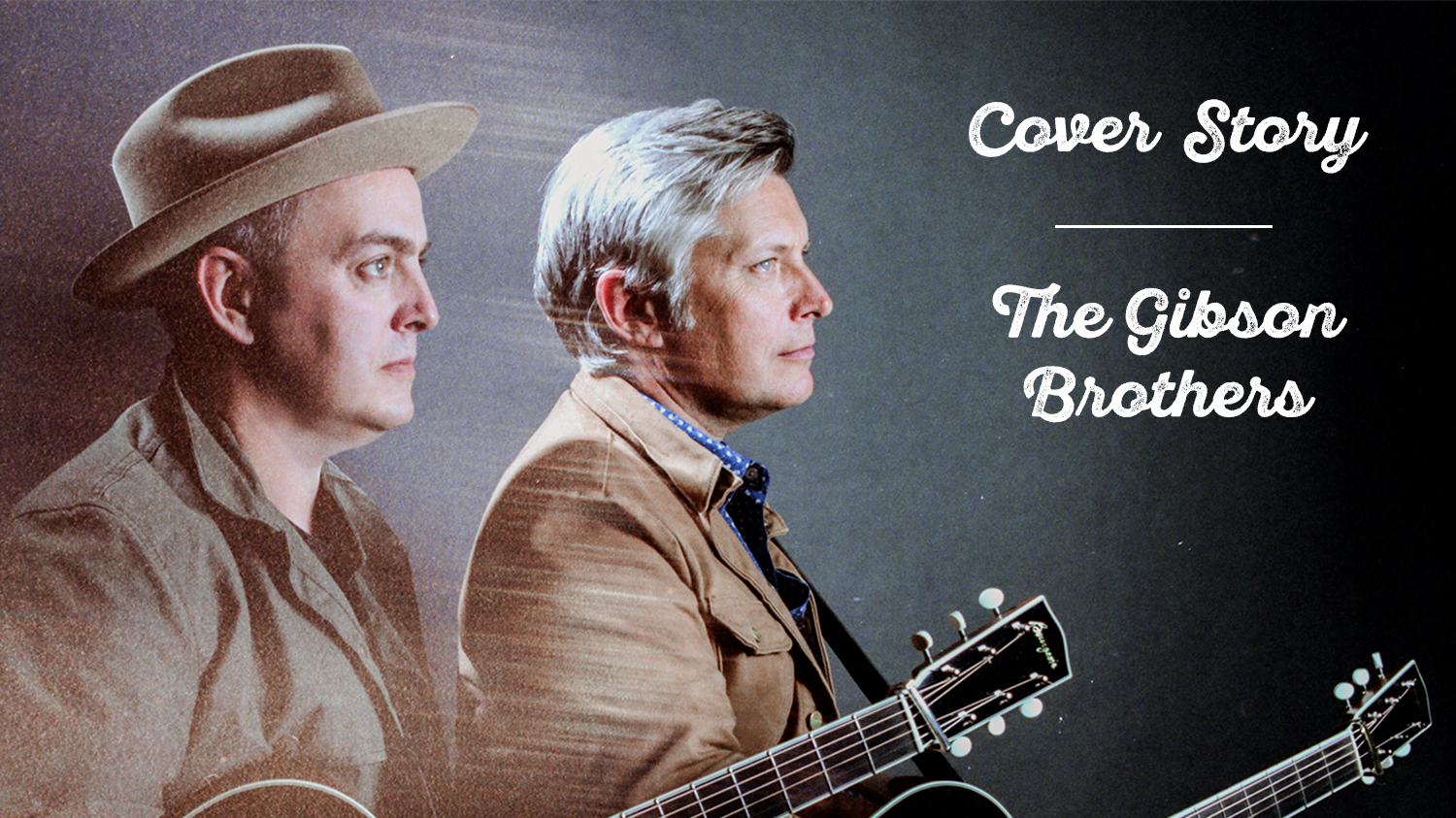
The Gibson Brothers Still Call It Music, Just Not Bluegrass

Featuring the stunning blood harmonies of days gone by and an abiding love for classic sounds, The Gibson Brothers long ago earned the respect of the bluegrass establishment – even scoring back-to-back wins as the International Bluegrass Music Association’s (IBMA) Entertainer of the Year in 2012 and 2013. Even so, they’ve always cultivated an adventurous spirit.

Having grown up on a dairy farm in the far north of New York State, sandwiched between the Adirondack Mountains and Quebec’s provincial border, their musical appetite was as varied as their home was removed from the bluegrass heartland – from Flatt & Scruggs to Celtic traditionals, and from Tom Petty and The Eagles to French-Canadian fiddle tunes. Throughout their two-decade recording career, The Gibson Brothers have subtly mixed bluegrass reverence with a hint of rock refreshment, but with their new album, Mockingbird, Eric and Leigh Gibson have taken a bold creative departure – at least for the time being.

Mockingbird’s 11 tracks still feature their celebrated close harmonies, but also pull heavily from the countrified world of late 60s/early 70s rock, all masterminded by producers Dan Auerbach (of The Black Keys) and David Ferguson (Johnny Cash’s American Recordings series). Freewheeling and fun, but also rooted in the crisp refinement of their past success, the boisterous rural funk of tracks like “Sweet Lucinda” stands alongside breezy Laurel-Canyon rock in “Cool Drink of Water,” while “Travelin’ Day” explores a trad-country template and R.E.M.’s seminal 90s hit “Everybody Hurts” becomes a swaying example of country R&B.

“The impetus behind the music was that we had done bluegrass our whole career, and when we got talking about the next record, we really just decided we didn’t want to do the same old thing again,” he explains. “It’s not because we were ashamed of what we were doing. We love what we do. There was no intention of anything. This all really happened naturally.”

“I think people love a band where they found them,” banjo-playing lead singer Eric Gibson adds. “But it was so exciting that we didn’t have time to think about ‘Oh, is this gonna upset people who are used to what we’ve done in the past?’ We just dove into the process and had a ball.”

Speaking with The Bluegrass Situation by phone, The Gibson Brothers dug into the inspiration for Mockingbird – and the creative avalanche that followed.

The obvious question here is “What made you want to get away from bluegrass?” But I feel like being from upstate New York might have had something to do with it. Is your approach to bluegrass a little different?

Leigh: We started learning how to play bluegrass when we were 11 and 12, and the guy who taught lessons at our local store played five-string banjo and guitar, among other things. Our father just happened to have both of those instruments, but he didn’t have a banjo because he was into Celtic music. So the guy we took lessons from taught Eric out of the Earl Scruggs method book, and I think that’s what pointed us in the direction of bluegrass.

Eric: Yeah, and once we heard Flatt & Scruggs it really drew us in, but if we hadn’t gotten into the Scruggs handbook, we probably would have played something else.

So what was the idea behind Mockingbird? Do you think of it as a rock and roll album?

Eric: There are definitely elements of rock and roll, but I hear country in it, too. I don’t know where it neatly fits. I’ve heard some people call it an Americana record, but on top of it all I hear the brother harmony. I think it’s that, weaving through a variety of styles.

Leigh: We wanted to do something different, and originally we had some tunes that didn’t fit neatly into the box of a bluegrass band. But we didn’t know we were gonna make a whole album. We were just looking to record some tracks.

Eric: And we ended up not recording any of the songs we were thinking about. We just wrote a bunch of new ones! … When we went to Nashville and started working with Dan Auerbach and David Ferguson, they asked us, “Do you wanna make a country record?” And we said, “Let’s just write songs and see what they need.” They handled the producing chores and did a beautiful job, and came up with sounds that I know I couldn’t have come up with.

You reached out to Ferguson to produce Mockingbird first, and I know he also engineered your first Nashville bluegrass album, Another Night of Waiting. Why was he at the top of the list for this project?

Leigh: [Laughs] Because he’s fun.

Eric: He’s a character and once you meet him you don’t forget him. We’d see him here or there and he’s been doing all kinds of big things in the last 20 years. He’s the one who engineered all those late-career Johnny Cash albums with Rick Rubin. He’s worked with U2, and lately he’s been working with Sturgill Simpson and Tyler Childers. We’d see him and he’d say, “Why don’t you come record some music with ol’ Ferg?”

Leigh: And I’d say “I don’t think we can afford you, Ferg.” And he’d be like, “You’re right, you can’t.” [Laughs]

Eric: But we were riding around DelFest on a golf cart with him in 2017 and he brought it up again, and by fall we were feeling a little restless. We kept listening to records that he worked on in the van, and I think Leigh was the one who said “Maybe we should call Ferg.” I said, “Why do you think I’ve been playing all these albums over and over again!”

So then Ferguson suggests bringing in Dan Auerbach from The Black Keys. Was that a surprise?

Leigh: I was floored, to be honest. Our manager called me and said, “Well, Ferg’s first action as your producer is to bring on another producer, and it’s Dan Auerbach.” [Laughs] So I called Eric and I couldn’t believe it.

Eric: What was funny was Leigh said, “Is this something you’d be interested in?” And I was like, “Duh!” This is the kind of thing that falls out of the sky and you have to go for it.

I read that the whole album was written and recorded in just a few days. Is that unusual for you?

Eric: Yeah, we’ve never worked like that before. … Every day it would be Leigh and Dan and me, plus one other writer. We didn’t go in with any melodies. I had a couple of lines jotted down but we hardly used any of those. A lot of it just came out of conversations we were having at Dan’s studio kitchen table, like “Travelin’ Day.” Dan said, “You know, Ferg lost his stepdad a few days ago,” and we got to talking about that. Ferg said, “He really showed us how it’s done. He was brave at the end.” We said, “Our dad was the same way.”

It’s interesting that you started off with something so heavy, because the album doesn’t come across heavy at all.

Eric: It’s not. That first song is pretty heavy, but there’s a lot of love songs on there, and we hadn’t written a lot of love songs in the past.

Leigh: Dan and Ferg showed us how to love. [Laughs]

“Love the Land” seems like a reference back to you roots on the farm. Where did that come from?

Eric: That was written with Joe Allen.

Leigh: With that song, obviously Eric and I have a background of shared memories, so we’re probably thinking about the same thing as we’re writing it. But Joe’s from Oklahoma and Dan’s from Ohio, so they’re thinking about different things. I remember talking to Dan and he said, “Man, I need to get outside more. I miss it.” It’s kind of funny that it’s wherever your head is at the time. If we sat down with the same guys tomorrow, something totally different would come out.

Eric: Dan loved that we kept showing up early. I’d apologize and Dan would say, “No, no, make yourselves at home.” So we’d go back to that kitchen area and he has this beautiful vinyl collection. We’d put on different records and I think sometimes they would influence the direction of the day. Like, that one has a very Don Williams feel, and I think we were listening to Don Williams that morning.

Why did you pull Mockingbird out of that song as the album title?

Eric: Just because that kept jumping out of my head. Joe came up with the line, something like “Mockingbird, if you haven’t heard / Never been a sound so sweet.” I loved that, so I actually Googled “mockingbird.” [Laughs] It turns out they can sing a variety of songs. They don’t just sing the same thing every day, and I thought “Wow, that’s kind of what we’re doing here.”

I’m sure you’ve been asked a million times, but did the cover of R.E.M.’s “Everybody Hurts” come out of left field?

Eric: Totally out of left field.

Leigh: Just before the last day of tracking, Dan said, “Think of a song from the 80s or 90s that everybody knows but no one would think of you doing.” So Eric and I talked about it on the way back to the hotel and came up with something by a female artist, and we got to the studio the next day and Ferg is like, “So what song did you choose?” We told him and he’s like, “Oh, I hate that song.” Allen Parker, who is Dan’s in-house engineer, said “Hey, how about ‘Everybody Hurts’?” I had heard the song – you couldn’t miss it if you’re a person my age – but I never in a million years would have thought about doing it. Those guys went and charted it, and it had such a comfortable, funky feel, that we were compelled to learn it.

Do you think your fans saw this album coming?

Eric: No. I mean, it’s a hard question. If they’ve really been paying attention to us over the years, it shouldn’t come as a big surprise because we’ve recorded stuff by Tom Petty and The Band and The Rolling Stones and Mark Knopfler. We have a variety of tastes.

Leigh: I think there are certain fans who see you as one thing, and if you do something else it can be upsetting, but no one twisted our arm to do this. It’s absolutely what we wanted to do and we’re proud of it, but we didn’t do this to offend anybody. If somebody is offended, there’s nothing we can really do about that except say, “Look at our track record and all this other stuff we’ve done that you really love. Why not give this a chance?”


Photo by Alysse Gafkjen

LISTEN: The Lied To’s, ‘Cruel World’

Artist: The Lied To’s
Hometown: Boston, MA
Song: “Cruel World”
Album: The Lesser of Two Evils
Release Date: May 11, 2018

In Their Words: “‘Cruel World’ is a full-fledged ‘F-U’ to life and its misfortunes. It’s more than just angry in its lyrics; it’s downright ornery. Musically, it borrows from country music’s original angry songwriter — Johnny Cash. We spit out lines together, like, ‘Now I’m staring out the window to see what’s coming next, popping pills to ease my troubles, then go dealin’ with my ex’ in a raw blues harmony that sounds like a three-minute fiery exorcism.” — Doug Kwartler


Photo credit: Doug Kwartler

MIXTAPE: John Murry’s Southern Soundtrack

When we needed a Mixtape selected for a Southern soundtrack, we knew John Murry was our guy. After all, he is related to William Faulkner.

The Connells — “Lay Me Down”

A song from a pair of North Carolina attorneys and their band about a child they knew who received a bicycle for his 11th birthday, rode it away from home on his own for the first time the next day, fell into a ditch, and broke both of his legs. It rained. The little guy slowly drowned as the water rose.

Lead Belly — “You Don’t Know My Mind”

Though he sang his way out of prison not once, but twice, I seriously doubt it was this song that he sang for his white captors to gain his release — a song now white-washed and remembered fully in circles that have kept a tradition alive, added meaning and mirth to his verses by adding theirs while reviving and performing his original verses. Kenny Brown is a legend in Mississippi. His earliest version, recorded for Fat Possum, is still a touchstone for me.

Furry Lewis — “Judge Harsh Blues”

Another song about law and (dis)order, written by a man who preferred to be known as the one-legged street sweeper of Beale Street in Memphis than a bluesman. The Rolling Stones and U2 both gave him gifts of expensive guitars while he was still alive, living at the top of Beale. He pawned both the day he got them. FTW. RIP, Furry. Universality? All arrestees will soon (or do now) know about 11 months, 29 days … I can’t sign my name either, Furry. I have never known it.

Vic Chesnutt — “Isadora Duncan”

To dream he was dancing with Isadora, the woman who unabashedly danced and — with a sash pulled by the dance and the dancer — first exposed her bare breast to a stupefied, stupefying, and puritanical public … and to write of that dream from a wheelchair. Dance on, Vic. What beauty, what timelessness, what a gift he gave us (though “we” weren’t ready, perhaps, to be exposed to his transcendent and righteous indignation and powerfully fragile poetry).

Big Star — “Holocaust”

In honour and in memoriam of LX Chilton and Chris Bell (though not on this recording), I intend to drop acid later today and report back to no one. Big Star did not simply pave the way for “jangly indie pop”; they created powerful, powerful music with the help of the legend that was Mr. Jim Dickinson (living on, mister!) despite the “obstacles” Ardent and an entire industry placed in their way. Memphis was dying, Elvis was dead, and those listening were “… a wasted breath, you’re a sad eye, you’re a holocaust.” Basketballs, deflated, served as percussion, as there’s no need for a formal drum kit (just ask Stephen Merritt — or anyone who stomps while singing — or any kid in a kitchen with pots and pans and wooden spoons) when heart, broken or bruised, and soul are captured on tape, just as living and gone ghosts on celluloid prints were. William Eggleston playing piano on “Sister Lovers”? Magic. All of it was magic. And this kind of magic terrifies. What happened to them in that place that necessitated this bit of “horror”? No one ever asks the right questions, I suppose.

Jim Dickinson — “Wild Bill Jones”

Jim was the moral compass Southern music needed after the Civil Rights Movement, after Elvis’s death, after Yankee A&R folks no longer visited Memphis — “the capital of Mississippi” — anymore in search of “that” thing the South breeds. The master had tamed the beautiful beast, or so the beautiful beast would have their “master” believe. Bob Frank wrote this one. Kinda. He’s the greatest songwriter you’ve never heard.

Lost Sounds — “Ship of Monsters”  (Not on Spotify)

Jay Reatard was an incredibly complicated person, a lover and a fighter, as sensitive as they come, capable of an empathy that can only lead — in our world — to those blood visions that took him from us too early. I slept most nights at the People’s Temple near the old 616, making prank calls with Jay and the Oscars, and playing shows as a fake straight-edge hardcore band while inebriated. This record was being recorded at the time in the space at the bottom of the warehouse. Scott Patterson and I would listen to “Scenic” on the roof. Abe and I would listen to “Art Bell” in the kitchen. Jay broke a fucker’s arm with a bass for trying to attack him (and us). To fear goodness is silly. But common now. Leaves many stranded. He fought. For me, this was a record that attacked the core of something I lived inside, the first to do so. It taught me. Jay and Alicja Trout are that decency and violence the world needed and still demands. A better vision. No wave. Wtf that means.

Johnny Cash — “Delia’s Gone”

So many have done this. Christ, he did it justice, though. There’s a chair, a gun, suspicion, paranoia, direct Biblical allusions, and death. There ya go.

O.V. Wright — “A Nickel and a Nail”

His life was cut short by heroin, and his career defined by an ever-lurking fear; but he sang of it so well — of the terror of a twilight existence.

Townes Van Zandt — “Waiting Around to Die”“

He wrote this song after he was married. His new bride came to collect him to go to their wedding reception. He needed to finish writing a song down. He did. This is it.

Bob Dylan — “Mississippi”

Written at Zebra Ranch in Mississippi, this song is one that tells a universal truth — at least for those of us from *that* universe. How does Bob know? Same place, different centuries … “I stayed in Mississippi a day too long,” and can’t figure out what sin I committed I must now atone for. He somehow knows place as decay. As stagnant water in motion.

Sparklehorse — “Rainmaker”

Mark Linkous … His life, his words, his melodies simply resonate with me and reverberate in eerie ways. The rainmaker IS coming. He wasn’t “like” Wm Blake; he was cut of the same cloth. Wm Blake was “like” him, too. How odd we are, to see time as distances measurable. “All you’ve got to do is look in the sky and wish.”

Neutral Milk Hotel — “King of Carrot Flowers Pt 2 & 3”

Jeff used to borrow my amp and wrestle — and bite — my 110-pound labrador. This song is one I think I knew before I heard it. It’s that brilliant. “… and dad would dream of all the different ways to die.”

Reigning Sound — “Can’t Hold On” (Not on Spotify)

If ever a man was born out of time, it’s Greg Cartwright. Just listen.

From BGS with Love: Non-Crappy Christmas Songs

Cynical though it may sound, a lot of holiday music is pretty crappy. Just turn on your local soft rock radio station and try withstanding the onslaught of ratings-boosting renditions of “Rudolph” that, these days, seem to begin sometime around Halloween. Save for “Feliz Navidad,” a couple of Carpenters’ tunes, and anything by Bing Crosby, it all pretty much sucks.

To the rescue we come with our exclusive playlist of Non-Crappy Christmas Songs.

We like this list because it has a little of everything: heartbreak, humor, sentiment, and sadness — plus a performance by one of the great folk artists of all time … Kermit the Frog. So, kick back and let Joni Mitchell and Johnny Cash, Brandi Carlile and Burl Ives serenade your holidays.

For those of you who like your carols a little more on the country side of the street, the ginormous Ultimate Country Christmas Playlist we did last year rocks pretty steady.


Photo credit: ginnerobot via Foter.com / CC BY-SA

Best of: Grand Ole Opry

When I think of country music, I think of the Grand Ole Opry. As far as I’m concerned, the two are synonyms. What began as the WSM Barn Dance radio show in 1925 has grown into an entire entertainment experience (their YouTube even has style videos), and solidified Nashville as the Country Music Capital. With its rich history, it is no wonder that aspiring country and bluegrass musicians across the globe dream of making an Opry debut. Here are five performances from “country’s most famous stage” for your enjoyment:

Johnny Cash — “Ring of Fire”

Let’s start off with this throwback video of Johnny Cash performing one of his most famous songs, “Ring of Fire,” at the Ryman Auditorium in 1968. While Cash had a tumultuous relationship with the Opry — and was even banned from the show for a period of time in the middle of his career — there is no doubt that his music is always a treat to listen to.

Carson Peters & Ricky Skaggs — “Blue Moon of Kentucky”

While the Opry is an integral part of country music’s rich history, it also ensures a bright future for country music by recognizing young talent. In this 2014 video, then 10-year-old Carson Peters, joined by seasoned Opry member Ricky Skaggs, breathes new life into Bill Monroe’s “Blue Moon of Kentucky.”

Alison Krauss & Jamey Johnson — “My Dixie Darlin’”

Every time Alison Krauss and Jamey Johnson make music together, the result is magical. While Johnson holds down the lead vocals beautifully on this stripped-down rendition of the Carter Family classic, “My Dixie Darlin’,” Krauss’s sweet harmonies and fiddle playing are icing on the cake.

Merle Haggard — “Workin’ Man Blues”

Country music legend Merle Haggard never became an Opry member, but he did perform there many times during his long career. Here, Haggard sings his anthem for the working class, “Workin’ Man Blues,” on the Opry in 1977. Make sure to stick around untill the end to catch an amazing guitar solo!

Steven Curtis Chapman & Ricky Skaggs — “What a Friend We Have in Jesus”

Many musicians across various genres have recorded and performed the old Christian hymn “What a Friend We Have in Jesus,” but this rendition by Steven Curtis Chapman and Ricky Skaggs is my favorite, by far. Chapman and Skaggs deliver the song with a certain tenderness that pairs perfectly with the already comforting lyrics of the song.

3×3: India Ramey on Drinking Caffeine, Deviling Eggs, and Enjoying Life

Artist: India Ramey
Hometown: Born in Rome, GA, but I claim Birmingham, AL
Latest Album: Snake Handler
Personal Nicknames: “Indie.” My grandaddy called me that. My sisters called me “Tush” (long story) and “Indiana Banana Copa Cabana.” There are many more, but in the interest of brevity …


#womansmarchonwashington

A post shared by India Ramey (@indiarameymusic) on

What song do you wish you had written?

“Hold On Hold On” by Neko Case

Who would be in your dream songwriter round?

Jason Isbell, Neko Case, Loretta Lynn, and Johnny Cash.

If you could only listen to one artist’s discography for the rest of your life, whose would you choose?

Neko Case. Without question.


My plans for the evening #mrbaby #bobsburgers #snoozefest #motherofkittens

A post shared by India Ramey (@indiarameymusic) on

How often do you do laundry?

Does that in include pulling stuff out of the dirty clothes bin and fluffing it in the dryer with a fabric softener sheet? Not often enough, clearly.

What was the last movie that you really loved?

Kill Bill (both)

If you could re-live one year of your life, which would it be and why?

Last year. I would have spent less time worrying and more time enjoying it.


Woa!! I made the Nashville Scene! That’s me to the left of the chicken!

A post shared by India Ramey (@indiarameymusic) on

What’s your go-to comfort food?

Biscuits.

Kombucha — love it or hate it?

I had to Google that. If it’s got caffeine, I’m out.

Mustard or mayo?

Both. You can’t make a decent deviled egg without both.


Photo credit: Greg Roth

3×3: Jade Bird on Boyfriends, Barbies, and the Bluebird

Artist: Jade Bird
Hometown: London, England
Latest Album: Something American
Personal Nicknames: Jadey … I wish I had something more imaginative … Birdmeister has a ring to it.

If you had to live the life of a character in a song, which song would you choose?

Ooh, great question! Every character seems to have such a bleak ending in the songs I like … I’ve always felt a strange connection to “Look at Miss Ohio.” There’s something about the character’s spirit running from having everything. I suppose any of the girls Ryan Adams or Hank Williams sing about — must be nice to be that doted upon.

Where would you most like to live or visit that you haven’t yet?

Nashville!! Although I’m on my way there soon to play the Bluebird with the incredible Brent Cobb, who I got to know on his tour this side of the Atlantic.

What was the last thing that made you really mad?

If it isn’t a boyfriend … I often get frustrated the most with myself. Generally, not doing the best I can at something really winds me up.


Brooklyn First photoshoot of the trip… as you can see it was a serious affair #jazzhands @shervinfoto

A post shared by Jade Bird (@jadebirdmusic) on

If you had to get a tattoo of someone’s face, who would it be?

Oh wow. I don’t know if I like ANYone that much. If it was do or die, someone with a pretty face, like James Dean or a young Leonardo DiCaprio *swoon*.

Whose career do you admire the most?

Patti Smith or Johnny Cash — both I think are totally authentic through their whole career. The amount of music they put into the world is so inspiring in different ways. Cash’s hundreds of songs and Smith’s real push toward a new sound at that time.

What are you reading right now?

In Cold Blood


What a first meal I literally died and went to heaven after this… #newyorknewyork

A post shared by Jade Bird (@jadebirdmusic) on

Are you an introvert or an extrovert?

Both, I think every artist has a way of being so. I love being on stage more than anything, yet sometimes I very much like to hold up in my room and hide … until food and water is needed … and sunlight. I’m a bit like a plant, really.

What’s your favorite culinary spice?

I can’t cook to save my life, so I’ll go with paprika. On a side note, I don’t like dill .. .or too much coriander — they used to put it on everything in my old school canteen — not good.

What was your favorite childhood toy?

Barbies were definitely leading, at some point, followed closely by a life-sized Siberian husky who I named Shadow. I did used to create an army of my grandma’s ornamental elephants. (You’ve opened a can of worms here!)


Photo credit: Shervin Lainez

LISTEN: Matt Jaffe and the Distractions, ‘Folsom Prison Blues’

Artist: Matt Jaffe and the Distractions
Hometown: San Francisco, CA
Song: “Folsom Prison Blues”
Album: California’s Burning
Release Date: March 3, 2017

In Their Words: “Johnny Cash is an empathetic badass who walks the walk, and ‘Folsom Prison Blues’ is a blueprint for our record. The Tennessee Three’s boom-chicka-boom is basically proto-cowpunk — is that a mainstream genre yet? — and the lyrics cover everything from prison to train travel to California to hope amidst despair, all in four short verses. Besides a self-destructive urge to carbon date our music, we wanted to give folks some context for what we do, and here’s Square One: Cash at Folsom.” — Matt Jaffe


Photo credit: Edward Saenz

Matt Urmy, ‘We Must Believe in Magic’

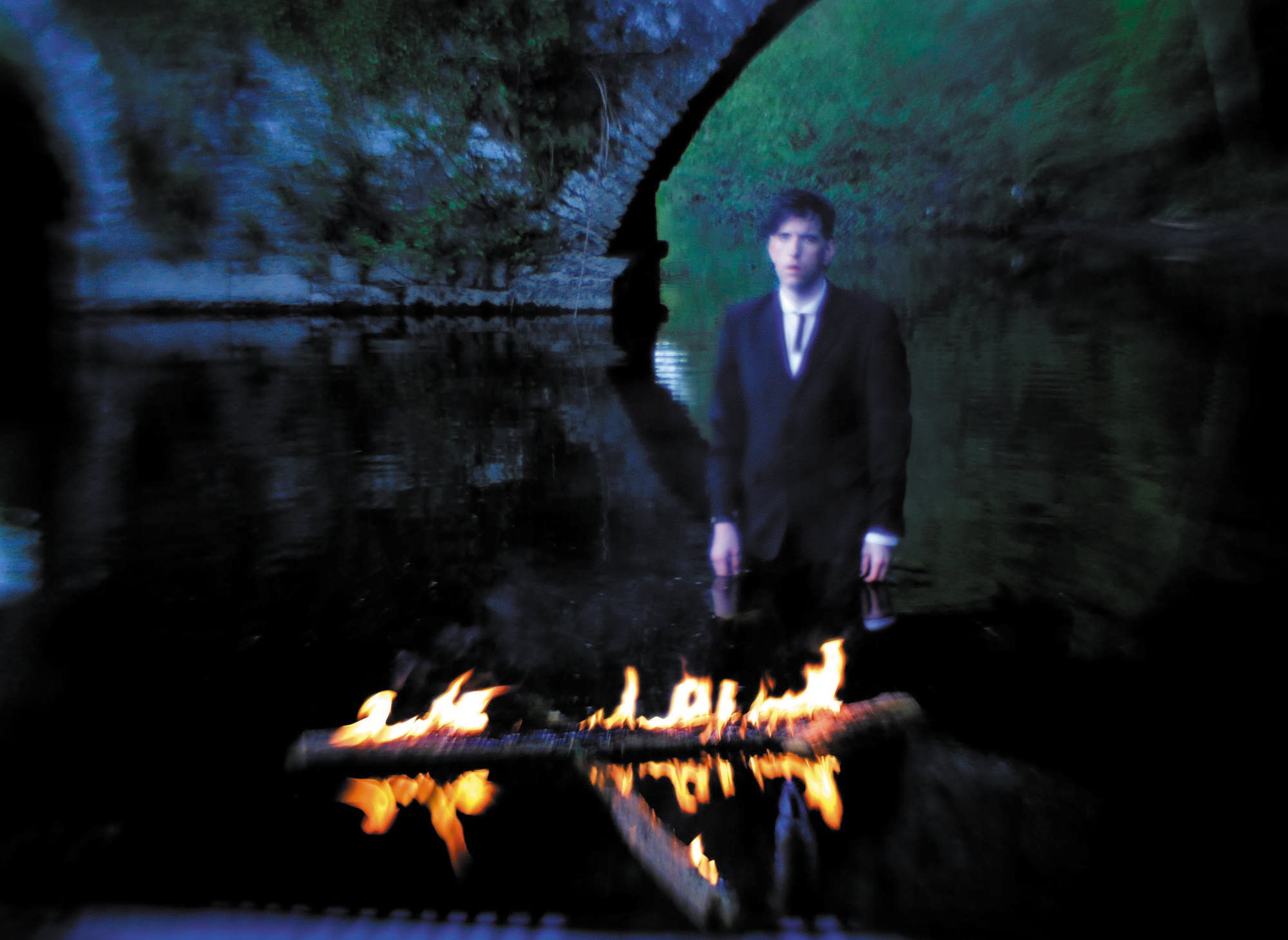
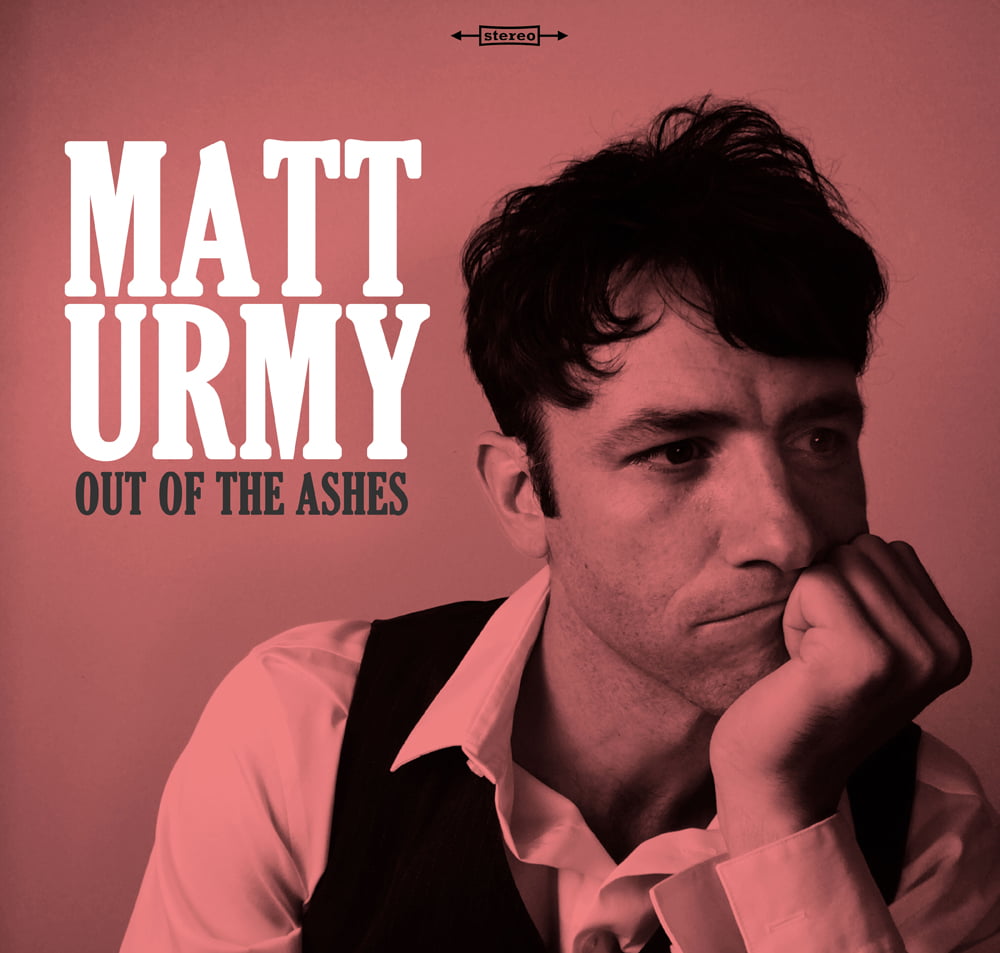
The longevity of music is predicated on the consistent passing of the baton — transferring sonic power and rich histories from one artist to another. Songs are not things that just spontaneously generate from the sky, anyway: Every note has a genetic component of one before it, every melody a mother or father. Nashville’s Matt Urmy knows this well. His new album, Out of the Ashes, was co-produced by the late Cowboy Jack Clement. But it’s also a testament to how fragile the art of creating can be. After the two made the bulk of Urmy’s record at Clement’s Cowboy Arms Hotel & Recording Spa, it suffered a tragic fire, and everything they built was assumed to have gone up in flames. A year later, the remnants surfaced — quite literally out of the ashes.

Urmy’s “We Must Believe In Magic,” recorded after the fire to help complete the newly unearthed album, was originally released by Johnny Cash, and features Clement’s sturdy and soothing vocals. The lyrics — and the majestic chug conjured up in this ethereal rendition — are a message to never lose hope when it feels like your world (or the fruits of your artistic labor) are burning. “We must believe in magic. We must believe in the guiding hand,” they sing. “If you believe in magic, you’ll have the universe at your command.” Clement passed away soon after at the age of 82, leaving a lifetime of work behind — and a guiding hand to help the new generation of musicians keep the magic alive.

Squared Roots: Johnnyswim on the Perfect Imperfections of Johnny Cash

Through wars with authority and battles with addiction, Johnny Cash carved out a place in musical history for himself that is the stuff of legends. The rebellion and redemption, as well as the humor and humility, that run through his songs resonated — and still resonate — with fans around the world who have bought more than 90 million records. An Arkansas native, Cash grew up listening to the Carter Family, spent time in the U.S. Air Force, found his way into music while in the service, got married just out of the service, struggled with addiction and affairs, had four daughters, got divorced, and, eventually, married the love of his life, June Carter, with whom he had one son. In the midst of all that, the “Man in Black” made some of the most popular and influential music of the 20th century. He passed away in 2003, four months after June’s own passing. 

For the husband-wife duo of Johnnyswim (comprised of Abner Ramirez and Amanda Sudano) Cash represents an artistic archetype worth emulating. As such, for the 12 years they’ve been making music together, Ramirez and Sudano have blazed a musical path that similarly reflects the lives they live — lives of faith, family, love, and wonder. Johnnyswim’s deep passion and immeasurable joy for their work is most evident in their live shows, where the audience reflects it all right back at them. There’s no doubt Johnny would have loved their jaunt into the balcony of Ryman Auditorium to be among those fans at a recent Nashville show. It was right out of the Cash playbook.         

Usually, I can connect the dots for myself on these picks. Other than the fact that he has quite a few songs the drunks all sing, help me get from Johnnyswim to Johnny Cash.

Abner Ramirez: [Laughs] Amanda and I … the influence our parents have given us from their varying backgrounds into what we’re doing today is the desire to do the thing we are most passionate about — to live for that and that alone. The trajectory is not record sales or moving up in a company. The trajectory is “how close are you to the mark of doing what you’re truly passionate about.” And I think, if there’s an artist I can point to that, in all his albums and the interviews I’ve seen him in, it seems like he had that true north trajectory. And that’s, to me, the most drawing facet of any artist.

There’s the … I want to say “no bullshit” but there’s a better way to say it. There’s that gritty, imperfect … I mean, us being on Conan and Amanda forgetting the lyrics and me singing a little bit sharp because I was so excited and nervous, that’s some of my favorite stuff because it’s real. Otherwise, have a computer go do it and put a pretty face on it. Anybody, with enough money, can be beautiful. It’s not about doing something perfect or exactly beautiful. It’s about being honest. And, sometimes, the only place you see that honesty is in the imperfections. That drives us toward our passions. We’re not trying to be perfect. We’re trying to be passionate. And I think Johnny Cash was one of the most passionate artists I’ve ever listened to.

Amanda Sudano: On a personal level, Johnny Cash was one of the very first artists that we bonded over when we first met and were writing songs. We would listen to him all the time, riding around town, singing along, being fully absorbed in the stories of each song. He was kind of our joint one true love. He was our first threesome. [Laughs]

[Laughs] That’s AWEsome.

AR: [Laughs] Oh, God! There have been none since. That should be said.

AS: [Laughs] First and only!

So, Abner, when you were parking cars at the Palms [in downtown Nashville], how often did you sneak down to the Johnny Cash Museum?

AR: You know what? It wasn’t there, when I was at the Palms. I’m older than I’d like to be. [Laughs]

[Laughs] Right on. Of all the different facets and eras of Johnny, is there one that you guys gravitate more toward?

AR: I think it’s seasonal for us. Ask me that question again in six months or six days, and I’d give you a different answer. But, for me, I love the Folsom Prison moment, when he’s established as a worldwide star and he’s recording this album. And I’m sure it was his choice to do it at the prison. I love the moment when he’s saying, “The record label wants me to do this thing and they’re filming it, and they want me to do this and that. And the only thing that matters is that you like what I’m doing and I like what I’m doing! So screw them!”

There’s something about that attitude of bucking the system … even though, of course, we’re in the beginnings of our career, we’re just getting started … there’s something about that attitude of not submitting to every opinion that a suit has for you that really is still in fashion in 2017 because, being people that are in pursuit on the grind, for so many of us young artists, that seems like the only wise decision — to agree with somebody who has a larger catalog or more experience — just to submit. Many times it is the wise thing, but it’s not the only wise thing.

And having your own compass inside your chest that burns when you’re going the right way — how important that is — that’s something that, right now, is so important to us. So that part of his career when he’s famous, but he’s still gritty and doing the wrong thing a lot of the time …

AS: If you listen to his live recordings, you get a sense that it’s not about the recording. It’s about the people he’s in front of. I feel like that’s so important. Now, most of the time with the shows you go to, it feels like you’re kind of watching them on TV. It feels like, “This is entertainment. This is a performance. They’re up on stage. We’re down here.” I think that’s something we’ve always tried to copy, really, that sense of him being one with the audience. It’s not just him on stage for you to ogle at. It’s him being part of you and you being part of him, and “we’re all in this together.” I feel like you get that sense in every bit of his live recordings, which I love so much. It’s really helped us.

A lot of that goes with what Abner said before: It’s not about perfection. It’s about the moment. If you can focus on that and quit worrying about perfection so much and worry more about being present, then the music becomes more alive than it could ever be if you were just playing the notes. Anybody can just play the notes, but let’s have some fun!

That being said, I do love the later years. I feel like, in every song, there is this bittersweet sadness of a man who has loved and lost, especially after June was gone. Those last recordings, there’s something so powerful about that tone of his voice. You can hear that he’s at the end of his life. You can hear that he’s lost his best friend. And there’s something so powerful about that. I think, especially in times when we’ve been going through loss and dealing with our own hurt, it’s helped us identify it and make the bitter a little sweeter, just hearing it in his voice. I have days when I just want to listen to the very end of Johnny Cash, the very last record of Johnny Cash’s, because that seems appropriate.

I’m glad you brought June into it because I think she’s an important piece to not lose in all of this, particularly because of your relationship. Through that lens, what do you see that June brought to Johnny that he wouldn’t have had on his own?

AS: What didn’t she bring that he wouldn’t have had?! She stabilized him in a lot of ways. I imagine them being much like me and Abner — obviously, on a very different spectrum. But with June coming from a family of musicians … and I come from a family of musicians … and being able to harness some of that passion. We had a friend that once said something like Abner was the passion, the fire, and I was the intimacy. And that was something that made us special because Abner has all this fire, and mine was smaller. It was a smaller flame. But it was that intimacy that made us, together, kind of come alive.

And I feel like you hear that … you hear something different in Johnny, post-June. For the rest of his life, she was able to bring out the more subtle flavors of him. There was just a sensibility of someone who’d been in music and wasn’t one of those girls who was starry-eyed at him all the time. That kind of balanced him out.

It’s important to not let the guys get too cocky about it all. You can’t fawn over them all the time.

AR: That’s right. Especially when they don’t have the right to be too cocky about it.

[Laughs] Especially when they sing a little bit sharp on Conan .

AR: [Both laugh] That’s exactly right!

Do you guys feel like the legacy and legend of Johnny — and even his music — if he hadn’t lived such a raucous life, it wouldn’t have been the same. What do you think it would be?

AR: Of course not. No.

AS: He wouldn’t have had the stories.

AR: He wouldn’t have had the stories or the honest place to come from when he was telling the stories. You learn the lesson, like you learn through loss, that, yes, it sucks. That is a statement on its own: When you lose somebody, when there’s a rough patch, whatever it might be, it really is the thing that makes the rest of your life take flavor. Picasso says the painting, on its own, isn’t the most valuable part. It’s the plane that it’s in, the dimensions that you put it in, because there are limitations — the frame gives it limitations. And it’s what you do within those limitations that make it beautiful. If there were no limits, there wouldn’t be beauty. And I think that’s what loss and suffering and hard times do to us: They put a frame around a canvas and it’s what we do within that frame that makes it beautiful. If it were limitless happiness, I think you’d be limited in the true beauty you could create.

Seeing as you’ve stated quite clearly that you “want to write a song the drunks all sing,” which of Johnny’s songs do you guys wish you’d written?

AR: “Sam Hall.”

AS: [Laughs] I was gonna say “Sam Hall”!

AR: [Laughs] I don’t think he even wrote it! But that’s my favorite Johnny Cash song. I think it’s both of ours.

AS: Whenever we’re on a road trip, that’s the one where we’re like … you know when you get a little bit delirious? There’s always a point on a road trip, right as you’re pulling up to where you’re going or, at some point, you’re going to fall asleep and you decide to double-down and try to stay awake? That’s our song. We’ve sung that song so many times on the road, so that would be the one that I secretly wish we would’ve written.

AR: [Sings] “The sheriff, he come to, he come to. The sheriff, he come to, he come to. The sheriff, he come to, he said, ‘Sam, how are you?’ I said, ‘Sheriff, how are you?’ ‘Damn your eyes!’” [Laughs]

AS: [Laughs] The only way you could write that song and sing it as legitimately as he did is if you really mean it and fully commit. Because it’s so ridiculous. But he does it. And I want to have that sort of commitment.

It’s like “Boy Named Sue.” You have to give yourself over to the whole thing.

AS: Uh huh. Yeah!