The Mythology and Alchemy of Thomm Jutz

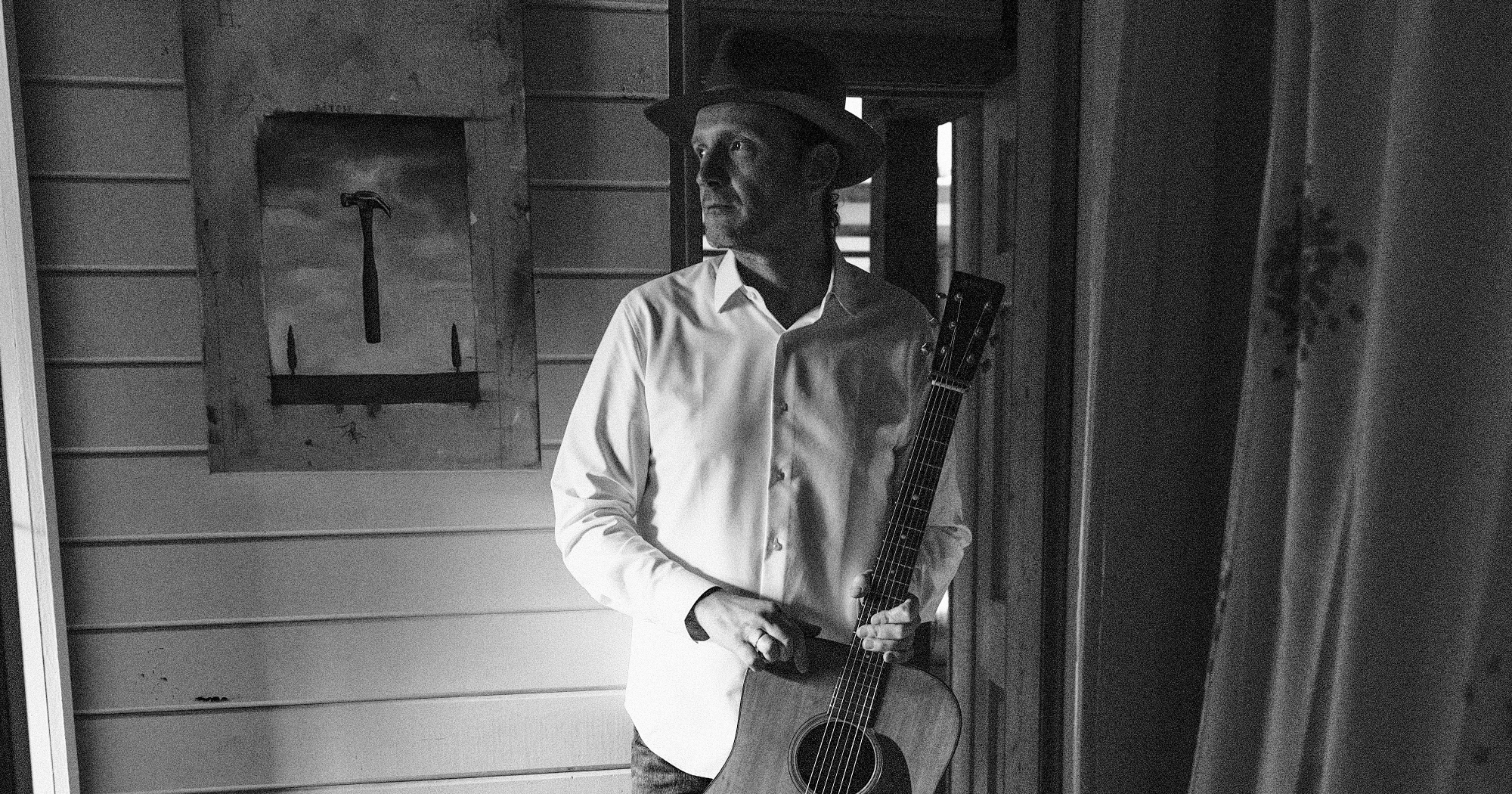
Thomm Jutz has worked with a wide cast of characters since moving to Nashville in the early 2000s – John Prine, Nanci Griffith, Todd Snider, Billy Strings, and the SteelDrivers’ Tammy Rogers. But on his latest record, Ring-A-Bellin’, he strived to capture each song with the smallest musical unit possible.

The result of the 18-track album, released April 3, is a distinctly timeless vibe that feels just as much rooted to the present day as it does the mid-1900s or Civil War era, due to its recurring themes of history, mythology, and working with your hands. From self improvement (“Sharpen Your Knife”) to using natural disaster as a metaphor for perseverance (“Holy Mother Mountain”), the mastery that comes with time (“The Hammer And The Anvil”) and becoming more grounded in yourself (“Settle Me Down”), the GRAMMY-nominated transplant from Germany waxes philosophical and takes listeners back to a period long before we walked the Earth.

According to Jutz, the approach – recording with only a small group of people all in the same room not wearing headphones – is his way of replicating the process for how musicians would’ve recorded a century ago.

“This is how I want to make music right now,” he declares. “I don’t want to make a layered record – not because there’s anything wrong with that, it’s just not what I’m feeling at the moment. It’s like saying I don’t want to use red in my paintings right now, because I’ve used enough of it already.”

During a lengthy conversation with BGS at his Belmont office on Music Row, Jutz spoke about his concept of home, how psychology and mythology informed Ring-A-Bellin’, and a companion book that takes listeners even further into the world of his 18 new songs.

You’re releasing this album with a companion book. Tell me a little about what’s inside and why you decided to adopt this approach?

Thomm Jutz: It’s more and more important to create some kind of parallel narrative to the music nowadays. Vinyl has seen a resurgence over the last couple years, but it is not practical for me to take on my one trip to Europe every year. Because of that, I wanted to create something that was still a larger format, fun to hold, and had all the liner notes present without being something so small it’s hard to read.

I’ve also always enjoyed writing and reading – especially during my last 10 years as an instructor at Belmont – so I wanted to articulate some of those thoughts as they relate to the songs on this record in a longer form. When I got to working on it I quickly realized I was in over my head with the graphic design aspect of it, so I consulted my friend Gina Meredith. I just told her what I wanted artwork for and commissioned various folks to create pieces for each song. But rather than tell them what to make, I just sent them the music and had them use the songs as their creative prompts. Because of that I don’t always see the linear connection between the songs and the graphics that were made, but that’s also my favorite part.

A lot of my thoughts on this record revolve around analytic and Jungian psychology, alchemy and things like that, which are difficult to talk about in a tiny CD booklet, so I wanted to do something that allowed for a more longform format.

Overall, this record has a timeless feel – it could be (and is) from 2026, but if I didn’t know any better I wouldn’t second guess if someone told me it was from the mid-1900s or Civil War era as well, especially songs like “Sharpen Your Knife” and “The Hammer And The Anvil.” What are your thoughts on the vibe you were able to conjure up here?

I’m a traditionalist at heart, so everything I do is always trying to bring something new to the way I perceive what came before us, whether that’s lyrically, thematically, or in the recording process – which in this case was mostly all done live. I just think there tends to be more mystery with that music. There’s new music that does that too, but it’s easier for me to find that in old music because the cultural context can be studied since it’s not as close to my own lived experience. No matter how much I listen to or read about Charley Patton, I’ll never understand what he fully experienced because I was never there.

Regarding the songs you mentioned, both talk about people working with their hands, but they’re also metaphors for working on yourself – like you are the hammer, you are the anvil, you are the iron that’s being forged. Those mantras are rooted in human thought and analytical psychology, which is something I’ve dealt with and thought about a lot over the last 15 years. Particularly in terms of how mythology and history go together, and how understood the former is.

On one hand, some people think a myth is a lie and others say a myth is a fact, but both are wrong. A myth is a metaphor and must be understood as one. These songs are an effort to create a mythological framework that is a mirror image of my development as a person and artist. If you ever want to develop as an artist, you must develop as a person first.

With so much of this record wrapped up in concepts like history, psychology, and mythology, what’s the timeline for bringing the 18 songs on it to life?

These songs came from a period of about three years, but when I started I wasn’t setting out to make a record – I just wanted to experiment with a couple things. I had a few songs that I co-wrote with my friend Adam Wright that I wanted to test out with only me singing and playing and Mark Fain on bass. And it worked out really well. As I got fascinated with that process I began looking through my catalog and noticed that the songs which spoke to me the most were all ones that formed a narrative arc.

However, it’s not an autobiographical record that says, “I was born here,” “I did this,” and “This is how it made me feel.” But more so, one that explores spiritual development. I’m not interested in autobiographical songwriting. I find it very claustrophobic how you have to spell everything out to the listener. When you do that you’re shutting them out with nothing to do, which has me opting for a more open approach. A song is only ever truly finished when the listener interprets it for themselves, not with what the person who wrote it intended.

One of the songs on Ring-A-Bellin’ that is tied to more recent events is “Holy Mother Mountain,” which was inspired by the fallout of Hurricane Helene, specifically in Western North Carolina. But it’s also a metaphor for overcoming adversity. Care to explain?

That song is a good example of how writing with someone else – in this case Mando Saenz – can profoundly shape an idea. I remember Helene happening and having this line “Holy Mother Mountain” appear to me out of nowhere. From then on I couldn’t stop thinking about it, so I brought it to a writing session with him and said I didn’t know what to do with it. Then the co-writing dance ensued, with him taking the lead, followed by me for a bit, until it started becoming much clearer that there was no way to move forward without it being about Hurricane Helene somehow.

While it was inspired by that, the song is also about overcoming adversity and understanding that it’s going to happen again. Just because you live through Helene doesn’t mean there’s not another storm coming right behind it. If that storm showed us anything, it’s that perceived climate safety in Appalachia is not true. Also, “mother” and “mountain” are not just a nice alliteration, but there’s also a feminine quality about a mountain. An inverted mountain is a valley – or a place you can seek refuge in – and if you go on top of a mountain, you might find yourself closer to some kind of spiritual awareness.

The song is much more a collection of images that relate to the archetypal images of mother and mountain. Maybe even the word “holy” in the title has something to do with the fact of how little modernity treats nature with respect. Maybe that’s what we need to do – not bring offerings, but bring out attention to it instead of riding around and abusing it like crazy.

On “Too Many Walls” you sing about the idea of home. Given that you moved to the states 25 years ago from Germany, what is “home” to you?

Home and time are two of the biggest themes we write about, and it’s longing that connects the two – longing for home, longing to belong somewhere, longing to live in a different period of time, longing to get over something. Over the last couple years, I’ve also started thinking more about how strange a thing it is to build a house, because you’re just enclosing space that’s been there all along. You’re building and calling it something that wasn’t there before, but the land was always there. It’s a strange construct, and at the same time we need shelter.

From an early age I didn’t feel at home where I was because I longed for a place where music was part of the everyday lived experience. But in Germany after 1945 that was completely out of the picture, because the Nazi regime had completely and absurdly abused any sense of folklore. Since I was longing for an environment where people played music, I went to Ireland for the first time with my wife when I was 18 since it was much closer than coming [to the United States], which we couldn’t afford at the time. I was amazed by the music coming out of the pubs there – it felt so natural, like it was rising out of the Earth.

That fascination carried over into my love of American roots music. In that sense, “home” is where I feel connected to a place through music since that’s my main way of expressing myself. Additionally, southwestern Appalachia and the Black Forest that I’m from in Germany can look astonishingly similar sometimes, so when I go back to visit my parents I occasionally feel like I’m navigating the mountains around Johnson City, [Tennessee]. When I’m in Johnson City I sometimes imagine I’m back in Germany. But Appalachia has more importance to me now because it’s where I live and long to be. If it weren’t for all the writing I do in Nashville and my work at Belmont, I’d be in Appalachia fulltime, because it just speaks to me. When I haven’t been in a while I can start feeling something deep inside me – it’s not a heaviness, but a feeling of “I just really wanna fucking go.” [Laughs]

What has bringing this record to life taught you about yourself?

It’s taught me that I know nothing about graphic design and should always let someone else handle that instead. [Laughs]

In all seriousness, it has taught me that while I don’t consider myself a great singer, I can still enjoy the way I deliver a song if I do it correctly. It’s also taught me that while I have great deficiencies as a guitar player, I do enjoy the way I play guitar and this record, where I’m keenly aware of everything wrong with my playing. Even Tony Rice said that about his playing.

It’s not a sense of having completed my journey as a guitar player, but quite the opposite. It’s more like I’m aware of what’s missing. It’s also taught me that staying on the path of creating and writing a lot. You have to be in it for the long game in today’s environment and be doing it for the right reasons or you’ll run yourself ragged. I already understood that a little bit, but now I understand it even better. Maybe that’s what it’s all about – gaining a little awareness and moving on.


Photo Credit: Don VanCleave

The Station Inn Earns an Exhibit at the Country Music Hall of Fame and Museum

The humble appearance of the Station Inn could never give away the enormity of its legacy and importance to bluegrass music. Nestled between skyscrapers in an ever-growing city, a single story cinder-block building with its windows painted shut sticks out as a relic from the past — when the Urban Outfitters across the street used to be an empty field of waist-high grass.

For nearly 50 years “the World Famous” Station Inn has played a pivotal role in bluegrass as both a venue and community hub, drawing people to Nashville and making connections that had a major impact on the music. Through the rest of 2021, The Country Music Hall of Fame and Museum will honor and present the history and legacy of the venue in their exhibit The Station Inn: Bluegrass Beacon.

“The main reason that we wanted to do this exhibit is because the Station is such a vital and important part of not just Nashville music history, but of American music history,” says Peter Cooper, one of the curators of the new exhibit. The Station Inn has a larger-than-life reputation in the bluegrass community, but this new exhibit endeavors to highlight both the importance of the venue’s history and its welcoming atmosphere.

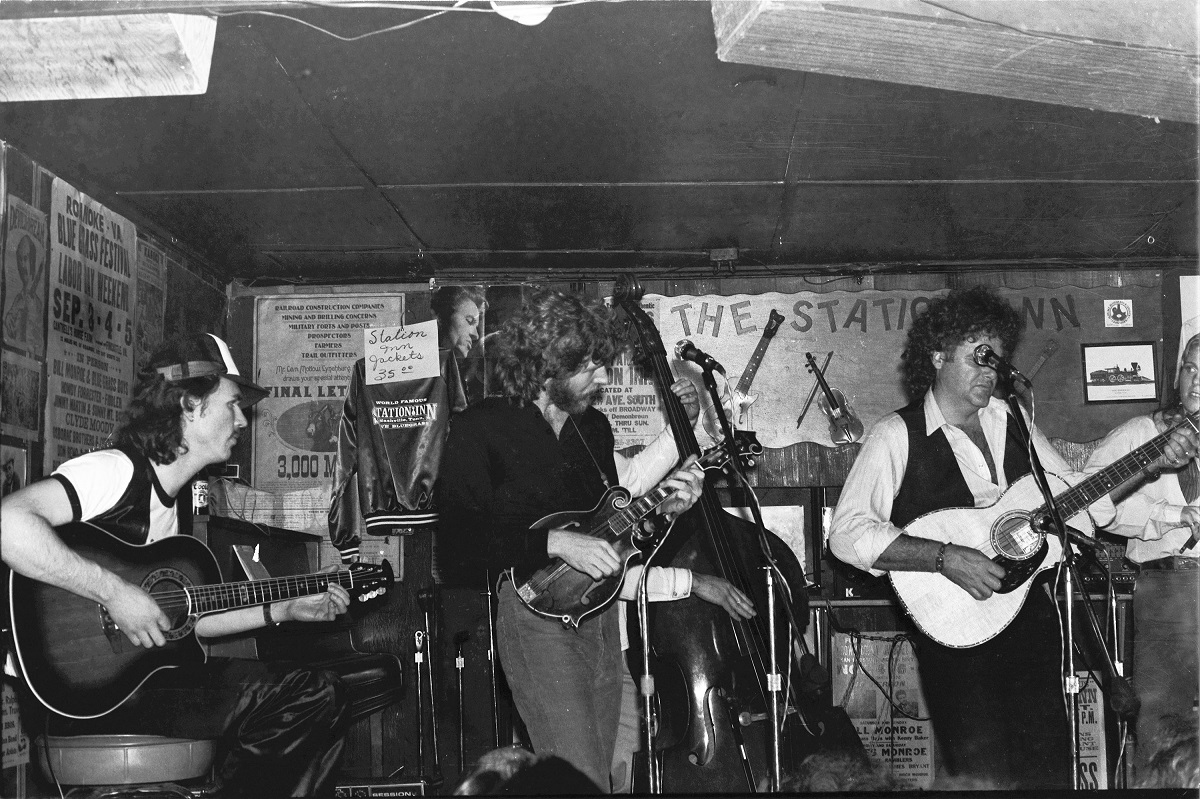
During the mid-1980s, adventurous singer-songwriter and musician Peter Rowan assembled all-star groups he dubbed “Crucial Country” for a series of shows that created a buzz amongst progressive roots music fans and players. In this photo, Rowan (right) is joined by Mark O’Connor on guitar and Sam Bush on mandolin. Photo: Charmaine Latham

It was founded in 1974 by a group of bluegrass musicians and singers — Bob and Ingrid Fowler, Marty and Charmaine Lanham, Jim Bornstein, and Red and Bird Lee Smith — who wanted to provide their fellow musicians and fans with a venue where they could play and hear bluegrass music. At that time the Station was more of a clubhouse where the owners functioned as the house band and guests would come up to jam. They moved to the current location in 1978; three years later, the club was bought by J.T. Gray, who at the time was driving Jimmy Martin’s tour bus.

Gray, who would go on to be inducted into the Bluegrass Hall of Fame in 2020 and was given a lifetime achievement award by the Southeast Regional Folk Alliance, began booking national touring acts to perform. It would be easy and accurate to show why the Inn is significant by pointing to the artists who have played there, including Bill Monroe, the Stanley Brothers, Vince Gill, Alison Krauss, and essentially any other important name in bluegrass. But the clubhouse atmosphere always remained. Countless (as in absolutely too many to count) threads of bluegrass history, both well-known and overlooked, can all be traced back to chance meetings at the Station Inn. J.T. Gray fostered a welcoming atmosphere that led to many locals and visitors from out of town to meet there, including mandolinist Mike Compton.

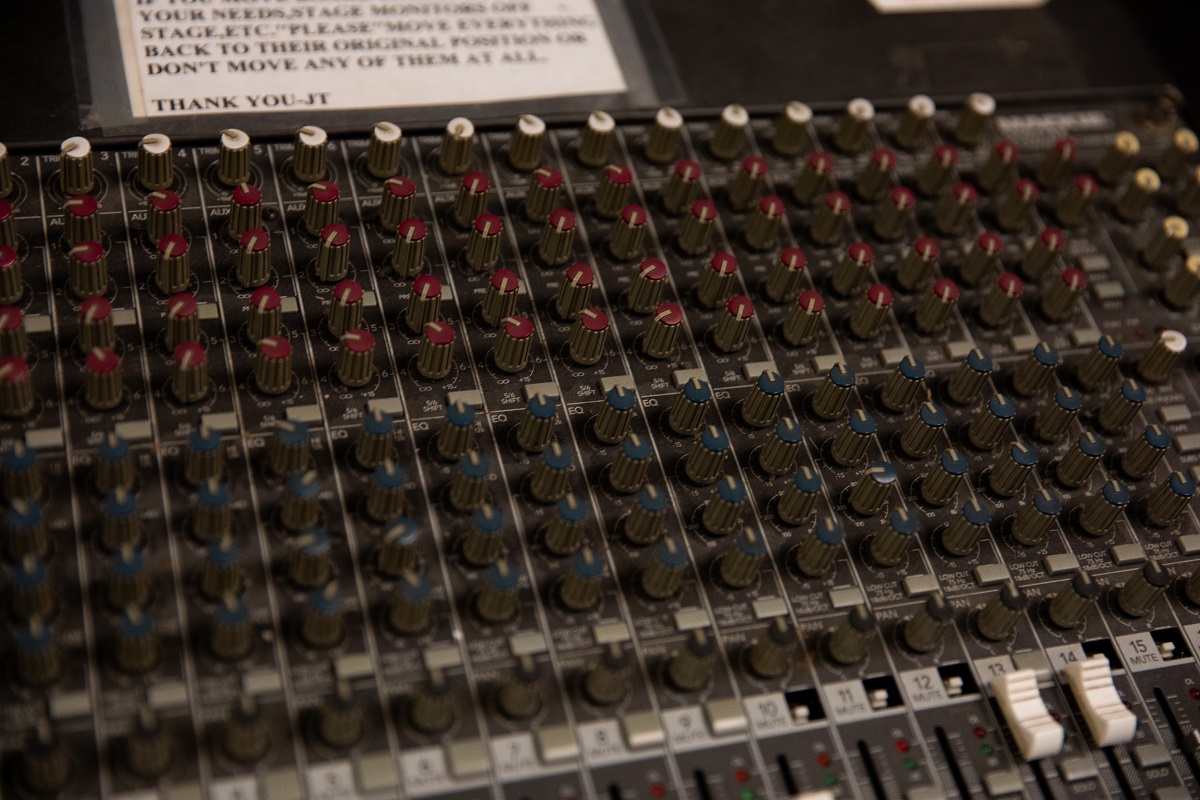
The venue’s sound-mixing console described by Gray as “the first piece of modern sound equipment we ever bought”

“I rode up [to Nashville] with Raymond Huffmaster, a bluegrass guy from Meridian, Mississippi, where I’m from, because I’d been hanging around him trying to learn how to play,” Compton says. They visited the bluegrass spots in town including the Station Inn, and Compton recalls after heading home, “Pat Enright got in touch with me and said they were starting a band and asked if I wanted to join. So I moved [to Nashville] in 1977 and moved in with J.T. Gray.”

Mike and Pat would continue playing together and later go on to form the legendary Nashville Bluegrass Band, which became a staple act at the Station Inn. A predecessor to that award-winning band was performing at the Station the first time future bluegrass star, Kathy Chiavola, came to town in 1979.

“When that door opened, the room was packed and I saw a vision of heaven,” she says, recalling that first night. “I heard these two voices, Alan [O’Bryant] and Pat [Enright], in their prime. And I lost it. I said, ‘OK. I’m moving here.’ There was a notice on the Station Inn bulletin board that a band of women playing bluegrass were looking for a roommate.” That band turned out to be the Bushwhackers, which featured bluegrass pioneers Susie Monick and Ginger Boatwright. Chiavola eventually joined the Bushwhackers playing bass and singing lead and harmony until Doug Dillard moved to Nashville. As the banjo player from the Dillards (who were famous for playing the Darlings on The Andy Griffith Show), Dillard put a band together and asked Ginger Boatwright to join, and about a year later asked Chiavola, too. Both the Bushwhackers and the Doug Dillard Band would frequently perform at the Station.

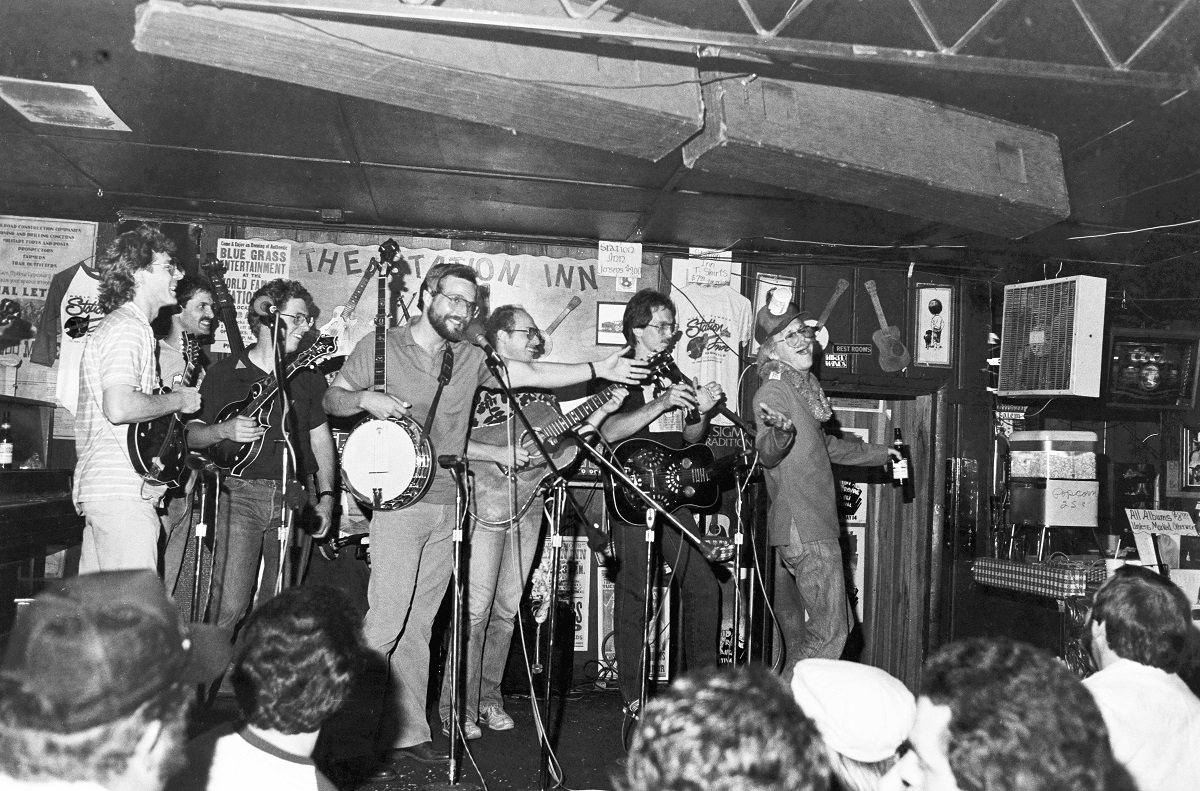
Vocalist, bones player, and madcap entertainer Ed Dye (far right) was a colorful presence at the Station Inn during the 1980s and early 90s. He assembled the Nashville Jug Band with a cast of stellar Nashville musicians from rock, jazz, and bluegrass backgrounds, and hosted wildly unpredictable shows. In this photo, he takes the stage with (from left): Sam Bush, Mark Schatz, Tim O’Brien, Alan O’Bryant, David Grier, and Jerry Douglas. Photo: Charmaine Lanham

Chiavola eventually moved into a duplex next to bluegrass bassist Mark Schatz. Together, they would often play the Station Inn with Charlie Cushman, Stuart Duncan, and Bobby Clark as part of a band called The Satellites. Other times, Chiavola would perform at the Inn with an ensemble called the Lucky Dogs which featured Jerry Douglas, Béla Fleck, Edgar Meyer (who had just moved to town), and sometimes Sam Bush or Mark O’Connor.

“It was beyond belief,” she says. “Sometimes I remember being on stage at the Station and listening to those guys play. I thought it was the most heavenly sound — I can’t even describe it to you. It was perfect music with so much feeling. You could hear a pin drop. It was so beautiful.”

Schatz, on the other hand, often performed at the Station with Mike Compton as part of John Hartford’s band. Hartford had moved back to Nashville to form a string band after a successful songwriting career in L.A. That California connection later landed him the contract to help with the music for the Coen Brothers’ massively successful O Brother, Where Art Thou? Compton’s 1927 Gibson A-Jr. model mandolin, which he played with the Nashville Bluegrass Band, in John Hartford’s string band, and on the O Brother soundtrack, is included in the new exhibit.

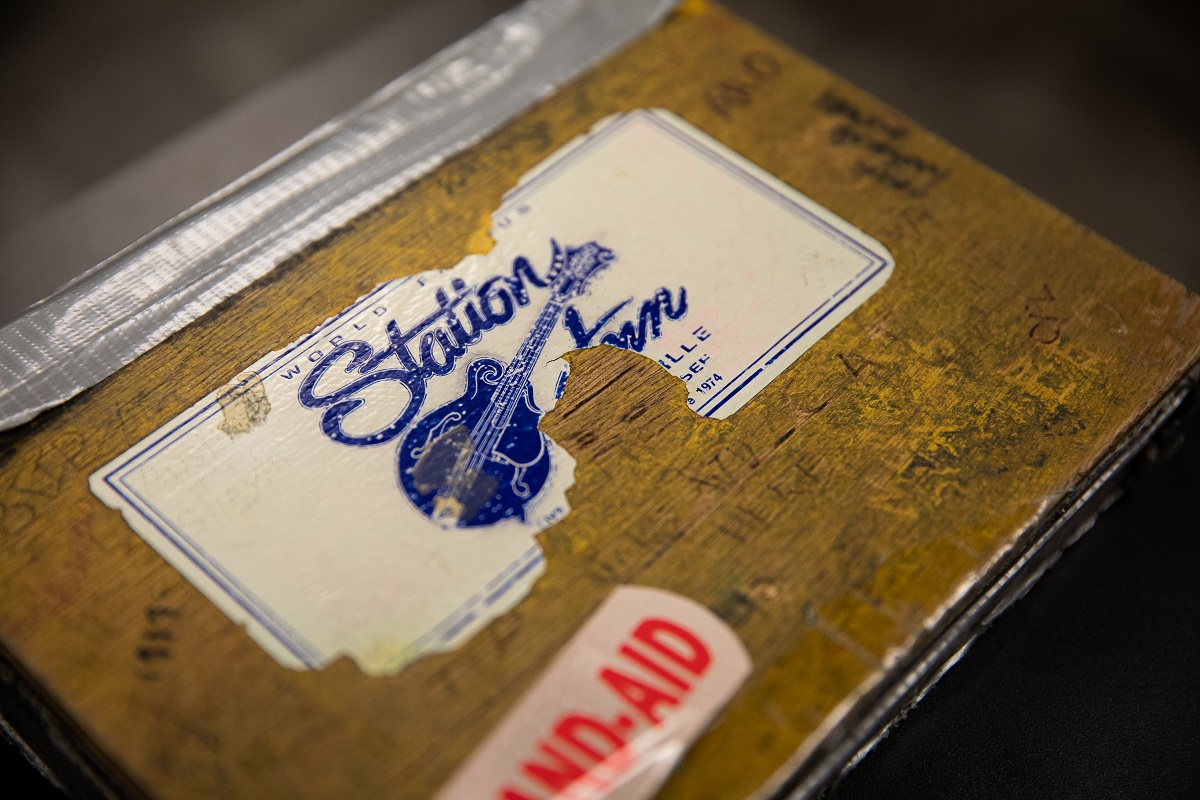
A cigar box used for many years to collect admission fees at the club entrance

Also on display is a small wooden box that was used to collect admission for years, along with some history about former Station Inn employee and local folk icon, Ann Soyars. “Ann embodied what the Station is about,” Cooper says. Soyars worked the door and was “small but fierce.” She was known to throw out rowdy college football players for being too loud, but also welcome regulars and newcomers alike. “Ann’s inclusion in the exhibit is indicative of what we’re trying to do, which is to help people understand not just the facts of the matter, but the spirit of the matter. The Station Inn is an example of musical community building in the most positive way. It’s like Cheers for ‘grassers.”

In addition, the exhibit features other artifacts from both the building and the musicians who have performed there including a fiddle played extensively by Tammy Rogers with the SteelDrivers, Mike Bub’s Kay M-1 double bass, which he played with many groups at The Station Inn — including Weary Hearts (Chris Jones, Butch Baldassari, Ron Block), the Del McCoury Band, and the Sidemen (Terry Eldridge, Jimmy Campbell, Ronnie McCoury, Gene Wooten, Ed Dye, Kristin Scott Benson, and Larry Perkins). Seats from a tour bus used by Lester Flatt, which serve as seating in the venue, are on view as well.

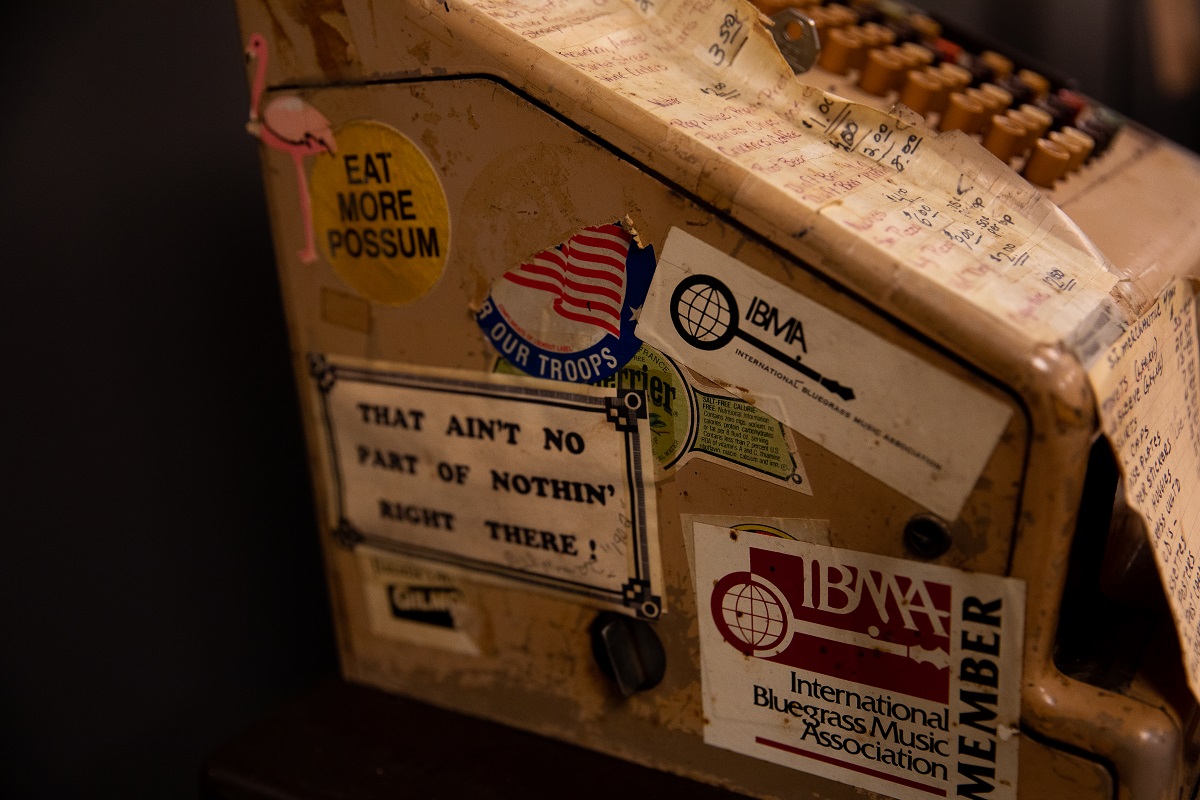
The Station Inn’s cash register

Generations of performers’ children have grown up in the Station’s green room and backstage and have gone on to perform on stage as adults. Newspaper has been put down on the bar to admire someone’s new puppies. Great care has been taken to lovingly craft the perfectly reheated pizza. Beers are shared by locals and honored guests after the doors are closed to the public. (And I have hidden fancy decaf coffee and a pour-over in the back that I take out when I visit.) To this day the Station Inn is a community gathering place where friendships, bands, and lifelong loves of bluegrass are formed. It embodies not only the authenticity of the music but of the community. And often, everyone knows your name.


Editor’s Notes: The Station Inn has endeavored to safely present live music throughout the pandemic. They have reopened to live audiences at a limited capacity and live stream performances through their web portal stationinntv.com.

The Country Music Hall of Fame and Museum will present The Station Inn: Bluegrass Beacon until January 2, 2022. The museum is currently open to the public at a limited capacity.

Photo of Station Inn and artifacts: Emma Delevante for the Country Music Hall of Fame and Museum
Other photos: Charmaine Lanham

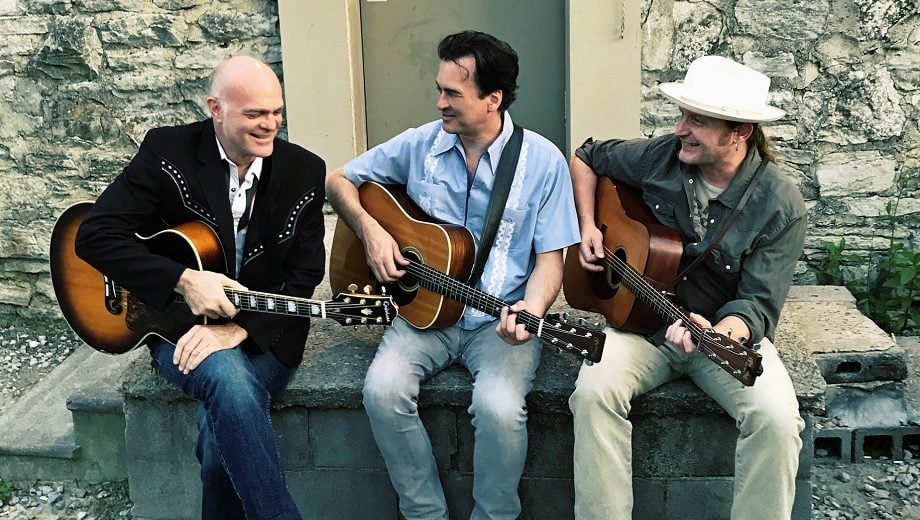
LISTEN: Eric Brace, Peter Cooper, & Thomm Jutz, “King of the Keelboat Men”

Artist: Eric Brace, Peter Cooper & Thomm Jutz
Song: “King of the Keelboat Men”
Album: Riverland
Label: Red Beet Records
Release Date: February 1, 2019

In Their Words: “When we were looking at the history of the Mississippi River, it was clear that the steamboats were the biggest thing that ever happened to it and on it. But what about before the steamboats? Before steamboats were the keelboats, pushed up and down river by big men with poles. They were the rock stars of their time, from the 1700s til about 1830. The mightiest of the keelboat men was the near-mythic Mike Fink. His tale was told in stories and books and songs of the time, but we wondered what happened to him when steam took away his job. Buy him a drink, and he’ll tell you exactly what happened.” — Eric Brace, Peter Cooper, & Thomm Jutz


Photo credit: Chris Richards

Peter Cooper Offers Behind-the-Scenes Look at Nashville in Forthcoming Book

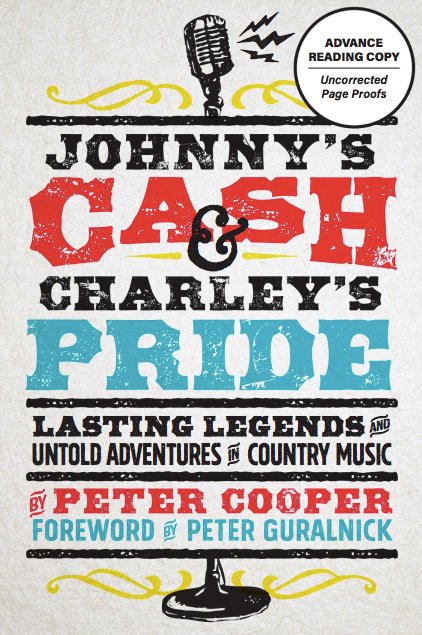
Peter Cooper knows a thing or two about country music. A songwriter, journalist, and current Country Music Hall of Fame writer/editor (among other things), Cooper has spent decades studying country music and picking the brains of the genre’s biggest luminaries. In April, he’ll release a new book — Johnny’s Cash and Charley’s Pride: Lasting Legends and Untold Adventures in Country Music — via Spring House Press. Complete with a foreward from legendary music writer Peter Guralnick, the book is a collection of essays detailing some of Cooper’s most storied encounters, from his time spent with the late Cowboy Jack Clement to trading thoughts on songwriting with Taylor Swift.

“Part of it was inspired by all of these people streaming into Nashville anew who don’t really have an understanding of the people who built this Music City,” Cooper says of his impetus to write Johnny’s Cash. “The book begins with Cowboy Jack Clement, because I think he’s the guy that everybody would be better off having met and been around. He’s just one of the most purely creative souls I’ve ever been around.”

Unlike many books about country music, Cooper’s doesn’t seek to serve as a definitive history of the genre. Instead, he lets his stories do the talking, offering color commentary on some of country’s most colorful characters. He wrote the bulk of the collection in the order it appears in its final published version, with one anecdote or interview lending itself to the telling of another in a conversational, almost stream-of-consciousness style of writing. There are also personal moments, where readers are treated to passages that read more like memoir than encyclopedia entry.

“A lot of things in the book are similar to stories I might tell somebody if I’m sitting next to them on an airplane or at a bar,” he explains. “They ask about Nashville characters like Cowboy Jack, Bobby Bare, Tom T. Hall. Rather than present any sort of linear history — and rather than have straight profiles of people — I just wanted to tell stories about storytellers and offer up what some of my interactions have been with them. A lot of times, when you get to know these people, they’ll trickle out some good hillbilly wisdom, and I was trying to remember those moments. I really want to tell [readers] it’s a self-help book. It’s really good advice from some really smart people, with some funny stories thrown in there.”

He did add one chapter, though — “Don Light and the Impossibility of Unscrambling Eggs” (“Don Light was fond of saying, ‘You can’t unscramble eggs,'” Cooper laughs, when asked about Nashville’s explosive growth in recent years.) — at the behest of Guralnick himself. “[Guralnick] had known Don Light very well and he knew that I had spent some time around him typing down the things that Don Light said,” he explains. “Don Light was this fascinating, kind of creative pragmatist who found a way to get Jimmy Buffett a record deal. He was the first independent talent agent in town. He brought Keith Whitley to Nashville and got him a record deal. He helped found the Gospel Music Association. He started the Jesus business and the ‘my head hurts, my feet stink, and I don’t love Jesus’ business.”

While readers will be hard-pressed to find a selection in Cooper’s book that lacks humor and humanity, one story about beloved country artist Lee Ann Womack has a special place in his heart. “There’s a story about Lee Ann Womack threatening bodily harm upon me that I thought was cute,” he laughs. “Heck of a singer and a wonderful person, as well, but she was dissatisfied with a largely positive review I’d written about her and threatened me late at night on a cell phone. She’s one of the best singers I’ve ever heard. In a room with her without a microphone, when there’s nothing between her voice and your ears, it’s just staggering.”

If there is a theme running throughout Cooper’s book, it’s that storytelling is at the heart of good songwriting, and that sharing stories about songs can’t be done without putting at least some of one’s heart on the page. “If you’re unbiased about music, or objective about music, then you’re not going to write anything good about music,” he says. “If you can’t listen to Emmylou Harris and be moved by it on some level and you stay cold and calculating at a distance, then you aren’t going to write anything of value.”