The Lone Bellow’s Latest Album is a Communal Singalong

The Lone Bellow are far from alone with the launch of their new album, What a Time to Be Alive.

Released on their own label, the collection conveys a shared vision, even beyond the founding members of Zach Williams, Kanene Pipkin, and Brian Elmquist. Williams wanted to factor in the ideas from their touring bandmates – namely, multi-instrumentalist Tyler James (formerly of Escondido) and drummer Julian Doro (formerly of the Whigs), ensuring everybody felt like they had a say. The group prepared the bulk of the material in a formerly abandoned firehouse in Henderson, Kentucky and polished the project in Muscle Shoals, Alabama, with Elmquist serving as producer.

When the album was in the mixing phase, the hard drive storing the new music was stolen during a van break-in while the group were on tour in Chicago. The band turned to GoFundMe, hoping to recoup some of the costs of rerecording. They were surprised to wind up with nearly $25,000 in donations, arguably making their fans just as invested in the project as everyone else in the band.

Not unlike the Lone Bellow’s full-throttle live shows, the new music practically begs the listener to sing or shout along. Indeed, What a Time to Be Alive does feel communal.

“This is what our hope was with this one,” Williams says. “You know, this is our sixth record, and this is definitely a way of life for us, and we’re very, very grateful for it. But it was also the record where we were like, you know what? We don’t have to try to write some hit radio single. We don’t have to play some ambiguous game. We can just make the beautiful record that we want to make, and we’ll just release it in the way we want to release it.”

Zach Williams caught up with BGS by phone on a sunny afternoon in Nashville, where the group relocated from Brooklyn in 2016.

What was the energy in the studio like as this record was taking shape?

Zach Williams: We did this one a bit different than we’ve done other records. One of the main things that I love that we did with this one is, usually somebody writes a song, and they come in and that intellectual property belongs to the songwriter. That’s it. And I wanted to make a record where everything was just split evenly between all five members of the band, no matter what. We decided to do that and that really created a very different atmosphere to work in.

It alleviated a bit of the quiet little murmurs. … You know, when you’re making something with somebody, and you don’t have any ownership in the song, sometimes you can just show up and be like, “All right, I play the drums. Here’s me playing the drums. Bye.” But when it was like, “Hey, you’re going to have an actual piece of this thing,” everybody just showed up, ready to pour their whole selves into it.

One of the most fun songs on here is “Honeysuckle.” I haven’t heard The Lone Bellow do something with that kind of old-time vibe. How did it feel to put that song together?

George Jones and Willie and a few of the old guys, they would have these murder ballads, is what I call them. They would just be singing their little heart out about burying a guy. And I was like, “I want to write a murder ballad.” So that’s our murder ballad. I did change the last verse. The original last verse was talking about how the trash man didn’t know that he was carrying out dead bodies to a truck. I was like, “You know what? I’ll fix that. I’ll clean that up just a little bit.”

Personally, I usually don’t get to play guitar on records, because I’m not a technically savvy guitar player. The guitar is basically a means to an end for me to try to write a melody or lyrics. And on that one, Brian was like, “Hey, you have this way of playing this riff that you wrote that has a sense of humor to it, and I can’t do it.” So, I play my thing and then he doubles up and plays with me. And they decided to keep the little laughs that were in the microphone, where I’m literally laughing at myself because of how bad I think it sounds. Brian was like, “No, we’re keeping all the laughter.”

That’s a big thing that we did with this record. We kept a lot of the human nature of it. …We made this record a while back. We started our own little record label to release it. That took about a year to put that whole thing together, with Thirty Tigers and distribution and all that. So, we’ve been sitting on this record for a second, and this was before AI started dropping hits. Now I’m so glad that all of that human nature is captured in this record, because there’s no denying that it’s absolutely as real as it can get. And I hope that that will just ease some souls out there.

I like the line in “I’m Here for You” about slipping down the water slide. I could picture that exactly where you are in that scene.

That’s literally how I met my wife. I was 12 years old at summer camp. In the late ‘80s, early ‘90s, there was this couple called Jim and Tammy Faye Bakker and they had a strange Christian-themed theme park in South Carolina. After the poo hit the fan, they shut the theme park down, and then these other people opened it back up and called it New Heritage USA. The week that they opened it up was the week that I went there for summer camp.

At the turn of the century, [the Associated Press] collected the top 100 most influential pictures taken of the century. One of the top 100 pictures is of a man named Jerry Falwell in a suit sliding down that slide. It’s because of the story of how he corralled his way into taking over that whole establishment. … So, that’s literally the slide that that song mentions, and that’s just the memory of how I fell in love as a little boy, as a 12-year-old idiot, maybe even younger.

Are you a bluegrass fan? Or did you grow up listening to bluegrass?

Man, I’m a huge bluegrass fan. Being in a van with Kanene, who grew up in Fredericksburg, Virginia, she knows bluegrass! I grew up like white trash. So, if there’s like a white trash bluegrass…

I grew up in a family where you’d sit around in the basement and play music together. I think that’s a base level for bluegrass. And I grew up thinking that was totally normal and now I know it was not. So I’m really grateful for bluegrass.

How old were you when you picked up the guitar?

I picked up the guitar at, like, 13, but I didn’t have any guitar lessons or anything. I had a sweet Charvel, which was like Jackson Charvel. It was super heavy metal. I think someone gave it to me, but I didn’t know that you needed a guitar amp for the first several years. [Laughs] A scary amount of time passed where I was like, “I guess this is just how a guitar is supposed to sound.”

But you held on. There’s something about the guitar sound, I guess, that you loved.

Yeah, my grandpa played the guitar, and I would go and live with him in the summers. He would play old hymns at night. I’d fall asleep listening to him playing the old spirituals.

That makes a lot of sense, because one thing your band does as well as any band, it has that dynamic. It has that rise and fall of the voice and in the arrangements. I hadn’t thought about that being based in spirituals and gospel. Did that influence the way you write?

One hundred percent, man. For good and for bad, it’s there. All the baggage is there, and there were beautiful parts of growing up in that kind of culture, too. I don’t want to throw the baby out with the bathwater, but it was also pretty weird. … I grew up in a church where the pastor would run all the way around the room and jump up and down on the couches and scream and holler. It was wild. It was like big tent revival kind of stuff. We didn’t ever go down to snake handling or anything. But there was some wild stuff. And it wasn’t until probably college, and then living in New York, where I was like, “I don’t know if all that stuff was good for everybody.”

But the core of a human being, wanting to feel the beauty, wanting to feel the presence of God, if you want to call it God or energy, I believe that’s very real. That’s what I love about especially live shows is everybody literally invests in the night. They buy tickets and they show up, and we’re facing each other, and it’s like, we’re going to try to create something memorable here. I think, especially right now, it’s such an important moment to just feel alive and connect with other humans, face to face.

How would you personally describe that feeling of being on stage? What’s that energy like from your perspective?

Jim James gave an interview a couple months ago and he nailed it. Like, every night, I have a pretty bad wrestling match in my own mind of, “Am I doing this to try to entertain? Is there a competitive spirit in me where I want to try to sing better than other people?” And the best nights are when I can just be, and let go, and just be alive and a part of the moment. And it doesn’t happen a terrible amount.

What usually happens is, I’m in my head battling thoughts of impostor syndrome on stage in front of 2000 people, night after night, which is really annoying. You would think by now that I would be like, “It’s cool, everything’s fine.” But that’s just not how it works for me. So, on the nights when I can let go of that impostor syndrome and just be another spoke in the wheel, those are the nights where we all ascend to a different place in our souls. I love those nights.


Photo Credit: Emily Dorio
MIXTAPE: Liberated Women by Dawn Landes

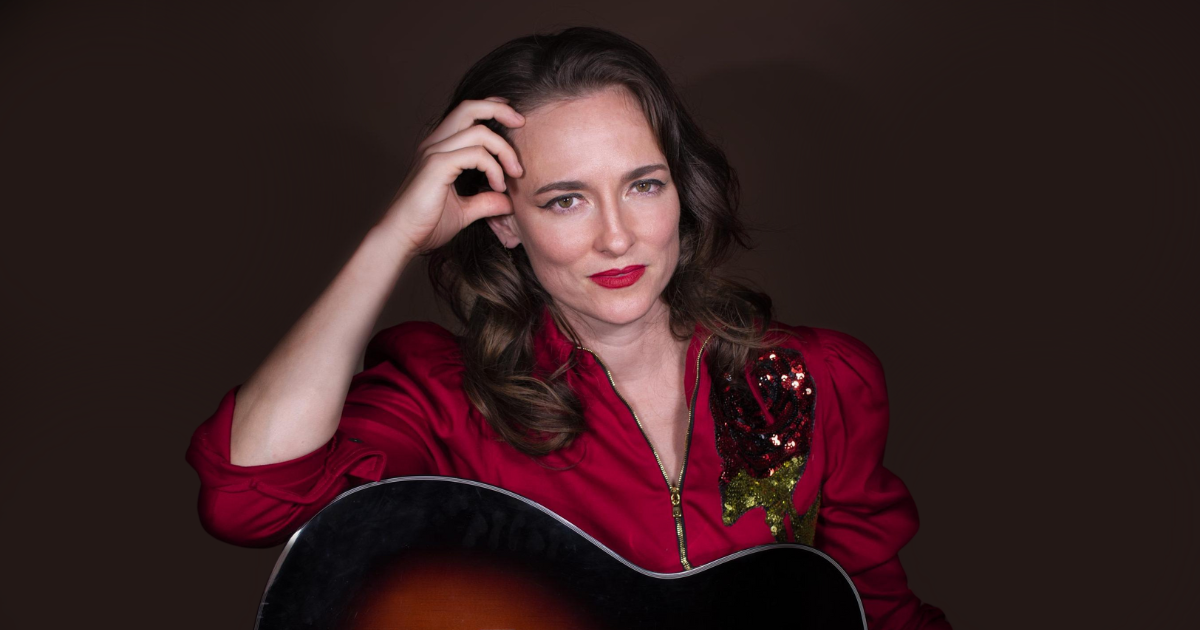
My new album, The Liberated Woman’s Songbook, reimagines folk songs about women’s activism from a songbook published in 1971 at the height of the Women’s Liberation Movement. Songbooks were the playlists of the past. Before people could burn CDs or make mixtapes, if they wanted to share songs they would make books or zines. When I was researching for this project, I consulted a lot of songbooks and zines from the late ’60s and early ’70s and found so many delightful things! Here are a few of my favorite finds (most pre-dating 1971, when the book was published). – Dawn Landes

“Hard is the Fortune of All Womankind (1830)” – Dawn Landes

This traditional ballad was often sung at protests during the Women’s Liberation Movement in the late ’60s and early ’70s. It was recorded by Peggy Seeger in 1954 and Joan Baez in 1961 under an alternate title, “The Wagoner’s Lad.” The lyrics date back to its first printing by English song collector Cecil Sharp.

“Single Girl, Married Girl” – The Carter Family

I first heard this Appalachian song when I worked at a bookstore in NYC and would constantly listen to a Carter Family CD on repeat. Apparently Sara Carter didn’t like the song and didn’t want to record it in 1927, but I’m so glad she did!

“I’m Gonna Be an Engineer” – Peggy Seeger

This masterpiece was written in the ’70s by the great Peggy Seeger, an incredible musician, writer, and keeper of the folk tradition (also, the sister of Pete Seeger). She’s been an advocate for women’s rights throughout her long career and has recorded many folk songs on women’s issues.

“Lady, What Do You Do All Day?” – Peggy Seeger

Seeger’s epic retort to Ewan MacColl’s question at the top of the song is worthy of its own film. MacColl and Seeger were musical and life partners for 30 years and made so many amazing recordings together. Check out her memoir, The First Time Ever, for some wild stories about the two.

“It’s My Way” – Buffy Sainte-Marie

This was the title track to Buffy Sainte-Marie’s debut album in 1964. That whole album is mind-blowing, but this song stands out to me. It’s so self-assured and strong. She’s still performing it in her 80s and even released a rock version in 2015.

“You Don’t Own Me” – Lesley Gore

Lesley Gore was 17 years old when she recorded this in 1963! One of the song’s two writers, John Madera, said its sensibility was shaped by his upbringing and participation in the civil rights movement.

“Oughta Be A Woman” – Sweet Honey In the Rock

Bernice Johnson Reagan said, “June Jordan wrote the words to ‘Oughta Be a Woman’ after I talked about my mother.” I really love the narrators voice in the writing and the uplifting voices of Sweet Honey In the Rock singing this.

“Silver Dagger” – Joan Baez

This song casts such a spell and Joan Baez is one of my all time favorite singers.

“Which Side Are You On (1931)” – Dawn Landes

Here’s a labor song mashup that combines Florence Reece’s lyrics from “Which Side Are You On” with Aunt Molly Jackson’s “I Am a Union Woman.” I’m singing the part of Florence Reece and Kanene Pipkin (of The Lone Bellow) is singing the Aunt Molly lyrics. Both women wrote protest songs during the “Bloody” Harlan County, Kentucky miners strike.

“Custom Made Woman Blues” – Hazel Dickens & Alice Gerrard

I’ve been lucky enough to spend some time with Alice Gerrard and she told me that the first time she and Hazel Dickens performed this song at a women’s festival the audience clapped so loud they had to play it again! Immediately! Legends.

“I Am Woman” – Helen Reddy

The production on this song really places me exactly in the year 1971, when The Liberated Woman’s Songbook was published and Helen Reddy’s song was about to become a huge part of the soundtrack to the Women’s Liberation Movement. There’s a great documentary about her life and this song on Netflix.


Photo Credit: Heather Evans Smith

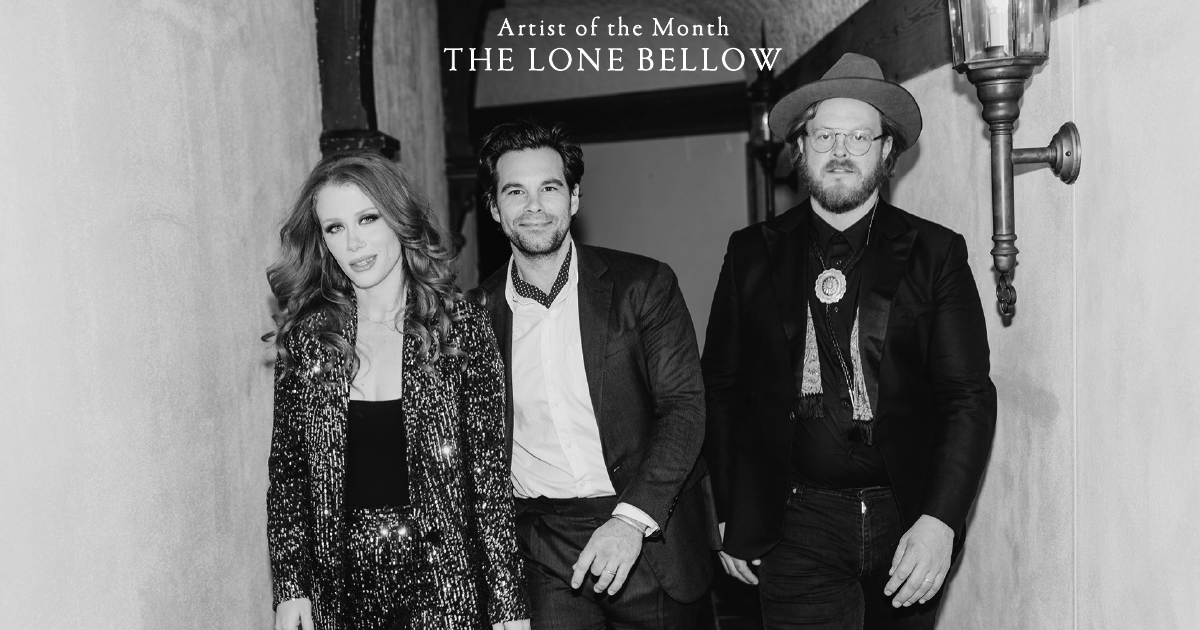
Artist of the Month: The Lone Bellow

Although they’ve built their career steadily for a decade now, The Lone Bellow have always played to the rafters. There’s a sense of vitality, as well as urgency, to their music — they’re never afraid to go all in. The trio of Zachary Williams, Brian Elmquist, and Kanene Donehey Pipkin have commanded a loyal fan base by putting in the work, of course, but also through their keen musicianship. They channel their acoustic influences a couple of times on their new album, Love Songs for Losers, while at other moments, they are fully electrified. And when they sing together, their music is somehow amplified in more ways than just in volume. It’s a powerful force that has elevated them from small clubs and festivals to headlining concerts in theaters around the world.

That longevity may have something to do with the relatability of their lyrics. As much as their music can feel uplifting and powerful, there’s also a confessional element that makes it feel you’ve shared in the experiences they’re writing about. Those listeners who have endured more than a few romantic failures will especially bond with this new project.

​​“One of the reasons we went with Love Songs for Losers as the album title is that I’ve always seen myself as a loser in love — I’ve never been able to get it completely right,” Williams says. “The songs are looking at bad relationships and wonderful relationships and all the in-between, sometimes with a good deal of levity. It’s us just trying to encapsulate the whole gamut of experience that we all go through as human beings.”

As a supporter of the band from the very beginning, we’re proud to reveal The Lone Bellow as our BGS Artist of the Month for December. Look for an exclusive interview coming later this month, as well as content shared on our socials through the rest of 2022. Looking ahead after the holidays, The Lone Bellow will return to the road with a run of shows through Texas, the Midwest and Pacific Northwest, before briefly wrapping in L.A. on February 17. Also on the books for 2023: bundling up for WinterWonderGrass sets in Steamboat Springs, Colorado, and Olympic Valley, California.

With Love Songs for Losers being their fifth studio album, the Lone Bellow certainly have an abundance of material to share with live audiences. Enjoy some of our own personal favorites, included below in our BGS Essentials Playlist.


Photo Credit: Eric Ryan Anderson

Hangin’ & Sangin’: The Lone Bellow

From the Bluegrass Situation and WMOT Roots Radio, it’s Hangin’ & Sangin’ with your host, BGS editor Kelly McCartney. Every week Hangin’ & Sangin’ offers up casual conversation and acoustic performances by some of your favorite roots artists. From bluegrass to folk, country, blues, and Americana, we stand at the intersection of modern roots music and old time traditions bringing you roots culture — redefined.

With me today at Hillbilly Central, the Lone Bellow!

All: Hello! Hi!

Brian, Zach, Kanene … welcome. So glad to have you guys here. New album, Walk Into a Storm … so good, so good!

Zach Williams: We made it right down the street!

Did you make it at Studio A?

All: Yeah.

Okay. I didn’t know if you’d done it at Studio A or Low Country. So you made it with Dave Cobb? Good job, kind of hard to go wrong with that guy.

Brian Elmquist: Good Cobb.

Kanene Pipkin: The Cobbster.

Yeah, yeah, good stuff.

Here’s something I was thinking about as I listened to the record today. I got to “May You Be Well,” which you [Zach] wrote for your daughter, Loretta. But it obviously has a broader call, a broader wish, and it kind of got me wondering … in this particular time that we find ourselves in … how do you guys process things like Vegas or Paris, those shootings, or the singer who was killed last year, or the Manchester bombing? Because I kind of hear it coming through that song, because all of those things are the antithesis of what we’re trying to do with the music, right? So how do you process it and how do you see your role?

KP: Well there’s an Allen Toussaint quote … so we played a show in New York six hours after the Paris attack. I remember, because there was NYPD and law enforcement everywhere, all over the venue. It was the exact same capacity, so it was really bizarre. I remember a bunch of my family members, my siblings, were coming that night, and just thinking about, “What if that happened to us?” And Allen Toussaint had just passed away, and I came across an Allen Toussaint quote that I quoted that night, and it said, “Music also has a role to lift you up. Not to be escapist, but to pull you out of misery.” And to me, that was just the best way you could say it. Because it’s not made to just escape and forget everything, but to me, this is what helps you endure and helps you be lifted out of misery just enough to where you can handle it and you can also address it and not have to wallow, but you can move forward. And I think that’s a really important thing to be able to do with songwriting or with just being someone who likes to listen to music. It’s a really important processing tool.

Because you’re either providing that stability, as the writer, or you’re reaching for it, as the listener. But either way, you’re making a connection with someone else, if not a number [of people]. I go through this, it’s like, every time something like that happens, I turn to music to lift me up, but then there are the days where it’s just like, “Ugh — it just feels so pointless!” You know? It’s like “Ugh, I’m just doing music!” but then I’m like, “No, I’m doing music. It has its role.”

BE: We were in Toronto the day we were all dealing with Vegas and, to add to what you were saying, you also turn to humanity. Like we told [our crowd], “Today sucks.” I think we started the concert off like that. And they lifted us out of it, and we were with each other, and it just really shows you that it happens to everybody. All of humanity is trying to come around each other. They want the best for each other.

ZW: I would even venture to say, like when you were saying there are the listeners who are reaching for it and then us that are providing it, in my particular case, I would say that I’m reaching for it. Because, when we write a song, we don’t know how it’s gonna be received in a year when it’s released or when we start playing it. We don’t know what stories those songs are going to connect with with strangers that we’ve never met.

Or what’s gonna be happening in the world when it does come out.

BE: I don’t think we have the ego to say that we could write a song and save the world. [Laughs]

KP: [Sings] “We are the wooorld” …

ZW: So, that night, we started singing “May You Be Well,” and they started singing it, kind of to each other, and then we were all singing it together. And we were all very much aware of everything that was going on. We don’t have the answers, and they don’t have the answers, but we can all sit in that space together and just be like, you know, this is a stop sign. Writing music or making art is a stop sign because it makes you just pause and think, and also listening to or looking at art is also a stop sign. So, I’ve really been grateful to be a part of those experiences. I was worried the night of Toronto, like what is this gonna be like?

Watch all the episodes on YouTube, or download and subscribe to the Hangin’ & Sangin’ podcast and other BGS programs every week via iTunes, Podbean, or your favorite podcast platform.


Photo credit: Joshua Black Wilkins