Drayton Farley Asks the Big Questions

You’ve got to have some durability to name your album A Heavy Duty Heart. For Drayton Farley, paying a decade’s worth of dues is an important part of the story.

After a slow but steady build of recording albums and relentless touring, Farley picked up four significant synch placements in 2025, with songs “Blue Collar,” “Touch and Go,” and “It’s Called Doubt” heard in the Paramount+ series Landman, and “Turn Around” appearing in the CBS show Sheriff Country. That remarkable achievement seemed like a perfect way to set up A Heavy Duty Heart, which was recorded with his touring band and produced by Sadler Vaden.

“What I found is, usually the biggest enemy is me when it comes to how I’m feeling about how it’s going,” Farley says. “When things like that happen, it pulls you again out of your head and reminds you, ‘No, everything’s going great, actually. You’re doing really well, and you should just keep doing it and get out of your head a little bit.’”

In an interview with Good Country, the Birmingham, Alabama-based singer-songwriter retraces his trajectory to becoming one of roots music’s most promising performers. He explains why he considers Robert Earl Keen a role model and shares the song that still makes his wife cry.

The opening song, “Love We Mean,” captures that moment in a relationship where you have a rare moment to reflect. What was on your mind as that song was taking shape?

Drayton Farley: Yeah, it was pretty much that. I wanted to write a song about that moment where the kids are gone and you’re not on the road and there’s not a lot going on. All of a sudden, you’re both just at the house and there’s nothing to do or worry about. [Laughs] And you’ve both been going a hundred miles an hour, sometimes in the same direction, sometimes in the other direction, but all of a sudden, everything just kind of stops and gets quiet. Then you’re both looking at each other like, “What the hell just happened?” And you start kind of taking stock and checking in.

I sensed a theme throughout this album of assessing where you are in life and asking those big questions. Then I looked you up and saw that you’re just 30 years old. Have you always been the kind of guy who’s willing to look inward and analyze the world around you?

Yeah, I think so. I don’t know why. I think that feels easier to do. I celebrate my 10th wedding anniversary in May. You know, I’m only 30, but I guess I’ve worked enough of the real jobs and been married long enough with two daughters now, these kinds of things feel required to do.

What were the day jobs you had before you could finally dedicate yourself to music?

Out of high school, I spent about three and a half years working on the railroad [as a subcontractor for Norfolk Southern doing derailment cleanups]. I got married while I was working there, then quit that job, and I got a job working for Mercedes-Benz. I worked on the assembly line building cars for the next four years. During that last year is when I started releasing music. I spent the last two years there, kind of gigging after work every day that I could, just trying to build whatever local presence I could and release as much music as I could and build a catalog. And this is just me and a guitar with a few microphones. Just lo-fi. It’s really demo tapes. They’re live recordings really, just in the house.

Then I left that job so that I could gig more. I got a job working for Safelite, doing auto glass for about two months. Then I booked myself opening a few tours and I booked a little headline run for myself. I told my boss, “Man, I gotta do music. I thought I could just open my schedule a little more and that would make me happier. But it’s pretty obvious now that music is what I have to do.” In the next month or two, I met my agent at CAA, met my manager, and hit it off with David Macias at Thirty Tigers. All the dominoes started falling immediately. Within three months of quitting that last job, I was already booked to open two shows for Willie Nelson. So it all happened fast, and it’s like reassurance that I’d made the right choice.

I’m going to quote a lyric back to you, which is “Somewhere deep inside I knew/ And I know you knew it, too/ Couldn’t be more proud to see we saw each other through.” That’s got to be the best feeling to know it actually happened for you. You held onto the dream. How did you stay motivated when things weren’t exactly going fast for you?

I think, especially for those times, the struggle was the motivation. It came pretty naturally. That song specifically, “Dream Come True,” that is mine and my wife’s story. I spent those years working the jobs – and even on the railroad I brought my guitar with me to write songs in the hotel rooms. I played open mics after work. We traveled for work on that job. So, those days, all the way leading up to, I guess around ‘22, that was it.

It was always just like, “How do you even make a career in music?” You know, “I’ve never been to Nashville. I don’t know anybody in Nashville. I really don’t know anyone in the Birmingham music scene. I don’t even know where to start or what to do, other than use social media to try to get my stuff out there.” And then fast forward to Mercedes. I was gigging after work for a few years, like Thursday, Friday, Saturday, as many shows as I can play, and I’m releasing EPs that I’ve self-recorded. The dream was always to do music and just find a way to be able to support us with music, instead of these other jobs that aren’t what I’m supposed to do.

We were trying to have kids and start a family and we ended up losing the first pregnancy. We kept trying after that, we had a second pregnancy, and we lost that one. So there for a while, it just felt like music wasn’t going to happen. How do you get that to kick off? And we’ve lost two pregnancies, so who knows if we can even have kids? That was our shared dream. That is what the whole song is about. We have two daughters now and this is what I do. When my wife hears that song now, she cries.

Being married myself, I appreciate these songs about the depth of that relationship, just leaning on each other and trusting each other.

I just needed something in my catalog that would reflect those parts of my life, because I’ve written so much about other things. Just looking back through all the songs, I was like, I have a severe lack of love songs going on, you know? Why not write an entire album of it?

I also picked up on the Robert Earl Keen reference in “Feel Like Getting High.” What do you enjoy about the music that he’s made over the years?

It spans a lot of different moods and I want to be more that way. So far, a lot of my projects and albums and catalog have had a similar atmosphere around it all. What he’s talking about, and what he sings about and writes about, is a pretty broad spectrum. As a writer, I want to get more in that direction where I’m not gridlocking myself to a certain topic or a certain mood. I would say that’s inspiring from him.

Why did the album title, A Heavy Duty Heart, seem to fit?

That was the hardest part of this whole thing, just naming it. It had me stuck for a while, trying to figure out the name. I don’t know where that came from. It was just a thought and I kind of liked the way it rolled off the tongue. Looking through the songs, almost all of these songs say the word “heart,” and it’s talking about the inward, deeper, zoomed-in struggles and details of my life, being a touring musician and having children and a wife, and our journey to get there. So, it felt like it would take a pretty strong heart and will to keep going through all that and keep your eye on the prize. I thought that title reflected the overall idea of the album.

I really like “Turn Around” right there at the end of the record. What was going on in your life when you were when you wrote that song?

That was a similar thing to what I was talking about earlier, where it was kind of throwing yourself a pity party and losing perspective. “Why is this going on?” “Why are these tickets not selling more?” “Why is this artist doing more than I’m doing? Two years ago, we were at the same place.” It’s just a game of comparison on social media and that can really begin to affect you, just wondering if you’re stalling, or if you’re doing well or not.

But the truth is, that’s just your mind going to those places because you haven’t kept your own perspective on everything. Like, me five years ago wouldn’t believe anything that me right now would have to tell them about all the things I’ve done and accomplished. That’s the real perspective. And when you lose it, you get too far in your head, for no good reason. And then stopping and turning around, kind of taking stock of where you’re at, and what all you have, and measuring yourself again.


Photo Credit: Leah Dockery
The Lone Bellow’s Latest Album is a Communal Singalong

The Lone Bellow are far from alone with the launch of their new album, What a Time to Be Alive.

Released on their own label, the collection conveys a shared vision, even beyond the founding members of Zach Williams, Kanene Pipkin, and Brian Elmquist. Williams wanted to factor in the ideas from their touring bandmates – namely, multi-instrumentalist Tyler James (formerly of Escondido) and drummer Julian Doro (formerly of the Whigs), ensuring everybody felt like they had a say. The group prepared the bulk of the material in a formerly abandoned firehouse in Henderson, Kentucky and polished the project in Muscle Shoals, Alabama, with Elmquist serving as producer.

When the album was in the mixing phase, the hard drive storing the new music was stolen during a van break-in while the group were on tour in Chicago. The band turned to GoFundMe, hoping to recoup some of the costs of rerecording. They were surprised to wind up with nearly $25,000 in donations, arguably making their fans just as invested in the project as everyone else in the band.

Not unlike the Lone Bellow’s full-throttle live shows, the new music practically begs the listener to sing or shout along. Indeed, What a Time to Be Alive does feel communal.

“This is what our hope was with this one,” Williams says. “You know, this is our sixth record, and this is definitely a way of life for us, and we’re very, very grateful for it. But it was also the record where we were like, you know what? We don’t have to try to write some hit radio single. We don’t have to play some ambiguous game. We can just make the beautiful record that we want to make, and we’ll just release it in the way we want to release it.”

Zach Williams caught up with BGS by phone on a sunny afternoon in Nashville, where the group relocated from Brooklyn in 2016.

What was the energy in the studio like as this record was taking shape?

Zach Williams: We did this one a bit different than we’ve done other records. One of the main things that I love that we did with this one is, usually somebody writes a song, and they come in and that intellectual property belongs to the songwriter. That’s it. And I wanted to make a record where everything was just split evenly between all five members of the band, no matter what. We decided to do that and that really created a very different atmosphere to work in.

It alleviated a bit of the quiet little murmurs. … You know, when you’re making something with somebody, and you don’t have any ownership in the song, sometimes you can just show up and be like, “All right, I play the drums. Here’s me playing the drums. Bye.” But when it was like, “Hey, you’re going to have an actual piece of this thing,” everybody just showed up, ready to pour their whole selves into it.

One of the most fun songs on here is “Honeysuckle.” I haven’t heard The Lone Bellow do something with that kind of old-time vibe. How did it feel to put that song together?

George Jones and Willie and a few of the old guys, they would have these murder ballads, is what I call them. They would just be singing their little heart out about burying a guy. And I was like, “I want to write a murder ballad.” So that’s our murder ballad. I did change the last verse. The original last verse was talking about how the trash man didn’t know that he was carrying out dead bodies to a truck. I was like, “You know what? I’ll fix that. I’ll clean that up just a little bit.”

Personally, I usually don’t get to play guitar on records, because I’m not a technically savvy guitar player. The guitar is basically a means to an end for me to try to write a melody or lyrics. And on that one, Brian was like, “Hey, you have this way of playing this riff that you wrote that has a sense of humor to it, and I can’t do it.” So, I play my thing and then he doubles up and plays with me. And they decided to keep the little laughs that were in the microphone, where I’m literally laughing at myself because of how bad I think it sounds. Brian was like, “No, we’re keeping all the laughter.”

That’s a big thing that we did with this record. We kept a lot of the human nature of it. …We made this record a while back. We started our own little record label to release it. That took about a year to put that whole thing together, with Thirty Tigers and distribution and all that. So, we’ve been sitting on this record for a second, and this was before AI started dropping hits. Now I’m so glad that all of that human nature is captured in this record, because there’s no denying that it’s absolutely as real as it can get. And I hope that that will just ease some souls out there.

I like the line in “I’m Here for You” about slipping down the water slide. I could picture that exactly where you are in that scene.

That’s literally how I met my wife. I was 12 years old at summer camp. In the late ‘80s, early ‘90s, there was this couple called Jim and Tammy Faye Bakker and they had a strange Christian-themed theme park in South Carolina. After the poo hit the fan, they shut the theme park down, and then these other people opened it back up and called it New Heritage USA. The week that they opened it up was the week that I went there for summer camp.

At the turn of the century, [the Associated Press] collected the top 100 most influential pictures taken of the century. One of the top 100 pictures is of a man named Jerry Falwell in a suit sliding down that slide. It’s because of the story of how he corralled his way into taking over that whole establishment. … So, that’s literally the slide that that song mentions, and that’s just the memory of how I fell in love as a little boy, as a 12-year-old idiot, maybe even younger.

Are you a bluegrass fan? Or did you grow up listening to bluegrass?

Man, I’m a huge bluegrass fan. Being in a van with Kanene, who grew up in Fredericksburg, Virginia, she knows bluegrass! I grew up like white trash. So, if there’s like a white trash bluegrass…

I grew up in a family where you’d sit around in the basement and play music together. I think that’s a base level for bluegrass. And I grew up thinking that was totally normal and now I know it was not. So I’m really grateful for bluegrass.

How old were you when you picked up the guitar?

I picked up the guitar at, like, 13, but I didn’t have any guitar lessons or anything. I had a sweet Charvel, which was like Jackson Charvel. It was super heavy metal. I think someone gave it to me, but I didn’t know that you needed a guitar amp for the first several years. [Laughs] A scary amount of time passed where I was like, “I guess this is just how a guitar is supposed to sound.”

But you held on. There’s something about the guitar sound, I guess, that you loved.

Yeah, my grandpa played the guitar, and I would go and live with him in the summers. He would play old hymns at night. I’d fall asleep listening to him playing the old spirituals.

That makes a lot of sense, because one thing your band does as well as any band, it has that dynamic. It has that rise and fall of the voice and in the arrangements. I hadn’t thought about that being based in spirituals and gospel. Did that influence the way you write?

One hundred percent, man. For good and for bad, it’s there. All the baggage is there, and there were beautiful parts of growing up in that kind of culture, too. I don’t want to throw the baby out with the bathwater, but it was also pretty weird. … I grew up in a church where the pastor would run all the way around the room and jump up and down on the couches and scream and holler. It was wild. It was like big tent revival kind of stuff. We didn’t ever go down to snake handling or anything. But there was some wild stuff. And it wasn’t until probably college, and then living in New York, where I was like, “I don’t know if all that stuff was good for everybody.”

But the core of a human being, wanting to feel the beauty, wanting to feel the presence of God, if you want to call it God or energy, I believe that’s very real. That’s what I love about especially live shows is everybody literally invests in the night. They buy tickets and they show up, and we’re facing each other, and it’s like, we’re going to try to create something memorable here. I think, especially right now, it’s such an important moment to just feel alive and connect with other humans, face to face.

How would you personally describe that feeling of being on stage? What’s that energy like from your perspective?

Jim James gave an interview a couple months ago and he nailed it. Like, every night, I have a pretty bad wrestling match in my own mind of, “Am I doing this to try to entertain? Is there a competitive spirit in me where I want to try to sing better than other people?” And the best nights are when I can just be, and let go, and just be alive and a part of the moment. And it doesn’t happen a terrible amount.

What usually happens is, I’m in my head battling thoughts of impostor syndrome on stage in front of 2000 people, night after night, which is really annoying. You would think by now that I would be like, “It’s cool, everything’s fine.” But that’s just not how it works for me. So, on the nights when I can let go of that impostor syndrome and just be another spoke in the wheel, those are the nights where we all ascend to a different place in our souls. I love those nights.


Photo Credit: Emily Dorio

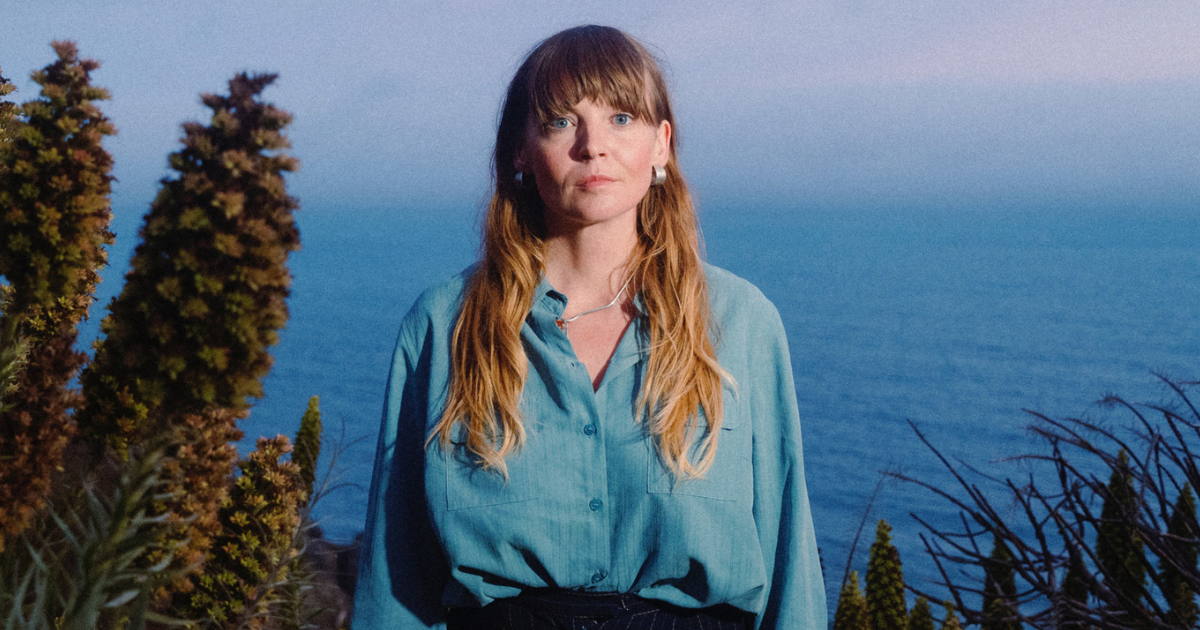
Courtney Marie Andrews Doesn’t Fear Vulnerability

Courtney Marie Andrews’ story begins in Phoenix, Arizona. An only child raised by her mother, she found solace and an outlet for her creativity and imagination in music. She planted her music roots in a self-described “feminist punk band” and began touring while in her teens. Along the way, she recorded a number of albums – best known are Honest Life (2016), GRAMMY-nominated Old Flowers (2020), and Loose Future (2022) – lived in a number of cities, and worked and toured with a number of musicians, including rock band Jimmy Eat World.

Andrews eventually made her way to Nashville, where she now resides. There, she creates music and other art, fueling her soul and inspiration with long walks and her love of animals, bonding with friends’ dogs, and feeding an assortment of “porch animals,” mostly cats, who take up residence outside her door.

In addition to music, Andrews expresses herself through painting and poetry. She has published two collections: 2021’s Old Monarch (2021) and the recent Love Is a Dog That Bites When It’s Scared. Her music, writings, and artwork explore a broad scope of emotions and experiences: loss, grief, fearless love, deep darkness, pure joy, and acceptance of the entire spectrum.

These outpourings are at the essence of her new release, Valentine (out January 16 via Thirty Tigers). Written in the throes of anticipatory grief, the album plummets into the vortex of her trajectory. While the message is raw, the recording is anything but. Valentine is an unfiltered look into Andrews’ heart, filled with waves of sounds and layers of instrumentation.

Among the numerous instruments she plays on Valentine, Andrews is featured on an assortment of guitars and basses, including a 1973 Martin D-28, 1968 Gibson B-45 12-string, 1970s high-strung Japanese Epiphone, Gibson J-45, Epiphone Casino, 1972 Fender P-Bass, 1960s Kay K5915 bass, and 1960s Teisco six-string bass. Longtime friend and colleague Jerry Bernhardt joins her on various instruments, with drummer Chris Bear rounding out the trio. The album was recorded by Michael Harris at Valentine Recording Studios in Los Angeles and produced by Bernhardt and Andrews.

BGS reached Andrews via Zoom for an Artist of the Month conversation.

Has Nashville changed you as a songwriter?

Courtney Marie Andrews: I thought it would deeply shift everything for me, but if anything, it made me want to do other things as well, maybe subconsciously. I started painting and focusing on poetry. But that core sense of self, that songwriter self, will always be with me wherever I go. It’s hard to say how it has shaped me until I’m looking back on my life 20, 30, 40 years from now.

But I will say the community I’ve found here is profound. I’m a Western girl. I’ve lived in Arizona and Seattle up until pretty much my 30s, and I didn’t realize how lonely the West can be. I think that’s apparent in my early work as a songwriter. That subject is throughout the work. When I moved here, I was almost overwhelmed by how much people wanted to hang out. It took a while to adjust and now I can’t imagine it any other way, not having that community to feel into and understand this work, because it is a strange career. So I think more [that] it has affected me personally, but I’ve always continued to write and been on this journey on my own and in my own time.

This is a stripped-down album – only three musicians, including you, and one of them is also your co-producer. Did you know, when the songs were written, that this is how it needed to be done?

I completely funded this album on my own, so if I’m being frank, it was an economical choice. Originally, we would have loved to have a band, but in hindsight, ultimately it created the record it created and I wouldn’t have had it any other way. There’s some power to it being a very condensed group of people, because the focus is a little bit more zoned in, and it becomes a vibe if it’s coming from a few core people, rather than everybody adding their stroke to what you’re doing – which I think is also valid. But looking back, it was probably the best thing we could have done, having Jerry and I playing all the instruments and Chris Bear, of course, on drums.

You played a number of guitars on Valentine. Do the songs determine the guitar, or does the guitar sometimes direct the song?

The songs ultimately lead the way on feeling and vibe. Jerry and I wanted to layer the record. There are a lot of different layers of guitars. We would varispeed one guitar up, so it’s super-high, and then we’d varispeed one guitar lower, so it’s super-low, to create the rounder sound, especially if you’re listening in headphones or on a high-definition speaker system.

But it’s definitely song-driven, whatever the feeling. “Best Friend” is just my guitar and Jerry’s twelve-string. We didn’t go much further than that, because the song was meant to be a bit sparser as far as the depth goes.

“Everyone Wants To Feel Like You Do” is about a certain type of misogyny where it’s, “I do whatever I want and I don’t care about the consequences, nor am I held accountable for the consequences.” The song was written with that feeling, and I thought it would be funny if I played guitar like that, where I didn’t care, so I over-distorted my guitar and played as crazy as I could to assert my power.

How do songwriting, poetry, and painting each fulfill a different side of your artistry and emotions? Is there ever some cross-pollinating?

I wanted to tell the same story with a different perspective, so there is cross-pollinating in terms of the source of the material, where it’s coming from, where I’m at in my life, whatever darkness or lightness I feel. It all sources from the same well of emotion and experience. But there are different ways of telling the same story. I found that when I was songwriting exclusively, I would write the same song over and over again. Whereas if I take a step back, do a different medium, and come back to songwriting, I feel fresher.

Ultimately and forever, I’ll always identify and feel the deepest connection with songwriting. That’s the first thing I fell in love with. It’s the thing I understand the most. But the mystery of these other mediums has really flourished.

There’s a natural through-line between poetry and lyrics. What about painting? Do lyrics sometimes inspire a painting? Does something you create on canvas ever become words in one of the other mediums?

There’s not a lot of crossover. I don’t look at painting like I would look at a page or a song. Painting is, for me, a place to describe emotions that are unexplainable. That’s why painting is so cool. It’s almost equivalent to jazz; it’s more of a feeling that you can’t describe. That was enticing to me. To express myself as a word person who ultimately values words so much, it was important to think outside of the box a little bit. Painting allows that. To not be confined by words is really interesting.

Tell us about your recent Artist in Residence at the Iowa City Songwriters Festival. You performed and did a reading from your new book, but what does “artist in residence” mean at this particular event?

Because Iowa City is a UNESCO World Heritage City of Literature, there’s a heavy college-funded element. I’m not sure if that was their direct funding, but they definitely have more of a collegiate approach to an artist in residence. I’ve done some residencies where they don’t want anything from you. They just say, “Come up and write whatever you want. We don’t care.” But this one was definitely a bit more mentorship-driven. I led a class, a songwriting workshop. I also had one-on-one mentorships with young songwriters, people who are just getting started. They had a packed schedule for me, but it was so lovely.

I think their ultimate goal is to prop up songwriting among the other literature of the world, having songwriting classes in college, and having it there with poetry, fiction, nonfiction, memoirs, memoir writing, and all that. I think that’s ultimately what they’re trying to attain with the residency program. So it was great.

I’ve found that I really love to talk about songwriting in that way. I think that, in our culture, it’s a dying thing, at least from where I’m sitting, to seek out opportunities to learn from elders, from people who’ve been doing it a long time. The more we can do that in our culture, the better off we’ll be. It’s an incredible festival, and I would highly recommend people going. The people who run it are just wonderful.

When you lead workshops and do one-on-one mentoring, is it as much a learning experience for you as it is a teaching experience?

Absolutely. I think to teach is to be a constant student. The moment you feel like you’ve figured it all out … I don’t know if that’s a good thing. Even as I speak about songwriting, I say things that open doors all the time to myself. It’s good to be endlessly curious.

Do you think being an only child contributes to your storytelling ability through songwriting and poetry? Living inside your head, escaping into your own head, in a way that might have been different if you had been surrounded by siblings?

Oh yeah, absolutely. Because I was a latchkey kid, I spent a lot of time alone. If I didn’t have a friend to play with, I had to go into the inner landscape of my mind. That was my way of communicating in a deeper way that I couldn’t quite get in my home life if my mom wasn’t home. I can attribute a lot of my childhood to that. I was a deeply imaginative kid and would create stories all the time. So I think the loneliness also fueled what I do now.

Do you draw from those past emotions when expressing what you’re currently experiencing?

How it manifests is that it’s like a period of reckoning when I’m writing songs. I’m generally alone. I find it very hard to write if I know somebody is even in the next room. I’ve had weird moments in my life where I wrote at soundcheck and stuff, but when I listen back to those things that I’ve written around people, it’s not as dialed in. So when I’m writing, I’m alone and reckoning with the life that I’m leading, or the life of others. It feels like this very quiet thing that needs to happen.

Are you an old-school pen-and-paper writer or have you gone the way of voice memos?

I do both. I exclusively use a green book to write in. It doesn’t matter what color green. They all are green, though, green-colored notebooks, generally the Moleskine variety or that look. I have plenty of them in a pile. [And] I love Micron, the ballpoint art pens. I really don’t like the standard DMV pen. I’m a little bit bougie when it comes to my pens. I like the flow of a Micron. I write and then voice memo. Generally, once I’m done writing a song, I try and always get it down in its unproduced form. I think it’s important to have that, and the phone happens to be the easiest way.

Is playing guitar, just playing, as much a part of songwriting as writing lyrics?

Oh, yeah. I love the guitar. I love open tunings. I love acoustic guitar music, Hawaiian slack key, and classical Spanish-style guitar on a nylon. I love to play and try and emulate that style. And so in certain works, it’s the first thing that happens. There’s many ways to come to a song, but one of them is [to] play a chord progression I like and sing gibberish, and that sometimes leads to a song. In that case, absolutely I need the guitar. But yeah, the instrument can definitely lead the way. It just depends.

When you spoke earlier about adapting to the Nashville community, it brought up the thought that growing up as “an only” maybe affects our social skills to a degree. It can make community something new, as opposed to something you’re used to having around you.

Yeah. I feel that. I have a hard time with small talk for this reason. I want to go immediately for the jugular, as far as intense conversations. I go from zero to a hundred. It’s really hard for me to be like, “Hey, how are you doing?” I feel like such an actor in those circumstances. Of course I’ve learned to do it by way of being a musician – you have to talk to new people every day. But small talk doesn’t do it for me. I have a hard time going in a simple, surface level.

In the bio accompanying this album, you said, “I was in one of the darkest periods of my life and songs were the only way I could reckon with it. I felt cursed and the only mental cure felt like songwriting and painting.” Have you always felt that darkness?

Obviously, as a teenager, I went through a pretty wild part of my life where I felt dark, but I think I actually denied my darkness for a very long time. I lived in a haze of denial and hope, which is a beautiful thing. It can do wonderful things for your mental health. But you also can’t really grow if you’re living in that state.

When I was younger, especially in my early twenties, I always had this hope – “Oh, one day things are going to change.” That denial, that hope, kept me in this holding place, which for a time was really nice, and as a matter of defense and self-preservation, I stayed there for a long time. It wasn’t until I started therapy that I realized I always had this underlying darkness. When I had that, we worked on that, and real things started to happen. Things in life that are so hard that happen to all of us – it became deeply dark and profound to experience that in a more awake state.

How did that help with writing this album?

During a lot of writing this, I was caretaking for my family member who was terminal. If you’ve ever been in that situation, it is all-consuming. The only way I could turn my brain off from that was to write. It wasn’t “I need to write an album.” It was “I need to get back to myself for a moment.” I wouldn’t say it was a conscious decision. It was just I know how I am, and I know that songs are my only way of regulating in these crazy times.

You once said you felt embarrassed by the vulnerability of your songwriting. Where do you draw the line, or do you draw one, between what needs to be said for yourself and what needs to be said for listeners for whom you are the voice? How do you do this and protect your mental health when performing these songs every night?

I’ve always said that once the song is written, it’s not mine. It also transforms for me as I sing it. There are songs I wrote fifteen years ago that I still perform, that have taken on completely new meaning and feel different to me when I sing them. I honestly can’t remember the headspace I was in when I wrote them, or the origin of them, or who I was thinking about, to a strong degree, but I feel differently about them.

As far as what needs to be said, ultimately I try to relate to people, or first myself, and then you put the song out and it becomes a different thing. I try, in an artistic space, to be as true to myself as possible. I try not to put up any walls in that space. As far as my life where I’m not playing music, that’s a different thing. But music is a safe space to say whatever the hell I want to say. That’s the reason it’s such a powerful thing. It’s a safe place for me to communicate. Whatever walls are up in a song are walls that I have up with myself. That’s always very apparent when you write a song. It’s not quite clicking and you’re like, “I’ve got some walls up to my subconscious, clearly.” So the extent to which the boundaries, the walls, are up is truly only the stage at which my heart is at in that moment.

Did that happen with Valentine – the walls, maybe the fear of the vulnerability? It’s deeply personal and powerful, going deeper and deeper into those emotions as your journey is sequenced.

I hate to say it, because I don’t want to sound trite, but making albums, making bodies of work like this, fear is the last thing on my mind. Obviously, natural fears come up: Is it going to be what I wanted, what I envisioned in my dreams? But as far as songwriting and being vulnerable in a song, that’s not the fear. In fact, if I got very close to the heart in a song, it’s generally the ones that I’m like, “That’s a good one. I got there. I got to the essence of this thing I was feeling.”

Being vulnerable in life can be really hard in my personal life, in some ways, and I think that is more where the fear is. But, for whatever reason, the way I direct it is okay in a song, and I’ve made up my mind for that to be true. I don’t know why; I guess it just makes sense to me. Human emotion makes the most sense to me in the backdrop of music.

As far as sequencing, Jerry and I argued quite deeply about the sequencing, but ultimately it did go to a place where once we got the sequence, it was undeniable. Side A and Side B are completely different frames of minds. Side A, you’re fighting for love and you’re desperate. Side B is a resignation – this is how it is, this is how it’s always been, and this is my childhood. By the end, in “Hangman,” you’re just “This is how it is, and you can fight for it or you can walk away.” So the sequencing was purposeful. I wanted it to be a journey. I think records should be like that. They shouldn’t be all one color or palette the whole way through.


Explore more of our Artist of the Month content featuring Courtney Marie Andrews here.

Photo Credit: Wyndham Garnett

Artist of the Month:
Courtney Marie Andrews

On singer-songwriter Courtney Marie Andrews’ upcoming album Valentine, you can hear her letting go.

It’s a process she ostensibly started – at least, musically or outwardly – on 2022’s Loose Future, a collection on which Andrews also reckoned with being in a period of transition, personally and professionally, letting go of former five- and 10-year plans and recentering in the present.

Approaching four years since that most recent studio album, with Valentine it seems Andrews is intent on reinforcing and revisiting the same lessons she taught us and herself on Loose Future. The new album, which will be released on January 16 by Thirty Tigers, begins with a grand, tone-setting opener, “Pendulum Swing.”

Reminiscent of ‘60s pop-folk and rich with arpeggiated 12-string guitars, Andrews vocally soars into the verses and murmurs each contemplative chorus:

If I get what I want
Gotta let the pendulum swing
Can’t be good for too long
Let the pendulum swing…

It doesn’t exactly strike a listener as the sort of Loose Future Andrews formerly envisioned, but the song also doesn’t seem to wallow in the apparent feeling of impending doom, or the instinct that imbalances of “good for too long” must be righted. Instead, to this writer, it rather sounds like she’s focusing on the instinct itself. On her belief, conscious or subconscious, active or passive, that “karma” or “deserving” necessitates inevitable negative responses to anything positive.

As with all of her impeccable albums, Valentine finds love as a frequent subject – as well as community, perception, expectations, and how all of these topics touch on or intersect with existential dread. But Andrews seems to be letting go of her ideals of what love is or what it can be, as well. Thankfully, her perspective on the subject is always expansive, never simply reduced to just romance or sex or heteronormativity – or some slurried combination thereof. But Valentine is more direct in its approach to love than some of her LPs.

“[Valentine is] a record in pursuit of love,” Andrews explains via press release. But that love “is a lot more than I gave it credit for,” she continues. “It’s built over years, it’s built with trust, with changes, it becomes something new and unrecognizable, the deeper you go.”

Songs like “Keeper,” “Cons and Clowns,” and “Everyone Wants to Feel Like You Do” follow in tight formation behind Andrews’ past songs on love, connection, and romance – especially the masterful album, 2020’s Old Flowers. But other tracks, perhaps chief among them “Best Friend,” indicate that expansion on love as an idea and point back to the creative process here also being one of letting go.

You can sense that surrender, the gradual unclasping of fists and de-whitening of knuckles, in almost every aspect of Andrews’ creative output. It has, after all, been quite a few years since she last released an album. Her prior rhythm of abject road-dogging and releasing LPs every year or two has been replaced by much more thoughtful and intentional tours, performance forays, and product launches. She’s leaned more into another medium, painting, and has gone full-bore as a published poet, too. She’s released two collections of poetry – Love Is a Dog That Bites When It’s Scared having arrived this past August – and has built up her creative, community infrastructure to feed more than just her itinerant musical pursuits and former wall-to-wall, year-round tour schedule.

It’s almost like you can hear the retooling of Andrews’ idea of success happening in real time, from Loose Future through to Valentine. Like you can hear her realizing that giving up the version of herself who existed on Honest Life (2017) through May Your Kindness Remain (2018), and the version of herself from Old Flowers and Loose Future, doesn’t ever mean net loss. Like being on the road less means one could grow flowers, feed stray cats, and build a support system in her new home of Nashville that, especially as an only child and retired nomadic busker, she’s always craved.

The sense of letting go was perhaps infused into Valentine by the specific circumstances that gave birth to these songs. “I was in one of the darkest periods of my life,” Andrews continues in the project’s album bio, “and songs were the only way I could reckon with it.”

“I felt cursed, and the only mental cure felt like songwriting and painting.”

It’s why this album, like almost all of her prior releases, also feels as self-directed as it is outward-facing and primed for wide audiences. Andrews has learned that letting go – of control, of her past self, of expectations, of legalism around or criteria for love, of the “power” (and curse) of individualism, of freneticism and frantic ladder-climbing, or of life itself – is a process we don’t ever graduate from. We never muster out. We have to return to ourselves, to introspection, to the very constructions of our selfhoods over and over again to do that work.

The redemption and sheer beauty of this album are not because Courtney Marie Andrews has found her Valentine, but because she can hold up her wants, needs, and dreams as valid and wholesome goals on one hand, while stripping – and re-stripping – them of any power they may hold over her on the other. It’s an impressive duality, one that wouldn’t be nearly as successful without Andrews already having done so many reps in finding herself and of letting go.

Andrews is our January 2026 Artist of the Month, an auspicious start to a brand new year of roots music. Here, you can read our feature interview with Andrews all about Valentine, its making, and the unique way she and her collaborators went about recording these fantastic songs. Below, enjoy our Essentials Playlist and tune in on social media as we dip back into the BGS archives throughout the month to share all things Courtney Marie Andrews.


Photo Credit: Wyndham Garnett

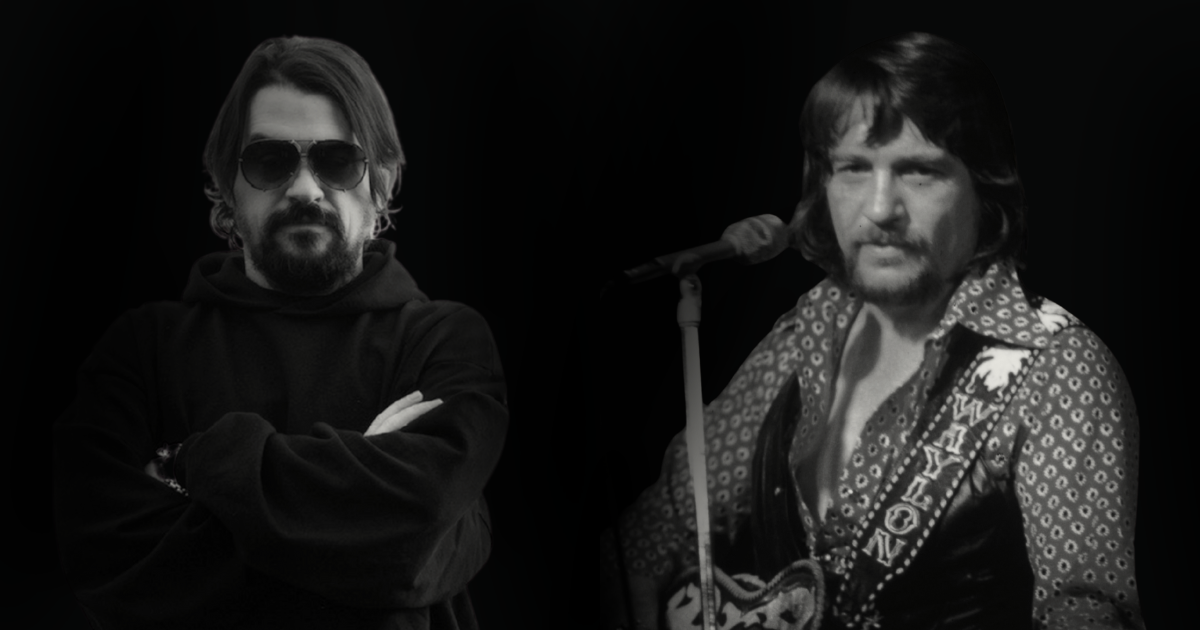
Shooter Jennings’ Heartfelt Tribute to His Legendary Father

Being the son or daughter of a legendary artist can often cause self-esteem and identity problems, especially if offspring choose their famous parent’s profession. But that clearly hasn’t been the case with Waylon Albright Jennings, much better known to music fans as “Shooter.”

The son of greats Waylon Jennings and Jessi Colter, Shooter Jennings has forged an impressive career as a singer, songwriter, instrumentalist, and producer covering over three decades, while displaying an idiomatic flexibility that’s seen him excel with both country and rock projects. Though he never uses the term “prodigy,” he was playing drums at five, taking piano lessons at eight, and sitting in with his father’s band on guitar at 14, while often spending time riding on his dad’s tour bus. Since then, he’s done an array of projects from heading bands to helming sessions, but he’s also always upheld a mantra of his father’s, which is stressing authenticity and passion in whatever he’s doing, writing, or playing.

Towards that end, Shooter’s newest venture both pays tribute to his famous father and reaffirms the musical values both have always championed. That’s the album Songbird (released October 3 via Son of Jessi/Thirty Tigers), which is the first of a planned posthumous trilogy of releases from the famed vocalist, who was one of the most distinctive and dominant voices to emerge in modern country during the ’70s and ’80s. Waylon’s landmark recordings, both as a solo artist and later in collaborations with Willie Nelson, Johnny Cash, Kris Kristofferson, Tompall Glaser and Jessi Colter, not only ushered in the “outlaw country” movement, they signaled a major step forward for artistic independence and creative freedom that resonated across the popular music spectrum.

Waylon Jennings was an innovative and vital figure not only as a performer, but as a personality. His voice and stature helped give gravitas to an otherwise forgettable TV show (The Dukes of Hazzard) and helped fuel a drive for authenticity within country. Still, despite that quest for freshness and originality, Waylon knew how to make hits. He had 16 number one tunes on Billboard‘s Hot Country Songs chart and 11 number one albums on Billboard‘s Top Country Albums chart during his amazing career, while always being a staunch advocate for his view of what constituted country.

Though Shooter has always called himself “an MTV kid who went down the rabbit hole with rock and roll,” he’s also long held a great reverence and respect for country. He began sorting through hundreds of his father’s personal studio recordings during the summer of 2024. Having just begun an exclusive residency at Hollywood’s historic Sunset Sound Studio 3 (which he redubbed “Snake Mountain”), Shooter began examining the tapes with veteran engineer Nate Haessly. Things moved quickly, his initial goal of finding previously lost Waylon songs he could share with the world morphing into instead deciding the best way to present what turned out to be a rich treasure trove of recordings. The material he was hearing was recorded between 1973 and 1984 and featured such guest stars as Tony Joe White and Jessi Colter.

“I started listening to this material last year and knew right away I had to put it out,” Shooter said during a recent phone interview with Good Country. “Once we began thinking about what we would put out there first, ‘Songbird’ just really kind of took over.

“Everyone that I played the song for heard it and they were really emotionally affected. Many broke out in tears the first time they heard it. It was an example of my father’s philosophy about doing songs from other people. Any song that he chose to record he would turn it into his own type of anthem. I really think that was the case with ‘Songbird,’” Shooter continued. “It gives the album a power and special flavor, and I’m really proud of everything on it.”

Songbird was released the first week of October, with Jennings’ evocative and stirring cover of the Fleetwood Mac tune its lead single. It debuted at number six on Billboard‘s Top Album Sales chart and it’s been in either the Top 10 or 20 on a host of other charts as well, representing the highest any Jennings LP has charted in 35 years. The 10-track release contains several other notable singles, most of them already previously complete. But on a couple of cuts, Shooter utilized the talents of surviving members of The Waylors, including guitarist Gordon Payne, bassist Jerry Bridges, keyboardist Barny Robertson, and backing vocalist Carter Robertson to add some spice. Elizabeth Cook and Ashley Monroe were also enlisted to help propel Songbird to new heights. Shooter mixed the songs in a purely analog fashion on Sunset Sound Studio 3’s custom 1976 DeMedio API mixing board.

Another song that’s quite appropriate in these times of extreme social conflict and division is Waylon’s version of Johnny Rodriguez’s “The Cowboy (Small Texas Town),” which finds him urging both cowboys and hippies to direct their ire away from each other and towards those causing greater structural harm to society. Additional recommended cuts include a sizzling Jennings version of Johnny Cash’s “After The Ball” and “I’d Like To Love You Baby” that features Jessi Colter.

Both “Wrong Road Again” and “I’m Gonna Lay Back With My Woman” are trademark Jennings numbers, while his version of Jesse Winchester’s “Brand New Tennessee Waltz” is also solid. The one criticism that some hardcore Waylon fans might make is Songbird doesn’t offer any previously unissued gems that he penned, feedback that Shooter’s been around long enough to anticipate. “What we went through and chose here were numbers that were made memorable through his treatments,” he continued.

“That’s something that my father always talked about and stressed, that whenever you do a song, make sure that you’re not just replicating something else, you’re making your own statement. That’s why Songbird has such an impact and that’s the case with everything on this album. These are songs that he loved from other people and wanted to perform and put his own stamp on them.”

Though born in Nashville, Shooter made the move to Los Angeles in 2001. Since then, he’s comfortably moved back and forth between rock and country. He’s had a mixed amount of success as a performer, cutting 11 albums and EPs in both genres. His biggest country hit came on the 2005 LP, Put The O Back in Country. That album’s lead single, “Fourth of July,” peaked at No. 22. The album version featured a cameo by George Jones, who sang the chorus to his signature song, “He Stopped Loving Her Today,” at the end. Unfortunately that was purged from the radio version, but Jones was credited on the Billboard charts.

The album also spotlighted Shooter’s then-new band, The .357s, which consisted of Leroy Powell on guitar, Bryan Keeling on drums, Ted Kamp on bass, Robby Turner on steel, and backing vocals by Bonnie Bramlett. Later that year his song “Busted in Baylor County” was featured in the 2005 film version of The Dukes of Hazzard. Furthermore, Jennings portrayed his father in the Johnny Cash biopic Walk The Line alongside Joaquin Phoenix and Reese Witherspoon. His rendition of his father’s song “I’m A Long Way From Home” was featured on the film’s soundtrack.

Still, Shooter’s greatest fame has come as a producer for a wealth of recordings. He was introduced to the studio as a child, his earliest exposure being inside Chips Moman’s studio in Nashville. His rock influences come through in his at times freewheeling use of studio technology that wasn’t in general use during his father’s heyday, but on any of his productions he’s never let the artist’s voice be overwhelmed by layers of excessive production or backdrop.

He’s been nominated for five GRAMMYs in that role and won two. A short list of memorable sessions he’s produced include such artists as Brandi Carlile (Best Americana Album GRAMMY), Tanya Tucker (Best Country Album GRAMMY), and American Aquarium, as well as Jessi Colter, Jamey Johnson, Jaime Wyatt, The White Buffalo, Hellbound Glory, The Mastersons, Julie Roberts, Kelsey Waldon, Yelawolf, Marilyn Manson, Jason Boland, Billy Don Burns, Avi Kaplan, Billy Ray Cyrus, and Angry Grandpa. Just this year alone, Shooter Jennings produced acclaimed releases by the Turnpike Troubadours, Charley Crockett, and Jake Owen.

When asked what he enjoys most or looks for in terms of production collaborations, Jennings says, “The people that I truly enjoy working with the most are the ones who have their own ideas of what they want to do, how they want to sound, or what they want to sing. Then they bring those ideas into the studio and we take it from there. I’m not really quite as good when it comes to just taking someone who doesn’t really have a sense of who they are and saying why don’t you try this or try that.

“With Charley [Crockett], for instance, that guy comes into the studio and he’s already got all these things together and we can just hit the road from there and take it forward. A guy like Duff [McKagan], who can just write their ass off, or a group like American Aquarium, I can get really excited. Brandi [Carlile] came to me and wanted me to work with her and that was a fantastic experience. But in general, if you’re someone who has their concept of what they want to do, then we can sit down and really make it work in the studio.”

Shooter also has amassed some good credits in the worlds of broadcasting, film, and television. As well as getting the chance to portray his father in the 2005 film Walk The Line, he has made celebrity appearances on television shows CSI, Marvel’s The Punisher, and American Revolutions, while also playing a gunslinger in the 2013 film The Other Life.

Back in 2009, Shooter participated in a CMT Crossroads session, paired with close friend and fellow musician Jamey Johnson. The evening’s set list consisted entirely of duets, including a cover of “Outlaw Shit” from the Waylon Forever album, two songs from Jennings’s discography – “God Bless Alabama” and “It Ain’t Easy” – and four songs from Johnson’s album That Lonesome Song including “High Cost Of Living,” “Mowing Down The Roses,” “Between Jennings and Jones,” and “In Color.”

Shooter cites Glenn Danzig and the band Oasis as folks that he hasn’t yet worked with whom he’d like to in the future. But right now, his main focus is on the two remaining Waylon Jennings posthumous recordings – though he’s not sure yet exactly when they will come out or what will be on them.

“One thing I can say for sure is that there’s a lot more great music coming,” Shooter concluded. “I was really amazed at how much great stuff is there, and I think the fans are going to really be thrilled when we get these next two out there. My father did a lot of great music before he passed, and we’re going to get as much of it out there as we can.”


Photos courtesy of Shooter Jennings.

You Gotta Hear This: New Music From Rising Appalachia, Tim O’Brien, and More

What a week in music! Not only has our Artist of the Month, Kaia Kater, released her new album Strange Medicine today, but we’ve also got an absolutely incredible premiere round-up filled to bursting with brand new videos, songs, and tracks.

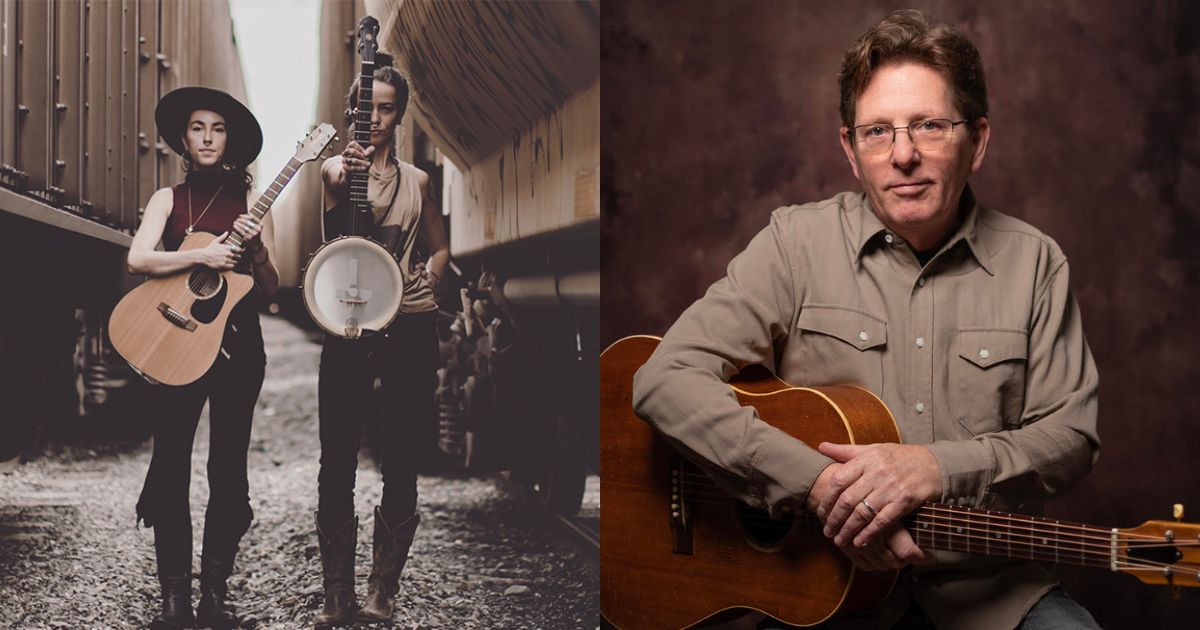
First, there’s transcendent sister duo Rising Appalachia with a James Blake/Bon Iver cover, “I Need a Forest Fire,” and Tim O’Brien pays tribute to iconic folk songwriter Tom Paxton with a song they co-wrote, “You Took Me In.” Plus, don’t miss new songs from Ellorie McKnight, Natalie Spears, and Nick Taylor.

We round out our list with two premieres that debuted on BGS earlier in the week, a new one from Alisa Amador’s just announced album that features Madison Cunningham and Meadow Mountain continue their SkyTheory Sessions series with “Waiting for Tomorrow.”

It’s all right here on BGS and to be perfectly honest, You Gotta Hear This!


Rising Appalachia, “I Need a Forest Fire”

Artist: Rising Appalachia
Hometown: Asheville, North Carolina
Song: “I Need a Forest Fire”
Album: Folk and Anchor
Release Date: May 17, 2024

In Their Words: “‘I Need A Forest Fire,’ is our interpretation of a rich and righteous James Blake track. We have been big fans of his artistry and aural weavings for many years and wanted to do a folk rendition of this striking song. The texture of its sounds stretch far and wide in atmospheric rhythms as well as the lyrics and it took some deep digging to conceptualize what Blake was perhaps trying to say… Our interpretation is this:

“We live in a time of rapidly destructive (and so often man-made) wildfires in many parts of this planet. Singing a song that says ‘we need a wildfire’ felt cautionary, but enticing, as we explored the many metaphors that ‘forest fire’ could represent. We came to believe it is about the burning of the ego, the take down of destructive habits and destructive relationships, even destructive sides of self. In a time where everyone is on one side of the coin or the other, in a highly polarized nation, a burning symbolizes a great reset. A death and rebirth cycle. We hope you enjoy our take on this track as much as we have enjoyed stretching into its different sounds.” – Rising Appalachia


Tim O’Brien, “You Took Me In” (from Bluegrass Sings Tom Paxton)

Artist: Tim O’Brien
Song: “You Took Me In”
Album: Bluegrass Sings Paxton
Release Date: May 17, 2024 (single)
Label: Mountain Home Music Company

In Their Words: “Jan and I came of age listening to and then singing Paxton songs before we ever knew his name. We both learned ‘Last Thing on My Mind’ and sang it around campfires before we met each other. So like a lot of folks, we kinda have Paxton in our musical DNA.

“Tom has been friendly and supportive over the years and in recent years often expressed his desire to write together. With this project, push came to shove and Jan and I wrote ‘You Took Me In’ with Tom on our second session. I had the lyric idea and imagined some Earl Scruggs-style gospel guitar as backing. We had the song in about an hour. When we were done I asked Tom how many songs he’d written that week and he said, ‘I’ve written four songs today!’

“Paxton’s early songs were the kind that sorta begged audiences to sing along. This one reaches in that direction. I love how simple and direct it is. Since that day, the three of us have written another 15 songs, all of which are daring Jan and I to record them, so stay tuned. Songs are like little puzzles that a certain strata of musicians have fun solving. We’re just honored to sit beside Tom, even if only virtually, as he does his masterful thing. He knows to let the song happen. He can pull a lyric from an instrumental riff, he improvises easily, and you can just trust him. When he says to go higher with the melody or go to the four chord, we’re never afraid to follow.” – Tim O’Brien

Track Credits:
Tim O’Brien – Guitar, lead vocal
Jan Fabricius – Mandolin, harmony vocal
Shad Cobb – Fiddle, harmony vocal
Mike Bub – Upright bass


Ellorie McKnight, “Whitepass”

Artist: Ellorie McKnight
Hometown: Whitehorse, Yukon
Song: “Whitepass”
Album: Equinox
Release Date: May 3, 2024

In Their Words: “White Pass is a magical, remote mountainous area connecting Yukon’s southwest with Alaska. If you’re driving from Whitehorse, YT to Skagway, AK, you pass through mountains and boreal forest until you reach the Canadian border crossing, after which the road winds through 25km of treeless, rugged alpine terrain before dropping down towards the ocean, where you then drive through the US border and then into the coastal ecosystem of Skagway. There is no reception on this stretch of road and no sign of humans except for the road and the border patrol buildings.

“This part of the world is like a dream in summer: the sound of creeks is loud and the wild blueberries are everywhere. In the winter, the area is mystical no matter the weather, with meters of snow blanketing the valleys and mountains. I was making the trip from Whitehorse to Skagway in the middle of winter one year, late at night, to visit a friend. There was a raging blizzard and snow drifts forming on the road, it was hard to see more than a few feet ahead and the going was slow. I pulled over to catch my breath and stepped outside. The wind was steady and the sharp snowflakes bit into my cheeks. I looked up and was surprised when I saw a waxing moon in a clear night sky just above the fog of the ground blizzard. It was a moment of awe, of wonder, of feeling so intertwined with the earth and yet also so small. The song ‘Whitepass’ tries to capture the many similar moments I’ve felt spending time in this stunning part of the world.” – Ellorie McKnight

Track Credits: 
Ellorie McKnight – Guitar and vocals
Brigitte Desjardins – Drums
Jeff Dineley – Upright bass
Ryan McNally – Pedal steel and harmonies
Kieran Poile – Fiddle

Video Credit: Midnight Light Media


Natalie Spears, “Hymn Of Wild Things”

Artist: Natalie Spears
Hometown: Carbondale, Colorado
Song: “Hymn Of Wild Things”
Album: Hymn Of Wild Things
Release Date: May 17, 2024 (single); June 28, 2024 (album)
Label: SleeLee

In Their Words: “Early one chilly autumn morning, I awoke to the chortling cries of Sandhill Cranes echoing through our town. Their sound is one like no other, awkward, beautiful, and haunting. It is a sound that we only hear a few times a year as they journey along their migratory path towards warmer shores. Whenever I hear them, I drop everything I’m doing and try to find them. On that particular morning, I got up with my sweet pup and followed their cries to a local nature park near my home. The clouds were sunk low in the valley and although we could hear them close by, we still couldn’t see them. We sat quietly waiting and eventually the sun’s heat lifted the clouds revealing the ghostly shapes of two beautiful Sandhill Cranes. The words to this song began to take shape in my mind and it was then that Hymn Of Wild Things was born.” – Natalie Spears

Track Credits:
Written by Natalie Spears (BMI)
Produced by Jayme Stone

Natalie Spears – Voice
Christine Bougie – Guitars, lap steel
Pat Keen – Bass
Jayme Stone – Synth, drum programming


Nick Taylor, “Dogs”

Artist: Nick Taylor
Hometown: Austin, Texas
Song: “Dogs”
Album: Not Alone
Release Date: June 21, 2024

In Their Words: “As one of the earliest compositions I laid down for the album, it’s personal and cathartic, a reflection of the anxiety that’s been an ongoing part of my persona. Sometimes it gets particularly overwhelming and that’s how this song was born. It speaks to uncertainty — how it manifests, how it’s perceived by others, and how it affects those around us. When we went into the studio to record it, it just came alive. It was important to me to get it out into the world. It’s the song that inspired the album title, Not Alone, but more importantly, it explores topics that society tends to dismiss — especially when it comes to matters having to do with mental health, insecurity and stability. It calls for understanding and in that regard, my hope is that it will help anyone dealing with a similar situation feel less alone.

“‘Dogs’ is such an emotional song, almost a confessional, that we wanted to make sure the video felt personal. Shooting just one scene created a space where the lyrics were being recited directly to the audience and I think that format really works well with the song. Huge thanks to Will and the team for their vision and direction.” – Nick Taylor

Track Credits:
Written by Nicholas Taylor Wimberg

Nick Taylor – Lead vocals
Wayne Killius – Drums
Dave Francis – Bass
David Flint – Electric and acoustic guitars
Chris Nole – Piano/keys

Video Credits:
Produced by Charlotte Avenue Entertainment

Directed by William Gawley
Shot by Austin Boylen and Dominick Sotis


Meadow Mountain, “Waiting for Tomorrow” (SkyTheory Sessions)

Artist: Meadow Mountain
Hometown: Denver, Colorado
Song: “Waiting for Tomorrow”
Album: June Nights
Release Date: May 13, 2024 (single)

In Their Words: “This song attempts to answer the question, ‘What if, instead of starting the band Foo Fighters, Dave Grohl had picked up a mandolin and spent a year exclusively listening to Alison Krauss & Union Station?’ I guess I was doing a lot of thinking and writing about time – the great healer, but also that which brings an end to all things. And then a new beginning. This is a song about time, and hope.” – Jack Dunlevie

More here.


Alisa Amador, “Heartless Author” (feat. Madison Cunningham)

Artist: Alisa Amador
Hometown: Boston, Massachusetts
Song: “Heartless Author” (featuring Madison Cunningham)
Album: Multitudes
Release Date: June 7, 2024
Label: Thirty Tigers

In Their Words: “I love this song. I love it because it acknowledges all of the uncertainties and pain of life and it shines compassion on all of it. ‘It’s okay not to know.’ It was such a joy to sing this one with Madison Cunningham. She learned it right then and there in the studio, and her voice says so much.” – Alisa Amador

More here.


Photo Credit: Rising Appalachia by Syd Woodward; Tim O’Brien by Scott Simontacchi

LISTEN: Alisa Amador, “Heartless Author” (Feat. Madison Cunningham)

Artist: Alisa Amador
Hometown: Boston, Massachusetts
Song: “Heartless Author” (featuring Madison Cunningham)
Album: Multitudes
Release Date: June 7, 2024
Label: Thirty Tigers

In Their Words: “Alisa has so much poise, playfulness, and honesty in her writing, with the most velvet voice. It checks so many boxes for me. I loved getting to sing and play guitar on this song.” – Madison Cunningham

“I love this song. I love it because it acknowledges all of the uncertainties and pain of life and it shines compassion on all of it. ‘It’s okay not to know.’ It was such a joy to sing this one with Madison Cunningham. She learned it right then and there in the studio, and her voice says so much.” – Alisa Amador

Track Credits: Written by Alisa Amador and Zia Amador
Produced by Tyler Chester, Daniel Radin, and Alisa Amador
Recorded by David Goucher, Tyler Chester, Daniel Radin, and Dave Brophy at Paperchaser Studio in North Hollywood, Brighton Hills West Studio in Watertown, and Studio Solitaire in Somerville


Photo Credit: Sasha Pedro

LISTEN: Kiely Connell, “Damn Hands”

Artist: Kiely Connell
Hometown: Hammond, Indiana
Song: “Damn Hands”
Album: My Own Company
Release Date: July 19, 2024
Label: Thirty Tigers

In Their Words: “It amazes me that we’re still having this conversation about consent. Just because somebody is nice to someone it does not mean they’re entitled to put their hands on you. Let’s let that die here and now. Keep your damn hands to yourself.” – Kiely Connell

Track Credits:
Drums and percussion – Andrew Borger
Bass – Nate Query
Electric guitars, piano and organ – Drew Kohl
Acoustic guitar and vocals – Kiely Connell


Photo Credit: Alysse Gafkjen

Roots R&B Group The Shindellas Blend Innovation and Tradition

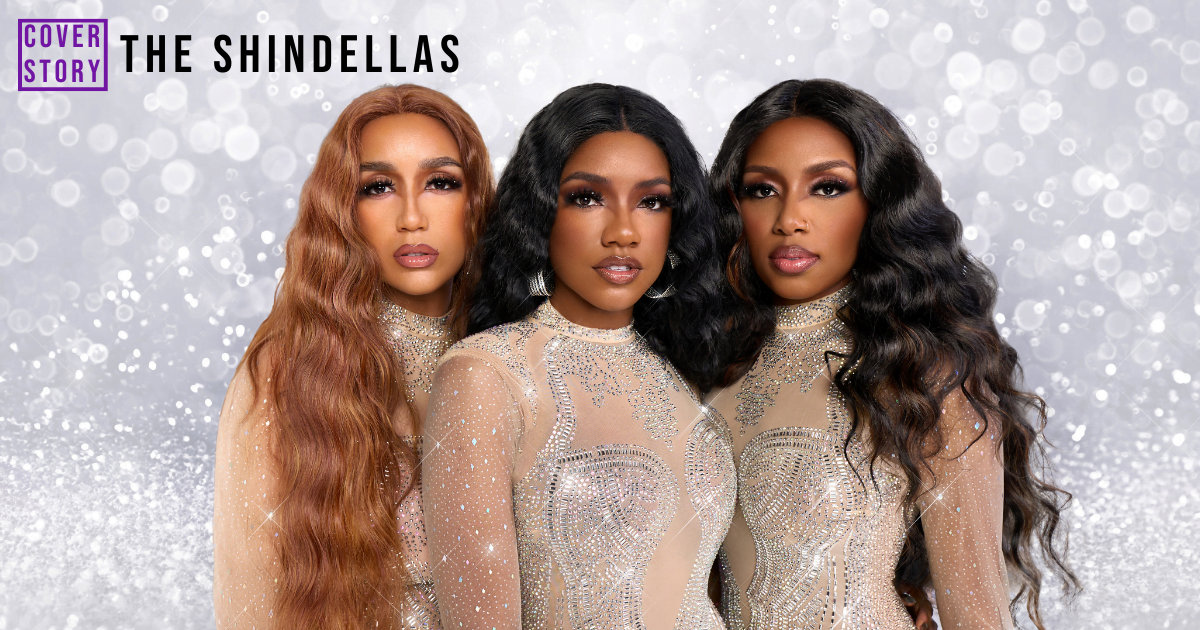
There’s no group around who either looks or sounds like The Shindellas, a trio who’ve shown they can charm audiences in every setting – from a New Year’s Eve party hosted by Nashville’s top urban contemporary radio station, 92Q, to a Grand Ole Opry crowd on a Tuesday night. Kasi Jones, Tamara Chauniece, and Stacy Johnson exude confidence, charm, and poise with very specific and thoughtful outlooks not only about their music, but also the messages they want their fans to get from their songs.

“We embrace the term girl group,” Kasi said, when asked if they found the term outdated or demeaning when used in 21st century conversation. “We’re always been about empowering women and girls, expressing strength and unity in our songs about love and life, and telling the truth. We view ourselves as expressing the term in every positive sense.”

They’ve been operating since 2017 in the town of Franklin, 20 miles south of Nashville. The trio arrived to become part of Weirdo Workshop, a company started by the writing/production duo of Claude Kelly and Chuck Harmony, Louis York. Their versatility and flexibility in working with artists – such as Mary J. Blige, Miley Cyrus, and Bruno Mars – and in particular women artists, all who come from vastly different places, has worked well. The Shindellas credit Kelly and Harmony with, among other things, providing them their unique name.

“It was definitely Claude and Chuck’s idea,” added Tamara. “We wanted a name that sounded fresh and generated excitement, as well as one that didn’t sound like anything else out there at the time.”

The Shindellas also emphasize and celebrate the collective, both as performers and songwriters. There is no lead vocalist by definition and each one doesn’t even consider that possibility. This is the ultimate trio, one whose harmonies and polish are pinpoint, yet there’s no hint of the tedium or boredom that might come from a group who’s overly rehearsed. The emphasis and focus on originality in performance, ethos, look, and viewpoint is also a reflection of the fact that all three have their own backstories of dissatisfaction – with things that they’ve witnessed and/or encountered, in terms of the music business. Stacy Johnson once worked with a family-operated music company in Chicago, before moving on to doing vocals on dance tracks, plus a brief tenure in a girl group where she quickly departed over concerns about how she was being asked to present herself. She was intrigued by Harmony’s idea of creating a trio whose members valued respect in every aspect of their treatment and presentation.

Jones had seen some of the worse aspects of predator behavior in Los Angeles after she’d previously done musical theater and booked her own overseas tours as a contemporary soul artist. When she made a visit to the Workshop and was impressed by the treatment and attitudes, she knew she’d found what she wanted. Chauniece had been a child gospel singer working on the Texas circuit with her mother managing her. She got a temporary boost in exposure and stature from being on the fifth season of The Voice, but was uncomfortable with the notion of getting lost on a major label. Both the Workshop and the trio’s other two members proved an ideal fit.

The Shindellas have definitely been expanding their fan base and earning more acclaim over the past few years. Their 2019 EP Genesis created some buzz and more followed their 2021 full-length debut, Hits That Stick Like Grits. In addition, their elegant and elaborate stage shows drew raves for being classy, yet also enticing. But their latest, Shindo, which was released in October, has given them the industry boost always vital for acts that are still building a base. It’s given them their first radio hit with “Last Night Was Good For My Soul,” an energetic, superbly sung party tune that reached the Top 10 on the Billboard Adult R&B airplay chart. It was also the first one where they got an assist from an outside partner, as the Nashville indie label Thirty Tigers helped propel the single forward.

Shindo is also a great spotlight for the group’s stylistic versatility. While their links to such vintage girl groups as The Supremes and The Pointer Sisters can clearly be heard, they’ve also got their own vibrant, engaging, and special sound.

For instance, the single “Up 2 You” demonstrates their ability to excel within a groove-dominated work, while “Kiss N’ Tell” has an edge in its discretion-demanding narrative, and “Juicy” has a sassy, naughty tone. The “Juicy” video also generated plenty of attention for its inclusion of Kasi Jones reading Angela Davis’ volume, Women, Race & Class.

Still, while they never expressly embrace the notion of a lead or front vocalist, at times, some songs do spotlight individual members talents. Jones’ facility with verbal improvisation emerges in “Last Night Was Good For My Soul” as one example. Yet, the notion of any one vocalist exiting the unit – in the manner that Diana Ross did the Supremes or like Bonnie Pointer departing her sisters – doesn’t seem on the horizon.

While Nashville has long had a reputation for not exactly welcoming artists of color that don’t fit into very specific genres or formats, the Shindellas are quick to praise Music City as being highly supportive of their music. “Nashville has welcomed us with open arms,” Johnson says. “We’ve never been treated with anything other than warmth and respect, and that’s whether we’re talking about the Opry, urban contemporary radio, fans, it’s just been wonderful.”

The trio has some ambitious plans and hopes for 2024 and beyond, our interview being completed just before the end of 2023. Most notably, they have some potential European and international tours upcoming. “I’d love to see us get some of our music into some films down the line,” Johnson continues. “We’d love to do more shows around Nashville,” chimes in Tamara. “Especially the Ryman, and we’re also thrilled to be appearing at the New Year’s Eve Party sponsored by 92Q!”

“We also are going to be doing more songwriting and collaborating [in 2024],” concluded Jones. “We really want to not only build a lasting legacy as performers, but also contribute as songwriters. We’ve all got backgrounds in other styles and we bring those influences into our performances. We’ve also got ideas for songs that we’ve been working on. I predict that people are really going to be pleased with what they hear from us, and we’re determined to make 2024 an even bigger year for the Shindellas.”


Photo Credit: Ezelle Franklin

WATCH & LISTEN: Two Tracks from John Leventhal’s “Debut” Album

Earlier this week renowned guitarist, producer, and engineer John Leventhal announced his debut album, Rumble Strip, to be released on RumbleStrip Records, a label founded with his wife and collaborator Rosanne Cash that will be distributed by Thirty Tigers. Yes, you read that right, a man known for his nearly 50-year, multi-hyphenate career in roots music is releasing his first ever proper solo album. Leventhal made the announcement with the release of two tracks, an instrumental guitar piece entitled “JL’s Hymn No. 2” and a gritty, rockin’ Americana duet with Cash called “That’s All I Know About Arkansas.”

“JL’s Hymn No. 2” showcases the guitar prowess that has made Leventhal such an in-demand sideman and session player across his entire career. On both of these tracks, his playing reminds of such country and roots renaissance men as Marty Stuart, Buddy Miller, David Bromberg, and Larry Williams with each of his constituent musical skills – as engineer, producer, and picker – on full display. “That’s All I Know About Arkansas” is like a post-modern “brother” duet, with Cash stepping into the role of Buddy’s Julie Miller, or Larry’s Theresa Williams, bolstering and supporting her musical- and life-partner in a touching and artistically successful role reversal for the pair. You can hear the passion they have for each other’s music, for each being members of each other’s “bands.”

With a resume and career as exhaustive and expansive as Leventhal’s, it’s remarkable that he’s only reached this pivotal, “debut” milestone at this late-stage point. And, more remarkable still, is that Rumble Strip is clearly another opportunity for Leventhal to challenge himself, break new ground, experiment with new sounds and textures, and continue to grow, morph, and develop as a quintessential musician-producer. It’s engaging and exciting to hear him turn his studio control room magnifying glass onto his own music, his own record.

Rumble Strip will be released on January 26. Enjoy these two tracks from the project now, right here on BGS.


Photo Credit: Wes Bender