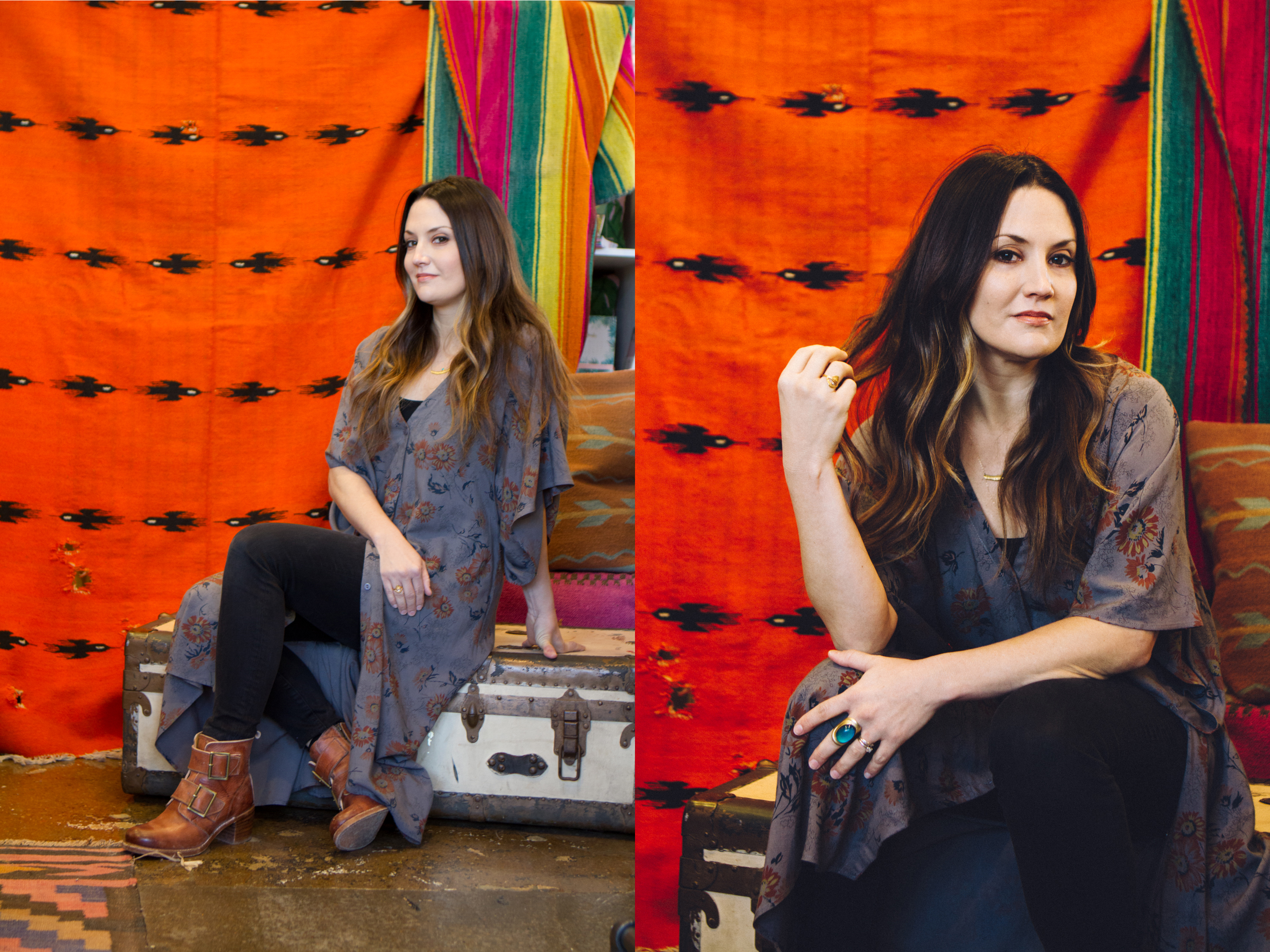
How I Got to Memphis: Cory Branan in Conversation with Coco Hames

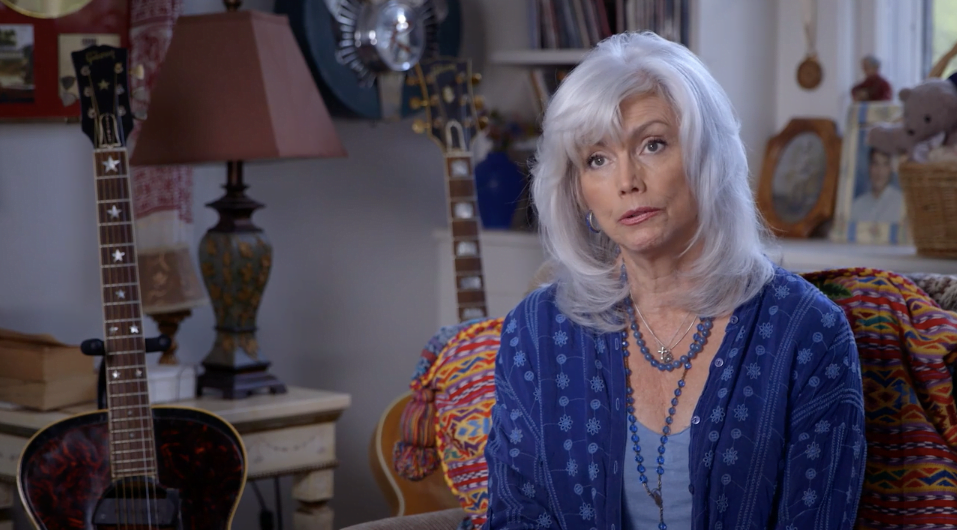
Cory Branan and Coco Hames lived in Nashville for years, had mutual friends, moved in the same singer/songwriter circles, released records, played shows, lived life, but somehow managed never to actually meet each other. “We would have absolutely met, if I’d ever left my house for five years,” Branan says, somewhat apologetically. “I just never go out when I get off the road. I stay at home and just look at the wife and child.”

“I never go out,” says Hames. “People are always trying to get me to go to some new bar, and I’m like, ‘I live in bars! I would rather put on some soft pants and stay at home and read.’”

Their homebodiness is well-earned, even if it’s not the only thing they have in common. Both have been road warriors for the better part of the 21st century, Branan as a solo artist and Hames as the frontwoman for the garage-pop outfit the Ettes. He writes witty, roguish songs full of concrete details and wry observations, like John Prine — if he was really into vintage synths and classic rock. Hames’s songs are minimal and smart, eccentric and rambunctious, as though she’s triangulating the spot where the Ramones, Josie & the Pussycats, and Tammy Wynette overlap.

Plus, they’ve both just released what may be their best albums to date. After the Ettes made an amicable split, she went solo with a self-titled record that shows more range and acuity, toggling between a torch song like “I Do Love You” and a country lament like “Tennessee Hollow.” On Adios, Branan writes movingly about the deaths of his father and grandparents and the ongoing trials of small town heroes like the heroine of “Blacksburg” and anyone sentenced to live in “Walls, MS.”

Neither of you live in Nashville anymore. These days, you don’t leave the house in Memphis, Tennessee.

CH: I’ll just tell you: I fell in love, got married. That’s what brought me to Memphis. I left Nashville and moved here a couple years ago, and I love everything about it. I’m very happy here. Actually, in a little bit, I’m going to go see my friend Margo Price at Minglewood Hall. I don’t know if you know her, but I wouldn’t be surprised.

CB: I met Margo, yeah, just a couple times. I’ve been back in Memphis for a whopping two week altogether. Nashville priced us out. We found a cheap place in Memphis, and it was just decided. We got the truck the day we decided to move, and we loaded up. We moved the next day, returned the truck the next day. I told my wife, “Well, it’s a new place, baby. I’ll see you in two months.” She’s already painted the whole place. She’s got it on lockdown. She’s good at moving.

Memphis has great history, but Nashville is still such a big industry city. Did it feel strange to leave that behind?

CH: I have put my foot in my mouth more than once, for more than one city. I’ve lived in New York and L.A. and London and Madrid and Nashville and Austin and Memphis. I always say something stupid about one of those cities, but I don’t really mean it. Nowhere is really home for me anyway, so it’s not really hard for me to leave. I opened a record store in Nashville, but it was getting really expensive. And my husband was visiting me, and I said to him, “What do you do when you’re an adult and you fall in love with somebody and you want to be with them?” He said, “Well, you know, you move to Memphis or I could move to Nashville.” I’m like, “I’ll move to Memphis.” So it wasn’t super weird. It’s a cool place and there’s a lot going on, but nothing I miss too much, to be honest.

CB: What record store did you have?

CH: It’s called Fond Object, and it was up in Riverside Village on the east side.

CB: I didn’t know that was your place. I’ve been up there a few times. I played behind it one time.

CH: Did you get to meet my goats and my pig?

CB: Yes. My son was fascinated. He wanted to take one home.

CH: When I was leaving, I knew it was in capable hands, so I signed off on it and gave it to my bandmates. I think they lost their lease and moved downtown.

CB: I liked living there, but it’s all the same, honestly. Mainly Memphis means geographical ease. There’s a reason FedEx is in Memphis. It has access to Chicago and New Orleans, and it’s so close to Atlanta. When I lived in Austin, you can get in to Mexico before you can get out of Texas. I do well in three or four cities in Texas. L.A., you wouldn’t think it, but it’s pretty isolated. I’m spoiled from being in Memphis. It’s really easy to tour out of. You can do two-week runs in any direction, as opposed to California, where it’s an ordeal going anywhere but the West Coast.

When I lived in Memphis, there a big Memphis-Nashville competition that everybody in Memphis knew about and nobody in Nashville had any clue about.

CB: Exactly. They didn’t know they were in the fight. I’m happy to be from Memphis, but it does give you a little bit of a chip on the shoulder. There’s no scene here. It’s splintered and fractured. There are great musicians who never leave. You can go see somebody who’s amazing, but they’re not touring very much. On the other hand, there’s never anyone in the crowd that can help you. There’s never a producer, never a publisher that’s going to offer to help your career. Nashville has that element. I didn’t enjoy that element. If you’re playing to a stubborn Memphis crowd, it burns off the chaff. If you’re not alive for it or you don’t love it, they’re going to expose you.

CH: Nashville is a hard place to feel comfortable, because I don’t think they’re really interested in anything, which feels very sad and lonely. I’d rather you dislike me than try to chat me up about who we both know. That’s the worst part of what I do. I’m not very schmoozy. I’m probably the least schmoozy person. There are plenty of people to pay for that sort of thing, but I’m not crazy about it.

CB: Don’t get me wrong — there are great things about Nashville and there are shit things about Memphis. It’s a rough town, and there’s a huge gap between the haves and the have-nots. They’re refurbishing downtown, but I don’t know if they’re working a bit on education. Nashville, on the other hand, has no infrastructure for the massive number of people that are moving there, but the city itself is a little more thirsty. They’ll go out to a show: “Oh, I don’t know what it is. Let’s go check it out.” Memphis, they need to know that their buddy is going to be there. But you can be at a party and the guitar will not come out. Unlike Nashville. Some asshole’s always pulling out an acoustic guitar in Nashville. That’s the best way to kill a party right there.

CH: That’s my cue to leave.

I wanted to ask you two about Memphis and Nashville because I feel like place figures very prominently into your songwriting. There are lots of place names in your lyrics, along with a sense of travel and movement.

CH: Cory, you can go first because you’re from here. I’m from Florida, so place has always been something I was trying to get away from.

CB: Really?

CH: I don’t know. It’s more in my record collection than it is outside my window. It’s cooler to be from Mississippi.

CB: That’s the thing. I grew up in a damn suburb. I was a little hoodrat. My grandparents had a farm, but my old man worked at FedEx. He moved us up to the last town in Mississippi, so I was just as much a suburban kid as anybody else. I grew up with the music in the church. Gospel has blues roots, maybe a little more prominent than your typical Southern Baptist reading out of the hymnal. It swings a little more. It depends on where I’m playing whether people consider me country or not. When I’m out opening rock shows or something, as soon as I open my mouth and they hear the accent, they’re like, “Oh, he’s country.” You can’t wash it off. Everything I do, it’s filtered through that lens.

But my music is all over the place. I don’t really play a particular genre. I tend to stay away from a lot of things that I love — old blues, the Piedmont stuff, that’s all scripture for me. Maybe some of the finger picking works its way in, but I don’t really play the blues or anything. I just stay away from that stuff. There’s more of a white suburban thing to me, I think. My music is more about Big Star or the Replacements. That’s sort of blues music, in a way. I’ve always said there’s a reason why Johnny Cash fans are Clash fans and Clash fans are Johnny Cash fans.

Stylistically, both of your albums are all over the map. You get a lot of different sounds and genres, but they all make sense as part of this larger musical personality that you project.

CB: Probably the last record [2014’s The No-Hit Wonder] is the closest I’ve gotten to a consistent sound. I hammered it out really fast, and they just happened to be a bunch of roots-based songs. I’m always about whatever the song sort of wants, and I don’t think as an album, as a whole. I try to structure it later, as far as the pacing of it and what songs go where. I definitely play that loose. Frankly, my obscurity lets me do that. I would probably have a bit more of a career if I didn’t change it up so much. I was on tour with Lucero, and [frontman] Ben [Nichols] was listening to Adios and he said, “Why don’t you do a full album with this kind of song and then another whole album of this kind of song?” I was like, “Because it bores me, and I don’t get to do enough albums to do that.” It takes two-and-a half-years to get a new record through the red tape.

CH: That’s true. At my level, whatever that is, I can do whatever I want, so I do whatever I want. When I was in the Ettes, it was very formulaic without me really knowing it. I was writing for this specific group of people, so of course I kept doing the same thing. There are people who are very sweet and love my band, and I’m sure they want all the songs to be just like that. But with this solo record, I wrote all the songs and let them go wherever they went. It’s all over the place. The whole point was to try these new things, and hopefully I did a good job with them.

That seems most prominent on “I Do Love You,” which reminds me of Dusty Springfield. That’s a nice thing to hear between a country song and a garage song.

CB: I get that same vibe off that one.

CH: I was trying to go for something epic, because I wrote it about my husband. I wanted an epic love story and big feelings. When I was singing it in the studio, I had my arms up like Eva Perón. I’d never really sung like that before. I just assumed I could do it. No one was telling me I couldn’t, so why not?

You’re both writing songs about real people in your lives. That songs about your husband. There are some songs about your dad and your grandparents on Adios.

CB: The one about my father, I wrote that one right after he died, and I never played it out. It seemed a little too specific. I like songs to be useful for other people. I never want to be like, “Oh, look at my pain.” But my wife told me to just shut up, play it out a few times, and see if anybody responds. She was right, as always. Since it seemed to be useful for other people, I went ahead and cut it. But usually, the closer it is to me, the more I will cast it with other characters and other situations. I’ll take all that grief and mourning or even joy and cast it into another storyline. But “The Vow” was very specifically about my dad and it seemed like it worked out all right.

CH: What do you mean? You try to put that sort of emotion or experience away from yourself? You try to insert maybe like a “he” or a “she” where it might be a “me”?

CB: That’s part of it. Also, I’m just not a fan of diary writers. When he died, I did put out a record after that [The No-Hit Wonder], and there was a song on there called “All I Got and Gone.” It’s about a guy in New Orleans and a woman, and there’s a note that he found, but you don’t know if it’s a suicide note or a “Dear John” letter. I was mourning, but I put that feeling in a completely different scenario. That song for me was like, “Okay, here we go. I got this out of me.” But no one would ever connect that, you know? I don’t tend to write with any sort of precision, while I’m still in the whirlwind. I like to get perspective on things and, if I’m going to try to do the old man justice, it’s hard to get a whole human being in a three-minute song.

CH: Yeah. Especially with something like that, do you ever feel like it’s too … I’m going through something that happened recently, and it means so much to me that it feels cheap to approach it where I’m going to put it into song. A lot of people write like that. That’s part of how they get it out, but to me, it’s so precious to me that I can’t distill it.

CB: I know exactly what you’re talking about there. Added on to all of this is that I wanted to do right by the old man and not be maudlin. I didn’t want to manipulate emotions. It’s hard to earn the genuine feeling of “Okay, this was a solid person, a human being.” The second verse is talking about how he gave shit advice. It’s got humor in there, because the old man was funny. But he was also very stoic and his advice usually amounted to, “Don’t do it.”

I Do Love You” is obviously a very different song, but the approach is similar in that you’re writing about a real person and trying to capture that complex relationship in three minutes of music.

CH: I think everybody has had the feelings in that song. I hope everybody has. But I very rarely feel ready to immediately turn my observations or my feelings about important things into a song. It’s not something that I usually need to do, and so I don’t do it. But something that affects your life so strongly, maybe it’s okay not to write about it as a way to understand it, because it’s so big that I don’t think it’s fair for me to understand it yet. So I wait. If something strikes me or I get drunk and write a bunch of stupid lines and one of them is good, maybe it will spur something useful. That’s the most I can do and, if it comes back around and still stands up, if I still know what I was talking about, then it can make me say more.

CB: I won’t mention anybody’s name, but there is an artist I really love and respect. They got successful and found a good relationship, and then they trashed it on purpose, because they thought that’s the only one they could create. It’s the whole tortured artist myth. John Prine has my favorite quote on that: “I’d rather have a hot dog than a song.” Take the joy. You can have both the joy and the song. People say to me, “You’re a relatively sane human being now that you’ve settled down and stopped acting like an asshole, and you have kids, so how do you write when you’re happy?” Well, I know it’s all fleeting. I know all the good stuff is only here for a little bit. My fears and dreams, they go deeper and darker now that I have kids and I’m living for other people. I have no problem writing sad songs, but I take the happy while it’s there.

CH: I don’t like to see somebody who’s a wreck up on stage. I’ll be there. I’ll support them, but really I’m like, “You should take a break, man.” Because I’m not that way. If everything was going wrong and I was unwell, then I couldn’t write. I’d be so depleted and sad and wouldn’t see the point of any of it. I’m a super happy camper right now, but don’t worry, sad things will keep happening — probably as soon as I hang up the phone.


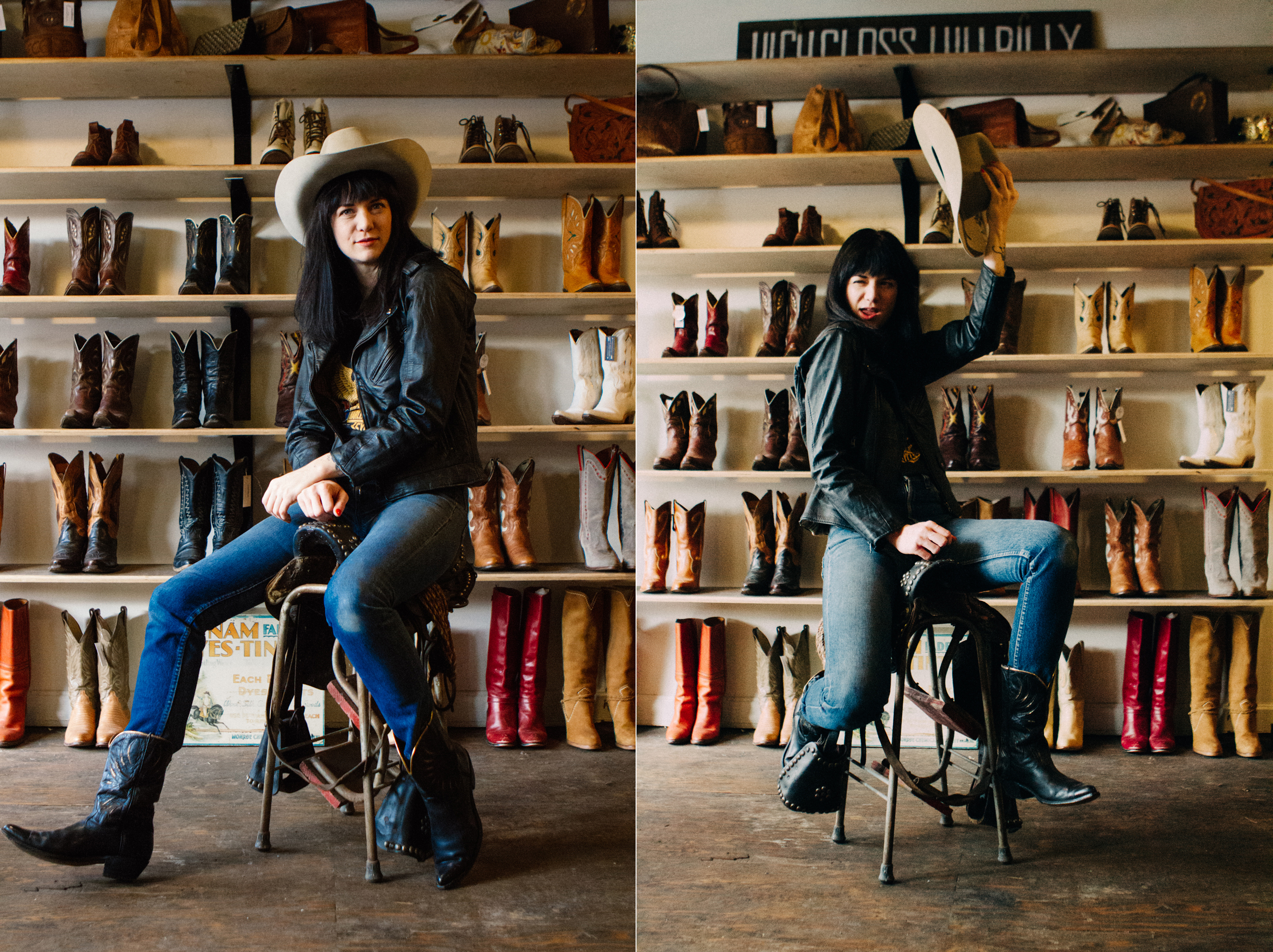
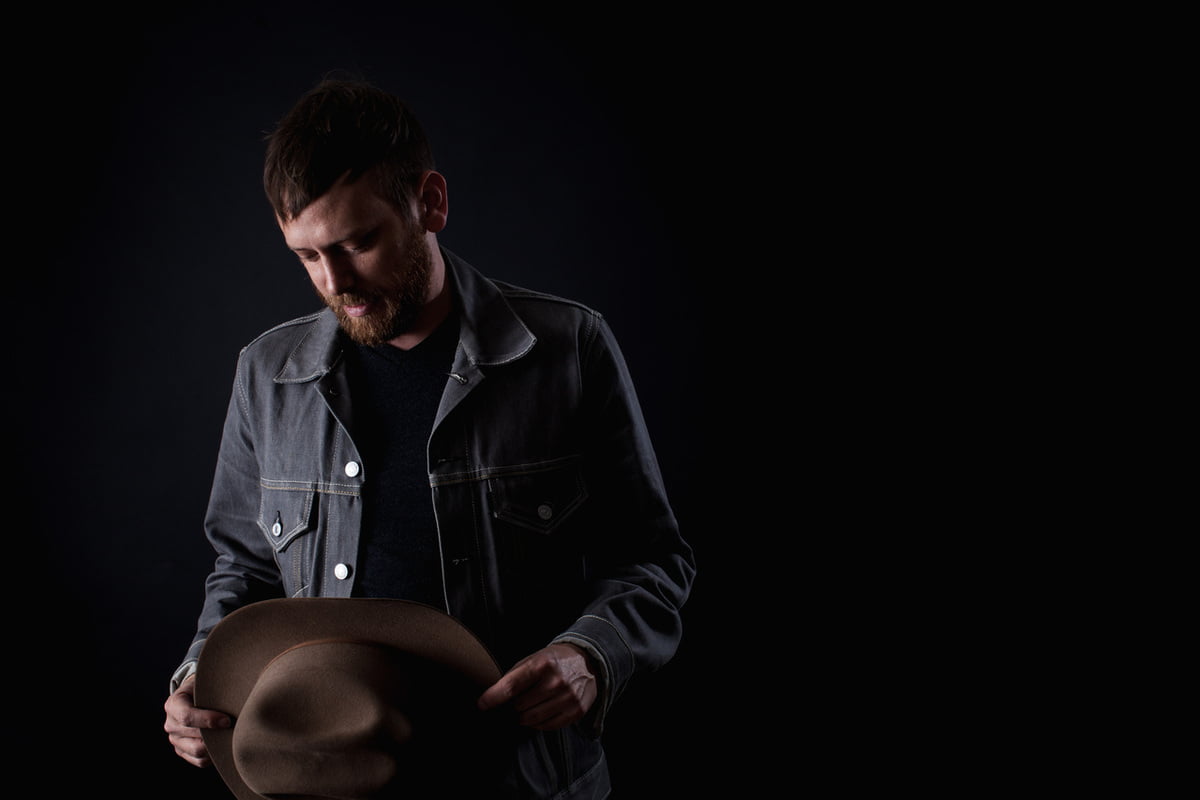
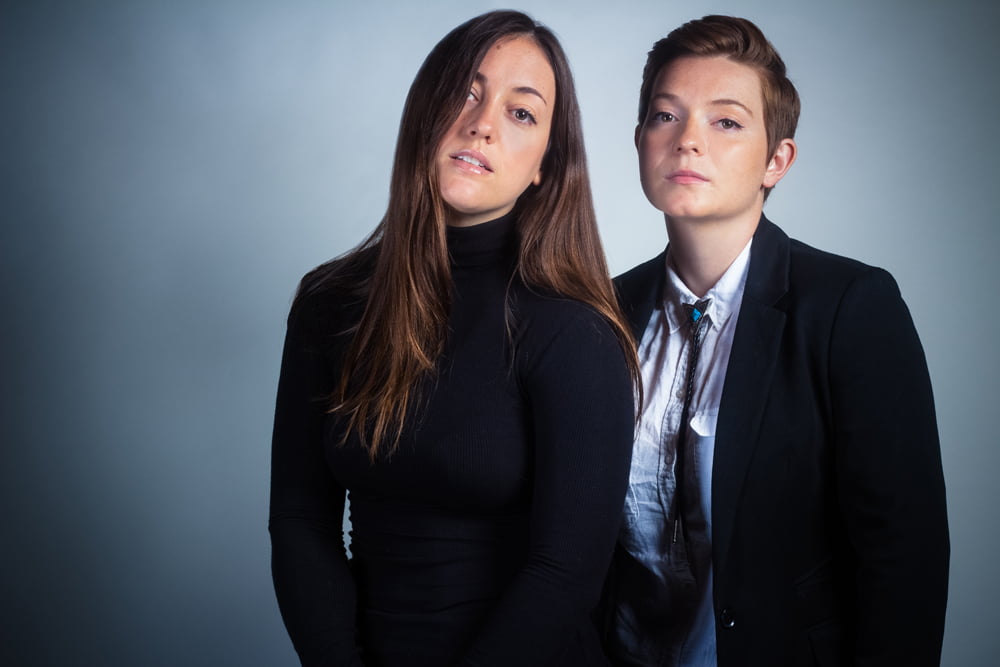
Cory Branan photo by Joshua Black Wilkins. Coco Hames photo by Rachel Briggs.
The Kernal, ‘Tennessee Sun’

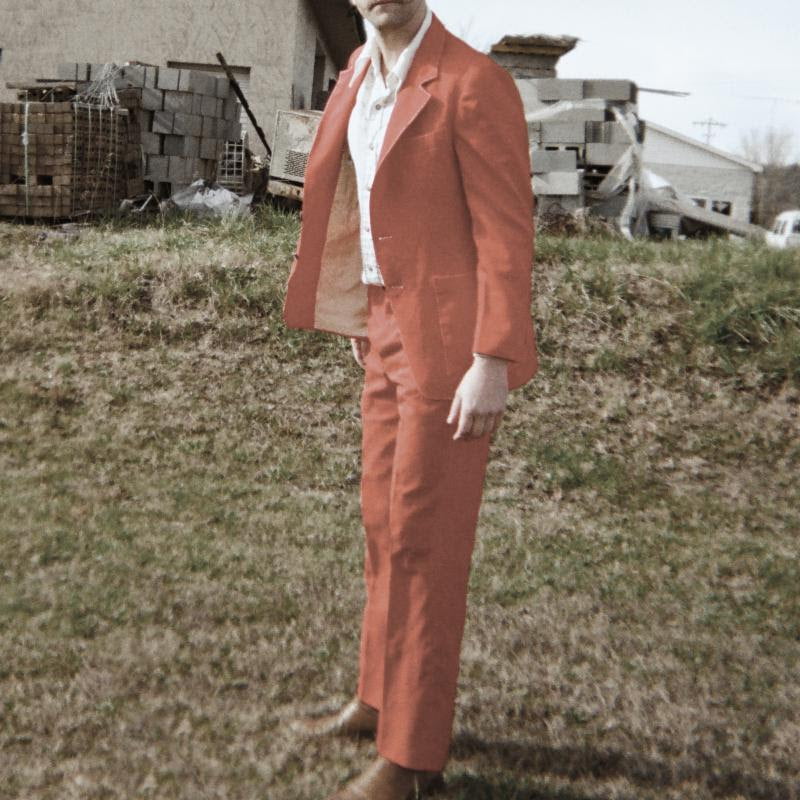
A little over four years ago, I found myself wandering the streets of Asheville on a Sunday night, not too long after I left New York for Nashville, somewhat drunk on Spanish red wine from the local tapas place, and in search of mountain music. For someone new to the South, Asheville — tucked on a hilltop with winding, vaguely European corridors — felt almost mythical, and what happened next sort of was. I’d wandered into a bar and there, on the stage, was a man in a red suit, singing country music. It was past midnight, but couples in cable knit sweaters were waltzing in circles — not just to the slow songs, but the fast ones, too. I’d never quite seen that sort of earnest swing, short of ironic line dancing I’d witnessed once at a warehouse party in Brooklyn, where far too many people were wearing far too many things made out of bandana fabric.

That man in the suit, I would discover, was the Kernal — a name I’d see pop up again around Nashville as a solo artist, bass player for Andrew Combs and Jonny Fritz, and generally enigmatic figure who served a key role in the local music scene while refusing to actually live in it. On March 3, the Kernal will release his debut record, Light Country, officially introducing his breed of smart, often witty twang that infuses that sense of locomotive, gospel-tinged mystery. “Tennessee Sun,” premiering exclusively here, shows his skills at the lyrical ramble, conjuring up Bob Dylan and, in a certain kind of sonic onomatopoeia, a ’70s-era refrain that just feels like those warm Tennessee rays kissing the skin. “Lettin’ go of everything that I don’t need on my way down,” he chants, and you believe him. The Kernal doesn’t need much to be convincing … except, maybe, a red suit and a room full of people ready to dance.

Nikki Lane: Vintage Is As Vintage Does

“I’ve never had that moment … where you walk in and a girl has your dress on — that doesn’t happen to me. That doesn’t happen to the people I get to work with and curate ideas for because we’re not using something that’s already been mass-produced. We’re trying to create a look that someone else will mass produce because we’ve given them that inspiration.” — Nikki Lane

Nikki Lane’s passion for rescuing vintage pieces, or puppies as she jokingly refers to them, began when she was a stylist in Los Angeles and New York City. She took note of the vintage items designers such as Karl Lagerfeld were pulling their inspiration from. Those vintage pieces — the OGs, themselves — inspired everything from the fabric weave and color patterns, to the structure of items that hit the runway to become the next mass-produced fad. Seeing firsthand the chain of the fashion industry production, Nikki fell in love with vintage — the inspiration itself. From then on, she worked to create looks, for herself and clients, that others would want to recreate instead of wearing something that’s already available in the market.

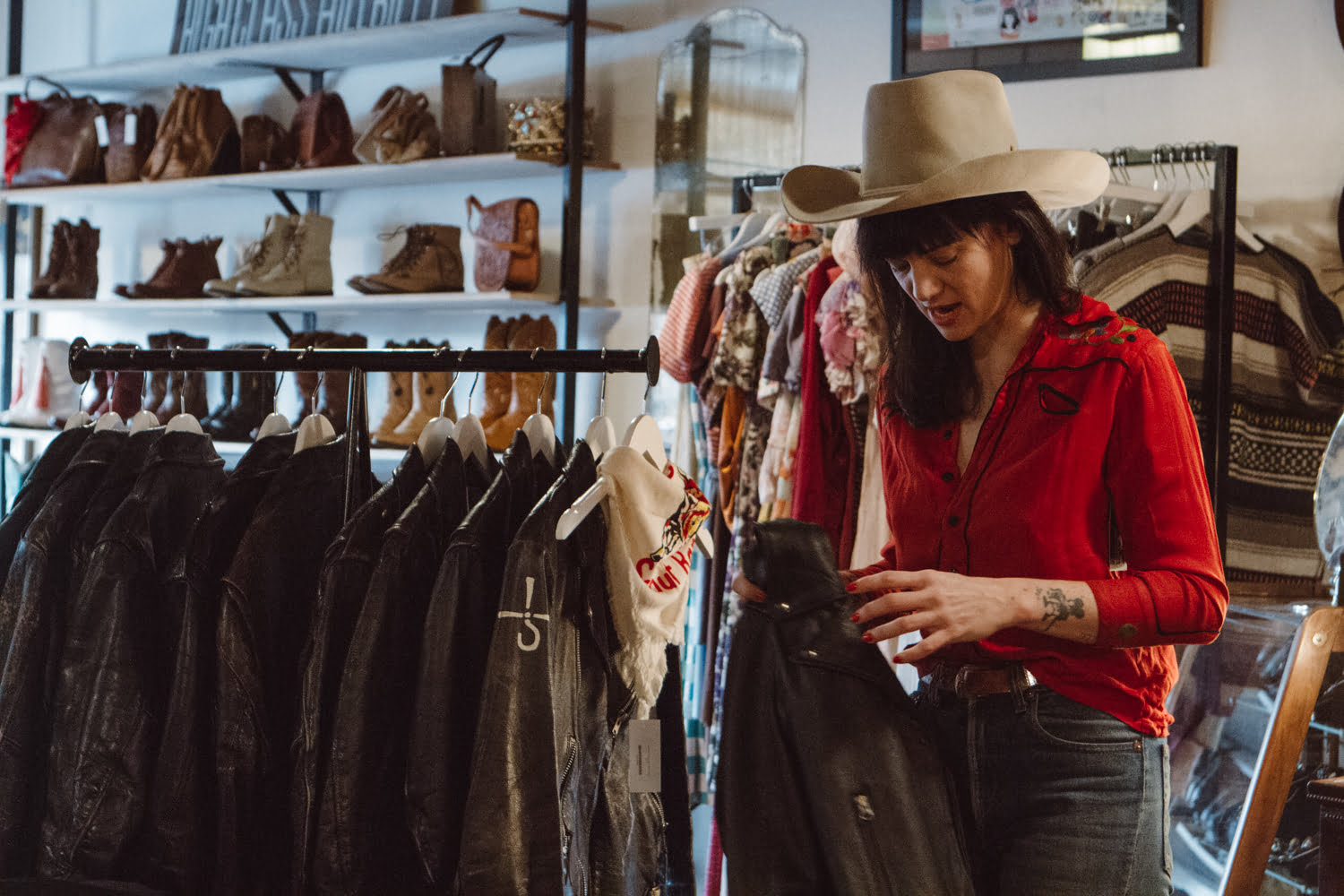
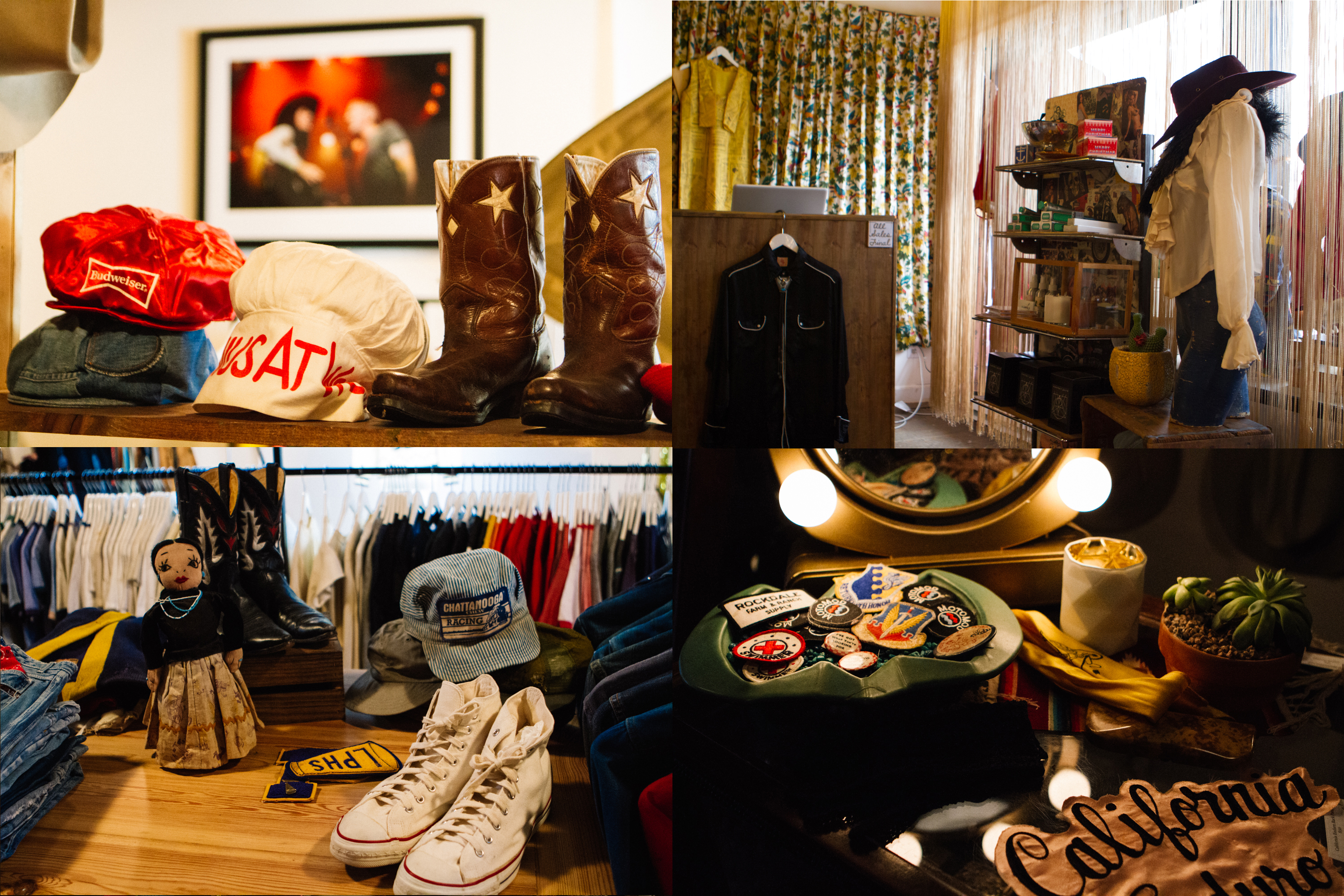
Her love of vintage and drive to create original looks led her to an oversized personal collection of clothes sitting in a backroom, that eventually grew to a horse trailer, and now the 600-square-foot shop that is High Class Hillbilly. All items have been personally vetted by the stylish singer/songwriter and, if it’s not something she loves, it doesn’t make the cut.

When it come to her personal style, only her shoes, underwear, and single pair of Imogene + Willie jeans are new. Everything else, head-to-toe, is vintage. Juggling a shop and music career, Lane looks for individualized vintage clothing she can function in while she’s in town or on tour. She’s created an iconic look that follows her lifestyle and plays a huge part in her cohesive brand.

After speaking with Nikki about her vintage pursuit, I have a few bits to pass along to those interested in their own collection:

– Thrift stores and vintage shops are not the same. Sure, every now and then you’ll get lucky and find an awesome vintage piece at the thrift store, but most the time, it’s just older clothing. Flea markets, antiques shops, estate sales, and High Class Hillbilly are good places to start your vintage collection.

– Good vintage shoes/boots are rare. If you come across a beautiful pair, don’t think twice, make them yours.

– If you don’t own a pair of vintage Levi’s, your ass is missing out. Seriously, they make your butt look amazing and the denim holds up a lot longer than today’s Levi’s.

– Never underestimate the power of an ol’ Stetson. Try to keep one at arm’s reach or, at least, in your car.

– If the vintage item doesn’t work for you, just re-sell it. It’s already be worn for years, so no one will be weird about you trying it out for a few days.

– Classic red nail polish goes with every single outfit.

– When you create a style that follows your lifestyle and interests, you can count on having forever pieces versus trendy pieces.

Pro Tip: Chances are, if you start owning more than a handful of vintage pieces, you may find yourself in need of a good Alterations Specialist. I cannot stress how important it is for you to do your homework and read the reviews. Your best bet is almost always taking your prized vintage to someone based off recommendations. If you are nervous about sending your most treasured piece to an alteration shop, start by taking something you are less attached to.

Do you have any favorite vintage spots in town? Any recommendations on a killer alterations shop? Let us know!

Root 66: Travis Linville’s Roadside Favorites

Name: Travis Linville
Hometown: Oklahoma City, OK
Latest Project: Up Ahead

BBQ: Arthur Bryant’s — Kansas City. The real deal in KC bbq.

Truck Stop: Clines Corners — New Mexico. You have to stop at Clines or you might run out of gas. Also rattlesnake paraphernalia.

Coffeehouse: Barista Parlor — Nashville, TN. I’m cool with Waffle House coffee, but if I wanna get in touch with my inner coffee snob, Barista Parlor does it well.


Satisfies

A photo posted by Travis Linville (@travislinville) on

Dive Bar: White Water Tavern — Little Rock, AR. Dive bars don’t get any better than this one.

Record Store: Garageland — Spokane, WA. Micro record store/bar/food/vintage arcade.

Book Store: Square Books — Oxford, MS. I love the town squares! Oxford is one of my faves. Also, books are sometimes square.

Guitar Shop: Carter Vintage Guitars — Nashville, TN. Every time I visit this place, I am thankful I don’t have any money.

House Concert: Wyldwood — Austin, TX. Best setup. Beautiful place. Great hosts. And it’s 75 in December.

Backstage Hang: Saturn — Birmingham, AL. I can’t even … I once played a show there and didn’t leave the green room for three months.

Airport: Denver International. Rockies on approach. And I like the piano riff as the train doors close.

Highway Stretch: Highway 1 Vancouver to Calgary, if I’m not driving. If I am driving, then it’s I-80 from Salt Lake City to Cheyenne.

Car Game: “How Tall Is That Tower?” Self-explanatory gambling game. I use an aviation obstacles app to find exact heights, after the bets are in.

Driving Album: Love and Theft — Bob Dylan

Natalie Hemby Bundles Up in Style

It has been so dang cold this season and the 5 pm nights have me fighting off the naps. With the gloom of Winter in full swing, it was a true breath of fresh air to meet up with Natalie Hemby at her favorite shop, Castilleja, to pick out her Winter wardrobe essentials. If you’ve never been to Castilleja, it’s a beautiful shop that captures the spirit of a well-traveled woman who embraces the colors and patterns of a sunny Summer day. It was the perfect place to explore with Natalie and her bold, playful style.

Here are a few of my favorite wintery essentials pulled by Natalie and Castilleja’s owner, songwriter Liz Rose.

Bomber Jacket

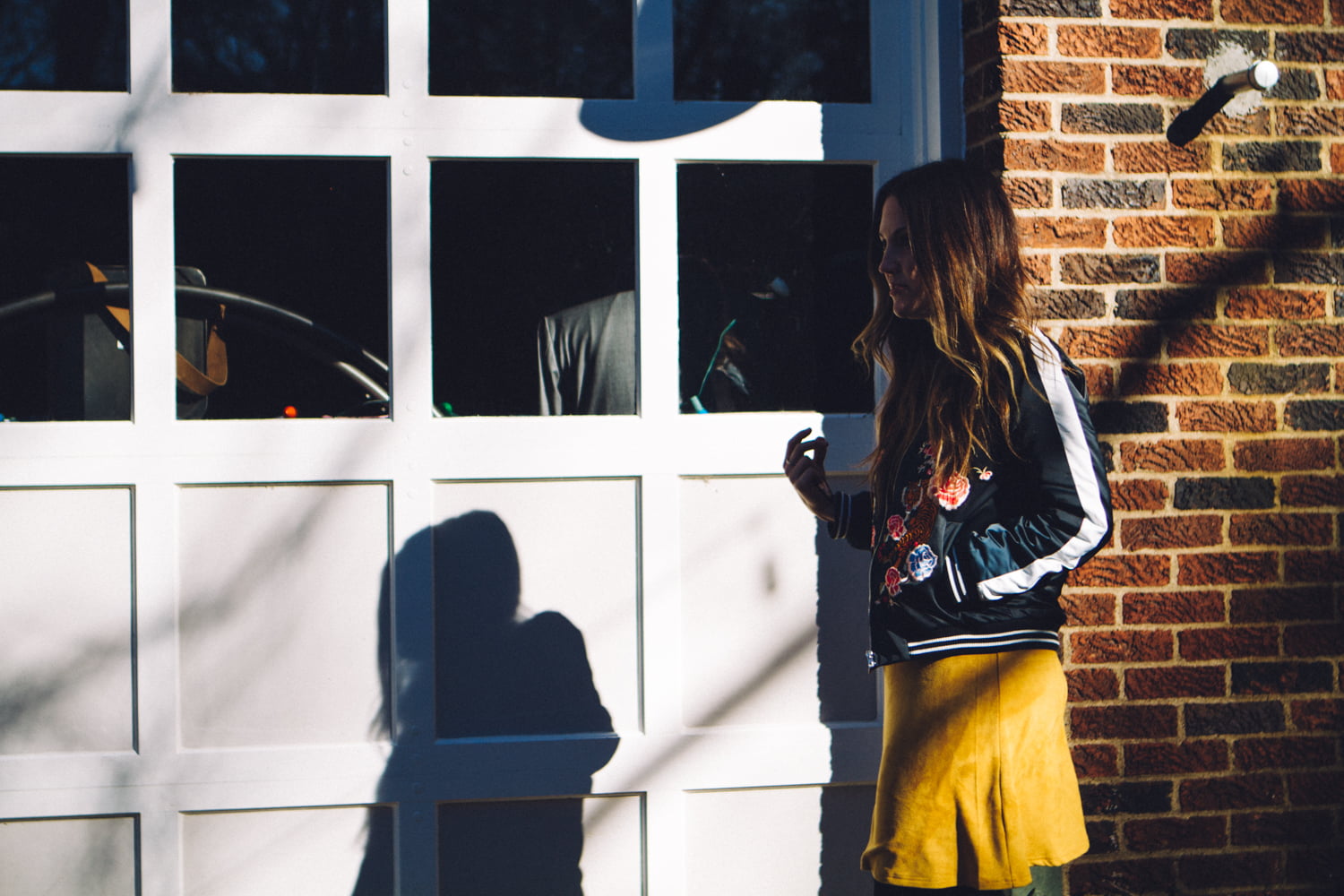
From the runway to the streets, bombers have made a huge come back in the last year. They can stand alone as a statement piece or they can be mixed and matched with other exciting wardrobe pieces for a louder look. I particularly love seeing this embroidered Tiger Bomber Jacket paired with a bright solid dress. If you aren’t into dressing up, just throw this on over a solid hoodie and skinny/slim-fitting pants.

Tip: Don’t forget your sunnies with this jacket!

Floral Kimono

Kimonos are hands-down my favorite layering piece year-round. For those of you who would love to layer but don’t know where to start, throwing on a patterned kimono is a simple way to spice it up.

Tip: Run a curl wand through your hair and pair with a nice shoe. Since most of your outfit will be hidden under the kimono, your shoes and hair will stand out and you don’t want your look to lean more towards the Dude vs. chic boho badass.

White Embroidered Long-Sleeve Blouse

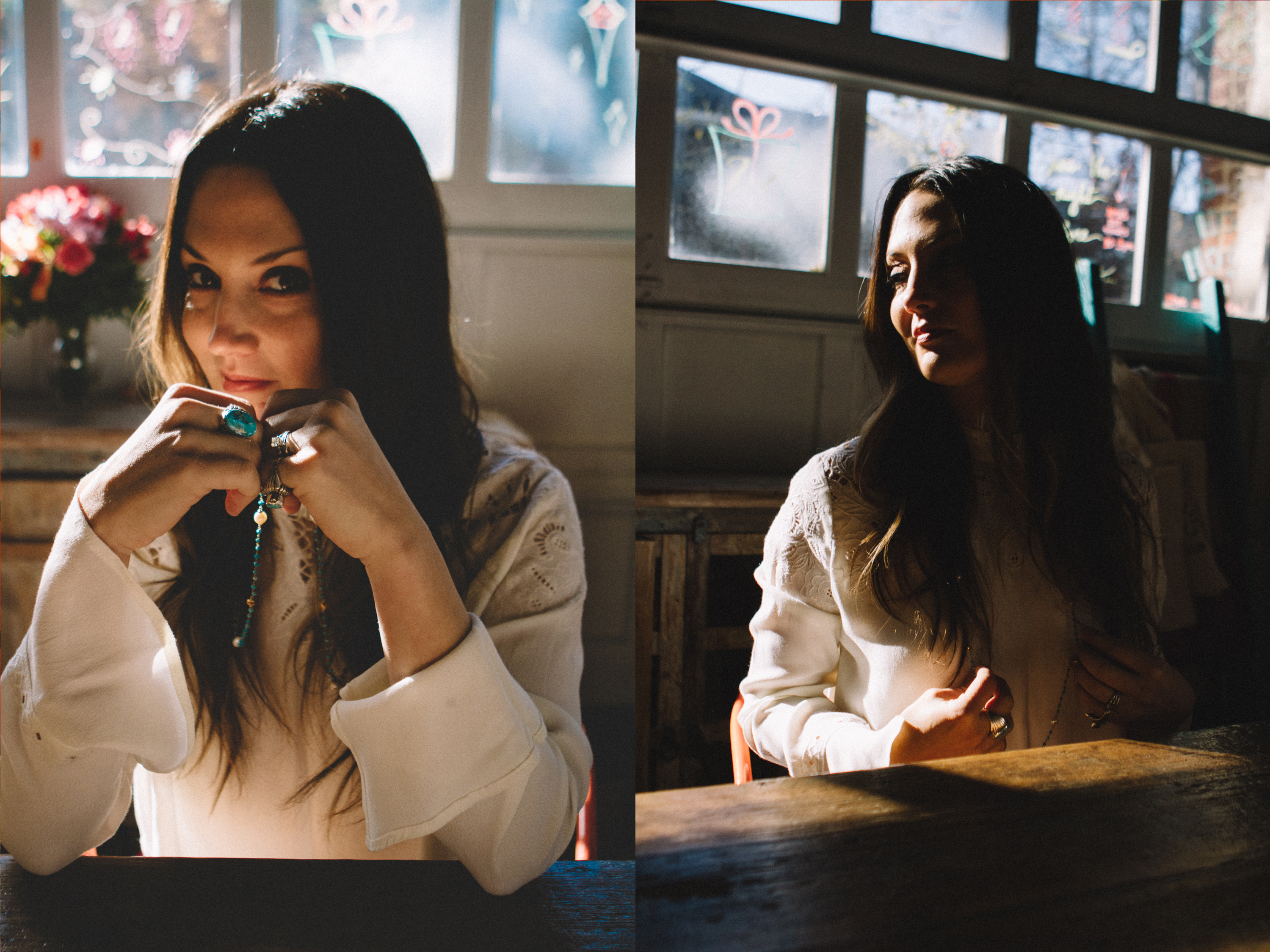
I do enjoy the clean look of a snow white wardrobe in the Winter. For one thing, white is a color that looks great on everyone. It’s fresh and makes your lipstick and jewelry pop. Natalie gives this embroidered blouse a simple, Southwest punch by pairing it with a few turquoise rings and necklace.

Oversized Collared Sweater

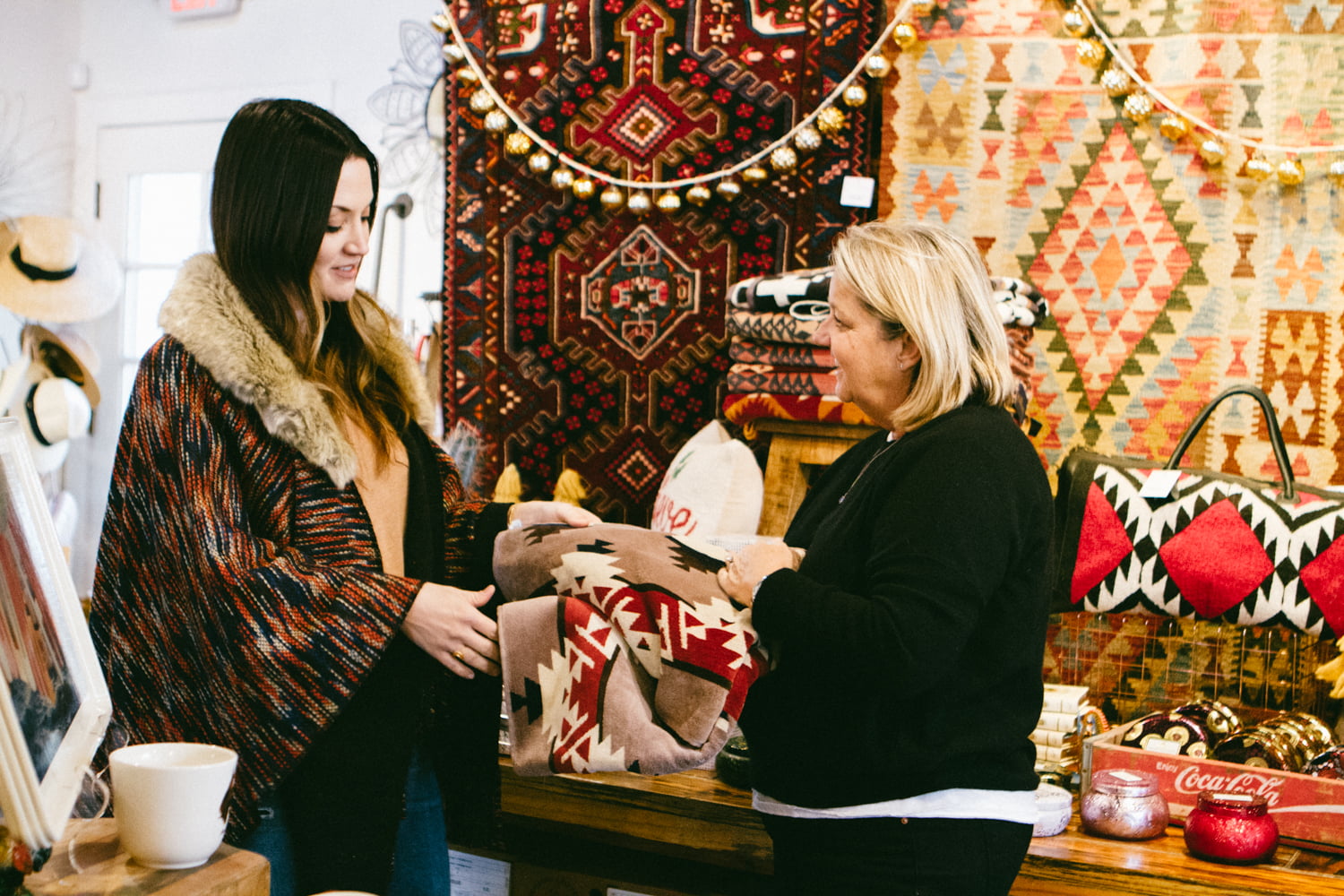
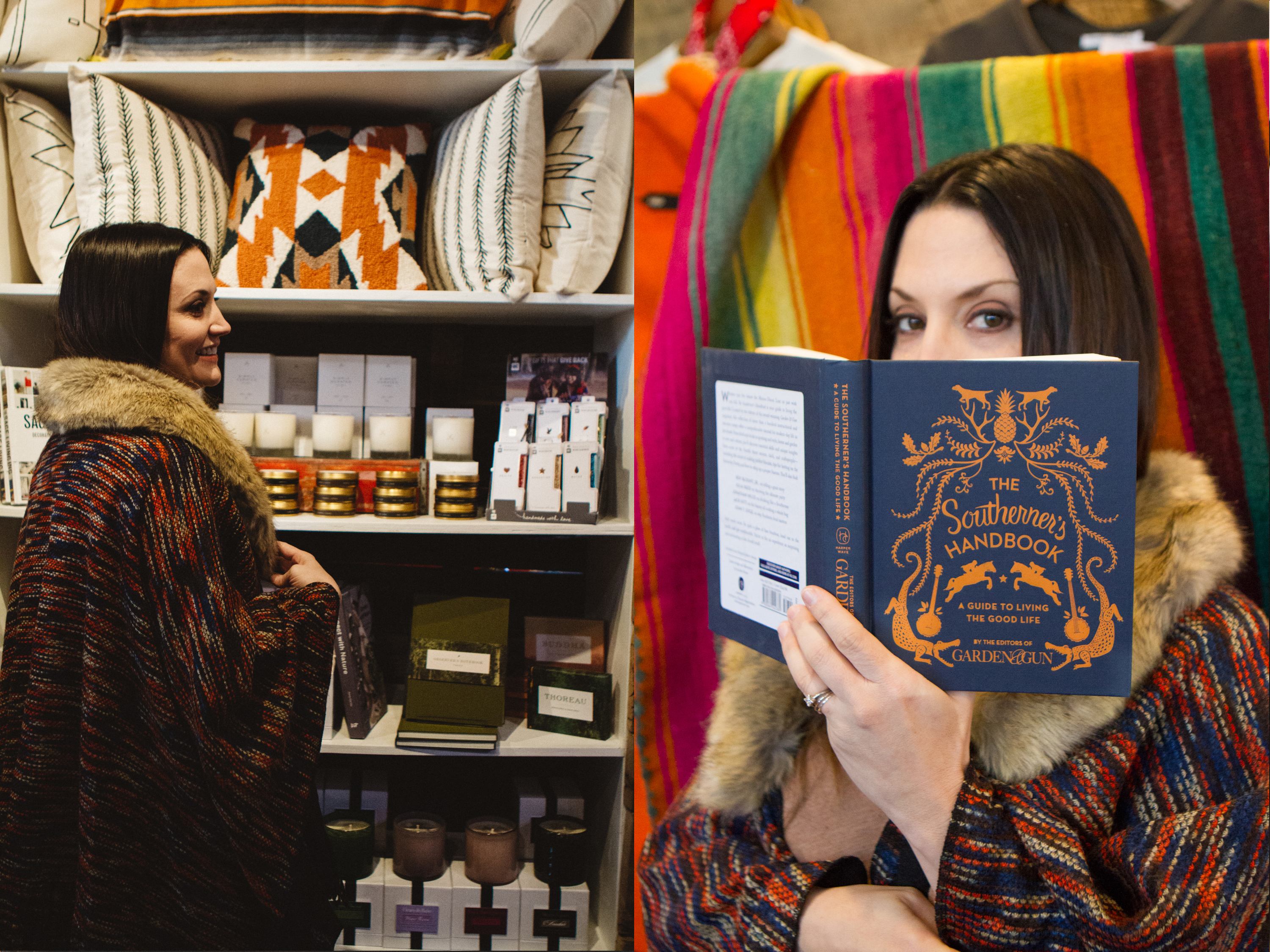
For me, there is nothing better than cozying up in an oversized sweater on a cold, dreary day. I’ve been on the hunt for one that’s less gramps and more glam. I’m quite fond of this multi-colored woven sweater with a fur collar from Castilleja.

Layered Jewelry

Layering on rings and necklaces is the last thing I want to do during the Summer when my fingers slightly swell and I feel like a sweaty mess just walking from my car to my next air conditioned destination. So I take full advantage of layering up my jewelry in the cooler months! If you are ever looking for a new accessory, Castilleja has one of the best collections of jewelry in Nashville.

Lined Denim Jacket

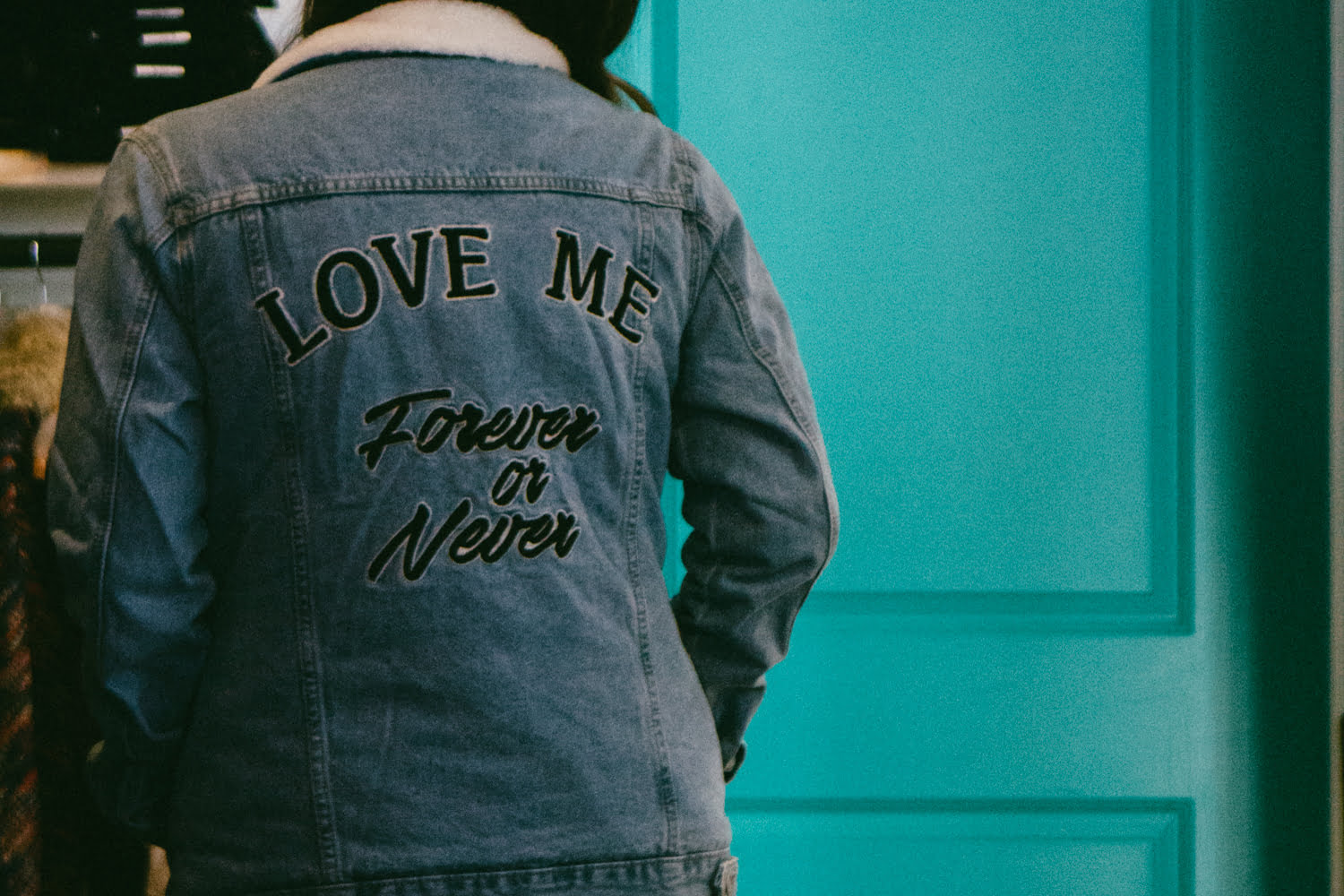
Denim and Nashville go hand-in-hand so, when temperatures drop, it’s nice to have a heavier alternative for the cooler weather.

Thanks for having us, Castilleja!

The Essential Nitty Gritty Dirt Band Playlist

The Nitty Gritty Dirt Band were born out of the burgeoning Southern California folk-rock scene of the late '60s and early '70s. The band was the brainchild of the singer/guitarist duo of Jeff Hanna and Bruce Kunkel, who had worked together as members of the New Coast Two and the Illegitimate Jug Band. Along with Ralph Barr, Les Thompson, Jimmie Fadden and, briefly, Jackson Browne, the band started gigging around Long Beach, California, in early 1967.

After Browne departed for his solo career and John McEuen signed on as a multi-instrumentalist, the band released their eponymous debut disc and won themselves enough attention to score a Top 40 hit, appear on The Tonight Show with Johnny Carson, and open for a strange melange of performers that ranged from the Doors to Jack Benny.

The next several years were difficult for the band as they released a string of commercially unsuccessful records, struggled with disagreements about the band’s direction, and found themselves being treated much like a novelty act. That all changed in 1972 when Jimmy Ibbotson joined the band and they embraced the sound of traditional country and bluegrass. They released their most commercially successful album, Uncle Charlie & His Dog Teddy, won another Top 40 hit (“Mr. Bojangles”), and opened the door to recording what was their career-defining album, Will the Circle Be Unbroken.

Tracked in Nashville, Will the Circle Be Unbroken was a monumental triple album that paired the long-haired, anti-establishment California boys in the band with country legends like Earl Scruggs, Doc Watson, Roy Acuff, and Maybelle Carter. By making that record, the band effectively bridged the gap between two generations of country musicians … and produced amazingly beautiful music in the process.

By the early '80s, the band had changed its name (to just the Dirt Band) and winnowed its roster down to four key members: Hanna, Fadden, Ibbotson, and keyboardist Bob Carpenter (with McEuen leaving in ‘86 and returning in 2001). Musically, the band adopted a contemporary country sound that played well on the radio — and at the record stores — scoring themselves three Top 40 and two Top 10 albums. Their quirky left-of-center style remained even as their sound softened, as witnessed by their appearance in Steve Martin’s hit, “King Tut,” as the Toot Uncommons.

In ‘89, Will the Circle Be Unbroken II was recorded (with contributions from John Hiatt, John Prine, Levon Helm, and Bruce Hornsby) and a third Unbroken collaboration was created in 2002 with a guest list that included Alison Krauss, Emmylou Harris, Tom Petty, and Dwight Yoakam. In the midst of these collaborations, the band spent the 1990s and 2000s making records that blend country, rock, and string music into their own unique sound.

Herein, we offer a brief playlist of tunes that we consider essential to knowing the Nitty Gritty Dirt Band, from their days as cosmic cowboys through their latter-day hits (and, of course, all three versions of "Will the Circle Be Unbroken.")

Get Off Your Ass: December’s Halls Need Deckin’

Gary Clark, Jr. // The Theatre At Ace Hotel // December 1

Corb Lund // Resident  // December 7

The Wild Reeds // Echoplex // December 8

Lee Ann Womack // The Canyon // December 9

The Steel Wheels // Genghis Cohen // December 10

Tribute to Linda Ronstadt // The Theatre At Ace Hotel // December 11

Michael Kiwanuka // The Fonda // December 12

Sara Watkins // The Troubadour // December 14

Brothers Osborne // The Belasco Theater // December 15

The Dustbowl Revival // The Hi Hat // December 15

Cody Jinks // 3rd & Lindsley // December 2-3

Ruby Amanfu & Friends // 3rd & Lindsley // December 4

Billy Strings // The 5 Spot // December 7

Birds of Chicago & Michaela Anne // The Basement // December 7

Mary Gauthier // Bluebird Café // December 8

Shawn Colvin // City Winery // December 14

Brent Cobb // The Basement East // December 15

Luke Bell // Exit/In // December 15

Gillian Welch // Ryman Auditorium // December 27

Robert Earl Keen // Ryman Auditorium // December 28

Jason Isbell, John Prine, & Kacey Musgraves // Grand Ole Opry House // December 31

Old Crow Medicine Show & Dom Flemons // Ryman Auditorium // December 31

Andra Day // PlayStation Theater  // December 1

Donovan // Symphony Space // December 2

Chris Thile // Town Hall // December 3

Steve Earle // City Winery // December 5

Kacey Musgraves // Town Hall // December 8

Cris Jacobs // Brooklyn Bowl // December 9

Steep Canyon Rangers // Town Hall // December 10

The Stray Birds // Rockwood Music Hall // December 15

Albatross // Rockwood Music Hall // December 16

Anais Mitchell // Rubin Museum of Art  // December 23

Tony Trischka // Joe's Pub // December 24

Nathan Bowles // Terminal 5 // December 28

7 Holiday Maker Markets to Up Your Gift Game

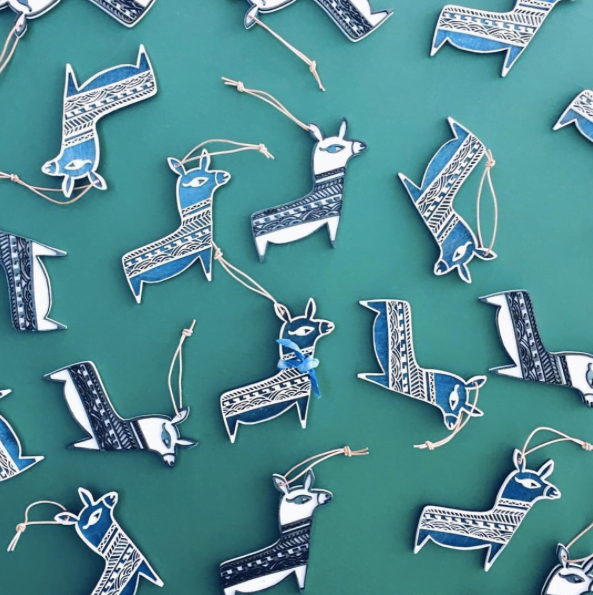
Thanksgiving is about to rear its tiny, turkey-shaped head, and you know what that means: It's time to tackle that nagging holiday gift list. While it might be tempting to say, "Screw it, you're getting a gift card and you're getting a gift card!" like a maniacal, Scrooged-out Oprah, there's no denying that folks love a unique, thoughtful gift. Luckily, the growing popularity of holiday "maker markets (the Artist Formerly Known as "Craft Markets") makes finding one-of-a-kind gifts for everyone on your list far easier than actually sitting through a holiday meal with them, especially with that big, orange elephant currently taking up residence in all of our families' dining rooms.

To help you out, we've rounded up a few of our favorite upcoming markets. Now get to shopping!

Austin — Renegade Craft Fair — November 26-27

This free event at Austin's Fair Market features over 125 makers. Go for the holiday shopping, stay for live music, local food and drink, and a photo booth.

Brooklyn — Brooklyn Holiday Bazaar — November 26-27

The fourth installment of Brooklyn's free, annual Holiday Bazaar is its biggest yet, with 40+ makers on site at 501 Union. Sip a craft beverage while you browse handmade jewlery and home decor and, if you have little ones, be sure to stop by the Kids Craft Corner.

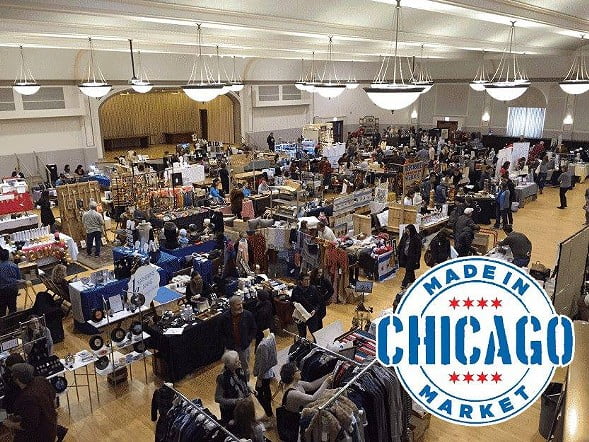
Chicago — Made in Chicago Holiday Market — December 18

As if a free event with dozens of makers, local food, and local drinks weren't enough, this holiday market at Chicago's Plumbers Hall also allows guests (while supplies last) to create their own free terrarium ornaments. 

Los Angeles — Artisanal L.A. Holiday Market — December 3

A $10 admission gets you unlimited re-entry into this weekend-long event at Los Angeles's CMC Penthouse. More than 150 makers will be on-hand, with 30+ opportunities for attendees to indulge in little on-site DIY of their own.

Louisville — Made Market — December 16-17

This holiday market at Louisville's Frazier History Museum is free, but if you want to check out all the goods before the general public, you can buy a ticket to a special preview event the evening before the big day. And, with vendors like BGS pals 1767 Designs in attendance, getting there early may not be a bad idea!

Nashville — Porter Flea Holiday Market — December 10

Nashville's Porter Flea gets bigger and bigger each year, and the holiday market is not to be missed. Held at Skyway Studios this year, admission is free, although, as with Louisville's market, there is a ticketed preview market the night prior.

Seattle — Fremont Foundry Holiday Makers Market — December 18

Seattle has a strong maker community, with markets popping up across town throughout the year. This particular holiday market happens later in the season than most, so it's perfect for all your last-minute shopping needs.


Lede photo via Porter Flea/Garner Blue

3×3: Renée Wahl on Home Bases, Underrated Movies, and Reliving with Presence

Artist:  Renée Wahl & Sworn Secrets
Hometown:  Nashville, TN
Latest Album: Sworn Secrets
Personal Nicknames: Riff, Riff Randall, R “Dub”, Dub


The Great Northern, coffee and cherry pie…

A photo posted by Renée (@reneewahl) on

What song do you wish you had written?  
Wow, that’s a tough one … I’m gonna go with “Into the Mystic” by Van Morrison. Such a beautiful song, lyrically and melodically. Always takes me to some faraway place when I hear it.

If money were no object, where would you live and what would you do?  
I would still have my farm outside of Nashville in Lebanon as a home base. It’s so open and relaxing. But I’d travel everywhere and play music. Whenever, wherever!

If the After-Life exists, what song will be playing when you arrive? 
"Angel" by Elvis Presley. I think that’s appropriate! Or “Where Is My Mind” by the Pixies. That would work, too.


A photo posted by Renée (@reneewahl) on

How often do you do laundry? 
Hmmmm, when I run out of clothes, sheets, or towels — whichever comes first.  

What was the last movie that you really loved?  
Again, so many movies I love. I will say Frailty.  It’s a bit older, but an extraordinary movie. It takes place in Texas. It’s very dark, lots of twists and turns … great acting, fantastic storyline. Certainly an underrated movie, in my opinion.

If you could re-live one year of your life, which would it be and why? 
I guess it depends on if I knew I was reliving it … if so, this year (2016). My mom passed away in July, and I would love to have been more present in the time I spent with her.


A photo posted by Renée (@reneewahl) on

What's your favorite culinary spice?  
Cayenne Pepper … flavorful and great for a sore throat!

Morning person or night owl? 
Not a morning person. For sure a night owl. Though I can’t quite seem to stay awake as late as I used to …

Coffee or tea?   
Hands down, tea.  I don’t drink coffee much anymore, but I can’t go a day without a cup of hot tea. There are some pretty cool tea places in Nashville, like Aromagregory.

The Heat Is On

This year is my third year gardening, but my first Fall garden. What a year to start one! With average U.S. temperatures the highest in almost 100 years, some seeds had to be replanted as the temperatures were too high for consistent germination, with some longer crops, that wouldn’t have time to mature if replanted, struggling to survive until the cooler weather. Whatever happens, the peas seem to power on through.

The big lesson from these extraordinary temperatures is that I don’t rely on first and last prospective frost dates anymore. First frost usually hits Nashville mid-to-late October. This year, we might not get it until early December, although it’s more likely late November. Instead, I’m relying on the more accurate germination rates and soil temperature. For example, carrot seeds will have the highest and shortest germination rate when the soil is in the upper 70s. They will do alright in the upper 60s and low 80s, but then the germination rate drops and the number of days for any to germinate increases. I planted my carrots in September, hoping the temperatures would come down as expected, but they didn’t, so I replanted in early October for a better chance of a healthy harvest.

This is the year I also decided to try to grow one of the most difficult groups of vegetables — the brassicas, which include, kale, broccoli, cabbage, cauliflower, and Brussels sprouts. The difficulty with this group is mainly due to the obscene amount of pests they attract that are hell-bent on eating them in hours. If you want to grow brassicas, it’s full-on war.

I started by growing the seeds outside. No luck: The cabbage butterflies were all over them and, in a few days, their eggs had hatched and the caterpillars were munching away. Plus, it remained just too darn hot. I managed to salvage the majority and bought them back inside far away from those pesky critters. They grew, and the new leaves were not eaten.

In mid-September, they were planted back outside. Had the forecasts been better, I would have waited; but since they had already germinated into seedlings, at least they had a fighting chance.

The two main pests in my garden which could do the most damage to the brassicas are the purely evil cutworm and the cabbage butterfly caterpillar. The cutworm wraps itself around young seedlings about an inch above ground and squeezes, literally cutting the top of the plant off. Here’s a big fat adult and he’s fat for a reason, as he’s been munching on my carrots for the last few days.

The solution I tried, which worked on my bush beans this year, is putting toothpicks around the stem of the seedling, so it prevents the worm from doing its damage.

I was still losing some plants though and had no idea why until I kept seeing black crickets all over the place! I’m pretty sure they were chomping through the babies that the evil cutworms couldn’t get. I tell ya — it’s carnage out there. I lost about 60 percent of the crop, but being the first year, I’m actually quite pleased with that. I’m a big believer that, when it comes to gardening, you have to try something for three years before giving up on it. Otherwise, there are just too many variables to rule anything out before that time.

The ones that survived were still under attack from the white cabbage butterfly. The best way to deal with them — like pretty much any problem — is prevention. Row covers can overheat the plant,s if the temperatures are still high outside, but you can get fine mesh that will let the breeze in and keep the butterflies out. You can also spray/pick the eggs off daily and keep an eye out for caterpillars and remove them as soon as possible.

As of today, the remaining brassicas are still growing and, a couple of days ago, I could see baby sprouts starting to form.

These are slow growing plants, but with the frost still at least a couple of weeks away here in Tennessee, there will still be a harvest. Next Spring, I’ll try again — even more armed and even more dangerous.