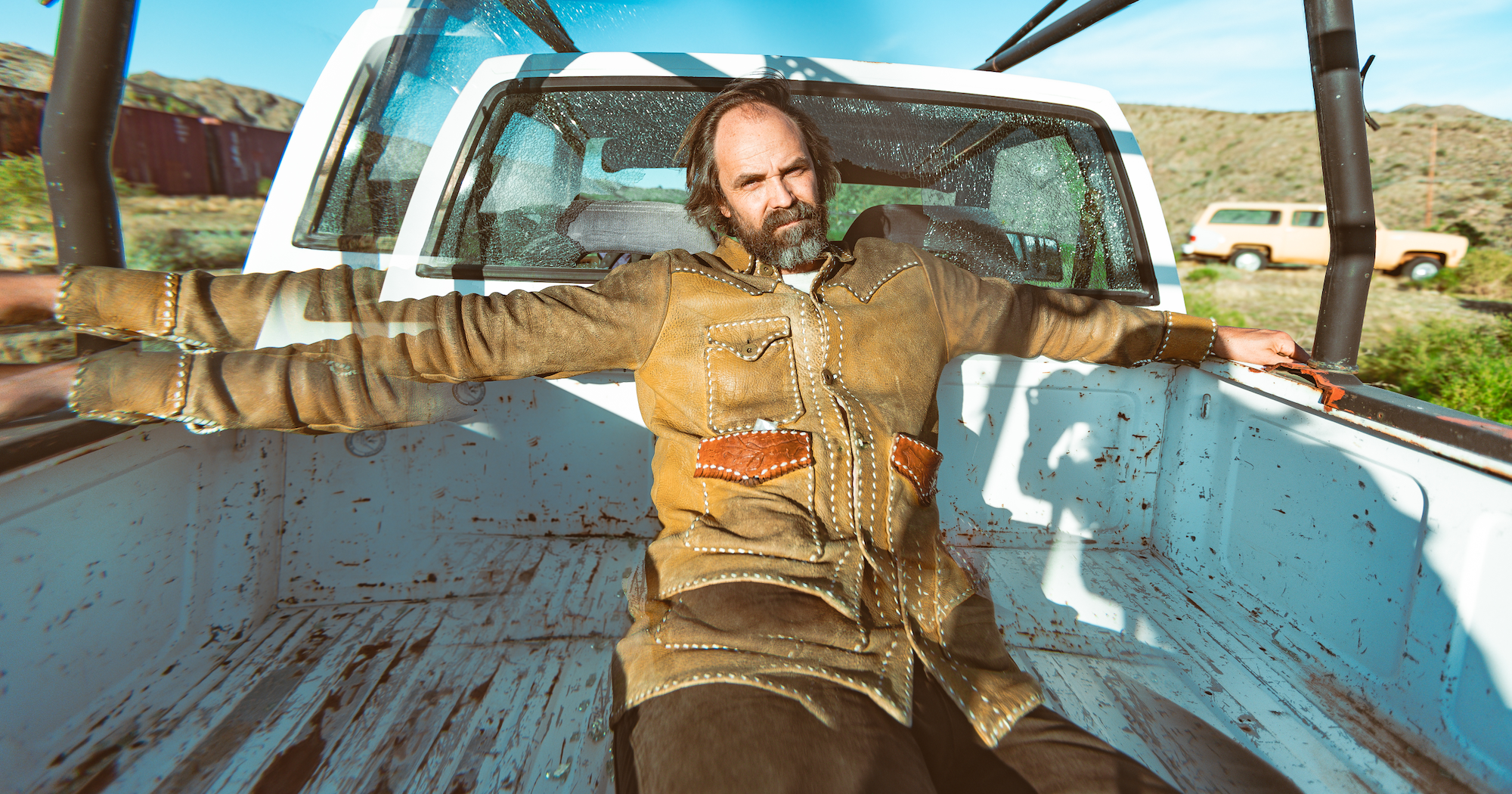
A One-of-a-Kind Conversation with Jonny Fritz

It is deeply joyful sitting with Jonny Fritz at a restaurant he suggested (Pollos Puebla #1) in an area of Los Angeles he’s an expert on (Pasadena/Altadena border) and talking about subjects he thinks about a lot, ranging from rebirthing ceremonies to alimony to how…“different” Nashville is now. He’s keenly honest about his life, his work, and his thoughts about any question thrown his way. Nothing is out of line or off limits. Nothing is filtered by a publicist or an agenda. It is off the cuff and real and wild.

We met over grilled chicken, rice, and beans to discuss his newest work, Debbie Downers (Woodwinds), a reimagining of the original 2025 album Debbie Downers. The conversation unfolded much like the album, with unexpected turns and humor that expose raw nerves about an unfriendly music industry, the beauty of PG Tips, the subtlety of serving a song, and the goal of taking a ride on the wave of a sliced open above-ground pool.

Well, let’s talk about Woodwinds. I’m a huge woodwind fan. How’d this come about?

Jonny Fritz: Oh, yeah? Me too. I love woodwinds. I’ve always loved them. I think they’re so great.

It’s so expensive making a record. It’s just stupid, you know? For example, the last record I made, Sweet Creep, I made it pretty cheap. I think it cost about 12,000 bucks. But ATO Records had an option on it so they could pick it up. They bought Dad Country, the record before that, for 5,000 bucks. It cost me five grand to make. “We’ll pay you five grand for it.” All right, fine. And then, hidden in the contract – or at least hidden to me – they got the option on the next one. Same deal. So when I made Sweet Creep they picked up the option. So for $5,000, they got this record that cost me $12k. I was like, “Jesus, man, this business is so rough.” And I just knew it was going to be something similar with the next one.

By this one, Debbie Downers, I thought, “What do I really want to do?” I might as well just do what I want, because there’s nothing worse than having something be expensive and unsatisfactory. I just decided I really wanted to make the record over and over and over again. I have a bunch of different visions for how it should go and I wouldn’t call any of them the one.

The Woodwinds one was something I’ve always just wanted to do. So I’m pretty pleased with it. I got this amazing guy in Highland Park who does film and TV stuff. There’s not a lot of work going on right now, so he was willing to do it. And the first couple of arrangements that he came up with, I was just giddy. I couldn’t believe how cool it was.

Were there any revelations for you? When you heard them in that arrangement, was there anything that shocked you about it?

Hmm… Yeah, some of the versions with the woodwinds really lent themselves to the winds better than any other version. I wrote this song called “Have You Seen Her.” I wrote it coming off of anesthesia. I was out of my mind. I got a hip replacement at UCLA 10 years ago. You know, coming off anesthesia affects people in weird ways. I’m one of them. It really got me, I wrote this song and I felt like it was the most brilliant thing.

It was so embarrassing. I wrote everybody who I knew who was high up at Rolling Stone, and all the Newport Folk Festival team, and all their PR team. I mean, I wrote everybody. And I wrote these really incoherent emails. I haven’t actually looked at them in a long time. I looked at them right after I wrote them and I was so ashamed. But I wrote all these emails being like, “You’re gonna want to get Scarlett Johansson down here. I need to perform this for her. And you need to get Joaquin [Phoenix] here, too.”

I’m not a social climber, but there was something in me that was like, “You need to make some moves. Call out a lifeline.” I was so ashamed of it for so long, because it was one of the most embarrassing moments in my life, for sure.

All of that to say, I didn’t want to play it or record it. I had to overcome it, admit it, and start talking about it. When I heard it with the woodwinds, I was blown away.

Years ago, I worked with Chris Crofton on a comedy event at Third Man Records that involved a compilation of found video footage that was submitted. There were so many submissions of people coming out of anesthesia, and I remember Chris immediately going, “No, that isn’t funny.” It really isn’t; you aren’t in your right mind.

God bless that man. He always knows exactly what the fuck is up. He is driven by pure heart and knows exactly where his morals should be. He’s incorruptible.

Do you spend a lot of time on social media? What is your relationship to it as a creator?

Pretty passive. I like social media. I feel like I’m kind of floating above social media. By like eight feet, just kind of looking down at it. Like, “What are you guys doing? That’s insane.” Then I dive into it to interact, and then just kind of get out of it. I get a little hooked on it for sure, but I hear about the addictions and the stuff that people fall for, and just like the amount of engagement. But it’s like engagement versus quality of life. I get so much fulfillment from everything else. I like playing with it. I always have fun with it, but I try not to let it get sticky.

Well, one of my favorite social media posts in the past bit is the one with your kiddo singing “Tea Man.”

Oh, wasn’t that so sweet?

So sweet.

She’s 6.5 now. She was like 2.5 then. And I just was like, I can’t post this. It felt so…I don’t know…

Personal?

It was personal, but I didn’t have a problem with that. I definitely want to protect her, you know? But that’s not her anymore. She doesn’t even look like that. She’s like doubled since that song came out. But then I was like, “Oh, fuck yeah, I’m posting this!” There was no risk of seeing her in public and recognizing that she’s the girl from the video.

Are you a tea man? In real life?

I got a PG Tips tattoo. I really like tea. I drink enough tea to float a canoe every day.

Really? All caffeinated?

Usually. Well, when I’m on tour, yeah. I get so tired. I can’t really mess with coffee. It just makes me so jittery. But I can just drink tea all day.

Are you an equal opportunist, or is it mostly black tea?

Oh, I like it all. Really like it all, but I love the black stuff, though. I think it happened when I was on tour 10 years ago with Josh Hedley. We were in England somewhere on a train, and they came down the lane with a steaming cart and it was £1 for a cup of tea. I don’t have an addictive personality. I don’t care about alcohol or anything. But I felt like, “Oh, I’m in trouble.” Just sitting on a cold, rainy train going through England with a cup of PG Tips.

It reminded me of something I heard about Andy Warhol. Although I’m not a big fan, I don’t know much about the guy. But what I do know about him is that one thing that made me really like him. I heard that he doused his whole world in a certain scent for a season. For example, in the summer of ‘63, he would just cover everything with lavender oil. And then come winter, it would be a totally different scent. And you’d put lavender away, and it’d be bergamot. So then the sense memory of whatever happened around that time would be so strongly connected to that scent that you could be completely brought back. And I really love that.

I think there’s something to it with the tea thing, because that tour was really big for me. It was a fantastic time. It was a really, really wonderful, lovely tour, and drinking PG Tips like that, I just got into English culture too. Everywhere you go, somebody’s like, “Well, you want a cup of tea?” Like, yes, I fucking do. I decided I’m never turning down a cup of tea. And I never have since.

Tell me about writing “Hot Chicken Condos” with Jordan [Lehning] and Skylar [Wilson]. I deeply connect with that song because I also left Tennessee, and for many of the reasons you list in the song.

Yeah, that was the point. Everybody who really gets this place will really understand these things, even like Pit Bull puppies in parking lots.

And humidity.

Fucking unrelenting humidity.

Were those things you were storing? How did that song come about?

God, why I love writing with Jordan and Skyler is because they don’t bring any ego to the write. They don’t fucking care. They’re just such good vibes. I’m really pretty neurotic about writing and also I’m pretty protective of my words, too. When I get into the writing space, I’m just so sensitive about what’s being said. So if somebody says or suggests the wrong thing, I can quickly be like, “This is the wrong association.” I can be a little trigger-happy.

But with Jordan and Skylar, they’re always just like, “Just play what you got.” And they usually edit everything that I have. With that song, one of the lyrics was “Mustard in the corner of his tiny little mouth.” And Jordan said, “Why don’t you say, ‘Mustard cracking in the corner of his tiny little mouth?'” And it was perfect. Mark Twain said the difference between the right word and almost the right word was the difference between lightning and the lightning bug.

It’s so true.

I got to hang out with Guy Clark once in Nashville, and it was like one of the best moments of my Nashville career. I was going through really bad writer’s block. And I asked him, “Do you ever get stuck?” And he said, “Yeah… Do you ever write with other people?” And I told him, “I don’t like the idea of giving somebody 50% of the song just because they’re sitting in the same room.” He leaned over and he goes, “Well, you never would have fucking wrote it if they weren’t sitting there.”

I was like, “Damn, old man schooled me.” Because so much of writing, I feel like, is picking up on something else that’s happening. And who’s to say you don’t owe somebody credit just because they’re sitting there?

The other thing that Jordan suggested for [“Hot Chicken Condos”], which was so right on, was that he asked me how high I could go on the Tennessee part. I told him I could go falsetto, and he told me to try it. I hit it and he said, “That’s it.” He took an idea of a song and made it a song. I just so appreciate those guys.

I just feel it is like a pedal steel player who plays about eight notes per song. That’s the best player in town, ‘cause all the other players are nonstop. Same with fiddle. Take Josh Hedley. The guy just stands there most of the time, then he pulls out something incredible, and he sets it back down. He doesn’t overplay. If you don’t overwrite and you don’t overplay, those are heavy attributes.

Those are both things to do in service of the song, not in service of self.

Absolutely. You know who I saw last night was Erin Rae. Kevin Morby and I were standing next to each other, just like, ”Oh my god, she’s so good.” One of the most amazing things about her is that she underplays the guitar. She’s playing the whole time, but if you really focus on how much she is actually playing, it is barely. It’s just enough to fill in where she’s not singing and she works the mic so well.

All those things are so important, but nobody teaches them, you know? You have to kind of know it. It’s innate, right?

Or you got to learn it trial by fire. And you have to be playing with players who know what they are doing to learn that.

Yeah. That’s right. Sometimes people are technically good, but they just don’t stop noodling, and it sucks.

You took a long hiatus from music, huh?

I did. I took nine years between records. I didn’t mean to. And I didn’t actually think that I was doing it. I was playing shows here and there. I blame it on real estate. I got into real estate because my heart got broken from music so many times from wanting to do better. Wanting to succeed more. Really, really caring what people said and thought and comparing myself. All the things you really shouldn’t do ever in any aspect of life. I mean, if you did that in a relationship, then your therapist would be like, “That’s your problem. Stop. Don’t do that.”

I couldn’t get out of it. I just felt so bad about how it was going. And I know what I’m doing is not for everybody, and it’s not gonna take off. But I love what I do. I’m not putting myself down, but I just knew my ambition was a lot faster than everybody’s interests. It was just wearing on me and I needed to do something that’s purely about money and doesn’t have anything to do with creativity, because I’m just getting my feelings hurt. And I got polyps in my vocal cords. I was touring too much. It just wasn’t going well.

So I thought, “I’m just going to pivot. I’ll still do shows and if somebody asks me to do something, I’ll do it. I love music.” I stopped prioritizing writing. I stopped prioritizing recording, and then the pandemic happened, and I had a kid, and real estate took off, and I looked up, and it was 9 years. It really was like, “Oh, crap, how did that happen?” It shocked me.

What’s your writing process like typically? Do you write everywhere?

I write everywhere. I use my voice memos a lot. I really love just making up new country songs and fake country songs – like, really bad ones. I find that if I can get them out, I can expand upon them or delete them and move on.

I was writing with Skylar [Wilson] one time and we were trying to write a song called “Remember the Alimony?” We wrote for hours and hours and it was a stupid song and it didn’t go anywhere. It went, “I’m just a poor man. All I eat is beans and write checks to my ex, one and only. I rolled the dice, but I lost my wife. But I remember the alimony.” So stupid. God. But we were writing all day and just hanging out, and neither of us thought to finish it. It just didn’t work. But then I got home and I had like 6 other song ideas that went on Sweet Creep. It’s that muscle thing that everybody talks about.

I’m also a pleasure seeker to the nth degree. If things aren’t fun, I just drop them so quick. I’m really bad about that. So I just make sure that it’s really fun and get the idea out quickly. I try to stay hovering above it, just stay light. Because as soon as I dig into it, that’s when I’m like, “Oh, my God, right. I don’t know how to do this.” Just keep it fun and it will grow. But I like to write all the time, every day.

Do you wake up and do it?

It is in the shower, on the way to school, washing dishes. You know, when you have a great idea and no way to write it down.

Soapy hands! Sometimes it happens when there’s an absence of anything else and those ideas pop up.

I have to really protect myself when I’m diving in. I wash all the dishes, do all the laundry, sweep up a bit, and make sure no one is going to ask me for anything. I’m really self-conscious about that. If nobody is home, I’m going to the basement and putting on Ken Burns’ Civil War, and I turn the radio on at low levels where it is just kind of humming. I drink a tremendous amount of caffeine. That’s my favorite.

But it is intense. I can get really emotionally rocky after diving in pretty deep.

I was thinking about Roger Miller when you were talking about the “Alimony” song. I’m drawn to that kind of writing because you can get really dark while staying very light.

People think that the meat is deep, but the nerves are on the surface. There’s meat down there, but it’s dead. I feel like the most cutting and incredible songs kind of sound like an email to an old friend. My favorite Lucinda Williams songs all sound like they were written to a buddy.

Or she’s talking to somebody over tea.

So true. And John Prine, too. Everyone’s like, “How did they do it?” They just did it. They’re just talking.

Will you play any live shows with the woodwinds?

Yes, actually, April 14, we’re doing a free show at Zebulon. It’s going to be good. I have this giant golf ball, it’s like a concession stand, and I’m bringing that to the show. The whole point of it is to give away free tea. It’s my tea ball. The tea is free, just buy a house from me!

What will the live configuration look like? How many players will you have?

Four, but they play multiple winds. It’s the players on the record. They’re such pros. They’re all symphony kids.

There’s something about stripping it down to just woodwinds; it’s so cinematic. It takes you directly to the meat and it makes you lighter when it is time, as music does for film. It helps direct your emotional experience.

I like that. I’ve always loved demos of songs. Sometimes I just want to hear someone play the songs, not the record. Or just hear someone sing it. As close to the song as I can get, I’m most happy. I love a cappella stuff. Sometimes the most powerful way to arrange a song is to remove everything.

With winds, too, it’s nice because that’s pretty much it. There’s the vocal and then there’s some wind behind it. I love that.

At the top of my notes that I took while listening to the record, I have the words “jello rebirth” scribbled down regarding the song “Polished Turd.” Can you tell me more about that concept?

For this record, it was a bit of a cynical and fatalistic career thought, but I wanted to make a record of real estate songs. The whole idea behind it was that people would hear it and would say, “This sucks.” And my reply can be, “Yes. That’s what happens when you give up on your dreams.” Music really suffers when you just write about what you’re doing. It’s like this martyrdom thing.

You know the three D’s in real estate are like death, diapers, and divorce – all the things that make people sell their homes. So I wrote one that went, “Death, diapers, and divorce. And the lottery, of course.”

During the pandemic, I had this fantasy of buying someone an above-ground pool. Have you heard of rebirthing ceremonies?

No.

Oh, rebirthing ceremonies are a thing. A fucking thing. People simulate a mother’s vagina in like a mega fucked up Christian ceremony. They make you relive your birth so you can be reborn and let go of all your childhood traumas. They have a gelatinous vagina and people push themselves through it. So anyway, I got that in my mind and thought, “What the hell is this world?” But I could see that for real estate, like a used car salesman going, “We are doing rebirthing ceremonies, come on down!”

And I have always wanted to slide through the tsunami of an above-ground pool that gets sliced open.

Yeah, that does look fun.

Right, who hasn’t wanted to do that? But then I want to turn it into jello. And then I thought maybe I should do that for my clients or have a commercial about it. I could cut a slice in the pool with a katana sword, then they’d ride in slow motion through the incision of the above-ground pool, I could hand them the keys, and they’d be reborn into home ownership. Follow me?

Yep.

That is a song very near and dear to me, but it is a hard one to explain. What was your experience with it?

Well my first thought was that wherever it was coming from and whatever it meant, you have thought a lot about it.

Fair enough, that’s true.


Photo Credit: Bobbi Rich
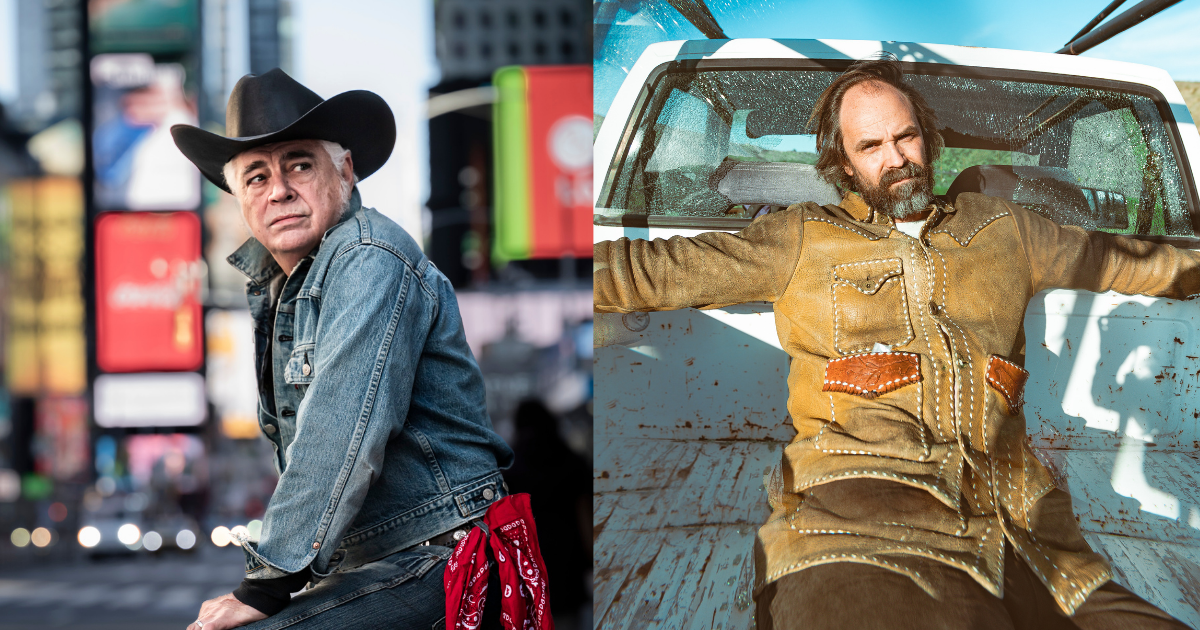
You Gotta Hear This: New Music From Dale Watson, Jonny Fritz, and More

You know what would be the perfect way to end the week? A bevy of new roots songs and videos! Well, we have just the thing – and You Gotta Hear This.

To start us off, South Carolina-based husband-and-wife duo Benson – Wayne and Kristin Scott Benson – deliver a brand new instrumental, “Slayton Court.” Inspired by Wayne’s first address when he moved to Nashville 30+ years ago, and their young adult son’s similar journey in the present, it’s a thoughtful and tender tune that’s lyrical and evocative. Their labelmates, Unspoken Tradition, who hail from just up the mountains from Benson, also debuted a new single today, “Rhythm of the Ridge.” Written by North Carolina native Milan Miller, it’s an excellent song built on regionality, community, and the importance of the cultures that birth roots music.

Keep scrolling, though, as there’s plenty to explore. Singer-songwriter Cuchulain offers an adorable, painstaking stop-motion video for his new single, “Flip Turns.” As he puts it, it’s a song for swimmers and/or folks trying to keep their head above water wrapped in smooth and jazzy, alt-Americana sonics. New Jersey singer-songwriter Sean Kiely kicked off 2026 with a brand new track featuring his friend and hero, Kaia Kater. We’re pleased to share a live performance video of “This Is The Year,” a perfect song for starting the new calendar year on the correct foot.

Los Angeles stalwart Jonny Fritz returns to his most recent album, Debbie Downers, to offer all of us a woodwinds version of that critically acclaimed LP coming in April. Today he unveils the first delightful woodwinds version from the reimagined collection, “Tea Man,” featuring clarinets, bass clarinet, flute, and Fritz holding it all together himself. For a dose of old-time, check out “Cheeky F” by George Jackson’s Local Trio. Stemming from the tradition of Texas-style old-time fiddling and melodies, Jackson, his trio-mates, and guest guitarist (and producer) Stash Wyslouch pick through the swinging and acrobatic pizzicato head with “Flight of the Bumblebee” aplomb.

To round out our roundup this week, we get a healthy dose of alliterative outlaw country from Ameripolitan crooner Dale Watson. “Willie, Waylon and Whiskey” brings alt-country, the Bakersfield sound, and psychedelic surf rock together as only Watson could. The track is driving and frenetic, leaning forward in the beat and referencing so many classic lines, melodic hooks, and tracks from his fellow outlaws. Would country be country without self-referential songs? It’s hard to imagine.

From bluegrass and old-time to folk and outlaw, there’s plenty to enjoy this week on BGS. You Gotta Hear This!

Benson, “Slayton Court”

Artist: Benson
Hometown: Boiling Springs, South Carolina
Song: “Slayton Court”
Release Date: January 23, 2026
Label: Mountain Home Music Company

In Their Words: “‘Slayton Court’ was the first address that I had when I moved to Nashville, Tennessee, around 1993 with my good buddy Greg Luck. This instrumental is inspired by kind of reflecting on that time when you first gain your independence. For me, I was a young working musician for the first time playing with IIIrd Tyme Out. And you fast forward all these years and now I have a 19-year-old son going through a similar season. We were going to make a slideshow to document those years, especially with his activity as a young angler and going into the world of college fishing. As we made that slideshow it felt like this same melody would serve as great background for that, as well. I hope you guys enjoy ‘Slayton Court.'” – Wayne Benson

Track Credits:
Wayne Benson – Mandolin
Kristin Scott Benson – Banjo
Cody Kilby – Acoustic guitar
Kevin McKinnon – Bass


Cuchulain, “Flip Turns”

Artist: Cuchulain
Hometown: Rock Hill, South Carolina, but currently live in Ithaca, New York. This was recorded in Eugene, Oregon, though, which was our hometown for the past five years.
Song: “Flip Turns”
Album: It’s Always Something
Release Date: January 23, 2026 (single); April 3, 2026 (album)

In Their Words: “‘Flip Turns’ is a song for swimmers, for folks keeping their head above water. Written between swim breaks on summer tour 2024 and recorded live last January 2025, this song was our Tiny Desk Contest submission last year. I’ll be touring East Coast listening rooms in April 2026 to support It’s Always Something, the live in-studio album for which this is the lead single. A stop-motion music video accompanies the single release. The video took me most of fall 2025: I hand-felted the figures, constructed sets, and filmed frame by frame on my phone during my newborn daughter’s nap breaks. Equally at home on a coffee shop playlist or swimming workout playlist, the songs on this album are meant to be photographs of what my Oregon band sounded like at our peak, and love letters to hopeless romantics trying to make sense of this wild world.” – Cuchulain

Track Credits:
Paul Carberry – Bass
Malcolm Orr – Drums
Poom Aempoo – Clarinet
Tom Whaley – Trombone
Cuchulain – Vocals, guitar, songwriter

Video Credits: Video by Cuchulain, color by Ashley Barry.


Jonny Fritz, “Tea Man”

Artist: Jonny Fritz
Hometown: Los Angeles, California
Song: “Tea Man”
Album: Debbie Downers – Woodwinds
Release Date: January 20, 2026 (single); April 3, 2026 (album)
Label: Gar Hole Records

In Their Words: “I love woodwinds and have wanted to make this type of record for as long as I can remember. I’ve had this vision of clarinets playing chicken pickin’-style telecaster solos. Just imagine a Jerry Reed covers album played with clarinets and piccolos. There’s something about the staccato tonguing of a reed instrument that seems to me as enjoyable as playing roadhouse country solos. I’ve never played one, so I don’t know, but I do think about it all the time. I couldn’t be happier to finally hear it out loud and share it with the world.

“The version of this record I brought to Andrew Conrad was very different from what it became. My version was ‘Twinkle Twinkle Little Star’ and he made it into ‘The Star Wars Theme’ (or something like that). He was so clearly overqualified for the job and it made me appreciate him even more.” – Jonny Fritz

Track Credits:
Jonny Fritz – Vocals, songwriter
Christine Tavolacci – Flute
Andrew Conrad – Clarinets
Michael Mull – Clarinets
Brian Walsh – Bass clarinet


George Jackson’s Local Trio, “Cheeky F”

Artist: George Jackson’s Local Trio
Hometown: Originally, Christchurch, New Zealand. Now, Madison, Tennessee
Song: “Cheeky F”
Album: Center Of The Universe
Release Date: January 26, 2026 (single); February 13, 2026 (album)
Label: Adhyâropa Records

In Their Words: “I was inspired by the way Texas-style old-time fiddlers hide all sorts of weird notes on upbeats, so this was a bit of a riff on a Texas-style tune and seeing how many non-chord notes I could hide around the melody on weak beats. Stash took a break from producing in the control room to join us with some driving rhythm guitar, which really helped channel the Texas-style energy. I’m really happy with some of the spontaneous energy that we were able to capture in this take, a real edge-of-your-seat, improvised, studio take.” – George Jackson

Track Credits:
George Jackson – Fiddle
Frank Evans – Banjo
Eli Broxham – Double bass
Stash Wyslouch – Guitar


Sean Kiely, “This Is The Year” Featuring Kaia Kater

Artist: Sean Kiely
Hometown: Jersey City, New Jersey
Song: “This Is the Year” featuring Kaia Kater
Release Date: January 1, 2026
Label: Multiple Logo

In Their Words: “I’ve been working on a new record since the fall and I was thrilled that Kaia Kater joined us on ‘This Is the Year’ singing and playing banjo. She elevated the tune so much, both in the vocal and in the groove of the banjo with the band. It came together really naturally and quickly, so we decided to release it on New Year’s Day, even as the rest of the album is still taking shape.

“I have a long list of favorite things about my friend and hero Kaia, but two in particular are her songwriting and her posture as a performer – the self-possession and power that’s just so right-there in everything she sings. They’re qualities I’m reaching for, so having her bring that craft to something I wrote was so rad.

“This video from the afternoon of New Year’s Eve is actually the first time we ever played the tune just as a duo and I gotta say it was no less exciting (and fun) to sit and pick ‘This Is the Year’ on Kaia’s couch just the two of us.” – Sean Kiely


Unspoken Tradition, “Rhythm of the Ridge”

Artist: Unspoken Tradition
Hometown: Western North Carolina
Song: “Rhythm of the Ridge”
Release Date: January 23, 2026
Label: Mountain Home Music Company

In Their Words: “The first time I heard the demo of ‘Rhythm of the Ridge,’ I realized it was as deeply meaningful for me as it was for Milan [Miller]. I grew up in an immigrant family and straddling two worlds. The mountains of Appalachia are where I found the inspiration to write my American story. It feels timely to tell a story of grounding ideals and identity in a time where external forces attempt to rend us further away from each other. Just as the culture of my family’s home is written on their hearts long after they left it, so too is the ‘Rhythm of the Ridge’ on my own.” – Sav Sankaran

“Although it wasn’t my original intention when I began writing ‘Rhythm of the Ridge,’ the song quickly took on a deeply personal narrative as the lines started falling into place. I left the mountains of North Carolina for Nashville almost 30 years ago, yet home is a melody that follows you long after you leave it – a rhythm in your bones and blood that quietly keeps time. This isn’t a song about longing or looking back; it leans into a sense of place that steadies you and guides you through new endeavors and experiences. Fully adept at honoring the traditions of bluegrass while championing material that feels fresh and forward-thinking, Unspoken Tradition has become one of my favorite bands to emerge in the genre over the past decade, and I am beyond thrilled that they’re adding ‘Rhythm of the Ridge’ to their stellar catalog.” – Milan Miller, songwriter

Track Credits:
Audie McGinnis – Acoustic guitar, harmony vocal
Sav Sankaran – Upright bass, lead vocal
Tim Gardner – Fiddle, harmony vocal
Ty Gilpin – Mandolin
Zane McGinnis – Banjo


Dale Watson, “Willie, Waylon and Whiskey”

Artist: Dale Watson
Hometown: Austin, Texas
Song: “Willie, Waylon and Whiskey”
Album: Unwanted
Release Date: January 23, 2026 (single); April 24, 2026 (album)
Label: 40 Below Records

In Their Words: “This song was written on stage in San Antonio at the Lonesome Rose Bar. Inspired by a large man standing in front of me all night because he was wearing a shirt that simply said ‘Willie Waylon and Whiskey.’ I asked if it was a band name or a song name and he just said, ‘No, I just saw it in Walmart and liked it.’ Well, I liked it, too, so I wrote the song on the spot. I knew it would be a keeper when by the second time the chorus came around the entire crowd was singing it with me.” – Dale Watson

Track Credits:
Don Pawlak – Steel
Manny Pagan – Drums
Zack Sapunor – Bass
Dale Watson – Vocals, guitars, songwriter
Matt Hubbard – Keys


Photo Credit: Dale Watson by Jacob Blinkenstaff; Jonny Fritz by Bobbi Rich.

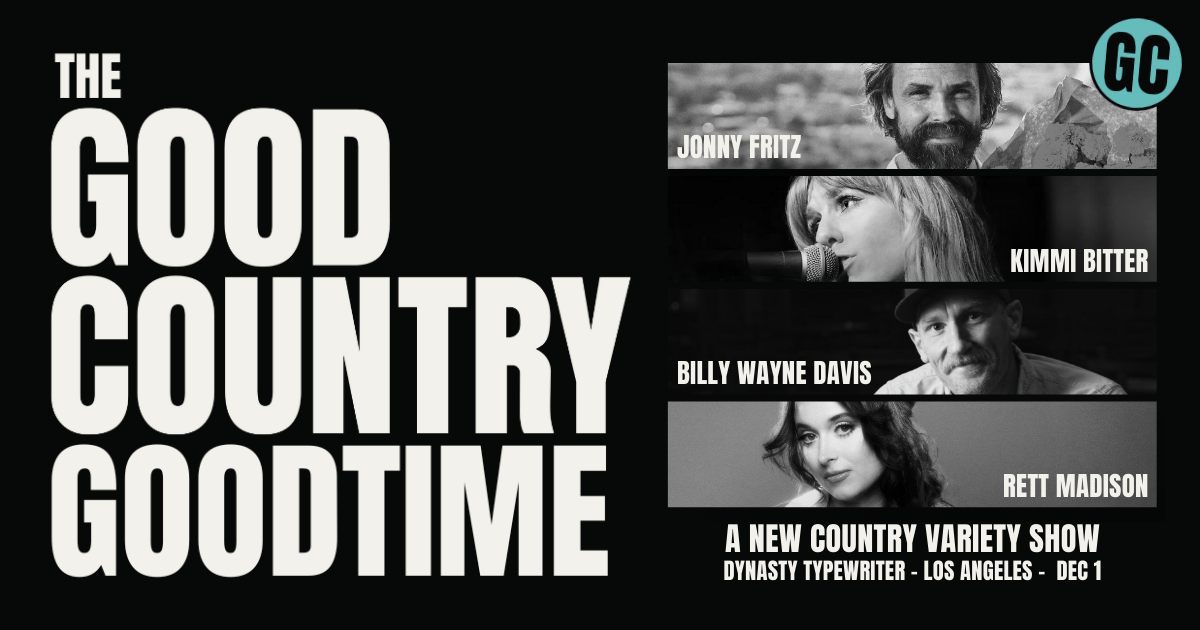
Good Country Goodtime Variety Show Returns to LA’s Dynasty Typewriter December 1

BGS and Good Country are so excited to continue our one-of-a-kind, brand new variety show, The Good Country Goodtime, at premier Los Angeles venue Dynasty Typewriter on December 1 at 7:30pm! The second edition of the event – which features the best in country, Americana, and roots music, a first-rate house band, delightful comedy, and more – will be a whimsical walk through a western winter wonderland. In-person and livestream tickets are on sale now.

Confirmed guests for the December 1 show include Jonny Fritz, purveyor and proprietor of “dad country;” the delightful Old School countrypolitan sounds of California native Kimmi Bitter; plus indie/country singer-songwriter Rett Madison, who just released her latest album, One More for Jackie; and, attendees will enjoy stories, laughs, and more from comedian and Tennessee’s own Billy Wayne Davis – who will serve as the evening’s host. The Coral Reefers’ Mick Utley will return to direct the Goodtime’s all-star house band. And, you never know which Hollywood writers, actors, and improvisers and special guests may just show up to join in the fun.

Not able to attend in person? Grab a livestream ticket, or, just hold on – our Good Country Goodtime shows are recorded by Dynasty Typewriter’s multi-camera, multi-media content capture team and we will be sharing performances, sketches, and songs from the Goodtime right here, on BGS and Good Country, in the near future. Stay tuned!

We hope you’ll join us for the December 1 edition of the Good Country Goodtime, the show’s last hurrah of 2024 – before we continue with regular monthly shows in 2025! Attendees will enjoy songs, stories, sketches, and so many surprises in store. Pull on your boots and get ready for our western winter wonderland.

Buy your tickets now for the Good Country Goodtime.


Sign up on Substack for even more Good Country, delivered direct to your email inbox!

BGS 5+5: Andrew Duhon

Artist: Andrew Duhon
Hometown: New Orleans, Louisiana
Latest Album: Emerald Blue (out July 29, 2022)
Nickname: “Duhon” … (Du-yaw if you’re Cajun)

What’s your favorite memory from being on stage?

One recent moment that comes to mind was a gig on Mardi Gras day during the quarantine in New Orleans. Mardi Gras was cancelled, but folks found ways to distance and celebrate. The trio was invited to play a small outdoor gathering on the outskirts of the French Quarter at a place called Jewel of the South. It felt so good to play live and celebrate a little Mardi Gras. Now, I’m mostly an ‘eyes closed’ performer when I’m singing, but I opened my eyes for a moment, and there was this older fella right up close to me, white beard and top hat, dancing and holding a pair of old-time handmade Mardi Gras beads over my head to put on me. I skipped the next lyric to let him put the beads around my neck, my only Mardi Gras beads that year, and I got back to singing the next lyric, eyes closed. When I opened my eyes again, he was gone, like the ghost of Mardi Gras come to visit me, and I wore that pair of beads until they broke and scattered into tiny pieces.

What other art forms — literature, film, dance, painting, etc. — inform your music?

Certainly literature, short stories, poems, films, modern art, nature, anywhere someone or something tells a story. There’s a lineage in the fact that the way stories are told to me forever informs the way I decide to tell my story. You could say my stories are just a paper mache of scraps of the stories told to me, hopefully in small enough pieces that they resemble my own. To me a good story is good because it offers up some truth that we can share together, but even if that truth was what we really needed, it’s the story that causes us to gather around to hear it, to follow along, and it’s how we remember it for years. It’s not to say that ‘truth’ is the same for everyone. I’d think that’s what’s special about storytelling; it lets the listener find their own truths in a good story beautifully told.

If you had to write a mission statement for your career, what would it be?

Oh sure, here you go: “We here at Andrew Duhon Music strive to figure out what the hell it is we have to say, mostly through the tradition of song, in keeping with the clever rhymes and double entendres of all those songwritin’ heroes stuck in our head and hopefully in continuation of those very traditions. We strive to share the songs of ours in recording and in person by interweb and by van, and to remember to be a little less precious for god’s sake, and stop and give the flowers a sniff along the way, because the next song could be inspired by a whiff of something that constant grinding would pass right by.”

What has been the best advice you’ve received in your career so far?

I think the idea imparted by a fellow songwriter, “No one else can write your song” has been empowering and reassuring. I’ve heard so many songs I sure wish I’d have written, or songwriters doing something I do better than I could ever do it, but there’s always your piece and it’s carved out somehow, waiting for you. There’s always your story, and no one else knows it until you decide to figure out how to tell it to them… and hopefully when I figure out the story I’m telling, it’ll be interesting enough to gather around and hear it.

Which elements of nature do you spend the most time with and how do those impact your work?

That’d have to be a river. I think standing in a river moving past me, camping next to a river and seeing it rollin’ on by from the last light of evening and again first light of the morning makes me think of time and my tiny blip in it. I grew up next to the muddy mouth of the Mississippi, wide and treacherous, but from a plane leaving New Orleans, it looks to be doing the same thing a mountain stream is doing, slowly carving at the banks, swaying side to side at a pace my tiny space in time can’t discern. I’m spending my time writing songs and ‘making a record,’ not just the spinning vinyl one, but the one in the fossil record that maybe serves someone after I’m gone. I’d say staring at a river is my favorite way to spend a moment and to see the space it inhabits, long before me and long after me.


Photo Credit: Hunter Holder

BGS 5+5: Zachary Williams

Artist: Zachary Williams
Hometown: Acworth, Georgia
Latest Album: Dirty Camaro
Personal Nickname: Ray ray

What was the first moment that you knew you wanted to be a musician?

The first time I stepped onto an open mic stage and completely bombed. It was addicting.

Which elements of nature do you spend the most time with and how do those impact your work?

I like to take a nice long walk by myself without my phone or anything just to clear my head. I’m in the woods a good bit. There is something about walking through a forest knowing that every tree is connected somehow. It makes you feel very small which is a very good feeling to me.

What’s the toughest time you ever had writing a song?

“Losing You” on this album has been with me for 12 years. I’ve worked on it for that long and it has got to be the hardest one for sure.

If you had to write a mission statement for your career, what would it be?

This is lame, but before I started The Lone Bellow, I was invited to have breakfast in the Upper West Side of Manhattan with Bono. I remember I was a nervous wreck. I mean. It’s Bono. They shut down the whole place so we could sit down together over some eggs. At the end of our meal we stood up and I asked him if he had any advice for a young buck like me. He said, “Set yourself on fire every night.” I hear those words before every single show.

How often do you hide behind a character in a song or use “you” when it’s actually “me”?

Great question. For several records I never did and then a couple years ago I started flirting with the idea of trying to write someone else’s story. Trying to put myself in someone else’s shoes. On this record, it’s “Her Picture.” Everything else is me.


Photo Credit: Eric Ryan Anderson

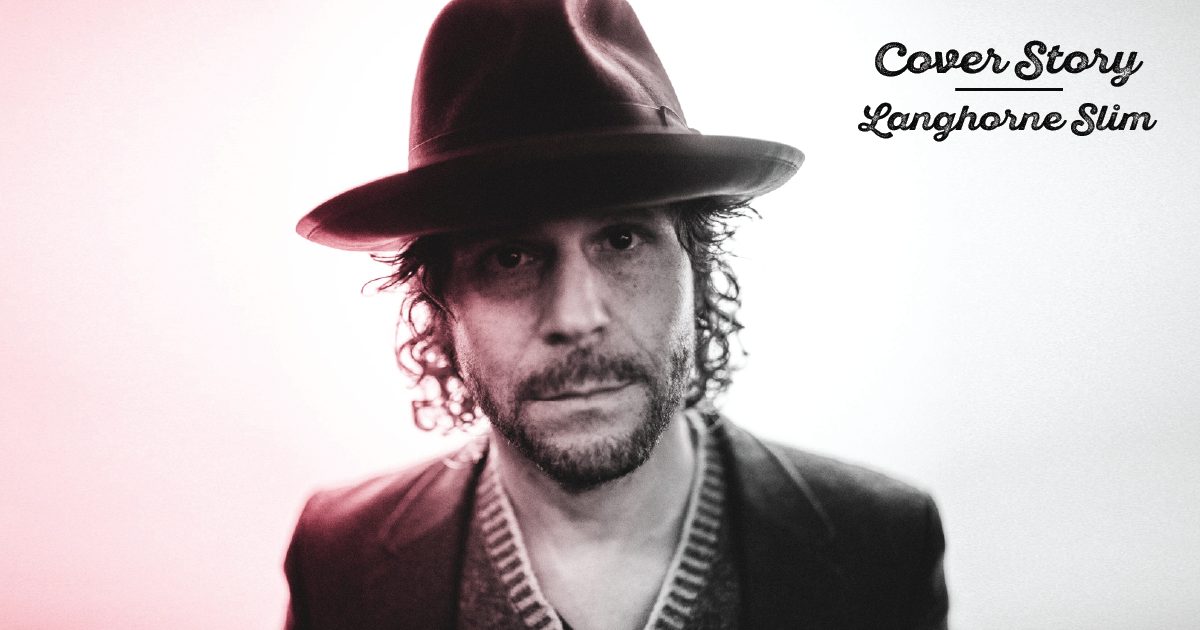
While Making ‘Strawberry Mansion,’ Langhorne Slim Learns to Be Still

Langhorne Slim didn’t intend to make his new record, Strawberry Mansion, but he found a musical path through a crooked piece of time. He isn’t escaping the chaos of the era. Instead, we find him traversing it, soaking it in, and sharing a real-time creative reaction.

In “Sing My Song” he writes, “I’ll sing my song when my song appears.” By facing his own addiction and the many hardships the world has been dealt this past year, he cleared the path for the 22-song record to appear. With the support and musical collaboration of friends like Paul DeFiglia and Mat Davidson — as well as his family, label, and management — Strawberry Mansion stands as a fruitful monument to Slim’s hard work as a person and as an artist.

BGS: Will you talk a little bit about what you were experiencing leading into making this record?

LS: Well, I wasn’t writing music to write a record. I had been working for a long time trying to finish another project (the unreleased Lost at Last Vol. 2). I quit drinking and drugs about seven and half years ago and I relapsed with prescription medication that was prescribed to me and one thing led fairly quickly to the other, where I became dependent on that medication. That led me to about a year out West and a decision to come back to Nashville where I’ve lived for almost a decade. It is where I got sober the first time.

So the conversation in my head was, I’m going to go back home and get healthy. Right now, I’m actually in the apartment of my friend who came and drove me from Los Angeles back to Nashville and it was a brutal trip. And he’s a brother to me. He didn’t know that I was in bad shape and weaning myself off of these prescription pills. Prescription medication is a motherf***er and I have all kinds of thoughts and feelings about that. He found me in a place that he had not ever seen me in. I could see through his eyes that he did not recognize me and I don’t mean that poetically or metaphorically. My boy was clearly disturbed, frightened, annoyed, sad, and confused. When I dropped him off, he looked at me and I looked at him and I knew it was bad. He was just a mirror and I could see where I was at.

I called around some places and people and found some help. Shortly after I got home, the tornado hit. And then of course the pandemic. So energetically and physically, it was such a crazy wild time for everybody. On a deeply personal level, I think in retrospect, the slowing down and forced confrontation of things that needed immediate dealing with, there’s just so much that has been revealed in this. For me, who am I when I’m not a touring musician? Who am I when I’m facing my anxiety, my fear, whatever it might be? Some might say life on life’s terms.

For this record, I read that you had a friend that suggested that you write every day, which you had not done prior to that. Is that right?

It is right that you read that but it’s not the entire story… One of my friends, who I’ve known for many, many years sort of jokingly said, “If you just write a song every day, come over and we’ll record it.” As soon as the quarantine started, some songs started to come and at that point, it almost seemed like they were quarantine jingles. They were kind of on the nose for the situation but it felt good to have these new little songs. I would finish a song. I would not overthink the song. I would take it to my friend’s house in its rawest form. We would record it and I would post it and then I wouldn’t think about the song again. It was a cathartic thing. Catch, release, and on to the next one. And that wound up going on for a couple of months.

Were you interacting with fans over social media about the songs? And if so, did it wind up affecting the output?

Let me put it this way, I think what it was allowing me to do was to scratch an itch. I don’t know what would have happened if I wasn’t having some interaction, some connection in that way without being on tour. In this raw and intimate way, I was writing the song that day, making a little video, and putting it out to people who care or like what I do. It means a lot to me that other people not only relate but are feeling uplifted if only for the two minutes that they are listening to it. I’m sure that was a fuel and energetic force that allowed me to continue to do it.

When did you know that Strawberry Mansion was a record?

I’m superstitious and one time I told my good friend Jonny Fritz that there had been a black cat that was stalking my lawn and he laughed and rolled his eyes and said, “You know what is bad luck? Being so superstitious.” He’s a smart boy. When these songs were flowing, I didn’t want to call my manager or the record label because I thought it was taking it out of the spirit world and putting it into the more tangible physical one. After about 20-25 songs I had the idea for it to be a record, but wanted to keep writing and they finally called me and said, “We think that you should just record a stripped-down record,” which is what I wanted. A stripped-down, raw, immediate, and true to how the songs came about kind of record.

One of my favorite lines from the record is from “Panic Attack,” when you say, “I’m feeling things exponentially.” And that line can be for the good and the bad. What are you feeling exponentially right now in this moment?

I’m excited about the record. I’m proud of the record. I am looking forward to continuing to write songs and getting busy with whatever comes next. The feeling feelings exponentially can be positive. It can be negative. That was in terms of, obviously, a panic attack. I have been a sensitive boy my whole life so what I’m trying to do is to not let every feeling take me over or guide my next step, because if I’m not looking out for it, a certain kind of thought can manifest into an intense feeling very quickly.

There is going to be a lot of talk on this record about sobriety. This isn’t the first time I’ve gotten sober and I’m not trying to market or promote my sobriety. I’m trying to take that very seriously. It is part of the real shit that is in my life and it had to stop before more songs came. It seems dishonest for me not to discuss it. I still feel feelings very exponentially and would be lying to say that by getting sober or by writing a record that that cures any of it. It is a daily practice.

What are you most looking forward to musically after the pandemic has passed, and what are some things that you might do differently from having had this quiet time?

I think I am going to realize how much I miss the live experience. I think because I have been so fortunate to be able to write a bunch of music during this time, it has really fed that need. If I hadn’t been able to do it, I think I’d probably be really missing touring and being on the road. It feels weird to say but I don’t have that craving to be back out on the road. I miss performing for people.

For me personally, I could absolutely see touring a lot less and continuing to practice some semblance of stillness, whatever that means for me. More home time, I think would be healthy for me. Perhaps because I haven’t been under the delusion that touring is coming back any time soon since the beginning of this, I haven’t been constantly disappointed. I’m just trying to keep my shit together and have a healthy attitude about it and not have any expectations for what might be waiting for me down the street.


Photo credit: Harvey Washington

Finding Refuge at the Edge: A Conversation with Cory Chisel and Adriel Denae

On a weekday afternoon in September, Cory Chisel and Adriel Denae are at home in Appleton, Wisconsin. It’s been a busy summer. Several weeks earlier, the couple brought 225 bands to town for Mile of Music, the citywide festival that Chisel helped launch in 2013. Not long before that, they hosted the recording sessions for a handful of upcoming albums — including Erin Rae’s newest, Putting on Airs, as well as the debut release from Traveller, Chisel’s trio with Robert Ellis and Jonny Fritz — at the Refuge, the 33,000-square-foot building that once served as a monastery and now pulls triple duty as an art studio, live music venue, and Chisel’s headquarters.

“We used to live at the Refuge, too,” he says. “Now, we have a house as nearby as we could possibly be, without being on the grounds. It wound up being good for us to have a little bit of distance, and not be at ground zero all the time.”

A little bit of distance … Chisel has been working on adding some sort of space — a buffer zone between his current environment and the one he once inhabited — to much of his daily life. Once a roots-rock road warrior who spent eight months of every year on tour, he’s since grown more attached to the home, and the family, he’s built alongside Denae in Appleton. It’s easy to see why. The two have a son, Rhodes, as well as a new album, Tell Me True. Years ago, they would’ve promoted Tell Me True by hitting the highway and gigging relentlessly, but things are different these days. Priorities have shifted. And with those shifting priorities comes a deeper appreciation for the things that matter: family, roots, the gigs that do find a way onto the couple’s schedule, and the downtime that elapses between those shows.

You spent years living in a van, but this year has been different. What pushed you to stay home and plant deeper roots in Appleton?

Cory Chisel: As an artist who tours, you know how you feel like you’re constantly chasing something? You’re chasing the crowds. You’re chasing the people who like you. That’s what the majority of our careers have been. I’ve always felt like I’ve showed up to the party one year after the party ended. Our approach now is to invert that system, if only just to try it. We’re at a point where we’re looking inward and creating our own environment that has pieces of all those things we’ve seen elsewhere, rather than running to those places.

Adriel Denae: Finding out I was pregnant really shifted everything, too. I’d been living on the road since I was 21, and I enjoyed the gypsy lifestyle. I think I had this delusion that I was gonna have a baby and strap him on my back and keep doing it, but when our son arrived, I felt an immediate shift and started craving a deeper connection to the place I was living.

As artists, what are the benefits of spending more time in one place?

AD: It can really help you, in a creative context, to sink down a little deeper into life and a community. I enjoy interacting with artists who’ve lived this way for a long time, and never got on the industry boat the way we did. There are fascinating artists all over the world who’ve never played the game we started playing. I’m finding it really inspiring to interact with them. That’s something that’s fun about moving outside of the music mecca parts of the country.

Let’s compare your current situation with your busiest days as touring musicians. Which album kept you on the road the longest?

CC: That would be Old Believers. And I’m not complaining at all. I needed that experience.

AD: We did have a blast.

CC: We did. But I did have a nervous breakdown, too, where I felt like my soul was always two towns behind me. I showed up to the Letterman stage, and I’d be lying to you if I said I felt anything. This would happen a lot: I’d get to this place I thought I wanted to reach, and either it didn’t feel nearly as momentous as I had expected it to feel or the comedown was so strange that I’m not sure it was worth coming up. We traveled the world as bodiless ghosts for years. For most artists, that’s how you survive. You’re just trying to pick up the next $100 in the next town. But the thing is, that $100 is exactly the price it takes takes to get to the next $100. And at some point, you ask, “What are we doing, exactly? What’s next on this journey as an artist?” After years of touring nonstop, I was ready to try something new.

AD: We hit a season, right around the time we moved to Nashville, where we were only home for a few days a month for the whole year. We’d say hi to friends, do laundry, and then get going again. I liked the lifestyle. I honestly may have enjoyed it a bit more than Cory …

CC: Because I was in charge of the thing. When you’re in front of the boat, you’re taking the full waves, too. Nothing was wrong with it; I was just done with it for awhile. So that’s why I wanted to create a context where I could still be an artist, but reorganize.

And part of that organization included transforming the Refuge’s chapel into a recording studio. You made Tell Me True there. Is the studio a reaction to the more expensive studios you’ve seen elsewhere?

AD: When you’re a young musician, you spend a lot of time dreaming and anticipating the moment where you’re in the studio for the first time. You think it’s gonna be a certain way. But in reality, I was unprepared for the amount of anxiety and awkwardness that a professional studio environment can create. At first, I thought it was a problem with me. Then I read this interview with Elliot Smith, where he was comparing the process of home recording to the experience you get in a big studio. You know what it’s like in a big studio: There’s an artist sitting in a booth with headphones on and cords everywhere, and you get into this headspace where you’re ready to create your song, and suddenly there’s a buzz in some line somewhere, and everything has to stop, and everyone starts running around, and you have to sit there and maintain some space for yourself while they fix it. There’s a lot stacked against you, before you even consider the financial constraints. I can really understand the draw to recording in non-traditional spaces, whether it’s someone’s home or someplace else. A lot of my favorite recordings were done that way. We hit a point in our journey where we were really longing for that.

When did the songs for Tell Me True begin to arrive?

AD: During those months of our son, Rhodes, being a newborn.

CC: It arrived either as a way to soothe our little baby or immediately after he went to bed, in those weird half-awake, half-asleep moments you have as a new parent, where you’ve got a tiny amount of time to do something other than grapple with a new life. It was in those little, tiny spaces. I used to have all the time in the world to do God knows what. That time vanished, but the songs didn’t. I worried that if I added more to my life, the music would go away. But the music just accompanies life. It’s a way of digesting or processing what’s happening to you.

AD: I remember once, when Rhodes was just a few weeks old, I woke up in the middle of the night and Cory wasn’t in bed with us. I could hear a guitar from the other room and, around sunrise, Rhodes woke up and we both went to find Cory, and he was sitting on the floor in Rhodes’s room, which our son never actually moved into. He had that crazed look you get when you’ve been writing all night, and he’d completed a song. It came out through the night like that. There were other songs, like “Tell Me True,” that were refrains we’d been singing for weeks. A lot of the music on the record was something that had been floating around us in that three-month period. I feel like Rhodes brought a lot to us with his life, and that record is part of what he helped to create when he came.

You haven’t entirely stopped touring, though.

CC: We haven’t, but touring is different now. I don’t go out with Traveller for more than 10 days at a time. Our upcoming tour to Australia and New Zealand is a good example. We might have continued that run, but I just couldn’t do it. So Robert [Ellis] is going to Japan afterward to play solo shows. I have things now that matter more to me than going everywhere during a tour. Being present in this life, here, is my number one treasure. When I say to an audience now, “I’m so glad you’re here, and I’m so glad I’m here,” I’m definitely not lying. I love having so much truth to that exchange.

I visited Appleton for the first time this year as a Mile of Music performer. The town is great, but the festival … that festival is fantastic.

CC: Thank you. That festival was born out of one question: Could this thing be done differently? Could we have a festival that was really for the benefit of the people attending, as well as the artists playing? We weren’t asking ourselves, “How much money can we squeeze out of these people involved?” For me, it feels different than other festivals. So we thought, “If that’s possible, why can’t everything be changed?”

You mean, if a festival like Mile of Music can be successful, why can’t a recording studio like the Refuge be equally successful? Or a homemade album like Tell Me True?

CC: Sure. The music industry isn’t that old. We think of it as this unchangeable thing, but it hasn’t been around long enough to earn that kind of respect. I think it’s necessary to disrespect it a bit and see what can be changed.

Meanwhile, Adriel has been working on her new record, too.

AD: Cory and I are in different places in our careers. I’m just beginning the process of releasing my own songs and couldn’t be more excited to do it.

Norah Jones produced it. She’s been a friend and fan for years, right?

AD: I was a fan of hers first. Norah took Cory out on the road in 2012, and she wanted it to be a stripped-down opener. He brought me and a guitar player along, and we wound up finishing the tour just the two of us. I was so star struck. I could hardly even talk to her. I was just a huge fan and have been since her first record.

How did the tour lead to an offer to produce your record?

AD: She started asking me if I’d been writing my own songs, and she asked that I send them to her. I sent her some demos, and she was so encouraging and affirming. She had built out a home studio at her house and she offered to produce, and that was just the biggest dream come true. So I went to New York in January of that year, and I found out I was pregnant 48 hours before getting on the plane. That threw a huge curveball into the equation.

CC: Norah was pregnant, too, so the producer and the musician were both making a record and a baby at the same time.

AD: It was a very sober recording experience! We were in our pajamas and slippers the whole time. I kept seeing her as a painter, more than a producer. It felt like she was helping me find my colors and helping me paint this picture around my ideas. It was really fun to experience record-making with that kind of feminine sensibility and energy to it.

Where was Cory during this?

AD: He was watching Game of Thrones in Nashville.

CC: I told her not to make a record while Game of Thrones was on!

Do you look back and regret that you weren’t there, Cory?

CC: This was Adriel’s art, with Norah in the producer’s role. Now I get to enjoy it as one of my favorite records, and I don’t have that weird feeling of … you know when you work on an album, you can’t hear it the way other people hear it? It’s almost as though, if you participate in it, you can’t be a fan the way others can. So I’m glad to have that record in my collection, where it can be one of my favorites.

Is there a title?

AD: There’s still time to figure that out, but I’ve always thought of it as being called The Edge of Things, which is a song on the record. I like to start some of my sets with that song because, for me, it’s a kick in the pants to not be afraid to jump into the unknown. But I guess we’ll decide before February, which is when it’s coming out.

What about the Traveller record?

CC: If all of this pans out, it would be fun to time it together, so Traveller’s record and Adriel’s record both come out at the same time, and we’re all touring at once. Because then we’ll be a tribe, and everyone’s traveling all together. And suddenly, Gary, Indiana, becomes a lot more fun to be in.


Photo credit: Justus Poehls

The Kernal, ‘Tennessee Sun’

A little over four years ago, I found myself wandering the streets of Asheville on a Sunday night, not too long after I left New York for Nashville, somewhat drunk on Spanish red wine from the local tapas place, and in search of mountain music. For someone new to the South, Asheville — tucked on a hilltop with winding, vaguely European corridors — felt almost mythical, and what happened next sort of was. I’d wandered into a bar and there, on the stage, was a man in a red suit, singing country music. It was past midnight, but couples in cable knit sweaters were waltzing in circles — not just to the slow songs, but the fast ones, too. I’d never quite seen that sort of earnest swing, short of ironic line dancing I’d witnessed once at a warehouse party in Brooklyn, where far too many people were wearing far too many things made out of bandana fabric.

That man in the suit, I would discover, was the Kernal — a name I’d see pop up again around Nashville as a solo artist, bass player for Andrew Combs and Jonny Fritz, and generally enigmatic figure who served a key role in the local music scene while refusing to actually live in it. On March 3, the Kernal will release his debut record, Light Country, officially introducing his breed of smart, often witty twang that infuses that sense of locomotive, gospel-tinged mystery. “Tennessee Sun,” premiering exclusively here, shows his skills at the lyrical ramble, conjuring up Bob Dylan and, in a certain kind of sonic onomatopoeia, a ’70s-era refrain that just feels like those warm Tennessee rays kissing the skin. “Lettin’ go of everything that I don’t need on my way down,” he chants, and you believe him. The Kernal doesn’t need much to be convincing … except, maybe, a red suit and a room full of people ready to dance.

Jonny Fritz, ‘Are You Thirsty’

Somewhere along the way, when everyone in folk and country songwriting started to get just a little too serious, there was one unexpected casualty: detail. Just ask Taylor Goldsmith of Dawes: Mention a "chicken wing" in your song, as he did in "A Little Bit of Everything," and Reddit riots break out. Even though some of our greatest writers thrived — and still thrive — on very specific narrative imagery (well, hello, Bob Dylan and John Prine), it's far from an accepted thing — especially when it's used in any subversive or slightly satirical context. Any time we hear that sort of combination, we immediately classify it not as smart wordplay that captures the shadier side of human existence, but as comedy. Who knew that a chicken wing could be so divisive?

Such is the case, often, with Jonny Fritz, who happens to have featured Goldsmith and his brother Griffin on his Jim James-produced LP, Sweet Creep. Fritz has always been an extremely detailed writer, singing about trash cans, panty liners, and, now, alcoholics and seedy hotels; and sometimes that can make people a little uncomfortable. It's a lot easier to laugh than to actually appeal to the visceral nature of his work. "Are You Thirsty," the song that opens Sweet Creep, is deliciously specific: "Are you packing on the pounds now that you quit?" Fritz asks over a chugging countrypolitan doo-wop. It's about an alcoholic who left the bottle behind, and Fritz never buries his ideas in too many metaphors or grand, sweeping statements — he's simply turning life to lyric. And, really, life is almost always a combination of funny, imperfect, weird, and sad … a meaningful one, anyway. Same goes for music. Fritz knows this well, and delivers, whether or not your instinct is to laugh or cry.

Daddy-O: A Father’s Day Playlist

This Father's Day (June 19), you could do what you always do and buy your pops the same pair of new socks that he doesn't need. Or, you could give dear old dad the gift of music. To get you started, we've pulled together some of our favorite songs about dads, written from both the perspective of fathers and from those of the kids who loved them. If you're feeling generous, pick up an album or two featuring songs from the list. If not, at least send dad a link to the Spotify playlist. Either way, his sock drawer will thank you.

"Daddy Doesn't Pray Anymore" — Chris Stapleton

This tearjerker from Chris Stapleton is served up with a little twist, made all the more heartwrenching by his stellar vocals and somber delivery.

"Daddy Sang Bass" — Johnny Cash

This 1968 tune, written for Cash by Carl Perkins, is a testament to the bonds of both family and music — both of which, in this case, are anchored by dad and his bass.

"Undercover Dad" — Jonny Corndawg (now Jonny Fritz)

A snooping dad must grapple with what he finds in his teenage daughter's diary in this sweet, light-hearted tune from Jonny Corndawg's 2011 Down on the Bikini Line.

"Paradise" — John Prine

A father teaches his son about the perils of mountaintop removal in this classic John Prine tune from his 1971 self-titled debut album. 

"My Father's Father" — the Civil Wars

Ghosts of the past and his "father's father's" blood on the tracks bring a prodigal son home in this song from the now-defunct duo's 2011 debut album, Barton Hollow.

"A Father's First Spring" — the Avett Brothers

One of the most profound statements on an album (The Carpenter) that grapples with bassist Bob Crawford's daughter's battle with brain cancer, "A Father's First Spring" tugs at heartstrings with lines like "I do not live unless I live in your light."

"Coal Miner's Daughter" — Loretta Lynn

"Daddy worked all night in the Van Lear coal mines," and his proud daughter wrote one of the greatest country songs of all time to thank him for that hard work.

"Welcome to Earth (Pollywog)" — Sturgill Simpson

Sturgill Simpson's new album, A Sailor's Guide to Earth, is something of a guidebook for living for his young son, and opening track "Welcome to Earth (Pollywog)" introduces us to "the greatest love [he's] ever known."


Photo credit: CarbonNYC [in SF!] via Foter.com / CC BY.