Doc Watson & Earl Scruggs’ Friendship in Photographs

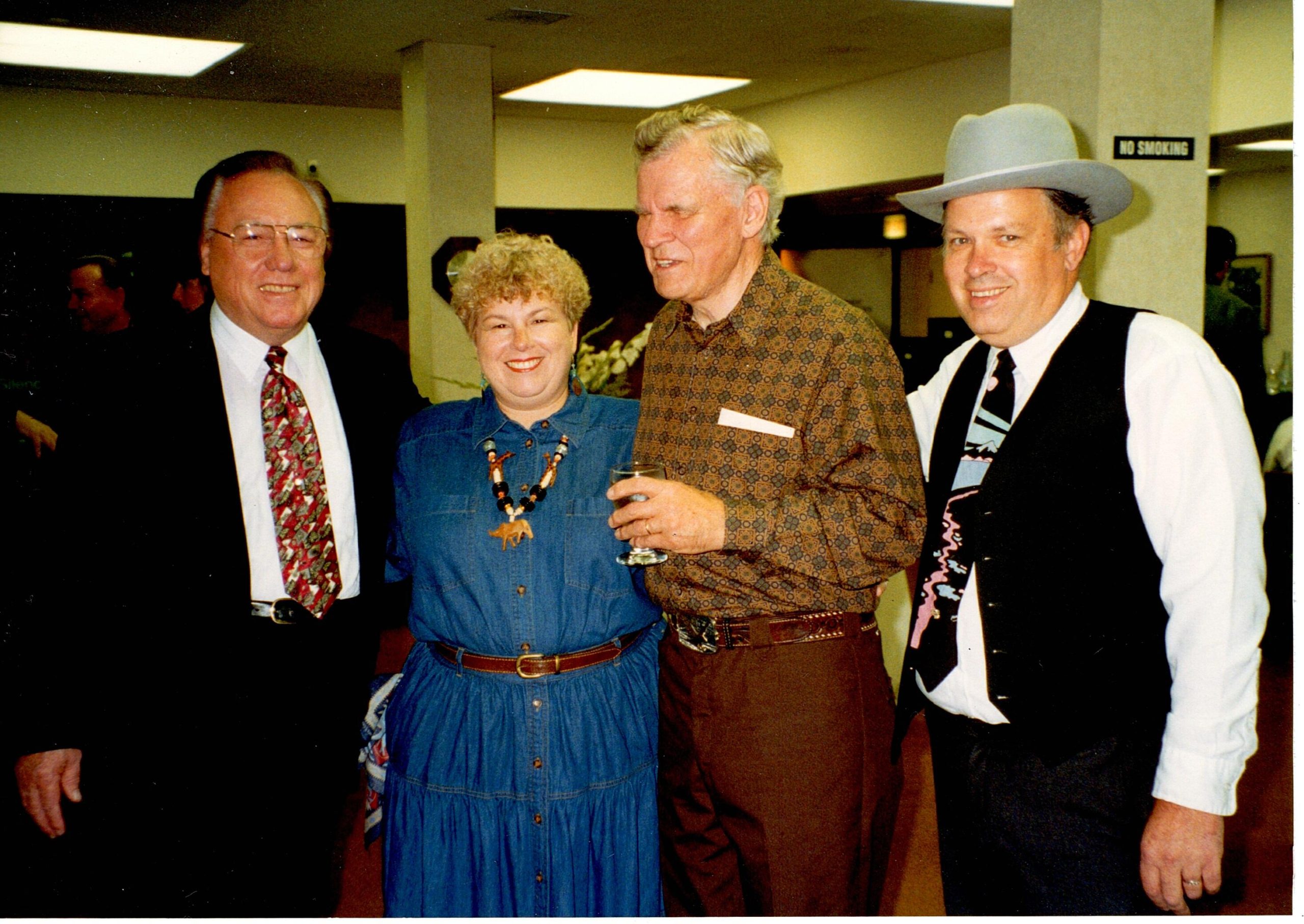
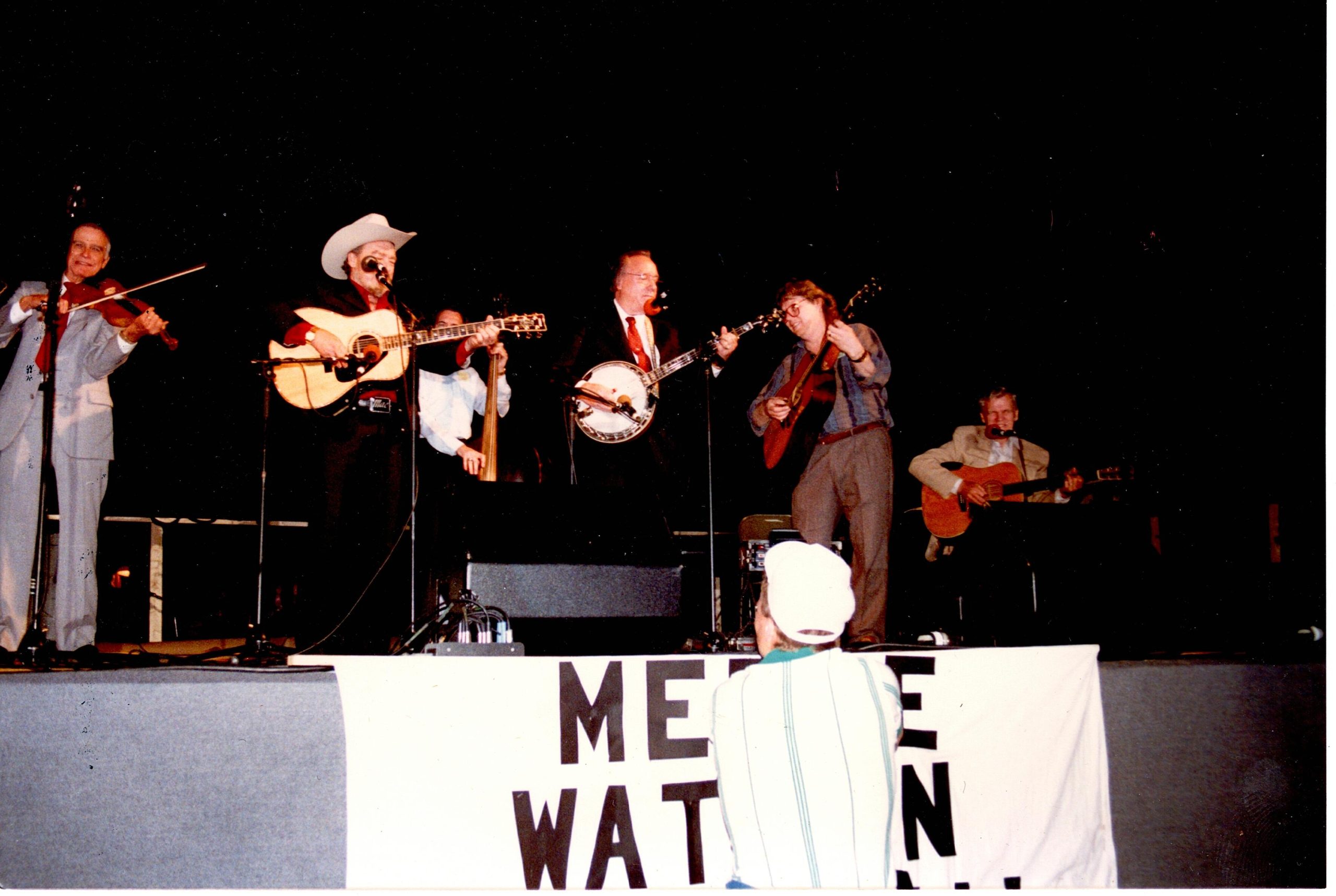
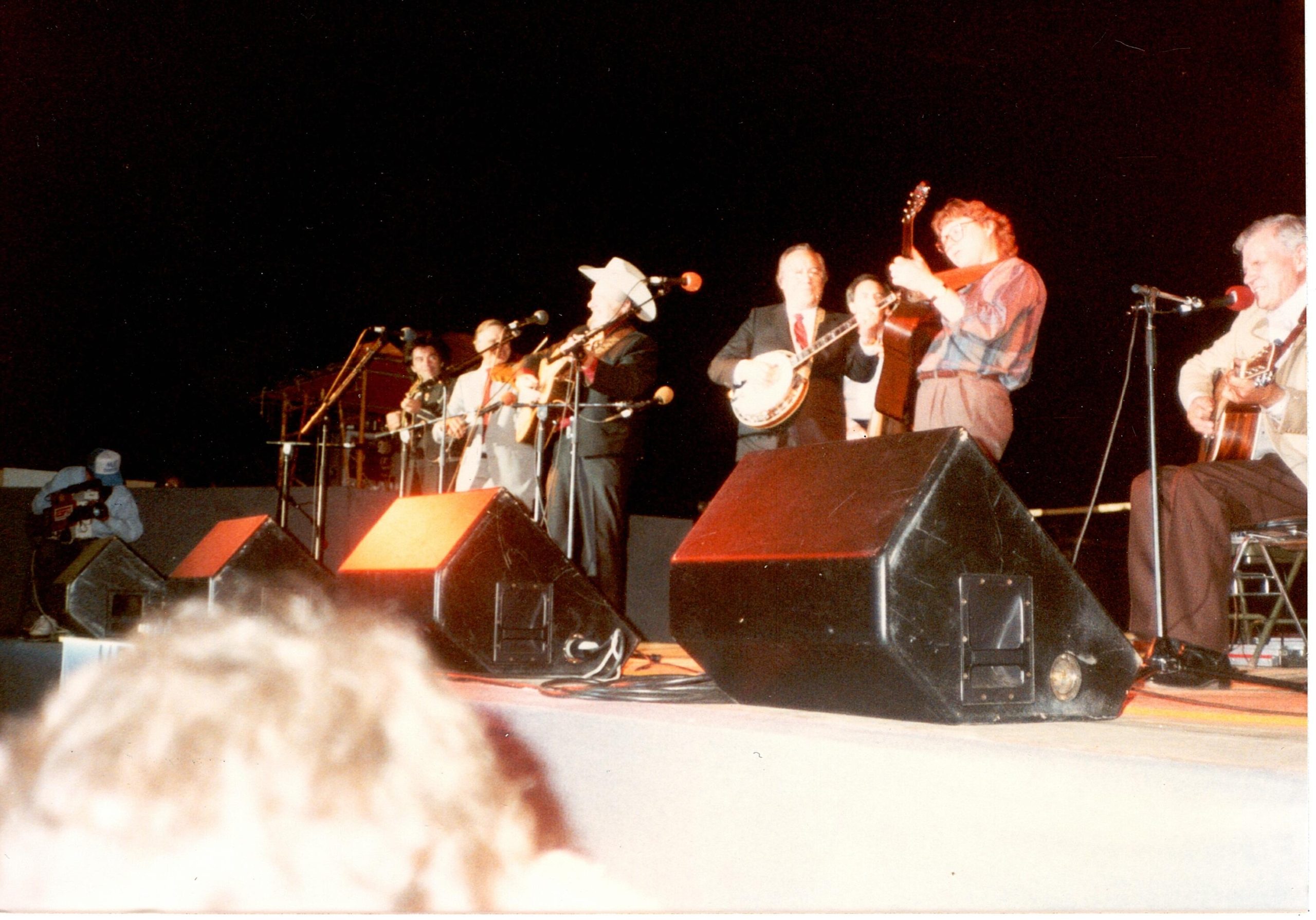
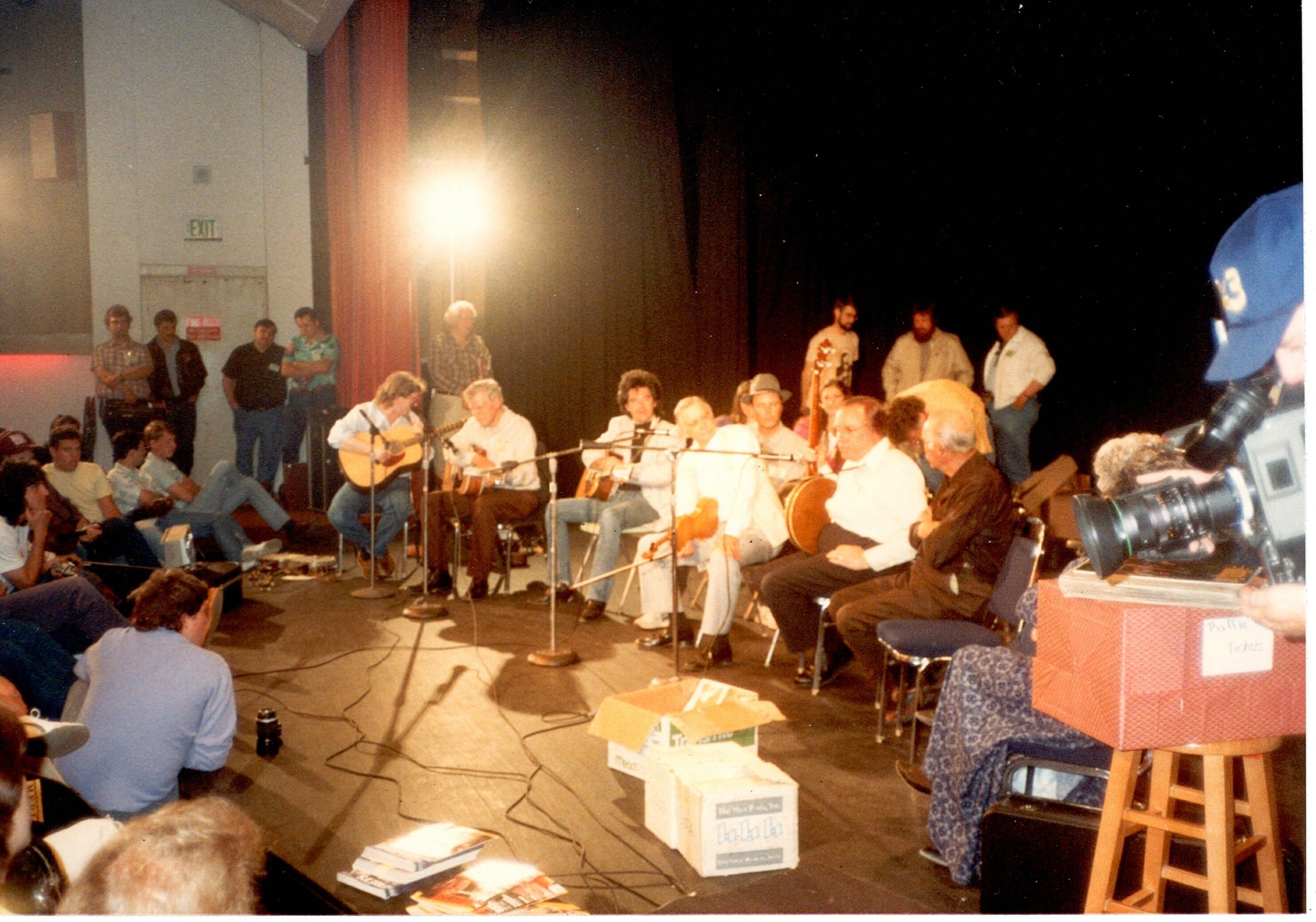
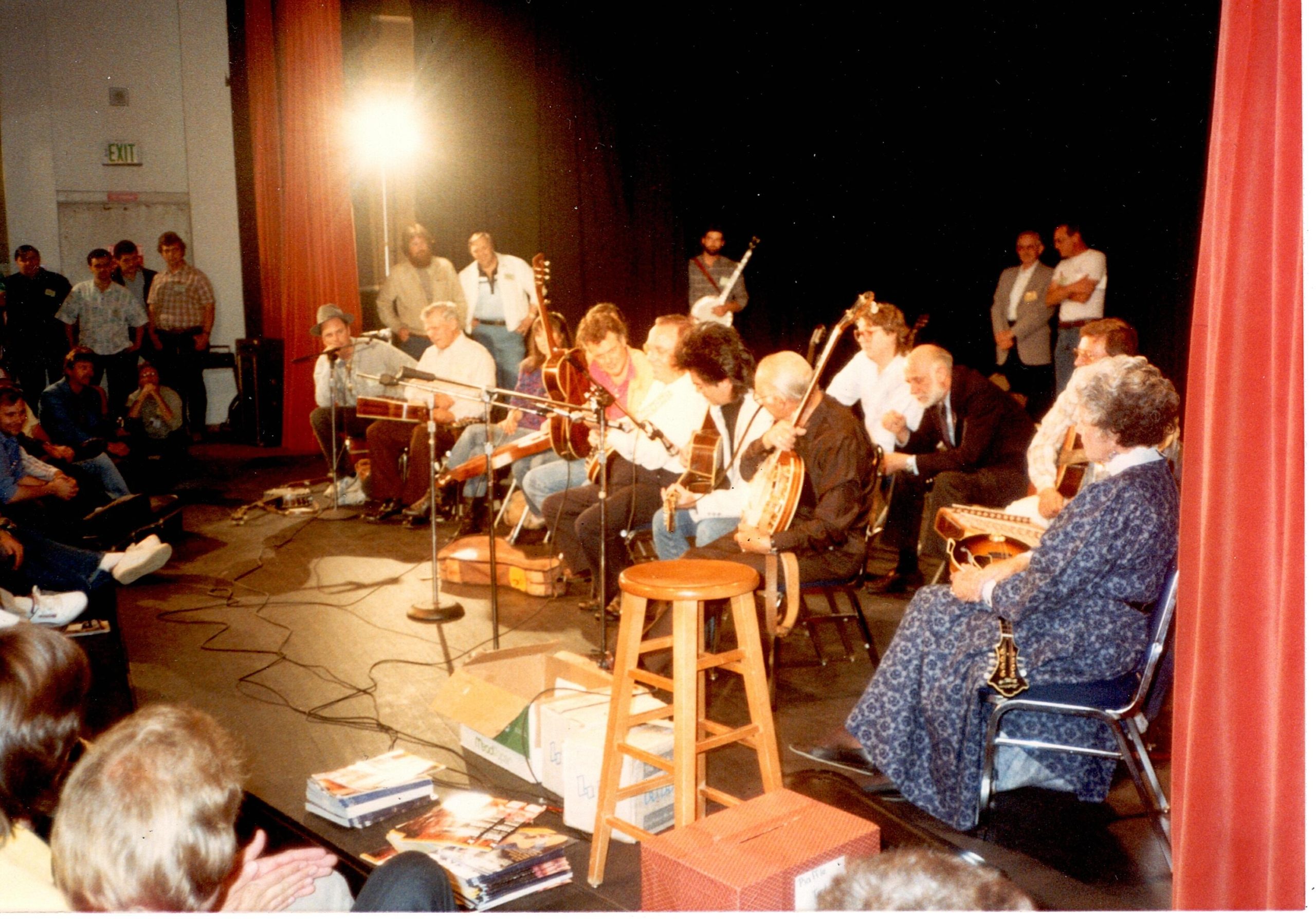
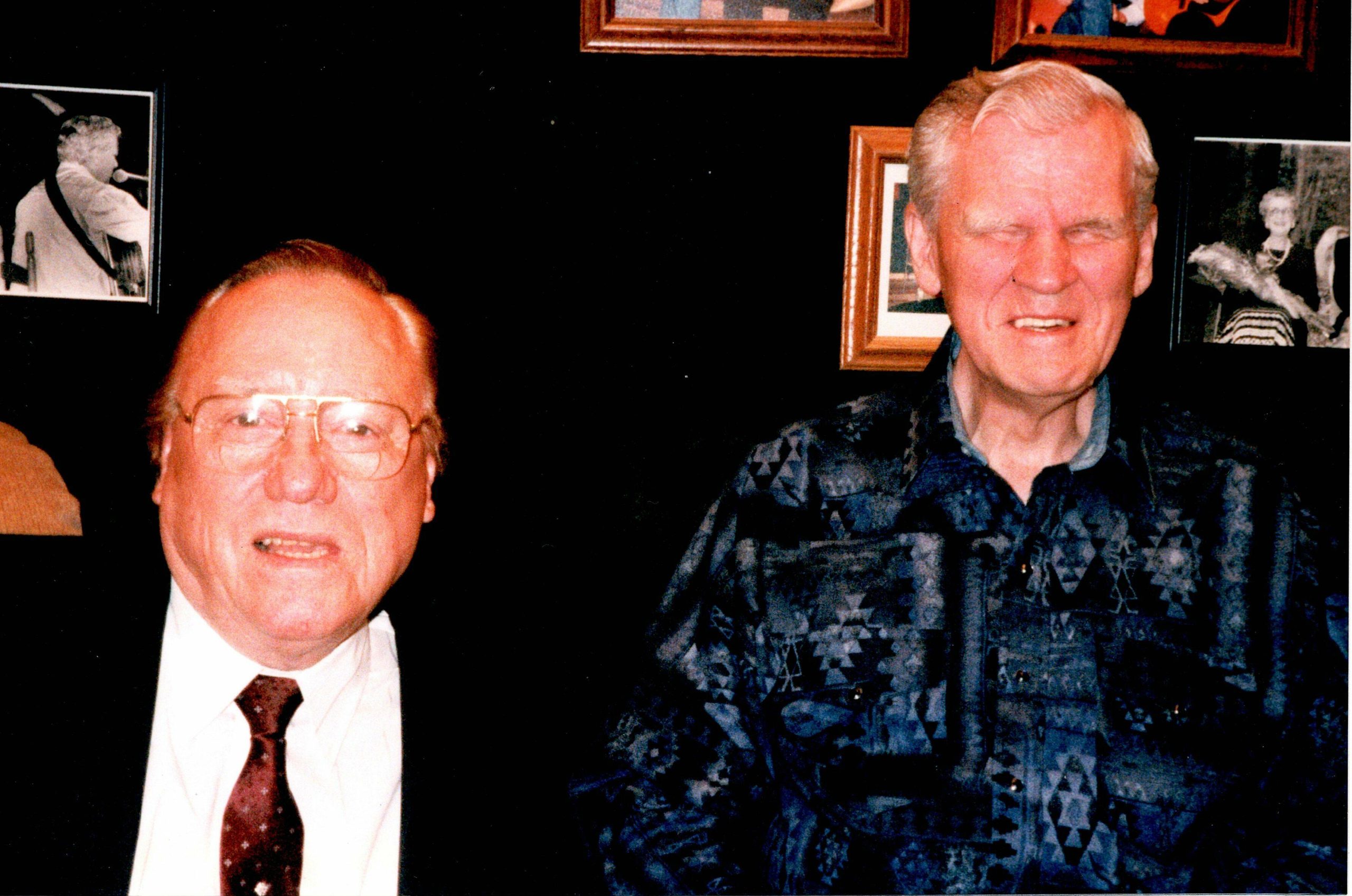
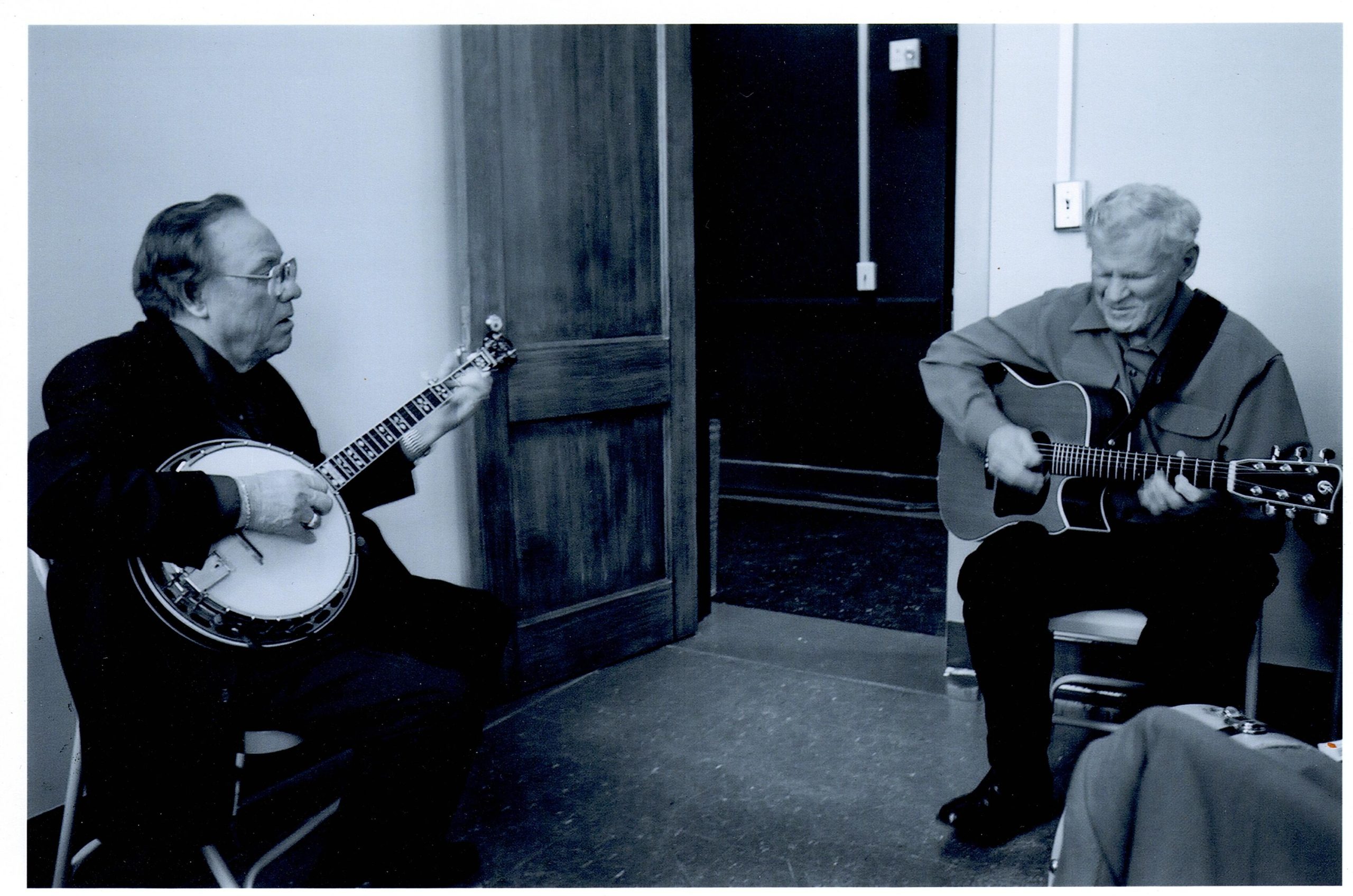
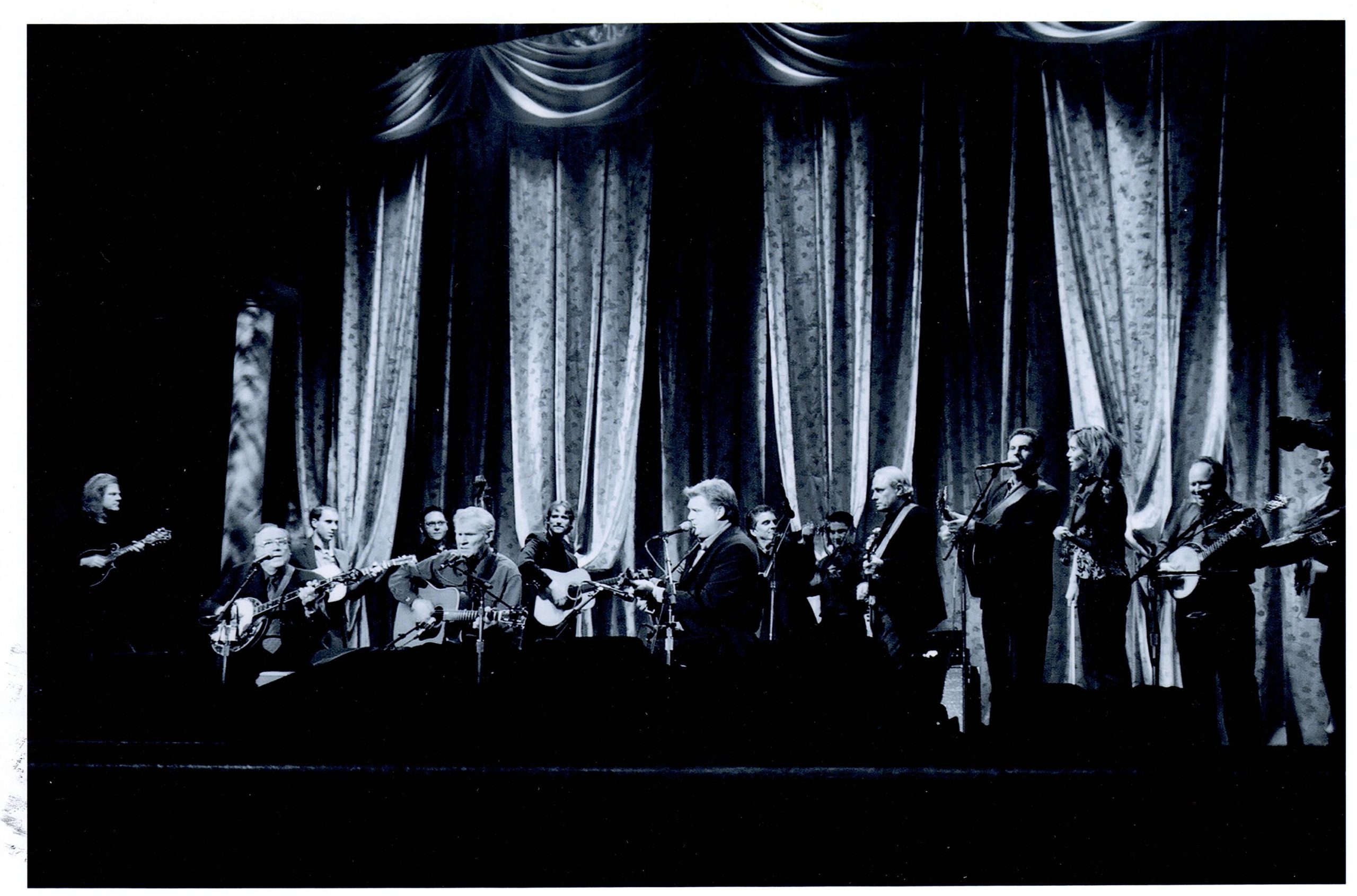
It’s no secret that Earl Scruggs and Doc Watson were great friends, collaborators, and mutual admirers. Both of the bluegrass, old-time, and mountain-music stylists took inspiration and borrowed heavily from the other across their careers, whether they were making music together or separately in any of their many endeavors. The moments they came together, though – from The Three Pickers album and concert film, to David Hoffman’s iconic backyard jam session film of the Scruggs and Watson clans picking together, to many more appearances and recordings – were always magical. Two legendary stylists bouncing musical ideas off of each other as only these two could.

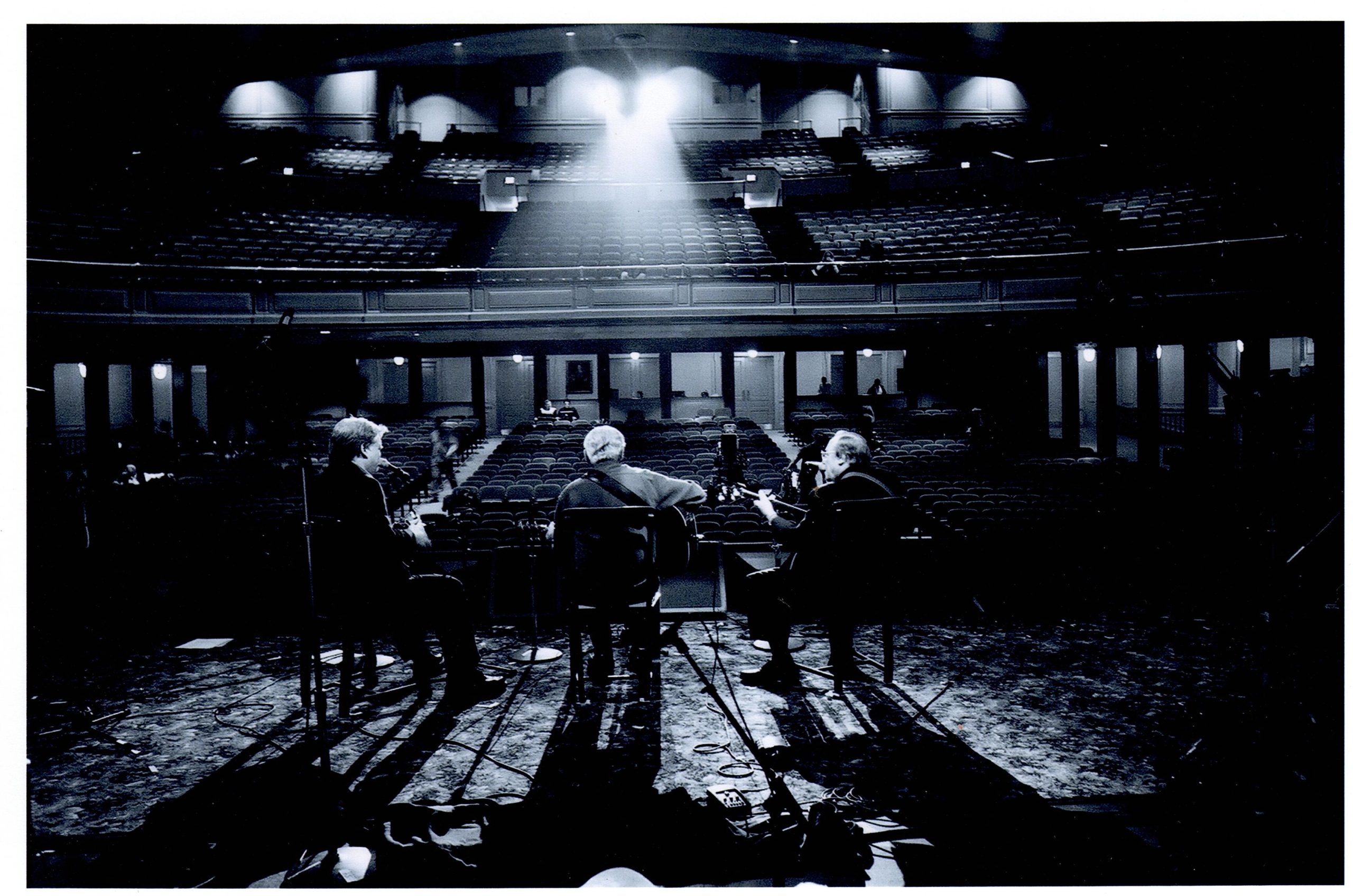
In honor of our Doc in December series for Artist of the Month, we’ve partnered with our friends at the Earl Scruggs Center in Shelby, North Carolina, to bring you an exclusive look inside their collection and archives at photos of Scruggs and Watson together. The Center’s executive director, Mary Beth Martin, pulled a selection of historic photos from the collection as well as a handwritten quote directly from Scruggs’ notes about Watson and his influence:

“There are two people’s sound no man can, in my estimation, duplicate,” Earl states in a notebook. “Of course I’m referring to Mama Maybelle and Doc Watson. I’ve had the pleasure to work [with] and visit these people. I will never cease to admire the courage of these people.”

You can certainly hear the impact and influence of Watson and Maybelle Carter on Scruggs’ playing, especially his approach to acoustic guitar, when he would most often fingerpick the six-string.

“Earl had enormous respect for Doc and admired him deeply,” says Martin of the Earl Scruggs Center via email. “Both grew up in humble North Carolina homes surrounded by rich musical traditions and went on to leave an incredible mark on music. Having Earl’s personal memories and photos of Doc in our collection makes their connection feel especially meaningful.”

Over the course of their careers in roots music, Scruggs and Watson performed, collaborated, and recorded together dozens and dozens of times. We’re very proud to be able to share these photographs from the Earl Scruggs Center Collection to celebrate the cross-pollination of these two Bluegrass Hall of Famers and Doc in December.

The Earl Scruggs Center is located in downtown Shelby, North Carolina, and celebrates the life, legacy, and groundbreaking sound of Earl Scruggs. Their collection includes many treasured Scruggs family objects and remarkable pieces from Earl’s career – including more than 2,000 photographs. In January, they’ll install new interactive exhibits that dig deep into the roots of the region’s music and the history of bluegrass. The entire ESC team is excited to welcome everyone back to the museum when they reopen on February 3, 2026, after renovations and completion of the new exhibits.

Beyond the museum, the Earl Scruggs Center team are also restoring the Earl Scruggs Homeplace in the Flint Hill community of Cleveland County, bringing Earl’s childhood home back to the formative era that shaped him as a musician.

To stay in the loop and to catch upcoming Earl Scruggs Center events like the Earl Experience Banjo Camp, visit their website and connect with them on socials. We hope you enjoy our special photo story with our friends at the Earl Scruggs Center celebrating Earl Scruggs, Doc Watson, and Doc in December.


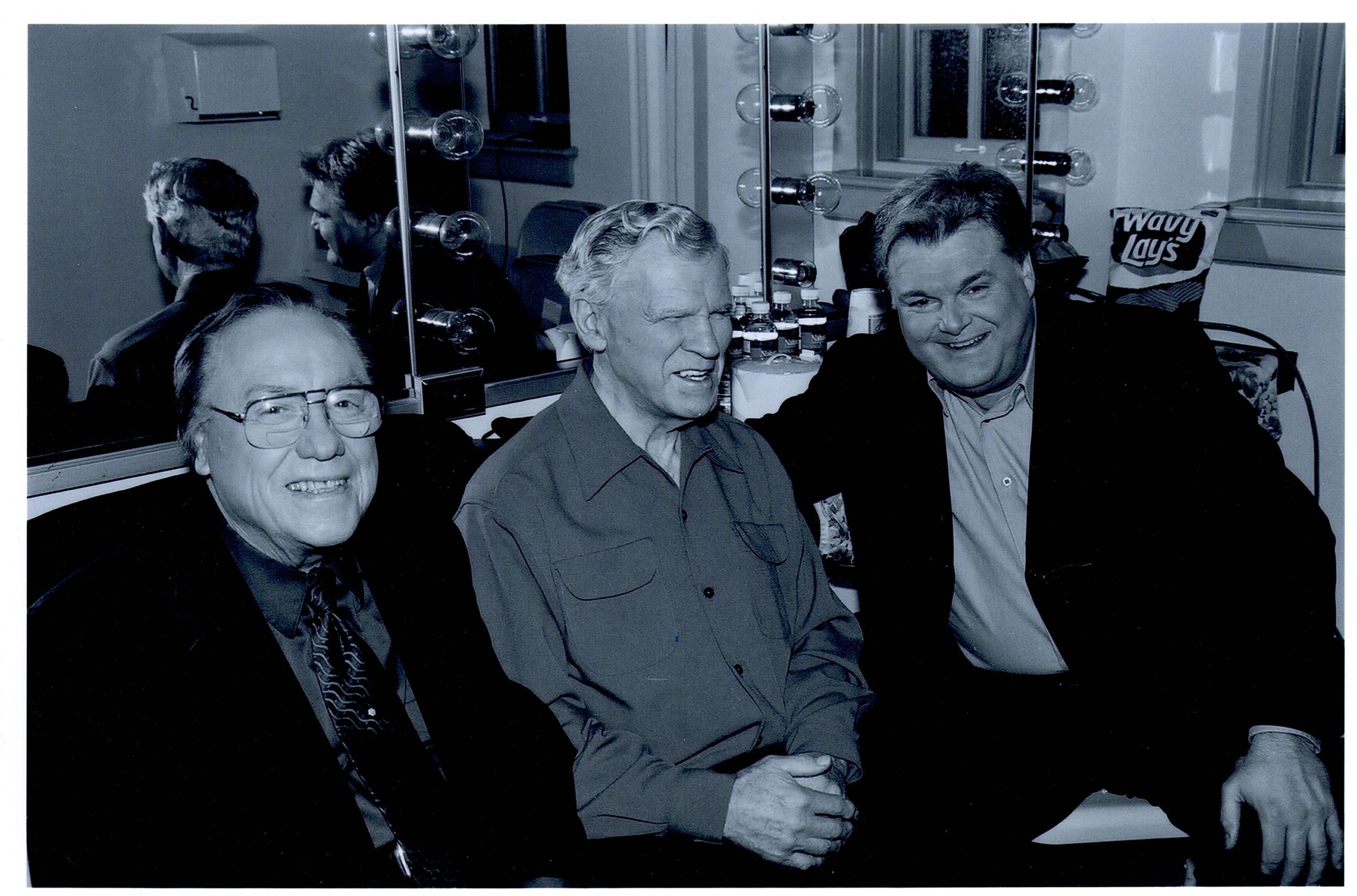
All photos courtesy of the Earl Scruggs Center Collection. Lead image: Earl Scruggs, Doc Watson, and Ricky Skaggs backstage at the taping for The Three Pickers.

Doc Watson’s Legacy in Collaboration:
8 Essential Performances

Few musicians have ever moved as fluidly between eras, genres, and generations as Doc Watson. From front-porch duets to grand-stage bluegrass revivals, Watson’s collaborations have a way of dissolving categories entirely.

His flatpicking precision, rhythmic calm, and vocal warmth made him the kind of performer who elevated everyone within earshot – young prodigies, genre pioneers, folk-tradition torch bearers, and musical iconoclasts alike. His reputation as a consummate accompanist was built not on showmanship or flamboyance, but on musical generosity and an intuitive sense of timing, phrasing, and expression that allowed others to shine while retaining his unmistakable voice.

Part of Watson’s power lies in the consistency of his musical identity. He never strained to fit into a new format or trend; instead, others bent gratefully toward his center of gravity. Whether playing an old-time fiddle tune, trading licks with a jazz-influenced mandolinist, or harmonizing with a younger bluegrass singer, he brought a sense of ease and groundedness that anchored every ensemble. That stability gave his collaborators the freedom to explore, improvise, and innovate – knowing Doc would be right there, steady and sure.

This sense of balance between precision and freedom made him a model collaborator for musicians across generations, and his impact can be traced through countless recordings, festival lineups, and mentorships of younger players.

Watson’s influence was not just technical but communal. He could guide a performance without overwhelming it, offering the ideal blend of authority and humility. In his guitar, listeners hear the voice of the North Carolina mountains, the pulse of Appalachian tradition, and the adaptability of a musician able to engage any genre without losing authenticity.

Today, YouTube’s patchwork archive of footage allows us to witness these collaborations anew: small moments of musical connection, sometimes real-time, sometimes reconstructed from archival sources. Below is a curated set of eight standout filmed or recorded collaborations that illustrate Watson’s reach. From storied duets with Chet Atkins or Earl Scruggs to meetings with newer-generation players.

“Roll in My Sweet Baby’s Arms” – Doc Watson, Earl Scruggs & Ricky Skaggs
(The Three Pickers)

This relaxed but virtuosic performance features Watson, Scruggs, and Skaggs playing with the ease of a porch jam made public. Watson’s crisp flatpicking forms a warm foundation, while Scruggs’ banjo drives with characteristic agility and Skaggs adds mandolin flourish and bounce.

The trio exhibits mutual respect and joy, and their lines interweave with natural conversation.
The recorded performance comes from the 2003 album The Three Pickers. The energy and clarity of the musicianship exemplify Watson’s ability to anchor an ensemble while remaining entirely supportive, a model of intergenerational teamwork. It is a performance that displays the combination of technical mastery and intuitive musical empathy that defined Watson’s career.

“Tennessee Stud” – Doc Watson & Nitty Gritty Dirt Band
(Will the Circle Be Unbroken)

Watson’s performance of “Tennessee Stud” on the Will the Circle Be Unbroken project exemplifies his ability to blend seamlessly with both established musicians and a younger ensemble eager to learn from him. His deep, resonant vocals float over understated but fluid flatpicking, supporting the Nitty Gritty Dirt Band’s harmony vocals and rhythmic drive.

Watson’s musical sensitivity allowed for a dialogue that bridged generations, bringing traditional songs into a contemporary context while retaining their original heart and vibrancy. This track also highlights Watson’s ability to adapt to the studio environment, shaping a sound that was both authentic and polished. The 1972 studio album is well-documented, though various YouTube versions may mix studio, rehearsal, or live takes.

“Tennessee Rag / Beaumont Rag” – Doc Watson & Chet Atkins (Reflections)

In this medley, Watson and Chet Atkins engage in a playful, masterful guitar dialogue. Watson’s flatpicking exhibits crisp, percussive articulation, while Atkins’ thumb picking introduces a smooth, jazz-inflected counterpoint. Both artists navigate tempo and dynamics with precision, creating a performance that is both technically dazzling and deeply musical.

The track appears on the Reflections album and while some online performances derive from live shows or reissued audio, the studio recording itself exalts the collaborative interplay. This duet demonstrates Watson’s ability to move effortlessly between folk and jazz guitar traditions, honoring both while creating something uniquely their own. The performance underscores his adaptability, an essential quality in a musician sought after by so many genres and generations.

“Black Mountain Rag” – Doc Watson & Merle Watson

The father-son dynamic between Doc and Merle Watson is in full display in this live rendition of “Black Mountain Rag.” Merle’s nimble, rhythmic energy dances atop Doc’s grounded guitar tempo, producing an interplay that is conversational, playful, and intricate. Their shared history and years of touring allow for spontaneous embellishments and musical commentary woven into the tune.

This performance captures the essence of the Watson family legacy, showing how Doc nurtured both musical skill and expressive interpretation in the next generation. The piece also serves as a lesson in ensemble sensitivity, as Doc balances his playing to give Merle ample space while maintaining rhythmic and harmonic cohesion.

“What Would You Give in Exchange for Your Soul?” – Doc Watson & Bill Monroe

Watson and Monroe’s pairing on this traditional tune combines the latter’s piercing, high-lonesome tenor with the former’s warm baritone, creating a striking emotional contrast. Watson’s guitar provides steady, unobtrusive accompaniment, allowing the vocal interplay to take center stage.

This recording exemplifies Watson’s ability to adapt to any partner, responding in real time to vocal phrasing and tempo shifts. The performance demonstrates his interpretive sensitivity, highlighting how he could honor a song’s emotional core while integrating his own stylistic voice.

“Shady Grove / Summertime” – Doc Watson & David Grisman

Watson’s collaboration with David Grisman blends Appalachian folk with progressive acoustic styling. In this rendition of “Shady Grove,” Watson’s rhythmic guitar backgrounds Grisman’s mandolin flourishes, resulting in a lively, conversational back-and-forth. Improvisation is key, as both musicians respond to each other’s phrasing, demonstrating mutual respect and spontaneity.

This collaboration underscores Watson’s versatility, showing he could navigate between traditional melodies and innovative interpretations, elevating both in the process. It is a reminder of his role in bridging traditional and progressive acoustic music for audiences and colleagues alike.

“Amazing Grace” – Doc Watson & Jean Ritchie

Watson and Jean Ritchie’s collaborations were well-established, including performances at venues like Folk City in the early 1960s. However, the specific attribution of some YouTube uploads titled “Amazing Grace” is ambiguous. The Live at Folk City album recording is the most reliable source, showing their complementary styles: Watson’s gentle, precise guitar lines support Ritchie’s clear, expressive vocals, blending Appalachian tradition with personal interpretation. They represent the transmission of Appalachian folk music to wider audiences and the seamless melding of their similar sensibilities.

“Summertime” – Doc Watson & Mark O’Connor

Watson’s influence on multi-instrumentalist Mark O’Connor is well-known; O’Connor cites him as a formative inspiration and their collaboration remains significant as a symbolic bridge between generations. Watson’s teachings and style informed O’Connor’s fiddle mastery, illustrating Watson’s mentorship and the continuity of American acoustic tradition. Indeed, their shared repertoire speaks to the passing of musical knowledge and the sustaining of tradition through personal and professional interaction.

These eight performances above collectively highlight Doc Watson’s role not only as a primary musician, but as a profoundly generous collaborator. He created space for others to excel, whether alongside legends like Bill Monroe, Earl Scruggs, and Chet Atkins or with younger rising stars such as Alison Krauss and Mark O’Connor. Watson’s approach combined technical mastery with emotional intelligence, allowing him to respond intuitively to fellow musicians in real time.

His collaborations illuminate the breadth of his influence. Watson moved with ease between old-time Appalachian tunes, rag medleys, gospel-inflected ballads, rocking hillbilly sounds, and improvised jam sessions. Across these contexts, he remained unmistakably himself: grounded, warm, and adaptable.

By mentoring younger musicians, bridging generations, and seamlessly adapting to new musical contexts, Doc Watson demonstrated that tradition is not static; it is a living, evolving practice. His legacy continues to teach musicians the art of generosity, the importance of listening, and the beauty of musical dialogue. Perhaps in every collaboration, Watson’s spirit resonates, ensuring that his contribution to music endures across time, space, and audience.


Lead image courtesy of MerleFest.

Artist of the Month: Folk Hero Alice Gerrard Is Unafraid to Be a Real Person

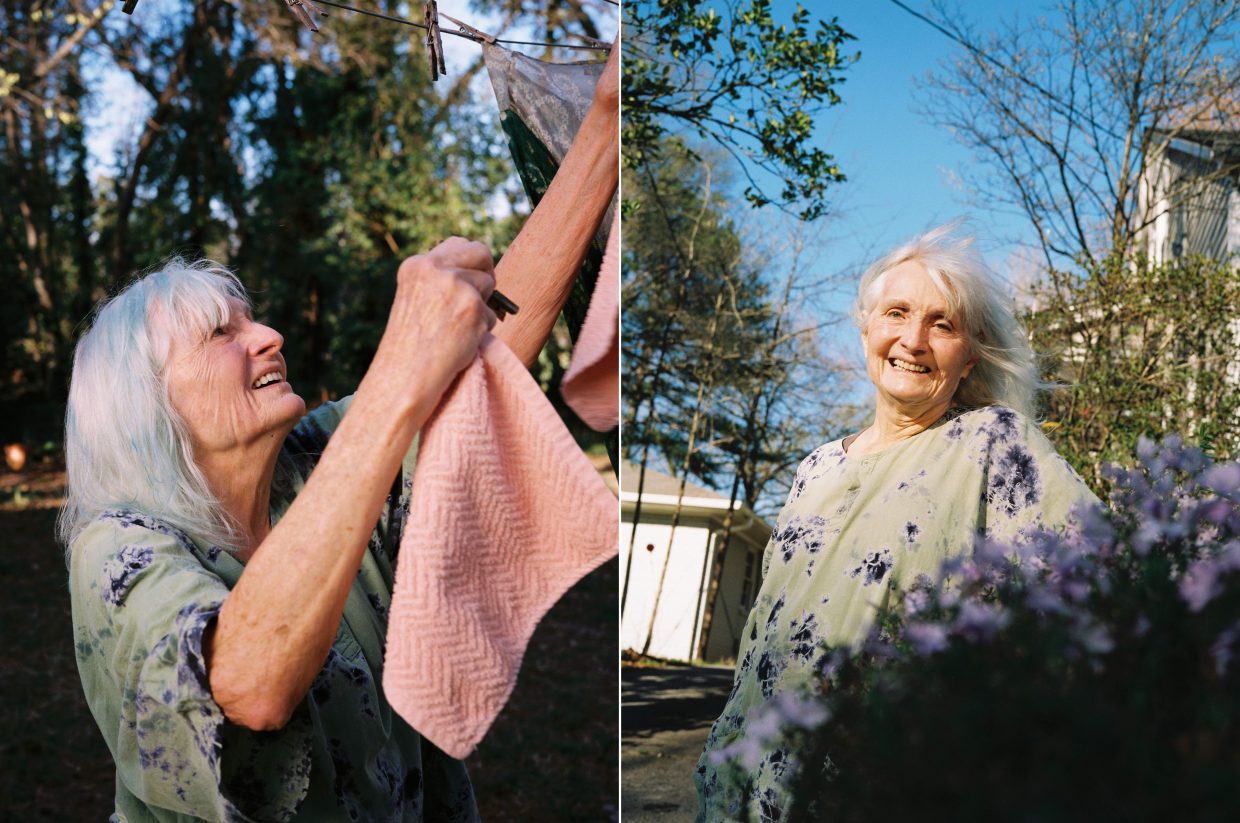
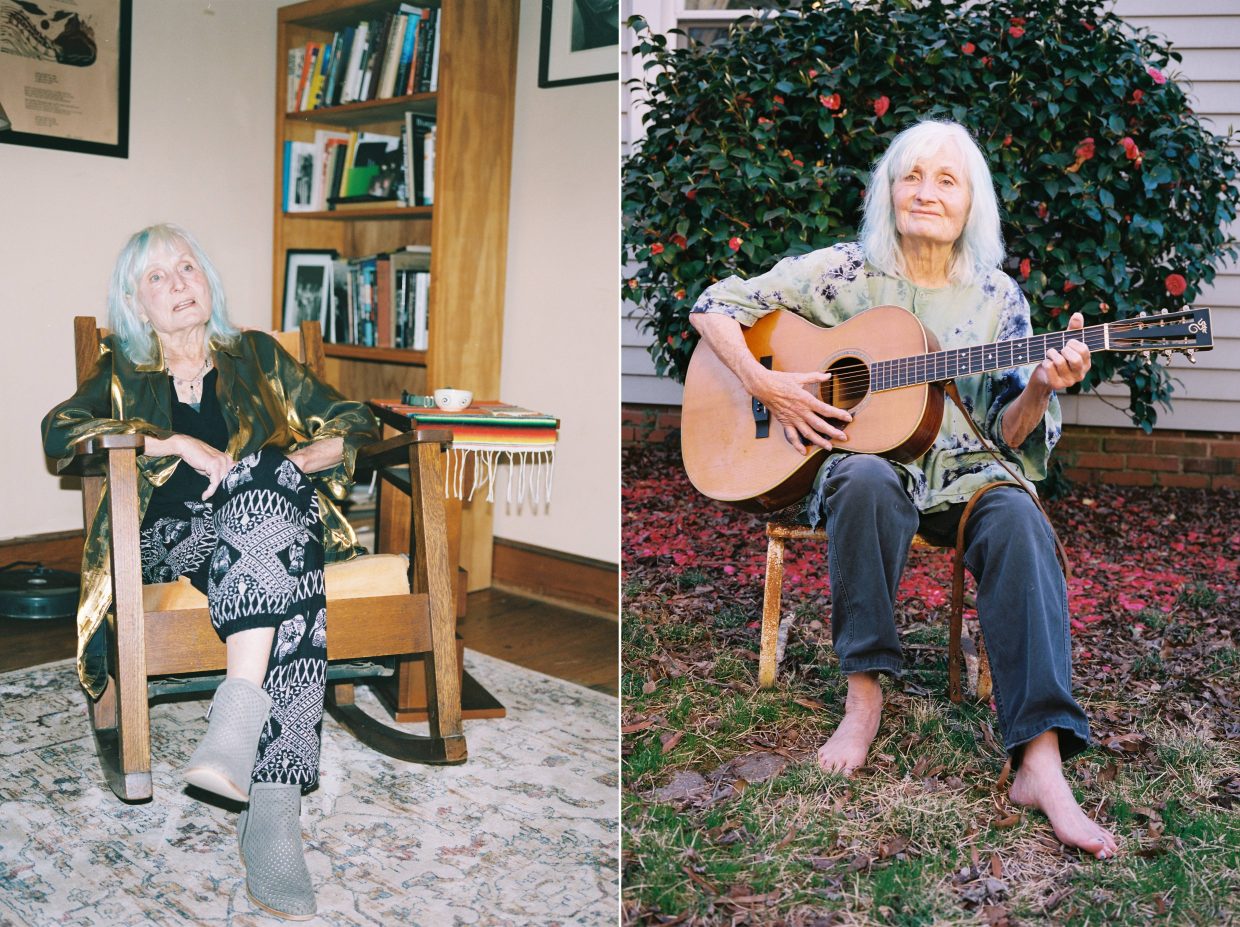
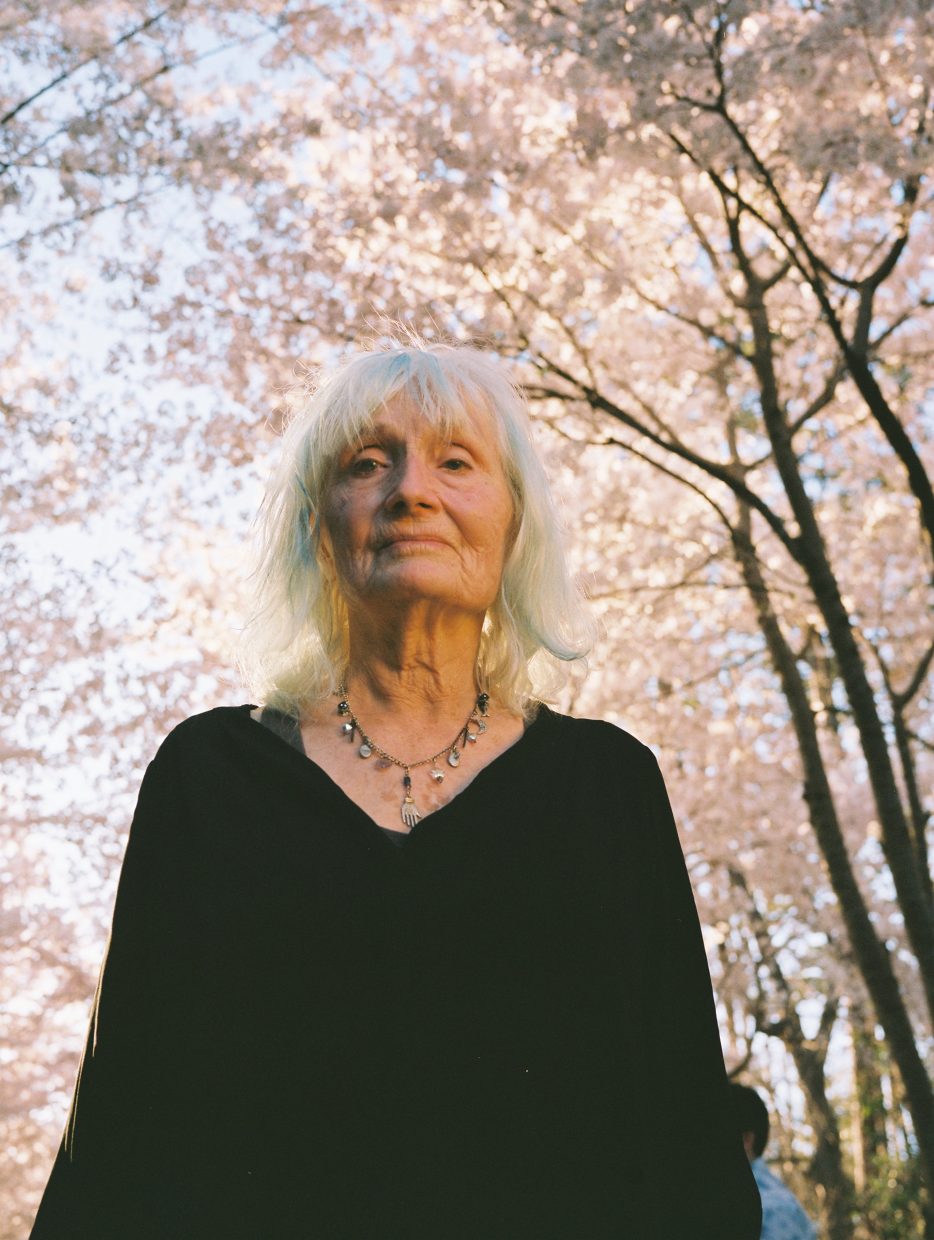
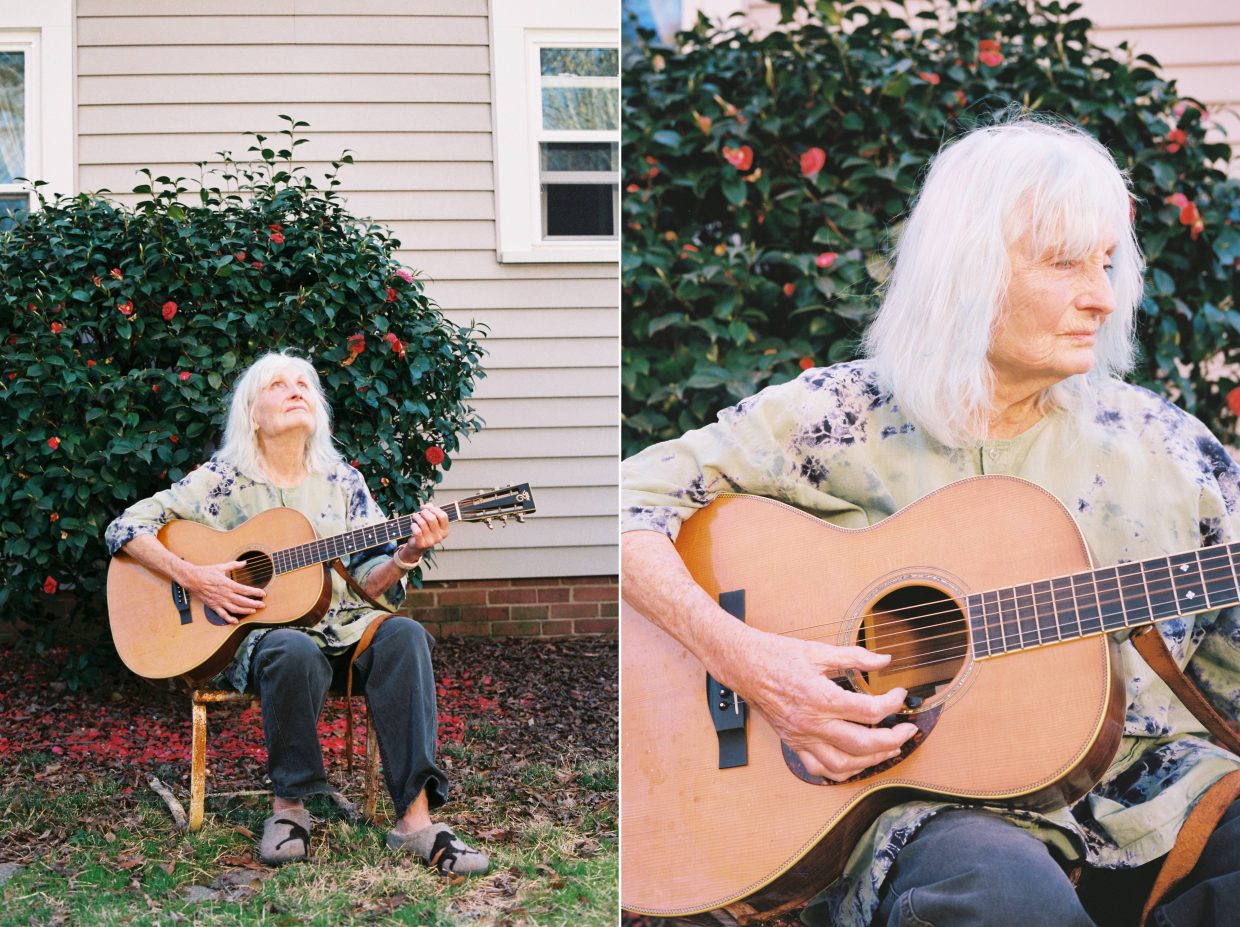
(Editor’s Note: Fiddler, songwriter, and creator Libby Rodenbough writes this personal essay on her friendship with and admiration for BGS Artist of the Month, Alice Gerrard, accompanied by her original photos taken for Gerrard’s new album, Sun to Sun.)

I remember first hearing Ola Belle Reed’s “Undone in Sorrow” when I was 19 or 20. I felt like a portal had been opened unto a world that had existed around me my whole life, unseen and unheard. I grew up in North Carolina going to visit my mom’s family in Madison County, along the Blue Ridge, where any of the graveyards on the mountain sides with their little mounds of clay outside my backseat window might have been the one from Ola Belle’s song.

That portal didn’t open for me in the mountains of North Carolina, though – it was in Chicago, at the Old Town School of Folk Music, an institution that had come out of the ‘50s folk revival. I was big on Pete Seeger and John Prine at that time in my life, and had found out my dad had a cousin with a spare room in Chicago, so I went on a little pilgrimage during a recess from college.

It was there that I learned my first old time fiddle tunes, belting the refrain “down in North Carolina” from “Waterbound” at the school’s open jam while the Chicago winter dumped three feet of snow outside. It was there I first learned the rudiments – very rude in my case – of clawhammer banjo. It was also there that I first heard a left hook of a song called “A Few Old Memories” by Hazel Dickens, which appeared on her 1973 duo record with Alice Gerrard, Hazel & Alice.

I went home from Chicago with new eyes and ears. Places I’d known forever became newly populated with epic figures, recast in the light of 200-year-old narratives. My first semester back in school, I was in an introductory folklore course taught by Mike Taylor (of Hiss Golden Messenger) and he started talking about his friend Alice Gerrard, who lived a town over in Durham. I was fairly well tangled up in time and place at that point – even the deceased people I’d been learning about were brand new to me – so I had to blink a few times to digest that she was the same person singing harmony on “A Few Old Memories.”

Today, 10-ish years later, I sit with Alice in preparation for writing this piece and she tells me about driving Ola Belle Reed in her Dodge van on tours through the South in the late ‘60s. She’s my oldest friend (nearly 90), and all competition lags behind her years pretty pathetically. She also makes a lot of the people I talk to seem boring. We’re in the same business: We sing songs and play shows and make records. She’s been doing it a lot longer, and I think she knows about five times as many songs.

Hanging out with Alice helps me understand why she wanted to be friends with people like Elizabeth Cotten and Luther Davis, who were elderly when she met them. She heard the way they played and sang and had to talk to them about their lives. “They knew exactly who they were,” she says. For a young person who had moved across the country from Oregon to Washington, D.C., without maintaining much contact with home, dropped out of college, and had four children, that self-knowledge was aspirational. Though their rootedness in their communities was part of what drew her to them, she didn’t think of them as avatars of bygone primitive ways of life, or as characters in a play – they were people. Elizabeth Cotten was somewhat guarded, but over years traveling and playing together, she told Alice about indignities she had suffered as a domestic worker and as a Black female folk performer, and about subtle acts of defiance she had worked into both vocations. Luther Davis talked about how lonely it was to get old and run out of witnesses to your own life.

Alice is likewise unafraid of being a person. She’ll tell you straightforwardly that she was unprepared to be a mother, that it was essentially impossible to pursue a music career – which was something she knew she wanted for herself – and still give adequate time to her kids. We commiserate about music industry bullshit and engage in light shit-talking about the idea of showmanship.

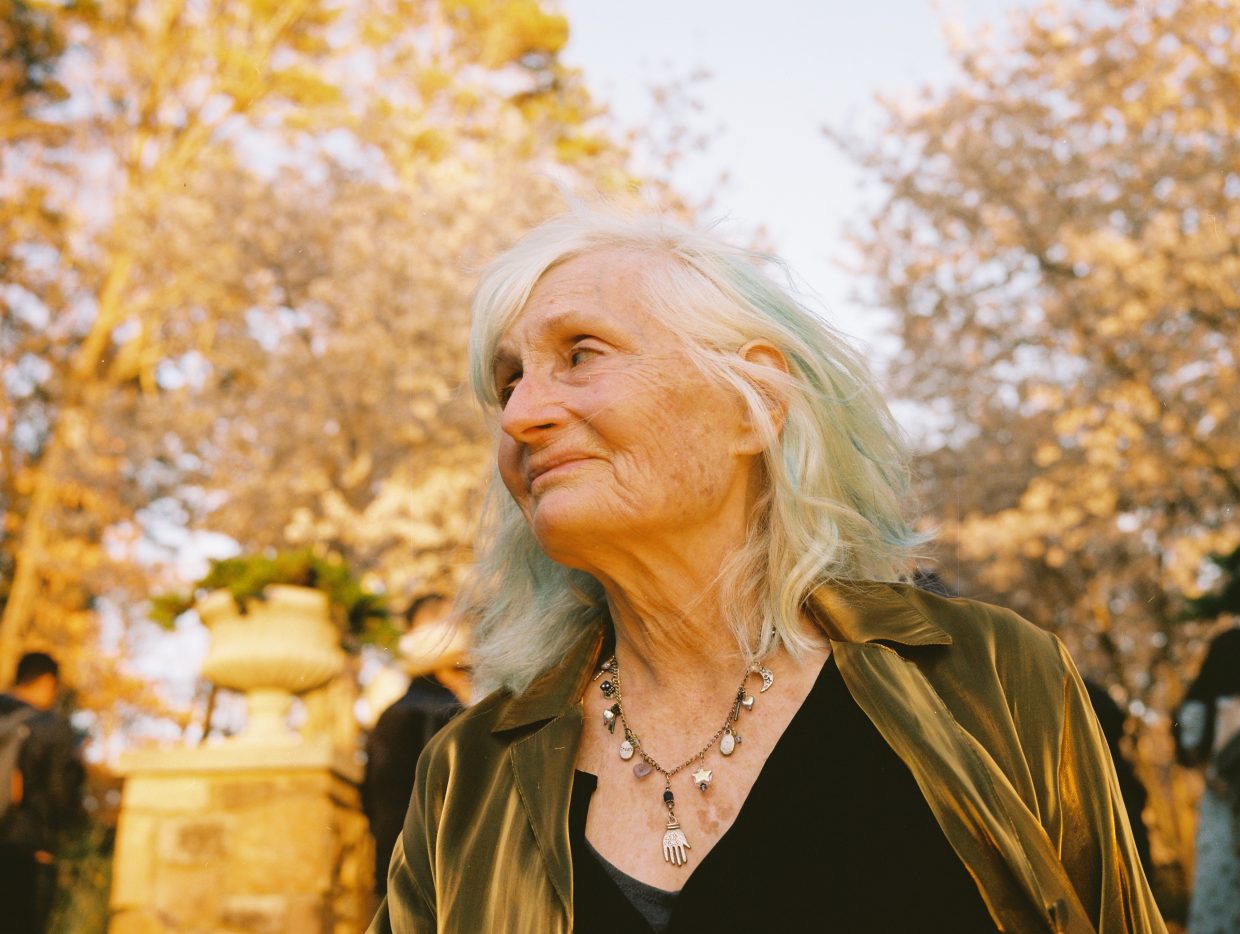
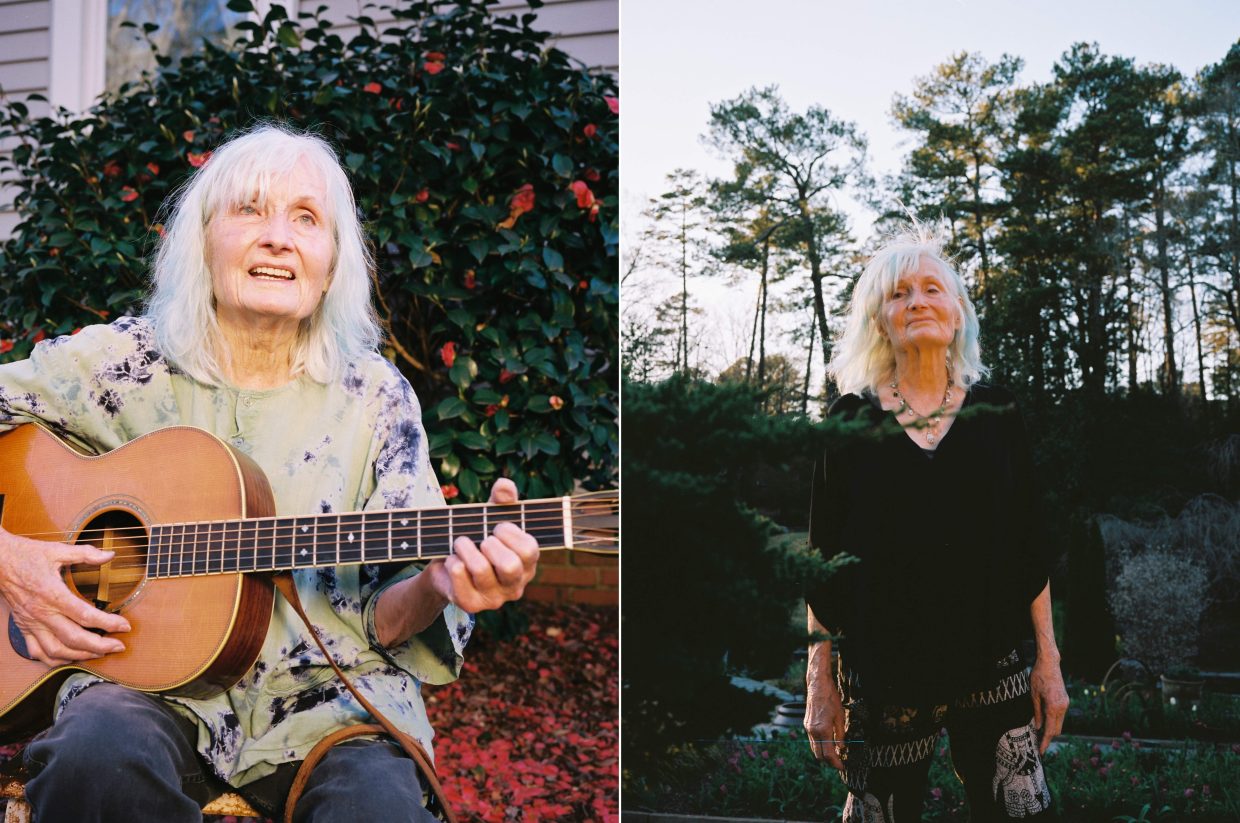
She’s usually wearing one of her collection of t-shirts that pertain to her dog Polly’s agility training facility (“Fast and Furryous”). This past March, when I took these photos of her to use for promotion of her new album, Sun to Sun, we went through her closet together and dug out some gems, including a bedazzled commemorative t-shirt from Obama’s inauguration.

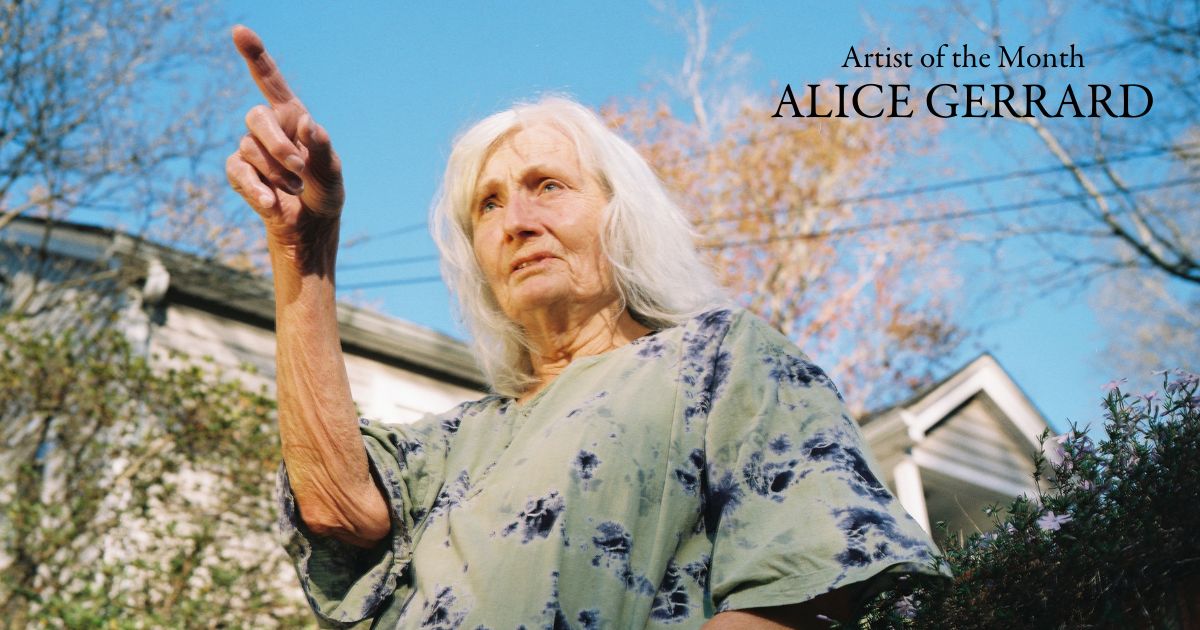
I have no training in photography – I shoot film because I enjoy the feeling of not really knowing how it works. We went to Duke Gardens in Durham, where we both live, on a week when the cherry trees had popcorned into glory. Alice looks radiant in the halo of those glowing blooms. But I also love the photos where she’s at home, standing in front of the brick retaining wall around her front yard, before she realized she still had her Apple Watch on. The sky was so blue that day, her white hair incandescent. She looks like she knows something you don’t, but in a warm way, like she knows you’ll get it eventually.

Alice is unafraid to treat a song like it can handle a little handling. She knows that songs are alive and she’s interested in being a part of their lives, not their memorialization. She smiles talking about how, in an old John Cohen film, the Madison County ballad singer Dillard Chandler starts a song in a key around here (she holds her hand at her waistline) and ends it here (she raises her hand up level with her temple). She’s delighted by the particularity of the human touch. She prefers singing voices with a bit of weirdness over purely pretty ones. Talking about Carter Stanley’s high whine, she says, “Whatever was eating on him from the inside, it was showing up in the way he sang. Nina Simone, the same way.” She tells me what a struggle it is to teach that kind of feeling to people accustomed to singing prettily. “If you’re trying to get somebody out of the soft, breathy voice, you say, ‘Look, your kid is running out into the street and you have to call your kid back.’ You don’t say,” — she coos — “‘Heyyyyy Brian, get back here.’ You say, ‘BRIAN! GET BACK HERE!’”

Whenever I’ve played music with her, Alice seems to lean into what people at the Old Town School liked – actually, loved – to call “the folk process;” she lets arrangements evolve as the spirit of the universe sees fit. I’m lucky she’s not a stickler for tradition, even traditions she could write encyclopedias about, because my fiddling style is distinctly unmoored. I was a half-rate Suzuki classical violin student growing up and then at the Old Town School I learned how to accompany folk singers on songs with three or fewer chords. I came home and started going to the old-time jam at Nightlight Bar & Club in Chapel Hill, where the jam leaders were American Studies PhD candidates who also grew up learning fiddle tunes from their hometown octogenarians. Some of my friends started a band called Mipso that was flirtatious with bluegrass and asked me to join, but I told them up front I didn’t know any licks. (They didn’t seem bothered by that.) I’ve since learned a few licks, and I would rather play an old time tune any day of the week than do almost anything else, but I never could sit still long enough to do what Alice calls “holding the line” — keeping and caring for the tradition.

I’m indebted to, and grateful in my heart for, people who do that work. I may roll my eyes at gatekeeping, but it’s more than wide-eyed would-be fiddle players at the gate; it’s the whole monster of monolithic, capitalist cultural imperialism, chomping down on everything small or strange. Songs can, and do, disappear, like cultures and forests, and not just by inertia but by clear-cutting. A lot of days I feel self-conscious about whatever it is I’m doing instead of holding that line. When I listen to Alice tell stories about the many singers and players she’s known over the years, though, I remind myself that they each have a distinct relationship with tradition – and with what it means to be an artist.

For a long time there’s been a divide, rhetorical and sometimes actual, between “the folk” and “the folkies,” which maybe means country people versus city people, or maybe people who grew up in a given musical tradition versus those who came to it later. Alice and I both fall into the latter category, though she’s had considerably sharper focus since her initiation. I’d rather replay a 10-second clip of a Mark O’Connor fiddle solo at one-quarter speed forty-seven times in a row than try to examine that dichotomy in any more detail at this moment, but I did spend a lot of my undergraduate days thinking about authenticity and who’s entitled to do what with old songs. Alice has often found herself among people who look at it from an academic angle – her ex-husband, Mike Seeger, came from a folklorist family – but her view remains that the compulsion to define and categorize is basically academia trying to justify itself. I don’t take that as bitter or glib, I just think she hasn’t found it necessary, in her personal relationship with the music she loves, to try to determine who gets to claim it. Or maybe, for Alice, the claim is in the singing. Talking about what makes a voice “authentic” (a word that sends a chill down my spine), she paraphrases Supreme Court Justice Potter Stewart from 1967 in his definition of pornography: “I know it when I see it.”

As we clink the ice around our $7 decaf specialty iced lattes, Alice tells me about a song she’d just heard, a haunting falsetto voice with nylon string guitar, in the opening scene of Pedro Almodóvar’s new short film, Strange Way of Life. After some Google sleuthing, she identified it as a recording by the Brazilian artist Caetano Veloso (in fact, the movie is named for it – “Estranha Forma de Vida.”) She’s head over heels for this song, itching to go home and dig into Veloso’s catalog. If they ever meet, I know she will have great questions for him, the type of questions that make a person believe songs must do real work in this world.

I ask her if she thinks of her music as having “a purpose.” “Not really,” she says. But she goes on, “I want people to hear what I hear in this music.”

In my view, that’s an altruistic goal, because it’s clear that whatever it is Alice hears in the music, it gives her life its very marrow. I admire the decades she has devoted to learning and documenting traditional music, but what I aspire to most is the way she still loves a song — viscerally, instinctively, with gusto. That’s what makes a line worth holding.

“There was something about the music, the quality of the voices,” she says, recalling first hearing Harry Smith’s Anthology of American Folk Music. “There’s so much beauty in it, it’s like, God, yeah.”

I had that “yeah” moment when I heard “Undone in Sorrow” and “A Few Old Memories” – and now, Sun to Sun. I hope to be saying “yeah” like that about songs for the rest of my life.


All photos: Libby Rodenbough

WATCH: Mark & Maggie O’Connor, “All We Will Be”

Artist: Mark & Maggie O’Connor
Hometown: Charlotte, North Carolina
Song: “All We Will Be”
Release Date: September 30, 2023
Label: ONErpm/OMAC Records

In Their Words: “‘All We Will Be’ is one of our new vocal songs where we reach for a more contemplative place in words and music. There is such mystery and intrigue with the lyrics, by my co-writer Joe Henry, and the story-telling vocal performance by Maggie, that it was interesting for me to create an expanded instrumental soundscape for it. The musical qualities move from plaintive Americana guitar strums to a jazz-rock acoustic fusion crescendo that showcases Maggie’s majestic violin solo. The powerful and intuitive bass and drums on this song – by Dennis Crouch and John Gardner – help to elevate this idea. Our journey here is about testing faith and rediscovering it through love and music.

“In scouting locations for the music video, it was Maggie that suggested the piece be filmed adjacent to the stillness and reflection of our North Carolina lake. On the day of filming, it poured down during the day leaving us a sense of renewal in the forest when things cleared off to do the shoot. The storm also left a painting in the sky — one of those colorful Southern sunsets over the water that had us dancing to the music for the video on the shoreline. I had my 1865 Martin out there on the edge of the swampy part of the lake conveying timelessness through the bending of the strings like ripples in the water. With inspiration from the lyric, ‘Back into trees, like all that we are,’ the low setting sun gave us the shadow effect essential to combine Maggie’s violin and my viola that accompanies her, returning us into the roots of trees on the forest floor. It was joyful to create this video with my wife Maggie, and even more so to have my son Forrest handling the great camera work and the directing of our music video.” – Mark O’Connor

Track Credits: Written by Joe Henry and Mark O’Connor

Maggie O’Connor – vocals, violin, cello
Mark O’Connor – vocals, guitar, mandolin, mandocello, violin, viola
Dennis Crouch – upright bass
John Gardner – drums
Tracking Engineer – Neal Cappellino
Overdubs and Mixing Engineer – Mark O’Connor
Mastering Engineer – Dave Harris at Studio B Mastering, Charlotte, NC
Recorded at Sound Emporium Studio A, Nashville, TN
Overdubs at Hometone Studio


Photo Credit: David Hume Kennerly
Video Credit: Filmed and directed by Forrest O’Connor

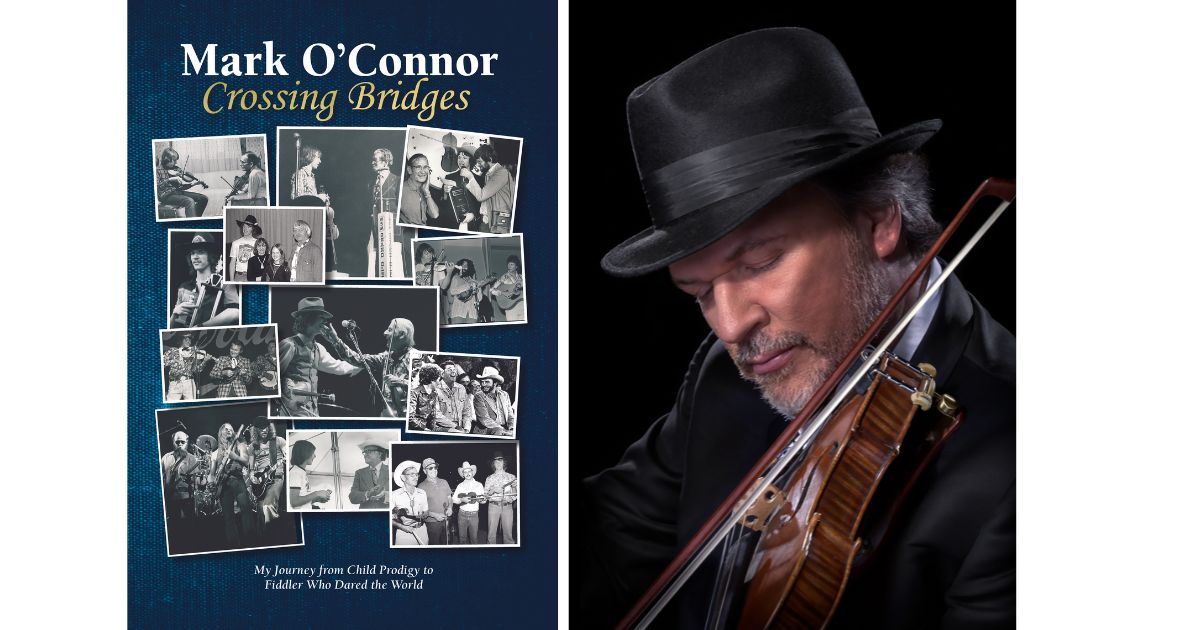
Mark O’Connor Recalls His First Fiddle Contests in New Book, ‘Crossing Bridges’

As one of the most accomplished fiddle players of his generation, Mark O’Connor could fill a book with all of his musical achievements. Instead, he goes all the way back to the beginning in Crossing Bridges: My Journey from Child Prodigy to Fiddler Who Dared the World. Retracing his seminal experiences on the stage and in the studio, the memoir concludes in the early 1980s, just as O’Connor is poised to make his mark in Nashville’s country music community.

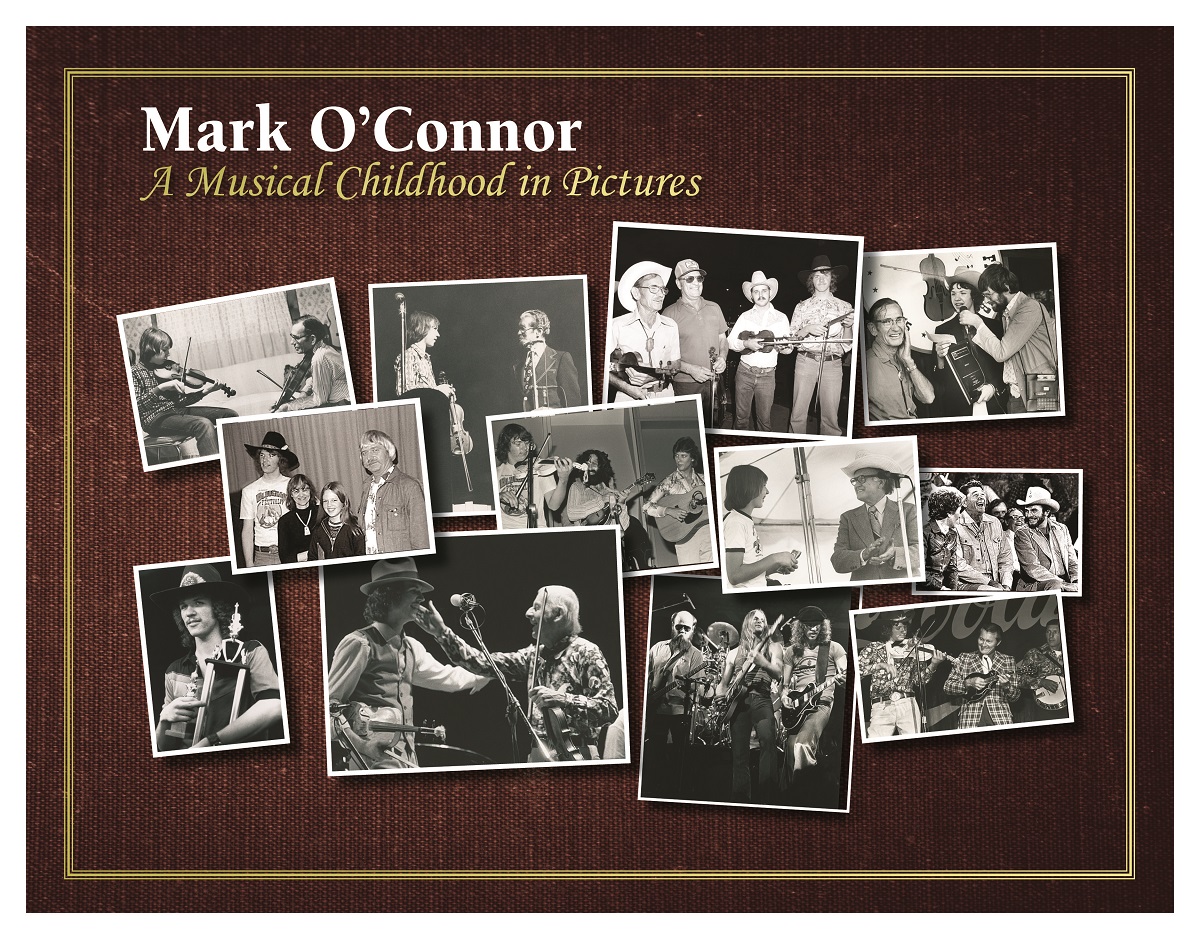
Crossing Bridges is being released on February 10, 2023, in conjunction with the CD titled Early Childhood Recordings and a collection of photos taken by his mother titled A Musical Childhood in Pictures. The Bluegrass Situation is pleased to share an excerpt from the first chapter of Crossing Bridges below.


I WAS A MERE BEGINNER BACK IN 1973, when the legendary Texas fiddler, Benny Thomasson, stopped to listen to me in the hallway of an Oregon schoolhouse as I warmed up on my tunes with an elderly blind guitarist from the area. At these local fiddle contests, Marshall Jackson enjoyed accompanying most anyone who asked. I glanced up to see Benny Thomasson coming down the long corridor, making his way toward us. I was practicing my contest round of three tunes: a hoedown, a waltz, and my tune of choice.

My first entrance in a fiddle contest was just a month earlier at the gold standard—the famed National Old-Time Fiddlers Contest in Weiser, Idaho. My instructor, Barbara Lamb, a talented 14-year-old fiddler who was also living in Seattle, was teaching me very well and charging just $4 a lesson. Barbara was preparing me for the little kids division at Weiser: the “Junior-Juniors.” This new division got going because a few youngsters in the Pacific Northwest wanted to fiddle. None of them, however, could be accomplished enough to compete against the older fiddlers. Barbara assured my mother that I could win one of the three prizes offered, but only if I practiced my rounds just as she was teaching me. Only three kids had entered the year before.

To aid in our collective effort, my mother, Marty, snuck my guitar away when I was at school. She learned to play rhythm guitar with a flat-pick all on her own, just so I could get better timing on the fiddle tunes I was learning. I was benefitting from the harmony and the counterpoint we created between the two instruments played together—a wise musical portrait to learn the violin. I could even find my pitches better when Mom added her chord changes. Mom had no experience playing instruments other than a couple years of piano lessons as a girl. She became quite good at guitar backup, even within a few weeks. Mom kept pace with me for a while, until she figured I was speeding on past her. Like lightning.

Barbara was right. At Weiser, I came out of there with a 2nd place trophy and $15. Most of all, we met a lot of wonderful people who would become our new friends in music. Folks there informed us about other Northwest fiddle contests we should go to that summer. We stumbled into a new world teeming with old-time fiddlers.

WHEN I WAS EIGHT, I saw Cajun fiddler Doug Kershaw on television: The Johnny Cash Show. That was in 1969. I was so excited by it that I begged for a fiddle for three whole years before I finally got one. My parents couldn’t afford another instrument, they always told me. Disheartened, I attempted to make a fiddle out of cardboard, using crayons to color it brown. I used more colors for the inlays. My effort folded up on me when I tried to use my guitar strings on it. By age 11, Mom finally gave in and got me a $50 fiddle from Al Sanderson, an old fiddler from Sweden we discovered lived nearby. For the next couple of weeks, I fiddled Kershaw’s “Louisiana Man” on just one string—pretty much non-stop. I played it with all four fingers, sliding up and down the neck in various positions to find the pitches. I could relate it to guitar fingering. As soon as we found a teacher, though, I started real lessons—with Barbara Lamb on October 28th, 1972. I was filled with so much joy and wonder over the fiddle.

Benny Thomasson’s favorite fiddle student in Washington state was Loretta Brank. Just one year older than me, she was winning the little kids divisions in the area handily. She repeated her 1st place standing in the Junior-Juniors at Weiser the very first year I entered. Loretta had been playing a few more years than my seven months, and it showed. Her father Kenneth, originally from North Carolina, was an old-time fiddler himself. He was responsible for making sure there was at least a little bit of prize money for his daughter and the other kiddies at Weiser. The money could provide some good incentive for those little ones to practice, he rightly expected.

Well, in a flash I was in love. Loretta was so very pretty. I did admire how good she could play at her age, too. I think I looked forward to seeing Loretta at those first summer fiddle contests more than entering them. But I thought I was too young for her, and probably not good enough on the fiddle yet. After all, she was 12, and I was still 11.

I was also going through one of the many awkward phases I faced as a child. I had a very gentle look about me, with full lips. I wore braces, too. That year, more than a few people mistook me for a girl, including some of the new kids at school. When the old-timers would approach my mother though, I cringed as they asked her, “How long has your little girl been playing the fiddle?” I had longish hair that Mom liked on me. For some quirky reason, she wanted my hair on the sides to be parted by my ears. That meant a whole chunk of hair in front of the ears. It was just so dumb looking, I thought. I argued with her about it, too, but she insisted; “Your ears should show.”

That was such a wacky thing with her, and I absolutely hated it. But I was plagued by my own wacko things, like this odd phobia, an undiagnosed paranoia called koumpounophobia—the fear of buttons. In practical terms, this meant that I would not go near anything with buttons, such as button-down shirts. The jeans had to have a snap button. So, what I wore during those years were mostly turtlenecks and pullover zipper tops. I loved those zipper tops because the turtlenecks always made my neck feel scratchy in the summer. At the time, my mother refused to allow me to wear T-shirts or sweatshirts on stage or at school. None of this helped people figure out if I was a little boy or a little girl.

I have that same button phobia even today, as I write this at 61, although it is easily manageable now. I still think about it every time I button up, though—never feeling very comfortable with the act of buttoning shirts. Despite it, I eventually learned to associate buttons with getting dressed up for musical performances—something I love to do and needed to do. I still mostly wear T-shirts when I want to feel pleasant, but as a kid anything with buttons was 100 percent a no-go.

Another remnant I carry to this day is that I never go anywhere without a handkerchief. That all started back then too. I had severe summertime hay fever in the Northwest. My Mom actually wondered if I was simply allergic to Seattle… and I may have been allergic to it, as it turns out. Just when I wanted to say something to Loretta at a fiddle contest, I usually had to sneeze and blow my nose first.

I had so many social oddities, I spent most of that whole year turning red in the face from embarrassment—triggered by most anything you could imagine. Even my ears would turn bright red, especially when they were “showing.” If someone looked my way, my entire face turned crimson, as if on cue.

I didn’t seem like the most promising child to take on a life in the entertainment field. I did wonder if I could ever get to a confidence level where I didn’t turn red.

Meanwhile, my Dad was a raging, abusive alcoholic at home—so in truth, my button aversion, my appearance, and my blushing were the least of my problems.

Times were very tough financially for my family, and we had to watch every penny. My Dad was back home working at the lumber yard while we were at those fiddle events. My mother, Marty (she much preferred this nickname over her given name, Martha), my younger sister Michelle (by three-and-a-half years) and I, slept in the back of our old, black 1959 Chevrolet station wagon. There were no motels for us. Not ever.

With the same three kids from Weiser entered in the Oregon fiddle contest, even the $10 prize for 3rd place would more than pay for the tank of gas we used coming from our Mountlake Terrace home in Seattle’s northern suburb.

There I was, warming up on my contest round of tunes Barbara had taught me. She had me playing real old-time tunes, too—hoedowns like “Boil ‘em Cabbage Down,” “Wake Up Susan,” “Cripple Creek,” “June Apple,” and “Whiskey Before Breakfast.” We coaxed her into teaching me “Jole Blon,” the first Cajun song I heard Doug Kershaw play on The Johnny Cash Show. Barbara was quite creative as a young fiddler and came up with her own version of it for me to learn. Moreover, I was particularly drawn to the blues on the fiddle. In my rounds, I played the blues tunes she taught me for my tunes of choice—“Florida Blues,” “Carroll County Blues,” “East Tennessee Blues.” Some of the older fiddlers remarked, “How did this young gal get the blues like that?” Yeah, right.

I KNEW WHAT BENNY THOMASSON looked like, though, and there was no mistaking him either. We had just seen him compete in the Open division at Weiser, and we saw him up close at a jam session one night at the Junior High “campground.” At Weiser’s main event, he was playing against several master fiddlers for the national championships, particularly a couple of previous winners, Herman Johnson and Dick Barrett. Their names were all brand new to us as we were immersing ourselves into this fiddling world. My heart skipped a beat when I saw Benny Thomasson now standing just a few feet away, listening to me. I kept my head down and played my little tunes as best I could.

At age 64, Benny was slight in stature, and at 5’ 2”, no taller than my mother. Even so, his authority was one of a granite monument. We had been listening to him a lot, both on the Weiser jam tape I recorded on our new cassette machine, and from a couple of LPs of his we picked up at the contest. I just kept playing my tunes and tried not to look up for fear of making eye contact with him. Yes, I was painfully shy.

Benny began speaking to my mother about me as I continued playing. Mom knew what a legend he was, too, and she was aware that he had recently relocated to Washington state from his native Texas. After the conclusion of the fiddle contest in Cottage Grove, Oregon that evening, my mother recounted the conversation she had with the fiddling luminary:

“How long has he been playing?” Thomasson asked my Mom.

“For eight months,” she replied.

Mr. Thomasson had only listened to me for a few minutes.

“I would like to teach him,” Thomasson said.

“We are certain we couldn’t afford your teaching fees,” my mother responded. She added, “We just started lessons with John Burke in Seattle.”

“That won’t be a problem, I’ll teach him for free,” Benny declared.

Mom saw I was growing nervous about the exchange, but she promised me that she was very gracious to him. I was thankful at least that he didn’t mistake me for a girl, like some of the old-time fiddlers did. “No, don’t worry about that,” Mom said. “We had a good conversation,” she assured me.

With the fiddler, John Burke, taking over as my principal teacher, Mom didn’t want to get too far ahead of ourselves as John was a local music celebrity in his own right. He specifically was working with me on creativity and improvisation already—how to improvise on tunes for both old-time and bluegrass music. It was, quite honestly, way over my head, but John saw a lot of potential in me for this direction. He was not at all into fiddle contests, though.

Mom was a realist, and she warned me, as her practical side materialized. “Mark, Mr. Thomasson lives way down near the Oregon border!”, she pointed out. Mom continued retelling her earlier conversation with Benny Thomasson.

“That is so very kind of you Mr. Thomasson, but we can’t really afford the gas for the three-hour drive to your home each week. Unfortunately, it is just too far away for us,” Mom determined.

She continued; “The only way we could attend this weekend’s contest is that Mark here had a good chance at the 2nd place in the Junior-Junior division, since there were only three kids entered…” Mom finished justifying her assertion.

The Texas fiddle master paused for a moment, realizing the predicament he faced against someone who, unbowed by his stature, stood her ground. So Benny Thomasson put it on the line for her:

“If you can bring him to me in Kalama, there, where I live, you see, I’ll teach the boy all day long.”

Looking back to that day, it is simply unimaginable that Benny Thomasson saw so much in me already. Although I had five years of guitar—classical, flamenco, and folk—behind me, I was only eight months into learning fiddle. I was nowhere close to the skill level of his number one pupil, the young fiddler Loretta.

Maybe Thomasson detected a potentially creative attribute in a very young student as well? To offer us this chance of a lifetime, based on his singular foresight, was extraordinary to us.

In retrospect, Benny Thomasson did have a sixth sense about me, and this proclivity would continue to play out over time.

To study regularly for long hours with one of the greatest and most iconic fiddlers in the country was beyond our wildest dreams. Even at my young age, I was able to appreciate the magnitude of it. Mom continued to talk it over with me that evening on the drive back home.

“It would require a major commitment, Mark,” she cautioned me.

“I know, I want to do this,” I assured her.


Excerpt used by permission. Lead photo by Mitch Weiss. Secondary photo by John David Pittman
MIXTAPE: Jeremy Garrett’s Melting Pot of Influential Music

My mind has been concentrated on making music for my latest record, Wanderer’s Compass. I let Wanderer’s Compass be a collection of as many influences in music I’ve had as possible. I’ve been playing long enough that I used to learn my fiddle parts from an LP and move the needle back to catch the solo parts. Then of course over time, with the advent of the internet, the influence highway, so to speak, became much wider. I’ve always thought it is hard to put music in a box, since it is art, even though I essentially understand the reason for genres. To me the whole point of art is to let all of your influences and experiences be the palette in which to create your vision. This playlist is really fun for me to listen to, and I hope you enjoy it as well. — Jeremy Garrett

Dire Straits – “Where Do You Think You’re Going?”

This song was off a record that I heard early on in my life and the soul that Mark Knopfler brought to this song continues to influence me to this day.

Larry Sparks – “Blue Virginia Blues”

Larry is a master of song delivery, selection, singing, and incredibly soulful guitar playing that is old school, yet crosses any boundaries from that world into the new because art like that knows no bounds.

Tony Rice – “Urge for Going”

From the album Native American, this track is the epitome of how to produce a song to pull all of the essence from it for the listener to hear. Any bluegrass musician can tell you that Tony Rice is the man to listen to for song production, not to mention his unmatched guitar skills.

Jeremy Garrett – “Wishing Well”

“Wishing Well” is an original and on this track I stretch way out on the fiddle for a jam.

David Grisman – “Fish Scale”

David is one of the best and truest musicians of our time. This is a one-of-a-kind song from a one-of-a-kind artist, David Grisman. I particularly love Tony Rice’s playing on this track.

The Stanley Brothers – “The Lonesome River”

This is one of history’s most eerie and interesting sounding bluegrass duos. Their songs and the way they sing them are my personal favorite sounds of the traditional bluegrass era.

Strength in Numbers – “Blue Men of the Sahara”

This ensemble was one of the most creative in acoustic music. This particular song showcases what happens when you marry music stylings from around the globe, and Mark O’Connor rips a fiddle like nobody’s business.

Merle Haggard and Willie Nelson – “Pancho and Lefty”

This cut is pure magic if you ask me. I love everything about it, from the wacky-sounding synth stuff to the magic that Haggard brings when he comes in for his verse. Sends chills up my spine.

George Jones – “Choices”

There may not be any better country singing than this right here.

Jimi Hendrix – “Red House”

There is perhaps no one more inspiring to a musician who wants to tap into soul and vibe. Hendrix is the one who paved the way for all of us in that regard.

Deep Forest – “Sing with the Birds”

This music was an indicator for me at an early age that I loved world music and the technology that continues to evolve to help create some of it. This is programming at its finest and it’s flowing with creativity.

Jeremy Garrett – “Nevermind”

This is a Dennis Lloyd cover that I love to perform. Dennis is an Israeli pop artist. It’s a culmination of my bluegrass chops on fiddle, guitar, mandolin, along with effects, experimentation, and programmed beats.


Photo credit: J.Mimna Photography

8 of Our Favorite Underrated Sitch Sessions

Since our first excursion to Bonnaroo in 2013 BGS has been filming, crafting, and releasing Sitch Sessions with the absolute best and brightest musicians and artists in roots music. We’ve been so fortunate to work with new and old friends, freshly discovered and up-and-coming artists, and legendary performers with enormous legacies. After nearly eight years, we’ve amassed quite an archive of sessions, and within that archive more than a few stellar songs and performances have seemingly fallen to the wayside. 

These 8 Sitch Sessions from the BGS archives are a few of our most favorite, underrated moments from our years of shooting sessions. We hope you’ll enjoy a few of these “reruns” — and take a deep dive into our past featured videos yourself!

Nathan Bowles – “Burnt Ends Rag”

One of our favorite shooting locations is a rooftop in downtown Los Angeles, where countless BGS Friends & Neighbors have taped their Sitch Sessions over the years. One of our favorites is this clawhammer banjo performance by Nathan Bowles, which demonstrates that old-time music and its trappings can be perfectly at home in modernity — and in urban settings, too. More banjos in DTLA, please and thank you!


Andrew Combs – “Firestarter”

One fine AmericanaFest week in Nashville in September a few years back we partnered with Crowell Floral, Jacob Blumberg, and Dan Knobler on The Silverstreak Sessions, a series of Sitch Sessions set in a vintage Airstream and flanked by gorgeous flowers and verdant foliage. At the time, “Firestarter” had not yet been released — now you can hear it on Combs’ 2019 release, Ideal Man. For this session all Combs needed was his guitar, this heartfelt song, and that honey sweet, aching voice. 


Alice Gerrard – “Maybe This Time” 

Every opportunity we’ve had to collaborate or speak with Bluegrass Hall of Famer and living legend Alice Gerrard, we’ve taken it! This session is two of a pair we shot with Gerrard, the other a stark, awe-inspiring a capella number that was quite popular on our channels. This Alice original, “Maybe This Time,” is cheerier, lighter, and has that charming old-time bounce in its bluegrass bones. 

With a new documentary film available, You Gave Me a Song, perhaps it’s about time for another session with this hero of ours!


Ben Sollee – “Pretend”

Maybe you’ve seen Mark O’Connor play fiddle while skateboarding, or Rushad Eggleston performing all manner of acrobatics and avant garde silliness with his cello, but do you remember when Ben Sollee toured America by bicycle? In this 2016 session, Sollee demonstrates his cello-while-pedaling chops. 

We’re firm believers that the world needs more bluegrass, old-time, and Americana cello and we’re happy to return to this archived Sitch Session for that reminder!


Caroline Spence – “Mint Condition”

Another session filmed on our home turf in Los Angeles, Nashville-based singer-songwriter Caroline Spence brought “Mint Condition” to her taping fresh off her debut, eponymous release on Rounder Records in 2019. “Mint Condition” displays Spence’s unique skill for writing strong, unassailable hooks that on almost any other songwriter’s page might trend cheesy or trite. Spence instead displays the simple profundity in her lyrics, a skill evidenced plainly in this session.


Laura Veirs – “July Flame”

Over the years, we’ve partnered with festivals, companies, and brands on tailor-made sessions — like our Portland series, where we partnered with our friends at Ear Trumpet Labs on some of our most popular, most viral Sitch Sessions ever! This beautiful, sunny, summery rendition of “July Flame” by Laura Veirs certainly deserves a re-up. 

In 2016, after this session was published, Veirs went on to release case/lang/veirs with Neko Case and k.d. lang. Remember that!? 


Kelsey Waldon – “Powderfinger”

We first filmed a Sitch Session with Kentuckian country singer and songwriter Kelsey Waldon in 2015 — after the release of her debut album, The Goldmine, in 2014. In the time that’s elapsed since, Waldon has followed her golden debut with two more impeccable studio albums, the latest being White Noise / White Lines, which was released on the late John Prine’s Oh Boy Records in 2019. On the tail of White Noise / White Lines, Waldon gave us this gorgeous cover of Neil Young’s “Powderfinger” displaying her talent for cover song interpretations as well as original song sculpting.


Sunny War – “He Is My Cell”

Guitarist and singer-songwriter Sunny War has just released a brand new album, Simple Syrup, as charming and entrancing as ever and built firmly, yet again, upon her unique and idiosyncratic guitar picking style. In 2018 she released With the Sun, an album that included “He Is My Cell,” which ended up featured in a Sitch Session in early 2019 on BGS. 

War recently appeared as a guest on our Shout & Shine series – read our interview here


Vince Gill Looks Back on His Bluegrass Years (Part 2 of 2)

In the second half of our interview with Vince Gill, the country legend reflects on his bluegrass history, explaining how he became interested in the music, what he learned by listening closer, and why it led to one of his most famous songs.

Editor’s Note: Read the first part of our Artist of the Month interview with Vince Gill.

BGS: “Go Rest High on That Mountain,” in my opinion, is going to live forever. And I think the bluegrass audience loves hearing Patty Loveless and Ricky Skaggs sing with you, too.

Gill: You know, I wouldn’t have been able to write that song if I hadn’t played bluegrass music and learned the structure of that music and how it works — and the emotion of it. Bluegrass music is so honest and so real. Some of those morbid murder ballads and the saddest of the sad songs are what I love most. Give me “Mother’s not dead. She’s only a-sleepin’. Patiently waiting for Jesus to come.” That’s about as good as it gets. “The Little Girl and the Dreadful Snake.” I could just go on and on and on.

All these tortured songs, but you know they’re real life. They’re not somebody going, “How can I slip one up on the world and make a bunch of money having a big hit record?” They’re so honest and real. And the fact that my past had so much to do with Ricky and Patty, they were the only two people that I would’ve consider it singing on that song.

I still love it when Patty comes to do the Opry.

There’s a really unique thing that happens when our voices sing together. It’s so… obvious. I sang on her very first record in the early ‘80s. I sang on her first hit record and she sang on my first hit record. So it’s my little sis.

Tell me about how you found bluegrass. Was there an entry point for you?

Yeah, I knew of it because my dad played the banjo a little bit. He never could figure out the three-finger, Scruggs-style banjo. He cussed Earl his whole life because he couldn’t figure it out. He played more of a folky banjo. Not drop thumb, not old-timey, but more of a frailing kind of banjo. So I was always around the music, as best I can remember, forever. There were obviously the Flatt & Scruggs things from The Beverly Hillbillies that were in everybody’s DNA. Then I was playing mostly in rock bands in junior high school and high school.

A kid named Bobby Clark was the one that really got me pointed towards bluegrass. He had a little band in Oklahoma City and his father was a repairman. I had broken the string on my dad’s banjo, messing around with it, and I didn’t know how to change it. So I took it to Charlie and he put a string on it pretty quickly and everything was fine. I wasn’t gonna get my butt kicked. Then I started talking to Charlie, and he says, “You play music, don’t you?” And I said, “Yeah, I love to play. I play electric guitar and play in rock bands and stuff.” He goes, “My son Bobby is a really fine mandolin player and plays bluegrass. You ever played any bluegrass?” I said, “No.”

They stuck an acoustic guitar in my hands and Bobby said, “We just had our lead singer leave the band and we’re looking for a singer.” So they did a pretty good job of raising me and teaching me and showing me how bluegrass worked. I played in their band for the last couple of years of high school. Then in another bluegrassy kind of band called Mountain Smoke. And I started playing all the festivals down around Oklahoma and Texas and Kansas. And ran into all the people that I’ve known in my whole life since I was 15, 16 years old.

Wasn’t that how you met Cheryl White [from The Whites]?

Yeah, I used to carry her bass around the festivals. I always had a thing for the girl bass players for some reason. There was another family band from Missouri called the Calton Family. Got sweet on Brenda. Then I got sweet on Cheryl. And she says I should’ve picked a harmonica player. [Laughs]

Those were such fun days and innocent. I loved the camaraderie that went on in that music. Not only with the people that came to the festivals, but the musicians. Everybody jammed together. There wasn’t a whole lot in it for anybody. Everybody was just kind of getting by. It was amazing, as I look back, what it did for me in the way that I respected other musicians and listened to other musicians. It was really important that I had a lot of that in my past. I haven’t forgotten it.

When I first heard bluegrass, I was just blown away by musicianship of it.

Yeah, I mean Stuart Duncan was as great as he was at 12 or 13. So was Mark O’Connor when he was 12 or 13. And Marty and Ricky and Jerry and on and on and on and on of these wonder kid pickers. Unbelievable. I kind of squeaked in because I could sing a little bit and figured out how play as I went. I kind of played whatever was left over in a lot of the bands I was in, and that was fine.

I saw you play mandolin on quite a few songs when you played Bluegrass Nights at the Ryman. What is it about that instrument that you really enjoy?

I think the mandolin is the most important drive of a bluegrass band. The banjo and that are the two most definitive sounds. In bluegrass, mandolin players are like the drummer, even more so than the guitar player to me. It’s that backbeat and driving it. Sam Bush was a great teacher of how you drive that music, you know? I loved the ferocity and intensity that he played with. When he played, that was powerful to watch as a 15- or 16-year-old kid.

That’s what I like. I like making it dance. I liked the importance of playing that instrument in bluegrass. I’m probably a much better guitar player in bluegrass than I am a mandolin player. But in some bands I had to play banjo. Sometimes I had to play, unfortunately, fiddle on a few things. Terrible! I played Dobro, I played everything. I played bass with Ricky’s band for a minute and then got to play some other instruments, but had a love for all of it. I still do. Probably I love it more now because it reminds me so much of my early days, and those first forays into learning about playing music.

Did Dobro come naturally to you?

It all kind of did. I mean, I put in the hours and I practiced hard. The neat thing was, you had such good people to learn from. I always had big ears and could always hear well and find what I was hearing in my head, figuring out how to play it.

There are so many brother duos that came up in bluegrass. Do you think that rubbed off on you with your harmony singing now?

Absolutely, yeah. I was trying to either be Ralph Stanley or Phil Everly or Ira Louvin or whoever. Don Rich and Buck Owens should’ve been brothers. I was a high singer so bluegrass was a natural fit. There have always been predominant high singers that were the focal point. Whether it was Ralph and Carter or whoever, man, that was a blend. You didn’t understand it when you were 15 or 16, what it was that made that blend so beautiful. It was the blood, you know. The DNA was the same.

I didn’t get to experience that until my oldest daughter was 18, 20 years old and we started singing together. I started calling her my little Everly because I’d spent my whole life trying to be Phil. You know, singing the high parts for everybody else, and blend perfectly, and every nuance they did, I’d do. And I’d just want ‘em to think I was related to ‘em. She wound up naming her daughter Everly because of that, because I called her my little Everly.

But yeah, I love sharing music. I love the collaboration of music more so than I like it by myself. It’s not as interesting by yourself, but when you get to play off somebody, and play with somebody, it’s very powerful.


Photo credit: John Shearer

BGS Preview: MerleFest 2019

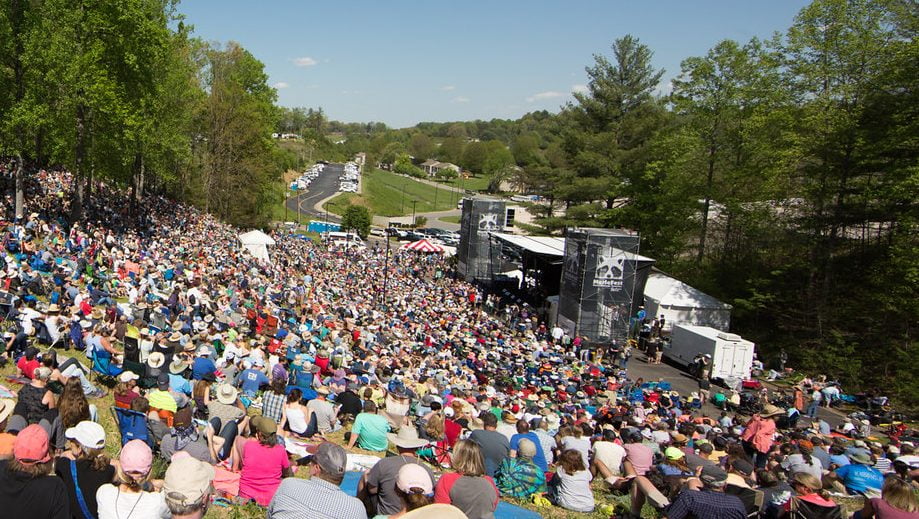
When it comes to roots music, the MerleFest 2019 lineup is tough to beat. From bluegrass heroes to country legends, along with a number of perennial favorites like the Avett Brothers, this year’s four-day event promises to be one for the record books. Where to begin? Check out the BGS daily preview below.

Editor’s Note: MerleFest 2019 will take place April 25-28 in Wilkesboro, North Carolina. The Bluegrass Situation is proud to present the Late Night Jam on Saturday, April 27. Get tickets.

THURSDAY, APRIL 25

Headliner: Wynonna

No one else on earth has a voice like Wynonna. Of course she got her start in the Judds, which brought an acoustic flavor back to mainstream country music in the 1980s. She’s also frequently cited Hazel Dickens and Alice Gerrard as among her earliest musical influences. You’ll surely hear the hits, yet a new record deal with Anti- means that more music is on the way.

Don’t miss: Junior Brown can wow a crowd with his “guit-steel” double neck guitar, not to mention wry tunes like “My Wife Thinks You’re Dead.” Dailey & Vincent know a thing or two about quick wit, with their fast-talking banter tying together a repertoire of bluegrass, country, and gospel. Accomplished songwriter Radney Foster issued a new album and a book – both titled For You to See the Stars – in 2017. North Carolina’s own bluegrass combo Chatham County Line kicks off the day, likely with a few familiar tunes from their new album, Sharing the Covers.


FRIDAY, APRIL 26

Headliner: Tyler Childers

With the album Purgatory, Tyler Childers captivated fans who demand authenticity from their favorite artists. The acclaimed project falls in that sweet spot where Americana, bluegrass and country music all merge gracefully. Yet the sonic textures of “Universal Sound” show that he’s not stuck in the past. In a crowded field of newcomers, Childers’ distinctive singing voice and incisive writing set him apart.

Don’t miss: If you’re into guys who write quality songs, then you’re in luck. Leading up to Childers’ set, fans can dig into the likes of Amos Lee, The Milk Carton Kids, The Black Lillies, American Aquarium, and Steve Poltz. If bluegrass is more your style, check out Mile Twelve and Junior Sisk & Ramblers Choice in the early afternoon. Before that, make the most of your lunch break with country music from Michaela Anne and Elizabeth Cook. The Chris Austin Songwriting Competition is worth a stop, too.


SATURDAY, APRIL 27

Headliner: Brandi Carlile

Brandi Carlile catapulted into a new phase of her career by singing “The Joke” on the Grammys this year, not to mention winning three awards before the show. However, dedicated fans have followed her ascent since her auspicious 2005 debut album and its exceptional follow-up, The Story. She’s a master at engaging a crowd and a Saturday night headlining slot at MerleFest is yet another feather in her cap.

Don’t miss: Doc Watson himself would have approved of all the bluegrass artists on Saturday, such as Sam Bush Band, The Earls of Leicester, the Gibson Brothers, and Molly Tuttle. Keb’ Mo, Donna the Buffalo, and Webb Wilder converge upon Americana from different originas, yet they are united in their ability to electrify a crowd – even at a mostly acoustic festival. Folk fans should swing by The Brother Brothers, Carolina Blue, Driftwood, Ana Egge, Elephant Sessions, and The Waybacks. The Kruger Brothers always offer a pleasurable listening experience, too. Still not ready for the tent? Drop by the Late Night Jam, hosted by Chatham County Line and presented by yours truly, BGS. You won’t want to miss the set of special collaborations and true, on the spot, one of a kind jams with artists from all across the festival lineup.


SUNDAY, APRIL 28

Headliner: The Avett Brothers

The Avett Brothers elevate the MerleFest experience by bringing together a multitude of influences, from string bands to stadium rock. The charming track “Neopolitan Sky” dropped in February, employing a Tom Petty vibe and a surprisingly scaled-back production, as well as the sibling harmony that’s central to their sound. The North Carolina natives are proud fans of Doc Watson, so here’s hoping for “Shady Grove” to go along with fan faves like “Live and Die,” “Murder in the City,” and “I and Love and You.”

Don’t miss: The Del McCoury Band always brightens a Sunday afternoon with traditional bluegrass and any number of hollered requests. Steep Canyon Rangers will deliver a set inspired by the North Carolina songbook. After that, the ever-prolific Jim Lauderdale will take the stage with a set drawing from his country and bluegrass career. Early risers will be treated to morning music from Lindi Ortega, who hit a career high of creativity with her newest album, Liberty. Also of note: Jeff Little Trio, Andy May, Mark and Maggie O’Connor, Peter Rowan, Scythian, Larry Stephenson Band, Yarn, and all the good vibes that MerleFest has to offer.


Photo credit: Willa Stein
 

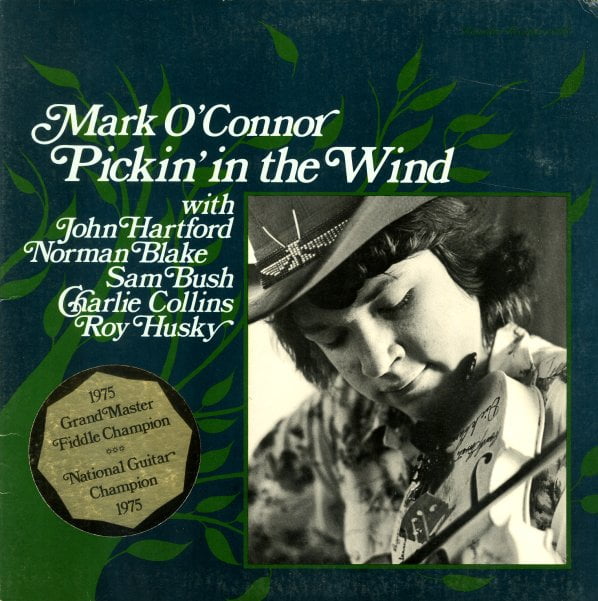
Mark O’Connor, ‘Pickin’ In The Wind’

Mark O’Connor comes about as close to being a household name as any musician in bluegrass (and its adjacent genres). Because bluegrass is predicated upon instrumental skill, the origin point of O’Connor’s recognition will always be his virtuosity, his musical expertise, and his command of his instrument. He’s a true master of bluegrass fiddle and contest fiddle forms, he’s a trailblazer in fiddle-flavored classical compositions of all manners and sorts, his musical code-switching extends to jazz, gypsy jazz, and swing, and he is pervasive on recordings and sessions from his years spent in Nashville. He even has his own violin and fiddle curriculum, The O’Connor Method, which pedagogically capitalizes on and celebrates American music, rather than Western European music, as usual.

Yet, no matter the level to which he transcends any/all musical barriers or the ubiquity of his name and brand, many folks don’t know he’s a maddeningly adept guitar player as well. In his youth, as he racked up wins at fiddle contests far and wide, he was also taking home flatpicking trophies with the same bravado. On his iconic 1976 album, Pickin’ In The Wind, the title track and the first tune on the record opts not to showcase his signature fiddling, but rather his guitar picking — backed up by a band that is no less than jaw-dropping: John Hartford on banjo, Sam Bush on mandolin, Norman Blake on dobro, Roy Huskey Jr. on bass, and Charlie Collins on the rhythm guitar. The tune listens down as straight-ahead bluegrass, but with a chord progression and arrangement that never strays into the simplistic, thanks in part to O’Connor’s compositional taste and the supreme talent of his fellow musicians. It’s an O’Connor staple that doesn’t require a single bowstroke.

So, in celebration of O’Connor’s birthday (August 5), it seems appropriate that we shine a light on the guitar stylings and the unbelievable ensemble of “Pickin’ In The Wind.”