With Honesty and Humor, JP Harris Relives a Rough Time

On the day he released his latest album, Some Dogs Bark at Nothing, Harris took to Instagram with a meaningful post about what it’s really like to put your life out there as a songwriter. He accompanied it with a rendering of Mickey Mouse flipping the bird, a comic reflection of his own feelings about “worry, hard times, notions of ‘success,’ bad reviews and musical criticisms,” among other things.

But in a reference to the actual songs, Harris wasn’t so cavalier. He added, “They are yours now. To love, to hate, to relate to, to be repulsed by, whatever you feel they do not belong solely to me any longer. And that is very scary, as I now must relive these tales I’ve kept hidden these four years, night after night, in hopes that my own recitation helps me heal, learn, and maybe even help someone else.”

That transparency doesn’t shield heavy topics, such as his past drug use, even when those misadventures are wrapped up in a free-wheeling tune like “JP’s Florida Blues #1.” With its ‘70s swagger, the track sounds like something Jerry Reed would have cut if he were prone to singing songs about “seeking inspiration through my nose.”

“I feel like it can be really hard for people who’ve never either dealt with addiction or been close to someone — kind of truly understood someone — who’s dealt with addiction, to get why making light of a bad situation can be so funny or helpful,” he says. “And for me it’s really cathartic to look back. For years, I didn’t want to talk about it. There was a little bit of… more than a little… just ashamed of a stretch in my life when I was living really bad and real close to going hard off the rails. And now I can look back on it, and I pulled myself out of it, and I can laugh about it.”

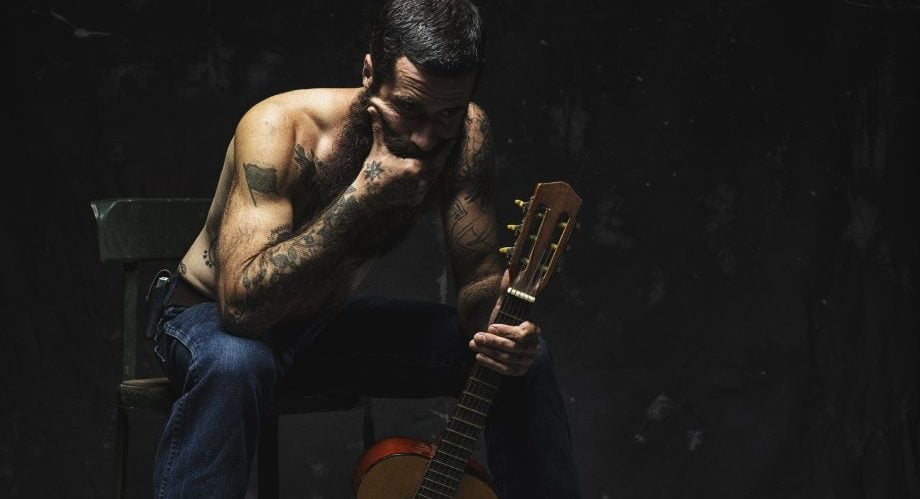
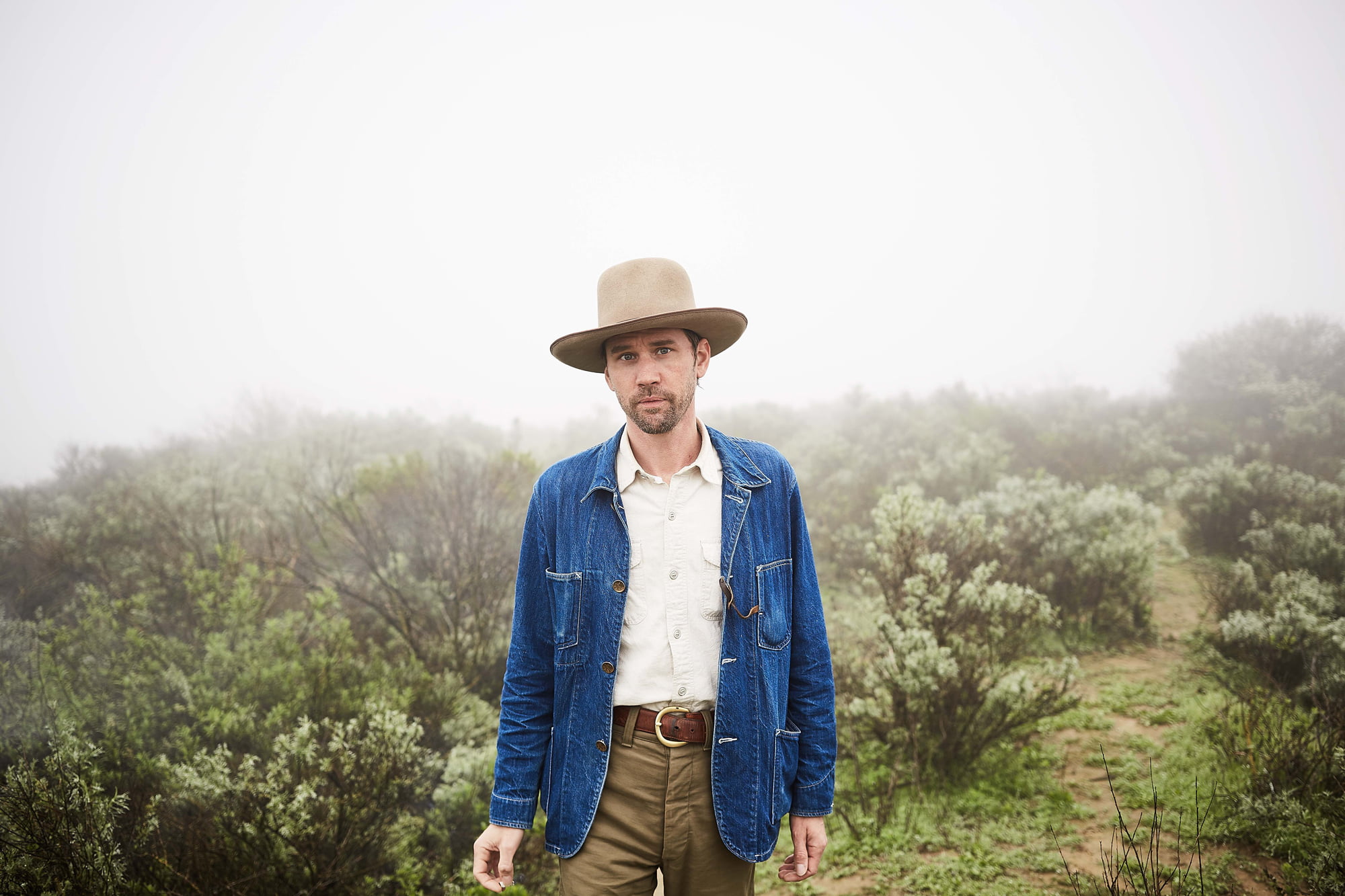
Although he cuts an intimidating figure – tall and muscular with a long, thick beard and innumerable tattoos – Harris is remarkably easy to talk to, even when he’s wary about saying too much. “I try not to overshare about my personal life in any regard to people I don’t know well in person, or on the internet, or any other way. But no matter what you do, you gotta go out and relive all of those moments,” he believes. “You can suddenly feel the tears well up, and you’re like, ‘Okay, this isn’t gonna go that well. I need to think about baby bunnies,’ or just try and do what I can to disconnect emotionally from this story I’m telling.”

However, he will reveal that the raucous song “Hard Road” came to him literally in a fever dream. While he was in New York for a couple of gigs, an ugly illness nearly knocked him out of commission. “I was having to chug half a bottle of DayQuil to get through the gigs every night, and then spent the whole day sweating and feeling horrible in this wee little Airbnb apartment shithole in Brooklyn. And in the middle of the night, I sat bolt upright and had the melody of that song, and even a big chunk of the words. I pulled this little lamp over and turned it on, found a piece of paper, and started writing the words down.”

He adds, “That whole song is not only, again, a sort of hilarious recounting of some ill-behaved adults that I’ve known in my years, but it’s also my own incredibly subtle way to nod at a bunch of old country and blues songs. The buried references in that whole song are probably going to fly over 99 percent of the fans’ heads. Anyone who’s incredibly well-versed on the music of the 1940s and earlier is probably going to pick up on a lot of it. But there’s a nod to an old prison work song in one verse; there’s a nod to a Leadbelly song in another one. There’s a whole bunch of little winks and nods in there.”

Asked how his interest in old-time music originated, Harris explains that he lived in a remote cabin in Vermont for 11 or 12 years, with no electricity and no road access for six months of the year. For his water supply, he dug his own spring. And to get by, he was fixing up old barns, logging in the woods, and working as a farmhand. Being able to play music without electricity was essential – and although he’d played in punk bands as a teenager, he found himself in his 20s gravitating toward traditional Appalachian old-time music.

“Old-time music is much more about the fiddle tunes and the syncopation and the sound and the melody,” Harris believes. “And a lot of those old fiddle tunes don’t have any words, and if they do, it’s like one refrain that the fiddler will randomly yell out in the middle of the tune, but there’s no real words to it. They’re just tunes, it’s for dancing.”

A three-month winter tour playing with a string band proved to be a turning point. Harris says, “I got home from that tour, and I realized that [old-time music] was sacred to me in this way that I had almost ruined by trying to make a living out of it. By trying to make it more palatable to people, trying to take it into bars, and get people to pay attention. And I had started listening more and more to country music from the late ‘50s up through the ‘60s, and I realized that it was next to impossible to go see a real, old-school country band out on the road anymore. … In terms of young folks playing fairly traditional music and out on the road touring, like road-dogging it, there are very few people doing it. And it was next to impossible for me to go see a show, and it was like, ‘Well, fuck it, I’m gonna start a country band.’”

That decision prompted him to focus for the first time on writing his own songs. Considering his unconventional upbringing, he had plenty of stories to inspire him. Harris spent his earliest years in Montgomery, Alabama, before his family moved to California when he was nearly 7 years old. He remembers, “My dad worked in heavy construction, so we ended up out in the high desert for a couple of years. We moved to Las Vegas for about five or six years after that, and then that’s where I eventually split from. So I grew up in this weird mix of two worlds–a super-Southern family, but then lived in this burnt-out, high desert tiny town in California for a few years. … And then dumped into this run-down part of Las Vegas that had been a suburb in the ‘60s and now was just a run-down neighborhood on the edge of the suburbs.”

Harris declines to go into specifics about why he skipped town. (“I’ll just say it was time for me to get going, and I felt like I had some other things to go do in the world besides live out the rest of my teenage years normally.”) Roughly from the ages of 14 through 19, he hopped trains – a pastime he describes in detail on the album’s closing track, “Jimmy’s Dead and Gone.”

Harris, who moved to Nashville in 2011, says he wrote it after being fed up with other bands creating what he calls “nearly fictionalized backstories.” He admits, “I finally was like, ‘You know what? I’ve done my best to try not to brag about all this weird shit I’ve done in my past, but I need to set some records straight with a song.’ It’s a little bit of a wink and a little bit of a rib jab at everybody writing train songs.”

Not every track on Some Dogs Bark at Nothing – which was produced by Old Crow Medicine Show’s Morgan Jahnig – is quite so confrontational. The title track is a rueful number about the inevitability of messing things up, while “When I Quit Drinking” and “I Only Drink Alone” show that Harris’ memorable Instagram handle is indeed accurate: @ilovehonkytonk.

“I’m not a very prolific songwriter,” Harris confesses. “People sit down and make time to do it in these very specific windows and formatted ways, which is really admirable, but I’m for shit trying to do it that way. They pop into my brain, I write them. Sometimes I don’t write a song for six months and it’s terrifying. I think I lost my mojo and then all of a sudden in a month I write three songs that are killer. And I realized that like everything else in life, my songwriting creativity comes and goes in waves, and art’s just not predictable, and I know that I’ll be able to keep writing records indefinitely. I’ve quit being so afraid of it.”


Photo credit: Giles Clement

Another Ring in the Tree: A Conversation with Ketch Secor

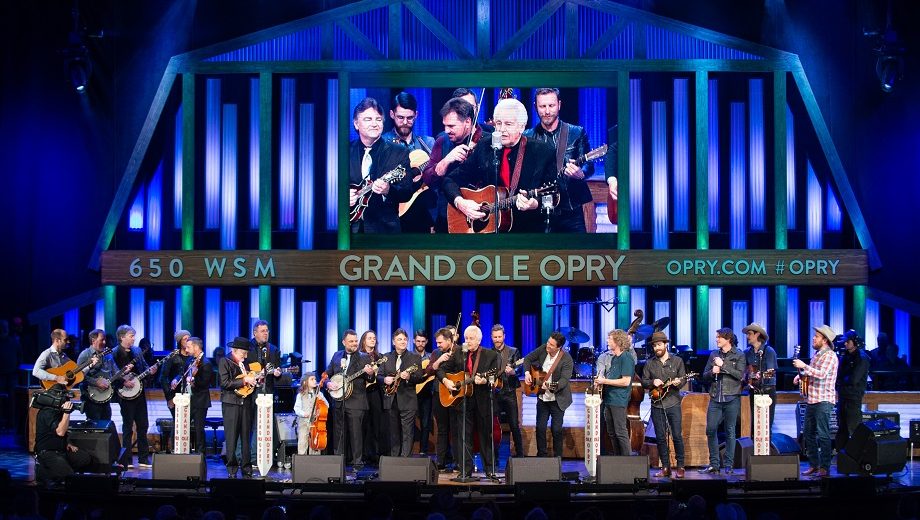
Maybe it’s true in life, but it’s certainly true in writing about music that the longer you do it, the more often you hear echoes of the past — not only in the music itself, but in artists’ attitudes and, especially, in their stories. Hearing Old Crow Medicine Show’s Ketch Secor recount the odyssey that preceded the band’s settling in Nashville, it’s easy to be reminded of the contintent-spanning journey taken by Western swing ensemble Asleep at the Wheel some 30 years earlier. Like AATW, who eventually were embraced by all but the most benighted purveyors of authenticity — and with whom they recorded a blistering “Tiger Rag” in 2015 — Old Crow have made their way into the heart of hillbilly music’s most cherished institutions, signified by their 2013 induction into the Grand Ole Opry cast.

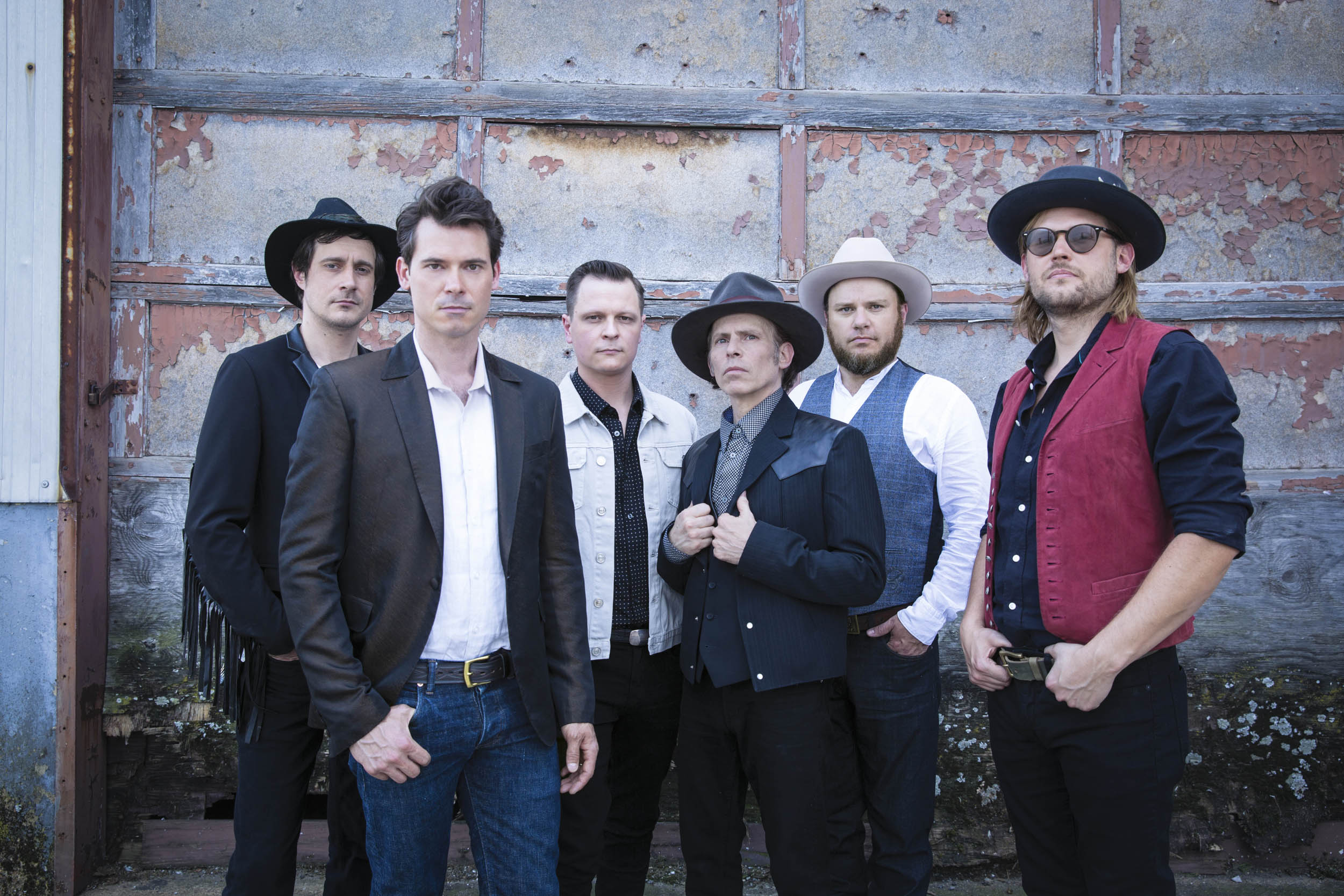
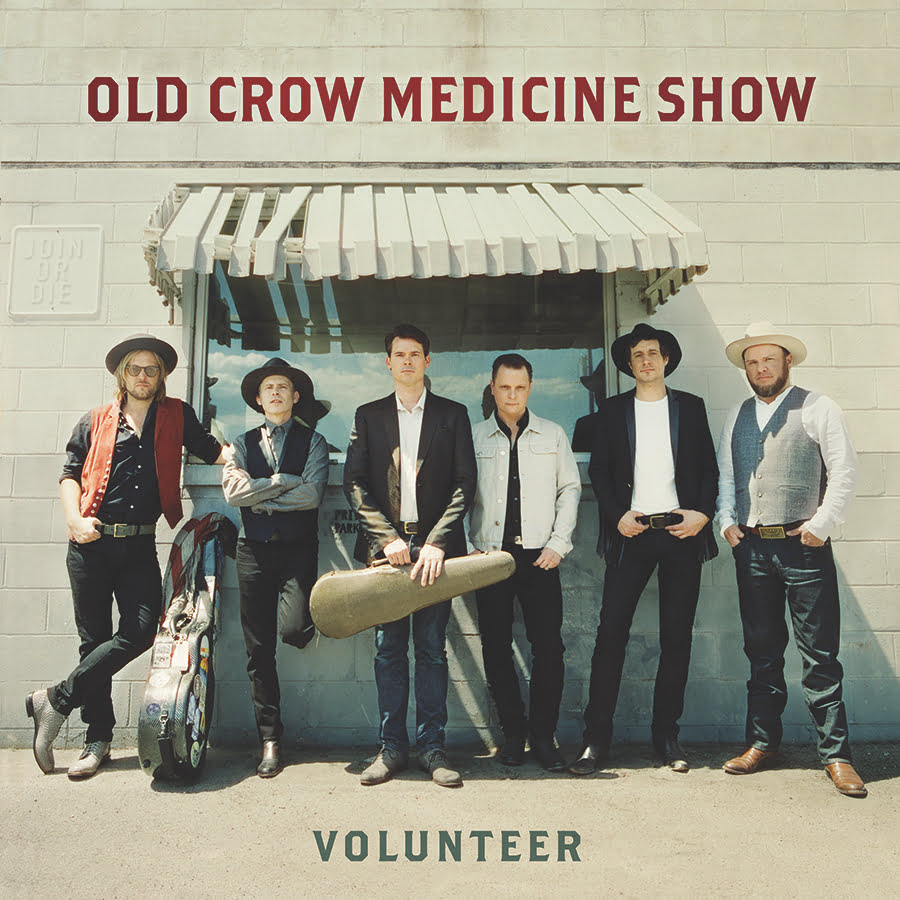
Yet the group’s ascension to Opry membership was hardly predictable, much less preordained. Old Crow’s stature in the country music world has been built on a determination to make their own sound that’s every bit as strong as their allegiance to the broad swath of hillbilly music music that forms its foundation. When Marty Stuart invited them to join the Opry, he mentioned an early description of the radio barn dance as a “good-natured riot,” and it’s a description that obviously applies to the band’s shows, too — a simultaneous looking back and looking forward that has made legit fans out of the likes of bluegrass Hall of Famer Del McCoury. With Volunteer marking the group’s 20th anniversary, it seemed like a good time to look back at how they got from there to here.

The press release mentions this is the 20th anniversary of the band.

That’s no joke, brother.

Does the band have a hard start date — a day you could point to and say, “This is the day the band was formed”?

Well, the band left — that’s the day the wheels turned, and we left our home — in October of 1998, because grape season was over, and we had money. We had picked enough, and raised enough, and washed enough dishes, and cleaned enough attics, and played enough nursing homes, and bought enough cartons of cigarettes to get across the border in style.

I was thinking about this because the occasion for this interview is the release of a new record and, 20 years ago, the record industry and the music industry looked a lot different than it does now. And you guys have become what you are during this period of tremendous change and turmoil.

For example, when we crossed that border and finally got waved through into Canada in the fall of 1998, one of the things we had packed was our boombox, so that we could dub our tapes. Because this band sold cassettes. In 1998, this band sold cassettes on the street corner for $10 — Canadian. That was crazy. We were selling them, too. Our tape was flying out of the box — we had a shoebox full.

Why was that?

Well, it was not the quality of the tape. The tape wasn’t very good. We recorded it with one microphone hung from the ceiling, on a four-track recorder. It sounded really, really shitty — low-fi, low quality. That tape was called Trans:Mission. It was the time to dream, with your body, the things that you wanted to have happen. It was the time to read Bound for Glory by Woody Guthrie and think, “I’m going to get on that boxcar, too, goddammit; I’m going to hobo. I’m going to thumb it, I’m going to flag the diesel down. I’m gonna go West.” A good time in life to take that risk, and drop out. Isn’t that what it’s all about? Isn’t that where all of the magic lies, in that moment of deciding that you’d rather wear a mask — and pick a really great one?

So you made your way to Nashville …

That happened three or four years later. Now, I had already been to Nashville before I got to Ottawa. I had been here with another band in 1997, and played on the street corner here. I was gonna busk! I’ve been busking Nashville for like 23 years, or something stupid like that.

What’s the value of busking? I mean, aside from the financial.

Well, we can’t all play like Del McCoury, or anyone in that band — particularly when we’re kids. But we had the passion. It’s the same passion. I was never gonna get as good at playing the fiddle as Jason Carter, but I had the same drive to play as hard as Jason plays. And I couldn’t get onto a stage anywhere because … well, one, I was drunk. I had taken this old-time loyalty oath that made me fiercely pro-old-time and anti-bluegrass, so I didn’t play well with others. I was rabble-rousing. And also, I sucked. So where was I gonna go, with all of that energy and drive, but none of that finesse? And I was somewhat unapproachable. I might have smelled bad. I might have had blood on my shirt, or on my mouth. That was part of the mask I wore, was unapproachability.

Being in Tennessee seems to be important to the band, at this point. Is that a fair statement?

Yeah. I think, as soon as we got to Tennessee, it got a lot more legit.

In what way?

It got legit because it got more focused on the idea that, all right, this band is the soap box. In the chapter previous to our move to Nashville as Old Crow — which is the chapter that runs from about 1999 to about 2000-and-a-half — in that chapter, we were probably as interested in farming and making whiskey and planting by the lunar signs as we were about playing live shows. And that was where learning about early hillbilly and country music was as much an engagement with the landscape of the music as it was with the actual performance of the music. When it got to Nashville, then it became about doing that in Nashville, which had a different musical landscape.

So, in our journeying, we start with the quixotic journey, which is the fire, the odyssey. And then we end up in this sort of hillbilly monastery up in east Tennessee and west North Carolina. And then we come to Nashville, and we end up in this crack house kind of mentality of revolving doors of freaky people, motel rooms, and rent money going out and booze coming in, and songs, and percolation, and Del McCoury, and the road. The beginnings of the way the road would look. It became more vocational and less about kind of artistic presence and disturbance. As buskers, we were as much protesters as we were entertainers.

You guys still feel that way?

Yeah.

How does it express itself? Musically?

Oh, there’s a ferocity to what we do, and an intensity. I mean, I’m feeling it right now, which is why I’m jacked up. But I’m jacked up always. I’m always jacked up, when I talk about the fiddle, and when I talk about John Hartford and Del McCoury. I’m always jacked up because that stuff’s just so powerful.

When I hear “volunteer,” especially in a music-related setting, I think of the Volunteer State — Tennessee. Is the title a reflection, in part or in whole, of the environment in which you’re in now? Or does it have some other significance?

What I think it means is that it hearkens to the pack mentality of our youth. The band really took this oath, this pledge, and we all volunteered to risk our lives, to sacrifice personal identities, personal goals, for collectivity. To be very much a band. The way that we lived together — it’s like we had all signed up, that we would do it come hell or high water. And it turned out it was both.

There’s an audience connected to old-time and bluegrass and country music — all the variety that gets presented on the Opry — by virtue of where they were born, who they grew up with, and the community they live in. And then there are whole other audiences who are drawn by maybe musical affinity, or some kind of cultural signifying. One of the features of our world in the last few years has been that the differences between all these people has become more apparent and the edges become a lot sharper. You guys are also heading for your fifth anniversary as Opry cast members. You play the Opry, which is still kind of a focal point for one community, and then you go out and tour and play for all these other audiences. It feels to me like that’s reflected in some way in this record. Is that true?

When we play the Opry, we’re mostly playing for tourists. But we’re also playing in a kind of center of all of hillbillydom. And when we play the “Wabash Cannonball” on the Grand Ole Opry, we sound more like the Woody Guthrie role than we do the Montgomery Gentry role, or even the Roy Acuff role. Roy is kind of the same as Woody. He’s a good example because, though politically, he’s certainly on the right — he’s from East Tennessee, he’s a Republican, he’s a conservative dude, he wants to shut down the Opry because he doesn’t want to share the same locale as the peep shows and the drug dealers, so he advocates moving it out. But he’s singing music that makes you want to desegregate a school, because that’s the power of the “Great Speckle Bird,” that’s the power of the “Wabash Cannonball.” They’re actually very front-line songs, really excited, rabble-rousing kind of proletariat sounds.

That’s the thing about country music: The people, en masse, who believe in the power of folk music, just by nature of having an underserved class being championed by a music — that’s a very expansive concept, one that can’t be pigeonholed in any particular political realm. We played the Budweiser stage last week, and most people were about 25 years old or younger. We’ll play gigs this summer where everybody’s 25 or older, 50 or older — we’ll see crowds from Delaware to Red Rocks and everything in between. We’ll play in Oklahoma to drunk leftists, and we’ll play in New York City to conservative lawyers. And everywhere we go, we will allow people to step into a world that has no political affiliation. That is the world of Old Crow, the entertainer. And the Old Crow who’s an entertainer, I always think of him as this top hat-wearing bartender that’s serving it up to the people, no matter what the color of the skin is, or who they voted for. Because the Old Crow, he doesn’t vote. He just pours.

So what’s the connection between Old Crow, the entertainer, and that volunteer collective that stepped up and took its oath? What you described as the fundamental nature of the band — of you coming together and making this choice to pursue something — seems to imply a certain kind of purposiveness that goes beyond being an entertainer.

The political party here is, live music is better. The revival tent, or the voting booth, or the campaign rally is one in which you believe that live music has the power to change the world. I like records fine, but we’re a live band. What we do is play the music that we play in the moment that you’re hearing it. If you’re on your phone getting a message from a friend, you missed it. Sorry, dude. If you go to the beer line, that’s cool, we’re going to keep doing it. You don’t have to hang on every word. But this is our tent here. It’s the live music hour. That’s what we do.

We’re having this conversation, in part, because you made a record. So if live music is where it’s at, and that’s one of the changes in the music industry over those 20 years, and that records no longer occupy the same position in the music world, what are you wanting to do with this record?

Put another ring in the tree upon which this Old Crow has been precariously perched these 20 years. It’s just another ring in the tree, another notch in the belt.


Photo credit: Danny Clinch
Old Crow Medicine Show, ‘Flicker and Shine’

As fiddles and banjos have become increasingly commonplace in mainstream music, the spirit of a string band — one that’s predicated on a kind of pure, punk-rock joy — has often taken a back seat to a more earnest, precious treatment. But in Appalachia, that traditionalism was about skill, about a kinetic energy, about falling and rising together through the sounds of a washtub bass or some wailing vocals that are no more or less important than the instruments, themselves. It wasn’t always so morose. Life was hard enough as it is.

Old Crow Medicine Show, however, has always been connected to this raucous side; and their new song, “Flicker and Shine,” from their forthcoming LP, Volunteer, is no exception. It’s even about falling and rising, together. Though not a political song, per se, it slides perfectly into the zeitgeist of the moment and the need to rise as one to beat on as we’re intended. That’s what every life does naturally, anyway, as Old Crow sings: “All together. We fall together. We ride together. We wild together. Yes, all together. We fall together. Every little light will flicker and shine.” No one gets out of this world alive, and no one knows exactly how long our flames might burn. But Old Crow is right: We all burn together and, if we ride together, we might just shine a bit brighter. And we might have more fun along the way, too.

Hangin’ & Sangin’: Chance McCoy

From the Bluegrass Situation and WMOT Roots Radio, it’s Hangin’ & Sangin’ with your host, BGS editor Kelly McCartney. Every week Hangin’ & Sangin’ offers up casual conversation and acoustic performances by some of your favorite roots artists. From bluegrass to folk, country, blues, and Americana, we stand at the intersection of modern roots music and old time traditions bringing you roots culture — redefined.

With me today at Hillbilly Central, Chance McCoy! So Chance McCoy, part of Old Crow Medicine Show, and more!

And more! So much more.

So let’s do a little Chance McCoy 101, background thing because you don’t have a website for people to go and find out about you so I think we need to teach the people.

Yes, I’m the 21st century George Harrison of Old Crow.

Alright, let’s go with that.

The Quiet Crow. [Laughs]

Yeah, okay, I’ll believe that. [Laughs] So you grew up in West Virginia, playing in punk and rock bands, yeah, a little bit?

Yeah, a little bit.

In your youth.

A little bit. The first band that I was in was called the Speakeasy Boys, and that was more just an excuse to get drunk and run a speakeasy than it was to be a band. But I did learn some music in there.

Right. And they were sort of old-time without knowing they were old-time? Kind of like the punk version of old-time?

Yeah, we didn’t know what old-time music was, actually. We didn’t know what bluegrass was, and we had heard the term “old-time.” And we were playing some old-time music. We had a washtub bass player. We were playing “Soldier’s Joy” and things like that. But it took me, like, a year of being in that band for somebody to finally tell me what old-time music was. [Laughs] We kept asking around, “What is old-time music?” and nobody could tell me!

So yeah, it was amazing! We basically ran a bar out of a basement of a friend’s house and, every Sunday, a friend of ours would go down to the Potomac River and fish out a bunch of catfish and we’d fry them on a barrel, and about 200-300 kids from the local college would show up and we’d play music. It was a ball.

That’s awesome!

So that was my experience learning folk music and bluegrass and old-time, and then I started performing in folk clubs and I was like, “Why is everybody sitting down and listening? This isn’t what you do, here’s a beer! Go ahead and dance, just start dancing!”

What do you think it was about that kind of music, or maybe it was how you guys were doing it, or maybe it was the beer and catfish, but what was the appeal to those college kids?

Um, I think the appeal was that we created a scene. Our bumper sticker read, “We’re not a band. We’re a party.” [Laughs] That was the appeal!

Your life motto ever since!

Yeah, I think that works for a lot of acts. Sometimes it’s not about the music; it’s about the event — creating a party. So that was very much what the draw was in that band.

And then once you got into the more “proper” old-time and folk scene, it was a whole other vibe.

It was a whole other vibe, yeah. It was great because, growing up in West Virginia, I’d actually never heard folk music, because it was pretty rare. I mean, it still is. I didn’t know where to look. I didn’t have any connections to it. So, when I finally discovered folk music in West Virginia, I was in my early 20s, and I realized that there was incredible depth, this well of music that went so much deeper than just the surface level “Soldier’s Joy” and all that kind of stuff — “Pig in a Pen.” And that’s where I really started to fall in love with old-time music, especially. And I was lucky enough to study and apprentice with master musicians form West Virginia, so that’s where it started to change for me. And then I took all that and went out and tried to perform it and that’s when I realized … [Laughs]

That’s when you ran into all the folks who were … the “that ain’t bluegrass” folks.

Like, “Well, actually …” [Laughs]

So you were just living out in a cabin and teaching fiddle at Augusta Heritage Center when you got the “Hey, come try out for our little string band, Old Crow Medicine Show” call.

Yeah, I got a cold call! Yeah the little string band that you know, we have the song “Wagon Wheel.” Nobody’s heard it.

Nope! What was it like stepping into that band with them having been a band for so long, even though they took a few years off, sort of regrouping?

It was really hard because I had to figure out how to join this band, like you said, that had already been a huge band that had been really successful, and I had to figure out how to enter the band and not make it seem like I was trying to replace Willie Watson or what he did. And that was always something that was really a sensitive issue where we all wanted to integrate me into the band in a new way where it didn’t feel like, “Oh, Old Crow’s back, but now this guy’s replaced this other guy.”

So there was this intentional shift in the band, and I tried to take sort of a back seat role and a more supportive role in that band, and not try to, you know, try to get myself out there and play a leading role in the band. And, in doing that, I was able to really support them to go in directions that they hadn’t gone before, and I was integral to the creative process and helping write the songs and record the records and doing all that, but I was sort of the behind-the-scenes guy, where I was just kind of trying to make Old Crow great again, and lift them off.

Because, when I met them and they went on that tour that I joined them on, when they reunited, they had kind of come out of a broken place with having lost Willie, and then being like, “Is anyone gonna like the band anymore? Are we gonna be able to do it? Is it gonna be any good?” So it was a real fragile situation that I came into, so I really tried to come in and just support them as musicians and help them realize their vision for what the band was gonna be moving forward.

And clearly that worked, or it was just a coincidence that you joined the band to play on Remedy and oh, it wins a Grammy, the first Grammy for a record.

[Laughs] I like to say I have the Midas touch. Any project I join wins a Grammy.

If anybody needs a fiddle player/banjo player/guitarist/carpenter …

I can build it. I can play it.

And you can win a Grammy.

[Laughs] Yeah, it was an amazing rise to success, especially coming from where I had been before I got the call. I had kind of sunk into poverty in Appalachia and it was rough times, for sure. I was just scraping by, barely, when Ketch [Secor] called me. So that was a good call to get.

You recently did some solo shows here in Nashville. So is that still a lingering ambition in your mind, are there projects coming?

It is! Yes, there is a project coming. I’m gonna be going into the studio in a couple weeks here, after I finish building it. [Laughs] And laying down my next record, which is gonna be called The Electric Crow. It’s kind of the next creative project where I wanna use all the different elements, all the different kinds of music that I play, and kind of bring that through my own creative focus and hone in something completely new. So, yes, that is on the way!

Watch all the episodes on YouTube, or download and subscribe to the Hangin’ & Sangin’ podcast and other BGS programs every week via iTunes, SpotifyPodbean, or your favorite podcast platform.

Eschewing Authenticity: A Conversation with Willie Watson

When Willie Watson steps out alone on stage in Allston, Massachusetts, he looks every bit as though he’s wandered out of another time. His wide-brimmed hat, plain button-down shirt, and twangy banter all pin him to a different era. Beginning to play the banjo, Watson overlays his preferred clawhammer style with warbling vibrato, all of which add to the picture — as if he’d been among the musicians who traipsed to Bristol, Tennessee, to participate in Ralph Peer’s recording sessions in 1927. Comments about authenticity have long dogged him, but Watson prefers to avoid such talk. He’s not attempting to recreate so much as create, and he just so happens to be using the past for inspiration.

The former Old Crow Medicine Show member is touring behind his sophomore solo album, Folksinger Vol. 2, which culls an array of folk songs — for example “Gallows Pole,” “The Cuckoo Bird,” and “John Henry.” To gain his footing, Watson looked to Lead Belly, Reverend Gary Davis, and more as models. For him, they’re players who created such magic through their respective voices and instruments that he jealously sought ways to participate in that feeling many decades later. He recorded Folksinger Vol. 2 with David Rawlings on analog tape, nodding to a sepia-colored sound. But for those who consider what he does in purist terms, Watson eschews such notions. This isn’t about a musician chasing the past or attempting to preserve it; the latest batch of songs on his new album are his attempt to get closer to a style of music he loves and hopes others might happen to enjoy.

Do you ever get the feeling you should’ve been born in a different time period?

No, not at all. I think there’s a time and place for all this kind of music. If it were a different time, then I wouldn’t have all these other influences that inform what I do and the way that I do it. I think I’m in just the right time. Sometimes this modern world can wear me down a little bit, but for the most part, it’s all good.

Your catalogue seems like a tip of the hat to the array of music Harry Smith once collected for the Anthology of American Folk Music. Why was it important for you to draw on so many different styles?

I didn’t really think of it as important; it’s just the stuff that I love. I don’t know that any of this is important. A lot of people seem to focus on that, like, “Oh, this is so historic and it’s preserving history.” The songs that I put on there, they’re just because I love all this old music and I want to do it all. I listen to a Neil Young record with Crazy Horse and I’m thinking, “These guys are having a really, really good time.” That sounds like something I wanna do. I really don’t wanna go out and play football with the neighbors, and I really don’t wanna go to track practice, and I certainly don’t want to study math, but I really want to be on that stage with Neil Young. It’s the same with this old music. You listen to Lead Belly singing with the Golden Gate Quartet and you think, “That’s some fun stuff.” It changes over the years, as you grow and you mature; your influences and things change. But I don’t know if it’s important. If it’s important to somebody else, then great. It’s important to me … hey, I don’t even know why it’s important to me.

Well something clicks. It’s a spark.

Yeah.

You’ve mentioned that you’re not trying to be a purist. To some extent, that mindset has run through and still runs through bluegrass and other folk traditions. Why is it important for you to avoid that restriction?

Just because it is a restriction, and I don’t like any of those restrictions. I can only do things in the way I know how. I never really liked bluegrass music; I never listened to bluegrass. It was okay, but it’s certainly not what captured my attention. What got my attention was old-time string band music and people like Lead Belly. Bluegrass, to me, seemed uptight. It seemed like those guys were wearing suits, and they all sounded exactly the same. It’s this very formal and very standardized thing that never attracted me at all. I couldn’t have cared less about banjo until I discovered what clawhammer banjo was, and what old-time string music sounded like. Since then, I’ve learned to appreciate bluegrass, and I’ve learned to love bluegrass, and I’ve learned the differences between certain people and certain players, but that came over time.

Interesting that you mention the formality of bluegrass because I know, in the ‘60s, listeners saw a more commercialized version of folk with the Kingston Trio and others.

Yeah, again that ‘60s scene, too, is sort of the same story as bluegrass.

It wasn’t what you were looking for.

No, definitely not. I was listening to some radio show, and this guy played something on the station … this guy was singing a song about all that, about how Lead Belly could kick the Kingston Trio’s ass, and how they were not the real thing. I’m going to recognize if something’s not the real thing pretty quick. I look for it. You’re not going to fool me. Kingston Trio, again, I was never into those guys. It was white bread and way too stale. Those guys didn’t have any soul.

“Authentic” can be such a loaded term, when you’re talking about preserving past traditions. What does it mean to you?

Just being honest. I mean authenticity isn’t necessarily … I don’t consider it being historically accurate. You take a mountain man, and he’s lived on the mountain his whole life — his parents did and he’s barely ever left — and he’s an authentic mountain man. That’s one side of it. I come from central New York state, but I’m honest. I love what I do and I love this music and I don’t have to live that life or live that culture just to play the music. No, I’m not a mountain man, and I didn’t grow up in North Carolina, but that’s not necessary to be able to feel it and genuinely be able to … I don’t want to say “interpret,” but yeah interpret it in your own way.

It is, right? Because these songs have been passed down and reimagined, they almost belong more to the interpreters than the originators.

Well, my versions belong to me, so far as I don’t feel I have ownership or possess them, but they’re my versions. I sing “Samson and Delilah” enough, and I sing “Keep It Clean” out on the road, and I put my sound on it. I feel like that’s my song. I don’t consider myself among the ranks of Reverend Gary Davis or anything, but I’m definitely one of the guys.

When I was watching your show last week, it reminded me of a tent revival, which was interesting to see in 2017 in Boston, that you’re able to reproduce that kind of community in a big metropolis.

That seems to be a big part of each night. It’s not like I set out in the beginning to do that. When I set out to do the solo stuff, I just set out to go back to work, really. I used to play in Old Crow and, all of a sudden, I didn’t, and I found myself with my hands up in the air saying, “What the fuck do I do now?” I can’t just sit around, I’ve gotta get out there and keep my name out there, and at least let people know that I’m here. Little did I know that nobody really knew who the fuck I was anyway.

Really?

The hardcore Old Crow fans and the earlier fans [did]. It just happened that my music seemed to really be affecting some people. I think the song choices we put on the first record — which were good choices and they really spoke to people — they reached people the same way that they do me and so, all of a sudden, I find that every night, just about every night, me and the audience have this real connection. That’s a real powerful thing.

It is. I had a ball doing the call and response for “Stewball” during your show. Speaking of that song, it has a similar strumming pattern to “Cuckoo Bird.” Really, so much of the old-time music was more rhythmic than melodic, so how are you trying to distinguish that for modern day audiences?

So many songs are the same song. The list is endless.

Right, and the variations on those songs.

“Cuckoo” and “Stewball” are definitely related. They’re practically the same tune. “Cuckoo” has a modal banjo tuning, so it makes it sound darker and mean sounding. “Stewball” is a major scale. “Cuckoo” has these few little notes that make it in the minor world, as opposed to major. I just do these songs in the way that I can. I’m not the guitar player that Reverend Gary Davis is, so I’ve gotta figure out my own way. It’s really just as simple as that.

Sometimes I’ll think I really want to do this Blind Willie Johnson song, but he’s playing some complicated slide guitar parts and, if I want to do that, I’m going to have to sit and get really good at playing slide guitar and that’s going to take me years. So how do I do it? Well, maybe I can play a Blind Willie Johnson song on the banjo … that’s no different than Bob Dylan taking a song he wrote 30 years ago and completely changing the tempo and putting a band behind it, and changing the song around completely. There’s nothing really new in that. It’s just basically the definition of interpretation.


Photo credit: Meredith Munn

MIXTAPE: Dustbowl Revival’s Myriad Musical Influences

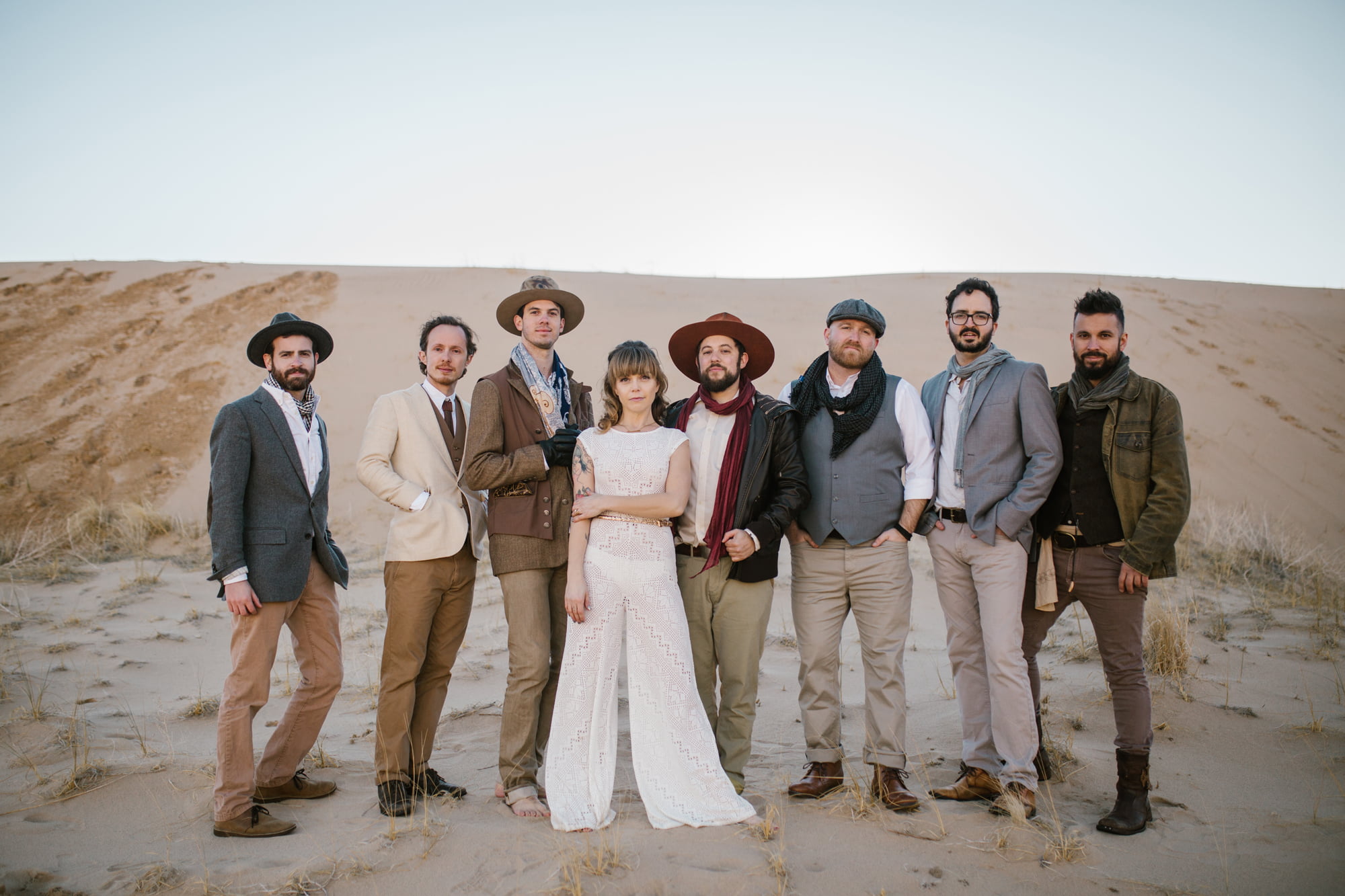
We’ve always liked stirring the pot in the Dustbowl Revival — bringing a lot of genres into our own out-of-left-field soul-roots sound. With our unconventional eight-piece instrumentation (a string section with a brass section) and two lead singers (and a lot of cooks in the kitchen), deciding what songs would make it when we were going into the studio in January was quite a challenge. 

Luckily, we reached out to Ted Hutt, a lovely British producer now living in our hometown of L.A. and he jumped in to steer the ship. As one of the founders of Flogging Molly and a Grammy-winner for producing bands we love — like Old Crow Medicine Show and the Dropkick Murphys — Ted was like having a really pleasant pirate calling us on our bullshit and bringing forth the bluesiest, funkiest, and most emotional tunes we’ve ever laid down. While there is a soul flavor to a lot of these songs, we think it was more about finding the raw root of each story and getting after it. Here are some tunes that I was inspired by when I wrote much of the album. — Zach Lupetin

Old Crow Medicine Show — “Brushy Mountain Conjugal Trailer”

This song is kind of how we found Ted to produce the record. He did several of Old Crow’s albums, and I love the fatness to the sound on this — the bass is just thumping so sweetly and the mean groove contrasts with the winking humor in the lyric. We pretty much asked him, “Can get some of THAT on our record, too?”

Al Green — “Love and Happiness”

It’s a tune I can never get enough of, honestly. As the soul theme started to permeate the songs we were linking together on the record, I kept thinking I wanted something like this Al Green classic. “The Story” definitely comes from this. 

Shovels & Rope — Tiny Desk Concert

Liz and I aren’t married like these guys, but I always try and match the deep connection that can happen between male and female vocals totally in sync. Every time I see them, I get goosebumps.

The Meters — “Fire on the Bayou”

Josh, our drummer, always encourages us to listen to these classics, and I always love the repeating groove here. “Call My Name” which opens our album was a straight 12-bar blues until we twisted it around and funkafied it. Ted loved the “row your boat” repeating refrain as a call to arms … and we rolled with it.

Creedence Clearwater Revival — “Born on the Bayou”

Also one of my all-time favorite tunes, it’s hypnotic and mean and catchy as hell. CCR seemed to always merge spooky folk and blues elements into their own sweet stew, and our tunes like “Leaving Time” and “Don’t Wait Up” definitely spring from this. If I could have one voice, it would be Fogerty’s. 

Wilco — “How to Fight Loneliness”

Being from Chicago, I was lucky to have Wilco as one of my favorite groups from like age 16 on. Jeff Tweedy’s imperfect voice always sounds equally sly and vulnerable to me — and this tune always hits me hard. The way Wilco incorporates electronic and ethereal elements into folk songs always inspired me. 

Amy Winehouse — “You Know I’m No Good”

As I started writing tunes for Liz to wail on, I kept thinking how awesome and complex the compositions were for Winehouse, mixing vintage soul with her own vulnerable approach. The way the horns sneak in and out on this track is so cool. 

Mary J. Blige — “Family Affair”

I probably had this song in my head for like five straight years. When we were brainstorming on a groove for “If You Could See Me Now,” we went out of the box a bit and thought of this groove. So nasty good.

The Cavaliers — “Oh Where Can My Baby Be”  

There is definitely a morbid fascination in old country and rock songs with young people dying or losing each other. I’ve always wanted to write a mournful type of song like this, but one that questions the tragedy … like how could something so sweet like being young and in love go so wrong so fast? 

The Dustbowl Revival — “Debtors’ Prison”

This is how it all comes together.

The Mile Markers of Music: A Conversation with Ketch Secor

It’s not a stretch to say that Old Crow Medicine Show is intrinsically linked to Bob Dylan. The country-roots band has never shied away from voicing their admiration for the seminal singer/songwriter, and the story behind the infamous “Wagon Wheel” is common musical fodder at this point: Old Crow’s Ketch Secor filled in the verses to an incomplete track titled “Rock Me Mama” from a Bob Dylan bootleg his bandmate Critter Fuqua found during a trip to London. After Darius Rucker’s cover of “Wagon Wheel” hit number one on the Billboard chart in 2013, Dylan’s camp reached out to Old Crow. They offered another song fragment Dylan dreamed up around the same time as “Rock Me Mama,” and wanted to see what Old Crow could do with it. Old Crow cut the track and after incorporating a couple of suggestions from Dylan himself, “Sweet Amarillo” became the first single from the band’s 2014 release, Remedy.

Now, Old Crow Medicine Show is paying homage to Bob Dylan with the release of 50 Years of Blonde on Blonde, celebrating the 50th anniversary of Dylan’s first Nashville record. The live album features Old Crow’s performance of Blonde on Blonde in its entirety, recorded last May at the CMA Theater, located in the Country Music Hall of Fame.

“As somebody with such deep respect for Bob Dylan, I hope that he likes what we did with the songs,” Secor says. “We really tried to go, ‘What if the Memphis Jug Band had come up with “Leopard-Skin Pill-Box Hat?” What if the Mississippi Sheiks had figured out how to write a song like “Visions of Johanna?” And what would it sound like if they did?’”

As Secor puts it, Blonde on Blonde was “the shot heard ‘round the world” – the record that changed the landscape of country music and split Nashville’s sound wide open.

Do you remember the first time you listened to Blonde on Blonde ?

The first time I heard Blonde on Blonde, I was probably 14, 15 years old and I was headed down a sweeping Bob Dylan kick and ingesting as much Bob as I could like it was water or wine.

Dylan has such a vast catalog. What was it about Blonde on Blonde that made the band want to take this particular record on? Why did you pick this record to celebrate for the 50th anniversary?

Well, it’s true we could have picked any of Bob’s records ’cause we’re at that point in a lot of history where we’re at milestone marks for many of the seminal musical efforts of the past 50 years and more. This one made a lot of sense because it was made in Nashville and it’s the first of Bob’s Nashville records. And this was also recorded at a time when Nashville had yet to have a rock ‘n’ roll record. This was kind of the very beginning of the ever-expanding Nashville sound, so it’s a real milestone in that regard and, with it, in the wake of Bob Dylan’s trip to Nashville, everybody from Leonard Cohen to Joan Baez to Ringo Starr and Neil Young were in Nashville in the next five years making their own records.

In recording and releasing this project, what are you hoping to communicate about the Nashville sound? Are you hoping to preserve that Dylan and post-Dylan time? Or how do you see Nashville as changing or staying the same in the last 50 years?

Well, one of the sentiments that seems active here in Nashville right now is this feeling of, “Wow, everything is changing.” You look at the skyline and there’s something new going up every day; it’s full of cranes and boom shafts and towers. So much development, so many people moving to town. So I think it’s easy for Nashvillians to think, “Wow, things sure are getting different.” My argument, with this record, is that 50 years ago is really when things started getting different, and that’s the shot heard ’round the world that the Nashville music community and its spectrum of sound became so much wider beginning with the making of Blonde on Blonde and that it’s very wide today.

Now, with country music, as it’s heard on the radio and viewed upon the charts, that has actually become very, very narrow in its scope. So I think, with a record like this, we’re hoping to kind of shine a light on a time in which that very thing was happening and somebody like Bob Dylan came in and said, “Hey, I belong to country music, too! I’m from a mining town just like Loretta Lynn. I’m the fringe of America, just like Charley Pride. And I’m an outsider.” So to make an outsider record in Nashville at that time was a really powerful turning point for our state.

Can you walk me through the prep for this project? How long did you all work on learning these songs or what did you do with the arrangements to make them your own? What was your approach?

We started this project about two months before we went in and recorded it — maybe two or three months — and just started learning the songs. That was the biggest challenge — getting all the lyrics down. This is probably Bob’s most intensely lyrical album in well over 50 years of record-making. So to be able to recite it was a real challenge. It’s such a kaleidoscopic collection of lyrics, so the real challenge is being able to differentiate at every moment in live performance whether you’re supposed to sing about the “sheet metal memories of Cannery Row” or the “sheet-like metal and the belt-like lace.” You know, it’s all this impressionistic poetry or Beat poetry or whatever it is, post-modernism or something, and trying to be able to find form and meter in it when Bob so deliberately created it to be formless and without meter.

I watched a promo video for this project — it was an interview with you in the studio where Bob recorded this album and you said something I loved: “These songs, Bob wrote them, but they belong to all of us.” I was wondering if you could expand on that sentiment?

Well, I think we all know what folk music is and I think we all know the term public domain or the idea of a statute of limitations by which copyrights run out and they become part of a common vernacular. I think it’s less obvious to apply that to something that’s so clearly Bob Dylan’s. But my argument is that “Will the Circle Be Unbroken” belongs to America, no matter who wrote it. And that’s the same … like Elizabeth Cotten wrote “Freight Train,” but I didn’t learn that song from Elizabeth Cotten. I learned it from my mother. And when music becomes the property of everybody, when it’s on everybody’s tongue and when it’s streaming out of a guitar instead of out of your little pocket telephone, computer, when the folk music muscle takes hold, that’s when songs cease to become so much about their origins and rather about them existing on their own. I really think it’s all folk music, everything — Beyonce’s Lemonade.

I think a better example of how pop music can be everybody’s is, you listen to the opening lines of “Beat It” or “Billie Jean.” “Billie Jean,” I mean, that’s basically “Knoxville Girl” without the murder. It has all the same intensity. Or like on our album, or on Blonde on Blonde, “4th Time Around,” the sort of lover’s duet. These are songs that are archetypal and they belong to whoever the singer is singing ’em. So, when you think about bluegrass music … bluegrass music is always exploring between the public domain or contemporary bluegrass songwriters. You know, Blonde on Blonde makes for pretty good bluegrass music, too.

You all also released a Best Of album earlier this year and, if I’m doing my math right, next year — 2018 — will mark 20 years as a band for Old Crow Medicine Show. What does it feel like to hit that milestone?

You know, it’s been a little while. About half of my life now, I’ve been signed up playing music for the Old Crow Medicine Show. I kind of feel like … well, the Yankees wouldn’t be a good metaphor because I don’t actually like the Yankees. I’m more of a BoSox fan. I kind of feel like Carl Yastrzemski — like a guy that has come to personify the Red Sox as much as the Red Sox themselves. You’ve gotta do things to keep it fresh and that means musical exploration can never cease. You can never get too good. Fortunately, for our band, when we started out, we could barely play our instruments. I mean, I remember when I learned to play the fiddle. I had been playing for two weeks before I was playing on the street corner with the one tune I figured out how to play. And I just played for 10 minutes and then I’d take a break, and play for another 10 minutes.

So the vista for Old Crow has been sort of endless because we started out at the very beginning of the trail. We started on street corners and we weren’t trying to get that much bigger. We were just having a good time doing it, and then the trail just kept unfolding and we just kept hiking up it. So, I think the 20-year mark, it hasn’t really sunk in yet because we’re still very much in 19, but you don’t really think about. When I think about 20 years, that kind of scares me, moreso than celebrates it. I think about this: When Blonde on Blonde was 20 years old, it was 1986, and I was a kid listening to Michael Jackson and was about to discover Bob Dylan about a year later. It’s funny the way that you find yourself being a part of the very time that you would celebrate. You know, 50 years of Bob Dylan’s Blonde on Blonde … that’s about 38 years of my life, too.


Photo credit: Laura E. Partain

3×3: Beth Bombara on Cat Pillows, Crow Songs, and Hawaiian Sunsets

Artist: Beth Bombara
Hometown: St Louis, MO
Latest Project: Map & No Direction
Personal Nicknames: My name was misspelled on a sign once at one of my shows. Instead of BOMBARA, it read BOMBASA. That became a nickname shortly after that.


Having an amazing time at #fai2017 @folk_alliance #latergram

A post shared by Beth Bombara (@bethbombara) on

If your life were a movie, which songs would be on the soundtrack?

“Strangers” (The Kinks), “We’re All in This Together” (Old Crow Medicine Show), “I Won’t Back Down” (Tom Petty), “You Don’t Know What You’ve Got” (Joan Jett)

How many unread emails or texts currently fill your inbox?

Currently 110 unread emails.

How many pillows do you sleep with?

Does a cat count as a pillow? If yes, then two.


Oh hey, just walking up a mountain to get a view of Albuquerque.

A post shared by Beth Bombara (@bethbombara) on

How many pairs of shoes do you own?

7

Which mountains are your favorite — Smoky, Blue Ridge, Rocky, Appalachian, or Catskill?

I’ve probably hiked the most in the Rocky Mountains, but all mountains are my favorite.

If you were a liquor, what would you be?

Rye Whiskey


#tulsa #oklahoma #tour

A post shared by Beth Bombara (@bethbombara) on

Fate or free will?

Free will with a dash of fate, if that’s even a thing.

Sweet or sour?

Mix it all up, I don’t mind

Sunrise or sunset?

Sunset, except for this one time I got to see the sunrise above the clouds at Haleakala National Park. We got up at 4 am and drove an hour-and-a-half to make it there for sunrise. It was the most beautiful sunrise I’ve ever seen. Then, we drove back down the mountain and, at the end of the day, watched the sunset over the Pacific Ocean on the beach.