Among Bluegrass Diehards, Red Camel Collective Stands Out

When you’re walking around the halls of IBMA’s business conference, World of Bluegrass, for good reasons and bad, everything ends up sounding the same. The Earls of Leicester sound just like Flatt & Scruggs. (Thank goodness.) Every single version of “Carolina in the Pines” sounds exactly like Special Consensus. (As they should.) There are pickers born in the 2000s who sound like carbon copies of Frank Wakefield or Don Reno or Wilma Lee Cooper.

But, in the well-intentioned and admirable adoration, emulation, and preservation a homogeneity results. It’s why IBMA jams sound different from SPBGMA jams; why Californian trad bluegrass sounds completely distinct from say, Virginian trad bluegrass these days. Where music happens, ideas cross-pollinate, and we all start sounding like each other, little bit by little bit. It’s a blessing and a curse.

That’s why it’s all the more remarkable when, out of that bluegrass milieu, a singular voice or perspective or sound can pierce through the sameness and rise above. Especially when that sound utilizes exactly the same tools and is built on a similar respect for emulation and preservation. At this year’s IBMA World of Bluegrass in Chattanooga, Red Camel Collective were one such band.

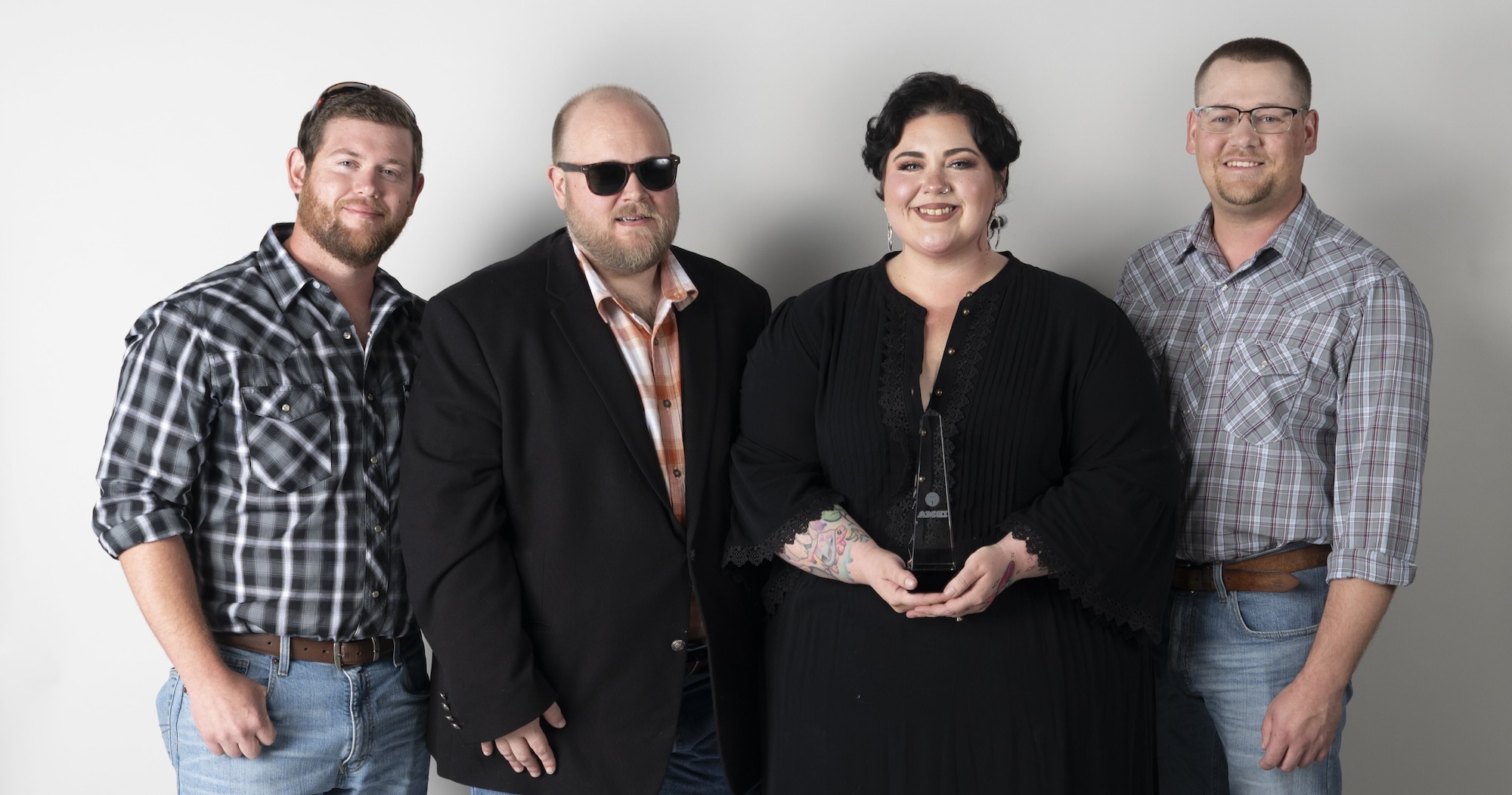
The group – made up of Heather Berry Mabe, Tony Mabe, Curt Love, and Johnathan Dillon – took home the IBMA Award for New Artist of the Year, their first such trophy. While it’s true they’ve only been a band for a few years (they came together first as Junior Sisk’s backing band and he has since encouraged them to take on work, make music, and record albums of their own), each of the Collective’s members are lifelong veterans of the bluegrass scene.

Perhaps that’s why they do sound like themselves and no one else. They know well by now the intricate little details that add up to a unique sonic brand. It’s intuition. They’re able to follow each other and each song wherever they may lead, landing in sometimes surprising or unexpected places. But still, the bones of this band and of their 2025 debut self-titled album are “just” bluegrass. Straight up and down. When you listen, though – or have the pleasure of chatting with any member of Red Camel Collective, like we did speaking to Heather Berry Mabe by phone – you’ll quickly realize this group has much more going on than the same ol’ same ol’.

Y’all sound like bluegrass, straight up and down, but you also sound like yourselves. Your sound has so much personality. You can tell that you’re holding up tradition, but also you’re trying to sound like your own band, your own group. How do you think that you’ve done that? How have you accomplished having a sound that feels within tradition, but also is something that’s all your own?

Heather Berry Mabe: First of all, thank you so much. That is a huge compliment, especially in today’s time. When I was growing up playing – I’ll soon be 38 years old – it was before YouTube and all of that. So I learned from my family members, I learned from my grandpa and my great-grandpa, and then also from the music that I was listening to at the time. Which was everything from ‘90s country to traditional bluegrass. To me, there was no box. I just loved music and it was just about getting as much of it as I could.

I think what influenced me and my husband, as far as having our own sound, I don’t think it was something that we set out to do [intentionally]. Like, “Hey, we’ve got to find a way to sound like ourselves.” I just think that happened organically. And I’m very thankful, because he’s such a recognizable picker, Tony Mabe. My husband is such a recognizable banjo player. You can hear the influences, but he totally sounds like himself. And his singing is the same way.

And, Johnathan, our mandolin player, he has so many influences, too, but he sounds like Johnathan. Nobody else sounds quite like him. I love that. I think on his part, it’s not focusing on trying to sound like anybody, but playing what you love and inspires you.

It’s not really uncommon for backing bands of bluegrass stars to have their own brand, their own shows, their own followings. I’m thinking about Quicksilver becoming their own band more than once or the New South becoming their own band once J.D. Crowe retired. Or how The Infamous Stringdusters got their start.

So could you tell us a little bit about how your relationship with Junior started as a band? And he just announced his eventual retirement at the end of 2027, as well. I’m wondering how y’all are thinking about what the next couple of years mean for you as a group. Is this your chance to springboard into having a full calendar of solo shows by 2028? Is that too far out to be thinking about?

Playing with Junior, I’ll answer that part first. Johnathan Dillon has been there with Junior since he was 18 years old and he is now 31 – or he’ll be 31 in January. So he’s been there for years and years. I’m not exactly sure how those two got hooked up, I can’t exactly remember the story. But for me and Tony, Junior called me in 2018 to sing a duet with him on an album that he was working on. The song is called “Backwards And Forwards.” I was so tickled when he called out of the blue, especially because I knew this is the first song that Junior Sisk & Rambler’s Choice had ever done with a woman. There’s never been a woman on anything [of theirs before]. So I felt really honored to get to be the first one.

A few months later, he called and said that he needed some help. He asked if Tony and I both would be interested in coming to work with him. Again, I was really tickled to get to be the first woman to play with Junior. We were just so thankful to have the work. It was at a time when my husband Tony was losing his vision. And the rest is history!

It was actually Junior’s idea [for us to be our own band], because there are songs that I’ve written and songs that we love, like I was saying, that really sing to us and speak to us and inspire us. We would sit around and jam on those and they don’t exactly fit Junior’s style. It’s two different styles there. But Junior suggested to us that we cut an album so that we would have something to sell at these venues, something to play on the radio, and all of that. He said, “I think it would be really good for you guys to do that.” So we did. Man, you can imagine our amazement at how much this has blown up! When it started as a side venture.

What are you feeling as you stare down a couple more seasons with Junior, but then his eventual retirement? What’s in the cards for Red Camel Collective? Are you looking ahead already?

We’re doing our best. It’s super hard to plan very far ahead. Lord, sometimes it’s hard for me to plan next week. [Laughs] I’ll be honest with you, most of the time I feel like I’m riding by the seat of my pants, as they say. But we are looking to the future and trying to secure bookings for ourselves so that Red Camel can continue on when Junior retires. And Junior, when he says “retire,” I’m sure that he’ll still keep making records and things like that. He’s using the word “retire” here, but he’s not gonna go away completely, because music is in his blood! It’s just like all of us, we’ll never [stop making music.]

We have plans to go as far with Red Camel as we possibly can. Man, if Johnathan Dillon and Curt Love will have me and Tony – I’m sure he feels the same way – if they’ll have us for the rest of forever, we’ll stay with them for the rest of forever! [Laughs] We love making music together. And we are working on a new album right now. As much as I loved the first one, this next one, it’s just beautiful to see the growth. It’s got several songs that I wrote. Of course, we’ve released one single, “In the Mexican Sun,” and it’s getting played on SiriusXM and a lot of bluegrass DJs are playing that one for us. We’ve got a music video that goes along with that, too.

Yes, we premiered the video right here on BGS!

That’s right!

I’m glad you bring up the single, I feel like it’s the perfect sunny, summer vacation song for moving through fall into winter. It reminds me of Jimmy Webb and the way he writes songs and it also reminded me of Dale Ann Bradley’s “Somewhere South of Crazy.” Can you tell us about the story of the single, because I know from the premiere we did that the songwriter has quite the bluegrass pedigree too…

Yeah, absolutely. We reached out to our buddy Malcolm Pulley, who is a banjo player extraordinaire and incredible bluegrass songwriter. He wrote “In the Gravel Yard” for Blue Highway. He wrote “How Many Roads,” several folks have recorded – Tina Adair, Michelle Nixon, and the list goes on. But he’s just such a good writer, so we reached out to him to ask if he had any songs. [We were] expecting traditional bluegrass, something along that line. I had no idea that he had ever written anything like this.

I believe this is right, he was playing with a jazz quintet at the time – I forget the name of the quintet. They had a [woman] lead singer who was so good. Anyway, he sent me this song that was written I guess in the early to mid ‘90s. The way they recorded it together, it sounded like a Hispanic song, I don’t know if you call it a rumba beat or whatever. It was most certainly not bluegrass! But I loved it, man. I loved the melody and the way that lady sang. It was so good.

I thought, “Man, this is just begging for banjo.” I could hear, instead of the four-quarter time that they were doing, like to halftime it and put a bluegrass spin on it. I thought, “This will really work.” I worked on a little demo of it and sent it over to Johnathan and he was like, “Wow, you’re right. I think that is really cool.”

Let’s talk about the IBMA Award you just won. It’s funny to me – and I think it’s funny to everybody – how every year in the New Artist of the Year category at IBMA barely any of the artists are new!

[Laughs] It is like that, ain’t it?

You just made the point, you’ve only been a band for two years. Your debut album just came out in February of this year. So you guys are new in so many ways, but you’re all also lifelong musicians, veterans. Tell me about what it meant to y’all to step on stage and receive that trophy, because these are peer-voted awards. And yeah, maybe you aren’t new, maybe you’ve been doing this for decades, but this is also a “moment” y’all are having as a band.

It’s so hard, because there are so many emotions. Tony and I, we’ve been married for 20 years and we’ve both, even before that, we’ve just been doing this our whole lives. This is all we’ve ever wanted to do is make music. I know and he knows that’s why the good Lord put us here. We know that it’s our purpose in life and it’s our story. As I look around and compare, I see these young people making such great strides and hitting so many marks so early in their careers. Tony and I, while we had some success, throughout the years for some reason we could just never get that momentum going.

When you’re a person who battles anxiety and crippling self-doubt, those types of things can really eat at you. [They] make you question, “Am I capable of this?” I will tell you the truth. I just said earlier, I’m 38 years old. I have never in my life grown in confidence the way that I have in the last two years. Putting together this album, writing these songs, working through the production process, putting ourselves out there as something brand new.

[Getting the award] felt like a confirmation. It felt like, “Yes. This is where you’re supposed to be.” At the end of the day, an award is a glass thing. It’s just a thing. Awards are not what matters, because there are so many incredible artists and musicians who will never be recognized in that way. Does that take away from their value? Absolutely not! On the other hand, it just felt surreal and it felt like a big kiss on the forehead from the good Lord above to me.

As a band, we were just all blown away. We were not expecting it. I know everybody says that, but this is absolutely the truth. [Laughs] In a category with Jason Carter, Bronwyn Keith-Hynes, AJ Lee [& Blue Summit], and Wyatt Ellis and all. Man, we absolutely were completely surprised and blown away – and just extremely grateful, because there are folks who work so hard for years and never get that sort of acknowledgement.

I wanna talk about the new album as well, which came out in February. It’s your self-titled debut. Like what we’ve already talked about, it combines traditionalism as well as contemporary sounds. It’s forward-looking.

But what I noticed first is how live it sounds, warm and inviting – like you’re in the room with y’all. It’s really crisp and it’s really clean, but it also sounds like real music. It doesn’t sound like it came out of a can of bluegrass cheese whiz.

[Laughs] I love it.

Can you tell me a little bit about how you guys accomplished that sound?

For Red Camel Collective, this was our first experience recording together. It was so different from recording with Junior, because the songs and the arrangements are different. I don’t know that we went in with any expectations except to do the very best job that we could. I think those were basically our only expectations.

As far as the sound, we record live. We track live and then we go back and fix and edit. I wish I could answer your question better! … Music is all about feel. Aaron Ramsey said one time, “It’s all about feel, it’s not a science project.” I think that you can strive so hard for perfection that you suck all the soul and all of the life right out of it. There has to be a balance between what we perceive as perfection and the feel and the groove of the music. Because all of the best albums, the ones that I love the most, were all created before autotune! And there are notes in there that would probably end up being tuned today. But they sure didn’t bother me. ‘Cause it’s all about the feel and the vibe.

I’m thankful to work with musicians who recognize that. While they want it to be right, more than anything they want it to have a good groove. We don’t want anything to interrupt that groove, ’cause that’s what makes people wanna get up and dance.

Speaking of sonics, I love how your voice sounds on the record, too. Could you talk a little bit about your vocal process and maybe your inspirations – or who you looked up to as you were developing your own voice as an instrument? I also can’t help but notice you have two vocal powerhouses guesting on the album, Suzanne Cox and Sharon White.

They’re heroes of mine!

Who are the inspirations and heroes that you feel have been infused into your own voice? Or maybe you’ve just done it all yourself?

Lord, no! Uh-uh, absolutely not. [Laughs] The first one that I have to list is Dolly Parton, because she was my earliest influence when I was just a little girl. The first song that I ever sang anywhere was in my grandpa’s church. I sang “Coat of Many Colors” and she was just my hero in every sense of the word, vocally, aesthetically, that she was a songwriter, an actress. I just adored her. I saw her in all these cute little movies like that Christmas movie she made and I just adored her.

Alison Krauss would’ve probably been the next one who came into my purview. Then that album that Alison did with the Cox Family. I was just a kid when that came out and I had never heard anything more beautiful in my life than their voices. They were so angelic. I would put that album on to go to sleep when I was just a little kid. I loved it so much. Suzanne Cox is probably my favorite female vocalist ever. Ever. I love Alison to no end, but there is just something that draws me to [Suzanne]. I call Suzanne Cox the queen of phrasing. Because no matter what it is that she’s singing, she will phrase it exactly the way it should be phrased. She’s a genius and she doesn’t even realize it, because it is so natural to her and it’s not forced. It’s just effortless. It’s just a gift. She just has one of those one-in-a-million voices and I’ll always sing her praises.

Then you mentioned Sharon White. It was so cool to have her come and Suzanne Cox come in and sing on that song, “Last Time I Saw Him.” But the Whites, man, oh my gosh. They were like the it group for harmony backup in the ‘80s and ‘90s country. That’s who everybody sought out, because their voices – it doesn’t matter who they’re singing with – they make whoever they’re singing with sound like a million bucks. And their singing lead, too. Their tone and their delivery is so pure.

That’s what draws me to vocalists. It’s purity. Sometimes with singing you can just hear it’s just put on. That just doesn’t sing to me. It’s a hard thing to describe really, isn’t it? It’s just something in the purity of people’s voices that really draws me in.


Photo Credit: Ed Rode
Hello, Darling: The Dillards’ Rodney Dillard Brings New Music to ‘Old Road’

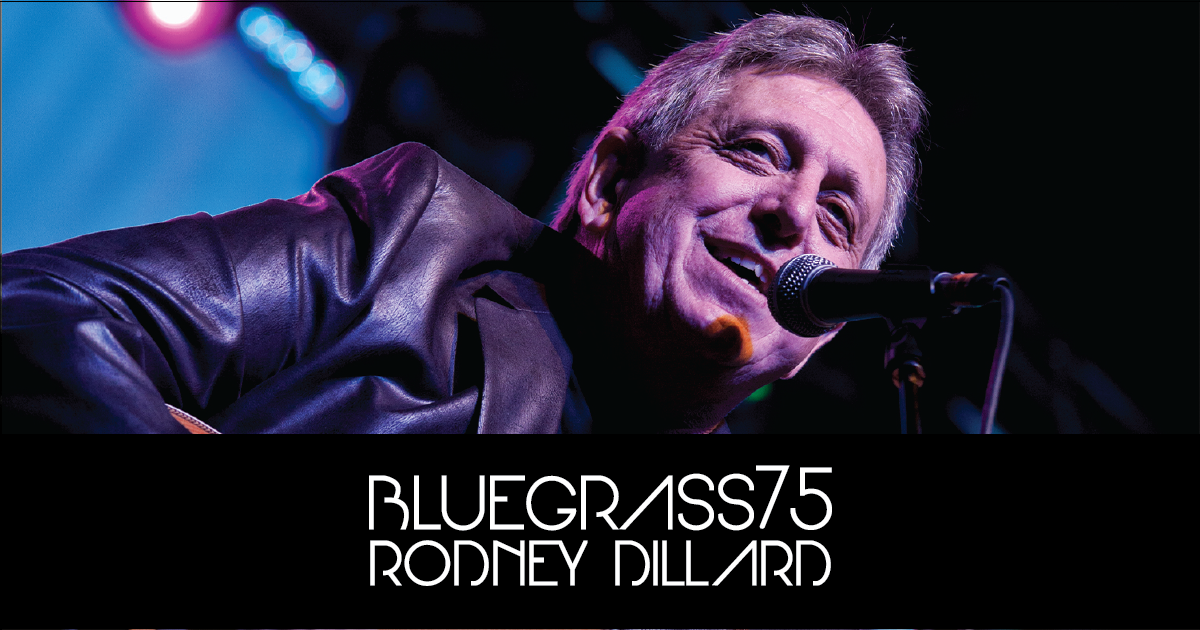
With their landmark 1968 release, Wheatstraw Suite, The Dillards opened the doors for the progressive bluegrass and country-rock movements. In August, Rodney Dillard, the band’s sole surviving original member, released a new album by the Dillards, Old Road New Again, that he describes being a “bookend” to Wheatstraw. Although not as artistically groundbreaking as its predecessor, Old Road still features non-traditional bluegrass instrumentation and, probably more importantly, it finds the 78-year-old musician in a reflective mood about how he sees the world today as well as the Dillards’ legacy.

Talking from his home outside of Branson, Missouri, Dillard shares that “before I was just trying to reflect what rural life was like, but I grew up in it. This one, more or less, is more reflecting an old person’s perspective on life.” It’s a point-of-view that can be heard on “Tearing Our Liberty Down” and “Take Me Along for the Ride,” which offer non-partisan statements on the state of the world, while “Earthlink,” “Common Man,” and “My Last Sunset” find a man taking stock of his life.

“My Last Sunset,” with its vocal nod to the Eagles’ “Already Gone,” also represents the album’s full-circle theme; however, the theme is best epitomized on the title track, a rousing telling of the Dillards’ story. The tune also features several guest artists pertinent to that era: Don Henley (a friend and neighbor from Rodney’s L.A. days), Bernie Leadon (who played in Dillard & Clark with Rodney’s brother Doug), and Herb Pedersen (who joined the Dillards on Wheatstraw and has played with Rodney on and off since).

Adding to Old Roads’ ties to the past are appearances by Sam Bush (founder of the game-changing New Grass Revival) and Ricky Skaggs (who went from bluegrass traditionalist to progressive during the ‘70s) as well as Sharon and Cheryl White. In the past, Rodney had been hesitant about having an album feature lots of big-name guests. “I didn’t want to make it like I was trying to make an event out of it,” he explains. “I did it because I was able to have Henley, Ricky, Herb and Sam Bush with me… people who I truly respected before they were stars.”

Rodney offers some especially kind words for Skaggs for appearing on “Tearing Our Liberty Down,” which makes some pointed statements about America without pointing out particular political parties. “He took a big risk, I think, standing his ground with ‘Liberty Down,’” Rodney relates. “I’m just overwhelmed that he would consider doing it. He could have refused to do it, but he didn’t because he stands his ground.”

He also credits Pederson, who plays on most of Old Road’s tracks, with being a key factor in the Dillards’ breakout sound on Wheatstraw, which was Pedersen’s first album with the band. “When Herb came in, he added his harmonies.” Rodney reveals, “It became a different thing. It became Wheatstraw Suite.”

Featuring full orchestration, drums, and electric instruments, Wheatstraw Suite shook up bluegrass traditions while also being an important touchstone in the burgeoning country-rock scene. The album’s innovative sound was a creative decision, not a commercial one.

“It wasn’t about selling toothpaste. It was music,” Rodney shares. “We were selling what we believed in. It was what we thought was fun, creative and maybe had something to say that no one had said (before).” Don Henley, who covered the Dillards’ “She Sang Hymns Out of Tune” on his Cass County album in 2015, and Elton John, who picked the Dillards as his opening act in 1972, have cited Wheatstraw as a highly influential album. In considering the impact of the album and his band, Rodney says, “I’m just very grateful and thankful that I could play just a small part in the history of what music was in the ‘60s.”

One curious thing about Wheatstraw Suite is that it marked the Dillards’ return to Elektra Records, who released their first three albums, after an abbreviated stint at Capitol Records. The band had left Elektra originally because the label didn’t understand the direction that they wanted to pursue on a single entitled “Hey Mr. Five-Strings.” A cover of a ‘50s hit called “Hey Mr. Banjo,” the Dillards’ interpretation, as Rodney described it, “added knitting needles for rhythm played on a fiddle.”

Capitol was supposed to be greener pastures for the group; however, the label proved to be a worse fit for the Dillards than Elektra. “They assigned us this producer Ken Nelson, who was doing country, but he didn’t understand what we were doing. Then they gave us this guy who produced ‘Danke Schoen’ for Wayne Newton. That’s when Mitch and I looked at each other in a conference with this guy and said we wanted out. And we walked out.”

Rodney readily admits that the band should have never left Elektra. He also is very thankful for the help that Elektra’s founder Jac Holzman provided then and ever since. “If it hadn’t been for Elektra I don’t know what would have happened [with the Dillards]. I’m just grateful to have had that label,” Rodney proclaims, adding Jac “has been instrumental in getting [Old Road] off the ground,” as well as contributing to the album’s liner notes.

Los Angeles in the ‘60s was home to a vibrant, highly synergistic music scene, which Rodney remembers as being spearheaded by people with a passion for what they were doing. Peers like Linda Ronstadt, Leadon, and Henley, he mentions, were “all these guys who just loved music.” One popular musician hangout was the Troubadour’s foyer, which was just a folk room with instruments on the wall and people drinking tea.

“We would sit around, and we would just sing. We had a wonderful time… (people) would come up to the house that Doug, Dean (Webb, the Dillards’ mandolin player) and I had together in Topanga, where we’d pick and played music… Gosh, Herb and I would sit in with Clarence White and the guys down in the King’s Lounge,” he says, remembering a venue in Palmdale, outside of L.A.

The Dillards — Rodney and Doug Dillard, Dean Webb and upright bassist Mitch Jayne — left Salem, Missouri, and headed west to Los Angeles in 1962. Rodney says they chose L.A. because they felt Nashville didn’t respect bluegrass music and country music had a sameness to it back then. They also thought people might be more open-minded in Los Angeles. The drive took three months because they had to stop along the way to make money to continue on.

Once in L.A., however, their story resembled a Hollywood movie. They went to the legendary club, The Ash Grove, which Rodney humorously describes as the “petri dish for folk culture.” Setting up in the club’s lobby, the group started an impromptu performance. When club owner Ed Pearl came over, Rodney thought he was going to kick them out. Instead, they were invited to play that night. In the audience at that show were Jim Dickson, who later produced the Byrds, and an agent from William Morris Agency, which represented Andy Griffith and his TV show.

Within a week or so, the band had secured a deal with Elektra Records as well as an audition for The Andy Griffith Show. When Griffith stopped their audition short, Rodney says he told his brother, “They’re kicking us out.” So he was surprised when Griffith said, “You got the job!” They were hired to portray a hillbilly band, The Darlings, for an episode, but proved so popular that they wound up appearing on the show several more times over the years.

Because Andy Griffith was such a hit TV show then (and has remained in reruns ever since), the Dillards — as the Darlings — became quite well-known and brought bluegrass into millions of homes. Rodney praises Griffith not only for having given the group this big opportunity but also for letting them play their own music on the show.

The Darlings’ fame also got the Dillards booked on network TV programs like The Judy Garland Show and The Tennessee Ernie Ford Show. During a Playboy After Dark appearance, the band intentionally played fast to see if the dancers could keep up, according to Rodney: “So you’ll see those people are busting their chops just trying to look like professional dancers, and they just look people eradicating cockroaches.”

Although they played comical hillbillies on The Andy Griffith Show, the Dillards resisted perpetrating Hollywood’s country bumpkins on TV shows. “If they had haybales and painted freckles on the dancers and everybody looked like Daisy Duke,” Rodney states, “we said, ‘Nope, we’re not standing in front of that.’” The band, particularly in their early days, were known for their humor, but it was more sophisticated than typical hayseed variety. Their Live!!! Almost!!! provides a good example of their comedy style, and it’s referenced a bit on Old Road with Beverly Cotton-Dillard’s comical banjo ditty “Funky Ole Hen.”

While Rodney has always pushed the boundaries of bluegrass, he has great reverence for its traditions too. In 2009, the Dillards were inducted into the Bluegrass Music Hall of Fame. “I love that music,” he states. “I don’t want to see bluegrass die.” But he also says that the music can’t live in the past. “As far as Bill Monroe, the Stanley Brothers, the Blue Sky Boys — all those folks — they did what they did. Any of us who imitate them are just being pastels of what they did.”

Rodney talks excitedly about seeing two kids on YouTube playing old-time music with a contemporary feel. He is happy that younger musicians are interested in bluegrass and roots music and happy, too, that they don’t seem rigid over how to play it. “People now have their own free will over their creativity,” he exclaims.

He references an old Dillards’ tune, “Music Is Music” before talking about how he loves all sorts of music — “if it’s real…if it’s not manufactured.” He mentions how Earl Scruggs, a man he greatly admired, “had no rules. He loved good music; he was not judgmental at all.” Keeping it real and making it good is the type of approach Rodney brought to Wheatstraw Suite back in the day and Old Road now.

Rodney admits that the Dillards have had a rather bizarre career, with people familiar with them from The Andy Griffith Show and those who know them from the band’s work, particularly their trailblazing music on Wheatstraw Suite, along with Copperfields and Roots and Branches. Although the Dillards didn’t have the commercial success achieved by acts like the Eagles, the Nitty Gritty Dirt Band, and New Grass Revival that followed after them, Rodney is quick to note, “I didn’t miss out on being on television and being in somebody’s room every day for 60 years.”

Old Road New Again, which is the Dillard’s first album of new material since 1991, represents Rodney’s long-desired bookend to the Wheatstraw album. And while the title can be interpreted as taking a look back into the past, he also sees a positive, forward-looking sentiment — “I’m an old road but I can still be new again” — in the title’s meaning. The road he’s taken has given him an interesting ride, Rodney says, and he is grateful that Old Road has been attracting some attention because the album “may be my swan song.”

“I’m not trying to be pathetic,” he confides with a spry sense of humor, “but I am 78 years old.”


2018: The Year of Ricky Skaggs

Though he’s just now hitting nominal retirement age, Ricky Skaggs has been a virtuosic presence in the worlds of bluegrass, country, and Americana music for close to 50 years. With his childhood friend, Keith Whitley, he began touring and recording with Ralph Stanley while still in high school; by the time he turned 21, he had done a stint with the Country Gentlemen and become a member of the J. D. Crowe & The New South lineup whose eponymous 1975 album was (and is!) so influential that it’s been known for more than 40 years simply by its catalog number, Rounder 0044.

From there he moved on to intensive studio work; partnering with Jerry Douglas in Boone Creek; a stretch with Emmylou Harris’s Hot Band; and then, in 1981, launching a country career so meteoric that he earned, within four years of his debut recording, the Country Music Association’s top Entertainer of the Year award. Fifteen years later, he returned to bluegrass in spectacular fashion with the album Bluegrass Rules!

It’s no wonder, then, that he’s a newly minted member of the Country Music Hall of Fame and the Bluegrass Music Hall of Fame, though it’s a nifty kind of surprise that he was inducted into both this year — and, while it’s less widely known, he hit the trifecta when he was inducted into the Fiddlers Hall of Fame, too. In short, if you were to call 2018 the Year of Ricky Skaggs, it would be hard to mount a real counter-argument.

A conversation with Skaggs is always a journey through a myriad of subjects, and this one was no exception; we touched on many topics, from his nearly complete recovery from shoulder troubles to his recollection of a conversation with Art Satherly, the legendary producer who worked with Bob Wills, Bill Monroe, and many others. Still, a couple of themes emerged, and it’s fitting that one began with an examination of his under-appreciated role as a fiddle player.

It occurred to me that there are fiddle players in the Bluegrass Hall of Fame already—Chubby Wise, Paul Warren, Kenny Baker, Benny Martin, Bobby Hicks—but there are some other members, like John Hartford, who folks might not think of first as a fiddler but who were players, and that led me to you. I think there’s a whole generation of fans and musicians who might not realize how much you’ve done on the fiddle. Is that something you still do from time to time?

When we went out on the Cooder-White-Skaggs tour, I played quite a bit of fiddle, because we were doing so many country things, like Hank Snow’s “Now And Then (There’s A Fool Such As I),” that Chubby Wise played on, and Ry wanted that fiddle. Sharon did songs that I’d play on, and I played swing fiddle on “Sweet Temptation.” So I played quite a bit on that tour. But I haven’t taken it as seriously as I should have, especially in the last 20 years; I just haven’t kept up on it. And you know, when you do pick one up and it sounds like a cat killing, you start thinking, maybe my days are over on this.

But I’ll tell you, when I was just a kid, and I decided I wanted to play another instrument besides the mandolin, my dad got a guy named Santford Kelly to come over to our house, and he recorded him playing—because especially when it came to playing fiddle, he wanted me to sit at the feet of some old cats that he knew. And now, I’ll play something by Santford Kelly for Andy [Leftwich], or now for Mike [Barnett], and their eyes are as big as silver dollars, and they say, “Oh, my god, will you please teach me how to play that? That doesn’t need to die with you—that sound and that bowing style, and that stuff from the mountains of Appalachia, that’s got to live on.”

When that happened a couple of times, I started really seeing how important it was. I’m always thinking maybe too much about perfection, and I’ve gotta tell you, when I heard Santford Kelly—he was 84 or 85 at the time, and he was scratchy. But it didn’t bother me that he was a little flat and sharp here and there, and a little scratchy on the bow. It was what was coming out of him that went into my heart, that moved me deeply. I thought, this is like Elijah coming off the mountain. This man is carrying something.

So I’ve kind of been saying, well, I’m not really up on it, but I need to shut that crap up. I just do need to play more of that.

You’ve entered three halls of fame this year, so maybe this is a good time to look back. One of the things I’d like to get your impression on is the idea that tradition is not a style, but a way of learning. And you did that, learning directly from older guys like Santford Kelly and Ralph Stanley, but it seems like there’s less of that these days. From the beginning of your return to bluegrass, you’ve made having young people in your band a priority. When you talk about Mike or [banjo player] Russ [Carson] hearing these things, is that something you feel is important — to mentor young musicians, be an active transmitter?

It absolutely is. To me, it’s vital — it’s necessary for the journey, it truly is. It’s manna, it’s food. In the tabernacle of David, where there were four thousand musicians and two thousand singers, you didn’t just fall off a turnip truck and then decide, hey, I’m going to be a musician. No! King David said, “My fingers are trained for battle.” To me, there is training that goes into perfection, goes into your craft. There is something that is really spiritual about this; it’s part of our spirit, it’s part of our nature to be trained.

And that’s truly part of what makes my heart beat, is to train up and to pour into young musicians — and not just men. Like Sarah Jarosz told me one time, “Thank you for letting me get up on stage and play with you when I was 12 years old in Austin.” Or Sierra Hull, or how my music affected Alison [Krauss] in her teenaged years — listening to J. D. [Crowe]’s records, and Boone Creek, and my early country stuff, the harmony singing and just the musicianship, how that encouraged her. I was talking to Becky Buller at the IBMA Red Hat [Amphitheatre], and she talked about how influential the music has been, too.

One of the things that I learned from Ralph was to play it like it was recorded. I remember one time, I’d been listening to Jimmy Gaudreau and some of the other mandolin players of that time a little bit, and one night I played a solo that was a little bit out of the ballpark for the Stanley sound. And I caught Ralph’s face move just slightly over toward me. He didn’t eyeball me, he just kind of turned to the right and listened to me. And when we got off he said, “Rick, you know what I do, when I take breaks, I play it just like I sing it. I want them people to know that when I played that break, they didn’t have to hear me sing, they knowed what that song was. That’s the way I do it.” He didn’t say, the way you did it was not cool, or out of bounds. He did not teach that way; it was so soft, and so nurturing.

And now, I’m always showing Mike stuff — even from the first time I met him, when he auditioned. We sat down and I played him the Stanley Brothers’ Starday recording of “Little Maggie”— one lick, one phrase, after [fiddler] Ralph Mayo’s first solo. Ralph kicks it off, sings one verse, and then Ralph Mayo takes a solo. Well, it’s that next verse, on the line “pretty women are made for lovin’,” on the word “lovin,” Mayo plays this counter-note that’s not even in B, where Ralph’s at. That thing came out of him, and that one note just spoke so loudly right there for me. When I really heard that, I thought “What did he just play!?” and it just lifted my heart to such a place. It was something. And I played it for Mike, and he said “play it again,” and I thought, all right, he’s going to get this job, I know. He’s hearing what I heard, so I knew he was the right one for the job. He heard what Mayo was playing, and he heard my passion for it. And those are the kind of things I want to teach.

Looking at your career, the frequency of your record releases seems to have slowed down. And it seems to me that the recorded end of the business is almost going back to the 50s. Are you just too busy to get into the studio, or is it a lower priority because the business is heading away from that?

Well, as a record company owner, it’s become a financial issue. Having a studio of my own, you’d think that I could do records so much cheaper, but it’s just a fact that the numbers just don’t work when I look at putting $30,00 or $40,000 into a CD and the chances of getting it back in the next three or four years. And I’ve got a big name! I don’t know how, well I guess I do know how, a lot of these record companies do them for $10,000. I would feel really bad about having to do a Kickstarter for Ricky Skaggs. But there’s so much music in my heart that I really want to go in the studio and make, and make it with this incredible band.

But here’s what we’re thinking: I guess I’ve probably got nearly every show that I’ve done in the last four or five years—and recorded on separate tracks, where they could be remixed. So I’ve got a ton of stuff. We’ve got Cooder-White-Skaggs, we’ve got Skaggs and Hornsby stuff, we’ve got Ricky Skaggs with Cody Kilby, Bryan Sutton, all kinds of guests that we’ve had. We’ve got all that recorded. So I really do believe there’s ways of doing it, and I don’t have to own everything; I could just have part ownership.

And I just want to get the music out. I want the world to be able to hear Mike Barnett and Jake Workman, Jeff Picker and Russ Carson. And of course Andy, or hearing Jake playing mandolin or banjo. We’ve got all that stuff, and maybe perfection doesn’t matter so much. I can get stuck in thinking about what used to happen in my life, and what used to be—and here again, I’m figuring out it doesn’t have to be that way. There’s a feel thing that we can miss by having endless tracks on ProTools, endless chances to go back and get another take; usually the first thought that comes into your mind on almost anything is the right one. It’s our stinking thinking that gets involved, and we get to overanalyzing stuff when the spirit is saying, “This is the right way, this is what I put in your mind at that time.” Sometimes you’re better off to just go with that.