When Harmonies Run Deep: An Essential Roots Music Tradition

Since Jamie Dailey and Darrin Vincent began singing together as Dailey & Vincent in 2007, they have awed fans in many ways: through their musicality, their sincerity, and their professionalism. But most of all, it’s about their duet singing.

It’s the way their voices blend and weave, so closely it can be hard to distinguish one from another. It’s the way their so-tight harmonies set up a vibration that makes the world tilt a little bit when they reach the high notes. It’s the way we sigh after they stop singing, because all’s right with the world.

Although they aren’t related, Dailey & Vincent do the bluegrass phenomenon of a “brother duet” like nobody’s business. They capture the familial force that Grammy-winning bluegrass artist Laurie Lewis describes as delightfully “making the hair on our arms and legs stand up.”

With Dailey & Vincent as our Artist of the Month, we thought we would peek into the history and tradition of brother duets and other harmony-driven duos that led to this great contemporary partnership.

Two Brothers and Two Instruments

For bluegrass journalist, songwriter, performer, and teacher Jon Weisberger, the term “brother duet” refers to something very specific: “A brother duet is basically a guitar and a mandolin and two guys, and they could be brothers, like the Monroe Brothers or the Blue Sky Boys [Bill and Earl Bolick] or even the Delmore Brothers.”

But many of the early duos later added more musicians. “They became something else, in this sort of organic process … because they wanted to have a fuller sound and they wanted to be competitive on the radio…”

“This brother duet thing existed before bluegrass,” Weisberger continues, “and then it became part of bluegrass. Such that modern folks like Michael Daves and Chris Thile … are doing a lot of the original-style singing, with just two instruments. It says something about the vitality and the attractiveness of that style.”

Weisberger notes that Dailey & Vincent recorded Gillian Welch’s “By the Mark” with just their voices, a guitar, and a mandolin. There are many other similar examples in country, old-time, and other folk formats, but the style is still beloved – and common, thankfully! – in bluegrass today.

Brothers in Tone and Timing

For many, a brother duet has to do with the spine-tingling effect of very tight harmonies, in which every note matches up in every way. Laurie Lewis, who has taught harmony singing extensively and is known for her many duet recordings and performances, talks about it this way.

“It’s easy for brother duets or sisters to blend, because they grew up pronouncing all their words the same way, because they’re from the same place and the same family,” Lewis explains. “So, they’ve got a big leg up that way.

“The shape of a vowel is the most important thing to get right when you’re trying to blend with somebody. And consonants, you know, when you start or end the note. It’s placement, as well – where you place the tone: is it forward in your face? Is it back in your throat, or somewhere in between?”

Members of family bands and sibling duets often have the same vocal timbre – “high and lonesome,” in some cases, or deeper and more mellow in others. But, Lewis said, the brother effect can work even with singers whose voices have different qualities.

“Take Carter and Ralph Stanley, who sang so beautifully together and had really different voices. Carter’s was smooth,” she points out, while Ralph always had that rougher mountain quality.

Insights From Singing Brothers

Eric Gibson remembers when he and his brother Leigh first got the harmony buzz as teenagers. “We were working in the calf barn and I’d been listening to Jim & Jesse sing ‘Are You Missing Me?’ … I started singing it, and Leigh was maybe 10 or 15 feet away from me, when he hits the tenor. And I looked at him, and I just felt it, like, ‘What did we just do?’”

The Gibson Brothers have won national awards for vocal recordings, for songwriting, and for gospel albums. They both love using a horse racing analogy to achieve the brother duet sound. Leigh notes that in many duets and other harmony forms, the lead singer is out front, in volume and style. In contrast, Eric quotes Tim Austin as saying, “Your brother duet is like two racehorses. There’s not a lead horse out there with the harmony back here. They’re both fighting for position.”

Like horse racing, it takes discipline, and keeping the harmonies tight. “You have to stay on the straight and narrow.” The tenor singer has to follow the lead singer, and neither can add too much individual style.

Leigh adds, “You have to give some of yourself. If I wanted to throw our vocal thing into chaos, I’d start singing for myself rather than for the two of us.”

“It’s about really listening and even watching your duet partner,” he says, “how they’re shaping words, how they’re closing off a vocal sound, if it’s happening quickly or it’s a slow close off of that vowel sound.

“Listen and pay attention. I think that’s the best advice I could give anybody.”

Brothers by Birth

For a beautiful collection of brother duets drawn from some of the best and least-known brothers, visit the Gibsons Brothers’ 2015 album, Brotherhood. The liner notes are an engaging mini-history of brother harmonies.

Here are just a few of the other brothers who set the stage for the duets we hear today – and popularized or debuted many of the songs we still sing and love.


The Monroe Brothers

Let’s start with the Monroe Brothers. Bill, the father of bluegrass, began performing with his brothers Birch and Charlie (the uncles of bluegrass?) in the 1920s. Birch left the group when the other two accepted an offer to host their own radio show. The very popular partnership of Charlie on guitar and Bill on mandolin only lasted four years, because they both wanted to be the boss. Charlie continued assembling bands with musicians like Lester Flatt, Ira Louvin, and Curly Seckler. As for Bill, he launched a new genre of music that bears the name of his home state and his band, the Blue Grass Boys.


The Delmore Brothers

Alton and Rabon, the Delmore Brothers, grew up in a tenant farming family in Alabama. Grounded in church music, the Delmores distinguished themselves with their versatile songwriting, leading to membership in the Grand Ole Opry in 1933, extensive touring with Arthur Fiddlin’ Smith, and later with Grandpa Jones and Merle Travis. They are acknowledged as pioneers across country, bluegrass, and rockabilly circles. Songs like “Blues, Stay Away From Me” and “Gonna Lay Down My Old Guitar” remain standard bluegrass fare. Alton’s autobiography, Truth is Stranger Than Publicity, is a hoot and a half.


Blue Sky Boys

Bill and Earl Bolick first appeared on radio in 1935, when still in their early 20s. They later chose the name the Blue Sky Boys after Western North Carolina, Land of the Blue Skies. Steeped in gospel, their first recording, “Sunny Side of Life”/”Where the Soul Never Dies,” was such a big hit they earned the name “the New Hillbilly Kings.” They recorded 100 songs, both religious and secular, before joining the service. After the war they found they disliked newer music trends and they stopped playing entirely for a time when their label asked them to add electric guitar. The brothers played on and off, particularly at folk venues, until the late ’60s. Rounder Records pulled them out of retirement in 1975 for a bluegrass and folk tour.


The Lilly Brothers

Bea and Everett Lilly, the Lilly Brothers, performed on mandolin and guitar, influenced by the mountain music they heard in their home state of West Virginia. Their first local radio appearance was in 1938, and they later earned a spot on the venerated WWVA Jamboree. With Tex Logan and Don Stover – a configuration that would last 18 years – they moved to Boston, where they were welcomed in the folk scene. They are credited with bringing bluegrass to the Northeast, influencing musicians like Peter Rowan and Bill Keith. In Country Music: The Rough Guide, author Kurt Wolff quoted Bluegrass Hall of Fame inductee Joe Val as saying, “Those guys hit on like a bombshell. Nobody’d ever heard anything like that before.”


The Louvin Brothers

For many, the Louvin Brothers set the standard for brother duets. They began their duet career in the 1940s, continuing until 1963, when Charlie broke off from Ira for a solo career. Their harmonies were stunning, influenced by the shape note singing they grew up with, and their prolific writing and recordings left us with so many of the songs commonly heard in today’s bluegrass world. Their old-time religion permeated their work, as well as the life of the tormented Ira, who professed devotion while battling his demons. Emmylou Harris said, “There was something scary and washed in the blood about the sound of the Louvin Brothers.” The cover of their album Satan is Real is an apt visual representation of that thought. It is also the name of Charlie’s autobiography. Another great source is the Cocaine & Rhinestones episode on the Louvins.


Jim & Jesse

Jim & Jesse McReynolds from Colfax, Virginia are lauded as much for Jesse’s mandolin style as for their duet singing. Many of bluegrass’s most accomplished musicians passed through their band, the Virginia Boys, including Vassar Clements, Allen Shelton, Vic Jordon, Carl Jackson, and Glen Duncan. Their versions of songs like “Are You Missing Me” are mainstays of bluegrass jams, while they ventured into the folk rock world with “Paradise.” Jesse would later host a tribute to Jerry Garcia and Robert Hunter, too. Jim died in 2002 at age 75, ending what Wikipedia calls their 55 years performing together “the longest active professional brother duet in country music history.”


The Everly Brothers

Contemporary musicians from Graham Nash to Paul Simon have cited Don and Phil Everly’s duets as inspirational. Their harmonies were intricate, tight, and gorgeous. Coming from a country music background, they became hit pop stars, with “Bye Bye Love” in 1957. While many of their most popular songs were written by Felice and Boudleaux Bryant, the brothers were also prolific songwriters. They have been widely recognized by the music industry, from membership in the Rock and Roll Hall of Fame to a #33 ranking in Rolling Stone’s list of 100 greatest artists of all time. For an excellent review of their often tumultuous careers and relationships, pick up Blood Harmony: The Everly Brothers Story by Barry Mazor.

Sisters, Mothers and Daughters

Family bands featuring female singers have been popular for decades, even before the Carter Family blasted from radio stations in the 1930s. But sister duets have been less prominent than their brotherly counterparts. We can speculate that’s because, historically, women were less likely to venture out on their own, and because they were less welcome at the front and center of bluegrass and country.

But when these women stepped up, they truly shined.

The Whites

Sisters Sharon and Cheryl performed for decades with their father, Buck White, as the Whites. But it is their duet singing that ranks with the tightest and tingliest of any brother duo. Buck, a mandolinist and piano player, encouraged his daughters to take up music. The three recorded extensively beginning in 1972 and recorded “Keep on the Sunny Side” for the Grammy Award-winning O Brother, Where Art Thou? soundtrack. After Buck’s death in 2025, Sharon and Cheryl continue to perform, sometimes with Rosie, another sister, adding a high harmony. They have received highest honors in both the country and bluegrass fields, with more than 40 years as members of the Grand Ole Opry.


Kate & Anna McGarrigle

Kate and Anna McGarrigle were acclaimed Canadian folk singers and songwriters. Often passing the melody back and forth, it could be difficult to tell when one voice ended and the other began. Their harmonies were delicious. Linda Ronstadt had a big hit with the McGarrigles’ song “Heart Like a Wheel,” and Maria Muldaur, Emmylou Harris, and Judy Collins also covered their songs. Kate died in 2010.


The Judds

This mother/daughter duo certainly had the blood-harmony duet thing going big time with perfectly executed, soaring vocals. In a Cinderella-like story line, Naomi and her daughter Wynonna went from living on welfare to auditioning (in terror, as they described it) before a room full of recording executives – who signed them immediately. Within two years of the 1983 audition, they recorded the first of eight consecutive number one singles and received their first of five Grammys. Their family story is both fractious and inspiring.

More Essential Duets

Nowadays, it often seems the most common examples of high quality duet singing come from non-siblings, from chosen family, from lifelong musical partners. Turns out “blood harmony” is possible without the biological ties. (But of course it is.) Some of the best examples of the form are singers unrelated to each other.

Hazel Dickens & Alice Gerrard

Hazel Dickens and Alice Gerrard presented a side of duet singing that was at once sweet and gutsy. Although from very different geographic and social backgrounds, the pair came together through the Baltimore folk community in the 1970s. They sang with intense sincerity, performing older and traditional tunes and presenting Dickens’ heart-rending (and sometimes snarky) originals to the world. They were some of the first women to front a bluegrass act and are widely acknowledged as inspiring groundbreakers.


Ricky Skaggs & Tony Rice

In 1980, Ricky Skaggs and Tony Rice released what has become an iconic duet recording, Skaggs & Rice. Its content draws on traditional and pre-bluegrass tunes recorded by earlier brother duets. In fact, Weisberger points out, the album cover illustration, featuring the two men in uncomfortable-looking suits, is modeled after a Lilly Brothers photo. Skaggs and Rice taught us how two voices with starkly different qualities could blend, with sibling-like effect.


Ricky Skaggs & Keith Whitley

Skaggs and his wife, Sharon White, both sing in a high range, blending beautifully and adding intensity to everything they sing. And with his piercing tenor, Skaggs has the ability to create a brother sound with just about anyone. His partnership with Keith Whitley was equally natural, as they started singing together as teenagers in Kentucky. They began touring with the Stanley Brothers when they were both 16. In essence, they grew up together, as did their vocal blend.


Laurie Lewis & Tom Rozum

Laurie Lewis is another who can turn any duet into sibling-style harmonies. She and Tom Rozum have sung together for decades. Lewis said that in addition to working hard on their timing and pronunciation (the word “yours” was once problematic), they have the advantage of remarkably similar vocal ranges for a male and female. When they are both “in the head voice, you can really hear the tension in our voices,” an exciting aspect of their duets, she said.


Laurie Lewis & Kathie Kallick

Since the earliest configuration of Good Ol’ Persons, Lewis and Kathy Kallick have sung together, including producing two duet albums. Lewis said, “We have really different timbres to our voices. But we sometimes get confused as to who was singing which part on our old recordings. ‘Wait, is that me or is that Kathy?’” Lewis’ duet album, And Laurie Lewis, showcases her skill in joining voices with so many of her old friends.


The Johnson Mountain Boys’ Dudley Connell and David McLaughlin

Eric Gibson remembered terrific harmony singing by Dudley Connell and David McLaughlin in the Johnson Mountain Boys days. That revered group won the very first IBMA Award for Album of the Year (for At the Old Schoolhouse) and were inducted into the Bluegrass Music Hall of Fame in 2020. And since his days in the Johnson Mountain Boys, Connell has shown he, too, raises any duo to the level of glorious sibling sounds. Some examples are with bandmate Lou Reid in the Seldom Scene and his two duet albums with Don Rigsby.


Emmylou Harris & … Almost Everyone

The Gibsons both mentioned Emmylou Harris’ stunning ability to create tension and beauty in sibling duet style with so many. Examples range from her earliest recordings with Gram Parsons through all her singing partners in her band, including Ricky Skaggs and Rodney Crowell, and when she introduced a young country audience to the material of the Louvin Brothers on recordings such as “If I Could Only Win Your Love,” “When I Stop Dreaming,” and “Every Time You Leave.” Her 1990 duet album pairs her with male singers. In 1999, after the success of the Trio albums with Dolly Parton and Linda Ronstadt, she and Ronstadt recorded Western Wall: The Tucson Sessions, showing off the perfection of two beautiful singers who love to sing together.


Dailey & Vincent

Jamie Dailey and Darrin Vincent both grew up performing in family bands. Jamie started singing with his family at age 3, and by age 12 had mastered bass and banjo. For nine years, he sang lead vocals with Doyle Lawson & Quicksilver, a band noted for their excellent voices and superb harmonies.

An article in Entertainment News said the Vincent children “were practically raised on harmony” from their youngest days in the Sally Mountain Show. For nine years, Vincent sang the baritone parts with Ricky Skaggs’ Kentucky Thunder. The two men’s early training, the discipline gained from playing with exceptional band leaders, plus their perfect-for-bluegrass voices created a glorious blend of heartfelt harmony and musical excellence.

Their first album, released in 2008, was met with a flurry of enthusiasm. It earned the duo six IBMA Awards – including Album of the Year – plus two other nominations that year. They have continued to receive dozens of awards from bluegrass, country, and gospel organizations, as well as three Grammy nominations as a duo and two wins between them during their time with other acts. Their 10th album, A Beautiful Life, was released earlier this year.


Explore more of our Artist of the Month content on Dailey & Vincent here. Enjoy even more bluegrass duos here and country duos here.

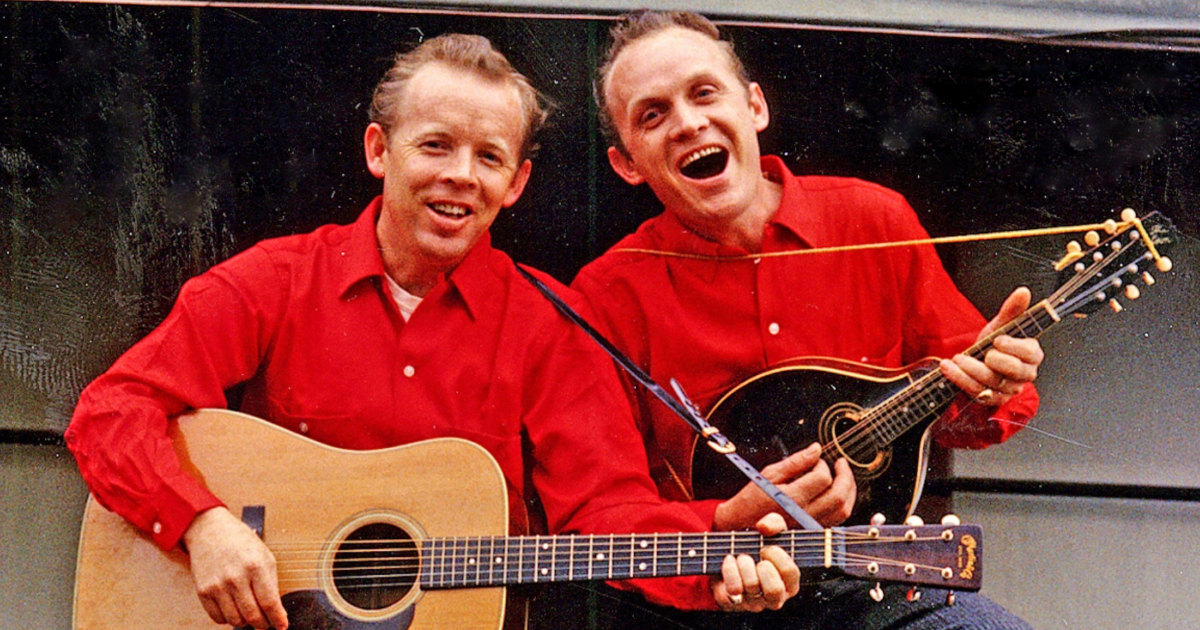
Lead Image: The Louvin Brothers from Pictorial Press.
An Opry Celebration of the O Brother, Where Art Thou? Soundtrack

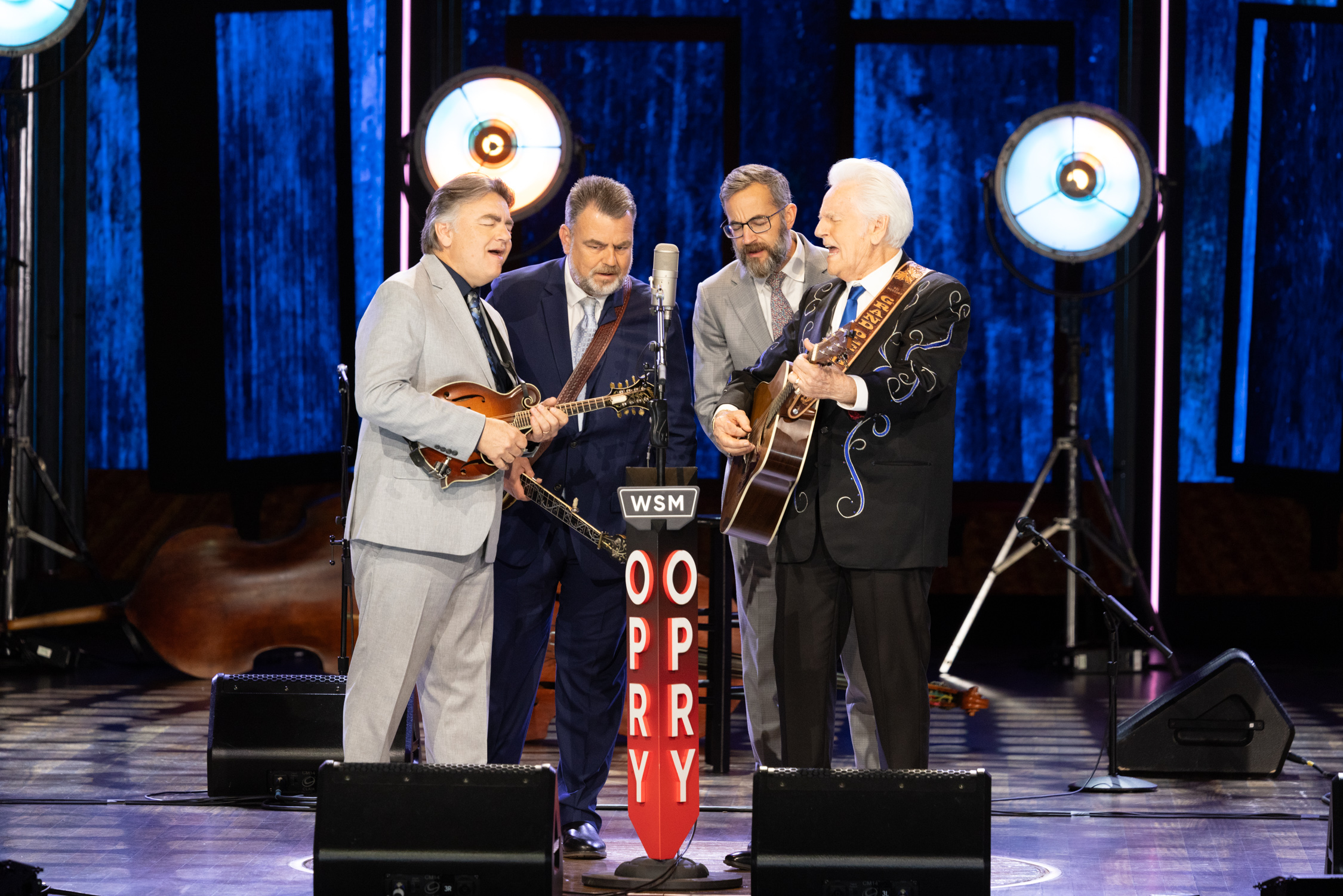
In an all-star acoustic tribute, the timeless music of O Brother, Where Art Thou? rambled across the Grand Ole Opry airwaves for a 25th anniversary celebration on Saturday, February 28.

In some ways, this night in Nashville felt different from a typical Opry show – no drum kit, no square dancers, and not a lot of commercials. On the other hand, it would be hard to find a more suitable place to stage a salute to O Brother than on the world’s longest-running radio show.

The GRAMMY-winning, 8-times platinum soundtrack was performed in its entirety by Opry stars such Alison Krauss, Emmylou Harris, Del McCoury, Old Crow Medicine Show, and the Whites, as well as guest performers like the Alaskan Sunnyside Sisters, the Fairfield Four, the Fisk Jubilee Singers, and Colin Linden alongside contemporary masters like Sarah Jarosz, Billy Strings, and Molly Tuttle. (To put the time frame in perspective, Jarosz was 9 years old when the soundtrack was released, Strings was 8, and Tuttle was 7.)

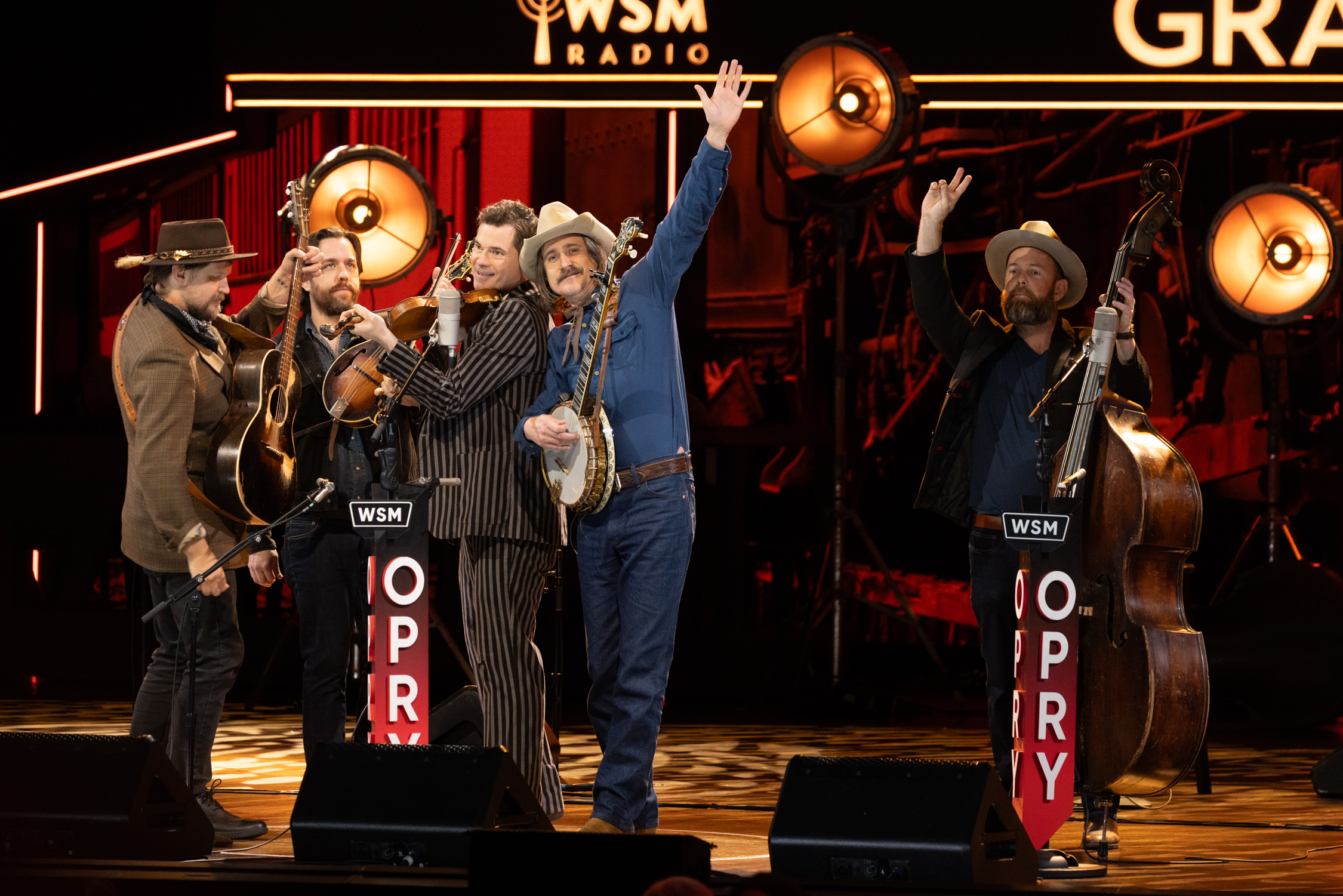
Old Crow Medicine Show perform during the Opry’s tribute to ‘O Brother, Where Art Thou?’

In addition, Chris Thomas King and Tim Blake Nelson also reprised their performances from the film, while the A-list house band was composed of Mike Compton on mandolin, Dennis Crouch on bass, Jerry Douglas on Dobro, Stuart Duncan on fiddle. And what O Brother tribute would be complete without Dan Tyminski delivering “I Am a Man of Constant Sorrow”?

As a bonus selection not included on the landmark collection, Krauss and the Fairfield Four opened the special evening with a lively rendition of “Every Time I Feel the Spirit,” which immediately immersed the audience in that same spirit. After Krauss stepped away, the Fairfield Four performed the soundtrack’s original opener, “Po’ Lazarus,” accompanied only by hand claps. Old Crow Medicine Show roused the crowd with “Big Rock Candy Mountain,” an enthusiastic choice that fit their high-energy demeanor. Bandleader Ketch Secor also co-hosted the event alongside Opry announcers Bill Cody and Mike Terry.

Dan Tyminski sings “I Am a Man of Constant Sorrow” with the evening’s house band.

Backed by the house band, Jarosz engaged the audience to sing along with a perennial favorite, “You Are My Sunshine,” and the sold-out Opry House was happy to oblige. Krauss returned with the Fisk Jubilee Singers for a sterling performance of “Down in the River to Pray,” where the audience sat almost perfectly still in reverent silence. Following the song, Krauss was presented with a commemorative scarf designed by the famed clothier Manuel; all Opry members are receiving the scarf as part of the Opry 100 celebration. The house band then shared an instrumental version of “A Man of Constant Sorrow,” which was a nice touch referencing the handful of variations of the song on the soundtrack.

That soundtrack practically came to life with Colin Linden and Chris Thomas King’s “Hard Time Killing Floor Blues” and The Whites’ “Keep on the Sunny Side.” Jarosz  on mandocello and Molly Tuttle on guitar teamed with the house band for a wonderful take on “I’ll Fly Away.” Emmylou Harris and Alison Krauss then stood on either side of Tuttle for a trio rendering of “Nobody But the Baby.” (Gillian Welch, who sang with Harris and Krauss on the original album, was unable to participate in the show.)

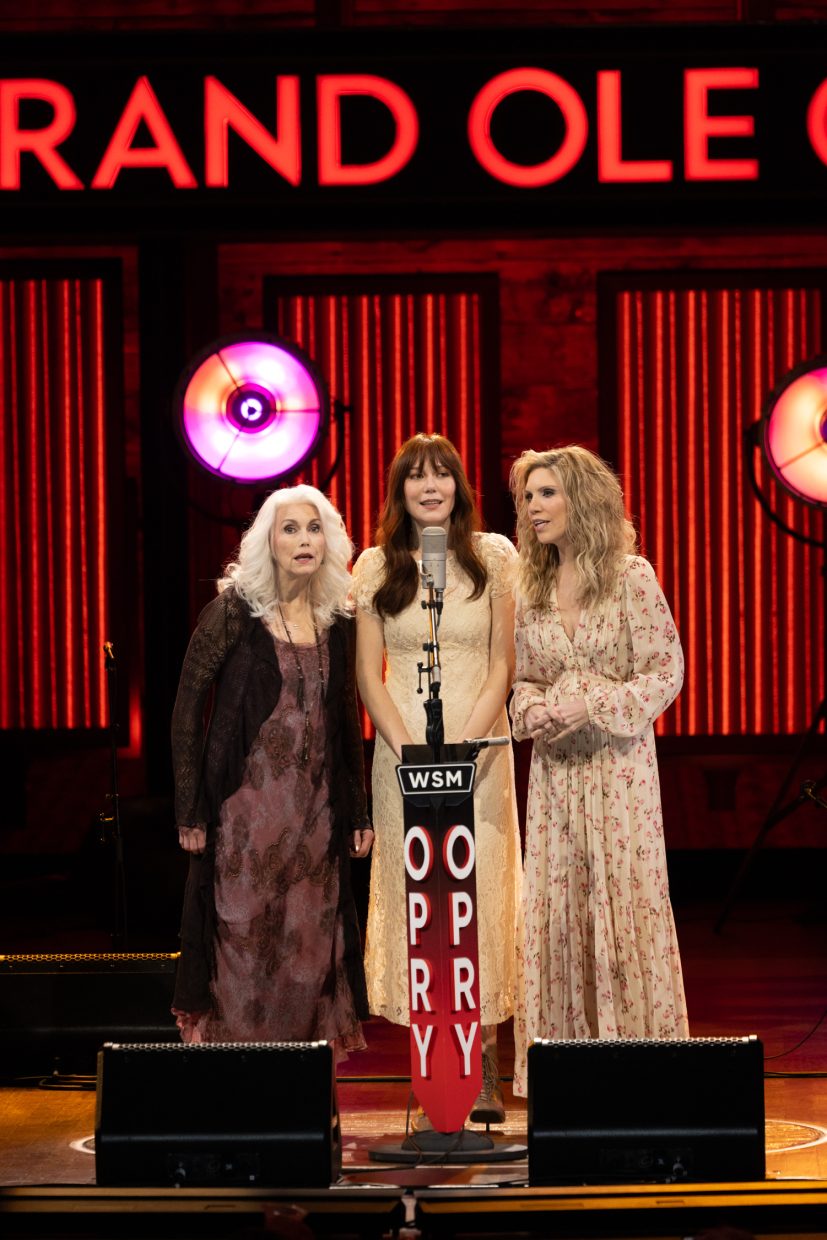
Emmylou Harris and Alison Krauss, both of whom appeared on the soundtrack, are joined by Molly Tuttle for an a capella rendition of “Nobody But the Baby.”

Folks, that’s only the first half!

After decades away from the spotlight, the Peasall Sisters returned to the stage to introduce “In the Highways,” the song they recorded as children; on this night, it was sung by an endearing kid quartet – and viral internet sensations – the Alaskan Sunnyside Sisters. Molly Tuttle returned for the emotional “I Am Weary (Let Me Rest),” which led into bluegrass phenomenon Billy Strings singing “Wild Bill Jones,” which appeared on the 2000 O Brother concert album, Down From the Mountain. Strings then welcomed Dan Tyminski for a duet of “O Death,” which was sung by the late Doctor Ralph Stanley on the soundtrack. (Incidentally, Stanley joined the Opry cast the same year the O Brother soundtrack was released on Lost Highway Records. The newly resurrected label co-presented the show with the album’s award-winning producer, T Bone Burnett.)

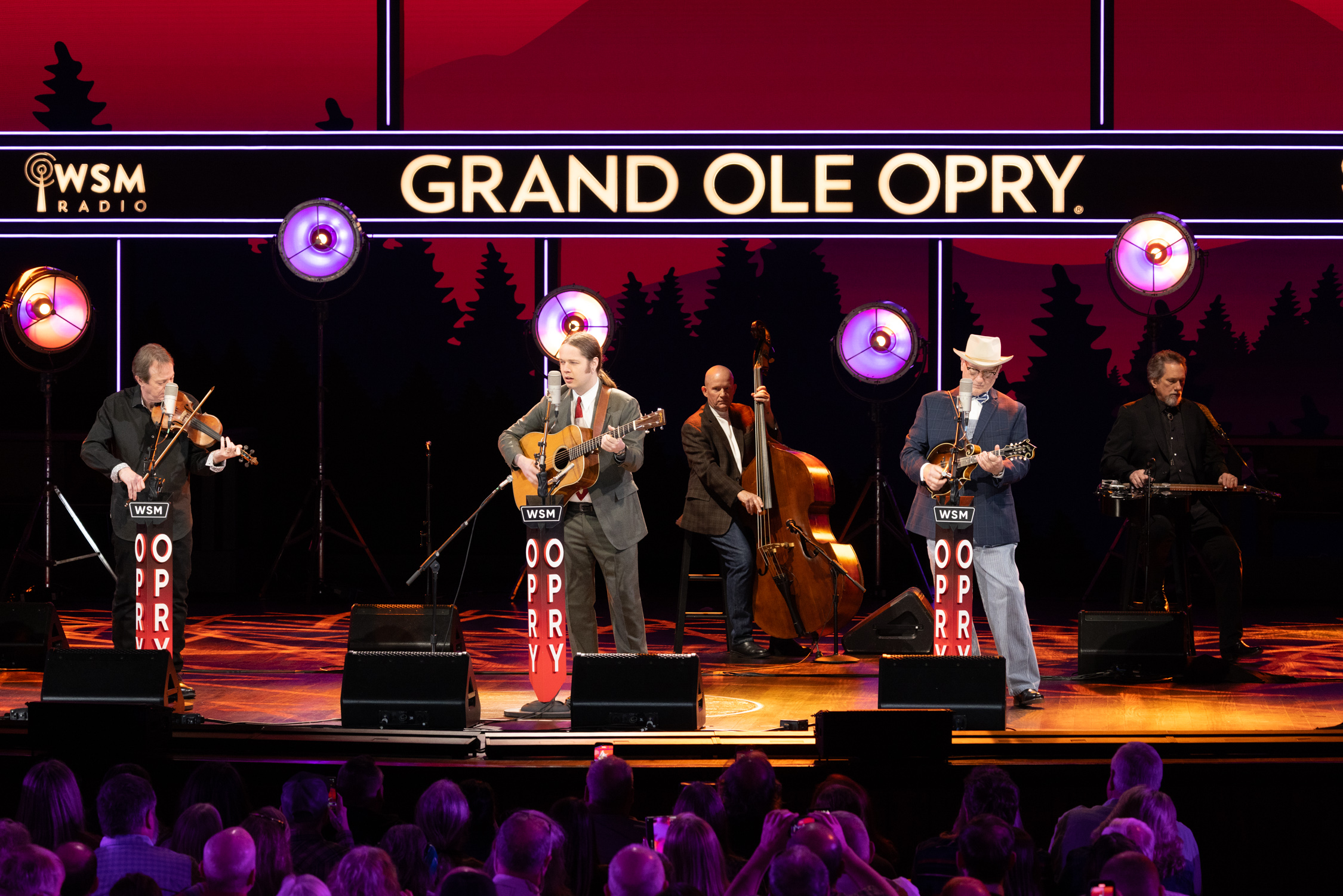
Billy Strings takes the stage to sing “Wild Bill Jones” with the house band.

The audience especially loved seeing and hearing one of the film’s stars, Tim Blake Nelson, revive “In the Jailhouse Now” on the Opry stage. Tyminski (who voiced George Clooney’s singing in the film) naturally brought the house down with “I Am a Man of Constant Sorrow,” then Old Crow Medicine Show offered the vivacious “Indian War Whoop,” recorded by John Hartford for the original project. The Fairfield Four also returned to the stage to sing “Lonesome Valley” just ahead of Del McCoury Band’s performance of “Get Down on Your Knees and Pray.” (That one’s not in the film, but it was a terrific addition.)

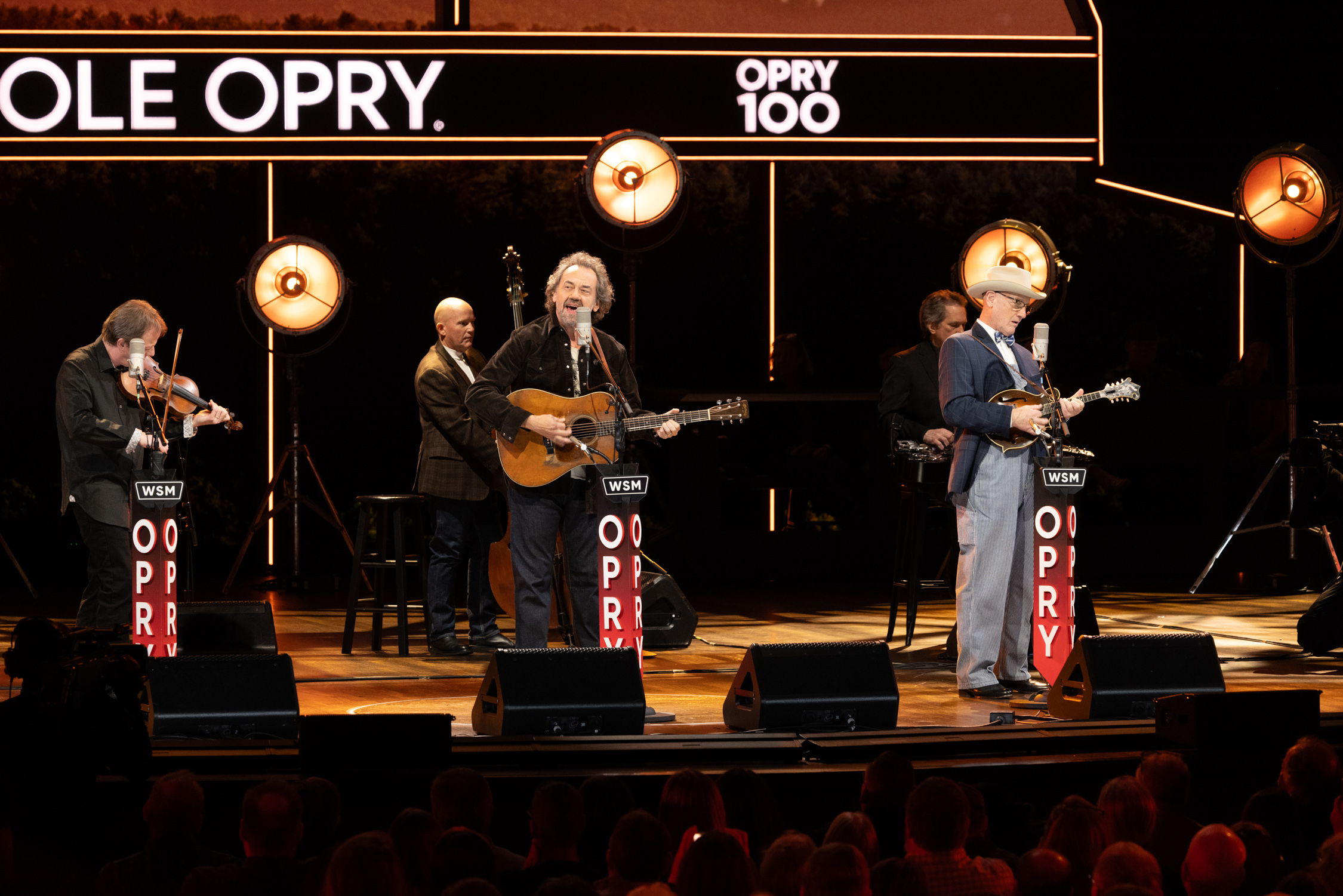
The Del McCoury Band sing “Get Down on Your Knees and Pray” before leading a sing along with the entire cast of performers.

In his brief remarks, Burnett took a moment during a brief speech to acknowledge Denise Stiff, a visionary Nashville manager who recruited many of the musicians for the soundtrack back in the day. But of course, it wouldn’t be a tribute without everyone coming back on stage and singing at the end – in this case, “Angel Band” and a reprise of “I’ll Fly Away.”

Twenty-five years ago, the O Brother soundtrack brought old-time and bluegrass music into the national spotlight. This long-awaited encore underscored the staying power of this classic album.


Photo Credit: All photos by Chris Hollo for the Grand Ole Opry.

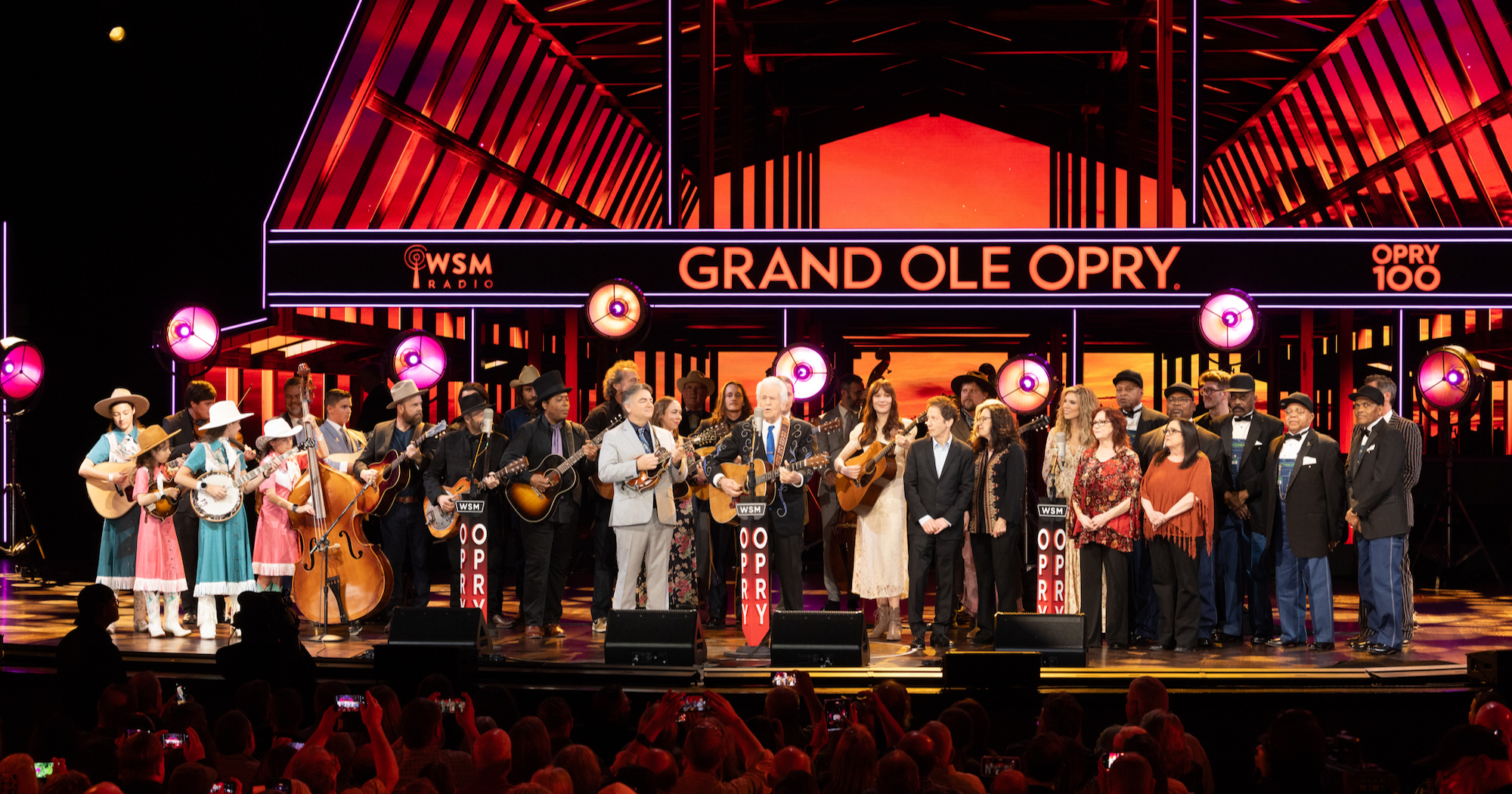
Lead Image: The entire cast of the Opry’s O Brother, Where Art Thou? tribute show take the stage to sing “Angel Band” and “I’ll Fly Away” to conclude the evening.

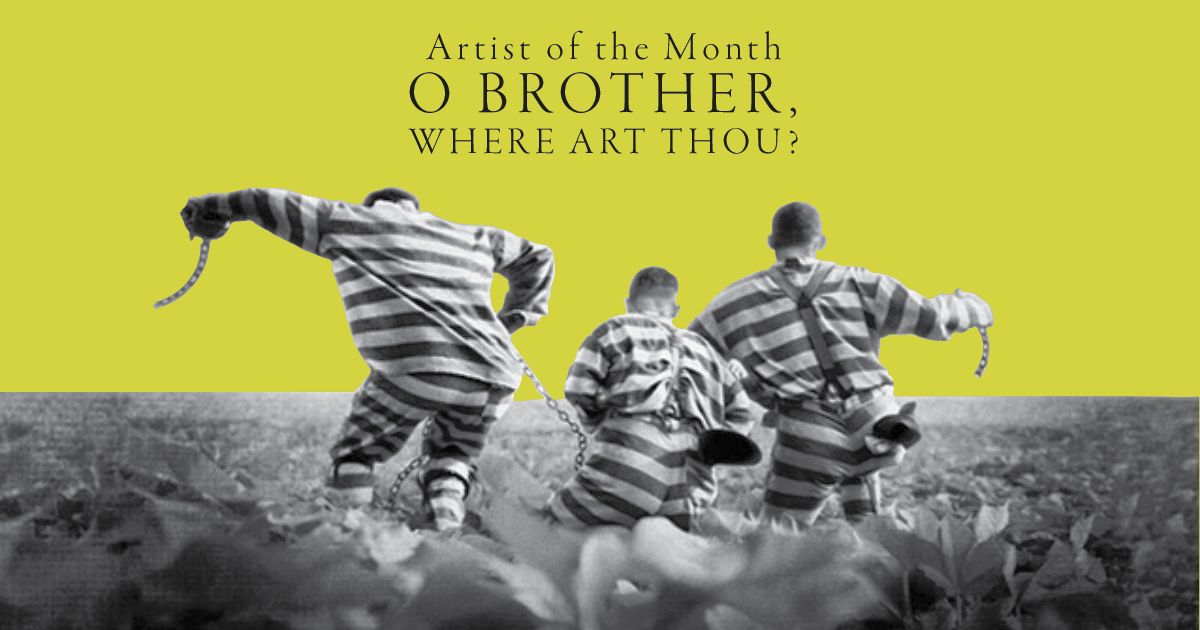
Artist of the Month: ‘O Brother, Where Art Thou?’

Twenty years ago, in 2001, the music of O Brother, Where Art Thou? captivated America and, suddenly, bluegrass appealed to pretty much everybody. We could all sing at least a few words of “I Am a Man of Constant Sorrow,” though admittedly not sound as good as Dan Tyminski or the Soggy Bottom Boys. Roots music heroes Emmylou Harris, Alison Krauss, and Gillian Welch added more positive press to their résumés, and before it was all over, the generation-spanning collection won multiple industry accolades, inspired a national tour, and even led to the first-ever Grammy Award for Dr. Ralph Stanley.

The song choices were largely well-known to dedicated bluegrass listeners, but even so, chestnuts like “I’ll Fly Away” don’t routinely end up on albums that sell eight million copies. Legends like Norman Blake and The Fairfield Four shared the spotlight with rising talent such as Chris Thomas King and The Peasall Sisters. Two decades later, The Whites still perform their version of “Keep on the Sunny Side” on the Grand Ole Opry at nearly every appearance, and to be sure, the audience smiles and applauds to hear it again.

This month, we’ll look at the legacy of that landmark album as an inspiration to a new generation of acoustic musicians, along with an interview with family members of John Hartford, whose name is back on the Grammy ballot this year for the collaborative album, The John Hartford Fiddle Tune Project, Vol 1. We’ll also have a special edition of our Roots On Screen feature about the film. Plus, check out a special IBMA Awards show performance of “Down In the River To Pray” and an archive edition of The Breakdown. And to finish out the month, we asked a crew of young bluegrass and Americana stars what the film means to them. While you’re at it, put down the Dapper Dan and turn up the O Brother, Where Art Thou? soundtrack below.


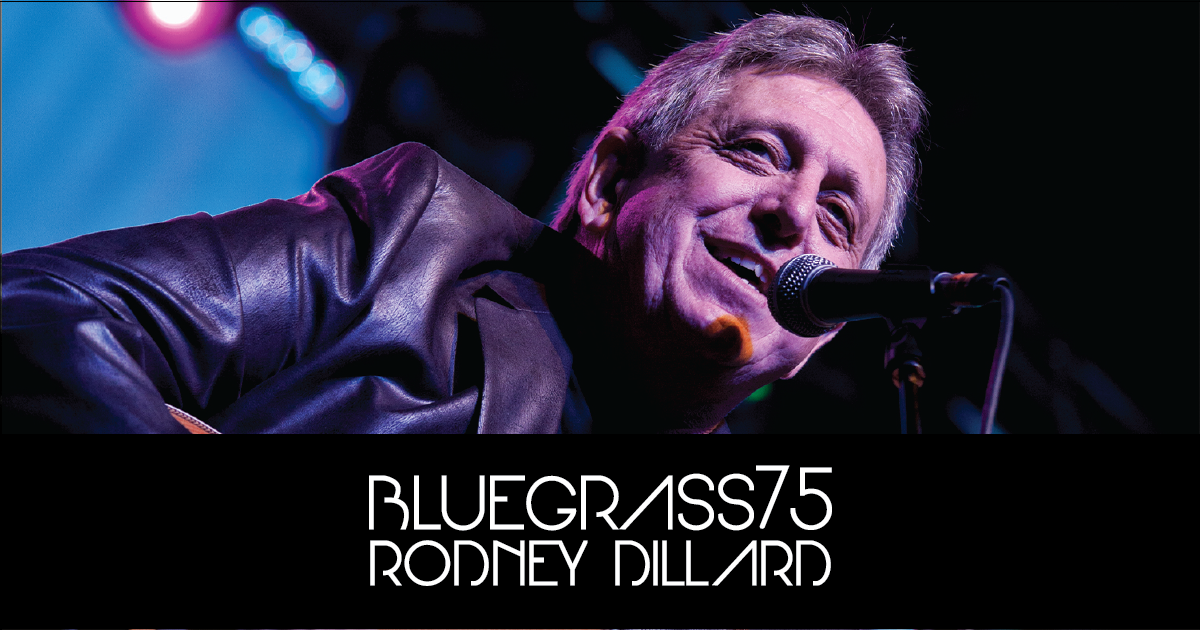
Hello, Darling: The Dillards’ Rodney Dillard Brings New Music to ‘Old Road’

With their landmark 1968 release, Wheatstraw Suite, The Dillards opened the doors for the progressive bluegrass and country-rock movements. In August, Rodney Dillard, the band’s sole surviving original member, released a new album by the Dillards, Old Road New Again, that he describes being a “bookend” to Wheatstraw. Although not as artistically groundbreaking as its predecessor, Old Road still features non-traditional bluegrass instrumentation and, probably more importantly, it finds the 78-year-old musician in a reflective mood about how he sees the world today as well as the Dillards’ legacy.

Talking from his home outside of Branson, Missouri, Dillard shares that “before I was just trying to reflect what rural life was like, but I grew up in it. This one, more or less, is more reflecting an old person’s perspective on life.” It’s a point-of-view that can be heard on “Tearing Our Liberty Down” and “Take Me Along for the Ride,” which offer non-partisan statements on the state of the world, while “Earthlink,” “Common Man,” and “My Last Sunset” find a man taking stock of his life.

“My Last Sunset,” with its vocal nod to the Eagles’ “Already Gone,” also represents the album’s full-circle theme; however, the theme is best epitomized on the title track, a rousing telling of the Dillards’ story. The tune also features several guest artists pertinent to that era: Don Henley (a friend and neighbor from Rodney’s L.A. days), Bernie Leadon (who played in Dillard & Clark with Rodney’s brother Doug), and Herb Pedersen (who joined the Dillards on Wheatstraw and has played with Rodney on and off since).

Adding to Old Roads’ ties to the past are appearances by Sam Bush (founder of the game-changing New Grass Revival) and Ricky Skaggs (who went from bluegrass traditionalist to progressive during the ‘70s) as well as Sharon and Cheryl White. In the past, Rodney had been hesitant about having an album feature lots of big-name guests. “I didn’t want to make it like I was trying to make an event out of it,” he explains. “I did it because I was able to have Henley, Ricky, Herb and Sam Bush with me… people who I truly respected before they were stars.”

Rodney offers some especially kind words for Skaggs for appearing on “Tearing Our Liberty Down,” which makes some pointed statements about America without pointing out particular political parties. “He took a big risk, I think, standing his ground with ‘Liberty Down,’” Rodney relates. “I’m just overwhelmed that he would consider doing it. He could have refused to do it, but he didn’t because he stands his ground.”

He also credits Pederson, who plays on most of Old Road’s tracks, with being a key factor in the Dillards’ breakout sound on Wheatstraw, which was Pedersen’s first album with the band. “When Herb came in, he added his harmonies.” Rodney reveals, “It became a different thing. It became Wheatstraw Suite.”

Featuring full orchestration, drums, and electric instruments, Wheatstraw Suite shook up bluegrass traditions while also being an important touchstone in the burgeoning country-rock scene. The album’s innovative sound was a creative decision, not a commercial one.

“It wasn’t about selling toothpaste. It was music,” Rodney shares. “We were selling what we believed in. It was what we thought was fun, creative and maybe had something to say that no one had said (before).” Don Henley, who covered the Dillards’ “She Sang Hymns Out of Tune” on his Cass County album in 2015, and Elton John, who picked the Dillards as his opening act in 1972, have cited Wheatstraw as a highly influential album. In considering the impact of the album and his band, Rodney says, “I’m just very grateful and thankful that I could play just a small part in the history of what music was in the ‘60s.”

One curious thing about Wheatstraw Suite is that it marked the Dillards’ return to Elektra Records, who released their first three albums, after an abbreviated stint at Capitol Records. The band had left Elektra originally because the label didn’t understand the direction that they wanted to pursue on a single entitled “Hey Mr. Five-Strings.” A cover of a ‘50s hit called “Hey Mr. Banjo,” the Dillards’ interpretation, as Rodney described it, “added knitting needles for rhythm played on a fiddle.”

Capitol was supposed to be greener pastures for the group; however, the label proved to be a worse fit for the Dillards than Elektra. “They assigned us this producer Ken Nelson, who was doing country, but he didn’t understand what we were doing. Then they gave us this guy who produced ‘Danke Schoen’ for Wayne Newton. That’s when Mitch and I looked at each other in a conference with this guy and said we wanted out. And we walked out.”

Rodney readily admits that the band should have never left Elektra. He also is very thankful for the help that Elektra’s founder Jac Holzman provided then and ever since. “If it hadn’t been for Elektra I don’t know what would have happened [with the Dillards]. I’m just grateful to have had that label,” Rodney proclaims, adding Jac “has been instrumental in getting [Old Road] off the ground,” as well as contributing to the album’s liner notes.

Los Angeles in the ‘60s was home to a vibrant, highly synergistic music scene, which Rodney remembers as being spearheaded by people with a passion for what they were doing. Peers like Linda Ronstadt, Leadon, and Henley, he mentions, were “all these guys who just loved music.” One popular musician hangout was the Troubadour’s foyer, which was just a folk room with instruments on the wall and people drinking tea.

“We would sit around, and we would just sing. We had a wonderful time… (people) would come up to the house that Doug, Dean (Webb, the Dillards’ mandolin player) and I had together in Topanga, where we’d pick and played music… Gosh, Herb and I would sit in with Clarence White and the guys down in the King’s Lounge,” he says, remembering a venue in Palmdale, outside of L.A.

The Dillards — Rodney and Doug Dillard, Dean Webb and upright bassist Mitch Jayne — left Salem, Missouri, and headed west to Los Angeles in 1962. Rodney says they chose L.A. because they felt Nashville didn’t respect bluegrass music and country music had a sameness to it back then. They also thought people might be more open-minded in Los Angeles. The drive took three months because they had to stop along the way to make money to continue on.

Once in L.A., however, their story resembled a Hollywood movie. They went to the legendary club, The Ash Grove, which Rodney humorously describes as the “petri dish for folk culture.” Setting up in the club’s lobby, the group started an impromptu performance. When club owner Ed Pearl came over, Rodney thought he was going to kick them out. Instead, they were invited to play that night. In the audience at that show were Jim Dickson, who later produced the Byrds, and an agent from William Morris Agency, which represented Andy Griffith and his TV show.

Within a week or so, the band had secured a deal with Elektra Records as well as an audition for The Andy Griffith Show. When Griffith stopped their audition short, Rodney says he told his brother, “They’re kicking us out.” So he was surprised when Griffith said, “You got the job!” They were hired to portray a hillbilly band, The Darlings, for an episode, but proved so popular that they wound up appearing on the show several more times over the years.

Because Andy Griffith was such a hit TV show then (and has remained in reruns ever since), the Dillards — as the Darlings — became quite well-known and brought bluegrass into millions of homes. Rodney praises Griffith not only for having given the group this big opportunity but also for letting them play their own music on the show.

The Darlings’ fame also got the Dillards booked on network TV programs like The Judy Garland Show and The Tennessee Ernie Ford Show. During a Playboy After Dark appearance, the band intentionally played fast to see if the dancers could keep up, according to Rodney: “So you’ll see those people are busting their chops just trying to look like professional dancers, and they just look people eradicating cockroaches.”

Although they played comical hillbillies on The Andy Griffith Show, the Dillards resisted perpetrating Hollywood’s country bumpkins on TV shows. “If they had haybales and painted freckles on the dancers and everybody looked like Daisy Duke,” Rodney states, “we said, ‘Nope, we’re not standing in front of that.’” The band, particularly in their early days, were known for their humor, but it was more sophisticated than typical hayseed variety. Their Live!!! Almost!!! provides a good example of their comedy style, and it’s referenced a bit on Old Road with Beverly Cotton-Dillard’s comical banjo ditty “Funky Ole Hen.”

While Rodney has always pushed the boundaries of bluegrass, he has great reverence for its traditions too. In 2009, the Dillards were inducted into the Bluegrass Music Hall of Fame. “I love that music,” he states. “I don’t want to see bluegrass die.” But he also says that the music can’t live in the past. “As far as Bill Monroe, the Stanley Brothers, the Blue Sky Boys — all those folks — they did what they did. Any of us who imitate them are just being pastels of what they did.”

Rodney talks excitedly about seeing two kids on YouTube playing old-time music with a contemporary feel. He is happy that younger musicians are interested in bluegrass and roots music and happy, too, that they don’t seem rigid over how to play it. “People now have their own free will over their creativity,” he exclaims.

He references an old Dillards’ tune, “Music Is Music” before talking about how he loves all sorts of music — “if it’s real…if it’s not manufactured.” He mentions how Earl Scruggs, a man he greatly admired, “had no rules. He loved good music; he was not judgmental at all.” Keeping it real and making it good is the type of approach Rodney brought to Wheatstraw Suite back in the day and Old Road now.

Rodney admits that the Dillards have had a rather bizarre career, with people familiar with them from The Andy Griffith Show and those who know them from the band’s work, particularly their trailblazing music on Wheatstraw Suite, along with Copperfields and Roots and Branches. Although the Dillards didn’t have the commercial success achieved by acts like the Eagles, the Nitty Gritty Dirt Band, and New Grass Revival that followed after them, Rodney is quick to note, “I didn’t miss out on being on television and being in somebody’s room every day for 60 years.”

Old Road New Again, which is the Dillard’s first album of new material since 1991, represents Rodney’s long-desired bookend to the Wheatstraw album. And while the title can be interpreted as taking a look back into the past, he also sees a positive, forward-looking sentiment — “I’m an old road but I can still be new again” — in the title’s meaning. The road he’s taken has given him an interesting ride, Rodney says, and he is grateful that Old Road has been attracting some attention because the album “may be my swan song.”

“I’m not trying to be pathetic,” he confides with a spry sense of humor, “but I am 78 years old.”


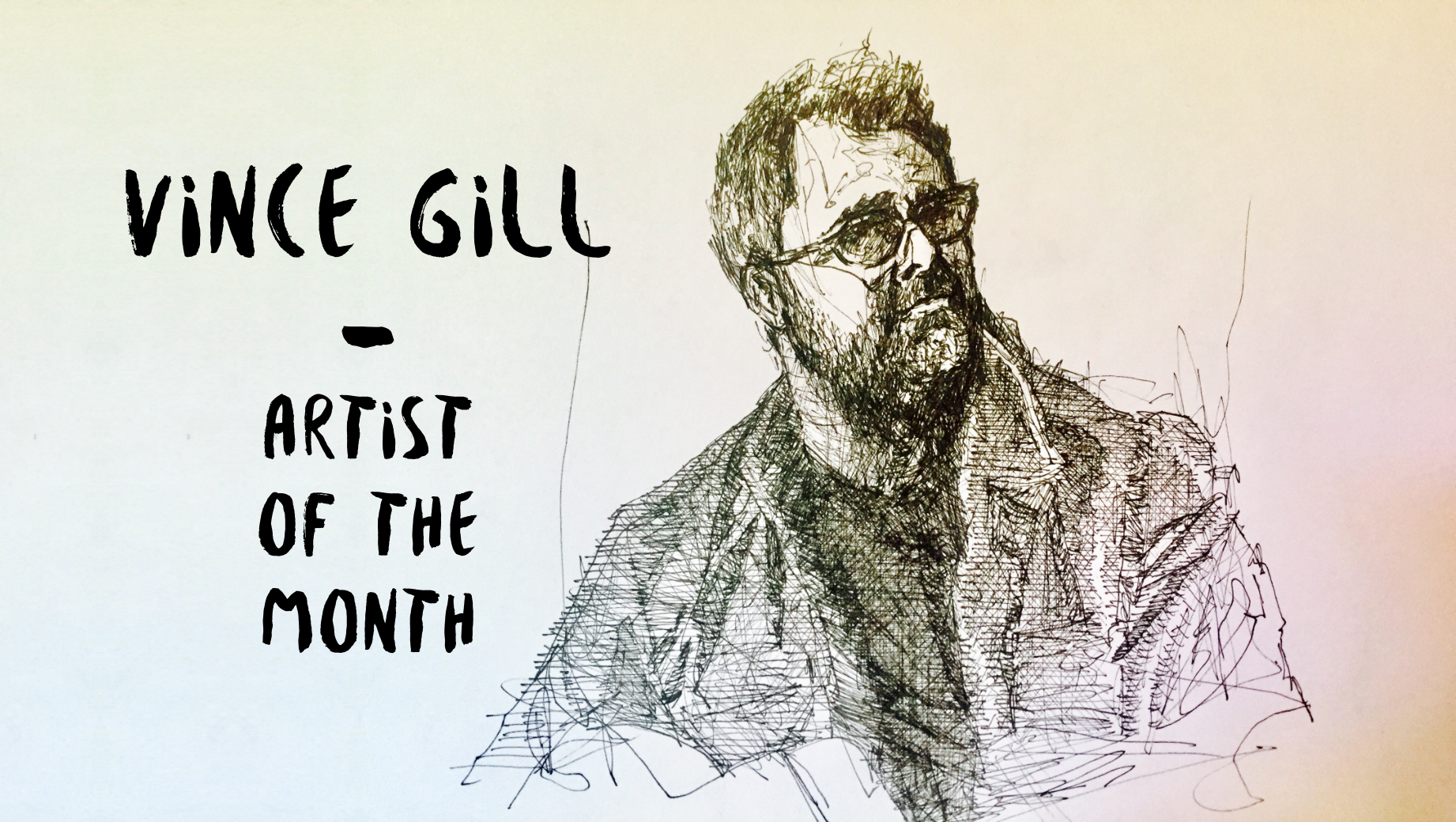
Vince Gill Looks Back on His Bluegrass Years (Part 2 of 2)

In the second half of our interview with Vince Gill, the country legend reflects on his bluegrass history, explaining how he became interested in the music, what he learned by listening closer, and why it led to one of his most famous songs.

Editor’s Note: Read the first part of our Artist of the Month interview with Vince Gill.

BGS: “Go Rest High on That Mountain,” in my opinion, is going to live forever. And I think the bluegrass audience loves hearing Patty Loveless and Ricky Skaggs sing with you, too.

Gill: You know, I wouldn’t have been able to write that song if I hadn’t played bluegrass music and learned the structure of that music and how it works — and the emotion of it. Bluegrass music is so honest and so real. Some of those morbid murder ballads and the saddest of the sad songs are what I love most. Give me “Mother’s not dead. She’s only a-sleepin’. Patiently waiting for Jesus to come.” That’s about as good as it gets. “The Little Girl and the Dreadful Snake.” I could just go on and on and on.

All these tortured songs, but you know they’re real life. They’re not somebody going, “How can I slip one up on the world and make a bunch of money having a big hit record?” They’re so honest and real. And the fact that my past had so much to do with Ricky and Patty, they were the only two people that I would’ve consider it singing on that song.

I still love it when Patty comes to do the Opry.

There’s a really unique thing that happens when our voices sing together. It’s so… obvious. I sang on her very first record in the early ‘80s. I sang on her first hit record and she sang on my first hit record. So it’s my little sis.

Tell me about how you found bluegrass. Was there an entry point for you?

Yeah, I knew of it because my dad played the banjo a little bit. He never could figure out the three-finger, Scruggs-style banjo. He cussed Earl his whole life because he couldn’t figure it out. He played more of a folky banjo. Not drop thumb, not old-timey, but more of a frailing kind of banjo. So I was always around the music, as best I can remember, forever. There were obviously the Flatt & Scruggs things from The Beverly Hillbillies that were in everybody’s DNA. Then I was playing mostly in rock bands in junior high school and high school.

A kid named Bobby Clark was the one that really got me pointed towards bluegrass. He had a little band in Oklahoma City and his father was a repairman. I had broken the string on my dad’s banjo, messing around with it, and I didn’t know how to change it. So I took it to Charlie and he put a string on it pretty quickly and everything was fine. I wasn’t gonna get my butt kicked. Then I started talking to Charlie, and he says, “You play music, don’t you?” And I said, “Yeah, I love to play. I play electric guitar and play in rock bands and stuff.” He goes, “My son Bobby is a really fine mandolin player and plays bluegrass. You ever played any bluegrass?” I said, “No.”

They stuck an acoustic guitar in my hands and Bobby said, “We just had our lead singer leave the band and we’re looking for a singer.” So they did a pretty good job of raising me and teaching me and showing me how bluegrass worked. I played in their band for the last couple of years of high school. Then in another bluegrassy kind of band called Mountain Smoke. And I started playing all the festivals down around Oklahoma and Texas and Kansas. And ran into all the people that I’ve known in my whole life since I was 15, 16 years old.

Wasn’t that how you met Cheryl White [from The Whites]?

Yeah, I used to carry her bass around the festivals. I always had a thing for the girl bass players for some reason. There was another family band from Missouri called the Calton Family. Got sweet on Brenda. Then I got sweet on Cheryl. And she says I should’ve picked a harmonica player. [Laughs]

Those were such fun days and innocent. I loved the camaraderie that went on in that music. Not only with the people that came to the festivals, but the musicians. Everybody jammed together. There wasn’t a whole lot in it for anybody. Everybody was just kind of getting by. It was amazing, as I look back, what it did for me in the way that I respected other musicians and listened to other musicians. It was really important that I had a lot of that in my past. I haven’t forgotten it.

When I first heard bluegrass, I was just blown away by musicianship of it.

Yeah, I mean Stuart Duncan was as great as he was at 12 or 13. So was Mark O’Connor when he was 12 or 13. And Marty and Ricky and Jerry and on and on and on and on of these wonder kid pickers. Unbelievable. I kind of squeaked in because I could sing a little bit and figured out how play as I went. I kind of played whatever was left over in a lot of the bands I was in, and that was fine.

I saw you play mandolin on quite a few songs when you played Bluegrass Nights at the Ryman. What is it about that instrument that you really enjoy?

I think the mandolin is the most important drive of a bluegrass band. The banjo and that are the two most definitive sounds. In bluegrass, mandolin players are like the drummer, even more so than the guitar player to me. It’s that backbeat and driving it. Sam Bush was a great teacher of how you drive that music, you know? I loved the ferocity and intensity that he played with. When he played, that was powerful to watch as a 15- or 16-year-old kid.

That’s what I like. I like making it dance. I liked the importance of playing that instrument in bluegrass. I’m probably a much better guitar player in bluegrass than I am a mandolin player. But in some bands I had to play banjo. Sometimes I had to play, unfortunately, fiddle on a few things. Terrible! I played Dobro, I played everything. I played bass with Ricky’s band for a minute and then got to play some other instruments, but had a love for all of it. I still do. Probably I love it more now because it reminds me so much of my early days, and those first forays into learning about playing music.

Did Dobro come naturally to you?

It all kind of did. I mean, I put in the hours and I practiced hard. The neat thing was, you had such good people to learn from. I always had big ears and could always hear well and find what I was hearing in my head, figuring out how to play it.

There are so many brother duos that came up in bluegrass. Do you think that rubbed off on you with your harmony singing now?

Absolutely, yeah. I was trying to either be Ralph Stanley or Phil Everly or Ira Louvin or whoever. Don Rich and Buck Owens should’ve been brothers. I was a high singer so bluegrass was a natural fit. There have always been predominant high singers that were the focal point. Whether it was Ralph and Carter or whoever, man, that was a blend. You didn’t understand it when you were 15 or 16, what it was that made that blend so beautiful. It was the blood, you know. The DNA was the same.

I didn’t get to experience that until my oldest daughter was 18, 20 years old and we started singing together. I started calling her my little Everly because I’d spent my whole life trying to be Phil. You know, singing the high parts for everybody else, and blend perfectly, and every nuance they did, I’d do. And I’d just want ‘em to think I was related to ‘em. She wound up naming her daughter Everly because of that, because I called her my little Everly.

But yeah, I love sharing music. I love the collaboration of music more so than I like it by myself. It’s not as interesting by yourself, but when you get to play off somebody, and play with somebody, it’s very powerful.


Photo credit: John Shearer

2018: The Year of Ricky Skaggs

Though he’s just now hitting nominal retirement age, Ricky Skaggs has been a virtuosic presence in the worlds of bluegrass, country, and Americana music for close to 50 years. With his childhood friend, Keith Whitley, he began touring and recording with Ralph Stanley while still in high school; by the time he turned 21, he had done a stint with the Country Gentlemen and become a member of the J. D. Crowe & The New South lineup whose eponymous 1975 album was (and is!) so influential that it’s been known for more than 40 years simply by its catalog number, Rounder 0044.

From there he moved on to intensive studio work; partnering with Jerry Douglas in Boone Creek; a stretch with Emmylou Harris’s Hot Band; and then, in 1981, launching a country career so meteoric that he earned, within four years of his debut recording, the Country Music Association’s top Entertainer of the Year award. Fifteen years later, he returned to bluegrass in spectacular fashion with the album Bluegrass Rules!

It’s no wonder, then, that he’s a newly minted member of the Country Music Hall of Fame and the Bluegrass Music Hall of Fame, though it’s a nifty kind of surprise that he was inducted into both this year — and, while it’s less widely known, he hit the trifecta when he was inducted into the Fiddlers Hall of Fame, too. In short, if you were to call 2018 the Year of Ricky Skaggs, it would be hard to mount a real counter-argument.

A conversation with Skaggs is always a journey through a myriad of subjects, and this one was no exception; we touched on many topics, from his nearly complete recovery from shoulder troubles to his recollection of a conversation with Art Satherly, the legendary producer who worked with Bob Wills, Bill Monroe, and many others. Still, a couple of themes emerged, and it’s fitting that one began with an examination of his under-appreciated role as a fiddle player.

It occurred to me that there are fiddle players in the Bluegrass Hall of Fame already—Chubby Wise, Paul Warren, Kenny Baker, Benny Martin, Bobby Hicks—but there are some other members, like John Hartford, who folks might not think of first as a fiddler but who were players, and that led me to you. I think there’s a whole generation of fans and musicians who might not realize how much you’ve done on the fiddle. Is that something you still do from time to time?

When we went out on the Cooder-White-Skaggs tour, I played quite a bit of fiddle, because we were doing so many country things, like Hank Snow’s “Now And Then (There’s A Fool Such As I),” that Chubby Wise played on, and Ry wanted that fiddle. Sharon did songs that I’d play on, and I played swing fiddle on “Sweet Temptation.” So I played quite a bit on that tour. But I haven’t taken it as seriously as I should have, especially in the last 20 years; I just haven’t kept up on it. And you know, when you do pick one up and it sounds like a cat killing, you start thinking, maybe my days are over on this.

But I’ll tell you, when I was just a kid, and I decided I wanted to play another instrument besides the mandolin, my dad got a guy named Santford Kelly to come over to our house, and he recorded him playing—because especially when it came to playing fiddle, he wanted me to sit at the feet of some old cats that he knew. And now, I’ll play something by Santford Kelly for Andy [Leftwich], or now for Mike [Barnett], and their eyes are as big as silver dollars, and they say, “Oh, my god, will you please teach me how to play that? That doesn’t need to die with you—that sound and that bowing style, and that stuff from the mountains of Appalachia, that’s got to live on.”

When that happened a couple of times, I started really seeing how important it was. I’m always thinking maybe too much about perfection, and I’ve gotta tell you, when I heard Santford Kelly—he was 84 or 85 at the time, and he was scratchy. But it didn’t bother me that he was a little flat and sharp here and there, and a little scratchy on the bow. It was what was coming out of him that went into my heart, that moved me deeply. I thought, this is like Elijah coming off the mountain. This man is carrying something.

So I’ve kind of been saying, well, I’m not really up on it, but I need to shut that crap up. I just do need to play more of that.

You’ve entered three halls of fame this year, so maybe this is a good time to look back. One of the things I’d like to get your impression on is the idea that tradition is not a style, but a way of learning. And you did that, learning directly from older guys like Santford Kelly and Ralph Stanley, but it seems like there’s less of that these days. From the beginning of your return to bluegrass, you’ve made having young people in your band a priority. When you talk about Mike or [banjo player] Russ [Carson] hearing these things, is that something you feel is important — to mentor young musicians, be an active transmitter?

It absolutely is. To me, it’s vital — it’s necessary for the journey, it truly is. It’s manna, it’s food. In the tabernacle of David, where there were four thousand musicians and two thousand singers, you didn’t just fall off a turnip truck and then decide, hey, I’m going to be a musician. No! King David said, “My fingers are trained for battle.” To me, there is training that goes into perfection, goes into your craft. There is something that is really spiritual about this; it’s part of our spirit, it’s part of our nature to be trained.

And that’s truly part of what makes my heart beat, is to train up and to pour into young musicians — and not just men. Like Sarah Jarosz told me one time, “Thank you for letting me get up on stage and play with you when I was 12 years old in Austin.” Or Sierra Hull, or how my music affected Alison [Krauss] in her teenaged years — listening to J. D. [Crowe]’s records, and Boone Creek, and my early country stuff, the harmony singing and just the musicianship, how that encouraged her. I was talking to Becky Buller at the IBMA Red Hat [Amphitheatre], and she talked about how influential the music has been, too.

One of the things that I learned from Ralph was to play it like it was recorded. I remember one time, I’d been listening to Jimmy Gaudreau and some of the other mandolin players of that time a little bit, and one night I played a solo that was a little bit out of the ballpark for the Stanley sound. And I caught Ralph’s face move just slightly over toward me. He didn’t eyeball me, he just kind of turned to the right and listened to me. And when we got off he said, “Rick, you know what I do, when I take breaks, I play it just like I sing it. I want them people to know that when I played that break, they didn’t have to hear me sing, they knowed what that song was. That’s the way I do it.” He didn’t say, the way you did it was not cool, or out of bounds. He did not teach that way; it was so soft, and so nurturing.

And now, I’m always showing Mike stuff — even from the first time I met him, when he auditioned. We sat down and I played him the Stanley Brothers’ Starday recording of “Little Maggie”— one lick, one phrase, after [fiddler] Ralph Mayo’s first solo. Ralph kicks it off, sings one verse, and then Ralph Mayo takes a solo. Well, it’s that next verse, on the line “pretty women are made for lovin’,” on the word “lovin,” Mayo plays this counter-note that’s not even in B, where Ralph’s at. That thing came out of him, and that one note just spoke so loudly right there for me. When I really heard that, I thought “What did he just play!?” and it just lifted my heart to such a place. It was something. And I played it for Mike, and he said “play it again,” and I thought, all right, he’s going to get this job, I know. He’s hearing what I heard, so I knew he was the right one for the job. He heard what Mayo was playing, and he heard my passion for it. And those are the kind of things I want to teach.

Looking at your career, the frequency of your record releases seems to have slowed down. And it seems to me that the recorded end of the business is almost going back to the 50s. Are you just too busy to get into the studio, or is it a lower priority because the business is heading away from that?

Well, as a record company owner, it’s become a financial issue. Having a studio of my own, you’d think that I could do records so much cheaper, but it’s just a fact that the numbers just don’t work when I look at putting $30,00 or $40,000 into a CD and the chances of getting it back in the next three or four years. And I’ve got a big name! I don’t know how, well I guess I do know how, a lot of these record companies do them for $10,000. I would feel really bad about having to do a Kickstarter for Ricky Skaggs. But there’s so much music in my heart that I really want to go in the studio and make, and make it with this incredible band.

But here’s what we’re thinking: I guess I’ve probably got nearly every show that I’ve done in the last four or five years—and recorded on separate tracks, where they could be remixed. So I’ve got a ton of stuff. We’ve got Cooder-White-Skaggs, we’ve got Skaggs and Hornsby stuff, we’ve got Ricky Skaggs with Cody Kilby, Bryan Sutton, all kinds of guests that we’ve had. We’ve got all that recorded. So I really do believe there’s ways of doing it, and I don’t have to own everything; I could just have part ownership.

And I just want to get the music out. I want the world to be able to hear Mike Barnett and Jake Workman, Jeff Picker and Russ Carson. And of course Andy, or hearing Jake playing mandolin or banjo. We’ve got all that stuff, and maybe perfection doesn’t matter so much. I can get stuck in thinking about what used to happen in my life, and what used to be—and here again, I’m figuring out it doesn’t have to be that way. There’s a feel thing that we can miss by having endless tracks on ProTools, endless chances to go back and get another take; usually the first thought that comes into your mind on almost anything is the right one. It’s our stinking thinking that gets involved, and we get to overanalyzing stuff when the spirit is saying, “This is the right way, this is what I put in your mind at that time.” Sometimes you’re better off to just go with that.